21st Century Learning and Teaching
791.7K views | +18 today
21st Century Learning and Teaching
Related articles to 21st Century Learning and Teaching as also tools...
Curated by Gust MEES
Your new post is loading...

Popular Tags

Current selected tag: 'Learning 2 Learn'. Clear
Scooped by Gust MEES
April 14, 2015 4:37 PM
Scoop.it!

6 Mistakes I Made with Professional Development | Reality | LEARNing To LEARN

6 Mistakes I Made with Professional Development | Reality | LEARNing To LEARN | 21st Century Learning and Teaching | Scoop.it

These 6 strategies represent some of the most fundamental mistakes I've made in my years of educational technology professional development. Source: exitticket.org

.

Learn more:

.

- https://gustmees.wordpress.com/2015/03/15/professional-development-why-educators-and-teachers-cant-catch-up-that-quickly-and-how-to-change-it/

.

- https://gustmees.wordpress.com/2015/03/28/learning-to-learn-for-my-professional-development-i-did-it-my-way/

.

- https://gustmees.wordpress.com/2014/07/10/education-collaboration-and-coaching-the-future/

.

- https://gustmees.wordpress.com/?s=design

.

Gust MEES's insight:

These 6 strategies represent some of the most fundamental mistakes I've made in my years of educational technology professional development. Source: exitticket.org


Learn more:


- https://gustmees.wordpress.com/2015/03/15/professional-development-why-educators-and-teachers-cant-catch-up-that-quickly-and-how-to-change-it/


- https://gustmees.wordpress.com/2015/03/28/learning-to-learn-for-my-professional-development-i-did-it-my-way/


- https://gustmees.wordpress.com/2014/07/10/education-collaboration-and-coaching-the-future/


- https://gustmees.wordpress.com/?s=design


No comment yet.
Scooped by Gust MEES
April 14, 2015 9:17 AM
Scoop.it!

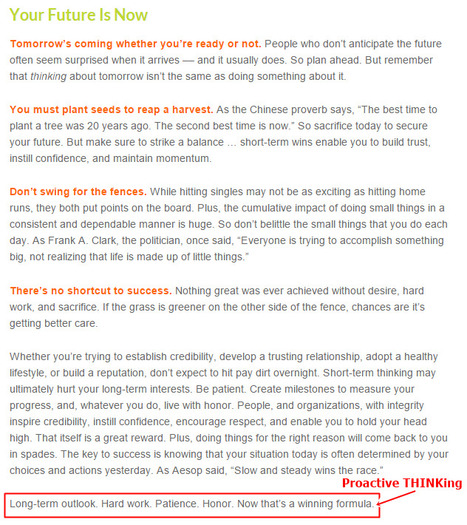
Now or Never | WinWin | Proactive THINKing

Now or Never | WinWin | Proactive THINKing | 21st Century Learning and Teaching | Scoop.it
Some folks want everything now. The problem is that short-term thinking may hurt your long-term interests. There are simply no shortcuts in the long run.


Learn more:


- http://www.scoop.it/t/21st-century-learning-and-teaching?tag=Proactive+Thinking


Gust MEES's insight:
Some folks want everything now. The problem is that short-term thinking may hurt your long-term interests. There are simply no shortcuts in the long run.


Learn more:


- http://www.scoop.it/t/21st-century-learning-and-teaching?tag=Proactive+Thinking


Maximillian Danskin's curator insight, April 14, 2015 1:08 PM

in future years i would hope to instill these very logistics into my students. kids in this era have everything handed to them on a silver platter. hard work and accountability are two lot concept in this corner of the world and i believe majority of teenagers have no idea what this guy is talking about. just shows how sad our country has gotten over the past 10 years. technology has degraded our country.

Scooped by Gust MEES
April 13, 2015 1:28 PM
Scoop.it!

The Importance of Andragogy in Education | LEARNing To LEARN

The Importance of Andragogy in Education | LEARNing To LEARN | 21st Century Learning and Teaching | Scoop.it

As educators one would expect that teachers and teacher/administrators should be experts on the best most effective and efficient methods of getting large groups of children to 

understand, learn, and use information responsibly to create more information. Theoretically, these educators have an understanding of pedagogy and methodology in order to accomplish these goals. I firmly believe most educators have these very skills to accomplish this with kids.

A question that haunts me however, at almost any education conference that I attend is: Why are so many (not all) of these educators, who are so skilled in a classroom of kids, so bad at teaching in a room full of adults for professional development?


According to an article, “Adult Learning Theory and Principles” from The Clinical Educator’s Resource Kit, Malcolm Knowles, an American practitioner and theorist of adult education, defined andragogy as “the art and science of helping adults learn”.

Knowles identified the six principles of adult learning as:

  • Adults are internally motivated and self-directed
  • Adults bring life experiences and knowledge to learning experiences
  • Adults are goal oriented
  • Adults are relevancy oriented
  • Adults are practical
  • Adult learners like to be respected


Learn more:


- https://gustmees.wordpress.com/2015/03/15/professional-development-why-educators-and-teachers-cant-catch-up-that-quickly-and-how-to-change-it/


- https://gustmees.wordpress.com/2015/03/28/learning-to-learn-for-my-professional-development-i-did-it-my-way/


- http://www.scoop.it/t/21st-century-learning-and-teaching/?tag=andragogy


Gust MEES's insight:

As educators one would expect that teachers and teacher/administrators should be experts on the best most effective and efficient methods of getting large groups of children to 

understand, learn, and use information responsibly to create more information. Theoretically, these educators have an understanding of pedagogy and methodology in order to accomplish these goals. I firmly believe most educators have these very skills to accomplish this with kids.

A question that haunts me however, at almost any education conference that I attend is: Why are so many (not all) of these educators, who are so skilled in a classroom of kids, so bad at teaching in a room full of adults for professional development?


According to an article, “Adult Learning Theory and Principles” from The Clinical Educator’s Resource Kit, Malcolm Knowles, an American practitioner and theorist of adult education, defined andragogy as “the art and science of helping adults learn”.

Knowles identified the six principles of adult learning as:

  • Adults are internally motivated and self-directed
  • Adults bring life experiences and knowledge to learning experiences
  • Adults are goal oriented
  • Adults are relevancy oriented
  • Adults are practical
  • Adult learners like to be respected


Learn more:


- https://gustmees.wordpress.com/2015/03/15/professional-development-why-educators-and-teachers-cant-catch-up-that-quickly-and-how-to-change-it/


- https://gustmees.wordpress.com/2015/03/28/learning-to-learn-for-my-professional-development-i-did-it-my-way/


- http://www.scoop.it/t/21st-century-learning-and-teaching/?tag=andragogy


Florence Gilzene-Cheese's curator insight, April 13, 2015 5:57 PM

This article raises an important question. Why do many educators struggle with engagement and metacognition when presenting to peers? As I read the article, I had my own question. Could we be so pumped to share knowledge that we forget that engagement matters or is it that we really fail to apply the strategies we know and love with our colleagues? I have no answers but I invite reflection and comments

Jose Ines Andrade's curator insight, April 14, 2015 6:14 PM

El arte y la ciencia de ayudar a los adultos a aprender: seis principios que debemos conocer y aplicar en materiales y elaboración de cursos.

Scooped by Gust MEES
April 9, 2015 12:51 PM
Scoop.it!

How Memory, Focus and Good Teaching Can Work Together to Help Kids Learn

How Memory, Focus and Good Teaching Can Work Together to Help Kids Learn | 21st Century Learning and Teaching | Scoop.it
Spend more time teaching learning skills. Klemm recommends memory tricks like mnemonic devices, and visualizing ideas as complex images, to help students expand their working memory. “If they knew these things, they wouldn’t have to work so hard and school might even become fun,” Klemm said. “Once students start reflecting and become more self-aware, they have the opportunity to become better students.”

“Working memory gets overloaded,” Kleem said. “Most people can only hold four independent ideas in working memory.” But if images are used to represent a constellation of ideas, people can remember much more. Words are hard to remember, but images stick with people. “It’s like a zip file,” Klemm said. “This is a way to get your working memory to carry more.”


Learn more:


- https://gustmees.wordpress.com/category/learning-to-learn/


Gust MEES's insight:
Spend more time teaching learning skills. Klemm recommends memory tricks like mnemonic devices, and visualizing ideas as complex images, to help students expand their working memory. “If they knew these things, they wouldn’t have to work so hard and school might even become fun,” Klemm said. “Once students start reflecting and become more self-aware, they have the opportunity to become better students.”

“Working memory gets overloaded,” Kleem said. “Most people can only hold four independent ideas in working memory.” But if images are used to represent a constellation of ideas, people can remember much more. Words are hard to remember, but images stick with people. “It’s like a zip file,” Klemm said. “This is a way to get your working memory to carry more.”


Learn more:


- https://gustmees.wordpress.com/category/learning-to-learn/


Nancy Jones's curator insight, April 10, 2015 11:31 AM

Teaching learning will help the process. It is about the process, always; that's the life skill.. Students need to get that message, early and often.

Sm_english's curator insight, April 10, 2015 6:24 PM

Study smarter not harder

Sara Jaramillo's curator insight, May 21, 2020 1:20 PM
As it says in the article, memory is a very important skill in learning, and it is important to start working on it since childhood, because the brain of children store memories differently and it is easier for them to learn and to work in those skills. The article provide teachers some strategies and activities to start working on it with their younger students and it is very helpful, becuase children can work on their memory and have fun at the same time with some of the activities proposed here. 
Scooped by Gust MEES
April 6, 2015 3:42 PM
Scoop.it!

The Difference Between Safety and Security | eSkills

The Difference Between Safety and Security | eSkills | 21st Century Learning and Teaching | Scoop.it

Maslow’s Hierarchy of needs begins with humanity’s most basic needs and builds from there until we reach our most satisfied self. After our most basic physical needs (air, food, water, sleep), the need for safety is the second most critical stage to our wellbeing. Whether or not we believe in Maslow’s theory, we can all agree that on its surface this makes sense, whether we are talking about ourselves, our families, our businesses, or our community.


Learn more:


- https://gustmees.wordpress.com/2014/11/18/why-cybersecurity-starts-at-home-and-is-concerning-all-of-us/


- https://gustmees.wordpress.com/2015/03/09/how-will-the-world-look-in-the-near-future-because-of-ict-our-new-habits/


- https://gustmees.wordpress.com/2012/11/29/cyber-hygiene-ict-hygiene-for-population-education-and-business/


Gust MEES's insight:

Maslow’s Hierarchy of needs begins with humanity’s most basic needs and builds from there until we reach our most satisfied self. After our most basic physical needs (air, food, water, sleep), the need for safety is the second most critical stage to our wellbeing. Whether or not we believe in Maslow’s theory, we can all agree that on its surface this makes sense, whether we are talking about ourselves, our families, our businesses, or our community.


Learn more:


- https://gustmees.wordpress.com/2014/11/18/why-cybersecurity-starts-at-home-and-is-concerning-all-of-us/


- https://gustmees.wordpress.com/2015/03/09/how-will-the-world-look-in-the-near-future-because-of-ict-our-new-habits/


- https://gustmees.wordpress.com/2012/11/29/cyber-hygiene-ict-hygiene-for-population-education-and-business/


Scooped by Gust MEES
April 5, 2015 8:29 AM
Scoop.it!

21st-Century Learning Using Social Media: Advice from Finland | eSkills | BEST PracTICEs

21st-Century Learning Using Social Media: Advice from Finland | eSkills | BEST PracTICEs | 21st Century Learning and Teaching | Scoop.it
Social media advice from a teacher's experience for 21st-century learning
Gust MEES's insight:

Social media advice from a teacher's experience for 21st-century learning

No comment yet.
Rescooped by Gust MEES from Effective Education
April 4, 2015 11:18 AM
Scoop.it!

New Vision for Education_Report2015

Especially check the TOPIC <===> Chapter 1: The skills needed in the 21st century <===> #eSkills!


Learn more:


- https://gustmees.files.wordpress.com/2015/02/practice-21st-century-assessment-flowchart-page3-simplified-pdf.pdf


- https://gustmees.wordpress.com/2014/07/10/education-collaboration-and-coaching-the-future/


- https://gustmees.wordpress.com/2015/03/28/learning-to-learn-for-my-professional-development-i-did-it-my-way/


Via Manuel Pinto, Maria José Brites, Rui Guimarães Lima, Miloš Bajčetić, Mark E. Deschaine, PhD
Gust MEES's insight:

Especially check the TOPIC <===> Chapter 1: The skills needed in the 21st century <===> #eSkills!


Learn more:


- https://gustmees.files.wordpress.com/2015/02/practice-21st-century-assessment-flowchart-page3-simplified-pdf.pdf


- https://gustmees.wordpress.com/2014/07/10/education-collaboration-and-coaching-the-future/


- https://gustmees.wordpress.com/2015/03/28/learning-to-learn-for-my-professional-development-i-did-it-my-way/


David Witzeling's curator insight, April 6, 2015 7:22 PM

This is a lengthy article detailing the relationship between 21st century skills and the adoption of technology as a way to promote growth in those skill areas. If you are here, you might find this very much "preaching to the choir," but the article provides a solid basis for understanding the need to integrate technology into education.

Melina Dayana Calizaya Torres's curator insight, April 6, 2015 10:19 PM

SO TRUE

Dr. Deborah Brennan's curator insight, April 7, 2015 2:19 PM

The World Economic Forum has published a new white paper called New Vision for Education: Unlocking the Potential of Technology; the link for the full report is included at the end of this article.  The World Economic Forum is a not-for-profit international institution headquartered in Geneva, Switzerland.  Although the focus of this report is worldwide, the gaps in identified twenty-first century skills are very applicable to schools in the USA.  In a powerful statement, the report says: “By the time students enter college and the labour market, deficiencies that have not been addressed earlier can be far more difficult and costly to remedy.” (p 8-9).

The report differentiates 21st century skills among foundational literacies, competencies, and character qualities. It sees foundational skills as what schools and systems traditionally teach and measure: literacy, numeracy, scientific literacy, instructional-communication technology literacy, financial literacy, and cultural and civic literacy.  Competencies sited include critical thinking/problem solving, creativity, communication and collaboration. While curiosity, initiative, persistence/grit, adaptability, leadership, and social and cultural awareness are included in a category called character qualities.  Appendix 1 includes definitions of 21st century skills.

The instructional cycle is referred to as a “closed loop” in this report. Beginning with clear learning objectives through the development of curriculum and instructional strategies to instructional delivery, ongoing assessment, interventions and the tracking of learning outcomes in a repeating complex system.  The report looks at ways that technology can be embedded into each step of the instructional loop to improve student learning outcomes and eliminate the skill gap, providing some resources that might be used at different phases of the cycle.

The report cites differences in the use of technology tools to close the skill gap, looking at different income levels among countries which create different contexts and stating that there are fundamental social and economic problems, such as poverty, that impede learning and underlie the skills gap. Although the deficiencies in many undeveloped countries far surpass those found in the United States, it is my perspective that there are different contexts within the United States itself that must be acknowledged and addressed.

The importance of creativity, problem solving and innovation to the economic well-being of our nation and therefore, the employability of our workforce cannot be stressed enough. The pressure of standardized testing can lead to a standardized curriculum and instruction model that does not allow  the classroom time for these skills to develop. Teachers caught in this dilemma are often driven to insure success on state tests at the cost of providing time for experimentation, reflection, and collaborative feedback. The report does suggest using technology for some of the foundational skills in order to free teacher time to provide instruction on competency and character skills.

In two of the examples from low income countries, technology was used to provide scripted lessons that were created centrally  to under-trained teachers. My preference would be to  more fully train teachers or provide a mentor/coach rather than a “turn the page” curriculum model.

One of the tenants of the article is the need to define and find a metric to assess each of these 21st century skills in order to compare countries skill level. Although I agree with the need to define the skills needed and provide training and resources to teachers so these skills can be embedded into the curriculum and instruction, the idea of an assessment to measure creativity or persistence fills me with dread. Paul Torrance developed a well-used test for creativity used to screen students for school gifted and talented programs.  It is not a test that can be administered and interpreted without training. The idea of administering a standardized test which by definition is convergent in thinking to measure a thinking skill that is divergent by definition seems inappropriate and a major shortcoming of this report.

Scooped by Gust MEES
April 3, 2015 7:28 PM
Scoop.it!

Online Collaboration Strategies To Engage Your Learners | BEST PracTICEs | eLeaderShip

Online Collaboration Strategies To Engage Your Learners | BEST PracTICEs | eLeaderShip | 21st Century Learning and Teaching | Scoop.it

Looking for ways to engage your learners through online collaboration? Check the Strategies To Engage your Learners Through Online Collaboration

.

Gust MEES: I strongly recommend to read it and to bring THIS into PracTICE! THE BEST article I have seen so far till now! Hat down for the author "Amy THORNTON".

.

Learn more:

.

- http://www.scoop.it/t/21st-century-learning-and-teaching/?tag=Engage-ME%21

Gust MEES's insight:

Looking for ways to engage your learners through online collaboration? Check the Strategies To Engage your Learners Through Online Collaboration

.

Gust MEES: I strongly recommend to read it and to bring THIS into PracTICE! THE BEST article I have seen so far till now! Hat down for the author "Amy THORNTON".

.

Learn more:

.

- http://www.scoop.it/t/21st-century-learning-and-teaching/?tag=Engage-ME%21

.


Matthew Button's curator insight, April 4, 2015 1:43 AM

Something we should be investing more into the future

Jerry Busone's curator insight, April 4, 2015 8:23 AM

Bring your learning into the 21st century with some of these ideas....

Scooped by Gust MEES
April 3, 2015 6:29 PM
Scoop.it!

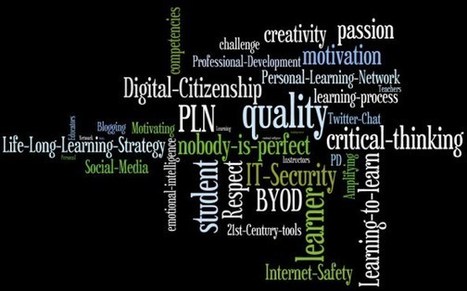
5 Ways To Use Word Clouds In The Classroom

5 Ways To Use Word Clouds In The Classroom | 21st Century Learning and Teaching | Scoop.it
The popularity of word clouds remains pretty constant in education, and it’s not difficult to see why.


YOU may use my Logo if wanted by giving me credit by linking to <===> https://gustmees.wordpress.com <===


Gust MEES's insight:

The popularity of word clouds remains pretty constant in education, and it’s not difficult to see why.


YOU may use my Logo if wanted by giving me credit by linking to <===> https://gustmees.wordpress.com <===


Pablo Soma's curator insight, April 4, 2015 11:24 PM

añada su visión ...

Scooped by Gust MEES
April 2, 2015 1:12 PM
Scoop.it!

Why Collaboration Wins Over Competition (Infographic) | EDUcation4.0 | eSkills | eLeaderShip

Why Collaboration Wins Over Competition (Infographic) | EDUcation4.0 | eSkills | eLeaderShip | 21st Century Learning and Teaching | Scoop.it
Even the world's most iconic CEOs didn't achieve success on their own.


Learn more:


- https://gustmees.wordpress.com/2014/07/10/education-collaboration-and-coaching-the-future/


- https://gustmees.wordpress.com/2015/03/15/professional-development-why-educators-and-teachers-cant-catch-up-that-quickly-and-how-to-change-it/


Gust MEES's insight:

Even the world's most iconic CEOs didn't achieve success on their own.


Learn more:


- https://gustmees.wordpress.com/2014/07/10/education-collaboration-and-coaching-the-future/


- https://gustmees.wordpress.com/2015/03/15/professional-development-why-educators-and-teachers-cant-catch-up-that-quickly-and-how-to-change-it/


Scooped by Gust MEES
April 1, 2015 5:03 AM
Scoop.it!

How Does the Brain Learn Best? Smart Studying Strategies

How Does the Brain Learn Best? Smart Studying Strategies | 21st Century Learning and Teaching | Scoop.it
We can be tactical in our schooling. The traditional advice on learning has been to “study hard,” in a quiet place and with the same routine, yet that doesn’t say much about what to specifically do. But pupils today can change the way they study to exploit the brain’s quirky learning processes, using the strategies revealed by memory and learning research. While that science is still maturing, “it’s at a place now where it can give you a specific tactical plan,” Carey said. 

.

Students can tailor their preparation with techniques targeting different kinds of content or skills, and manage their schedule to optimize their time. “That’s a powerful thing, because we go through our whole lives never knowing that,” he said.

.

Ultimately, the value of these learning strategies isn’t just about earning better grades, Carey said. In the modern jungle of society, learning is still about surviving: For young people, it’s about sussing out what they’re good at, what rings their bell, and what they want to do with their lives. “It’s informing you of: Who am I? Where do I place my bets? Do I major in physics or do I major in architecture or design, or do I major in English? Do I belong here at all?” Carey said. Those are important decisions. “Being self-aware about what’s effective learning and how it happens, I think, gives you a real edge in making those choices.”


Learn more:


- https://gustmees.wordpress.com/2013/04/25/learn-every-day-a-bit-with-curation/

- https://gustmees.wordpress.com/2015/03/28/learning-to-learn-for-my-professional-development-i-did-it-my-way/

Gust MEES's insight:
We can be tactical in our schooling. The traditional advice on learning has been to “study hard,” in a quiet place and with the same routine, yet that doesn’t say much about what to specifically do. But pupils today can change the way they study to exploit the brain’s quirky learning processes, using the strategies revealed by memory and learning research. While that science is still maturing, “it’s at a place now where it can give you a specific tactical plan,” Carey said. 

.

Students can tailor their preparation with techniques targeting different kinds of content or skills, and manage their schedule to optimize their time. “That’s a powerful thing, because we go through our whole lives never knowing that,” he said.

.

Ultimately, the value of these learning strategies isn’t just about earning better grades, Carey said. In the modern jungle of society, learning is still about surviving: For young people, it’s about sussing out what they’re good at, what rings their bell, and what they want to do with their lives. “It’s informing you of: Who am I? Where do I place my bets? Do I major in physics or do I major in architecture or design, or do I major in English? Do I belong here at all?” Carey said. Those are important decisions. “Being self-aware about what’s effective learning and how it happens, I think, gives you a real edge in making those choices.”


Learn more:


- https://gustmees.wordpress.com/2013/04/25/learn-every-day-a-bit-with-curation/


- https://gustmees.wordpress.com/2015/03/28/learning-to-learn-for-my-professional-development-i-did-it-my-way/


Kent Kessler's curator insight, April 2, 2015 8:16 AM

i always like learning about learning

Steve Bavister's curator insight, April 3, 2015 5:33 AM
Nice set of tips here for studying more effectively
Jake Goulet's curator insight, April 15, 2015 11:35 AM

Figure out what strategies will help you expand your language knowledge!

Scooped by Gust MEES
March 31, 2015 11:49 AM
Scoop.it!

How The Activity Learning Theory Works

How The Activity Learning Theory Works | 21st Century Learning and Teaching | Scoop.it
How The Activity Learning Theory Works 

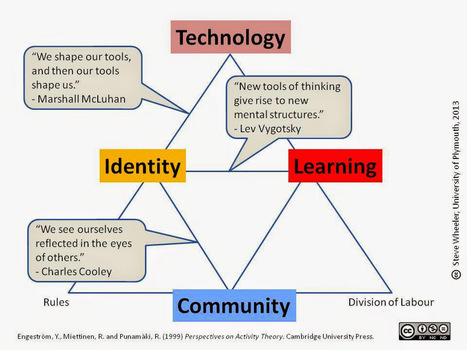
Vygotsky’s earlier concept of mediation, which encompassed learning alongside others (Zone of Proximal Development) and through interaction with artifacts, was the basis for Engeström’s version of Activity Theory (known as Scandinavian Activity Theory). Engeström’s approach was to explain human thought processes not simply on the basis of the individual, but in the wider context of the individual’s interactions within the social world through artifacts, and specifically in situations where activities were being produced.

In Activity Theory people (actors) use external tools (e.g. hammer, computer, car) and internal tools (e.g. plans, cognitive maps) to achieve their goals. In the social world there are many artifacts, which are seen not only as objects, but also as things that are embedded within culture, with the result that every object has cultural and/or social significance.

Tools (which can limit or enable) can also be brought to bear on the mediation of social interaction, and they influence both the behavior of the actors (those who use the tools) and also the social structure within which the actors exist (the environment, tools, artifacts). For further reading, here is Engeström’s own overview of 3 Generations of Activity Theory development. The first figure shows Second Generation AT as it is usually presented in the literature.
Gust MEES's insight:

How The Activity Learning Theory Works 

Vygotsky’s earlier concept of mediation, which encompassed learning alongside others (Zone of Proximal Development) and through interaction with artifacts, was the basis for Engeström’s version of Activity Theory (known as Scandinavian Activity Theory). Engeström’s approach was to explain human thought processes not simply on the basis of the individual, but in the wider context of the individual’s interactions within the social world through artifacts, and specifically in situations where activities were being produced.

In Activity Theory people (actors) use external tools (e.g. hammer, computer, car) and internal tools (e.g. plans, cognitive maps) to achieve their goals. In the social world there are many artifacts, which are seen not only as objects, but also as things that are embedded within culture, with the result that every object has cultural and/or social significance.

Tools (which can limit or enable) can also be brought to bear on the mediation of social interaction, and they influence both the behavior of the actors (those who use the tools) and also the social structure within which the actors exist (the environment, tools, artifacts). For further reading, here is Engeström’s own overview of 3 Generations of Activity Theory development. The first figure shows Second Generation AT as it is usually presented in the literature.


manukadroopy's comment, August 30, 2016 5:36 AM
Thats interesting
Jaydin Nies's curator insight, September 19, 2016 2:47 PM

Many times when we learn we use many tools. They may be our minds or they may be outside objects. This is how we put them together and use it for the better. 

Prudence Matsega's curator insight, January 7, 2019 4:18 PM
The Activity theory helps in understanding other factors that will have an impact on the a students's/ learner's thought pattern. Activity Theory gives clarity as to who is doing what?  How are they doing it? Finally why are they doing it?
Scooped by Gust MEES
March 31, 2015 8:58 AM
Scoop.it!

Mobile botnets detected since 2010 [pdf] | MobileSecurity | CyberSecurity

Learn more:


- https://gustmees.wordpress.com/2014/03/05/often-asked-questions-are-there-cyber-security-dangers-with-apps-and-whats-about-privacy/


- https://gustmees.wordpress.com/?s=twitter


- http://www.scoop.it/t/apple-mac-ios4-ipad-iphone-and-in-security/?tag=Botnet


- http://www.scoop.it/t/securite-pc-et-internet/?tag=Botnet


Gust MEES's insight:

Learn more:


- https://gustmees.wordpress.com/2014/03/05/often-asked-questions-are-there-cyber-security-dangers-with-apps-and-whats-about-privacy/


- https://gustmees.wordpress.com/?s=twitter


- http://www.scoop.it/t/apple-mac-ios4-ipad-iphone-and-in-security/?tag=Botnet


- http://www.scoop.it/t/securite-pc-et-internet/?tag=Botnet


No comment yet.
Scooped by Gust MEES
April 14, 2015 11:38 AM
Scoop.it!

Do Not Track | Privacy | Cookies | Tracking | eSkills

Do Not Track | Privacy | Cookies | Tracking | eSkills | 21st Century Learning and Teaching | Scoop.it
Do Not Track, a personalized web series about privacy and the web economy. Directed by Brett Gaylor, coproduced by Upian, Arte, ONF & BR.


Learn more:


- https://gustmees.wordpress.com/2013/12/21/privacy-in-the-digital-world-shouldnt-we-talk-about-it/


Gust MEES's insight:
Do Not Track, a personalized web series about privacy and the web economy. Directed by Brett Gaylor, coproduced by Upian, Arte, ONF & BR.


Learn more:


- https://gustmees.wordpress.com/2013/12/21/privacy-in-the-digital-world-shouldnt-we-talk-about-it/


No comment yet.
Scooped by Gust MEES
April 14, 2015 8:32 AM
Scoop.it!

Curiosity: The Heart of Lifelong Learning | LEARNing To LEARN

Curiosity: The Heart of Lifelong Learning | LEARNing To LEARN | 21st Century Learning and Teaching | Scoop.it

If you suspect that curious kids fare better in careers and life, you're right—for a variety of reasons. Research suggests that intellectual curiosity has as big of an effect on performance as hard work. (link is external) When put together, curiosity and hard work account for success just as much as intelligence.

.

Another study found that people who were curious about a topic retained what they learned for longer periods of time (link is external). And even more impressive, research has linked curiosity to a wide range of important adaptive behaviors, (link is external) including tolerance of anxiety and uncertainty, positive emotions, humor, playfulness, out-of-box thinking, and a noncritical attitude—all attributes associated with healthy social outcomes.


Learn more:


- http://www.scoop.it/t/21st-century-learning-and-teaching/?tag=curiosity


- https://gustmees.wordpress.com/?s=PracTICE


- https://twitter.com/search?src=typd&q=%23JimmyTheBumbleBee


Gust MEES's insight:

If you suspect that curious kids fare better in careers and life, you're right—for a variety of reasons. Research suggests that intellectual curiosity has as big of an effect on performance as hard work. (link is external) When put together, curiosity and hard work account for success just as much as intelligence.

.

Another study found that people who were curious about a topic retained what they learned for longer periods of time (link is external). And even more impressive, research has linked curiosity to a wide range of important adaptive behaviors, (link is external) including tolerance of anxiety and uncertainty, positive emotions, humor, playfulness, out-of-box thinking, and a noncritical attitude—all attributes associated with healthy social outcomes.


Learn more:


- http://www.scoop.it/t/21st-century-learning-and-teaching/?tag=curiosity


- https://gustmees.wordpress.com/?s=PracTICE


- https://twitter.com/search?src=typd&q=%23JimmyTheBumbleBee


Kent Kessler's curator insight, April 17, 2015 10:23 AM

Nurture = setup! 

Evergreen Summer's curator insight, April 17, 2015 4:37 PM

Yes! Engaging children in questions and supporting them in their natural curiosity about the world around them is out top priority!

Miguel Damiani's curator insight, April 20, 2015 6:28 PM

Aprender a aprender

Scooped by Gust MEES
April 13, 2015 8:10 AM
Scoop.it!

Being a Growth Mindset Facilitator

Being a Growth Mindset Facilitator | 21st Century Learning and Teaching | Scoop.it

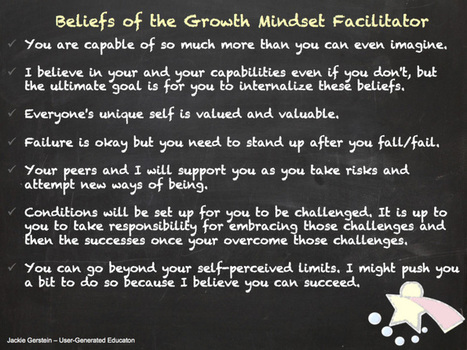
Jackie GERSTEIN: I was asked recently why I have a strong interest and innate understanding of the growth mindset. I believe it comes from a background of being an adventure educator, and even though it was not labeled as such, the adventure educator embraces a growth mindset when working with participants. The underlying tenet of adventure education is “You are capable of so much more than you can even imagine. I believe in you and your capabilities; and I will set up the conditions for you to develop and amplify that same belief in yourself.”

.

Learn more:

.

- https://gustmees.wordpress.com/2015/03/28/learning-to-learn-for-my-professional-development-i-did-it-my-way/

.

- https://gustmees.wordpress.com/2014/10/03/design-the-learning-of-your-learners-students-ideas/


Gust MEES's insight:

Jackie GERSTEIN: I was asked recently why I have a strong interest and innate understanding of the growth mindset. I believe it comes from a background of being an adventure educator, and even though it was not labeled as such, the adventure educator embraces a growth mindset when working with participants. The underlying tenet of adventure education is “You are capable of so much more than you can even imagine. I believe in you and your capabilities; and I will set up the conditions for you to develop and amplify that same belief in yourself.”

.

Learn more:

.

- https://gustmees.wordpress.com/2015/03/28/learning-to-learn-for-my-professional-development-i-did-it-my-way/

.

- https://gustmees.wordpress.com/2014/10/03/design-the-learning-of-your-learners-students-ideas/


No comment yet.
Scooped by Gust MEES
April 6, 2015 6:37 PM
Scoop.it!

Personalize Learning: Learning can and should be Natural and Engaging | Learning by Doing

Personalize Learning: Learning can and should be Natural and Engaging | Learning by Doing | 21st Century Learning and Teaching | Scoop.it

Apply New Learning Often and in Meaningful Contexts 
The more you can apply what you're learning to your every day, the more it'll stick in your head. The reason is simple. When you're learning by doing, you're implementing everything that makes our memory work. When you're able to connect what you're learning with a real world task, that forms the bonds in your brain, and subsequently the skills you're learning will stick around. 

.

We learn best when we have context, and that applies to new skills as much as it does random facts in school. That's why something like the transfer of learning is helpful when you’re learning a new skill. This means you're applying your new skills in your day to day life in a context that matters. (http://lifehacker.com/the-science-behind-how-we-learn-new-skills-908488422)

.

Learn more:

.

- https://gustmees.wordpress.com/2014/10/03/design-the-learning-of-your-learners-students-ideas/

.

Gust MEES's insight:

Apply New Learning Often and in Meaningful Contexts 
The more you can apply what you're learning to your every day, the more it'll stick in your head. The reason is simple. When you're learning by doing, you're implementing everything that makes our memory work. When you're able to connect what you're learning with a real world task, that forms the bonds in your brain, and subsequently the skills you're learning will stick around. 

.

We learn best when we have context, and that applies to new skills as much as it does random facts in school. That's why something like the transfer of learning is helpful when you’re learning a new skill. This means you're applying your new skills in your day to day life in a context that matters. (http://lifehacker.com/the-science-behind-how-we-learn-new-skills-908488422)

.

Learn more:

.

- https://gustmees.wordpress.com/2014/10/03/design-the-learning-of-your-learners-students-ideas/

.

Karen B Wehner's curator insight, April 8, 2015 11:18 AM

Not much that hasn't been said before, but it's all worth repeating. 

Inma Contreras's curator insight, April 14, 2015 7:34 AM

The best way to learn,in my opinion. Learning by doing including emotions:perfection.

Jake Goulet's curator insight, April 15, 2015 11:40 AM

Learn the ways of learning and make your life easier!

Scooped by Gust MEES
April 5, 2015 6:11 PM
Scoop.it!

Learning Forever: Deconstructing Today´s Education - Miguel Ángel Escotet

Learning Forever: Deconstructing Today´s Education - Miguel Ángel Escotet | 21st Century Learning and Teaching | Scoop.it

Educational institutions and their teaching systems lag far behind when it comes to adapting to new forms of knowledge and learning. While the education system shapes some of the components of society, it is also conditioned by society, and has therefore to adapt to society’s many and increasingly varied changes.

The requirements of changing ways of thought, scientific discoveries, new technologies, the steady turnover of the school population and the emergence of parallel education in the form of Internet and multimedia are only some of the factors which formal education has difficulty in assimilating.

The education system itself is reluctant to accept new teaching techniques and aids. In the age of the satellite, in the age of instant world communication, schools are still using blackboards or power-point presentations as placebos. This is not even realistic planning; it is enslavement to the past.

Gust MEES's insight:

Educational institutions and their teaching systems lag far behind when it comes to adapting to new forms of knowledge and learning. While the education system shapes some of the components of society, it is also conditioned by society, and has therefore to adapt to society’s many and increasingly varied changes.

The requirements of changing ways of thought, scientific discoveries, new technologies, the steady turnover of the school population and the emergence of parallel education in the form of Internet and multimedia are only some of the factors which formal education has difficulty in assimilating.

The education system itself is reluctant to accept new teaching techniques and aids. In the age of the satellite, in the age of instant world communication, schools are still using blackboards or power-point presentations as placebos. This is not even realistic planning; it is enslavement to the past.

Juanita Jackson's curator insight, April 6, 2015 2:55 PM

The education system is moving in new directions.  The need for change is emerging.  

Scooped by Gust MEES
April 4, 2015 7:34 PM
Scoop.it!

Der Feind in deinem Betrieb - EINFACH. KPMG

Der Feind in deinem Betrieb - EINFACH. KPMG | 21st Century Learning and Teaching | Scoop.it
Schuld daran, dass Mitarbeiter korrupt werden, ist meist das Unternehmen. Wer integratives Verhalten fördert, wird selten Opfer seiner eigenen Belegschaft.
Gust MEES's insight:

Schuld daran, dass Mitarbeiter korrupt werden, ist meist das Unternehmen. Wer integratives Verhalten fördert, wird selten Opfer seiner eigenen Belegschaft.


No comment yet.
Scooped by Gust MEES
April 4, 2015 11:00 AM
Scoop.it!

Personalization by Lauren Stanfield | Creativity | Personalized LEARNing

Personalization by Lauren Stanfield | Creativity | Personalized LEARNing | 21st Century Learning and Teaching | Scoop.it

Personalized learning is like a pinball machine. Check out this ThingLink created by @laurenmcgetit


Learn more:


- https://gustmees.wordpress.com/2014/07/29/practice-creativity-examples-with-thinglink/


- http://www.scoop.it/t/21st-century-learning-and-teaching/?tag=personalize+learning


Gust MEES's insight:

Personalized learning is like a pinball machine. Check out this ThingLink created by @laurenmcgetit


Learn more:


- https://gustmees.wordpress.com/2014/07/29/practice-creativity-examples-with-thinglink/


- http://www.scoop.it/t/21st-century-learning-and-teaching/?tag=personalize+learning


No comment yet.
Scooped by Gust MEES
April 3, 2015 6:44 PM
Scoop.it!

Custom Menus in WordPress | Tutorial | Navigation Menus

Custom Menus in WordPress | Tutorial | Navigation Menus | 21st Century Learning and Teaching | Scoop.it
If you have a theme that supports the Custom Menus feature, you can create and arrange a group of navigation links for your visitors to find the important parts of your site faster. Most Custom Men...

.

The above menus (navigation links) on shown image could be found on my blog <===> https://gustmees.wordpress.com <===> in case of interest ;)

Gust MEES's insight:
If you have a theme that supports the Custom Menus feature, you can create and arrange a group of navigation links for your visitors to find the important parts of your site faster. Most Custom Men...

.
The above menus (navigation links) on shown image could be found on my blog <===> https://gustmees.wordpress.com <===> in case of interest ;)


No comment yet.
Scooped by Gust MEES
April 2, 2015 2:36 PM
Scoop.it!

When People Don't Get It | Leadership | EDUcation4.0 | eLeadership

When People Don't Get It | Leadership | EDUcation4.0 | eLeadership | 21st Century Learning and Teaching | Scoop.it
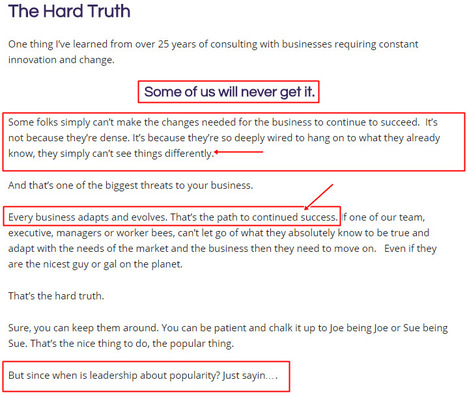
When people don't get it - the need for change or whatever - it's time to....
Gust MEES's insight:

When people don't get it - the need for change or whatever - it's time to....


No comment yet.
Scooped by Gust MEES
April 2, 2015 9:01 AM
Scoop.it!

Goleman’s ET | Emotional Intelligence | EDUcation4.0

Goleman’s ET | Emotional Intelligence | EDUcation4.0 | 21st Century Learning and Teaching | Scoop.it


Learn more:


- http://www.scoop.it/t/21st-century-learning-and-teaching/?tag=Ethics


- http://www.scoop.it/t/21st-century-learning-and-teaching/?tag=EQ


Gust MEES's insight:

Learn more:


- http://www.scoop.it/t/21st-century-learning-and-teaching/?tag=Ethics


- http://www.scoop.it/t/21st-century-learning-and-teaching/?tag=EQ


Dr. Deborah Brennan's curator insight, April 2, 2015 9:45 AM

The academic achievement gap in poverty schools coupled with the pressure of school ranking based upon standardized tests causes many educators to focus mainly on the academic needs of students.  many of our poverty students lack the Emotional Intelligence that provides an avenue for academic success.  We must build an awareness of emotional intelligence and then build this in our students just as we build their cognitive intelligence

Denver Leigh Watson, M.Ed, LDTC's curator insight, April 2, 2015 11:26 AM

How does this fit into your leadership framework? Do your arrows flow in the same direction? Does it matter? I believe self-management is the key to the flow, impact, and goal of change for leadership. For me, this is box #1 ... where's yours? 

Philippe-Didier Gauthier's curator insight, April 16, 2015 2:23 AM

#Reflexivité  Une ressource pour penser l'autodirection de son parcours professionnel.

Rescooped by Gust MEES from Technology and Education Resources
March 31, 2015 6:52 PM
Scoop.it!

Science says that parents of successful kids have these 7 things in common

Science says that parents of successful kids have these 7 things in common | 21st Century Learning and Teaching | Scoop.it

Anybody who has kids — or hopes to — wants THEIR kids to be successful...


Learn more:


- http://www.scoop.it/t/21st-century-learning-and-teaching/?tag=Growth+Mindset


Via R.Conrath, Ed.D.
Gust MEES's insight:


Anybody who has kids — or hopes to — wants THEIR kids to be successful...


Learn more:


- http://www.scoop.it/t/21st-century-learning-and-teaching/?tag=Growth+Mindset


No comment yet.
Scooped by Gust MEES
March 31, 2015 9:04 AM
Scoop.it!

Twitter for Learning: The Past, Present and Future

Twitter for Learning: The Past, Present and Future | 21st Century Learning and Teaching | Scoop.it
And since then, plenty more forward-thinking learning professionals have recognised the value of Twitter for their own professional learning – with Twitter rising to the top of the Top 100 Tools for Learning in 2008 and staying in that position for the last 6 years.

Now, of course Twitter has become mainstream, brands and celebrities have their own Twitter accounts to promote themselves, there are live chats every day on all kinds of topics  – with even TV programmes holding their own live chats. But just like with any society, it has unfortunately meant a darker side of Twitter has emerged too.

Nevertheless, Twitter is still the most important place for me to find out what is going on in the world, but I can understand how newcomers today might be daunted at the prospective of joining up. Most of the press would have them believe it’s just a place for finding out what their colleagues had for breakfast, or what their favourite celebrity is wearing today, but it has does have clear professional value too.


Learn more:


- https://gustmees.wordpress.com/?s=twitter


- https://gustmees.wordpress.com/2015/03/28/learning-to-learn-for-my-professional-development-i-did-it-my-way/


Gust MEES's insight:
And since then, plenty more forward-thinking learning professionals have recognised the value of Twitter for their own professional learning – with Twitter rising to the top of the Top 100 Tools for Learning in 2008 and staying in that position for the last 6 years.

Now, of course Twitter has become mainstream, brands and celebrities have their own Twitter accounts to promote themselves, there are live chats every day on all kinds of topics  – with even TV programmes holding their own live chats. But just like with any society, it has unfortunately meant a darker side of Twitter has emerged too.

Nevertheless, Twitter is still the most important place for me to find out what is going on in the world, but I can understand how newcomers today might be daunted at the prospective of joining up. Most of the press would have them believe it’s just a place for finding out what their colleagues had for breakfast, or what their favourite celebrity is wearing today, but it has does have clear professional value too.


Learn more:


- https://gustmees.wordpress.com/?s=twitter


- https://gustmees.wordpress.com/2015/03/28/learning-to-learn-for-my-professional-development-i-did-it-my-way/


Willem Kuypers's curator insight, April 1, 2015 10:48 AM

Tout à fait d'accord, Twitter est aujourd'hui l'outil numéro 1 pour l’apprentissage. Il faut le combiner avec Flipboard pour facilement lire l'info contenue dans les liens qui sont tweeté.