21st Century Learning and Teaching
792.5K views | +1 today
21st Century Learning and Teaching
Related articles to 21st Century Learning and Teaching as also tools...
Curated by Gust MEES
Your new post is loading...

Popular Tags

Current selected tag: '2016'. Clear
Scooped by Gust MEES
November 7, 2016 9:12 AM
Scoop.it!

Doing Good Work Even When No One is Looking: A Vision for Schools

Doing Good Work Even When No One is Looking: A Vision for Schools | 21st Century Learning and Teaching | Scoop.it
Yet, note that I don’t write articles to get the approval of a teacher or another person. I write and share because I am compelled to do so. I consider it a personal calling to stretch myself and others to consider the challenges and opportunities of life and learning in a connected and digital age. I write the article whether ten people read it or ten thousand people read it. As I often draw from the wisdom of Isaac Asimov to point out, Writing is just thinking with my fingers.” I write to think and to share those thoughts with others.


I believe that ideas matter and that, too often today, we turn our ideas into propaganda by only making them visible in their finished and polished formats. I want people to see my ideas in their naked or raw format as well. They are ideas without the lipstick, without being dressed to impress.


Learn more / En savoir plus / Mehr erfahren:


http://www.scoop.it/t/21st-century-learning-and-teaching/?tag=listening


https://gustmees.wordpress.com/2016/09/22/blogs-tips-and-tricks/


Gust MEES's insight:
Yet, note that I don’t write articles to get the approval of a teacher or another person. I write and share because I am compelled to do so. I consider it a personal calling to stretch myself and others to consider the challenges and opportunities of life and learning in a connected and digital age. I write the article whether ten people read it or ten thousand people read it. As I often draw from the wisdom of Isaac Asimov to point out, Writing is just thinking with my fingers.” I write to think and to share those thoughts with others.


I believe that ideas matter and that, too often today, we turn our ideas into propaganda by only making them visible in their finished and polished formats. I want people to see my ideas in their naked or raw format as well. They are ideas without the lipstick, without being dressed to impress.


Learn more / En savoir plus / Mehr erfahren:


http://www.scoop.it/t/21st-century-learning-and-teaching/?tag=listening


https://gustmees.wordpress.com/2016/09/22/blogs-tips-and-tricks/


No comment yet.
Scooped by Gust MEES
November 3, 2016 6:50 PM
Scoop.it!

What is innovative teaching? | #LEARNing2LEARN #ProfessionalDevelopment

What is innovative teaching? | #LEARNing2LEARN #ProfessionalDevelopment | 21st Century Learning and Teaching | Scoop.it

This is not too a difficult question to address, because innovative teaching is good whether or not technology is used. A bad teacher does not suddenly become a good teacher just because technology is included into the mix. Nor does a good teacher need to always use technology to maintain their effectiveness. But before we discuss this question any further, we should define 'innovative teaching.' What is it, and how do we know a good, innovative teacher when we see one?

For me, innovative teaching is often invisible, and the teacher is very much peripheral, to the most important factor - the student and their learning. Good teachers instinctively know when to intervene and most importantly, when to get out of the way. Teaching is not so focused on instruction today (and nor should it ever have been), but is increasingly about facilitation, and considers the student holistically. Innovative teaching focuses on creating conducive environments within which good learning can occur. Innovative teachers are excellent at supporting students, and are also adept at creating engaging content and new experiences. A good teacher observes and measures progress without causing any stress to the learner or interruption to learning.

Innovative teachers are instinctive about student challenges such as lack of understanding, loss of focus, low engagement or demotivation. They strive to find new ways to keep students on task, motivate them to do their best, and encourage them to succeed. Innovative teaching is where good teachers are inventive and creative - where they continue to discover and devise new methods and content to ensure that students always get the best learning experiences. But consider that invention and innovation are not the same. Invention requires a creative individual, whereas innovation requires a courageous community (see for example Rogers' Diffusion of Innovation Theory, 2003). Therefore, innovative teachers also need courage to embed their new methods and content, especially if it runs counter to the culture they work within.


Learn more / En savoir plus / Mehr erfahren:


http://www.scoop.it/t/21st-century-learning-and-teaching/?tag=innovation


http://www.scoop.it/t/21st-century-learning-and-teaching/?tag=Rise+of+the+Professional+Educator


Gust MEES's insight:

This is not too a difficult question to address, because innovative teaching is good whether or not technology is used. A bad teacher does not suddenly become a good teacher just because technology is included into the mix. Nor does a good teacher need to always use technology to maintain their effectiveness. But before we discuss this question any further, we should define 'innovative teaching.' What is it, and how do we know a good, innovative teacher when we see one?

For me, innovative teaching is often invisible, and the teacher is very much peripheral, to the most important factor - the student and their learning. Good teachers instinctively know when to intervene and most importantly, when to get out of the way. Teaching is not so focused on instruction today (and nor should it ever have been), but is increasingly about facilitation, and considers the student holistically. Innovative teaching focuses on creating conducive environments within which good learning can occur. Innovative teachers are excellent at supporting students, and are also adept at creating engaging content and new experiences. A good teacher observes and measures progress without causing any stress to the learner or interruption to learning.

Innovative teachers are instinctive about student challenges such as lack of understanding, loss of focus, low engagement or demotivation. They strive to find new ways to keep students on task, motivate them to do their best, and encourage them to succeed. Innovative teaching is where good teachers are inventive and creative - where they continue to discover and devise new methods and content to ensure that students always get the best learning experiences. But consider that invention and innovation are not the same. Invention requires a creative individual, whereas innovation requires a courageous community (see for example Rogers' Diffusion of Innovation Theory, 2003). Therefore, innovative teachers also need courage to embed their new methods and content, especially if it runs counter to the culture they work within.


Learn more / En savoir plus / Mehr erfahren:


http://www.scoop.it/t/21st-century-learning-and-teaching/?tag=innovation


http://www.scoop.it/t/21st-century-learning-and-teaching/?tag=Rise+of+the+Professional+Educator


No comment yet.
Scooped by Gust MEES
November 3, 2016 9:55 AM
Scoop.it!

Harnessing the Incredible Learning Potential of the Adolescent Brain | #LEARNing2LEARN #Research

Harnessing the Incredible Learning Potential of the Adolescent Brain | #LEARNing2LEARN #Research | 21st Century Learning and Teaching | Scoop.it
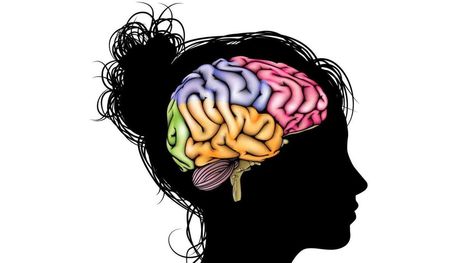
“[Adolescence is] a stage of life when we can really thrive, but we need to take advantage of the opportunity,” said Temple University neuroscientist Laurence Steinberg at a Learning and the Brain conference in Boston. Steinberg has spent his career studying how the adolescent brain develops and believes there is a fundamental disconnect between the popular characterizations of adolescents and what’s really going on in their brains.

Because the brain is still developing during adolescence, it has incredible plasticity. It’s akin to the first five years of life, when a child’s brain is growing and developing new pathways all the time in response to experiences. Adult brains are somewhat plastic as well — otherwise they wouldn’t be able to learn new things — but “brain plasticity in adulthood involves minor changes to existing circuits, not the wholesale development of new ones or elimination of others,” Steinberg said.


The adolescent brain is exquisitely sensitive to experience,” Steinberg said. “It is like the recording device is turned up to a different level of sensitivity.” That’s why humans tend to remember even the most mundane events from adolescence much better than even important events that took place later in life. It also means adolescence could be an extremely important window for learning that sticks. Steinberg notes this window is also lengthening as scientists observe the onset of puberty happening earlier and young people taking on adult roles later in life. Between these two factors, one biological and one social, adolescence researchers now generally say the period lasts 15 years between the ages of 10 and 25.


Learn more / En savoir plus / Mehr erfahren:


http://www.scoop.it/t/21st-century-learning-and-teaching/?tag=Brain


Use #Andragogy UP from 11 years:


 https://gustmees.wordpress.com/2015/05/13/andragogy-adult-teaching-how-to-teach-ict/


Gust MEES's insight:
[Adolescence is] a stage of life when we can really thrive, but we need to take advantage of the opportunity,” said Temple University neuroscientist Laurence Steinberg at a Learning and the Brain conference in Boston. Steinberg has spent his career studying how the adolescent brain develops and believes there is a fundamental disconnect between the popular characterizations of adolescents and what’s really going on in their brains.

Because the brain is still developing during adolescence, it has incredible plasticity. It’s akin to the first five years of life, when a child’s brain is growing and developing new pathways all the time in response to experiences. Adult brains are somewhat plastic as well — otherwise they wouldn’t be able to learn new things — but “brain plasticity in adulthood involves minor changes to existing circuits, not the wholesale development of new ones or elimination of others,” Steinberg said.


The adolescent brain is exquisitely sensitive to experience,” Steinberg said. “It is like the recording device is turned up to a different level of sensitivity.” That’s why humans tend to remember even the most mundane events from adolescence much better than even important events that took place later in life. It also means adolescence could be an extremely important window for learning that sticks. Steinberg notes this window is also lengthening as scientists observe the onset of puberty happening earlier and young people taking on adult roles later in life. Between these two factors, one biological and one social, adolescence researchers now generally say the period lasts 15 years between the ages of 10 and 25.


Learn more / En savoir plus / Mehr erfahren:


http://www.scoop.it/t/21st-century-learning-and-teaching/?tag=Brain


Use #Andragogy UP from 11 years:


 https://gustmees.wordpress.com/2015/05/13/andragogy-adult-teaching-how-to-teach-ict/


Koen Mattheeuws's curator insight, November 5, 2016 7:04 AM
The problem is that many high schools confuse “challenging work” with “amount of work.”
Lon Woodbury's curator insight, February 22, 2017 10:00 AM

It seems like boredom is deadly to the learning process and that's exactly what high school students report is what is happening to them in most schools - The lack of challenge. k-Lon

Scooped by Gust MEES
November 2, 2016 11:57 AM
Scoop.it!

Our research shows that when students work on projects, they learn more | #PBL #Collaboration

Our research shows that when students work on projects, they learn more | #PBL #Collaboration | 21st Century Learning and Teaching | Scoop.it
Educators often talk about 21st-century skills and the benefits of incorporating communication, creativity, collaboration, problem-solving, and critical thinking into lessons. These are skills students rarely learn straight out of a textbook. The best way to teach them, we’ve found, is by making these skills a relevant part of their active lives.

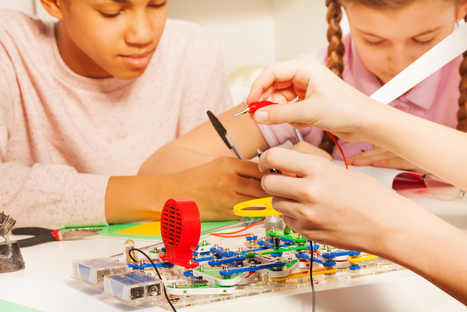
If that sounds daunting, rest assured, it doesn’t always have to be. One way we have taught these skills is through project-based learning (PBL), where students apply what they’ve learned during a hands-on project that is relevant to the real world — and their lives.

To that end, a new report developed by MIDA Learning Technologies, which we researchers worked on, shows that students engaged in PBL understand concepts more deeply than those receiving traditional instruction, resulting in improved problem solving skills. Past research reviewed in the report also suggests that PBL students perform better on a wide range of assessments including standardized testing. The full report includes quantitative and qualitative evaluations of students’ problem-solving abilities after implementation of a pre-built, project-based STEM curriculum in science class.


Learn more / En savoir plus / Mehr erfahren:


http://www.scoop.it/t/21st-century-learning-and-teaching/?tag=PBL


Gust MEES's insight:
Educators often talk about 21st-century skills and the benefits of incorporating communication, creativity, collaboration, problem-solving, and critical thinking into lessons. These are skills students rarely learn straight out of a textbook. The best way to teach them, we’ve found, is by making these skills a relevant part of their active lives.

If that sounds daunting, rest assured, it doesn’t always have to be. One way we have taught these skills is through project-based learning (PBL), where students apply what they’ve learned during a hands-on project that is relevant to the real world — and their lives.

To that end, a new report developed by MIDA Learning Technologies, which we researchers worked on, shows that students engaged in PBL understand concepts more deeply than those receiving traditional instruction, resulting in improved problem solving skills. Past research reviewed in the report also suggests that PBL students perform better on a wide range of assessments including standardized testing. The full report includes quantitative and qualitative evaluations of students’ problem-solving abilities after implementation of a pre-built, project-based STEM curriculum in science class.


Learn more / En savoir plus / Mehr erfahren:


http://www.scoop.it/t/21st-century-learning-and-teaching/?tag=PBL


ÁNGELA LÓPEZ's curator insight, November 2, 2016 3:47 PM
Nuestra investigación muestra que cuando los estudiantes trabajan en proyectos aprenden más. #PBL #Collaboration #SCEUNED16
Jeff Jennings's curator insight, November 3, 2016 10:13 AM
This article discuss the results based on K-12, but the concepts can also be implemented in the Higher Education classroom. There is a push for more active learning in higher ed and this is a great way to get started.
PIRatE Lab's curator insight, November 7, 2016 12:45 PM
Project-based learning (PBL) is essential to developing necessary skills in student's education. I can remember multiple instances throughout my time in school where I've understood the concept better simply because I was applying the ideas.  
Scooped by Gust MEES
October 31, 2016 6:01 PM
Scoop.it!

What Is DNS and Why Does It Make the Internet Break? | #ICT #CyberSecurity #DDoS #CyberAttacks 

What Is DNS and Why Does It Make the Internet Break? | #ICT #CyberSecurity #DDoS #CyberAttacks  | 21st Century Learning and Teaching | Scoop.it
Today, half of America’s internet shut down when hackers unleashed a large distributed denial of service (DDoS) attack on the servers of Dyn, a major DNS host. It’s still unclear exactly who carried out the attack and why, but regardless, the event served as a demonstration of how easily large swaths of the web can be wiped out if attacked by determined hackers.


Learn more / En savoir plus / Mehr erfahren:


http://www.scoop.it/t/21st-century-learning-and-teaching/?tag=Internet+of+Things


Gust MEES's insight:
Today, half of America’s internet shut down when hackers unleashed a large distributed denial of service (DDoS) attack on the servers of Dyn, a major DNS host. It’s still unclear exactly who carried out the attack and why, but regardless, the event served as a demonstration of how easily large swaths of the web can be wiped out if attacked by determined hackers.


Learn more / En savoir plus / Mehr erfahren:


http://www.scoop.it/t/21st-century-learning-and-teaching/?tag=Internet+of+Things


No comment yet.
Scooped by Gust MEES
October 30, 2016 6:29 PM
Scoop.it!

Jeder zweite Lehrer würde gerne häufiger digitale Medien einsetzen | #Deutschland #Germany #ICT #IKT 

Jeder zweite Lehrer würde gerne häufiger digitale Medien einsetzen | #Deutschland #Germany #ICT #IKT  | 21st Century Learning and Teaching | Scoop.it
  • Schlechtes Zeugnis für die technische Ausstattung der Schulen
  • 82 Prozent der Lehrer der Sekundarstufe I fordern mehr Weiterbildungsangebote zu Digitalthemen
  • Gemeinsame Studie von Bitkom, VBE und LEARNTEC


Berlin, 13. Januar 2016 - Lehrer sehen große Vorteile durch den Einsatz digitaler Medien im Unterricht und würden diese auch gerne häufiger einsetzen. Allerdings mangelt es an der technischen Ausstattung der Schulen sowie an geeigneten Weiterbildungsangeboten. Aus diesem Grund fordert eine große Mehrheit der Lehrer ein stärkeres Engagement des Bundes bei der Entwicklung und Umsetzung einer Digitalen Strategie für die Schule.


Das ist das Ergebnis einer repräsentativen Befragung von 505 Lehrern der Sekundarstufe I im Auftrag des Digitalverbands Bitkom, des Lehrerverbands Bildung und Erziehung (VBE) und der von der Karlsruher Messe- und Kongress-GmbH veranstalteten LEARNTEC, die anlässlich der kommenden LEARNTEC (26. bis 28. Januar) durchgeführt wurde.


Learn more / En savoir plus / Mehr erfahren:


http://www.scoop.it/t/luxembourg-europe/?tag=Germany


Gust MEES's insight:
  • Schlechtes Zeugnis für die technische Ausstattung der Schulen
  • 82 Prozent der Lehrer der Sekundarstufe I fordern mehr Weiterbildungsangebote zu Digitalthemen
  • Gemeinsame Studie von Bitkom, VBE und LEARNTEC


Berlin, 13. Januar 2016 - Lehrer sehen große Vorteile durch den Einsatz digitaler Medien im Unterricht und würden diese auch gerne häufiger einsetzen. Allerdings mangelt es an der technischen Ausstattung der Schulen sowie an geeigneten Weiterbildungsangeboten. Aus diesem Grund fordert eine große Mehrheit der Lehrer ein stärkeres Engagement des Bundes bei der Entwicklung und Umsetzung einer Digitalen Strategie für die Schule.


Das ist das Ergebnis einer repräsentativen Befragung von 505 Lehrern der Sekundarstufe I im Auftrag des Digitalverbands Bitkom, des Lehrerverbands Bildung und Erziehung (VBE) und der von der Karlsruher Messe- und Kongress-GmbH veranstalteten LEARNTEC, die anlässlich der kommenden LEARNTEC (26. bis 28. Januar) durchgeführt wurde.


Learn more / En savoir plus / Mehr erfahren:


http://www.scoop.it/t/luxembourg-europe/?tag=Germany


No comment yet.
Scooped by Gust MEES
October 29, 2016 7:27 PM
Scoop.it!

(Hey, Teacher) Leave Those Kids Alone | #ModernEDU

(Hey, Teacher) Leave Those Kids Alone | #ModernEDU | 21st Century Learning and Teaching | Scoop.it
Alison Gopnik is the author of the New York Times best seller The Philosophical Baby, a regular contributor to The Wall Street Journal, and a pioneer in developmental psychology and understanding the way children learn. Gopnik’s new book, The Gardener and the Carpenter—which came out in August 2016—addresses the growing pressure on parents and teachers to ensure that children develop in one particular way.

That’s a losing strategy, insists Gopnik. Arguing passionately for a messier, less directed form of guidance for children, Gopnik summons evidence from decades of research that suggests that young kids are born learners—diverse, wildly unpredictable, easily distracted, but always processing information, cracking codes, and experimenting with new, innovative ideas that drive the species forward.


Learn more / En savoir plus / Mehr erfahren:


http://www.scoop.it/t/21st-century-learning-and-teaching/?tag=Creativity


Gust MEES's insight:
Alison Gopnik is the author of the New York Times best seller The Philosophical Baby, a regular contributor to The Wall Street Journal, and a pioneer in developmental psychology and understanding the way children learn. Gopnik’s new book, The Gardener and the Carpenter—which came out in August 2016—addresses the growing pressure on parents and teachers to ensure that children develop in one particular way.

That’s a losing strategy, insists Gopnik. Arguing passionately for a messier, less directed form of guidance for children, Gopnik summons evidence from decades of research that suggests that young kids are born learners—diverse, wildly unpredictable, easily distracted, but always processing information, cracking codes, and experimenting with new, innovative ideas that drive the species forward.


Learn more / En savoir plus / Mehr erfahren:


http://www.scoop.it/t/21st-century-learning-and-teaching/?tag=Creativity


OneydaAyala's curator insight, October 30, 2016 6:57 PM
This article is actually an interview of Alison Gobnik the author whom wrote the New York Times best seller The Philosophical Baby. In the interview, the reporter for Edutopia (an educational foundation) discussed some matters that were found in Gobnik's book. The first topic discussed was that of parent and teacher roles. According to Gobnik who has done 15 years worth of research on biological evolution and psychological development, children should be exposed to a rich environment and be given the liberty to explore for themselves. She addresses the fact that children, especially young ones, are far much better learners than we can be teachers. She addresses the importance of family roles in early childhood. Children should not be limited to just their parents and school material but rather they should be in a community of learning. Extended family aides in the learning and interaction of children. It is at a young age that they learn to observe others and replicate their observations. However, both educators and parents have fallen into the pressure of traditional schooling because they seek to teach children a set of specific skills that they hope will aide in them in their future success. The author makes special reference to the 19th century when schools taught a narrow array of skills to fit the industrial age. Other questions asked by the reporter include: the role of play, the role of technology, and the spike of ADHD diagnosed in children. 
Scooped by Gust MEES
October 29, 2016 9:22 AM
Scoop.it!

Using music in the classroom

Using music in the classroom | 21st Century Learning and Teaching | Scoop.it
Listening to music can improve concentration and productivity, so is it a good idea to play music in the classroom? If so, what kind is the most effective? Dr Nicola Davies investigates.


Learn more / En savoir plus / Mehr erfahren:


http://www.scoop.it/t/21st-century-learning-and-teaching/?tag=Music


Gust MEES's insight:
Listening to music can improve concentration and productivity, so is it a good idea to play music in the classroom? If so, what kind is the most effective? Dr Nicola Davies investigates.


Learn more / En savoir plus / Mehr erfahren:


http://www.scoop.it/t/21st-century-learning-and-teaching/?tag=Music


No comment yet.
Scooped by Gust MEES
October 31, 2016 9:18 AM
Scoop.it!

5 Ways Teachers Can Encourage Deeper Learning With Personal Devices (EdSurge News)

5 Ways Teachers Can Encourage Deeper Learning With Personal Devices (EdSurge News) | 21st Century Learning and Teaching | Scoop.it

To ban or not to ban, that is always the question when it comes to personal devices in the classroom. But rather than fight this uphill battle (Generation Alpha is forecasted to be more technological than any previous), let's figure out how to leverage these little machines. If used intentionally...
 

1. Accept Immediate Inquiry

2. Devices to aid in organizing and collaborating with peers

3. Keep ‘em engaged with real-time feedback

4. Document learning and thinking through blogging when the good ideas hit you!

5. Document and debrief field work with ease


Learn more / En savoir plus / Mehr erfahren:


http://www.scoop.it/t/21st-century-learning-and-teaching/?tag=Deeper+Learning


Via John Evans
Gust MEES's insight:

To ban or not to ban, that is always the question when it comes to personal devices in the classroom. But rather than fight this uphill battle (Generation Alpha is forecasted to be more technological than any previous), let's figure out how to leverage these little machines. If used intentionally...


1. Accept Immediate Inquiry
2. Devices to aid in organizing and collaborating with peers

3. Keep ‘em engaged with real-time feedback

4. Document learning and thinking through blogging when the good ideas hit you!

5. Document and debrief field work with ease


Learn more / En savoir plus / Mehr erfahren:


http://www.scoop.it/t/21st-century-learning-and-teaching/?tag=Deeper+Learning


Dr. Helen Teague's curator insight, November 2, 2016 12:07 PM
With effective monitoring, mobile devices can be integrated into courses and classroom time
Yeison Ossa Trejos's curator insight, November 2, 2016 12:45 PM
From my point of view, personal devices such cell phones, tablets, ipads, among others, can be a huge risk if we allow students to use them in the classroom. However, it is also true that we as teachers should try to find useful ways to incorporate these potential resources into our lessons if we want to increase learner involvement and motivation while at the same time improving time management, teacher-student interaction, meaningful learning and real-time provision of feedback. 

All these educational factors can be simultaneously addressed if teachers take some time to do a little research on the web to find out the countless activities that digital devices allow them to perform along with your students both in and outside the classroom. 
Sebastián Vásquez's curator insight, December 4, 2016 6:07 PM
One of the most common expressions that I use to listen to nowadays is "put your cellphone away". Many teacher deal in their daily basis with students distracted by their phones and most of time they take desperate actions towards this situations which leads to a rough environment and affects the atmosphere of the classroom. In fact, one need we have in this current days is that of creating students perception towards the use of this devices which is not  a short way to walk but neither impossible. Providing the conditions and raising awareness about other possible uses into the classroom as well as raising curiosity to what is happening in the classroom will increase the possibilities of obtaining better behaviors in terms of technology. Our task then is to start thinking of strategies to implement since the very basis of the students academic life.
Rescooped by Gust MEES from Effective Education
October 28, 2016 10:52 AM
Scoop.it!

Changing Education: Why We Need More Focus On ‘Soft’ Skills | #LEARNing2LEARN

Changing Education: Why We Need More Focus On ‘Soft’ Skills | #LEARNing2LEARN | 21st Century Learning and Teaching | Scoop.it
Colleges should do a better job of teaching such skills as creativity, communication and collaboration in every field.


Learn more / En savoir plus / Mehr erfahren:


http://www.scoop.it/t/21st-century-learning-and-teaching/?tag=Soft+Skills


Via EDTECH@UTRGV, Mark E. Deschaine, PhD
Gust MEES's insight:
Colleges should do a better job of teaching such skills as creativity, communication and collaboration in every field.


Learn more / En savoir plus / Mehr erfahren:


http://www.scoop.it/t/21st-century-learning-and-teaching/?tag=Soft+Skills


Sandrine Pac-Kenny's curator insight, October 28, 2016 3:07 PM
Interesting in current Irish context
Rescooped by Gust MEES from Learning & Technology News
October 28, 2016 12:00 PM
Scoop.it!

5 Ways to Cultivate Creativity in Life and Work

5 Ways to Cultivate Creativity in Life and Work | 21st Century Learning and Teaching | Scoop.it
I believe that all human beings are creative, and that creative thinking is a central part of self-expression. Self-expression is a gift we give ourselves and the world. Creativity, therefore, is at the heart of being fully engaged in life and work. Creativity, like any other skill, can be fostered and developed. Under the right conditions, the muse (creative inspiration) will visit each and every one of us in its own unique way.


Learn more / En savoir plus / Mehr erfahren:


https://gustmees.wordpress.com/2016/10/26/luxembourg-education-interviews-creativity-and-maker-spaces-maach3-ltettelbruck/


http://www.scoop.it/t/21st-century-learning-and-teaching/?tag=Creativity


Via Nik Peachey
Gust MEES's insight:
I believe that all human beings are creative, and that creative thinking is a central part of self-expression. Self-expression is a gift we give ourselves and the world. Creativity, therefore, is at the heart of being fully engaged in life and work. Creativity, like any other skill, can be fostered and developed. Under the right conditions, the muse (creative inspiration) will visit each and every one of us in its own unique way.


Learn more / En savoir plus / Mehr erfahren:


https://gustmees.wordpress.com/2016/10/26/luxembourg-education-interviews-creativity-and-maker-spaces-maach3-ltettelbruck/


http://www.scoop.it/t/21st-century-learning-and-teaching/?tag=Creativity


Scooped by Gust MEES
October 25, 2016 7:50 PM
Scoop.it!

Onion Pi TOR Proxy | #Maker #RaspberryPI #ICT #Privacy 

Onion Pi TOR Proxy - Tor Onion Router which gives you opportunity to create secure network wherever you are


Learn more / En savoir plus / Mehr erfahren:


http://www.scoop.it/t/21st-century-learning-and-teaching/?tag=Raspberry+Pi


Gust MEES's insight:
Onion Pi TOR Proxy - Tor Onion Router which gives you opportunity to create secure network wherever you are


Learn more / En savoir plus / Mehr erfahren:


http://www.scoop.it/t/21st-century-learning-and-teaching/?tag=Raspberry+Pi


No comment yet.
Scooped by Gust MEES
October 25, 2016 6:15 PM
Scoop.it!

Académie d'Orléans-Tours | Portail académique : Twitter à l'école | #SocialMedia #ModernEDU

Académie d'Orléans-Tours | Portail académique : Twitter à l'école | #SocialMedia #ModernEDU | 21st Century Learning and Teaching | Scoop.it
Twitter, un outil au service de la pédagogie

Créé en 2006 par Jack Dorsey, le réseau social Twitter a atteint 500 millions d'utilisateurs dans le monde en février 2012. Twitter est devenu peu à peu un des réseaux sociaux incontournables dans le monde professionnel ou personnel. environnement professionnel et de plus en plus dans l'univers de l'école.

Quelle est la plus-value de cet outil dans un contexte de classe au cycle2, au cycle3 ? Comment développer des projets autour d'une twitter-classe ?


Learn more / En savoir plus / Mehr erfahren:


http://www.scoop.it/t/21st-century-learning-and-teaching/?tag=Twitter


Gust MEES's insight:
Twitter, un outil au service de la pédagogie

Créé en 2006 par Jack Dorsey, le réseau social Twitter a atteint 500 millions d'utilisateurs dans le monde en février 2012. Twitter est devenu peu à peu un des réseaux sociaux incontournables dans le monde professionnel ou personnel. environnement professionnel et de plus en plus dans l'univers de l'école.

Quelle est la plus-value de cet outil dans un contexte de classe au cycle2, au cycle3 ? Comment développer des projets autour d'une twitter-classe ?


Learn more / En savoir plus / Mehr erfahren:


http://www.scoop.it/t/21st-century-learning-and-teaching/?tag=Twitter


No comment yet.
Scooped by Gust MEES
November 6, 2016 4:02 PM
Scoop.it!

The surprising habits of original thinkers | Adam Grant

The surprising habits of original thinkers | Adam Grant | 21st Century Learning and Teaching | Scoop.it

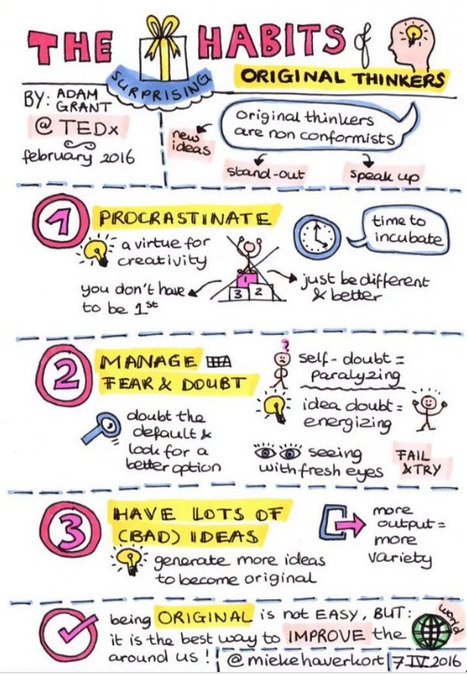
How do creative people come up with great ideas? Organizational psychologist Adam Grant studies "originals": thinkers who dream up new ideas and take action to put them into the world. In this talk, learn three unexpected habits of originals — including embracing failure. "The greatest originals are the ones who fail the most, because they're the ones who try the most," Grant says. "You need a lot of bad ideas in order to get a few good ones."

TEDTalks is a daily video podcast of the best talks and performances from the TED Conference, where the world's leading thinkers and doers give the talk of their lives in 18 minutes (or less). Look for talks on Technology, Entertainment and Design -- plus science, business, global issues, the arts and much more.


Learn more / En savoir plus / Mehr erfahren:


https://www.youtube.com/watch?v=fxbCHn6gE3U


Rescooped by Gust MEES from 21st Century Classroom Coaching
November 3, 2016 8:41 PM
Scoop.it!

No Student Is Unreachable | #Confidence #Acceptance #LEARNing2LEARN #IQ #EQ #EmotionalIntelligence

No Student Is Unreachable | #Confidence #Acceptance #LEARNing2LEARN #IQ #EQ #EmotionalIntelligence | 21st Century Learning and Teaching | Scoop.it

No Student Is Unreachable: 4 Strategies To Reach Students That Don't Seem To Want To Be Reached.


Students who are challenging–i.e. victims of disruptive childhoods–do not change overnight. They grow. For many of them, that growth is dependent on grasping onto an extremely diminished set of possibilities, interests, and strengths. Ultimately they’ll have the best shot at a stable life by working from the things they are good at and the things they enjoy. We serve them best by spending as much time seeking and discussing their often fragile and submerged interests and capacities as we do their significant needs and disabilities.


[Gust MEES] THEY might surprise YOU years later WHAT THEY are able to do in professional life! ;) THEY think mostly if there isn't a box, THEY don't fit in any box anyway!!! Which isn't an obstacle, should GET seen as THAT anyway!!!


Learn more / En savoir plus / Mehr erfahren:


http://www.scoop.it/t/21st-century-learning-and-teaching/?tag=innovation


Via Amy Burns
Gust MEES's insight:


No Student Is Unreachable: 4 Strategies To Reach Students That Don't Seem To Want To Be Reached.


Students who are challenging–i.e. victims of disruptive childhoods–do not change overnight. They grow. For many of them, that growth is dependent on grasping onto an extremely diminished set of possibilities, interests, and strengths. Ultimately they’ll have the best shot at a stable life by working from the things they are good at and the things they enjoy. We serve them best by spending as much time seeking and discussing their often fragile and submerged interests and capacities as we do their significant needs and disabilities.


[Gust MEES] THEY might surprise YOU years later WHAT THEY are able to do in professional life! ;) THEY think mostly if there isn't a box, THEY don't fit in any box anyway!!! Which isn't an obstacle, should GET seen as THAT anyway!!!


Learn more / En savoir plus / Mehr erfahren:


http://www.scoop.it/t/21st-century-learning-and-teaching/?tag=innovation


No comment yet.
Scooped by Gust MEES
November 2, 2016 6:29 PM
Scoop.it!

Skills for Success in a Disruptive World of Work

Skills for Success in a Disruptive World of Work | 21st Century Learning and Teaching | Scoop.it
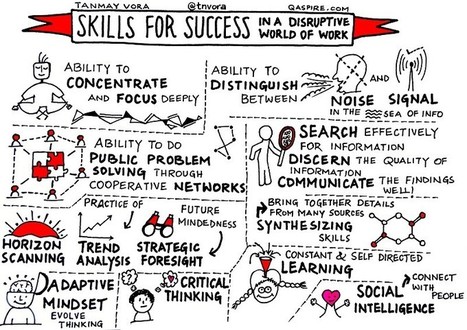
“Skills young people should be learning to be prepared for a career in 2020 include:


The ability to concentrate, to focus deeply.


The ability to distinguish between the “noise” and the message in the ever-growing sea of information.


The ability to do public problem solving through cooperative work.


The ability to search effectively for information and to be able to discern the quality and veracity of the information one finds and then communicate these findings well.


Synthesizing skills (being able to bring together details from many sources).


The capability to be futures-minded through formal education in the practices of horizon-scanning, trends analysis and strategic foresight.”


Learn more / En savoir plus / Mehr erfahren:


https://gustmees.wordpress.com/2015/05/26/what-are-the-skills-needed-from-students-in-the-future/


Gust MEES's insight:
Skills young people should be learning to be prepared for a career in 2020 include:


The ability to concentrate, to focus deeply.


The ability to distinguish between the “noise” and the message in the ever-growing sea of information.


The ability to do public problem solving through cooperative work.


The ability to search effectively for information and to be able to discern the quality and veracity of the information one finds and then communicate these findings well.


Synthesizing skills (being able to bring together details from many sources).


The capability to be futures-minded through formal education in the practices of horizon-scanning, trends analysis and strategic foresight.”


Learn more / En savoir plus / Mehr erfahren:


https://gustmees.wordpress.com/2015/05/26/what-are-the-skills-needed-from-students-in-the-future/


David Baker's curator insight, December 14, 2016 2:50 PM
Infographic and discussion of the range of skills we need to help students learn as well as colleagues is helpful.  I was struggling with deep focus before I read this. It was a gentle reminder to step it up in many ways.
Gilson Schwartz's curator insight, December 18, 2016 8:30 AM
Antigamente a gente falava em "profissões do futuro". Agora são os "skills" do futuro"
Víctor Ríos Ochoa's curator insight, May 27, 2017 10:25 AM
Skills for Success in a Disruptive World of Work
Scooped by Gust MEES
November 2, 2016 11:46 AM
Scoop.it!

12 of the Most Dangerous Leadership Mindsets - Lolly Daskal 

12 of the Most Dangerous Leadership Mindsets - Lolly Daskal  | 21st Century Learning and Teaching | Scoop.it

Mindset is extremely important when it comes to great leadership. Mindset is the set of beliefs or way of thinking that determines your behavior, outlook and...


Learn more / En savoir plus / Mehr erfahren:


http://www.scoop.it/t/21st-century-learning-and-teaching/?tag=LeaderShip


Gust MEES's insight:

Mindset is extremely important when it comes to great leadership. Mindset is the set of beliefs or way of thinking that determines your behavior, outlook and...


Learn more / En savoir plus / Mehr erfahren:


http://www.scoop.it/t/21st-century-learning-and-teaching/?tag=LeaderShip


No comment yet.
Scooped by Gust MEES
October 30, 2016 8:32 PM
Scoop.it!

EDUCATION Y: Lernen im 21. Jahrhundert #LEARNing2LEARN #Creativity #ModernEDU #PBL 

Der Film beschreibt, wie das Lernen im 21. Jahrhundert sein sollte. Nach dem Vorbild des "21st Century Lerning" Films des US-amerikanischen Bildungsaktivisten Patrick Newell und durch seine freundliche Freigabe, hat die Organisation EDCUATION Y eine deutsche Fassung produziert.


Darin kommen Bildungsexperten aus der Wissenschaft genau zu Wort wie Bildungspraktiker.


Learn more / En savoir plus / Mehr erfahren:


https://gustmees.wordpress.com


Gust MEES's insight:

Der Film beschreibt, wie das Lernen im 21. Jahrhundert sein sollte. Nach dem Vorbild des "21st Century Lerning" Films des US-amerikanischen Bildungsaktivisten Patrick Newell und durch seine freundliche Freigabe, hat die Organisation EDCUATION Y eine deutsche Fassung produziert.


Darin kommen Bildungsexperten aus der Wissenschaft genau zu Wort wie Bildungspraktiker.


Learn more / En savoir plus / Mehr erfahren:


https://gustmees.wordpress.com


No comment yet.
Scooped by Gust MEES
October 30, 2016 3:23 PM
Scoop.it!

Appel à contributions sur l'esprit critique - Éduscol | #France #CriticalTHINKing 

Appel à contributions sur l'esprit critique - Éduscol | #France #CriticalTHINKing  | 21st Century Learning and Teaching | Scoop.it
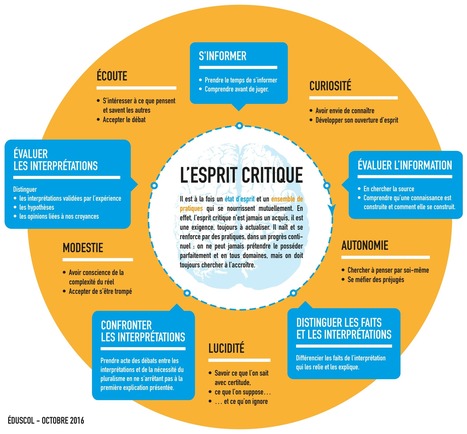
L'esprit critique est une dynamique. Ce n'est jamais un acquis définitif, et il peut toujours nous arriver d'en manquer, d'être entraîné par nos opinions, par nos préjugés, de laisser de côté des aspects de la réalité qui nous gênent ou nous remettent en question. Le sociologue Max Weber, dans un ouvrage célèbre,

Le savant et le politique, écrit : « La tâche primordiale d'un professeur capable est d'apprendre à ses élèves à reconnaître qu'il y a des faits inconfortables, j'entends par là des faits qui sont désagréables à l'opinion personnelle d'un individu ; en effet il existe des faits extrêmement désagréables pour chaque opinion, y compris la mienne » (Max Weber, Le Savant et le politique).


On ne peut donc pas se prévaloir purement et simplement de l'esprit critique : on s'efforce d'en avoir, et cela se traduit par des pratiques. C'est à cet effort incessant que l'enseignant initie progressivement ses élèves.


Learn more / En savoir plus / Mehr erfahren:


http://www.scoop.it/t/21st-century-learning-and-teaching?tag=Critical-Thinking


Gust MEES's insight:
L'esprit critique est une dynamique. Ce n'est jamais un acquis définitif, et il peut toujours nous arriver d'en manquer, d'être entraîné par nos opinions, par nos préjugés, de laisser de côté des aspects de la réalité qui nous gênent ou nous remettent en question. Le sociologue Max Weber, dans un ouvrage célèbre,

Le savant et le politique, écrit : « La tâche primordiale d'un professeur capable est d'apprendre à ses élèves à reconnaître qu'il y a des faits inconfortables, j'entends par là des faits qui sont désagréables à l'opinion personnelle d'un individu ; en effet il existe des faits extrêmement désagréables pour chaque opinion, y compris la mienne » (Max Weber, Le Savant et le politique).


On ne peut donc pas se prévaloir purement et simplement de l'esprit critique : on s'efforce d'en avoir, et cela se traduit par des pratiques. C'est à cet effort incessant que l'enseignant initie progressivement ses élèves.


Learn more / En savoir plus / Mehr erfahren:


http://www.scoop.it/t/21st-century-learning-and-teaching?tag=Critical-Thinking


Uraore's curator insight, April 15, 2020 11:50 PM
Très utile en ce temps de confinement international !
Uraore's curator insight, April 15, 2020 11:52 PM
Très utile en ce temps de confinement international !
Uraore's curator insight, April 16, 2020 12:00 AM
Très utile en ces temps de confinement international !
Scooped by Gust MEES
October 29, 2016 1:07 PM
Scoop.it!

RSA ANIMATE: How To Help Every Child Fulfil Their Potential | #GrowthMindset #LEARNing2LEARN #ModernEDU 

Ever wondered why kids say they’re bored at school, or why they stop trying when the work gets harder? Educationalist Carol Dweck explains how the wrong kind of praise actually *harms* young people.


Learn more / En savoir plus / Mehr erfahren:


http://www.scoop.it/t/21st-century-learning-and-teaching/?tag=carol+dweck


Gust MEES's insight:

Ever wondered why kids say they’re bored at school, or why they stop trying when the work gets harder? Educationalist Carol Dweck explains how the wrong kind of praise actually *harms* young people.


Learn more / En savoir plus / Mehr erfahren:


http://www.scoop.it/t/21st-century-learning-and-teaching/?tag=carol+dweck


No comment yet.
Scooped by Gust MEES
October 29, 2016 8:33 AM
Scoop.it!

Leadership and The Art of Effective Listening

Leadership and The Art of Effective Listening | 21st Century Learning and Teaching | Scoop.it

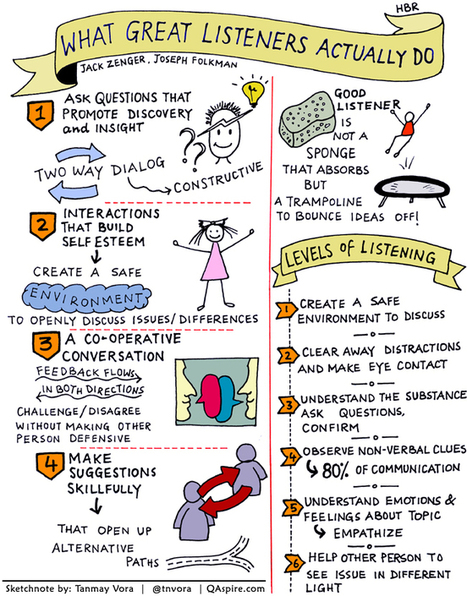
There is no leadership, personal or organizational, without listening. In fact, ability to truly listen (and not just hear) is the foundation of having a conversation, building trust, influencing others, resolving conflicts, driving your vision, building relationships, implementing change and...


Learn more / En savoir plus / Mehr erfahren:


http://www.scoop.it/t/21st-century-learning-and-teaching/?tag=listening


Gust MEES's insight:

There is no leadership, personal or organizational, without listening. In fact, ability to truly listen (and not just hear) is the foundation of having a conversation, building trust, influencing others, resolving conflicts, driving your vision, building relationships, implementing change and...


Learn more / En savoir plus / Mehr erfahren:


http://www.scoop.it/t/21st-century-learning-and-teaching/?tag=listening


Gonzalo Moreno's curator insight, November 1, 2016 8:44 AM
Leading starts with listening. Key idea, specially for the younger...
Brad Merrick's curator insight, November 2, 2016 4:50 PM
Being able to listen with focus and empathy is key, whereby those in our care feel supported and heard. In a world where everyone is so busy and time often seems to be the commodity that we have the least of, this diagram really serves to remind us that we need to listen constructively, suggest skilfully and try to understand the emotion of those we are engaging with in all that we do. Purposeful listening rather than just hearing is key.
Scooped by Gust MEES
October 28, 2016 11:29 AM
Scoop.it!

Luxembourg EDUcation-Interviews | Creativity and Maker-Spaces | maach3 LTEttelbruck

Luxembourg EDUcation-Interviews | Creativity and Maker-Spaces | maach3 LTEttelbruck | 21st Century Learning and Teaching | Scoop.it

Creativity and Maker-Spaces | maach3 LTEttelbruck

As on October 26th 2016 I had an interview with Marc TEUSCH in the „Makerspace maach3" in LTEttelbruck. This is the third interview from EDUcation in Luxembourg of a series which I intend to do; the first one was about <===> Luxembourg EDUcation-Interviews | 1) The Luxembourg EDU-System, followed by Luxembourg…


Learn more / En savoir plus / Mehr erfahren:


https://gustmees.wordpress.com/2014/08/20/maker-space-a-new-trend-in-education-and-a-big-responsibility/


https://gustmees.wordpress.com/2016/04/05/luxembourg-education-interviews-5-creativity-and-maker-spaces-beecreative/


Gust MEES's insight:

Creativity and Maker-Spaces | maach3 LTEttelbruck

As on October 26th 2016 I had an interview with Marc TEUSCH in the „Makerspace maach3" in LTEttelbruck. This is the third interview from EDUcation in Luxembourg of a series which I intend to do; the first one was about <===> Luxembourg EDUcation-Interviews | 1) The Luxembourg EDU-System, followed by Luxembourg…


Learn more / En savoir plus / Mehr erfahren:


https://gustmees.wordpress.com/2014/08/20/maker-space-a-new-trend-in-education-and-a-big-responsibility/


https://gustmees.wordpress.com/2016/04/05/luxembourg-education-interviews-5-creativity-and-maker-spaces-beecreative/


No comment yet.
Scooped by Gust MEES
October 28, 2016 5:12 AM
Scoop.it!

Messy Situations Make Us Uneasy, But Can Improve Our Thinking | #Creativity

Messy Situations Make Us Uneasy, But Can Improve Our Thinking | #Creativity | 21st Century Learning and Teaching | Scoop.it
Unexpected disruptions, plans gone awry, added mess to a project or lesson — it all makes us uncomfortable. And that aversion to an unexpected hitch in the plan makes sense. “We don’t want to overcome unnecessary hurdles,” says Tim Harford is his TED talk about why those messy situations lead to the best results. He gives examples in disparate fields like music production, performances, classrooms, psychology and engineering where unexpected disruptions actually make people more creative.


Gust MEES's insight:
Unexpected disruptions, plans gone awry, added mess to a project or lesson — it all makes us uncomfortable. And that aversion to an unexpected hitch in the plan makes sense. “We don’t want to overcome unnecessary hurdles,” says Tim Harford is his TED talk about why those messy situations lead to the best results. He gives examples in disparate fields like music production, performances, classrooms, psychology and engineering where unexpected disruptions actually make people more creative.


No comment yet.
Scooped by Gust MEES
October 26, 2016 2:17 AM
Scoop.it!

Micro Bit mini-computer heads overseas | #Maker #MakerED #MakerSpace #Coding

Micro Bit mini-computer heads overseas | #Maker #MakerED #MakerSpace #Coding | 21st Century Learning and Teaching | Scoop.it
The BBC passes control of the Micro Bit mini-computer to a foundation that aims it to give it international appeal.


Learn more / En savoir plus / Mehr erfahren:


http://www.scoop.it/t/21st-century-learning-and-teaching/?tag=BBC


Gust MEES's insight:
The BBC passes control of the Micro Bit mini-computer to a foundation that aims it to give it international appeal.


Learn more / En savoir plus / Mehr erfahren:


http://www.scoop.it/t/21st-century-learning-and-teaching/?tag=BBC


No comment yet.
Scooped by Gust MEES
October 25, 2016 7:06 PM
Scoop.it!

La tablette en classe, des résultats remarquables à l'École primaire L'Arpège | #ICT #ModernEDU

La tablette en classe, des résultats remarquables à l'École primaire L'Arpège | #ICT #ModernEDU | 21st Century Learning and Teaching | Scoop.it
Les élèves manquent moins souvent l'école, ils sont plus motivés, et la plupart ont de meilleures notes. L'École primaire L'Arpège, à Sainte-Julie, n'a que des bons mots à propos de l'utilisation de la tablette en classe.


Learn more / En savoir plus / Mehr erfahren:


http://www.scoop.it/t/21st-century-learning-and-teaching/?tag=Flipped-Classroom


Gust MEES's insight:
Les élèves manquent moins souvent l'école, ils sont plus motivés, et la plupart ont de meilleures notes. L'École primaire L'Arpège, à Sainte-Julie, n'a que des bons mots à propos de l'utilisation de la tablette en classe.


Les élèves manquent moins souvent l'école, ils sont plus motivés, et la plupart ont de meilleures notes. L'École primaire L'Arpège, à Sainte-Julie, n'a que des bons mots à propos de l'utilisation de la tablette en classe.


Learn more / En savoir plus / Mehr erfahren:


http://www.scoop.it/t/21st-century-learning-and-teaching/?tag=Flipped-Classroom


No comment yet.