21st Century Learning and Teaching
791.6K views | +7 today
21st Century Learning and Teaching
Related articles to 21st Century Learning and Teaching as also tools...
Curated by Gust MEES
Your new post is loading...

Popular Tags

Current selected tag: 'Learning 2 Learn'. Clear
Scooped by Gust MEES
October 13, 2016 11:40 AM
Scoop.it!

The Give and Take of Social Networking | #LEARNing2LEARN #SocialMedia #ModernEDU #ICT

The Give and Take of Social Networking | #LEARNing2LEARN #SocialMedia #ModernEDU #ICT | 21st Century Learning and Teaching | Scoop.it
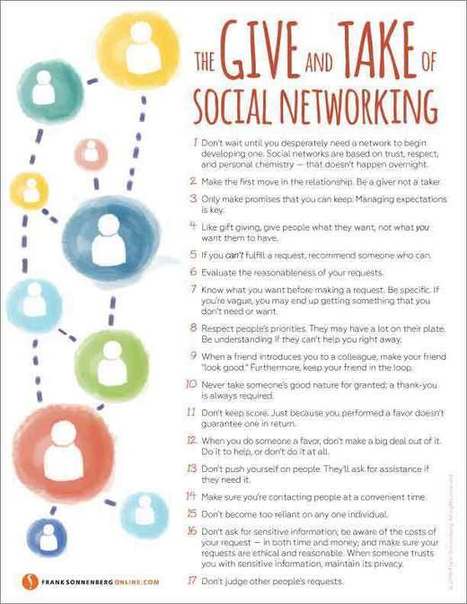
The Give and Take of Social Networking

Looking for a job? Need some personal advice? Looking to make some valuable connections? Perhaps you should try social networking, but only consider it if you’re prepared to help others first. Otherwise, your efforts will fall short.


Learn more / En savoir plus / Mehr erfahren:


http://www.scoop.it/t/21st-century-learning-and-teaching/?tag=Frank+SONNENBERG


Gust MEES's insight:
The Give and Take of Social Networking

Looking for a job? Need some personal advice? Looking to make some valuable connections? Perhaps you should try social networking, but only consider it if you’re prepared to help others first. Otherwise, your efforts will fall short.


Learn more / En savoir plus / Mehr erfahren:


http://www.scoop.it/t/21st-century-learning-and-teaching/?tag=Frank+SONNENBERG


No comment yet.
Scooped by Gust MEES
October 12, 2016 6:49 PM
Scoop.it!

Great Leaders Are Other-Focused | #LEADERship 

Great Leaders Are Other-Focused | #LEADERship  | 21st Century Learning and Teaching | Scoop.it
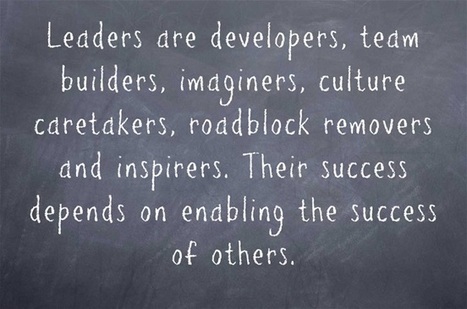
By Linda Fisher Thornton There are many important roles leaders play. They are supporters, developers, guides, team builders, and imaginers. They are culture caretakers, roadblock removers and inspirers.


http://www.scoop.it/t/21st-century-learning-and-teaching/?tag=LeaderShip


Gust MEES's insight:
By Linda Fisher Thornton There are many important roles leaders play. They are supporters, developers, guides, team builders, and imaginers. They are culture caretakers, roadblock removers and inspirers.


http://www.scoop.it/t/21st-century-learning-and-teaching/?tag=LeaderShip


anagn's curator insight, October 13, 2016 10:36 AM
El Liderazgo consiste en dar lo mejor de ti. Y construir con lo mejor de todos y todas. Pensar lo contrario es de otro siglo. Es antiguo que no viejo y no reciclable.
Scooped by Gust MEES
October 11, 2016 8:48 PM
Scoop.it!

What is Phenomenon-Based Learning? | #Finland does it WHY NOT WE!? #Europe #LEARNing2LEARN #PracTICE

What is Phenomenon-Based Learning? | #Finland does it WHY NOT WE!? #Europe #LEARNing2LEARN #PracTICE | 21st Century Learning and Teaching | Scoop.it

What is Phenomenon-Based Learning?

Finland will go through a new education reform that will take over in the academic year 2016-2017. Phenomenon-Based Learning will be complementing Finland’s traditional subjects. The Phenomenon or Topic Based Learning is being planned to be conducted over periods during the year and could be paced in projects – is the old new in Finland’s education. For more than three decades, Finnish schools have had a form of Phenomenon-Based Learning. What will change in 2016-2017 is that it will be obligatory in all basic schools for seven to 16-year-olds.

Phenomenon-Based Learning tackles real-world scenarios holistically from different subject areas’ perspectives. This method will entail a rich learning experience, which is relevant to learners’ lives. The interdisciplinary learning could be conducted in a simple way, by linking similar knowledge areas between different subjects and introducing them at the same slot of the academic year.


This develops awareness of how curricula intersect to form the broader frame of knowledge. A more sophisticated interdisciplinary approach, such as Phenomenon-Based Learning occurs when we go beyond simply linking different subjects to applying, organising centers and essential questions to plan topic teaching. One example could be the questions students have about a topic such as the importance of the European Union. To answer these questions knowledge and skills from economics, history, geography and languages are to be integrated.

Learn more / En savoir plus / Mehr erfahren:


http://www.scoop.it/t/21st-century-learning-and-teaching/?tag=Finland


http://www.scoop.it/t/21st-century-learning-and-teaching/?tag=Phenomenon+Based+Learning


Gust MEES's insight:

What is Phenomenon-Based Learning?

Finland will go through a new education reform that will take over in the academic year 2016-2017. Phenomenon-Based Learning will be complementing Finland’s traditional subjects. The Phenomenon or Topic Based Learning is being planned to be conducted over periods during the year and could be paced in projects – is the old new in Finland’s education. For more than three decades, Finnish schools have had a form of Phenomenon-Based Learning. What will change in 2016-2017 is that it will be obligatory in all basic schools for seven to 16-year-olds.

Phenomenon-Based Learning tackles real-world scenarios holistically from different subject areas’ perspectives. This method will entail a rich learning experience, which is relevant to learners’ lives. The interdisciplinary learning could be conducted in a simple way, by linking similar knowledge areas between different subjects and introducing them at the same slot of the academic year.


This develops awareness of how curricula intersect to form the broader frame of knowledge. A more sophisticated interdisciplinary approach, such as Phenomenon-Based Learning occurs when we go beyond simply linking different subjects to applying, organising centers and essential questions to plan topic teaching. One example could be the questions students have about a topic such as the importance of the European Union. To answer these questions knowledge and skills from economics, history, geography and languages are to be integrated.

Learn more / En savoir plus / Mehr erfahren:


http://www.scoop.it/t/21st-century-learning-and-teaching/?tag=Finland


http://www.scoop.it/t/21st-century-learning-and-teaching/?tag=Phenomenon+Based+Learning


Marina Pérez Sabio's curator insight, October 13, 2016 5:22 PM
#SCEUNED16 Phenomenon-based learning
Ricard Garcia's curator insight, October 15, 2016 3:31 PM
An upgraded approach to PBL? Worth reading
Corina Barbu's curator insight, November 26, 2016 12:53 PM
#SCEUNED16 WHAT IS PHENOMENON
Scooped by Gust MEES
October 10, 2016 6:27 PM
Scoop.it!

Incredibly detailed VR model of Auschwitz helped convict Nazi war criminal | #VirtualReality #History #Germany

Incredibly detailed VR model of Auschwitz helped convict Nazi war criminal | #VirtualReality #History #Germany | 21st Century Learning and Teaching | Scoop.it

Virtual reality is an amazing technology. While we don’t claim to know if it’ll succeed in the gaming world outside of a narrow niche, the demos and games we’ve seen have been impressive, particularly when it comes to creating a sense of “being there.”


Now, German prosecutors have created an advanced VR simulation of the German concentration camp Auschwitz, in an effort to model exactly where specific Nazi war criminals were and what they saw.


Learn more / En savoir plus / Mehr erfahren:


http://www.scoop.it/t/21st-century-learning-and-teaching/?tag=Virtual+Reality


Gust MEES's insight:

Virtual reality is an amazing technology. While we don’t claim to know if it’ll succeed in the gaming world outside of a narrow niche, the demos and games we’ve seen have been impressive, particularly when it comes to creating a sense of “being there.”


Now, German prosecutors have created an advanced VR simulation of the German concentration camp Auschwitz, in an effort to model exactly where specific Nazi war criminals were and what they saw.


Learn more / En savoir plus / Mehr erfahren:


http://www.scoop.it/t/21st-century-learning-and-teaching/?tag=Virtual+Reality


No comment yet.
Scooped by Gust MEES
October 9, 2016 3:45 PM
Scoop.it!

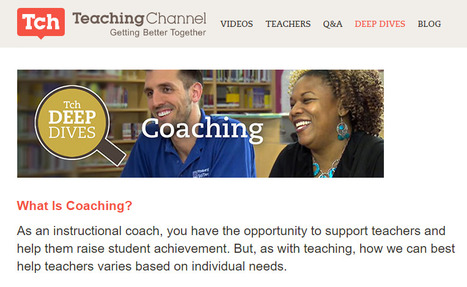
Instructional Coaching Strategies | Deep Dive

Instructional Coaching Strategies | Deep Dive | 21st Century Learning and Teaching | Scoop.it
Instructional Coaches from across the country are discovery how Teaching Channel can support them in their daily tasks. See what Tch has to help you through the coaching cycle.


Learn more / En savoir plus / Mehr erfahren:


https://gustmees.wordpress.com/2016/07/13/coaching-instead-of-teaching-in-modern-education/


https://gustmees.wordpress.com/2015/12/19/teaching-was-yesterday-today-is-coaching-the-learners-students-for-learning-to-learn/


https://gustmees.wordpress.com/2014/07/10/education-collaboration-and-coaching-the-future/


http://www.scoop.it/t/21st-century-learning-and-teaching/?tag=Coaching


Gust MEES's insight:
Instructional Coaches from across the country are discovery how Teaching Channel can support them in their daily tasks. See what Tch has to help you through the coaching cycle.


Learn more / En savoir plus / Mehr erfahren:


https://gustmees.wordpress.com/2016/07/13/coaching-instead-of-teaching-in-modern-education/


https://gustmees.wordpress.com/2015/12/19/teaching-was-yesterday-today-is-coaching-the-learners-students-for-learning-to-learn/


https://gustmees.wordpress.com/2014/07/10/education-collaboration-and-coaching-the-future/


http://www.scoop.it/t/21st-century-learning-and-teaching/?tag=Coaching


No comment yet.
Scooped by Gust MEES
October 9, 2016 2:37 PM
Scoop.it!

Being Accountable for Our Own Learning: Seeking Out Professional Development | #LEARNing2LEARN #ModernEDU

Being Accountable for Our Own Learning: Seeking Out Professional Development | #LEARNing2LEARN #ModernEDU | 21st Century Learning and Teaching | Scoop.it
Allison Tallman October 3rd, 2016
In my recent post on teacher training programs, I discussed what I believe to be the characteristics of a high-quality teacher training program—qualities that helped me to best prepare for my first day of school. However, learning doesn’t stop there! With the continuous, nonstop changes in education, teachers are constantly learning new strategies, ideas, and research throughout their career.

Sometimes we are sent out for Professional Development (PD) workshops, while other times we attend required school-based or online sessions. In addition to PD workshops and sessions, teachers may choose to formally continue their education by receiving master’s degrees or a PhD, or by taking individual courses to receive credit.

What if the PD you are receiving doesn’t necessarily meet your needs and professional goals? What if attending graduate school isn’t the best option for you? What if you just don’t have the time to take classes? I believe that it is our job as teachers to be accountable for our own learning by seeking out the information we want to know. This is precisely why back-to-school is the perfect opportunity to think about your professional goals. I appreciate and understand that our time as teachers is valuable, so I present to you my favorite quick and efficient tips to “learn more,” without stepping into a classroom, workshop, or meeting.


Learn more / En savoir plus / Mehr erfahren:


https://gustmees.wordpress.com/2015/03/15/professional-development-why-educators-and-teachers-cant-catch-up-that-quickly-and-how-to-change-it/


https://gustmees.wordpress.com/2013/01/23/is-your-professional-development-up-to-date/


https://gustmees.wordpress.com/2015/03/28/learning-to-learn-for-my-professional-development-i-did-it-my-way/


Gust MEES's insight:
Allison Tallman October 3rd, 2016
In my recent post on teacher training programs, I discussed what I believe to be the characteristics of a high-quality teacher training program—qualities that helped me to best prepare for my first day of school. However, learning doesn’t stop there! With the continuous, nonstop changes in education, teachers are constantly learning new strategies, ideas, and research throughout their career.

Sometimes we are sent out for Professional Development (PD) workshops, while other times we attend required school-based or online sessions. In addition to PD workshops and sessions, teachers may choose to formally continue their education by receiving master’s degrees or a PhD, or by taking individual courses to receive credit.

What if the PD you are receiving doesn’t necessarily meet your needs and professional goals? What if attending graduate school isn’t the best option for you? What if you just don’t have the time to take classes? I believe that it is our job as teachers to be accountable for our own learning by seeking out the information we want to know. This is precisely why back-to-school is the perfect opportunity to think about your professional goals. I appreciate and understand that our time as teachers is valuable, so I present to you my favorite quick and efficient tips to “learn more,” without stepping into a classroom, workshop, or meeting.


Learn more / En savoir plus / Mehr erfahren:


https://gustmees.wordpress.com/2015/03/15/professional-development-why-educators-and-teachers-cant-catch-up-that-quickly-and-how-to-change-it/


https://gustmees.wordpress.com/2013/01/23/is-your-professional-development-up-to-date/


https://gustmees.wordpress.com/2015/03/28/learning-to-learn-for-my-professional-development-i-did-it-my-way/


No comment yet.
Scooped by Gust MEES
October 8, 2016 5:55 PM
Scoop.it!

Transforming Medical Education with Microsoft HoloLens | #MixedReality #AR #RA #AugmentedReality #VR #EdTech


Learn more / En savoir plus / Mehr erfahren:


http://www.scoop.it/t/21st-century-learning-and-teaching/?tag=Mixed+Reality


Gust MEES's insight:

Learn more / En savoir plus / Mehr erfahren:


http://www.scoop.it/t/21st-century-learning-and-teaching/?tag=Mixed+Reality


No comment yet.
Scooped by Gust MEES
October 8, 2016 8:26 AM
Scoop.it!

I made my classroom look like the real-world—and test scores soared | #LEARNingByDoing #LEARNing2LEARN #PBL

I made my classroom look like the real-world—and test scores soared | #LEARNingByDoing #LEARNing2LEARN #PBL | 21st Century Learning and Teaching | Scoop.it
Think about the jobs in today’s economy — the ones we’re supposed to prepare students for after graduation. Are employees evaluated using bubble-in tests to prove they know the ins and outs of their job? Do they learn and use new skills one at a time in a vacuum? The questions sound a bit silly until you realize too often that’s what students take away from their education. Why is the culture to drill facts into students’ heads just to pass a test?

Just like in the real world, my students show what they can do through projects, teamwork, and research. Is it working? Well, according to state science exams, my students consistently score higher than other science classes in my district.

I’ve never been a big believer in teaching to a test. Indeed, since my first year in the classroom I’ve used a project-based model with my science and social studies classes. On the first day of school I issue my fifth-graders a PASSPORT (which stands for Preparing All Students for Success by Participating in an Ongoing Real-world simulation using Technology) and explain that their yearlong adventure to “Johnsonville” starts today. The school year is a simulation of adulthood where students work, create, and learn about personal finance and entrepreneurial skills. They experience real-world situations and gain insights into global affairs. Students tend to view my classroom less as a “classroom” and more of an interactive city where all projects intertwine to create an ecosystem of businesses and homes.


Learn more / En savoir plus / Mehr erfahren:


http://www.scoop.it/t/21st-century-learning-and-teaching/?tag=Learning+by+doing


http://www.scoop.it/t/21st-century-learning-and-teaching/?tag=PBL


Gust MEES's insight:
Think about the jobs in today’s economy — the ones we’re supposed to prepare students for after graduation. Are employees evaluated using bubble-in tests to prove they know the ins and outs of their job? Do they learn and use new skills one at a time in a vacuum? The questions sound a bit silly until you realize too often that’s what students take away from their education. Why is the culture to drill facts into students’ heads just to pass a test?

Just like in the real world, my students show what they can do through projects, teamwork, and research. Is it working? Well, according to state science exams, my students consistently score higher than other science classes in my district.

I’ve never been a big believer in teaching to a test. Indeed, since my first year in the classroom I’ve used a project-based model with my science and social studies classes. On the first day of school I issue my fifth-graders a PASSPORT (which stands for Preparing All Students for Success by Participating in an Ongoing Real-world simulation using Technology) and explain that their yearlong adventure to “Johnsonville” starts today. The school year is a simulation of adulthood where students work, create, and learn about personal finance and entrepreneurial skills. They experience real-world situations and gain insights into global affairs. Students tend to view my classroom less as a “classroom” and more of an interactive city where all projects intertwine to create an ecosystem of businesses and homes.


Learn more / En savoir plus / Mehr erfahren:


http://www.scoop.it/t/21st-century-learning-and-teaching/?tag=Learning+by+doing


http://www.scoop.it/t/21st-century-learning-and-teaching/?tag=PBL


No comment yet.
Rescooped by Gust MEES from Learning & Technology News
October 8, 2016 11:10 AM
Scoop.it!

Rubric for Deeper Thinking About Learning | #LEARNing2LEARN #Rubrics

Rubric for Deeper Thinking About Learning | #LEARNing2LEARN #Rubrics | 21st Century Learning and Teaching | Scoop.it
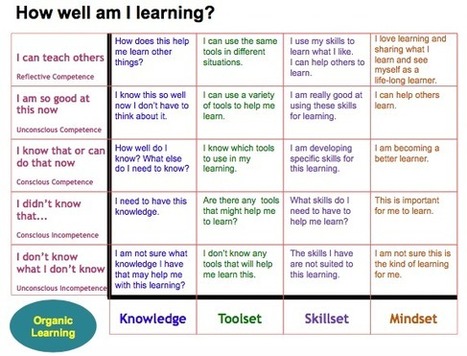
We were exploring how to make metacognitive thinking more visible for our students, keeping it aligned with our mandate to keep thinking and learning visible, transparent, tangible, critiqueable and accountable within learning spaces.


Learn more / En savoir plus / Mehr erfahren:


http://www.scoop.it/t/21st-century-learning-and-teaching/?tag=rubric


http://www.scoop.it/t/21st-century-learning-and-teaching/?tag=Criticism


Via Nik Peachey
Gust MEES's insight:
We were exploring how to make metacognitive thinking more visible for our students, keeping it aligned with our mandate to keep thinking and learning visible, transparent, tangible, critiqueable and accountable within learning spaces.


Learn more / En savoir plus / Mehr erfahren:


http://www.scoop.it/t/21st-century-learning-and-teaching/?tag=rubric


http://www.scoop.it/t/21st-century-learning-and-teaching/?tag=Criticism


Carole Hunter's curator insight, October 10, 2016 10:46 AM
Contains rubrics both for ourselves as educators, but also for students. How well are we learning?
Robyn Lockwood's curator insight, October 11, 2016 2:42 PM
Share your insight
Dr. Helen Teague's curator insight, October 11, 2016 2:49 PM
Don't often see a rubric specifically for metacognition: Rubric for Deeper Thinking About Learning
Scooped by Gust MEES
October 7, 2016 10:02 AM
Scoop.it!

25 Of The Best Resources For Teaching Critical Thinking #LEARNing2LEARN 

25 Of The Best Resources For Teaching Critical Thinking #LEARNing2LEARN  | 21st Century Learning and Teaching | Scoop.it
Critical Thinking

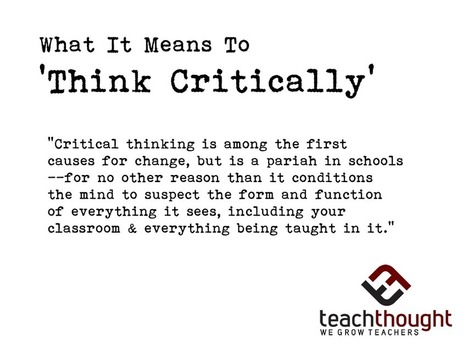
As an organization, critical thinking is at the core of what we do, from essays and lists to models and teacher training. (You can check out What It Means To Think Critically for a wordier survey of the intent of critical thinking.)

For this post, we’ve gathered various critical thinking resources. As you’ll notice, conversation is a fundamental part of critical thinking, if for no other reason than the ability to identify a line of reasoning, analyze, evaluate, and respond to it accurately and thoughtfully is among the most common opportunities for critical thinking for students in every day life. Who is saying what? What’s valid and what’s not? How should I respond?

This collection includes resources for teaching critical thinking, from books and videos to graphics and models, rubrics and taxonomies to presentations and debate communities. Take a look, and let us know in the comments which you found the most–or least–useful.


Learn more / En savoir plus / Mehr erfahren:


http://www.scoop.it/t/21st-century-learning-and-teaching?tag=Critical-Thinking


Gust MEES's insight:
Critical Thinking

As an organization, critical thinking is at the core of what we do, from essays and lists to models and teacher training. (You can check out What It Means To Think Critically for a wordier survey of the intent of critical thinking.)

For this post, we’ve gathered various critical thinking resources. As you’ll notice, conversation is a fundamental part of critical thinking, if for no other reason than the ability to identify a line of reasoning, analyze, evaluate, and respond to it accurately and thoughtfully is among the most common opportunities for critical thinking for students in every day life. Who is saying what? What’s valid and what’s not? How should I respond?

This collection includes resources for teaching critical thinking, from books and videos to graphics and models, rubrics and taxonomies to presentations and debate communities. Take a look, and let us know in the comments which you found the most–or least–useful.


Learn more / En savoir plus / Mehr erfahren:


http://www.scoop.it/t/21st-century-learning-and-teaching?tag=Critical-Thinking


Roberto Aníbal Arce's curator insight, October 11, 2016 11:36 AM
Buenos recursos para enseñar pensamiento crítico
Scooped by Gust MEES
October 6, 2016 10:23 AM
Scoop.it!

6 Skills Students Today Must Develop | #LEARNing2LEARN

6 Skills Students Today Must Develop | #LEARNing2LEARN | 21st Century Learning and Teaching | Scoop.it

The Resource for Education Technology Leaders focusing on K-12 educators. Site contains a Software Reviews Database, articles from Technology & Learning Magazine, articles from Educators in Educators' eZine, Event and Contest listings, Reader suggested Web sites, and weekly news updates on education technology leaders." 


Learn more / En savoir plus / Mehr erfahren:


http://www.scoop.it/t/21st-century-learning-and-teaching/?tag=Soft+Skills


https://gustmees.wordpress.com/2015/07/19/learning-path-for-professional-21st-century-learning-by-ict-practice/


https://gustmees.wordpress.com/2014/10/03/design-the-learning-of-your-learners-students-ideas/


Gust MEES's insight:

The Resource for Education Technology Leaders focusing on K-12 educators. Site contains a Software Reviews Database, articles from Technology & Learning Magazine, articles from Educators in Educators' eZine, Event and Contest listings, Reader suggested Web sites, and weekly news updates on education technology leaders." 


Learn more / En savoir plus / Mehr erfahren:


http://www.scoop.it/t/21st-century-learning-and-teaching/?tag=Soft+Skills


https://gustmees.wordpress.com/2015/07/19/learning-path-for-professional-21st-century-learning-by-ict-practice/


https://gustmees.wordpress.com/2014/10/03/design-the-learning-of-your-learners-students-ideas/


delta14's curator insight, October 10, 2016 9:39 AM
Guía para dar seguimiento al logro de las competencias que nuestros estudiantes deben alcanzar, para dar soluciones a problemas emergentes y tener éxito en el mundo real.
Scooped by Gust MEES
October 5, 2016 2:55 PM
Scoop.it!

Soft Skills Give Workers a Big Edge. It’s Time to Start Focusing on Them in School, Report Says

Soft Skills Give Workers a Big Edge. It’s Time to Start Focusing on Them in School, Report Says | 21st Century Learning and Teaching | Scoop.it
Teaching and improving soft skills—such as conscientiousness, adaptability and perseverance—can provide huge economic gains for young people, and should receive more attention from education policy makers, according to a new report from the Hamilton Project.

Soft skills, also known as noncognitive skills or foundational skills, are increasingly in demand in today’s economy. More Americans work in service-sector jobs that require human interaction, and automation and technology are replacing jobs involving routine tasks.

That’s given workers with strong soft skills a big advantage in the labor market, the group said in the paper, released Tuesday, that compiled existing research on various aspects of soft skills in the labor market. (The Hamilton Project is an economic policy arm of the Brookings Institution.)


Learn more / En savoir plus / Mehr erfahren:


http://www.scoop.it/t/21st-century-learning-and-teaching/?tag=Soft+Skills


Gust MEES's insight:
Teaching and improving soft skills—such as conscientiousness, adaptability and perseverance—can provide huge economic gains for young people, and should receive more attention from education policy makers, according to a new report from the Hamilton Project.

Soft skills, also known as noncognitive skills or foundational skills, are increasingly in demand in today’s economy. More Americans work in service-sector jobs that require human interaction, and automation and technology are replacing jobs involving routine tasks.

That’s given workers with strong soft skills a big advantage in the labor market, the group said in the paper, released Tuesday, that compiled existing research on various aspects of soft skills in the labor market. (The Hamilton Project is an economic policy arm of the Brookings Institution.)


Learn more / En savoir plus / Mehr erfahren:


http://www.scoop.it/t/21st-century-learning-and-teaching/?tag=Soft+Skills


No comment yet.
Rescooped by Gust MEES from Effective Education
October 3, 2016 12:23 PM
Scoop.it!

If You’re Not Outside Your #ComfortZone, You Won’t Learn Anything | #GrowthMindset #Character

If You’re Not Outside Your #ComfortZone, You Won’t Learn Anything | #GrowthMindset #Character | 21st Century Learning and Teaching | Scoop.it
Stop avoiding what scares you.


You need to speak in public, but your knees buckle even before you reach the podium. You want to expand your network, but you’d rather swallow nails than make small talk with strangers. Speaking up in meetings would further your reputation at work, but you’re afraid of saying the wrong thing. Situations like these — ones that are important professionally, but personally terrifying — are, unfortunately, ubiquitous. An easy response to these situations is avoidance. Who wants to feel anxious when you don’t have to?

But the problem, of course, is that these tasks aren’t just unpleasant; they’re also necessary.


As we grow and learn in our jobs and in our careers, we’re constantly faced with situations where we need to adapt our behavior. It’s simply a reality of the world we work in today. And without the skill and courage to take the leap, we can miss out on important opportunities for advancement. How can we as professionals stop building our lives around avoiding these unpleasant, but professionally beneficial, tasks?


Learn more / En savoir plus / Mehr erfahren:


http://www.scoop.it/t/21st-century-learning-and-teaching/?tag=Growth+Mindset


http://www.scoop.it/t/21st-century-learning-and-teaching/?tag=Comfort+Zone


http://www.scoop.it/t/21st-century-learning-and-teaching/?tag=Character


Via Ariana Amorim, Kevin Watson, Mark E. Deschaine, PhD
Gust MEES's insight:
Stop avoiding what scares you.


You need to speak in public, but your knees buckle even before you reach the podium. You want to expand your network, but you’d rather swallow nails than make small talk with strangers. Speaking up in meetings would further your reputation at work, but you’re afraid of saying the wrong thing. Situations like these — ones that are important professionally, but personally terrifying — are, unfortunately, ubiquitous. An easy response to these situations is avoidance. Who wants to feel anxious when you don’t have to?

But the problem, of course, is that these tasks aren’t just unpleasant; they’re also necessary.


As we grow and learn in our jobs and in our careers, we’re constantly faced with situations where we need to adapt our behavior. It’s simply a reality of the world we work in today. And without the skill and courage to take the leap, we can miss out on important opportunities for advancement. How can we as professionals stop building our lives around avoiding these unpleasant, but professionally beneficial, tasks?


Learn more / En savoir plus / Mehr erfahren:


http://www.scoop.it/t/21st-century-learning-and-teaching/?tag=Growth+Mindset


http://www.scoop.it/t/21st-century-learning-and-teaching/?tag=Comfort+Zone


http://www.scoop.it/t/21st-century-learning-and-teaching/?tag=Character


Skip Gole's curator insight, October 3, 2016 2:38 PM
Share your insight
Willem Kuypers's curator insight, October 4, 2016 2:21 PM
J'aime l'image et cette vérité qu'il faut sortir de son zone de comfort pour apprendre.
Rescooped by Gust MEES from Edumorfosis.it
October 13, 2016 11:21 AM
Scoop.it!

How cross-curricular lessons inspire Critical Thinking

How cross-curricular lessons inspire Critical Thinking | 21st Century Learning and Teaching | Scoop.it

Cross-curricular? Critical thinking? How do these rather different educational concepts work together, and why should we want them to be a part of our teaching practice? Let’s start with critical thinking, a skill we must consider to be a fundamental goal in all of our work as educators.


President Obama publically identified critical thinking as a crucial 21st-century skill that learners of all ages need to master to be successful in both the educational arena and the ever-evolving global economy. Adding in the advice of old John Dewey, we see how learning experiences that stimulate thinking by having students engage in creating meaning out of a variety of facts, scenarios, and variables (rather than just memorizing a single, linear timeline or algorithm with no context or supportive background) puts the learner in the center of the learning process.

By using online tools to bring in multiple related concepts from across disciplines, we make the learning more authentic.

Learn more / En savoir plus / Mehr erfahren:


http://www.scoop.it/t/21st-century-learning-and-teaching/?tag=John+DEWEY


http://www.scoop.it/t/21st-century-learning-and-teaching/?tag=Critical-Thinking


Via Edumorfosis
Gust MEES's insight:

Cross-curricular? Critical thinking? How do these rather different educational concepts work together, and why should we want them to be a part of our teaching practice? Let’s start with critical thinking, a skill we must consider to be a fundamental goal in all of our work as educators.


President Obama publically identified critical thinking as a crucial 21st-century skill that learners of all ages need to master to be successful in both the educational arena and the ever-evolving global economy. Adding in the advice of old John Dewey, we see how learning experiences that stimulate thinking by having students engage in creating meaning out of a variety of facts, scenarios, and variables (rather than just memorizing a single, linear timeline or algorithm with no context or supportive background) puts the learner in the center of the learning process.

By using online tools to bring in multiple related concepts from across disciplines, we make the learning more authentic.

Learn more / En savoir plus / Mehr erfahren:


http://www.scoop.it/t/21st-century-learning-and-teaching/?tag=John+DEWEY


http://www.scoop.it/t/21st-century-learning-and-teaching/?tag=Critical-Thinking


Scooped by Gust MEES
October 12, 2016 3:33 PM
Scoop.it!

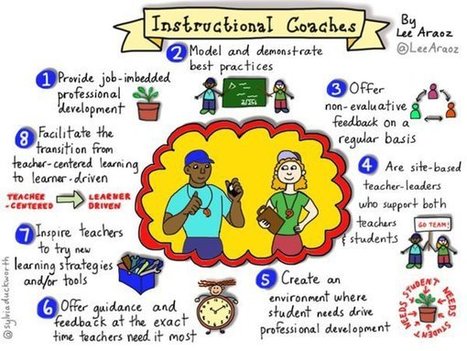
Instructional Coaches Make a Huge Impact | #Coaching #LEARNing2LEARN

Instructional Coaches Make a Huge Impact | #Coaching #LEARNing2LEARN | 21st Century Learning and Teaching | Scoop.it
Instructional coaches are the unsung heroes of the education profession. They nimbly navigate the line between administrator and teacher as they strive to make an impact across multiple grade levels and school sites. Instructional coaches have a unique vantage point – they see things happening at the ground level and are able to offer a perspective that few educators have.

One of the biggest issues confronting schools today is how to provide continuous, high-quality training to teachers and staff. District budgets are not what they used to be and education leaders must come up with creative and cost-effective ways to continue to provide this level of training in their schools. One innovative way of doing this is to create the role of an instructional coach in their district by hiring a teacher leader from within. Many districts call these specialists TOSAs (Teachers On Special Assignment). Other districts call them coordinators, but they serve the same purpose: providing perpetual PD in a non-evaluative, non-judgemental environment. These “thought partners” work collaboratively with teachers by asking them what they need and showing them how it can be deployed.


Learn more / En savoir plus / Mehr erfahren:


https://gustmees.wordpress.com/2016/07/13/coaching-instead-of-teaching-in-modern-education/


https://gustmees.wordpress.com/2015/12/19/teaching-was-yesterday-today-is-coaching-the-learners-students-for-learning-to-learn/


https://gustmees.wordpress.com/2014/07/10/education-collaboration-and-coaching-the-future/


http://www.scoop.it/t/21st-century-learning-and-teaching/?tag=Coaching


Gust MEES's insight:
Instructional coaches are the unsung heroes of the education profession. They nimbly navigate the line between administrator and teacher as they strive to make an impact across multiple grade levels and school sites. Instructional coaches have a unique vantage point – they see things happening at the ground level and are able to offer a perspective that few educators have.

One of the biggest issues confronting schools today is how to provide continuous, high-quality training to teachers and staff. District budgets are not what they used to be and education leaders must come up with creative and cost-effective ways to continue to provide this level of training in their schools. One innovative way of doing this is to create the role of an instructional coach in their district by hiring a teacher leader from within. Many districts call these specialists TOSAs (Teachers On Special Assignment). Other districts call them coordinators, but they serve the same purpose: providing perpetual PD in a non-evaluative, non-judgemental environment. These “thought partners” work collaboratively with teachers by asking them what they need and showing them how it can be deployed.


Learn more / En savoir plus / Mehr erfahren:


https://gustmees.wordpress.com/2016/07/13/coaching-instead-of-teaching-in-modern-education/


https://gustmees.wordpress.com/2015/12/19/teaching-was-yesterday-today-is-coaching-the-learners-students-for-learning-to-learn/


https://gustmees.wordpress.com/2014/07/10/education-collaboration-and-coaching-the-future/


http://www.scoop.it/t/21st-century-learning-and-teaching/?tag=Coaching


No comment yet.
Scooped by Gust MEES
October 11, 2016 12:02 PM
Scoop.it!

Paper Circuits For Makerspaces - #MakerED #Creativity

5 Free Paper Circuit Templates - Paper circuits are great makerspace projects for teaching electricity & circuits. Paper Circuit Tutorial PDF


Learn more / En savoir plus / Mehr erfahren:


https://gustmees.wordpress.com/2016/04/05/luxembourg-education-interviews-5-creativity-and-maker-spaces-beecreative/


https://gustmees.wordpress.com/2014/08/20/maker-space-a-new-trend-in-education-and-a-big-responsibility/


Gust MEES's insight:
5 Free Paper Circuit Templates - Paper circuits are great makerspace projects for teaching electricity & circuits. Paper Circuit Tutorial PDF


Learn more / En savoir plus / Mehr erfahren:


https://gustmees.wordpress.com/2016/04/05/luxembourg-education-interviews-5-creativity-and-maker-spaces-beecreative/


https://gustmees.wordpress.com/2014/08/20/maker-space-a-new-trend-in-education-and-a-big-responsibility/


No comment yet.
Scooped by Gust MEES
October 9, 2016 4:33 PM
Scoop.it!

Progressive education | John DEWEY

Progressive education | John DEWEY | 21st Century Learning and Teaching | Scoop.it

Progressive education is a pedagogical movement that began in the late nineteenth century; it has persisted in various forms to the present. The term progressive was engaged to distinguish this education from the traditional Euro-American curricula of the 19th century, which was rooted in classical preparation for the university and strongly differentiated by social class. By contrast, progressive education finds its roots in present experience. Most progressive education programs have these qualities in common:[citation needed]

  • Emphasis on learning by doing – hands-on projects, expeditionary learning, experiential learning
  • Integrated curriculum focused on thematic units
  • Integration of entrepreneurship into education
  • Strong emphasis on problem solving and critical thinking
  • Group work and development of social skills
  • Understanding and action as the goals of learning as opposed to rote knowledge
  • Collaborative and cooperative learning projects
  • Education for social responsibility and democracy
  • Highly personalized learning accounting for each individual's personal goals
  • Integration of community service and service learning projects into the daily curriculum
  • Selection of subject content by looking forward to ask what skills will be needed in future society
  • De-emphasis on textbooks in favor of varied learning resources
  • Emphasis on lifelong learning and social skills
  • Assessment by evaluation of child's projects and productions


Link from Wikipedia:


https://en.wikipedia.org/wiki/Progressive_education#John_Dewey


Gust MEES's insight:

Progressive education is a pedagogical movement that began in the late nineteenth century; it has persisted in various forms to the present. The term progressive was engaged to distinguish this education from the traditional Euro-American curricula of the 19th century, which was rooted in classical preparation for the university and strongly differentiated by social class. By contrast, progressive education finds its roots in present experience. Most progressive education programs have these qualities in common:[citation needed]

  • Emphasis on learning by doing – hands-on projects, expeditionary learning, experiential learning
  • Integrated curriculum focused on thematic units
  • Integration of entrepreneurship into education
  • Strong emphasis on problem solving and critical thinking
  • Group work and development of social skills
  • Understanding and action as the goals of learning as opposed to rote knowledge
  • Collaborative and cooperative learning projects
  • Education for social responsibility and democracy
  • Highly personalized learning accounting for each individual's personal goals
  • Integration of community service and service learning projects into the daily curriculum
  • Selection of subject content by looking forward to ask what skills will be needed in future society
  • De-emphasis on textbooks in favor of varied learning resources
  • Emphasis on lifelong learning and social skills
  • Assessment by evaluation of child's projects and productions


Link from Wikipedia:


https://en.wikipedia.org/wiki/Progressive_education#John_Dewey


No comment yet.
Scooped by Gust MEES
October 9, 2016 3:27 PM
Scoop.it!

Finland's Laid-Back Approach To Education Is Totally Working | #Europe #ModernEDU

Finland's Laid-Back Approach To Education Is Totally Working | #Europe #ModernEDU | 21st Century Learning and Teaching | Scoop.it

When it comes to education, the Finnish know what they’re doing. The Scandinavian country has one of the top education systems in the world, and this year, ranked number one in literacy. So what’s Finland’s secret? It’s simple: more play, less work.


Learn more / En savoir plus / Mehr erfahren:


http://www.scoop.it/t/21st-century-learning-and-teaching/?tag=Finland


Gust MEES's insight:

When it comes to education, the Finnish know what they’re doing. The Scandinavian country has one of the top education systems in the world, and this year, ranked number one in literacy. So what’s Finland’s secret? It’s simple: more play, less work.


Learn more / En savoir plus / Mehr erfahren:


http://www.scoop.it/t/21st-century-learning-and-teaching/?tag=Finland


John Rudkin's curator insight, October 10, 2016 2:58 AM
...how wrong can we be.  Finland show that the intelligent way is naturally engaging.
Dennis Swender's curator insight, October 13, 2016 10:03 AM
Finland still remains as one of the leading PISA achievement nations.

Scooped by Gust MEES
October 9, 2016 1:17 PM
Scoop.it!

Mehr Sicherheit für das Internet der Dinge | #InternetOfThings #IoT #IoE #CyberSecurity 

Mehr Sicherheit für das Internet der Dinge | #InternetOfThings #IoT #IoE #CyberSecurity  | 21st Century Learning and Teaching | Scoop.it
Die vernetzten Geräte des Internet of Things (IoT) sammeln und verarbeiten immer mehr Daten, versagen jedoch häufig beim Schutz dieser Daten. Ein ausführlicher Leitfaden will bei der Entwicklung sicherer Geräte helfen.

Der Branchenverband Cloud Security Alliance (CSA) hat umfassende Richtlinien für die Entwicklung sicherer Geräte für das Internet der Dinge (IoT) veröffentlicht. Auf gut 75 Seiten nennt die Studie Future-proofing the Connected World: 13 Steps to Developing Secure IoT Products eine Reihe konkreter Maßnahmen, um die Sicherheit vernetzter Geräte zu verbessern.

Das tut auch dringend Not: Immer wieder fielen in letzter Zeit mit dem Internet verbundene Geräte durch gravierende Sicherheitslücken auf, beispielsweise die Smart-Home-Systemen von Loxone oder die vernetzten Alarmanlagen verschiedener Hersteller. Kürzlich dokumentierte das Global Privacy Network (GPEN) schwere Mängel in 314 vernetzten Geräten vom Fitness-Tracker über Blutzuckermessgeräte bis zu Smart-TVs.

Geräte wie IP-Kameras und mit dem Internet verbundene Festplatten-Receiver sind mittlerweile Teil riesiger Bot-Netze, mit denen massive Denial-of-Service-Attacken durchgeführt werden – erst vor Kurzem zwang ein solcher DDoS-Angriff auf den Security-Blogger Brian Krebs den Content-Delivery-Anbieter Akamai in die Knie.


Learn more / En savoir plus / Mehr erfahren:


http://www.scoop.it/t/securite-pc-et-internet/?tag=DDos


http://www.scoop.it/t/securite-pc-et-internet/?tag=Smart+Home


https://globaleducationandsocialmedia.wordpress.com/2014/01/21/why-is-it-a-must-to-have-basics-knowledge-of-cyber-security-in-a-connected-technology-world/


http://www.scoop.it/t/securite-pc-et-internet/?tag=SHODAN+Search+Engine


http://www.scoop.it/t/21st-century-learning-and-teaching/?tag=Internet+of+Things


http://www.scoop.it/t/securite-pc-et-internet/?tag=smart-TV


http://www.scoop.it/t/securite-pc-et-internet/?tag=Internet+of+things


http://globaleducationandsocialmedia.wordpress.com/2014/01/21/why-is-it-a-must-to-have-basics-knowledge-of-cyber-security-in-a-connected-technology-world/


http://www.scoop.it/t/securite-pc-et-internet/?tag=Cars


Gust MEES's insight:
Die vernetzten Geräte des Internet of Things (IoT) sammeln und verarbeiten immer mehr Daten, versagen jedoch häufig beim Schutz dieser Daten. Ein ausführlicher Leitfaden will bei der Entwicklung sicherer Geräte helfen.

Der Branchenverband Cloud Security Alliance (CSA) hat umfassende Richtlinien für die Entwicklung sicherer Geräte für das Internet der Dinge (IoT) veröffentlicht. Auf gut 75 Seiten nennt die Studie Future-proofing the Connected World: 13 Steps to Developing Secure IoT Products eine Reihe konkreter Maßnahmen, um die Sicherheit vernetzter Geräte zu verbessern.

Das tut auch dringend Not: Immer wieder fielen in letzter Zeit mit dem Internet verbundene Geräte durch gravierende Sicherheitslücken auf, beispielsweise die Smart-Home-Systemen von Loxone oder die vernetzten Alarmanlagen verschiedener Hersteller. Kürzlich dokumentierte das Global Privacy Network (GPEN) schwere Mängel in 314 vernetzten Geräten vom Fitness-Tracker über Blutzuckermessgeräte bis zu Smart-TVs.

Geräte wie IP-Kameras und mit dem Internet verbundene Festplatten-Receiver sind mittlerweile Teil riesiger Bot-Netze, mit denen massive Denial-of-Service-Attacken durchgeführt werden – erst vor Kurzem zwang ein solcher DDoS-Angriff auf den Security-Blogger Brian Krebs den Content-Delivery-Anbieter Akamai in die Knie.


Learn more / En savoir plus / Mehr erfahren:


http://www.scoop.it/t/securite-pc-et-internet/?tag=DDos


http://www.scoop.it/t/securite-pc-et-internet/?tag=Smart+Home


https://globaleducationandsocialmedia.wordpress.com/2014/01/21/why-is-it-a-must-to-have-basics-knowledge-of-cyber-security-in-a-connected-technology-world/


http://www.scoop.it/t/securite-pc-et-internet/?tag=SHODAN+Search+Engine


http://www.scoop.it/t/21st-century-learning-and-teaching/?tag=Internet+of+Things


http://www.scoop.it/t/securite-pc-et-internet/?tag=smart-TV


http://www.scoop.it/t/securite-pc-et-internet/?tag=Internet+of+things


http://globaleducationandsocialmedia.wordpress.com/2014/01/21/why-is-it-a-must-to-have-basics-knowledge-of-cyber-security-in-a-connected-technology-world/


http://www.scoop.it/t/securite-pc-et-internet/?tag=Cars


Gust MEES's curator insight, October 9, 2016 1:24 PM
Die vernetzten Geräte des Internet of Things (IoT) sammeln und verarbeiten immer mehr Daten, versagen jedoch häufig beim Schutz dieser Daten. Ein ausführlicher Leitfaden will bei der Entwicklung sicherer Geräte helfen.

Der Branchenverband Cloud Security Alliance (CSA) hat umfassende Richtlinien für die Entwicklung sicherer Geräte für das Internet der Dinge (IoT) veröffentlicht. Auf gut 75 Seiten nennt die Studie Future-proofing the Connected World: 13 Steps to Developing Secure IoT Products eine Reihe konkreter Maßnahmen, um die Sicherheit vernetzter Geräte zu verbessern.

Das tut auch dringend Not: Immer wieder fielen in letzter Zeit mit dem Internet verbundene Geräte durch gravierende Sicherheitslücken auf, beispielsweise die Smart-Home-Systemen von Loxone oder die vernetzten Alarmanlagen verschiedener Hersteller. Kürzlich dokumentierte das Global Privacy Network (GPEN) schwere Mängel in 314 vernetzten Geräten vom Fitness-Tracker über Blutzuckermessgeräte bis zu Smart-TVs.

Geräte wie IP-Kameras und mit dem Internet verbundene Festplatten-Receiver sind mittlerweile Teil riesiger Bot-Netze, mit denen massive Denial-of-Service-Attacken durchgeführt werden – erst vor Kurzem zwang ein solcher DDoS-Angriff auf den Security-Blogger Brian Krebs den Content-Delivery-Anbieter Akamai in die Knie.


Learn more / En savoir plus / Mehr erfahren:


http://www.scoop.it/t/securite-pc-et-internet/?tag=DDos


http://www.scoop.it/t/securite-pc-et-internet/?tag=Smart+Home


https://globaleducationandsocialmedia.wordpress.com/2014/01/21/why-is-it-a-must-to-have-basics-knowledge-of-cyber-security-in-a-connected-technology-world/


http://www.scoop.it/t/securite-pc-et-internet/?tag=SHODAN+Search+Engine


http://www.scoop.it/t/21st-century-learning-and-teaching/?tag=Internet+of+Things


http://www.scoop.it/t/securite-pc-et-internet/?tag=smart-TV


http://www.scoop.it/t/securite-pc-et-internet/?tag=Internet+of+things


http://globaleducationandsocialmedia.wordpress.com/2014/01/21/why-is-it-a-must-to-have-basics-knowledge-of-cyber-security-in-a-connected-technology-world/


http://www.scoop.it/t/securite-pc-et-internet/?tag=Cars


Scooped by Gust MEES
October 8, 2016 11:51 AM
Scoop.it!

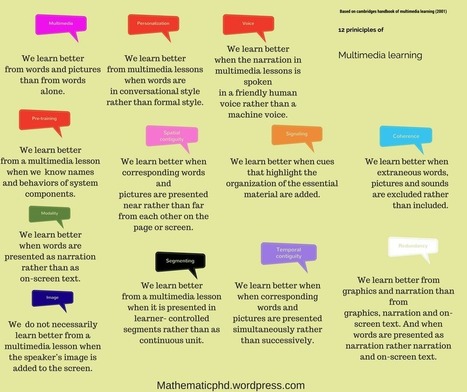
12 principles of multimedia learning infographic | #LEARNing2LEARN for BETTER! 

12 principles of multimedia learning infographic | #LEARNing2LEARN for BETTER!  | 21st Century Learning and Teaching | Scoop.it
Visit the post for more.


[Gust MEES] Check also, please:


https://gustmees.wordpress.com/2014/10/03/design-the-learning-of-your-learners-students-ideas/


https://gustmees.wordpress.com/2015/07/19/learning-path-for-professional-21st-century-learning-by-ict-practice/


Gust MEES's insight:
Visit the post for more.


[Gust MEES] Check also, please:


https://gustmees.wordpress.com/2014/10/03/design-the-learning-of-your-learners-students-ideas/


https://gustmees.wordpress.com/2015/07/19/learning-path-for-professional-21st-century-learning-by-ict-practice/


No comment yet.
Scooped by Gust MEES
October 8, 2016 8:13 AM
Scoop.it!

Learning by Doing: A Teacher Transitions Into PBL | #ModernEDU #LEARNing2LEARN

Learning by Doing: A Teacher Transitions Into PBL | #ModernEDU #LEARNing2LEARN | 21st Century Learning and Teaching | Scoop.it
For a successful PBL unit, set clear goals, over plan, make students accountable, give concrete deadlines, share rubrics in advance, and reflect on your methods.


Learn more / En savoir plus / Mehr erfahren:


http://www.scoop.it/t/21st-century-learning-and-teaching/?tag=Learning+by+doing


http://www.scoop.it/t/21st-century-learning-and-teaching/?tag=PBL


Gust MEES's insight:
For a successful PBL unit, set clear goals, over plan, make students accountable, give concrete deadlines, share rubrics in advance, and reflect on your methods.


Learn more / En savoir plus / Mehr erfahren:


http://www.scoop.it/t/21st-century-learning-and-teaching/?tag=Learning+by+doing


http://www.scoop.it/t/21st-century-learning-and-teaching/?tag=PBL


No comment yet.
Scooped by Gust MEES
October 7, 2016 1:11 PM
Scoop.it!

How Teens’ Penchant For Risk-Taking May Help Them Learn Faster | #LEARNing2LEARN #ModernEDU #ICT 

How Teens’ Penchant For Risk-Taking May Help Them Learn Faster | #LEARNing2LEARN #ModernEDU #ICT  | 21st Century Learning and Teaching | Scoop.it
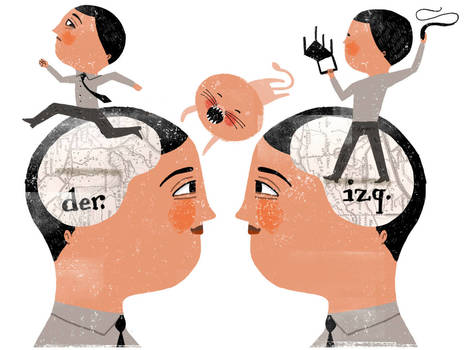
The teenage brain has been characterized as a risk-taking machine, looking for quick rewards and thrills instead of acting responsibly. But these behaviors could actually make teens better than adults at certain kinds of learning.

“In neuroscience, we tend to think that if healthy brains act in a certain way, there should be a reason for it,” says Juliet Davidow, a postdoctoral researcher at Harvard University in the Affective Neuroscience and Development Lab and the lead author of the study, which was published Wednesday in the journal Neuron.

But scientists and the public often focus on the negatives of teen behavior, so she and her colleagues set out to test the hypothesis that teenagers’ drive for rewards, and the risk-taking that comes from it, exist for a reason.

When it comes to what drives reward-seeking in teens, fingers have always been pointed at the striatum, a lobster-claw-shape structure in the brain. When something surprising and good happens — say, you find $20 on the street — your body produces the pleasure-related hormone dopamine, and the striatum responds.

“Research shows that the teenage striatum is very active,” says Davidow. This suggests that teens are hard-wired to seek immediate rewards. But, she adds, it’s also shown that their prefrontal cortex, which helps with impulse control, isn’t fully developed. Combined, these two things have given teens their risky rep.


Learn more / En savoir plus / Mehr erfahren:


http://www.scoop.it/t/21st-century-learning-and-teaching/?tag=Study...


http://www.scoop.it/t/21st-century-learning-and-teaching/?tag=Research


Gust MEES's insight:
The teenage brain has been characterized as a risk-taking machine, looking for quick rewards and thrills instead of acting responsibly. But these behaviors could actually make teens better than adults at certain kinds of learning.

“In neuroscience, we tend to think that if healthy brains act in a certain way, there should be a reason for it,” says Juliet Davidow, a postdoctoral researcher at Harvard University in the Affective Neuroscience and Development Lab and the lead author of the study, which was published Wednesday in the journal Neuron.

But scientists and the public often focus on the negatives of teen behavior, so she and her colleagues set out to test the hypothesis that teenagers’ drive for rewards, and the risk-taking that comes from it, exist for a reason.

When it comes to what drives reward-seeking in teens, fingers have always been pointed at the striatum, a lobster-claw-shape structure in the brain. When something surprising and good happens — say, you find $20 on the street — your body produces the pleasure-related hormone dopamine, and the striatum responds.

“Research shows that the teenage striatum is very active,” says Davidow. This suggests that teens are hard-wired to seek immediate rewards. But, she adds, it’s also shown that their prefrontal cortex, which helps with impulse control, isn’t fully developed. Combined, these two things have given teens their risky rep.


Learn more / En savoir plus / Mehr erfahren:


http://www.scoop.it/t/21st-century-learning-and-teaching/?tag=Study...
 

http://www.scoop.it/t/21st-century-learning-and-teaching/?tag=Research


No comment yet.
Scooped by Gust MEES
October 7, 2016 9:22 AM
Scoop.it!

12 Things Authentic People Don't Do on Social Media | #Entrepreneurs #ICT

12 Things Authentic People Don't Do on Social Media | #Entrepreneurs #ICT | 21st Century Learning and Teaching | Scoop.it
Honesty, transparency and authenticity can be vital to the success of your business.

In this video, Entrepreneur Network partner Salma Jafri discusses the 12 things you should not be doing if you want to be authentic on social media.

It's important to develop relationships with your customers, so if you are pitching to a new follower or fan, you're missing the point. Asking your customers questions and engaging is a great way to better the customer experience. Doing poor automation such as blasting direct messages to followers also shows you're not putting in enough effort to connect with clients.

Being consistent with your words, changing up content for various social channels and reporting on news that is relevant to your industry are a number of ways you can start being authentic on social media.

To learn more, click play.


Learn more / En savoir plus / Mehr erfahren:


http://www.scoop.it/t/21st-century-learning-and-teaching/?tag=Entrepreneurs


Gust MEES's insight:
Honesty, transparency and authenticity can be vital to the success of your business.

In this video, Entrepreneur Network partner Salma Jafri discusses the 12 things you should not be doing if you want to be authentic on social media.

It's important to develop relationships with your customers, so if you are pitching to a new follower or fan, you're missing the point. Asking your customers questions and engaging is a great way to better the customer experience. Doing poor automation such as blasting direct messages to followers also shows you're not putting in enough effort to connect with clients.

Being consistent with your words, changing up content for various social channels and reporting on news that is relevant to your industry are a number of ways you can start being authentic on social media.

To learn more, click play.


Learn more / En savoir plus / Mehr erfahren:


http://www.scoop.it/t/21st-century-learning-and-teaching/?tag=Entrepreneurs


No comment yet.
Scooped by Gust MEES
October 6, 2016 8:19 AM
Scoop.it!

Smart Strategies That Help Students Learn How to Learn

Smart Strategies That Help Students Learn How to Learn | 21st Century Learning and Teaching | Scoop.it
Teaching students good learning strategies would ensure that they know how to acquire new knowledge, which leads to improved learning outcomes, writes lead author Helen Askell-Williams of Flinders University in Adelaide, Australia. And studies bear this out. Askell-Williams cites as one example a recent finding by PISA, the Programme for International Student Assessment, which administers academic proficiency tests to students around the globe, and place American students in the mediocre middle. “Students who use appropriate strategies to understand and remember what they read, such as underlining important parts of the texts or discussing what they read with other people, perform at least 73 points higher in the PISA assessment—that is, one full proficiency level or nearly two full school years—than students who use these strategies the least,” the PISA report reads.


Learn more / En savoir plus / Mehr erfahren:


https://gustmees.wordpress.com/2014/10/03/design-the-learning-of-your-learners-students-ideas/


https://gustmees.wordpress.com/2015/07/19/learning-path-for-professional-21st-century-learning-by-ict-practice/


Gust MEES's insight:
Teaching students good learning strategies would ensure that they know how to acquire new knowledge, which leads to improved learning outcomes, writes lead author Helen Askell-Williams of Flinders University in Adelaide, Australia. And studies bear this out. Askell-Williams cites as one example a recent finding by PISA, the Programme for International Student Assessment, which administers academic proficiency tests to students around the globe, and place American students in the mediocre middle. “Students who use appropriate strategies to understand and remember what they read, such as underlining important parts of the texts or discussing what they read with other people, perform at least 73 points higher in the PISA assessment—that is, one full proficiency level or nearly two full school years—than students who use these strategies the least,” the PISA report reads.


Learn more / En savoir plus / Mehr erfahren:


https://gustmees.wordpress.com/2014/10/03/design-the-learning-of-your-learners-students-ideas/


https://gustmees.wordpress.com/2015/07/19/learning-path-for-professional-21st-century-learning-by-ict-practice/


Nancy Jones's curator insight, October 7, 2016 8:55 AM
"In our schools, “the emphasis is on what students need to learn, whereas little emphasis—if any—is placed on training students how they should go about learning the content and what skills will promote efficient studying to support robust learning,”
Edumorfosis's curator insight, December 30, 2016 5:00 PM

En vez de enseñar cosas que ya están accesibles en las redes, las escuelas y universidades deberían practicar la diversidad de formatos de aprendicaje posibles. Ya no es tan importante formar personas intelectuales que sepan de memoria datos declarativos, sino profesionales que tengan capacidades para el aprendizaje autónomo. Hoy día es más importante tener la capacidad de desaprender lo innecesario y reaprender lo que es verdaderamente esencial en el siglo 21.

Koen Mattheeuws's curator insight, January 5, 2017 9:01 AM
Leren over leren. Het loont. 
Scooped by Gust MEES
October 3, 2016 6:01 PM
Scoop.it!

How Bitcoin’s Blockchain Could Power an Alternate Internet | NEW #VirtualWorld !?

How Bitcoin’s Blockchain Could Power an Alternate Internet | NEW #VirtualWorld !? | 21st Century Learning and Teaching | Scoop.it

Tricky? Sure. But it would transform the net into a universal “source of truth.


Learn more / En savoir plus / Mehr erfahren:


http://www.scoop.it/t/21st-century-learning-and-teaching/?tag=bitcoin


Gust MEES's insight:

Tricky? Sure. But it would transform the net into a universal “source of truth.


Learn more / En savoir plus / Mehr erfahren:


http://www.scoop.it/t/21st-century-learning-and-teaching/?tag=bitcoin


No comment yet.