This is my final video project, a call to action, from my Emerging Technology in a Collaborative Culture class at Full Sail University where I am completing ...
Your new post is loading...
This is my final video project, a call to action, from my Emerging Technology in a Collaborative Culture class at Full Sail University where I am completing ... No comment yet.
Sign up to comment
Nominated as Best Educational Use of Video / Visual 2010 in the edublog awards. If you don't know the internet you can't be my teacher, I need someone who kn...
Zélia Patrocinio's comment,
October 16, 2011 4:02 PM
Yes, João that's our reality nowadays. We have to keep up with this.
Focus on the 4Cs in student work, and meaningful feedback and evaluations for teachers, says Ken Kay in this 6th blog in a series on 21st century leadership.
L'oignon Tor vient-il d'être pelé par des chercheurs français ?
Une équipe dirigée par l'informaticien Eric Filiol affirme avoir mis au point une méthode qui a permis d'identifier l'ensemble des nœuds du réseau, afin de procéder au déchiffrement des communications, à l'infection et à la manipulation du trafic.
Le réseau Tor est-il plus vulnérable qu'on ne le croit ? Né au début des années 2000, le projet Tor a eu pour ambition de fournir aux journalistes et aux dissidents du monde entier un niveau de protection sur Internet suffisamment haut afin de leur permettre de s'exprimer librement, en contournant le filtrage et la censure et sans craindre d'éventuelles représailles orchestrées par les régimes autoritaires.
Times Higher Education recently published a list of the top 400 Universities in the world. Their ranking is based on a range of factors such as the quality of teaching, research and diversity. We wanted to have a look at how they ranked according to their online presence.
We decided to look into how Universities ranked by geographical area, up first is the US. Here's the Top 50 Universities from the United States according to their online presence.
Hybrid (or blended) learning incorporates many of the same teaching methods as traditional classroom learning. In this film, Thesys International provides a ...
“Hybrid education offers promise for engaging students who are demotivated by the lack of meaningful use of technology, and associated opportunities for skill-building and efficiency, in many lessons today.”
Harvard Professor Howard Gardner's research aims to help educators prepare students for the future, by explaining different types of minds: the disciplined, synthesizing and creative minds; the respectful and ethical minds.
Des dessins animés interactifs, conçus selon des aspects de la musique et de la cognition, offrent des résultats étonnants.
We understand that many people visit this page seeking
In addition, we offer a growing list of Adobe
The founder of Khan Academy (http://www.youtube.com/khanacademy), a free educational video library that features over two thousand titles and an interactive ...
Tracy18's curator insight,
March 25, 2013 4:24 AM
Salman Khan a passionate advocate for classroom creativity. Salman provokes thought on creating not only creatively minded learners but also teachers.
timokos's curator insight,
May 16, 2013 6:20 AM
Classroom creativity is key to revitalize education. See also Ken Robinson's latest TED Talk
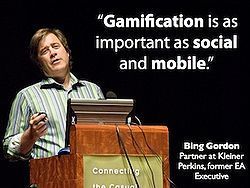
Gamification is the integration of game mechanics and game-thinking in non-game environments to boost engagement, loyalty and fun!
If the website is not sufficiently protected, you infect thousands of visitors with your website! We must learn to avoid the pitfalls from the start. Please follow the good advice below.
|
"Here's to the crazy ones. The misfits. The rebels. The troublemakers. The round pegs in the square holes. The ones who see things differently. They're not f...
Yesterday’s New York Times’ article “Growing Up Digital, Wired for Distraction” by Matt Richtel brings up a long list of important ideas about how technology is changing the way students learn. Richtel touches on everything from how are brains our wired, to our cultural struggle with taming technology, to the balance of power between educator and learner.
From the perspective of another journalist covering these very subjects, it’s rich fodder for discussion. Here’s my take on some of these issues.
Latest news and comment on Peer review and scientific publishing from guardian.co.uk...
Peer review and scientific publishing
Business bloggers at Harvard Business Review discuss a variety of business topics including managing people, innovation, leadership, and more.
North America's top universities in the Top 400 World University Rankings published by Times Higher Education. Official 2011-2012 results.
The Google Teacher Academy is a FREE professional development experience designed to help primary and secondary educators from around the globe get the most from innovative technologies.
Each Academy is an intensive, one-day event where participants get hands-on experience with Google's free products and other technologies, learn about innovative instructional strategies, receive resources to share with colleagues, and immerse themselves in an innovative corporate environment. Upon completion, Academy participants become Google Certified Teachers who share what they learn with other primary and secondary educators in their local region.
Ethical Leadership Involves Much More Than Avoiding Risk
Gust MEES's insight:
RT @OneGreenPlanet: The link between critical thinking and moral reasoning http://t.co/ZzMQZmn0 #vegan #animals... Via Sarantis Chelmis
Daniel Goleman's new book, Ecological Intelligence, reveals the hidden environmental consequences of what we
This is one of the best pictures I've ever seen. What are you, left brian or right brain? This is important to know also the learning style... Via Smaragda Papadopoulou
Kyle Findlay, TNS Global Brand Equity Centre, South Africa and Kirsty Alberts, TNS Global Brand Equity Centre, South Africa "Gamification" is a buzzword current... Via Be Learning
Maybe you've heard of the termMaybe you've heard of the term "gamification," and perhaps you're wondering what it is and how it can be applied to eLearning. In short, gamification is the use of gameplay mechanics for non-game applications. Almost as important, as a definition of what it is, is a definition of what it's not.
Gamification is not the inclusion of stand-alone games in eLearning (or, whatever gamification is being applied to). It also has very little to do with art-styles, themes, or the application of narrative. Rather, game mechanics are the construct of rules that encourage users to explore and learn the properties of their possibility space through the use of feedback mechanisms. With gamification, these "possibility spaces" have been expanded beyond just games into other areas like marketing, education, the workplace, social media, philanthropy, and the Web, just to name a few.
As a game designer now making eLearning software, I've found that much of what is used to build engagement in games can also be applied to other interactive material such as eLearning. ... |
Your new post is loading...