Your new post is loading...

|
Scooped by
Gust MEES
July 9, 2012 6:55 AM
|
|
|
Scooped by
Gust MEES
July 8, 2012 4:04 PM
|
Bring Your Own Device (BYOD) is more complex than most people know, read further to learn… . . Keywords for this free course: . motivation, engagement, heroes, Security-Scouts, critical thinking, stay out of the box, adapt to new technologies, be aware of the malware, nobody is perfect, knowing the dangers and risks, responsibility, responsibility of School, responsibility of IT-Admin, responsibilities of BYOD users, Apple insecurity, Insecurity of Apps, Principals responsibilities, Mobile Device Management, risks of BYOD, BYOD-Policy, IT-Security Infrastructure, Teacher-Parents Meeting, Cyberwar, Cyberwarfare, Government, Internet-Safety, IT-Security knowledge basics... The weakest link in the Security Chain is the human! If you don’t respect certain advice you will get tricked by the Cyber-Criminals!
=> NOBODY is perfect! A security by 100% doesn’t exist! <=
Read more: http://gustmees.wordpress.com/2012/07/07/bring-your-own-device-advantages-dangers-and-risks/
|
|
Scooped by
Gust MEES
July 7, 2012 6:50 PM
|
|
|
Scooped by
Gust MEES
July 7, 2012 6:25 PM
|
Thinkstock When parents and teachers consider how children learn, it’s usually the intellectual aspects of the activity they have in mind. Sidney D’Mello would like to change that. The University of Notre Dame psychologist has been studying the role of feelings in learning for close to a decade, and he has concluded that complex learning is almost inevitably “an emotionally charged experience,” as he wrote in a paper published in the journal Learning and Instruction earlier this year. During the learning experiments described in his paper, he notes, the participating students reported being in a neutral state only about a quarter of the time. ===> The rest of the time, they were experiencing lots of feelings: surprise, delight, engagement, confusion, boredom, frustration. <=== Read more: http://blogs.kqed.org/mindshift/2012/07/what-do-emotions-have-to-do-with-learning/
|
|
Scooped by
Gust MEES
July 7, 2012 12:44 PM
|

|
Suggested by
Damián Casado
July 7, 2012 8:34 AM
|
As our students grow dependant on Internet being a primary source for their information, it becomes of urgent necessity that we, as teachers and educators, should know how to evaluate web content and decipher credible resources from spam and irrelevant ones.
|
|
Rescooped by
Gust MEES
from Tecnologia Instruccional
July 7, 2012 8:16 AM
|
As practitioners will already know, the way that one learner studies may differ from the way that a classmate does, because of their different styles of learning. The four types are... - visual learners,
- auditory learners,
- read and write learners, and
- kinesthetics learners. Each function is clearly illustrated and explained in this infographic produced by onlinecollege.org. Learning suggestions, and which tests the learner types are likely to excel in better than others, are provided. This is a helpful guide for... - IAG Practitioners - Learners - Initial Teacher Training - educators, especially those who are adamant that there is only one way to revise.
Via John Dalziel, juandoming, Norma
|
|
Scooped by
Gust MEES
July 6, 2012 12:36 PM
|
|
|
Rescooped by
Gust MEES
from Barefoot Leadership
July 5, 2012 5:24 PM
|
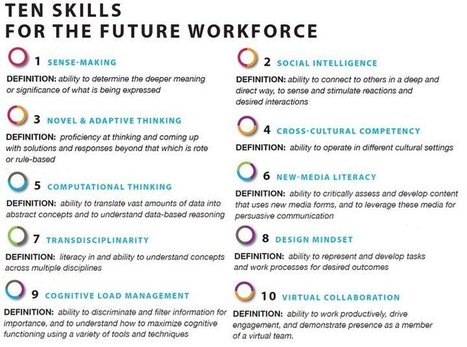
Sense-making, social intelligence, novel & adaptive thinking, cross-cultural competency, computational thinking, new-media literacy, transdisciplarity, design mindset, cognitive load management, virtual collaboration. These are the 10 skills needed for the future workforce. For a full report, see the work done by Apollo Research Institute (formerly the University of Phoenix Research Institute) looking at the Skills Needed by 2020. A summery of the report and detailed findings about each of the skills are also available. Read more:
Via Marcia Conner, David Hain, Professor Jill Jameson
|
|
Scooped by
Gust MEES
July 5, 2012 4:24 PM
|
Qu’est-ce qu’être compétent en information à l’heure du numérique ? La création, la diffusion, la recherche et la production d’informations de qualité sur le Web est un enjeu de taille pour toucher les publics et les faire contribuer et collaborer. L’Agence européenne pour l’information et le conseil des jeunes (ERYICA) a réalisé un dossier librement téléchargeable : guide de la sécurité et de la qualité en ligne – kit pour les professionnels de l’information jeunesse (72 pages, en pdf). Objectif de ce manuel : comprendre les pratiques des jeunes publics sur Internet et travailler auprès/pour ces publics afin d’offrir un accès à une information de qualité guidée par des compétences numériques. Ce guide intéressera les associations, collectivités territoriales, l’univers scolaire et les entreprises qui assurent une présence sur le Web à destination des publics jeunes et qui cherchent à comprendre comment les intéresser et les toucher ; une publication qui offre des clés de compréhension et d’actions. En savoir plus : http://www.netpublic.fr/2012/07/guide-comprendre-les-pratiques-des-jeunes-sur-internet-pour-creer-une-information-de-qualite/
|
|
Scooped by
Gust MEES
July 5, 2012 6:57 AM
|
This is the ninth in a series of 10 posts on designing quality online courses. The nine steps are aimed mainly at instructors who are new to online learning, or have tried online learning without much help or success. The first eight posts (which should be read before this post) are:
- Nine steps to quality online learning: Introduction
- Nine steps to quality online learning: Step 1: Decide how you want to teach online
- Nine steps to quality online-learning: Step 2: Decide on what kind of online course
- Nine steps to quality online learning: Step 3: Work in a Team
- Nine steps to quality online learning: Step 4: Build on existing resources
- Nine steps to quality online learning: Step 5: Master the technology
- Nine steps to quality online learning: Step 6: Set appropriate learning goals
- Nine steps to quality online learning: Step 7: Design course structure and learning activities
A condensed version covering all the main posts in this series can be found on the Contact North web site: What you need to know about teaching online: nine key steps. (French version: Ce que le personnel enseignant doit savoir sur l’enseignment en ligne: neuf étapes clés‘)
Read more, very interesting...: http://www.tonybates.ca/2012/07/04/nine-steps-to-quality-online-learning-step-8-communicate-communicate-communicate/
|
|
Scooped by
Gust MEES
July 5, 2012 6:21 AM
|
In the past, it might have been true that leaders could succeed simply because they were smart. But that’s no longer all it takes. While technical skills remain important, our emotional intelligence (referred to as EQ or EI) is just as important as our IQ. In fact, research shows that a leader’s emotional intelligence has a direct impact on the success of an organization. Daniel Goleman, a thought-leader on the topic of EI, says this about emotional intelligence: “If your emotional abilities aren’t in hand, if you don’t have self-awareness, if you are not able to manage your distressing emotions, if you can’t have empathy and have effective relationships, then no matter how smart you are, you are not going to get very far.” Read more: http://www.realtimeperformance.com/RealTimeLeadership/?p=863
|
|
|
Scooped by
Gust MEES
July 9, 2012 7:03 AM
|
European Commission Press release Brussels, 9 July 2012 Cybercrime: EU citizens concerned by security of personal information and online payments A new Eurobarometer survey shows that Internet users are very concerned about cyber security: 89% avoid... The survey, covering a total of almost 27 000 people in all EU member states, shows a strong link between being informed about the risks of cybercrime and feeling confident online. A majority of those who feel confident in doing online banking or shopping say that they also feel well informed about cybercrime. "Cybercriminals must not be allowed to disrupt our use of the Internet. ===> The more we know about the risks and how to protect ourselves, the more we can truly maximise our digital lives", Cecilia Malmström said. <=== Other key findings of the survey are: - 53% of internet users say they buy goods or services online, 52% use social networking sites, 48% bank online, while 20% sell goods or services - 29% are not confident about their ability to use the internet for things like online banking or online purchases - 59% do not feel well informed about the risks of cybercrime - 40% are concerned about someone taking or misusing their personal data and 38% show concern about the security of online payments Read more: http://europa.eu/rapid/pressReleasesAction.do?reference=IP/12/751&format=HTML&aged=0&language=EN&guiLanguage=en
|
|
Rescooped by
Gust MEES
from Education et TICE
July 9, 2012 6:26 AM
|
Infobourg et Carrefour Education ont publié conjointement un dossier consacré à l'usage de Twitter au sein du monde éducatif : "Ces enseignants qui tweetent" (juin 2012). Le dossier de 12 pages au format PDF propose une approche croisée des différents usages pédagogiques expérimentés par plusieurs enseignants, notamment au Québec.
Via Laurent Blanquer
|
|
Scooped by
Gust MEES
July 8, 2012 12:40 PM
|
WAVE is a free web accessibility evaluation tool provided by WebAIM. It is used to aid humans in the web accessibility evaluation process. Rather than providing a complex technical report, WAVE shows the original web page with embedded icons and indicators that reveal the accessibility of that page. Gust MEES: I love this one as it is showing very well where the problems are... Read more and test your blog and/or web site: http://wave.webaim.org/
|
|
Scooped by
Gust MEES
July 7, 2012 3:09 PM
|
by Marilyn Price-Mitchell, PhD. In the 3rd of a 4-part series on character strengths, this article focuses on how teachers can create positive learning environments that uses character strengths as the foundation to a core curriculum. In his recent article School Made Easy: Character Education is the Key, Dr. Neal Mayerson, Chairman of the VIA Institute, points out that teachers choose the type of culture to create in their classrooms. ===> Cultures of collaboration, confidence, mutual respect, and engagement help nurture the development of character strengths. <=== Read more, very interesting and very important for best "eCitizen" and "Digital Citizen-Ship"... http://rootsofaction.com/blog/developing-character-strengths-a-vital-goal-of-education-part-3/
College students are often very adept at “being social” through technological means such as social networking websites and other virtual communities. However, once they enter the classroom and students no longer have electronic communication to rely upon for their interactions, it may be challenging at first for them to develop interpersonal and productive relationships with other classmates through non-digital or face-to-face communication. That’s when emotional intelligence is needed because it strengthens the skills required to interact effectively with others, which are often under-utilized with electronic communication. Daniel Goleman is a thought-leader in the field of emotional intelligence and in his article, The Value of Emotional Intelligence, identified the “four components that will turn struggling students into more successful ones.” Goleman described emotional self-awareness, emotional self-management, social awareness, and relationship management as the most important aspects of becoming emotionally intelligent. In the following video presentation Goleman shares more about this topic. Read more, very interesting... http://www.onlinecollegecourses.com/2012/04/25/why-emotional-intelligence-is-needed-more-than-ever/
Via Dr. Bruce A. Johnson
|
|
Scooped by
Gust MEES
July 7, 2012 8:26 AM
|
With today’s job market there are a growing number of adults going back to school and furthering their education. Whether it is to increase their marketability, or to return to the corporate world with a higher pay grade, adult students are becoming more common. If you are considering going back to school to change careers or climb the ladder in your current field, you may find it harder than when you were fresh out of high school, but it is not impossible. Adult students have more responsibilities and factors to take into consideration before starting school. Therefore, these tips may just be the help you need to succeed. Read more: http://edudemic.com/2012/07/back-to-school/
|
|
Rescooped by
Gust MEES
from ICT Security Tools
July 6, 2012 1:00 PM
|
Keith Ferrell (@k_ferrell on Twitter) is an educational technology coach at Singapore American School. A good majority of northern hemisphere and international schools are winding down the 2011-12 school year, and doors will be closing as the students and teachers take off on their summer adventures. Here is a list of great sites for kids and teachers to keep you happily productive and learning this summer. These are in no way in any order of personal preference or coolness. Happy summer! Read more: http://www.edutopia.org/blog/48-summer-websites-kids-teachers-keith-ferrell
|
|
Scooped by
Gust MEES
July 6, 2012 5:55 AM
|
What Teachers + Educators should learn about BYOD Gust MEES: Most of articles, blogs and Tweets witten by educational people are showing the advantages of "Bring Your Own Device" (BYOD) and they embrace very well BYOD, which I do also; but... There are some more things to consider such as: - A BYOD Policy in the campus, school... - Prepare for BYOD in your organization Read my complete curation about it here: http://www.scoop.it/t/21st-century-learning-and-teaching?q=BYOD ===> Read and learn also about IT-Security, YES that is a MUST in 21st Century in Education, especially when using BYOD: <=== - http://gustmees.wordpress.com/category/get-smart-with-5-minutes-tutorials/ Learn also about eCitizen, Digital Citizenship where Teachers should stay there as good example and knowing about their responsability: - http://www.scoop.it/t/21st-century-learning-and-teaching?tag=eCitizen Responsability as eCitizen for the Government, be a good patriot and know how to defend your Government against Cyber-Attacks and Cyberwar, why and how? - http://gustmees.wordpress.com/2012/05/21/visual-it-securitypart2-your-computer-as-a-possible-cyber-weapon/ ===> The above mentioned must be included in Education and especially when using BYOD, read these blogs and curated articles and you will understand that they are a MUST ;) <=== Check out also my new blog "Bring Your Own Device: Advantages, Dangers, Risks and best Policy to stay secure": http://gustmees.wordpress.com/2012/07/07/bring-your-own-device-advantages-dangers-and-risks/
|
|
Scooped by
Gust MEES
July 5, 2012 4:28 PM
|
|
|
Scooped by
Gust MEES
July 5, 2012 7:15 AM
|
18TH INTERNATIONAL CONFERENCE ON TECHNOLOGY SUPPORTED LEARNING & TRAINING
THE LARGEST GLOBAL E-LEARNING CONFERENCE FOR THE CORPORATE, EDUCATION AND PUBLIC SERVICE SECTORS
REACHING BEYOND TOMORROW
The world has changed. Society is no longer the same. Today, people live, work, relax and, above all, learn very differently. We expect flexibility – we want to be able to choose, to adapt. We don’t want the past or tradition to dictate to us. Technology has given us the freedom to do this. As the overall theme for ONLINE EDUCA BERLIN 2012, 'Reaching Beyond Tomorrow,' will investigate how we get from our present situation in the midst of a crisis, to a brighter, better and more inclusive future in which technology enables everyone to improve and enrich themselves. Read more: http://www.online-educa.com/
|
|
Scooped by
Gust MEES
July 5, 2012 6:52 AM
|
A new way of thinking, called 'radical openness,' is making waves in the tech industry and sparking debate over the concept of using digital sharing tools to collectively brainstorm and solve problems. Read more: http://www.mobiledia.com/news/155411.html
|