21st Century Learning and Teaching
791.5K views | +2 today
21st Century Learning and Teaching
Related articles to 21st Century Learning and Teaching as also tools...
Curated by Gust MEES
Your new post is loading...

Popular Tags

Current selected tag: 'ICT'. Clear
Scooped by Gust MEES
April 9, 2018 7:01 PM
Scoop.it!

Laterales Denken – Wikipedia | #QuerDenker #Entrepreneurs OUT of #SchoolCocoon #Mentality

Laterales Denken - Wikipedia

Laterales Denken (vom lateinischen latus für „Seite"), umgangssprachlich auch Querdenken genannt, ist eine Denkmethode, die im Rahmen der Anwendung von Kreativitätstechniken zur Lösung von Problemen oder Ideenfindung eingesetzt werden kann.

Laterales Denken


Laterales Denken (vom lateinischen latus für „Seite“), umgangssprachlich auch Querdenken genannt, ist eine Denkmethode, die im Rahmen der Anwendung von Kreativitätstechniken zur Lösung von Problemen oder Ideenfindung eingesetzt werden kann.

Der Begriff wurde 1967 von Edward de Bono eingeführt und seitdem in zahlreichen Veröffentlichungen verwendet. Gelegentlich wird in der Fachsprache auch der Begriff nichtlineares Denken gebraucht. Umgangssprachlich sagt man auch Querdenken oder um die Ecke denken. Das Antonym lautet vertikales oder lineares Denken.

Edward de Bono hat außerdem den Begriff „paralleles Denken“ geprägt, der die Fähigkeit beschreibt, in Bezug auf ein beliebiges Thema systematisch verschiedene Denk- und Wahrnehmungsperspektiven einzunehmen. Das wichtigste Beispiel für das parallele Denken sind die Denkhüte von De Bono. Sie werden inzwischen weltweit in großen Organisationen in den Bereichen Kreativität, aber auch Kommunikation und Teamentwicklung eingesetzt.

Das Konzept de Bonos unterscheidet sich nur in Nuancen von dem Joy Paul Guilfords. Dieser verwendete an Stelle von lateralem Denken den Terminus divergentes Denken bzw. anstelle von vertikalem Denken den Terminus konvergentes Denken. Aufgrund ihrer starken Ähnlichkeit werden die Begriffspaare weitestgehend synonym verwendet.[1]

Im Gegensatz zum vertikalen Denken, das Schritt für Schritt (kontinuierlich) verläuft und auf eingeübten Mustern beruht, ist das laterale Denken durch folgende Grundsätze charakterisiert:

Es wird zugelassen, dass vorliegende Informationen subjektiv bewertet und selektiv verwendet werden. Details werden nicht analytisch, sondern intuitiv erfasst.


Gedankliche Sprünge und Assoziationen werden zugelassen, nicht jedes Zwischenergebnis muss richtig sein.


Ja/Nein-Entscheidungen werden vermieden. Auch nicht durchführbare Lösungen können ein Schritt zum besseren Verständnis des Problems sein.


Konventionelle Denkmuster werden in Frage gestellt, indem z. B. bewusst nach der unwahrscheinlichsten Lösung eines Problems gesucht wird.


Ausgangssituation und Rahmenbedingungen werden nicht als unveränderlich hingenommen.


Learn more / En savoir plus / Mehr erfahren:


https://www.scoop.it/t/21st-century-learning-and-teaching/?&tag=Entrepreneurs


Gust MEES's insight:

Laterales Denken


Laterales Denken (vom lateinischen latus für „Seite“), umgangssprachlich auch Querdenken genannt, ist eine Denkmethode, die im Rahmen der Anwendung von Kreativitätstechniken zur Lösung von Problemen oder Ideenfindung eingesetzt werden kann.

Der Begriff wurde 1967 von Edward de Bono eingeführt und seitdem in zahlreichen Veröffentlichungen verwendet. Gelegentlich wird in der Fachsprache auch der Begriff nichtlineares Denken gebraucht. Umgangssprachlich sagt man auch Querdenken oder um die Ecke denken. Das Antonym lautet vertikales oder lineares Denken.

Edward de Bono hat außerdem den Begriff „paralleles Denken“ geprägt, der die Fähigkeit beschreibt, in Bezug auf ein beliebiges Thema systematisch verschiedene Denk- und Wahrnehmungsperspektiven einzunehmen. Das wichtigste Beispiel für das parallele Denken sind die Denkhüte von De Bono. Sie werden inzwischen weltweit in großen Organisationen in den Bereichen Kreativität, aber auch Kommunikation und Teamentwicklung eingesetzt.

Das Konzept de Bonos unterscheidet sich nur in Nuancen von dem Joy Paul Guilfords. Dieser verwendete an Stelle von lateralem Denken den Terminus divergentes Denken bzw. anstelle von vertikalem Denken den Terminus konvergentes Denken. Aufgrund ihrer starken Ähnlichkeit werden die Begriffspaare weitestgehend synonym verwendet.[1]

Im Gegensatz zum vertikalen Denken, das Schritt für Schritt (kontinuierlich) verläuft und auf eingeübten Mustern beruht, ist das laterale Denken durch folgende Grundsätze charakterisiert:

Es wird zugelassen, dass vorliegende Informationen subjektiv bewertet und selektiv verwendet werden. Details werden nicht analytisch, sondern intuitiv erfasst.


Gedankliche Sprünge und Assoziationen werden zugelassen, nicht jedes Zwischenergebnis muss richtig sein.


Ja/Nein-Entscheidungen werden vermieden. Auch nicht durchführbare Lösungen können ein Schritt zum besseren Verständnis des Problems sein.


Konventionelle Denkmuster werden in Frage gestellt, indem z. B. bewusst nach der unwahrscheinlichsten Lösung eines Problems gesucht wird.


Ausgangssituation und Rahmenbedingungen werden nicht als unveränderlich hingenommen.


Learn more / En savoir plus / Mehr erfahren:


https://www.scoop.it/t/21st-century-learning-and-teaching/?&tag=Entrepreneurs

 

No comment yet.
Scooped by Gust MEES
April 4, 2018 8:45 AM
Scoop.it!

How to write engaging tweets in 280 characters | #SocialMedia #Twitter #Communication #Publishing #DigitalMarketing #Press #Journalism 


How to write engaging tweets in 280 characters | #SocialMedia #Twitter #Communication #Publishing #DigitalMarketing #Press #Journalism  | 21st Century Learning and Teaching | Scoop.it

If you want to be a successful digital marketer, then you should be aware of the latest updates related to social media. Being one of the most widely used social media platforms out there, Twitter keeps on redefining itself. A while back, it announced the latest update regarding the 280 character limit for tweets. The update was certainly a big relief to many as almost all the marketers used to struggle with the previous 140 character limit.

Now, you can easily level up your social media marketing game on Twitter and reach out to a wider audience for sure. To make things easier for you, I have come up with some expert suggestions that will help you make the most of the Twitter’s latest update.

Details of Twitter’s new update (in a nutshell)
For almost a year now, there have been speculations about the Twitter’s new character limit. It was in the last quarter of 2017 when Twitter finally announced the 280-character update for posting tweets. For languages except Chinese, Japanese, and Korean, Twitter has increased the character limit for tweets from 140 to 280 characters. The attached photos, GIFs, polls, etc. won’t be counted as characters. Though, if you will include a URL, then it will increase the character count. Therefore, it is still recommended to use a URL shortening service while including website links in tweets.

12 ways to make the most of Twitter’s new update
Now when you can tweet in 280 characters, you don’t need to double-check every word you write. Furthermore, it can help you answer customer queries or explain a product to your audience. Here are some interesting ways to use Twitter’s new update.


Learn more / En savoir plus / Mehr erfahren:


https://www.scoop.it/t/21st-century-learning-and-teaching/?&tag=press


Gust MEES's insight:

If you want to be a successful digital marketer, then you should be aware of the latest updates related to social media. Being one of the most widely used social media platforms out there, Twitter keeps on redefining itself. A while back, it announced the latest update regarding the 280 character limit for tweets. The update was certainly a big relief to many as almost all the marketers used to struggle with the previous 140 character limit.

Now, you can easily level up your social media marketing game on Twitter and reach out to a wider audience for sure. To make things easier for you, I have come up with some expert suggestions that will help you make the most of the Twitter’s latest update.

Details of Twitter’s new update (in a nutshell)
For almost a year now, there have been speculations about the Twitter’s new character limit. It was in the last quarter of 2017 when Twitter finally announced the 280-character update for posting tweets. For languages except Chinese, Japanese, and Korean, Twitter has increased the character limit for tweets from 140 to 280 characters. The attached photos, GIFs, polls, etc. won’t be counted as characters. Though, if you will include a URL, then it will increase the character count. Therefore, it is still recommended to use a URL shortening service while including website links in tweets.

12 ways to make the most of Twitter’s new update
Now when you can tweet in 280 characters, you don’t need to double-check every word you write. Furthermore, it can help you answer customer queries or explain a product to your audience. Here are some interesting ways to use Twitter’s new update.


Learn more / En savoir plus / Mehr erfahren:


https://www.scoop.it/t/21st-century-learning-and-teaching/?&tag=press


No comment yet.
Scooped by Gust MEES
March 21, 2018 8:26 PM
Scoop.it!

Getting Value from Machine Learning Isn’t About Fancier Algorithms — It’s About Making It Easier to Use

Getting Value from Machine Learning Isn’t About Fancier Algorithms — It’s About Making It Easier to Use | 21st Century Learning and Teaching | Scoop.it

Machine learning can drive tangible business value for a wide range of industries — but only if it is actually put to use. Despite the many machine learning discoveries being made by academics, new research papers showing what is possible, and an increasing amount of data available, companies are struggling to deploy machine learning to solve real business problems. In short, the gap for most companies isn’t that machine learning doesn’t work, but that they struggle to actually use it.

How can companies close this execution gap? In a recent project we illustrated the principles of how to do it. We used machine learning to augment the power of seasoned professionals — in this case, project managers — by allowing them to make data-driven business decisions well in advance. And in doing so, we demonstrated that getting value from machine learning is less about cutting-edge models, and more about making deployment easier.


Learn more / En savoir plus / Mehr erfahren:


https://www.scoop.it/t/21st-century-learning-and-teaching/?&tag=machine+learning


Gust MEES's insight:

Machine learning can drive tangible business value for a wide range of industries — but only if it is actually put to use. Despite the many machine learning discoveries being made by academics, new research papers showing what is possible, and an increasing amount of data available, companies are struggling to deploy machine learning to solve real business problems. In short, the gap for most companies isn’t that machine learning doesn’t work, but that they struggle to actually use it.

How can companies close this execution gap? In a recent project we illustrated the principles of how to do it. We used machine learning to augment the power of seasoned professionals — in this case, project managers — by allowing them to make data-driven business decisions well in advance. And in doing so, we demonstrated that getting value from machine learning is less about cutting-edge models, and more about making deployment easier.


Learn more / En savoir plus / Mehr erfahren:


https://www.scoop.it/t/21st-century-learning-and-teaching/?&tag=machine+learning


No comment yet.
Scooped by Gust MEES
March 21, 2018 10:28 AM
Scoop.it!

Big Data Driven Smart Transportation: the Underlying Story of IoT Transformed Mobility 

Big Data Driven Smart Transportation: the Underlying Story of IoT Transformed Mobility  | 21st Century Learning and Teaching | Scoop.it

Growing of smart IoT has generated many major impacts on transportation development, of which one underlying big story is the thriving of big data driven smart transportation nowadays. We are moving from IT to data technology (DT) time, and we are entering a “results driven” era in transportation. As the front and center of the smart IoT transformed mobility, transportation data sets grow rapidly while they are increasingly gathered from more connected sensors, devices, actuators in real-world applications. In 2016, over 823.0 million air trip passengers were reported by U.S. airlines and over 25 million public transit trips was generated daily.  


The data traffic associated with mobility and transportation is estimated to be roughly 0.6 exabytes every month by 2020 (about 9 percent of total US wireless data traffic), and will grow to 9.4 exabytes every month by 2030. Although the quantity of the data available is indeed large, that is not the most striking characteristic of “big data” in the smart IoT era concerning transportation. The challenge in big data driven transportation rarely refers to the large volume or size of data; rather, it often refers to extracting value from data with certain innovative methods, i.e. how to analyze the data and to gather meaningful insights that can be used to inform decisions makers.

Many concurrent novel technologies and employments have emerged within the big data driven smart mobility ecosystem, emanating from the transportation needs of different stakeholders for better safety, reliability, sustainability, and automation.

For public transportation, big data analytics have transformed both the plan and operations phases on planning and demand modeling, predictive maintenance, and event response. New big data tech-savvy has brought more personalized services to public transportation users, such as offering ancillary services to providing recommendations about additional destinations to visit as part of an upgrade to the passenger’s journey, etc.


The big data driven smart public transportation influences both automated and human decision-making, which has clearly played a big part in re-energizing public transport network, and has offered plenty of opportunities to improve the public transportation experience with improved reliability and safety.


Learn more / En savoir plus / Mehr erfahren:


https://www.scoop.it/t/21st-century-learning-and-teaching/?&tag=Big+Data..


Gust MEES's insight:

Growing of smart IoT has generated many major impacts on transportation development, of which one underlying big story is the thriving of big data driven smart transportation nowadays. We are moving from IT to data technology (DT) time, and we are entering a “results driven” era in transportation. As the front and center of the smart IoT transformed mobility, transportation data sets grow rapidly while they are increasingly gathered from more connected sensors, devices, actuators in real-world applications. In 2016, over 823.0 million air trip passengers were reported by U.S. airlines and over 25 million public transit trips was generated daily.  


The data traffic associated with mobility and transportation is estimated to be roughly 0.6 exabytes every month by 2020 (about 9 percent of total US wireless data traffic), and will grow to 9.4 exabytes every month by 2030. Although the quantity of the data available is indeed large, that is not the most striking characteristic of “big data” in the smart IoT era concerning transportation. The challenge in big data driven transportation rarely refers to the large volume or size of data; rather, it often refers to extracting value from data with certain innovative methods, i.e. how to analyze the data and to gather meaningful insights that can be used to inform decisions makers.

Many concurrent novel technologies and employments have emerged within the big data driven smart mobility ecosystem, emanating from the transportation needs of different stakeholders for better safety, reliability, sustainability, and automation.

For public transportation, big data analytics have transformed both the plan and operations phases on planning and demand modeling, predictive maintenance, and event response. New big data tech-savvy has brought more personalized services to public transportation users, such as offering ancillary services to providing recommendations about additional destinations to visit as part of an upgrade to the passenger’s journey, etc.


The big data driven smart public transportation influences both automated and human decision-making, which has clearly played a big part in re-energizing public transport network, and has offered plenty of opportunities to improve the public transportation experience with improved reliability and safety.


Learn more / En savoir plus / Mehr erfahren:


https://www.scoop.it/t/21st-century-learning-and-teaching/?&tag=Big+Data..


No comment yet.
Scooped by Gust MEES
March 20, 2018 7:25 AM
Scoop.it!

Teaching for the Future | OECD READ edition | #ModernEDUcation #ModernLEARNing (#PDF)

Teaching for the Future | OECD READ edition | #ModernEDUcation #ModernLEARNing (#PDF) | 21st Century Learning and Teaching | Scoop.it

Teachers are the most important school-related factor influencing student learning. Teachers can help level the playing field and provide opportunities...


Learn more / En savoir plus / Mehr erfahren:


https://www.scoop.it/t/21st-century-learning-and-teaching/?&tag=OECD


Gust MEES's insight:

Teachers are the most important school-related factor influencing student learning. Teachers can help level the playing field and provide opportunities...


Learn more / En savoir plus / Mehr erfahren:


https://www.scoop.it/t/21st-century-learning-and-teaching/?&tag=OECD


Oskar Almazan's curator insight, March 26, 2018 9:09 AM
Teachers are the most important school-related factor influencing student learning. Teachers can help level the playing field and provide opportunities for success to all their students. They can inspire students to innovate; to think and reflect and to work in collaboration with others.
Félix Santamaria's curator insight, March 27, 2018 11:19 AM
Share your insight
Geemik Maria Açucena Da Silva's curator insight, April 7, 2018 8:23 AM
"Teachers are the most important school-related factor influencing student learning. Teachers can help level the playing field and provide opportunities for success to all their students. They can inspire students to innovate; to think and reflect and to work in collaboration with others."
Scooped by Gust MEES
March 18, 2018 11:40 AM
Scoop.it!

Processing.org | #Coding #Maker #MakerED #MakerSpaces #VisualArts #Software #OpenSource

Processing.org | #Coding #Maker #MakerED #MakerSpaces #VisualArts #Software #OpenSource | 21st Century Learning and Teaching | Scoop.it

Processing is a flexible software sketchbook and a language for learning how to code within the context of the visual arts. Since 2001, Processing has promoted software literacy within the visual arts and visual literacy within technology.


[Gust MEES] It gets used in following projects, to understand what it is about:


https://www.youtube.com/watch?v=P6Obm7sodhg


https://www.youtube.com/watch?v=oZsawlu-U3o


Gust MEES's insight:

Processing is a flexible software sketchbook and a language for learning how to code within the context of the visual arts. Since 2001, Processing has promoted software literacy within the visual arts and visual literacy within technology.


[Gust MEES] It gets used in following projects, to understand what it is about:


https://www.youtube.com/watch?v=P6Obm7sodhg


https://www.youtube.com/watch?v=oZsawlu-U3o


No comment yet.
Scooped by Gust MEES
March 15, 2018 6:43 PM
Scoop.it!

Repl.it lets you program in your browser | #Programming #Maker #MakerED #MakerSpaces 

Repl.it lets you program in your browser | #Programming #Maker #MakerED #MakerSpaces  | 21st Century Learning and Teaching | Scoop.it

No matter whether you are a seasoned programmer or you simply want to take your first steps in writing code, Repl.it wants to help you get from idea to result as fast as possible — without complicated installs and setup procedures getting in your way.

The Y Combinator-funded project, which released version 1.0 of its service this week, gives you an easy to use programming environment in the browser, which slowly reveals its complexity as you write your code.


The acronym REPL stands for read-eval-print loop and basically provides a programmer with an interactive programming environment. Unsurprisingly, that’s exactly what Repl.it gives you, too, and with 200,000 weekly active developers on the platform already, there is clearly a demand for this service.


Repl.it  already supports virtually every programming language you can think of, no matter whether that’s JavaScript, Python, PHP or QBasic, as well as popular frameworks like Django, Ruby on Rails and Sinatra. And if you want to hurt yourself and write in Brainfuck, you can do that, too.


Learn more / En savoir plus / Mehr erfahren:


https://www.scoop.it/t/21st-century-learning-and-teaching/?&tag=Programming...


Gust MEES's insight:

No matter whether you are a seasoned programmer or you simply want to take your first steps in writing code, Repl.it wants to help you get from idea to result as fast as possible — without complicated installs and setup procedures getting in your way.

The Y Combinator-funded project, which released version 1.0 of its service this week, gives you an easy to use programming environment in the browser, which slowly reveals its complexity as you write your code.


The acronym REPL stands for read-eval-print loop and basically provides a programmer with an interactive programming environment. Unsurprisingly, that’s exactly what Repl.it gives you, too, and with 200,000 weekly active developers on the platform already, there is clearly a demand for this service.


Repl.it  already supports virtually every programming language you can think of, no matter whether that’s JavaScript, Python, PHP or QBasic, as well as popular frameworks like Django, Ruby on Rails and Sinatra. And if you want to hurt yourself and write in Brainfuck, you can do that, too.


Learn more / En savoir plus / Mehr erfahren:


https://www.scoop.it/t/21st-century-learning-and-teaching/?&tag=Programming...


No comment yet.
Scooped by Gust MEES
March 11, 2018 1:49 PM
Scoop.it!

The classroom of the future, according to the world’s best teachers | #ModernEDUcation #ModernLEARNing

The classroom of the future, according to the world’s best teachers | #ModernEDUcation #ModernLEARNing | 21st Century Learning and Teaching | Scoop.it

The classroom of the future, according to the world’s best teachers

By Global Teacher Prize | March 2nd 2018

In many parts of the world, today’s classrooms are almost unrecognisable compared to those of a decade ago.

Technology is changing the way students learn and teachers teach. From interactive white boards replacing chalk boards to tablets replacing desktop computers, schools are becoming increasingly digital.

Looking ahead to 2030, greater internet connectivity and smarter technologies promise to radically reshape the classroom of the future.

We asked the Global Teacher Prize 2018 Finalists to share their views on how they feel the classroom will change in the coming decade, and what this means for the role of the teacher.

What do you think will be the biggest difference between the classroom of 2030 and the classroom of today?

Many of our Finalists predict that the trend of young people effectively teaching themselves will continue.


Learn more / En savoir plus / Mehr erfahren:


https://www.scoop.it/t/21st-century-learning-and-teaching/


Gust MEES's insight:

The classroom of the future, according to the world’s best teachers

By Global Teacher Prize | March 2nd 2018

In many parts of the world, today’s classrooms are almost unrecognisable compared to those of a decade ago.

Technology is changing the way students learn and teachers teach. From interactive white boards replacing chalk boards to tablets replacing desktop computers, schools are becoming increasingly digital.

Looking ahead to 2030, greater internet connectivity and smarter technologies promise to radically reshape the classroom of the future.

We asked the Global Teacher Prize 2018 Finalists to share their views on how they feel the classroom will change in the coming decade, and what this means for the role of the teacher.

What do you think will be the biggest difference between the classroom of 2030 and the classroom of today?

Many of our Finalists predict that the trend of young people effectively teaching themselves will continue.


Learn more / En savoir plus / Mehr erfahren:


https://www.scoop.it/t/21st-century-learning-and-teaching/


Pablo Peñalver's curator insight, March 13, 2018 4:20 AM

The classroom of the future, according to the world’s best teachers

By Global Teacher Prize | March 2nd 2018

In many parts of the world, today’s classrooms are almost unrecognisable compared to those of a decade ago.

Technology is changing the way students learn and teachers teach. From interactive white boards replacing chalk boards to tablets replacing desktop computers, schools are becoming increasingly digital.

Looking ahead to 2030, greater internet connectivity and smarter technologies promise to radically reshape the classroom of the future.

We asked the Global Teacher Prize 2018 Finalists to share their views on how they feel the classroom will change in the coming decade, and what this means for the role of the teacher.

What do you think will be the biggest difference between the classroom of 2030 and the classroom of today?

Many of our Finalists predict that the trend of young people effectively teaching themselves will continue.


Learn more / En savoir plus / Mehr erfahren:


https://www.scoop.it/t/21st-century-learning-and-teaching/


Scooped by Gust MEES
March 7, 2018 9:07 AM
Scoop.it!

We Need to Modernize Education. The Clock Is Ticking | #ModernEDU #ModernLEARNing #LEARNing2LEARN

We Need to Modernize Education. The Clock Is Ticking | #ModernEDU #ModernLEARNing #LEARNing2LEARN | 21st Century Learning and Teaching | Scoop.it

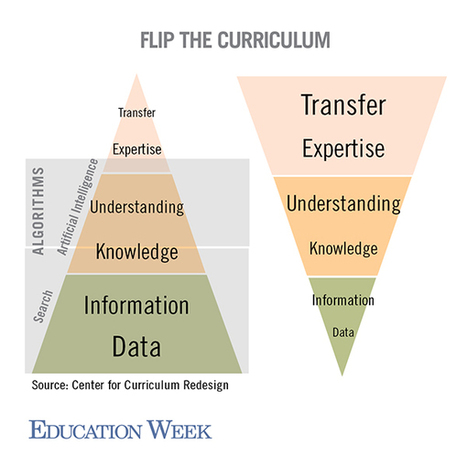
Flipping the curriculum could help us meet the demands of the artificial-intelligence era

Technologies such as artificial intelligence, robotics, and biotech are redefining what it means to be human—and employable.

Jobs are disappearing as automation replaces the need for people. New occupations are emerging that demand competencies that can transfer across the multiple assignments workers will experience in their lives. The disappearance of global boundaries presents opportunities—and risks—for all workers.

These changes demand a significant, ambitious evolution in how we prepare students for their future in a world that's increasingly volatile, uncertain, complex, and ambiguous. We need a relevant and modernized education.


Learn more / En savoir plus / Mehr erfahren:


https://www.scoop.it/t/21st-century-learning-and-teaching/?&tag=modern-education


Gust MEES's insight:

Flipping the curriculum could help us meet the demands of the artificial-intelligence era

Technologies such as artificial intelligence, robotics, and biotech are redefining what it means to be human—and employable.

Jobs are disappearing as automation replaces the need for people. New occupations are emerging that demand competencies that can transfer across the multiple assignments workers will experience in their lives. The disappearance of global boundaries presents opportunities—and risks—for all workers.

These changes demand a significant, ambitious evolution in how we prepare students for their future in a world that's increasingly volatile, uncertain, complex, and ambiguous. We need a relevant and modernized education.


Learn more / En savoir plus / Mehr erfahren:


https://www.scoop.it/t/21st-century-learning-and-teaching/?&tag=modern-education


laustenreed's curator insight, March 8, 2018 3:48 PM

Looking into the future Of Distance Education. Is this reality?

Chong Jiaxuan's comment, March 9, 2018 9:58 AM
According to the article, education now focusses more on information and data, followed by understanding and knowledge, and in last place, transfer of expertise. However, in the future, when artificial intelligence becomes common, education needs to focus on transfer of expertise before everything else. I feel that this is rather true. Knowledge of events and subjects might give you a boost in your career, but what is more important is the skills to learn, which is the transfer of expertise. Education needs to shift in order to meet this demand of skills needed in the future.
Julián David Cano's curator insight, March 20, 2018 7:14 PM
It can be evidenced that a lot of aspects of education continue being as traditional as always. Nevertheless, I must highlight that nowadays people are becoming aware about the importance of incorporating technology into the classrooms. Although people are becoming aware, taking advantage of technology to improve the learning process is still a challenge.

This article is really interesting due to the fact that it provides specific examples of skills needed in this century, and that can be achieved through the use of technological devices. Also, this article made me think about my role as a future teacher and the responsibility to start making little changes into the classrooms in order to improve education and contribute positive aspects to it. it is clear that the article makes a direct relationship about technology and education, and how to prepare students to deal with the 21st century skills.
Scooped by Gust MEES
March 7, 2018 8:14 AM
Scoop.it!

How blockchain makes self-sovereign identities possible | #ICT

How blockchain makes self-sovereign identities possible | #ICT | 21st Century Learning and Teaching | Scoop.it

Self-sovereign identiy explained


This concept is called self-sovereign identity. Self-sovereign identity starts with the notion that we all are the makers of our own identity, online and off. Because they do not rely on any centralized authority, self-sovereign identity systems are decentralized, mirroring the way identity works in real life.

Offline, our interactions flexibly support the use of attributes and credentials from numerous third parties, all presented by the very person they’re about, typically by taking those credentials out of a wallet or purse and presenting them to someone else to verify. For example, take a driver’s license. States issue it as a credential that you’re authorized to drive. But, it’s useful for a lot more. When you show up at a bar and the bartender wants proof you’re over 21, you show them your driver’s license.


How blockchain can solve the identity dilemma

Self-sovereign identity systems use blockchains – distributed ledgers – so that decentralized identifiers can be looked up without involving a central directory. Blockchains don’t solve the identity problem by themselves, but they do provide a missing link that allows things we’ve known about cryptography for decades to suddenly be used. That allows people to prove things about themselves using decentralized, verifiable credentials just as they do offline.


Learn more / En savoir plus / Mehr erfahren:


https://www.scoop.it/t/21st-century-learning-and-teaching/?&tag=blockchain


Gust MEES's insight:

Self-sovereign identiy explained


This concept is called self-sovereign identity. Self-sovereign identity starts with the notion that we all are the makers of our own identity, online and off. Because they do not rely on any centralized authority, self-sovereign identity systems are decentralized, mirroring the way identity works in real life.

Offline, our interactions flexibly support the use of attributes and credentials from numerous third parties, all presented by the very person they’re about, typically by taking those credentials out of a wallet or purse and presenting them to someone else to verify. For example, take a driver’s license. States issue it as a credential that you’re authorized to drive. But, it’s useful for a lot more. When you show up at a bar and the bartender wants proof you’re over 21, you show them your driver’s license.


How blockchain can solve the identity dilemma

Self-sovereign identity systems use blockchains – distributed ledgers – so that decentralized identifiers can be looked up without involving a central directory. Blockchains don’t solve the identity problem by themselves, but they do provide a missing link that allows things we’ve known about cryptography for decades to suddenly be used. That allows people to prove things about themselves using decentralized, verifiable credentials just as they do offline.


Learn more / En savoir plus / Mehr erfahren:


https://www.scoop.it/t/21st-century-learning-and-teaching/?&tag=blockchain


No comment yet.
Scooped by Gust MEES
March 5, 2018 4:39 AM
Scoop.it!

Content curation: your best bet if you're looking to save time and money | #Curation #Socialmedia

Content curation: your best bet if you're looking to save time and money | #Curation #Socialmedia | 21st Century Learning and Teaching | Scoop.it

Content curation builds trust and credibility for your brand because it keeps customers informed. Your curation efforts educate and engage customers, providing them with a valuable service—which they will appreciate because it relieves them of the need to source content on their own.


Learn more / En savoir plus / Mehr erfahren:


https://gustmees.wordpress.com/?s=curation


https://www.scoop.it/t/21st-century-learning-and-teaching/?&tag=Curation


Gust MEES's insight:

Content curation builds trust and credibility for your brand because it keeps customers informed. Your curation efforts educate and engage customers, providing them with a valuable service—which they will appreciate because it relieves them of the need to source content on their own.


Learn more / En savoir plus / Mehr erfahren:


https://gustmees.wordpress.com/?s=curation


https://www.scoop.it/t/21st-century-learning-and-teaching/?&tag=Curation


No comment yet.
Scooped by Gust MEES
March 1, 2018 12:50 PM
Scoop.it!

Hackster.io - The community dedicated to learning hardware | #Maker #MakerED #MakerSpaces #PracTICE #LEARNingByDoing #Creativity

Hackster.io - The community dedicated to learning hardware | #Maker #MakerED #MakerSpaces #PracTICE #LEARNingByDoing #Creativity | 21st Century Learning and Teaching | Scoop.it

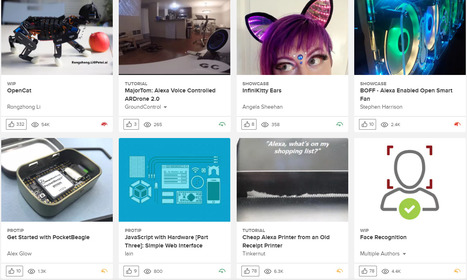
Learn to design, create, and program electronics
11,116 open-source project tutorials shared by 408,637 developers


Learn more / En savoir plus / Mehr erfahren:


https://gustmees.wordpress.com/?s=maker


https://www.scoop.it/t/21st-century-learning-and-teaching/?&tag=makerspace


Gust MEES's insight:

Learn to design, create, and program electronics
11,116 open-source project tutorials shared by 408,637 developers


Learn more / En savoir plus / Mehr erfahren:


https://gustmees.wordpress.com/?s=maker


https://www.scoop.it/t/21st-century-learning-and-teaching/?&tag=makerspace


No comment yet.
Scooped by Gust MEES
March 1, 2018 11:03 AM
Scoop.it!

La litéracie en curation de données | #SocialMedia #IntelligenceCollective

La litéracie en curation de données | #SocialMedia #IntelligenceCollective | 21st Century Learning and Teaching | Scoop.it

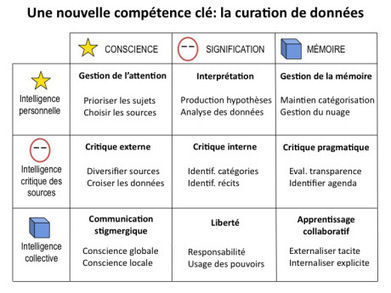
FIGURE 1 J'ai montré dans un post précédent, l'importance contemporaine de la curation collaborative de données.  Les compétences dans ce domaine sont au coeur de la nouvelle litéracie algorithmique.


La figure 1 présente ces compétences de manière systématique et, ce faisant, elle met en ordre les savoir-faire intellectuels et pratiques tout comme les « savoir-être » éthiques…


Learn more / En savoir plus / Mehr erfahren:


https://www.scoop.it/t/21st-century-learning-and-teaching/?&tag=Curation


https://www.scoop.it/t/21st-century-learning-and-teaching/?&tag=Intelligence+collective


Gust MEES's insight:

FIGURE 1 J'ai montré dans un post précédent, l'importance contemporaine de la curation collaborative de données.  Les compétences dans ce domaine sont au coeur de la nouvelle litéracie algorithmique.


La figure 1 présente ces compétences de manière systématique et, ce faisant, elle met en ordre les savoir-faire intellectuels et pratiques tout comme les « savoir-être » éthiques…


Learn more / En savoir plus / Mehr erfahren:


https://www.scoop.it/t/21st-century-learning-and-teaching/?&tag=Curation


https://www.scoop.it/t/21st-century-learning-and-teaching/?&tag=Intelligence+collective


No comment yet.
Scooped by Gust MEES
April 9, 2018 7:44 AM
Scoop.it!

CubeYou Cambridge-like app collected data on millions from Facebook | #SocialMedia #BigData

CubeYou Cambridge-like app collected data on millions from Facebook | #SocialMedia #BigData | 21st Century Learning and Teaching | Scoop.it

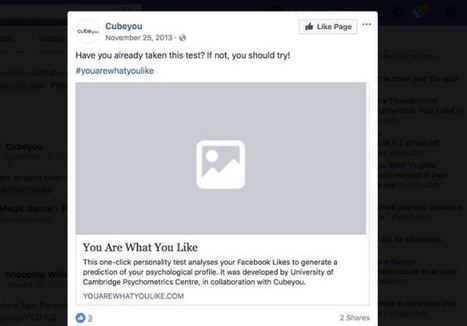
Facebook is suspending a data analytics firm called CubeYou from the platform after CNBC notified the company that CubeYou was collecting information about users through quizzes.

CubeYou misleadingly labeled its quizzes "for non-profit academic research," then shared user information with marketers. The scenario is eerily similar to how Cambridge Analytica received unauthorized access to data from as many as 87 million Facebook user accounts to target political marketing.

The company sold data that had been collected by researchers working with the Psychometrics Lab at Cambridge University, similar to how Cambridge Analytica used information it obtained from other professors at the school for political marketing.

The CubeYou discovery suggests that collecting data from quizzes and using it for marketing purposes was far from an isolated incident. Moreover, the fact that CubeYou was able to mislabel the purpose of the quizzes — and that Facebook did nothing to stop it until CNBC pointed out the problem — suggests the platform has little control over this activity.

Facebook, however, disputed the implication that it can't exercise proper oversight over these types of apps, telling CNBC that it can't control information that companies mislabel. Upon being notified of CubeYou's alleged violations, Facebook said it would suspend all CubeYou's apps until a further audit could be completed.

"These are serious claims and we have suspended CubeYou from Facebook while we investigate them," Ime Archibong, Facebook vice president of product partnerships, said in a statement.


Learn more / En savoir plus / Mehr erfahren:


https://www.scoop.it/t/21st-century-learning-and-teaching/?&tag=Big+Data.


Gust MEES's insight:

CubeYou misleadingly labeled its quizzes "for non-profit academic research," then shared user information with marketers. The scenario is eerily similar to how Cambridge Analytica received unauthorized access to data from as many as 87 million Facebook user accounts to target political marketing.

The company sold data that had been collected by researchers working with the Psychometrics Lab at Cambridge University, similar to how Cambridge Analytica used information it obtained from other professors at the school for political marketing.

The CubeYou discovery suggests that collecting data from quizzes and using it for marketing purposes was far from an isolated incident. Moreover, the fact that CubeYou was able to mislabel the purpose of the quizzes — and that Facebook did nothing to stop it until CNBC pointed out the problem — suggests the platform has little control over this activity.

Facebook, however, disputed the implication that it can't exercise proper oversight over these types of apps, telling CNBC that it can't control information that companies mislabel. Upon being notified of CubeYou's alleged violations, Facebook said it would suspend all CubeYou's apps until a further audit could be completed.

"These are serious claims and we have suspended CubeYou from Facebook while we investigate them," Ime Archibong, Facebook vice president of product partnerships, said in a statement.


Learn more / En savoir plus / Mehr erfahren:


https://www.scoop.it/t/21st-century-learning-and-teaching/?&tag=Big+Data.


No comment yet.
Scooped by Gust MEES
March 30, 2018 2:40 AM
Scoop.it!

How AI Has Already Changed Your Life

How AI Has Already Changed Your Life | 21st Century Learning and Teaching | Scoop.it

For some people, artificial intelligence still makes them feel a little…uneasy. It’s often depicted as sinister-looking robots who will take over our lives and our jobs, or even replace humanity. 

The reality is, we are already in an age in which AI is infused into our everyday lives in ways that augment rather than replace people. Digital assistants such as Cortana can find you the closest restaurant, dictate a text to your friend, manage your email inbox and even help you create more beautiful PowerPoint presentations.  Whether you realise it or not, AI is an integral part of all these interactions. And while it’s not something you can often see or touch, I bet you’re already experiencing the benefits of AI every day.

So, how does AI technology actually work? AI is a machine’s ability to recognise images and words, learn and reason in ways that are similar to people. Data is the fuel for AI, and our world is awash with data as our daily interactions are increasingly digital. AI uses sophisticated algorithms to sort through piles of data, spot patterns and make predictions – tasks that would be repetitive and time-consuming, if not practically impossible, for people to do manually. AI can do this work on our behalf and give us back more of life’s most precious commodity - time.


Learn more / En savoir plus / Mehr erfahren:


https://www.scoop.it/t/21st-century-learning-and-teaching/?&tag=AI


Gust MEES's insight:

For some people, artificial intelligence still makes them feel a little…uneasy. It’s often depicted as sinister-looking robots who will take over our lives and our jobs, or even replace humanity. 

The reality is, we are already in an age in which AI is infused into our everyday lives in ways that augment rather than replace people. Digital assistants such as Cortana can find you the closest restaurant, dictate a text to your friend, manage your email inbox and even help you create more beautiful PowerPoint presentations.  Whether you realise it or not, AI is an integral part of all these interactions. And while it’s not something you can often see or touch, I bet you’re already experiencing the benefits of AI every day.

So, how does AI technology actually work? AI is a machine’s ability to recognise images and words, learn and reason in ways that are similar to people. Data is the fuel for AI, and our world is awash with data as our daily interactions are increasingly digital. AI uses sophisticated algorithms to sort through piles of data, spot patterns and make predictions – tasks that would be repetitive and time-consuming, if not practically impossible, for people to do manually. AI can do this work on our behalf and give us back more of life’s most precious commodity - time.


Learn more / En savoir plus / Mehr erfahren:


https://www.scoop.it/t/21st-century-learning-and-teaching/?&tag=AI


Miklos Szilagyi's curator insight, March 31, 2018 5:43 AM
Félünk (félünk?) a mesterséges intellingenciától, pedig különböző szintű megjelenési formáit full használjuk... az átalakulás, a változás folyamatos, az is lesz, hol lineáris, hol helyenként ugrásszerű, de hozzászokni már elkezdtünk... nem a távoli jövő az, amikor majd egyszerre csak ránk ugrik, mint egy tigris...:-)))
Miklos Szilagyi's curator insight, March 31, 2018 5:47 AM
“...AI is a machine’s ability to recognise images and words, learn and reason in ways that are similar to people. Data is the fuel for AI, and our world is awash with data as our daily interactions are increasingly digital...” - The AI is already makes a part of our daily life... it gives time for us to become acclimatized to it...
Scooped by Gust MEES
March 21, 2018 12:28 PM
Scoop.it!

WiFi4EU: Gemeinden bekommen je 15.000 Euro für WLAN-Hotspots | #ModernSociety #EU #Europe #ICT

WiFi4EU: Gemeinden bekommen je 15.000 Euro für WLAN-Hotspots | #ModernSociety #EU #Europe #ICT | 21st Century Learning and Teaching | Scoop.it

Die EU-Kommission will den öffentlichen Raum mit kostenlosem WLAN versorgen. Für die Einrichtung von Hotspots erhalten bis zu 8000 Gemeinden je 15.000 Euro. Jetzt startet die erste Bewerbungsphase.

Im Rahmen der Initiative WiFi4EU will die EU den öffentlichen Raum mit schnellem Internet versorgen. Schon bald sollen auf öffentlichen Plätzen, in Parks, Krankenhäusern und Büchereien WLAN-Hotspots zu finden sein – finanziert auch von der EU. Nun geht das Projekt in die nächste Runde: Seit dem heutigen Dienstag können sich Städte und Gemeinden auf der WiFi4EU-Webseite registrieren, um mit etwas Glück einen Gutschein in Höhe von 15.000 Euro für die Einrichtung von WLAN-Hotspots zu bekommen.


Learn more / En savoir plus / Mehr erfahren:


https://www.scoop.it/t/21st-century-learning-and-teaching/?&tag=EU


Gust MEES's insight:

Die EU-Kommission will den öffentlichen Raum mit kostenlosem WLAN versorgen. Für die Einrichtung von Hotspots erhalten bis zu 8000 Gemeinden je 15.000 Euro. Jetzt startet die erste Bewerbungsphase.

Im Rahmen der Initiative WiFi4EU will die EU den öffentlichen Raum mit schnellem Internet versorgen. Schon bald sollen auf öffentlichen Plätzen, in Parks, Krankenhäusern und Büchereien WLAN-Hotspots zu finden sein – finanziert auch von der EU. Nun geht das Projekt in die nächste Runde: Seit dem heutigen Dienstag können sich Städte und Gemeinden auf der WiFi4EU-Webseite registrieren, um mit etwas Glück einen Gutschein in Höhe von 15.000 Euro für die Einrichtung von WLAN-Hotspots zu bekommen.


Learn more / En savoir plus / Mehr erfahren:


https://www.scoop.it/t/21st-century-learning-and-teaching/?&tag=EU


No comment yet.
Scooped by Gust MEES
March 21, 2018 9:28 AM
Scoop.it!

Big Data Visualization: Changing How You See Data

Big Data Visualization: Changing How You See Data | 21st Century Learning and Teaching | Scoop.it

Big data is revolutionizing the way businesses gather and analyze data. Ultimately, it is optimizing the speed and efficiency of the decision making process. While advanced analysis tools bolster the information gathering and analysis of data, purely numerical models can be difficult for anyone who isn’t an IT guru to read.

Visualization tools take the data gathered by your company and make it palatable. Analyses can be difficult to comprehend, but once it is put into context through the use of visual aids like length, position, size and color, the outputs no longer look like hieroglyphs. The proper big data visualization tool can create visuals based on human preference and perception. That’s right, it even analyzes data to decide how to best present data to you.

By putting statistics into pictorial format, it allows those you to make tough business and marketing decisions by helping you see analytics like IT specialists. Visually appealing data enables you to identify trends and have a better grasp of previously unnoticed causes and effects. Infographics, geographic maps, and enhanced pie and bar graphs and time-series charts can bring to life to show data in real-time.


Learn more / En savoir plus / Mehr erfahren:


https://www.scoop.it/t/21st-century-learning-and-teaching/?&tag=Big+Data...


Gust MEES's insight:

Big data is revolutionizing the way businesses gather and analyze data. Ultimately, it is optimizing the speed and efficiency of the decision making process. While advanced analysis tools bolster the information gathering and analysis of data, purely numerical models can be difficult for anyone who isn’t an IT guru to read.

Visualization tools take the data gathered by your company and make it palatable. Analyses can be difficult to comprehend, but once it is put into context through the use of visual aids like length, position, size and color, the outputs no longer look like hieroglyphs. The proper big data visualization tool can create visuals based on human preference and perception. That’s right, it even analyzes data to decide how to best present data to you.

By putting statistics into pictorial format, it allows those you to make tough business and marketing decisions by helping you see analytics like IT specialists. Visually appealing data enables you to identify trends and have a better grasp of previously unnoticed causes and effects. Infographics, geographic maps, and enhanced pie and bar graphs and time-series charts can bring to life to show data in real-time.


Learn more / En savoir plus / Mehr erfahren:


https://www.scoop.it/t/21st-century-learning-and-teaching/?&tag=Big+Data...


No comment yet.
Scooped by Gust MEES
March 18, 2018 11:56 AM
Scoop.it!

Plugin Blockly@rduino for Arduino IDE | #Coding #Blockly #Maker #MakerED #MakerSpaces #VisualProgramming #Arduino

Plugin Blockly@rduino for Arduino IDE | #Coding #Blockly #Maker #MakerED #MakerSpaces #VisualProgramming #Arduino | 21st Century Learning and Teaching | Scoop.it

ABOUT THIS PROJECT
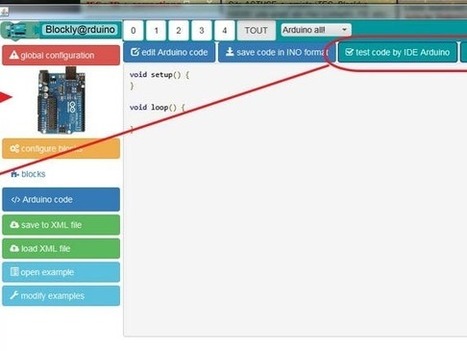
Blockly@rduino is a visual 'Scratch block program' like, based upon Google Blockly (https://developers.google.com/blockly/) and BlocklyDuino (https://github.com/BlocklyDuino/BlocklyDuino).

The aim is to create the more easy way to program Arduino card with this graphical programmation, for newbies or children.

All details: https://github.com/technologiescollege/Blockly-at-rduino

Use normally Blockly@rduino, then inside 'Arduino code' tab you can launch upload :


Learn more / En savoir plus / Mehr erfahren:


https://www.scoop.it/t/21st-century-learning-and-teaching/?&tag=Blockly


https://www.scoop.it/t/21st-century-learning-and-teaching/?&tag=Visual+programming


https://www.scoop.it/t/21st-century-learning-and-teaching/?&tag=ARDUINO


Gust MEES's insight:

ABOUT THIS PROJECT
Blockly@rduino is a visual 'Scratch block program' like, based upon Google Blockly (https://developers.google.com/blockly/) and BlocklyDuino (https://github.com/BlocklyDuino/BlocklyDuino).

The aim is to create the more easy way to program Arduino card with this graphical programmation, for newbies or children.

All details: https://github.com/technologiescollege/Blockly-at-rduino

Use normally Blockly@rduino, then inside 'Arduino code' tab you can launch upload :


Learn more / En savoir plus / Mehr erfahren:


https://www.scoop.it/t/21st-century-learning-and-teaching/?&tag=Blockly


https://www.scoop.it/t/21st-century-learning-and-teaching/?&tag=Visual+programming


https://www.scoop.it/t/21st-century-learning-and-teaching/?&tag=ARDUINO


No comment yet.
Scooped by Gust MEES
March 18, 2018 11:10 AM
Scoop.it!

Ontology, Meaning and Knowledge Management

Formal knowledge representation (KR) is about building models of the world, of a particular domain or a problem, which allow for automatic reasoning and interpretation. Such formal models are called ontologies and can be used to provide formal semantics (i.e., machine-interpretable meaning) to any sort of information: databases, catalogs, documents, web pages, etc. The association of information with such formal models makes the information much amenable to machine processing and interpretation.

Cit. Atanas Kiryakov. In Semantic Web Technologies: Trends and Research in Ontology-based Systems; John Davies (Editor), Rudi Studer (Co-Editor), Paul Warren (Co-Editor). pp. 115-138 John Wiley & Sons, Europe.


Learn more / En savoir plus / Mehr erfahren:


https://www.scoop.it/t/21st-century-learning-and-teaching/?&tag=Ontology


Gust MEES's insight:

Formal knowledge representation (KR) is about building models of the world, of a particular domain or a problem, which allow for automatic reasoning and interpretation. Such formal models are called ontologies and can be used to provide formal semantics (i.e., machine-interpretable meaning) to any sort of information: databases, catalogs, documents, web pages, etc. The association of information with such formal models makes the information much amenable to machine processing and interpretation.

Cit. Atanas Kiryakov. In Semantic Web Technologies: Trends and Research in Ontology-based Systems; John Davies (Editor), Rudi Studer (Co-Editor), Paul Warren (Co-Editor). pp. 115-138 John Wiley & Sons, Europe.


Learn more / En savoir plus / Mehr erfahren:


https://www.scoop.it/t/21st-century-learning-and-teaching/?&tag=Ontology


No comment yet.
Scooped by Gust MEES
March 13, 2018 1:42 PM
Scoop.it!

Arduino Blog » You can now use Arduino to program Linux IoT devices | #Coding #Maker #MakerED #MakerSpaces #PracTICE #LEARNingByDoing 

Arduino Blog » You can now use Arduino to program Linux IoT devices | #Coding #Maker #MakerED #MakerSpaces #PracTICE #LEARNingByDoing  | 21st Century Learning and Teaching | Scoop.it

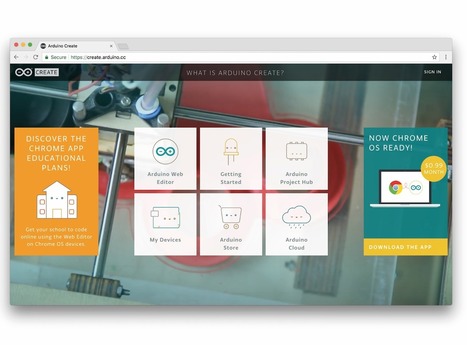
Today, at Embedded Linux Conference 2018, Arduino announced the expansion of the number of architectures supported by its Arduino Create platform for the development of IoT applications. With this new release, Arduino Create users can manage and program a wide range of popular Linux® single-board computers like the AAEON® UP² board, Raspberry Pi® and BeagleBone® as if they were regular Arduino boards. Multiple Arduino programs can run simultaneously on a Linux-based board and interact and communicate with each other, leveraging the capabilities provided by the new Arduino Connector. Moreover, IoT devices can be managed and updated remotely, independently from where they are located.

To further simplify the user journey, Arduino has also developed a novel out-of-the-box experience for Raspberry Pi and BeagleBone boards, in addition to Intel®  SBCs, which enables anyone to set up a new device from scratch via the cloud without any previous knowledge by following an intuitive web-based wizard. Arduino plans to continue enriching and expanding the set of features of Arduino Create in the coming months.


Learn more / En savoir plus / Mehr erfahren:


https://www.scoop.it/t/21st-century-learning-and-teaching/?&tag=ARDUINO


Gust MEES's insight:

Today, at Embedded Linux Conference 2018, Arduino announced the expansion of the number of architectures supported by its Arduino Create platform for the development of IoT applications. With this new release, Arduino Create users can manage and program a wide range of popular Linux® single-board computers like the AAEON® UP² board, Raspberry Pi® and BeagleBone® as if they were regular Arduino boards. Multiple Arduino programs can run simultaneously on a Linux-based board and interact and communicate with each other, leveraging the capabilities provided by the new Arduino Connector. Moreover, IoT devices can be managed and updated remotely, independently from where they are located.

To further simplify the user journey, Arduino has also developed a novel out-of-the-box experience for Raspberry Pi and BeagleBone boards, in addition to Intel®  SBCs, which enables anyone to set up a new device from scratch via the cloud without any previous knowledge by following an intuitive web-based wizard. Arduino plans to continue enriching and expanding the set of features of Arduino Create in the coming months.


Learn more / En savoir plus / Mehr erfahren:


https://www.scoop.it/t/21st-century-learning-and-teaching/?&tag=ARDUINO


No comment yet.
Scooped by Gust MEES
March 16, 2018 12:08 PM
Scoop.it!

How Blockchain Will Transform Credentialing (and Education)

How Blockchain Will Transform Credentialing (and Education) | 21st Century Learning and Teaching | Scoop.it

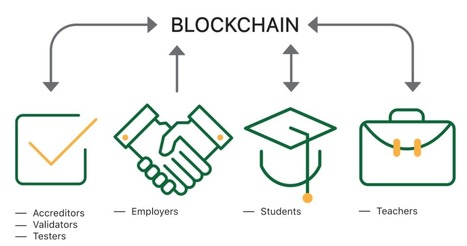
According to a new report by the Joint Research Centre (JRC), the European Commission’s science and knowledge service, Blockchain will end paper based certificates, automate the award, recognition and transfer of credits, increase learner ownership and control over their own data, reduce institutional data costs and risk–but only if open standards are adopted.


Learn more / En savoir plus / Mehr erfahren:


https://www.scoop.it/t/21st-century-learning-and-teaching/?&tag=blockchain


Gust MEES's insight:

According to a new report by the Joint Research Centre (JRC), the European Commission’s science and knowledge service, Blockchain will end paper based certificates, automate the award, recognition and transfer of credits, increase learner ownership and control over their own data, reduce institutional data costs and risk–but only if open standards are adopted.


Learn more / En savoir plus / Mehr erfahren:


https://www.scoop.it/t/21st-century-learning-and-teaching/?&tag=blockchain


davidconover's curator insight, March 20, 2018 1:32 PM
Here is an excellent report on How Blockchain Will Transform Credentialing (and Education). This hyperledger will change your district. Who will create and grant these certifications? #ibm, #blockchain, #IBMchampion, #weteachcs. #IBMcode, #edtech
 
Joann David's curator insight, March 23, 2018 10:23 AM
The evolution of eportfolios and career management
Scooped by Gust MEES
March 7, 2018 8:42 AM
Scoop.it!

The 5 Big Problems With Blockchain Everyone Should Be Aware Of | #ICT

The 5 Big Problems With Blockchain Everyone Should Be Aware Of | #ICT | 21st Century Learning and Teaching | Scoop.it

Blockchain is often touted as a world-changing technology and in many ways, it is. However, it isn’t necessarily the cure-all panacea for the world’s problems that many evangelists would have you believe.

Here’s a breakdown of some of the issues with blockchain that anyone thinking of using it should understand. Starting with perhaps the biggest…

Blockchain has an environmental cost


At least, the way it is being used today, it does. Blockchain relies on encryption to provide its security as well as establish consensus over a distributed network. This essentially means that, in order to “prove” that a user has permission to write to the chain, complex algorithms must be run, which in turn require large amounts of computing power. Of course, this comes at a cost. Taking the most widely known and used blockchain as an example – Bitcoin – last year it was claimed that the computing power required to keep the network running consumes as much energy as was used by 159 of the world’s nations.

Yes, Bitcoin’s blockchain is a hugely valuable network – with a current market capacity at the time of writing of over $170 billion – so sophisticated and computationally intense security is essential. Smaller scale blockchains – such as those that an organization may deploy internally to securely monitor and record business activity – would consume a fraction of that. Nevertheless, it’s an important consideration and the environmental implications as well as the energy costs can’t be ignored.

Lack of regulation creates a risky environment


Read more in the article...


Learn more / En savoir plus / Mehr erfahren:


https://www.scoop.it/t/21st-century-learning-and-teaching/?&tag=blockchain


Gust MEES's insight:

Blockchain is often touted as a world-changing technology and in many ways, it is. However, it isn’t necessarily the cure-all panacea for the world’s problems that many evangelists would have you believe.

Here’s a breakdown of some of the issues with blockchain that anyone thinking of using it should understand. Starting with perhaps the biggest…

Blockchain has an environmental cost


At least, the way it is being used today, it does. Blockchain relies on encryption to provide its security as well as establish consensus over a distributed network. This essentially means that, in order to “prove” that a user has permission to write to the chain, complex algorithms must be run, which in turn require large amounts of computing power. Of course, this comes at a cost. Taking the most widely known and used blockchain as an example – Bitcoin – last year it was claimed that the computing power required to keep the network running consumes as much energy as was used by 159 of the world’s nations.

Yes, Bitcoin’s blockchain is a hugely valuable network – with a current market capacity at the time of writing of over $170 billion – so sophisticated and computationally intense security is essential. Smaller scale blockchains – such as those that an organization may deploy internally to securely monitor and record business activity – would consume a fraction of that. Nevertheless, it’s an important consideration and the environmental implications as well as the energy costs can’t be ignored.

Lack of regulation creates a risky environment


Read more in the article...


Learn more / En savoir plus / Mehr erfahren:


https://www.scoop.it/t/21st-century-learning-and-teaching/?&tag=blockchain


No comment yet.
Scooped by Gust MEES
March 7, 2018 7:56 AM
Scoop.it!

Pledge Viewer | Digital Skills and Jobs Coalition | #EU #Europe

Pledge Viewer | Digital Skills and Jobs Coalition | #EU #Europe | 21st Century Learning and Teaching | Scoop.it

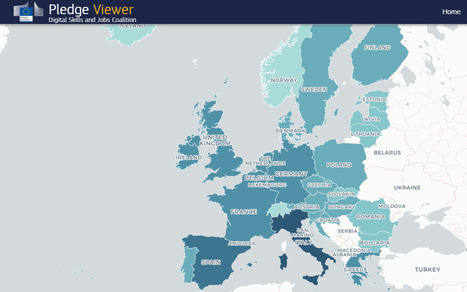
This website collects information about the progress of the pledges in the context of the Digital Skills and Jobs Coalition.

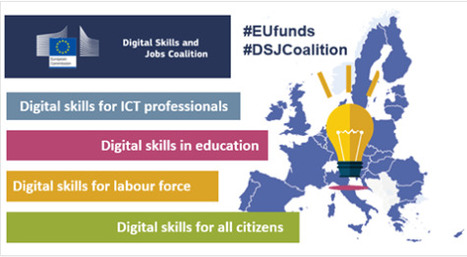
The Digital Skills and Jobs Coalition brings together Member States, companies, social partners, non-profit organisations and education providers who take action to tackle the lack of digital skills in Europe.

Member States can support cooperation among different actors in their country by bringing them together in national Digital Skills and Jobs Coalitions. Find the list of active national coalitions with correspondent contact details here.

For more information see the about page. For additional information, please use the contact page.


Learn more / En savoir plus / Mehr erfahren:


https://www.scoop.it/t/21st-century-learning-and-teaching/?&tag=EU


Gust MEES's insight:

This website collects information about the progress of the pledges in the context of the Digital Skills and Jobs Coalition.

The Digital Skills and Jobs Coalition brings together Member States, companies, social partners, non-profit organisations and education providers who take action to tackle the lack of digital skills in Europe.

Member States can support cooperation among different actors in their country by bringing them together in national Digital Skills and Jobs Coalitions. Find the list of active national coalitions with correspondent contact details here.

For more information see the about page. For additional information, please use the contact page.


Learn more / En savoir plus / Mehr erfahren:


https://www.scoop.it/t/21st-century-learning-and-teaching/?&tag=EU


Oskar Almazan's curator insight, March 7, 2018 8:56 AM
This website collects information about the progress of the pledges in the context of the Digital Skills and Jobs Coalition. The Digital Skills and Jobs Coalition brings together Member States, companies, social partners, non-profit organisations and education providers who take action to tackle the lack of digital skills in Europe. Member States can support cooperation among different actors in their country by bringing them together in national Digital Skills and Jobs Coalitions. Find the list of active national coalitions with correspondent contact details here.
Scooped by Gust MEES
March 4, 2018 11:01 AM
Scoop.it!

Content curation: the complete guide to leverage third-party content | #Curation #SocialMedia #LEARNing2LEARN

Content curation: the complete guide to leverage third-party content | #Curation #SocialMedia #LEARNing2LEARN | 21st Century Learning and Teaching | Scoop.it

Content curation. Most marketers are familiar with the practice of sharing other people’s content on social networks. There are other curated content formats.


Learn more / En savoir plus / Mehr erfahren:


https://gustmees.wordpress.com/?s=curation


https://www.scoop.it/t/21st-century-learning-and-teaching/?&tag=Curation


Gust MEES's insight:

Content curation. Most marketers are familiar with the practice of sharing other people’s content on social networks. There are other curated content formats.


Learn more / En savoir plus / Mehr erfahren:


https://gustmees.wordpress.com/?s=curation


https://www.scoop.it/t/21st-century-learning-and-teaching/?&tag=Curation


No comment yet.
Scooped by Gust MEES
March 1, 2018 11:25 AM
Scoop.it!

European Social Fund - European Commission | #DigitalSkills #DQ #ModernSociety 

European Social Fund - European Commission | #DigitalSkills #DQ #ModernSociety  | 21st Century Learning and Teaching | Scoop.it

European Commission 


The European Social Fund

Each year the ESF helps millions of Europeans improve their lives by learning new skills and finding better jobs. Learn about the ESF: what it does, how it helps and who benefits.


Learn more / En savoir plus / Mehr erfahren:


https://www.scoop.it/t/21st-century-learning-and-teaching/?&tag=EU


Gust MEES's insight:

European Commission 


The European Social Fund

Each year the ESF helps millions of Europeans improve their lives by learning new skills and finding better jobs. Learn about the ESF: what it does, how it helps and who benefits.


Learn more / En savoir plus / Mehr erfahren:


https://www.scoop.it/t/21st-century-learning-and-teaching/?&tag=EU


Pablo Peñalver's curator insight, March 1, 2018 6:39 PM

European Commission 


The European Social Fund

Each year the ESF helps millions of Europeans improve their lives by learning new skills and finding better jobs. Learn about the ESF: what it does, how it helps and who benefits.


Learn more / En savoir plus / Mehr erfahren:


https://www.scoop.it/t/21st-century-learning-and-teaching/?&tag=EU