21st Century Learning and Teaching
622.2K views | +1.9K today
Follow
21st Century Learning and Teaching
Related articles to 21st Century Learning and Teaching as also tools...
Curated by Gust MEES
Your new post is loading...

Popular Tags

Current selected tag: 'Education-Evolution'. Clear
Scooped by Gust MEES
June 25, 2018 12:54 PM
Scoop.it!

DC Electronic Fuse Circuit Construction & Working | #Electronics #Maker #MakerED #MakerSpaces 

DC Electronic Fuse Circuit Construction & Working | #Electronics #Maker #MakerED #MakerSpaces  | 21st Century Learning and Teaching | Scoop.it

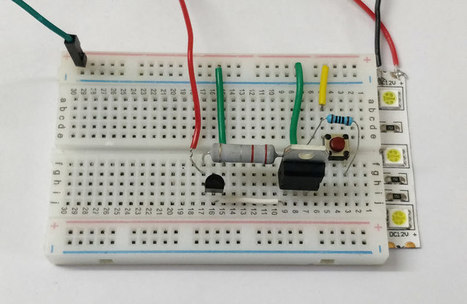
Fuse is a vital protection device for many electronic devices. They simply monitor the current consumed by the circuit/load and in the event of unsafe current flowing through the circuit the fuse will blow itself and thus prevent the load/circuit form getting damaged by that high current. This type of fuse is called a mechanical fuse and there are many types of fuse such as fast blow, slow blow etc, but they suffer from one common draw back. When a fuse is blown it has to be replaced by the consumer/operator to make the device function normal again. This is the reason why many old electronic devices like toaster or electric kettle had a spare fuse provided along with the product.

To overcome this drawback, most of the modern electronic devices use an Electronic Fuse. An Electronic Fuse serves the same purpose of that of a mechanical fuse but it requires no replacement. It has a power electronic switch inside with closes and opens the circuit as required. In the unlikely event of a failure the switch is open the circuit and isolate it from the power supply, once the favorable condition returns the fuse can be reset by just clicking on a button. There is no hassle of purchasing a suitable value of fuse and replacing it for the old one. Interesting right?!! So, In this tutorial we will learn how to construct an Electronic Fuse circuit, how it works and how you could use one in your designs.


Learn more / En savoir plus / Mehr erfahren:


https://www.scoop.it/t/21st-century-learning-and-teaching/?&tag=electronics


Gust MEES's insight:

Fuse is a vital protection device for many electronic devices. They simply monitor the current consumed by the circuit/load and in the event of unsafe current flowing through the circuit the fuse will blow itself and thus prevent the load/circuit form getting damaged by that high current. This type of fuse is called a mechanical fuse and there are many types of fuse such as fast blow, slow blow etc, but they suffer from one common draw back. When a fuse is blown it has to be replaced by the consumer/operator to make the device function normal again. This is the reason why many old electronic devices like toaster or electric kettle had a spare fuse provided along with the product.

To overcome this drawback, most of the modern electronic devices use an Electronic Fuse. An Electronic Fuse serves the same purpose of that of a mechanical fuse but it requires no replacement. It has a power electronic switch inside with closes and opens the circuit as required. In the unlikely event of a failure the switch is open the circuit and isolate it from the power supply, once the favorable condition returns the fuse can be reset by just clicking on a button. There is no hassle of purchasing a suitable value of fuse and replacing it for the old one. Interesting right?!! So, In this tutorial we will learn how to construct an Electronic Fuse circuit, how it works and how you could use one in your designs.


Learn more / En savoir plus / Mehr erfahren:


https://www.scoop.it/t/21st-century-learning-and-teaching/?&tag=electronics
 

No comment yet.
Scooped by Gust MEES
June 23, 2018 7:54 PM
Scoop.it!

Guide for OLED display with Arduino | #Coding #Maker #MakerED #MakerSpaces

Guide for OLED display with Arduino | #Coding #Maker #MakerED #MakerSpaces | 21st Century Learning and Teaching | Scoop.it

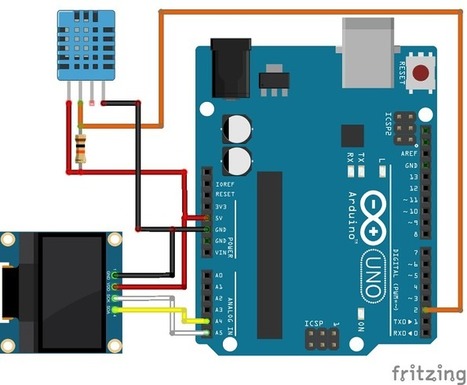
This post is about how to use the 0.96 inch OLED display with the Arduino. It includes schematics and code It is a very small display, the screen has 25mmx14mm...


Learn more / En savoir plus / Mehr erfahren:


https://www.scoop.it/t/21st-century-learning-and-teaching/?&tag=ARDUINO


https://www.scoop.it/t/21st-century-learning-and-teaching/?&tag=OLED


Gust MEES's insight:

This post is about how to use the 0.96 inch OLED display with the Arduino. It includes schematics and code It is a very small display, the screen has 25mmx14mm...


Learn more / En savoir plus / Mehr erfahren:


https://www.scoop.it/t/21st-century-learning-and-teaching/?&tag=ARDUINO


https://www.scoop.it/t/21st-century-learning-and-teaching/?&tag=OLED


No comment yet.
Scooped by Gust MEES
June 18, 2018 6:11 PM
Scoop.it!

Arduino OLED Display Graphics Tutorial | #Coding #Maker #MakerED #MakerSpaces

Arduino OLED Display Graphics Tutorial | #Coding #Maker #MakerED #MakerSpaces | 21st Century Learning and Teaching | Scoop.it

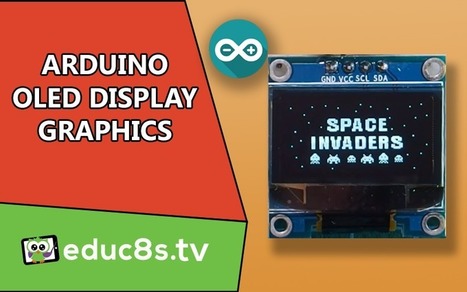
Dear friends welcome back. Today we’re going to see how to display are custom-made bitmap graphics on this tiny OLED display using Arduino. It is my first OLED Display Graphics tutorial. Let’s start! Intro to the Arduino OLED Display Graphics Tutorial In this Arduino OLED Display Graphics Tutorial, we are using the tiny and very …


Learn more / En savoir plus / Mehr erfahren:


https://www.scoop.it/t/21st-century-learning-and-teaching/?&tag=ARDUINO


https://www.scoop.it/t/21st-century-learning-and-teaching/?&tag=OLED


Gust MEES's insight:

Dear friends welcome back. Today we’re going to see how to display are custom-made bitmap graphics on this tiny OLED display using Arduino. It is my first OLED Display Graphics tutorial. Let’s start! Intro to the Arduino OLED Display Graphics Tutorial In this Arduino OLED Display Graphics Tutorial, we are using the tiny and very …


Learn more / En savoir plus / Mehr erfahren:


https://www.scoop.it/t/21st-century-learning-and-teaching/?&tag=ARDUINO


https://www.scoop.it/t/21st-century-learning-and-teaching/?&tag=OLED


No comment yet.
Scooped by Gust MEES
June 18, 2018 1:09 PM
Scoop.it!

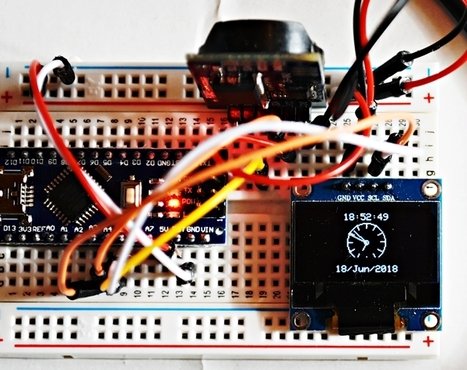
Arduino-OLED-Clock/Arduino-OLED-Clock using ADAfruit libraries.ino at master · rydepier/Arduino-OLED-Clock ·

Arduino-OLED-Clock/Arduino-OLED-Clock using ADAfruit libraries.ino at master · rydepier/Arduino-OLED-Clock · | 21st Century Learning and Teaching | Scoop.it

Arduino-OLED-Clock


Learn more / En savoir plus / Mehr erfahren:


https://www.scoop.it/t/21st-century-learning-and-teaching/?&tag=ARDUINO


https://www.scoop.it/t/21st-century-learning-and-teaching/?&tag=OLED


Gust MEES's insight:

Arduino-OLED-Clock


Learn more / En savoir plus / Mehr erfahren:


https://www.scoop.it/t/21st-century-learning-and-teaching/?&tag=ARDUINO


https://www.scoop.it/t/21st-century-learning-and-teaching/?&tag=OLED


No comment yet.
Scooped by Gust MEES
June 13, 2018 6:06 PM
Scoop.it!

The Definitive Guide to Personal Branding | BrandYourself

The Definitive Guide to Personal Branding | BrandYourself | 21st Century Learning and Teaching | Scoop.it

In my last tutorial we were talking about #PersonalBranding:


https://gustmees.wordpress.com/2018/06/13/first-steps-with-the-arduino-uno-r3-maker-makered-coding-badge-with-2-8%E2%80%B3-tft-touch-screen-with-sdcard/


What Is Personal Branding:


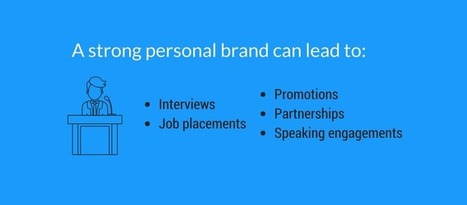
When we talk about "personal branding" we are referring to establishing and promoting what you stand for. Your personal brand is the unique combination of skills and experiences that make you you. Effective personal branding will differentiate you from other professionals in your field.

A Brand Can Be Anything


We’re used to thinking about brands in relationship to companies and products - think McDonald’s or Apple. But nowadays, anything can be a brand. Even as an individual, you have a personal brand.

So what is your personal brand? Whether you’re known for your snaps or you’re still using a typewriter, you have a brand that exists both on and offline.

Luckily, there are a lot of great tools and resources out there to help you with the personal branding process. Use them to leave the right impression on people who look you up online.

The idea of personal branding makes some people uncomfortable. But, if you don’t take control of your personal brand online, then you are missing out on opportunities and letting others control your narrative.

At BrandYourself, we believe that personal branding should be accessible to everyone. That’s why we created this guide - to help you through the process of building your personal brand online.

While the specific circumstances and goals vary by individual, the overall concepts and process are still be relevant to everyone.


Learn more / En savoir plus / Mehr erfahren:


https://www.scoop.it/t/21st-century-learning-and-teaching/?&tag=Personal+Branding


Gust MEES's insight:

In my last tutorial we were talking about #PersonalBranding:


https://gustmees.wordpress.com/2018/06/13/first-steps-with-the-arduino-uno-r3-maker-makered-coding-badge-with-2-8%E2%80%B3-tft-touch-screen-with-sdcard/


What Is Personal Branding:


When we talk about "personal branding" we are referring to establishing and promoting what you stand for. Your personal brand is the unique combination of skills and experiences that make you you. Effective personal branding will differentiate you from other professionals in your field.

A Brand Can Be Anything


We’re used to thinking about brands in relationship to companies and products - think McDonald’s or Apple. But nowadays, anything can be a brand. Even as an individual, you have a personal brand.

So what is your personal brand? Whether you’re known for your snaps or you’re still using a typewriter, you have a brand that exists both on and offline.

Luckily, there are a lot of great tools and resources out there to help you with the personal branding process. Use them to leave the right impression on people who look you up online.

The idea of personal branding makes some people uncomfortable. But, if you don’t take control of your personal brand online, then you are missing out on opportunities and letting others control your narrative.


At BrandYourself, we believe that personal branding should be accessible to everyone. That’s why we created this guide - to help you through the process of building your personal brand online.

While the specific circumstances and goals vary by individual, the overall concepts and process are still be relevant to everyone.


Learn more / En savoir plus / Mehr erfahren:


https://www.scoop.it/t/21st-century-learning-and-teaching/?&tag=Personal+Branding


S.K. Shrestha's curator insight, July 1, 2018 8:38 AM
You can brand yourself!
Scooped by Gust MEES
June 12, 2018 3:30 PM
Scoop.it!

DIY Motorized Camera Slider with Pan and Tilt Head - Arduino Based Project | #Coding #Maker #MakerED #MakerSpaces 

DIY Motorized Camera Slider with Pan and Tilt Head - Arduino Based Project | #Coding #Maker #MakerED #MakerSpaces  | 21st Century Learning and Teaching | Scoop.it

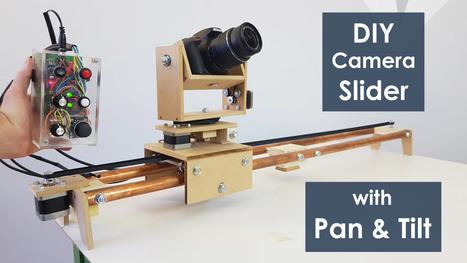
In this tutorial we will learn how make a motorized camera slider with pan and tilt head. This Arduino based project is 100% DIY, built with cheap materials like MDF and plywood and controlled using Arduino, three stepper motors, some buttons and a joystick attached on a custom designed PCB. Despite this, the end result is quite impressive, with super-smooth camera moves enabling us to get professional looking cinematic shots.


Learn more / En savoir plus / Mehr erfahren:


https://www.scoop.it/t/21st-century-learning-and-teaching/?&tag=ARDUINO


https://www.scoop.it/t/21st-century-learning-and-teaching/?&tag=Coding


https://www.scoop.it/t/21st-century-learning-and-teaching/?&tag=Servo+motors


Gust MEES's insight:

In this tutorial we will learn how make a motorized camera slider with pan and tilt head. This Arduino based project is 100% DIY, built with cheap materials like MDF and plywood and controlled using Arduino, three stepper motors, some buttons and a joystick attached on a custom designed PCB. Despite this, the end result is quite impressive, with super-smooth camera moves enabling us to get professional looking cinematic shots.


Learn more / En savoir plus / Mehr erfahren:


https://www.scoop.it/t/21st-century-learning-and-teaching/?&tag=ARDUINO


https://www.scoop.it/t/21st-century-learning-and-teaching/?&tag=Coding


https://www.scoop.it/t/21st-century-learning-and-teaching/?&tag=Servo+motors


No comment yet.
Scooped by Gust MEES
June 8, 2018 11:46 AM
Scoop.it!

[Arduino] - IR remote and Servos - YouTube | IR Remote Control of 4 Servos | #Coding #Maker #MakerED #MakerSpaces 

IR Remote Control of 4 Servos.


It works ALSO with the ELEGOO IR Remote Control!!


Learn more / En savoir plus / Mehr erfahren:


https://www.scoop.it/t/21st-century-learning-and-teaching/?&tag=ARDUINO


https://www.scoop.it/t/21st-century-learning-and-teaching/?&tag=Coding


https://www.scoop.it/t/21st-century-learning-and-teaching/?&tag=Servo+motors


Gust MEES's insight:

IR Remote Control of 4 Servos.


It works ALSO with the ELEGOO IR Remote Control!!


Learn more / En savoir plus / Mehr erfahren:


https://www.scoop.it/t/21st-century-learning-and-teaching/?&tag=ARDUINO


https://www.scoop.it/t/21st-century-learning-and-teaching/?&tag=Coding


https://www.scoop.it/t/21st-century-learning-and-teaching/?&tag=Servo+motors


No comment yet.
Scooped by Gust MEES
June 6, 2018 4:31 PM
Scoop.it!

RGB LED Matrix With an ESP8266 | #Arduino #Coding #Maker #MakerED #MakerSpaces #IoT

RGB LED Matrix With an ESP8266 | #Arduino #Coding #Maker #MakerED #MakerSpaces #IoT | 21st Century Learning and Teaching | Scoop.it

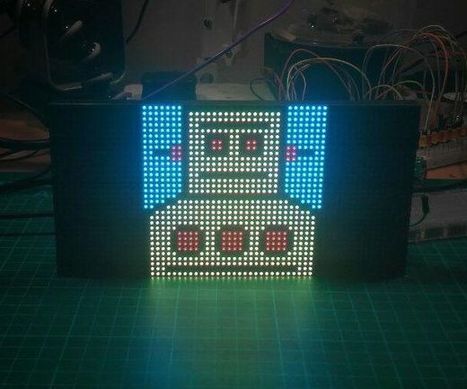
I think these RGB LED Matrix displays are one of best displays you can get for your Arduino projects, they are incredibly bright and vivid and are actually...


Learn more / En savoir plus / Mehr erfahren:


https://www.scoop.it/t/21st-century-learning-and-teaching/?&tag=ARDUINO


https://www.scoop.it/t/21st-century-learning-and-teaching/?&tag=ESP8266+WiFi+Module


https://gustmees.wordpress.com/2018/04/08/first-steps-with-the-arduino-uno-r3-maker-makered-coding-scrolling-text-with-8x8-led-matrix/


Gust MEES's insight:

I think these RGB LED Matrix displays are one of best displays you can get for your Arduino projects, they are incredibly bright and vivid and are actually...


Learn more / En savoir plus / Mehr erfahren:


https://www.scoop.it/t/21st-century-learning-and-teaching/?&tag=ARDUINO


https://www.scoop.it/t/21st-century-learning-and-teaching/?&tag=ESP8266+WiFi+Module


https://gustmees.wordpress.com/2018/04/08/first-steps-with-the-arduino-uno-r3-maker-makered-coding-scrolling-text-with-8x8-led-matrix/


No comment yet.
Scooped by Gust MEES
June 5, 2018 4:35 PM
Scoop.it!

A Flexible Arduino Prototype | #Coding #Maker #MakerED #MakerSpaces #NextFlex

A Flexible Arduino Prototype | #Coding #Maker #MakerED #MakerSpaces #NextFlex | 21st Century Learning and Teaching | Scoop.it

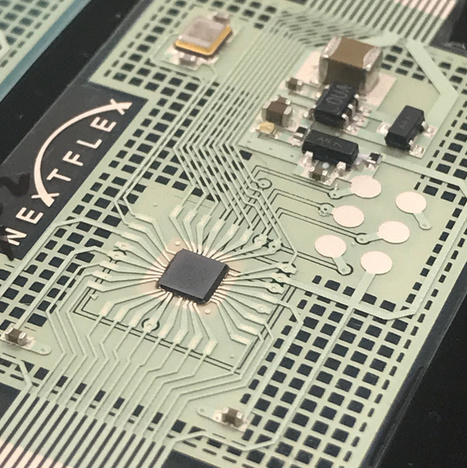
We recently visited NextFlex, the flexible electronics manufacturing institute in Silicon Valley, where they developed a flexible prototype based on the Arduino Mini. Their mission is to make flexible electronics mainstream, opening up all kinds of new applications.

How did you make the flexible Arduino prototype?
Some of the equipment we use is familiar. For example, automated screen printers and industrial inkjet printers. We used them to print the circuit on a 1mm thick flexible plastic ‘board’ (known as the substrate).

We then took the microcontroller silicon die, which is usually inside a chip package, and connected it directly to the substrate. For this, we used our production-level assembly equipment for precision adhesive dispense, die, and component attach.

Using these techniques, we’re able to create flexible wire connections with a resolution of 50um (that’s 0.005 cm, roughly the thickness of a human hair).


Learn more / En savoir plus / Mehr erfahren:


https://www.scoop.it/t/21st-century-learning-and-teaching/?&tag=ARDUINO


Gust MEES's insight:

We recently visited NextFlex, the flexible electronics manufacturing institute in Silicon Valley, where they developed a flexible prototype based on the Arduino Mini. Their mission is to make flexible electronics mainstream, opening up all kinds of new applications.

How did you make the flexible Arduino prototype?
Some of the equipment we use is familiar. For example, automated screen printers and industrial inkjet printers. We used them to print the circuit on a 1mm thick flexible plastic ‘board’ (known as the substrate).

We then took the microcontroller silicon die, which is usually inside a chip package, and connected it directly to the substrate. For this, we used our production-level assembly equipment for precision adhesive dispense, die, and component attach.

Using these techniques, we’re able to create flexible wire connections with a resolution of 50um (that’s 0.005 cm, roughly the thickness of a human hair).


Learn more / En savoir plus / Mehr erfahren:


https://www.scoop.it/t/21st-century-learning-and-teaching/?&tag=ARDUINO


No comment yet.
Scooped by Gust MEES
May 31, 2018 12:14 PM
Scoop.it!

OECD iLibrary | World Class | #ModernEDUcation

OECD iLibrary | World Class | #ModernEDUcation | 21st Century Learning and Teaching | Scoop.it

World Class
How to Build a 21st-Century School System


In a world where the kind of things that are easy to teach and test have also become easy to digitise and automate, it will be our imagination, our awareness and our sense of responsibility that will enable us to harness the opportunities of the 21st century to shape the world for the better. Tomorrow’s schools will need to help students think for themselves and join others, with empathy, in work and citizenship. They will need to help students develop a strong sense of right and wrong, and sensitivity to the claims that others make. What will it take for schools to be able to do this? Andreas Schleicher, initiator of the OECD Programme for International Student Assessment (PISA) and an international authority on education policy, has accompanied education leaders in over 70 countries in their efforts to design and implement forward-looking policies and practices.


While improvement in education is far easier to proclaim than achieve, in this book Schleicher examines the many successes from which we can learn. This does not mean copying and pasting solutions from other schools or countries, but rather looking seriously and dispassionately at good practice in our own countries and elsewhere to understand what works in which contexts. Trained in physics, Schleicher offers a unique perspective on education reform: he convincingly argues that it should not necessarily be less of an art, but more of a science. “No one knows more about education around the world than Andreas Schleicher.


Full stop. For the first time, he's collected 20 years worth of wisdom in one place. World Class should be required reading for policy makers, education leaders and anyone who wants to know how our schools can adapt for the modern world – and help all kids learn to think for themselves.” – Amanda Ripley, author of The Smartest Kids in the World, a New York Times bestseller “[Schleicher]…grasps all the key issues, and does so through keeping his ear to the ground and by working out solutions jointly with a variety of leaders at all levels of the system, and in diverse societies” – Michael Fullan, Global Leadership Director, New Pedagogies for Deep Learning “Every visionary leader who is serious about improving student learning should add the data-driven World Class:


Learn more / En savoir plus / Mehr erfahren:


https://www.scoop.it/t/21st-century-learning-and-teaching/?&tag=OECD


Gust MEES's insight:

World Class
How to Build a 21st-Century School System


In a world where the kind of things that are easy to teach and test have also become easy to digitise and automate, it will be our imagination, our awareness and our sense of responsibility that will enable us to harness the opportunities of the 21st century to shape the world for the better. Tomorrow’s schools will need to help students think for themselves and join others, with empathy, in work and citizenship. They will need to help students develop a strong sense of right and wrong, and sensitivity to the claims that others make. What will it take for schools to be able to do this? Andreas Schleicher, initiator of the OECD Programme for International Student Assessment (PISA) and an international authority on education policy, has accompanied education leaders in over 70 countries in their efforts to design and implement forward-looking policies and practices.


While improvement in education is far easier to proclaim than achieve, in this book Schleicher examines the many successes from which we can learn. This does not mean copying and pasting solutions from other schools or countries, but rather looking seriously and dispassionately at good practice in our own countries and elsewhere to understand what works in which contexts. Trained in physics, Schleicher offers a unique perspective on education reform: he convincingly argues that it should not necessarily be less of an art, but more of a science. “No one knows more about education around the world than Andreas Schleicher.


Full stop. For the first time, he's collected 20 years worth of wisdom in one place. World Class should be required reading for policy makers, education leaders and anyone who wants to know how our schools can adapt for the modern world – and help all kids learn to think for themselves.” – Amanda Ripley, author of The Smartest Kids in the World, a New York Times bestseller “[Schleicher]…grasps all the key issues, and does so through keeping his ear to the ground and by working out solutions jointly with a variety of leaders at all levels of the system, and in diverse societies” – Michael Fullan, Global Leadership Director, New Pedagogies for Deep Learning “Every visionary leader who is serious about improving student learning should add the data-driven World Class:


Learn more / En savoir plus / Mehr erfahren:


https://www.scoop.it/t/21st-century-learning-and-teaching/?&tag=OECD


Kim Flintoff's curator insight, June 1, 2018 1:14 AM
How to Build a 21st-Century School System In a world where the kind of things that are easy to teach and test have also become easy to digitise and automate, it will be our imagination, our awareness and our sense of responsibility that will enable us to harness the opportunities of the 21st century to shape the world for the better. Tomorrow’s schools will need to help students think for themselves and join others, with empathy, in work and citizenship. They will need to help students develop a strong sense of right and wrong, and sensitivity to the claims that others make. What will it take for schools to be able to do this? Andreas Schleicher, initiator of the OECD Programme for International Student Assessment (PISA) and an international authority on education policy, has accompanied education leaders in over 70 countries in their efforts to design and implement forward-looking policies and practices.
Scooped by Gust MEES
May 29, 2018 6:27 PM
Scoop.it!

Pixy2 – PixyCam | #Arduino #RaspberryPI #Coding #Maker #MakerED #MakerSpaces 

Pixy2 – PixyCam | #Arduino #RaspberryPI #Coding #Maker #MakerED #MakerSpaces  | 21st Century Learning and Teaching | Scoop.it

Robot vision made easier


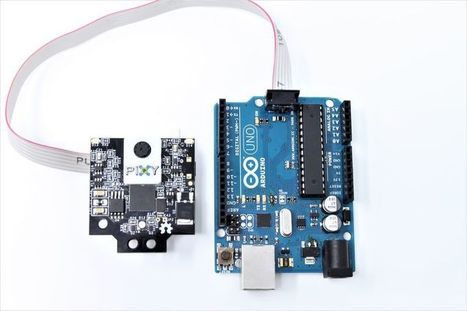
Pixy2 is smaller, faster and more capable than the original Pixy.  Like its predecessor, Pixy2 can learn to detect objects that you teach it, just by pressing a button.  Additionally, Pixy2 has new algorithms that detect and track lines for use with line-following robots.  The new algorithms can detect intersections and “road signs” as well. The road signs can tell your robot what to do, such as turn left, turn right, slow down, etc.  And Pixy2 does all of this at 60 frames-per-second, so your robot can be fast, too.

Use Pixy2 for lots of different applications, find a project, or use Pixy2 for something no one has considered!

Connect directly to Arduino or Raspberry Pi

No need to futz around with tiny wires — Pixy2 comes with a special cable to plug directly into an Arduino and a USB cable to plug into a Raspberry Pi, so you can get started quickly.  No Arduino or Raspberry Pi?  No problem!  Pixy2 has several interfaces (SPI, I2C, UART, and USB) and simple communications, so you get your chosen controller talking to Pixy2 in short order.


Learn more / En savoir plus / Mehr erfahren:


https://www.scoop.it/t/21st-century-learning-and-teaching/?&tag=ARDUINO


Gust MEES's insight:

Robot vision made easier


Pixy2 is smaller, faster and more capable than the original Pixy.  Like its predecessor, Pixy2 can learn to detect objects that you teach it, just by pressing a button.  Additionally, Pixy2 has new algorithms that detect and track lines for use with line-following robots.  The new algorithms can detect intersections and “road signs” as well. The road signs can tell your robot what to do, such as turn left, turn right, slow down, etc.  And Pixy2 does all of this at 60 frames-per-second, so your robot can be fast, too.

Use Pixy2 for lots of different applications, find a project, or use Pixy2 for something no one has considered!

Connect directly to Arduino or Raspberry Pi

No need to futz around with tiny wires — Pixy2 comes with a special cable to plug directly into an Arduino and a USB cable to plug into a Raspberry Pi, so you can get started quickly.  No Arduino or Raspberry Pi?  No problem!  Pixy2 has several interfaces (SPI, I2C, UART, and USB) and simple communications, so you get your chosen controller talking to Pixy2 in short order.


Learn more / En savoir plus / Mehr erfahren:


https://www.scoop.it/t/21st-century-learning-and-teaching/?&tag=ARDUINO


No comment yet.
Scooped by Gust MEES
May 28, 2018 5:17 PM
Scoop.it!

Arduino + 2 Servos + Thumbstick (joystick) | #Coding #Maker #MakerED #MakerSpaces

Arduino + 2 Servos + Thumbstick (joystick) | #Coding #Maker #MakerED #MakerSpaces | 21st Century Learning and Teaching | Scoop.it

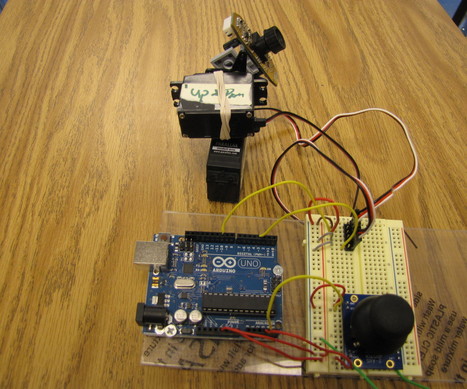
This time I will help you move the same 2 servos with a thumbstick. And again I have surf the internet to see If there are tutorials that clear to understand specially for the beginner Arduino user and, I have not found one.


To move 2 servos with the thumbstick is way easier and painless than using the mouse. And the reason for this is that some times the processing software does not work correct or there is a conflict between the arduino software and the processing software.


Learn more / En savoir plus / Mehr erfahren:


https://www.scoop.it/t/21st-century-learning-and-teaching/?&tag=Servo+motors


https://www.scoop.it/t/21st-century-learning-and-teaching/?&tag=ARDUINO


Gust MEES's insight:

This time I will help you move the same 2 servos with a thumbstick. And again I have surf the internet to see If there are tutorials that clear to understand specially for the beginner Arduino user and, I have not found one.


To move 2 servos with the thumbstick is way easier and painless than using the mouse. And the reason for this is that some times the processing software does not work correct or there is a conflict between the arduino software and the processing software.


Learn more / En savoir plus / Mehr erfahren:


https://www.scoop.it/t/21st-century-learning-and-teaching/?&tag=Servo+motors


https://www.scoop.it/t/21st-century-learning-and-teaching/?&tag=ARDUINO


No comment yet.
Scooped by Gust MEES
May 27, 2018 8:33 AM
Scoop.it!

À l’école, le portable, c’est le couteau suisse du XXIᵉ siècle | #EDUcation #ModernEDU

Le potentiel des nouvelles technologies pour l’apprentissage et l’éducation est en grande partie non évalué. Il manque de recherche précise sur le sujet et notamment de recherches sur ce qui se passe dans le terrain et pour chacun des apprenants, et ce à tous les âges de la vie. Il y a peu d’évaluations en dehors de sentiments personnels.

L’une des questions centrales est : a-t-on appris à apprendre ? Et a-t-on appris à apprendre de manière critique à l’heure du numérique ? Car on peut aussi être manipulé par le numérique. Tout moyen de communication est aussi un moyen de manipulation, on l’a vu de Goebbels à Trump ou Daesch. Plus on a des outils de communication efficaces, plus il faut développer l’esprit critique et la capacité à distinguer le bon grain de l’ivraie, ce qui est tout sauf évident même pour un adulte et a fortiori pour un enfant ou un adolescent.

Par contre ce que le numérique permet, par rapport à la radio par exemple, c’est qu’on peut tous produire et partager et que l’on peut facilement documenter ce que l’on fait. On peut échanger plus largement et à toutes les échelles. On a donc cette possibilité, non seulement d’apprendre à lire, écrire mais d’accueillir une production faite par d’autres et de soi-même produire, via l’écrit ou tout un tas d’autres dispositifs que le numérique permet.


Learn more / En savoir plus / Mehr erfahren:


https://www.scoop.it/t/21st-century-learning-and-teaching/?&tag=modern-education


Gust MEES's insight:

Le potentiel des nouvelles technologies pour l’apprentissage et l’éducation est en grande partie non évalué. Il manque de recherche précise sur le sujet et notamment de recherches sur ce qui se passe dans le terrain et pour chacun des apprenants, et ce à tous les âges de la vie. Il y a peu d’évaluations en dehors de sentiments personnels.

L’une des questions centrales est : a-t-on appris à apprendre ? Et a-t-on appris à apprendre de manière critique à l’heure du numérique ? Car on peut aussi être manipulé par le numérique. Tout moyen de communication est aussi un moyen de manipulation, on l’a vu de Goebbels à Trump ou Daesch. Plus on a des outils de communication efficaces, plus il faut développer l’esprit critique et la capacité à distinguer le bon grain de l’ivraie, ce qui est tout sauf évident même pour un adulte et a fortiori pour un enfant ou un adolescent.

Par contre ce que le numérique permet, par rapport à la radio par exemple, c’est qu’on peut tous produire et partager et que l’on peut facilement documenter ce que l’on fait. On peut échanger plus largement et à toutes les échelles. On a donc cette possibilité, non seulement d’apprendre à lire, écrire mais d’accueillir une production faite par d’autres et de soi-même produire, via l’écrit ou tout un tas d’autres dispositifs que le numérique permet.


Learn more / En savoir plus / Mehr erfahren:


https://www.scoop.it/t/21st-century-learning-and-teaching/?&tag=modern-education

No comment yet.
Scooped by Gust MEES
June 25, 2018 12:40 PM
Scoop.it!

DigDice - Digital Dice | #Coding #Maker #MakerED #MakerSpaces

DigDice - Digital Dice | #Coding #Maker #MakerED #MakerSpaces | 21st Century Learning and Teaching | Scoop.it

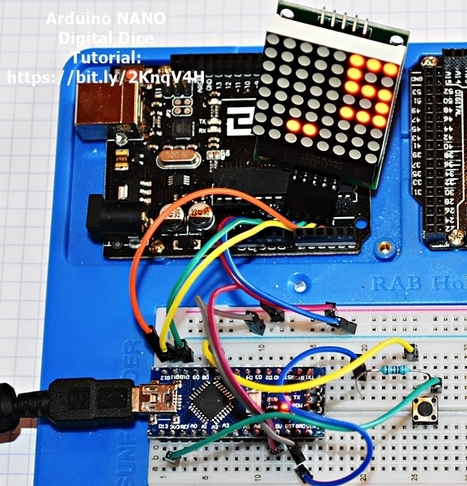
A simple game disse/roulette with Arduino and a MAX7219 8x8 led matrix. Find this and other hardware projects on Hackster.io.


It's a 5-10 minutes project ONLY!


Learn more / En savoir plus / Mehr erfahren: 


https://www.scoop.it/t/21st-century-learning-and-teaching/?&tag=ARDUINO


https://www.scoop.it/t/21st-century-learning-and-teaching/?&tag=LEDs


Gust MEES's insight:

A simple game disse/roulette with Arduino and a MAX7219 8x8 led matrix. Find this and other hardware projects on Hackster.io.


It's a 5-10 minutes project ONLY!


Learn more / En savoir plus / Mehr erfahren: 


https://www.scoop.it/t/21st-century-learning-and-teaching/?&tag=ARDUINO


https://www.scoop.it/t/21st-century-learning-and-teaching/?&tag=LEDs


No comment yet.
Scooped by Gust MEES
June 20, 2018 12:28 PM
Scoop.it!

How E-Ink Works: The Technology Behind E-Paper Displays - YouTube | #Displays #Maker #MakerED #MakerSpaces 

E-Ink. It powers everything from the YotaPhone 2 to the Amazon Kindle. It's simultaneously one of the most understated and futuristic display technologies around. And it's being put to use in devices and venues you've never even thought of. But what exactly is E-Ink, and how does it work?

That's a question we had for the folks at E-Ink Corporation, the brains behind the world's leading electrophoretic ink technology, and they were more than happy to answer it. They invited us to tour their Innovation Center and Headquarters facility in Massachusetts to get a firsthand look at the technology behind E-Paper Displays, as well as some historical context and a few sneak previews of where E-Ink is headed next. Join us for this quick tour, and then visit E-Ink yourself for more: http://www.eink.com/index.html


Learn more / En savoir plus / Mehr erfahren:


https://www.scoop.it/t/21st-century-learning-and-teaching/?&tag=ARDUINO


Gust MEES's insight:

E-Ink. It powers everything from the YotaPhone 2 to the Amazon Kindle. It's simultaneously one of the most understated and futuristic display technologies around. And it's being put to use in devices and venues you've never even thought of. But what exactly is E-Ink, and how does it work?

That's a question we had for the folks at E-Ink Corporation, the brains behind the world's leading electrophoretic ink technology, and they were more than happy to answer it. They invited us to tour their Innovation Center and Headquarters facility in Massachusetts to get a firsthand look at the technology behind E-Paper Displays, as well as some historical context and a few sneak previews of where E-Ink is headed next. Join us for this quick tour, and then visit E-Ink yourself for more: http://www.eink.com/index.html


Learn more / En savoir plus / Mehr erfahren: 


https://www.scoop.it/t/21st-century-learning-and-teaching/?&tag=ARDUINO


No comment yet.
Scooped by Gust MEES
June 18, 2018 3:07 PM
Scoop.it!

Finis les professeurs devant la classe | #EDUcation #ModernEDU #Canada

Finis les professeurs devant la classe | #EDUcation #ModernEDU #Canada | 21st Century Learning and Teaching | Scoop.it

DRUMMONDVILLE | Un collège privé du Centre-du-Québec réinvente l’école en remplaçant les pupitres, les tableaux et les cours magistraux par des espaces modernes où les élèves apprennent à leur rythme, encadrés par des « coachs ».

Depuis septembre, le Collège Saint-Bernard de Drummondville a entrepris une révolution en éducation, si bien que des chercheurs se pencheront bientôt sur ce modèle.

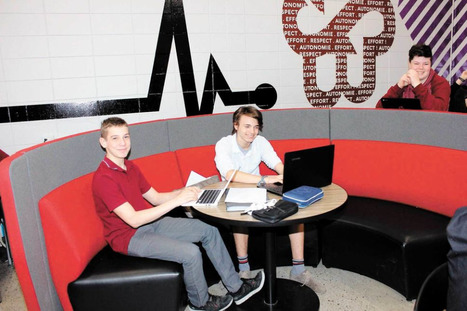
Le Collège a détruit sept classes pour créer trois grands espaces qu’il appelle « zones innovantes ».


Des tables, des banquettes et des coussins remplacent les pupitres, alors que les vitres et les portes servent de tableaux pour écrire.

Quelque 180 élèves de 1re, 2e et 3e secondaire circulent librement, consultent leur téléphone, peuvent écouter leur musique et travaillent à leur rythme sur leur ordinateur.


Learn more / En savoir plus / Mehr erfahren:


https://www.scoop.it/t/21st-century-learning-and-teaching/?&tag=modern-education


https://www.scoop.it/t/21st-century-learning-and-teaching/?&tag=Modern+Learning


https://gustmees.wordpress.com/2015/12/27/what-are-the-best-ways-of-teaching-and-learning-ideas-and-reflections/


Gust MEES's insight:

DRUMMONDVILLE | Un collège privé du Centre-du-Québec réinvente l’école en remplaçant les pupitres, les tableaux et les cours magistraux par des espaces modernes où les élèves apprennent à leur rythme, encadrés par des « coachs ».

Depuis septembre, le Collège Saint-Bernard de Drummondville a entrepris une révolution en éducation, si bien que des chercheurs se pencheront bientôt sur ce modèle.

Le Collège a détruit sept classes pour créer trois grands espaces qu’il appelle « zones innovantes ».


Des tables, des banquettes et des coussins remplacent les pupitres, alors que les vitres et les portes servent de tableaux pour écrire.

Quelque 180 élèves de 1re, 2e et 3e secondaire circulent librement, consultent leur téléphone, peuvent écouter leur musique et travaillent à leur rythme sur leur ordinateur.


Learn more / En savoir plus / Mehr erfahren:


https://www.scoop.it/t/21st-century-learning-and-teaching/?&tag=modern-education


https://www.scoop.it/t/21st-century-learning-and-teaching/?&tag=Modern+Learning


https://gustmees.wordpress.com/2015/12/27/what-are-the-best-ways-of-teaching-and-learning-ideas-and-reflections/


No comment yet.
Scooped by Gust MEES
June 14, 2018 10:35 AM
Scoop.it!

Welcome to Adafruit IO | Want to connect your project to the Internet? Start Here! | Adafruit Learning System | #Coding #Maker #MakerED #MakerSpaces

Welcome to Adafruit IO | Want to connect your project to the Internet? Start Here! | Adafruit Learning System | #Coding #Maker #MakerED #MakerSpaces | 21st Century Learning and Teaching | Scoop.it

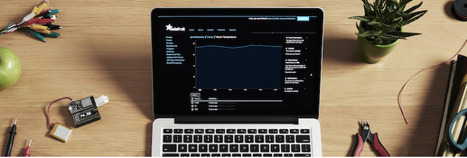
Want to make your project talk to the Internet? Connect your existing project to the Internet to log, stream, and interact with the data it produces? What about all this Internet-of-Things (IoT) stuff?

Adafruit IO is a platform designed (by us!) to display, respond, and interact with your project's data. We also keep your data private (data feeds are private by default) and secure (we will never sell or give this data away to another company) for you. It's the internet of things - for everyone!

Why We Built Adafruit IO
Here at Adafruit, we sell all of these amazing components, but we couldn't find a good way to interact with them over the Internet. There are certainly a lot of great services out there for datalogging, or communicating with your microcontroller over the web, but these services are either too complicated to get started, or they aren't particularly fun to use. So, we decided to experiment with our own system, and that's Adafruit IO.


Learn more / En savoir plus / Mehr erfahren:


https://www.scoop.it/t/21st-century-learning-and-teaching/?&tag=Coding


https://www.scoop.it/t/21st-century-learning-and-teaching/?&tag=ARDUINO


https://www.scoop.it/t/21st-century-learning-and-teaching/?&tag=Internet+of+Things


Gust MEES's insight:

Want to make your project talk to the Internet? Connect your existing project to the Internet to log, stream, and interact with the data it produces? What about all this Internet-of-Things (IoT) stuff?

Adafruit IO is a platform designed (by us!) to display, respond, and interact with your project's data. We also keep your data private (data feeds are private by default) and secure (we will never sell or give this data away to another company) for you. It's the internet of things - for everyone!

Why We Built Adafruit IO
Here at Adafruit, we sell all of these amazing components, but we couldn't find a good way to interact with them over the Internet. There are certainly a lot of great services out there for datalogging, or communicating with your microcontroller over the web, but these services are either too complicated to get started, or they aren't particularly fun to use. So, we decided to experiment with our own system, and that's Adafruit IO.


Learn more / En savoir plus / Mehr erfahren:


https://www.scoop.it/t/21st-century-learning-and-teaching/?&tag=Coding


https://www.scoop.it/t/21st-century-learning-and-teaching/?&tag=ARDUINO


https://www.scoop.it/t/21st-century-learning-and-teaching/?&tag=Internet+of+Things


No comment yet.
Scooped by Gust MEES
June 13, 2018 3:32 PM
Scoop.it!

First Steps with the #Arduino-UNO R3 | #Maker, #MakerED, #MakerSpaces, #Coding | #Badge with 2.8″ TFT Touch Screen with #SDCard | #LEARNingByDoing with #FUN

First Steps with the #Arduino-UNO R3 | #Maker, #MakerED, #MakerSpaces, #Coding | #Badge with 2.8″ TFT Touch Screen with #SDCard | #LEARNingByDoing with #FUN | 21st Century Learning and Teaching | Scoop.it

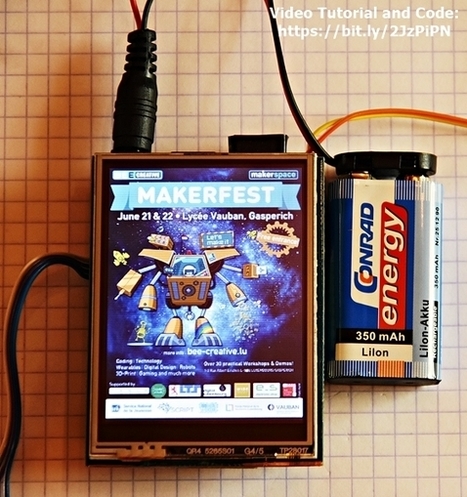
We were already playing around with a 2.8 inch TFT Display and SDCard recently in a previous tutorial <===> First Steps with the Arduino-UNO R3 | Maker, MakerED, Coding | 2.8″ TFT Touch Screen with SDCard <===> and we will create a badge. 


Learn more / En savoir plus / Mehr erfahren:


https://www.scoop.it/t/21st-century-learning-and-teaching/?&tag=ARDUINO


Gust MEES's insight:

We were already playing around with a 2.8 inch TFT Display and SDCard recently in a previous tutorial <===> First Steps with the Arduino-UNO R3 | Maker, MakerED, Coding | 2.8″ TFT Touch Screen with SDCard <===> and we will create a badge. 


Learn more / En savoir plus / Mehr erfahren:


https://www.scoop.it/t/21st-century-learning-and-teaching/?&tag=ARDUINO


No comment yet.
Scooped by Gust MEES
June 10, 2018 12:28 PM
Scoop.it!

IoT Made Simple: Servo Control With NodeMCU and Blynk | #Coding #ESP8266 #Maker #MakerED #MakerSpaces #Apps

IoT Made Simple: Servo Control With NodeMCU and Blynk | #Coding #ESP8266 #Maker #MakerED #MakerSpaces #Apps | 21st Century Learning and Teaching | Scoop.it

In this simple tutorial, we will explore how to control a servo over the internet. For that, we will use a great couple of devices, the NodeMCU ESP12-E and...


Learn more / En savoir plus / Mehr erfahren:


https://www.scoop.it/t/21st-century-learning-and-teaching/?&tag=ESP8266+WiFi+Module


Gust MEES's insight:

In this simple tutorial, we will explore how to control a servo over the internet. For that, we will use a great couple of devices, the NodeMCU ESP12-E and...


Learn more / En savoir plus / Mehr erfahren:


https://www.scoop.it/t/21st-century-learning-and-teaching/?&tag=ESP8266+WiFi+Module


No comment yet.
Scooped by Gust MEES
June 7, 2018 8:21 AM
Scoop.it!

How To Make Custom Characters For Led Matrix - YouTube | #Arduino #Coding #Maker #MakerED #MakerSpaces

Check the video, please, who explains in detail as well there are the links to the code, etc.


Learn more / En savoir plus / Mehr erfahren: 


https://www.scoop.it/t/21st-century-learning-and-teaching/?&tag=ARDUINO


https://www.scoop.it/t/21st-century-learning-and-teaching/?&tag=LEDs


Gust MEES's insight:

Check the video, please, who explains in detail as well there are the links to the code, etc.


Learn more / En savoir plus / Mehr erfahren: 


https://www.scoop.it/t/21st-century-learning-and-teaching/?&tag=ARDUINO


https://www.scoop.it/t/21st-century-learning-and-teaching/?&tag=LEDs


No comment yet.
Scooped by Gust MEES
June 6, 2018 11:15 AM
Scoop.it!

Convert Sound Files in Audacity | Microcontroller Compatible Audio File Conversion | Adafruit Learning System | #Coding #Maker #MakerED #MakerSpaces

Convert Sound Files in Audacity by Mike Barela
Small microcontroller audio projects are designed to play very specific types of audio files. If your music sample is in MP3 format, or 44KHz .wav or if you have grabbed a sample from a source (or the Internet) and do not know how it was encoded, you'll want to convert it to the right format.

This way you will get the best sounding audio, and it'll make using audio with your code painless!

This page will show how to convert your sound file(s) into PCM 16-bit Mono WAV files at 22KHz sample rate, which is usually best for the current crop of microcontrollers which take WAV files and play them on a speaker.

Currently, we are recommending two ways to convert the files: via use of the program Audacity or via iTunes. Other software may do similar conversions, just remember the parameters above when you do the conversion.


Learn more / En savoir plus / Mehr erfahren:


https://www.scoop.it/t/21st-century-learning-and-teaching/?&tag=ARDUINO


https://www.scoop.it/t/21st-century-learning-and-teaching/?&tag=Coding


Gust MEES's insight:

Convert Sound Files in Audacity by Mike Barela
Small microcontroller audio projects are designed to play very specific types of audio files. If your music sample is in MP3 format, or 44KHz .wav or if you have grabbed a sample from a source (or the Internet) and do not know how it was encoded, you'll want to convert it to the right format.

This way you will get the best sounding audio, and it'll make using audio with your code painless!

This page will show how to convert your sound file(s) into PCM 16-bit Mono WAV files at 22KHz sample rate, which is usually best for the current crop of microcontrollers which take WAV files and play them on a speaker.

Currently, we are recommending two ways to convert the files: via use of the program Audacity or via iTunes. Other software may do similar conversions, just remember the parameters above when you do the conversion.


Learn more / En savoir plus / Mehr erfahren:


https://www.scoop.it/t/21st-century-learning-and-teaching/?&tag=ARDUINO


https://www.scoop.it/t/21st-century-learning-and-teaching/?&tag=Coding


No comment yet.
Scooped by Gust MEES
June 2, 2018 9:18 AM
Scoop.it!

Arduino Servo Motor Interfacing Tutorial | #Coding #Maker #MakerED #MakerSpaces

Arduino Servo Motor Interfacing Tutorial | #Coding #Maker #MakerED #MakerSpaces | 21st Century Learning and Teaching | Scoop.it

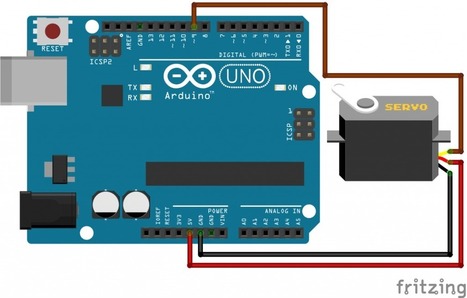
Servo Motor has an advantage over normal DC motor because it can move shaft very precisely even at a particular angle. It is very useful in embedded and electronics applications for controlling the robotic arm, sensor or moving object connected to its shaft at a certain angle. It has integrated gears and circuit that providing feedback system.

In this tutorial, an RC hobby servo is directly connected to the arduino board. Servo motor current consumption is very high so some time arduino can’t drive it. A standard servo can be positioned at a different angle from 0 to 180 degree. We can move the servo at a particular angle by doing the servo programming.


Learn more / En savoir plus / Mehr erfahren:


https://www.scoop.it/t/21st-century-learning-and-teaching/?&tag=ARDUINO


https://www.scoop.it/t/21st-century-learning-and-teaching/?&tag=Coding


https://www.scoop.it/t/21st-century-learning-and-teaching/?&tag=Servo+motors


Gust MEES's insight:

Servo Motor has an advantage over normal DC motor because it can move shaft very precisely even at a particular angle. It is very useful in embedded and electronics applications for controlling the robotic arm, sensor or moving object connected to its shaft at a certain angle. It has integrated gears and circuit that providing feedback system.

In this tutorial, an RC hobby servo is directly connected to the arduino board. Servo motor current consumption is very high so some time arduino can’t drive it. A standard servo can be positioned at a different angle from 0 to 180 degree. We can move the servo at a particular angle by doing the servo programming.


Learn more / En savoir plus / Mehr erfahren:


https://www.scoop.it/t/21st-century-learning-and-teaching/?&tag=ARDUINO


https://www.scoop.it/t/21st-century-learning-and-teaching/?&tag=Coding


https://www.scoop.it/t/21st-century-learning-and-teaching/?&tag=Servo+motors


No comment yet.
Scooped by Gust MEES
May 30, 2018 8:26 AM
Scoop.it!

Multiple Blinking LEDs on the Arduino | #Coding #Maker #MakerED #MakerSpaces

Multiple Blinking LEDs on the Arduino | #Coding #Maker #MakerED #MakerSpaces | 21st Century Learning and Teaching | Scoop.it

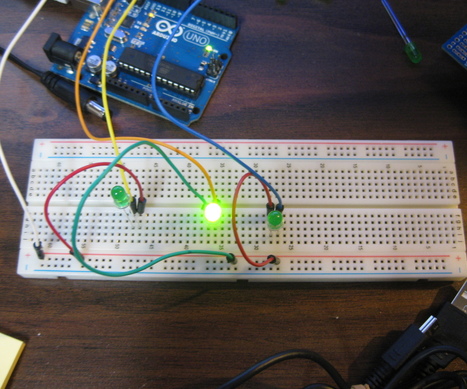
In this tutorial I will show you how to make multiple LEDs blink with Arduino.  You will need three LEDs, jumper wires, breadboard, and Arduino.


Learn more / En savoir plus / Mehr erfahren:


https://www.scoop.it/t/21st-century-learning-and-teaching/?&tag=ARDUINO


Gust MEES's insight:

In this tutorial I will show you how to make multiple LEDs blink with Arduino.  You will need three LEDs, jumper wires, breadboard, and Arduino.


Learn more / En savoir plus / Mehr erfahren:


https://www.scoop.it/t/21st-century-learning-and-teaching/?&tag=ARDUINO


No comment yet.
Scooped by Gust MEES
May 28, 2018 6:14 PM
Scoop.it!

Triggering a servo using an HC-SR04 distance sensor and an Arduino | #Coding #Maker #MakerED #MakerSpaces

Triggering a servo using an HC-SR04 distance sensor and an Arduino | #Coding #Maker #MakerED #MakerSpaces | 21st Century Learning and Teaching | Scoop.it

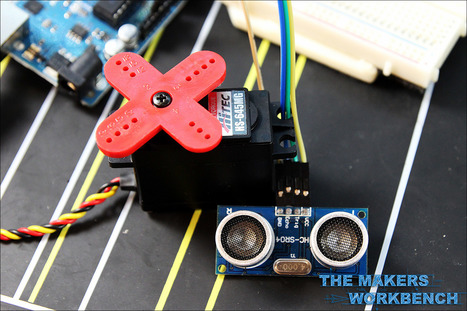
Much like my previous Ultrasonic Sensor tutorial, the Young Makers need to be able to trigger an event when someone walks past a display. In their case, they need to make an element on a poster move when someone walks within three feet of the ultrasonic sensor.


Learn more / En savoir plus / Mehr erfahren:


https://www.scoop.it/t/21st-century-learning-and-teaching/?&tag=ARDUINO


https://www.scoop.it/t/21st-century-learning-and-teaching/?&tag=Coding


https://www.scoop.it/t/21st-century-learning-and-teaching/?&tag=Servo+motors


Gust MEES's insight:

Much like my previous Ultrasonic Sensor tutorial, the Young Makers need to be able to trigger an event when someone walks past a display. In their case, they need to make an element on a poster move when someone walks within three feet of the ultrasonic sensor.


Learn more / En savoir plus / Mehr erfahren:


https://www.scoop.it/t/21st-century-learning-and-teaching/?&tag=ARDUINO


https://www.scoop.it/t/21st-century-learning-and-teaching/?&tag=Coding


https://www.scoop.it/t/21st-century-learning-and-teaching/?&tag=Servo+motors


No comment yet.
Scooped by Gust MEES
May 27, 2018 1:01 PM
Scoop.it!

Le désir d’apprendre : un oublié de l’école… - Ecole changer de cap! 

Le désir d’apprendre : un oublié de l’école… - Ecole changer de cap!  | 21st Century Learning and Teaching | Scoop.it

Motiver ?


Depuis la fin du XIXème siècle, de nombreux de pédagogues ont avancé des propositions pour donner vie et force au désir d’apprendre. Alfred Binet, pédagogue et psychologue français, plus connu pour ses tests, écrivait par exemple en 1902 dans son livre « Les idées modernes sur les enfants » :

 : « Au lieu de lui expliquer des idées, il vaut mieux les lui faire trouver ; au lieu de lui donner des ordres, il vaut mieux lui laisser la spontanéité de ses actes, et n’intervenir que pour contrôler ». Il ajoutait plus loin : « Entrez dans une classe ; si vous voyez les élèves immobiles, écoutant sans peine un maître agité qui pérore dans sa chaire, ou encore vous voyez ces enfants, copier, écrire le cours que le maître leur dicte, dites-vous que c’est de la mauvaise pédagogie. J’aime mieux une classe où je verrais des enfants moins silencieux, plus bruyants mais occupés à faire le travail le plus modeste, pourvu que ce soit un travail où ils mettent un effort personnel, un travail qui est leur œuvre, qui exige un peu de réflexion, de jugement et de goût. »

Depuis la mise en place des écoles actives voici plus d’un siècle, l’activité justement et l’autonomie de l’élève, son plaisir de découvrir par lui-même, de se questionner et de chercher sont recommandés comme les meilleurs agents de la motivation. Les questions nourrissent la curiosité et entraînent la dynamique du « connaître ». Les attentes de l’enfant, ses projets jouent un rôle moteur, auquel contribuent fondamentalement la confiance dans ses compétence intellectuelles et l’estime de soi, que notre système scolaire met particulièrement à mal.


Learn more  / En savoir plus / Mehr erfahren:


https://www.scoop.it/t/21st-century-learning-and-teaching/?&tag=Modern+Learning


Gust MEES's insight:

Motiver ?


Depuis la fin du XIXème siècle, de nombreux de pédagogues ont avancé des propositions pour donner vie et force au désir d’apprendre. Alfred Binet, pédagogue et psychologue français, plus connu pour ses tests, écrivait par exemple en 1902 dans son livre « Les idées modernes sur les enfants » :

 : « Au lieu de lui expliquer des idées, il vaut mieux les lui faire trouver ; au lieu de lui donner des ordres, il vaut mieux lui laisser la spontanéité de ses actes, et n’intervenir que pour contrôler ». Il ajoutait plus loin : « Entrez dans une classe ; si vous voyez les élèves immobiles, écoutant sans peine un maître agité qui pérore dans sa chaire, ou encore vous voyez ces enfants, copier, écrire le cours que le maître leur dicte, dites-vous que c’est de la mauvaise pédagogie. J’aime mieux une classe où je verrais des enfants moins silencieux, plus bruyants mais occupés à faire le travail le plus modeste, pourvu que ce soit un travail où ils mettent un effort personnel, un travail qui est leur œuvre, qui exige un peu de réflexion, de jugement et de goût. »

Depuis la mise en place des écoles actives voici plus d’un siècle, l’activité justement et l’autonomie de l’élève, son plaisir de découvrir par lui-même, de se questionner et de chercher sont recommandés comme les meilleurs agents de la motivation. Les questions nourrissent la curiosité et entraînent la dynamique du « connaître ». Les attentes de l’enfant, ses projets jouent un rôle moteur, auquel contribuent fondamentalement la confiance dans ses compétence intellectuelles et l’estime de soi, que notre système scolaire met particulièrement à mal.


Learn more  / En savoir plus / Mehr erfahren:


https://www.scoop.it/t/21st-century-learning-and-teaching/?&tag=Modern+Learning

No comment yet.