|
Rescooped by
Gust MEES
from ICT Security-Sécurité PC et Internet
November 24, 2012 7:46 AM
|


No comment yet.
Sign up to comment

 Your new post is loading...
 Scoop.it! No comment yet.
Sign up to comment
Scoop.it!

PETER BRYANT
I have been debating the idea of the digital stranger for a quite a while, both on this blog and in other online learning contexts. Previously I had defined the digital stranger as; ‘Digital strangers are people we interact with, people we are inspired by, people we understand (even a little) about their views and their position in a specific network, but know very little about. We can still learn from and with them. We can create and share. We can innovate and solve problems. We can increase awareness and affect change. We can engage, entertain and provide comfort or inspiration.’
At the heart of the concept of the digital stranger is the belief that online interaction affords both the opportunity to represent ourselves in different and (sometimes) untraceable and hidden ways as well as the ability to express ideas, opinions and emotions that because of the apparent anonymity of the virtual environment, we might be unwilling to do face to face. There is a unique manifestation of the digital stranger in the area of online learning that has significant and far-reaching impacts on the effectiveness of student learning and teaching. This post (which will be published in two parts) will look at how the darker side of the digital stranger poses challenges for designers and facilitators of online learning (in all its guises – I use the phrase online learning to mean everything from component based blended learning through to complete online programmes).
Read more: http://peterbryant.smegradio.com/?p=256
Scoop.it!

Is the human species doomed to intellectual decline? Will our intelligence ebb away in centuries to come leaving our descendants incapable of using the technology their ancestors invented? In short: will Homo be left without his sapiens?
Scoop.it!

Sheryl Sandberg confirms Facebook's commitment to keeping people safe online with support for the joint declaration today between the European Commission and US Department of Homeland Security.
=============================================
Gust MEES
Check out ALSO
My curation about "World efforts for a more secure Internet":
=============================================
Read more:
Scoop.it!

Find out how much you really know about the underworld of spam, botnets, viruses, and other forms of cyber crime...
Read more and take the test: http://www.infoworld.com/d/security/are-you-cyber-sleuth-test-your-malware-iq-187066
Scoop.it!

If you're looking for some conflict resolution tips to use in school and the classroom, these are some of the best you can find.
Read more, very interesting...: http://edudemic.com/2012/11/conflict-resolution-tips/?utm_source=dlvr.it&utm_medium=twitter
Scoop.it!
Scoop.it!

Making a dumb mistake is bad, but you can control it if a few people find out. But when the Internet is involved, the stupidity can be fully realized.
=============================================
Gust MEES
Read alos my FREE courses "Naivatey in the Digital Age!?" here:
- http://gustmees.wordpress.com/2012/11/05/naivety-in-the-digital-age/
=============================================
Read more: http://www.eweek.com/security/the-internet-plays-role-of-stupidity-amplifier/
Scoop.it!

To cut to the quick, Schank thinks Higher Education is a con. You pay through the nose for not very much more than a three or four year vacation and a good social life. The courses are poor and the system designed to select researchers.
A MUST read:
Via Nik Peachey 
Paula Ugalde's curator insight,
December 14, 2012 3:15 AM
#No! O que e como ensinamos [ensinamos?!] é consequência da má formação docente.. e formação continuada 'out', da desalorização salarial que obriga muitos a fazer bicos no tempo que poderiam estar se atualizando.. resultado das polítivas píblicas deficitárias na #edu!!
Scoop.it!

Leadership comes more naturally to some people than others, but anybody wanting to succeed in business and rise to the top of the management ladder needs practice and outside advice. Being a leader in business means making tough decisions, communicating well and often with colleagues and employees, and knowing how to handle major social, legal, and financial pressure without cracking.
The websites gathered here offer advice for anyone in a leadership position, especially in a business setting, who needs to up their game to meet the new challenges that lie ahead.
Read more, a MUST: http://www.mastersinleadership.org/exemplary-leadership.html
Scoop.it!

It’s easy to see how a free tool that connects you to your students can be helpful. But Google+ is not something you simply pick up and assume everyone knows how to use. In fact, I’d recommend making sure everyone you want to speak with actually has an account first!
Read more: http://edudemic.com/2012/10/how-to-host-a-google-hangout-with-your-students/
Scoop.it!

Making Mastery Work: A Close-up View of Competence Education looks at the lessons learned by eleven schools that have taken part in the Proficiency-Based Pathways Project.
Read more, a MUST: http://www.educationnews.org/k-12-schools/competency-based-education-shows-promise-in-new-england/
|
Scoop.it!
Being Human in the Information Age
Read more, a MUST:
Via Ana Cristina Pratas
Scoop.it!

PETER BRYANT
Introduction
In part 1 I started to explore some of the darker aspects of online engagement, particularly the process of disinhibition, which can be facilitated by the anonymity, fantasy, openness and freedom that engaging online affords. In this post, I want to take that analysis a little further and perhaps a little deeper into our practices as both digital citizens and academics. More specifically, I am going to unpack some of the notions around authenticity and realness. Lying at the heart of an educational experience is the ability to understand why something is authentic or real. Without that, we are left with a bunch of words sans context. Repeated, spoken but not contextualised or understood. Remembered, resourced but without meaning or resonance.
The use of e-learning as an instrument of replication and repetition is a theme I have explored in a number of earlier blog posts. The concept of the digital stranger throws a specific light on why using web 2.0 platforms and social media specifically as didactic, broadcast-led instruments firstly may isolate learners who have been moved significant components of their interactions and relationships to an on-line environment and secondly miss an opportunity to explore different modes of authenticity and realness, facilitated by a learners disinhibited to varying degrees, being interactive and collaborative.
Read more: http://peterbryant.smegradio.com/?p=266
Scoop.it!

Evolution. L'hypothèse d'un déclin des facultés intellectuelles, avancée par un chercheur américain, fait débat.
En savoir plus, un MUST :
Scoop.it!
How much do you really know about IT security's latest threats?
Find out and take the Test: http://www.infoworld.com/d/security/malware-iq-test-round-2-198237
Scoop.it!

Lexique du management des compétences...
Le lexique sur le management des compétences a été réalisé à partir des définitions et réflexions du ministère de l’Equipement et par la compilation de glossaires repérés sur Internet. Celui-ci décrit les principaux termes utilisés dans son domaine de compétences et certains mots contiennent des liens vers d’autres lexiques sur des thèmes annexes gérés par d’autres sites.
En savoir plus :
Scoop.it!

Acquérir et transmettre des compétences Et Si on se formait au travail ? : un guide pratique pour passer d'une démarche de formation à une démarche de professionnalisation.
En savoir plus :
Scoop.it!
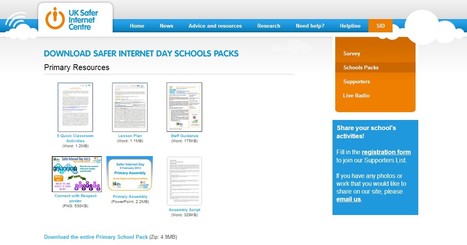
Schools Packs - UK Safer Internet Centre
Read more and download: http://www.saferinternet.org.uk/safer-internet-day/schools-packs
Scoop.it!
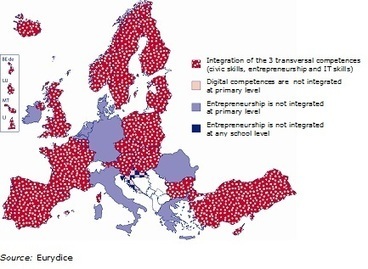
European Commission - Press Release - European Commission Press release Brussels, 19 November 2012
The teaching of IT, entrepreneurial and citizenship skills is fundamental for preparing young people for today's job market, but, in general, schools are still paying insufficient attention to these transversal skills compared with basic skills in literacy, mathematics and science, according to a new European Commission report. Part of the problem is rooted in difficulties with assessment.
===> For example, only 11 European countries (Belgium Flemish community, Bulgaria, Estonia, Ireland, France, Latvia, Lithuania, Malta, Poland, Slovenia and Finland) have standardised procedures to assess citizenship skills, which aim to develop critical thinking and active participation in school and society. <===
Such testing does not exist at all for entrepreneurship and IT skills in any of the 31 countries which took part in the survey (27 EU Member States, Croatia, Iceland, Norway and Turkey). The report also outlines progress in teaching six of the eight key competences defined at EU level for lifelong learning in knowledge, skills and attitudes.
“It is only by equipping children and young people with the necessary skills, including transversal skills, that we will ensure that the European Union will have the means to remain competitive and to seize the opportunities of the knowledge economy,” said Androulla Vassiliou, European Commissioner for Education, Culture, Multilingualism and Youth.
"This study shows us where there is room for improvement and, most importantly, what we need to do to create more opportunities for our youth.
===> Rethinking education, a policy initiative that I will launch tomorrow, will outline concrete proposals for doing this." <===
Read more, a MUST: http://europa.eu/rapid/press-release_IP-12-1224_en.htm?locale=en
Scoop.it!

Access to all the games on the Europa website. Developed for children aged 6-14, the games are a fun way to learn about EU countries, the euro and more.
Read more, a MUST: http://europa.eu/kids-corner/index_en.htm
Scoop.it!

Password-Stealing Malware Passteal Distributed via File Sharing Sites...
Read more, a MUST:
Scoop.it!

Let’s face it, the going is tough, and it will get tougher. We are living and working in a whole new world, workplace and marketplace where the challenges, changes and opportunities before us are unprecedented.
Our individual and collective ability to learn and re-learn new ways of thinking, doing and communicating that will draw upon our individual and collective abilities to develop solutions is critical.
And, our ability to enable solutions is a collaborative effort that will require leaders to build Communities of Purpose, constituencies of colleagues, employees, constituents and social networks that will learn to work together towards shared goals, values and objectives.
Read more, very interesting...: http://justcoachit.com/blog/2012/10/29/5-ways-to-lead-championing-the-challenge/
Scoop.it!
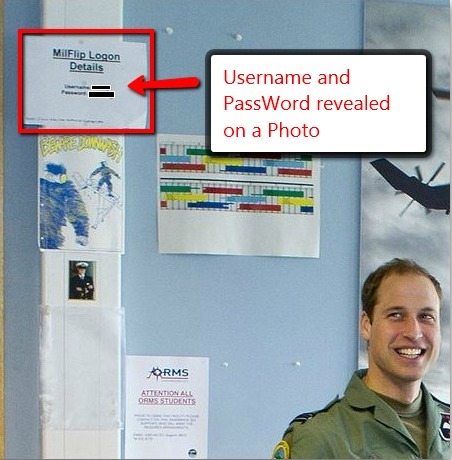
Prince William gets photographed doing his day job - unfortunately, someone didn't spot the password pinned to the wall behind him..
============================================
Gust MEES
Read also "Naivety in the digital age!?
- http://gustmees.wordpress.com/2012/11/05/naivety-in-the-digital-age/
============================================
Full story here:
|