21st Century Learning and Teaching
791.6K views | +31 today
21st Century Learning and Teaching
Related articles to 21st Century Learning and Teaching as also tools...
Curated by Gust MEES
Your new post is loading...

Popular Tags

Current selected tag: 'Learning 2 Learn'. Clear
Scooped by Gust MEES
September 4, 2017 11:14 AM
Scoop.it!

Soft Skills | What are Soft Skills? | SkillsYouNeed | #ModernEDU #Business #Competition

Soft Skills | What are Soft Skills? | SkillsYouNeed | #ModernEDU #Business #Competition | 21st Century Learning and Teaching | Scoop.it
What are Soft Skills?


The phrase ‘soft skills’ is often used to describe the skills which characterise relationships with other people, or which are about how you approach life and work.

Others phrases that are often used for these types of skills include: ‘people skills’, ‘interpersonal skills’, ‘social skills’ or ‘transferable skills’.

‘Hard skills’, by contrast, is a phrase usually used to describe job-specific skills. Examples of such skills include professional skills like bricklaying or accountancy, medical expertise such as diagnosis and treatment, or other skills that can be taught and whose presence is testable through exams.

Ironically, for many people, the so-called soft skills are often some of the hardest skills to develop.
The Relative Importance of Hard and Soft Skills
Job-related expertise is essential in any profession and in many other careers. However, over the last twenty to thirty years, understanding has grown that perhaps the soft skills may ultimately be more important in determining levels of success.

That is, the hard skills are a basic minimum necessary in order to operate in that particular workplace. Whether or not you are successful in your career may depend on how you relate to other people and to work: the so-called soft skills.


Learn more / En savoir plus / Mehr erfahren:


http://www.scoop.it/t/21st-century-learning-and-teaching/?&tag=Soft+Skills


Gust MEES's insight:
What are Soft Skills?


The phrase ‘soft skills’ is often used to describe the skills which characterise relationships with other people, or which are about how you approach life and work.

Others phrases that are often used for these types of skills include: ‘people skills’, ‘interpersonal skills’, ‘social skills’ or ‘transferable skills’.

‘Hard skills’, by contrast, is a phrase usually used to describe job-specific skills. Examples of such skills include professional skills like bricklaying or accountancy, medical expertise such as diagnosis and treatment, or other skills that can be taught and whose presence is testable through exams.

Ironically, for many people, the so-called soft skills are often some of the hardest skills to develop.
The Relative Importance of Hard and Soft Skills
Job-related expertise is essential in any profession and in many other careers. However, over the last twenty to thirty years, understanding has grown that perhaps the soft skills may ultimately be more important in determining levels of success.

That is, the hard skills are a basic minimum necessary in order to operate in that particular workplace. Whether or not you are successful in your career may depend on how you relate to other people and to work: the so-called soft skills.


Learn more / En savoir plus / Mehr erfahren:


http://www.scoop.it/t/21st-century-learning-and-teaching/?&tag=Soft+Skills


No comment yet.
Scooped by Gust MEES
September 4, 2017 10:26 AM
Scoop.it!

Soft Skills To Improve Your Career | #ModernEDU 

Soft Skills To Improve Your Career | #ModernEDU  | 21st Century Learning and Teaching | Scoop.it

Soft skills to help your career hit the big time
You’d be hard-pressed to find professional skills that matter more than these.

You’ve got a reputation for being the best coder/editor/mechanic/whatever, but it amounts to little if you don’t work well with others. Some of the most important professional skills for workers and employers alike simply can’t be taught in a classroom or measured on paper. These traits are called soft skills and they’re more crucial to your job search and overall career than you think.

What are soft skills?
Unlike hard skills, which can be proven and measured, soft skills are intangible and difficult to quantify. Some examples of soft skills include analytical thinking, verbal and written communication, and leadership.

Research from the Society for Human Resource Management found that employers actually care more about soft skills than they do technical abilities like reading comprehension and mathematics.

One reason soft skills are so revered is that they help facilitate human connections. “Soft skills are key to building relationships, gaining visibility, and creating more opportunities for advancement,” says Kathy Robinson, founder of Boston career-coaching firm TurningPoint.

Basically, you can be the best at what you do, but if your soft skills aren’t cutting it, you’re limiting your chances of career success. Read on to learn which soft skills are critical to have firmly under your belt and what steps you can take to acquire them.


Learn more / En savoir plus / Mehr erfahren:


http://www.scoop.it/t/21st-century-learning-and-teaching/?&tag=Soft+Skills
 

Gust MEES's insight:

Soft skills to help your career hit the big time
You’d be hard-pressed to find professional skills that matter more than these.

You’ve got a reputation for being the best coder/editor/mechanic/whatever, but it amounts to little if you don’t work well with others. Some of the most important professional skills for workers and employers alike simply can’t be taught in a classroom or measured on paper. These traits are called soft skills and they’re more crucial to your job search and overall career than you think.

What are soft skills?
Unlike hard skills, which can be proven and measured, soft skills are intangible and difficult to quantify. Some examples of soft skills include analytical thinking, verbal and written communication, and leadership.

Research from the Society for Human Resource Management found that employers actually care more about soft skills than they do technical abilities like reading comprehension and mathematics.

One reason soft skills are so revered is that they help facilitate human connections. “Soft skills are key to building relationships, gaining visibility, and creating more opportunities for advancement,” says Kathy Robinson, founder of Boston career-coaching firm TurningPoint.

Basically, you can be the best at what you do, but if your soft skills aren’t cutting it, you’re limiting your chances of career success. Read on to learn which soft skills are critical to have firmly under your belt and what steps you can take to acquire them.


Learn more / En savoir plus / Mehr erfahren:


http://www.scoop.it/t/21st-century-learning-and-teaching/?&tag=Soft+Skills

 

No comment yet.
Scooped by Gust MEES
September 3, 2017 6:49 AM
Scoop.it!

Higher Education 1.0 to 3.0 and beyond | #ModernEDU

Higher Education 1.0 to 3.0 and beyond | #ModernEDU | 21st Century Learning and Teaching | Scoop.it

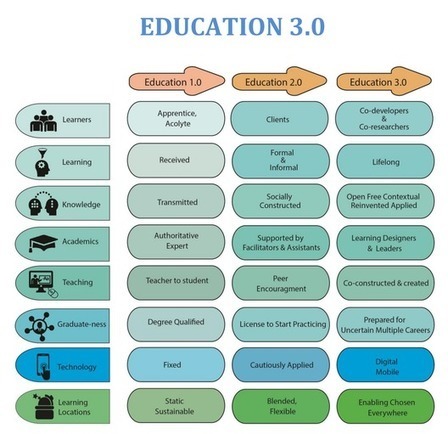
Higher Education 1.0 to 3.0 and beyond.


Learn more / En savoir plus / Mehr erfahren:


http://www.scoop.it/t/21st-century-learning-and-teaching/?&tag=modern-education


Gust MEES's insight:

Higher Education 1.0 to 3.0 and beyond.


Learn more / En savoir plus / Mehr erfahren:


http://www.scoop.it/t/21st-century-learning-and-teaching/?&tag=modern-education


No comment yet.
Rescooped by Gust MEES from Into the Driver's Seat
September 1, 2017 8:01 PM
Scoop.it!

What is Inquiry-Based Learning? | #ModernEDU #Video

"This video explains the teaching methodology Inquiry-Based Learning. It was created for the Inspiring Science Education Project as part of a series of videos to promote the use of Inquiry-Based Learning. "


Learn more / En savoir plus / Mehr erfahren:


http://www.scoop.it/t/21st-century-learning-and-teaching/?&tag=Inquiry+Learning


Via Beata werner, Kortney Melton, Jim Lerman
Gust MEES's insight:

This video explains the teaching methodology Inquiry-Based Learning. It was created for the Inspiring Science Education Project as part of a series of videos to promote the use of Inquiry-Based Learning. "


Learn more / En savoir plus / Mehr erfahren:


http://www.scoop.it/t/21st-century-learning-and-teaching/?&tag=Inquiry+Learning


No comment yet.
Rescooped by Gust MEES from Learning - Social Media - Innovation
September 1, 2017 10:22 AM
Scoop.it!

10 Skills That Every Employee Will Need To Thrive in 2020 (Infographic) - Social Talent

10 Skills That Every Employee Will Need To Thrive in 2020 (Infographic) - Social Talent | 21st Century Learning and Teaching | Scoop.it

What skill will we need for the future? This infographic perfectly illustrates the skills needed to succeed, including the most sought after jobs.


Learn more / En savoir plus / Mehr erfahren:


https://www.scoop.it/t/21st-century-learning-and-teaching/?&tag=Soft+Skills


https://gustmees.wordpress.com/2015/07/19/learning-path-for-professional-21st-century-learning-by-ict-practice/


Via Marc Wachtfogel, Ph.D.
Gust MEES's insight:

What skill will we need for the future? This infographic perfectly illustrates the skills needed to succeed, including the most sought after jobs.


Learn more / En savoir plus / Mehr erfahren:


https://www.scoop.it/t/21st-century-learning-and-teaching/?&tag=Soft+Skills


https://gustmees.wordpress.com/2015/07/19/learning-path-for-professional-21st-century-learning-by-ict-practice/


Koen Mattheeuws's curator insight, September 4, 2017 3:23 AM
Benieuwd hoe de nieuwe eindtermen zullen matchen? 
Yanglish's curator insight, September 4, 2017 2:22 PM

What skill will we need for the future?

Jan Hendrik van Dalen's curator insight, September 7, 2017 7:07 AM
Share your insight
Scooped by Gust MEES
August 28, 2017 8:53 AM
Scoop.it!

„Der Nutzer sollte immer überlegen, bevor er etwas teilt oder postet“ | #Luxembourg #digcit #DigitalCitiZENship

„Der Nutzer sollte immer überlegen,  bevor er etwas teilt oder postet“ | #Luxembourg #digcit #DigitalCitiZENship | 21st Century Learning and Teaching | Scoop.it
Im Netz gibt es sie wie Sand am Meer: Gefälschte und manipulierte Bilder, die mit Bildbearbeitungsprogrammen verändert wurden. Meist sollen sie nur für Lacher sorgen – manchmal fallen auch berühmte Persönlichkeiten auf diese „Shoops“ (benannt nach der beliebten Software „Photoshop“) herein, zur allgemeinen Belustigung. Überhaupt nicht lustig sind solche Fälle, in denen Fotomontage verwendet wird, um mit politischen Absichten einen falschen Eindruck zu wecken. So teilte die deutsche Politikerin Erika Steinbach ein Bild, das die „Refugees Welcome“-Bewegung verunglimpfte.


Nach den Events in Charlottesville in den USA teilte ein Journalist ein Bild, das einen der rechtsnationalen Protestler gemeinsam mit US-Präsident Trump zeigt – ebenfalls eine Fälschung. In beiden Fällen wurden die Bilder tausendfach geteilt; definitiv keine kleine Sache, findet Georges Knell von BEE Secure.


„Durch solche ,Fakes‘ lässt sich besonders leicht ein falsches Bild über bestimmte Personen oder bestimmte Gruppen von Personen verbreiten, besonders, wenn diese in einem negativen Kontext dargestellt werden. Oft ist es auch so, dass solche ,Fakes‘ öfter verbreitet werden, wenn sie in das Weltbild der bestimmten Person passen oder ihre Meinung über eine bestimmte Person respektiv über eine bestimmte Gruppe von Personen bestätigen. In solchen Fällen wird besonders schnell und ohne weiteres Nachfragen geteilt; das ist aber keineswegs nur ein Kavaliersdelikt, denn  in den meisten Fällen verteilt sich der Inhalt damit wie ein Lauffeuer, während sich für eine eventuelle Richtigstellung meistens niemand mehr interessiert – so entsteht allzu schnell eine emotional aufgeladene Diskussion, die sich in einem Sturm der Entrüstung entlädt.


Durch Liken und Teilen in sozialen Netzwerken entsteht dabei eine Art Schneeballeffekt: Immer mehr Menschen bekommen Wind von der Kritik und hinterlassen ebenfalls Kommentare. Rationale Argumente haben dann oft keinen Platz in der Diskussion mehr.


Learn more / En savoir plus / Mehr erfahren:


https://www.bee-secure.lu/


http://www.scoop.it/t/21st-century-learning-and-teaching/?&tag=No+Hate+Speech


Gust MEES's insight:
Im Netz gibt es sie wie Sand am Meer: Gefälschte und manipulierte Bilder, die mit Bildbearbeitungsprogrammen verändert wurden. Meist sollen sie nur für Lacher sorgen – manchmal fallen auch berühmte Persönlichkeiten auf diese „Shoops“ (benannt nach der beliebten Software „Photoshop“) herein, zur allgemeinen Belustigung. Überhaupt nicht lustig sind solche Fälle, in denen Fotomontage verwendet wird, um mit politischen Absichten einen falschen Eindruck zu wecken. So teilte die deutsche Politikerin Erika Steinbach ein Bild, das die „Refugees Welcome“-Bewegung verunglimpfte.


Nach den Events in Charlottesville in den USA teilte ein Journalist ein Bild, das einen der rechtsnationalen Protestler gemeinsam mit US-Präsident Trump zeigt – ebenfalls eine Fälschung. In beiden Fällen wurden die Bilder tausendfach geteilt; definitiv keine kleine Sache, findet Georges Knell von BEE Secure.


„Durch solche ,Fakes‘ lässt sich besonders leicht ein falsches Bild über bestimmte Personen oder bestimmte Gruppen von Personen verbreiten, besonders, wenn diese in einem negativen Kontext dargestellt werden. Oft ist es auch so, dass solche ,Fakes‘ öfter verbreitet werden, wenn sie in das Weltbild der bestimmten Person passen oder ihre Meinung über eine bestimmte Person respektiv über eine bestimmte Gruppe von Personen bestätigen. In solchen Fällen wird besonders schnell und ohne weiteres Nachfragen geteilt; das ist aber keineswegs nur ein Kavaliersdelikt, denn  in den meisten Fällen verteilt sich der Inhalt damit wie ein Lauffeuer, während sich für eine eventuelle Richtigstellung meistens niemand mehr interessiert – so entsteht allzu schnell eine emotional aufgeladene Diskussion, die sich in einem Sturm der Entrüstung entlädt.


Durch Liken und Teilen in sozialen Netzwerken entsteht dabei eine Art Schneeballeffekt: Immer mehr Menschen bekommen Wind von der Kritik und hinterlassen ebenfalls Kommentare. Rationale Argumente haben dann oft keinen Platz in der Diskussion mehr.


Learn more / En savoir plus / Mehr erfahren:


https://www.bee-secure.lu/


http://www.scoop.it/t/21st-century-learning-and-teaching/?&tag=No+Hate+Speech


No comment yet.
Scooped by Gust MEES
August 17, 2017 4:06 PM
Scoop.it!

Grit: The power of passion and perseverance | #Success 

Grit: The power of passion and perseverance | #Success  | 21st Century Learning and Teaching | Scoop.it
Leaving a high-flying job in consulting, Angela Lee Duckworth took a job teaching math to seventh graders in a New York public school. She quickly realized that IQ wasn't the only thing separating the successful students from those who struggled. Here, she explains her theory of "grit" as a predictor of success.


Learn more / En savoir plus / Mehr erfahren:


http://www.scoop.it/t/21st-century-learning-and-teaching/?&tag=Grit


http://www.scoop.it/t/21st-century-learning-and-teaching/?&tag=Passion


http://www.scoop.it/t/21st-century-learning-and-teaching/?&tag=Success


Gust MEES's insight:
Leaving a high-flying job in consulting, Angela Lee Duckworth took a job teaching math to seventh graders in a New York public school. She quickly realized that IQ wasn't the only thing separating the successful students from those who struggled. Here, she explains her theory of "grit" as a predictor of success.


Learn more / En savoir plus / Mehr erfahren:


http://www.scoop.it/t/21st-century-learning-and-teaching/?&tag=Grit


http://www.scoop.it/t/21st-century-learning-and-teaching/?&tag=Passion


http://www.scoop.it/t/21st-century-learning-and-teaching/?&tag=Success


No comment yet.
Rescooped by Gust MEES from Educational Technology and Mobile Lerarning
August 15, 2017 12:21 PM
Scoop.it!

Foster A Growth Mindset in Your Class Using These Strategies | #ModernEDU

Foster A Growth Mindset in Your Class Using These Strategies | #ModernEDU | 21st Century Learning and Teaching | Scoop.it

August , 2017
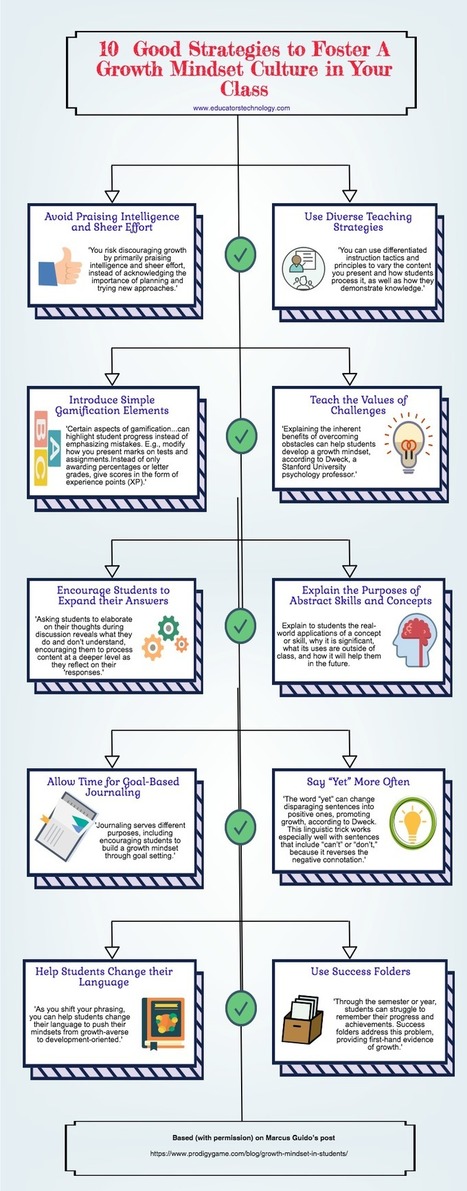
In her celebrated book ‘Mindset: The New Psychology of Success’, Stanford university psychologist Carol S. Dweck makes a strong case backed up with  scientific evidence for the power of mindset in shaping one’s success or failure in almost every facet of our life.Those with a fixed mindset mentality tend to be limited in their learning scope believing that their inner traits and abilities are biologically determined. On the other hand, people with a growth mindset embrace change and tend to learn more from life experiences because for them concepts such as skills, abilities and competencies are not fixated  and can be developed through a process of error and trial.

In today’s post, we are sharing with you this handy infographic we created based on Marcus Guido’s post ’10 Ways Teachers Can Instill a Growth Mindset in Students’. Guido walks you through the different strategies you can use with your students to cultivate a growth mindset in your class and ultimately enhance students learning.  Read his post to learn more about each of the strategies featured here.

The visual below is also available in PDF format from this link.


Learn more / En savoir plus / Mehr erfahren:


https://gustmees.wordpress.com/?s=growth+mindset


https://gustmees.wordpress.com/?s=practice


Via Educatorstechnology
Gust MEES's insight:

August , 2017
In her celebrated book ‘Mindset: The New Psychology of Success’, Stanford university psychologist Carol S. Dweck makes a strong case backed up with  scientific evidence for the power of mindset in shaping one’s success or failure in almost every facet of our life.Those with a fixed mindset mentality tend to be limited in their learning scope believing that their inner traits and abilities are biologically determined. On the other hand, people with a growth mindset embrace change and tend to learn more from life experiences because for them concepts such as skills, abilities and competencies are not fixated  and can be developed through a process of error and trial.

In today’s post, we are sharing with you this handy infographic we created based on Marcus Guido’s post ’10 Ways Teachers Can Instill a Growth Mindset in Students’. Guido walks you through the different strategies you can use with your students to cultivate a growth mindset in your class and ultimately enhance students learning.  Read his post to learn more about each of the strategies featured here.

The visual below is also available in PDF format from this link.


Learn more / En savoir plus / Mehr erfahren:


https://gustmees.wordpress.com/?s=growth+mindset


https://gustmees.wordpress.com/?s=practice


Diana Jaimes V.'s curator insight, September 2, 2017 9:50 AM
First, this article led me to consider mindset shaping as a powerful tool for learning as any other aspect of life. It explains the difference between a fixed mindset and a growth mindset that normally refers to people constantly learning from any experience. Since their capabilities are not fixed, these people are never closed to a learning experience and always use the trial and error learning. They proposed an infographic with several strategies to foster a growth mindset in our students some of the steps include the use of diverse teaching strategies, explanations of purposes of abstract thinking, teaching values, among others.
 
Scooped by Gust MEES
August 14, 2017 4:08 PM
Scoop.it!

An Organizing Framework for Collaborative Inquiry Processes  | #pdf #ModernEDU

Collaborative Inquiry in Ontario
What We Have Learned and Where We Are Now
“Our education system will be characterized by high expectations and success
for all. It will be responsive, high quality, accessible and integrated from early
learning and child care to adult education.”
– Achieving Excellence: A Renewed Vision for Education in Ontario, 2014
The commitment to excellence and equity in Ontario education is about the success and
well-being of every learner. How will the province go about realizing this ambitious
commitment? Substantial evidence from research conducted in Ontario and internationally
suggests that collaborative inquiry (CI) – a practice of engaging educators as
researchers – holds great promise as a provincial approach. It has been shown to be
an effective means to both professional learning and to enhanced student learning
(Comber, 2013; Hannay, Wideman & Seller, 2010; Timperley, & Lee, 2008).
Through CI, educators work together to improve their understanding of what learning
is (or could be), generate evidence of what’s working (and what’s not), make decisions
about next steps and take action to introduce improvements and innovations.
And then they start again on emerging new issues and challenges. Notably, CI sees
educators as key participants in understanding how to achieve excellence and equity
in education.


Learn more / En savoir plus / Mehr erfahren:


http://www.scoop.it/t/21st-century-learning-and-teaching/?&tag=Inquiry+Learning


http://www.scoop.it/t/21st-century-learning-and-teaching/?&tag=Collaboration


Gust MEES's insight:

Collaborative Inquiry in Ontario
What We Have Learned and Where We Are Now
“Our education system will be characterized by high expectations and success
for all. It will be responsive, high quality, accessible and integrated from early
learning and child care to adult education.”
– Achieving Excellence: A Renewed Vision for Education in Ontario, 2014
The commitment to excellence and equity in Ontario education is about the success and
well-being of every learner. How will the province go about realizing this ambitious
commitment? Substantial evidence from research conducted in Ontario and internationally
suggests that collaborative inquiry (CI) – a practice of engaging educators as
researchers – holds great promise as a provincial approach. It has been shown to be
an effective means to both professional learning and to enhanced student learning
(Comber, 2013; Hannay, Wideman & Seller, 2010; Timperley, & Lee, 2008).
Through CI, educators work together to improve their understanding of what learning
is (or could be), generate evidence of what’s working (and what’s not), make decisions
about next steps and take action to introduce improvements and innovations.
And then they start again on emerging new issues and challenges. Notably, CI sees
educators as key participants in understanding how to achieve excellence and equity
in education.


Learn more / En savoir plus / Mehr erfahren:


http://www.scoop.it/t/21st-century-learning-and-teaching/?&tag=Inquiry+Learning


http://www.scoop.it/t/21st-century-learning-and-teaching/?&tag=Collaboration


Scooped by Gust MEES
August 14, 2017 2:09 PM
Scoop.it!

How to use blogging as a powerful promotional tool for small businesses | #Blogs #Marketing

How to use blogging as a powerful promotional tool for small businesses | #Blogs #Marketing | 21st Century Learning and Teaching | Scoop.it

Blogging is a trendy activity in today’s marketplace. Most businesses, companies, and influencers are developing and growing their professional blogs with one purpose: business growth. A blog will often improve the expansion of brands in the marketplace. The more popular a blog becomes the better awareness will the business receive.

Perceive your own business like a powerful mechanism that can satisfy a specific target audience. However, before your products or services get to satisfy anyone’s needs or solve anyone’s problems, you –the brain of the company – has to supply a consistent flow of interested customers.

How do you do that? Well, you can run a blog and deliver massive amounts of traffic to your business offer. Thousands of people will hear about your brand’s name, and that’s only because they’ve been tempted to arrive to and consume one of your blog posts. In fact, here’s a list of benefits that blogging shall bring to your business performance:

More traffic towards your business website through SEO channels.
Blog posts’ call-to-actions (CTAs) generate new leads and potential sales.


Improves your authority in the field because of the quality content you share.


A great feedback machine (ask visitors at the end of posts to share insights).


Your business can become viral because one blog post becomes viral.


Learn more / En savoir plus / Mehr erfahren:


https://gustmees.wordpress.com/?s=blogs


https://www.scoop.it/t/21st-century-learning-and-teaching/?&tag=Blogging


Gust MEES's insight:

Blogging is a trendy activity in today’s marketplace. Most businesses, companies, and influencers are developing and growing their professional blogs with one purpose: business growth. A blog will often improve the expansion of brands in the marketplace. The more popular a blog becomes the better awareness will the business receive.

Perceive your own business like a powerful mechanism that can satisfy a specific target audience. However, before your products or services get to satisfy anyone’s needs or solve anyone’s problems, you –the brain of the company – has to supply a consistent flow of interested customers.

How do you do that? Well, you can run a blog and deliver massive amounts of traffic to your business offer. Thousands of people will hear about your brand’s name, and that’s only because they’ve been tempted to arrive to and consume one of your blog posts. In fact, here’s a list of benefits that blogging shall bring to your business performance:

More traffic towards your business website through SEO channels.
Blog posts’ call-to-actions (CTAs) generate new leads and potential sales.


Improves your authority in the field because of the quality content you share.


A great feedback machine (ask visitors at the end of posts to share insights).


Your business can become viral because one blog post becomes viral.


Learn more / En savoir plus / Mehr erfahren:


https://gustmees.wordpress.com/?s=blogs


https://www.scoop.it/t/21st-century-learning-and-teaching/?&tag=Blogging


Scooped by Gust MEES
August 13, 2017 3:05 PM
Scoop.it!

Movers shakers & policy makers - Carol Dweck, author, professor of psychology | #GrowthMindset #ModernEDU

Movers shakers & policy makers - Carol Dweck, author, professor of psychology | #GrowthMindset #ModernEDU | 21st Century Learning and Teaching | Scoop.it
What would you say are a few of the biggest myths about growth mindset?

OK, myth No.1 is the myth that it’s all about effort, and that you instil it by praising effort. Effort is one factor that leads to learning. So the ultimate value is growth, progress, learning. And effort is one thing that leads there but there are many other things – strategies, using resources, getting advice, guidance and mentorship, and when people leave that out and just praise effort, it’s not transmitting a growth mindset. Adults have nagged children for centuries to try harder. That’s not a growth mindset, it’s an adult nagging a child to try harder!

Also, we find that when teachers think it’s just about effort and praising effort they may praise effort that isn’t even there, or that’s not effective. So if a child tries hard at something and you say ‘great job, you tried hard’, but they didn’t make progress, they didn’t advance, you’re actually conveying a fixed mindset because you’re saying ‘great effort, I didn’t really expect you to do that, and I don’t expect you to do that, so I’m trying to make you feel good about not doing it’. So we need people to understand that it’s appreciating a variety of process variables that lead to learning.

The second myth is that you can teach students a lesson on growth mindset and put a poster up in the front of the room, and that’s that, that they will have a growth mindset from then on. And we know if the teacher doesn’t then embody a growth mindset, if teachers don’t embody growth mindsets in their teaching practices, in the way that they give feedback when the child is stuck, and the way they present a new unit, in the way that they give opportunities for revision and growth of understanding – if they don’t embody that growth mindset, they are not teaching it. And in fact, if their behaviour contradicts the poster at the front of the room, then maybe they’re doing a disservice.


Learn more / En savoir plus / Mehr erfahren:


http://www.scoop.it/t/21st-century-learning-and-teaching/?&tag=carol+dweck


http://www.scoop.it/t/21st-century-learning-and-teaching/?&tag=Growth+Mindset


Gust MEES's insight:
What would you say are a few of the biggest myths about growth mindset?

OK, myth No.1 is the myth that it’s all about effort, and that you instil it by praising effort. Effort is one factor that leads to learning. So the ultimate value is growth, progress, learning. And effort is one thing that leads there but there are many other things – strategies, using resources, getting advice, guidance and mentorship, and when people leave that out and just praise effort, it’s not transmitting a growth mindset. Adults have nagged children for centuries to try harder. That’s not a growth mindset, it’s an adult nagging a child to try harder!

Also, we find that when teachers think it’s just about effort and praising effort they may praise effort that isn’t even there, or that’s not effective. So if a child tries hard at something and you say ‘great job, you tried hard’, but they didn’t make progress, they didn’t advance, you’re actually conveying a fixed mindset because you’re saying ‘great effort, I didn’t really expect you to do that, and I don’t expect you to do that, so I’m trying to make you feel good about not doing it’. So we need people to understand that it’s appreciating a variety of process variables that lead to learning.

The second myth is that you can teach students a lesson on growth mindset and put a poster up in the front of the room, and that’s that, that they will have a growth mindset from then on. And we know if the teacher doesn’t then embody a growth mindset, if teachers don’t embody growth mindsets in their teaching practices, in the way that they give feedback when the child is stuck, and the way they present a new unit, in the way that they give opportunities for revision and growth of understanding – if they don’t embody that growth mindset, they are not teaching it. And in fact, if their behaviour contradicts the poster at the front of the room, then maybe they’re doing a disservice.


Learn more / En savoir plus / Mehr erfahren:


http://www.scoop.it/t/21st-century-learning-and-teaching/?&tag=carol+dweck


http://www.scoop.it/t/21st-century-learning-and-teaching/?&tag=Growth+Mindset


Joyce Valenza's curator insight, August 14, 2017 8:57 AM
An interview with Dr. Dweck that offers insights and counters myths.
Rosemary Tyrrell, Ed.D.'s curator insight, August 14, 2017 12:27 PM
Interview with always interesting Carol Dweck. I appreciate the nuance of what she is discussing here. 
 
Ian Berry's curator insight, August 14, 2017 7:15 PM
Great reminders of several aspects what I call appreciative leadership.  "Effort is one factor that leads to learning. So the ultimate value is growth, progress, learning. And effort is one thing that leads there but there are many other things – strategies, using resources, getting advice, guidance and mentorship, and when people leave that out and just praise effort, it’s not transmitting a growth mindset."
Scooped by Gust MEES
August 11, 2017 12:00 PM
Scoop.it!

Video: Watch John Hattie's Keynote On Collaborative Impact - VISIBLE LEARNING | #ModernEDU

Video: Watch John Hattie's Keynote On Collaborative Impact - VISIBLE LEARNING | #ModernEDU | 21st Century Learning and Teaching | Scoop.it

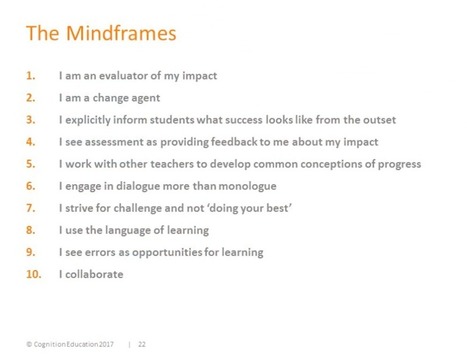
Professor John Hattie gave a keynote presentation on “Collaborative Impact” in front of school leaders and principals at Cognition Education’s “Collaborative Impact: Research & Practice Conference 2017”. Watch the video to get some important updates on the Visible Learning story. 


Learn more / En savoir plus / Mehr erfahren:


http://www.scoop.it/t/21st-century-learning-and-teaching/?&tag=John+HATTIE


http://www.scoop.it/t/21st-century-learning-and-teaching/?&tag=modern-education


Gust MEES's insight:

Professor John Hattie gave a keynote presentation on “Collaborative Impact” in front of school leaders and principals at Cognition Education’s “Collaborative Impact: Research & Practice Conference 2017”. Watch the video to get some important updates on the Visible Learning story. 


Learn more / En savoir plus / Mehr erfahren:


http://www.scoop.it/t/21st-century-learning-and-teaching/?&tag=John+HATTIE


http://www.scoop.it/t/21st-century-learning-and-teaching/?&tag=modern-education


No comment yet.
Rescooped by Gust MEES from Notebook or My Personal Learning Network
August 10, 2017 7:15 PM
Scoop.it!

Content Curation & Cultural Heritage – Content Curation Official Guide | #ModernEDU #PKM

Content Curation & Cultural Heritage – Content Curation Official Guide | #ModernEDU #PKM | 21st Century Learning and Teaching | Scoop.it
“When we curate content online, it enhances who we are, both in the sense of…
- we learn things, and we help to define ourselves by understanding our own interests — and in a more external way, by…


Learn more / En savoir plus / Mehr erfahren:


https://gustmees.wordpress.com/2013/04/25/learn-every-day-a-bit-with-curation/


https://www.scoop.it/t/21st-century-learning-and-teaching/?&tag=Curation


https://globaleducationandsocialmedia.wordpress.com/2014/01/19/pkm-personal-professional-knowledge-management/


Via Gilbert C FAURE
Gust MEES's insight:
When we curate content online, it enhances who we are, both in the sense of…
- we learn things, and we help to define ourselves by understanding our own interests — and in a more external way, by…


Learn more / En savoir plus / Mehr erfahren:


https://gustmees.wordpress.com/2013/04/25/learn-every-day-a-bit-with-curation/


https://www.scoop.it/t/21st-century-learning-and-teaching/?&tag=Curation


https://globaleducationandsocialmedia.wordpress.com/2014/01/19/pkm-personal-professional-knowledge-management/


No comment yet.
Scooped by Gust MEES
September 4, 2017 10:53 AM
Scoop.it!

Soft Skills List - 28 Skills to Working Smart | #ModernEDU

Soft Skills List - 28 Skills to Working Smart | #ModernEDU | 21st Century Learning and Teaching | Scoop.it

Soft Skills List – 28 Skills to Working Smart
I originally published this soft skills list in June 2011.  I am honored to discover that more than 500,000 of you have since read my soft skills list and found it helpful.

There are 28 soft skills essential to your career success.  I wished I knew about many of these earlier in my career.   I want to share them so I can empower you to work smart and achieve more.  I look forward to your comments.

What are Soft Skills?

For a skill to be considered a soft skill, it needs to have three characteristics.

Rules for mastering this skill is not black and white –  Unlike hard skills, like math, where the rule for doing it perfectly is always the same, how effective you are at a soft skill changes depends on your emotional state, external circumstance, and the type of people you interact with.


This skill is portable and valuable to any job/career – Because soft skills are about your inner strength and interpersonal effectiveness, as long as you work with people, these skills are valuable to your career.


Mastering this skill is an ongoing journey – You can reach a level of competency in it but you can always encounter new situations or people that will test your soft skills and push you to learn more.


Learn more / En savoir plus / Mehr erfahren:


http://www.scoop.it/t/21st-century-learning-and-teaching/?&tag=Soft+Skills


Gust MEES's insight:

Soft Skills List – 28 Skills to Working Smart
I originally published this soft skills list in June 2011.  I am honored to discover that more than 500,000 of you have since read my soft skills list and found it helpful.

There are 28 soft skills essential to your career success.  I wished I knew about many of these earlier in my career.   I want to share them so I can empower you to work smart and achieve more.  I look forward to your comments.

What are Soft Skills?

For a skill to be considered a soft skill, it needs to have three characteristics.

Rules for mastering this skill is not black and white –  Unlike hard skills, like math, where the rule for doing it perfectly is always the same, how effective you are at a soft skill changes depends on your emotional state, external circumstance, and the type of people you interact with.


This skill is portable and valuable to any job/career – Because soft skills are about your inner strength and interpersonal effectiveness, as long as you work with people, these skills are valuable to your career.


Mastering this skill is an ongoing journey – You can reach a level of competency in it but you can always encounter new situations or people that will test your soft skills and push you to learn more.


Learn more / En savoir plus / Mehr erfahren:


http://www.scoop.it/t/21st-century-learning-and-teaching/?&tag=Soft+Skills


No comment yet.
Scooped by Gust MEES
September 4, 2017 10:18 AM
Scoop.it!

Critical thinking ability is a better predictor of life decisions than intelligence | #ModernEDU #SoftSkills

Critical thinking ability is a better predictor of life decisions than intelligence | #ModernEDU #SoftSkills | 21st Century Learning and Teaching | Scoop.it

We all probably know someone who is very intelligent, but does blatantly stupid things. Despite evidence that intelligence predicts a variety of life outcomes, the relationship between intelligence and good thinking is less clear. This research explored whether critical thinking ability or intelligence was the better predictor of real life events.


Community adults and college students (n = 244) completed a critical thinking assessment, an intelligence test, and an inventory of life events. Individuals with higher critical thinking scores and higher IQs reported fewer negative life events. Critical thinking more strongly predicted life events than intelligence and significantly added to the variance explained by IQ.


There is ample evidence that critical thinking can be taught, so there is hope that teaching critical thinking skills might prevent the occurrence of negative life events. We advocate for critical thinking instruction as a way to create a better future for everyone.


Learn more / En savoir plus / Mehr erfahren:


http://www.scoop.it/t/21st-century-learning-and-teaching?tag=Critical-Thinking


http://www.scoop.it/t/21st-century-learning-and-teaching/?&tag=Soft+Skills


Gust MEES's insight:

We all probably know someone who is very intelligent, but does blatantly stupid things. Despite evidence that intelligence predicts a variety of life outcomes, the relationship between intelligence and good thinking is less clear. This research explored whether critical thinking ability or intelligence was the better predictor of real life events.


Community adults and college students (n = 244) completed a critical thinking assessment, an intelligence test, and an inventory of life events. Individuals with higher critical thinking scores and higher IQs reported fewer negative life events. Critical thinking more strongly predicted life events than intelligence and significantly added to the variance explained by IQ.


There is ample evidence that critical thinking can be taught, so there is hope that teaching critical thinking skills might prevent the occurrence of negative life events. We advocate for critical thinking instruction as a way to create a better future for everyone.


Learn more / En savoir plus / Mehr erfahren:


http://www.scoop.it/t/21st-century-learning-and-teaching?tag=Critical-Thinking


http://www.scoop.it/t/21st-century-learning-and-teaching/?&tag=Soft+Skills

 

No comment yet.
Scooped by Gust MEES
September 2, 2017 5:33 PM
Scoop.it!

Search For Music Artists and Song Lyrics  | MetroLyrics

Search for Music Artists and song lyrics by A to Z. View all artists under the letter #


Learn more / En savoir plus / Mehr erfahren:


http://www.scoop.it/t/21st-century-learning-and-teaching/?&tag=Music


Gust MEES's insight:
Search for Music Artists and song lyrics by A to Z. View all artists under the letter #


Learn more / En savoir plus / Mehr erfahren:


http://www.scoop.it/t/21st-century-learning-and-teaching/?&tag=Music


No comment yet.
Scooped by Gust MEES
September 1, 2017 9:41 AM
Scoop.it!

The Real and Underrated Value of Visual Content Curation | #Curation 

The Real and Underrated Value of Visual Content Curation | #Curation  | 21st Century Learning and Teaching | Scoop.it
One of the biggest challenges that content marketers face is creating visual content. Visual design is a specialized field requiring the tools and skills of an artist to communicate viscerally what cannot be expressed through words. The dilemma is this : how can content creators supplement their textual content with attractive images without any experience with design? The solution is curation.

How does visual content curation work?
Curation involves finding great content as opposed to creating it from scratch. As a curator, you’re the funnel that distills quality content from authoritative sources to serve it to customers. You acknowledge and link out to sources, and add your own commentary to provide readers a broader perspective.

The visual content curation process is easier as you only focus on gathering relevant images to tell a story, make a point, offer up as evidence, or reinforce the written word. The visual content you can curate from third-party sources include:

Professional photographs from copyright free image repositories/stock photo galleries. Example : Pixabay, Flickr and Pexels. Terms of commercial use are indicated, and some may require you to attribute the original creator.Screen-shots from websites can be legally published to articles or blogs discussing the content of those images. For more information on how they are covered under ‘fair use’, read this article.GIFs and animated stickers from GIPHY or Gif Bin are entertaining and dynamic. They break the monotony of text in long-form blog posts, and instantly grab attention on social media pages.


Free quote cards on Pinterest available for saving to file, sharing or printing.Data visualizations – graphs, pie charts, maps and diagrams – that communicate key facts and data quickly, clearly and easily. If you’re using them from a company’s website, proper attribution is necessary.You can also create visual interest by adding quotes – customer testimonials or expert advice – in blog or social media posts. This task can intersect with influencer outreach or cross-promotions, where you request quotes from authoritative voices in your niche who have an established social media presence. It is also a good opportunity to shine the spotlight on your loyal customers.


Learn more / En savoir plus / Mehr erfahren:


http://blog.scoop.it/2011/11/30/lord-of-curation-series-gust-mees/


http://www.scoop.it/t/21st-century-learning-and-teaching/?&tag=Content+curation


http://www.scoop.it/t/21st-century-learning-and-teaching/?&tag=Curation


Gust MEES's insight:
One of the biggest challenges that content marketers face is creating visual content. Visual design is a specialized field requiring the tools and skills of an artist to communicate viscerally what cannot be expressed through words. The dilemma is this : how can content creators supplement their textual content with attractive images without any experience with design? The solution is curation.

How does visual content curation work?
Curation involves finding great content as opposed to creating it from scratch. As a curator, you’re the funnel that distills quality content from authoritative sources to serve it to customers. You acknowledge and link out to sources, and add your own commentary to provide readers a broader perspective.

The visual content curation process is easier as you only focus on gathering relevant images to tell a story, make a point, offer up as evidence, or reinforce the written word. The visual content you can curate from third-party sources include:

Professional photographs from copyright free image repositories/stock photo galleries. Example : Pixabay, Flickr and Pexels. Terms of commercial use are indicated, and some may require you to attribute the original creator.Screen-shots from websites can be legally published to articles or blogs discussing the content of those images. For more information on how they are covered under ‘fair use’, read this article.GIFs and animated stickers from GIPHY or Gif Bin are entertaining and dynamic. They break the monotony of text in long-form blog posts, and instantly grab attention on social media pages.


Free quote cards on Pinterest available for saving to file, sharing or printing.Data visualizations – graphs, pie charts, maps and diagrams – that communicate key facts and data quickly, clearly and easily. If you’re using them from a company’s website, proper attribution is necessary.You can also create visual interest by adding quotes – customer testimonials or expert advice – in blog or social media posts. This task can intersect with influencer outreach or cross-promotions, where you request quotes from authoritative voices in your niche who have an established social media presence. It is also a good opportunity to shine the spotlight on your loyal customers.


Learn more / En savoir plus / Mehr erfahren:


http://blog.scoop.it/2011/11/30/lord-of-curation-series-gust-mees/


http://www.scoop.it/t/21st-century-learning-and-teaching/?&tag=Content+curation


http://www.scoop.it/t/21st-century-learning-and-teaching/?&tag=Curation


No comment yet.
Scooped by Gust MEES
August 31, 2017 4:01 PM
Scoop.it!

Global &Collaborative Project for High School Students -2017/2018 | #GlobalCollaboration #CollectiveIntelligence

Global &Collaborative Project for High School Students -2017/2018 | #GlobalCollaboration #CollectiveIntelligence | 21st Century Learning and Teaching | Scoop.it

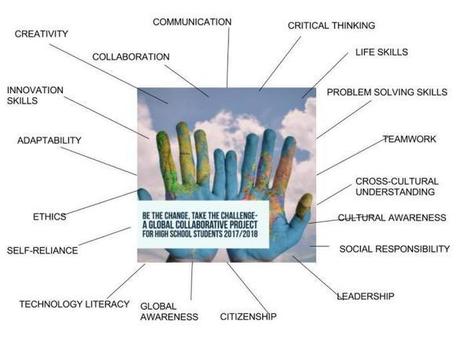
This online project will start in September 2017 and finish in April 2018. The project is open to high school students and teachers from all over the world who believe in the power of global connections.Your students need to have communicative competence in English as all the assignments and communication will be conducted in English only.

Objectives

The objective of this project is for high school students and teachers to make international connections with peers and experts from all over the world and to improve their problem solving skills. As we all encounter problems every single day, it is important to know how to solve both easy and  complex problems. In this project, we aim to show our students how to define problems, how to generate evaluate, select and implement solutions. We believe that this skill will be one of the most important ones in the future workplaces.

Upon completion of this project, students will:

• develop an understanding of problem solving

• identify the skills to participate in problem solving

• better understand the SDG ( Sustainable Development Goals) and the challenges in achieving it

• improve their writing, speaking and ICT skills

• meet international students and become a part of a global community

• participate in thought provoking Skype conversations and self –reflection activities that challenge students to investigate global problems

• become competent users of ICT tools in education

• gain a factual knowledge on global problems

• learn to express themselves online

• be challenged to share the information they learn

Upon completion of this project, teachers will be able to:

  • connect with educators in other schools
  • build their knowledge to feel more confident to teach global content in their classrooms
  • design a global learning experience
  • develop activities around the SDGs
  • improve their ICT skills


Learn more / En savoir plus / Mehr erfahren:


https://gustmees.wordpress.com/2015/07/19/learning-path-for-professional-21st-century-learning-by-ict-practice/


Gust MEES's insight:

This online project will start in September 2017 and finish in April 2018. The project is open to high school students and teachers from all over the world who believe in the power of global connections.Your students need to have communicative competence in English as all the assignments and communication will be conducted in English only.

Objectives

The objective of this project is for high school students and teachers to make international connections with peers and experts from all over the world and to improve their problem solving skills. As we all encounter problems every single day, it is important to know how to solve both easy and  complex problems. In this project, we aim to show our students how to define problems, how to generate evaluate, select and implement solutions. We believe that this skill will be one of the most important ones in the future workplaces.

Upon completion of this project, students will:

• develop an understanding of problem solving

• identify the skills to participate in problem solving

• better understand the SDG ( Sustainable Development Goals) and the challenges in achieving it

• improve their writing, speaking and ICT skills

• meet international students and become a part of a global community

• participate in thought provoking Skype conversations and self –reflection activities that challenge students to investigate global problems

• become competent users of ICT tools in education

• gain a factual knowledge on global problems

• learn to express themselves online

• be challenged to share the information they learn

Upon completion of this project, teachers will be able to:

  • connect with educators in other schools
  • build their knowledge to feel more confident to teach global content in their classrooms
  • design a global learning experience
  • develop activities around the SDGs
  • improve their ICT skills


Learn more / En savoir plus / Mehr erfahren:


https://gustmees.wordpress.com/2015/07/19/learning-path-for-professional-21st-century-learning-by-ict-practice/


Fiona Leigh's curator insight, August 31, 2017 5:38 PM
Would be great for our forward thinking Kiwi Kids who have a good grasp of sustainability and Global awareness - but isolated Geographically
Scooped by Gust MEES
August 27, 2017 7:47 PM
Scoop.it!

A psychologist explains the most important mindset to hack your life, find focus... | #GrowthMindset

A psychologist explains the most important mindset to hack your life, find focus... | #GrowthMindset | 21st Century Learning and Teaching | Scoop.it
What’s the secret to improving your life? Some people say it’s determination. Others say it’s developing a practical plan. But Standford psychologist Carol Dweck says…


http://www.scoop.it/t/21st-century-learning-and-teaching/?&tag=Growth+Mindset


No comment yet.
Scooped by Gust MEES
August 16, 2017 1:54 PM
Scoop.it!

10 ways to create an engaging social media presence | #Curation #Blogging #Marketing 

10 ways to create an engaging social media presence | #Curation #Blogging #Marketing  | 21st Century Learning and Teaching | Scoop.it
Business people searching for the ideal #marketing channel to engage prospects should look no further than social networks. Social media provides companies with ample information to create messages targeted to valuable niche audiences, and given the statistics, it’s inevitable that the audience you are trying to reach is on at least one social network. But it is no longer enough to just “show up.”


To stand out online, companies need to create an engaging social presence. This article will look at 10 ways to create a compelling social presence online.


Learn more / En savoir plus / Mehr erfahren:


http://www.scoop.it/t/21st-century-learning-and-teaching/?&tag=Content+curation


http://www.scoop.it/t/21st-century-learning-and-teaching/?&tag=Content+Curation+your+secret+weapon


http://www.scoop.it/t/21st-century-learning-and-teaching/?&tag=Marketing


https://gustmees.wordpress.com/2013/04/25/learn-every-day-a-bit-with-curation/


 https://gustmees.wordpress.com/?s=blogs


https://www.scoop.it/t/21st-century-learning-and-teaching/?&tag=Blogging


Gust MEES's insight:
Business people searching for the ideal #marketing channel to engage prospects should look no further than social networks. Social media provides companies with ample information to create messages targeted to valuable niche audiences, and given the statistics, it’s inevitable that the audience you are trying to reach is on at least one social network. But it is no longer enough to just “show up.”


To stand out online, companies need to create an engaging social presence. This article will look at 10 ways to create a compelling social presence online.


Learn more / En savoir plus / Mehr erfahren:


http://www.scoop.it/t/21st-century-learning-and-teaching/?&tag=Content+curation


http://www.scoop.it/t/21st-century-learning-and-teaching/?&tag=Content+Curation+your+secret+weapon


http://www.scoop.it/t/21st-century-learning-and-teaching/?&tag=Marketing


https://gustmees.wordpress.com/2013/04/25/learn-every-day-a-bit-with-curation/


 https://gustmees.wordpress.com/?s=blogs


https://www.scoop.it/t/21st-century-learning-and-teaching/?&tag=Blogging


No comment yet.
Scooped by Gust MEES
August 15, 2017 8:52 AM
Scoop.it!

ISTE | Standards For Students | #ModernEDU #Infographic

ISTE | Standards For Students | #ModernEDU #Infographic | 21st Century Learning and Teaching | Scoop.it

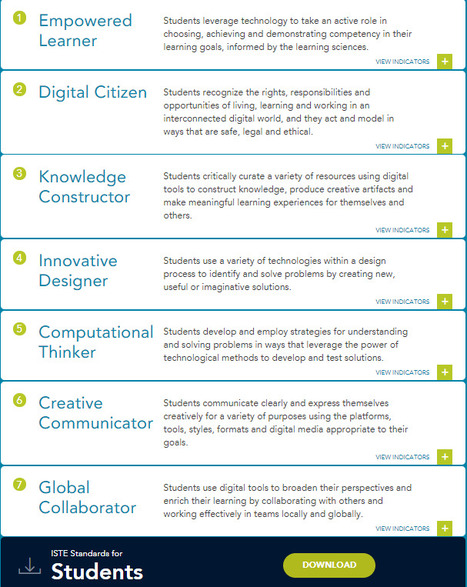
Promote future-ready learning with the ISTE Standards for Students

Today’s students must be prepared to thrive in a constantly evolving technological landscape. The ISTE Standards for Students are designed to empower student voice and ensure that learning is a student-driven process. Connect with other educators in the ISTE Standards Community and learn how to use the standards in the classroom with the ISTE Standards for Students ebook.


Learn more / En savoir plus / Mehr erfahren:


http://www.scoop.it/t/21st-century-learning-and-teaching/?&tag=ISTE


Gust MEES's insight:

Promote future-ready learning with the ISTE Standards for Students

Today’s students must be prepared to thrive in a constantly evolving technological landscape. The ISTE Standards for Students are designed to empower student voice and ensure that learning is a student-driven process. Connect with other educators in the ISTE Standards Community and learn how to use the standards in the classroom with the ISTE Standards for Students ebook.


Learn more / En savoir plus / Mehr erfahren:


http://www.scoop.it/t/21st-century-learning-and-teaching/?&tag=ISTE


No comment yet.
Scooped by Gust MEES
August 14, 2017 2:22 PM
Scoop.it!

The 9 features of a perfect content writing environment | #Curation #Blogs #Creativity #Collaboration #ICT 

The 9 features of a perfect content writing environment | #Curation #Blogs #Creativity #Collaboration #ICT  | 21st Century Learning and Teaching | Scoop.it
If you want to be a successful content marketer, you need to have the time, energy, and motivation to produce large volumes of high-quality work. Even the most naturally motivated writers may find themselves unable to move forward if they aren’t in an environment conducive to that production.

Ideally, you’ll be able to find, in general terms:

Inspiration: to stimulate your creativity and help you come up with more original ideas.


Focus: to keep you as productive as possible and minimize time waste.


Comfort: to reduce your stress levels (and risk of injury).
Collaboration: to keep you in close contact with other people.


Learn more / En savoir plus / Mehr erfahren:


http://www.scoop.it/t/21st-century-learning-and-teaching/?&tag=Content+curation


http://www.scoop.it/t/21st-century-learning-and-teaching/?&tag=Content+Curation+your+secret+weapon


http://www.scoop.it/t/21st-century-learning-and-teaching/?&tag=Marketing


https://gustmees.wordpress.com/2013/04/25/learn-every-day-a-bit-with-curation/


 https://gustmees.wordpress.com/?s=blogs


https://www.scoop.it/t/21st-century-learning-and-teaching/?&tag=Blogging


Gust MEES's insight:
If you want to be a successful content marketer, you need to have the time, energy, and motivation to produce large volumes of high-quality work. Even the most naturally motivated writers may find themselves unable to move forward if they aren’t in an environment conducive to that production.

Ideally, you’ll be able to find, in general terms:

Inspiration: to stimulate your creativity and help you come up with more original ideas.


Focus: to keep you as productive as possible and minimize time waste.


Comfort: to reduce your stress levels (and risk of injury).
Collaboration: to keep you in close contact with other people.


Learn more / En savoir plus / Mehr erfahren:


http://www.scoop.it/t/21st-century-learning-and-teaching/?&tag=Content+curation


http://www.scoop.it/t/21st-century-learning-and-teaching/?&tag=Content+Curation+your+secret+weapon


http://www.scoop.it/t/21st-century-learning-and-teaching/?&tag=Marketing


https://gustmees.wordpress.com/2013/04/25/learn-every-day-a-bit-with-curation/


 https://gustmees.wordpress.com/?s=blogs


https://www.scoop.it/t/21st-century-learning-and-teaching/?&tag=Blogging


Scooped by Gust MEES
August 14, 2017 1:59 PM
Scoop.it!

Interactive content: how to make it work for you | #Curation #Blogs #Marketing

Interactive content: how to make it work for you | #Curation #Blogs #Marketing | 21st Century Learning and Teaching | Scoop.it
1. Choose from the best
Interactive takes some investment and time to create – especially when you’re new at it. So increase your chances of success by choosing content that’s already doing great, and make that interactive.

You don’t need an exhaustive list here, just figure out what your 3-5 best-performing pieces of content are.


Learn more / En savoir plus / Mehr erfahren:


http://www.scoop.it/t/21st-century-learning-and-teaching/?&tag=Content+curation


http://www.scoop.it/t/21st-century-learning-and-teaching/?&tag=Content+Curation+your+secret+weapon


http://www.scoop.it/t/21st-century-learning-and-teaching/?&tag=Marketing


https://gustmees.wordpress.com/2013/04/25/learn-every-day-a-bit-with-curation/


Gust MEES's insight:
1. Choose from the best
Interactive takes some investment and time to create – especially when you’re new at it. So increase your chances of success by choosing content that’s already doing great, and make that interactive.

You don’t need an exhaustive list here, just figure out what your 3-5 best-performing pieces of content are.


Learn more / En savoir plus / Mehr erfahren:


http://www.scoop.it/t/21st-century-learning-and-teaching/?&tag=Content+curation


http://www.scoop.it/t/21st-century-learning-and-teaching/?&tag=Content+Curation+your+secret+weapon


http://www.scoop.it/t/21st-century-learning-and-teaching/?&tag=Marketing


https://gustmees.wordpress.com/2013/04/25/learn-every-day-a-bit-with-curation/


No comment yet.
Scooped by Gust MEES
August 11, 2017 7:08 PM
Scoop.it!

What is Learning? | Center for Teaching & Learning | #ModernEDU #LEARNing2LEARN #PracTICE

What is Learning? | Center for Teaching & Learning | #ModernEDU #LEARNing2LEARN #PracTICE | 21st Century Learning and Teaching | Scoop.it
Before we dive into understanding the relevant science behind the learning process, let’s ground ourselves in a definition of learning that is drawn from research.


Learn more / En savoir plus / Mehr erfahren:


http://www.scoop.it/t/21st-century-learning-and-teaching/?&tag=modern-education


http://www.scoop.it/t/21st-century-learning-and-teaching/?&tag=Rise+of+the+Professional+Educator


Gust MEES's insight:
Before we dive into understanding the relevant science behind the learning process, let’s ground ourselves in a definition of learning that is drawn from research.


Learn more / En savoir plus / Mehr erfahren:


http://www.scoop.it/t/21st-century-learning-and-teaching/?&tag=modern-education


http://www.scoop.it/t/21st-century-learning-and-teaching/?&tag=Rise+of+the+Professional+Educator


No comment yet.
Scooped by Gust MEES
August 11, 2017 11:44 AM
Scoop.it!

A New Kind of Classroom: No Grades, No Failing, No Hurry | #ModernEDU #Coaching 

A New Kind of Classroom: No Grades, No Failing, No Hurry | #ModernEDU #Coaching  | 21st Century Learning and Teaching | Scoop.it

Mastery-based learning, also known as proficiency-based or competency-based learning, is taking hold across the country. Vermont and Maine have passed laws requiring school districts to phase in the system.


New Hampshire is adopting it, too, and piloting a statewide method of assessment that would replace most standardized tests. Ten school districts in Illinois, including Chicago’s, are testing the approach. In 2015, the Idaho State Legislature approved 19 incubator programs to explore the practice.

Learn more / En savoir plus / Mehr erfahren:


http://www.scoop.it/t/21st-century-learning-and-teaching/?&tag=modern-education


Gust MEES's insight:

Mastery-based learning, also known as proficiency-based or competency-based learning, is taking hold across the country. Vermont and Maine have passed laws requiring school districts to phase in the system.


New Hampshire is adopting it, too, and piloting a statewide method of assessment that would replace most standardized tests. Ten school districts in Illinois, including Chicago’s, are testing the approach. In 2015, the Idaho State Legislature approved 19 incubator programs to explore the practice.

Learn more / En savoir plus / Mehr erfahren:


http://www.scoop.it/t/21st-century-learning-and-teaching/?&tag=modern-education


No comment yet.