


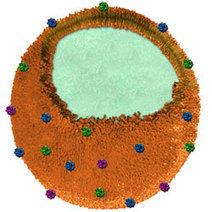
A tiny sponge in the boodstream could stop poisons from bacterial infections and snakes -- and might solve the problem of antibiotic resistance.

 Your new post is loading...
 Your new post is loading...
Your new post is loading...
 Scoop.it!
A tiny sponge in the boodstream could stop poisons from bacterial infections and snakes -- and might solve the problem of antibiotic resistance. 
No comment yet.
Sign up to comment
Scoop.it!
Un étudiant de 16 ans de Calgary au Canada a reçu mardi un prix pour ses recherches sur une thérapie utilisant des nano-particules d'or qui, injectées à un cancéreux et chauffées, tuent les cellules malades, a annoncé le laboratoire français...
Gust MEES's insight:
L'un des problèmes réduisant l'efficacité de la photothermie dans la lutte contre les tumeurs est la défense de ces dernières, qui produisent des «protéines du stress» pour se protéger contre la chaleur.
Scoop.it!
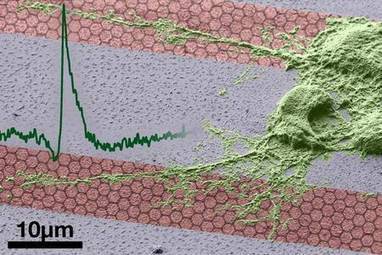
La bioélectronique du futur pourrait bien reposer sur l’utilisation de transistors à effet de champ fabriqués avec du graphène.
Gust MEES's insight:
Les biophysiciens se proposent maintenant de réaliser des blocs de 1.000 SGFET au graphène, ce qui permettrait la réalisation d’implants rétiniens. Il ne devrait pas y avoir d’obstacle technologique à la réalisation de tels systèmes, mais il leur reste à montrer qu’en plus de permettre la survie des neurones, ils n’endommagent pas les tissus nerveux.
Scoop.it!
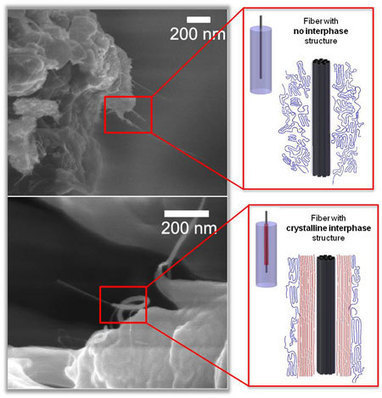
Most flexible polymers are inherently flimsy. When you look at their micro-structures it's easy to see why: They look like piles of entangled spaghetti strands.
Scoop.it!
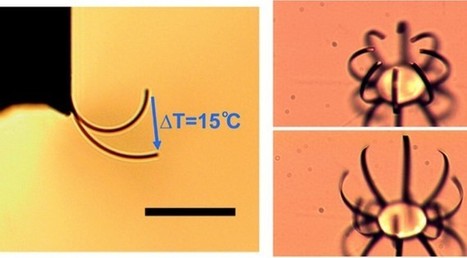
Nanotechnology has promised us a fantastic world where miniature factories would build devices atom by atom. A recent report describes a new kind of microactuator made from vanadium oxide.
Scoop.it!

Nanophotonics and the Future of Tech | by Caroline Perry...
Read more, very interesting...: http://seas.harvard.edu/topics_2012/nanophotonics
Scoop.it!

(Phys.org)—In order to build the next generation of nuclear reactors, materials scientists are trying to unlock the secrets of certain materials that are radiation-damage tolerant.
Read more, very interesting...: http://phys.org/news/2012-11-nano-insights-nuclear-reactors-self-healing.html
Scoop.it!

From
phys

(Phys.org)—At its heart, photovoltaics research is about finding materials with specific properties that make them good at absorbing sunlight and converting it into electricity.
Read more, very interesting...: http://phys.org/news/2012-11-two-dimensional-semiconductor-ideal-band-gap.html
Scoop.it!

From
phys
(Phys.org)—Stanford University scientists have built the first solar cell made entirely of carbon, a promising alternative to the expensive materials used in photovoltaic devices today.
Read more, very interesting...: http://phys.org/news/2012-10-all-carbon-solar-cell.html
Scoop.it!
From
phys
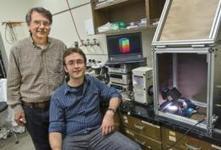
A technology that would enable low-cost, high efficiency solar cells to be made from virtually any semiconductor material has been developed by researchers with the U.S. Department of Energy (DOE)'s Lawrence Berkeley National Laboratory (Berkeley Lab) and the University of California (UC) Berkeley.
This technology opens the door to the use of plentiful, relatively inexpensive semiconductors, such as the promising metal oxides, sulfides and phosphides, that have been considered unsuitable for solar cells because it is so difficult to taylor their properties by chemical means.
Read more at: http://phys.org/news/2012-07-photovoltaics-semiconductor.html#jCp
Scoop.it!
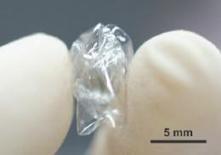
(PhysOrg.com) -- Thanks to the flexible yet robust properties of carbon nanotubes, researchers have previously fabricated transistors that can be rolled, folded, and stretched.
Scoop.it!

(PhysOrg.com) -- What happens when living cells take up nanoparticles, those tiny entities that could offer new ways of delivering drugs into the body?
|
Scoop.it!
What you need to know about nanotechnology, check them and wonder...
Gust MEES's insight:
What you need to know about nanotechnology, check them and wonder...
Check also:
- http://www.scoop.it/t/21st-century-innovative-technologies-and-developments?tag=Nano
Scoop.it!

Scientists are using a novel fabrication process to create ultra-efficient solar energy rectennas capable of harvesting more than 70 percent of the sun's electromagnetic radiation and simultaneously converting it into usable electric power.
===> "The solar power conversion device under development by this collaboration of two universities and an industry subcontractor has the potential to revolutionize green solar power technology by increasing efficiencies, reducing costs, and providing new economic opportunities," Zimmerman says. <===
Gust MEES's insight:
===> "The solar power conversion device under development by this collaboration of two universities and an industry subcontractor has the potential to revolutionize green solar power technology by increasing efficiencies, reducing costs, and providing new economic opportunities," Zimmerman says. <=== Check also: - http://www.scoop.it/t/21st-century-innovative-technologies-and-developments?tag=Nano
Scoop.it!
Researchers have developed a nanoparticle paste which can be injected into the defect and results in improved healing. The trick: the researchers have combined synthetic calcium phosphate with DNA.
Gust MEES's insight:
Chemists develop a nanopaste to repair bone defects

Gust MEES's curator insight,
February 20, 2013 9:43 AM
The UDE researchers expect that the paste will have a long-lasting effect since the nanoparticles are released successively and thus continuously stimulate the surrounding cells. They have demonstrated that the paste works in three different cell types. Further tests now have to be conducted. Epple and his co-researchers hope that “our development will be used several years from now in the field of traumatology and in the treatment of osteoporosis.”
Scoop.it!
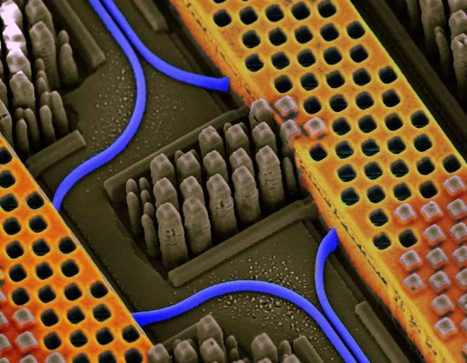
Relier des connexions optiques ultrarapides à des processeurs ou des mémoires classiquement électroniques : c'est une voie de recherche activement explorée.
Scoop.it!

(Phys.org)—Portable, accurate, and highly sensitive devices that sniff out vapors from explosives and other substances could become as commonplace as smoke detectors in public places, thanks to researchers at University of California, Santa Barbara.
Read more, very interesting...: http://phys.org/news/2012-11-nanotech-device-mimics-dog-nose.html
Scoop.it!
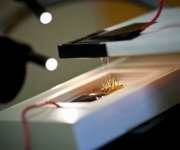
Nanofibers have a dizzying range of possible applications, but they’ve been prohibitively expensive to make. MIT researchers hope to change that.
Read more, very interesting...: http://web.mit.edu/newsoffice/2012/making-nanospinning-practical-1120.html
Scoop.it!
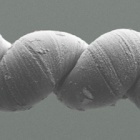
Ein verdrillter Faden, der sich schnell auf- und abwickelt oder sich zusammenzieht und ausdehnt, soll einen leistungsfähigen und vielseitigen Antrieb ergeben.
Mehr erfahren, sehr interessant...: http://www.golem.de/news/wissenschaft-kuenstliche-muskeln-aus-nanogarn-1211-95757.html
Scoop.it!
From
phys
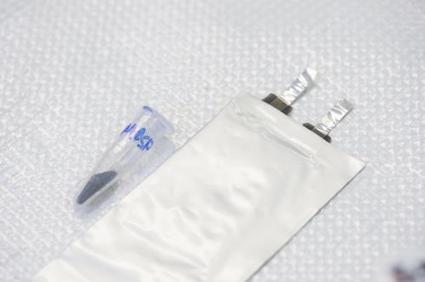
(Phys.org)—Researchers at Rice University have refined silicon-based lithium-ion technology by literally crushing their previous work to make a high-capacity, long-lived and low-cost anode material with serious commercial potential for rechargeable...
Read more, very interesting...: http://phys.org/news/2012-11-boost-silicon-based-batteries.html
Scoop.it!

(Phys.org)—A group of chemists from China, Japan and Korea have succeeded in creating nanotubes that can be made to expand and contract in response to warm or cold water.
Read more, very interesting...: http://phys.org/news/2012-09-chemists-nanotube.html
Scoop.it!
From
phys
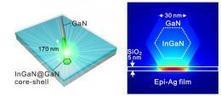
Physicists at The University of Texas at Austin, in collaboration with colleagues in Taiwan and China, have developed the world's smallest semiconductor laser, a breakthrough for emerging photonic technology with applications from computing to medicine.
Read more at: http://phys.org/news/2012-07-physicists-world-smallest-semiconductor-laser.html#jCp
Scoop.it!
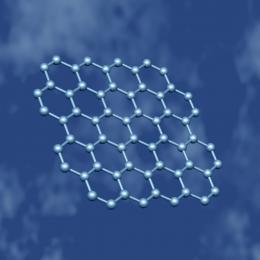
Graphene is one of the wonders of the science world, with the potential to create foldaway mobile phones, wallpaper-thin lighting panels and the next generation of aircraft.
Scoop.it!
![Maximum Micro Tech: Three New Technologies Explained [Science] | 21st Century Innovative Technologies and Developments as also discoveries, curiosity ( insolite)... | Scoop.it](https://img.scoop.it/Cy-S3VLqyLwZSOQBqInafzl72eJkfbmt4t8yenImKBVvK0kTmF0xjctABnaLJIm9)
Some of the biggest breakthroughs in future tech revolve around some of the smallest materials on Earth. Even calling these technologies "micro" is magnitudes of measure larger than their actual tiny sizes.
From the nano-scaled heat transfer of Nanowick Cooling down to the single atomic-level of Graphene and Quantum Computing, our white papers will help you wrap your head around the maximum potential of these miniscule technologies.
|





Check also:
- http://www.scoop.it/t/21st-century-innovative-technologies-and-developments?tag=Nano