Earlier this year Google introduced the AIY voice project, which allowed makers to turn a Raspberry Pi into a voice-controlled assistant, using the Google Assistant SDK.
The company has now launched the AIY (AI yourself) Vision Kit that lets you turn Raspberry Pi equipment into an image-recognition device. The kit is powered by Google's TensorFlow machine-learning models and will soon gain an accompanying Android app for controlling the device.
According to Google, Vision Kit features "on-device neural network acceleration", allowing a Raspberry Pi-based box to do computer vision without processing in the cloud. The AIY Voice Kit relies on the cloud for natural-language processing.
As with the AIY Voice Kit, makers will need to provide their own Raspberry Pi Zero W, a Raspberry Pi camera, a 4GB SD card, and power supply. The Vision Kit itself includes the VisionBonnet accessory board, cables, the cardboard box and frame, lens equipment, and a privacy LED to tell others when the camera is on.
The VisionBonnet board was developed by Google and is powered by Intel's Movidius MA2450 vision processing chip. This chip is the secret sauce of the Vision Kit.
There's always a blue sky technology waiting in the wings, and for enterprise computing, quantum computing takes that role. With Satya Nadella convening a panel of Microsoft's best physicists at the end of his Ignite conference keynote, it's fair time to ask, what will this mean to the enterprise and how long will the adoption curve take?
There's always a blue sky technology waiting in the wings, and for enterprise computing, quantum computing takes that role. With Satya Nadella convening a panel of Microsoft's best physicists at the end of his Ignite conference keynote, it's fair time to ask, what will this mean to the enterprise and how long will the adoption curve take?
Seit Jahren warnt Elon Musk vor den Gefahren Künstlicher Intelligenz. Nun nutzte er eine große Bühne vor Gouverneuren der USA, um seine drastische Einschätzung zu wiederholen: KI sei eine fundamentale Gefahr für unsere Zivilisation, Gesetze seien nötig.
Mit drastischen Worten hat der US-Unternehmer Elon Musk erneut vor den Gefahren unregulierter Forschung an Künstlicher Intelligenz gewarnt. Vor der National Governors Association (NGA), in der die Gouverneure der US-Bundestaaten organisiert sind, sagte er, KI stelle seiner Meinung nach die derzeit größte Gefahr für unsere Zivilisation dar. Menschen hätten das bislang nicht verstanden, ist er überzeugt. Er warne zwar beständig vor den Gefahren, aber solange keine "Roboter durch die Straßen laufen und Menschen umbringen", wüssten seine Zuhörer immer nicht, wie sie reagieren sollen.
Dabei sollten wir uns jetzt schon Sorgen machen und Gesetzgeber sollten die Arbeit der Forscher regulieren. Die Wirtschaft könne das nicht, da KI ein Wettbewerbsvorteil bedeuten könne, den sich keiner entgehen lassen könne.
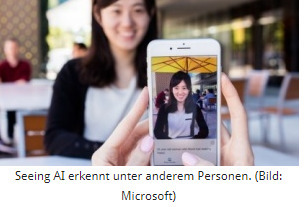
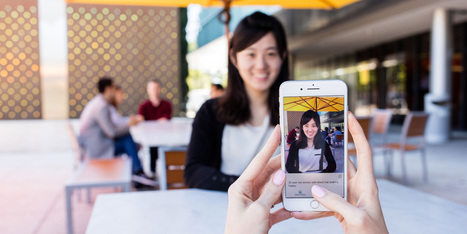
Mit Microsofts App Seeing AI sollen es Blinde im Alltag einfacher haben: Die App erkennt unter anderem Text, Objekte und sogar Szenen und liest das Gesehene vor. Dafür muss der Nutzer lediglich ein Foto schießen.
Eine neue, experimentelle App von Microsoft soll es Blinden ermöglichen, ihre Umgebung besser wahrzunehmen. Seeing AI erkennt auf einem Foto, das der Nutzer von seiner Umgebung macht, Objekte, Personen, Text oder auch Bargeld.
Apple has acquired artificial intelligence startup Lattice Data for $200 million, according to a report in TechCrunch.
The deal closed a few weeks ago and roughly 20 engineers from Lattice have joined Apple, according to the report, which cited an anonymous source.
Lattice's technology focuses on "dark data," the mass of unorganized information stored in computer networks that is not in a proper format for companies to analyze or tap into. Lattice uses AI to make sense of all that data.
OpenAI, the artificial intelligence research non-profit backed by Tesla's Elon Musk, Y Combinator's Sam Altman, a Donald Trump fan called Peter Thiel, and..
OpenAI, the artificial intelligence research non-profit backed by Tesla's Elon Musk, Y Combinator's Sam Altman, a Donald Trump fan called Peter Thiel, and..
Wenn Technik sich selbst absichert: Forscher von Googles Deep-Learning-Projekt "Google Brain" haben ihre AI nun eigenständig neue Verschlüsselungsverfahren entwickeln lassen.
Wenn Technik sich selbst absichert: Forscher von Googles Deep-Learning-Projekt "Google Brain" haben ihre AI nun eigenständig neue Verschlüsselungsverfahren entwickeln lassen.
On Wednesday, the world learned of a new industry association called the Partnership on Artificial Intelligence, and it includes some of the biggest tech companies in the world. IBM, Google, Facebook, Microsoft, and Amazon have all signed on as marquis members, though the group hopes to expand even further over time. The goal is to create a body that can provide a platform for discussions among stakeholders and work out best practices for the artificial intelligence industry. Not directly mentioned, but easily seen on the horizon, is its place as the primary force lobbying for smarter legislation on AI and related future-tech issues.
Best practices can be boring or important, depending on the context, and in this case they are very, very important. Best practices could provide a framework for accurate safety testing, which will be important as researchers ask people to put more and more of their lives in the hands of AI and AI-driven robots. This sort of effort might also someday work toward a list of inherently dangerous and illegitimate actions or AI “thought” processes. One of its core goals is to produce thought leadership on the ethics of AI development.
DeepMind, la filiale de Google spécialisée en intelligence artificielle, a développé un programme de synthèse vocale qui reproduit la parole humaine avec un naturel inédit. Baptisé WaveNet
DeepMind, la filiale de Google spécialisée en intelligence artificielle, a développé un programme de synthèse vocale qui reproduit la parole humaine avec un naturel inédit. Baptisé WaveNet
Apple has bought Turi, a Seattle-based machine learning startup.
The purchase price was "around" $200 million, Geekwire reports, citing a source close to the deal.
Turi was founded by a University of Washington professor, and it specialized in providing tools and frameworks for other developers to incorporate machine learning and artificial intelligence into their apps.
According to a report by the Wall Street Journal, Apple has acquired Emotient, an artificial intelligence startup. The company confirmed the move to the WSJ. The San Diego-based company was founded in 2012 and has raised $8M from investors like Intel Capital and Seth Neiman, and had been tinkering around with products like Google Glass and other wearables. Most recently the company was working with advertisers on how to bake in reaction analysis into their advertising according to the WSJ.
According to a report by the Wall Street Journal, Apple has acquired Emotient, an artificial intelligence startup. The company confirmed the move to the WSJ. The San Diego-based company was founded in 2012 and has raised $8M from investors like Intel Capital and Seth Neiman, and had been tinkering around with products like Google Glass and other wearables. Most recently the company was working with advertisers on how to bake in reaction analysis into their advertising according to the WSJ.
Google is increasingly focusing on neural networks and artificial intelligence to solve problems in search, image processing, and other areas of computing. It’s also doing what it can to foster interest in artificial intelligence among the developer and DIY communities with initiatives like “AIY Projects,” which stands for artificial intelligence yourself. Google has announced a new AIY hardware project to help you experiment with computer vision and object recognition.
This is the second release as part of AIY Projects. The first one was the AIY Voice Kit, which was based on a project from a Raspberry Pi enthusiast magazine called MagPi. The new AIY Vision Kit has a very similar vibe. It too is based on a Raspberry Pi (See on Amazon) and comes with a simple cardboard enclosure. It certainly doesn’t look fancy, but it can do some very fancy things. Although, the $45 kit doesn’t come with everything you need.
The AIY Vision Kit includes a cardboard enclosure, a button, a speaker, a pair of camera lenses, the AI board, and various bits of wire and connectors. You need to add a Raspberry Pi Zero, a Raspberry Pi camera, an SD card, and a power supply. The Raspberry Pi camera is the most expensive of those components at around $30. The Zero itself is only $5, but it doesn’t need a lot of power. All the cool computer vision features are controlled by the included VisionBonnet board.
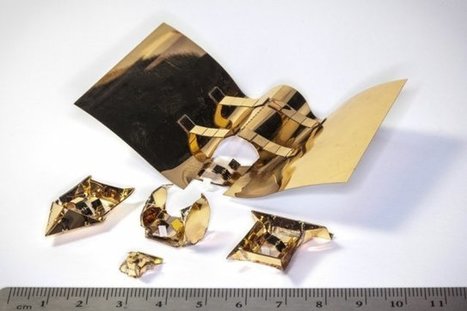
Researchers from MIT’s Computer Science and Artificial Intelligence Laboratory (CSAIL) have developed a shape-shifting robot that’s something of a superhero: It can transform itself with different “outfits” that allow it to perform different tasks.
Researchers from MIT’s Computer Science and Artificial Intelligence Laboratory (CSAIL) have developed a shape-shifting robot that’s something of a superhero: It can transform itself with different “outfits” that allow it to perform different tasks.
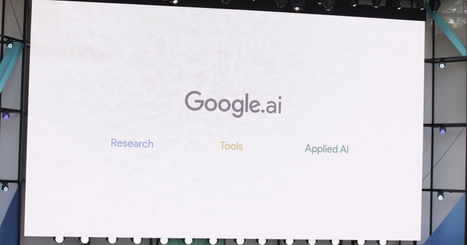
On the stage of Google I/O, CEO Sundar Pichai announced Google.ai, a new initiative to democratize the benefits of the latest in machine learning research. Google.ai will serve as a center of Google’s AI efforts — including research, tools and applied AI.
The new site will host research from Google and its Brain Team. It also allows anyone to quickly access fun experiments that highlight the company’s progress in the field. This includes AutoDraw, that makes it possible for unskilled artists to put their ideas on paper, Duet that can play along with piano players and Quick, Draw!, a game where an AI tries to guess your drawings. A selection of videos and posts about Google’s AI-first efforts are also co-located.
FEI-FEI LI IS a big deal in the world of AI. As the director of the Artificial Intelligence and Vision labs at Stanford University, she oversaw the creation of ImageNet, a vast database of images designed to accelerate the development of AI that can “see.” And, well, it worked, helping to drive the creation of deep learning systems that can recognize objects, animals, people, and even entire scenes in photos—technology that has become commonplace on the world’s biggest photo-sharing sites. Now, Fei-Fei will help run a brand new AI group inside Google, a move that reflects just how aggressively the world’s biggest tech companies are remaking themselves around this breed of artificial intelligence.
Facebook Manages to Squeeze an AI Into Its Mobile App Alongside a former Stanford researcher—Jia Li, who more recently ran research for the social networking service Snapchat—the China-born Fei-Fei will lead a team inside Google’s cloud computing operation, building online services that any coder or company can use to build their own AI. This new Cloud Machine Learning Group is the latest example of AI not only re-shaping the technology that Google uses, but also changing how the company organizes and operates its business.
Towards this end, researchers at MIT are investigating ways of making artificial neural networks more transparent in their decision-making. As they stand now, artificial neural networks are a wonderful tool for discerning patterns and making predictions. But they also have the drawback of not being terribly transparent.
The beauty of an artificial neural network is its ability to sift through heaps of data and find structure within the noise. This is not dissimilar from the way we might look up at clouds and see faces amidst their patterns.
And just as we might have trouble explaining to someone why a face jumped out at us from the wispy trails of a cirrus cloud formation, artificial neural networks are not explicitly designed to reveal what particular elements of the data prompted them to decide a certain pattern was at work and make predictions based upon it.
In Barcelona gibt Eric Schmidt Googles neue Marschrichtung vor: "Mobile first" heißt es nun für den Suchmaschinenkonzern, der mit dem Netz groß geworden ist. Das war im Februar 2010 auf dem Mobile World Congress. Der Smartphone-Markt war im Umbruch, HSPA+ der letzte Schrei. Am Abend zuvor hatte Steve Ballmer Microsofts neues Windows Phone vorgestellt und Googles eigenes Mobilbetriebssystem Android sollte wenig später erstmals die 10-Prozent-Hürde bei den Marktanteilen nehmen.
Das Zeitalter des Smartphones geht zu Ende, ist Pichai überzeugt. Es wird künftig nur eins von verschiedenen Mitteln sein, mit künstlicher Intelligenz zu kommunizieren. Nach "Mobile first" stehen wir am Übergang in die Ära der künstlichen Intelligenz, sagt der CEO. Google hat seine künstliche Intelligenz in den vergangenen Jahren weiterentwickelt und hält sie nun für reif genug, auf den Menschen losgelassen zu werden.
Für 200 Millionen US-Dollar hat Apple offenbar das Startup Turi aus Seattle gekauft. Es hat sich auf künstliche Intelligenz und Maschinenlernen spezialisiert.
Für 200 Millionen US-Dollar hat Apple offenbar das Startup Turi aus Seattle gekauft. Es hat sich auf künstliche Intelligenz und Maschinenlernen spezialisiert.
To get content containing either thought or leadership enter:
To get content containing both thought and leadership enter:
To get content containing the expression thought leadership enter:
You can enter several keywords and you can refine them whenever you want. Our suggestion engine uses more signals but entering a few keywords here will rapidly give you great content to curate.


 Your new post is loading...




















Earlier this year Google introduced the AIY voice project, which allowed makers to turn a Raspberry Pi into a voice-controlled assistant, using the Google Assistant SDK.
The company has now launched the AIY (AI yourself) Vision Kit that lets you turn Raspberry Pi equipment into an image-recognition device. The kit is powered by Google's TensorFlow machine-learning models and will soon gain an accompanying Android app for controlling the device.
According to Google, Vision Kit features "on-device neural network acceleration", allowing a Raspberry Pi-based box to do computer vision without processing in the cloud. The AIY Voice Kit relies on the cloud for natural-language processing.
As with the AIY Voice Kit, makers will need to provide their own Raspberry Pi Zero W, a Raspberry Pi camera, a 4GB SD card, and power supply. The Vision Kit itself includes the VisionBonnet accessory board, cables, the cardboard box and frame, lens equipment, and a privacy LED to tell others when the camera is on.
The VisionBonnet board was developed by Google and is powered by Intel's Movidius MA2450 vision processing chip. This chip is the secret sauce of the Vision Kit.
Learn more / En savoir plus / Mehr erfahren:
https://www.scoop.it/t/21st-century-innovative-technologies-and-developments/?&tag=Raspberry+Pi
https://www.scoop.it/t/21st-century-innovative-technologies-and-developments/?&tag=AI