By Neal Lineback and Mandy Lineback Gritzner, Geography in the NewsTM and Maps.com KEYSTONE PIPELINE AND CANADIAN TAR SANDS CONTROVERSY Supporters and protesters continue to lobby both the White House and U.S.
Via Neal G. Lineback
Share ideas that matter on the social web and experience
the benefits of curating the world's best content.
I don't have a Facebook, a Twitter or a LinkedIn account
Your new post is loading...
By Neal Lineback and Mandy Lineback Gritzner, Geography in the NewsTM and Maps.com KEYSTONE PIPELINE AND CANADIAN TAR SANDS CONTROVERSY Supporters and protesters continue to lobby both the White House and U.S. Via Neal G. Lineback Delete the scoop?
Are you sure you want to delete this scoop?
Yes
No
New homes dominate the market across the Sunbelt, but you can also find older homes with historical features and distinct architectural styles in most major metros -- from stained glass windows in homes built before the 1900s to snail showers found in homes from the 2000s.
Seth Dixon's insight:
This interactive feature shows some intriguing historical insight into the United States metropolitan housing markets and this article associated with the interactive analyzes the growth trends in particular cities.
Questions to Ponder: how is this real estate interactive a portal into the historical economic geography of U.S. cities? What explains the regional patterns? New England? Texas? Tags: housing, urban, unit 7 cities.
Meridith Hembree Berry's curator insight,
May 7, 10:41 AM
This interactive map is quite fascinating to view the settlement patterns. Drop in the rivers. Consider the movement to the Sunbelt. This would make for a really interesting essay to speculate (and support) the reasons people move to specific areas. Delete the scoop?
Are you sure you want to delete this scoop?
Yes
No
From
www.bbc.co.uk
-
April 23, 4:38 PM
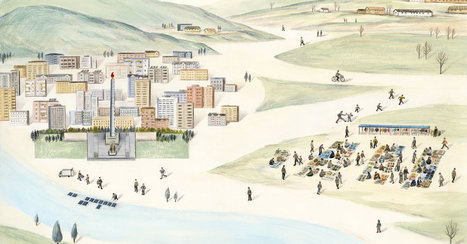
Laxmi's story of being kidnapped and trafficked in Nepal is not an isolated case but, as this graphical account shows, things are not always what they seem.
Seth Dixon's insight:
Teaching about human trafficking and child slavery can be very disconcerting and uncomfortable. How much of the details regarding these horrific situations is age-appropriate and suitable for the classroom? The BBC is reporting on events with sensitive stories to both give a human face to the story, while protecting the identity of under-aged victims (to read about the production of this comic, read Drawing the News.) I encourage you to use your own discretion, but I find this comicbook format an accessible, informative and tasteful way to teach about human trafficking in South Asia to minors. It is a powerful way to teach about some hard (but important) aspects of globalization and economics. As geographer Shaunna Barnhart says concerning this comic, "It moves from trafficking to child labor to pressures for migration for wage labor and the resulting injustices that occur. There's differential access to education, gender inequality, land, jobs, and monetary resources that leads to inter- and intra-country trafficking of the vulnerable. In the search for improved quality of life, individuals become part of a global flow of indentured servitude which serves to exploit their vulnerabilities and exacerbate inequalities and injustice. Nepali children 'paid' in food and cell phones that play Hindi music in 'exchange' for work in textile factories - cell phones that are themselves a nexus of global resource chains and textiles which in turn enter a global market - colliding at the site of child labor which remains largely hidden and ignored by those in the Global North who may benefit from such labor." Tags: Nepal, labor, industry, economic, poverty, globalization, India.
Ssekyewa Charles's curator insight,
April 24, 9:03 AM
Where is Human Rights Watch? Human trafficing is a crime to humanity!! Delete the scoop?
Are you sure you want to delete this scoop?
Yes
No
From
rt.com
-
April 4, 1:14 PM
Lawmakers in Vermont are looking to regulate food labels so customers can know which products are made from genetically modified crops, but agricultural giants Monsanto say they will sue if the state follows through.
Seth Dixon's insight:
Questions to ponder: Why is Vermont the first state to make some headway in producing this type of legislation? Will other states follow suit? What would the economic impacts be if all places required labels on products that contain genetically modified organisms? How would that change the agricultural industry?
Tags: GMOs, food, agriculture, agribusiness.
Mary Burke's comment,
April 12, 4:21 PM
If this labeling ever gets passed, it might make people think a little more about what they're eating. They might not want to eat genetically modified organisms. That would mean the agrigiant might lose some control over the industry. I don't have much hope of this happening. I try to buy my food from vendors that say they don't use gmo's. I try to grow some veggies in the summer. I know this isn't a guarantee that I'm not eating gmo's but I realize there are some over which we have no control.
Delete the scoop?
Are you sure you want to delete this scoop?
Yes
No
If Pyongyang is as bent on war as it wants us to believe, why is it keeping the inter-Korean Kaesong industrial complex open?
Seth Dixon's insight:
News reports coming out of North Korea are grim and threatening right now. However, this Washington Post article argues that it might be all for show. The Kaesong Industrial Complex was opened in 2002 as a gesture of peace. Located just across the northern side of the border, it is staffed by South and North Koreans (South Korea get super cheap labor, North Korea gets an infusion of currency, both get positive PR). The Kaesong Industrial Complex continues to operate with the permission of the North Korean government. Were that to ever change and North Korea shut down this joint venture, THEN we'll know that they are serious. Watch this short video for an overview of the geopolitical situation on the Korean peninsula as of March 2013. Tags: North Korea, war, labor, industry, economic, conflict, unit 6 industry. Delete the scoop?
Are you sure you want to delete this scoop?
Yes
No
From
www.npr.org
-
March 22, 11:24 AM
Thousands of workers have flooded into the town. But they're reluctant to call it home.
Seth Dixon's insight:
This oil boom is visible from space; it has created a real estate market where a one-bedroom apartment goes for $2100 a month (census map showing population increase -slide 4). Still, the overwhelmingly male population that works here is not willing to move their families with them and truly put down some roots. Some fear a potential "bust" on this economic prosperity and others don't see the amenities that encourage lasting settlement growth (schools, parks, cultural events, etc.). The city of Williston, North Dakota "feels like a frontier town" and will build a huge recreational center and other things to entice these temporary workers to become permanent residents. More than just jobs are needed to made a city attractive to potential migrants.
Delete the scoop?
Are you sure you want to delete this scoop?
Yes
No
From
www.youtube.com
-
March 4, 10:00 AM
Infographics on the distribution of wealth in America, highlighting both the inequality and the difference between our perception of inequality and the actua...
Seth Dixon's insight:
This video does have a political bent that may or may not reflect your views, but it nicely lays out data that graphically represents the economic differences that we see in the United States today. Our perception is as skewed as what is and what we think it should be. Delete the scoop?
Are you sure you want to delete this scoop?
Yes
No
Seth Dixon's insight:
Make your own conclusions...
Tony Hall's curator insight,
February 20, 11:44 PM
Really good series of infographics on unequal distribution of wealth in the world. Perfect for teaching IB Geography Disparities in Wealth topic. Delete the scoop?
Are you sure you want to delete this scoop?
Yes
No
The International Monetary Fund has censured Argentina for failing to supply accurate economic data, the first time the global crisis lender has taken such an action against a member.
chris tobin's comment,
February 21, 1:22 PM
The debt was paid with the IMF in 2006 but now the IMF will assist Argentina with data collection-their sovereign debt is indexed to inflation, and wonder what their international debt is
chris tobin's curator insight,
February 21, 1:37 PM
Perhaps Argentina's under-reported inflation percents is due to the fact that its sovereign debt is indexed to inflation and has deep international debt but the IMF will assist Argentina with data collection (since 2006 their debt was paid with the IMF)
Delete the scoop?
Are you sure you want to delete this scoop?
Yes
No
The current rise or durability of the economies of the Global South do not signal that economic geography does not matter, but that current investment has simply shifted.
Seth Dixon's insight:
In an era where globalization has rendered distances a minor barrier to diffusion, some have erroneously concluded that geography is no longer relevant to economic development and urban planning. Nothing could be farther from the truth, but that doesn't mean that the 'old rules' of space and place aren't be re-written. This is a nice article that discusses the continued importance of spatial thinking and geography for urban planning. Tags: urban, planning, economic, urbanism, globalization, unit 7 cities. Delete the scoop?
Are you sure you want to delete this scoop?
Yes
No
Of all the changes announced by the 2011 census, one of the most startling is the rapid change in the ethnic composition of London's population.
Seth Dixon's insight:
The fact the immigrants moving to the UK have flocked to London is not surprising (View a map of the census data). Immigration isn't the only component to this situation. White Britons are also leaving London in large number, prompting some to refer to this as "White Flight." Today, white Britons are no longer the majority population within London (but still the largest ethnic group). Some feel that this story has gone underreported and deserves more analysis. What elements of human geography should an observer of this situation use in their analysis?
Brittnie Helgerson's comment,
April 28, 11:15 AM
So when hearing “Changing Ethnic Patterns in London,” most people (myself included) thought that this was obviously due to a rise in immigration to the London area. It would seem to be obvious that most immigrants would flock to London in the first place because it is probably the most well know city in the U.K. However the fact there are other factors at play and that it is not just immigration that is changing the ethnic patterns surprised me at first.
It turns out that there are a lot of white people leaving London for outer regions where there is less diversity. Could it be that the influx of minorities is upsetting some of the white Britons’ sense of place? While it is possible that this is the case, it is also likely that they are leaving for other reasons as well. In the article, it discusses how “most diverse wards are urban and poor.” This could be a reason why many people are leaving; some white Britons could want something more rural and less busy. They could be leaving for neighborhoods with better school or different types of homes.
Conor McCloskey's comment,
April 30, 10:25 AM
The British-white percentage of the population in London is dropping. While this says a lot about the demographics of London it also says a lot about global migratory patterns. London is a international city, culturally and ethnically, it has many pull factors for many different kinds of people from all over the globe, with all different cultural backgrounds. These pull factors have translated into one big push factor for British-whites, however, as they move out of the city.
There are many different things that could explain these patterns. Racism, economic shifts or better opportunities else where, however one thing is for sure, the world is become more multi-cultural. With the movements of cultures comes displacement and resistance, tension doesn’t run short in these types of situations. As so many people move away from their homelands through out the world it will be interesting to see what begins to happen with geopolitical boundaries, will situations like Hungary be more common as people move away? Delete the scoop?
Are you sure you want to delete this scoop?
Yes
No
Americans like to buy jewelry and flowers all year, not just for Valentine’s Day. How much do they spend annually, and who would probably spend the most?
Seth Dixon's insight:
This is a fabulous set of maps that shows the value of GIS to assess the market feasiblity for any given commodity. On this Valentine's Day, it is especially interesting to map out the zip codes that purchase the most flowers, jewelry and diamonds. Delete the scoop?
Are you sure you want to delete this scoop?
Yes
No
From
www.npr.org
-
February 6, 3:10 PM
With the highest unemployment rate in the U.S. and a mountain of debt, the island is facing a declining population. But those who stay insist they're there for the long haul.
Seth Dixon's insight:
Many Puerto Ricans have left the island as economic struggles continue to mount. This podcast provides vivid examples of push and pull factors that lead to the individual choices of potential migrants (read the transcript or listen to the podcast). Tags: Puerto Rico, economic, migration, podcast. Delete the scoop?
Are you sure you want to delete this scoop?
Yes
No
|
Investigate for yourself the mechanisms of global trade
Seth Dixon's insight:
This more clearly shows the regional restructuring of the global economy than just about anything I've ever seen, especially manufacturing. The 8 largest and busiest ports in the world are all in East or Southeast Asia (and 11 of the top 13). A quick glance at the historical charts will show that most of these were relatively minor ports that have exploded in the last 20 years.
Tags: transportation, globalization, diffusion, East Asia, industry, economic.
Adrian Bahan (MNPS)'s curator insight,
May 11, 1:01 PM
I tried to pinpoint intermodal connections at ports and noted the proximity of ports to other waterside uses like beaches and private craft marinas. Ports are facinating places. Think about how containerization has impacted the built landscapes shown in these maps.
Magnus Gustafsson's curator insight,
May 12, 3:36 PM
I think this is perfect for my geographystudents this week. Worth to use in a study of global tradestructures. Delete the scoop?
Are you sure you want to delete this scoop?
Yes
No
From
www.npr.org
-
May 1, 10:21 AM
Oakland, Calif., was a hub of African-American life on the West Coast. Today, it's one of the most diverse cities in the country. How has that shift affected its culture?
Seth Dixon's insight:
The NPR blog Code Switch focuses on issues of race, culture and ethnicity. In this podcast they explore the changing demographics of Oakland due to gentrification and the cultural impact that it has had. In the 80s, African-Americans represented nearly half of Oakland's population, but today is now 34 percent white, 28 percent black, 25 percent Latino and 17 percent Asian. The music scene, night life and sense of communal identity has consequently shifted, and that causes some to yearn for what once was. Tags: neighborhood, gentrification, urban, place, culture, economic. Delete the scoop?
Are you sure you want to delete this scoop?
Yes
No
From
www.npr.org
-
April 10, 10:24 AM
"Germany and France spent decades at each others' throats. Now, bound by a common currency, they're working together to save the euro zone. It's a story that's begging for a musical number — which, as it happens, we have right here."
Seth Dixon's insight:
This playful song dramatizes the current E.U. financial crisis. This humourous highlights what the E.U. was designed to be, and showing the advantages and disadvantages of enhanced regional cooperation. This is certainly worth a listen. Tags: Europe, supranationalism, currency, economic.
Alejandro Restrepo's comment,
April 10, 12:28 PM
This is great. I painted the image in my head of these countries hanging out at a bar having this as a casual conversation. Cut your spending Greece is what China should be telling the US.
Alejandro Restrepo's comment,
April 10, 12:28 PM
This is great. I painted the image in my head of these countries hanging out at a bar having this as a casual conversation. Cut your spending Greece is what China should be telling the US.
Delete the scoop?
Are you sure you want to delete this scoop?
Yes
No
Seth Dixon's insight:
The Network of Alliances for Geography Education is sponsored by the National Geographic Society; these alliances are tremendous local resources. I am working with the Rhode Island Geography Education Alliance and hope that everyone in the United States and Canada can connect with your local alliance and support it. Click here to find your local Alliance. Delete the scoop?
Are you sure you want to delete this scoop?
Yes
No
Seth Dixon's insight:
Rhode Island is one of five states in which the number of people getting help from the Supplemental Nutrition Assistance Program (SNAP-formerly known as 'food stamps') has more than doubled since 2008. In 2012, 16 percent of its residents received aid from the program. Read the related article. The article details how Woonsocket's economy is impacted by these monthly fluctuations is disposable income. Why is Rhode Island one of that states with a doubling participation in this program? What other spatial patterns to you see?
Dias Vidia's curator insight,
April 2, 2:05 AM
http://redgage.com/photos/macb/postage-us-liberty-of-all-15-c.html Delete the scoop?
Are you sure you want to delete this scoop?
Yes
No
From
www.latimes.com
-
March 17, 4:37 PM
WASHINGTON -- With their economies and housing markets gaining strength, some of the nation's biggest boom-to-bust cities in the Sun Belt are starting to become magnets again, attracting a growing number of people primarily from the northern part... Delete the scoop?
Are you sure you want to delete this scoop?
Yes
No
"77 Photos of the mass production of the Earth's natural resources. In the picture above, a Tibetan villager works in a salt field. Salt has been the most common food preservative, especially for meat, for thousands of years." Tags: consumption, agriculture, resources, labor, industry, economic, unit 6 industry.
Seth Dixon's insight:
Coal, steel, gold, iron, copper, aluminum and oil are all incredibly important commodities. Agricultural products such as rice, cotton, corn, wheat and coffee all travel far beyond their area of origin. Where do these resources come from? How are they produced? This gallery of 77 pictures is a fantastic tour of the resources that are key cogs in the global economy. Delete the scoop?
Are you sure you want to delete this scoop?
Yes
No
From
www.npr.org
-
February 19, 2:30 PM
What would the perfect immigration system look like? We asked three economists to dream big.
Seth Dixon's insight:
This is an intriguing podcast focused on how to best manage national borders if the only goal were to strengthen the economy (they center the conversatri on the United States). These economists envision plans with more incentives to attract a labor force that is more highly-skilled is crucial to having a rational migration policy. How how you manage the borders if you were in charge? How would your plan strengthen the country? Delete the scoop?
Are you sure you want to delete this scoop?
Yes
No
Read the Transcript: http://to.pbs.org/b6sR86 The capital of the South Asian country Bangladesh, Dhaka, has a population that is booming. However, it stands ...
Seth Dixon's insight:
This is a great introduction to the demographic explosion of the slums within megacities. This is applicable to many themes within geography. Tags: Bangladesh, water, pollution, poverty, squatter, planning, density, South Asia, development, economic, megacities.
Lauren Jacquez's curator insight,
April 8, 9:00 PM
Another look at a growing megacity and its shantytowns.
Chris Magee's comment,
April 28, 3:40 PM
As Tony Hall says, this is a very sobering and educating video. This shows how much a population boom and high birth rate can create problems for a developing country. With all of the people there it is hard for enough jobs to be available and most are forced to work for pennies. The migration to Dhaka, about 4000 people a year, can create a huge issue for the city in the future as we have seen how extremely dense populations can effect a city.
These changes will shape the country for many years to come. The political geography will have to adapt to the booming population. How will new policies be put into effect to handle this growing population? The population will become more diverse and less unified as it is taking in new people from many neighboring cities.
Peter Siner's comment,
April 30, 5:37 PM
A city that is home to 15 million people… this is a scary thought especially since the idea of massively overpopulated cities is a new trend around the globe. The megacities help house those who cannot live in the rural areas surrounding them. It also shows how growing populations can have quite negative effects. While the city is growing quickly there is also widespread poverty and the city is riddled with slums. High poverty rate generally converts to high crime rate. The impacts of overpopulation have lasting effects on not only the land use but also consumption rates. The example we are given is a small family in which their income was based off of a farm that was washed away, now they are forced to move to Dhaka.
Delete the scoop?
Are you sure you want to delete this scoop?
Yes
No
Elevated levels of nitrogen dioxide pop out over certain shipping lanes in observations made by the Aura satellite between 2005-2012. The signal was the strongest over the northeastern Indian Ocean.
Seth Dixon's insight:
David Collet's curator insight,
February 19, 10:37 PM
The Straits of Malacca show up as a highly affected band - and this from traffic that is not even bound for, or related to, Malaysia. Delete the scoop?
Are you sure you want to delete this scoop?
Yes
No
Delete the scoop?
Are you sure you want to delete this scoop?
Yes
No
Income maps of every neighborhood in the U.S. See wealth and poverty in places like New York, Los Angeles, Chicago, Philadelphia, San Francisco, Miami, and more.
Seth Dixon's insight:
This is the most user-friendly website I've seen to map economic census data. This maps the average household income data on top of a Google Maps basemap that can be centered on any place in the United States. This is a great resource to share with students of just about any age. Tags: statistics, census, GIS, mapping, K12.
Alejandro Restrepo's curator insight,
February 13, 6:22 PM
Very interesting aspect of our demographics here in Central Falls. Any one with an interest in demographics and the make up our city should take a look a this and compare it to other neighborhoods in Rhode Island. Knowledge is power. Empower yourself!
Allison Anthony's curator insight,
February 16, 10:25 AM
Compare the neighborhoods in and around your area. What trends do you see? Any surprises? Delete the scoop?
Are you sure you want to delete this scoop?
Yes
No
|


This is a Geography in the News dealing with the background of the Keystone pipeline proposal and Canadian tar sands.