

Woman and Sustainable Development Goals - Download as a PDF or view online for free


|
Scooped by
KRII-KROTOASA RESEARCH-INTENSIVE INSTITUTE
onto Women's Economic Empowerment, Gender Equality, Women in Politics, Indigenous Women and Children December 2, 2024 2:33 PM
|
 Scoop.it!
Woman and Sustainable Development Goals - Download as a PDF or view online for free

 Your new post is loading...
Scoop.it!
WOM/1753 7 August 2009 Women's Anti-Discrimination Committee Concludes Forty-Fourth Session; Adopts Provisional Agenda for Next Session in Geneva 7 August 2009 General AssemblyWOM/1753 Department of Public Information • News and Media Division • New York
Scoop.it!
WOM/1747 30 July 2009 Timor-Leste, in First Report on Compliance with Women's Anti-Discrimination Convention, Pledges to Include All Citizens Equally in Building Future 30 July 2009 General AssemblyWOM/1747 Department of Public Information • News and Media Division • New York
Scoop.it!
WOM/1745 27 July 2009 Switzerland, as Home to International Human Rights Law, Should Act as Model for Women's Rights, Advancement, Says Women's Anti-Discrimination Committee 27 July 2009 General AssemblyWOM/1745 Department of Public Information • News and Media Division • New York
Scoop.it!
WOM/1743 24 July 2009 Lao People’s Democratic Republic Boasts New Legislation, Machinery to Improve Women’s Lot, but Expert Committee Faults Rape, Domestic Violence Policies 24 July 2009 General AssemblyWOM/1743 Department of Public Information • News and Media Division • New York
Scoop.it!
WOM/1741 23 July 2009 Bhutan Harmonizes Spectrum of Domestic Laws with Women’s Anti-Discrimination Convention, Creates First Ever Scheme for Gender Equality, Expert Body Hears 23 July 2009 General AssemblyWOM/1741 Department of Public Information • News and Media Division • New York
Scoop.it!
|
|
|
Scooped by
KRII-KROTOASA RESEARCH-INTENSIVE INSTITUTE
December 4, 2024 8:37 PM
|
Scoop.it!
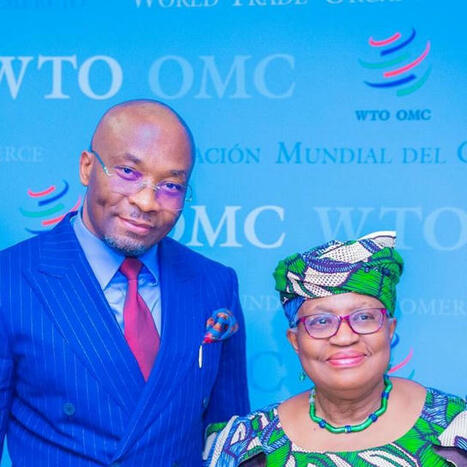
1,381 likes, 24 comments - officialbenkalu on November 29, 2024: "I extend my heartfelt congratulations to our dearest sister, Ngozi Okonjo-Iweala, on her reappointment as the Director-General of the World Trade Organization (WTO) for a second term.
This remarkable achievement is a testament to her outstanding leadership, dedication, and tireless efforts in advancing global trade reforms and promoting economic development. Her visionary approach has indeed strengthened the WTO’s role in addressing complex global challenges, promoting inclusivity, and championing sustainable growth, particularly for developing nations.
I am confident that this reappointment will have a profound impact on the global economy and I wish her more success and accomplishments as she continues to make Nigeria, Africa, and the world proud through her exceptional service.".
|
|
Scooped by
KRII-KROTOASA RESEARCH-INTENSIVE INSTITUTE
November 13, 2024 4:18 AM
|
Scoop.it!
Duncan: Welcome to the GELI Story podcast. I have a very special guest today, Pia Rebello Britto, who is currently the UNICEF representative to the Lao People’s Democratic Republic, previously Global Chief and Senior Adviser for Early Childhood Development at the UNICEF HQ in New York. Before joining UNICEF, she was an academic, Assistant Professor at Yale University, Research Scientist at Teachers College, Columbia University, and she got her doctorate there in developmental psychology. So Pia is a super clever, super experienced person. Welcome Pia!
Pia Britto: Thanks so much, Duncan. I love the superlatives!
Duncan: The reason we got you on, Pia, is because you gave a really interesting talk to the GELI participants on how you and others influenced the Sustainable Development Goal (SDG) process around a topic which you’re really passionate about – early child development. It’s a success story of influencing at a global level and I’d like to talk about how you did it. I don’t think – unless you want to – that we need to rehearse why early child development is absolutely crucial. Lots of people know they are right about a particular issue, whether it’s climate change, early child development, cash transfers … what do you do when you know you’re right, in this case, the science was on your side – what else do you need?
Pia Britto: We had a solution to a problem, which was that the Millennium Development Goals [the forerunners of the SDGs] were strong, but they had a core gap – early childhood development. Brains matter. Good, strong, healthy brain development makes a difference. So you’re right. We had the solution. I think that the idea was that to get from here to there, we were almost building the road as we went along because the path for the development of the Sustainable Development Goals, the processes themselves were also being built.
In 2013, the idea was that the Sustainable Development Goals should involve the whole world. It shouldn’t just be a few people. So every time the Sustainable Development Goals came up with a new process, we had to be able to understand, how are we going to infiltrate it? And infiltrate it in a way that a small band or a small group of people or the platform of UNICEF can make a difference. And I think that was one tactical strategy that was continually being used.
When we were assessing the different work streams that were going into forming the Sustainable Development Goals, whether it was the high-level panel of people or the different working groups that were being formed, we were very cognisant of the fact that UNICEF has a tremendous reputation and a tremendous credibility in being able to advocate for children’s rights. So starting with that platform and the leadership of UNICEF, we would do an assessment to say, how can we have a winning strategy? If it was with the different working groups, do we take more of an academic lens? If it’s with the conference of the mayors, do we get one of the mayors to be the spokesperson? If it’s at the General Assembly, do we get a head of state? So in each case, I would say it was leveraging the platform of UNICEF to then bring the influencer who has a voice in that process to deliver the message. I’m not sure this was an approach we were doing unknowingly or knowingly, but it was very much the way we were trying to find the influencer – it’s all about the ‘who’.
Duncan: So this band of heroes: how many of you were there? Did you have a WhatsApp group? Or maybe this is pre-WhatsApp. Did you have a conscious identity of ‘we are going to get early child development into the SDGs?’
Pia Britto: I think this was a goal we set, but I wouldn’t say there was a very tightly defined group. There was a community of academics, development partners, civil society partners and key actors who believed in this solution. We were all informed, keeping each other going in terms of what can make a difference. The academics were very conscious that we needed to get a core academic paper series out in the Lancet; the philanthropic group was very clear that they needed to influence all the philanthropic circle who were a big part of the Sustainable Development calls. The data group was very clear that they had to work with those who were finalising the indicators for the SDGs. So each group knew their role and would keep each other informed. There wasn’t a core communication that went out, but it was a lot of moving with the times and remaining dynamic. But everyone knowing that that’s our goal, I think everyone had one goal in mind.
Duncan: So a clear goal, it sounds like you had a lot of long-term relationships in there, which means trust. You don’t have to spend ages explaining things to each other. You’ve got that ability to just work together on the fly. Is that right?
Pia Britto: Yes. And now that we’re thinking back, I think we had a few very good communicators in our group also. That’s key to influencing because science in and of itself can be quite dry. We had the likes of Jack Shonkoff at the Harvard Center for the Developing Child, who tells the most eloquent story to any audience.
Duncan: You’re not a bad communicator yourself, I remember when you gave the talk, you were talking about baking inequality into the brains of babies, which is both amazingly alliterative and really sticks with you. Clearly, you had some very good narratives which were very powerful to people just as human beings, right?
Pia Britto: That’s a phrase that the President of the World Bank, Jim Kim, made very well known because the World Bank took this on. Tony Lake from UNICEF was die-hard on this message. Everywhere he went – to every head of state, every UN meeting, he delivered this message. These influencers really played a role.
Duncan: How did you do that? On the GELI course, we get people to do map how much stakeholders agree with your issue v how influential they are. So you identify powerful allies and less powerful allies, or you can maybe put the less powerful in touch with the powerful allies as a whole process to build a coalition. Did you do that kind of thing or was it much more just instinctive?
Pia Britto: We mapped all the key moments where decisions were going to be made for the SDGs. So I think we were mapping more the process than the people. We knew there were certain points at which the narrative was going to go to its next iteration, go into finalisation. So how do we influence those and who are the people who can make that happen?
Duncan: And I believe you got Michelle Bachelet involved quite a lot. She was one of your ambassadors, is that right?
Pia Britto: Exactly. She’s another champion of this agenda. It was actually her political campaign in Chile on which she ran for president. And she created a national program which is really a lighthouse for this work. It’s called Chile Crece Contigo: Chile Grow With You. Again, we knew the General Assembly was a very important influencing point. So we worked back from there and said who could actually speak to it? And it was her. Then we went to meet her and asked her to chair an event just the day before the General Assembly. It took a lot of planning, but it was all about spotting milestone moments and then leveraging the platform of UNICEF and this band of people who had been working for a while on the agenda. And just to say, we didn’t have much of a budget at all. It was really shoestring!
Duncan: The Chile story also brings in a brilliant proof of concept at a large scale. People want to see that it’s worked somewhere if they’re going to take it on. I can imagine that was a big plus. Now, how do you deal with the problem of exhaustion and stamina? I mean, the SDGs were interminable. I remember my first SDG meeting, I think, was in 2010 or something. How did you keep going? How did you do it on a personal level and on an organisational level?
Pia Britto: I think that we really were determined. I know I was determined that this had to happen come hell or high water. I don’t know how else to explain it, but sheer grit. We just kept going. I think also what helped us a bit is that we started to see some traction, some buzz. Suddenly, the education community started to invite the early childhood world there and say. So what is it that you’re trying to say? That’s quite motivating. And then when the mayors got together and the mayor of Istanbul hosted the mayors conference and they said, let’s put this on the agenda. Those moments really give you a lift that you are being heard. All of these little successes along the way definitely were motivators that we’re on the right road.
Duncan: So you get to the big SDGs event. Tell us the Shakira story!
Pia Britto: Yeah, that was probably one of the most exciting days, and a pivotal moment. We’d got into the SDGs, which was great, but so did 150 other issues. How do you make your issue stand out and catch the eye? The media want something interesting, they want something new. And the media are going to cover what the Secretary General says that day. So then again, we work back and say, how do we get the attention of the Secretary General? Everyone’s clamouring for his attention. And we thought, why don’t we bring in a non-traditional Goodwill Ambassador like Shakira? She’s not really known in the SDG world, but she’s passionate about young children, about education. Everyone likes her music. I think the Secretary General may have also liked her music!
We also took the first slot that morning. The door opens at 6:30 or 7. We said we wanted the first slot – ours had to be the first event. We snuck Shakira in. We got the whole event started. So the first headline that came out that day was the first quote by the Secretary General that the cornerstone of the SDGs is early childhood development. You could have been running an event in the middle of the day, equally important but by then the media cycles are getting tired. And so that was our very strategic planning to capture the media. And then we won the headlines after that, which was pretty impressive.
Duncan: It’s a phenomenal story. You hit just about every button of the things we’re talking about, the course: understanding the process, understanding the stakeholders, timing, stamina, the incentives of everybody involved. I mean, it is just superb. Just one final question – was it worth it? Has it made a difference on the ground?
Pia Britto: Yes and no. I was recently in an ASEAN meeting. I was blown away that the ASEAN ministerial dialogue was talking about early childhood in a very significant way. I think the entire SDG agenda has taken a hit with the pandemic, and that has really reshaped a big part of what we’re able to achieve. And we know we’re halfway through, but we’re nowhere near halfway achieving the goals. So I think that the entire agenda has taken a hit, but we’re in it. And this is something that governments are being held accountable for. So it is definitely making a difference. But all the SDGs are fragile and under threat right now.
Duncan: Okay, but it’s making a difference. Let’s finish on the positive. A superb example of influencing, which I’m sure will inspire GELI participants and others. Thanks very much, Pia.
The Global Executive Leadership Initiative - GELI - is a leadership development programme designed exclusively for top-level leaders from the United Nations, NGOs, and the Red Cross and Red Crescent Movement. Global Policy's Tom Kirk facilitates it alongside Duncan.
|
|
Scooped by
KRII-KROTOASA RESEARCH-INTENSIVE INSTITUTE
November 10, 2024 11:16 AM
|
Scoop.it!
This is part of a forthcoming Global Policy e-book on modern slavery. Contributions from leading experts highlighting practical and theoretical issues surrounding the persistence of slavery, human trafficking and forced labour will be serialised here over the coming months.
In every society, be it ‘developed’ or ‘developing’, there will always be vulnerable children, the degree and extent of the vulnerabilities faced by such children differing within and across countries and communities. The circumstances and dispositions that contribute to, and facilitate the vulnerability of children could have a basis in a number of factors including, but not limited to, inadequate economic resources and financial alternatives, a lack of maturity of mind, weak guardianship systems, and inadequate societal exposure.
What is both disconcerting and repugnant is that traffickers have capitalised on such vulnerability factors, targeting boys and girls for their organs, and for the provision of labour, sexual, and other services. That children should be recruited, transported, transferred, harboured and/or received for the purpose of being exploited – the conception of child trafficking based on the UN Trafficking Protocol – speaks not only to the intentionality and criminality involved in trafficking; it also speaks to the bleak prospects that exist for the children whose human rights and dignity would be undermined at the hands of traffickers and at the hands of those who demand and use their bodies, labour, produce, and services for their benefit and pleasure.
Preventing the exploitation of children by addressing factors and practices which enable and facilitate the vulnerability of children is therefore an absolute imperative if children are to be saved the harrowing journeys and experiences that leave them traumatised, abused, and even dead. Focus will therefore be given to some of the strategies that have been used in an attempt to fight child trafficking, and correspondingly facilitate the protection of children. Prior to this focus, insight will be provided into the human trafficking industry – its estimated value, supply and demand factors that fuel this industry, and the children who have been detected and exploited as a consequence of this industry.
The trafficking in human beings, under which child trafficking is subsumed, is a billion-dollar industry. The specific profits derived from the exploitation of human beings, via trafficking, are not known due to the clandestine nature of trafficking. Nevertheless, it is estimated that the profits generated from forced labour (which includes but is not limited to labour derived from trafficking) amount to US$150 billion per year (ILO, 2014). This estimate is said to be a reflection of both the ILO’s use of an updated methodology from what was used in 2005 to determine the profits derived from the use of forced labour, and the use of data collected for the ILO’s 2012 Global Estimate of Forced Labour. It should be noted that profits generated from state-imposed forced labour are not covered in the 2014 and 2005 estimates. Asia, and Developed Economies are said to be the top sources of profits, with sexual exploitation gaining the highest level of profits of the respective sectors of exploitation. In 2005, economist Patrick Belser, via an ILO Working Paper, estimated that the yearly profits generated from forced labour was US$44 billion – a figure which includes the US$32 billion in profits which the ILO, in 2005, estimated was generated per year by trafficked forced labourers. Most victims were trafficked for commercial sexual exploitation, followed by economic exploitation and mixed forms of exploitation. Further, industrialized countries accounted for half of the profits, while almost one-third of the profits was derived from Asia.
Susceptible to the workings of the market, the trafficking of children and the subsequent profits generated from the exploitation of children is fuelled by demand and supply. The excessive reference to ‘traffickers’ in human trafficking debates may lead one to infer that these actors are the main or only stakeholders in trafficking activities, and may even lead to a feeling of disconnect between the crime of trafficking and one’s personal actions. However, the demand and supply of child victims is fuelled by a number of actors who all contribute, wittingly or unwittingly, to the trafficking and exploitation of children.
On the demand side, employers and business owners, consumers and clients, and third parties such as recruiters and agents all contribute to the perpetuation of the child trafficking industry. For example, the loyal customer who buys beautiful sweaters for his family from his favourite local department store may be blissfully unaware that the fingers of those who knitted those sweaters were those of children recruited to work in deplorable factory conditions, and who received a mere pittance for the hours that they slaved over those items of clothing. Should that scenario be true, that customer would have unknowingly contributed to the demand for trafficked and exploited labour. He would also have profited from the vulnerability of children and the lack of adequate safeguards for the ethical sourcing of products within supply chains and webs, as would the businesses that sourced such products.
As a point of reference for the prevalence of goods potentially produced by child labour or forced labour, the Bureau of International Labor Affairs (ILAB) – an operating unit of the United States Department of Labor – revealed that the List of Goods Produced by Child Labor or Forced Labor comprised 155 goods from 77 countries. Based on this 2020 report/list, the agriculture sector has the greatest amount of child labour and forced labour respectively, followed by the manufacturing, mining/quarrying and pornography sectors respectively. The top 3 goods with the most child labour are gold (22 countries), bricks (19 countries) and sugar cane (18 countries), while the top 3 goods with the most forced labour are bricks (9 countries), cotton (8 countries), and garments (7 countries).
But the furthering of the child trafficking industry and the profiting from the exploitation of children is not only due to demand factors but also to the presence of children who are at risk of being exploited. The supply of children to the child trafficking industry is facilitated by personal, socio-economic and cultural factors that make children vulnerable to trafficking, as well as the presence of individuals who are willing to facilitate their exploitation. These individuals have been and could be family members and persons known to the child/children, or they could be strangers. In Nigeria, for example, there exists a cultural practice of informal fostering in which parents or guardians, many times due to economic challenges, arrange for wealthier members of society to take care of their child/ children. In such arrangements, there is usually the expectation that the child would perform household or other tasks for the host family. This informal system of fostering, which has many positive attributes, has however sometimes been misused to facilitate the trafficking of children for domestic servitude, sexual exploitation and other forms of exploitation as host families take advantage of children in their care or as traffickers operate under the guise of arranging for children to be hosted and in turn facilitate their exploitation. Underpinning the vulnerability of children to trafficking and exploitation, in this instance, is the convergence of economic push factors and cultural enablers situated within the social and communal context of Nigeria. While push factors to trafficking differ across countries, it is common (like in this instance) for a combination of vulnerability factors, including the lack of suitable coping mechanisms and alternatives, to create an enabling environment for the trafficking and eventual exploitation of children.
The United Nations Office on Drugs and Crime (UNODC) reports that for the year 2016, of the fifty-four countries examined, children comprised approximately 30 per cent of detected victims, with there being far more girls than boys. Of the 2,350 girls detected, 72 per cent had been trafficked for sexual exploitation, 21 per cent for forced labour and 7 per cent for other purposes. In the case of the 711 boys detected, 50 per cent had been trafficked for forced labour, 27 per cent for sexual exploitation, and 23 per cent for other purposes. The ‘other purposes’ for which children had been trafficked included forced begging, forced marriage, forced criminal activities, and to serve as child soldiers. (See the UNODC’s Global Report on Trafficking in Persons – 2018.)
Trafficking has a human cost and the supply and succumbing of children to the trafficking industry makes it imperative to relentlessly pursue efforts to protect and prevent boys and girls from being trafficked and exploited. The three examples featured below serve the purpose of providing insight into efforts that have been made to fight child trafficking by targeting the protection of children. It is hoped that these revelations will provide inspiration for what could be done to fight child trafficking (adjusted to respective country contexts), as well as reveal that the protection of children against trafficking is of win-win benefit to children on the one hand, and businesses and the society at large on the other hand.
In the Netherlands, the Wrap Around Model has been used to provide composite and consolidated support to the Roma community in an attempt to tackle the trafficking of Roma children for forced criminal exploitation and forced begging. Implemented by the Dutch National Police in collaboration with government and civil society organisations, this Model (featured within Anti-Slavery International’s Trafficking for Forced Criminal Activities and Begging in Europe: Exploratory Study and Good Practice Examples report) is centred around the presence of individuals and services who/which ‘wrap themselves around’ vulnerable Roma families in an attempt to insulate children from trafficking and exploitation. This Model involves the assigning of a Family Manager to each family that is perceived to be at risk of child abuse and child trafficking. The Family Manager serves as the point of contact and intermediary between the designated family and professional support persons and organisations that are working with the family, be it the school, child protection service, housing association, or the police. This manner of operation and coordinated support has helped to provide vital support to target families, while also helping in the identification and prevention of trafficking and the exploitation of children.
The Wrap Around Model (Source)
Extending beyond a focus on child trafficking, the International Cocoa Initiative (ICI) – a Swiss-based foundation operating in Ghana and the Ivory Coast – has been dedicated towards ensuring a better future for children, and advancing the elimination of child labour. Focusing its activities around the cocoa and chocolate industry, it has worked with multiple partners (including farming communities, businesses, unions, civil society groups and national governments in cocoa-producing countries) towards providing greater protection to children and their rights, managing the risk of child labour within the cocoa supply chain, and sharing knowledge and information in an open and transparent manner. Activities and actions performed in favour of the protection of children have included the following: the organisation of community mobilization meetings on the issues of child labour and child trafficking; the implementation of initiatives to reduce the vulnerability of children to child labour and child trafficking, including through school rehabilitation and the recruitment of teachers; and the establishment of Child Labour Monitoring and Remediation Systems which use facilitators within cocoa-growing communities to bring attention to child labour, and request the remediation of respective cases. (For further details on the ICI: Source(a); Source(b))
Cacao pods (Paul George via Flickr)
While trafficking into the cocoa sector and child labour within the cocoa sector have not been eliminated, the work by the ICI has contributed to the protection of children from child trafficking and child labour. Companies that pursue ethical practices and strive to fight against the exploitation of children within supply chains could be said to have greater prospects of good brand and company reputation, and the concomitant provision of support by members of the public. The converse should also be considered.
As featured in the Background paper on Good Practices and Priorities to Combat Sexual Abuse and Exploitation of Children in Bangladesh, one of the strategies that has been employed in Bangladesh to raise awareness on children’s rights issues has been the use of boys and girls to share relevant information with their peers. The Association for Community Development (ACD) in Rajshahi, for example, has provided training to children, who have in turn discussed issues such as trafficking, early marriage, and sexual exploitation with their peers. Such discussions have been facilitated by adult women and adult men who work with the girls and boys respectively. One achievement, as detailed by a group of girls, was the identification of a suspected trafficker, after which the Union Parishad Chairman was informed.
As further seen via one of the child-focused web pages of the ACD, a community-based approach to the prevention and protection of children from trafficking, commercial sexual exploitation, violence, abuse, and vulnerable situations is facilitated through the use of Socialization Centres. Focusing on the development of children and the community through socialization, services provided by Socialization Centres have included counselling, education on self-protection, and library services. Meetings have also been held with parents and other groups, with focus being given to mainstreaming out-of-school children and identifying children at risk. Other services performed through the Centres have included the following: parenting education sessions on issues such as understanding childhood and development; awareness-raising sessions on the protection of children at the level of the community and society, respectively; and the provision of vocational training to adolescent boys and girls from “untouchable, city slum and indigenous communities”. What is notable is that the voices of children have also been integrated into community-based approaches; children have been used in local-level advocacy so that the community-based governance structure could be more child-sensitive and proactive. The initiatives by the ACD have been said to increase individual and community participation in reducing, inter alia, child marriage, sexual abuse, child labour, trafficking, and discrimination.
As contemplation is given to the trafficking and exploitation of children in and from different parts of the globe and the actions that have been directed towards the protection of children, it is evident that only through sustained, individual, collaborative, cross-sectoral, inter-sectoral and sustainable efforts could there be any hope of protecting children from trafficking, and reducing the profitability of the trafficking industry. Such efforts should not be merely directed towards alleviating current realities and influencing consumer habits but should rather be combined with systemic changes.
Awareness-raising, the provision of education and skills training, and the monitoring of supply chains, while important, are surface-oriented strategies. If sustained and sustainable change is to be effected, such efforts need to be combined with the building and strengthening of child protection and social protection systems, the provision of suitable alternatives to those who are at a risk of being trafficked, and the creation, implementation and enforcement of laws that are deemed suitable to support the protection of children and conversely respond to the abuse of children and their rights.
As consumerism is replaced with responsible and ethical consumption, as businesses support and enforce ethical practices, as family systems are strengthened, and as long-term and systemic child protection inputs are made, greater possibilities will exist for the protection of children against trafficking. There is no guarantee that such efforts will result in the transformation of an individual’s character, and in turn increase the value that such an individual attaches to children and their lives. However, the strengthening of child protection and social protection systems and the implementation and enforcement of child protection regulations may, at least, help to curb human deficiencies by facilitating the regulation of conduct.
Loria-Mae Heywood is a researcher, writer, and human and social development advocate whose academic and professional expertise includes work on child protection and child rights, child trafficking, social protection, and human and social development. Her recently published article can be seen as follows: Before Saying “I Do”: Legal and Policy Considerations for Facilitating Clarity on Human Trafficking and the Protection of Children in Albania. She can be contacted via the following address: LoriaMae.Heywood@gmail.com
Photo by lalesh aldarwish from Pexels
|
|
Scooped by
KRII-KROTOASA RESEARCH-INTENSIVE INSTITUTE
November 10, 2024 10:53 AM
|
Scoop.it!
The latest round of protests which have gripped Iran since September 2022, following the death of a young Iranian woman of Kurdish origin in custody for wearing her veil loosely, have shaken the ruling establishment and awakened the world to the Iranian people’s unequivocal demand for change, for a better and freer life. In these protests, which encompass street marches, student rallies, acts of disobedience, strikes by workers, mass shop closures, and yes also violent acts against the repressive instruments of the regime, the people are directly challenging the very legitimacy of the regime which thus far had shown a sense of assuredness of not only enjoying the consent of the people for it to govern, but also of its ‘right’ to rule. The mass mobilisations are challenging the narrative of the regime as much as the legitimacy of the regime. Iran’s grey men leadership seems bewildered but still behaves as though it is assured of its right to dictate to the people. But no one is any longer blind to the profound social transformations which have led to this pressure point.
The protests, I would argue, are at their core a function of a democratising uprising – as yet without a clear leadership, a manifesto beyond wanting an end to the Islamic Republic, or a strategy for overthrowing the ruling order. So, how did we get here? I would argue that the Islamic Republic’s perfect storm has come about in three interrelated cyclones: A general socioeconomic crisis; a political impasse leading to a brittle and unresponsive political system; and a prolonged period of international isolation which has helped to suck the life out of the country. Let me deal with each ‘cyclone’ in turn.
Iran’s a rich country by any measure. Iran is a large country, endowed with vast and valuable natural resources, is rare for having extensive crude oil and natural gas deposits, enjoys a unique geography that gives it plenty of opportunity to grow its own food, as well as access to vast swaths of western and central Asia. It is also on the crossroads of communication and transportation networks being built across Asia and has a strong geopolitical standing with regard to the Persian Gulf and the Caspian Sea. But it also has a large, young, dynamic, and creative population, who are well-educated, networked, and keen to move forward. Iranians are not complacent but are aspirational.
Yet, the economy is on its knees due to decades of neglect and muddled policies, crippling sanctions imposed on it for bad behaviour, and endemic corruption, which in turn have stymied growth in trade opportunities and inward foreign direct investment, the development of the private sector, and job opportunities. Approximately 50 million of Iran’s 85 million population are under the age of 30 and ready to devote their energies for improving the country, but they are confronted by high unemployment of over 11%, which goes up to as high as 25% among the youth. Inflation is nearly 30%, and in many sectors reaches as high 80%. There is a huge scarcity in basic goods, medicines, food stuffs, and critical intermediary imports needed to turn the wheels of industry and keeping the economy going more broadly.
Sanctions are depriving the country of billions of dollars of income from its oil deposits, limiting its ability to develop its LNG capacity to exploit its fair share of the joint natural gas field, and to compete with Qatar and others and to cash in on the high international demand for natural gas following Russia’s invasion of Ukraine and the scramble for LNG in response to COP26 and COP27 climate change imperatives. But at the same time sanctions are constantly injecting life into Iran’s system of crony capitalism enriching regime members and their allies, literally thus fuelling corruption, nepotism, and cronyism. Sanctions have also crushed the Iranian national currency, the Rial, making inflation even more endemic and cost of living more expensive.
The result has been the crushing of society. Poverty is rampant and inequality engrained. Thus, just 10% of the population, who are invariably linked to the establishment, control over 50% of the country’s national wealth. Conversely, 20% of the lowest income group hold 0.5% of the country’s national wealth. One-third of the population now live under the poverty line, purchasing power has dropped by over 40% as incomes have been squeezed, and the middle class – the stabilising strata of any society – now constitutes just 35% of the population. With oil exports at well under one million barrels per day and thus hard currency incomes from this major source of income hovering at around $40 billion per year (compared with $70-80 billion per year), the prospects for improvement remain dim.
The regime’s persona projects an image of invincibility, but what appears as invincible to the establishment is seen as a regime to be uncompromising, unresponsive, and unaccountable to the people. This popular perception is daily reinforced by the behaviour of its decision makers and also with the way in which the regime has blatantly manipulated elections – from control of the candidates at both parliamentary and presidential levels – to produce results as favourable to the Supreme Leader Khamenei and his clique. As a result, voter enthusiasm has dampened and election participation rates in turn has declined. Ironically, the control of the Majlis and the Presidency by the hard-line faction of the conservative camp, in 2020 and 2021 respectively, has diminished the regime’s decision making prowess and ability to respond to national and international challenges. Incompetence and lacklustre performance have fed the public’s discontent and anger. Absence of opportunity, blatant corruption and nepotism and the hardening of the regime’s core at the expense of the reformists who had thus far acted as a mediating force between the regime and society have made the regime less flexible as well as less wise in its deliberations and policy choices. The strangulation of the political space by the hard right and their para-statal allies has unleashed public anger. Frustration has turned into protest and demands for regime change.
Again, the regime seems unfit for purpose, compounding popular anger by their inability to respond positively and sympathetically to the crisis which is largely of their own making. Securitisation of social relations, as seen in the unwarranted harsh treatment of the late Mahsa Amini and protesters since at least 2009 have limited space for dialogue, also inhibiting the regime’s flexibility. From the public’s point of view, the regime is not only inflexible and intransigent, but also hostile. This cyclone has spun out of control and prospects of ‘national peace’ are as dim now as they have been for a generation.
Sanctions and Iran’s international isolation have corroded the country, its headroom to respond to such crises as the covid-19 pandemic, water shortages, soil erosion, loss of habitat, etc., are thus adding to people’s anxieties. With the indefinite postponement of discussions relating to JCPoA2.0 another nail has been placed in the coffin of national hope for improvement following the earlier brief reopening up of the country to the world. Continuing isolation and the regime’s contempt for negotiations has further angered society, which has been desperate to see Iran re-joining the highway of development and integration. Regime’s conduct, in material and financial terms, in Lebanon, Syria, Iraq, Yemen, Palestine, Afghanistan, has added to popular anger. Demonstrators have also demanded in the past an end to the regime’s adventurism and an end to its financial support for its non-state allies overseas, for its use of force in the region; and intellectuals as well as regime insiders have voiced concern about the dangers of the regime openly and blatantly showing its support for Russia and its invasion of Ukraine. Popular sentiment has been matched by the attacks on Iran by many of its Arab neighbours for continuous interference in internal affairs of Arab countries, leading to the Islamic Republic being called an ‘occupier’ of Arab lands by the Arab League, a label thus far reserved for Israel. To the people, the regime is a stain on the country’s national identity and on their proud civilisation. Regime’s external behaviour does not enjoy popular support and the more it confronts the world the more disenchanted society has become.
And then there is the consequences of the Ukraine war for Iran to consider. Firstly, the European Union has abandoned any mediation in taking the JCPoA2.0 to fruition, adding to the country’s woes. The war and Iran’s support for the aggressor, in other words, have damaged Iran’s diplomatic position and weakened its negotiating hand. Secondly, it is very likely that the Islamic Republic will be punished by the UN for violating the UNSC resolution 2231 (part of JCPoA1.0) which prohibited Iran from trade (imports or exports) in missile-related technologies. Its open transfer of missiles and missile technologies to Russia (and others in the region) means that Iran is in direct violation of its international obligations. Thirdly, post-war, Ukraine will be seeking war reparations from Russia, but also likely from those who supported the aggressor in its campaign. Iran could be a target of reparations for billions of dollars from Ukraine, which is also likely to be supported by Ukraine’s Western allies. Given Iran’s current financial state, any such bills could break the bank completely, add further pressure on the people and cause further deprivation.
These, then, are the headwinds facing Iran and the three interrelated dimensions of the perfect storm now confronting the regime.
Change on the scale that the people are demanding, and the country badly needs, are unlikely to happen overnight. It will be worth our while remembering that the Islamic revolution itself took several years to mature and finally yield results in 1979. But what is clear is that the vast majority of the population have given up on the regime being able to reform itself, be able to respond to public demands, let alone embrace their aspirations for change. In this context, we are now seeing a hardening of the protesters’ position. We thus see a clear escalation of people’s demands. So, what started as ‘where is my vote’ protests in 2009 in response to the opaque re-election of Mahmood Ahmadinejad as president has changed to ‘death to dictator’, ‘death to the Islamic Republic’, ‘death to Khamenei’ today.
While the regime may be able to put out the fires of protest eventually, the fact that they are occurring more frequently, more intensively, and across social classes, ethnicities, and localities, means that the regime will have to devote more and more energy and resource towards surveillance, repression, and prosecution, thus limiting its ability to govern efficiently or effectively.
In the absence of JCPoA2.0 going forward, moreover, the regime’s ability to improve the economy is also limited, adding to its problems as well as to social unrest and anxiety about the future.
Finally, once a regime loses its cohesion and elite factions start fighting amongst themselves, then change will happen at a more accelerated pace. The regime of the Islamic Republic is no exception. Defiance of authority in Iran will continue, eroding the regime’s narrative, its sense of legitimacy and also standing in the world. Where Iran is in this cycle of change and political struggle is hard to predict of course, but the end game is increasingly predictable: The Islamic Republic as currently constituted will likely lose its current form, and it could even implode in the face of the perfect storm it itself has largely fanned. Political Islam’s claim to open-ended claim to rule and governance are being tested in Iran, as indeed they were in Egypt and Sudan in recent times. While in Sudan the removal of Islamists from power promises a more open and democratic polity, the experience of Egypt following the removal of President Morsi has been a harsh military-led autocracy. Iranian people, in my view, are already charting a democratic and secular path towards a better and more inclusive future. Fears of chaos following a disorderly or violent fall of the current order are real and well-founded, particularly given the fires the regime itself has lit with Iran’s patchwork of minorities. But given the strength of Iran’s civil society and the mass desire for constructive change, as well as international support for the demands of the protesters, I remain (relatively) optimistic that disorder can be avoided. On the flip side of chaos, also, I would add that Iran’s sizeable expatriate community is unlikely to sit ideally by and watch the homeland crumble. Given that Iranian expats have a collective net worth of around $2.5 trillion, their interventions for a better country can prove transformative not only politically but also economically.
Iranian people have everything to play for and they have shown that they can break down the wall of fear, fight repression, and dream of a better country and a better future. Their slogan of ‘Women, Life, Freedom’ epitomises their vision of the future, in juxtaposition to the Islamic Republic’s diet of discrimination, repression, and isolation.
Part 2 - The Iranian Protests: Change may not be immediate but is inevitable
Prof Anoush Ehteshami is a Professor of International Relations and Director of the al-Sabah Programme in the School of Government and International Affairs at Durham University. Amongst his publications is Iran: Stuck in Transition (Routledge, 2017).
Image: Taymaz Valley via Flickr (CC BY 2.0)
|
|
Scooped by
KRII-KROTOASA RESEARCH-INTENSIVE INSTITUTE
November 10, 2024 10:42 AM
|
Scoop.it!
We live in dangerous times — no doubt about it. How did we get to such a state of affairs where democracy itself is in a very fragile condition and the future of human civilization itself at stake? In this interview, renowned thinker, Emeritus Professor of Linguistics at MIT and Laureate Professor of Linguistics at the University of Arizona Noam Chomsky, sheds light on the state of the world and the condition of the only superpower left in the global arena.
C.J. Polychroniou: Noam, looking at the current state of the world, I think it is not an exaggeration at all to say that we live in ominously dangerous times — and not simply in a period of great global complexity, confusion and uncertainty, which, after all, has been the “normal” state of the global political condition in the modem era. I believe, in fact, that we are in the midst of a whirlpool of events and developments that are eroding our capacity to manage human affairs in a way that is conducive to the attainment of a political and economic order based on stability, justice and sustainability. Indeed, the contemporary world is fraught, in my own mind at least, with perils and challenges that will test severely humanity’s ability to maintain a steady course toward anything resembling a civilized life.
How did we get to such a state of affairs, with tremendous economic inequalities and the resurgence of the irrational in political affairs on the one hand, and an uncanny capacity, on the other, to look away from the existential crises such as global warming and nuclear weapons which will surely destroy civilized life as we know it if we continue with “business as usual”?
The question of how we got to this state of affairs is truly vast in scope, requiring not just inquiry into the origin and nature of social and cultural institutions but also into depths of human psychology that are barely understood. We can, however, take a much more modest stab at the questions, asking about certain highly consequential decisions that could have been made differently, and about specific cases where we can identify some of the roots of looking away.
The history of nuclear weapons provides some striking cases. One critical decision was in 1944, when Germany was out of the war and it was clear that the only target was Japan. One cannot really say that a decision was made to proceed nevertheless to create devices that could devastate Japan even more thoroughly, and in the longer term threaten to destroy us as well. It seems that the question never seriously arose, apart from such isolated figures as Joseph Rotblat — who was later barred reentry to the U.S.
Another critical decision that was not made was in the early 1950s. At the time, there were still no long-range delivery systems for nuclear weapons (ICBMs). It might have been possible to reach an agreement with Russia to bar their development. That was a plausible surmise at the time, and release of Russian archives makes it seem an even more likely prospect. Remarkably, there is no trace of any consideration of pursuing steps to bar the only weapons systems that would pose a lethal threat to the U.S., so we learn from McGeorge Bundy’s standard work on the history of nuclear weapons, with access to the highest-level sources. Perhaps still more remarkably, there has, to my knowledge, been no voiced interest in this astonishing fact.
It is easy to go on. The result is 75 years of living under the threat of virtually total destruction, particularly since the successful development of thermonuclear weapons by 1953 — in this case a decision, rather than lack of one. And as the record shows all too graphically, it is a virtual miracle that we have survived the nuclear age thus far.
That raises your question of why we look away. I do not understand it, and never have. The question has been on my mind almost constantly since that grim day in August 1945 when we heard the news that an atom bomb had wiped out Hiroshima, with hideous casualties. Apart from the terrible tragedy itself, it was at once clear that human intelligence had devised the means to destroy us all — not quite yet, but there could be little doubt that once the genie was out of the bottle, technological developments would carry the threat to the end. I was then a junior counselor in a summer camp. The news was broadcast in the morning. Everyone listened — and then went off to the planned activity — a baseball game, swimming, whatever was scheduled. I couldn’t believe it. I was so shocked I just took off into the woods and sat by myself for several hours. I still can’t believe it, or understand how that has persisted even as more has been learned about the threats. The same sentiments have been voiced by others, recently by William Perry [former defense secretary], who has ample experience on the inside. He reports that he is doubly terrified: by the growing risk of terrible catastrophe, and the failure to be terrified by it.
It was not known in 1945, but the world was then entering into a new geological epoch, the Anthropocene, in which human activity is having a severe impact on the environment that sustains life. Warnings about the potential threat of global warming date back to a 1958 paper by Hans Suess and Roger Revelle, and by the 1970s, concerns were deeply troubling to climate scientists. ExxonMobil scientists were in the forefront of spelling out the severe dangers. That is the background for a crucial decision by ExxonMobil management in 1989, after (and perhaps because) James Hansen had brought the grave threat to public attention. In 1989, management decided to lead the denialist campaign.
That continues to the present. ExxonMobil now proudly declares that it intends to extract and sell all of the 25 billion barrels in its current reserves, while continuing to seek new sources.
Executives are surely aware that this is virtually a death-knell for organized human society in any form that we know, but evidently it doesn’t matter. Looking away with a vengeance.
The suicidal impulses of the fossil fuel industry have been strongly supported by Republican administrations, by now, under Trump, leaving the U.S. in splendid isolation internationally in not only refusing to participate in international efforts to address this existential threat but in devoting major efforts to accelerate the race to disaster.
It is hard to find proper words to describe what is happening — and the limited attention it receives.
This again raises your question of how we can look away. For ExxonMobil, the explanation is simple enough: The logic of the capitalist market rules — what Joseph Stiglitz 25 years ago called the “religion” that markets know best. The same reasoning extends beyond, for example to the major banks that are pouring funds into fossil fuel extraction, including the most dangerous, like Canadian tar sands, surely in full awareness of the consequences.
CEOs face a choice: They can seek to maximize profit and market share, and (consciously) labor to undermine the prospects for life on earth; or they can refuse to do so, and be removed and replaced by someone who will.
The problems are not just individual; they are institutional, hence much deeper and harder to overcome.
Something similar holds for media. In the best newspapers there are regular articles by the finest journalists applauding the fracking revolution and the opening of new areas for exploitation, driving the U.S. well ahead of Saudi Arabia in the race to destroy human civilization. Sometimes there are a few words about environmental effects: fracking in Wyoming may harm the water supplies for ranchers. But scarcely if ever is there a word on the effect on the planet — which is, surely, well understood by authors and editors.
In this case, I suppose the explanation is professionalism. The ethics of the profession requires “objectivity”: reporting accurately what is going on “within the beltway” and in executive suites, and keeping to the assigned story. To add a word about the lethal broader impact would be “bias,” reserved for the opinion pages.
There are countless illustrations, but I think something deeper may be involved, something related to the “religion” that Stiglitz criticized. Worship of markets has many effects. One we see in the origins of the reigning neoliberal faiths. Their origin is in post-World War I Vienna, after the collapse of the trading system within the Hapsburg empire. Ludwig von Mises and his associates fashioned the basic doctrines that were quickly labeled “neoliberalism,” based on the principle of “sound economics”: markets know best, no interference with them is tolerable.
There are immediate consequences. One is that labor unions, which interfere with flexibility of labor markets, must be destroyed, along with social democratic measures. Mises openly welcomed the crushing of the vibrant Austrian unions and social democracy by state violence in 1928, laying the groundwork for Austrian fascism. Which Mises welcomed as well. He became economic consultant to the proto-fascist Austrian Chancellor Engelbert Dollfuss, and in his major work Liberalism, explained that “It cannot be denied that Fascism and similar movements aiming at the establishment of dictatorships are full of the best intentions and that their intervention has, for the moment, saved European civilization. The merit that Fascism has thereby won for itself will live on eternally in history.”
These themes resonate through the modern neoliberal era. The U.S. has an unusually violent labor history, but the attack on unions gained new force under Reagan with the onset of the neoliberal era. As the business press reported, employers were effectively informed that labor laws would not be enforced, and the U.S. became the only industrial society apart from Apartheid South Africa to tolerate not just scabs, but even “permanent replacement workers.” Neoliberal globalization, precarity of employment, and other devices carry the process of destroying organized labor further.
These developments form a core part of the efforts to realize the Thatcherite dictum that “there is no society,” only atomized individuals, who face the forces of “sound economics” alone — becoming what Marx called “a sack of potatoes” in his condemnation of the policies of the authoritarian rulers of mid-19th century Europe.
A sack of potatoes cannot react in any sensible way even to existential crises. Lacking the very bases of deliberative democracy, such as functioning labor unions and other organizations, people have little choice beyond “looking away.” What can they hope to do? As Mises memorably explained, echoed by Milton Friedman and others, political democracy is superfluous — indeed an impediment to sound economics: “free competition does all that is needed” in markets that function without interference.
The pathology is not new, but can become more severe under supportive social and economic institutions and practices.
Yet, only a couple of decades ago, there was wild celebration among liberal and conservative elites alike about the “end of history,” but, even today, there are some who claim that we have made great progress and that the world is better today than it has ever been in the past. Obviously, “the end of history” thesis was something of a Hegelian illusion by staunch defenders of the global capitalist order, but what about the optimism expressed by the likes of Steven Pinker regarding the present? And how can we square the fact that this liberal optimism is not reflected by any stretch in the politico-ideological currents and trends that are in motion today both inside western nations but also around the world?
The celebrations were mostly farcical, and have been quietly shelved. On the “great progress,” there is serious work. The best I know is Robert Gordon’s compelling study of the rise and fall of American growth, which extends beyond the U.S. though with some modifications. Gordon observes that there was virtually no economic growth for millennia until 1770. Then came a period of slow growth for another century, and then a “special century” from 1870 to 1970, with important inventions ranging from indoor plumbing to electrical grids and transportation, which radically changed human life, with significant progress by many measures.
Since the 1970s the picture is much more mixed. The basis for the contemporary high-tech economy was established in the last decades of the special century, mainly through public investment, adapted to the market in the years that followed.
There is currently rapid innovation in frills — new apps for iPhones, etc. — but nothing like the fundamental achievements of the special century. And in the U.S., there has been stagnation or decline in real wages for non-supervisory workers and in recent years, increased death rates among working-class, working-age whites, called “deaths of despair” by the economists who have documented these startling facts, Anne Case and Angus Deaton.
There is more to say about other societies. There are numerous complexities of major significance that disappear in unanalyzed statistical tables.
Realism, crystallized intellectually by Niccolò Machiavelli in The Prince,has been the guiding principle of nation-states behind their conduct of international relations from the beginning of the modem era, while idealism and morality have been seen as values best left to individuals. Is political realism driving us to the edge of the cliff? And, if so, what should replace the behavioral stance of governments in the 21st century?
The two major doctrines of International Relations Theory are Realism and Idealism. Each has their advocates, but it’s true that the Realists have dominated: the world’s a tough place, an anarchic system, and states maneuver to establish power and security, making coalitions, offshore balancing, etc.
I think we can put aside Idealism — though it has its advocates, including, curiously, one of the founders and leading figures of the modern tough-minded Realist school, Hans Morgenthau. In his 1960 work, The Purpose of American Politics, Morgenthau argued that the U.S., unlike other societies, has a “transcendent purpose”: establishing peace and freedom at home and indeed everywhere. A serious scholar, Morgenthau recognized that the historical record is radically inconsistent with the “transcendent purpose” of America, but he advised that we should not be misled by the apparent inconsistency. In his words, we should not “confound the abuse of reality with reality itself.” Reality is the unachieved “national purpose” revealed by “the evidence of history as our minds reflect it.” What actually happened is merely the “abuse of reality.” To confound abuse of reality with reality is akin to “the error of atheism, which denies the validity of religion on similar grounds.”
For the most part, however, realists adhere to Realism, without sentimentality. We might ask, however, how realistic Realism is. With a few exceptions — Kenneth Waltz for one — realists tend to ignore the roots of policy in the structure of domestic power, in which, of course, the corporate system is overwhelmingly dominant. This is not the place to review the matter, but I think it can be shown that much is lost by this stance. That’s true even of the core notion of Realism: security. True, states seek security, but for whom? For the general population? For the systems of power represented by the architects of policy? Such questions cannot be casually put aside.
The two existential crises we have discussed are a case in point. Does the government policy of maximization of the use of fossil fuels contribute to the security of the population? Or of ExxonMobil and its brethren. Does the current military posture of the U.S. — dismantling the INF Treatyinstead of negotiating disputes over violations, rushing ahead with hypersonic weapons instead of seeking to bar these insane weapons systems by treaty, and much else — contribute to the security of the population? Or to the component of the corporate manufacturing system in which the U.S. enjoys comparative advantage: destruction. Similar questions arise constantly.
What should replace the prevailing stance is government of, by and for the people, highlighting their concerns and needs.
The advent of globalization has been interpreted frequently enough in the recent past as leading to the erosion of the nation-state. Today, however, it is globalization that is being challenged, first and foremost by the resurgence of nationalism. Is there a case to be made in defense of globalization? And, by extension, is all nationalism bad and dangerous?
Globalization is neither good nor bad in itself. It depends how it is implemented. Enhancing opportunities for ideas, innovations, aesthetic contributions to disseminate freely is a welcome form of globalization, as well as opportunities for people to circulate freely. The WTO system, designed to set working people in competition with one another while protecting investor rights with an exorbitant patent regime and other devices, is a form of globalization that has many harmful consequences that would be avoided in authentic trade agreements designed along different lines — and it should be borne in mind that much of the substance of the “free trade agreements” is not about free trade or even trade in any meaningful sense.
Same with nationalism. In the hands of the Nazis, it was extremely dangerous. If it is a form of bonding and mutual support within some community it can be a valuable part of human life.
The current resurgence of nationalism is in large part a reaction to the harsh consequences of neoliberal globalization, with special features such as the erosion of democracy in Europe by transfer of decision-making to the unelected Troika with the northern banks looking over their shoulders. And it can and does take quite ugly forms — the worst, perhaps, the reaction to the so-called “refugee crisis” — more accurately termed a moral crisis of the West, as Pope Francis has indicated.
But none of this is inherent in globalization or nationalism.
In your critiques of U.S. foreign policy, you often refer to the United States as the world’s biggest terrorist state. Is there something unique about the United States as an imperial state? And is U.S. imperialism still alive and kicking?
The U.S. is unique in many respects. That includes the opening words of the Declaration of Independence, “We the People,” a revolutionary idea, however flawed in execution. It is also a rare country that has been at war almost without a break from its first moment. One of the motives for the American Revolution was to eliminate the barrier to expansion into “Indian country” imposed by the British. With that overcome, the new nation set forth on wars against the Indian nations that inhabited what became the national territory; wars of “extermination,” as the most prominent figures recognized, notably John Quincy Adams, the architect of Manifest Destiny. Meanwhile half of Mexico was conquered in what General U.S. Grant, later president, called one of the most “wicked wars” in history.
There is no need to review record of interventions, subversion and violence, particularly since World War II, which established the U.S. in a position of global dominance with no historical precedent. The record includes the worst crime of the postwar period, the assault on Indochina, and the worst crime of this millennium, the invasion of Iraq.
Like most terms of political discourse, “imperialism” is a contested notion. Whatever term we want to use, the U.S. is alone in having hundreds of military bases and troops operating over much of the world. It is also unique in its willingness and ability to impose brutal sanctions designed to punish the people of states designated as enemies. And its market power and dominance of the international financial system provide these sanctions with extraterritorial reach, compelling even powerful states to join in, however unwillingly.
The most dramatic case is Cuba, where U.S. sanctions are strongly opposed by the entire world, to no avail. The vote against these sanctions was 189-2, U.S. and Israel, in the latest UNGA [United Nations General Assembly] condemnation. The sanctions have been in place for almost 60 years, harshly punishing Cubans for what the State Department called “successful defiance” of the U.S. Trump’s sanctions on Venezuela have turned a humanitarian crisis into a catastrophe, according to the leading economist of the opposition, Francisco Rodriguez. His sanctions on Iran are quite explicitly designed to destroy the economy and punish the population.
This is no innovation. Clinton’s sanctions on Iraq (joined by Blair) were so destructive that each of the distinguished international diplomats who administered the “oil for food” program resigned in protest, charging that the sanctions were “genocidal.” The second, Hans-Christof von Sponeck, published a detailed and incisive book about the impact of the sanctions (A Different Kind of War). It has been under a virtual ban. Too revealing, perhaps.
The brutal sanctions punished the population and devastated the society, but strengthened the tyrant, compelling people to rely on his rationing system for survival, possibly saving him from overthrow from within, as happened to a string of similar figures. That’s quite standard. The same is reportedly true in Iran today.
It could be argued that the sanctions violate the Geneva Conventions, which condemn “collective punishment” as a war crime, but legalistic shenanigans can get around that.
The U.S. no longer has the capacity it once did to overthrow governments at will or to invade other countries, but it has ample means of coercion and domination, call it “imperialism” or not.
Why is the United States the only major country in the world displaying consistently an aversion to international human rights treaties, which include, among many others, the Convention on the Elimination of all Forms of Discrimination Against Women (CEDAW)?
The U.S. almost never ratifies international conventions, and in the few cases where it does, it is with reservations that exclude the U.S. That’s even true of the Genocide Convention, which the U.S. finally did ratify after many years, exempting itself. The issue arose in 1999, when Yugoslavia brought a charge of war crimes to the ICJ [International Court of Justice] against NATO. One of the charges was “genocide.” The U.S. therefore rejected World Court jurisdiction on the grounds that it was not subject to the Genocide Convention, and the Court agreed — agreeing, in effect, that the U.S. is entitled to carry out genocide with impunity.
It might be noted that the U.S. is currently alone (along with China and Taiwan) in rejecting a World Court decision, namely, the 1986 Court judgment ordering the U.S. to terminate its “unlawful use of force” against Nicaragua and to pay substantial reparations. Washington’s rejection of the Court decision was applauded by the liberal media on the grounds that the Court was a “hostile forum” (New York Times), so its decisions don’t matter. A few years earlier the Court had been a stern arbiter of Justice when it ruled in favor of the U.S. in a case against Iran.
The U.S. also has laws authorizing the executive to use force to “rescue” any American brought to the Hague — sometimes called in Europe “the Hague Invasion Act.” Recently it revoked the visa of the Chief Prosecutor of the ICC [International Criminal Court] for daring to consider inquiring into U.S. actions in Afghanistan. It goes on.
Why? It’s called “power,” and a population that tolerates it — and for the most part probably doesn’t even know about it.
Since the Nuremberg trials between 1945-49, the world has witnessed many war crimes and crimes against humanity that have gone unpunished, and interestingly enough, some of the big powers (U.S., China and Russia) have refused to support the International Criminal Court which, among others things, can prosecute individuals for war crimes. In that context, does the power to hold leaders responsible for unjust wars, crimes against humanity, and crimes of aggression hold promise in the international order of today?
That depends on whether states will accept jurisdiction. Sometimes they do. The NATO powers (except for the U.S.) accepted ICJ jurisdiction in the Yugoslavia case, for example — presumably because they took for granted that the Court would never accept the Yugoslavian pleas, even when they were valid, as in the case of the targeted destruction of a TV station, killing 16 journalists. In the more free and democratic states, populations could, in principle, decide that their governments should obey international law, but that is a matter of raising the level of civilization.
John Bolton and other ultranationalists, and many others, argue that the U.S. must not abandon its sovereignty to international institutions and international law. They are therefore arguing that U.S. leaders should violate the Constitution, which declares that valid treaties are the supreme law of the land. That includes in particular the UN Charter, the foundation of modern international law, established under U.S. auspices.
C.J. Polychroniou is a political economist/political scientist who has taught and worked in universities and research centers in Europe and the United States. His main research interests are in European economic integration, globalization, the political economy of the United States and the deconstruction of neoliberalism’s politico-economic project. He is a regular contributor to Truthout as well as a member of Truthout’s Public Intellectual Project. He has published several books and his articles have appeared in a variety of journals, magazines, newspapers and popular news websites. Many of his publications have been translated into several foreign languages, including Croatian, French, Greek, Italian, Portuguese, Spanish and Turkish. He is the author of Optimism Over Despair: Noam Chomsky On Capitalism, Empire, and Social Change, an anthology of interviews with Chomsky originally published at Truthoutand collected by Haymarket Books.
This first appeared on TruthOut and was reposted with permission.
Image credit: TimothyJ via Flickr (CC BY 2.0)
|
|
Scooped by
KRII-KROTOASA RESEARCH-INTENSIVE INSTITUTE
November 10, 2024 10:36 AM
|
Scoop.it!
C. J. Polychroniou: Richard, US foreign policy under the Biden administration is geared toward escalating the strategic competition with both China and Russia. Indeed, the Interim National Strategic Guidance, released in March 2021, makes it abundantly clear that the US intends to deter its adversaries from “inhibiting access to global commons, or dominating key regions” and that, moreover, this work cannot be done alone, as was the case under Trump, but will require the reinvigoration and modernization of the alliance system across the world. Does this read to you like a call for the start of a new New Cold War?
Richard Falk: Yes, I would say it is more than ‘the call’ for a New Cold War, but its start. The focus is presently much more China than Russia, because China is seen by Washington as posing the primary threat, and besides, it regards Russia as a traditional rival while China poses novel and more fundamental challenges. Russia, while behaving in an unsavory manner, dramatized by the crude handling of the opposition figure Alexei Navalny, is seen as manageable geopolitically. Euro-American strategy is to stiffen resistance to Russian pressure being exerted along some of its borders, and as in the Cold War can be handled by refurbished versions of ‘containment’ and ‘deterrence.’
China is another matter entirely. The most serious perceived threats are mainly associated with non-military sectors of Western, and particularly, U.S., primacy, its dominance over a dynamic productive economy, especially with respect to frontier technologies. The remarkable developmental dynamism of the Chinese economy has far outstripped anything ever achieved in the West. The United States Government under Biden seems stubbornly blindsided, seemingly determined to address these Chinese threats as if they could be effectively addressed by a combination of ideological confrontation and as with Soviet Union, containment and deterrence. So far, the Biden response is fundamentally mistaken in its approach, which is to view China as a similar adversary than was the Soviet Union.
This Chinese challenge cannot be successfully met frontally. It can only be met by a diagnosis of the relative decline of the West by way of self-scrutiny, selective emulation, and a surge of creative adaptive energies. Such a response needs to be accompanied by a reformist agenda of socio-economic equity, massive infrastructure investment, the adoption of fairer wealth and income tax structures, and a commitment to a style of global leadership that identified the national interest to a greater extent with global public goods. Instead of focusing on holding China in check, the United States would do much better by learning from its successes, and adapting them to the distinctiveness of its national circumstances.
It is to be regretted that the present mode of response to China is dangerous and anachronistic for four principal reasons.
Firstly, the mischaracterization of the Chinese challenge betrays a lack of self-confidence and understanding by the American Biden/Blinken foreign policy leadership. Secondly, the chosen path of confrontation risks a fateful clash in South China Seas, an area that according to the precepts of traditional geopolitics falls within the Chinese sphere of influence, and a context within which Chinese firmness is perceived as ‘defensive’ by Beijing while the U.S. military presence is regarded as intrusive, if not ‘hegemonic.’ These perceptions are aggravated by the U.S. effort to augment its role as upholding alliance commitments in South Asia, recently reaffirmed by a clear anti-Chinese animus in the shape of the QUAD (Australia, Japan, India, and the U.S.), formally named Quadrilateral Security Dialogue, which despite the euphemism intends to signify enhanced military cooperation and shared security concerns.
Thirdly, the longtime U.S. military superiority in the Pacific region may not reflect the current regional balance of forces in the East and South China Seas. Pentagon public assertions have been sounding the alarm, insisting that in the event of a military confrontation, China would likely come out on top unless the U.S. resorts to nuclear weapons. According to an article written by Admiral Charles Richard, who currently heads National Strategic Command, this assessment has been confirmed by recent Pentagon war games and conflict simulations.
Taking account of this view, Admiral Richard advises that U.S. preparations for such an armed encounter be changed from the possibility recourse to nuclear weaponry to its probability. The implicit assumption, which is scary, is that U.S. must do whatever it takes to avoid an unacceptable political outcome even if it requires crossing the nuclear threshold. It may be instructive to recall the Cuban Missile Crisis of 1962 when Soviet moves to deploy defensive missile systems in Cuba in response to renewed U.S. intervention to impose regime change. It is instructive to recall that Cuba was accepted as independent sovereign state entitled under international law to uphold its national security as it sees fit, while Taiwan has been consistently falling within the historical limits of Chinese territorial sovereignty. The credibility of the Chinese claim was given diplomatic weight in the Shanghai point Communiqué that re-established U.S./China relations in 1972.
Kissinger recalled that in the negotiations leading to a renewal of bilateral relations the greatly admired Chinese Foreign Minister, Chou En-Lai, was flexible on every issue except Taiwan. That is, China has a strong legal and historical basis for reclaiming Taiwan as an integral part of its sovereign territory considering its armed severance from China as a result of Japanese imperialism. China governed the area now known as Taiwan from 1683-1895. In 1895 it was conquered and ruled by Japan until 1945 when it was reabsorbed and became a part of the Republic of China. After 1949 when the Chinese Communists took over control of China, Taiwan was renamed Republic of China on Taiwan. From the Chinese perspective, this historical past upholds the basic contention that Taiwan is part of China and not entitled to be treated as a separate state.
Fourthly, and maybe decisively, the international claims on the energies and resources of the United States are quite different than they were during the Old Cold War. There was no impending catastrophe resulting from climate change to worry about or decaying infrastructure desperately needing expensive repair or under-investment in social protection by government in the area of health, housing, and education.
CJP: Isn’t it possible that the approach of the Biden administration to the future environment of great power competition could lead to the formation of a Russia-China military alliance, especially since alliance formation constitutes a key element of state interaction? Indeed, Vladimir Putin has already said that the prospect of such partnership is “theoretically… quite possible,” so the question is this: What would be the implications for global order if a Sino-Russian military alliance were to be formed?
RF: I think we are in a period of renewed alliance diplomacy recalling the feverish attempts of the United States to surround the Soviet Union with deployed military forces, which was a way of communicating to Moscow that the Soviet Union could not expand their borders territorially without anticipating a military encounter with the United States. At first glance, alliances conceived in these traditional terms make little sense. Except in Taiwan it is unlikely that China would seek to enlarge its territorial domain by the threat use of force. In this sense, the ad hoc diplomacy of alliance formation, typified by the QUAD seems anachronistic, and could lead to warfare as one among several unintended consequences.
However, realignment as distinct from alliance frameworks does make sense in an international atmosphere in which the United States is trying to confront its international adversaries with sanctions and a variety of measures of coercive diplomacy that are intended to constrain its policy options.
Many states are dependent on international supply chains for energy and food, as well as reliable trade and investment relations. Reverting to the Cold War the Soviet Union was relatively autonomous. This is much less true under present conditions in which the higher densities of interdependence are linked to acute security vulnerability to cyber attacks, and where access to drone technologies and computer knowhow make non-state actors, extremist political movements, and criminal syndicates an increasingly troublesome part of the global political landscape. In such an emergent global setting, traditional reliance on deterrence, defense capabilities, and retaliatory action are often ineffectual, and quite often even counter-productive. The purpose of contemporary patterns of realignment is less to augment defenses against intervention and aggression than to broaden policy options for countries that need to reach beyond their borders to achieve economic viability.
Another motivation is to deflect geopolitical bullying tactics intended to isolate adversaries. As China and Russia are being portrayed as the enemies of the West, their alignment with one another makes sense if thought of as a reciprocally beneficial ‘security community.’ Compared to past configurations of conflictual relations, current geopolitical maneuvers such as realignment are less concerned with weaponry and war and more with attaining developmental stability, intelligence sharing, and reduced vulnerability to the distinctive threats and parameters of the Cyber Age.
The logic of realignment gives to countries like China and Russia opportunities to increase their geopolitical footprint without relying on ideological affinities or coercion. Such a change in the nature of world politics is more broadly evident. For instance, important countries such as Iran and Turkey use realignment as a diplomatic tool to offset pressures and security encroachments by U.S. and Israel. In Iran’s case despite radical differences in ideology and governing style it is turning to China and Russia so as to protect its national sovereignty from a range of destabilizing measures adopted by its adversaries. Whereas Turkey, while being devalued as an alliance partner in the NATO context, may be satisfying its overall needs by turning to China and Russia than by sticking to its traditional role of a junior participant in the most potent of Western alliance structures.
CJP: Certain mainstream foreign policy analysts are rehashing old arguments about the US-China competition, in particular, by claiming that this is really an ideological battle between democracy and authoritarianism. What’s your own take on this matter?
RF: I think even more so than in the Cold War the ideological battleground is a smokescreen behind which lurk fears and perceived threats to the Western dominance of the world economy and of innovative military technologies. In the last half century China has already staked a strong claim to have demonstrated a superior development model (‘socialism with Chinese characteristics’) to that produced in the capitalist United States. This Chinese achievement is quite clearly explained and documented by the outstanding Indian liberal economist, Deepak Nayyar, in his important study, Asian Resurgence: Diversity in Development (2019). Great emphasis is placed by Nayyer on the high rate of savings enabling China to finance and strategically manage targeted investment of public funds.
Nayyer downplays the role of ideology and stresses these economistic factors, as he analyzes the development achievements of 14 countries in Asia.
The reality of the Chinese rise makes a mockery of the triumphalist claims of Francis Fukuyama in The End of History and The Last Man (1992), even more so in George W. Bush’s covering letter to the 2002 National Security Strategy of the United States in which he claims that the 20th century ended with “a decisive victory for the forces of freedom—and a single sustainable model for national success: freedom, democracy, and free enterprise.” How dated and misplaced such language seems twenty years later!
If China now additionally manages to challenge successfully the U.S. in such vital areas of technological innovation as artificial intelligence and robotics it will undoubtedly reinforce this image of Chinese ascendancy on the 21st century world stage. It is this prospect of being relegated to the technological shadowland that had made bipartisan elites in the United States so anxious of late. In fact, even Republican stalwarts are willing to put aside their polarizing hostility to join with Democrats in mounting a diplomatic offensive against China that could become war-mongering interaction if Beijing responds in kind. Graham Allison has reminded us that historical instances where a previously ascendent power is threatened by a rising one has often resulted in disastrous warfare. Such belligerence is usually initiated by the political actor that feels displaced by the changing hierarchy of influence, wealth, and status in world order, yielding to pressure to engage the challenger while it still possesses military superiority. [See Allison, Destined for War: Can America and China Escape the Thucydides Trap (2017)]
CJP: Nuclear weapons and climate change represent by far humanity’s two greatest existential crises. Can we really be hopeful that these threats can be managed tamed within the existing international system? If not, what changes are required in current interstate relations?
RF: Of course, at this time we have become acutely aware of such global existential threats by experiencing the ordeal of the COVID pandemic, which has revealed the conflictual state-centric manner of dealing with a situation that could have been more effectively addressed if responding by way of global solidarity. As the pandemic now appears to be subsiding in most parts of the world, we cannot be encouraged by the weakness of cooperative impulses despite the obvious self-interested benefits for all if a global commons approach had been adopted with respect to testing, treatment, and distribution of vaccines. This negative background suggests that it a somewhat vain hope to suppose that the threats posed by nuclear weapons and climate change can be successfully managed over time.
Each of these mega-threats disclose different features of an essentially dysfunctional and inequitable system of world order. World history has now entered a bio-political phase where civilizational achievements are at risk and even the survival of the human species is in doubt. Analogous dysfunctions of a different nature are evident in the internal political and economic life of most sovereign states.
The relationship to nuclear weapons has been problematic from the beginning, starting from the decision to drop atomic bombs on Japanese cities in 1945 as the war was nearing its end. The horrifying civilian consequences seared the consequences of collective human conscience almost to the extent of the Holocaust. The two realities exemplifying the atrocities of World War II are Auschwitz and Hiroshima. It is illuminating that in the first instance the behavior of the loser in the war was criminalized in the Genocide Convention while that of the winner in the second instance was legitimated although left under a dark cloud that lingers until now.
The reality is that nuclear weapons are retained for possible use by nine states, including the most militarily powerful countries. The fact that the great majority of non-nuclear governments and the sentiments of most people in the world unconditionally oppose such weaponry has hardly mattered. The UN recently sponsored the Treaty of Prohibition of Nuclear Weapons (TPNW) that entered into force in January 2021; however, neither law nor morality can challenge the resolve of the nuclear weapons states to retain their freedom to possess, deploy, develop, and even threaten or use such weaponry of mass destruction. The five permanent members of the UN Security Council, the first states to develop nuclear weapons, have issued a formal statement expressing their belief in the non-proliferation regime and deterrence as a preferred model of nuclear war prevention to that associated with a norm of unconditional prohibition reinforced by phased, monitored, and verified disarmament treaty process.
Martin Sherwin in his definitive study, Gambling with Armageddon: Nuclear Rouletter from Hiroshima to the Cuban Missile Crisis (2020), convincingly shows that the avoidance of nuclear war has been a consequence of dumb luck, not rational oversight or the inhibitions on use associated with deterrence. The point being that despite the magnitude of the threats posed by the existence of nuclear weapons the structures of Westphalian statism has prevailed over considerations of law, morality, common sense, and rationality. What is absent with regard to these existential global threats is a sufficient political will to transform the underlying structural features by which authority, power, and identity have been managed on a global level for last several centuries. The absence of trust among countries is given precedence, and is further reinforced by the weakness of global solidarity mechanisms, resulting on leaving this ultimate weapon in potentially irresponsible hands, the fate of the earth in Jonathan Schell’s book bearing that title, published in 1982.
Climate change has dramatized a different facet of this statist structure of world order. The need for the cooperative and urgent reduction of greenhouse gas emissions has been validated by a strong consensus of scientific opinion. The effects of inaction or insufficient action are being concretely experienced in the form of global warming, ocean levels rising, extreme weather events, glacial melting, and migrations from droughts and floods. Yet effective responsive action is blocked by inequalities of circumstances and perception that generate disagreements about the allocation of responsibility and by short-termism that makes private and public sector decision makers reluctant to depress performance statistics by expensive adjustments that cut profits and development. There is a widespread recognition of the need for drastic action, but the best that the collective will of governments have been able to do is to produce the Paris Agreement in 2015, which leaves it up to the good will and responsible voluntary behavior of governments to reduce emissions, a rather wobbly foundation on which to stake the future of humanity.
The UN as now constituted cannot provide platforms for addressing global existential threats in an effective and equitable manner. The responses to the COVID pandemic offer a template for such a negative assessment. It was obvious that short-term national economic and diplomatic interests prevailed at the expense of minimizing the health hazards of virus COVID-19. Once these interests were satisfied the richer countries felt virtuous by resorting to feel good philanthropy, which was masked as empathy for poorer countries and their populations. These societies had been left almost totally without access to the protective medical equipment, ventilators, and vaccines during the height of the health hazards.
A revealing extreme instance of the pattern was embodied in the Israeli approach which was very effective within Israel, while withholding vaccines from the approximately five million Palestinians living in the Occupied Palestinian Territories. This disparity ignored Israel’s explicit obligation under Article 56 of the Fourth Geneva Convention to accord protection to an occupied people in the event of an epidemic. What is disclosed beyond reasonable doubt is the structural dominance of statist and market forces combined with the weakness of existing mechanisms of global solidarity, which are preconditions for upholding global public goods. An analogous dynamic occurs within states, reflecting the class, gender, and race interests and the disproportionate burdens borne by the poor, women, and marginalized minorities.
C. J. Polychroniou is a political scientist/political economist who has taught at numerous universities in Europe and the United States and has also worked at various research centers. He holds a PhD in Political Science from the University of Delaware and is author/editor of several books, including Marxist Perspectives on Imperialism (1991), Perspectives and Issues in International Political Economy (1992), Socialism: Crisis and Renewal (1993), Discourse on Globalization and Democracy: Conversations With Leading Scholars of Our Time (in Greek, 2001) and hundreds of articles and essays, many of which have been translated into scores of foreign languages. His latest book is a collection of interviews with Noam Chomsky titled Optimism Over Despair: On Capitalism, Empire, and Social Change (Haymarket Books, 2017).
Image: John Morgan via Flickr (CC BY 2.0)
|
|
Scooped by
KRII-KROTOASA RESEARCH-INTENSIVE INSTITUTE
August 4, 2021 1:18 PM
|
Scoop.it!
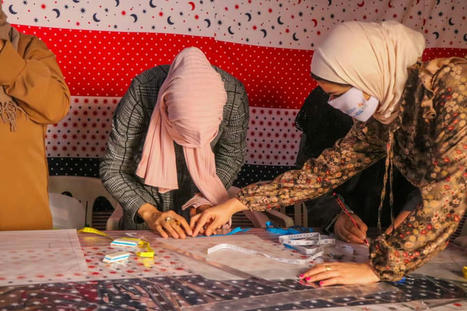
Empowering Libyan women to make a living and put food on the table
Date: Monday, August 2, 2021
This story was originally published on UN Women's regional website for the Arab States and North Africa
Libyan women in Ajdabiya participating in a tailoring course. Photo: Courtesy of Asarya
“I was in a bad situation when I heard about the Tamkeen project. I had been trying to think of ways to help my husband financially,” said Hana* who participated in a professional cooking course to start her own business. “I was hoping desperately to take part in the training. I wanted to prove that I can rely on myself to start our lives again.
Along with 194 women from Ajdabiya, Hana* participated in Tamkeen, a two-month vocational training aimed at meeting the immediate food needs of vulnerable women, support their skills development and create job opportunities for them so they can become self-sufficient. The programme is jointly implemented by UN Women, the World Food Programme (WFP), and local partner Asarya, with generous support from the Government of Japan.
Ajdabiya is the capital of the Al Wahat District in North-Eastern Libya, some 150 kilometers south of Benghazi. The city suffers from high unemployment and food insecurity rates due to economic instability and lack of skilled workers.
An assessment of the local labour market was conducted by WFP and its local partner Asarya. This included interviews with business owners, local authorities, consumers and with the trainees themselves. Based on their feedback, the capacity building programme was designed to include courses on photography, cooking, baking, hairdressing and tailoring. One hundred and fifty of the trainees attended additional trainings on the basics of running a business.
“I’ve always dreamed of having my own clothing brand. It has been a passion since I was young. When the Tamkeen project post popped up on my Facebook page, I felt like my dream could finally come true,” said Sumaya* who took the tailoring classes. “I’m grateful to be trained by experts who taught me exactly how to design and sew clothes. I also learned how to kick-start and manage my own business in the future.”
To enhance collaboration and solidarity between the trainees, the project introduced them to the concept of “Savings Group”. This micro-financing model is comprised of a group of individuals who make savings together so that they can take small loans from these joint savings to start a business.
“Through Tamkeen I met many women who have the same dream as me and have the same passion for designing clothes and starting their own business so we are planning now to start a business together,” said Sumaya.
The trainees also engaged in constructive discussions and learnt about what it means to be self-employed and the importance of being financially independent.
“We are happy to partner with UN Women and be in a position to inspire and empower women," said Rawad Halabi, World Food Programme Libya Country Representative. "These skills will enable them to become economically independent, resilient, and will give them decision-making powers at home and beyond."
“I’ve always thought I needed the right equipment and the most expensive camera to be a professional photographer until I got into the photography course in Ajdabiya,” said Heba* who had wanted to be a photographer since she was a child. “Now, I know that photography is not about equipment but it’s about passion, talent and practice. I can’t wait to put my new skills to work!”
Two young women participate in a photography training. Photo: Courtesy of Asarya.
“Economic empowerment of women is not only about supporting them to become financially independent,” said Begoña Lasagabaster, UN Women Representative in Libya and Tunisia. “Their economic empowerment translates into better living conditions for themselves, their families and community at large. It is also vital for their country’s economic development and prosperity.”
By the end of the training, participants from the cooking courses were already sharing photos and information about the products they had been selling. Many savings groups have been formed to support each other. The participants in the photography course have split into three groups and are working on joint photography projects.
“I used to talk with my friends and family about how one day I would be a make-up artist in Ajdabya. They all thought that I was only dreaming until I heard about Tamkeen,” said Rama*. I now know that nothing is impossible, and everything can come true with passion. I’m starting small but I’m definitely going to be one of the biggest makeup artists in Ajdabya.”
*Names have been changed to protect the privacy of the participants.
|
|
Scooped by
KRII-KROTOASA RESEARCH-INTENSIVE INSTITUTE
September 18, 10:12 PM
|
Scoop.it!
Committee on Elimination of
Discrimination against Women
903rd & 904th Meetings (AM & PM)
WOMEN’S ANTI-DISCRIMINATION COMMITTEE EXPERTS RECOGNIZE POLICY EFFORTS OF GUINEA-BISSAU,
EXPRESS CONCERN OVER SLOW PACE FOR ENDING DISCRIMINATORY LAWS, HARMFUL PRACTICES
Experts of the Committee on the Elimination of Discrimination against Women today recognized the legislative and policy efforts of Guinea-Bissau, a least developed sub-Saharan African nation, to erase gender discrimination and improve the lot of women, but expressed concern over the country’s slow pace in removing discriminatory laws from its books, and the traditional bias that held sway in many areas.
Presenting Guinea-Bissau’s first through sixth periodic report on compliance with the Convention on the Elimination of All Forms of Discrimination against Women, Iracema do Rosario, President of the Institute of Women and Children, said that, since ratifying the treaty in 1985, the Government had created a series of national action plans to implement the women’s empowerment goals of the Beijing Platform for Action. Last year, it ratified the Convention’s Optional Protocol ‑‑ which allows individuals to submit claims of women’s rights violations to the Committee and the Committee to initiate inquiries into situations of grave or systematic violations. And during its next session, Guinea-Bissau’s National Assembly was expected to consider draft laws aimed at ending gender-based violence, female genital mutilation and trafficking in women and children.
Ms. do Rosario said it was critical, however, that efforts towards women’s equality be placed in the context of the nation’s many challenges, notably chronic institutional instability due to years of political upheaval, the lack of trained personnel in Government offices charged with women’s empowerment, scant financial resources to meet current needs and the absence of a national policy on gender. Reconciling local governance, which was based on a traditional patriarchal society, with the provisions of the Convention was another major hurdle, as age-old customs maintained morality and law and order throughout the society.
Committee experts acknowledged those constraints, but expressed deep concern over female genital mutilation and early and forced marriages, which had contributed to the country’s high maternal mortality rate ‑‑ as well as systematic violence against women during the country’s conflict period. One expert likened the “initiation rituals” before female genital mutilation, in which some girls died, to homicide, and expressed alarm that several Muslim deputies in the National Assembly were blocking the draft law to end that harmful practice.
Others pointed to poor health-care services for women, disparities in the Government’s statistics on education and the low school graduation rate among girls. One expert wondered about the effectiveness of national institutional mechanisms to implement the Convention and whether the Government had a time frame to make the changes necessary to create lasting rule of law, as called for in Security Council resolution 1325 (2000) on women, peace and security.
The delegation acknowledged that, although the Penal Code made female genital mutilation a punishable corporal offence, many women did not file charges out of fear of being isolated by their communities. But, the Government was trying to change that by retraining mutilation practitioners in other fields, educating people about the health risks associated with mutilation and prosecuting persons who carried out the “initiation rituals”. Moreover, the National Islamic Council was part of the National Committee to Combat Harmful Practices, and it backed the draft law aimed at eradicating the practice.
The Government had also set up a support office and a national network to combat violence against women, and it had taken steps to end early and forced marriages. The delegates expressed hope that, after a long period of instability, the Government could do more for women to ensure laws were respected and that women could live in a climate of peace, stability and development. Although the victims’ centres were not yet up and running, some police stations had special sections to assist victims of violence, and rape and other forms of sexual abuse were criminalized and sanctioned. Regarding women’s access to health care, they lamented that it was precarious, as few facilities, equipment and instruments were available or were often not sophisticated enough to detect certain illnesses or health problems. Guinea-Bissau needed help from its development partners to bolster family planning programmes and raise awareness about sexually transmitted diseases.
The Committee will meet again at 4 p.m. on Friday, 7 August, to conclude its forty-fourth session.
Background
The Committee on the Elimination of Discrimination against Women met today to consider the combined first through sixth periodic reports of Guinea-Bissau (document CEDAW/C/GNB/6).
Iracema do Rosario, President of the Institute of Women and Children, headed the delegation. Also present from the Institute were: Mamdu Sanha, Cabinet Director; Mario Augusto Ramalho, Principal Counsellor, Office of the President; Sidi Cassama, Gender Coordinator of the Cabinet; and Emanuel Fernandes, Chief, Judicial Department; as well as Osiris Ferreira, judicial counsellor and Alfredo Lopes Cabral, Permanent Representative of Guinea-Bissau to the United Nations.
Presentation of Report
Ms. DO ROSARIO said the country’s population was fairly young and was comprised of more than 20 ethnic groups. Sixty one per cent of the population lived in the rural areas, although there was a rural exodus primarily to Bissau, the capital. There was a marked increase in urban poverty. The fertility rate was 6.8 children per woman and that indicator was higher in rural areas. The infant mortality rate was 138 per 1,000 births, and the under-5 child mortality rate was 233 per 1,000 births. The maternal mortality rate was 405 deaths per 100,000 live births. Early marriage and female genital mutilation were responsible for increases in maternal mortality. According to multiple indicator cluster surveys, HIV/AIDS disproportionately affected women. A total of 74.2 per cent of women had heard of HIV/AIDS, but just 32.1 per cent of them knew the three main methods of its transmission. Only 17.3 per cent of women were familiar with HIV/AIDS screening centres, and just 6 per cent had been tested screening.
Less than 10 per cent of children age 3 to 5 attended preschool, she said. Guinea-Bissau was one of the world’s least developed countries, due largely to political instability and insecurity. From 2000 to 2004, real gross domestic product (GDP) grew just 1 per cent annually, making it difficult for the Government to achieve its objective to improve living standards and meet the needs of the population, which was growing 2 per cent annually. Approximately 64 per cent of the population lived on less than $2 per day; 20 per cent lived on less than $1 per day. The country had excellent natural conditions for developing agriculture, fishing and tourism, and it had natural resources like bauxite, phosphate and oil, giving hope that the spectre of war had been removed.
In order to achieve the goals set forth at the Beijing Conference, several non-governmental organizations had been created, among them the Association of Economically Active Women (AMAE), the Federation of Guinean Women (FEMUGUIB), the Women in Peacebuilding Network (WIPNET), the National Network to Combat Sexual Violence (RENLUV), and the Network of African Women Ministers and Parliamentarians of Guinea-Bissau, among others. Guinea-Bissau ratified the women’s Convention on 6 July 1985. With financial support from the United Nations Development Programme (UNDP), the Government created the Policy and Strategy for the Integration of Women into Development and the 1997-2002 Women and Development Framework Plan. As a follow-up to the Beijing Platform for Action, the Government launched the 1998-2003 Women and Development Framework Plan, which guided the first national report on implementing the Beijing goals. It resulted in concrete Government action to improve the socio-political situation of women and ensure their rights.
The country’s tardiness in reporting to the Committee was due to institutional instability, as well as the lack of human resources and trained personnel in institutions responsible for promoting and protecting women’s rights, she said. Her Institute, the main Government body for setting women’s policy, was only created in 2000, and the constant turnover of its director and lack of resources had impeded its ability to carry out its mission. The periodic report before the Committee was compiled with UNDP’s technical and financial support, along with the Ministry of Women, Family and Social Cohesion and her Institute.
Guinea-Bissau lacked sufficient mechanisms to incorporate the Convention into the national legal framework, she said. A study had been conducted on the need for an in-depth review of the country’s laws to see if they were in line with international conventions, particularly the women’s Convention and the Convention on the Rights of the Child. Guinea-Bissau did not have any temporary special measures, as defined by the Convention, but it had created mechanisms intended to expedite gender equality. For example, in April 2006, the Council of Ministers set a quota mandating that 50 per cent of all scholarships at schools at home and abroad be given to women. The General Labour Act and the Public Administration Workers Statute contained special legal protections for women during pregnancy, childbirth, miscarriage, abortions, as well as afforded them maternity leave.
The Constitution established equality between the sexes in all aspects of political, economic, social and cultural life, she said. The Government had developed action plans to protect women’s rights and erase gender stereotypes and discrimination. Women’s non-governmental organizations played an important role in that regard. Still, certain cultural practices that were harmful to women, such as female genital mutilation, forced marriage and early marriage, were entrenched problems. Domestic violence was also firmly entrenched in tradition, making it difficult for women to take a stand against physical or emotional abuse. Decision-making power was concentrated in the hands of men; women were not listened to. Moreover, customary law resisted all norms aimed at changing discriminatory behaviour, thwarting efforts to implement the Convention.
In a bid to change that, a draft act prohibiting and sanctioning people for performing or forcing women to undergo female genital mutilation had been submitted to the National Assembly, she said. The Government had also set up the National Committee to Combat Harmful Practices, thus laying the cornerstone for compliance with the women’s Convention and the Convention on the Rights of the Child. Non-governmental organizations had launched awareness campaigns to increase women’s participation in social, economic, political and cultural life, with a view towards greater freedom and gender-mainstreaming. They had also successfully conducted awareness-raising campaigns to establish women’s dignity and help women reject prostitution as means to financially provide for their families.
Through the Institute for Women and Children, the Government had taken steps to train police officers, border guards and non-governmental organizations to help combat human trafficking, she said. There were bills before the National Assembly on trafficking in children and gender-based violence slated for consideration during the next assembly session. She noted important legislative, administrative and judicial advances to support and encourage women’s positive role in social, political and economic life. Under the citizenship law, men and women were treated equally.
Experts’ Comments and Questions
DUBRAVKA ŠIMONOVIĆ, expert from Croatia, welcoming the delegation and appreciating the explanation for the long delay in reporting, asked if the report had been adopted by the Government and whether Parliament had been involved in its preparation. She also wondered if non-governmental organizations had been involved in any way. She hoped that the next time Guinea-Bissau presented a periodic report, it would depend less on outside consultants and more on civil society organizations and relevant Government agencies.
She went on to ask for specific information about the ways the Government planned to disseminate information about the Convention, particularly owing to the country’s high illiteracy rates and lack of capacity. Further, was Guinea-Bissau’s Constitution silent on the position of international treaties, including the women’s Convention? The Committee had received conflicting information as to the applicability of the Convention. She also asked if the Government had set a time frame for removing discriminatory laws from its books.
CORNELIS FLINTERMAN, expert from the Netherlands, also had questions about the harmony of the country’s Constitution and international law, especially the Convention. How did the Government encourage judicial authorities to apply the principles of international human rights treaties? How could women who alleged violations seek remedy? Was there an ombudsman or any other agency handling such claims?
Next, VICTORIA POPESCU, expert from Romania, said that, while she appreciated Guinea-Bissau’s difficult circumstances ‑‑ from colonial times through present difficulties ‑‑ it was nevertheless extremely important to take into consideration the promotion of the rights of women, so they could participate in rebuilding society at all levels. She also asked how the Government was proceeding, in a systematic way, to eliminate discriminatory laws. She also wanted to know if the Strategic Framework for Guinea-Bissau, being implemented in collaboration with the Peacebuilding Commission, included any provisions for bolstering women’s rights and the national agencies that had been set up to that end.
Delegation’s Response
In response, Ms. DO ROSARIO said, in preparation of the report, the Government indeed worked with technical agencies, as well as United Nations agencies, which had been the “main partner” to that end. She acknowledged that her country’s high illiteracy rate might be an obstacle to disseminating information on the Convention and the Government was, therefore, taking pains to provide relevant information in local languages and dialects, especially in Creole, which was Guinea-Bissau’s “lingua franca”. She also assured the Committee that women in Guinea-Bissau had the same rights as men.
Another member of the delegation said the Committee had highlighted important issues. The report had been drafted after a national consultation process. Guinea-Bissau was party to the core international treaties and stood by its obligations under them. After Parliament ratified those treaties, the Government “had faith” that the principles would be included in the Constitution. For example, he said that when the Constitution spoke of “citizens” equal rights, it referred to both women and men, without distinction.
Perhaps it was just a matter of language ‑‑ the Constitution had been elaborated in 1997 ‑‑ and the Government was aware that perhaps it was not up to date with more recent international iteration. But, nevertheless, the Constitution did uphold equal rights for both men and women. On such issues as inheritance and certain matters of equal participation, he noted that some civil laws in the country were holdovers from the colonial period. The Government was aware of that and was struggling to bridge such gaps.
Experts’ Comments and Questions
Opening the second round of questions, VIOLETA NEUBAUER, expert from Slovenia, said she was concerned that there was not enough information in the oral presentation or the written report about the effectiveness of institutional mechanisms that existed at national levels. There was a Women’s Ministry, and an Institute for Women and Children, but there was no clear information on the mandate of the agencies regarding the implementation of the Convention. She also wondered if there was an interdepartmental coordinating structure that was ensuring the process of gender mainstreaming. Was there a programmatic and policy framework for implementation of the Convention and its articles?
Country Response
Ms. DO ROSARIO said that the agency Women, Social Cohesion and Fight against Poverty had been created to defend and promote women’s rights. At the same time, the Institute for Women and Children was overseen by the Women’s Ministry. It had been created to promote gender equality and to assist in gender mainstreaming in areas such as greater access to decision-making. She assured the Committee that there was Government oversight of those agencies and efforts, to ensure their work was harmonized and that it drew on the expertise of civil society. The aim was to improve the socio-economic situation of women, contribute to democratization and promote a broader exchange of experience through training and application of the Convention.
Another member of the delegation added that the Government was extremely committed to improving the socio-economic conditions of women in the country. To that end, policy was being drafted to coordinate ministry-wide activities, as well as follow-up actions. The Government was also scaling up efforts to help train relevant agencies and, especially, civil society actors, so that activities aimed at protecting and promoting women’s rights could be carried out even in the most remote regions of the country.
Expert’s Comments and Questions
YOKO HAYASHI, expert from Japan, said that, while she welcomed the report, she was concerned at some disparities between the information and the statistics provided. She hoped such discrepancies would be corrected in the future. She also asked for more information about “temporary special measures” for women in the judiciary. Had they been effective? How did the special measures differ from other programmes under way?
Ms. NEUBAUER, expert from Slovenia, said she was still concerned that it appeared there was a misunderstanding that the country’s statement of equal opportunities and treatment would create conditions in which obligations under the Convention would be fulfilled. When the Government had ratified the Convention, it had agreed to actively promote and protect the rights of women. She also wanted to know about the role of women in implementing the Peacebuilding Commission’s Strategic Framework. Were there any special temporary measures to that end?
Country Response
Responding, a member of the delegation said that, despite the political will to implement the tenets of the Convention, years of civil war and tumult had led to the destruction of some of the documents and data on women. The Government was not trying to deceive anyone. It was aware that some of the data might not be accurate, because of gaps. It was working to provide more concrete information on issues, such as literacy rates. He went on to say that the Institute for Women and Children was working with the legislature to implement the proposed 40 per cent quota rate for women in all Government positions. At the same time, the Government was aware that more work needed to be done to overcome internal obstacles.
Expert’s Comments and Questions
PRAMILA PATTEN, expert from Mauritius, said the oral report had been unclear about the legal status of the Convention. Could articles of the Convention be invoked in Court? Did judicial officials have training about the Convention? Was there a legal aid system in place to provide relevant assistance, especially to women? She also asked for more specific information about punishment for discriminating against women.
Mr. FLINTERMAN, expert from the Netherlands, asked the delegation to clarify about the status of country’s recent ratification of the Convention’s Optional Protocol. The delegation had said it had ratified that instrument, but it had not been deposited with the United Nations.
Ms. POPESCU, expert from Romania, said that it was important to modernize legislation to remove policies that discriminated against women. She also said one of the aims of the Strategic Peacebuilding Framework was the consolidation of the rule of law. Where did that process stand, especially towards revising discriminating legislation? Another aim of that framework was to promote implementation of Security Council resolution 1325 (2000) on women, peace and security. Was such an exercise being carried out?
Ms. ŠIMONOVIĆ, expert from Croatia, asked if there was a time frame for the Constitutional revision process, especially since that exercise would provide Guinea-Bissau with an excellent opportunity to address the integration of the Convention into national law and fill other gaps regarding protection and promotion of women’s rights.
Country Response
Regarding ratification of the Optional Protocol, a delegate said that a letter had been given to Guinea-Bissau’s Permanent Representative to the United Nations that would be deposited with the Organization by the end of the day. Regarding the court system, lower instance courts were set up throughout the country and were accessible for most of the population. There were also regional courts in several zones that handled certain areas of judicial competence, as well as second instance courts. A national association of lawyers worked to provide legal services to people in remote areas. He acknowledged that low levels of education among women, and customs that frowned upon their pursuit of legal action, were indeed obstacles to justice for women.
To rectify that, the Government had installed focal points for women and it had set up support offices for victims of domestic violence that provided counselling and social and legal services. Labour laws clearly prohibited discrimination against women.
Regarding the peacebuilding process, another delegate said the United Nations Peacebuilding Commission had a country-specific configuration on Guinea-Bissau. In October 2008, it adopted a strategic framework that included a large component dedicated to gender issues and women’s advancement. Concerning implementation of Council resolution 1325 (2000), the country report noted workshops and several other steps to disseminate and generate awareness among women in the country on the resolution and the assurances it provided for women.
Expert’s Questions and Comments
Committee Chairperson, NAELA MOHAMED GABR, expert from Egypt, said she was concerned that Guinea-Bissau had not yet ratified a host of international human rights treaties, including, among others, the Convention on the Elimination of Racial Discrimination and the International Covenant on Civil and Political Rights, which was the basis of all fundamental rights. She was also concerned about the existence of harmful traditional practices, such as early and forced marriage, as well as certain food taboos. “We must work together as Africans to address these issues that impact […] women’s health, dignity and basic human rights,” she said.
Echoing that sentiment, DORCAS COKER-APPIAH, expert from Ghana, said she was aware that some traditional rules or customs were based on patriarchy, making them difficult to address or speak about openly in some societies. She was happy to note that Guinea-Bissau’s report acknowledged that, in order to ensure women’s rights, such practices must be addressed. She asked what specific laws were in place to address all manifestations of violence against women? Had the S.O.S. Support Centre for women victims of violence been set up? If not, what were the obstacles?
Expressing similar concerns FERDOUS ARA BEGUM, expert from Bangladesh, said the delegation had acknowledged the existence of domestic violence, early and forced marriages, and female genital mutilation, among other harmful practices. It had not, however, given enough information about shelters and services to assist victims of such acts. Could the delegation be clearer on that point?
On stereotypes and patriarchal attitudes, Ms. POPESCU, expert from Romania, asked about the role of the media in addressing such issues. Was there any concerted, Government-led effort to involve media outlets in initiatives to eradicate such stereotypes and promote the portrayal of women in roles other than childbearing? Was there a definition of domestic violence? Was rape criminalized under the Penal Code? Was marital rape identified under that Code? Were there any legal provisions to deal with the systematic rape and abuse of women that had occurred during the country’s conflict period?
Country Response
Ms. DO ROSARIO said that persons with disabilities were protected by law in Guinea-Bissau. Such persons were also provided with aid, such as clothes and school materials. The Government was aware that more needed to be done to ensure that such persons were better integrated into daily life, but it also needed assistance from its partners to scale up relevant initiatives. She went on to say that steps were being taken to address violence against women and children, human trafficking and other “nefarious practices”. Such draft laws were currently awaiting approval. No action had been taken, largely because elections had just taken place. The Government was determined to work with civil society to get those laws passed.
She said the Government was also taking action on matters such as early and forced marriages. She had great hope that, after a long period of instability, the Government could do more for women to ensure laws were respected and that women could live in a climate of peace, stability and development. She said that although the victims’ centres were not yet up and running, some police stations had special sections to assist such victims of violence. The Government was also coordinating with civil society groups working in that area, especially in rural communities, to provide assistance to women.
Country Response
A delegate said rape and other forms of sexual abuse were criminalized and sanctioned. But, due to men’s supremacy in society, many women did not file charges out of fear of being isolated by their communities, and many stayed in abusive relationships and marriages. Under article 115 of the Penal Code, female genital mutilation was a punishable corporal offence. But, many women did not file complaints about it, as age-old habits and taboos deeply rooted in the consciousness of individuals stood in the way of compliance with new precepts. Concerning protection services for victims of violence, there was a support office and a national network to combat violence against women that had launched awareness campaigns on women’s rights.
Experts’ Comments and Questions
Ms. BEGUM, expert from Bangladesh, asked if there was a programme to help female genital mutilation practitioners make a career change.
ZOHRA RASEKH, expert from Afghanistan, said the country report had very little information on steps to end trafficking in persons. Was trafficking covered under the domestic violence bill or was there a separate law for it? The trafficking bill only mentioned trafficking in children. Did it cover trafficking in women? Where there shelters to support victims?
SAISUREE CHUTIKUL, expert from Thailand, said it was unusual for a State party to address domestic violence and trafficking in children under one law. What was the country’s definition of trafficking? Was it the same as that of the Palermo Convention? What were the activities of the Commission set up with the support of the United Nations Children’s Fund (UNICEF) to help trafficked children? What were the results of poverty-eradication studies and programmes to end exploitative prostitution? She requested that the next periodic report include more statistics on trafficking and exploitative prostitution.
Country Response
A delegate said that, recently, a ministerial directive created a national commission for preventing trafficking in human beings, particularly children. It was comprised of Government officials and non-governmental organization representatives, including the Islamic Council. Each of the nation’s different ethnic groups had its own culture that must be taken into account when creating anti-trafficking strategies. The Government had trained border agents and non-governmental organizations to recognize and address trafficking, resulting in several would-be trafficked children being detained at the country’s international borders.
Continuing, he said Guinea-Bissau’s Penal Code addressed trafficking in humans and used the Palermo definition of trafficking. The National Assembly would debate the trafficking bill inOctober. Guinea-Bissau had signed bilateral agreements with Senegal and with other bordering States to end trafficking in children. In order to leave the country, children required the written consent of both parents. Most trafficking victims were children, not women. There were temporary transit centres that provided counselling for trafficked children prior to their reintegration into society.
Regarding prostitution, another delegate said it had been a serious problem, particularly since the July 1997 war. Several non-governmental organizations were working to end it by educating girl prostitutes about other ways to earn a living. The Government had ongoing campaigns with those non-governmental organizations to reach out to sex workers. Pimps were sanctioned. But, women would often not file complaints with the authorities, due to cultural taboos. Non-governmental organizations were working to encourage women to bring charges for all forms of violence and abuse against them, including sexual abuse. The Government was trying, in the post-conflict period, to implement the Convention’s provisions, and it was trying to upgrade and organize its database to provide data on gender issues. Also, the trafficking bill was separate from the bill on gender-based violence.
Experts’ Comments and Questions
Ms. HAYASHI, expert from Japan, asked the delegation to explain what was meant by the “package of bills” before the National Assembly. Did that include one bill on domestic violence, female genital mutilation and sexual harassment? Or were there separate draft bills for each issue?
Ms. BEGUM, expert from Bangladesh, asked if there were programmes to address the increasing demand for prostitution.
Ms. POPESCU, expert from Romania, asked about provisions for rape or marital rape in the gender-violence bill.
Ms. RASEKH, expert from Afghanistan, said the country report said several Muslim deputies in the National Assembly were blocking the draft act that prohibited female genital mutilation. What steps were being taken to show that female genital mutilation was not a religious obligation? Were there any groups working towards that end?
Country Response
Ms. DO ROSARIO said there were bills in the National Assembly that referred to domestic violence, female genital mutilation, reproductive health and trafficking in women and children. Many measures had been taken to retrain female genital mutilation practitioners in other careers and to teach them that the practice was harmful to the health of women and their children. The Government was working to ensure that the National Islamic Council and the National Islamic Youth Group were included in the National Committee to Combat Harmful Practices.
Another delegate said the gender violence bill had no legal definition for marital rape and violence, but he took note of the Committee’s comments in that regard.
Experts’ Comments and Questions
SOLEDAD MURILLO DE LA VEGA, expert from Spain, asked about measures to help victims of female genital mutilation, particularly girls and women subjected to the practice that were not able to attend school.
NICOLE AMELINE, expert from France, asked about the basis for quotas. Was there a draft law to ensure quotas for women in political office? Did the Government have a time frame to ensure creation of a lasting rule of law, as called for in Council resolution 1325 (2000)?
Next, MERIEM BELMIHOUB-ZERDANI, expert from Algeria, said that, while the Committee needed to examine progress achieved in implementing the Convention, it also needed to explore whether the country had the means to ensure the tenets of the treaty were integrated into law. While appreciating the difficulties Guinea-Bissau had faced, she stressed that much more needed to be done to boost the level of women’s participation in decision-making fields, Government positions, and especially diplomatic posts. Increasing the number of women diplomats would show the world that Guinea-Bissau was making progress and was proud to have women “flying the flag of the country”.
Country Response
In response, Ms. DO ROSARIO, told the Committee that Guinea-Bissau was undergoing a difficult period. The Government had struggled to meet the expenses of the delegation that had travelled to New York. The Government was aware that the presence of women needed to be enhanced. The new Government had stressed that it would hold local elections in the coming year. That would be crucial for improving the political visibility of women, especially in rural areas, where women made up the majority.
She said that important steps had been taken, especially to improve women’s voices in the judiciary, but added that much remained to be done. To meet its goals in that regard, Guinea-Bissau needed peace and stability, and that would require help from its development partners. She said that this was the first time Guinea-Bissau had reported to the Committee. At its next visit, it would show definite improvement in all areas noted by the experts because “we women are willing to fight to make CEDAW a reality in our country”.
Expert’s Comments and Questions
Mr. FLINTERMAN, expert from the Netherlands, was concerned about nationality laws in the country. Were children born of only one parent of Guinea-Bissau origin, or born outside the country considered nationals of Guinea-Bissau? Did Guinea-Bissau allow dual nationality in cases of marriage?
Country Response
A member of the delegation guaranteed that all immigrants born in Guinea-Bissau could be registered of nationals of the country. The country was working to see that all its relevant legislation was harmonized with international law.
Expert’s Comments and Questions
Ms. HAYASHI, expert from Japan, said the statistics included in the report on women’s literacy rates was confusing. Could the delegation provide exact figures? Had those rates improved or remained constant? She also noted that the data on girls’ enrolment in school appeared to show a decline.
BARBARA EVELYN BAILEY, expert from Jamaica, agreed that the statistics on girls in school appeared to change from one paragraph to the next. Even despite those figures, she was concerned about the low rates at which girls completed school. Could the Government give any information? She was aware that there was a national education plan that had been discussed for the past few years. Had that plan been approved? If not, why not? Were any efforts under way to boost the number of women teachers? The report was silent on discipline in schools, she said, asking for more information on that point as well.
Country Response
Ms. DO ROSARIO said that any country that wanted sustainable development had to invest heavily in education. The Government, therefore, planned to back a national education plan, as well as scale up programmes to improve school feeding programmes. The Government was working very hard to disseminate information to young women, as well as young men, about attending school. “Only when there is parity in education of young women and young men can we change the situation in Guinea-Bissau,” she said, adding that, along with school feeding programmes, the Government was also promoting awareness-raising programmes that targeted parents and other caregivers to emphasize the importance of school. “But we realize we have a long way to go, especially with the situations of extreme poverty that we have,” she said, stressing that more resources were necessary to create “new citizens”.
Experts’ Comments and Questions
Ms. PATTEN, expert from Mauritius, said the delegation should remember that the Convention was not only about ensuring formal equality, but substantial equality. As such, she was very concerned about reports that women were discriminated against in the labour market and were plagued by a lack of access to gainful employment. What mechanisms or bodies were in place to implement laws that addressed labour discrimination? Were policies in place to ensure women had access to credit and new technologies? What efforts were being undertaken to ensure women were promoted on the job? Was the Government monitoring the situation of women in the private sector?
Next, NIKLAS BRUUN, expert from Finland, said he was concerned by high dropout rates among girls and asked what the Government was doing about it. What was the Government doing to support women in the informal sector?
Country Response
In response, Ms. DO ROSARIO said employment was monitored by the Labour Inspection Commission. A National Commission for Women Workers was elaborating a bill on sexual harassment, as well as a bill on maternity leave. She said that the national development plan had specific targets to reduce poverty. The Government had been taking slow, but sure, steps to improve the situation of women in employment and education.
Another member of the delegation said the National Commission of Women Workers was playing a vital role in raising the awareness of women about labour laws and employment options. Despite the country’s female majority, women did not participate more than men in public and political life. That situation was improving, thanks to the work of the National Commission. He added that the Commission’s legal department was working to ensure implementation of the Convention and the rules outlined by the International Labour Organization (ILO).
Experts’ Comments and Questions
SILVIA PIMENTEL, expert from Brazil, said that she was very concerned about access to health services in Guinea-Bissau. The report had stressed that the majority of people in rural areas lived, on average, some 40 kilometres from the nearest health facility. What sorts of mitigation plans were being taken? What sorts of assistance programmes were in place to address vital health and aftercare concerns, including female genital mutilation? What was being done to assist women who had been raped? Were they provided with medical or psychological treatment? Were programmes in place to help them find employment, or were they just cast aside and ignored by society?
Ms. RASEKH, expert from Afghanistan, was also concerned about female genital mutilation. She said the report noted certain “initiation rituals” took place, during which some girls died. That sounded like homicide to her. Could the delegation provide more information? Were those that carried out such initiations prosecuted in any way? What was the status of the draft law on stopping such procedures? Why was it being held up, even after the Government had identified female genital mutilation as a threat to women’s health? What mechanisms were in place to assist women that had suffered such practices?
MAGALYS AROCHA DOMINGUEZ, expert from Cuba, said the report included a lot of information, but it was rather confusing. Nevertheless, she was concerned about the high maternal mortality rates in Guinea-Bissau, which were some of the highest in West Africa. What was the Government doing to address that issue? Were there steps being taken to improve the training of medical professionals and health-care workers? What steps were being taken to scale up sex and health education programmes?
Country Response
Ms. DO ROSARIO acknowledged that access to health care in Guinea-Bissau was “precarious”. Not only were there few facilities, the equipment and instruments available were often not sophisticated enough to detect certain illnesses or health problems. Despite the National Plan on Health Development, the country still faced a dearth of qualified medical personnel. As for the “initiation rituals”, she said that when the authorities were notified, persons carrying out such rites were prosecuted under the law. At the same time, the girls received ongoing medical treatment. She added that non-governmental organizations were helping, in that regard.
She said politicians were aware of the impact of such harmful practices. She was convinced that the bill eradicating female genital mutilation would be passed, especially because it had the backing of the Islamic Council. At the sane time, she acknowledged that reaching women in rural areas was difficult. Some of the relevant ministries and agencies only had one vehicle and most had very little money. On broader health issues, she highlighted an awareness-raising campaign promoting condom use among men and women. Still, Guinea-Bissau needed help from its development partners to bolster its family planning programmes and to raise awareness about sexually transmitted diseases.
Experts’ Comments and Questions
Ms. MURILLO DE LA VEGA, expert from Spain, asked if women could apply for credit or loans on their own or if they needed approval from their husbands. Moreover, once they had received a loan, were there any programmes in place to help them manage it? What role, if any, did traditional customs play in the loan approval process?
Country Response
Ms. DO ROSARIO said husbands did not have to approve loans in Guinea-Bissau. The Bank of National Solidarity would shortly begin assisting the Government in ensuring greater access to credit by women. She added that the Government certainly believed that women who received loans should have access to financial management assistance. Another member of the delegation acknowledged that some traditions did conflict with laws of the State, in that area. Moreover, in many rural areas, men, as well as women, had little knowledge about laws on the books regarding microcredit and other loans. The Government was aware of that and was working to address it.
Expert’s Comments and Questions
ZOU XIAOQIAO, expert from China, said the report did not provide a clear picture on the situation of rural women, particularly the agricultural sector where most women were employed. She hoped the next periodic survey would include detailed information in that regard. She asked for specific details about rural women, including in the areas of general employment, and in the agricultural sector. What was being done to inform such women about land and property laws?
Ms. BEGUM, expert from Bangladesh, asked about the situation of older and disabled women in rural areas. How did the Government provide for their needs? What about refugees and internally displaced women? Was assistance for them included in national strategies to protect and promote the rights of rural women?
Ms. AMELINE, expert from France, said the international community was concerned that drug trafficking was on the rise in Guinea-Bissau. She wondered if persistent poverty in the country could make the easy profits that could be derived from the illegal drug trade attractive, especially to the youth. What was the Government doing to address that emerging threat?
Country Response
Ms. DO ROSARIO said there was a national agricultural development plan in effect. The Government was also taking concrete measures to eradicate poverty. But, stability was required, in order for such initiatives to hold and bear fruit. “With stability, we will grow,” she said. Further, training for women in rural areas was absolutely necessary. Some did not even know how to write their names and were in desperate need of assistance. She added that, because of polygamy, it was necessary to intensify family planning programmes, especially in rural areas. Another member of the delegation acknowledged that low literacy and education levels among women hampered them from taking full advantage of their rights, especially in the area of land ownership.
Expert’s Comments and Questions
On equal opportunity under the law, VIOLET TSISIGA AWORI, expert from Kenya, said Guinea-Bissau’s report stated that the country’s Constitution had repealed all discriminatory laws in the Civil Code. As that was the case, she asked the delegation to clarify certain laws on the books, including a provision that required wives to get approval from their husbands before “participating in trade”. She was concerned that the Government had clearly removed such provisions from the books.
RUTH HALPERIN-KADDARI, expert from Israel said that she, too, was confused about the Civil Code. To her, while the Government had stressed its commitment to striking down all discriminatory laws, the legislation that was described in the report appeared to be clearly discriminatory. For example, she said, one law seemed to require a widowed woman to marry a relative of her last husband, lest she be disinherited. Was that really the case? What about the marriage laws? Was early marriage allowed? What types of unions were recognized?
Country Response
In response, a member of the Guinea-Bissau delegation said civil marriages were the only marriages recognized by law. At the same time, “de facto unions” could be recognized if a couple lived together for three years or more and had children. He said the Civil Code, which dated back to the 1960s, had been adjusted to modern times. So, while some discriminatory laws remained in the Code, they were not enforced, because they contradicted the Constitution, which was the supreme law of the land. At the same time, he acknowledged that widows who did not accept a husband did lose certain benefits. The Government understood that it must address such issues.
Another member of the delegation said he understood that the Committee was trying to say, “in a very kind way”, that Guinea-Bissau needed a new Civil Code. The delegation agreed. At the same time, he wanted to stress that such laws, which dated back to the 1960s, had no effect. No laws that contravened the modern Constitution were enforced.
In closing remarks, Ms. DO ROSARIO said she believed that going forward the country would be much stronger in protecting and promoting the rights of women. She assured the Committee that the Government of Guinea-Bissau would work hard to ensure the concerns raised, including regarding poverty, the situation of rural women, and harmful traditional practices, such as female genital mutilation, were addressed. At the same time, she pleaded with the Committee to continue to help the Government carry out its obligations under the Convention.
|
|
Scooped by
KRII-KROTOASA RESEARCH-INTENSIVE INSTITUTE
September 18, 10:05 PM
|
Scoop.it!
Committee on Elimination of
Discrimination against Women
897th & 898th Meetings (AM & PM)
WOMEN’S ANTI-DISCRIMINATION COMMITTEE RECOGNIZES TUVALU’S EFFORTS TO REVIEW LEGAL
SYSTEM FROM TOP DOWN FOR DISCRIMINATORY ASPECTS, BUT CONCERNED AT ENTRENCHED BIAS
Experts of the Committee on the Elimination of Discrimination against Women today recognized the efforts of a young, small-island nation –- Tuvalu –- to review its legal system from the top down for discriminatory practices, but expressed deep concern that traditional bias held sway in many areas.
Presenting Tuvalu’s combined initial and second periodic reports on the country’s compliance with the Convention on the Elimination of all Forms of Discrimination against Women, Willy Telavi, Minister of Home Affairs and Rural Development, said the treaty had helped to shape Tuvalu’s society by challenging traditional norms as it developed modern governance. Under its guidance, the country had worked for equal opportunity for all, universal health care, free primary school education and maintaining a peaceful and harmonious society.
Since the ratification of the Convention without reservation in 1999, the Government had been reviewing laws to ensure that they were consistent with its obligations, he said. The Constitution and Native Lands Code had been scrutinized, and ratification of the Convention’s Optional Protocol -- a communications procedure that allows individuals to submit claims of rights violations to the Committee and enables the Committee to initiate inquiries into situations of grave or systematic violations of women’s rights -- was seriously being considered.
He said that it was critical, however, for efforts towards women’s equality to be placed in the context of the nation’s many challenges, including financial restraints, lack of communication between islands, and climate change. Reconciling local governance, which was based on traditional culture, with the provisions of the Convention was another major hurdle. Tradition, along with Christian principles, maintained morality and peace throughout the country.
Following Mr. Telavi’s presentation, the Committee’s experts expressed concern over the sanctioning of local custom in the Constitution and legal system, noting, for example, that husbands were permitted to “discipline” their wives. Recognizing positive affects of tradition as well, they suggested that those aspects could be maintained while adapting them to the goals of women’s advancement. To root out harmful practices, they urged that the review of the Constitution and legal system for instances of bias be held to a definite timeframe, and that measures be instituted to combat gender stereotypes.
Many experts also expressed worries that efforts to combat domestic violence and gender stereotypes and to encourage women’s greater participation in political life were not nearly extensive enough. Some called for temporary affirmative action measures to be put in place. Finally, an expert on marriage regulations called the situation in that area alarming, saying that it seemed like forced marriage was sanctioned.
The delegation explained that Tuvalu had inherited its laws when it became independent 30 years ago and that those had not yet experienced a complete overhaul, which required consultation with the people. In the process of doing that, it first had to undertake education in the eight islands, which were not even connected to each other by telephone and were very attached to traditional practices. Thirty years ago, women could not sit in the same halls as men during consultations on those issues. Things were changing, but it was difficult.
The delegation maintained that there were very few instances of severe domestic violence; the most common offence was women being slapped. The last incidence of serious violence had occurred in 1996 when a woman had been killed and her husband had been charged with the murder. They said that a police powers bill that allowed law enforcement to intervene in domestic violence was effective and that any complaint lodged with the police had to be pursued under law and not disposed of by traditional mediation. Regarding forced marriage, they said there was a kind of traditional community marriage, but it was subjected to the same regulations as other marriages and the women had a right to refuse.
Concerning temporary special measures, they stressed that equal opportunities were guaranteed under law and that it would be dangerous to favour one segment of the population over another. As it was, women had been quicker to take advantage of scholarships and other opportunities. There were some awareness programmes that had been funded to fight stereotypes and violence against women, and those were making progress. In all areas, however, they acknowledged that there was work to be done.
The Committee will meet again at 10 a.m. tomorrow, 30 July, to consider the initial periodic report of Timor-Leste.
Background
The Committee on the Elimination of Discrimination against Women met today to consider the combined initial and second periodic reports of Tuvalu (document CEDAW/C/TUV/2).
Willy Telavi, Minister of Home Affairs and Rural Development of Tuvalu, introduced the report. The delegation also included: Seinati Telavi, Mr. Telavi’s spouse; Kakee Pese Kaitu, Permanent Secretary of the Ministry of Home Affairs and Rural Development; Ese Apinelu, Attorney General; Saini Simona, Director of Women of the Ministry of Home Affairs; Albert Seluka, Legal Advisor of that Ministry; and Saini Malalau Seluka, Human Rights Trainer.
Presentation of Report
Mr. TELAVI said that the Convention on the Elimination of All Forms of Discrimination against Women had helped to shape Tuvaluan society into what it was today by challenging traditional norms as it developed modern governance. Under its guidance, the country had built on its tradition of providing equal opportunity for all, universal health care, free primary school education and maintaining a peaceful and harmonious society.
Since independence in 1978, he said, the Government had worked very hard to improve daily life and pursue development. With recognition of the important role of women in development, the Government would continue to provide an enabling environment to enhance and accelerate the improvement of the status of women.
He said that it was critical, however, for efforts for women’s equality to be placed in the context of the nation’s many challenges, including climate change, which he urged be integrated into the existing international platforms for women. Reconciling local governance, based on traditional culture, with the central Government, which was more modern and receptive to change, was also a major hurdle. Tradition, along with Christian principles, provided peace, morality and culture.
Since the ratification of the Convention, the Government had been reviewing laws to ensure that they were consistent with its obligations. The Constitution and Native Lands Code were put under particular scrutiny. The integration of the Convention in the legal system was tested in the cases of Anderson versus R and Tebulolo versus Pou & Attorney General (2005).
Describing recent positive developments, he pointed to the 2009 passage of a bill recognizing the existence of domestic violence and the creation of police powers for its prevention. In addition, on 1 August, an act repealing discriminatory home-owning regulations would come into effect.
Experts’ Comments and Questions
NICOLE AMELINE, expert from France, lauded Tuvalu for the care it had taken in cooperation with various institutions to empower women and ratify the Convention. But she noted some contradictions between cultural practices and real equality between women and men. Were there plans to review the entire legal framework, including the Constitution, which did not provide for true gender equality or expressly address gender discrimination? What awareness-building measures were under way to change people’s mindsets about gender equality? Was there a timeline and stated political will to review basic laws and discriminatory laws before preparing the next periodic country report?
CORNELIS FLINTERMAN, expert from the Netherlands, said the Tuvalu Constitution did not contain a prohibition on the basis of sex. It gave preference to Tuvalu values and cultures, which gave greater rights to men while marginalizing women in most respects. He lauded the fact that the Government was willing to examine closely the possibility of revising laws and the Constitution. He noted that in the framework of the Human Rights Council, Tuvalu had promised to examine some recommendations, among them, to eliminate legislation that was discriminatory against women and to adopt a law that prohibited gender-based discrimination. What concrete steps had been taken towards that goal and what was the timeframe to follow that up? He lauded Tuvalu for actively considering ratification of the Optional Protocol.
DUBRAVKA ŠIMONOVIĆ, expert from Croatia, said that while the delegation’s introductory statement had expressed that the Convention was extremely important to Tuvalu, the treaty had not been incorporated into domestic law and Tuvalu’s judges were not directly applying it. Was there a concrete timeframe for doing that? Had the Convention been translated into the country’s various languages?
VIOLETA NEUBAUER, expert from Slovenia, thanked the delegation for its honest and frank statement on the situation of women’s rights in Tuvalu. What plans were there to change property laws, which were currently unfavourable to women? How was the action plan of the Department of Women being implemented? She expressed concern because the previous plan was very poorly implemented, owing to a lack of funding. Was gender equality a priority for the Government and did it negotiate funding for it?
Country Response
A delegate said the Government must first conduct a full review of current laws, and then decide at that time whether it would amend any of them. In doing that, it must take into account the Convention’s impact on local traditions, as well as views and inputs from the public.
Another delegate said that the National Strategic Sustainable Development Plan had a target by which the Government would review its land laws.
Another delegate said Tuvaluan was the only local language and that the Convention had been translated into it, thanks largely to assistance from the United Nations Development Fund for Women (UNIFEM).
Regarding inadequate implementation of the previous action plan due to lack of funding, another delegate said Tuvalu indeed had serious financial problems. The National Coordinating Committee for the Convention used to have monthly meetings, but they had been cut due to funding shortfalls. The Committee, however, partnered with the Departments of Health and Education, and with non-governmental organizations to ensure that some of the action plan’s objectives were being met. Although the Convention had not yet been incorporated into domestic law, the Government was focusing more on women’s individual development.
Experts’ Comments and Questions
Committee Chairperson, NAELA MOHAMED GABR, expert from Egypt, pointing to Tuvalu’s traditional male-dominated values and culture, stressed the need to improve women’s lot, through legislative reform, action plans, media campaigns to erase gender stereotyping, and temporary special measures. She called on Tuvalu to consider joining the International Covenant on Civil and Political Rights, and cultural and social rights, as well as the Convention on the Rights of the Child.
SOLEDAD MURILLO DE LA VEGA, expert from Spain, said the role played by women in Tuvalu did not match their value. Domestic violence against women must change. Traditions should be adapted to the present. Women’s roles were still relegated to child rearing or homemaking. What future measures were envisioned to change gender stereotypes?
SAISUREE CHUTIKUL, expert from Thailand, expressed concern over the practice of husbands disciplining their wives and daughters. Were there clear policies, strategies or programmes in place to systematically eradicate traditional discriminatory practices? Was it possible to try different approaches to effect change, such as through oral traditions, community leaders and youth movements, or giving recognition to communities that had empowered women? Tuvalu should conduct small studies on traditional cultural practices and women’s and men’s perceptions of them as they related to human rights. She encouraged the Government to make good on its promise to conduct research on prostitution and to do the same for trafficking, and to include its findings in the next periodic report.
FERDOUS ARA BEGUM, expert from Bangladesh, noting that domestic violence was commonplace and considered a private matter, asked what plans were in place to adopt laws and launch action plans to address that violence.
VIOLET TSISIGA AWORI, expert from Kenya, referred to the Government’s consideration of a new police act to address domestic violence. She asked for further information on the contents of the bill and special measures to protect women. What could be done to accelerate enactment of that law? Under section 156.5 of the Penal Code, a girl 15 years or older who was subjected to incest was criminalized and deemed a felon. The Committee had implored the Government to repeal that, since girls subjected to incest were victims, not criminals. What had been done in that regard? What concrete steps had been taken to create a law addressing all types of sexual offences?
Ms. AMELINE, expert from France, said the way in which sexual assault was addressed in the current legal framework was completely unacceptable. In what framework was sexual offence addressed in the court system and how was the law applied? Were judges sensitive to local customs and traditions? How could the law be enforced at the local level?
ZOHRA RASEKH, expert from Afghanistan, said the country report lacked information on surveys or research on trafficking and prostitution. Were there plans to gather such data to identify the prevalence or lack thereof of prostitution or trafficking? Was the Government ready to take steps to address it in the future? The Government had paid little attention to domestic violence due to the low number of reported cases. But that low number did not necessarily indicate a lack of incidence or low prevalence. Did the Government have plans to systematically document the problem by collecting data from clinics, hospitals, schools and the private sector? She expressed concern that the police could investigate complaints of gender abuse, but that they were compelled to leave if the owner of the home or premise where the abuse was allegedly occurring asked the police officer to do so.
Ms. ŠIMONOVIĆ, expert from Croatia, asked for more information on the new bill to empower the police to investigate complaints of gender violence. Was the Government providing protective measures, such as restraining orders, for women victims of domestic violence? She implored the delegation to take into consideration the Committee’s recommendation on domestic violence when drafting the new law.
Country Response
The delegation explained that Tuvalu had inherited its laws when it became independent 30 years ago and the legislation had not yet had a complete overhaul, which first required consultation with the people. In the process of doing that, the country first had to undertake education in the capital and in the islands, which were not even “contactable” by telephone and which were very attached to traditional practices. Thirty years ago, women could not sit in the same halls as men during consultations on those issues, whereas, now they could. Change was occurring, but it was difficult.
The delegation maintained that there were a few severe instances of domestic violence; they usually consisted of women being slapped. The last incidence of serious violence had occurred in 1996 when a woman had been killed and her husband had been charged with the murder. The police powers bill that allowed law enforcement to intervene in domestic violence was effective. Any complaint lodged with the police had to be pursued under law and not disposed of by traditional mediation.
In addition, New Zealand and Australia were training police in dealing with the issue, a delegate said. The department of women’s affairs had teamed up with non-governmental organizations to create awareness on the need to eliminate violence against women. A recent march on the main road of the capital had brought the issue to the fore, and there were now women who brought complaints to the courts themselves. All programmes were still at very early stages, but the delegation expressed hope for progress as time goes on.
Regarding trafficking in persons, the delegates explained that it was very difficult to enter or leave Tuvalu and that all strangers were noticed, owing to the small size of the communities. However, they agreed that the problem should be included in the report.
They acknowledged the need for temporary special measures to increase the number of women in Parliament, but there was a standing policy of equal opportunities for everyone, regardless of gender. There were no rules or laws that prevented any women from getting involved in politics or the civil service. They stressed that it would be dangerous to favour one segment of the population over another. As it was, women had been quicker to take advantage of scholarships and other opportunities.
Funding was needed for strategies to fight stereotypes, they said. Some had indeed attracted funding including for projects that had targeted local community leaders. Studies have been conducted on how traditional attitudes hindered women’s participation in decision-making and development. Internet services were now available to the population in the outer islands and it was important to now consider how to utilize that medium.
Experts Comments and Questions
SILVIA PIMENTEL, expert from Brazil, reiterated the importance of previous Committee recommendations on domestic violence and stressed the need for a specific law on family violence.
Ms. NEUBAUER, expert from Slovenia, asked if women’s equality was a priority when applications were made for development assistance.
Ms. CHUTIKUL, expert from Thailand, asked if physical punishment was allowed in schools, and how alcohol affected men’s violent behaviour.
Ms. ARA BEGUM, expert from Bangladesh, and Ms. TSISIGA AWORI, expert from Kenya, also emphasized the importance of more action against domestic violence. Also speaking on that issue, Ms. MURILLO DE LA VEGA, expert from Spain, asked if traditional notions could be adapted so that women did not require their husbands’ permission to participate in political life.
Country Response
In terms of efforts to end violence against women, Mr. TELAVI said the Government had started with the police powers and duty act. Regarding the Penal Code, the Attorney General would need to look into sexual offences and the country would need technical assistance to revise legislation in that regard. There was police training and an awareness programme to end domestic violence. The police were also leading efforts to combat gender violence related to alcoholism. In terms of shelters for women victims of violence, according to local customs, it was the responsibility of neighbours to look after and help others in need.
Another delegate said that during the 1990s, the Tuvalu Council of Women had built a shelter for women victims with funding from the Canadian Government. But since there were so few victims using it, the building had since been occupied by the Council. Regarding alcoholism, people lived in open houses, making it difficult for men to rape or abuse women since other family members and neighbours were watching. In terms of corporal punishment, schools had a policy that only the head teacher was allowed to carry out physical disciplinary measures.
The Government was partnering with the Regional Rights Resource Team and UNIFEM’s trust fund to devise domestic violence legislation, either as a single piece of legislation or within the framework of all other laws. That was still in the early stages.
Experts’ Comments and Questions
Ms. BELMIHOUB-ZERDANI, expert from Algeria, lauded the gender parity of the delegation and called on it to make women part of all of its delegations at international conferences. She commended the Government for ratifying the Convention and offered the Committee’s services to interpret and implement it and other human rights treaties it had signed and would sign in the future.
Mr. FLINTERMAN, expert from the Netherlands, said he was unsure if Tuvalu was fully complying with its obligations under article 9, since it did not allow for dual citizenship under its Citizenship Act and it stated that a Tuvalu woman had to adopt her husband’s nationality. If a Tuvalu woman married a foreigner, did she have to renounce her Tuvalu nationality? If that marriage ended, did she have the right to reinstate her Tuvalu nationality? The Convention stated that a woman should not be rendered Stateless or be forced to adopt her husband’s nationality.
Country Response
A delegate said the Government had already passed the amendment to the Citizenship Act, which allowed for dual citizenship. People no longer had to renounce their citizenship. When women divorced, they had the right to regain their Tuvalu citizenship.
Another delegate said Tuvalu women participated actively in the Tuvalu delegations at international conferences.
Experts’ Comments and Questions
Ms. MURILLO DE LA VEGA, expert from Spain, asked why education was different for girls and women and boys and men, particularly at the secondary and higher education levels. Few women entered the civil service or were in decision-making posts. There should be strong motivation for women to be present in those areas. Why were only fathers and not mothers penalized for not sending their children to school?
NIKLAS BRUUN, expert from Finland, said it was difficult to gain a full picture of employment and income-generating activities in Tuvalu. How was fishing, which appeared to be a major income generator, organized? What role did women have in that field? The 12 weeks of mandatory maternity paid leave was too short and the rate of pay during that time, at 25 per cent, was insufficient. Was the Government considering extending maternity leave time and payment?
BARBARA EVELYN BAILEY, expert from Jamaica, thanked the delegation for providing sex-disaggregated data on education in the opening statement and country report, and the fact that the country had an education act. But there was no information on children who were pushed out of secondary schools, she said, stressing the impact of that practice on girls, which could result in teen pregnancy and poverty. She asked that information on girls’ dropout rates be included in the next periodic report. Data showed that girls largely pursued school diplomas, while boys pursued university degrees. Girls were largely absent from the fields of science and technology. What was being done to redress that and what was the timeline for it?
She said that corporal punishment was a form of physical violence and it had serious repercussions for family and societal life, and noted that the Government had pledged to build awareness about that practice and legal arrangements to end it. Could the delegation comment on that?
Ms. PIMENTEL, expert from Brazil, noted the increase in teen pregnancies, decrease in contraceptive use among teens, the fact that abortion was illegal, rural women had poor access to health care and that there was no socially-responsible framework to help women with disabilities. She asked for more details on plans to revise the law on abortion. What efforts were there to bring more adequate health-care services to rural women? Why were there no State measures to assist women with disabilities?
Ms. NEUBAUER, expert from Slovenia, asked for more concrete information on the current regulatory and legal framework governing abortion. Was there data on the number of women who were legally permitted to have an abortion? What were the legal and regulatory requirements to obtain an abortion?
Country Response
A delegate said the country depended largely on fishing for its livelihood and most of the population lived by the sea. Traditionally, there was equal opportunity for women in that area. People found guilty of corporal punishment would be subjected to criminal action. Regarding shortfalls in education programmes, he attributed those to a lack of available funding for teachers and textbooks. There were no discriminatory polices against girls in higher education. In fact, girls were enrolled in science and technology education programmes, including in the field of medicine.
Country Response
Regarding the rise in teen pregnancies, a delegate noted improvements in that area due to awareness programmes in the outer islands. Abortion was illegal in Tuvalu, but doctors could legally perform them on a pregnant woman with life-threatening complications, provided they had the woman’s consent. There were no reported cases of legal abortions so far. The Health Ministry was working to enact a policy to assist women with disabilities. It had conducted a nationwide survey on persons with disabilities, which would guide policy formulation. A regional ministerial meeting in November in the Cook Islands would address disability issues.
Regarding the secondary school dropout rate, another delegate said the Government had devised an “Education for Life” programme to guarantee universal access to educational opportunities, including trade and vocational programmes. In the past, many children who graduated from primary school were not prepared academically to enter secondary school. To remedy that, the Government developed a secondary school entrance exam. Tuvalu had only one public high school. Many students were sent to Fiji to attend high school or were placed in vocational education programmes at home. Education received the greatest percentage of the Government’s federal budget, followed by health care.
Another delegate said the law had changed to give women on maternity leave their full pay during the period of leave. In terms of the criticism that the 12‑week maternity leave was too short, he said women were granted longer leaves if they required it due to health reasons.
Another delegate said the country’s annual national budget was just $20 million, with education receiving the greatest percentage of funding. There was no gender-based discrimination in the education system. The system was limited due to Tuvalu’s very small population, its remoteness and the great distances between villages. People often went overseas to receive an education.
Experts’ Comments and Questions
Mr. BRUUN, expert from Finland, asked about measures to encourage women to enter into higher and better-paid posts in the fishing sector.
Ms. NEUBAUER, expert from Slovenia, asked for data on the extent of legal and illegal abortions, as well as on reproductive health-care education and counselling, particularly in schools. Safe motherhood services were essential for reducing maternal mortality. Without data on that, the Committee could not assess whether maternal health-care services were sufficient to prevent maternal mortality.
Country Response
A delegate said the Government was now looking into a process to assist people with disabilities. It had requested funding from one donor country for that programme and had been turned down. It was seeking other donors at present. Fishing was traditionally a male-dominated profession, but the Government would look into ways to bring more women into the field. While there had been no women in senior posts several years ago, there were presently several, among them, the Attorney General and the Permanent Secretary of the Ministry of Home Affairs and Rural Development.
Regarding abortion, another delegate said that women presently could legally obtain an abortion only if the mother’s life was in danger, but there had been no requests to use that provision thus far. Regarding the culture of male dominance of brothers over their sisters and the rise in teen pregnancy, she said that in the past, incest between siblings and teen pregnancy were underreported. The Government was taking those concerns into consideration when drafting policies to end teen pregnancy and address incest.
In terms of measures to bring more women into the fishing sector, another delegate said there were no policies that prevented women from engaging in fishing activities. There were regional programmes for women’s advancement and participation.
Experts’ Comments and Questions
Ms. ARA BEGUM, expert from Bangladesh, asked about gender perspectives in disaster management plans and, in particular, provisions for elderly women. She also asked about programmes on improving the water supply in rural areas, health services, other development programmes and the related trust fund.
Country Response
The delegation said that 1,000 water tanks had been donated for installation around the islands as part of an extensive, internationally-assisted water improvement project. Fifty dollars a month was provided to all citizens age 70 or older for subsistence.
The delegates acknowledged that climate change was already affecting Tuvalu, which had a national adaptation programme that encouraged planting along the coast. There was no disaster policy, but the country had requested mitigation assistance from industrialized nations. There were also projects to phase out the use of fossil fuels and move towards carbon neutrality.
They said that the main hospital was located in the capital and the journey was often dangerous for women who are coming there to give birth. There was a transportation project being put in place to deal with that problem. Regarding the trust fund, access for citizens of the outer islands was being increased. Access to small, low-interest credit loans had also been put in place for women in rural areas.
Experts’ Comments and Questions
Turning to marriage and family arrangements, RUTH HALPERIN-KADDARI, expert from Israel, said that the situation in that area was alarming. It seemed from the report that women were subjected to forced marriages. The marriage age of 16 was not in line with the Convention’s expectations. Concerning the dissolution of marriage, she saw many problems with maintenance payments and asked if the system for such payments would be made stronger. In addition, she urged the enactment of rules for the equal distribution of property. She asked if the land issue made custody more favourable to the father.
DORCAS COKER-APPIAH, expert from Ghana, asked what rights were applicable if a spouse died intestate. She also wanted to know if polygamy was legally recognized in the country.
Country Response
The delegation said that polygamy was not legal. Regarding maintenance payments, the court would only enforce such payments if a complaint was made by a woman. Divorcing parties had to put forward their claims for division of property; there was no automatic division in favour of either party. There were separate courts for land disputes and disputes over other property.
Customary marriages, which occurred when the expenses were borne by the whole community, must be registered like statuary marriages, the delegation said. There was no obligation for a woman to accept such a marriage; she could refuse. Concerning the division of property if a spouse died intestate, the land court would decide the issue. There was no difference in divorce law that applied to customary or statutory marriages.
Experts’ Comments and Questions
ZOHRA RASEKH, expert from Afghanistan, asked whether mental health services were part of the overall national health-care plans, and whether they were gender-sensitive. What Government plans existed to tackle the increase of sexually-transmitted diseases among seafarers and women victims of rape?
Ms. HALPERIN-KADDARI, expert from Israel, asked if there were plans to change the lands code, which granted more property rights to sons than daughters. What was the law of property distribution and was their equal sharing between women and men? What was the Government doing to eliminate women’s shame and enable them to better demand their property rights upon divorce?
Ms. COKER-APPIAH, expert from Ghana, asked about the rights of widows to property other than land, such as bank accounts and investments.
Mr. FLINTERMAN, expert from the Netherlands, asked if there were any cases in which women had used the courts to obtain their rights. As the office of people’s rights was overburdened, were there more informal dispute settlement mechanisms, and was the Convention used by them?
Ms. BELMIHOUB-ZERDANI, expert from Algeria, asked if there were both customary and civil marriages, and what the difference was between the two. In divorce cases, was article 16 of the Convention applied? In divorce, did the mother or father get custody of the children? Were divorced mothers entitled to alimony and could they remain in the marital home? Was the divorced mother on the same legal footing as the divorced father? Could she leave the country without the divorced father’s permission?
Country Response
A delegate said the age of consent of marriage in Tuvalu was 16, but anyone under the age 21 needed their parent’s consent to marry. Divorced women could stay in the marital home and were granted custody of the children. Their right to property and other shared assets was determined by the courts. Regarding provisions on property distribution in the lands code, she said the eldest son was granted preference because he was expected to take care of the family in the case of the death of his parents. As that traditional practice was changing, the land code could be revised.
Another delegate said at present there was no proper mental health-care service because the country lacked qualified professionals to provide it. The Ministry of Health worked with church pastors, who often provided mental health counselling. The Government had also adopted a plan to combat sexually-transmitted diseases and spread awareness about them. There were educational and awareness programmes for seafarers and their wives. Non-governmental organizations, such as the Tuvalu Family Health Association, the Council of Women and the International Committee of the Red Cross (ICRC) also assisted in that regard.
Another delegate, on implementing international conventions in domestic courts, said each of the outer islands had their own court, which determined divorce settlements. If the divorced parties could not agree on the issues of maintenance and custody, the case was referred to a senior magistrate court located on the capital island. The physical distance often inhibited women’s access to it. Only if there was ambiguity in domestic law could cases apply provisions of international conventions.
In concluding remarks, Mr. TELAVI said the session had given the Government the opportunity to look at issues raised by the Committee to ensure its compliance with the Convention. He duly noted the Committee’s comments and concerns.
Ms. GABR, expert from Egypt, said she recognized the limitations Tuvalu faced due to its remoteness and climate change. She hoped, however, that it would advance women’s rights and empowerment and that it would incorporate the Convention into domestic law and invoke it in the courts, as well as raise the legal age of marriage to 18 and accede to the Optional Protocol to the Convention.
|
|
Scooped by
KRII-KROTOASA RESEARCH-INTENSIVE INSTITUTE
September 18, 10:00 PM
|
Scoop.it!
Committee on Elimination of
Discrimination against Women
Chamber B, 892nd & 893rd Meetings (AM & PM)
AZERBAIJAN, DESPITE CONFLICT, HAS PUT IN PLACE RANGE OF MEASURES TO ACHIEVE GENDER
EQUALITY, DELEGATION FROM CAPITAL TELLS WOMEN’S ANTI-DISCRIMINATION COMMITTEE
Azerbaijan has instituted a wide array of initiatives for gender equality in a short period, despite recent conflict, experts of the Committee on the Elimination of Discrimination against Women said today, while at the same time expressing concern over trafficking in persons, the low percentage of women in decision-making positions and other issues.
Introducing the country’s fourth periodic report on compliance with the Convention on the Elimination of all Forms of Discrimination against Women, Hijran Huseynova, Chairperson of the State Committee for Family, Women and Children’s Issues, assured the expert Committee which monitor’s the treaty’s implementation that, despite dealing with the problems of the lasting territorial dispute that had displaced more than 1 million persons, her Government was fully committed to ensuring gender equality and protecting women’s rights in all spheres.
She said that the report, covering the period 2004 to 2008, showed such major developments as the establishment of the State Committee for Family, Women and Children’s Affairs at the ministerial level in 2006, the national machinery responsible for formulating and pursuing State policy on all aspects of women’s rights and empowerment, along with the implementation of the women’s Convention.
The Convention, its Optional Protocol -- a communications procedure that allows individuals to submit claims of rights violations to the Committee, and enables the Committee to initiate inquiries into situations of grave or systematic violations of women’s rights -- and the Committee’s last set of recommendations had been translated into the Azerbaijani language and were widely disseminated, she said. The recommendations had been discussed with State bodies and Parliament in order to integrate them into the policy formulation. Collaboration with local non-governmental organizations had been greatly enhanced.
In addition, she said that a budgeting system had been established to guarantee equal division of financial resources among the sexes. In 2008, the Government had allocated $120,000 for gender-equality and women’s empowerment programmes, and thus far in 2009, had already dispersed $600,000.
In accordance with previous recommendations of the Committee, she said, an amendment to the Family Code had been proposed to equalize the minimum marriage age for women and men, and the relevant parliamentary commission had predicted enactment during the 2009 fall session of the legislature. In addition, a draft law had been conceived to address domestic violence, containing protective measures, counselling, rehabilitation and support services for female victims, as well as guidelines for the punishment of perpetrators. An accompanying national strategy also aimed to combat domestic violence against displaced persons.
International experts had been commissioned to prepare a national strategy for combating violence against women that would accompany the legislation, she said, adding that the entire initiative had been greeted by a great deal of public debate and awareness-raising through the use of celebrities, mass media and workshops in rural areas. The delegate also described initiatives to reduce unemployment, increase access to education, raise awareness on gender equality and prevent marginalization of women, particularly those in vulnerable groups.
Following Ms. Huseynova’s presentation, many of the Committee’s experts commended Azerbaijan’s efforts to comply with the Convention and to conduct in-depth budgetary analysis from a gender perspective. However, they wondered why legislation on violence against women and changes to the Civil Code had taken so long to accomplish. In addition, they expressed concern over the low percentage of women in political positions and in higher education, as well as the existence of early marriages.
Of great concern as well was the matter of trafficking in persons, which the Committee members maintained was a very serious problem for the country, as it was both a country of origin and transit. They cited media reports of the involvement of police and other low-level officials in trafficking and they pointed out that the subject had not been included in the presentation of the report.
In their responses, the delegation said that trafficking in persons was indeed a crime in Azerbaijan and that law enforcement was working to stop it. In addition, there were social programmes that aimed to keep women from becoming vulnerable to trafficking and to assist victims. They said that the reports of the involvement of police and other officials had not been substantiated.
Much work had been done to change the Civil Code to equalize the age of marriage, and to change traditional attitudes towards early marriage, the delegation said. Religious marriages did exist, but religious authorities in the country would not marry couples without them obtaining a civil marriage as well.
The delegation acknowledged that many challenges remained in those and other areas, however, it assured the Committee that its input was greatly appreciated and directly used to help the Government meet challenges towards the achievement of gender equality and the elimination of discrimination against women.
The Committee will meet again to review Switzerland’s third periodic report at 10 a.m. on Monday, 27 July.
Background
The Committee on the Elimination of Discrimination against Women (CEDAW) met today to review the fourth periodic report of Azerbaijan (document CEDAW/C/AZE/4).
The report was introduced by Hijran Huseynova, Chairperson of the State Committee for Family, Women and Children’s Issues. The country’s delegation also included Agshin Mehdiyev of the State Committee for Family, Women and Children’s Issues; Oruj Zalov, Deputy Minister of Internal Affairs; Natig Mammadov, Deputy Minister of Labour and Social Protection; Irada Huseynova, Deputy Minister of Education; Murad Najafbayli, Chief of the Department of International Law and Treaties; and Faig Gurbanov, Chief of the Department of Human Rights and Public Relations.
Introduction of Report
Ms. HUSEYNOVA said that, despite the problems of the lasting territorial dispute, including more than 1 million refugees and internally displaced persons, her Government was fully committed to ensuring gender equality and protecting women’s rights in all spheres.
The report, she said, mainly covered the period 2004 to 2008, though some recent developments were included. Major developments in the reporting period included the establishment of the State Committee for Family, Women and Children’s Affairs at the ministerial level in 2006, the national machinery responsible for formulating and pursuing State policy on all aspects of women’s rights and empowerment, along with the implementation of the women’s Convention.
The Convention, the Optional Protocol and the Committee’s recommendations had all been translated into the Azerbaijani language and were widely disseminated, she said. Previous recommendations of the Committee had been discussed with State bodies and Parliament in order to integrate them into the formulation of policy. At the same time, collaboration with local non-governmental organizations had been greatly enhanced. A gender budgeting system had been established in conjunction with the United Nations country team and public debate was ongoing to guarantee equal division of financial resources among the sexes. A book on “Gender Review of the Budget of Azerbaijan” had been published. In 2008, the Government had allocated $120,000, but thus far in 2009, it had already dispersed $600,000 for activities to ensure gender equality and women’s empowerment.
In accordance with the Committee’s previous recommendations, an amendment to the Family Code had been proposed to equalize the minimum marriage age for genders, she said, adding that the relevant parliamentary commission had predicted enactment during the 2009 fall session of the legislature. In addition, a series of measures had been conceived to address domestic violence, including a draft law that contained protective measures, such as shelters, counselling, rehabilitation and support services for female victims, as well as guidelines for the punishment of perpetrators. It also provided for the creation of a statistical database on the problem. International experts had been commissioned to prepare a national strategy for combating violence against women that would accompany the legislation. The entire initiative had been greeted by a great deal of public debate and awareness-raising through the use of celebrities, mass media and workshops in rural areas. That awareness-raising, along with an announced zero-tolerance policy, had increased women’s reporting of violent incidents.
She said that, under the programme to combat domestic violence, women refugees and internally displaced persons were offered a comprehensive range of services, which not only targeted violence, but also aimed to reduce unemployment, increase access to education, raise awareness on gender equality and prevent marginalization. As a result of such measures, the poverty rate among internally displaced persons had been reduced from 74 per cent to 35 per cent during the past five years. Other socially vulnerable groups of women and girls, from single mothers to the elderly to women released from prison, were targeted by the employment strategy approved in 2007. The State programme on poverty reduction and sustainable development also fully incorporated a gender component.
The lack of balance in decision-making positions and the prevalence of women in low-paid jobs in education and health care had been subjected to studies that showed that armed conflict and psychological barriers had been the greatest obstacles to equality, she continued. State programmes on economic development had stimulated the development of women’s micro and medium-size enterprises in rural areas and had increased the percentage of women entrepreneurs in agriculture, tourism, health care, carpet weaving and other areas. Business training centres were established and, in 2005, the Association of Women Entrepreneurs had been created to strengthen the positive trends. In addition, the State Committee on Family had established a council consisting of focal points from all ministries and other State bodies to mainstream gender equality and related issues into their structures.
As a result of those programmes, there had been a considerable increase of women in spheres that had previously lacked their representation, she said, pointing to many women in positions as high as Deputy Prime Minister, and the increase of women deputies with executive power in the regions -- 35 in the 85 regions, and 45 women heads of departments of executive bodies. Those numbers were still insufficient, she admitted, and the Government would push for more women ministers and heads of local administration in coming years. In that respect, she described the third national Congress of Azerbaijani Women held in Baku in 2008. In addition, more than 500 women from each region were being introduced to gender guidelines and programmes through seminars, special training and publications.
Important amendments to the Labour and Family Codes had been made to ensure better balance of work and family life, and to remove barriers to equality of opportunity, she said. Campaigns had been launched to combat stereotypical roles and discrimination, including activities at universities in 2008. Workshops on relevant legal issues had recently been organized jointly with the Ministries of Justice and Internal Affairs, the General Prosecutor’s Office, law enforcement officials and the Supreme Court. The Health Ministry had also considerably increased the number and quality of health-care services in the regions and there was an improvement in rural women’s access to health care, especially to reproductive health centres. In addition, the education of women and girls was a priority of many State programmes, mobilizing all related agencies on rectifying situations where the percentage of girls entering universities was lower.
Experts’ Comments and Questions
PRAMILA PATTEN, expert from Mauritius, welcomed what she called a great amount of progress achieved in a short period of time in Azerbaijan. She asked if the judiciary was being trained on the scope of the Convention and if women were actually bringing complaints before the courts and other bodies.
NIKLAS BRUUN, expert from Finland, asked if the Convention had been used in practice in the legal system and how it was assured that the judiciary was not influenced by the stronger parties involved in lawsuits.
DUBRAVKA ŠIMONOVIĆ, expert from Croatia, asked why changes in essential laws took so long and how they could be accomplished more quickly. She also wanted to know how complaints of discrimination could be pursued by women.
Country Response
The delegation said that training of judges and other workers in the legal and law enforcement systems were continually held at all levels, many in conjunction with international organizations. Journals, Internet sites and other materials were also used for that purpose, along with a special manual published each year on the Convention’s provisions. Treaty provisions were also disseminated continuously at a range of workshops.
As far as complaints being taken to court, in 2008 there had been three complaints that held up in court by women who had been fired because they were pregnant, the delegation said. In 2008, 800,000 complaints had been made on property issues, with complaints made regarding violence and other problems. On discriminatory laws, certain kinds of “positive discrimination” had been written into the laws in the areas of pension rights, marriage, military service and divorce. In general, international laws held up well against national laws. The new codex, constitutional changes and other legal changes had all been drafted bearing in mind Azerbaijani gender-equality legislation.
In 2000 in Azerbaijan, a three-stage court system had been instituted, which had sparked ongoing judicial reform and improved access to the legal system in rural areas and for vulnerable people, who had been targeted by many programmes. Women’s complaints to the courts were taken very seriously, in order to strengthen trust in the courts, among other reasons. Regarding the length of time it took to change civil codes, delegates said that the changes were significant, so they were difficult to accomplish in a shorter time period.
Experts’ comments and questions
VIOLETA NEUBAUER, expert from Slovenia, said she was impressed by the machinery that had been developed in Azerbaijan, along with the budgetary programmes. She wanted more details, however, on the poverty reduction programme and the monitoring and evaluation of the effectiveness of all the gender-equality mechanisms that had been instituted. She asked if the Action Plan for the Protection of Human Rights, similarly, had time frames for implementation, along with monitoring and review mechanisms. Finally, she disagreed that the discriminatory provisions of Azerbaijani laws, in relation to military service and pensions, were necessarily positive, and pointed to what she thought might be a misunderstanding of the special temporary measures called for by the Convention, asking for a more detailed explanation of them.
NICOLE AMELINE, expert from France, asked for more details on the effectiveness of the new law against domestic violence, as well as timetables involved with the forthcoming law against domestic violence.
SOLEDAD MURILLO DE LA VEGA, expert from Spain, said she saw great commitment in Azerbaijan to overcoming its problems. Consideration of the plight of internally displaced persons was particularly important. Concerning refugees, she asked if issues of domestic violence entered into consideration of refugee status. She also asked for further details about efforts to prevent domestic violence.
VIOLET TSISIGA AWORI, expert from Kenya, turned to the issue of human trafficking, saying that she had not heard anything on that during the presentation. Referring to the report, she said that there was still a failure to recognize the scope of the problem. There was also evidence of corruption among low-level judicial and law enforcement officials. She also asked about steps to raise awareness of the problem and redress the lack of shelters for trafficking victims.
ZOHRA RASEKH, expert from Afghanistan, welcoming the country’s accomplishments in the area of women’s equality, said that Azerbaijan was a country of both origin and transit for trafficking, so the problem required a focused response. She asked about preventive measures, punishments for perpetrators and services for victims.
Country Response
The delegation explained that the gender committees in Parliament covered the full spectrum of women’s issues and worked together with all the gender machinery of the country. Regarding the Action Plan to protect women, since it was a plan that emanated from the President, all State bodies were involved, and monitoring was accomplished by regular, stringent reports. There might appear to be some duplication of work, but that gave additional impetus to the programmes. In every regional centre, there were now structures that dealt with women’s issues and there were central data gathering points for all those efforts.
Legislation on domestic violence was always difficult, a delegate said. Azerbaijan’s delay in adopting a relevant law had been caused by working through all the problems involved, including lobbying in the Parliament against the opposition to the law and an awareness-raising campaign throughout the capital and the regions. She was convinced that in a few months the bill would be adopted. It was not merely a question of men being against the draft law and women being for it; the need for the bill was being questioned.
There was a main shelter for victims of trafficking that was also available to victims of domestic violence, the delegation said. More shelters were planned, but the good functioning, and not the number of shelters, was the most important factor. The country had acceded to all international agreements on trafficking, and data was being gathered in increasing detail. The second Plan of Action to fight trafficking had been drawn up for the period 2009-2013. Legal mechanisms had been set up to fight the threat and strategies had been drawn up to assist victims. Cooperation with international efforts, strengthening of identification methods and work with non-governmental organizations had steadily increased. Trafficking in human beings was recognized as a crime, with 76 cases investigated in 2008, alone. The delegation also described social services that aimed at preventing trafficking, and more generally benefited women, including hotlines and crisis centres for youth.
The Action Plan on Human Rights adopted in 2006 was comprehensive, they said. It was targeted at strengthening the rights of both vulnerable groups and individuals. Most of the activities involved in the Plan were ongoing and systematic, so there was no time scale for them. There was much attention to combating violence against women and trafficking in the Plan, with specific responsibilities for State structures and provisions for cooperation with non-governmental organizations.
In other areas, they said that special temporary measures had been instituted for the goal of gender equality. In addition, they affirmed that there was criminal liability for rape and other forcible sex, with no requirement for proof of resistance on the part of the women victims. There was, further, an integrated network of organizations and structures related to women’s issues.
Experts’ comments and questions
In follow-up queries, Ms. ŠIMONOVIĆ, expert from Croatia, and Ms. PATTEN, expert from Bangladesh, asked for details on programmes for the protection of women. Ms. AWORI, expert from Kenya, stressed that violence against women and trafficking in persons were serious offences and sentences had to be issued accordingly. Ms. RASEKH asked for explanations of the involvement of police officers in trafficking that had been reported in the media, as well as protections available for women in cases of harassment in the workplace.
Country response
Punishment for violence against women and harassment was prescribed by the criminal codes and labour codes, respectively, the delegation said. Women had access to the justice system in those areas. Punishments for domestic violence could not be predetermined because they were subject to the justice system and the draft law that was now in process. The forthcoming laws should fill most gaps in that area. There had been no cases of law enforcement officials involved in trafficking of human beings, despite much monitoring and media attention. There were many more shelters now being planned. They appealed, finally, for international assistance to women who suffered psychological violence due to the territorial disputes that had plagued the country.
Experts’ Comments And Questions
Turning to women’s participation in decision-making positions, Ms. MURILLO DE LA VEGA, expert from Spain, expressed concerns over the low number of women in Parliament -- 14 -- and the low percentage of women in decision-making positions. Specific measures should be taken to ensure that women stood for election and received the higher education they needed to enter the judiciary, business fields and other areas.
MERIEM BELMIHOUB-ZERDANI, expert from Algeria, noted that, according to the Azerbaijani Constitution, conflicts between the Convention and domestic law must be adjudicated in favour of the Convention. The tools therefore existed to ensure that women were fully represented, and all efforts should be expended to make sure that that happened, starting with local elections.
Ms. AMELINE, expert from France, asked if there were plans to reform the Electoral Code to promote women’s participation.
Country Response
The delegation described programmes for training targeted at women, initiatives to empower rural women in business and other managerial endeavours. As the country advanced economically, opportunities and attitudes had changed, allowing women to advance as well. Counselling programmes were encouraging women to pursue careers that were not stereotypically enjoyed by women, and little by little, there were role models in that regard, including a General and 100 judges. It was usually the women that needed to be convinced to apply for important posts.
Experts’ Comments and Questions
Turning to education, BARBARA EVELYN BAILEY, expert from Jamaica, said that there was inadequate information in the report on access to primary education. Reasons for low participation of girls were also unclear, but poverty, early marriage and traditional stereotypes clearly contributed. She also wanted more information on discriminatory messages in textbooks, as well as specific information on results of initiatives in the educational sphere. She wondered if there was segregation of girls in the education system.
Regarding equal employment and pay, Ms. PATTEN, expert from Mauritius, commended the Government on measures to promote women’s advancement and assist those facing difficulties in the labour market. She asked what measures were envisioned to narrow the wage gap between men and women and what mechanisms existed to deal with wage discrimination and to readjust pay rates in careers in which women were more prevalent.
Mr. BRUUN, expert from Finland, sought clarification on the rates of women’s unemployment and more information on initiatives to promote women’s access to private-sector jobs. He also asked for more information on the sanctions applied when sexual harassment occurred.
Ms. AMELINE, expert from France, urged that women be incorporated in political and economic reconstruction. She asked what kind of programmes ensured equal employment in private enterprise, particularly in areas in which the economy was expanding.
Country Response
The delegation said that universal primary education was a priority in Azerbaijan and was mandatory by law. The Government had increased transport assistance to those in rural areas, for whom distance and disabilities presented obstacles. Women made up nearly half of those engaged in educational training and represented 68 per cent of those receiving special vocational training. There were processes under way in the Government to expand access to secondary and university education. There were also ongoing initiatives to study the effects of early marriage and other obstacles to equal education. The Government had focused on assisting agricultural businesses, prioritizing women, because the rural areas were hardest-hit during the period of conflict. Fertilizers and equipment were subsidized.
Employers were obligated under the law to treat both genders equally, the delegation affirmed. The public sector had a standard schedule of salaries, with no difference in scales for men and women. Economic growth had reduced the poverty rate greatly, and employment had risen correspondingly, with a sharp rise in good quality jobs and rural employment in the private sector. Women were prepared for the labour market in many ways. Many programmes were held in coordination with the Internal Labour Organization (ILO). Regarding sexual harassment, laws threatened violators with fines and complaints could be brought to courts. Victims were duly compensated.
Experts’ Comments and Questions
ZOU XIAOQIAO, expert from China, commended the Government on its extension of access to health-care services. She expressed concern, however, over the increase in abortions and maternal deaths. She asked about the underlying reasons and about the extent of family planning coverage. She also sought more detailed information on the situation of rural women and Government measures to counter poverty among them.
Ms. RASEKH, expert from Afghanistan, asked about the maternal mortality rate in rural areas and sought clarification on maternal health clinics. She wanted additional information about programmes to counter HIV/AIDS, as well as those for family planning, women with disabilities and psychological health.
Country Response
The delegation said that there had been intense consultation with the World Health Organization (WHO) on lowering the maternal death rate and improving maternal health. Despite that, there had been a rise in such deaths through 2005, but since then, the rates had been lowered through decentralization of services. Some 300 new health institutions had been built in the past few years, mainly in rural areas and mainly Government-funded.
There were also specific plans for anti-HIV/AIDS efforts and other areas of reproductive health, they said. The use of contraceptives had risen with international aid, but now import of free contraceptives had almost stopped, and abortions had risen. Contraceptives must now be included in State-provided medical provisions, as all medications. Much health care was free and provided by the Government.
As for services for persons with disabilities, all women in that category received either benefits or pensions. Rehabilitation, prostheses and equipment were provided as part of the free health services, along with accommodation if needed. There were also Special Olympics and other programmes.
Ms. BELMIHOUB-ZERDANI, expert from Algeria, asked what kind of changes to the marriage age were included in the coming amendments to the civil codes. She also wanted to know if traditional or religious marriage existed in parallel or if it existed in the private sector alone.
Ms. AWORI, expert from Kenya, expressed concerns in the same areas.
Country Response
Much work had been done in the new family codes to settle the marriage age, the delegation said, adding that it was nearly certain that the changes would be made in the next few months. In the area of marriage contracts, through which both sides recognized each others’ rights, much progress had been made. Medical tests before marriage were being encouraged, but could not be made compulsive at this point.
Religion was separate from the State in Azerbaijan, the delegates said, but the Government worked with the religious authorities. Religious authorities did not allow religious marriages without corresponding civil ones. Much work had been carried out to stop early or forced marriage, and that had greatly reduced those practices. Those matters were still being actively discussed in the public sphere as well as in educational institutions.
|
|
Scooped by
KRII-KROTOASA RESEARCH-INTENSIVE INSTITUTE
September 18, 9:54 PM
|
Scoop.it!
Committee on Elimination of
Discrimination against Women
Chamber B, 890th & 891st Meetings (AM & PM)
JAPAN TELLS WOMEN’S ANTI-DISCRIMINATION COMMITTEE EFFORTS TO MEET TREATYOBLIGATIONS BEARING FRUIT, BUT PROGRESS SLOW BY INTERNATIONAL STANDARDS
Recognizing strides made by women in Japan in the 24 years since the country had acceded to the Convention on the Elimination of All Forms of Discrimination against Women, experts of the Committee that reviews compliance with that Convention today discussed ways the country could overcome entrenched attitudes and other persistent obstacles to women’s equality.
Presenting Japan’s sixth periodic report to the Committee on the Elimination of Discrimination against Women, Chieko Nohno, Member of the House of Councillors, said that the effects of the country’s efforts to fulfil its obligations under the Convention were now becoming apparent. Women who had begun working under the Equal Employment Opportunity Act enacted just after the Convention was ratified were now working in managerial positions in big corporations. Correspondingly, men who had studied under the equal provision of home economics training that had begun in 1993 were now taking on housekeeping chores, such as taking their children to school.
Ms. Nohno, supported by a 20-person delegation, said that it was undeniable, however, that progress in gender equality had been slow by international standards, despite the country’s high education and development levels. Stereotypical gender roles remained deeply entrenched, it was difficult for women to balance work and family life, and women had little support for professional advancement. For that purpose, it was important to further promote “positive actions” by business corporations, support the training of mentors and provide active support for networking, so that women could pursue their careers with high motivation. Such structural problems, however, could not be overcome in a short time period, and steady and proactive efforts continued.
She said that, in light of the Committee’s last review, a Second Basic Plan for Gender Equality had been formulated in 2005, including strategies to increase women’s representation in leadership roles, business management and scientific occupations. Attention to work-life balance and the elimination of stereotypes were major components of that plan. She also outlined legislative action that was being taken to counter violence against women and trafficking in persons.
In their comments and questions, Committee experts expressed concern that overall definitions of discrimination and indirect discrimination, required by the Convention, had yet to be established in Japanese law. They also noted that discriminatory civil legislation remained, and expressed worry that provisions of the Convention had yet to be enacted into national law. Even if ratification of the Convention made its provisions binding, judges would often give precedence to laws actually written into domestic law, they maintained. Training of justices and civil service workers could help rectify that problem, but further legislative action was required, they stressed.
Experts also called for more action to make amends for the Japanese enslavement of foreign women as sexual “comfort women” during the Second World War. Dealing with that legacy head on, including a strong apology and direct reparations to victims, could help improve attitudes towards women among Japanese society itself, they suggested. Among other concerns, experts spoke at length about the prevalence of pornographic video games depicting women enjoying rape and other degradation.
Replying at length to those and other concerns, the delegation stressed that discrimination was defined and outlawed by the Japanese Constitution and indirect discrimination was defined in relation to specific laws. In addition, it affirmed that treaties and conventions had equal status to national law. Training was provided to judges to help them apply the provisions of the Convention, though more might be needed.
They said that the damage done to “comfort women” had been acknowledged by the Government, and the matter had been settled legally by the Treaty of San Francisco, after the war. Additionally, assistance to surviving “comfort women” was being provided. They agreed that the problem of video games and the civic codes were of great concern and were now the subject of public discussion. They stressed that the advice and guidance of the Committee would be used for further progress in all areas.
The Committee will meet again in Chamber B at 10 a.m., on Friday, 24 July, to consider Azerbaijan’s fourth periodic reports.
Background
The Committee on the Elimination of Discrimination against Women met today to consider the sixth periodic report of Japan (document CEDAW/C/JPN/6).
The Japanese delegation was headed by Chieko Nohno, Member of the House of Councillors. It also included, from the Gender Equality Bureau: Atsuko Okajima, Yuko Tsukasaki, Atsuhiro Kaneko and Sakiko Yonamine. From the Ministry of Foreign Affairs, it included: Mitsuko Shino, Junko Irie and Kei Kamei, and from the Ministry of Justice, Kazuki Komagata, Fuminori Sano, Junichiro Otani, Naomi Hirota, Eriko Nakanishi. From the Ministry of Health, Labour and Welfare were: Natsuko Horii, Mari Arakaki, and from the Ministry of Agriculture, Forestry and Fisheries, Tomochika Motomura. Machi Oshiyama attended from the Ministry of Education, Sports, Science and Technology and Takashi Ashiki, Akihito Teruuchi and Fuzuki Nomura from the Mission of Japan to the United Nations.
Introduction of Report
Ms. NOHNO, noting that 24 years had passed since Japan had acceded to the Convention on the Elimination of All Forms of Discrimination against Women, said that the effects of the country’s efforts to fulfil its obligations under the Convention were now becoming apparent. Women who had begun working under the Equal Employment Opportunity Act enacted during the same period, and their younger colleagues, were now working in managerial positions in big corporations. Correspondingly, men who had studied under the equal provision of home economics training that had begun in 1993 were now taking on housekeeping chores and taking their children to school, among other tasks.
She said it was undeniable, however, that progress in gender equality had been slow by international standards, despite the country’s high education and development levels. Stereotypical gender roles remained deeply entrenched; it was difficult for women to balance work and family life, and women had little support for professional advancement. For that purpose, it was important to further promote “positive actions” by business corporations, support the training of mentors and provide active support for networking, so that women could pursue their careers with high motivation. Such structural problems, however, could not be overcome in a short time period, and steady and proactive efforts continued.
She said that, in light of the Committee’s last review, discussions had been held at the Council for Gender Equality, and the Second Basic Plan for Gender Equality had been formulated in 2005. As with the First Basic Plan, the new Plan was based on the Beijing Platform for Action, but further revisions to laws had been made. The expansion of women’s participation in decision-making in all fields was targeted, with the goal of increasing women’s share of leadership positions to at least 30 per cent by 2020. Along with the Third Science and Technology Basic Plan, a target had also been set for 25 per cent women among all natural science researchers, as well as increasing women’s participation in agriculture, engineering and technology. The Government had instituted work child-care programmes to help achieve that.
In 2008, she added, the headquarters for the Promotion of Gender Equality had formulated the Programme for the Acceleration of Women’s Social Participation, which helped women achieve work-life balance, capacity-building and awareness-raising to boost women’s participation in all fields. The Programme had set a target of raising the percentage of female national public employees at the managerial level from the 1.7 per cent of 2005 to around 5 per cent by the end of fiscal year 2010.
In the field of employment, initiatives had reduced cases of explicit gender discrimination, she noted. Remaining cases of discrimination and other harmful treatment tended to be more complex and difficult. For that reason, the Equal Employment Opportunity Act had been revised in 2006 to encourage companies to take positive action to eliminate existing gender gaps. To spur fair treatment of non-regular women workers, the Act on Improvement of Employment Management for Part-Time Workers had been revised and had been in force since 2008. The Government had also provided support for new business start-ups to encourage women in that area.
Regarding work-life balance, she said the Government methodically visited business premises to confirm that the necessary systems had been put in place as per the rules of employment. Rules on family leave, overtime and other matters were becoming firmly entrenched. Since many women were still quitting their jobs because of childbirth, the Child Care and Family Leave Act had been revised several times, lastly in June. Plans for support to workers to balance work and child-rearing, in businesses with more than 301 permanent workers, must be submitted to the Minister of Health, Labour and Welfare. Efforts to expand that programme to smaller businesses were under way. In addition, the 2007 Charter for Work-Life Balance and the Action Policy for Work-Life Balance set forth all fundamental policies in the area, taking into account varied lifestyles.
In the area of violence against women, she said that penalties had been strengthened in 2004 for rape, forced indecency and other crimes. In addition, the Government had defined the crime of gang rape so a heavier penalty could be applied in such cases. The International Day for the Elimination of Violence against Women had been marked with two weeks of awareness programmes. The 2001 Act on the Prevention of Spousal Violence had been twice revised to broaden the definition of violence to be prevented and to expand the protection order system. A telephone guidance service had been established for victims and potential victims, and efforts were being made to facilitate service at consultation desks in police stations.
Turning to trafficking in persons, she said that a 2004 action plan had engendered collaborative work between relevant ministries and agencies to help eradicate that problem and a review of the plan had begun in July. In 2005, the Diet had ratified the Protocol to Prevent, Suppress and Punish Trafficking in Persons, supplementing the United Nations Convention against Transnational Organized Crime. A corresponding law partially revising the Penal Code had come into force, as well. Several revisions had been made to immigration laws to protect victims.
Since 2008, she said, the Council for Gender Equality had also examined the difficulties women faced in their lives, such as those posed by single-parent families, domestic violence, unstable employment and living abroad. Finally, The Government had been studying the possibility of adopting the Optional Protocol. As there were currently a range of different opinions in that regard, the country would consider those discussions.
Experts’ Comments and Questions
PRAMILA PATTEN, expert from Mauritius, said that the need for a definition for discrimination had been one of the first comments directed to Japan in earlier reviews. Up to now, there still was no such definition. The definition of indirect discrimination in the Equal Opportunity Law was extremely restricted and problematic. She encouraged further work in that area. In addition, the Civil Code still contained discriminatory provisions in many areas. She asked about plans to eliminate such laws. She also asked about progress on the inter-ministerial dialogue in regard to the Optional Protocol.
NIKLAS BRUUN, expert from Finland, said the status of the Convention under domestic law was a matter of concern. He asked what was being done to ensure the Convention’s full incorporation into national law, since the latter often seemed to overrule the Convention. He expressed the need for awareness-raising among justices and civil service employees. He also asked what the Government intended to do about the open market for pornographic games, in which women and girls were depicted as enjoying being raped.
DUBRAVKA ŠIMONOVIĆ, expert from Croatia, worried that the Convention was seen in Japan as merely a declaration and not as fully incorporated national law. In order to remedy that situation, it was important to ratify the Optional Protocol. She also noted disparaging remarks made by high Government officials about older women, and asked how their effects would be countered in the future.
VIOLETA NEUBAUER, expert from Slovenia, asked for a clearer picture of the gender quality machinery in Japan and how gender mainstreaming was ensured. She also asked for concrete information on the main results from the implementation of the Second Basic Plan, and whether the Convention was being considered in the formulation of the Third Basic Plan.
Country Response
The delegation responded that gender-based discrimination was prohibited by the Japanese Constitution. The Women’s Convention had been ratified in 1985 and before that the Equal Opportunity Law had been enacted, along with many other related laws. The Government was preparing the Third Basic Plan, with the Convention as a very important instrument. Awareness campaigns were being instituted, pamphlets were published for the public about the treaty’s thirtieth anniversary, and training was being provided for justices and civil servants.
Regarding the national machinery, the delegation said that the National Equality Bureau reported directly to the Prime Minister and other Ministers and that the Government had allotted some ¥4 trillion for its operations. It was trying to establish a society based on gender equality. Twelve State ministers and advisers comprised the national panel on equality and there were also many special committees on the impact of specific policies.
The civil code had not been amended, they said, adding that it had been the law of nationalities that had been amended to comply with the Convention. The country was working very hard to counter gender stereotyping, including through awareness-raising and the presentation of role models.
A delegate added that the definition of indirect discrimination had been based on suggestions by the Committee, and a stronger definition had been sought in multisectoral dialogues. New kinds of cases would be added in the future. Concerning revisions to the civil codes, discussions were ongoing. On raising awareness among justices, there was training on matters related to the Convention being seated on the bench. As for the Convention’s status in national law, the Constitution held that international agreements had the same effectiveness as domestic law. As had been mentioned, inter-ministerial study groups had been examining the Optional Protocol; however, some conflicts with the Japanese justice system had become evident. Discussions were ongoing for that reason.
Games depicting violence against women had become a serious issue in Japan. The Government had instituted a study group to suggest policy directions in that area.
Experts’ Comments and Questions
Ms. NEUBAUER, expert from Slovenia, asked for more information on concrete measures to counter stereotyping, in particular with regard to the educational system and the media, and introduced questions about exploitation of women.
SOLEDAD MURILLO DE LA VEGA, expert from Spain, said that the Government should make a public apology for sexual slavery of women during the Second World War and prosecute those responsible while they were still alive. Such action would do much to change attitudes in Japan towards women. She asked what policies were in place, including those on punishment of perpetrators and compensation for victims.
VIOLET TSISIGA AWORI, expert from Kenya, asked for up-to-date information on women admitted to Japan on entertainment visas, which were associated with trafficking. In addition, maintaining that trafficking laws were now piecemeal, she asked if a comprehensive law was being considered. She also noted that internship and trainee programmes were now being used to exploit women and claimed that the Government had made such programmes easier, which might be exacerbating the problem.
ZOHRA RASEKH, expert from Afghanistan, said that the promotion of sexual violence by video games should be stopped, and asked what measures were being taken in that regard. She also asked about measures to stop marital rape and sexual abuse of children.
Ms. ŠIMONOVIĆ, expert from Croatia, said it was clear that more preventive measures were needed to stop violence against women. In the area of domestic violence, it was important to cover all intimate relations and to ensure that help lines were available 24 hours a day. She asked if marital rape had been criminalized.
Country Response
The delegation agreed it was important to include gender equality in the media. There were no laws that ensured that, but guidelines had been distributed to all media outlets. Improvements would occur if the target of 30 per cent of women holding positions in media by 2010 was met.
There were provisions for shelter and other assistance for victims of trafficking, said the delegation. Trafficking was subjected to harsh punishment. There was no comprehensive law, but current laws were constantly revised to cover the problem. Regarding pornography, the child pornography law was being strengthened. Animated pornography was not covered under that law.
The scope of the spousal violence law had been expanded, but it was important that it be effectively enforced, acknowledged the delegation, which also sought improved telephone consultation services for victims of violence. There had been a response to internships and training programmes that had been exploitive, including hotlines, visits to companies and immigration surveillance. Labour laws had been revised to include trainees as well.
Guidance would be increased for companies to combat workplace harassment, with public censure of those companies that did not cooperate. In 2008, 9,238 interventions had been provided.
The delegation said that war had been renounced in the Japanese Constitution; that had been the major lesson of the Second World War in Japan. The Government had already expressed remorse for the use of “comfort women”, and the issue had been legally settled, but the Asian Women’s Fund was being assisted to help “comfort women” in their old age, with some ¥4.8 billion being provided for that purpose.
Concerning education on gender equality, training in human rights had been given to teachers, the delegation said. Responding to other questions, the delegates said that marital rape was punishable as rape. In addition, there had been a huge reduction of issuance of entertainment visas. Victims of trafficking received flexible treatment, including special permission to stay in the country.
Experts’ Comments and Questions
Ms. ŠIMONOVIĆ, expert from Croatia, said that there was evidence that justices were often not aware of the Convention, even if international agreements had status. In addition, the issuance of protection orders should be speeded up.
Ms. PATTEN, expert from Mauritius, said that the Constitution was not enough to fulfil the need for a definition of discrimination. Neither were definitions that were included in specific laws. In all legal matters, it was necessary for women to receive legal aid to adequately participate in the system, and she asked what provisions were being made for that.
Mr. BRUUN, expert from Finland, and Ms. RASEKH, expert from Afghanistan, asked for more details on measures against sexual violence, workplace harassment and other matters. Ms. MURILLO DE LA VEGA, expert from Spain, asked if “comfort women” were actually receiving the funds mentioned and if there would be sanctions against the perpetrators of their abuse.
ZOU XIAOQIAO, expert from China, expressed the hope that Japan would face the issue of “comfort women” honestly. She also asked what form of punishment was received by those who had been convicted of marital rape.
Country Response
The delegation replied that training courses were available for judges, and there was a law for legal assistance, which was provided to victims of harassment and others. It reiterated that marital rape was considered rape. The 1996 partial revision of civil codes was posted publicly and national opinion was frequently surveyed to promote discourse and encourage further change. The delegates agreed that quicker protection orders could be useful in cases of marital violence, but there was a need for care in applying such orders.
They also described some of the remedies available in sexual harassment cases, saying that, often, the priority was protecting the employment of the victims involved. There were extensive mechanisms to deal with sexual harassment in educational settings. The delegation reiterated that the San Francisco peace treaty had settled all legal issues regarding “comfort women”. Payments to individual women depended on the country in which they resided.
Experts’ Comments and Questions
NICOLE AMELINE, expert from France, started off with questions about women’s participation in decision-making positions, asked whether quotas or other enforceable benchmarks were envisioned to ensure balance in key professional sectors, since equality in those areas was essential to equality in a democratic society.
Ms. MURILLO DE LA VEGA, expert from Spain, said that too much faith was being placed in awareness-raising to ensure the political participation of women. The goals envisaged for 2020 were far in the future, but the number of women presently in high political office was woefully low for a developed country.
MERIEM BELMIHOUB-ZERDANI, expert from Algeria, said that, even if there were many women representing Japan in international organizations, too little had been done in the past few years to increase women’s representation in national and local government.
Country Response
The delegation said it recognized that women’s political participation was much too low and that was why the Government had targeted a 30 per cent increase by 2020. There was no quota system nationally, but some political parties did have quotas for women candidates. Government organs were promoting women’s participation through awareness-raising and other action, and there were many role models for women’s leadership. The delegates noted that there was a high percentage of Japanese women active in international organizations, but acknowledged that that area was less significant because it involved comparatively few people.
Experts’ Comments and Questions
BARBARA EVELYN BAILEY, expert from Jamaica, starting the discussion of educational and work-related matters, asked about the Government’s position on sex education in schools, as well as screening of textbooks for gender-related material. She commented that the teaching of mutual respect was not always sufficient to overcome stereotypes. She also asked for explanations of the gap between the high rate of women in higher education and the relatively low rate of women professors and other occupations which should result from such education. She asked also for more information on minority women’s access to education.
Ms. PATTEN, expert from Mauritius, noted that the gender pay gap had actually increased in the period 2004 to 2006, and asked how the Government planned to tackle the issue. Provisions of current laws seemed to cover very few part-time and other irregular workers. Improvement of the legislative framework was crucial to establish the principle of equal pay for equal work. She also maintained that the tax treatment for domestic work was discriminatory.
Mr. BRUUN, expert from Finland, said that many more women than men were working in non-permanent positions and he asked what the Government was doing to improve that situation. He sought clarification on how employees hired out through agencies were treated under equal employment laws. He also asked about Government efforts to help minority women in the labour market.
Ms. AMELINE, expert from France, asked if there were improvements planned to the maternity-leave system, and to whom family payments were made. She urged an increase in child-care facilities.
Ms. XIAOQIAO, expert from China, starting the discussion of health matters, praised Japanese programmes that had led to low maternal mortality rates. She asked about HIV/AIDS prevalence rates and measures planned by the Government in that area, as well as for reducing teenage abortion rates. She expressed concern that not enough was being done in the area of teen sex education, particularly to counter the effect of pornographic video games.
Ms. RASEKH, expert from Afghanistan, asked for details about punishment for illegal abortions and the requirement to secure male agreement for an abortion. She also discussed the reticence of Ainu women to go to doctors because of the social stigma against body hair, and expressed concerns over the health effects of military bases in Okinawa, particularly on pregnant women.
Ms. XIAOQIAO, expert from China, raised the problems of rural women. She asked for more detailed information about their situation, including their access to credit and education and their protections against domestic violence. Had any surveys been conducted on problems faced by foreign women married to Japanese men?
Country response
On educational equality, the delegation said that relevant law had been revised in 2006 and now many schools were coeducational. Based on the new law, a new education promotion plan had been instituted in 2008, giving many opportunities to women students. Textbooks were written in the private sector, but were authorized by the Ministry of Education. Local boards could choose among those books. Gender equality was considered in the authorization process, and there were textbooks targeting gender stereotypes.
There was no teaching requirement about so-called “comfort women”, but some authorized textbooks included information about them. Since 2008, universities had been encouraged to promote women for faculty positions, and the percentage of women on faculties was increasing. Encouragement was also provided for women to enter engineering careers. Sex education was provided to help prevent the spread of HIV/AIDS and to help counter the prevalence of sexual material in the media.
Regarding the wage gap, the delegation said it was narrowing, but was still a problem compared to other industrialized countries, possibly because of differences in length of service. Life-work measures were essential to make it easier for women to stay at their jobs after childbirth. In labour law, however, women were entitled to equal pay. There was a labour law regulating the employment of workers dispatched by agencies. Definitive information on part-time workers was not available, but the Government provided subsidies to companies who converted such workers to full-time.
Minority women were by protected under the Constitution from discrimination, and by law in work situations, delegates said. Women in rural areas had been given access to credit and other help in pursuing business enterprises. Regarding health concerns from the noise generated by American bases in Okinawa, consultations had been ongoing and noise-proof windows had been subsidized.
Experts’ Comments and Questions
Ms. AWORI, expert from Kenya, asked what measures were being taken to revise the Civil Code. She also noted that 1 out of 16 Japanese men were married to foreign women and asked how those women were protected. She also asked about specific measures to protect migrants, single mothers and other women in difficult situations.
Country Response
Information on civil codes was subjected to public discussion by being posted on websites, so that a change in attitude could be achieved, the delegation said. As for foreign women married to Japanese men, decisions were made on a case-by-case basis on protections in cases of divorce. Many factors were considered when deciding whether those women were allowed to remain in Japan. There was a special cabinet committee that was examining issues related to women in the difficult situations that had been mentioned by the expert.
Experts’ Comments and Questions
Ms. PATTEN, expert from Mauritius, asked if the large percentage of women in irregular employment did not represent discrimination itself. On the other hand, there were only some 5 per cent of women in management careers.
Ms. ŠIMONOVIĆ, expert from Croatia, reiterated that if the Convention was actually part of the national legal system, then the civil codes that conflicted with it would be struck down.
Ms. RASEKH, expert from Afghanistan, said it was evident that more measures must be taken to counter discrimination against minority women in employment and other areas. She asked if such measures were now planned.
Country Response
The delegation responded that many women chose to work part-time, but it was important to have fair practices no matter what kind of work was chosen. That principle also applied to the different careers chosen. It affirmed again that the Convention was considered law in Japan and that minority women were protected by legislation.
Concluding Remarks
Ms. NEUBAUER, expert from Slovenia, expressed appreciation for the Second Basic Plan and other measures to decrease discrimination against women in Japan, but said that much more must be done. She summed up the concerns expressed by experts, including the lack of a definition of discrimination and the need to incorporate the Convention into national law and other areas. She hoped that the dialogue would inspire more action to bring the country into compliance with the Convention.
The delegation thanked the Committee for its advice.
|
|
Scooped by
KRII-KROTOASA RESEARCH-INTENSIVE INSTITUTE
September 18, 9:44 PM
|
Scoop.it!
Committee on Elimination of
Discrimination against Women
Chamber B, 888th & 889th Meetings (AM & PM)
UNDER EXAMINATION BY WOMEN’S ANTI-DISCRIMINATION COMMITTEE, DENMARK UNDERSCORES
PUSH TO PROTECT WOMEN’S EMPLOYMENT, CURB DOMESTIC VIOLENCE, HUMAN TRAFFICKING
Denmark had established strong institutional mechanisms, including a Minister for Gender Equality and a complaints board, to protect women’s rights in the labour market and curb domestic violence and human trafficking for sexual exploitation, the Deputy Permanent Secretary of Denmark’s Department for Gender Equality told the Committee monitoring State parties’ compliance with the Women’s Convention today.
Presenting Denmark’s seventh periodic report to the Committee on the Elimination of Discrimination against Women, Vibeke Abel underlined the country’s commitment to fully implement the Convention. Towards that goal, Denmark’s Act on gender equality was continuously being revised -- most recently, in May. The Minister of Gender Equality had also been transferred to the Ministry of Employment to provide a good opportunity to work harder on issues like the gender pay gap and a gender segregated labour market.
She said that as part of the Danish Government’s overall gender mainstreaming strategy, an inter-ministerial steering committee, as well as gender mainstreaming networks, had also been established. The single focus on human resource management in those ministries had been replaced by a wider focus on policies, resulting in the formulation of gender equality policies in each ministry and 15 cross-cutting gender equality goals.
Noting that violence against women was a violation of the Danish Criminal Code, she said that from 2001 to 2005, the number of women experiencing partner violence had fallen from 42,000 to 28,000. To further reduce the ranks of the battered, the Government had also launched a new National Strategy to Combat Violence in Close Relationships 2009-2012. That strategy placed a special focus on migrant women, who were especially vulnerable and often ignorant of their rights. Other forms of violence, such as honour-related violence and forced marriages, were also being targeted in a range of initiatives.
While human trafficking was a “horrible crime” and the most obvious example of gender inequality in Denmark, she reported that there were no plans to curb prostitution by targeting clients, as Sweden had done. Denmark believed that prostitution was a social issue, and while trafficking might include a criminal element, it was also being tackled in the social arena. To that end, a large-scale initiative aimed at allowing female prostitutes to choose “a different life” had been launched in 2005 and a Competence Centre against Prostitution had been established.
As part of its longer-term vision, Denmark had placed a special focus on educating children and young people about gender roles so gender inequalities in education, employment and family patterns could be broken in the future. For that purpose, a range of initiatives and debates, including a guide for teachers and a children’s book, had been launched in schools and kindergartens.
Joining Ms. Abel were the Special Adviser of the Faroe Islands Representation in Copenhagen and the Head of Section of Greenland’s Family Affairs and Health, who presented the situations in the self-governing and autonomous territories of Greenland and the Faroe Islands.
Torben Weyhe said that the entry into force on 21 June of Greenland’s Self-Governance Agreement called for a heightened responsibility in which both Greenlandic men and women contributed equally to and benefited equally from the process of achieving independence. The new Government of Greenland, which consisted of four women and five men, would continue the work of the previously-established Gender Equality Council by reinforcing the gender equality debate through television campaigns and Internet forums, and placing gender equality ambassadors in every town.
Pol E. Egholm said that since the last time the Faroes had presented on the Convention, a vigorous debate on gender equality in politics had taken place. In 2005, the Government had established an independent committee, Demokratia, which had encouraged women to participate in politics. As a result of the November 2008 elections, female parliamentary representation had increased from 9.4 to 21.2 per cent.
While praising Denmark’s continued progress, experts of the Committee voiced concerns that strides towards gender equality in national Government were unmatched at the municipal level. Several wondered whether women were not motivated to stand for elections or if they were prevented from doing so by other systemic obstacles. Some asked if the adoption of temporary special measures in the form of quotas had been discussed to encourage women’s increased participation at the local level. A number of Committee members also expressed reservations that Denmark’s decision not to incorporate the Women’s Convention in national legislation hobbled its ability to fully realize the Convention’s provisions.
Responding to those concerns, delegates said the Convention did not place any obligation on Denmark to incorporate it in Danish law, but only required that the Convention be implemented throughout legislation. Denmark had several acts that stressed gender equality and, when ratifying the Convention, it had followed standard procedure in assessing how domestic law stood up to the treaty’s provisions. It took the Convention very seriously and believed it would live up to its highest standard.
The Committee will meet again at 10 a.m., on Thursday, 23 July, in Chamber B to consider Japan’s sixth periodic report.
Background
The Committee on the Elimination of Discrimination against Women (CEDAW) met today to consider seventh periodic report of Denmark (document CEDAW/C/DEN/7).
Led by Vibeke Abel, Deputy Permanent Secretary of the Department for Gender Equality, the Danish delegation also included Kira Appel, Special Adviser in the Department for Gender Equality; Soren Feldbaek, Head of Section of the Department for Gender Equality; Lis Garval, Minister Counsellor of the Ministry of Foreign Affairs; Eva Raabyemagle, Counsellor; Vibeke Henriette Hauberg, Head of Division of the Ministry of Refugee, Immigration and Integration Affairs; Agnette Andersen, Special Adviser of the Ministry of Employment; Mohammed Ahsan, Legal Adviser in the Ministry of Justice; and Thomas Tordal-Mortensen, Head of Section of the Ministry of Justice.
Pol E. Egholm, Special Adviser of the Faroe Islands Representation in Copenhagen, represented the Faroe Islands, and Torben Weyhe, Head of Section of Family Affairs and Health, represented Greenland Home Rule.
Introduction of Report
Introducing the report and noting that representatives from the self-governing and autonomous territories of Greenland and the Faroe Islands were included in the Danish delegation, Ms. ABEL stressed that gender equality was a fundamental right that applied to everyone in Denmark. As part of its commitment to ensuring full implementation of the Convention’s articles through a coordinated and comprehensive strategy across all sectors, the Government had established strong institutional mechanisms, including a Minister for Gender Equality, a complaints board, and nationally-funded independent organizations and research institutions. The Minister of Gender Equality had recently been transferred to the Ministry of Employment to provide a good opportunity to work harder on issues like the gender pay gap and a gender segregated labour market.
In relation to Part 1 of the Convention, she said all relevant laws were assessed from a gender perspective before being adopted and targeted policy measures were implemented to ensure women enjoyed both de jure and de facto equality. Denmark’s Act on gender equality was continuously being revised -- most recently in May -- to strengthen the provision on the gender composition on boards and committees appointed by ministers. Currently, 41 per cent of seats were held by women. But despite having a fairly gender-equal society, women continued to face gender pay gaps, an unequal balance in top management positions, domestic violence and trafficking, among other ills.
The Government wished to ensure that all citizens were able to utilize their full competences, she said. It also considered women’s sexual and reproductive health and rights fundamental to their human rights. Further, the Convention was a relevant source of law in Denmark. A special focus was placed on gender roles among children and young people so that education, employment and family patterns would be less plagued by stereotypes. Such early efforts involved women and men and girls and boys. A range of initiatives and debates, including a guide for teachers and a children’s book, had also been launched in schools and kindergartens to educate children about gender roles.
As part of the overall gender mainstreaming strategy, the Government’s ministries had launched a plan to develop skills and build up competences. Individual e-learning programmes and four operational tools had been developed. On the management level, an inter-ministerial steering committee had been established along with gender mainstreaming networks. The single focus on human resource management in those ministries had shifted to a focus on policies, resulting in the formulation of gender equality policies in each ministry and 15 cross-cutting gender equality goals.
Turning to the situation of female prostitutes, she said a large-scale initiative aimed at allowing those women to choose “a different life” had been launched in 2005 and a Competence Centre against Prostitution had been established. Those efforts aimed to limit prostitution and reduce social, mental and physical consequences. An evaluation in 2008 showed that prostitutes felt more comforted knowing that help was available if needed.
She said her Government remained concerned about the trafficking of women for sexual exploitation, and due to its second national action plan to combat all forms of human trafficking, both the number of women identified as trafficked and the number who had been offered support had grown. A recent survey showed that 93 per cent of Danes were familiar with the phenomenon of human trafficking and nearly two thirds would immediately contact police if confronted with an example. In 2007, an anti-trafficking centre had been set up to prevent the phenomenon, provide social protection to victims and bring traffickers to justice.
Regarding articles 7 and 8 of the Convention, she said that as part of efforts to achieve a better gender balance in local government, the Government had distributed a pamphlet to local branches of political parties ahead of the next round of local elections in November. At the national level, 43 per cent of newly-appointed ambassadors were women.
To promote gender equality in education, particularly at the higher level, Denmark had increased the number of female professors at its biggest university, she said, noting in particular that the number of female professors had risen to 13 per cent from 11.8 per cent since the report’s publication. From 1994 to 2006, the number of female students in natural sciences had risen remarkably, with women comprising almost half the student body.
She said the employment rate for Danish women was one of the highest in the world. Yet, migrant women’s employment was still beset with problems, and the labour market overall remained gender segregated with persistent pay differences between men and women. To address that, the Government was preparing gender-divided wage statistics and working to produce inspirational material to encourage equality in the private sector. The Government had also launched a charter to promote women in top management in March 2008, shifting the focus from best practices to a more binding strategy under which companies committed themselves to developing ambitious but realistic strategies and goals. The Government aimed to have 100 enterprises sign the charter by the end of 2010. Seventy had already done so. It had opted for that approach because it did not believe in quotas, including with respect to women sitting on corporate boards in the private sector.
Violence against women was a violation of the Danish Criminal Code, and two national action plans had been established in the period from 2002 to 2008, she said. The first aimed at supporting victims and breaking the taboo surrounding domestic violence, while the second included initiatives to support victims, target the perpetrator and disseminate knowledge and information. From 2001 to 2005, the number of women experiencing partner violence had fallen from 42,000 to 28,000. A new National Strategy to Combat Violence in Close Relationships 2009-2012 had also been launched. A special focus was being placed on migrant women, who were especially vulnerable and often ignorant of their rights. Other forms of violence, such as honour-related violence and forced marriages, were also being targeted in a range of initiatives.
She said Denmark had also mainstreamed gender equality and women’s empowerment in its development cooperation and approach. It had initiated an international campaign on the third Millennium Development Goal to promote those goals by increasing political priorities on gender equality and increasing official development assistance (ODA). Denmark had also been the first country to formulate an action plan for implementing Security Council resolution 1325 (2000) on women, peace and security.
Speaking on behalf of Greenland’s Government, Mr. WEYHE said that Act of Self-Governance of Greenland had entered into force on 21 June, which opened the way for Greenland to become an independent nation in the future. That arrangement, however, would not influence gender equality formally since it was already under the Greenland Home Rule’s competence. Yet, it did include heightened responsibility in which both men and women were required to contribute equally to and benefit equally from the process of achieving independence.
He noted that the new Government of Greenland consisted of four women and five men. In 2008, the Government had nominated a new Gender Equality Council, which consisted of four women and three men. It planned to reinforce the gender equality debate through television campaigns and Internet forums, and aimed to place gender equality ambassadors in every town. A specific focus would target violence against women. A national conference on domestic violence would be held later this year. The Government was also implementing a special programme for young mothers to provide financial help, guidance and housing. It was also focusing on prevention through programmes in primary schools.
Meanwhile, legislation on parental leave had been improved and stress put on joint responsibility, he said. The 2003 Act on Gender Equality stated that gender equality strategies had to be implemented in all business organizations. Greenland was also working with other Nordic countries to promote gender equality.
Speaking on behalf of the Government of the Faroe Islands, Mr. EGHOLM said the Islands had assumed both legislative and administrative responsibility over matters pertaining to gender equality. The Faroese Act on Gender Equality ensured that women and men enjoyed the same civil, political, economic and cultural rights on the Faroes. The legislation provided for a Gender Equality Commission to uphold the law, and progress in achieving such equality had already been made. Parental leave and compensation legislation had been amended to enhance quality. Changes had also been made to legislation on housing and social security, with pension reform aiming to increase coverage to groups such as housewives and entrepreneurs who did not have a prior affiliation with the labour market.
He said that since the last time the Faroes had presented on the Convention, progress had been made in implementing the Committee’s recommendations. In particular, an immense public debate on gender equality in politics had taken place. In 2005, the Government had established an independent committee, Demokratia, which had encouraged women to participate in politics. Before the 2008 election, the parliament had also passed legislation creating a single electoral constituency from the seven that had existed. That had increased the relative weight of voters from urban areas and might have contributed to an observed increase in female parliamentary representation from 9.4 to 21.2 per cent. At the local level, the number of women on the ballots in the November 2008 elections had increased from 32 per cent to 39 per cent, and the number of municipal council seats held by women had risen from 23 per cent to 31 per cent.
Experts’ Comments and Questions
DUBRAVKA SIMONOVIC, expert from Croatia, said the report did not give a full picture of the Convention’s implementation in Greenland and Faroe Islands. Reports from non-governmental organizations were also needed from these self-governing territories. Were clear provisions on gender equality in fact part of specific legislation?
NIKLAS BRUUN, expert from Finland, reminded the Danish delegation that implementation of the Convention was a State obligation. Pointing to article 2, on State parties’ obligation to end discrimination, he said that the report’s emphasis on the work of the self-governing territories should not elide this State responsibility. Furthermore, while it was Denmark’s choice as to how to incorporate the Convention in its national Constitution, more elaboration on that was needed in the report.
Country Response
Ms. ABEL said it was not her Government’s jurisdiction to impose the Convention in Greenland and the Faroe Islands. The question of incorporating the Convention was not a question of complying with the Convention or not, but a question of the means of doing so. The Convention did not place any obligation on Denmark to incorporate it in Danish law; it only required that the Convention be implemented throughout its legislation. To that end, Denmark had several acts that stressed gender equality. Moreover, when ratifying the Convention, the Government had followed standard procedure in assessing how domestic law stood up to the Convention’s provisions. It took the Convention very seriously and believed it would live up to its highest standard.
Mr. EGHOLM, addressing the issue of securing the Convention in the Faroe Islands, said there was an internal system of government to that end. The Faroese Government also cooperated with Denmark regarding its international obligations. As a small society, it had limited resources for data compilation, but efforts were being made to improve its statistics. Several non-governmental organizations were active in the Faroe Islands and had been consulted during the report’s preparation.
Mr. WEYHE said it could not be said that the Convention was incorporated in Greenland, but the Government was convinced that its legislation comprised the means for implementing its obligations. Gender equality existed on a constitutive level, even though that was not the same as actual gender equality.
Ms. ABEL said that while the Government budget had been cut, the funding of non-governmental organizations had stayed at the same level. It would love to have more money to give, but that was currently not the case.
On the issue of equality in public procurement, another delegation member said there were no specific rules on that, but it was clearly stated in the Danish Act on gender equality that such equality should be promoted in all sectors of society. It followed that gender equality should be part of public procurement.
Experts’ Comments and Questions
VIOLETA NEUBAUER, expert from Slovenia, noted the changes Denmark had made to better comply with the Convention. However, she pointed out that the transfer of the Minister of Gender Equality to the Employment Ministry meant the Minister held a lower departmental level since it was no longer part of the Social Welfare Ministry. Did that have any impact on the bureaucratic procedures? Was access to decision-makers affected? Did all ministries have gender mainstreaming contacts? What was happening on the local government level?
ZOU XIAOQIAO, expert from China, asked if the Minister of Gender Equality and of Employment was wearing two hats and how his time was split. Was enough time being spent on dealing with trafficking issues?
PRAMILA PATTEN, expert from Mauritius, asked about the impact of the executive order of April 2007. In the Danish effort to encourage women’s participation at the local level of government, had the adoption of temporary special measures in the form of quotas been discussed? What was the policy of Greenland and the Faroe Islands regarding temporary special measures?
Country Response
Ms. ABEL said the shift in ministries was to ensure that the Minister of Gender Equality was also the Minister of another department. This was not aimed at scaling down gender equality. Indeed, the Ministry of Employment was very small but had a vast agency. Progress on gender mainstreaming was slow, but the steering committee was now responsible for coordinating all work in the State structure. Each ministry now had a gender mainstreaming policy, as well a plan to raise competences. People now generally understood what gender mainstreaming was. Tools such as e-learning programs had been developed and extended to the municipalities. Their results were publicized so progress could be measured in each municipality.
She stressed that dividing the time between employment and gender equality tasks was difficult for the Minister, since many of those efforts overlapped. The rule to allow special measures was part of the Executive Order. Efforts to raise the number of women in top positions among Danish universities were not uniform, but all of them were doing something. In general, quotas would not be used. But to encourage more women on corporate boards, the Committee on Corporate Governance had recommended to the Minister of Economics that listed companies had to consider how boards were represented with respect to age and gender.
Mr. WEYHE said Greenland’s Government had sometimes implemented temporary special measures to protect women from violence and sexual abuse.
Mr. EGHOLM said the Faroe Islands had a “hard paragraph” that said companies should have a gender balance. It was promoting knowledge of its own gender equality law in the public administration and the gender equality commission.
Experts’ Comments and Questions
VIOLET TSISIGA AWORI, expert from Kenya, asked for more information on linkages between au pair girls coming to Denmark and human trafficking. More information was also requested on whether the Danish anti-trafficking centre had taken up the cases of a dozen minors who had been trafficked in 2008.
NICOLE AMELINE, expert from France, asked if the delegation could better outline Denmark’s legal position on prostitution and whether it was linked to trafficking in women. Would sanctions be used for pimping and for the clients of sexual services? How would the “new life” initiative be implemented and would prevention be a part of it?
Ms. SIMONOVIC of Croatia, pointing to the report’s data showing that domestic violence was declining, asked if more recent statistics from 2006 through 2009 were available. Further, was there any analysis relating the homicides of women to the statistics on domestic violence? She also sought more information from the Faroe Islands and Greenland regarding domestic violence and social support.
ZOHRA RASEKH, expert from Afghanistan, said the kindergarten program was particularly interesting, but asked why human trafficking was still increasing, given all of the efforts to curb it. From where were these girls and women trafficked? Had any regional efforts been made to stem it? Were girls entering prostitution due to poverty or other reasons? Were men being targeted in punitive measures and in awareness campaigns?
Country Response
Ms. ABEL said the research showed no connection between au pairs and trafficking. It was hard to distinguish between efforts to prevent prostitution and trafficking since it was not easy to determine if women were there voluntarily or by force. Thus, a wider definition was needed to help women from Denmark and other countries working in the field. The action plan was being implemented on an ongoing basis via counselling and outreach services. Because it was also hard for prostitutes to get the help being offered, efforts were being made to bridge the outreach and service work. Denmark’s police force had developed its own plan with respect to trafficking, and the anti-trafficking centre was being closely linked to those policing efforts.
Calling trafficking a horrible crime, she said it was the most obvious example of gender inequality in Denmark. There were no new plans to change legislation, particularly by targeting clients as Sweden had done. Denmark believed that prostitution was a social issue, and while trafficking might include a criminal element, it was also being tackled in the social arena. The Government had told non-governmental organizations that if they had any suspicion a child was being trafficked, to contact it. That was not working as well as had been hoped, but progress had been made to establish connections.
Another delegation member said the Danish policy was making a major effort to tackle the interlinked issues of prostitution and trafficking. Preventive measures were the most effective means to prevent women from coming involuntarily to Denmark to work as prostitutes, and the police were focusing efforts in that area. As a result, more charges had been brought in recent years. In the first years of the police strategy, the environment had been carefully mapped, which meant the police were now able to focus their investigations more effectively. Hopefully that would result in more convictions.
Ms. ABEL said that no new data on violence against women was available. The Government had opted to gather a wider data set instead of updating the data more frequently. It had also chosen to work actively with youth and young people in schools through a youth council that provided advice regarding young people and violence. The Ministry of Justice had also developed a plan relating to honour- and jealousy-related violence.
Mr. AHSAN said honour crimes were not accepted. Since 2007, and in response to a well-publicized honour killing, the police had set up a strategy to improve investigations in such tragic cases. That included awareness raising, monitoring schemes and the establishment of special units in local police districts.
Ms. ABEL said progress in combating trafficking could not be made unless efforts were holistic and included coordination with international partners. Towards that goal, Denmark was working with countries in the Balkans and other regions.
Follow-up Questions
Ms. PATTEN, expert from Mauritius, asked about curbs on the demand side of prostitution.
Ms. SIMONOVIC, expert from Croatia, asked how the term “incorporation” regarding the Convention was being interpreted and suggested that clarification on honour killing and jealousy crimes was also needed.
Ms. NEUBAUER, expert from Slovenia, said more information was still needed regarding gender mainstreaming in national legislation in Parliament. Was the implementation of those bills being monitored? Did Parliament have any special gender-related body to ensure that bills were analyzed regarding their gender perspective?
Mr. BRUUN, expert from Finland, noting that the Convention was a dynamic instrument, said it was not enough that Denmark had general legislation saying gender equality should apply to all areas of life. Did specific legislation exist to promote such equality? Further, were equal treatment clauses used in public procurement mechanisms?
ZOHRA RASEKH, expert from Afghanistan, asked about legislation regarding sexual harassment in the workplace. Also, did Greenland have specific laws against trafficking?
Country Response
Ms. ABEL said national campaigns had addressed buyers of sexual services, saying “you have a choice, she does not”, but Denmark had no intention to forbid the purchasing of such services. Every bill in Parliament had to be tested for its gender mainstreaming. If relevance was found, it had to be part of the bill’s explanations. Further, sexual harassment was part of both the gender equality and equal treatment acts.
Another member of the delegation said there were procedures to make complaints of sexual harassment and to receive compensation. If that harassment was “very cruel”, it would also be approached under Denmark’s criminal code.
Another member of the delegation said it had been recommended by various legal experts that the Convention not be incorporated. Nevertheless, the Supreme Court had invoked the Convention during a 2004 case. The Convention was clearly mirrored in acts on equal pay, equal treatment, gender equality and equal treatment of women and men in the occupational social security schemes. On public procurement, he said there were no equal treatment clauses.
A third member of the delegation said there was a police strategy regarding jealousy crimes, but that was separate from the strategy regarding honour killings.
Mr. WEYHE of Greenland said trafficking was not a major issue in Greenland, but the Government could not say it did not exist at all. It seemed, however, that the market was small.
Mr. EGHOLM of the Faroe Islands said information on prostitution had been available only after the report was finalized, but he had the information today. Meanwhile, compensation was regulated in the gender equality law.
Mr. WEYHE said there had been a tendency not to talk about violence against women. To combat that, a message was being sent that such violence was illegal. Services had been developed to help battered women, but they did not yet fully cover the need. Direct dialogue and social awareness campaigns had been launched via television and the Internet and in schools. In the fall, a national conference on the issue would be held. A lack of social workers meant that non-governmental organizations were being used in conjunction with Government efforts.
Mr. EGHOLM said a crisis centre had been set up, which included a crisis hotline. That one centre was able to provide the services required by the small Faroese population. Other efforts focused on prevention and sought to bring attention to the issue in public debate. Prosecutions were undertaken through the criminal code.
Experts’ Comments and Questions
SOLEDAD MURILLO DE LA VEGA, expert from Spain, commended the Danish delegation on their direct answers. She asked what measures and sanctions would be imposed in the future to ensure that municipalities implemented gender equality measures. What percentage of municipalities was complying with equality strategies? She called for greater Government attention to women’s political participation. Danish legislation stated that public boards should have equal numbers of women and men, but what supervisory mechanisms existed to ensure that parity was achieved in that regard? Further, it was not just sufficient to say men and women had the same rights; what mechanisms had been set up to ensure equal representation in decision-making posts?
Ms. NEUBAUER, expert from Slovenia, noting that the numbers clearly showed that there was no observed progress in women’s participation in municipal councils, expressed surprise that everything initiated this year had been focused on women. It was not women alone who should shoulder the burden of attaining equality in decision-making. Political parties should obey the law and should comply with the Government’s policies in that regard. While not believing in quotas, the Danish Government should look for other effective mechanisms to achieve equality and to reduce the barriers that kept women from being elected to municipal councils and as mayors. Had other carrots and sanctions been considered so that women were not left alone to fight for their rights?
Ms. AMELINE, expert from France, suggesting the Danish State had disengaged with respect to women’s participation in local-level government, returned to the issue of quotas. The Committee really did not understand the stagnant situation at the municipal level and urged Denmark to take the initiative.
MERIEM BELMIHOUB-ZERDANI, expert from Algeria, noted Denmark’s regular and frequent submission of its reports to the Committee and stressed that in 2006 the Committee had asked the Danish delegation to increase the women’s participation in Parliament and in municipal bodies. Hopefully, women’s participation would increase in the upcoming elections in November. She asked if parties were subsidized by the State and if those subsidies linked in any way to an increase in women’s participation.
Country Response
Ms. ABEL emphasized that local elections had not been held since Denmark’s last appearance before the Committee, making it difficult to provide new numbers. A decrease in the number of women in seats at the local level might be due to the consolidation of 272 municipalities to 98, meaning that there were fewer seats in general. The aim of the recent national conference on gender equality had been to raise awareness for women and political parties, particularly with respect to the municipal level. The Government was also working to disseminate information on practices that actually worked to increase representation, but no special measures or economic sanctions were being used. It was further exploring whose obligation it was to expand women’s participation. The Government had sought to set the discussions on the local level since that was the locus of women’s selection.
She went on to say that all political parties in parliament had gender equality spokespersons. The Committee on Political and Economic Affairs, which was the highest committee in Parliament, discussed gender equality, as did the Social Affairs Committee. Discussions on the number of women in committees had also been held and, in procedures for choosing committee members, rules called for a man and a woman to be proposed. If an organization could not carefully explain why it was unable to do so, the seat had to be left open. Also, political parties had been subsidized on both the parliamentary and municipal levels.
Follow-up Questions
Ms. NEUBAUER, expert from Slovenia, said she was still confused about whether women were not motivated to stand for elections or if they were unable to go through the procedures within political parties to do so. She further stressed that the Government had a responsibility and should encourage the political actors to comply with the Convention.
Ms. ABEL assured her and the Committee that the Government had taken many steps to encourage women’s participation. But she was sorry to say that women did not seem very interested in running for office. Nevertheless, that did not absolve the Government of its responsibility to continue to encourage them.
Ms. BELMIHOUB-ZERDANI, expert from Algeria, asked why the numbers for representation from Greenland and the Faroe Island were the way they were and why those representatives could not sit in the European Parliament. Was that due to discrimination on the part of the European Parliament?
Ms. ABEL said that the Faroe Islands had two seats in the Danish Parliament. To be a member of the European Parliament, a country had to be a part of the European Union, and Greenland had voted not to join.
Experts’ Comments and Questions
BARBARA EVELYN BAILEY, expert from Jamaica, wondered what had been the impact of the initiatives referenced in the report to promote non-specific gender choices and to change gender patterns. How was the focus on gender issues among guidance counsellors and teachers operationalized? Alternative sources suggested that the Ministry had laid down guidelines for hiring in academia that did not have a gender perspective. How could gender equality be pursued without such a perspective? Further, had the materials that had been disseminated to schoolchildren to encourage gender equality been evaluated, or were they merely assumed to promote such equality? People from Greenland who hoped to obtain higher education had to go outside the territory; were their needs being studied so they could be addressed better in the future?
Ms. PATTEN, expert from Mauritius, asked what measures had been taken to address systemic discrimination against women in the labour force, particularly against migrant women. How was the equal participation of women being promoted in highly-skilled jobs and management? Also, how were views and attitudes towards gender-segregated jobs being addressed? How was the concept of equal pay for equal work being implemented? Were measures for objective evaluation of jobs being implemented at the national or sectoral levels? Was the Government using the guidelines created by the International Labour Organization (ILO) with respect to equal pay for equal work?
Ms. DE LA VEGA, expert from Spain, asked if companies were provided with information on gender equality and whether they afforded any advantages if they promoted such equality. Were women being encouraged to enter jobs traditionally considered to be men’s jobs? Was there any assessment of how the economic crisis was affecting Danish women?
Highlighting the high proportion of part-time work in Denmark, Mr. BRUUN, expert from Finland, asked what had been done to allow part-time workers to move to full-time work and how the gender perspective was being incorporated into part-time work. States parties had a clear obligation to try to increase opportunities for women, including in the entrepreneurial sector. However, it did not seem that Denmark placed a high priority on encouraging women entrepreneurs. The equal pay report was an obligation for companies with more than 35 employees. But was equal pay considered a human right and, thus, applicable to companies with 25 or 30 employees?
Ms. RASEKH, expert from Afghanistan, pointing to increasing and high abortion rates among young women, asked if any analysis had been made of those rates. Further, was the Government conducting any surveys on the mental health consequences of the high rates of violence among young women? Were long-term therapeutic services provided to women who faced such violence? Noting a highly-publicized case among immigrants regarding female genital mutilation, she asked how other such cases were handled and brought to court.
Country Response
Ms. ABEL said the material provided to kindergartners was not gender-neutral, but in fact took the position that boys and girls were not the same. Indeed, the boy and girl characters in the book were deliberately thrown into situations that were unlike their typical experiences. Also, guidance counsellors and teachers were trained in that gender curriculum to the extent possible. Overall, it was hoped that that approach would allow, not only girls, but also boys to make non-traditional gender choices.
She said it was clear that the gender pay gap resulted from gender segregation in the labour market, and not from a general lack of equal pay for equal work. After a long period of discussion in higher education, changes were finally occurring in terms of the number of women in professorships. A broad range of initiatives from programmes aimed at aiding family life to the use of gender consultants had been implemented.
Another member of the delegation said part-time work was decreasing in Denmark, although many jobs were open both to full- and part-time workers. Denmark felt the priority was a high employment rate, and great efforts in the public sector were being made to ensure that persons with disabilities and migrant workers had the chance to work. But it was more difficult to reduce gender segregation with such a high employment rate. The cooperation of companies was needed to reduce pay gaps, and Denmark believed the bigger companies had the resources to achieve the best results. Trade unions had increasingly mentioned job evaluations, but the Danish Government considered that such evaluations should be carefully orchestrated to ensure the cooperation of social partners.
Ms. ABEL said that the unemployment rate had risen for men rather than women as a result of the financial crisis. Denmark had made nearly 50 initiatives to improve conditions for women’s entrepreneurship and was working hard in this area, particularly to encourage migrant women entrepreneurs.
She went on to say that a new action plan had been adopted to reduce the number of young women seeking abortions. On female genital mutilation, efforts were being made through a number of different groups and Government agencies, particularly to disseminate information on the practice. Laws had been amended so that even if the practice occurred outside Denmark, prosecutions were still possible.
Another member of the delegation said a great deal of research demonstrated the serious health and mental impacts on women victims of violence. There was a good crisis network in place, and several services were available to victims, who were clearly impacted in terms of their ability to work and live healthy lives.
Experts’ Comments and Questions
Regarding forced or arranged marriages, Ms. AWORI noted that the Danish delegation would have a report on research in this area in September, but asked for any preliminary indication on what more had been done and what measures or efforts were in place. Also, could the delegation give any indication about what the research showed regarding family reunification?
A member of the delegation said it was impossible to say what the research showed since the information was not yet available.
Ms. ABEL underlined that preliminary results were not available and no one in the Government had seen them. But regarding questions on combating arranged marriages, she assured the Committee that several steps had been taken, including rehabilitation and protection measures for women who had been involved in forced marriages and other related incidences of violence. Hotlines had been set up. On the political level, agreements had recently been reached to fund different initiatives to combat honour-related violence.
Follow-up Questions
Ms. AMELINE, expert from France, wondered if gender policy could be actively incorporated in sustainable development policies and principles, given the upcoming climate change conference in Copenhagen.
Ms. SIMONOVIC, expert from Croatia, asked for more information on the policies regarding residency permits and situations of domestic violence, which had been part of the Committee’s last round of recommendations. Was Denmark considering possible changes or different angles to address family reunification in cases of domestic violence? In the Convention’s article 18, State Parties had to report on legislative measures they had adopted to give effect to the treaty, but it seemed it would be hard for Denmark to address the Convention’s Optional Protocol without their incorporation into Danish legislation.
Ms. ABEL agreed that climate change was unevenly impacting women and men and that Denmark and other Nordic countries were giving a lot of consideration to that area. It had held a side event on the topic during the most recent meeting of the Commission on Sustainable Development and would hold other events during the upcoming climate summit. The short answer on permits was that in 29 of 30 cases where domestic violence affected resident aliens, permits had been granted.
Another delegation member said that victims could indeed submit claims to the Committee since Denmark had ratified the Convention and the Protocol.
Ms. XIAOGIAO said it was clear that the Danish Government had done a lot of work to answer the Committee’s questions on, among other things, violence against women, human trafficking, representation of women in local government, equal pay for equal work and the pay gap. It would of course provide final recommendations in the future.
|
|
Scooped by
KRII-KROTOASA RESEARCH-INTENSIVE INSTITUTE
September 18, 9:35 PM
|
Scoop.it!
Committee on Elimination of
Discrimination against Women
887th Meeting (AM)
WOMEN’S ANTI-DISCRIMINATION COMMITTEE OPENS SESSION, SPURRED TO RAISE VISIBILITY,
STRENGTHEN IMPACT OF WOMEN’S CONVENTION IN THIRTIETH YEAR OF OPERATION
This year, the Committee on the Elimination of Discrimination against Women should seize the opportunity of the thirtieth anniversary of the women’s rights Convention and the tenth anniversary of its Optional Protocol to raise their visibility and strengthen their impact for the sake of women worldwide, with the ultimate aim of getting more States to ratify both instruments and withdraw any reservations to them, Naela Gabr, Committee Chairperson and an expert from Egypt, said this morning as the Committee opened its forty-fourth session.
Introducing her report on the Committee’s activities since its forty-third session, Ms. Gabr said Qatar had recently acceded to the treaty -– known formally as the Convention on the Elimination of All Forms of Discrimination against Women -- bringing the total number of States parties to 186. Turkmenistan had acceded to its Optional Protocol, which authorizes the Committee to perform such oversight functions as receiving and considering individual petitions and conducting inquiries into grave or systematic violations of rights governed by the Convention, bringing total ratifications to 87.
In other updates, some Committee members had met recently with United States Government representatives to discuss that country’s ratification of the Convention, she noted. Further, Argentina had recently joined the 54 States to have accepted the amendment to paragraph 1 of article 20 of the Convention on its meeting time, but more States must accept that amendment for it to enter into force.
Despite that progress, all stakeholders must make more efforts to implement the Convention and concluding observations in order to see results on the ground, she said, calling on the Office of the United Nations High Commissioner for Human Rights (OHCHR) to expand human and financial resources and technical assistance to States parties for that purpose.
Ms. Gabr said she and other Committee experts had participated three weeks ago in the ninth Inter-Committee Meeting of Human Rights Treaty Bodies and the twenty-first meeting of chairpersons of those bodies. She had represented the Committee at the fifty-third session of the Commission on the Status of Women in March, where she had focused on the outcomes of the Committee’s last three sessions, and at the Durban Review Conference in April. Further, she met with media in Egypt to discuss the new law on quotas for women in Parliament and its compliance with the Egyptian Constitution and article 4 of the Convention, on temporary special measures to accelerate achievement of women’s de facto equality. She had also attended a meeting on the Convention with the League of Arab States.
Jessica Neuwirth, Director of OHCHR’s New York Office, pointed to several resolutions on women’s rights and empowerment adopted recently by the Human Rights Council. Those included texts on States’ obligations to protect women and girls from violence and prosecute offenders; to eliminate human trafficking, including through anti-trafficking legislation and national action plans to address the root causes of prostitution, forced marriages, forced labour, sexual and other forms of slavery; the right to education; and preventing maternal mortality. The Committee on Economic, Social and Cultural Rights at its May session had adopted its general comment number 20 on non-discrimination. It described States parties’ obligations to guarantee the principle of non-discrimination and sought to identify prohibited grounds of discrimination, including on the basis of sexual orientation.
Ms. Neuwirth said that during a recent lecture on promoting women’s rights in the next decade, at the University of the Western Cape, South Africa, United Nations High Commissioner for Human Rights Navanethem Pillay had called for implementing women’s rights, finding practical and effective ways to relieve women’s suffering and redressing the injustice that hampered, belittled and suppressed their contribution. To mark the anniversaries of the Convention and Optional Protocol, the United Nations system was supporting national and regional anniversary events, which would culminate on 3 December with a global event.
Pramila Patten, Committee expert from Mauritius, introduced the report of the pre-session working group, noting that the group had prepared lists of issues and questions concerning the periodic reports of the eight States parties having been scheduled for consideration at the current session, namely: Argentina, Denmark, Japan, the Lao People’s Democratic Republic, Spain, Switzerland, Timor-Leste and Tuvalu. However, review of Argentina’s sixth periodic report had been postponed at that country’s request. Consideration of Azerbaijan’s fourth periodic report would be taken up instead.
She said the lists focused on such Convention-related themes as constitutional and legislative framework and national machinery for women’s advancement; women’s participation in decision-making; education and training; gender stereotypes; poverty and employment; violence against women, including domestic violence, trafficking in women and prostitution; health, including sexual reproductive health; the situation of vulnerable groups of women, such as older women, rural women, women belonging to ethnic minorities and refugees and migrants; equality before the law; and marriage, family relations and the economic consequences of divorce.
The working group had also agreed to prepare intersessionally one outstanding list on Azerbaijan’s periodic report, whose consideration had been postponed from the last session, Ms. Patten said. The lists for Guinea-Bissau and Liberia had been adopted intersessionally at an earlier stage. The working group had also benefited from written and oral information provided by non-governmental organizations on three States parties under consideration.
Jane Connors, OHCHR Senior Human Rights Officer, introduced the Committee’s agenda item on implementation of article 21 of the Convention and on ways and means of expediting the Committee’s work. On article 21, which provided that the Committee make suggestions and general recommendations based on reports examined and information received from States parties -– she said that work continued on the general recommendation on article 2 on policy measures and that Cornelis Flinterman, Committee expert from the Netherlands, would brief on progress in that regard. The Committee’s report on ways and means of enhancing its work (document CEDAW/C/2009/II/4) provided information on States parties to be considered at future sessions and approaches of other treaty bodies to follow-up to concluding observations, she added.
On article 22 -– which allowed specialized agencies to be represented during the Committee’s consideration of implementing those provisions that fell within the scope of their activities and allowed the Committee to invite such agencies to submit reports on implementing the Convention in those areas –- the Committee had before it the Secretary-General’s note (document CEDAW/C.2009/II/3) on the specialized agencies’ reports and the report of the International Labour Organization (ILO) as an addendum, she said. The Food and Agriculture Organization (FAO), United Nations Educational, Scientific and Cultural Organization (UNESCO) and World Health Organization (WHO) were reconsidering the content of their reports to make them more useful for the Committee.
Also this morning, the Committee adopted its provisional agenda and organization of work for the current session. It observed a moment of silence for Fumiko Saiga, Committee expert from Japan, who passed away on 24 April.
Violeta Neubauer, Committee expert from Slovenia, also spoke.
The Committee will meet again at 10 a.m., on Wednesday, 22 July, to consider Spain’s sixth periodic report and Denmark’s seventh periodic report.
|
|
Scooped by
KRII-KROTOASA RESEARCH-INTENSIVE INSTITUTE
December 2, 2024 2:33 PM
|
Scoop.it!
Woman and Sustainable Development Goals - Download as a PDF or view online for free
|
|
Scooped by
KRII-KROTOASA RESEARCH-INTENSIVE INSTITUTE
November 10, 2024 11:18 AM
|
Scoop.it!
The world has showered India with justifiable praise for its successful conduct of the massive national elections that slowed the Narendra Modi-Bharatiya Janata Party (BJP) juggernaut and enlivened a hitherto ponderous political opposition. Over nine hundred million registered voters (though the actual turnout was lower than anticipated) defied pre-poll predictions with the BJP aiming to lift from 303 seats to 400 but instead retreating to 240, well short of an outright majority. That included a stunning setback in the BJP’s Uttar Pradesh heartland where Rahul Gandhi, the Indian National Congress and its complex INDIA (Indian National Developmental Inclusive Alliance) group won unanticipated support.
Outside India, much of the “a win for democracy” celebration carried a whiff of the country having met a Western system and process standard and, to a degree that is true – the Election Commission of India and its electronic voting system outstrips its counterparts anywhere (although there are ongoing legal battles about its efficiency). In Australia, we struggle with an upper house voting paper so large it might well have destroyed a tree per voter.
That celebration, too, reflects the burgeoning international desire for India to be playing by the same international “rules” as a major global force that has marked the rush to Delhi by the United Kingdom, the United States, Europe, Australia and others as part of the search for a counter to China. As Satyajit Das points out in the manufacturing and defence areas, India might never become what all those other players want it to be.
Further to that point, we might also suggest that inside this apparent East-West bonding through “democracy”, there reside flavours and features unique to India and that surprise or even look unfathomable to outsiders.
An immediate example concerns one of the “local” parties now assisting Narendra Modi and his BJP to remain in government. After Independence, Andhra Pradesh was the first new state created on the basis of language (Telugu), then in 2014 was redrawn into Andhra Pradesh and Telangana. Language and culture being at the heart of state formation both before and after Independence led directly to the emergence of a major film industry.
In the early 1970s, my first stay in Hyderabad was at a hotel next to a theatre screening Telugu movies. The first showing was at nine in the morning, the last for the day at one the next morning. All sessions were packed. That enthusiasm began in 1909 when Ragupathi Venkaiah Naidu charged entry to a short film exhibition, then the first silent feature appeared in 1921 and the first Telugu talkie in 1932. That enterprise was based first in Madras (now Chennai), capital of the British India Madras Presidency that incorporated what we now know as Andhra Pradesh, Tamil Nadu, Karnataka, Kerala and part of Odisha.
All those language regions produced significant film industries and the Andhra one, known as Tollywood, is sometimes reckoned bigger than Bollywood, the Hindi film industry based in Mumbai. In 2023 Tollywood saw approximately 240 million admissions yield $US300 million in ticket sales from a population of approximately 54 million (remembering that Telugu-speaking populations are not confined to Andhra Pradesh, and that Telangana has around 38 million with approximately 75% speaking Telugu).
But why is this significant for Narendra Modi?
Because his new ruling National Democratic Alliance (NDA) that allows him to continue as Prime Minister has the Telugu Desam Party (TDP) as a major constituent, holding sixteen national seats and arguing hard for key Ministerial posts. The TDP’s national success matched its sweep in the simultaneous Andhra Pradesh state voting where the incumbent government slipped from 151 seats to just 11, the sort of swing rare in other “democracies, even if some see similar possibilities in the upcoming UK polls.
The new Chief Minister in Andhra Pradesh is state veteran N. Chandrababu Naidu, a former Congress member gone over to the TDP founded by his father-in-law, NT Rama Rao, one of Tollywood’s early gods and renowned for playing portraying Hindu deities in over 300 films. He was writer, actor, producer, director and the father of several children, most of whom are in the film industry. Daggubati Purandeswari, his daughter, for example, is another Congress turned TDP turned BJP politician newly elected to the national parliament from Andhra.
NT Rama Rao put the film industry at the heart of Andhra politics, recognising its vote bank drawing power and ability to carry contemporary political messaging. The West has seen this in limited cases like Ronald Reagan and Arnold Schwarzenegger who went nowhere near the Indian phenomenon where political advertising and movie posters are almost interchangeable and political rallies resemble film sets.
That film-politics nexus in Andhra Pradesh is further boosted by the election of K Pawan Kalyan of the Jana Sena Party (People’s Army Party) to the national assembly. He founded the JSP and branded it with a red star flag like that of Che Guevara. Aligned now with the TDP, his party’s ruling tenets downplay caste, emphasise Telugu culture, stress anti-corruption and pro-people policies. A karate black belt holder, he is also younger brother to an even bigger movie star, Chiranjeevi.
Often described as “bigger than Bachchan” (Amitabh Bachchan of Bollywood fame), Chiranjeevi has appeared in more than 150 films. With a net worth north of $US200 million, he formed the Praja Rajyam Party (People’s Rule Party) that initially lined up with Congress and he became Minister for Tourism in a Manmohan Singh-led government. As his brother rose in the BJP sphere, though, Chiranjeevi has openly supported Narendra Modi and taking his film fans with him.
These recent elections also produced a Kerala film and politics connection when Suresh Gopi won a first-ever seat for the BJP and rewarded with an appointment as Minister of State for Tourism, Petroleum and Natural Gas. Prominent in Malayalam language films for years, he has also appeared in Bollywood,Telugu and Kannada productions. His father was a film distributor, so he appeared first as a child actor before becoming a star, and started his political life in the student wing of the Communist Party of India (Marxist) group before moving towards Congress then later more leftist organisations.
But that film and politics nexus film is as pronounced in Tamil Nadu. Very early post-independence leader CN Annadurai, who formed the Tamil-based DMK party, was a playwright with a heavy film involvement that he openly promoted as a realm of political influence. The DMK later became the power base for M. Karunanidhi, Chief Minister on several occasions and a leading screenwriter of major films and for actors like MG Ramachandran, the first big name actor to become Chief Minister anywhere. He led the rival AIADMK formed by Annadurai, and was followed later by big name actress Jayalalitha whose 2016 death precipitated a major political crisis.
The DMK presently holds power in Tamil Nadu, led by MK Stalin, a son of Karunanidhi who bitterly opposes the BJP. He crafted a local alliance of several parties to oppose the BJP which won no national seats from Tamil Nadu. That alliance is part of the INDIA opposition, so very different from the Andhra film-led camp now part of the BJP coalition. That Tamil Nadu pushback includes linguistic opposition to the BJP’s emphasis on Hindi, a more relaxed approach to the primacy of Hinduism compared to the BJP’s fierce attacks on Islam, a more technology-based approach to economic development, and a keen sense that southern states fare poorly in national development schemes. So why does the TDP support the BJP so strongly when it shares commonalities with the DMK on language and social development.
There are two conjoined answers.
First, there is an Andhra-specific financial dimension. When Telangana split off and severely dented the Andhra economy, then Chief Minister Chandrababu Naidu believed he had assurances of compensation from Modi. So the TDP joined the NDA in 2014 but, compensation not forthcoming, left in 2018. Now, though, he has a more powerful hand to play with Modi and is already pushing hard for compensation.
The second reason concerns Chandrababu Naidu’s personal position. While in opposition, the then ruling government pursued him on corruption charges and he spent time in jail. The Modi alliance will stave off those still unsettled allegations, and as a now stronger national powerbroker he will gain greater following and status at home.
And that is why Pawan Kalyan’s movie-driven presence has become more significant. It is a strong reminder of the NT Rama Rao and Chandrababu Naidu extended family network that stretches now into the elected ranks of the BJP. We should also note that other members of the Kalyan-Chiranjeevi family fold are also prominent actors and political presences.
There may also be a deeper vested interest for southern film industries. Throughout its time in government, the BJP has pressured Bollywood to produce films that align with the party’s Hindutva ideology. Because the northern industry’s leading figures include Muslims like Shah Rukh Khan and Saif Ali Khan, that remains contentious. As that most knowledgeable of India observers Robin Jeffrey notes, that has allowed south India to transform into the more progressive film centre which it’s leaders will want to continue. Having a strengthened political position in Delhi will help.
As if on cue, events at Cannes Film Festival this year confirmed the connection between Indian politics and film. For the first time an Indian, Payal Kapadia, won the Grand Prix for All We Imagine Is Light featuring women nurses living in Mumbai (Bombay). But she still faces court charges from 2016 when she led protests at the prestigious Film and Television Institute of India’s against Modi’s appointment Gajendra Chauhan as Director. Though a lesser regarded actor, Chauhan was the BJP’s cultural advisor so influential in it’s approach to the industry.
Predictably, though, FTII congratulated Kapadia on her win and essentially claimed credit for developing her skills. Those claims were challenged immediately, confirming there is much more to come on this issue of film in the politics of India.
Photo by Keith Lobo
|
|
Scooped by
KRII-KROTOASA RESEARCH-INTENSIVE INSTITUTE
November 10, 2024 11:01 AM
|
Scoop.it!
The anti-trafficking movement has been able to expand and impact on ever-broader circles of life in spite of – and often because of – a failure to achieve its stated goals. These goals are broadly encapsulated within the much-lauded 4P ‘anti-trafficking paradigm’ – Prevention, Protection, Prosecution, and Partnership – which, in turn, responds to the ‘master-narrative’ of human trafficking: the belief that ‘Trafficking in persons is on the rise, and it depends largely on legal shortcomings and thus demands the strengthening of laws and support for NGOs’ (Lindquist 2013: 320). Within these broad parameters, the whole anti-trafficking eco-system or, as some (Kapur 2017, Agustin 2008, Kempadoo 2015) argue, ‘industry’ has continued to grow: anti-trafficking ‘researcher-evaluator-consultants’ gain currency by making sensationalist statements based on anecdote and misinformation rather than evidence, linking human trafficking to terrorism, money-laundering, ISIS, Boko Haram and, recently, QAnon, and offering anti-trafficking workshops, trainings, accreditations and certificates.
With that in mind this article will discuss some examples of this expansion, focussing on ineffective and harmful anti-trafficking, including ineffective awareness-raising, poor-quality anti-trafficking apps, and harmful enforcement action. We call for two responses to this: firstly, a defunding of the anti-trafficking industry (alongside investment in more effective responses to trafficking and exploitation); secondly, where an anti-trafficking approach is the best option (as opposed to, for example, a focus on workers’ rights, migrants’ rights, or wealth redistribution), there should be more critical appraisal of which approaches work, and which do not.
While there has been some increase in effort at evaluating ‘what works’ in anti-trafficking (see for example Bryant and Landman’s 2020 summary) such research is limited by its failure to give enough attention to what does not work, by the limited evidence available to assess what is or is not working, and by the limited apparent benefits of interventions which are classed as ‘working’. In evidence evaluation in medicine, ‘do not do’ lists (see, for example, NICE 2021) are sometimes used to discourage pointless and harmful interventions. In the context of anti-trafficking, there is a need for critical work that draws on extensive and growing experience of failure to highlight what does not work and – ultimately – build knowledge of what approaches to avoid.
This article was inspired by several critical pieces published by Vice on the US-based anti-trafficking group Operation Underground Railroad (OUR). OUR was set up in 2013 to ‘bring an end to child slavery’ (OUR 2021); its modus operandi revolves around self-assigned undercover raids and ‘sting’ operations to rescue ‘exotic victims from the ‘darkest corners of the world’ (Nagaishi 2015, Quirk & O’Connell Davidson 2015). The organisation claims to have ‘rescued...thousands of survivors in 28 countries and 26 U.S. states’ (OUR 2021) The ‘new abolitionism’ – a recent concept to capture the contentious nature of such ‘rescue missions’ (Kempadoo 2016) – draws on the ‘usual’ tropes of grassroots and, increasingly, state-sponsored anti-trafficking (to the detriment of engaging with structural issues), which, as Heynen and van der Meulen note (2021: 1) ‘build on melodramatic narratives of victims and (white) saviours, depoliticize the complex labour and migration issues at stake, reinforce capitalist logics, and enable policy interventions that produce harm for migrants, sex workers, and others ostensibly being “rescued.”
One of Vice’s (2021) reports discusses one such ‘sting operation’ in a remote village on the border of Haiti and Dominican Republic, which used a psychic medium to try to locate a missing and, allegedly, trafficked child. What is striking here is not so much that there is poor behaviour in the anti-trafficking industry but that, after a detailed account of harmful and ineffective aspects of the OUR’s action, Vice reported that ‘OUR's future seems, by all appearances, to be bright’ with the organisation’s external funding (described as ‘contributions and grants’ and as reported to the USA’s Inland Revenue Service) increasing from less than a million US dollars in 2013 (OUR 2013) to almost 7 million in 2016 (OUR 2016), and 22 million in 2019 (OUR 2019). (1)
This is a striking example of one issue in the anti-trafficking movement: there is little apparent action taken to curtail ineffective or harmful activity whilst individuals and organisations are often satisfied to be ‘doing something’ or ‘doing more’ (of the same), even where there is no good reason to think that what they are doing is beneficial nor any robust appraisal of risks and harms from such anti-trafficking actions (see Mendel and Sharapov 2020). There is currently inadequate pushback against anti-trafficking activity that is actively harmful or is a waste of money that could be better spent elsewhere. With this in mind, we outline and discuss some key categories of ineffective and harmful anti-trafficking below.
An enforcement-focussed approach to anti-trafficking brings clear risks and potential harms. In a UK context, Mustafa Dawood’s case is one prominent example of this. In July 2018, UK media reported on a tragic death of Mustafa Dawood, a man who fled the Darfur region of Sudan, and who died in Newport, Wales while trying to escape immigration officers who were carrying out a raid at a hand car wash (BBC 2018). In their critical appraisal of the state and immigration regimes’ role in creating human vulnerability to abuse and exploitation, Martins Junior and O’Connell Davison (2021) argue that people who the anti-slavery activists tend to describe as ‘modern slaves’ – making parallels to the transatlantic slavery – have far more similarities to maroons - runway or fugitive enslaved persons within the context of the transatlantic slave trade. For Martins Junior and O’Connell Davison, ‘Mustafa Dawood risked and lost his life not because he was naïve or ill informed or had been told lies by employers to control him, but because he knew what would happen if he was found working in the car wash… Like many other migrants and asylum seekers found working illegally in hand car washes in recent years, the chances are he would have been taken to a detention centre and eventually deported’.
Nonetheless, enforcement against this type of activity is often uncritically seen as a virtuous, philanthropic thing to do: for example, the ‘anti-trafficking’ Car Wash app, where members of the public can report their suspicions about potential ‘modern slaves’ washing their cars, has been described as ‘a valuable weapon the public can wield in the fight against modern slavery’ (Motoring Research 2019). The narrow ways in which complex phenomena such as human trafficking, informality and forced labour are defined in law and operationalised in policy do not tell the whole story of exploitation, disadvantage and marginalisation (Sharapov 2017: 529). Many migrants (authorised or not) do work in exploitative situations and their migration journeys - which take place within a specific context of increasingly restrictive and racialised regimes of border control and migration management (FitzGerald 2016, Sharma 2017) – often make them more vulnerable to exploitation. However, efforts to ‘rescue’ them by raiding their places of work and detaining them and/or deporting them back to situations they often strongly desired to leave may cause greater harm and make them even more vulnerable. A focus on anti-trafficking enforcement as a solution to the varied exploitation faced by many workers may make it harder to see the potential of other approaches like enhancing the rights of migrant workers (or all workers, including citizens who are exploited without crossing any borders) or challenging increasingly restrictive border control and immigration policies.
Awareness-raising campaigns are often wasteful activities, where efficacy may be unknown or under-evaluated or – worse – where there is good evidence that they will not be useful. In her assessment of the wastefulness of human trafficking awareness campaigns, Dina Haynes (2019) argues that ‘it is now well established in marketing sciences that after seeing a ‘short spot’ on human trafficking – such as a public service advertisement or poster – a majority of people can feel subconsciously satisfied with what they have contributed to the cause, with no further action undertaken on their part. Awareness campaigns can therefore make people feel good without asking much if anything in terms of a real contribution.’ (2)
In June 2021, at the Organisation for Security and Cooperation in Europe‘s annual Alliance against Trafficking in Persons Conference, Helga Gayer, President of the Group of Experts on Action against Trafficking in Human Beings (responsible for monitoring the implementation of the Council of Europe Convention on Action against Trafficking in Human Beings) noted that despite ‘numerous examples of countries which have targeted demand through awareness raising campaigns often organized by civil society… the impact of such measures is rarely measured’ (OSCE 2021). Referring to a project in Ireland, which attempted to raise awareness amongst potential buyers of sexual services of the harm caused by demand for sexual services, she noted that ‘…awareness raising campaigns alone are likely to produce limited results and changes of behaviour’ (ibid). The 2015 report by the European Commission on prevention initiatives on trafficking in human beings attempted to systematically evaluate the impact of anti-trafficking actions, including public awareness campaigns (European Commission 2015). This research examined 43 prevention initiatives projects, 85% of which included information and awareness-raising activities. The report identified significant gaps in evaluating the impact of these externally funded activities suggesting that the project-level evaluation was akin to monitoring the delivery of the project rather than assessing the extent to which the objectives (including increasing awareness) were achieved. The report noted that even though ‘…mass media campaigns may increase people’s awareness regarding the problems of THB…this may not necessarily be translated into changes in people’s daily and cultural behaviours’ (2015: 30).
It is unfortunate for charities and governments to use their resources on activities that either lack evidence of efficacy or where there is evidence of ineffectiveness. Worse, ‘awareness-raising’ campaigns may actually contribute to public, practitioner and politicians’ ignorance about trafficking (Mendel and Sharapov 2016; 2020).There are a number of false assumptions underlying much awareness-raising: (a) that it is possible to reduce awareness and understanding of the complexity of human trafficking to a simple binary state of aware – unaware; (b) that such awareness translates into an equally ambiguous and ill-defined ‘behaviour change’ (from not buying ‘fast fashion’ items to curbing one’s own ‘sexual addictions’); and (c) that such behaviour change would necessarily lead to less reliance on exploitative labour, even in the absence of changes to structural relations of labour exploitation within the context of increasingly globalised neoliberal economies (Sharapov et al 2019).
Further critical accounts/research exist on the ‘ideal victims’/’ideal criminals’ tropes underlying much of the anti-trafficking awareness-raising campaigns. However, the aforementioned assumption that awareness-raising is intrinsically virtuous means there is very little research available on the potential harms of such awareness raising: from obfuscating the true nature of exploitative relations in the minds of ‘consumer-citizens’ (Mendel and Sharapov 2020; Sharapov 2016) to more concrete harms. Sardina (2019), for example, discusses a range of dangerous and damaging impacts of particular types of anti-trafficking awareness-raising on those ‘who labour in alternative economies that the laws do not protect’, including sex workers. Discussing the impact of awareness campaigns within the context of child domestic work in South-West Nigeria, Olayiwola (2019) argues that: ‘By ignoring such structural constraints, awareness creation creates doubts and uncertainties for the general public about the difficulties faced by children in domestic service and/or their parents’.
Given the above, there should be considerable caution about whether money or resources used in awareness-raising are likely to have any benefit, and there is a need to move from the common assumption that awareness-raising is a ‘good thing to do’ to the presumption that awareness-raising in general is probably not a useful activity. While particular awareness-raising activities may be beneficial (for example, to focus on a particular target audience), this utility is something that should be evidenced rather than simply assumed. Where awareness-raising is still done, this should be combined with a needs analysis and with independent monitoring and assessment of impacts – to mitigate the high risk of waste and to inform future practice. To generate a sector-wide guide to good and poor practice, there should be a presumption in favour of making these assessments public. However, doing research should not be used as a justification for continuing with awareness-raising where there is already good evidence that it is ineffective.
FOSTA-SESTA is a particularly striking example of poor practice, in that the legislation offers an inversion of what is commonly seen as good practice in the development and implementation of evidence-informed policy. In the US, the Stop Enabling Sex Traffickers Act (SESTA), and Allow States and Victims to Fight Online Sex Trafficking Act (FOSTA) became law in 2018; their “stated goal was to reduce human trafficking by amending Section 230 of the Communications Decency Act and holding Internet platforms accountable for the content their users post” (Blunt and Wolf 2020). The legislation was presented as targeting websites’ and platforms’ alleged facilitating of and profiting from sex trafficking. Musto et al. (2021: 3) describe it as “the latest legislative iteration of the U.S. anti-trafficking movement’s enduring neo-abolitionist and sexual humanitarian approach refashioned in networked form”. Unsurprisingly, given this history, harms from this legislation were predicted prior to its passage. As Musto et al. (2021: 2) note, criticisms of the dominant narrative around the legislation were prominently made, and opponents of the legislation organised effectively. Whereas the hope is that evidence-informed policy making can review the existing evidence and respond to what is known about the likely impacts of policy change, in the case of FOSTA/SESTA there was clear evidence of harm from the proposed legislation and a lack of plausible ways in which this legislation might effectively challenge sex trafficking or sexual exploitation. Nonetheless, FOSTA/SESTA became law with bipartisan political support.
By making it possible to prosecute websites for engaging “in the promotion or facilitation of prostitution” or facilitating “traffickers in advertising the sale of unlawful sex acts with sex trafficking victims”, this legislation has had considerable negative impact on sex workers in the US and elsewhere. Following the law’s passage – and even before its full implementation – sex workers felt its impact as websites began to eliminate platforms previously used to advertise services. For example, YourDominatrix.com stopped “U.S. listings, with a note saying this was ‘due to a recent bill passed by Congress’” (McCormick, 2018) (3). Blunt and Wolf’s (2020) participatory research with and survey of sex workers found a number of harms, including: reduced income and more financial instability; harm reduction (including the use of tools like ‘bad date’ lists) becoming more difficult; and both online communities and financial technologies becoming more inaccessible. In ethnographic work that reflects on the harms of FOSTA/SESTA and other law and policy, Musto et al. (2021: 15) argue that “there is an inversely proportional relationship between the criminalization faced by migrant sex workers and their ability to access justice, assert their rights, and live their lives”. In contrast to the evidence of harm, there is no convincing evidence of this legislation being an effective response to sex trafficking or exploitation, and the impacts noted above make sex workers more vulnerable to exploitation.
In evidence-informed policy making, one would hope that legislation and policy is evaluated after implementation – so that benefits and harms can be assessed, and this can inform practice elsewhere. However, despite evidence of harm, FOSTA/SESTA is often presented in a positive way (indeed, the UK’s All Party Parliamentary Group on Commercial Sexual Exploitation sees this as something to emulate). In an odd kind of inversion of conventional hopes of how evidence might inform policy, we see legislation implemented and presented as an example to emulate despite clear evidence that it would be and has been harmful and ineffective. The circles of anti-trafficking action expand through the failure of legislation to meet its stated goals.
Technology is often used badly in anti-trafficking. Anti-trafficking apps are one striking example of this. In 2017, we analysed 63 mobiles applications (apps) which could be described as anti-trafficking apps (Mendel and Sharapov 2020). We found that ‘a significant number of apps (some of which received public funding)…had a very small number of downloads; a lot of apps also did not work, which often involved important functionality like “report trafficking” forms being out-of-date. It was often unclear what apps were aiming to achieve beyond things that, for example, a well-designed website might do. " It is quite understandable that some app launches fail, and some projects do not develop as hoped. However, we found issues in most of the apps in our sample, and found no evidence of appraisal of such failure or any evidence of critical actions taken in response to this. We also found that the functionality of apps varied with some apps offering a variety of features, including reporting suspected victims of trafficking or traffickers (including photo uploads) with very little information provided on what happens with this information, where the data are stored, processed and who these data are passed on to.
In reviewing this hodgepodge of apps, we raised the questions of potential harm from technical responses to trafficking. For example, the TraffickCam app is promoted as a way of ‘rescuing’ trafficked people by identifying hotel rooms in online adverts for sexual services. However, there are concerns that this might be used against sex workers (Romero-Alston et al. 2021: 7). One might also note that – even where the app (like TraffickCam or CarWash) may lead law enforcement agencies to trafficked people – it is far from clear that this would be to their benefit. Despite the proclamations of its unwavering commitment to justice and human rights and combatting ‘modern slavery’, the UK Government’s approach towards identified victims of trafficking can be summarised as: ‘Liberate’ and Deport. As of May 2021, ‘Nearly 3,000 people identified as potential victims of trafficking [in the UK] have been detained since 2019 due to their immigration status… In law, detention may be used only when there is the intention to remove a person from the UK’ (Taylor 2021). Back in 2003, the English Collective of Prostitutes suggested that ‘…anti-trafficking legislation and initiatives are most often used to deport women’ (ECP 2003). The situation has since worsened, with the number of deportations set to increase following the recent approval of changes to the Home Office rules which made it easier for the UK immigration enforcement to detain (and deport) trafficking victims. More needs to be done to challenge the purported power of technology to liberate ‘slaves’ and to incarcerate ‘criminals’ by examining the real damage done by such technology in the name of narrow yet grant-generating interpretation of human trafficking as ‘slave trade’.
The increasing number of problematic practices, outcomes, activities associated with anti-trafficking work has not yet been accompanied by any increase in appraisal of, accountability for and responsibility for its outcomes. Indeed, as discussed above, there is sometimes an odd type of inversion of evidence-informed policy making where the failures of anti-trafficking are used to argue for its expansion. We argue elsewhere that understandings of trafficking in policy discourses often focus too much on the micro- and meso-scale of crime and victimisation, without considering broader structural aspects of exploitation (Mendel and Sharapov 2016). However, what remains striking here is that ineffective and harmful anti-trafficking takes place at scales ranging from very local awareness-raising or small charities releasing an app, to legislation and policy like FOSTA-SESTA with a major international impact. Such activity is able to expand regardless of – and sometimes facilitated by – its failures. Critical anti-trafficking thus also needs to operate on and critique poor practice across a broad range of scales.
There is currently a resurgence of interest in moves to defund the police, and in abolitionist approaches to policing and the broader criminal justice system (see for example Akbar 2020; Chua 2020; Coyle and Schwept 2018; Davis 2005; Gilmore 2007; Herzing and Ontiveros 2011; McDowell and Fernandez 2018; Monford and Taylor 2021). Vitale‘s (2017: chapter 6) analysis of modern policing as a tool of social control sets out a detailed account of the failures of policing sex work and the failures of police action to target sex trafficking. Mac and Smith (2020: 488) go beyond a call for defunding sex work-specific policing and revoking sex work-specific laws to argue that ‘[w]here police still retain power over sex workers via routes other than prostitution law (for example, the prosecution of migrants or those in possession of drugs), they abuse it’. Vitale (2017: 96) draws attention to how the evolving models of policing ‘inflict tremendous harm on some of the most vulnerable people in our society’ and calls for these areas of policing to be defunded. Building on this work on defunding and abolition, we would argue for less reliance on law enforcement responses to human trafficking and broader exploitation: there is considerable risk of harm, and such responses cannot address structural issues which lead to exploitation. Alongside this, though, we would also emphasise that community-based approaches do not necessarily offer a ‘good’ solution to these issues. In the context of anti-trafficking, we would argue for a move beyond a focus on defunding the police – instead, the aim should be to defund much anti-trafficking policing (including by non-police actors) and other ineffective and/or harmful anti-trafficking activity. The aim should be to defund the anti-trafficking industry.
Firstly, this should mean a defunding of ineffective and harmful enforcement-based anti-trafficking. In particular, a raids-based approach lacks evidence of efficacy and can lead to state and other actors directly deploying violence against trafficked and exploited people. The risks of this approach extend to the death of the people being ‘rescued’ or, more commonly, the detention and deportation of people in ways that can worsen their situation. Given the significant risk of harm – alongside the expensive nature of much enforcement – particularly robust evidence of benefit should be required before money is spent on such enforcement.
Secondly, where organisations are currently using public and/or charitable money for awareness raising and doing so in ineffective and/or harmful ways, there is no reason to continue funding such activity. We suggest that awareness-raising should largely be deprioritised; where awareness-raising is needed, the poor previous record of many anti-trafficking organisations should be a strong argument against them receiving funds to do this work. Any future awareness-raising should include focus on the complexity of individual circumstances and individual responses to the structural inequality, poverty and discrimination which push individuals into exploitation. The priority target groups for this type of awareness campaigns should not be the amorphous ‘general public’ but groups such as health and medical professionals, judicial authorities, social services – which are often the key points of contact for individuals who need support and assistance – or populations particularly vulnerable to trafficking.
Thirdly, public money should not be used to develop and implement new anti-trafficking laws and policies without first having good reason to think that they will work. The resources poured into developing and implementing FOSTA/SESTA have only succeeded in making things worse for vulnerable groups. There is also a significant opportunity cost here. There are real possibilities for legislation to challenge exploitative working conditions in the US and/or to improve conditions for sex workers – for example, legislation might strengthen trade union rights, decriminalise sex work, or try using approaches such as a basic income to address financial vulnerability – but instead time in the Senate and Congress was used to make things worse.
Additionally, much of the development and deployment of anti-trafficking technology should be defunded. A lot of this is intended (even if it works exactly as hoped) to be used for ineffective or harmful activity like the raids or awareness-raising discussed above. Moreover, as we found when looking at anti-trafficking apps, much anti-trafficking technology simply does not work well – for example, an awareness-raising app that almost no-one uses is not going to work even just to raise awareness. The poor design of some apps risks serious harms (for example, the leak of sensitive information). There is a real need to critically appraise the likely harms and benefits of technologies such as apps before spending money on them, to think about the broader social context of the technologies, and to consider whether this is the most effective use of the money. While there clearly are opportunities to use technology to challenge exploitation, one should also be aware of the risk of being seduced by more novel and ‘exciting’ technical solutions to issues where a lower-tech solution might be more effective. It remains the case that, as Musto and boyd (2014:477) argue, addressing exploitation “requires far more low-tech solutions; specifically, political will and agitation for redistributive justice, the hardest assets to find”.
While we argue for defunding the anti-trafficking industry, this does not mean that we think less money or less effort should go towards addressing exploitation and vulnerability. Indeed, people are made vulnerable to exploitation in ways which need to be addressed through redistributive justice, and we support broader social campaigns to challenge exploitation, strengthen workers’ and migrants’ rights and resist the ways that discrimination and stigma can make some groups more vulnerable. Some of this funding might be redistributed to more effective anti-trafficking organisations and activities – for example, some of the projects by La Strada International which focus on specific groups for a specific purpose. In its ‘Rights at Work!’ project (2017), the key focus was on trade unions and labour organisations to help them better identify and reach precarious sectors with low levels of labour organisation, as an anti-trafficking prevention measure. Some of this funding might go to address problems of vulnerability and exploitation in ways that are not framed as anti-trafficking – for example, to fund activists protecting workers’ rights, or as part of broader redistributive efforts to address financial vulnerability (such as cash transfers to impoverished people and communities, or basic income initiatives).
The anti-trafficking industry has been able to expand in spite of – and sometimes because of – a lack of evidence of efficacy for many practices, and clear evidence of harm. In an inversion of evidence-informed policy processes, policies such as FOSTA/SESTA are implemented despite prior evidence that they are likely to be worse-than-useless; when post-implementation evaluations show that these policies are harmful, the fact of their implementation is used to argue for these policies to be emulated elsewhere. Such a miserable situation demands radical responses.
As a first step, the anti-trafficking industry should be defunded. Alongside this – and using the money saved by this defunding – there should be a refunding of more effective responses to exploitation: both through more critical and evidence-based anti-trafficking, and through activity to challenge exploitation that is not framed as anti-trafficking. Thakor and boyd (2013: 284) note the growth of anti-trafficking networks, while Musto et al. (2021) argue that this is leading to ‘Networked Moral Gentrification and Sexual Humanitarian Creep’. A strong and well-networked critical anti-trafficking sector will be important to challenge these aspects of the networked anti-trafficking industry.
Sadly, in recent decades major parts of the anti-trafficking industry – and many large anti-trafficking organisations - have achieved little, and have particularly failed to challenge root causes of trafficking such as inequality, poverty, violence and discrimination. Alongside trying to determine what works in anti-trafficking, there is a real need for critical reflection on this substantial experience of (and continuing investment into) failure – in order to determine what does not work, and to determine whether some approaches are so unpromising that further research into them would be wasteful and unethical. Echoing practices around evidence-based medicine, there is a real need for ‘do not do’ lists in anti-trafficking.
More broadly, we would restate our argument (Mendel and Sharapov 2016) for more emphasis on addressing structural aspects of exploitation. No amount of awareness raising or enforcement could hope to address the way that international capitalism impoverishes many and relies on exploitative working conditions. Defunding the anti-trafficking industry should absolutely not be used to shift focus away from exploitation nor to move resources away from challenging exploitation; instead, this defunding needs to open up space for more politically radical and economically redistributive responses to exploitation.
Jonathan is Senior Lecturer in Human Geography at the University of Dundee. He researches questions around policy, information and evidence, with a particular focus on online spaces. Recent and ongoing projects investigate online state surveillance, the right of access to environmental information, and engagement between police and seldom heard communities. Jonathan’s work on human trafficking (co-authored with Kiril Sharapov) has developed agnotological approaches to studying technology, trafficking and anti-trafficking, throughdiscussing topics such as anti-trafficking apps and docufictions.
Kiril is Associate Professor at the School of Applied Sciences, Edinburgh Napier University in Scotland, Associate Director at the Scottish Graduate School of Social Science, and Convenor of the Migration and Mobilities Research Network. He is a scholar of forced migration and is recognised internationally for his research on public understanding of trafficking in human beings. In 2013 - 2014, he undertook a European Union funded study (FP7) to explore public understanding of human trafficking in Ukraine, Hungary and the United Kingdom generating, for the first time ever, representative datasets of how the general public in these three countries understand and respond to the phenomena of human trafficking. His subsequent work (co-authored with Jonathan Mendel) interrogated media and policy representations of human trafficking and, recently, its online dimensions. As a human rights activist and advocate, he is currently involved in three research projects investigating the impact of the pandemic on the most vulnerable communities: refugees and asylum seekers in the UK housed in temporary accommodation, Syrian refugees in Scotland, and internally displaced people with disabilities in Ukraine.
Photo by Johannes Plenio from Pexels
(1) It is possible that subsequent critical coverage may impact OUR’s future ‘success’, but this does not currently appear to have had this impact (see here).
(2) We argue (Sharapov and Mendel 2018) that the idea of interpassivity is helpful for understanding some anti-trafficking activity – people feel reassured that something or someone else (whether an app or a video or a poster or a ‘rescuer’) is active in their place, in much the same way as one might feel satisfied by owning but not viewing a DVD, as if the DVD player watches it in one’s place. This might be pleasant for the viewer of an anti-trafficking campaign, but is of no wider public benefit and is a poor use of government or charity funds.
(3) See Mendel and Sharapov (2020) and Peterson et al. (2019).
|
|
Scooped by
KRII-KROTOASA RESEARCH-INTENSIVE INSTITUTE
November 10, 2024 10:45 AM
|
Scoop.it!
It’s difficult to imagine any sort of connection between the Russian invasion of Ukraine on February 24, 2022, and something that occurred in an unremarkable bedroom in Italy almost exactly 700 years prior. It has nothing whatsoever to do with the deep historical connections between Russia and Ukraine, at many times one and the same state, during the preceding seven centuries. But last autumn marked the 700th anniversary of the death of the great Italian poet Dante Alighieri, from malaria, in Ravenna, on September 14, 1321. His bones lie there still.
And though it’s almost wholly unknown today, Dante was arguably the first great political philosopher to make a systematic case that all wars between nations might someday be eliminated entirely, and that it is within the power of human ingenuity to cast war forever onto the rubble heap of history. Dante showed us the pathway out of the Ukraine war. Dante anticipated both federalism and democracy.
And Dante showed us how someday humanity might abolish war.
The great poet, of course, is considered one of the brightest stars in the firmament of humanity because of his immortal poem, “The Divine Comedy.” Yet another wonderful new translation just arrived this year from the poet Mary Jo Bang. It contains three parts: “Inferno,” “Purgatorio,” and “Paradiso.” It’s universally held up as one of the most important works of literature in history. It’s deemed one of the primary progenitors of the Renaissance. It puts on display the full spectrum of human behavior, from dark depravity to divine benevolence—and suggests that any one of us can journey from the one to the other. Its poetic rhythms and deployment of vivid imagery are spellbinding. And because he wrote in the Italian dialect of the Florence of his day, Dante is considered today no less than the “Father of the Italian Language.”
And though his distant heirs today likely receive zero royalties, “Dante’s Inferno” has even been made into a wildly-popular video game as well.
But if one considers not just literary excellence but also historical impact, it may be, in the very long run, that another more obscure work by Dante will provide humankind with an even greater tangible consequence. Because in a work called “De Monarchia,” (“On Monarchy”)—this one written in Latin in 1313—Dante put forth one singular grand idea about how the human race as a whole might one day organize its affairs. And it appears to be the very first work of literature to present in a comprehensive, coherent, and compelling fashion a solution to the problem of war. He called it “world government.”
It is difficult to understand why Dante’s manifesto about the political unification of humanity is so wholly unknown today. (Pope John XXII’s decree in 1329 that it be cast into the flames in the public square of Bologna might have something to do with that.) Strobe Talbott expressed his exasperation about this obscurity in his 2008 book “The Great Experiment: The Story of Ancient Empires, Modern States, and the Quest for a Global Nation.” Talbott was Bill Clinton’s Rhodes Scholar housemate at Oxford, a longtime TIME magazine correspondent, the number two State Department official for most of the Clinton administration, and president of the Brookings Institution think tank from 2002-2017. His book is an eloquent narrative history of the world state as a philosophical idea. And Talbott recalls and laments a “high-brow international conference in Venice,” where his erudite Italian hosts could recite long passages of “The Divine Comedy” from memory, but had not even heard of “De Monarchia”!
Dante concerns himself in Books Two and Three of “De Monarchia” with an issue that preoccupied many in 14th-century Europe—the political power struggle between various secular rulers and the pope of the Roman Catholic Church. Dante in these two books (and in “The Divine Comedy” as well) clearly came down on the side of the former, arguing that while the pope was responsible for the fate of one’s eternal soul, other individuals and institutions should govern our earthly pursuits. This writing is seen by many scholars as one of the important early lodestars that led finally to the separation of church and state in much of the world five centuries or so down the road.
In Book One, however, Dante concerns himself instead with the political power struggle between those autonomous secular rulers—and the perpetual state of war, or preparation for war, that prevailed among them all.
Did Dante himself believe that this small work might prove someday even more consequential than “The Divine Comedy”? The opening page of “De Monarchia” suggests as much.
“If I have seen further,” said Isaac Newton in a 1675 letter to the scientist Robert Hooke, “it is by standing on the shoulders of giants.” While the very first line of Dante’s “De Monarchia” is not nearly as well-known as Newton’s famous tribute to the scientific geniuses who came before him, it expresses much the same sentiment: “All men whose higher nature has endowed them with a love of truth obviously have the greatest interest in working for posterity, so that in return for the patrimony provided for them by their predecessors’ labors they may make provision for the patrimony of future generations.”
(While Dante refers to “men” and “mankind” throughout this work, today in a similar context we use terms like “people” and “humankind.” Dante quite obviously means the latter, but nevertheless I will quote the text accurately whenever the former appears.)
Dante’s sentence, indeed, is richer and more elaborate than Newton’s. (Both have been called perhaps the smartest humans ever to walk the Earth—though we might qualify that to recognize the 99% of all who ever lived, past and present, never given the opportunity to develop any of their intellectual gifts at all.) Not only do we “stand on the shoulders” of those who have gone before us, but also we hold living obligations to these departed souls. (And as we will see, Dante name checks several of his intellectual predecessors in “De Monarchia.”) To honor what they have provided to us, we must provide them with something “in return.” How might we do that? By taking the torch they have passed forward to us, says Dante, by holding it aloft and endeavoring to make it burn even more robustly, and by handing it off then to those who will come after us.
It is hard to imagine a more powerful definition of a meaningful life than that.
Dante then lays out how he proposes, in “De Monarchia,” to contribute to “the public weal.” Not for him a mere elaboration upon “a theorem in Euclid,” or yet another exploration of “true happiness which Aristotle has already shown,” or extolling “old age as Cicero did.” No, says Dante, “I wish not to be charged with burying my talent … [So] I endeavor … to bear fruit by publishing truths that have not been attempted by others.” And which uncultivated verity does he choose?
“The knowledge of a single temporal government over mankind is most important and least explored … (and) has been neglected by all.”
And then, Dante says something remarkable for its open display of abundant ambition.
“I therefore propose to drag it from its hiding place, in order that my alertness … may bring me the glory of being the first to win this great prize.”
Hardly anyone would openly proclaim such a thing today. Public modesty is the fashion of our age. One invariably balks when asked to assess one’s own contributions in most any endeavor. Are you the greatest shooter of a basketball of all time Stephen Curry? “That’s for others to judge.” Many writers, thinkers, and actors in many arenas may privately hope or believe that their contributions to the larger world, whatever they may be, may “bring them the glory.” But no one openly says so.
Why did Dante? Perhaps an extravagant confidence or even cockiness was not frowned upon then and there, in the same way as here and now. Perhaps he refused to engage in what today we call “false modesty.” Or perhaps Dante simply possessed such conceit in a greater quantity than almost anyone alive today. As the ancient schoolyard taunt goes: “It ain’t bragging if it’s true.” Perhaps Dante recognized that his literary and creative achievements would remain as luminescent as anyone who has ever lived.
And yet, seven centuries on, it is undeniable that “De Monarchia” failed to bring Dante any kind of glory whatsoever. His openly stated aspiration remains wholly unfulfilled. Many educated and literate individuals in the 21st century have heard of “The Divine Comedy.” Some of those have read it from beginning to end. A few of them have even fully understood it. (I do not count myself among the latter.) But today, 700 years later, virtually no one thinks of Dante as “the first to win the great prize” of revealing to the world the Big Idea that world government might banish war from the human condition forever. As Strobe Talbott discovered, hardly anyone, even among the well-read and privileged, has even ever heard of “De Monarchia.” And our human race doesn’t seem a whole lot closer to bringing about “a single temporal government over mankind” today than we were when Dante died 700 years ago.
But what if we fast forward another seven centuries, let’s say to the year 2722? It doesn’t strike one as wholly fanciful to suppose that humanity by then will have put war behind itself, gotten a grip on our greatest transnational challenges (climate change paramount but hardly alone among them), and somehow inaugurated the spiritual, political and constitutional unification of humankind. One might even posit that if we don’t manage somehow to move in that direction long before then, and learn how to manage as a whole the complex affairs of our one human race, seven centuries from now we may not find any descendants of ours around at all.
But if we do? Then perhaps it is not too farfetched to suppose that those denizens of a future age will see “De Monarchia” as not just a towering literary achievement like “The Divine Comedy,” but a work of literature that, in the very long run, helped to move human history in the direction of its destiny.
The central idea of Dante’s “De Monarchia,” like so much of the literature on the basic causes of peace and war that followed in subsequent centuries, is the distinction between law and anarchy. Dante observes that while there are laws that govern relations within individual political communities, no such laws exist to govern relations among political communities. The result of the absence of such enforceable law is a continual state of war between those separate political communities. Such a state was defined by Dante in much the same way as it would be a couple of centuries later by Thomas Hobbes and many others: not just violent conflict, but the absolute necessity in the absence of a superior legal order to constantly prepare for the next violent conflict to come.
And yet, Dante asks, why can’t there be laws on that largest level of human community? If we could find a way to establish the world rule of law—through the establishment of world government—we would bring about the end of that state of perpetual war.
Dante signals the logical case he intends to construct with the titles of his opening chapters. “The goal of human civilization [Chapter 2] … is the realization of man’s ability to grow in intelligence [Chapter 3]. The best means toward this end is universal peace [Chapter 4]. To achieve this state of universal well-being a single world government is necessary [Chapter 5].” “De Monarchia” consists of 16 such focused individual chapters. He concludes one with this statement: “Hence it follows that mankind lives best under a single government, and therefore that such a government is necessary for the well-being of the world.” As if he is teaching a class on symbolic logic to a room full of college undergraduates, Dante ends almost every one of the 16 chapters with a similar forthright assertion.
No hidden meanings in parables that one must struggle to puzzle out. No camels passing through the eye of a needle. Dante is convinced that a single world state could bring about permanent world peace. And in “De Monarchia” he sets out not just to convince us of that but to “prove” his assertion—a word he uses repeatedly throughout his manuscript.
Dante launches directly into illuminating the logic of anarchy in the absence of higher authority. Conflict, Dante tells us, is inevitable in human relations. This is true of interactions between both individuals and groups. Without some way to resolve such conflicts in a peaceful manner, they likely will be—as they have been throughout all history—settled in a less-peaceful manner.
Between any two governments, neither of which is in any way subordinate to the other, contention can arise … Therefore there should be adjudication between them … a third and wider power which can rule both within its own jurisdiction. … We must arrive at a first and supreme judge for whom all contentions are judiciable … and this will be our world governor or emperor.
Now as terrifying as the phrase “world emperor” might seem, as quick as it might be to summon images of a universal Stalin or Hitler or Genghis, consider closely the words that Dante deploys in this passage: “judge,” “jurisdiction,” “judiciable contentions.” The possibility of a world government becoming a global dictatorship is not one to be just casually dismissed. But it’s a danger that Dante clearly wanted to forestall. How can we know that?
Because astonishingly, in “De Monarchia,” nearly 500 years before the American and French Revolutions, Dante presaged both the republican principles and the federative structures that most of the nations of the world have adopted in our own age.
“It should be clearly understood that not every little regulation for every city could come directly from the world government … nations, states, and cities have their own internal concerns which require special laws.”
Obviously, it is those on the ground, in those localities, who are best acquainted with those local concerns—and best equipped to devise the consequent necessary “little regulations.” Seven centuries later, we call that “subsidiarity” or “federalism.”
And who, in those nations, states and cities, should be devising and applying those special laws? Local leaders, says Dante, “raised to office by the consent of others.” Seven centuries later, we call that “democracy.”
And when Dante offers up a couple of examples to illustrate his thesis, he reveals a bit of what the people of his own time and place knew about world geography a couple of centuries before Columbus. The “Scythians” he writes, must govern themselves in certain ways because of an “almost intolerable, freezing cold.” “Garamantes,” on the other hand, choose very different practices because they live “below the equinoctial circle, where daylight and dark of night are always balanced, and where the excessive heat makes clothes unendurable.”
Take note, 21st-century conservative Christians who, in the view of some, concern themselves excessively with issues of “public morality.” Apparently, according to arguably the greatest of all medieval Christian thinkers, no world government should ever ban public nudity!
Those “Scythians” lived in what we would describe as the former Soviet Union, in the seemingly endless forests and steppes to the north and east of the Black Sea, and are referred to often in Greco-Roman times. The reference to the “Garamantes” is a bit trickier. They were a civilization that first appeared in modern-day Libya about 1000 BCE. Yet they had long since disappeared by Dante’s day. Moreover, “equinoctial circle” is another term for the equator, and Dante indicates as much by his clear understanding of the “balance” between day and night. The equator, of course, runs not through the Libya of today, but the heart of Africa a good 1000 miles to the south. So Dante appears to be referring to sub-Saharan Africans, which Italians in the early-14th century knew very little about. But enough, presumably, to insist that if they were someday to be incorporated into a world state, they should be allowed to devise their own “special laws” for their own “internal concerns!”
And yet, these local customs and governing mechanisms, Dante makes clear, would have to be consistent with the larger laws of the world state. And as example for this point the great poet summons Moses. The best guess of modern historians is that the Jewish patriarch lived roughly 1300 BCE. But 2600 years later, Dante informs us that Moses skillfully sustained the same kind of delicate poise that must prevail in a future world state: “Moses followed this pattern in the law which he composed, for having chosen the chiefs of the several tribes, he left them the lesser judgements, reserving to himself alone the higher and more general.”
This, we might posit, is why Moses instructed his followers to obey ten commandments, not ten thousand. The chiefs, however, in rendering those “lesser” judgements, must act consistently with those ten. “These common norms,” says Dante, “were then used by the tribal chiefs according to their special needs” (emphasis added).
Like so many later thinkers about the world government idea, Dante sees it hardly as an end in itself—glorious though perpetual peace might seem to our eternally warring world—but a means to a grander end still. In this regard he is much like H.G. Wells, who six centuries later would forecast that what he called “a federation of all humanity” would bring about “a new phase in human history.” What is that grander end for Dante?
“This goal is proved to be the realization of man’s ability to grow in intelligence.”
Now many today would protest immediately that so much else needs to be done, for so many in our world of nearly eight billion souls, before we can start tutoring them on the most arcane points of philosophy or mathematics or high art. A habitable planet that hasn’t been driven completely haywire by climate change. Clean air. Clean water. Healthy food. Adequate, comfortable, perhaps even beautiful places to live. Safety, especially for the young, from sexual abuse. Safety for everyone from violence and fear of physical assault. An ability to make a living, to receive meaningful compensation for an honest day’s labor. An opportunity to live a life of dignity and purpose. Perhaps even a chance to pursue one’s dreams.
Yet, though Dante doesn’t put it in those terms, one feels certain that he would agree. All these things are necessary and desirable, and for Dante, the bedrock variable that allows any individual to pursue such things is the opportunity “to grow in intelligence.”
Moreover, Dante draws a distinction between particular individuals expanding their knowledge, and the human race as a whole doing much the same thing. “There is some proper function for the whole of mankind as an organized multitude which cannot be achieved by any single man, or family, or neighborhood, or city, or state … There must be a multitude … through whom this whole power can be actualized.”
Now it is certainly not the case today that there is absolutely no cross-border intellectual collaboration of any kind. But plenty of such potential collaborations are constrained by international borders and conflict. Moreover, so much intellectual effort gets diverted away from international collaboration and diverted instead into national competition—most especially in the military and “national security” realms. When that kind of rivalry is eliminated forever, says Dante, it will be not just individuals, but the collective global brain, which can then move toward its highest potential in ways we probably cannot begin to imagine.
So how do individuals often achieve their own intellectual enhancement, and enlargement, and perhaps even original breakthroughs? And how might humanity do the same? Dante’s answer seems spectacularly obvious: “Since individual men find that they grow in prudence and wisdom when they can sit quietly, it is evident that mankind, too, is most free and easy to carry on its work when it enjoys the quiet and tranquility of peace.”
Peace and quiet. When we as individuals can find some, our brains begin to clear, our minds begin to work, and sometimes our creativity begins to soar. It sounds so simple, and yet, for so many, it is so often elusive. Dante, who was of course a devout Christian, summons the heritage of Christianity to make the point. Yet his analysis is every bit as relevant for non-Christians and non-believers in any kind of deity alike.
The good news from the shepherds, Dante says, was “not of riches, nor pleasures, nor honors, nor long life, nor health, nor strength, nor beauty.” It was instead, he insists, quoting from the Book of Luke, “peace to men of good will.” Indeed, says Dante, the standard greeting given by Jesus Christ was “peace be with you.” He calls it “the supreme salutation.” It is the greeting that the disciples of Jesus adopted as their own. And it is the same greeting that all Roman Catholics today, about 2/3 of the way through each Sunday mass, are asked to give to their fellow parishioners sitting around them in the adjacent pews.
We often attain our highest and best moments, and our greatest achievements, when we can sit down and sit still. Surely, says Dante, if all the human race, for the first time in history, could similarly “sit quietly,” and not have to live perpetually in fear of conquest, and not have to concern itself with the requirements of military security, this year and next year and every year after that, the same will be true “for the whole of mankind as an organized multitude.”
Step by step, almost as if he is constructing a mathematical theorem, Dante has built the road to the redemption of humanity. World government will bring universal peace. Such peace will bring the quiet life. That quiet life, for human individuals and the human race alike, will bring a new and unprecedented “growth in intelligence.” And that growth will generate a creative spark that will allow at last the full unfolding of the capacities of the human mind, and the full flowering of human civilization.
Dante, it seems, in drawing the analogy between quiet human beings and a quiet human race, crafted for us in “De Monarchia” a parallel of perfection.
Moses is not the only intellectual predecessor summoned by Dante in “De Monarchia.” The late University of Chicago President Robert Maynard Hutchins (who also chaired the 1948 “Committee to Frame a World Constitution”) spoke often of “the great conversation”—great minds engaging each other about great ideas across the gulf of many centuries. In this spirit Dante repeatedly cites Aristotle (in both “De Monarchia” and “The Divine Comedy”), 16 centuries prior, to drive home his points. (He calls him simply, as did others during the Middle Ages, “The Philosopher.”)
“Things hate to be in disorder,” says Dante quoting Aristotle, “but a plurality of authorities is disorder; therefore, authority is single.” But when one goes in search of this passage in Aristotle, and finds it in his “Metaphysics,” we see that the philosopher there is himself quoting Homer from
“The Iliad”—which as best we know was written four or five centuries before Aristotle. (Or, more precisely, that’s when “The Iliad” was written down, recording oral traditions that originated perhaps four or five centuries earlier than that!)
Now the phrase “authority is single” is most problematic when expressed in the present tense. Authority was certainly not “single” in the lands around the Aegean Sea circa 1200 or 1300 BCE, otherwise there would have been no dreadful war between the Mycenaean Greeks and the Trojans over a beguiling woman named Helen. Authority was certainly not “single” in the lands of the Peloponnesus during Aristotle’s lifetime (384 to 322 BCE), otherwise there would have been no catastrophic war between Athens and Sparta just a few decades before Aristotle was born. (Although before Aristotle died a strong single authority was imposed on Ancient Greece, and far beyond, by the conquests of his own student Alexander the Great in 335 BCE—possibly suggesting why this passage appeared in the “Metaphysics.”)
So what if we take the liberty of altering the text from the present to the future tense? What if we suppose that the sentence might have been intended—possibly by Homer, perhaps by Aristotle, and almost certainly seen in its context by Dante—as prescription rather than description? “Things hate to be in disorder, but a plurality of authorities is disorder,” perhaps sang some ancient bard, perhaps as long as 33 centuries ago, perhaps as she or he observed the denizens of the Aegean world slaughtering each other incessantly during the grueling and protracted Trojan War. “Therefore authority,” she or he pleaded, “must someday become single.”
Was this single sentence merely a throwaway line in “The Iliad”? Perhaps. And yet, one of our human heritage’s great geniuses, Aristotle, found it important enough to quote five centuries later. And another great genius, Dante, chose to highlight it again 16 centuries after that. So perhaps it is not too much of a stretch for us to suppose that the first glimmer of the idea that a “single authority” can bring an end to war appeared in the first known work of Western literature, Homer’s “Iliad”—which, as every undergraduate learns in World Civilization 101, is a piece of literature quintessentially about the human condition during the (so far) eternal times of war.
Dante brings Book One of “De Monarchia” to a close with the same kind of poetic brilliance and cri de coeur he displayed in “The Divine Comedy,” which has brought him, if not the glory of delivering eternal world peace to all subsequent generations, nonetheless still an eternal fame. And he does so by insisting that his vision is the opposite of some forever unattainable utopia—because in fact it had already once come to pass. When? During the days of Pax Romana.
Dante was likely not blind to the flaws and depredations of Ancient Rome. He certainly knew of the cruelties of slavery (which of course were not unique in the ancient world to Rome). He certainly knew that in that age (as well as in Dante’s), women almost never obtained the same kind of opportunities to develop their minds and lead fulfilling meaningful lives as (some) men. He certainly knew that the magnificent edifice of the Roman Empire had been constructed by the hard hammer of Roman conquest, unfolding over the course of several centuries.
And yet the peace that resulted within that vast empire, brought about by a single unified political authority, seems to Dante to be no less than the greatest achievement in all of human history.
During the Augustan Empire there prevailed a maximum of world peace … [but] miseries have overtaken man since we departed from that golden age. … For if we recall all the ages and conditions of men … we shall find that not until the time of Augustus was there a complete and single world government which pacified the world. That in his time mankind enjoyed the blessing of universal peace and tranquility is the testimony of all historians.
Now we must acknowledge that Dante uses terms here that he undoubtedly knew to be hyperbolic. “Pacified the world.” “Mankind.” “A complete and single world government.” Obviously Roman rule and its consequent Pax Romana did not extend over the entire planet. And while Dante certainly didn’t know of the existence of the Americas, and probably did not recognize the full extent of Eurasia to his north and east and Africa to his south, the earlier passage about “Scythians” and “Garamentes” clearly indicates that he knew of vast lands far beyond the borders of the Roman Empire 12 centuries or so earlier. So too did the Romans themselves.
And yet, to the Romans themselves, at their empire’s height of extent and power and durability, it must have seemed like it was in effect all of humankind that mattered to them, all of the world that needed to be governed by them. They conquered and reigned over everything west of Rome to the shores of the vast Atlantic Ocean, and all the way as far north as Scotland. They completely encircled the Mediterranean Sea. They extended their domain as far east as the Caspian Sea, the Persian Gulf, and the Arabian Sea. They controlled completely the three great rivers that had served as the earliest cradles of civilization in antiquity: the Nile, the Tigris, and the Euphrates.
They interacted and somehow coexisted peacefully with only one other entity that we might today consider a state—the Parthian Empire (roughly modern-day Iran), to the east of the vast lands of the Levant, which Rome had brought under its sway (roughly modern-day Israel, Lebanon, Syria, Jordan, and Iraq). This vast dominion for them, measured by speed of travel and communication, was a great deal larger for the Romans than the entire world is for us today. “There went out a decree from Caesar Augustus,” it is said in the Bible’s Book of Luke about events surrounding the birth of Jesus Christ, “that all the world should be enrolled.” That was surely not the only time that Romans referred to their realm as “all the world.” To the Romans themselves, and to Dante looking back on this time with longing, it must have seemed very much like it was “a complete and single world government.”
And regardless of his extravagant depiction of the geography of
Roman rule 12 centuries earlier, Dante’s substantive point about the consequences of that rule is, in many ways, the point of “De Monarchia.” It brought “the blessing of universal peace and tranquility.” That blessing was not some fantastic dream, the kind that Machiavelli would scornfully insist a couple of centuries after Dante had “never been known or seen.” A robust peace had once extended over a vast portion of geography and an enormous and diverse assortment of humanity. It had endured for many centuries. And it had been brought about by Dante’s own ancestors on the Italian peninsula.
And more than a millennium later, Dante knew well that the absence of such peace, brought about by the dissolution of Roman rule, had brought only woe to humankind. And so he concludes Book One of “De Monarchia”: “O race of men, how many storms and misfortunes must thou endure, and how many shipwrecks, because thou, beast of many heads, strugglest in many directions!”
It is a question we strugglest to answer still.
Just about a year before Russia’s invasion of Ukraine, in early 2021, something went terribly wrong on a 44-year-old Indonesian military submarine, the KRI Nanggala, just a few miles off the coast of the idyllic island of Bali. It descended into the depths, broke at some point into three pieces, and was found on the ocean floor 2750 feet below. All 53 crew members perished. Emergency survival suits were found floating underwater, indicating that perhaps the crew had tried desperately to put them on at some point during their ordeal. It may never be known whether the 53 young men drowned, were crushed to death by the immense pressure of half a mile of water weight above them, or were slowly asphyxiated as the oxygen supply on their submarine dwindled and finally disappeared. “All Indonesians convey deep sorrow for this tragedy,” said the nation’s president, Joko Widodo. “They are the best sons of the nation, patriots guarding the sovereignty of the country.”
Why was the submarine at sea in the first place? It was deployed to conduct a “torpedo firing drill.”
Dante teaches us that perhaps such military exercises won’t have to take place forever. Dante teaches us that perhaps young submariners won’t have to perish in such a horrible fashion forever. Dante teaches us that perhaps countries won’t have to “guard their sovereignty” forever, through perpetual preparation for the possibility of military action against some other country, which will be guarding a sovereignty of its own.
How we might get from this world to that is a thorny problem indeed. How such a world government might be designed is no less difficult a question. Dante in “De Monarchia” provides us with no form of a constitutional framework at all.
Many later thinkers in subsequent centuries would elaborate upon both the concept and the case for world government, including Erasmus, William Penn, Jean Jacques Rousseau, Jeremy Bentham, Immanuel Kant, the founder of the Baha’i Faith Baha’u’llah, Alfred Lord Tennyson, Victor Hugo, Sigmund Freud, Jawaharlal Nehru, and Albert Einstein. Projects such as the Hutchins committee mentioned above tried to flesh out the details of a constitutional structure for a hypothetical future world state. And many scholars and activists today, in the “global governance” arena, propose imaginative innovations that might be seen as “in between” the 1945 United Nations Charter and the full world government Dante envisions. Many of their proposals will be placed squarely on the table during the “Summit of the Future” that UN Secretary-General Antonio Guterres plans to convene in September 2023.
But must the Westphalian sovereign state system, which many historians date precisely from 1648, serve as the final form of global political organization? Must we all be divided into tribes with clubs for all of eternity? And even though we cannot forecast which diabolical creations will emerge from the weapons laboratories, not only 700 but even just seven years from now, must all nations engage in arms races in the latest in weapons technology forever until the end of time?
Dante teaches us that, just possibly, our best daughters and sons, of our one global nation, might one day devote their patriotism not to their separate countries but to our one indivisible planet, and that they might guard not their separate nations but our one human race, and that someday, our descendants might all dwell together in perpetual peace.
And then at last we can bestow upon Dante Alighieri the glory, for “De Monarchia,” that he so richly deserves.
Tad Daley, JD, PhD, is author of the book” Apocalypse Never: Forging the Path to a Nuclear Weapon-Free World” from Rutgers University Press. He served as an advisor, coauthor, and/or speechwriter for Congressman (and Democratic presidential candidate) Dennis Kucinich, Congressman (and independent presidential candidate) John B. Anderson, U.S. Senator (and JFK White House staffer) Harris Wofford, and U.S. Senator (and Democratic presidential candidate) Alan Cranston. He lives in Los Angeles, and serves now as Director of Policy Analysis at Citizens for Global Solutions. @TheTadDaley
This was first published in the Jewish Journal and reposted with permission.
Photo by sadis
|
|
Scooped by
KRII-KROTOASA RESEARCH-INTENSIVE INSTITUTE
November 10, 2024 10:39 AM
|
Scoop.it!
This is the second part of a wide-ranging interview with world-renowned public intellectuals Noam Chomsky and Robert Pollin.
C.J. Polychroniou: Noam, racism, inequality, mass incarceration and gun violence are pathologies that run deep inside American society. How would a progressive government begin to address these problems if it found itself in a position of power in, say, the next decade or so?
Noam Chomsky: Very serious problems, no doubt. In order to address them effectively, it's first necessary to understand them; not a simple matter. Let's take the four pathologies in turn.
Racism certainly runs deep. There is no need to elaborate. It's right before our eyes in innumerable ways, some with considerable historical resonance. Current anti-immigrant hysteria can hardly fail to recall the racist immigration laws that at first barred [Asians] and were extended in the 1920s to Italians and Jews (under a different guise) -- incidentally, helping to send many Jews to gas chambers, and after the war, keeping miserable survivors of the Holocaust from US shores.
Of course, the most extreme case for the past 400 years is the bitter history of African Americans. Current circumstances are shameful enough, commonly held doctrines scarcely less so. The hatred of Obama and anything he touched surely reflects deep-rooted racism. Comparative studies by George Frederickson show that doctrines of white supremacy in the US have been even more rampant than in Apartheid South Africa.
The Nazis, when seeking precedents for the Nuremberg laws, turned to the United States, taking its anti-miscegenation laws as a model, though not entirely: [Certain] US laws were too harsh for the Nazis because of the "one drop of blood" doctrine. It was not until 1967, under the impact of the civil rights movement, that these abominations were struck down by the Supreme Court.
And it goes far back, taking many strange forms, including the weird Anglo-Saxon cult that has been prominent for centuries. Benjamin Franklin, the great American figure of the Enlightenment, pondered whether Germans and Swedes should be barred from the country because they are "too swarthy." Adopting familiar understanding, he observed that "the Saxons only [are] excepted" from this racial "defect" -- and by some mysterious process, those who make it to the United States may become Anglo-Saxons, like those already accepted within the canon.
The national poet Walt Whitman, honored for his democratic spirit, justified the conquest of half of Mexico by asking, "What has miserable, inefficient Mexico ... to do with the great mission of peopling the New World with a noble race? Be it ours, to achieve that mission!" -- a mission accomplished by the most "wicked war" in history, in the judgment of General-President U.S. Grant, who later regretted his service in it as a junior officer.
Coming to recent years, Henry Stimson, one of the most distinguished members of the FDR-Truman cabinets (and one of the few to oppose atomic bombing) "consistently maintained that Anglo-Saxons were superior to the 'lesser breeds'," historian Sean Langdon Malloy observes in his book, Atomic Tragedy: Henry L. Stimson and the Decision to Use the Bomb -- and again reflecting not-uncommon views, asked to have one of his aides reassigned "on the slight possibility that he might be a Hebrew," in his own words.
The other three maladies that you mention are also striking features of US society -- in some ways, even distinguishing features. But unlike racism, in all three cases, it is partially a contemporary phenomenon.
Take inequality. Through much of its history, the US did not have high inequality as compared with Europe. Less so, in fact. That began to change in the industrial age, reaching a peak in 1928, after the forceful destruction of the labor movement and crushing of independent thought. Largely as a result of labor mobilization, inequality declined during the Great Depression, a tendency continuing through the great growth period of regulated capitalism in the early postwar decades. The neoliberal era that followed reversed these trends, leading to extreme inequality that may even surpass the 1928 peak.
Mass incarceration is also period-specific; in fact, the same period. It had reached high levels in the South in the post-reconstruction years after an 1877 North-South compact gave the South free rein to institute "slavery by another name," as Douglas Blackmon calls the crime in his study of how the former slave-owning states devised techniques to incarcerate much of the Black population. By doing so, they created a renewed slave labor force for the industrial revolution of those years, this time with the state, rather than private capital, responsible for maintaining the slave labor force -- a considerable benefit to the ownership class. Turning to more recent times, 30 years ago, US incarceration rates were within the range of developed societies, a little towards the high end. By now they are 5 to 10 times as high, far beyond those of any country with credible statistics. Again, a phenomenon of the past three decades.
The gun cult is also not as deeply rooted as often supposed. Guns were, of course, needed to conduct the two greatest crimes of American history: controlling slaves and exterminating [Native Americans]. But the general public had little interest in weapons, a matter of much concern to the arms industry. The popular gun cult was cultivated by gun manufacturers in the 19th century in order to create a market beyond governments. Normal capitalism. Methods included concoction of "Wild West" mythology that later became iconic. Such efforts continue, vigorously, until the present. By now, in large sectors of the society, swaggering into a coffee shop with a gun shows that you are really somebody, maybe a Wyatt Earp clone. The outcomes are sobering. Gun homicides in the US are far beyond comparable countries. In Germany, for example, deaths from gun homicide are at the level of deaths in the US from "contact with a thrown or falling object." And even these shocking figures are misleading. Half of suicides in the US are with firearms, more than 20,000 a year, amounting to two-thirds of all firearm deaths.
Turning to your question about the four "pathologies" -- the four horsemen, one is tempted to say -- the questions virtually answer themselves with a careful look at the history, particularly the history since World War II. There have been two phases during the postwar period: regulated capitalism through the '50s and '60s, followed by the neoliberal period from the late '70s, sharply accelerating with Reagan and his successors. It is the latter period when the last three of four pathologies drove the US off the charts.
During the first postwar phase, there were some significant steps to counter endemic racism and its devastating impact on the victims. That was the great achievement of the mass civil rights movement, peaking in the mid-1960s, though with a very mixed record since. The achievements also had a major impact on the political system. The Democratic Party had been an uneasy coalition, including Southern Democrats, dedicated to racist policies and extremely influential because of seniority in one-party states. That's why New Deal measures [were] largely restricted to whites; for example, household and agricultural workers were barred from Social Security.
The alliance fell apart in the '60s with the fierce backlash against extending minimal rights of citizenship to African-Americans. The South shifted to Republican ranks, encouraged by Nixon's overtly racist "Southern strategy." The period since has hardly been encouraging for African Americans, apart from elite sectors.
Government policies could go some way towards ameliorating these social pathologies, but a great deal more is needed. Such needs can only be fulfilled by dedicated mass popular activism and educational/organizational efforts. These can be facilitated by a more progressive government, but, just as in the case of the civil rights movement, that can be only a help, often a reluctant one.
On inequality, it was low (by comparative standards) during the period of regulated capitalism -- the final era of "great compression" of income as it is sometimes called. Inequality began to increase rapidly with the advent of the neoliberal era, not only in the US, though the US is extreme among developed societies.
During the tepid recovery from the Great Recession of 2008, virtually all gains went to the top few percent, mostly 1 percent or a fraction thereof. "For the United States overall, the top 1 percent captured 85.1 percent of total income growth between 2009 and 2013," an Economic Policy Institute Study revealed. "In 2013 the top 1 percent of families nationally made 25.3 times as much as the bottom 99 percent." And so, it continues. The latest Federal Reserve studies show that "The share of income received by the top 1 percent of families rose to 23.8 percent in 2016, up from 20.3 percent in 2013. The share of the bottom 90 percent of the distribution fell to 49.7 percent, the lowest on record in the survey's history." Other figures are grotesque. Thus, "Average wealth holdings for white families in 2016 were about $933,700, compared with $191,200 for Hispanic families and $138,200 for black families," a product of deep-rooted racism exacerbating the neoliberal assault.
The gun culture, too, has expanded rapidly in recent decades. In 1975, the NRA formed a new lobbying arm -- a few years later, a PAC -- to channel funds to legislators. It soon became one of the most powerful interest-group lobbies, with often fervent popular participation. In 2008, the Supreme Court, in an intellectual triumph of "originalism," reversed the traditional interpretation of the Second Amendment, which had previously respected its explicit condition on the right to bear arms: the need for "A well regulated Militia, being necessary to the security of a free State...." That provision was understandable in 1790. There was almost no standing army. The world's most powerful state was still an enemy. The slave population had to be controlled. And the invasion of the rest of what became the national territory was about to be unleashed. Not exactly today's circumstances.
Since 2008, our "constitutional right to bear arms," as declared by the right-wing Roberts Court, has become Holy Writ.
There are many contributing factors to the sharp break between the two postwar periods -- neither [of] which began to approach what is surely possible in the richest society in world history, with incomparable advantages.
One leading factor is the financialization of the economy, creating a huge bloc of largely predatory institutions devoted to financial manipulations rather than to the real economy -- a process by which "Wall Street destroyed Main Street," in the words of Financial Times editor Rana Foroohar. One of her many illustrations is the world's leading corporation, Apple. It has astronomical wealth, but to become even richer, has been shifting from devising more advanced marketable goods to finance. Its R&D as a percentage of sales has been falling since 2001, tendencies that extend widely among major corporations. In parallel, capital from financial institutions that financed business investments during the postwar growth period now largely "stays inside the financial system," Foroohar reports, "enriching financiers, corporate titans, and the wealthiest fraction of the population, which hold the vast majority of financial assets."
During the period of rapid growth of financial institutions since the '70s, there seem to have been few studies of their impact on the economy. Apparently, it was simply taken for granted that since it (sort of) accords with neoliberal market principles, it must be a Good Thing.
The failure of the profession to study these matters was noted by Nobel laureate in economics Robert Solow after the 2008 crash. His tentative judgment was that the general impact is probably negative: "the successes probably add little or nothing to the efficiency of the real economy, while the disasters transfer wealth from taxpayers to financiers." By now, there is substantially more evidence. A 2015 paper by two prominent economists found that productivity declines in markets with rapidly expanding financial sectors, impacting mostly the sector most critical for long-term growth and better jobs: advanced manufacturing. One reason, Foroohar observes, is that "finance would rather invest in areas like real estate and construction, which are far less productive but offer quicker, more reliable short-term gains" (hence also bigger bonuses for top management); the Trump-style economy, palatial hotels and golf courses (along with massive debt and repeated bankruptcies).
In part for related reasons, though productivity has doubled since the late '70s when finance was beginning to take over the economy, wages have stalled -- for male workers, declined. In 2007, before the crash, at the height of euphoria about the grand triumphs of neoliberalism, neoclassical economics and "the Great Moderation," real wages of American workers were lower than they had been in 1979, when the neoliberal experiment was just taking off. Another factor contributing to this outcome was explained to Congress in 1997 by Fed Chair Alan Greenspan, when testifying on the healthy economy he was managing. In his own words, "Atypical restraint on compensation increases has been evident for a few years now and appears to be mainly the consequence of greater worker insecurity." Insecurity that was, as he noted, markedly increasing even as employment prospects improved. In short, with labor repressed and unions dismantled, workers were too intimidated to seek decent wages and benefits, a sure sign of the health of the economy.
The same happened to the minimum wage, which sets a floor for others; if it had continued to track productivity, it would now be close to $20 an hour. Crises have rapidly increased as deregulation took off, in accord with the "religion" that markets know best, deplored by another Nobel laureate, Joseph Stiglitz, in a World Bank publication 20 years ago, to no effect. Each crisis is worse than the last; each following recovery weaker than the last. None of this, incidentally, would have come as a surprise to Marxist economists, who pretty much disappeared from the scene in the United States.
Despite much lofty rhetoric about "free markets," like other major industries (energy, agribusiness, etc.), financial institutions benefit enormously from government subsidy and other interventions. An IMF study found that the profits of the major banks derive substantially from the implicit government insurance policy ("too big to fail"), which confers advantages far beyond the periodic bailouts when corrupt practices lead to a crash -- something that did not happen during the earlier period, before bipartisan neoliberal doctrine fostered deregulation. Other benefits are real but immeasurable, like the incentive to undertake risky (hence profitable) transactions, with the understanding that if they crash, the hardy taxpayer will step in to repair the damage, probably leaving the institutions richer than before, as after the 2008 crash for which they were largely responsible.
Other factors include the accelerated attack on unions and the radical reduction in taxes for the wealthy, both natural concomitants of neoliberal ideology. Another is the particular form of neoliberal globalization, particularly since the '90s, designed in ways that offer very high protection and other advantages to corporations, investors and privileged professionals, while setting working people in competition with one another worldwide, with obvious consequences.
Such measures have a mutually reinforcing effect. As wealth becomes more concentrated, so, automatically, does political power, which leads to government policies that carry the cycle forward.
A primary goal of the neoliberal reaction was to reverse the falling rate of profit that resulted, in part, from growing labor militancy. That goal has been achieved with impressive success. The professed goals, of course, were quite different. And as always, the reaction was buttressed by ideology. One staple has been the famous thesis of Simon Kuznets: that while inequality increases in early economic development, it begins to decrease as the economy reaches a more advanced level. It follows, then, that there is no need for redistributive policies that interfere with the magic of the market. The Kuznets thesis soon became conventional wisdom among economists and planners.
There are a few problems, however. One, as [American University economics professor] Jon Wisman observes, is that it wasn't a thesis, but rather a conjecture, very cautiously advanced.
As Kuznets explained, the conjecture was based on "perhaps 5 percent empirical information and 95 percent speculation, some of it possibly tainted by wishful thinking." This slight qualification in the article was overlooked in a manner not uncommon when there is doctrinal utility in so doing. Other justifications fare similarly.
One might almost define "neoliberalism" -- a bit cruelly, but not entirely unfairly -- as an ideology devoted to establishing more firmly a society based on the principle of "private affluence, public squalor" -- John Kenneth Galbraith's condemnation of what he observed in 1958. Much worse was to come with the unleashing of natural tendencies of capitalism in the neoliberal years, now enhanced as its more [brutal] variants are given virtually free rein under Trump-Ryan-McConnell Republicanism.
All of this is under human control, and can be reversed. There are many realistic options, even without looking beyond short-term feasibility. A small financial transaction tax would sharply reduce the rapid trading that is a net loss to the society while benefiting a privileged few, and would also provide a progressive government with revenue for constructive purposes. It's common knowledge that the deterioration of infrastructure has reached grotesque proportions. Government programs can begin to address these serious problems. They can also be devoted to improving rather than undermining the deteriorating public education system. Living wage and green economy programs of the kind that Bob Pollin has developed could go a long way toward reducing inequality, and beyond that, creating a much more decent society. Another major contribution would be [an equitable] health care system. In fact, just eliminating the exorbitant patent protections that are a core part of the neoliberal "free trade agreements" would be a huge boon to the general economy -- and the arguments for these highly protectionist measures are very weak, as economist Dean Baker has shown convincingly.
Legislation to put an end to the "right to scrounge laws" (in Orwellian terminology, "right to work laws") that are designed to destroy unions could help revive the labor movement, by now with different constituencies, including service and part-time workers. That could reverse the growth of the new "precariat," another matter of fundamental importance. And it could restore the labor movement to its historic role as the leading force in the struggle for basic human rights.
There are other paths toward reviving a vital and progressive labor movement. The expansion of worker-owned and managed enterprises, now underway in many places, is a promising development, and need not be limited to a small scale. A few years ago, after the crash, Obama virtually nationalized a large part of the auto industry, then returning it to private ownership. Another possibility would have been to turn the industry over to the workforce, or to stakeholders more broadly (workers and community), who might, furthermore, have chosen to redirect its production to what the country sorely needs: efficient public transportation. That could have happened had there been mass popular support and a receptive government. Recent work by Gar Alperovitz and David Ellerman approaches these matters in highly informative ways. Conversion of military industry along similar lines is also quite conceivable -- matters discussed years ago by Seymour Melman. [There are all] options under progressive initiatives.
The "right to work" legislation that is a darling of the far right will probably soon be established solidly by the Roberts Court now that Neil Gorsuch is in place, thanks to some of Mitch McConnell's more sordid chicanery in barring Obama's nominee. The legislation has an interesting pedigree. It traces back to the Southern Christian American Association, an extreme racist and anti-Semitic organization that was bitterly opposed to unions, which its leaders condemned as a devilish contrivance in which "white women and white men will be forced into organizations with black African apes." Another enemy was "Jewish Marxism," the "Talmudists" who were planning to Sovietize the world and were already doing so in the US through the "Jew Deal," known elsewhere as the "New Deal."
An immediate objective of moderately progressive policy should be to sharply cut the huge military budget, well over half of discretionary spending and now expanding under the Republican project of dismantling government, apart from service to their wealthy/corporate constituency.
One of many good reasons to trim the military budget is that it is extremely dangerous to our own security. A striking illustration is the Obama-Trump nuclear weapons modernization program, which has sharply increased "killing power," a very important study in the Bulletin of Atomic Scientists reported last March. Thereby, the program "creates exactly what one would expect to see, if a nuclear-armed state were planning to have the capacity to fight and win a nuclear war by disarming enemies with a surprise first strike." These developments, surely known to Russian planners, significantly increase the likelihood that they might resort to a preemptive strike -- which means the end -- in case of false alarms or very tense moments, of which there are all too many. And here, too, the funds released could be devoted to badly needed objectives, like quickly weaning ourselves from the curse of fossil fuels.
This is a bare sample. There's a long list.
The United States spends more money on health care than any other nation in the world, yet its health care system is highly inefficient and leaves out millions from even basic coverage. What would a socialized health care system look like in the US, and how can the opposition from the private insurance sector, big pharma and the medical industries in general be overcome?
Noam Chomsky: The facts are startling. It's an international scandal, and not unknown. A recent study by the US-based Commonwealth Fund, a nonpartisan health policy research group, found that once again, as repeatedly in the past, the US health care system is the most expensive in the world, far higher than comparable countries, and that it ranks last in performance among these countries. To have combined these two results is a real triumph of the market. The roots of the achievement are not obscure. The US is alone in relying on largely unregulated private insurance companies. Their commitment is to profit, not health, and they produce huge waste in administrative costs, advertising, profit and executive compensation. The government-run component of the health system (Medicare) is far more efficient, but suffers from the need to work through the private institutions. The US is also alone in legislation barring the government from negotiating drug prices, which, not surprisingly, are far above comparable countries.
These policies do not reflect popular will. Poll results vary, depending on how questions are formulated, but over time, they show considerable, often majority support for a public health system of the kind found elsewhere. Usually, Canada is the model because so little is known about the rest of the world, though it is not ranked as the best. That prize has regularly been won by the British National Health Service, though it, too, is reeling under the neoliberal assault. When Obama's [Affordable Care Act] was introduced, it included a public option, supported by almost two-thirds of the population. It was unceremoniously deleted. Popular opinion is particularly striking in that [it] receives so little mainstream support, even articulation; and if even brought up, is usually condemned. The main argument against the far more successful systems elsewhere is that adopting their framework would raise taxes. [However, single-payer usually results in] cutting expenses considerably more and benefitting the large majority -- so the experience of other countries indicates, [as does] US Medicare.
The tide may be turning finally. Sanders has received considerable support, even within the political system, for his call for universal health care to be achieved step-by-step in his plan, by gradual extension of Medicare and other means. The temporary collapse of the fanatic seven-year Republican campaign to destroy "Obamacare" may provide openings as well -- temporary collapse, because the extremist organization in power has means to undermine health care and are likely to use it in their passionate dedication to destroying anything connected to the reviled Black president.... Nevertheless, there are new openings for some degree of [reason], which could greatly enhance people's welfare, as well as improving the general economy.
To be sure, there will be massive opposition from private power, which has extraordinary influence in our limited class-based democracy. But it can be overcome. The historical record shows that economic-political elites respond to militant popular action -- and the threat of more -- by endorsing ameliorative measures that leave their basic dominance of the society in place. New Deal measures of social reform are one of many illustrations.
Bob, you produced recently an economic analysis for the backing of a single-payer bill in California (SB-562) and worked on Bernie Sanders's proposal for universal health care, so what are your own views on the previous question?
Robert Pollin: A socialized health care system for the US -- whether we call it "single-payer," "Medicare-for-All" or something else -- should include two basic features. The first is that every resident ... should be guaranteed access to decent health care. The second is that the system achieves significant overall savings relative to our existing system through lowering administrative costs, controlling the prices of prescription drugs and fees for physicians and hospitals, reducing unnecessary treatments and expanding preventive care.
In our study analyzing the California single-payer proposal, we estimated that providing decent coverage for all state residents -- including, in particular, the roughly 40-45 percent of the state's population who are presently either uninsured or who have inadequate coverage -- would increase total costs by about 10 percent under the existing system. But we also estimated that operating the single-payer system could achieve overall savings in the range of 18 percent relative to the existing system in the areas of administration, drug prices, fees for providers and cutting back on wasteful service delivery. Overall then, we found that total health care spending in California would fall by about 8 percent, even with the single-payer system delivering decent care for everyone. My work on the Sanders's Medicare for All bill is ongoing as of now, so I will hold off on providing estimates of its overall impact.
Let's consider how transformative the California-type outcomes would be. Under single-payer in California, decent health care would be established as a basic human right, as it already is in almost all other advanced countries. Nobody would have to forego receiving needed treatments because they didn't have insurance or they couldn't afford high insurance premiums and copays. Nobody would have to fear a financial disaster because they faced a health care crisis in their family. Virtually all families would end up financially better off and most businesses would also experience cost savings under single-payer relative to what they pay now to cover their employees.
How can the opposition from the private health insurance sector, big pharma and the medical industries in general be overcome? It obviously will not be easy. Health care in the US is a $3 trillion business. Profits of the private companies are in the hundreds of billions, even while most of the funding for our existing health care system comes from the federal, state and local government budgets. As one example of how to respond to this political reality, we can learn from the work of the California Nurses Association/National Nurses United. The nurses' union has been fighting for single-payer for over 20 years. They bring enormous credibility to the issue, because their members see firsthand how the health and financial well-being of especially non-wealthy people in the US suffer under our current system.
There is no secret as to how the nurses' union fights on behalf of single-payer. They believe in their cause and are highly effective in the ways they organize and advance their position. The basics are as simple as that.
C.J. Polychroniou is a political economist/political scientist who has taught and worked in universities and research centers in Europe and the United States. His main research interests are in European economic integration, globalization, the political economy of the United States and the deconstruction of neoliberalism's politico-economic project. He is a regular contributor to Truthout as well as a member of Truthout's Public Intellectual Project. He has published several books and his articles have appeared in a variety of journals, magazines, newspapers and popular news websites. Many of his publications have been translated into several foreign languages, including Croatian, French, Greek, Italian, Portuguese, Spanish and Turkish. He is the author of Optimism Over Despair: Noam Chomsky On Capitalism, Empire, and Social Change, an anthology of interviews with Chomsky originally published at Truthout and collected by Haymarket Books.
This post first appeared on TruthOut and was reposted with permission.
|
|
Scooped by
KRII-KROTOASA RESEARCH-INTENSIVE INSTITUTE
November 10, 2024 9:36 AM
|
Scoop.it!
This is the concluding chapter of the forthcoming e-book 'The Future of the Middle East' co-produced by Global Policy and Arab Digest, edited by Hugh Miles and Alastair Newton. All the chapters will be collected and published in a free downloadable e-book on the 23rd October.
After decades of political stagnation the system of Arab states set up a hundred years ago by colonial powers is starting to fall apart. As the new era dawns countries across the region, as well as a host of non-state actors, are fighting over what the future is going to look like. Often this fight is violent, but it is also conducted by every other means.
The Arab world is cracking up because - as we have seen in this e-book - the region is going backwards and the people living there simply will not tolerate this any more. The information revolution in the 90s and 00s gave them a rights-based mentality and an internationalist outlook. It was only a question of time before they started demanding basic freedoms and rights just like others all over the world. This manifested itself as the Arab Spring in 2010 - 2011 and it lead to the collapse of several long-standing Arab regimes.
Those events should not be viewed as isolated incidents, but more like events surrounding the French Revolution or the Thirty Years War, a long process characterised by several consecutive revolutionary waves. Currently the revolution is in retraction, a time for organisation and recruitment, but sooner or later the next wave will come and it is likely to be much more aggressive and radical than the last one.
Pillars of the Arab world
The two main pillars of the old Arab world are Egypt and Saudi Arabia, creaking giants who made it through the first wave and still dominate the region in just about every way. Despite past differences the regimes in these two countries now find themselves locked in a deep embrace, the twin poles of the counter-revolution, desperate that whatever the new Arab world looks like it will continue to look much like the old one i.e. with them still in charge.
In Egypt this plan is going just about as well as the Sisi regime could have hoped. The counter-revolution has worked, for now at least. The army has reestablished control over most of the country, the war in North Sinai and the armed insurgency drag on and are badly damaging the economy, but they are not an existential threat. Besides, peace would be worse as the regime depends on insecurity to justify its existence. The key is it has managed to stay in power with all privileges to which it is accustomed, always its overriding goal.
Now the threat of popular revolution has retreated and the Islamists are in check the Deep State and its allies are reverting to their preferred pastime: deepening and thickening their role in the Egyptian economy, especially in lucrative, strategic areas like energy, construction and the media. The Muslim Brotherhood and their supporters purged from business, their seats are being filled by army officers and Mubarak-era businessmen fresh back from exile, only this time with more oversight from the army. Notorious figures like Hussein Salem and Ahmed Ezz are back in business. The corruption is back as before.
The cost of enforcing this counter-revolution has been a military coup, the mass killing of protesters and a systematic state-run programme of arbitrary arrests, enforced disappearances and torture which Human Rights Watch recently described as a crime against humanity. Almost 60,000 political prisoners and detainees are incarcerated in Egyptian prisons according to a report released last year by Arabic Network for Human Rights Information. We would know more about these crimes if Egypt, one of the world’s biggest prisons for journalists, had not recently blocked hundreds of blogs and websites (including Human Rights Watch) as well as other online communications platforms and VPNs.
Saudi Arabia - the crackdown
Saudi Arabia emerged relatively unscathed from the 2011 revolutions but, seeing the writing on the wall, the regime there has also launched its own far-reaching pre-emptive crackdown on opposition of all kinds. In the Eastern Province the Shia are being subjected to a ruthless campaign of suppression, largely ignored by the outside world. At the start of September the regime arrested many of the kingdom’s most influential clerics including Sheikh Salman Al Owdah (14 million followers on Twitter) and Awad al-Qarni (2.2 million Twitter followers) as well as others. Opposition groups had called for nationwide protests on September 15 to protest economic and social conditions, corruption and MBS converting the traditional Saudi Bedouin system of governance into one-man rule. The protests attracted huge interest online but were quelled by an overwhelming police presence like the last time in 2011.
Since MBS came to power there has also been an unprecedented attempt by the regime to silence dissent within the royal family itself. The whole family is under surveillance, no prince can leave Saudi Arabia without his permission, and anyone suspected of opposing his bid to become king is being locked up. Unknown numbers of princes are now under house arrest - maybe a dozen or more - as well as a larger yet unknown number of princesses. He has reportedly installed a secret prison in his palace for special high-value prisoners. Among those recently detained is Prince Abdulaziz bin Fahd, son of a former king, who in August criticised the de facto ruler of the UAE Sheikh Mohammed bin Zayed and issued then retracted a suspicious tweet about being targeted shortly before he was taken. Even MBS’s own mother, Princess Fahda bint Falah bin Sultan al-Hithlayn, has reportedly been detained at a luxurious farm in Al Kharj as her penchant for magic was proving a political liability.
But the most eye-popping example of MBS’s crackdown on dissent in his own family this year must surely be the public defenestration and humiliation of Crown Prince Mohammed bin Nayef that took place in June. Dethroned, denounced and placed under house arrest, the message was clear: I can do this to him, I can do it to you. Nobody is untouchable any more.
Opponents to the Saudi regime in the west are also being targeted. Like Col Qadhafi with his Stray Dogs programme or North Korea assassinating the ruler’s half-brother the Saudis run their own state-sponsored abduction programme targeting dissidents and defectors living in the West. In the last two years they have abducted at least three royal family defectors and taken them back to the kingdom against their will. Their fate is unknown, although on 2 October Prince Turki Al Faisal confirmed for the first time that they are back inside the Kingdom where they are being treated like criminals.
In 2003 a similar spate of émigré dissident kidnappings occurred when within the space of a few months the Saudis drugged and violently kidnapped Prince Sultan bin Turki from Switzerland and then made attempts on two other well-known dissidents: Dr. Saad al Fagih was assaulted and stabbed at his home in London before managing to fight off the attackers. Prof. Mohammed Al Massary was targeted by a UK policeman who had been corrupted by an official at the Saudi embassy and subsequently had to enter a witness protection programme for his own safety.
The revolution will not be televised
No one can stop a revolution being propelled by such deep currents, but as we saw in 2011 one of the main factors driving this one is the explosion of the internet, where the revolution is already happening 24 hours a day.
As Dr Alanoud Al-Sharekh has noted, the Gulf region regularly tops world indexes for frequency of (per capita) use of social media tools and developments in new communications technology. These changes have dramatically levelled the playing-field.
Social media is toxic for totalitarian systems because it is by nature democratic and informal, with no respect for the kind of baroque regal antics and macho military posturing Arab regimes try and hide behind. Online, regimes are de-frocked and de-iconised, a brutal necessary psychological step before assailing the wall of fear.
Crucially as there are now many popular, credible alternatives to official government-approved media and religious establishments online, regimes have also lost of control of the Islamic message. This, combined with home-grown Arab social media stars broadcasting audio-visual evidence of regime members’ penchant for sex, drugs and violence, has eviscerated any claim to religious legitimacy.
And the torrent of leaks keeps coming. Where once information about the internal workings of Arab regimes was scarce, now it flows in abundance with information from Wikileaks, the Panama Papers, even details of the UAE ambassador in Washington’s email communications about prostitutes. Hundreds of thousands of pages of confidential documents now in the public domain provide a detailed insight into these regimes’ inner workings.
In February 2015 the Egyptian regime was painfully hit when a pro-Islamist TV channel aired a leaked audio recording, later authenticated, showing Sisi and his inner circle discussing the Gulf states in disparaging terms while planning how to tap them for another $30bn to be diverted into banks accounts used by the Egyptian army. In minutes the conversation systematically dismantles the army’s widely-propagated notion that it is the heroic protector of the nation and instead shows it to be what many long suspected: a shady private business enterprise which acts in its own interest with no proper oversight.
Determined to wrestle back control of the information flow the regimes are using every available means, from powerful lobbyists and PR firms, to robots and tracking systems, reactionary laws, fines and jail time for social media postings and “political” tweets.
On August 17 after the king’s top media advisor Saud Al Qahtani, Adviser to the Royal Court and Supervisor General of the Center for Media and Affairs Studies had his darknet account hacked and correspondence leaked, it was revealed for years he has been recruiting hackers on a darknet forum to shut down or control online accounts belonging to opposition members, spy on dissidents using their own PCs and to buy thousands of fake Twitter and Youtubeaccounts which are used online to make fake “likes” and “dislikes”, for electronic DoS attacks, and also for trumped up legal complaints to get opposition media taken down by moderators. These leaks are supported by previous leaks showing correspondence between Al Qahtani and the controversial Italian computer security company Hacking Team.
Hours before he was hacked Saud Al Qahtani had announced the formation of a blacklist (hashtag #القائمة السوداء ) on Twitter which he said the state would use to identify and hunt down opponents based on their online handle or IP address. He went on to quote a saying from the hadith “to kill a specific list of people even if they are found hiding under the curtains of the Holy Kaaba” which could be interpreted as a green light to kill anyone on that blacklist. To erase doubt the regime went on to issue some explicit personal death threats to specific opposition members, including the prominent Saudi political satirist Ghanem Al Dowsari who lives in exile in London. He was telephoned by Prince Abdulaziz bin Mashour, brother of MBS’s first wife Princess Sara and subjected to several direct threats including that he would cut off Al Dowsari’s head. Al Dowsari has since received other explicit threats including on 10 September when self-confessed Saudi hitman Majed Maliki, who claims to hold the current title in the Guinness Book of Records for eating the most live scorpions, threatened to come to London to kill and eat him. In the video Majed Maliki, who boasts he has already killed several other people in the past, proves his identity by showing his July 2015 certificate from the Guinness Book of Records when he beat the previous record holder by guzzling 22 live scorpions.
Since then the Saudi regime has continued to make more Orwellian calls urging people to monitor each other on social media and report critics.
The full book will be released on the 23rd October on Global Policy and through the Arab Digest.
Wrong side of history
Despite all these flagrant breaches of human rights and the rule of law these regimes remain close allies of Western governments and continue to receive vital economic and political support. President Trump recently withheld a symbolic $300 million worth of dollars in aid to Egypt on the basis of human rights, a relatively small amount and the US has already indicated this decision may be partially reversed. The same day UK minister Alistair Burt met Egypt's Foreign Minister Shoukry and gave him strong reassurances Britain was committed to Egypt’s “war against terrorism”.
A few days later Burt wrote a ground-breaking letter (in Arabic only) that was published in Egyptian state media which appeared to set out a newly hostile UK government policy towards the Muslim Brotherhood. Without mentioning human rights, the letter condemned the Brotherhood in unprecedented tones before going on to misleadingly equate the Egyptian regime’s ongoing battle against armed political opposition with the UK’s struggle against Jihadi militants. On 4 October the UK's Defence Senior Advisor for the Middle East Lt General Tom Beckett arrived in Cairo to discuss opportunities to expand UK-Egypt joint military collaboration, the latest in a series of high profile defence engagement visits between the UK and Egypt this year.
The West’s love-in with the Saudis also continues to break new ground. Despite President Trump accusing the Saudis of masterminding 9-11 the US government is currently fighting to stop an international inquiry into atrocities in Yemen demanded by the U.N. High Commissioner for Human Rights and backed by China. The UK government, which has sold £3.6 billion worth of arms to Saudi Arabia since conflict with Yemen began and just signed a new military and security cooperation deal with Saudi Arabia, continues to suppress a Home Office report about Gulf governments promoting Islamist extremism.
As Angela Merkel said no one defends the Saudis without being bribed.
Despite high-sounding proclamations about human rights other Western governments are little better. Italy’s arms exports to Saudi Arabia doubled to €14.16 billion this year, a more than fivefold increase since 2014 despite European Parliament resolutions calling for an arms embargo in light of violations of human rights and international law in Yemen. Canada just got caught out selling the Kingdom armoured vehicles which have been used to carry out human rights abuses in the Eastern Province.
The French and Swiss governments are still covering up their roles in the kidnapping of the Saudi princes who sought protection in their countries. In Switzerland the 15 year statute of limitations on the serious criminal charges filed by Prince Sultan bin Turki against two senior members of the regime for his kidnap in 2003 is quietly being allowed to run down, defeating the ability to pursue the prosecution even though as the Swiss authorities are well aware, and as the Saudis have now admitted the plaintiff has been abducted and taken back to Saudi Arabia again in the meantime. The French investigation into the abduction of Prince Sultan bin Turki on Feb 1 2016 when his plane was diverted to Riyadh after leaving a Paris airport also appears to be going nowhere.
Nor has any western government seen fit to criticise the Saudis for the kidnappings of US and European nationals who were members of Prince Sultan bin Turki’s personal entourage and were abducted with him on the same flight on Feb 1 2016. They were taken to Saudi Arabia against their will, stripped of their electronic goods and detained for three days.
Non-western countries such as Russia and China also provide support to Arab regimes but not on the same scale as western nations. On 4 October King Salman paid a historic visit to Moscow, Russia already sells large quantities of arms to Algeria and some to Egypt and China is active in the same markets.
Return of the Jedi
Revolutionary waves are like penny-pushers - you just can’t tell when they are about to drop. The last wave was totally unexpected but still Western governments carry on like there will be no sequel. Sooner or later though it will come and these regimes will enter the dustbin of history, just like Tunisia’s Ben Ali, now living in Saudi Arabia, and Libya’s Col. Qadhafi, pulled out of a sewage pipe and murdered by his own people.
In Egypt, having already experienced one wave followed by two years of unprecedented freedom and democracy including five plebiscites we are in a position to make an informed guess what the next wave is going to look like.
One lesson from last time was that unlike other Arab countries Egypt is not about to fall apart. Secondly, as Tom Dinham described, there are essentially three political forces struggling for control: disorganised liberal groups unable to transform popular enthusiasm for their democratic platform into organisationally powerful political parties; the army and the Muslim Brotherhood.
In 2011 the liberals started the revolution and made it a success, but then after a short period of freedom well-organised Islamist groups took over. It seems likely that a similar scenario will play out again next time too, as although the regime has done its utmost to smash the Muslim Brotherhood their roots in Egypt run deep. As Azzam Tamimi observed they have been almost completely annihilated twice before and came back both times. When the next wave comes they will inevitably seek to purge the Deep State - the army, judiciary, media and security services - since that was arguably their biggest mistake last time.
As the Deep State will be fighting for its life, so there is a grim possibility Egypt is heading towards an Algeria-style scenario of protracted civil war or worst of all, a Syrian scenario. This is what the Sisi regime holds up as the most likely or only possible alternative to his rule and out of fear many people accept this. It is easy to see why. Given Egypt’s geopolitical importance a Syrian-style meltdown would obviously be a catastrophic disaster with far-reaching ramifications, one of them surely that Europe would be inundated with millions of refugees.
But it is easy to imagine a different scenario, similar to that which took place in Iran in 1979: military leadership paralyzed by indecision, rank-and-file soldiers demoralized and under constant call to defect. Mutinies take place in several barracks and officers are shot. Fearing further mutinies, many soldiers return to their barracks and quickly some provincial towns fall to the opposition. Before long the revolution is complete. Egypt’s army is, after all, a people’s army and so just as touched by Islamist thinking as everyone else.
Notwithstanding Robin Lamb’s argument that political Islam has been diminished this is the least bloody and most optimistic of Egypt’s possible futures, especially if Egypt were then to transition into some kind of peaceful Islamic democracy, like Tunisia, and other Arab countries copied it. This vision of a thriving democratic, Islamist Egypt is the one that Qatar is betting on and the one Al Jazeera propagates.
Given the Brotherhood’s problematic, sectarian ideology, the big challenge for Western policy-makers is therefore to make it moderate its views before it comes to power so that it does not become a theocratic replica of the secular security state it replaces. This is best done through positive engagement, while trying to set the best possible example of freedom and democracy, like the US did during the Cold War with the Soviet Union.
Post-Al Saud Arabia
A collapse of the regime in Saudi Arabia is an even more alarming prospect than in Egypt because Saudi Arabia plays such a critical role in the global and regional economy and because the status quo ante was anarchy. Furthermore, since Saudi Arabia has been so predictable for such a long time and has never been a free country we have very little idea what kind of future the great Saudi public will choose when they finally get the chance, especially women. Another complicating factor is that whenever it comes to discussing the future of Arabia post-Al Saud usually loquacious foreign affairs institutions, think-tanks and media fall strangely silent and instead defer to the line dictated by the Saudi lobby: Arabia post-Al Saud is a taboo fantasy never to be spoken of and certainly never to be realised.
So what would it look like? As Anthony Harris quoting Niels Bohr wrote, prediction is very difficult, especially when it’s about the future, but below are three possible scenarios for Arabia post Al Saud in no particular order. Liberal democracy is unfortunately not likely to break out on the Arabian peninsular any time soon and the reality is that one repressive system will probably be replaced by another, as occurred in Iran. As the rise of shale has diminished Saudi Arabia’s global economic importance, so the chance of foreign intervention in any future conflict in the Arabian peninsular must also be diminishing.
1. Civil War
The Syria model: a messy attempted revolution leads to a civil war with proxy fighting by outside influences. This leads to some regional fall-out and causes considerable damage to assets, infrastructure, and transport options. The positions adopted by Saudi Arabia’s neighbours would be important in this scenario.
Due to Saudi Arabia’s desert geography and the international alarm caused by the disruption to oil production, the conflict would likely be short and intense, so any supply interruption of oil supplies would be limited. Downstream industries and organisational structure might be impaired for longer. Although major physical destruction of oil production capacity is technically possible historically it has occurred extremely rarely.
The Strait of Hormuz becomes dangerous to navigate at least for a period, with reduced capacity. If the Straits of Hormuz are threatened or closed Oman and Fujairah, the easternmost of the Emirates would become crucial, as happened in the first Gulf War.
Transport and insurance costs skyrocket, as in Nigeria during the Biafra war or the second Iraq war. Substantial physical oil supply interruption would last throughout the period of hostilities and much would depend on the allegiance of the regime that ultimately ended up in control of Saudi Aramco.
The civil war settlement may not be fully accepted and attempts would likely continue to reopen the conflict, kept alive from abroad. This would likely preclude a government with a high degree of legitimacy and stability. Saudi Arabia may become a failed state and explode into violence, institutional collapse and mass emigration. The littoral Gulf states could be badly affected and a high proportion of their indigenous population could become refugees. Qatar would be better placed than others due to the presence of the Al Udeid air base.
2. Salafi takeover
A second possible future scenario is a collapse of the present regime followed by a political takeover by a conservative-authoritarian Salafi government. This is the scenario that would involve the least change. Al Saud are swept away like the House of Romanov in 1917 and the Sunni Islamist opposition ride in like Lenin and scoop up the power lying on the streets of Riyadh. The country retains its territorial integrity and civil war is avoided.
This scenario would see a lot of policy continuity with the existing government. Economic growth would be managed at a low but acceptable level. Levels of corruption would improve and there would be higher official taxes and state expenditure. Anti-Shia discrimination would increase and the new regime would be even more conservative and Wahhabi than the one now. The new government would remain a reluctant ally of the West.
A royal family coup could open the door to any of these scenarios and a faltering post-coup attempt to implement a reformed or constitutional monarchy could trigger a second revolutionary wave and Salafi takeover, rather like the February and October Revolutions in Russia in 1917.
3. Shia takeover
A third possible scenario is one in which the Eastern Province is taken over by a Shia government, closely allied to Iran. The rest of the country follows scenario 1 or 2. The new government then reviews and renegotiates all agreements and partnerships, and a major technology and know-how exchange begins between “Shia Saudi” and the Iranian national oil, gas and chemical companies. A major re-orientation of political and commercial international partners follows. The renegotiation and transfer of agreements and interests in KSA would happen over a short period of time, proceeding in a more or less friendly way, with more or less compensation paid.
Since there has been a long-standing anti-Shia discrimination inside Aramco there would follow a clean-out of Saudi Aramco’s top management, with key jobs moving mostly to Shia, and perhaps also to Shia-sympathisers. Iranian top-managers would then be moved in to compensate for the experience gap / talent shortfall, likely a difficult process that would have a destabilising effect on business, distract top management, and weaken company morale.
The wider international consequences in this scenario would be hard to predict. Iran might subsequently be invaded or attacked by western powers. A militaristic western response, as happened in Libya, cannot be ruled out. A new global Cold War could start between the US and China, with Iran and its allies aligned with China, or in a context of detente between the USA and Iran.
A clue as to which option the UK government is betting on can be found in the National Archives at Kew. One declassified document entitled “British policy in case of a coup” written by a UK foreign office official in 1963 but feels more recent concludes:
“The part of Saudi Arabia that matters most to us is the Eastern Province. In case of a coup, the situation is likely to take even longer to crystallise than in the Yemen. We should therefore probably have time to see what sort of picture was going to emerge before we needed to recognise one or more Governments in the country or otherwise take a position. We should almost certainly not wish to intervene on one side or the other, especially since the Americans are committed to the present regime and might carry the odium of successfully supporting them without us having to interfere. Our ultimate objective would be to establish good relations quickly with whatever regime controlled the Eastern Province. As the most likely coup would be a palace revolution or a revolt in the Hejaz, resulting in a regime more or less similar to the present one, we should have sufficient credit left from our provision of military advisers and technical advice of other sorts to render this objective reasonably easy of attainment.”
Emancipation
Collaborating with dictators who do our bidding over Israel and pay us with petrodollars may seem like the cheap and easy option for the West. It has been policy for a long time and it has certainly worked out well for many western firms and governments, not to mention hookers, hitmen and hackers. The impending Aramco float is set to be a bonanza for investment bankers in London and New York. But it is not looking like such a good bargain for the rest of us any more.
There are several reasons why: above all, preventing other human beings from enjoying basic freedoms runs against core Western principles which is corrupting and destroys faith in democracy. It has lead to a rise of anti-Islamic populism in the West and the development of a two-tier system in which Arabs and Muslims are second class citizens.
As Henry Thoreau wrote in Walden in 1854:
“Practically speaking, the opponents to a reform in Massachusetts are not a hundred thousand politicians at the South, but a hundred thousand merchants and farmers here, who are more interested in commerce and agriculture than they are in humanity, and are not prepared to do justice to the slave and to Mexico, cost what it may.... There are thousands who are in opinion opposed to slavery and to the war, who yet in effect do nothing to put an end to them; who, esteeming themselves children of Washington and Franklin, sit down with their hands in their pockets, and say that they know not what to do, and do nothing; who even postpone the question of freedom to the question of free-trade...”
Secondly, depending on dictators to solve our security problems and tackle the Jihad phenomenon is self-defeating because as Mohammed Al Jarman explained it is these regimes’ security services, clerics and media that caused this problem in the first place and so they just make it worse. This is why despite the West deploying astronomical quantities of resources since Al Qaeda first reared its head in 1998 Jihadi groups have expanded on every metric since. Back then the Jihad movement consisted of a few groups in Afghanistan at the far end of the Islamic spectrum. Today they are a spectrum in themselves, a rich and growing multitude spread all over the world, each more radical than the last, with better military capabilities, governance, public outreach programmes, media, finance and overall ability to recruit and kill than ever before. Europe is experiencing mounting waves of attacks. The bomb at Parsons Green Tube station on 15 September was the fifth in the UK this year and at least seven other significant plots are known to have been foiled, making it the most sustained period of terror activity in England since the IRA bombing campaign of the 1970s.
Clearly the West’s colossal attempts to combat the problem of Jihad have been worse than useless. Worse still, siding with the counter-revolution puts the West directly in harm’s way because it makes violence against western interests condonable. “Why?” many people still ask after each bombing, but the answer is clear: backing despots, as well as invading and occupying Arab countries, invites an armed response and if the shoe was on the other foot the West would do it back and worse too. It already does anyway.
The fact is Arabs and Muslims are too numerous and the world is too integrated for there to be a security-military-surveillance solution to the problem of Islamic militancy. Responding with violence just normalises violence and gives succour to exactly the kind of radical groups the West is trying to combat. The long-term psychological effect of western policy on Arab and Muslim society is creating a collective sense of anxiety and fear that will continue long after these regimes are gone. Just as North Korea became an anti-western dictatorship only after it was carpet-bombed by the US for three years and Iran became virulently anti-western only after the US instigated a coup d'état so the West is now building its worst Jihadi nightmare in the Arab world with its own hands.
The only long-term solution is a complete change of strategy. Jihad is a Sunni Muslim problem with a Sunni Muslim solution. It is political and it lies in Egypt and Saudi Arabia. If these two Arab giants had a more normal and democratically-inclined political environment and normal levels of freedom then there would be no room for organisations like IS and Al Qaeda and they would simply disappear. But before this can happen people in those countries need to be able to choose their own leaders, as in democratic countries around the world, and that requires a complete rethink of one hundred years of Western policy towards the whole Arab and Muslim world and Israel.
Hugh Miles is an award-winning author and freelance journalist. His recent work includes the BBC TV documentary “Kidnapped! Saudi Arabia’s Missing Princes” which was broadcast last month. Please see hughmiles.com for more details.
The full book will be released on the 23rd October on Global Policy and through the Arab Digest.





