This paper is a part of a series covering Deep Learning applications for Smart cities/IoT with an emphasis on Security (human activity detection, surveillance etc). It also relates to my teaching at Oxford and UPM (Madrid) on Data Science and Internet of Things.
Nineteen stories up in a Brooklyn office tower, the view from Manuela Veloso’s office—azure skies, New York Harbor, the Statue of Liberty—is exhilarating. But right now we only have eyes for the nondescript windows below us in the tower across the street.
Superintelligence: Paths, Dangers, Strategies is an astonishing book with an alarming thesis: Intelligent machines are “quite possibly the most important and most daunting challenge humanity has ever faced.” In it, Oxford University philosopher Nick Bostrom, who has built his reputation on the study of “existential risk,” argues forcefully that artificial intelligence might be the most apocalyptic technology of all.
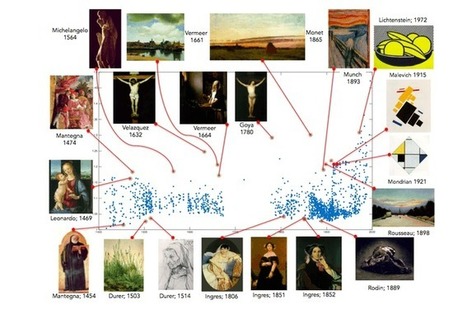
At Rutgers' Art and Artificial Intelligence Laboratory, my colleagues and I proposed a novel algorithm that assessed the creativity of any given painting.
We spent the past few months asking some of the field’s most renowned researchers and entrepreneurs what inspired them to pour their intellectual life into something that once seemed so unlikely and ominous.
"But this technology has been around for years now!" That's the refrain I commonly hear these days when talking to more seasoned AI practitioners about the resurgence of AI and machine learning. The origins of many of the scaled machine learning techniques in vogue today can be traced all the way back to the advent of computing in the late forties.
ets take a close look at three related terms (Deep Learning vs Machine Learning vs Pattern Recognition), and see how they relate to some of the hottest tech-themes in 2015 (namely Robotics and Artificial Intelligence).
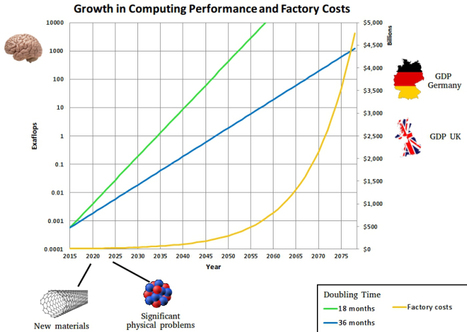
While performing this comparison, I will also discuss the computational complexity of these processes and thus derive an estimate for the brains overall computational power. I will use these estimates, along with knowledge from high performance computing, to show that it is unlikely that there will be a technological singularity in this century.
Free Will Does Not Exist - Should it be a Transhumanist Enhancement?
I agree with that statement. So do the vast majority of today’s scientists; neurology and psychology journals increasingly define free will as “an illusion… a figment of our imagination.”
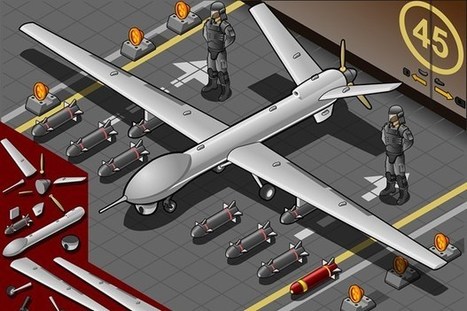
Stephen Hawking and Elon Musk are among 1,000 academics, researchers and public figures to warn that a global robotic arms race "is virtually inevitable" unless a ban is imposed on autonomous weapons
In reality, pervasive computing refers to the futuristic concept of computerization of all the objects in the real world, turning them into a part of an information and communication system.
With the two technologies set to meet, lines between sci-fi and a high-tech new reality continue to blur. Industry experts see no reason to be fearful.
A reincarnation of one of the oldest ideas in artificial intelligence could finally make it possible to truly converse with our computers. And Facebook has a chance to make it happen first.
Instead of focusing on the how of IoT, customers need to be focused on the what of IoT—namely the data. All of the strategy and shiny objects in the world won’t help if the data isn’t accurate, secure, and actionable. The data should always drive the strategy...
We're all familiar with the likes of Siri, GoogleNow, Cortana, and, most recently, Amazon Echo. These supposedly intelligent software apps can lead us to the nearest coffee shop, remind us of upcoming meetings, and even give us a good laugh when we foolishly ask what 0 is divided by 0.
The fundamental question to keep in mind is the following, "Are the learned weights of a neural network derivate works of the input images?" In other words, when deep learning touches your data, who owns what?
Enterprise software is about to undergo radical transformation — a substantial change that will make the shift to software as a service (SaaS) look like a simple facelift. This transformation is being powered by machine learning.
Few people in the tech world can truly be said to “need no introduction.” Stephen Wolfram is certainly one of them. But while he may not need one, the breadth and magnitude of his accomplishments over the past four decades invite a brief review: Stephen Wolfram is a distinguished scientist, technologist and entrepreneur. He has devoted…
Non seulement il y aura de moins en moins d’emplois pour les gens qui font un travail manuels, mais les emplois intellectuels seront également remplacés par des ordinateurs. Presque toute les industrie et les professions seront touchées et cela va créer un ensemble de problèmes sociaux parce que la plupart des gens ne pourront pas s’adapter à un tel changement dramatique.
Robots made entirely out of soft materials could be real game-changers. They could integrate more easily with human activities ranging from the ordinary to the exceptional.
To get content containing either thought or leadership enter:
To get content containing both thought and leadership enter:
To get content containing the expression thought leadership enter:
You can enter several keywords and you can refine them whenever you want. Our suggestion engine uses more signals but entering a few keywords here will rapidly give you great content to curate.


 Your new post is loading...