



Follow, research and publish the best content
Get Started for FREE
Sign up with Facebook Sign up with X
I don't have a Facebook or a X account
Already have an account: Login

Vectorology - GEG Tech top picks
22.3K views |
+2 today
 Your new post is loading...
 Your new post is loading...
Your new post is loading...
 Scoop.it!
BigField GEG Tech's insight:
Here, the authors describe the production and application of lentiviral vectors to express cell death proteins in eukaryotic cells. A packaging cell line, usually HEK293T cells, is transfected with viral packaging plasmids and your gene of interest, which is flanked by long terminal repeat sites with an internal ribosome entry site in the 5′UTR (Un translated region). Virions are harvested from the supernatant and can be directly used to transduce target cells. Varied selection markers as well as a variety of promoters that regulate expression of the gene of interest make this system attractive for a wide range of application in many cell lines or in whole organisms. 
Scoop.it!
BigField GEG Tech's insight:
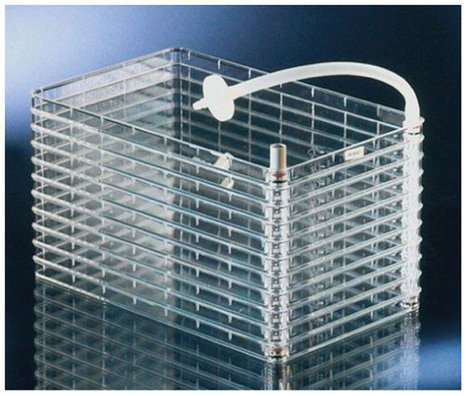
In this work, the authors want to introduce a combination of six oncogenes into primary porcine hepatocytes using a lentiviral vector mediated gene transfer. In order to improve the protection of the laboratory personnel manipulating such LVs, they used a compact cell culture cassette. Their results demonstrated that this system is compatible for lentiviral production through plasmid transfection of 293T cells with a similar efficiency as conventional open cell culture systems.
|
Scoop.it!
BigField GEG Tech's insight:
This review compares published large-scale production and purification processes of LV and presents their process performances. Furthermore, developments in the domain of stable cell lines and their way to the use of production vehicles of clinical material will be presented.
Scoop.it!
BigField GEG Tech's insight:
Suicide gene therapy is a very attractive approach for severe diseases such as cancer. However, this type of strategy is limited by the development of efficient gene transfer tool to deliver this type of genes. Indeed, they often induce toxic effects during their production in viral vectors which makes difficult to vectorize them in lentiviral vectors. To overcome this limitation, the authors of this study designed a lentiviral vector which contains an intron with two poly-A signals and several stop codons between the promoter and transgene. In this way, the gene of interest is not express during the production cycle by the packaging cells. They tested this design with the GFP under the control of CMV. They detected no expression of the reporter gene during the production and between 65% and 78% of positive cells after transduction step (hela and 293T cells). Furthermore, the PCR test on genomic DNA of transduced cells confirmed the splicing of the intron. This study presents a novel method for overcoming the toxicity issue of toxin genes during production of viral vectors using intron splicing trick for preferential gene expression in transduced cells without affected drastically the titer of the vector. The authors have designed and constructed a transfer vector which will have promising applications in more efficient suicide gene therapy.
To know more about the Article To know more about GEG Tech’s lentiviral vectors
|



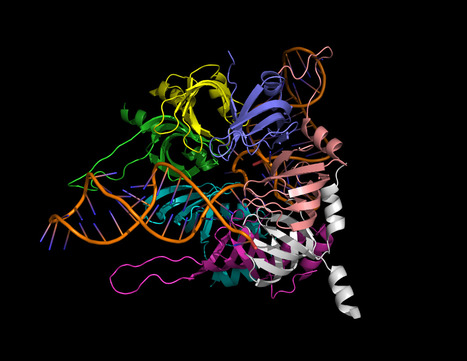





The manufacture of large quantities of high-quality DNA is a major bottleneck in the production of viral vectors for gene therapy. Touchlight Genetics has developed a proprietary abiological technology that addresses the major issues in commercial DNA supply. The technology uses ‘rolling-circle’ amplification to produce large quantities of concatameric DNA that is then processed to create closed linear double-stranded DNA by enzymatic digestion. Here the scientists have demonstrated that functional lentiviral vectors can be produced using the novel dbDNA™ configuration for delivery in vitro and in vivo.