


Follow, research and publish the best content
Get Started for FREE
Sign up with Facebook Sign up with X
I don't have a Facebook or a X account
Already have an account: Login

Vectorology - GEG Tech top picks
22.3K views |
+21 today
 Your new post is loading...
 Your new post is loading...
Your new post is loading...
 Scoop.it!
BigField GEG Tech's insight:
This study investigated the role of KLF4 in angiogenesis and underlying molecular mechanisms in human retinal microvascular endothelial cells (HRMECs). In this way, the authors used lentiviral vectors which mediated inducible expression and shRNA knockdown of KLF4. The demonstrated that KLF4 promotes angiogenesis by transcriptionally activating VEGF expression, thus activating the VEGF signaling pathway in HRMECs. 
|
Scoop.it!
BigField GEG Tech's insight:
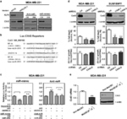
Here, the authors used shRNA lentiviral vectors to knock out KLF4 or miR-206 in MDA-MB-231 cells and determine its effect on Mammary cancer stem-like cells (MaCSCs) abundance. Their results identify miR-206 as an effector of KLF4-mediated prosurvival signaling in MaCSCs through repression of PDCD4 and CX43.
|







In this wory, the scientists used used a combination of lentiviral vectors expressing hepatic fate-conversion factors with Oct4, Sox2,Klf4, and Myc to convert mouse embryonic fibroblasts into hepatic cells ( iHepL cells). When transplanted into partial hepatectomized and hepatic irradiated mice, iHepL cells differentiated into hepatocytes and cholangiocytes. However, iHepL cells formed malignant non-teratoma cell aggregations in one out of five engrafted livers and five out of five xenografts assays. All the cells in these tumors had silenced key hepatic fate-conversion factors, and lost hepatic features.
This study highlights the dangers of using pluripotency factors in reprogramming strategies when fate-conversion factors are silenced in vivo, and urges us to perform extensive tumorigenic tests in reprogrammed cells.