 Your new post is loading...
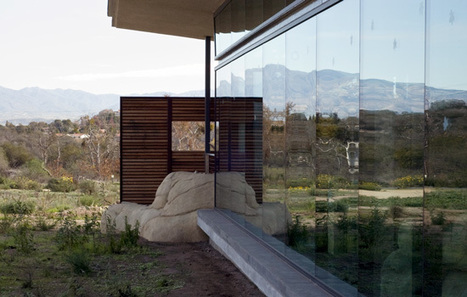
Daylight is a highly cost-effective means of reducing the energy for electrical lighting and cooling. Education often reduces the aspect of daylight to eye-catching effects on facades and scarcely discusses its potential effects – not just on cost, but on health, well-being and energy. This Light Matters will explore the often unexplored aspects of daylight and introduce key strategies to better incorporate daylight into design: from optimizing building orientations to choosing interior surface qualities that achieve the right reflectance. These steps can significantly reduce investment as well as operating costs and so much more...
Via Lauren Moss, Lola Ripollés
MARS Architects snagged first place in an international competition for the design Walltopia's Collider Activity Center, Sofia's first sustainable mixed use center. Located in Sofia, the Collider Activity Center will mark the city's first green mixed use center to combine both leisure and exercise space. To tie together the site’s diverse programs, the architects inserted a series of dramatic climbing atriums into the folds of the building, creating a continuous climbing experience.
Via Lauren Moss

|
Rescooped by
association concert urbain
from BIM
December 1, 2013 8:21 AM
|
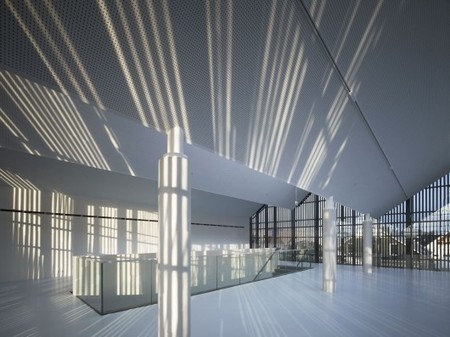
The newly-built Allianz Riviera Stadium in Nice, France, located 15-km away from Nice’s historical centre, and sitting in the heart of the Éco-Vallée of Plaine du Var, is actually comprised of three projects – a 35,000-seat multi-purpose stadium, a sports museum and an extensive, mixed real-estate development plan – all designed to meet specific environmental and urban integration requirements. This large-scale intervention works in a coherent and intelligible manner so as to encourage urban synergy. Largely inspired by a flying bird, the stadium’s overall shape essentially reflects the aim to reinforce the surrounding urban fabric. Likewise, shifting services like parking, underground allows for generous green spaces connecting the building to the rest of the neighborhood.
Via Lauren Moss, arvind bhandari
As populations continue to move to urban areas, architects must address how their designs will impact the cities they are trying to improve— and those inhabitants whose access to clean air is determined by their proposals. How can architects best use design to repair the health of our cities? Visit the article link for project links and an overview of some of the innovative ways architecture addresses climate change, air quality, emissions and is rethinking our cities through design, technology and new approaches to sustainable urbanism...
Via Lauren Moss, Flora Moon
At a construction cost of $130 million, Newport Beach City Hall and Civic Center is a significant project for Orange County, not only in terms of size and scope, but also with regard to aesthetics and sustainability. The contemporary steel and glass design has a very distinct appearance, reflecting a sense of movement through the repeated use of curved structural members that create rhythm and add scale. Louvers at the ceiling and wall planes reguate daylight and add visual continuity throughout the entire project, linking the new city hall to the renovated library and creating a public gathering area for the community. Set to achieve LEED gold certification, the design features clerestory windows that maximize daylighting while deep overhangs allow for passive cooling. Operable windows allow occupants to take advantage of the mild coastal climate while enjoying views to the park outside, which adds 12 acres of trails, wetlands and recreation space to the city's parklands.
Via Lauren Moss
The proposed 116-story Imperial Tower will offer a slew of sustainable options. Adrian Smith + Gordon Gill Architecture‘s latest proposal for Mumbai’s tallest building—the slender 116-story, 400-meter residential Imperial Tower is designed to "confuse the wind." This simply means that the extremely tall and thin tower will stand up to the forces of wind. Enhanced by sky gardens, designed to dampen wind eddying about the tower, the futuristic pencil-like structure will stand strong against a sudden gale. AS+GG also designed the skyscraper to minimize its effects on climate change. Environmentally friendly features include rainwater harvesting, gray water recycling, and exterior cladding to limit solar heat gain...
Via Lauren Moss
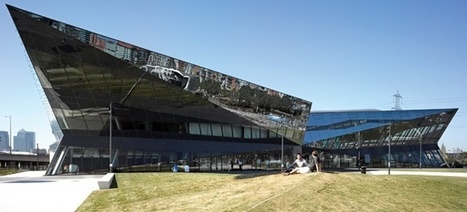
Part office, part exhibition space, a new London landmark aims to challenge our assumptions about green design. A new building in east London’s Royal Victoria Docks aims to change public perceptions of green architecture – while trialling some new sustainable technologies and approaches at scale. There’s not a green roof or thick insulated wall in sight. In fact, the structure, which is called the Crystal, is everything we’ve come to believe a sustainable building shouldn’t be: lightweight, angular, glazed from top to bottom and with a roof made out of steel. Part office space, part interactive exhibition about the future of cities, the building is intended as a living experiment in sustainability that business leaders, politicians and the general public alike can learn from. “The building is a great demonstration of the ‘art of the possible’”, says Martin Hunt, Head of Networks and Partnerships at Forum for the Future. “It’s refreshing to see an interactive exhibition that visualises what our cities could be like – based on high quality research and thoughtful benchmarking. It brings the big issues of urban living – such as water and energy consumption, public health and safety – to life in a way that engages people and inspires them.”
Via Lauren Moss
|
|
Rescooped by
association concert urbain
from green streets
November 27, 2012 3:06 PM
|
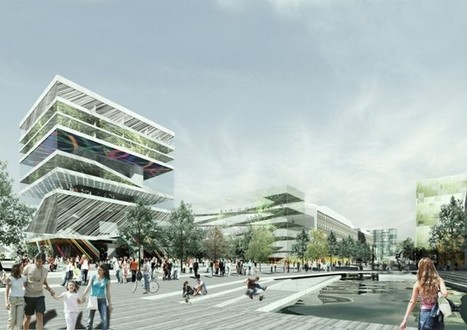
The H+ project is one of Sweden’s must ambitious planning and urban renewal projects. The ongoing process aims to radically transform the southern parts of Helsingborg connecting them to the sea through the “Blue-green connection”, a landscaped water feature. The central core of the H+ project is located around the Bredgatan area, a former industrial sector. Located between the old city and the harbor, this area will be one of the first to undergo transformation and currently lacks housing, public services and has a poor public spaces. The aim is to transform the area into a mixed urban fabric, keeping the spirit of entrepreneurship and enhancing the collaboration between university and companies. The varying width and depth of the central promenade gives ever new perspectives. Variation in scale and building typologies, mixing old and new, creates a dynamic urban fabric with a combination of intimate and more spectacular public spaces. Along the canal ground floors are used for education, café, restaurants, and office. See more images and read about this ambitious and innovative urban regeneration and redevelopment project at the full article on the project.
Via Lauren Moss
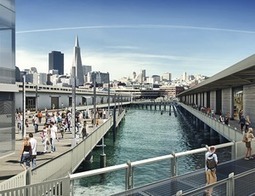
When the Exploratorium science museum in San Francisco relocates next spring to a new $220-million waterside home, visitors no doubt will marvel first at the spectacular views of San Francisco Bay from the building's perch on Piers 15 and 17.
Less noticeable is the network of heating, cooling, water-use and other systems that assist in achieving the goal of net-zero energy use—a lofty target for a major museum. The new 422,166-sq-ft Exploratorium will be nearly three times larger than the museum's current facility at the landmark Palace of Fine Arts. The new building also could be the largest net-zero energy museum in the world, according to Nibbi Brothers, San Francisco, the project's general contractor. Stop by the link to learn more about the city's new Exploratorium and how the project team plans on achieving the high energy-efficiency goals through green design strategies, innovative technologies and renewable energy systems...
Via Lauren Moss
Energy Plus House by Unsangdong Architects creates a new type of energy-producing sustainable housing.
A combination of natural properties and technology, this green home incorporates all elements, such as the structural system, materials, spatial composition, landscape and lifestyle into it's passive design and optimized intelligent energy system. The result of a collaboration between UNSANGDONG Architects and Kolon Institute of Technology, the building has acquired Passive House Certificate from the Passivhaus Institut in Germany. Read the complete article for details on Passivehaus requirements, as well as the green strategies and systems incorporated into the dynamic exterior and minimalist interior of the E+ Green Home...
Via Lauren Moss
Located on the outskirts of a small settlement in the South of Austria’s Burgenland region, L-House is surrounded by the brilliance of natural light. This new home for a young family is harmoniously placed into the hilly landscape. The traditional and typical L-shaped floor plan of the region was developed further in an imaginative and thoughtful way advancing modern home, energy and living concepts. The client wished for a contemporary living experience that is blended into the surrounding landscape. The result is a surprising habitat that reflects the way the family lives incorporating design quality, sustainability and functionality in everyday life. The L-House is an avant-garde architectural gem that merges the needs of it’s residents with the environment...
Via Lauren Moss
"A Portuguese military site, reimagined as a coastal conservation center, has taken top honors in this year’s Architecture for Humanity Open Architecture Challenge. The theme of the competition, called on architects and designers worldwide to identify retired military installations in their own backyard, and to collaborate with local stakeholders to reclaim these spaces for the greater social, economic, and environmental good."
Via Lauren Moss, João Greno Brogueira, ABroaderView
|
|
|
Rescooped by
association concert urbain
from PROYECTO ESPACIOS
December 15, 2013 8:22 AM
|
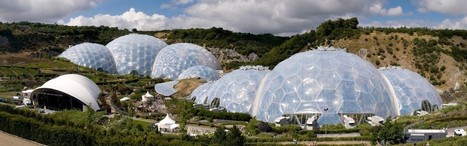
The largest natural biome in the world is the maroon colored Taiga, a Russian word for forest, covering large parts of Canada, Europe and Asia with coniferous forests. The term “Boreal” forest refers to the southern part of this biome and has heavier tree cover while the Taiga refers to the northern portion which is a mostly barren area that borders the Arctic treeline. In order to understand how biomes work, scientists and researchers have created projects like Biosphere and Eden. The design refers to the integration of architectural structures into natural ecosystems, emphasizing a symbiotic relationship between buildings, landscapes, people and nature.
Via Lauren Moss, Proyecto Espacios
|
|
Rescooped by
association concert urbain
from retail and design
October 26, 2013 1:55 PM
|
The Gippsland Water Factory’s Vortex Centre houses office and laboratory functions and an interpretive experience for a major new water recycling plant. The vortex form of the building strongly expresses the dynamic movement of fluids down a pipe, at the same time providing a unique internal environment. Combining cost performance, aesthetics, water education and ecological intelligence, the 650m2 facility is a beacon of exemplary sustainable design. The centre was designed as a teaching building, taking inspiration from a giant oculus, with a shell made up of seven barrels that fit into one another as they decrease in size, thereby resembling a vortex.
Via Lauren Moss, Lola Ripollés
|
|
Rescooped by
association concert urbain
from Architecture
July 18, 2013 3:18 PM
|
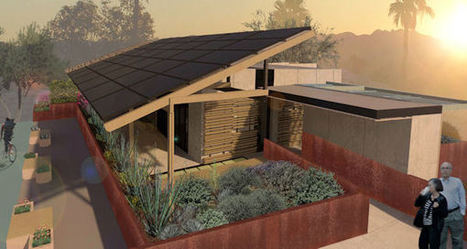
Team ASUNM, a collaborative effort between Arizona State University and University of New Mexico, has come together to address the inefficiencies of urban sprawl and to create a model for sustainable desert living, dubbed SHADE (Solar Home Adapting for Desert Equilibrium), which is an entry in the Solar Decathlon 2013 competition that takes place on October 3-13, 2013 in Irvine, California. Using external vertical screens and a solar canopy for shade, the SHADE home experiences a stable, consistent temperature with the use of a radiant cooling system used alongside an air cooling unit. Team ASUNM is exploring the residential application of thermal storage to chill water at night to create ice that cools a glycol solution during the day.
Via Lauren Moss, Cloud Illustrator
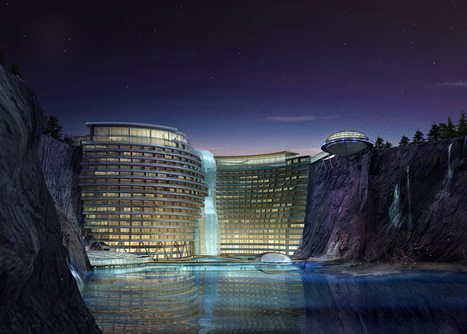
Construction has started on a cave hotel resort by Atkins that will nestle into the rockface of an abandoned water-filled quarry near Shanghai, China. Once complete, the hotel will offer around 400 rooms, as well as conference facilities, a banquet hall, restaurants, a swimming pool and a water-sports centre. The building will use geothermal technologies to generate its own electricity and lighting, while greenery will blanket a roof that extends just two storeys above the edge of the quarry. Sustainability is integral to Atkins' design of this unique resort, built into an abandoned, water-filled quarry.
Via Lauren Moss
NASA's new Sustainability Base was designed by William McDonough + Partners to embody the spirit of NASA while fostering collaboration, supporting health and well-being, and exceeding the requirements of LEED® Platinum. An exoskeleton approach provides for structural stability during seismic events, facilitates glare-free daylighting and shading, natural ventilation and connection to the outdoors, and flexibility of the workspace with its column-free interior. Atop the two-story 50,000-square-foot building is a solid-oxide fuel cell and rooftop solar arrays, supplying the building with more energy than it requires and sending surplus back to the grid at Ames Research Center in Mountain View, California. Currently running on natural gas, the fuel cell is ready to be converted to landfill gas when a source is available...
Via Lauren Moss
Taipei just broke ground on a twisting skyscraper that is wrapped with a jungle of vertical gardens... Designed by Vincent Callebaut Architecture, the 455,000-square-foot Agora Tower will have an orchard, a vegetable garden, space for aromatic and medicinal plants, and a compost and rainwater capture system.
Designed to mimic two encircling hands and the helical structure of DNA, the towers are organized a central core that allows for a “hyper-abundance of suspended gardens.” These will spill over with edible and decorative plants, enabling residents of 40 luxury apartments to harvest a great deal of their own food (except for protein.) Plus, the rainwater capture system alleviates pressure on the municipal water supply and gives the complex even greater independence. Each 540 square meter apartment will have an interior green wall as well, ensuring optimum air quality and a great green aesthetics. A circular light funnel will push daylighting right down to the basement of the building, a solar roof will provide energy, and low E glass will mitigate excess solar gain and prevent thermal loss. Complete with nanotechnology and a host of other high-tech features, this one-of-a-kind tower may well be the greenest of its kind when it is completed circa 2016....
Via Lauren Moss
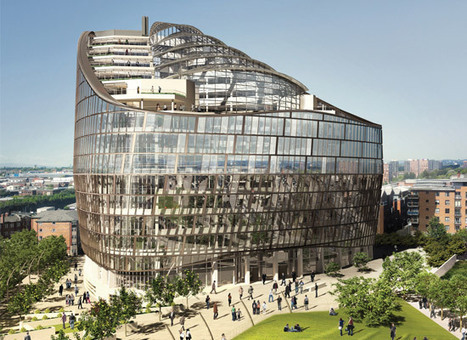
BREEAM is the world’s foremost environmental assessment method and rating system for buildings, with 200,000 buildings certified and around a million registered for assessment since it was first launched in 1990. The largest commercial office in Manchester has now become the highest scoring BREEAM ‘Outstanding’ building in the UK with a score of 95.32%. Designed by 3DReid, The Co-operative Group’s new £115 million low-energy, highly sustainable headquarters brings their 3,500 staff under one roof in a spectacular 500,000 square foot building. The building, known as 1 Angel Square, has been designed to deliver a 50 per cent reduction in energy consumption compared to The Co-operative’s current Manchester complex and an 80 per cent reduction in carbon. This will lead to operating costs being lowered by up to 30 per cent...
Via Lauren Moss
MAD has unveiled plans for a towering village of apartment blocks beside the Huangshan Mountains in eastern China.
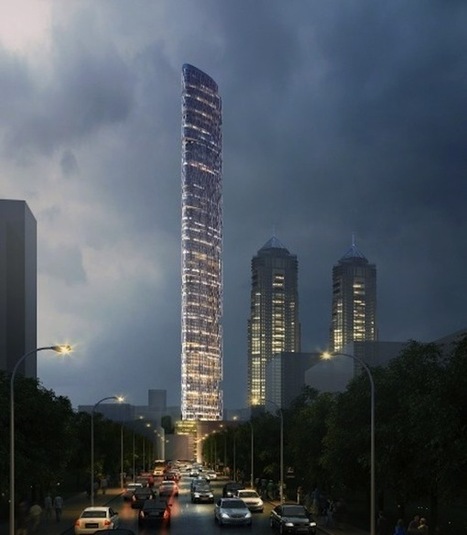
Inspired by the topographical layers of the landscape, the buildings will have organically shaped floor plates and will emerge from amongst the treetops on a site beside the Taiping Lake. The high-density village features low-rise residences that echo the contours of the surrounding topography and offer unequalled access to one of China’s landscapes. The site of verdant scenery and limestone cliffs have long inspired artists and offered sheltered spaces for contemplation and reflection, contributing to its UNESCO Heritage status. Composed in deference to the local topography, the village provides housing, a hotel and communal amenities organized in a linked configuration. As its form evokes the geology of the region, the village blurs the boundaries between the geometries of architecture and nature. For residents, the apartments will be a quiet retreat – all have spacious balconies which overlook the lake. Communal amenities and walking paths encourage residents to explore the landscape. Each floor is unique and accessed from shared social spaces, creating a seamless balance between private and public spaces. The same serene design sensibility of natural environment extends to the interiors, with the use of local materials and the incorporation of plants and greenery enhancing comfort and well-being, while simultaneously setting up a closer connection with local culture...
Via Lauren Moss
WELCOME TO SUSTAINABLE ARCHITECTURE + GREEN BUILDING
A daily update of current technologies, case studies, events, projects and fascinating sustainable design strategies being implemented across the globe... Related topics include: green streets and green infographics. Stay in touch: blog: mydstudio.com twitter: @MYDstudio facebook: facebook.com/MYDesignstudio google+: plus.google.com/+MYDstudio linkedin: linkedin.com/laurenmoss
Via Lauren Moss
|
|
Rescooped by
association concert urbain
from Urbanisme
September 13, 2012 2:28 PM
|
For more than a century what we know of as Modern Architecture has spread and flourished in every corner of the globe. Though the term International Style was not popularized until the 1930s architects the world over had been discovering the ways in which modern technologies and materials made possible by the industrial age could be put to use in the art of building since well before the turn of the last century. Starting with such great architects as Frank Lloyd Wright, Louis Sullivan, Philip Johnson, Walter Gropius, Le Corbusier, and Ludwig Mies van der Rohe, the Modern movement in architecture was, and is still, an expression of man’s conquest over his environment; his ability to place the exact same building in any city on any continent anywhere in the world and have it function, look, and feel the exact same. It was the homogenization of architecture, and it was a great fault in human history.
Via Lauren Moss, Lockall
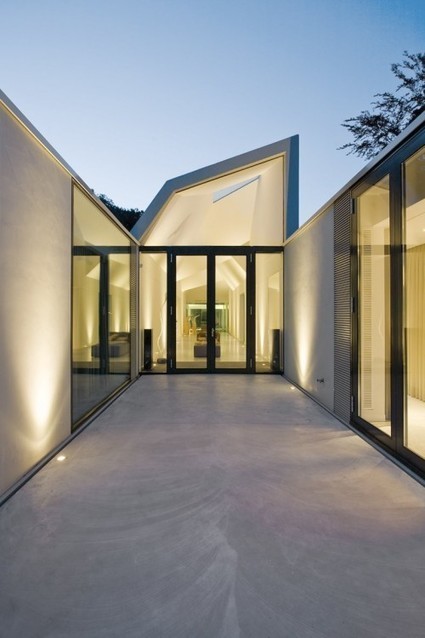
Villa 4.0 is a minimalist house located in Het Gooi, The Netherlands, designed by Dick van Gameren Architects. The prime purpose of the project was to create a home that was much more sustainable than its previous institution. The existing structure was extended & modernized with insulated walls and windows- walls at the center of the home were removed to create a new living room looking out into the surroundings. The renovation creates a bond between the home and the landscape with a glass pavilion at the living hall...
Via Lauren Moss
Biomorphic House with organic skin designed by Pavie Architects & Design has aerodynamic shapes, and is situated 1000 meters over the Mediterranean Sea. It's formed to withstand winter storms perfectly and provides enough windows with transparent photovoltaic-cells to secure power sufficient for the heating, and electricity needs. The interior design is the natural extension of the inside of the skin. Free shaped floors, walls and ceilings give the feeling of a super luxurious space ship. This pilot project, through a self-powered water electrolyze process, converts the obtained energy to hydrogen and saves it for a future use. Later, a hydrogen powered PEM-Fuel-Cell generator can supply electricity to the house, releasing pure water and reusable heat as side-products...
Via Lauren Moss
|




![[Nice, France] Allianz Riviera Stadium by Wilmotte & Associés | The Architecture of the City | Scoop.it](https://img.scoop.it/mI_4_fgkqeSOTIaxtfGg-zl72eJkfbmt4t8yenImKBVvK0kTmF0xjctABnaLJIm9)














![[CHINA] Huangshan Mountain Village: sustainability grows in the Chinese landscape | The Architecture of the City | Scoop.it](https://img.scoop.it/kNvEi8RWVxvePpmkv6JZVjl72eJkfbmt4t8yenImKBVvK0kTmF0xjctABnaLJIm9)












La luz es importantísima par ala eficiencia y para el confort.