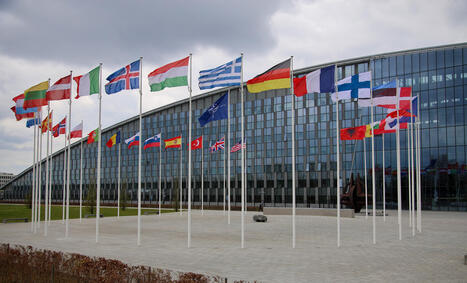
Russia’s 2022 invasion of Ukraine and the rise of strategic competition in the Asia-Pacific have forced U.S. allies to reassess defense preparedness, military capabilities, and international industrial collaboration. In response, many allied governments across Europe and the Asia-Pacific have significantly increased defense spending and introduced initiatives aimed at strengthening domestic industrial capacity. At the same time, the Donald Trump administration has repeatedly called for allies to spend more on defense and take responsibility for their own security challenges, codified as “burden-sharing” in the 2026 National Defense Strategy.
To measure how U.S. allies and partners have responded, CSIS examined trends across NATO and the Asia-Pacific and found significant growth in military expenditures, procurement, and industrial initiatives. In other words, allies are adapting their defense postures to an increasingly complex security environment.
In European NATO countries and Canada, defense spending has grown by over 50 percent since 2022. Allies in close geographic proximity to Russia have particularly accelerated modernization efforts. Poland, the Baltics, and Scandinavia have increased their defense spending by 71 percent, 134 percent, and 126 percent, respectively, since 2022. European allies are also expanding defense cooperation and procurement with one another, signaling a gradual diversification of procurement sources beyond U.S. systems. Most of the $50 billion in recent deals announced around the NATO Summit are still prospective, but they indicate an increased desire for industrial collaboration to create greater allied production capacity and significantly improve collective readiness.
Asia-Pacific partners are likewise raising defense expenditures—albeit at a generally slower pace than NATO countries—and pursuing greater international industrial collaboration through initiatives such as AUKUS (the trilateral security partnership between Australia, the United Kingdom, and the United States) and the Partnership for Indo-Pacific Industrial Resilience (PIPIR). Japan has increased defense spending by 60 percent in the past decade, for example, although it started at a very low level in absolute terms.
South Korea, meanwhile, is becoming a significant exporter of military equipment to countries around the globe. However, industrial collaboration efforts outside of AUKUS that aim to strengthen regional resilience and reduce supply chain vulnerabilities are currently more aspirational than real.
Although the rhetoric between the United States and some traditional allies has been particularly challenging at times, allies are spending more, building industrial capacity, and continuing to partner with U.S. firms. U.S. policymakers should seize the strategic opportunity that this moment presents to create new avenues for coproduction, licensed manufacturing, technology sharing, and industrial partnerships that can strengthen both U.S. and allied capabilities. With the creation of an assistant secretary of war for international armaments cooperation and numerous other initiatives focused on sharpening security cooperation, the conditions are ripe for the Department of Defense (now called the Department of War) to exponentially grow international industrial collaboration efforts over the next several years.
The strongest alliances and partnerships will be those that combine resilient national defense industries with deep industrial cooperation, interoperable military capabilities, and shared technological innovation.
Ultimately, burden sharing has become more about collective industrial capacity than anything else. The ability to manufacture munitions, sustain advanced weapons systems, stabilize critical supply chains, and rapidly expand production during crises has become central to effective deterrence. The strongest alliances and partnerships will be those that combine resilient national defense industries with deep industrial cooperation, interoperable military capabilities, and shared technological innovation. In this contested security environment, greater allied self-sufficiency and continued U.S. leadership are complementary pillars of a more resilient and sustainable system of collective deterrence and defense.
Background
Since the establishment of NATO, the United States has encouraged its allies to assume a greater share of the costs and responsibilities associated with collective defense. During the Cold War, the U.S. military underwent significant modernization, widening the capability gap between the United States and its European allies. This prompted congressional concerns regarding allied contributions to alliance security. Although today’s strategic environment has changed significantly, there has historically been a great deal of criticism from past U.S. policymakers—most notably former Secretary of Defense Robert Gates—that European allies were not spending enough on defense.
As governments seek greater sovereign capabilities and industrial capacity to strengthen national security and industrial resilience, a natural tension arises from the fact that effective alliances and partnerships depend on interoperability, technology sharing, and closely integrated networks. Rather than representing opposing approaches, these goals are developing simultaneously. Difficult bilateral rhetoric, however, has made the atmosphere for cooperation challenging. Nonetheless, across Europe and the Asia-Pacific, allies are expanding sovereign defense capabilities while building deeper industrial integration through diverse procurement practices, coproduction, and collaborative defense initiatives. An examination of recent defense spending trends, procurement patterns, and emerging industrial partnerships demonstrates that the future of allied burden sharing is not defined by reduced reliance on the United States, but by the development of more capable partners that can strengthen collective deterrence within an increasingly interconnected alliance network.
European and Canadian Defense Spending
Defense spending for Canada and much of Europe has increased dramatically since Russia’s invasion of Ukraine, a pace that has not been seen since the Cold War. European countries have expanded their military spending by roughly 50 percent since 2022, with NATO members accounting for nearly 80 percent of this increase. At the 2025 NATO Summit, allied states committed to raising defense-related investments to 5 percent of GDP by 2035, signaling that governments increasingly view Europe’s changing security environment as a long-term strategic challenge rather than a temporary response to the war in Ukraine. Figure 1 illustrates the upward trajectory of defense-related investment across NATO allies. Although the United States remains the largest contributor to NATO—accounting for nearly 70 percent of total spending within the alliance—European allies are taking strides to increase their military capabilities.
Remot Visualization
As shown in Table 1, defense budgets are larger for NATO members than in previous years, signaling initiatives to grow defense investments. However, the increase in defense spending has not been evenly distributed across the alliance. States located along NATO’s eastern flank, including Poland, Estonia, Lithuania, and Latvia, have increased defense spending at significantly faster rates that many Western European allies, reflecting their heightened threat perceptions and geographic proximity to Russia. Poland currently allocates the highest share of GDP to defense (4.5 percent) among NATO members and has increased its defense spending by over 120 percent since 2015. The country has launched an ambitious military modernization program that includes investments in armored vehicles, long-range strike capabilities, integrated air and missile defense, and expanded personnel strength. The Baltic states have pursued similar strategies, strengthening procurement practices and investing in military infrastructure. Their planned 2026 defense budgets rank the highest in NATO as a share of GDP (Estonia at 5.4 percent, Lithuania at 5.4 percent, and Latvia at 4.91 percent) and they have averaged a 134 percent increase in defense spending from 2022 to 2026, exemplifying a sustained commitment to deterrence and readiness.
Remote Visualization
Moreover, Northern and Western European allies are also increasing defense investments in response to a changing security environment. The Scandinavian countries—Norway, Sweden, Denmark, and Finland—have expanded defense spending by 126 percent since 2022, focusing on capabilities such as air defense, maritime security, munitions, and readiness. Their increased spending represents a significant shift in regional defense priorities, particularly following Finland and Sweden’s accession to NATO. Europe’s largest defense spenders—the United Kingdom, France, and Germany—are also pursuing sustained military modernization efforts, but at a slower rate of increase: 9 percent over the past decade. The United Kingdom has prioritized readiness and industrial capacity, France continues to invest in high-end capabilities and nuclear deterrence, and Germany’s Zeitenwende policy has accelerated efforts to rebuild the German armed forces. Although these countries’ spending increases are more modest, their investments demonstrate a broader European effort to strengthen deterrence.
Figure 2 further demonstrates the significant role that geography plays in the increase in European defense expenditures. Countries bordering or close to Russia—including Poland, Scandinavia, and the Baltic states—have experienced the largest increases in military expenditures since the start of the war in Ukraine, while countries farther from the conflict have expanded their budgets more gradually. This geographic pattern makes it clear that proximity to security threats is the strongest determinant of defense investment.
Remote Visualization
Sustaining higher levels of military expenditure requires governments to translate financial commitments into procurement programs, industrial production and cooperation, and long-term force development. As a result, European states are focused not only on purchasing military equipment but also on expanding sovereign capabilities through building domestic defense industrial capacity and strengthening supply chains. Whether these investments will ultimately produce a more resilient and independent European defense industrial base remains a central question, particularly given the continued reliance of many European countries on U.S. defense systems and transatlantic industrial cooperation.
National and EU initiatives are targeting these priorities. The 2024 European Defence Industrial Strategy (EDIS) seeks to address weaknesses in Europe’s defense industrial base by strengthening production capacity, improving supply chain resilience, and incentivizing collaborative procurement among member states. EDIS prioritizes scaling up European manufacturing of critical defense systems and reducing fragmentation across national markets to reinforce strategic autonomy. Moreover, the Security Action for Europe (SAFE) program, developed in 2025, provides financial assistance to EU member states in the form of loans to support defense investment. This instrument is designed to finance urgent and large-scale expansion of the European defense industrial base. Within NATO, Canada recently announced the start of the Defence, Security and Resilience Bank. Canadian Prime Minister Mark Carney stated that the bank seeks to raise up to $134 billion to “build the foundations of our collective security.”
Although the surge in defense expenditures and ambitious policies reflect the desire for an less-reliant defense posture that can deter ongoing security threats in the region, there are limitations to these types of efforts. First, the defense industrial base is truly global in its composition: U.S., European, and Asian firms currently work together on programs in prime and subcontracting relationships. Second, the European market is simply not large enough to create a “fortress Europe” independent from transatlantic supply chains. Finally, the current European model lacks coordination and cooperation from national defense industries. Domestic manufacturers are operating within small markets, but attempts to spur regional procurement decisions often conflict with national priorities. This helps create supply chain fragmentation, resulting in a reliance on the U.S. defense industrial base and broader global supply chains to fill those gaps. This dynamic highlights the global nature of the defense industrial base, in which critical components, materials, technologies, and production capacity often span multiple countries. Modern defense industries depend on interconnected networks of suppliers and partners, making international cooperation essential to sustaining defense production.
Trends in Defense Trade
As demonstrated in Figure 3, NATO members placed more than 200 defense-related article orders from the United States from 2022 to 2025, underscoring the continued importance of transatlantic defense. These orders were concentrated in high-end capabilities such as long-range air-to-air missiles, surface-to-air missile systems, fighter aircraft, transport helicopters, and air-search radars—demonstrating that European governments continue to depend on U.S. industry for many of NATO’s most technologically sophisticated systems. Rather than indicating a lack of investment, these procurement patterns suggest that European governments have prioritized rapidly fielding advanced capabilities that domestic industry cannot yet consistently provide. In 2025, U.S. foreign military sales (FMS) to NATO allies dropped by almost 40 percent. This change can be attributed to a variety of factors, including bureaucratic bottlenecks, U.S. prioritization of domestic needs, and capability concerns.
Remote Visualization
In comparison, approximately 330 defense-related article transfers occurred among NATO European allies during the same period. These transfers primarily involved platforms such as armored personnel carriers, ship engines, portable surface-to-air missile systems, and vehicle engines. While these transactions demonstrate growing industrial cooperation within Europe, they also illustrate the uneven maturity of the European industrial base. European manufacturers remain more active in producing selected land systems, components, and support equipment than in creating the advanced air and missile capabilities that continue to be sourced largely from the United States. However, NATO members are starting to diversify their procurement sources, with defense-related orders increasingly occurring between European and other allies rather than exclusively with the United States. However, a shift in a single year does not necessarily indicate a broader move away from U.S. systems, and this trend will need to be monitored over time to determine whether is represents a sustained change in procurement behavior.
As illustrated in a recent CSIS analysis of the U.S. defense industrial base, FMS sales grew by over 300 percent in the past decade and there is no indication that FMS will decline significantly in the near term.
Poland accounts for a significant share of defense-related imports from both the United States and other NATO members, reflecting its position as one of Europe’s most active defense investors following Russia’s invasion of Ukraine. Poland’s procurement patterns demonstrate how frontline states have prioritized rapid capability development to strengthen deterrence and readiness. At the same time, defense exports remain concentrated among a relatively small group of Western European producers. Germany exported the largest number of defense-related articles among NATO members during from 2022 to 2025, followed by France, which suggests that industrial capacity, manufacturing infrastructure, and established defense firms remain primary drivers of European defense exports.
The F-35 Lightning II program illustrates both the benefits and limitations of Europe’s current defense industrial model. Fourteen countries have integrated the F-35 into their armed forces, making it one of NATO’s most important platforms for interoperability and collective defense. The aircraft is procured through a multinational industrial partnership led by the United States, with several European firms contributing to its manufacturing and sustainment. At the same time, the program highlights Europe’s continued dependence on the U.S. defense industrial base for advanced capabilities. Aircraft deliveries, upgrades, software, logistics, and long-term sustainment remain tied to U.S. systems and supply chains. As concerns have grown over delivery times, FMS delays, and geoeconomic uncertainty, some European governments have explored interregional alternatives. Nevertheless, for most allies, the operational advantages of the F-35 continue to outweigh the downsides. The program therefore reflects the broader challenge facing Europe: expanding indigenous industrial capacity while maintaining access to the advanced systems that underpin the alliance’s military effectiveness.
Increasing Industrial Collaboration
In an era of often difficult rhetoric between the Trump administration and some NATO countries, industrial collaboration continues apace. The Icebreaker Collaboration Effort Pact, for example, is a multilateral procurement initiative by the United States, Canada, and Finland established in 2024. The approach aligns design, production, and industrial capacity in a way that would be difficult for any country to achieve independently.
Remote Visualization Table 2: Major NATO Summit 2026 Deals Table with 4 columns and 12 rows of data. (column headers with buttons are sortable) Companies/partners Program/system Activity Industrial outcome Lockheed Martin Patriot Advanced Capability-3 Establish missile sustainment facility in Europe Regional maintenance and sustainment capacity Northrop Grumman; 10 NATO nations MQ-4C Triton Letters of interest for procurement Expand NATO surveillance capability Lockheed Martin; Rheinmetall ATACMS Co-production partnership Local missile manufacturing RTX; U.S. Department of Defense Advanced Medium-Range Air-to-Air Missile (AMRAAM) Production feasibility study Assess manufacturing expansion Raytheon; Germany; the Netherlands Stinger missile Bulk procurement with European production requirement Double production by 2030 Boeing; Rheinmetall Italy Small Diameter Bomb (SDB-I) Explore production and sustainment partnership Increase European production capacity Anduril; Poland Barracuda-500 missile Domestic production agreement Domestic missile manufacturing Saab; NATO allies GlobalEye AEW&C Negotiations for up to 10 aircraft valued at $4.5 billion Replaces aging NATO AWACS fleet Airbus; Belgium, Croatia, France, Poland, Spain, Turkey; the United Kingdom A400M Grow joint international fleet Expands multinational airlift capacity Airbus; Finland; Multi-Role Tanker Transport (MRTT) partner nations A330 MRTT Finland joins multinational program Expands shared tanker capacity Isar Aerospace; Maritime Launch Services STARLIFT $140 million space-launch initiative Strengthens allied space resilience 12 NATO nations Critical raw materials Joint initiative for sourcing, transportation, storage, and inventory management Strengthens defense supply-chain resilience and reduces vulnerability to material disruptions Source: Defence24, and the White House.
More recently, as illustrated in Table 2, allies approved at least $50 billion in new defense agreements at the 2026 NATO Summit. Most of these deals are still prospective, but they indicate an increased desire for industrial collaboration to create greater production capacity and significantly improve collective readiness. Saab, a Swedish aerospace and defense manufacturer, will develop a new surveillance aircraft for multiple countries across the alliance to replace Boeing E-3 Sentry AWACS aircraft. NATO countries also launched initiatives to expand the alliance’s fleet of Airbus A400M military aircraft, while also increasing the capabilities of the Airbus A330 Multinational Multi-Role Tanker Transport fleet. Beyond aircraft procurement, NATO has committed $40 million to drone capabilities over the next five years and $1.6 billion to 155-milimeter munitions. These investments reflect a broader effort to strengthen Europe’s defense industrial capacity while improving interoperability across the alliance. In another example of transatlantic industrial cooperation, Lockheed Martin and Rheinmetall will begin coproducing Army Tactical Missile System (ATACMS) missiles in Germany, marking the first time these short-range ballistic missile systems will be manufactured outside the United States.
Ultimately, while Europe and Canada have made substantial progress toward strengthening their respective defense industrial bases through increased spending and initiatives such as EDIS and SAFE, these efforts will not lead to a fully independent defense industrial system. Recent investments in domestic production, multinational procurement, and expanded European manufacturing, however, demonstrate a growing commitment to growing capacity and reducing vulnerabilities within the continent’s supply chains. However, these developments are not occurring through the replacement of U.S. capabilities, but rather through the gradual evolution of a more balanced transatlantic industrial partnership. Programs such as the F-35, ATACMS coproduction in Germany, and expanded European production of aircraft and munitions illustrate that future defense capacity will likely depend on deeper industrial integration with increased European content rather than industrial autonomy.
Strengthening European defense production while maintaining interoperability and cooperation across the alliance will remain essential to sustaining collective deterrence in an increasingly contested security environment.
The United States faces its own production constraints and strategic commitments that limit Washington’s ability to provide defense articles and military assistance to allies. As a result, the future of transatlantic burden sharing will depend not on European independence from the United States or continued U.S. dominance, but on Europe’s ability to develop sufficient industrial capacity to serve as a strong and resilient partner. Strengthening European defense production while maintaining interoperability and cooperation across the alliance will remain essential to sustaining collective deterrence in an increasingly contested security environment.
This presents a strategic opportunity for the United States to reshape its approach to defense industrial cooperation. As the security environment evolves, current initiatives such as FMS reform, coproduction, and coordinated industrial planning offer a path toward a more balanced transatlantic partnership. Rather than measuring success by the volume of U.S. exports alone, policymakers should prioritize policies that increase allied production capacity and accelerate defense manufacturing to improve collective readiness. Such reforms would enable the United States to better manage its own industrial constraints while ensuring that European allies can assume a greater share of the alliance’s defense production burden.
Asia-Pacific Defense Spending
The Asia-Pacific security environment has become increasingly impacted by strategic competition and regional instability. China’s rapid military expansion has altered the regional balance of power and intensified concerns among neighboring states and U.S. allies. Growing tensions across the Taiwan Strait have heightened the risk of a potential conflict that could have significant implications for regional and global security. Additionally, North Korea’s continued missile testing and nuclear weapon development pose a threat to stability on the Korean Peninsula. Like Europe following Russia’s invasion of Ukraine, Asia-Pacific countries have responded by increasing defense spending and pursuing military modernization programs designed to strengthen deterrence and improve readiness.
Figure 4 demonstrates the growth in defense expenditures across major Asia-Pacific partners in the past decade. While these partners are growing defense spending at a more modest pace than NATO countries, the changes are significant. While Australia and South Korea have increased their defense spending by almost 5 percent since 2022, Japan has increased their investments by 60 percent in the past decade, although it started at a very low level in absolute terms. Singapore (48 percent), Taiwan (56 percent), and Indonesia (83 percent) have similarly expanded their military spending in the past decade and are leading the way with Japan.
Remote Visualization Figure 4: Military Expenditure Change in Asia-Pacific, 2015–2025 % change < 0% 0%–15% 15%–25% 25%–70% ≥ 70% New ZealandNew ZealandSouth KoreaSouth KoreaPhilippinesPhilippinesAustraliaAustraliaThailandThailand Singapore 48.87% Indonesia 83.05% Taiwan 56.09% Japan 59.98% Source: SIPRI.
Asia-Pacific governments are taking some steps to create a regional industrial base that fosters industrial collaboration and collective deterrence. However, roughly 70 percent of defense-related orders placed by Asia-Pacific allies continue to be sourced from outside the region, demonstrating that the development of an autonomous regional industrial base remains a long-term objective. Figure 5 demonstrates that Asia-Pacific states are slowly diversifying their procurement sources away from the United States. Additionally, since 2020—and particularly following the spike in orders after Russia’s invasion of Ukraine—Asia-Pacific governments have increasingly sought to deepen defense cooperation with a broader range of international partners. While the United States remains the region’s principal defense partner and will likely continue to serve as the primary supplier of advanced military capabilities, the growing number of transfers from other countries reflects a deliberate effort to diversify procurement relationships.
Remote Visualization Figure 5: Percentage of U.S. Arms Transfers for Asia-Pacific Allies, 2020–2025 Number of arms transfers from the United States Number of arms transfers from the rest of the world 2020202120222023202420250102030405060708090100% 40.32% 38.33% 58.7% 50.98% 35.14% 35.29% Source: SIPRI. The Rise of International Industrial Cooperation in the Asia-Pacific
Many Asia-Pacific states are strengthening deterrence through collaborative industrial and technological partnerships. AUKUS represents an effort to achieve this goal. This trilateral agreement between Australia, the United States, and the United Kingdom seeks to strengthen deterrence through deeper defense industrial integration and advanced capability development. While the nuclear-powered submarine program has become AUKUS’s defining initiative, the partnership also promotes cooperation in AI, quantum technologies, cyber capabilities, electronic warfare, hypersonic weapons, and undersea systems. Collectively, these initiatives are intended to expand Australia’s long-term defense industrial capacity while enabling greater allied specialization and interoperability across the Asia-Pacific.
One of Australia’s principal objectives is to develop a more sovereign and resilient industrial base capable of supporting long-term deterrence. Rather than reducing its reliance on the United States in the near term, AUKUS deepens Australia’s integration with the U.S. defense industrial base through technology sharing, industrial collaboration, and long-term sustainment. Although the Australian government has committed an additional $14 billion AUD ($9.9 billion USD) in defense funding over the next four years, Australia’s defense spending has increased by only about 6 percent since the establishment of AUKUS. By comparison, the United States accounted for approximately 88 percent of total AUKUS member defense expenditures in 2025. These spending patterns demonstrate that while Australia is expanding its contribution to regional security, responsibility for financing and sustaining deterrence remains concentrated in the United States.
Furthermore, Asia-Pacific governments are pursuing broader initiatives designed to strengthen defense industrial cooperation and improve regional resilience. The Partnership for Indo-Pacific Industrial Resilience, launched in 2024, seeks to strengthen allied defense supply chains, expand industrial collaboration, and improve collective production capacity among regional partners. Rather than creating a formal defense organization, PIPIR focuses on improving defense manufacturing resilience and reducing supply chain vulnerabilities through coordinated industrial cooperation. Figure 6 highlights the slow rise in defense expenditures for selected member states. Although still in its early stages, the initiative reflects growing recognition that strengthening regional deterrence requires not only higher defense spending but also more resilient and interconnected defense industries.
Remote Visualization Figure 6: Defense Spending as Percentage of GDP for Asia-Pacific Allies, 2015–2025 Australia Indonesia Japan New Zealand Philippines Singapore South Korea Taiwan Thailand United States 201520162017201820192020202120222023202420250.511.522.533.5% Source: SIPRI.
Beyond regional initiatives such as PIPIR, Asia-Pacific governments are also strengthening security cooperation through partnerships with NATO. The Indo-Pacific Four (IP4)—Australia, Japan, New Zealand, and South Korea—have emerged as NATO’s principal partners in the region, reflecting growing recognition that security challenges in Europe and the Asia-Pacific are increasingly interconnected. Since Russia’s invasion of Ukraine, the IP4 have participated in NATO summits, expanded defense industrial dialogue, and increased cooperation on cybersecurity, emerging technologies, resilience, and interoperability. Although the absence of several IP4 leaders from the 2025 NATO Summit highlighted the fact that regional security concerns remain those countries’ primary focus, it did not signal a retreat from allied cooperation. Instead, it demonstrated that the Asia-Pacific alliance network is developing through flexible partnerships rather than a NATO-style collective defense organization. Together with initiatives such as AUKUS and PIPIR, the IP4 reflects a broader shift toward a networked security architecture in which defense industrial collaboration, technology sharing, and coordinated deterrence complement existing U.S. alliances. As strategic competition intensifies, these overlapping partnerships are likely to strengthen the resilience of the Asia-Pacific defense industrial base while reinforcing the United States’ role as the region’s central security partner.
Japan plays a crucial role within this emerging alliance network, serving as a strong example of how defense industrial cooperation can strengthen security ties across regions. In response to growing regional threats, Japan has committed to substantially expanding its defense budget, like other countries in the Asia-Pacific. Since 2015, Japan’s military expenditure has grown by over 60 percent, an increase that will significantly reframe the country’s previously exclusive self-defense posture, focusing instead on a more proactive alliance-integrated deterrence model. In the next five years, Japan is on track to be the world’s third-largest defense spender after the United States and China.
Within the alliance network, including PIPIR, Japan’s investment in defense signifies the country’s growing prioritization of security. Moreover, in 2023, the Japanese government established the Official Security Assistance, a framework that provides equipment, supplies, and support to allies, bolstering security cooperation. Japan has rescinded its long-standing restrictions on defense exports and recently reached an agreement to deliver the first three of ten Mogami-class frigates to Australia. Japan also hopes to recruit South Korea into the Acquisition and Cross-Servicing Agreement, a logistical support agreement that would operate in peacetime and wartime. Japan is already in this agreement with Australia, the United Kingdom, and the Philippines. These efforts signal an increasingly collaborative posture that aims to improve collective security in the region. Despite these initiatives, Japan’s industry is relatively isolated, creating challenges to the establishment of a competitive industrial base. In this regard, Japan serves as a valuable case study for alliance members in the Asia-Pacific, demonstrating the opportunities and challenges of leveraging industrial cooperation to strengthen regional deterrence and collective security.
Remote Visualization Figure 7: Defense Export Orders for IP4 States, 2015–2025 Australia Japan New Zealand South Korea 20152016201720182019202020212022202320242025024681012141618202224 No. of transfers Source: SIPRI.
Figure 7 highlights the share of exports within the IP4, notably South Korea’s growing role within the regional security structure. The country is strategically positioning itself as an Asia-Pacific hub, focused on sustainment, logistics, and maintenance. South Korea is also expanding its defense-related exports to NATO and other allies. For example, Hanwha Aerospace began production of a new surface-to-air missile that is being marketed to states throughout Europe and the Middle East. Moreover, Poland and South Korea recently announced a new deal focusing on coproducing medium-range precision-guided missiles, building on a 2022 deal valued at more than $14 billion.
South Korea’s export-oriented economic development strategy, pursued since the 1970s, has created a highly efficient advanced manufacturing base capable of producing complex defense systems at scale. Unlike many Western defense manufacturers that contend with higher labor costs, fragmented production networks, and lengthy acquisition cycles, South Korean firms benefit from vertically integrated supply chains, lower production costs, and rapid manufacturing timelines. This combination allows South Korea to deliver modern defense equipment more quickly and at significantly lower prices than many of its Western competitors, making it an increasingly attractive supplier for countries seeking to rapidly expand their military capabilities. Following Russia’s invasion of Ukraine, President Lee Jae Myung reaffirmed South Korea’s ambition to become the world’s fourth-largest defense exporter by 2035.
Additionally, South Korea is strengthening its position within emerging alliance networks. While Seoul continues to pursue greater industrial and strategic sovereignty, its participation in multilateral defense partnerships is expected to expand, reinforcing collective deterrence across the Asia-Pacific. Beyond its involvement in PIPIR, Korean government officials are strengthening trilateral military collaboration between the United States and Japan. South Korea has also deepened defense cooperation with NATO and the IP4. Although the U.S.-South Korea alliance has traditionally centered on deterring North Korean aggression, both governments are increasingly seeking to broaden the partnership to address security challenges across the wider Asia-Pacific. This shift reflects a growing emphasis on interoperability and defense cooperation, positioning South Korea as a key contributor to regional security beyond the Korean Peninsula. These initiatives demonstrate that stronger alliance networks, combined with deeper defense industrial cooperation, can translate national investments into more effective regional deterrence.
Remote Visualization Table 3: Asia-Pacific Missile Production Table with 3 columns and 9 rows of data. (column headers with buttons are sortable) Country Munition Vendor Japan Patriot surface-to-air interceptors Mitsubishi Heavy Industries Japan Evolved Seasparrow Missile Block 2 ship defense missiles Mitsubishi Electric Japan Standard Missile-3 (SM-3) interceptor Mitsubishi Heavy Industries Japan Glide Phase Interceptor Mitsubishi Heavy Industries Japan SM-6 ship defense missiles* TBD Japan AMRAAM air-to-air missiles* TBD Australia Guided Multiple Launch Rocket System Lockheed Martin Australia Precision strike missiles* Lockheed Martin Taiwan Barracuda-500 cruise missiles National Chung-Shan Institute of Science and Technology/Anduril Note: * Production not yet started. Source: Nikkei Asia.
Due to constraints in the U.S. industrial base, states across the Asia-Pacific are seeking alternative methods to achieve their defense acquisition goals. Growing demand for U.S. military equipment—combined with dwindling U.S. munitions stockpiles and production delays stemming from conflicts in Ukraine, the Middle East, and other global contingencies—has extended delivery timelines for many critical weapon systems. As a result, Asia-Pacific governments are placing greater emphasis on coproduction and multinational procurement arrangements to reduce dependence on U.S.-based production capacity while improving the resilience of regional supply chains. Table 3 highlights defense industrial projects that Asia-Pacific nations are pursuing to strengthen their ability to acquire and replenish critical munitions. By expanding local manufacturing and coproduction, these countries seek to reduce risks associated with delays in U.S. production while still maintaining close defense industrial cooperation with the United States.
Like Europe, but at a more modest level, defense investments by Asia-Pacific countries, coupled with industrial cooperation among allies, are laying the foundation for a more resilient collective security architecture. As demonstrated through initiatives such as AUKUS, PIPIR, and the IP4, Asia-Pacific countries are increasingly recognizing that industrial cooperation is a critical component of modern defense strategy.
Like Europe, but at a more modest level, defense investments by Asia-Pacific countries, coupled with industrial cooperation among allies, are laying the foundation for a more resilient collective security architecture.
At the same time, the development of a more integrated regional defense industrial base does not diminish the central role of the United States. Rather, it reinforces the importance of burden sharing by enabling allies to assume greater responsibility while remaining closely connected to U.S. capabilities. Ongoing efforts in the Asia-Pacific are most effective when combined with continued U.S. leadership, industrial cooperation, and technology sharing. Expanding coproduction, increasing interoperability, and deepening technological cooperation will allow allied nations to respond more effectively to future crises while reducing vulnerabilities across the defense industrial base. As strategic competition continues to intensify, the success of the Asia-Pacific alliance network will depend not only on the strength of individual militaries, but on the collective capacity of allied nations.
Conclusion: A Strategic Opportunity
Evolving security environments in Europe and the Asia-Pacific demonstrate that allied governments are increasingly pursuing two complementary objectives: strengthening defense industrial capacity while deepening integration with partners. Investments in domestic production, multinational coproduction, technology sharing, and collaborative procurement are enabling allies to assume greater responsibility for their own defense.
In Europe, initiatives such as EDIS and SAFE seek to expand industrial capacity and reduce supply chain vulnerabilities, while NATO members continue to rely on U.S. capabilities for many of the alliance’s most advanced military systems. Similarly, Asia-Pacific initiatives—including AUKUS, PIPIR, and the IP4—demonstrate that regional security is increasingly built on interconnected industrial and technological networks rather than national capabilities. Countries such as Australia, Japan, Poland, and South Korea are investing heavily in their own defense industries while simultaneously integrating those capabilities within broader alliance frameworks.
At the same time, relations between the United States and some traditional allies have become increasingly strained. U.S. actions—including demands for ownership of Greenland, threats of troop withdrawal from Germany, and heavy criticism of Spain—have generated friction. Nonetheless, allies are spending more, building industrial capacity, and continuing to partner with U.S. firms.
U.S. policymakers should seize this strategic opportunity. Growing defense investments across Europe and the Asia-Pacific create new avenues for coproduction, licensed manufacturing, technology sharing, and industrial partnerships that can strengthen both U.S. and allied capabilities. The United States remains indispensable in the provision of advanced technologies, operational expertise, alliance leadership, and many high-end capabilities that underpin collective deterrence. Realizing these benefits, though, will require adapting the mechanisms through which the United States works with its partners. Modernizing the FMS system and increasing production rates are critical steps toward reducing FMS backlogs and delivering systems to allies and partners on a more timely basis. AUKUS has shown how industrial partnerships help drive real reform. The focus on a specific program—nuclear submarines—has led to export control reforms and other practical advances that can be replicated in other industrial partnerships. The creation of new assistant secretary of war for international armaments cooperation, coupled with the move of the Defense Security Cooperation Agency and the Defense Trade Administration to the Office of the Under Secretary of War for Acquisition and Sustainment, have created a tremendous opening to supercharge coproduction and codevelopment arrangements as well as exponentially increase international industrial collaboration.
U.S. and allied burden sharing has become more about collective industrial capacity than anything else.
Finally, additional acquisition and security cooperation reforms underway could enable international industrial cooperation at the speed demanded by today’s security environment. Ultimately, U.S. and allied burden sharing has become more about collective industrial capacity than anything else. The ability to manufacture munitions, sustain advanced weapon systems, stabilize critical supply chains, and rapidly expand production during crises has become central to effective deterrence. As a result, defense industrial integration is emerging alongside military interoperability as a defining characteristic of modern alliances. The strongest alliances and partnerships will be those that combine resilient national defense industries with deep industrial cooperation, interoperable military capabilities, and shared technological innovation. In this uncertain security environment, greater allied self-sufficiency and continued U.S. leadership are complimentary pillars of a more resilient and sustainable system of collective deterrence and defense.
Jerry McGinn is the director of the Center for the Industrial Base and a senior fellow with the Defense and Security Department at the Center for Strategic and International Studies (CSIS) in Washington, D.C. Celia Barrie is a research assistant with the Center for the Industrial Base at CSIS.
This report is made possible by general support to CSIS. No direct sponsorship contributed to this report.
This report is produced by the Center for Strategic and International Studies (CSIS), a private, tax-exempt institution focusing on international public policy issues. Its research is nonpartisan and nonproprietary. CSIS does not take specific policy positions. Accordingly, all views, positions, and conclusions expressed in this publication should be understood to be solely those of the author(s).
Report IFS Green Budget 2025 UK defence spending: composition, commitments and challenges Bee Boileau Max Warner
Published on 26 September 2025
We examine the past and future of UK defence spending, considering the fiscal and economic consequences of the government’s commitments.
Government finances and spending Defence Government spending Public finance
This government – like its predecessor – has set out ambitious plans to increase UK defence spending. If met, these plans will have a major impact on the public finances, both in this parliament and in the longer term, and have the potential to reshape the British state. In this chapter, we examine the past and future of defence spending, and consider the fiscal and economic consequences of the government’s commitments.
Key findings In 2024–25, the UK spent £66 billion (2.3% of national income) on defence. Defence spending has risen substantially in real terms over time, but by less than economic growth, and so has declined as a share of national income in the decades after the Second World War – a decline often referred to as the ‘peace dividend’. In 1955–56, for example, the UK spent 7.6% of GDP on defence, and in 1990–91 it spent 3.2%. A sustained increase in defence spending as a share of national income would be a break from this historical decline. The composition of the defence budget is changing. The proportion of funding allocated to capital investment, rather than day-to-day spending, stayed constant at around 25% between 2002–03 and 2019–20. It then climbed to 35% in 2023–24, and is set to rise to 43% by 2028–29. This is reflected in the growing share of total funding allocated to military equipment and the declining share going towards personnel. For a long time, the UK had the second-largest defence budget in NATO, but in 2024 the UK was overtaken by Germany.
The US spends around ten times more than the UK or Germany: US spending represented almost two-thirds of the total amount spent by NATO allies in 2024. The UK spent a larger share of GDP on defence (2.3%) than France (2.0%), Germany (2.0%) and the non-US NATO average (2.0%) in 2024. The UK also spends a larger share of its defence budget on major equipment than many countries – including the US – though this is in part due to the costs of the nuclear deterrent. Around half of spending on defence equipment was on the nuclear deterrent in 2023–24. The UK spends a smaller share of its defence budget on personnel than many other countries. The government has committed – as part of a NATO agreement – to increasing defence spending to 3.5% of GDP by 2035, and has already set out the path to hit 2.6% by 2027. This increase is equivalent to £36 billion, or £500 per person, a year in current terms. The Strategic Defence Review, published in June, set out a number of ambitions to improve and reform military capabilities, arguing that they could be delivered within this planned increase in defence spending.
Many European countries – including Germany and Poland – have set out plans to increase spending as a share of national income further and faster, often from lower starting points. At the Spending Review (before the 3.5% commitment was made), the government set out plans for the level of day-to-day defence spending to 2028–29 and capital spending to 2029–30. Current plans imply that defence spending will stay flat as a share of GDP (at 2.6%) between 2027–28 and 2028–29. There is a case for continuing to increase defence spending steadily towards the 3.5% target for 2035 over time, rather than delaying any further increases until the 2030s – not least due to the higher perceived risk of conflict and the challenges of ramping up spending very rapidly. That would, however, add to the government’s fiscal challenges during this parliament. Falling defence spending in recent decades has allowed spending to increase in other areas – such as health and social security – without the size of the state increasing as much as it otherwise would have. But we are now likely to see health and defence spending rising simultaneously. When defence spending was last at 3.5% of GDP, in 1987–88, health spending stood at 4.0% of GDP. We project that by 2035 – when defence spending is planned to return to 3.5% of GDP – health spending could stand at 9.2% of GDP.
Future governments have three broad options to pay for higher defence spending by 2035. The first is to reduce spending on other areas, in order to limit the increase in the overall size of the state. The second is to increase tax revenues to fund the increased spending. The third option is to borrow to fund the increased spending on defence. Borrowing for a permanent increase in defence spending is unlikely to be sustainable, and would be hard to justify on the grounds that defence spending will boost long-term economic growth. There could be a case for using increased borrowing in the short term as a means of delivering immediate increases in spending while more gradually increasing taxes or cutting non-defence spending, but this would need to be weighed against the risks of borrowing more in a delicate, febrile fiscal environment. Alternatively, future governments may decide to scale down plans for defence spending. In practice, the government may struggle to spend all of the announced increase in defence budgets – and particularly may struggle to spend it well given past procurement challenges. Ultimately, the goal is an increase in defence capabilities, and the link between an increased budget and the resulting capabilities is not automatic. Increased international competition, as other countries simultaneously increase their own levels of defence spending, may mean that prices for defence procurement increase if production capacity cannot increase sufficiently fast. The government has emphasised the growth opportunities from higher defence spending. These could come through higher spending on defence research and development (R&D), or – given that the UK is a major defence exporter – higher overseas demand for UK defence firms’ output. But given the size of defence R&D and exports relative to the total size of the economy, neither of these channels is likely to be transformative for growth. Some regions might particularly benefit: the South West, South East and North West of England currently receive the highest per-person levels of UK defence spending with industry. But it is far from obvious that defence spending is more growth-friendly than other areas where public money could otherwise be spent, such as transport or education. Impacts on growth will also depend on how higher defence spending is funded. 7.1 Introduction
For decades, UK defence spending has fallen as a share of public spending and national income. But that trend is now set to reverse, with both the last and current governments making commitments to increase defence spending substantially. This reversal is a major fiscal issue: it will add to the numerous pressures on the public finances, both within this parliament and in future parliaments.
The UK spent 2.3% of national income on defence in 2024–25. This is set to rise to 2.5% (2.6% including the security services) by 2027–28. At the NATO (North Atlantic Treaty Organisation) Summit in June, the Prime Minister announced that ‘core’ defence spending will reach 3.5% of national income by 2035. NATO allies also committed to spending 1.5% of national income on wider ‘resilience and security’. We have less detail on this spending, but the government has suggested it will be met within pre-existing spending plans. Throughout this chapter, we focus on ‘core’ defence spending.
Much of this increase in defence spending has been motivated by a perceived increase in the risk of conflict – most notably following the full-scale invasion of Ukraine by Russia – and a perceived weakening of support for NATO from the US. In February 2025, when the increase in defence spending to 2.5% of GDP by 2027 was announced, Keir Starmer described ‘a world where everything has changed’. The government’s Strategic Defence Review, published in June 2025, argued that ‘for the first time since the end of the Cold War, the UK faces multiple, direct threats to its security, prosperity, and democratic values’. There remains clear pressure on the government to go further and faster than current plans, as many European countries are doing.
In this chapter, we examine the fiscal consequences of the government’s plans and ambitions for defence spending. We start in Section 7.2 by considering how the level and composition of defence spending have changed over time, before looking at how the UK compares internationally on defence spending – both within and outside of NATO.
We next consider the government’s plans for defence spending and military capabilities in Section 7.3. At the Spending Review, the government set out plans for defence spending up to 2028–29 for day-to-day spending and 2029–30 for capital spending. These plans imply that defence spending will stay flat as a share of national income between 2027–28 and 2028–29. Therefore there will very likely be pressure on the government to top up defence spending plans for 2028–29 at the 2027 Spending Review, and at that point it will also need to set out more of the pathway to 3.5% by 2035. With this in mind, we then consider how the government’s plans for defence spending over the next decade compare with those set out by other countries.
Next, we look at the longer-run fiscal consequences of higher defence spending in Section 7.4, taking government policy as stated. In recent decades, the fall in defence spending as a share of GDP has allowed successive governments to increase spending on other areas without increasing the size of the state as much – the so-called ‘peace dividend’. But this is set to reverse, with defence spending growing at the same time as other areas such as health spending. To deliver the 3.5% commitment, future governments will need to either reduce spending on other areas or increase the size of the state – funding the latter through increasing taxes or borrowing. We discuss the merits of these options, with a particular focus on the merits of arguments for funding higher defence spending through higher borrowing.
Finally, we discuss further challenges and opportunities associated with increased defence spending in Section 7.5. A first challenge is the difficulty of translating higher planned spending into increased military capabilities. A second issue – both challenge and opportunity – is the link between higher defence spending and economic growth, which has been emphasised by this government. Section 7.6 concludes.
7.2 A beginner's guide to defence spending How much do we spend on defence, and how has that changed over time?
The question of how much the UK government spends on defence is not entirely straightforward to answer. There are various definitions of defence spending that are suited for different purposes and are often used in different contexts. In this section, we examine several common definitions of defence spending and consider how spending has changed over time on these measures.
One natural measure of defence spending in the UK is the amount spent by the Ministry of Defence (MoD), the government department responsible for defence policy and the armed forces. In 2024–25, this was £60.3 billion. Throughout, we refer to this as the departmental definition of defence spending.1
The United Nations (UN) sets out guidelines for an internationally comparable classification of spending into different categories, called the Classification of the Functions of Government (COFOG). Under this system, the definition of defence spending is slightly different from the departmental definition: it includes some items not part of MoD, such as security and intelligence spending and civil defence, and excludes some components of the MoD budget, such as spending on war museums and some war pensions spending. According to this definition, the UK spent £63.6 billion on defence in 2024–25, £3.3 billion more than the departmental definition. Throughout, we refer to this as the functional definition of defence spending.
Another definition of defence spending is ‘NATO-qualifying’ defence spending, a measure of defence spending common across NATO allies and used to assess performance against NATO spending commitments. This is currently a broader definition than the departmental and functional definitions of defence spending, as it includes additional items (in particular, all spending on the pensions of military personnel). According to this definition, the UK spent £65.8 billion on defence in 2024–25, £2.2 billion more than under the functional definition and £5.5 billion more than under the departmental definition. It is this measure that is the subject of government commitments to increase defence spending to 2.5% or 3.5% of national income. Throughout, we refer to this measure as the NATO definition of defence spending (or NATO-qualifying defence spending).
Figure 7.1 shows how defence spending on these different definitions has changed over time. Panel A shows the real-terms value of defence spending since the 1990s. Defence spending has mostly increased in real terms since the 1990s, with falls in the early and mid 1990s, rapid increases during the 2000s (during which the UK was involved in conflicts in Afghanistan and Iraq), falls in the early 2010s and then increases again in the second half of the 2010s (with larger increases under the NATO definition). In other words, the UK spends much more on defence than it has in the past in real terms.
Figure 7.1. Defence spending over time
Note: Departmental definition is for MoD only and takes plans as of Spending Review 2025 and adjusts spending backwards using growth rates from old Public Expenditure Statistical Analyses (PESAs). MoD spending is adjusted to account for changes to employer National Insurance contributions, Machinery of Government changes, increased pension contributions (SCAPE), and budget cover transfers in 2023–24. Functional line takes out-turns directly from PESAs (various). NATO line is drawn from various NATO documents; figures for 2024–25 and 2025–26 are estimates on 3 June 2025. The definition of NATO-qualifying defence spending most notably shifted in 2005, when military pensions began to be included. Panel C uses the functional definition of defence spending.
Source: Authors’ calculations using: HM Treasury, PESAs (various), Autumn Budget 2024, Spring Statement 2025 and Spending Review 2025; GDP deflator as of 30 June 2025; Office for Budget Responsibility, Fiscal Risks and Sustainability – July 2022; and NATO, Defence Expenditure of NATO Countries (2014–25).
However, the size of the economy has also grown in real terms over time, meaning that the trends in defence spending as a share of national income – the proportion of available resources in the UK economy that are allocated to defence – look rather different. These are shown in Panel B. Although defence spending has tended to rise in real terms over time, this has mostly been offset by a rapidly growing economy, and so defence spending has tended to fall as a share of GDP. In 1990–91, just after the Berlin Wall fell, NATO-qualifying defence spending stood at 3.3% of GDP, while in 2024–25 it stood at 2.3%.
For more historical context, Panel C shows defence spending (using the functional definition) as a share of national income over a much longer time horizon, starting in 1700. There have been large changes in defence spending over time, with significant increases in wartime, particularly during the two World Wars. There is a clear decline in defence spending as a share of national income since World War II – this is often termed the ‘peace dividend’.
What is the defence budget spent on?
Beyond the total level of spending, what really matters is what defence budgets are spent on and how that translates into defence capabilities. In this subsection, we consider various ways of decomposing UK defence spending.
Capital versus day-to-day spending
One important distinction in the UK public spending framework is between capital and day-to-day spending, with budgets set separately for each. Both the Single Intelligence Account (SIA), which funds the UK’s security and intelligence agencies, and the Ministry of Defence are relatively capital intensive, in that a large share of their total spending is on investment (e.g. purchasing new aircraft carriers or submarines) rather than day-to-day spending (e.g. paying soldiers’ wages). Figure 7.2 shows the planned capital intensity – the fraction of the total budget going towards capital – of each government department in 2025–26. As shown, the SIA is the seventh-highest department by capital intensity and the MoD is the fifth-highest.
Figure 7.2. Planned capital intensity by department in 2025–26
Source: Authors’ calculations based on HM Treasury, Spending Review 2025.
In absolute terms, the MoD has the largest capital budget of any government department. In 2025–26, its capital budget is planned to be £23.2 billion, followed by £21.8 billion for the Department for Transport and £14.7 billion for the Department for Science, Innovation and Technology. The capital budget of the SIA is set to be £1.5 billion in 2025–26.
Because defence spending is so capital intensive, the history of defence spending is particularly important, rather than the level of spending in one single year. The amount of currently usable equipment depends not just on capital spending this year, but also on the level of capital spending in many previous years (as well as how equipment loses value, or depreciates, over time).
Figure 7.3 shows the real-terms accounting value of total fixed assets owned by the MoD between 2009–10 and 2023–24. This accounts for annual investment spending on assets and the rate at which different assets are assumed to lose value. The real-terms value of total assets fell during the 2010s, not regaining its 2009–10 level until 2019–20. In recent years, the value of fixed assets has risen, reflecting higher capital investment.
Figure 7.3. Real-terms value of MoD’s total non-current assets and property, plant and equipment, 2009–10 to 2023–24
Source: Authors’ calculations using Ministry of Defence accounts (various) and the GDP deflator as of June 2025.
This measure of total fixed assets includes a range of assets, including intangible assets – primarily the development costs of major equipment – and leases for property, mostly housing for service personnel. The chart also shows a particularly relevant set of assets: property, plant and equipment. This is the largest subset of fixed assets (representing 74% of fixed assets in 2023–24), and includes items such as aircraft, submarines, buildings and weaponry. The patterns for these assets look similar to those for total assets, with an initial decline in value in the first half of the 2010s and an increase thereafter.
NATO breakdown
NATO also produces a breakdown of defence spending (using its definition of total defence spending) into four broad categories: major equipment, personnel, infrastructure and other costs. Major equipment was planned, as of June 2025, to account for the largest share of the UK’s defence spending (36% of spending) in 2025–26 and personnel a further 29%. Infrastructure is planned to be 3% of spending, and ‘other’ items – including operations and maintenance costs, non-major-equipment R&D (research and development) and a residual – represent the remaining 32%.
Figure 7.4 shows how the allocation of the UK’s NATO-qualifying defence spending has changed over time. The share of spending on personnel has fallen substantially, from 37% of total spending in 2014–15 to 29% in 2025–26. ‘Other’ spending has also fallen. Offsetting these falls has been a rise in infrastructure spend as a share of total spend, from 2.0% to 2.8%, and a substantial increase in spend on major equipment, from 23% to 36% of total spending.
Figure 7.4. Breakdown of NATO-qualifying defence spending, 2008–09 to 2025–26
Note: ‘Major equipment’ includes missiles and missile systems, nuclear weapons, aircraft, artillery, combat vehicles, engineering equipment, weapons and small arms, transport vehicles, ships and harbour craft, electronic and communications equipment, and R&D. ‘Personnel’ includes remuneration of military and civilian personnel, as well as pensions in payment. ‘Infrastructure’ includes national military construction and NATO common infrastructure payments. ‘Other’ includes operations and maintenance costs, non-major-equipment R&D and a residual. Figures for 2024–25 and 2025–26 are estimates made in June 2025.
Source: NATO, Defence Expenditures of NATO Countries.
Prioritising major equipment spend has been a subsidiary goal of NATO since the commitment was made in 2014 for member countries to spend at least 2% of national income on defence. At this point, it was also agreed that at least 20% of defence spending should be in the form of equipment spending within a decade. Figure 7.4 shows that the UK has met this commitment from its inception.
A large share of the UK’s equipment spending goes on maintaining the nuclear deterrent, though, which is not the case for most other NATO countries (only the US, the UK and France have nuclear weapons amongst NATO countries). In 2023–24, defence nuclear spending was around £9.4 billion (0.3% of GDP); around half of the UK’s equipment spending was devoted to the nuclear programme. Excluding nuclear spending, the UK spent 1.9% of GDP on NATO-qualifying defence in 2023–24, 19% of which was on (non-nuclear) equipment.
Ministry of Defence breakdown
We can also use the departmental definition of defence spending to examine in more detail how UK defence spending is allocated. Figure 7.5 shows how day-to-day and capital spending by the Ministry of Defence were split in 2023–24 (the latest year for which we have out-turn spending). The largest component of day-to-day MoD spending was personnel costs. Equipment support costs were the second-largest component, followed by infrastructure costs.2 The nuclear programme made up 8% of day-to-day spending. Within capital spending, the largest component was the defence nuclear enterprise, making up around a third of all capital spending (total departmental spending on the nuclear programme made up 17% of total spending).
Figure 7.5. MoD Departmental Expenditure Limit split in 2023–24
Note: ‘Other costs’ includes items such as the war pension benefits programme costs, the costs of non-departmental public bodies, and the Conflict, Stability and Security Fund. ‘Military equipment’ refers to single-use military equipment, which can be used for military purposes only (rather than referring to only being able to be used a single time).
Source: Authors’ calculations using Ministry of Defence accounts 2023–24.
Although personnel costs represent the largest elements of MoD day-to-day spending, Figure 7.4 showed that there has been a decline in the share of defence spending going on personnel in recent years. Alongside the decline in personnel spending, there has been a decline in armed forces numbers, as Figure 7.6 illustrates. The numbers of regular personnel of the army, air force and navy have all more than halved since 1985 – with the air force falling particularly steeply, to only around a third of its size in 1985.
Figure 7.6. UK regular armed forces personnel, 1985–2025
We are not able to say much about how Single Intelligence Account spending is allocated, other than the split between day-to-day and capital spending (around a third of total SIA spending was capital spending in 2024–25), as more detail on departmental spending allocation is not released for reasons of national security (Cabinet Office, 2023).
Summary
There have been large changes in the composition of defence spending over time (alongside changes in the amount spent). An ongoing trend is spending becoming much more investment-heavy. Correspondingly, there has been an increase in equipment spending and a reduction in personnel spending, with a large reduction in the number of UK regular armed forces personnel over time.
How does our spending compare internationally?
It matters not just how much the UK spends on defence, and how that money is allocated, but also how much the UK’s allies – and potential adversaries – spend (and on what).3
Panel A of Figure 7.7 shows the level of defence spending in 2024 in selected NATO and non-NATO countries. The US has by far the largest defence budget, standing at $935 billion. This is followed by China, at 34% of the US level, and Russia, at around 16% of the US level. The UK is lower down, spending slightly less than India and Germany, and slightly more than France and Saudi Arabia.
Figure 7.7. Defence spending for selected countries, 2024
Note: Defence spending for NATO countries refers to spending in the fiscal year that most overlaps 2024. Defence spending for non-NATO countries refers to spending levels in the calendar year 2024. Spending as a share of national income for the United Kingdom is calculated using Office for Budget Responsibility forecasts for nominal GDP as of August 2025.
Source: NATO, Defence Expenditures of NATO Countries; SIPRI (Stockholm International Peace Research Institute); OBR databank, August 2025.
Panel B shows spending as a share of national income in 2024. The UK spent a higher share of national income on defence than Germany or France, and indeed than the NATO average excluding the US (i.e. Europe and Canada). However, the US spent considerably more as a share of GDP (3.2%), bringing up the total NATO average to 2.6%, 0.3% of GDP above the UK level. The UK also spent more as a share of national income on defence than China, Iran or India in 2024, while both Russia – in active combat in 2024 – and Saudi Arabia spent considerably more.
We now focus on the defence spending of NATO countries. Figure 7.8 shows how their defence spending has changed over time. Panel A shows spending as a share of national income. Since 2014, countries in NATO have tended to increase defence spending as a share of national income. Amongst the highest-spending countries, the increase in spending as a share of national income has been notably large in Germany, where spending has increased from 1.2% of national income in 2014 to 2.0% in 2024, but has taken place in France and the UK as well. Poland has seen an even larger increase, from 1.9% in 2014 to 3.8% in 2024. For the US, in contrast, defence spending as a share of national income has declined over time, falling from 3.7% of national income in 2014 to 3.2% in 2024. The combined effect of higher spending in Europe and lower spending in the US has been for total NATO spending to remain broadly flat as a share of total (i.e. NATO-wide) national income between 2014 and 2024.
Figure 7.8. Defence spending among NATO countries over time
Note: Countries in Panel C are ranked by the amount spent on NATO-qualifying defence (converted to US dollars) in each year.
Source: Authors’ calculations using NATO, Defence Expenditures of NATO Countries, 2025; OBR databank, August 2025.
Another consequence of these trends has been that the share of defence spending in NATO spent by the US has fallen substantially over the period, as shown by Panel B. US defence spending made up 69% of defence spending by NATO countries in 2014 and 64% in 2024. Nonetheless, the US remains by far the largest defence spender in NATO. But there have also been changes among European NATO members. Panel C shows how the rank of defence spending in NATO has changed over time amongst the highest-spending countries. The UK has long been the second-highest spender on defence in NATO, but in 2024 it was overtaken by Germany, which had previously overtaken France in 2019. Similarly, Poland has moved rapidly up the ranks in recent years. For most other countries, rankings in 2024 are broadly unchanged from 2014.
Moving beyond differences in total defence spending, Figure 7.9 shows how the UK’s composition of NATO-qualifying defence spending compared with other NATO countries’ in 2024. A relatively high share of the UK’s defence spending is on major equipment. This includes the nuclear deterrent, which most NATO countries will not be spending on. But both the US and France – the two other NATO countries with nuclear weapons – also spend a smaller fraction of their overall budget on equipment than the UK.
Figure 7.9. Breakdown of defence spending by NATO countries, 2024
Note:‘Major equipment’ includes missiles and missile systems, nuclear weapons, aircraft, artillery, combat vehicles, engineering equipment, weapons and small arms, transport vehicles, ships and harbour craft, electronic and communications equipment, and R&D. ‘Personnel’ includes remuneration of military and civilian personnel, as well as pensions in payment. ‘Infrastructure’ includes national military construction and NATO common infrastructure payments. ‘Other’ includes operations and maintenance costs, non-major-equipment R&D and a residual. Figures for 2024–25 and 2025–26 are estimates made in June 2025.
Source: NATO, Defence Expenditures of NATO Countries, 2025.
The share of UK defence spending spent on personnel is similar to the NATO average (around 30%) and significantly lower than the average excluding the US (36%). Italy, on the other hand, spent almost twice as large a share of spending on personnel, at 58%. The Italian armed forces were the sixth biggest in NATO in 2024 (after the US, Türkiye, Poland, France and Germany), at 171,000.
Summary
Taken together, focusing on the past, there are three important trends that stand out for UK defence spending. First, after staying relatively stable at just above 2% of national income in recent years, UK defence spending is beginning to rise, and reached around 2.3% of GDP in 2024–25. Second, an increasing share of spending is spent on major equipment (including the nuclear deterrent), while personnel spending has fallen (with a concurrent decline in the size of the UK armed forces). Third, the UK has long had the second-highest defence spending of NATO countries, but has recently been overtaken by Germany. Many European countries – most notably Poland and Germany – have recently started to increase their defence spending substantially.
7.3 Outlook for defence spending UK defence spending commitments
As shown in Figure 7.1, NATO-qualifying defence spending in 2024–25 was 2.3% of GDP. In February 2025, the Prime Minister announced that the UK would spend 2.5% of GDP on defence in 2027, as well as an ambition – ‘subject to economic and fiscal conditions’ – for defence spending to rise to 3% of GDP in the next parliament (Prime Minister’s Office, 2025a). He also announced that all activities of the security and intelligence agencies would, by 2027, be classified as defence spending, and as a result defence spending on this updated definition would hit 2.6% of GDP by 2027 (Prime Minister’s Office, 2025c).
As part of the NATO Summit in June 2025, the government further committed to spending 3.5% of GDP on defence, with a target date of 2035 (Prime Minister’s Office, 2025b). At the same time, it committed to spending an additional 1.5% of GDP on wider resilience and security. Both these commitments were made alongside all other NATO allies. It is not yet clear what the wider resilience commitment will include – the NATO declaration described its aim as ‘to inter alia protect our critical infrastructure, defend our networks, ensure our civil preparedness and resilience, unleash innovation, and strengthen our defence industrial base’ (NATO, 2025). The UK government announcement implied that this wider resilience commitment would be achieved by 2027–28 under pre-existing Spending Review plans. This suggests that, at least for the UK, meeting the commitment will not require an increase in total spending, although it may affect how individual departments’ budgets are allocated. Through the rest of this chapter, we continue to focus on core defence spending rather than this wider definition, on the assumption that this component of the wider NATO commitment will be met by the UK in any case.
At the Spring Statement, the government set out implied paths for day-to-day defence spending and investment spending in order to achieve the 2.5% target by 2027–28, and at the Spending Review (prior to the 3.5% commitment) more detailed Ministry of Defence and Single Intelligence Account budgets were provided, with day-to-day budgets set until 2028–29 and capital budgets until 2029–30 (in line with all other departments).
Figure 7.10 summarises these plans, showing defence spending as a share of GDP from 2014–15 to 2035–36. The markers show the points at which defence spending is due to hit 2.5% of GDP (by 2027) and 3.5% of GDP (by 2035). The dotted line then shows the implied plans for defence spending from the Spending Review, with no plan yet set for the path of spending after 2028–29 (shown by the large gap between 2028–29 and 2035–36).4
Figure 7.10. Defence spending out-turn and plans
Note: The ‘Spending Review plans’ line shows Ministry of Defence and Single Intelligence Account Total Departmental Expenditure Limits (TDEL), adjusted so that plans in 2027–28 match the 2.6% commitment. We assume that the gap between MoD and SIA TDEL and NATO-qualifying defence spending in 2027–28 remains consistent over the Spending Review period.
Source: Authors’ calculations using: HM Treasury, Spring Statement 2025 and Spending Review 2025; NATO, Defence Expenditures of NATO Countries; OBR databank, August 2025; and June 2025 government announcement.
There are two notable features of recent defence spending announcements. The first is that current plans imply defence spending will stay flat as a share of GDP, at 2.6%, in 2028–29. Given the ambition, set after the Spending Review, to increase defence spending to 3.5% of GDP by 2035, there is likely to be pressure at the 2027 Spending Review to top up the level of defence spending in 2028–29. In Section 7.4, we discuss the plausible profiles of defence spending over this period in more detail.
The second notable feature is how much of the increase in defence spending over the Spending Review period is planned to be in capital spending, rather than day-to-day spending. Between 2025–26 and 2028–29, day-to-day MoD spending is set to grow at 0.7% per year in real terms on average, while capital spending is set to grow at 8.6%: of the overall £11 billion cash-terms increase, around three-quarters is capital. If those plans are delivered, capital spending will become a much larger share of total MoD spending, as Figure 7.11 shows, continuing a rise in the capital intensity of MoD spending that began in 2019–20. By 2028–29, capital spending is set to reach 43% of total spending, far higher than in any year since at least 2002–03 (the earliest year for which we can construct comparable records).
Figure 7.11. Ministry of Defence capital budget as a share of total spending
Note: Total spending here refers to Ministry of Defence Total Departmental Expenditure Limits (TDEL), and capital budget to Capital Departmental Expenditure Limits (CDEL).
Source: Authors’ calculations using HM Treasury, Spending Review 2025 and various Public Expenditure Statistical Analyses.
This change in the composition of the defence budget could be the result of strategic priorities: investment in equipment, for example, may have been deemed most necessary for the armed forces, particularly in a context where equipment has been donated to Ukraine from UK stockpiles. We discuss the government’s performance ambitions in more detail in Box 7.1. It may also be that capital defence spending is more likely to deliver growth: the government has said that boosting growth is one goal of the increase in defence spending, driving its aims to invest in defence innovation and new technology. We discuss this in more detail in Section 7.5.
Box 7.1. What ambitions does the government have for military performance?
The ambitions the government has for military capabilities and performance – beyond its commitments to the level of defence spending – have been most comprehensively set out in the Strategic Defence Review, an external review launched by the government upon taking office and published in June 2025. The government has accepted all of the review’s recommendations.
The Strategic Defence Review defined the three core roles of defence as to:
defend, protect and enhance the resilience of the UK, its Overseas Territories and Crown Dependencies;
deter and defend in the Euro-Atlantic;
shape the global security environment.
In order for the UK to play these roles, the review focused on changes needed within a range of defence areas. We consider three areas in turn: defence personnel, equipment and capabilities, and nuclear.
The Strategic Defence Review recommended that there should be no reduction in the number of regular personnel across all three services. Indeed, it envisioned an expansion in the number of regular personnel when funding allows, with the priority being to increase army regulars. This would be a substantial change in the trend – shown earlier in Figure 7.6 – of a consistent decline in regular personnel over time. The separate summary document of the review (but not the main report) described an aim to increase full-time British Army troops to at least 76,000 in the next parliament (from 70,640 in July 2025). The review also argued for an increase in the number of active reserves by 20%, also when funding allows, but likely in the 2030s.
After the publication of the plan, John Healey, the Secretary of State for Defence, confirmed that the focus during this parliament would be to stop the decrease in personnel, while increases in the number of soldiers would likely only take place in the next parliament (Sabbagh, 2025). The numbers of personnel in all three branches of the armed forces are currently below the target sizes set in the 2021 Defence Command Paper (Kirk-Wade, 2025), and the review referred to a longstanding recruitment and retention crisis in the MoD.
On equipment and capabilities, the Strategic Defence Review recommended that the armed forces should accelerate their transition to a high–low mix of high-end and lower-cost equipment. As discussed in Section 7.2, the UK has long allocated a substantial portion of its defence spending to equipment. The government has committed to creating a New Hybrid Navy, building new warships and support ships, introducing new autonomous vessels and developing existing aircraft carriers into the first European hybrid air wings. For the army, the review recommended accelerating the development of its new Recce-Strike approach and aiming for a tenfold increase in lethality relative to a conventional armoured brigade model. For the air force, it recommended that the RAF increasingly move to using uncrewed and autonomous platforms, as well as start developing next-generation jets.
Turning next to nuclear, the review stated that the nuclear deterrent should remain the top priority for defence. The government is building new Dreadnought class ballistic missile submarines, which will replace Vanguard as the platform for the UK’s strategic nuclear deterrent from the early 2030s. The review called on the government to start planning this parliament for the eventual replacement of the Dreadnought class submarine, and to confirm its planned number of new nuclear-powered attack submarines. In his response to the Review, John Healey MP committed to a 15 billion pound investment programme in the nuclear warhead programme over the parliament (Ministry of Defence, 2025b).
The Strategic Defence Review therefore laid out an ambitious set of improvements to be made across a range of aspects of defence: it itself acknowledged that prudent sequencing of its recommendations would be necessary. The review’s terms of reference noted that recommendations should be deliverable and affordable within the resources available to Defence within the trajectory to 2.5% (Ministry of Defence, 2024). That the commitment for defence spending is now 3.5% by 2035 suggests that delivering the review’s recommendations should be affordable. However, as we discuss in more detail in Section 7.5, it is likely that delivering on many of the planned increases in capabilities will take much longer than a decade, and therefore will be dependent on future funding decisions as well.
The government’s fiscal rules could also be playing a part in determining the composition and profile of defence spending. The rule currently binding the government specifies that day-to-day spending must be met out of revenues in the medium term, but allows borrowing for capital spending (subject to a requirement for debt, defined as public sector net financial liabilities, to be forecast to fall in the medium term). Higher capital defence spending therefore does not affect performance against the currently binding fiscal rule in a way that higher day-to-day defence spending would, which could conceivably have influenced the decision to increase the capital intensity of the defence budget (although, as shown in Figure 7.11, this increase has been taking place since 2019, and the rule allowing borrowing for capital spending was only put in place under the current government).
Beyond its spending commitments, the government has a set of ambitions for military capabilities. The exact nature of these capabilities, and the plausibility of achieving them within the funding increases set out, is beyond the scope of this chapter, but Box 7.1 provides a short summary of ambitions set out in the recent Strategic Defence Review (Ministry of Defence, 2025a).
International defence spending commitments
The UK is not the only country to have set out plans to increase defence spending. At the NATO Summit in The Hague in June 2025, all NATO allies committed ‘to invest 5% of GDP annually on core defence requirements as well as defence-and security-related spending by 2035’ (NATO, 2025). They also agreed to ‘allocate at least 3.5% of GDP annually based on the agreed definition of NATO defence expenditure by 2035 to resource core defence requirements, and to meet the NATO Capability Targets’. Allies further agreed to ‘submit annual plans showing a credible, incremental path to reach this goal’. This subsection focuses on Germany, France, Italy and Poland, the four largest NATO countries by defence spending in 2024 aside from the US (the highest-spending country) and the UK (the third-highest-spending country). Figure 7.12 summarises current plans for each country.
Figure 7.12. Defence spending out-turn and commitments for the UK, France, Germany, Italy and Poland
Note: Dotted lines connect current spending and the planned end point, rather than showing planned paths.
Source: Authors’ calculations using NATO, Defence Expenditure of NATO Countries (2014–25); IMF GDP forecasts; and OBR databank, August 2025.
Germany aims to hit the 3.5% goal much faster than the UK, aiming to do so by 2029 (Holler, 2025). Notably, Germany also has a much lower starting point – defence spending as a share of GDP has long been lower in Germany than in the UK and than the NATO average. In 2024–25, for the first time in three decades, Germany met the previous NATO commitment of spending 2% of GDP on defence. Higher spending will be financed by higher levels of borrowing, made possible by an amendment to Germany’s constitutional debt brake in March, allowing higher deficits to be run for defence spending, and by Germany’s activation of the EU’s national escape clause to allow for higher defence spending within EU fiscal rules (Council of the European Union, 2025a; Zettelmeyer, 2025). This takes advantage of Germany’s relatively strong fiscal position, which we discuss in more detail at the end of Section 7.4.
France has yet to set out a detailed plan to reach the 3.5% goal – like the UK – although it has committed to the 2035 target date alongside other allies. In July, President Macron announced that French defence spending would reach 64 billion euros by 2027, saying that additional funding would not come from borrowing (Kayali, 2025). Using IMF forecasts for French GDP, this would be equivalent to maintaining France’s defence spending as a share of GDP at a roughly constant level of 2.0% (International Monetary Fund, 2025b). However, at the time of writing, the French government has proved unable to pass a budget through parliament, owing to objections to its proposed spending cuts (Perelman, 2025). Given the difficulty of passing a budget that implies defence spending staying constant as a share of GDP, it remains to be seen how further increases in defence spending to the 3.5% commitment will be funded or politically feasible.
Italy, like France and the UK, has committed to reaching 3.5% of GDP on core defence spending by 2035, but has not set out how this commitment will be achieved. As Figure 7.12 shows, Italy has consistently spent much less than the 2% commitment on defence spending, spending around just 1.5% of national income on defence in 2024. The Italian government has announced that the 2% commitment will be reached this year, with the Defence Minister describing this as a starting point (Giordano and Kayali, 2025). Italy has not at the time of writing taken advantage of the EU national escape clause activated by other EU countries, such as Germany, to borrow for defence, and indeed has criticised this practice for increasing national debt (Kington, 2025). Reaching 3.5% of GDP by 2035 would, as Figure 7.12 shows, require relatively fast increases over time.
Finally, Poland has already rapidly increased defence spending. In 2022, Poland spent 2.2% of GDP on defence, similar to the UK’s level of spending. In 2024, it is estimated that Poland will spend 3.8% of GDP on defence, and the previous President, Andrzej Duda, announced in February plans to spend 4.7% in 2025 (Euronews, 2025). This swift increase in defence spending – far faster than the increase planned by Germany, never mind the UK – means that Poland has already achieved the new 3.5% NATO commitment. Like Germany, much of this is being enabled through additional borrowing, with a new bond-issuing fund introduced, the Armed Forces Support Fund (Oleksiejuk, 2025).
Taken together, the UK in 2022 had higher defence spending – as a share of national income and in absolute terms – than Germany, France, Italy or Poland. But Poland has already delivered a much faster increase than the UK as a share of GDP. Germany, too, has begun to increase defence spending rapidly, and plans to continue at this rapid pace – in 2024, it had become the second-biggest spender in NATO, overtaking the UK. As it stands, it seems that the UK, France and Italy will increase defence spending considerably more slowly.
Some NATO countries – most notably Spain – have not committed to hitting 3.5% by 2035 (Jopson and Foy, 2025). Even for those who have committed to 3.5%, it is far from certain that this level of spending will be reached in 2035. In 2014, when the previous NATO guideline of spending 2% of GDP on defence was strengthened, NATO countries spending less than 2% on GDP committed to increase their spending to 2% by 2024 (NATO, 2014). In 2024, though, despite the rapid increases in spending among many countries after Russia’s invasion of Ukraine, 14 of the 32 NATO countries were spending less than 2% of GDP on defence.
7.4 The fiscal challenge of higher defence spending Impacts of defence spending commitments this parliament
As discussed in the previous section, the government has already set out detailed spending plans for the next few years and committed to spending 3.5% of national income on defence in 2035. What has not yet been stated is how spending will move from its planned level of 2.6% of national income in 2028–29 to 3.5% of national income in 2035–36. This is not unreasonable, given the length of the commitment, and it will likely be up to governments in future parliaments to set out much of this path.
The government may also decide to change the plans it has already set out. In particular, at the 2027 Spending Review, it will revisit the departmental budgets for 2028–29 and 2029–30 that were set at the last Spending Review. The commitment to increase defence spending to 3.5% of national income by 2035–36 was made after departmental spending plans had already been set at the recent Spending Review. It is therefore plausible that spending plans in the final years covered by the last Spending Review might be increased, given geopolitical risks and the case for increasing spending gradually rather than all at once, which we discuss in more detail later in this section. Indeed, it is common for total spending plans to be topped up at Spending Reviews (Crawford, Johnson and Zaranko, 2018; Boileau, 2025).
Scenarios for reaching the 3.5% commitment
Figure 7.13 shows three illustrative ways in which this and future governments might choose to increase defence spending to 3.5% of national income by 2035–36. In two of our scenarios, we assume that the government keeps to its stated Spending Review plans until 2028–29, which imply defence spending remains at 2.6% of national income in 2027–28 and 2028–29, rather than increasing further. In the ‘lightly backloaded’ scenario, we assume spending is then increased as a share of national income at a constant growth rate after 2028–29 in order to reach 3.5% of national income by 2035–36. In the ‘heavily backloaded’ scenario, we assume that the government chooses to maintain defence spending at 2.6% of national income through to 2030–31, meaning no further increase in spending as a share of national income until the next parliament. After that, we assume defence spending increases at a constant growth rate to reach 3.5% by 2035–36. In the ‘linear scenario’, we assume that the government amends Spending Review plans for 2028–29, instead increasing spending as a share of national income linearly to reach 3.5% by 2035–36.
Figure 7.13. Scenarios for defence spending increases
Note: Defence spending is here defined as NATO-qualifying defence spending. We here assume that combined MoD and SIA spending remains at its 2027–28 share of NATO-qualifying defence spending in 2028–29.
Source: Authors’ calculations using HM Treasury, Spending Review 2025.
Since the start and end points are the same in all three scenarios, the main difference is the extent to which the increase in defence spending is backloaded, i.e. concentrated in later years. In the linear scenario, defence spending increases consistently over time, while in the other two scenarios the increases are more backloaded into the next parliament.
Of course, these are just three scenarios for defence spending – in theory, since we have only been told the planned level for NATO-qualifying defence spending in 2027–28 and 2035–36, spending could follow any path between these years. There are different advantages and disadvantages to different paths, which we discuss in the rest of this section.
Impacts of defence spending on other areas of spending
Amending Spending Review plans in 2028–29 and 2029–30 to increase spending on defence would pose fiscal challenges this parliament. Existing plans for the increase in defence spending to 2.6% of national income by 2027–28 are already set to squeeze budgets for other departments.5 While non-defence departmental spending (including the NHS and schools in England) is planned to increase in real terms by 2.7% between 2025–26 and 2026–27, it is planned to be almost flat between 2026–27 and 2027–28 (reflecting both much slower real growth in total departmental spending and even more rapid growth in planned defence spending between those two years).
If defence spending were increased more rapidly after 2027–28, and total spending envelopes were not topped up, non-defence departmental spending would be further squeezed. Figure 7.14 shows how defence and non-defence departmental spending might change over the rest of the Spending Review period under our three scenarios if the government stuck to plans for total departmental spending.
Figure 7.14. Illustrative increases to defence spending and non-defence departmental spending, 2027–28 to 2029–30
Note: Assumes no changes to current plans for total departmental spending.
Source: Authors’ calculations using HM Treasury, Spending Review 2025.
In our ‘lightly backloaded’ scenario, average annual real growth in non-defence spending between 2027–28 (when the 2.6% goal is reached) and 2029–30 (when departmental spending plans end) is 0.4%. This would more than halve, to below 0.2%, if defence spending is increased linearly from 2027–28 as in our ‘linear’ scenario. In our ‘heavily backloaded’ scenario, average annual real growth in non-defence spending would be higher at 0.7% between 2027–28 and 2029–30. This demonstrates that even taking the government’s 3.5% of GDP commitment as given, the speed at which the government seeks to deliver it will have consequences for spending elsewhere.
Within non-defence departmental spending, some areas will likely be relatively protected. Health spending in England, in particular, is unlikely to grow by just 0.2%, 0.4% or 0.7% per year. Between 2023–24 and 2028–29, the average annual real growth rate for Department of Health and Social Care (DHSC) spending is set to be 2.7%. If this were maintained for one more year, to 2029–30, non-defence non-health spending would fall in real terms in all three of the scenarios considered in Figure 7.14 (in the ‘heavily backloaded’ scenario, by an annual average of 0.6% between 2027–28 and 2029–30; in the ‘lightly backloaded’ scenario, by an annual average of 1.1%; and in the ‘linear’ scenario, by an annual average of 1.5%).
Of course, total spending envelopes could be topped up to avoid this squeeze. As the next subsection describes, though, funding additional spending through borrowing or tax is not entirely straightforward.
The case for and against backloading spending increases
Backloading the increase in defence spending would be attractive for the government in part because it eases the fiscal trade-offs in this parliament. As just discussed, maintaining defence spending as a constant share of GDP from 2027–28, while keeping to the government’s current plans for overall spending, would allow non-defence spending to grow more rapidly than if defence spending were increased as a share of GDP. Delaying funding increases until the next parliament would also mean a lower amount of cumulative defence spending, in some sense lowering the cost of meeting the 3.5% NATO commitment.
But although it would lead to more difficult fiscal trade-offs in this parliament, there are also strong arguments for increasing defence spending at a linear (or even frontloaded), rather than backloaded, rate from 2027–28.
First, one of the main motivations the government has given for increasing defence spending is a higher perceived risk of conflict and the need for European defence self-sufficiency. This line of reasoning would suggest that higher defence spending is needed now, rather than just in 2035–36. Moreover, if the goal is to replenish stocks and increase capabilities, it is the accumulated spending over this period that matters as much as – if not more than – what we end up spending in 2035–36. For example, cumulative defence spending would be £22.5 billion higher in the ‘linear’ scenario than in the ‘lightly backloaded’ scenario, and £32.4 billion lower in the ‘heavily backloaded’ scenario than in the ‘lightly backloaded’ scenario. (As discussed earlier, though, higher spending in the ‘linear’ and ‘lightly backloaded’ scenarios would correspondingly mean that the overall increase to 3.5% of GDP by 2035–36 would be more expensive to finance.)
Backloading spending increases means that in later years spending must increase more rapidly. In our ‘lightly backloaded’ scenario, after this parliament defence spending must grow much more rapidly in order to reach 3.5% of national income by 2035–36, at an average annual real rate between 2028–29 and 2035–36 of 6.4%. In our ‘heavily backloaded’ scenario, defence spending would grow at an average annual real rate of 8.3% between 2030–31 and 2035–36. This is lower, at 5.8% between 2027–28 and 2035–36, under the ‘linear’ scenario. In Section 7.5, we set out some reasons to think that rapidly increasing spending on one area – particularly on a capital-intensive area, such as defence – might be challenging to do well.
Maintaining defence spending at a constant share of GDP between 2027–28 and 2028–29 – as implied by the government’s existing plans for defence spending – eases fiscal trade-offs during this parliament. But taking the 3.5% commitment as given, the government’s own arguments for why defence spending should increa
As NATO counts down to its annual summit in Turkey in July, the alliance is facing perhaps the biggest challenge in its history – what a potential future without the United States, or US security guarantees, would look like.
In recent weeks, the Trump administration has taken a series of steps widely interpreted in European capitals as retaliation for allies’ reluctance to more strongly support the US position in the Iran war. It has announced the withdrawal of 5,000 troops out of Germany, halted the deployment of 4,000 troops to Poland and even reportedly considered moves to suspend Spain from the alliance.
Europe was already uneasy about Washington’s broader strategic intentions. Increasingly, NATO allies are realising they can no longer depend on the United States for their security and will have to shoulder far greater responsibility themselves.
Soldiers from the US Army’s First Armoured Division at the Army base in Wiesbaden, Germany, in 2011.Michael Probst/AP
NATO 3.0
US President Donald Trump’s narrow understanding of the value of alliances has long been known. Now, his vision for a new NATO is coming into view.
At a NATO defence minister meeting in February, the US under secretary of defence for policy, Elbridge Colby, introduced the idea of “NATO 3.0”. This would entail Europeans assuming a much larger role in conventional deterrence. The US, meanwhile, would prioritise strategic competition with China and supporting European security more selectively and from greater distance.
NATO Secretary General Mark Rutte and Elbridge Colby speaking at NATO in February.
At the same time, the White House has reportedly been pushing to roll back decades of NATO’s mission expansion and keep Ukraine and NATO’s four Indo-Pacific partners (Japan, South Korea, Australia and New Zealand) out of the annual summit in July.
Fake news spreads fast; facts matter. Support The Conversation Africa to keep free, expert-backed news alive.
Donate
This reflects a broader transformation in US strategic thinking. NATO is no longer viewed as a political community and a pillar of the liberal international order. Increasingly, it is seen as a narrower military arrangement whose value depends on whether Europeans can shoulder more of the burden themselves and remain compliant with Trump’s agenda.
In this new paradigm, the United States is not simply asking European allies to spend more. It is telling Europe to do more with less American hardware, a looser political alignment, and fewer guarantees.
Plus, there’s a deeper problem: the erosion of trust within the alliance and the assumptions that have underpinned NATO’s deterrence posture for decades.
The result is a “Europeanised NATO” emerging by necessity rather than design. What such an alliance would actually look like remains unclear.
A focus on collective defence
One thing is certain: one single country won’t simply replace the United States as alliance leader. No European power possesses the capabilities, resources or political legitimacy to fill that role alone. Instead, leadership will likely come from the most capable states acting together.
That trend is already visible in “Europe’s minilateral moment”. The E3 group (Britain, France and Germany) and newer E5 coalition (with Italy and Poland), for example, have begun accelerating coordination among Europe’s leading military powers.
These arrangements are not alternatives to NATO. Rather, they may become the mechanisms through which a stronger European focus inside NATO is organised.
But this is where the uncertainties begin. A more Europeanised NATO is far from guaranteed to become a more cohesive NATO. The alliance has long struggled with the strategic cacophony of its 32 members, driven by divergent threat perceptions, regional priorities and strategic cultures. As American leadership recedes, those differences may become even sharper and harder to manage.
A more Europeanised alliance is, at least initially, likely to narrow its focus on collective defence and deterrence to counter Russia’s militarism and its ongoing war against Ukraine.
The broader agenda that expanded after the Cold War to include crisis management and cooperative security may increasingly become secondary. This included efforts to address global security challenges (such as supporting capacity building in countries affected by violent conflict), counter-terrorism operations, and enhancing energy and maritime security.
Yet, many NATO allies, particularly those on NATO’s southern flank, continue to argue that crisis management and cooperative security must remain core alliance functions. For countries facing instability across North Africa and the Middle East, migration pressures, terrorism and maritime insecurity, NATO cannot be concerned only with Russia.
NATO’s cooperative security partnerships in the Indo-Pacific are also increasingly important, even though they are no longer openly supported by the US administration.
Cooperation with Japan, South Korea, Australia and New Zealand (known as the IP4) has emerged as perhaps NATO’s most promising cooperative-security framework, precisely because it strengthens the alliance’s core deterrence mission.
Unlike many earlier partnership initiatives, this is tied directly to defence-industrial cooperation, technological resilience, security of supply chains for defence-critical materials, and strategic signalling.
The leaders of NATO’s four Indo-Pacific partners – South Korea, Japan, Australia and New Zealand – standing with Ukrainian President Volodymyr Zelensky at the NATO summit in 2024.Yonhap pool/EPA
The new reality
The “new NATO” is by no means a settled compact. It is an alliance caught between competing visions, profoundly uncertain political commitments from erstwhile supporters, and unresolved strategic questions.
Europe is moving towards greater responsibility for its security, but without a clear consensus on what greater strategic autonomy ultimately means.
The central question facing NATO today is not whether the alliance survives. It almost certainly will in some form, as one should never underestimate the binding power of bureaucracies.
The real question is what kind of alliance emerges and how credible it remains. Will it be a narrower military pact laser-focused on continental defence? Or a broader political-security community capable of managing the full spectrum of crises affecting Europe?
Pentagon meeting marks British defense secretary's first Washington visit since taking office in July as both sides emphasize greater European defense responsibility
Diyar Guldogan
16 October 2026•Update: 16 October 2026
WASHINGTON
US Defense Secretary Pete Hegseth and his British counterpart Wes Streeting discussed NATO burden-sharing, defense spending and military cooperation at the Pentagon on Thursday, according to the Pentagon.
The meeting marked Streeting's first visit to Washington since taking office in July and came as the Trump administration pushed European allies to assume greater responsibility for their conventional defense.
Hegseth emphasized that the longstanding relationship between Washington and London must continue to evolve to address emerging threats rather than rely solely on historical ties.
"(Rather,) they're about an ongoing partnership that needs to be active in a dangerous world (and) a dynamic world, and we welcome that," Hegseth told Streeting, according to the Pentagon.
Hegseth also outlined the concept of "NATO 3.0," a vision for shifting more responsibility for Europe's conventional defense to European members of the alliance.
The approach could allow the US to reduce its troop presence on the continent and redirect resources toward other regions, including the Pacific.
"It's been very encouraging under President (Donald) Trump's leadership to watch NATO step up," Hegseth said.
He also praised the UK for its plans to increase defense contributions.
Streeting backed the push for greater European responsibility, saying Britain was prepared to take a more active role in defending the continent and its interests.
"The UK is stepping up; we're stepping up willingly," Streeting said.
He also thanked Trump for encouraging European countries to take their defense responsibilities more seriously.
Streeting said the UK was undertaking its largest sustained increase in defense spending since the end of the Cold War to strengthen its military capabilities.
He argued that higher spending alone would not be sufficient, emphasizing the need to direct investments toward effective capabilities and accelerate the development of new military technologies.
"But to your point, it's not just about investing more; it's about investing in the right things and making sure that we're pushing the frontier of defense innovation and translating that innovation into capability a lot more quickly," Streeting told Hegseth, according to the Pentagon.
He also highlighted the need to reinforce Britain's defense industrial base and improve the speed at which technological advances are converted into operational military systems.
Hegseth similarly stressed the importance of expanding defense production in the US while working with allies to strengthen manufacturing capacity and supply chains.
"We talk about an arsenal of freedom here in the States, (about) building that and ensuring that our domestic manufacturing, our industry, our production lines, (are) made in America (at) speed, scale, (and) made with partners," he said.
The Pentagon has privately urged several NATO allies, including Lithuania, Latvia and Estonia, to moderate their public statements about the Russian threat, exposing growing differences within the alliance over how to deter Moscow without escalating tensions.
A general view of the Pentagon in Washington, D.C., U.S., March 21, 2025. REUTERS/Kent Nishimura/File Photo
The Pentagon has privately urged several NATO allies, including Lithuania, Latvia and Estonia, to moderate their public statements about the Russian threat, exposing growing differences within the alliance over how to deter Moscow without escalating tensions.
The requests were delivered during bilateral meetings in recent weeks. US officials reportedly argued that describing Russia as increasingly desperate or cornered could undermine European security rather than strengthen it.
The messaging comes as the Trump administration renews efforts to negotiate an end to Russia’s war in Ukraine, now in its fifth year. Washington is pursuing a combination of incentives for Moscow, including potential sanctions relief, and pressure on Kyiv to halt attacks on Russian energy infrastructure.
The discussions also coincide with a review of US military commitments in Europe, raising questions about how Washington wants its European allies to manage the Russian threat as America reassesses its global priorities.
Stay ahead of the geopolitical week.
MD Briefing delivers expert analysis across five global fronts — the Indo-Pacific, energy, geoeconomics, European security, and the Middle East — every Monday morning. Free.
Washington Wants a More Cautious NATO Message
One of the key figures delivering the Pentagon’s message has been policy chief Elbridge Colby, who is also involved in the review of US troop levels in Europe.
According to officials familiar with the discussions, Colby advised a Baltic representative against publicly provoking Russia. He reportedly cited descriptions of Russian President Vladimir Putin as a leader behaving like a cornered animal as examples of rhetoric that Washington considers unhelpful.
The comments may have referred to remarks by Estonian Prime Minister Kristen Michal, who described Putin as a “rat in a corner” in late September while discussing alleged Russian sabotage activities in Europe.
In another meeting, Pentagon officials reportedly asked an Estonian delegation to adopt a more measured approach to public communications.
The United States has not publicly confirmed the conversations. A Pentagon spokesperson declined to comment, describing private discussions between allies as confidential.
Although the exchanges were reportedly cordial rather than confrontational, they highlight a difference in how Washington and parts of Europe assess the political and strategic consequences of publicly describing Russia as an immediate and growing danger.
NATO Divided Over How to Describe the Russian Threat
The disagreement reflects a broader debate within NATO over whether stronger public warnings about Moscow help deter aggression or risk intensifying confrontation.
One argument, increasingly reflected in the Pentagon’s messaging, is that dramatic descriptions of Russian intentions could reinforce the Kremlin’s narrative that Western countries are preparing for a confrontation. Such rhetoric could also increase public anxiety and complicate diplomatic efforts to end the war in Ukraine.
Other European governments believe that communicating the scale of the Russian threat is essential. Public awareness helps explain why governments are increasing defence spending, strengthening military capabilities and preparing critical infrastructure for potential disruption.
This argument has particular relevance for the Baltic states, which share borders with Russia or its close ally Belarus and view Moscow’s military posture as a direct security concern.
The difference is not simply about language. It concerns how NATO should balance deterrence, public preparedness and diplomatic engagement while maintaining unity among members with different geographical vulnerabilities.
Russian Sabotage Raises Questions About European Security
The Pentagon’s advice has also surprised some European officials because it comes amid growing concern about covert Russian activities across the continent.
Western intelligence officials have warned that Moscow is intensifying a campaign of deniable operations, including suspected sabotage and other forms of disruption. Russia has rejected allegations that it is conducting such a campaign.
Recent incidents have reinforced European concerns. German prosecutors said two Belarusian nationals were arrested over an alleged plan to set fire to a building or critical infrastructure facility in the Nuremberg area. In September, Germany accused Russia of involvement in an attempted drone attack at Leipzig/Halle Airport, an allegation Moscow denied.
These developments have strengthened arguments among European security officials that governments should prepare their populations for a more hostile security environment.
For countries closer to Russia, the concern is that restraint in public messaging could be interpreted as uncertainty about NATO’s willingness to respond. At the same time, Washington appears concerned that increasingly confrontational language could complicate efforts to manage tensions with Moscow.
The Pentagon’s position is closely connected to President Donald Trump’s renewed push for a negotiated settlement in Ukraine.
The administration has explored potential economic incentives for Russia while seeking to limit Ukraine’s attacks on Russian energy infrastructure. These efforts have produced mixed reactions among European governments, many of which continue to support maintaining economic pressure on the Kremlin.
For European leaders, the challenge is that negotiations cannot be separated from the wider security situation. Any agreement that reduces sanctions or offers Moscow economic benefits without credible security arrangements could raise concerns about Russia using a pause in fighting to rebuild its military capabilities.
Washington’s approach, meanwhile, suggests that it wants to reduce the risk of escalation while creating diplomatic space for negotiations.
This difference could become increasingly important if the United States and European governments disagree over the conditions required for a lasting settlement.
US Military Commitments Add to European Uncertainty
The debate over rhetoric is unfolding alongside a review of America’s military presence in Europe.
Pentagon planners are assessing Washington’s force posture, a process that could result in a significant reduction in US troops stationed on the continent. American officials have repeatedly argued that European NATO members must take greater responsibility for their own defence.
The administration’s wider strategic priorities also include the Middle East, Latin America and East Asia, potentially leaving European governments with greater responsibility for deterring Russia.
For NATO, this creates a difficult combination of challenges. European members are being asked to strengthen their military capabilities while also receiving advice from Washington to avoid language that could be perceived as provocative.
The Baltic states and other eastern European members may be particularly concerned that a reduced American presence could weaken the credibility of NATO’s deterrence posture.
What Happens Next?
The immediate question is whether the Pentagon’s private requests will translate into a broader shift in NATO’s public messaging on Russia.
European governments are unlikely to abandon their warnings entirely, particularly while concerns about sabotage, military pressure and the future of Ukraine remain unresolved. However, Washington may continue pressing allies to distinguish between communicating genuine security risks and using language that could make diplomatic engagement more difficult.
The larger issue is whether NATO can maintain a common approach to Russia while its most powerful member pursues negotiations and considers reducing its military commitments in Europe.
If Washington and European capitals cannot reconcile those priorities, differences over rhetoric could become a more visible symptom of a deeper disagreement about the alliance’s future strategy toward Moscow.
Paper given by Ivo H. Daalder, United Nations Association of the United States of America Policy Roundtable (March 1999)
The debate surrounding NATO’s evolution from a collective defense alliance to an organization primarily concerned with managing crises centers around three questions:
1. Under what circumstances should NATO threaten use of force? The traditional criterion—self-defense against armed attack on any member’s home territory (Article 5 of the North Atlantic Treaty)—is too narrow. There is no doubt that NATO could embark on missions using force, if its members so desired, to confront crises or threats that do not directly affect allied territory but that may have implications for important national or humanitarian interests, (e.g., confronting arms proliferation or genocide)—though to what extent remains disputed within the alliance. The possibility for joint military action in a non-Article 5 context should not be conditioned on unanimous consent. An alliance that provides rapid and effective responses to crises in and outside allied territory, even if action is taken by a subset of allies, is preferable to one that conditions action on potentially unattainable unanimous support.
2. How far should NATO’s writ extend geographically? The American vision of a NATO acting globally is not widely shared by the European allies. For most of the Europeans, NATO’s fundamental purpose is to provide security in and for Europe. They have come to accept that NATO’s role extends into the Balkans—but this is about as far as it should go; for them, NATO remains a regional organization whose role is confined to the Euro-Atlantic region.
3. What is the legal basis for the threat or use of force by NATO in any of these situations? Two competing perspectives have emerged—a French perspective that gives the U.N. Security Council the primary role in authorizing NATO’s use of force; and a U.S. perspective that NATO has the right to use force whenever the interests of its members so require. The NATO allies remain divided on whether Kosovo set a precedent for the future. Limiting NATO to actions that have been approved by the Security Council could subject the alliance to an effective veto by China or Russia. For this reason, NATO should not bind itself to a position that bars action in non-Article 5 contingencies if U.N. approval is not forthcoming. Still, the threat or use of force ought to have a legal basis sound enough to be acceptable both to the NATO public and to the vast majority of the international community—e.g., based on the U.N. Charter, the Helsinki Final Act, or the 1990 Charter of Paris.
Throughout much of its fifty year existence, the question of when and how the North Atlantic Treaty Organization could or would use force was not in dispute. As a military alliance formed to provide for the collective defense of its members, NATO sought to deter and, if necessary, defend against an attack by the Soviet Union and its Warsaw Pact allies against the territory of one or more of its members. In case of such an attack, NATO’s military response against Warsaw Pact territory would have been both swift and automatic. The justification for this response would have come from the collective defense commitment enshrined in Article 5 of the North Atlantic Treaty, which is itself based on the right of individual and collective self-defense guaranteed by Article 51 of the United Nations Charter.
It was only in the 1990s, as first the major threat to NATO disappeared with the demise of the Soviet Union and then the Alliance’s purpose and missions began to shift, that the question of when and how to use force for purposes other than collective defense emerged. NATO members began to consider whether the Alliance ought to have a role in managing the multiple crises that were erupting in post-Soviet Europe as a result of the collapse of communist and Soviet imperial rule. Increasingly, the Alliance was seen not just as an instrument to defend allied territory against deliberate attack, but also as an organization that possessed the necessary military capacity to assist others in preventing, controlling, and mitigating the consequence of internal conflicts throughout Europe, particularly in the Balkans.
NATO’s evolution from a collective defense alliance to an organization primarily concerned with managing crises raised fundamental questions about its overarching purpose, the missions it should prepare for, and the role the threat and use of force should play in such missions. With regard to NATO’s future purpose, there is as yet no real agreement among the allies on what it should be. Some members continue to view NATO as primarily an alliance of collective defense whose main purpose is to provide a hedge against a militarily vengeful Russia that may emerge out of the political and economic chaos that marks present-day Russia. Others believe NATO ought to be an alliance of collective security whose main purpose is to promote the values of the Atlantic community of market democracies throughout Europe in an effort to spread the stability and security that derives from being part of the transatlantic security community. Yet others maintain that NATO can be an alliance of collective interests whose main purpose is to defend against threats to common, European and American, security interests no matter where these threats come from.
On the eve of NATO’s 50th Anniversary summit, which will convene in Washington in late April, the allies have yet to resolve these competing visions of the Alliance’s future. These differences are reflected in the internal deliberations on the Alliance’s new strategic concept that will be adopted at the Washington summit. The new strategic concept (the previous one of which has remained unchanged since the Soviet break-up) will guide Alliance planning on questions relating to the use of force and the development of capabilities for doing so into the next century. Three questions, in particular, remain in dispute. First, under what circumstances should NATO threaten or use force? Second, how far should NATO’s writ extend geographically? Third, what is the legal basis for the threat or use of force by NATO in any of these situations?
What follows is a brief overview of the main issues in contention regarding these critical questions. It ends with some suggestions on how the Alliance might resolve each of these questions as part of its revised strategic concept.
When should NATO Threaten or Use Force?
Perhaps the least contentious question confronting the allies involves the circumstances under which NATO should consider threatening or using force. There is complete agreement among the allies in the case of a direct attack against one or more Alliance members. NATO members have the right—indeed, the obligation under Article 5 of the Washington treaty—to act forcefully to restore the status quo ante at the first possible opportunity. Of course, the allies recognize that with the disappearance of the Soviet Union and the collapse of its cold war Warsaw Pact adversaries, a direct assault on allied territory of the extent and gravity for which NATO was long prepared is virtually inconceivable.
Instead of a unified and large-scale threat to allied territory, the Alliance now must consider at least two types of challenges that could require a military response. First, although the threat of direct attack against Alliance territory as a whole has effectively disappeared, a military attack against the territory of a single NATO country is still quite possible. This could take a variety of forms. For example, a country in North Africa, the Middle East, or beyond could launch ballistic missiles armed with conventional or more destructive weapons against a NATO capital or a military installation on allied territory. There could also be a terrorist attack by a state or non-state actor either in retaliation for some type of action by a NATO member or simply as a political statement of some kind. Or there could be a more conventional attack, which could result from either deliberate action or, more likely, the spill-over from a regional conflict.
In all these cases, NATO’s Article 5 commitment in principle would come into play, thus necessitating an Alliance response. In practice, however, the allies are unlikely to agree on the nature of either the challenge or the preferred response because their interests would be affected in different ways if any of these situations occurs. Whereas during the cold war forward defense in Germany was seen as the best way to defend not only Germany but also one’s own country against a Soviet invasion, a regional conflict or a single ballistic missile attack on one NATO country would have different implications for those allies not directly affected by the attack. The risks of direct military involvement would consequently differ, raising the likelihood that not all allies would respond similarly. That such differences can arise was demonstrated during the 1991 Gulf war when, faced with the possibility that Turkey might suffer Iraqi military retaliation, some senior German politicians argued, contrary to explicit NATO decisions, that Article 5 might not even apply. In other words, when the source and specific circumstances for an attack on a NATO member are uncertain or contested, the interests of individual allies—and their willingness to respond militarily—are likely to differ as well.
Some situations in which allied territory is confronted with a direct armed attack may not be regarded by all allies as constituting the type of attack envisaged under Article 5. Two examples can help illustrate the point. First, if Iraq had responded to the four-day air campaign by the United States and Great Britain in December 1998 by launching a ballistic missile attack against Incirlik Air Force base in Turkey, some allies who objected to the British and U.S. action might have been unwilling to consider this an attack on a NATO member of the kind that would fall under Article 5. In a sense, the Iraqi retaliation was provoked by the U.S. and British air strikes and might, as such, be viewed as something less than a direct attack against a NATO country. Second, if a terrorist attack had occurred against a U.S. target on allied territory in response to the bombing of the Al Shifa chemical plant in Sudan (an action which few U.S. allies supported), it is doubtful that many, if any, allies would have viewed this as an Article 5 contingency. Indeed, neither the disco bombing in Berlin in 1986 nor the bombing of PanAm flight 103 over Lockerbie, Scotland in 1988, both of which were terrorist attacks against U.S. targets on or over allied territory, was viewed in such a manner. Differences over the nature and reason of an armed attack against allied territory are thus likely to remain sources of contention in determining whether any NATO response is warranted and, if so, what the appropriate response might be.
Another type of military challenge that may require a NATO military response involves crises or threats that do not directly affect allied territory, but that may have implications for important national or humanitarian interests. Bosnia and Kosovo represent two instances where the Alliance has made such a determination, deciding to use or threaten to use military force even though the Article 5 collective defense commitment was not directly at stake. In recent years, allied leaders and others have pointed to crisis management and other non-Article 5 contingencies that could require NATO’s military involvement—to address a humanitarian emergency, counter proliferation, respond to terrorism, avoid or mitigate genocidal violence, or deter or defeat major aggression in non-European regions. There is no doubt that NATO could embark on these types of missions if its members so desired. U.S. Secretary of State Madeleine Albright has explained, “founders of the Alliance were wise to allow us the flexibility to come together to meet common threats that could originate from beyond our immediate borders. . . . [W]hile the North Atlantic Treaty involves commitments to collective defense, it also allows us to come together to meet common threats that might originate from beyond the North Atlantic area.”
At the same time, it is clear that NATO is not required to act in these circumstances, and the question of whether NATO should engage in non-Article 5 missions and, if so, where and to what extent remain disputed within the Alliance. There are at least three different views on the matter. First, France, the new entrants, and, to some extent, Germany believe that NATO’s core mission is and must remain collective defense and the Alliance should consider engaging in non-Article 5 operations only to the extent that doing so does not detract from the allies’ ability to prepare for and, if necessary, meet the collective defense obligation. In addition, allies should eschew any non-Article 5 operation that risks escalating into an Article 5 commitment. Second, some of the southern allies and Canada maintain that in the absence of a significant military threat to allied territory, peace support and crisis management operations must become central functions of a transformed NATO. They argue that while the ability to conduct high-intensity combat operations must be retained (for the residual case of collective defense), the emphasis of NATO force planning and restructuring must be on strengthening the ability to conduct peace support missions in an era marked by extensive civilian-military cooperation. Finally, the United States and Great Britain argue that NATO must prepare for the full spectrum of missions—ranging from peace support to regional collective defense operations within and beyond Europe. As NATO’s military authorities have recognized, the distinction between Article 5 and non-Article 5 missions is becoming operationally irrelevant. Moreover, since a non-Article 5 mission could spill over or escalate into an Article 5 contingency (as some feared in Bosnia and Kosovo), Alliance force planning must merge these two types of missions.
Given these different perspectives, what should the NATO allies do? Instead of limiting the circumstances under which NATO should threaten or use force to particular types of contingencies—be they regional collective defense or peace operations—the Alliance is best served if it emphasizes its willingness in principle to engage in the full spectrum of possible military missions. To focus exclusively on collective defense would prepare the Alliance for the least likely contingency, in effect marginalizing NATO as a Euro-Atlantic security institution. Similarly, insisting that NATO give priority to peace support and crisis management operations and placing a premium on preparing NATO forces and organizational structures for them, will likely erode the Alliance’s ability to conduct more robust combat missions—missions for which NATO as the only security organization in Europe or, indeed, the world is uniquely prepared.
The Atlantic Alliance must therefore prepare for the full range of possible military missions. In doing so, it nevertheless needs to set clear priorities for NATO planning. Without such prioritization the Alliance could quickly turn into an organization that is all things to all people in theory, while in practice being capable of conducting few, if any, missions. What, then, should be the Alliance’s focus? Where should lines be drawn, at least for planning purposes? While being prepared in principle to conduct a whole range of missions, NATO should concentrate its efforts and resources in three areas:
Crisis management operations within the Euro-Atlantic area, especially those that are designed to enforce norms, rules, and codes of conduct for relations within and between states in the region set out in the Helsinki Final Act and the 1990 Charter of Paris. The focus of NATO action should be both on situations involving particularly egregious violations of these standards of behavior and on providing the decisive military capabilities necessary to enforce compliance with these standards. This could include the deployment of forces in the crucial phases of a peace support operation, when (as in Bosnia and possibly Kosovo) implementation of an agreement’s provisions must be enforced and the general security environment stabilized.
Crisis management operations that could spill over or escalate into an Article 5 contingency. Relevant cases include conflicts near Alliance territory whose outcomes are crucial to member states’ security (e.g., conflicts involving Albania or Macedonia) and threats involving the use of weapons of mass destruction (WMD).
Regional collective defense missions in NATO’s southeastern (and perhaps its eastern) region, where the possibility of direct attack or the escalation of conflict, though not immediate, is not unrealistic. This would include contingency plans for regional collective defense of Turkey, Greece, Hungary, and possibly Poland and the Czech Republic.
In considering whether to conduct such missions, NATO countries should generally act on the basis of a formal decision by the North Atlantic Council. However, the possibility for joint military action in a non-Article 5 context should not be conditioned on unanimous consent, as some have argued. Doing so could require a prolonged effort to build an Alliance-wide consensus for action that could result in an unacceptable delay or even the failure to act. Such was the case in Kosovo in 1998. The search for a NATO consensus delayed a military response past the point when it could have been effective in mitigating the consequences of the violent Serb crackdown in Kosovo and laying a foundation for a plausible and sustainable political resolution to the conflict without a large international military presence to enforce it.
At a time when allied views on the nature of likely threats and the scope and extent of possible responses increasingly diverge, insisting on unanimity for joint action is as likely to result in an allied stalemate as in a decision to intervene. While always striving to achieve an Alliance consensus, the allies should agree that joint military action by some NATO allies may in certain circumstances be both possible and desirable even without a formal decision by the North Atlantic Council. Some may fear that this will undermine Alliance unity, while others may worry that certain allies will abstain from any participation and in effect become “free riders.” These concerns are real. But they must be weighed against the requirements for a flexible and adaptable instrument for joint military action at a time when allied interests vary more than ever. In the end, an Alliance that provides the basis for rapid and effective responses to crises in and outside allied territory, even if action is taken by a subset of allies, is preferable to one that conditions action on potentially unattainable unanimous support.
NATO’s Geographic Reach
Related to the differences among the NATO allies over the circumstances under which the allies should threaten or use force is the question of NATO’s geographic reach. In principle, there is nothing in the Washington treaty to prevent NATO from taking military action wherever its members agree—in or out of Europe. Article 4 of the treaty stipulates that the members “will consult together whenever, in the opinion of any of them, the territorial integrity, political independence, or security of any of the Parties is threatened.” This treaty article also provides the explicit basis for one of the four Alliance security tasks set forth in the Alliance’s Strategic Concept that was adopted by allied leaders in November 1991. That task was for NATO to serve “as a transatlantic forum for Allied consultations on any issues that affect their vital interests, including possible developments posing risks for members’ security, and for appropriate coordination of their efforts in fields of common concern.”
In practice, however, there is no agreement on how far this commitment to consultation and the coordination of joint efforts extends geographically. On one side of the debate stands the United States, which, as a global power with global interests, argues that NATO should be the instrument of choice to deal with threats to the common interests of its members, wherever these threats arise. From this perspective, NATO’s fundamental purpose after the cold war should shift from defending common territory to defending the common interests of Alliance members. At the same time, U.S. officials stress that such an alliance of collective interests would not become a “global NATO,” but rather a NATO that is globally active. In this era of globalization, it is argued, placing geographical limits on NATO’s reach and purpose would marginalize the Alliance in the foreign and security policy of the United States and its major European allies, all of whom have interests that reach well beyond the geographical confines of the Euro-Atlantic region. As Secretary Albright explained at a meeting of the North Atlantic Council, “the United States and Europe will certainly face challenges beyond Europe’s shores. Our nations share global interests that require us to work together to the same degree of solidarity that we have long maintained on this continent.”
U.S. support for placing NATO in a global context rests on two arguments. First, the basic security threats confronting the United States and its NATO allies are located outside rather than within Europe. Europe today is at relative peace. For the first time in a century, European stability is not threatened by a major power—be it a revisionist Germany or an expansionist Russia. Instead, Europe’s actual peace is today disturbed only by Serbia, which is led by a thug, whose actions cause large-scale human suffering but pose no fundamental or systemic threat to NATO countries or to European stability. At the same time, instability and threats to real, if not vital, interests do exist outside of Europe. These include WMD proliferation, terrorism, disruption of energy supplies, and challenges to the balance of power in critical regions like southwest and northeast Asia. Addressing these threats in concert would be in the interest of all NATO allies and therefore ought to guide NATO’s purpose. Second, if threats outside Europe pose the most immediate challenge to the shared interests of the NATO countries, the Alliance combines countries that are the most capable of dealing with these types of threats. It is therefore to the allies’ advantage to combine their considerable resources to defend against threats to their values and interests and to use NATO, the militarily most capable and best organized instrument, for that purpose. As Albright told her Alliance colleagues in December 1997, “when the world needs principled, purposeful leadership against aggression, proliferation, and terror, the nations represented in this room have to set other concerns aside and lead, because few others can or will.”
The American vision of a NATO acting globally is not one widely shared by the European allies. For most European allies—including even those, like Britain and France, whose interests extend well beyond Europe—the Atlantic Alliance remains a quintessential European security organization, whose fundamental purpose is to provide security in and for Europe. The debate among them is not whether the Alliance should have a role beyond Europe, but rather how far beyond allied territory its role should extend. Most allies have come to accept that NATO’s role extends into the Balkans—as underscored by its leading role in Bosnia and Kosovo—but many believe that this is about as far as it should go.
In addition to perceiving NATO’s role in different ways, many allies are also quick to point out that their views of the interests, of the challenges and threats to those interests, and of the best way to respond to them often differ from those of the United States. This is particularly true in the Middle East, where U.S. and European perspectives on the nature of conflict and the preferred solutions have long diverged.
It is also true regarding a threat that many regard as the preeminent post-cold war challenge to NATO—the proliferation of weapons of mass destruction. Whereas Secretary Albright has argued that WMD proliferation constitutes as much of a unifying threat to the Alliance as the Soviet threat of yesteryear, most European allies neither perceive it as an immediate threat to Europe nor regard NATO as the primary instrument for effectively dealing with the WMD threat. International treaties and organizations, including the United Nations, as well as more ad-hoc supplier regimes are generally regarded as the preferred instruments for addressing proliferation. In contrast to the U.S. penchant for a policy of isolation and confrontation, moreover, most Europeans believe that an emphasis on engagement is more likely to produce results. While the allies share an interest in halting proliferation, they neither see the threat in the same manner nor agree on NATO’s role in combating it. The same might be said of other challenges to common interests outside Europe.
In view of these differences, it is unlikely that the allies will agree to extend NATO’s reach beyond Europe any time soon. For most allies, NATO is a regional organization whose role is confined to the Euro-Atlantic region. This is consistent with the original intent of the Alliance, which, as expressed in Article 10 of the Washington treaty, limited consideration of future membership to European states. Moreover, under the UN Charter, the Atlantic Alliance operates as a regional rather than a global organization. For these reasons, the allies should agree to generally limit NATO’s geographical reach—including the threat and use of force—to the Euro-Atlantic region. At the same time, they should do nothing that would deny those allies that so desire the ability to operate beyond this region if and when they believe it to be necessary. Indeed, one of the unique strengths of the Alliance is that it provides a solid foundation for joint military action by some or all allies in defense of their territory, values, and interests wherever such action they deem appropriate.
The Legal Basis of NATO’s Threat or Use of Force
Of the many issues relating to the threat and use of force by NATO that have divided the allies, none have been as contentious as the so-called mandate question, i.e., under what authority or on which legal basis can NATO threaten or use military force in other than a collective defense contingency. At the outset of this debate, most allies believed that NATO should not act in this type of situation without an explicit mandate or authorization from the United Nations or the Organization for Security and Cooperation in Europe. Allied leaders agreed as much at their 1994 Brussels Summit: “We reaffirm our offer to support, on a case by case basis in accordance with our own procedures, peacekeeping and other operations under the authority of the UN Security Council or the responsibility of the CSCE.” In recent years, however, there has been a growing division within the Alliance about the role and authority, if any, of the UN and other organizations in legitimizing or mandating the use of force by NATO. Two competing perspectives have emerged—a French perspective that gives the UN Security Council the primary role in authorizing NATO’s use of force; and a U.S. perspective that essentially argues that NATO has the right to use force whenever the interests of its members so require.
The French perspective is based on the notion that the use force in international affairs, by a single state or group of states like NATO, is ultimately governed by the United Nations Charter. The UN Security Council is empowered by the Charter to determine the existence of any threat to or breach of peace (Article 39). At the same time, the Charter recognizes that states have the right to defend themselves individually and collectively (Article 51) and that regional arrangements or agencies can maintain peace and security within their region, provided they do so in a manner consistent with the purposes and principles of the UN (Article 52).
The first purpose of the UN is to maintain international peace and security (Article 1) and one of its key principles requires members to refrain from “the threat or use of force against the territorial integrity or political independence of any state, or in any manner inconsistent with the purposes of the United Nations” (Article 2).
Given this legal foundation, it follows that NATO can resort to force in self-defense, either of a member state that is attacked or of a non-member state so long as the government of that state requests NATO’s assistance. The former situation falls squarely within the collective defense commitment of the Washington treaty; the latter, as the case of Bosnia demonstrated, follows logically from the right of collective self-defense. At the same time, NATO cannot use force against another UN member state without its government’s consent if the action is not itself in defense of another UN member state unless the action is specifically authorized by the UN Security Council. That is the import of both Article 2 (which prohibits the use force against the territory or political independence of another state) and the proviso of Article 52 which limits action by regional arrangements such as NATO to those that are consistent with the purposes and principles of the UN. It follows from this reasoning that NATO can only use force in non-Article 5 contingencies either if it is invited to do so by the state involved or if it is explicitly authorized by the UN Security Council. Accordingly, France (with support from some allies) has insisted that the revised NATO strategic concept should explicitly predicate the use of force by NATO in these circumstances on the Alliance receiving a mandate from the UN Security Council.
It should be understood that this legal perspective provides a convenient rationalization for limiting NATO’s role in Europe as much as possible to collective defense contingencies. That, after all, remains a major French objective. France views other institutions—the EU and OSCE in Europe, and the UN globally—as equally important in addressing post-cold war security challenges as NATO. Moreover, in contrast to NATO, in which France plays a distinctly minor role as a result of its refusal to participate in the Alliance’s integrated military structure, France is a leading member of the European Union and its power and influence in the OSCE is no less than that of any other state, including the United States. And in occupying one of five permanent member seats on the UN Security Council, Paris naturally has an interest in enhancing the role and authority of that body.
It is therefore not surprising that the United States does not share France’s perspective on this issue. Indeed, Washington prefers NATO precisely for the reasons Paris does not—the Alliance not only provides the United States with an institutional entrée into Europe, but it is also an organization in which its influence is greater than that in any other international body. But there are more substantial reasons for U.S. opposition to the legalistic perspective France has championed. Critical among these is the implication of the French position that NATO’s use of force in many non-Article 5 contingencies would be subject to a veto by two states (Russia and China) that do not share many of the values and interests that have long united the members of the Atlantic Alliance.
Indeed, since both countries want to avoid setting the precedent that NATO or any other organization or groupings of states can intervene in the internal affairs of sovereign states, and if such intervention were to be conditioned on UN approval, either or both of the states is bound to use its veto in the Security Council to prevent forceful NATO action. As a result, the insistence on a UN mandate implies that the type of behavior Europe has witnessed in the Balkans during the last decade, including the widespread abuse of human rights and denial of fundamental freedoms, would go effectively unpunished or undeterred.
Given this practical reality, the United States favors leaving the decision on whether or not to use force up to the organization that would be responsible for undertaking such action—in this case to NATO. The Clinton Administration has argued that if nineteen democracies deem the threat or use of force necessary to right a specific wrong, then that fact in and of itself provides sufficient justification and legitimacy for the contemplated action. No country would accept constraints on its freedom to act on behalf of its own interests in the manner and at a time it judges best. It argues that the same should be true for any organization of democratic states that acts on the basis of consensus.
It was not until the crisis in Kosovo erupted in 1998 that the NATO allies were confronted with the practical implications of what had been up to that point a largely theoretical argument. By early fall, the Alliance was forced to consider whether to threaten significant air strikes against Serbia, a sovereign country in the middle of Europe engaged in indiscriminate violence against civilians in the province of Kosovo. France and others argued that NATO, as a defensive alliance, could not act in situations other than self-defense unless the action was explicitly authorized by the United Nations. Rejecting a NATO capable of issuing its own mandate as a “Holy Alliance,” French President Jacques Chirac argued that Paris “insists . . . on the need for a Security Council mandate for every NATO military intervention.”
This view was shared by most NATO governments in Europe, including Germany. Always hesitant about using military force, Bonn was particularly cautious in staking out a new position in the run-up to the October Kosovo decision given that elections in late September 1998 had brought to power a new, center-left government.
The United States, in contrast, argued that UN authorization would be welcome but not necessary for NATO to act. As the Pentagon’s spokesman argued in early October, “The U.S. view has always been that NATO has the right to act on its own—the right and the obligation to act on its own in matters of European security.”
Aside from these theoretical differences, the Alliance also faced a practical complication. Although the UN Security Council had unanimously voted in September 1998 to demand both a halt to the indiscriminate attacks against civilian populations in Kosovo and the withdrawal of Serb security forces engaged in attacks, a new resolution authorizing NATO to enforce compliance with these demands faced a near-certain Russian and/or Chinese veto. After an agonizing series of diplomatic discussions and last-minute reports of a possible diplomatic breakthrough, the North Atlantic Council voted on October 13, 1998, to activate NATO forces and authorize its supreme commander to commence air strikes following a ninety-six hour delay.
Faced with the likelihood that the UN Security Council would veto NATO action while a looming humanitarian catastrophe threatened tens of thousands of refugees stuck in the Kosovo mountains during winter, NATO decided to act. Allied nations offered a variety of legal rationales for their decision—including the fact that the UN Security Council had on two separate occasions identified the crisis inside Serbia as posing a “threat to international peace and security.” The situation thus warranted enforcement action under Chapter VII of the UN Charter. The Serbs had also clearly violated the Geneva Convention on warfare. What proved decisive for many allies, however, was not that NATO under these circumstances could mandate itself to act, but rather the belief that the humanitarian crisis inside Kosovo could not be prevented without forceful action. As NATO’s Secretary General Javier Solana argued days prior to the decision, “NATO has to have the opportunity on a case by case basis to act, if necessary, under [its] own decision, always with an appropriate legal base, and always within the spirit of the [UN] charter. . . . There may be moments in which it is necessary to act for humanitarian reasons, when a UN Security Council resolution will not be necessary or will not be even appropriate because the UN charter does not contemplate humanitarian acts.” As for NATO’s right to act without explicit UN authorization, Solana argued that “it is a serious organization that takes a decision by consensus among serious countries with democratic governments,” implying this fact alone conferred sufficient legitimacy on the contemplated action.
Despite having taken this decision, the NATO allies remain divided over whether Kosovo set a precedent for the future. Whereas the United States suggested that Kosovo demonstrated that NATO could act without an explicit UN Security Council mandate, other governments steadfastly maintained that this decision should not be seen as creating a right for NATO to arrogate a mandate. Where does this leave the Alliance? In principle, NATO may embark on non-Article 5 missions without the consent of the government(s) involved only if its actions enjoy the authorization of the UN Security Council. In practice, however, limiting NATO to those actions that have been approved by the Security Council could subject the Alliance to an effective veto by China or Russia. For this reason, NATO should not bind itself to a position that bars action in non-Article 5 contingencies if UN approval is not forthcoming.
At the same time, although consensus among nineteen democratic states does provide a certain degree of legitimacy, the notion that NATO may arrogate the legal right to intervene in conflicts against the will of the government concerned is unsustainable. NATO cannot for long act like the Athenians who, in confronting the Melians during the Peloponnesian War, justified their action by asserting that “the strong do what they will, the weak do what they must.” While Melos was conquered, Thucydides has reminded us that Athenian hubris proved to be that power’s subsequent undoing. Of course, in view of the lack of consensus within NATO on when and how to intervene, the point may well be moot. Nevertheless, the use or threat of force ought to have a legal basis sound enough to be acceptable both to NATO publics and to the vast majority of the international community.
The Kosovo model of constructive ambiguity goes a long way toward filling the gap between requiring an express UN mandate on the one hand and NATO’s self-mandating on the other.
This approach recognizes that the authority to act in difficult cases may not be viewed in precisely the same way by every NATO member state, some of which may embrace a right of humanitarian intervention in response to gross violations of human rights or genocide, while others may require at least some relevant Security Council resolution short of express authorization (e.g., a finding that the conflict in question threatens international peace and security). Constructive ambiguity can thus allow agreed action to occur at a time when legal norms regarding the use of force in situations other than self-defense are still evolving.
Although this approach may be politically expedient (and close to what NATO is likely to favor), it does not provide a sound foundation for planning or public diplomacy, if only because the formula’s very ambiguity rules very little in or out. This raises the question whether an agreed legal foundation can be found to provide an appropriate basis for the possible use of force by NATO in non-Article 5 contingencies. One answer is that the provisions of three key documents to which all NATO members are signatories could furnish such a basis.
These are, first, the UN Charter, and particularly its primary purpose of maintaining international peace and security; second, the Helsinki Final Act, which underscores that respect for “human rights and fundamental freedoms . . . is an essential factor for the peace, justice, and well-being necessary to ensure the development of friendly relations and cooperation” among the signatory states (i.e., all OSCE members); and, finally, the 1990 Charter of Paris for a New Europe (also signed by all OSCE states), which further elevated human rights and fundamental freedoms and declared that their observance and full exercise are the foundations of freedom, justice, and peace.”
The Charter of Paris, in particular, could supply the foundation on which to build a solid legal basis for NATO action in non-Article 5 situations, including the threat or use of military force, at least in cases involving genocide and or other serious violations of human rights. To be sure, this document, like the UN Charter and the Helsinki Final Act, affirms the principle of non-use of force against the territorial integrity and political independence of any state. But by emphasizing the primacy of human rights and affirming that “full respect for these precepts is the bedrock on which we will seek to construct the new Europe,” the Charter provides a foundation for military action in response to gross violations of human rights or the denial of fundamental freedoms, at least within Europe. Of course, determining whether such an extreme violation has occurred will always remain subject to differing interpretations among the allies. Nevertheless, if and when a NATO of at least nineteen democratic states can agree that such a violation has occurred and forceful action is deemed necessary, then such action could be judged to be legitimate. In short, an agreed legal basis along these lines would enable the Alliance to take such action as it sees fit in cases of threats to or breaches of international peace and security involving gross violations of the human rights principles that are articulated in the UN Charter and the Helsinki Final Act, and further refined in the Charter of Paris.
Conclusions
As the members of the most successful military alliance in history prepare to celebrate NATO’s 50th Anniversary, they are confronted with a notable paradox. On the one hand, the Atlantic Alliance has weathered the end of the cold war and emerged as the premier security organization in Europe. In contrast to the EU, OSCE, and even the United Nations, NATO is today viewed by members and non-members alike as Europe’s “go-to” organization in those cases where the threat or use of force is deemed appropriate. On the other hand, the Alliance’s fundamental purpose in the new Europe is contested. Its members—old and new alike—have yet to fully agree on what a military organization born and raised in response to an overwhelming military threat emanating from the Soviet Union ought to do now that this threat has disappeared. Nowhere is this difference of purpose more apparent than in regard to the issue of when and how NATO should use force.
As the discussion above has made clear, allied differences over the circumstances under which NATO should threaten or use force, how far its writ should extend geographically, and what the legal basis for NATO’s threatening or using force in any of these situations ought to be remain profound. At the same time, some of these differences are more apparent than real, often a matter of style rather than substance. And in each case, reasonable compromises that are consistent with most points of view can be developed. Their acceptance by the NATO allies depends, however, on a willingness to abandon, at least for now, both highly restrictive and highly ambitious views of NATO’s overriding purpose.
If NATO’s purpose is solely to provide for the collective defense of its members, then many of the issues regarding the use of force by the Alliance will have been settled, but only by making the organization virtually irrelevant to the main security challenges of the day. Similarly, if NATO’s purpose is to defend challenges to a broad set of European and American interests on a global basis, then differences among the allies on the interests involved, the threats to those interests, and the nature of the appropriate response will likely paralyze the Alliance and ensure that inaction becomes the rule rather than the exception.
Instead, a middle ground must and most likely will be found. While NATO’s core function must be to provide not only collective defense but also a foundation for joint military action whenever concerned allies so desire, its central purpose should be to extend the security and stability its members have long enjoyed to other countries throughout the Euro-Atlantic area.
The allies can achieve this purpose in part by holding open the door to Alliance membership to any European states that both desires to join and has made the necessary political, economic, and military reforms. But it also means that the Alliance must become a key instrument in promoting the values and interests that set Europe apart from other regions in the world—including support for democracy and the protection of human rights and fundamental freedoms. NATO brings to this task the unquestioned ability to deploy and use overwhelming military force. The threat of its use is often sufficient to ensure that states in Europe respect the norms, values, and codes of conduct governing their behavior to their citizens and neighbors alike. Sometimes, however, more than threats are required, and NATO has demonstrated in the Balkans that it is willing to use force in order to promote security and stability throughout the region.
If NATO’s central purpose becomes promoting security and stability throughout the Euro-Atlantic area, then it will be possible for the allies to agree on when and how NATO should threaten or use force. Specifically, the Alliance could increasingly view the threat or use of force not only in terms of providing a credible deterrent and defense of allied territory, but also as a critical tool for helping to enforce the norms, values, and code of conduct that govern behavior within and between states in the Euro-Atlantic region. This would include the kind of operations NATO has conducted in the Balkans during the past years—including threatening force to protect civilian populations in Bosnia, deploying troops to help enforce peace agreements in Bosnia (and, soon, in Kosovo), and conducting air strikes to force recalcitrant parties to seek a peaceful solution to conflict as happened in Bosnia and may still happen in Kosovo.
Second, as for NATO’s geographical reach, although the Alliance should provide a solid foundation for joint military action by allies when and wherever they deem such action to be necessary, the emphasis for NATO’s forceful action should be focused on dealing with situations in rather than beyond Europe. The Alliance is not today—and is unlikely to become any time soon—an appropriate instrument for using force outside of Europe. Its focus and planning horizon should therefore remain on Europe.
Finally, whenever possible, NATO should threaten or use force with the full backing of the international community, as expressed by the UN Security Council. It did so in Bosnia, receiving UN authorization not only prior to the conclusion of the Dayton Peace Accords, and also when it deployed some 60,000 troops to assist in the Accord’s implementation. The draft interim agreement for Kosovo stipulates that the UN be invited to endorse a NATO-led peace operation to support implementation of such an agreement. At the same time, the Alliance cannot be held hostage to the whims and fortunes of non-NATO members, including potential Russian or Chinese vetoes.
As an alliance of democratic states acting on the basis of consensus, NATO must maintain the possibility of acting without specific UN authorization. Even then, the allies should strive to act only on the basis of appropriate legal instruments, including the UN Charter and, for actions in Europe, the Helsinki Final Act and the Charter of Paris for a New Europe. The latter, in particular, provides a sound and solid legal foundation for threatening or using force in cases where human rights or fundamental freedoms are being denied.
In sum, NATO enters the next century as the only major security organization that is capable of wielding significant military force in Europe. It should do so only in support of efforts to extend security and stability throughout Euro-Atlantic region. And the Alliance can do so without recourse to non-European institutions so long as force is employed in support of sound purposes and principles to which all states in Europe subscribe.
Egypt holds the strongest military power in Africa.
Top 10 Military Powers in Africa (2026)
1. Egypt (Power Index: 0.3651 | Global Rank: 19th) – Leads with massive active personnel, a powerful air force, and naval control over the Suez Canal.
2. Algeria (Power Index: 0.4849 | Global Rank: 27th) – Backed by oil wealth, Russian-made hardware, and modern air defense systems.
3. Nigeria (Power Index: 0.6097 | Global Rank: 33rd) – The top military force in West Africa, driven by large manpower and counter-terrorism experience.
4. South Africa (Power Index: 0.6843 | Global Rank: 40th) – Features a technologically advanced force, a domestic defense industry, and submarines.
5. Ethiopia (Power Index: 0.8525 | Global Rank: 47th) – Possesses one of the largest standing active troop pools on the continent.
6. Morocco (Power Index: 1.0368 | Global Rank: 56th)
7. Angola (Power Index: 1.1045 | Global Rank: 59th)
8. Democratic Republic of the Congo (Power Index: 1.3051 | Global Rank: 64th)
9. Sudan (Power Index: 1.3563 | Global Rank: 66th)
10. Tunisia (Power Index: 1.7823 | Global Rank: 79th)
Note: Lower Power Index (PwrIndx) scores reflect higher conventional military capability.
An overview of the top military forces across the continent and how they compare:
For decades the UK held up its overseas aid budget as a symbol of moral authority and soft power. That narrative is now at risk. Development spending is being pared back, diverted or rebranded for military ends, just as defence budgets surge in the wake of Russia’s war in Ukraine. The pivot carries uncomfortable echoes of colonial entanglements, with consequences for humanitarian outcomes worldwide. This is most visibly seen in Africa, where the recent reshaping of international aid has been dramatic and cuts deep.
Aid in retreat
The UK once prided itself on leading the world in aid. In 2013, it became the first G7 state to fix in law a promise to spend 0.7% of gross national income on development, a gesture long cited as proof of its moral authority and soft power.
That posture is now slipping.
In February ministers unveiled plans both to lift defence spending towards 3% of GDP by 2030 and to push aid down to 0.3% of GNI by 2027, the lowest level in more than 25 years.
The announcement drew criticism from across the political spectrum. Even the development minister expressed concern that slashing budgets would damage the UK’s standing abroad and disrupt the lifelines that African, Caribbean and Balkan countries have come to depend on. She resigned soon thereafter.
Government officials insist that the most conflict-affected contexts, such as Ukraine, Gaza and Sudan, remain priorities. But for most low-income countries, especially in Africa, the aid pipeline is drying up. Before the cuts, the continent absorbed just over half of the UK’s bilateral aid. On paper that looked like a grand commitment. In practice, much of the money was bound up with security aims rather than relief.
Governance initiatives, counter-extremism projects and those with a focus on border security took precedence, while the UK’s share of humanitarian appeals in Africa dropped by more than half between 2020 and 2023, according to UN data.
The trend does not look good. Defence outlays are justified as vital to national security, but shrinking aid has stripped the UK of much of its humanitarian role, with the effects most visible in Africa.
The UK’s military footprint in Africa The UK’s growing presence on the continent is no accident but the product of deliberate policy. The 2021 Integrated Review, and its 2023 update, recast aid as a tool of national interest and highlighted Africa as a theatre for counterterrorism, stabilisation and geopolitical rivalry.
That shift has translated into a patchwork of deployments. In Kenya, the British Army Training Unit (BATUK) remains the UK’s largest overseas base, hosting thousands of troops on rotation. A bilateral defence pact secures the UK’s access in return for training Kenyan forces. The partnership is long-standing, but not without friction: communities complain of land disputes, poor accountability and misconduct by soldiers.
In Nigeria, the UK has invested in naval capacity and counter-IED training, aimed at tackling Boko Haram and piracy in the Gulf of Guinea. But there, allegations of abuses by Nigerian forces cast doubt on the wisdom of external backing.
Somalia provides another case, with British advisers embedded alongside African Union and Somali troops in counterinsurgency operations. Questions persist of the effectiveness of this intervention with local headlines reporting surges among terrorist activities and the Council on Foreign Relations’ Center for Preventive Action highlighting that “foreign forces continue to be a primary target of al-Shabaab”.
Further, analysts caution that such militarisation risks propping up repression, exacerbating local grievances and pulling resources away from health, education and livelihoods. As Patricia Sullivan writing in the magazine Political Violence At A Glance notes: “Although some studies have found that security assistance can reduce civilian targeting by state security forces, there is mounting evidence that it often fuels human rights violations”.
In London, such military ventures are sold as stabilising. Andrew Hudson of the Centre for Strategic and International Studies puts it bluntly: “No power without Africa in its corner can credibly claim the title of global leader.”
But on the ground they often blur the line between humanitarian aid and strategic interest.
Defence spending on the rise
Why has defence surged as aid has withered? Several drivers converge. Most immediate is the war in Ukraine. Russia’s invasion in 2022 shattered assumptions about European security and spurred renewed spending on readiness, procurement and deterrence. the UK’s nuclear arsenal is once again framed as the ultimate guarantor of credibility, while projects for frigates, fighter jets and cyber systems are being fast-tracked.
NATO obligations add momentum. the UK has promised to raise defence spending to 2.5% of GDP by 2027, above the alliance’s 2% floor, with an ambition of 3% by 2030. That would mark one of the sharpest peacetime increases in decades. Beyond Europe, rivalry with China and Russia has elevated Africa as a secondary stage for power politics. Bases, training missions and partnerships are framed not merely as stabilisation but as counters in a global contest.
The trade-offs are clear. A renewed defence pact with Kenya coincided with cuts to support for Somali refugees across the border. In South Sudan aid reductions in 2022 forced the World Food Programme to slash rations for 500,000 people. Such compromises are not abstract; they are counted in meals forgone and medicines unavailable.
Lessons from USAID’s collapse
The UK’s cost-cutting comes as the United States undergoes a similar shift. For decades USAID was the world’s largest bilateral donor, underwriting health systems, schools and humanitarian relief on a vast scale. A study in The Lancet Global Health credited its programmes with preventing 91 million deaths between 2001 and 2021, including 30 million children. The dismantling of many of these schemes has been described as a historic reversal. Projections suggest that by 2030 as many as 14 million additional deaths could follow, among them 4.5 million children under five.
The precision of such forecasts can be contested, but not the trajectory. Sustained aid saves lives. When withdrawn, preventable deaths from hunger, disease and malnutrition rise sharply. the UK’s retreat towards 0.3% of GNI risks replicating the US’s path, dismantling programmes that underpin survival in many African states, from maternal care and vaccinations to nutrition support and emergency relief.
Consequences on the ground
Even after the cuts, UK Aid still matters. In many fragile states it remains among the top five donors, with FCDO funds sustaining governance reforms, health care and peacebuilding. Yet the human costs of shrinking and reallocated budgets are already clear, with the gaps opening widest where people are most exposed.
As Lee Curford from the Center for Global Development notes: “Many of these aid cuts will lead to people dying”, quoting fellow Ken Opalo who notes ‘this is the end of the aid paradigm.”
When war reignited in Sudan in April 2023, the UK pledged an emergency package. But total contributions were far below 2019 levels. Sudanese NGOs complained of waiting months for money, while funds earmarked for border security in neighbouring states arrived faster. The imbalance exposed the new priorities of the UK’s aid architecture.
In South Sudan, food assistance was halved in 2022, forcing the World Food Programme to suspend rations for half a million people. Aid workers called the cuts devastating, leaving them to decide which villages would eat and which would not.
The Horn of Africa drought response shows the same shift. In 2017 the UK provided over £800m to Somalia, Ethiopia and Kenya. By 2023 the figure had dropped below £250m—less than a third—even as droughts became harsher. Somali agencies said needs were greater than ever but the means to respond had withered. In DR Congo, health and gender programmes have been pared back. Initiatives tackling sexual violence have seen clinics close and referral systems shrink, leaving survivors without care.
Meanwhile counterterrorism training for Nigerian troops has continued apace, despite recurring reports of abuses, while maternal and child health programmes have withered since 2021. Civil-society groups from Somali women’s networks to Ugandan refugee organisations say British funding has become harder to reach, as resources are steered towards large contractors and security-linked projects.
By hollowing out civilian safety nets while bolstering military ties, the UK risks worsening the instability it seeks to contain.
Research by Saferworld and ODI show that food, schools and clinics reduce the lure of extremism.
AOAV echoes those concerns. Aid saves lives and prevents conflict. Cutting it undermines both, leaving communities vulnerable and the UK’s credibility in doubt.
What is the Mecca Pact, and why is it in the news?
Alper Coşkun:The Mecca Pact is an attempt by Pakistan, Saudi Arabia, and Turkey to bolster their deterrence against shared and sometimes distinct security threats while claiming greater agency in shaping the future of their wider neighborhood. The idea has been in the works for some time, largely in response to rising conflict and sharpening rivalries in the Middle East and beyond, amid eroding American reliability and influence.
Ankara’s long-held belief has been that regional challenges require less external meddling and more homegrown solutions—taking matters into one’s own hands. The pact is a means to that end, and it is significant in both form and substance. The full details of the agreement are yet to be publicized, but its unique constellation—uniting these three ambitious countries in this manner for the first time—and its commitment to mutual defense make it especially noteworthy. The symbolism of the signing in Mecca is also hard to ignore, bringing together a Muslim-majority NATO ally (Turkey), the custodian of the Islamic world’s two holiest sites (Saudi Arabia), and the only nuclear-capable Muslim nation (Pakistan).
The renewed Houthi attacks on Saudi Arabia have given the fledgling alliance an early credibility test. Reports suggest Turkey is offering Saudi Arabia tangible support while refraining from offensive operations, with contributions that include nonescalatory capabilities such as air defense systems and similar defensive elements. The balance Ankara is trying to strike between upholding its commitments to Saudi Arabia and its understandable reluctance to be dragged into war is an early sign of the difficult decisions pact members face.
Amr Hamzawy: Saudi Arabia has a long-standing national security challenge: Its vast territory is surrounded by geostrategic burning points in the Levant, the Gulf, Yemen, and the Red Sea. Despite its great oil wealth, Saudi Arabia has been historically unable to amass enough military power to fend off neighborhood aggression and provide for domestic stability. The United States filled that security deficit with bilateral guarantees, arms supplies, and ultimately boots on the ground since 1990.
However, American guarantees have been rendered insufficient for Saudi security purposes in recent years. The uptick in regional wars involving state and nonstate actors coupled with the ongoing policy discussion in Washington on the need to retreat from the Middle East have made Saudi Arabia more vulnerable. The United States launched its war against Iran without consulting its Gulf allies, above all Saudi Arabia. Direct Iranian attacks on the eastern Saudi provinces, proxy Iranian attacks on different Saudi locations (conducted mostly by the Yemeni Houthis and to a lesser extent by pro-Iran Shia militias in Iraq), and the Trump administration’s refusal to interfere have led the Saudi leadership to enlist military and security help from other partners.
The pact represents the first attempt of middle powers in the Middle East and the Muslim world to forge multilateral defense measures independent of the United States and other great power involvement. Currently Saudi Arabia, Turkey, and Pakistan are working out the modalities for their military and security cooperation and deliberating questions pertaining to the chain of command, deployment of troops, and nature of weapons involved.
What was the relationship between these three countries before the Mecca Pact?
Alper Coşkun: The friendship between Turkey and Pakistan runs deep. They are close partners that have traditionally supported each other’s national causes. Over the years, their military and defense-industrial cooperation has deepened through Turkish arms sales, joint production, and technology sharing.
Turkey’s relationship with Saudi Arabia is more complicated, marked by a difficult history and sharp differences during and after the Arab Spring that pitted the two against each other. Since 2022, however, Ankara and Riyadh have been mending fences and rekindling their political relations, enabling them to nurture deeper economic and defense-industrial ties. The Mecca Pact reflects a totally new era in their relations.
These bilateral tracks, alongside Pakistan and Saudi Arabia’s history of collaboration, provide building blocks for the pact. The more immediate driver, however, is a shared sense of insecurity. Pakistan, Saudi Arabia, and Turkey do not have a contiguous geography and face distinct challenges in their respective regions. But they do have overlapping concerns about regional instability, cross-border threats, and the destabilizing effects of state and nonstate actors. Israel’s aggressive posturing is among their shared concerns.
The pact is an attempt to offset these challenges collectively by leveraging Turkey’s NATO experience and growing defense industry, Pakistan’s military prowess, and Saudi Arabia’s financial depth, enabling these three actors to shape the region’s trajectory around a shared vision.
Amr Hamzawy: Saudi Arabia’s relationship with Turkey has gone through several ups and downs in recent years. The pro-Islamist stance of Turkey following the Arab uprisings of 2011 stood in stark contrast to the Saudi position that was fearful of the rise of Islamists in different Arab countries. The two countries were also at opposite ends of the spectrum during the 2017–2021 Qatar embargo, when Saudi Arabia, the United Arab Emirates, Egypt, and Bahrain joined together to isolate Qatar. Ankara, on the other hand, offered Doha a direly needed mobility and trade lifeline in the Middle East. For the bilateral Saudi-Turkish relations, those contradictory positions resulted in a significant decrease in trade ties and diplomatic coordination.
However, toward the end of the past decade, the Turkish government worked to rebalance its role in the Middle East, prioritizing “zero problems” with Arab middle powers. Turkish rebalancing efforts created momentum for Saudi-Turkish rapprochement. When the Qatar embargo was lifted, that rapprochement became even more relevant, unleashing greater collaboration and alignment between the two countries on the Palestinian question, Syria, and beyond. And as a result, the Mecca Pact can be seen as a logical evolutionary step for the re-energized Saudi-Turkish bilateral relations.
Saudi Arabia has always had a special relationship with Pakistan. Saudi Arabia recognized Pakistan shortly after its independence in 1947. The two countries played a leading role in establishing the Organization of Islamic Cooperation in 1969. Throughout the past few decades, bilateral trade, military, energy, and diplomatic relations have evolved to manifest various traits of an alliance that has come to be a pillar of each country’s foreign policy. Now, the Pakistani government has stepped up its rhetoric on its commitment to stand by Saudi Arabia in the face of neighborhood threats and the readiness to contribute to its defense and deterrence.
How have others in the region responded?
Alper Coşkun: Ankara would ideally like to see the pact evolve into a robust regional security framework with a large roster of like-minded member states. The wider the circle, the greater the chances of sustained peace and stability, and the stronger the deterrence—that is the calculation.
Turkish officials have been stressing the pact’s defensive nature, that it is not directed against any third party, and that once the necessary foundations are in place, it would be open to new members sharing its founding principles.
The degree to which these carefully articulated assurances resonate is presumably mixed. Countries such as the United Arab Emirates, Israel, and India, which all have varying degrees of disagreement with the pact’s members, may see a less benign picture unfolding. Moreover, the prospect of Turkey’s rising regional influence, reinforced through a pact of this nature, is likely to generate some concern, particularly in Iran.
So while Ankara looks at the pact as an opportunity to enhance security and stability through a mostly inclusive framework spanning the Middle East and extending into Asia, prevailing strategic rivalries and conflicts could turn it into a source of deepening polarization.
Amr Hamzawy: Since the signing of the Mecca Pact, policy debates in the Middle East about whether other regional middle powers would join have not stopped. Egypt has been at the center of the Mecca Pact enlargement discussion. Military assets, access to the Red Sea, and good bilateral relations with the pact’s signatories have made Egypt an attractive candidate.
However, joining a military pact in the Middle East has never been a preferred foreign policy measure for Egypt. Indeed, a doctrine of the Egyptian state since the 1950s has been to work against multi-country military alliances. Back then, the newly established Egyptian republic under the leadership of Gamal Abdel Nasser stood against the Baghdad Pact that was led regionally by Turkey and Iraq and backed internationally by the United States and the United Kingdom. Egypt has remained committed to the Joint Defense and Economic Cooperation Treaty of the member countries of the Arab League and invoked it in the few times Egyptian troops operated for defense purposes in Arab territories, such as in the Kuwait Liberation War in 1990–1991.
Egypt, therefore, has signaled its readiness to militarily assist the Saudis but shied away from committing to join the Mecca Pact. Although Egypt sees Saudi stability as a key pillar of security in the wider Middle East and works with Saudi Arabia and other countries to ensure security in the Red Sea and to rein in the Iran-backed Houthis, Egypt is reluctant to join a defense pact that might result in military involvement in Yemen. Egypt’s own Yemen trauma in the 1960s is yet to be forgotten.
Is this another example of shifts and groupings among middle powers (like BRICS)? Or is it something else?
Alper Coşkun: The Mecca Pact is a classic case of the whole being greater than the sum of its parts. It exemplifies middle powers with converging interests coming together to advance shared objectives and exercise greater agency. In this case, security concerns and the desire to shape the region’s trajectory have brought Pakistan, Saudi Arabia, and Turkey together. The idea’s success, however, will depend on their ability to translate this shared outlook into actionable policies.
What distinguishes the Mecca Pact is the level of commitment it entails—its mutual defense clause. This makes it more consequential, with different obligations and risks compared to political or economic groupings. Importantly, the pact does not reject established alliances, a point Turkish officials have underlined from day one. This remains important for all pact members, given their distinct international partnerships.
Amr Hamzawy: Middle Eastern countries have adapted to the emerging global multipolarity in many ways. Egypt, the UAE, and Iran joined BRICS in 2024 (Saudi Arabia has yet to confirm its membership). Several countries in the region have signed partnership agreements with China, which has become the top trading partner for most of the region. Regional demand for Chinese diplomatic mediation has been on the rise as well, as has been the appetite for Chinese weapon systems and technology. This does not mean that the region is moving away from its military, trade, technology, and diplomatic partnership with the United States. Rather, it stands for a growing Middle Eastern realization that the U.S. grand offering is no longer unparalleled and that it does not meet all key demands of the region. The result is Middle Eastern hedging between the competing powers.
What does this say about these countries’ traditional alliances and their relationship with the United States?
Alper Coşkun: News of the Mecca pact came just one month after Turkey hosted the NATO Summit in Ankara in early July. The contrast was striking, given the recent image of Turkey’s renewed commitment to NATO and Euro-Atlantic security that emerged from the Ankara Summit, which was nothing short of Turkey’s “I am back” moment in the Western security architecture. Yet, within thirty days, Turkey was entering into a new collective defense pact with two new allies outside the transatlantic space.
It would be a mistake to simply interpret these as contradictory or question Ankara’s orientation. As far as Ankara is concerned, the two are complementary, not contradictory. In today’s increasingly fragmented global landscape, Turkey is widening its security perimeter and broadening its engagements, while maintaining NATO as the cornerstone of its security and defense.
Washington, or at least Trump, seems to get it. His enthusiastic endorsement of the Mecca Pact, including an emphatic “Wow” on social media, suggests Turkey’s new partnership with Pakistan and Saudi Arabia is well received.
Amr Hamzawy: The Mecca Pact is at the center of a different regional trend: middle power partnerships. Facing increased security challenges, insufficient U.S. security guarantees, and global multipolarity, regional powers are seeking new ways to collaborate with each other in matters of security, defense, and diplomacy.
There are two big visions that are currently being debated in the Mecca Pact countries as well as in Egypt, Qatar, and Jordan. The first aims at supplementing existing security relations with the United States with enrollment in regional defense pacts that can deter state actors—Israel and Iran—and nonstate actors invested in military adventurism. The second vision attempts to offer a policy response to Middle Eastern security threats and the military adventurism permeating the regional environment by means of establishing collective security arrangements in an OSCE-like framework. The first vision stands behind the creation of the Mecca Pact. The second is currently being championed by Egypt and Qatar.
As a non-Nato ally, Kenya will have privileged access to sophisticated military equipment and training from the US
Kenya’s designation as a major non-North Atlantic Treaty Organisation (Nato) ally by the US elevates its role in regional and international security at a time when 1,000 of its police officers prepare to battle gangs in Haiti’s besieged capital, Port-au-Prince.
The announcement came as Kenya's President William Ruto embarked on a historic state visit to the US to discuss with President Joe Biden the much-awaited deployment to the Caribbean nation and other bilateral issues.
Kenya becomes just the fourth African nation to attain the status, and the first in sub-Saharan Africa, cementing Kenya’s status as one of the US’s closest allies on the continent.
Washington pledged $200m (£157m) to Nairobi for the UN-backed Haiti mission, drawing confidence from Kenya’s long history of supporting regional peace initiatives, with relative success.
Kenya is currently overseeing a peace deal that ended Ethiopia’s two-year civil war in the northern Tigray region. Mr Ruto has also been mediating among countries in the Great Lakes region deeply divided by the chronic rebel insurgency in eastern DR Congo.
Since 2011, the Kenyan military has been fighting the al-Shabab Islamist group in neighbouring Somalia. A US military base located in Kenya’s coastal county of Lamu has been the backbone of those counterinsurgency operations.
This dependability is crucial for the US, which is being eclipsed by Russia and China, particularly in parts of West Africa, where Western forces have been forced to drastically draw down their presence.
What difference will it make?
As a non-Nato ally, Kenya will have privileged access to sophisticated military equipment, training and loans to augment defence spending.
However, the US is under no obligation to provide it with direct military assistance and Kenya is not mandated to send troops for Nato operations.
Despite the threat from al-Shabab, which has staged several attacks on Kenya, its military spending has often been moderate compared with its neighbours in the East African Community (EAC).
Small-scale incursions are common along the 680 km (420 mile)- border between Somalia and Kenya.
Al-Shabab has also claimed a handful of deadly, high-profile attacks within Kenya, including the 2013 raid at the Westgate mall in the capital Nairobi where more than 70 people were killed.
Since the start of 2024, al-Shabab has claimed about 30 attacks in Kenya, according to data collected by BBC Monitoring from the militant group’s media outlets.
These have been concentrated in the border counties of Lamu, Garissa, Wajir and Mandera. The majority of casualties have been Kenyan security forces.
As African Union peacekeepers leave Somalia at the end of this year, Kenya plans to heighten its presence along the border.
The elevated security status could improve Kenya’s focus on intelligence gathering and strategic deployments.
Kenya’s involvement in eastern DR Congo was a test of the military strength of a regional force of EAC member states.
The deployment was deemed a failure as troops left less than nine months after entering the central African nation, and insurgents continued to gain momentum.
However, the US has continued to use Kenya to exert influence over efforts to mediate the conflict and ensuing tensions.
While armed confrontations are off the table, President Ruto is expected to receive 16 US-made helicopters and 150 armoured vehicles that could significantly boost a Kenyan-led mission.
Haiti mission
While Kenya has vast experience in international peacekeeping, including during the civil wars in Sierra Leone and Liberia, Haiti is uncharted territory.
Nearly 100 gangs have made Port-au-Prince their battleground following the assassination of President Jovenel Moise in 2021. The instability which saw more than 300,000 people forced from their homes eventually forced Prime Minister Ariel Henry to resign this year.
As they seek territorial control, Haitian gangs have also been engaged in an arms race. The majority of their weapons are smuggled in from the US, the Dominican Republic, Jamaica and Colombia.
The UN Office on Drugs and Crime found earlier this year that gangs are armed with Russian AK47s, US-made AR-15s and Israeli Galil assault rifles.
US funding could enable Kenyan police, who are chronically disadvantaged with poor equipment and training, to gain access to rifles, armoured vehicles and adequate ammunition to face down gangs.
How other African countries have benefited from the designation?
The non-Nato ally status remarkably upgraded the militaries of Tunisia, Morocco and Egypt.
Tunisia’s military strength changed considerably once it earned the status in 2015, coinciding with budgetary and operational reforms.
Egypt, which has one of the most reputable armies in the world, has had the designation since 1989 as it formed the cornerstone of US diplomatic forays in North Africa and the Middle East.
Growing tensions with the US, especially over NATO and defense responsibilities, have highlighted Europe's vulnerability in security frameworks.
Europe is pivoting towards Africa to secure energy and strategic partnerships amid strained US relations and Middle East instability.
Disruptions in Middle Eastern energy supply routes, such as the Strait of Hormuz, have pushed Europe to seek alternatives, boosting reliance on African resources.
European engagement with Africa is shifting from traditional aid to strategic, interest-driven partnerships in sectors like energy, security, and digital infrastructure.
Source: NATO. NATO’s Chair of the Military Committee, with military top officers from South Africa, Lesotho and Ivory Coast, at the US Africom African Chiefs of Defense Conference, 24-26 June 2024.
Traditionally, situated outside NATO’s geographic and defence remit, apartheid-era South Africa engaged in restricted and covert Cold War-era cooperation with select members of the alliance as a countermeasure to Soviet influence. Never authentically anchored near the NATO harbour or viewed as a prospective member, apartheid Pretoria pursued strategic autonomy, select economic ties, regional hegemony, non-alignment, developing ‘home-grown’ deterrent and nuclear capability, obviating dependence on external security assurances.
These apartheid legacies inform today’s equidistant diplomacy, which is underpinned by historical grievance, sovereignty, and non-alignment. While formal alignment remains unlikely, South Africa’s geostrategic weight and balanced posturing invite a different modality, pragmatic NATO re-engagement anchored in technological collaboration, aligning mutual interests without overt militarisation. South Africa’s geostrategic significance South Africa holds a unique geostrategic position regionally, continentally, and globally. It is the continent’s most industrialised economy, with the Cape of Good Hope (the direct passage between the Atlantic and Indian Oceans) serving as a vital maritime passage for global trade, a strategic alternative and a naval surveillance hub.
The country is also a pivotal logistical node for Antarctic operations and maritime routes amid regional and global instability. South Africa is also a strategic and diplomatic powerhouse. As a founding member of the AU and SAD, the country has been engaging in peacekeeping and mediation efforts across Africa, albeit with criticism. Pretoria’s membership in the AU Peace and Security Council and contributions to UN peacekeeping continue to consistently demonstrate commendable political will and unwavering diplomatic leadership despite strategic and capacity constraints.
Furthermore, South Africa’s established naval infrastructure and maritime security commitments allow it to play a dual role in the Indo-Atlantic and Indo-Pacific. Most importantly, South Africa’s residual blue-water capability, long-standing peacekeeping tradition and presence in global forums like the G20, BRICS, and the AU render it a credible actor in shaping regional, continental, and international security norms, despite persistent constraints that simultaneously present untapped NATO potential engagement opportunities. From pivot to purpose: reimagining NATO-South Africa engagement South Africa’s recent diplomatic manoeuvres, abstentions on UN resolution votes concerning the Russian invasion of Ukraine, joint naval drills with Russia and China, and intensified BRICS plus engagement have raised concerns among Western partners.
Yet such positioning should not be misread as an unequivocal ideological alignment. Instead, it embodies a pragmatic foreign policy prioritising sovereignty, national interests, strategic autonomy, and the pursuit of multipolarity, albeit inconsistently. Pretoria’s recalibration arises partially from perceptions of imbalance in its international alliances. While the Global South alternatives offer political resonance and some degree of economic utility, relationships with the West are often perceived as transactional, conditional, asymmetrical and lacking strategic respect. Source: Author’s own visualisation using Datawrapper; data drawn from multiple sources, 2025.
Source: Author’s visualisation on multiple sources. South Africa’s joint military and naval exercises by partner affiliation, 2015-2025.
However, a brief illustrative analysis of the frequency and number of South Africa’s joint military exercises with BRICS and Western countries reveals a balanced and prudent approach to defence diplomacy. Pretoria’s carefully calibrated engagement affirms non-alignment: a balancing act that neither rejects nor fully embraces either side. Thus, rather than being viewed as a strategic drift, this posturing should be interpreted as one of stability, historically rooted in national interest. While complex, South Africa’s balancing act presents a credible opportunity for NATO to revisit carefully the potential for reengagement with states that are neither opponents nor allies.
In such instances, the Alliance potentially may pursue a nuanced and non-intrusive strategic engagement, grounded in mutual strategic respect and shared innovation-driven interests. This happens already in all NATO partnerships, particularly in the Mediterranean Dialogue, engaging all North African countries, except Libya for obvious reasons. Moreover Africa is one of the main awareness tasks of NATO’s Strategic Direction-South HUB (NSD-S HUB) in Naples and there is a NATO liaison office at the HQ of the African Union in Addis Ababa. The latest cooperation developments between the Alliance and the AU date to 2021 when a Cooperation Plan was established to gradually enhance the military cooperation offered to the AU and the AU Commissioner for Political Affairs, Peace and Security, Ambassador Bankole Adeoye, visited NATO Headquarters. Is clear that the 2022 invasion of Ukraine and the successive change of US administration have shifted the attention elsewhere during these years.
Nevertheless, despite some lingering bilateral issues, one could envisage as practical potential entry points for a NATO-South Africa reengagement aspects like: maritime domain awareness (MDA), support to peace operations (as it happens already in Somalia with the AU), cyber defence, disinformation resilience, and defence technology collaboration, areas where South Africa carries its inherent potential and expertise. Conclusion: unbroken moorings, reimagined harbours A strategic neglect may often breed drift, but South Africa’s strategic posturing cannot be categorised as such. Historically, the country has never been anchored to NATO harbours. It is a sovereign democratic state, focused on its national interests, navigating a fractured world. Thus, the Alliance and its members should resist interpreting Pretoria’s balancing act as a loss and instead recognise it as an invitation to engage differently, with strategic creativity, humility, flexibility and a tailored approach. In the contemporary multipolar world, partnerships are no longer binary and are highly fluid. NATO has already adopted in North Africa measured, tailored, innovative approach, eschewing patronage: this has produced remarkable results, despite a growing Russian influence in the Sahel and other Sub- Saharan countries. Over time, the Alliance could gain in South Africa not an estranged acquaintance, but a sovereign equal, credible partner, not a school pupil but a peer.
The enduring presence of foreign military bases in Africa continues to fragment and weaken African state institutions, prevent African unity and sovereignty, and subordinate the aspirations of the continent for pan-African consolidation.
Co-publication with The Socialist Movement of Ghana’s Research Group
How do you visualise the footprint of Empire?
The images in this dossier map some of AFRICOM’s military bases on the African continent – both ‘enduring’ and ‘non-enduring’, as they are officially called. The satellite photos were gathered by data artist Josh Begley, who led a mapping project to answer the question: ‘how do you measure a military footprint?’
For this dossier, Tricontinental: Institute for Social Research physically projected images and coordinates of these hidden-away sites onto a map of Africa, visually reconstructing the apparatus of militarisation today.
Meanwhile, the pins and thread connecting these places remind us of the ‘war rooms’ of colonial domination. Together, the set of images is a visual testament to the continued ‘fragmentation and subordination of the continent’s peoples and governments’, as this dossier writes.
We refuse simple survival. We want to ease the pressures, to free our countryside from medieval stagnation or regression. We want to democratise our society, to open up our minds to a universe of collective responsibility, so that we may be bold enough to invent the future. We want to change the administration and reconstruct it with a different kind of civil servant. We want to get our army involved with the people in productive work and remind it constantly that, without patriotic training, a soldier is only a criminal with power. That is our political programme.
Thomas Sankara (President, Burkina Faso) at the United Nations, 4 October 1984.
On 30 May 2016, the African Union’s Peace and Security Council (PSC) held its 601st meeting. Though the agenda was broad, members of the PSC came to the meeting concerned about a range of conflicts: the collapse of the Libyan state and the impact that this had across the Sahel, the ongoing struggles in the Lake Chad region with the persistence of Boko Haram, and the wars that marked the Great Lakes region (with the loss of sovereignty by the Democratic Republic of the Congo on its eastern flank). The ‘primary responsibility for ensuring effective conflict prevention’, the PSC noted, ‘lies with the Member States’, namely the fifty-five countries on the African continent from Algeria to Zimbabwe.
The PSC needed no lessons from anyone on its own limitations, which were two-fold:
Internal fragmentation. Only months before the May meeting, the PSC had authorised the deployment of 5,000 troops from the African Prevention and Protection Mission to Burundi. This was partly due to the enduring causes of the long-standing conflict in the Great Lakes, which included the Burundian Civil War (1993-2005) as well as the political crisis occasioned by President Pierre Nkurunziza’s suffocation of the political system, which led to public protests and state repression in 2015. President Nkurunziza pushed an agenda amongst African heads of governments to block the PSC’s decision. The AU decided that the situation in Burundi had calmed down, despite the fact that the United Nations found evidence of crimes against humanity. This was one example of the fragmentation of the African leadership, which prevented the PSC from moving an agenda.
External pressures. In February-March 2011, the PSC met to draw up a full-fledged roadmap to dial back the conflict in Libya. A PSC mission gathered at Nouakchott, Mauritania to travel to Tripoli, Libya and open negotiations based on paragraph 7 of the PSC communique. This paragraph – which was known as the ‘roadmap’ – contained an elegant four-point pathway, including the cessation of hostilities, delivery of humanitarian assistance through cooperation, protection of foreign nationals, and adoption and implementation of political reforms to eliminate the causes of the crisis. Both the government of Libya and the opposition initially rejected the roadmap, but the avenues for dialogue remained open, which is why a PSC mission was ready to go to Tripoli. The day before the PSC mission could leave, France and the United States began to bomb Libya. This bombing took place under the aegis of the North Atlantic Treaty Organisation (NATO) and UN Security Council resolution 1973 (voted on by three African countries: Gabon, Nigeria, and South Africa). The ‘humanitarian intervention’ quickly exceeded the UN mandate of protecting citizens, moving towards regime change using immense violence that resulted in civilian casualties. The disregard shown by the North Atlantic states for the African Union and the PSC has gone by virtually unremarked.
In the aftermath of the NATO war on Libya, the Sahel region experienced a number of conflicts, many of them driven by the emergence of forms of militancy, piracy, and smuggling. Using the pretext of these conflicts, and inflamed by NATO’s war, France and the United States intervened militarily across the Sahel. In 2014, France set up the G-5 Sahel, a military arrangement that included Burkina Faso, Chad, Mali, Mauritania, and Niger, and expanded or opened new military bases in Gao, Mali; N’Djamena, Chad; Niamey, Niger; and Ouagadougou, Burkina Faso. The United States, for its part, built an enormous drone base in Agadez, Niger, from which it conducts drone strikes and aerial surveillance across the Sahel and the Sahara Desert. This is one of the many US bases on the African continent. The United States has twenty-nine known military facilities in fifteen countries on the continent, while France has bases in ten countries. No other country from outside the continent has as many military bases in Africa.
The number of foreign military bases on the African continent alarmed the PSC, which raised this as an important issue in its May 2016 meeting: Council noted with deep concern the existence of foreign military bases and establishment of new ones in some African countries, coupled with the inability of the Member States concerned to effectively monitor the movement of weapons to and from these foreign military bases. In this regard, Council stressed the need for Member States to be always circumspect whenever they enter into agreements that would lead to the establishment of foreign military bases in their countries.
Since 2016, little advance has been made on the PSC statement. It is telling that the PSC did not name the countries that have the most bases on the continent, a question of quantity that has an impact of the quality of suppression of African sovereignty. Had the PSC named the United States and France as the main countries that have military bases in Africa, it would have had to acknowledge the particular reasons why the US and France continue to require a military presence for their ends.
Arba Minch, Ethiopia 6.040864 | 37.588118; Source: Google Maps
It is important to acknowledge that these developments are neither the norm for Africa’s modern history nor are they inevitable. In 1965, Ghana’s former President Kwame Nkrumah published an important book, Neo-Colonialism: The Last Stage of Imperialism, which reflected on the phenomenon of military bases.
These had been commonplace during the time of high colonialism, with bases across the continent from the British base at Salisbury in former Rhodesia (present-day Harare, Zimbabwe) to the French base at Mers El Kébir in Algeria. Both the British and the United States militaries had bases in Libya, from the Wheelus Air Base to the military posts in Tobruk and El Adem. In return for the land and the right to barrack troops at these places, the UK and the US provided Libya with ‘aid’, which Nkrumah rightly said was a payment for the loss of sovereignty. Here is Nkrumah’s assessment of these bases in Africa:
A world power, having decided on principles of global strategy that it is necessary to have a military base in this or that nominally independent country, must ensure that the country where the base is situated is friendly. Here is another reason for balkanisation. If the base can be situated in a country which is so constituted economically that it cannot survive without substantial ‘aid’ from the military power which owns the base, then, so it is argued, the security of the base can be assured. Like so many of the other assumptions on which neo-colonialism is based, this one is false. The presence of foreign bases arouses popular hostility to the neo-colonial arrangements which permit them more quickly and more surely than does anything else, and throughout Africa these bases are disappearing. Libya may be quoted as an example of how this policy has failed.
In 1964, Egypt’s Gamal Abdel Nasser called for the removal of these bases, and in 1970 – after Colonel Muammar Gaddafi overthrew the monarchy – the bases were removed. Five years before this, Nkrumah correctly judged the mood of the Libyan people. This mood, from 1965, runs through to the present. Since it was set up in 2007, the US government’s Africa Command (AFRICOM) has not been able to find a home on the African continent; the headquarters of AFRICOM is in Stuttgart, Germany. The African people continue to pressure their governments not to give in to US demands to shift the AFRICOM headquarters from Europe to Africa.
Neo-colonialism, Nkrumah noted, seeks to fragment Africa, weaken African state institutions, prevent African unity and sovereignty, and thereby insert its power to subordinate the aspirations of the continent for pan-African consolidation. Neither the Organisation of African Unity (1963-2002) nor the African Union (2002 onwards) have been able to realise the two most important principles of pan-Africanism: political unity and territorial sovereignty. The enduring presence of foreign military bases not only symbolises the lack of unity and sovereignty; it also equally enforces the fragmentation and subordination of the continent’s peoples and governments.
Nzara, South Sudan 4.634998 | 28.26727; Source: Google Maps
In 2018, the US Department of Defense proposed that the US and Ghana agree to a Status of Forces Agreement (SOFA), a $20 million deal that would allow the US military to expand its presence in Ghana. In March, widespread unhappiness of this agreement swept large sections of the population into the streets; opposition parties, who worried about the possibility that the US would build a military base in the country, raised their objections in parliament. By April, Ghana’s President Nana Akufo-Addo said that his government had ‘not offered a military base, and will not offer a military base to the United States of America’. The US Embassy in Accra repeated this statement, saying that the ‘United States has not requested, nor does it plan to establish a military base or bases in Ghana’. The SOFA agreement was signed in May 2018.
It does not require a close reading of the agreement’s text to know that there is in fact the possibility that the US could build a base in the country. Article 5, for instance, states,
Ghana hereby provides unimpeded access to and use of Agreed facilities and areas to United States forces, United States contractors, and others as mutually agreed. Such Agreed facilities and areas, or portions thereof, provided by Ghana shall be designated as either for exclusive use by United States forces or to be jointly used by United States forces and Ghana. Ghana shall also provide access to and use of a runway that meets the requirements of United States forces.
Through this article, the US is permitted to create its own military facilities in Ghana. By any definition, this means that it can set up a base. The surrender of Ghana’s sovereignty also comes to light where the SOFA agreement states (Article 6) that the US would ‘be afforded priority in access to and use of Agreed facilities and areas’ and that said use and access by others ‘may be authorised with the express consent of both Ghana and United States forces’.
Ouagadougou, Burkina Faso 12.361688 | -1.511828; Source: Google Maps
Furthermore, Article 3 says that US troops ‘may possess and carry arms in Ghana while on Official duty’ and that the US troops shall be accorded ‘the privileges, exemptions, and immunities equivalent to those accorded to the administrative and technical staff of a diplomatic mission’. In other words, the US troops can be armed and, if they are accused of a crime, they will not be tried in Ghana’s courts.
In March 2018, Ghana’s minister of defence, Dominic Nitiwul, was challenged on a radio station by Kwesi Pratt of the Socialist Forum Ghana (SFG). Nitiwul said that there was nothing peculiar about this agreement, since other African countries – like Senegal – had signed such agreements. Ghana, said Nitiwul, had signed similar agreements with the US in 1998 and 2007, but these were done in secret because there was no tax waiver. Pratt warned that Ghana would be ‘surrendering sovereignty’ in entering this agreement. The general sentiment in the country was opposed to the base, which is why both the Ghanaian government and the US denied that a base would be built.
Pratt was right. The US presence at Kotoka International Airport in Accra became the heart of the US military’s West Africa Logistics Network. By 2018, weekly flights from Ramstein Air Base in Germany landed in Accra with supplies (including arms and ammunition) for the at least 1,800 US Special Forces troops spread out across West Africa. Brigadier General Leonard Kosinski said in 2019 that this weekly flight was ‘basically a bus route’. At the Kotoka airport, the US maintains a Cooperative Security Location. This is a base in all but the name.
The African continent does not have an unusually large number of foreign military bases. These can be found across the world, from the US bases in Japan to the British bases in Australia. No country has a greater military footprint around the world than the United States. According to the US National Defense Business Operations Plan (2018-2022), the US military manages a ‘global portfolio that consists of more than 568,000 assets (buildings and structures), located at nearly 4,800 sites worldwide’.
In 2019, AFRICOM produced a list of some of its known military bases on the African continent, distinguished between those with an ‘enduring footprint’ (a permanent base) and those with a ‘non-enduring footprint’ or ‘lily pads’ (a semi-permanent base):
The list does not contain the bases where the US uses ‘host nation facilities’, such as in Singo, Uganda and in Theis, Senegal.
The large presence of the US Armed Forces on the African continent is not a surprise. The US has the largest military force on the planet, both in terms of the vast number of resources that the US puts into its military and the reach of the military via its base structure as well as its naval and aerial capacity. No other military force in the world matches that of the United States, which spends more on its military budget than the next eleven countries combined. China, which follows the US in military spending, disburses only a third of what the US spends per year.
The footprint of the US military on the African continent is not only quantitatively larger than that of any other non-African country’s bases on the continent, but the sheer scale of the military’s presence and activities gives it a qualitatively different character; this character includes the capacity of the United States to defend its interests on the continent and to attempt to prevent any serious competition to its control of resources and markets.
There are two tasks that the US military fulfils on the continent:
Gendarme functions. The US military operates not only to provide an advantage to the United States and its ruling elites, but it functions – along with the armies of the other NATO nations, including France – as the guarantor of Western corporate interests and the principles of capitalism. Nkrumah came to the same conclusion in 1965, stating that ‘Africa’s raw materials are an important consideration in the military build-up of the NATO countries… Their industries, especially the strategic and nuclear factories, depend largely upon the primary materials that come from the less developed countries’. Reports from the US military routinely sketch out the responsibility of its range of armed forces to ensure a steady stream of raw materials for corporations – especially energy – and to maintain unimpeded movement of goods through shipping channels. Such reports include National Energy Policy (May 2001) from the National Energy Policy Development Group, led by former Vice President Dick Cheney, and Assessing and Strengthening the Manufacturing and Defense Industrial Base and Supply Chain Resiliency of the United States (September 2018) from the Interagency Task Force in Fulfilment of Executive Order 13806. In this sense, the US military – alongside its NATO partners – operates as the gendarme not for the world community, but for the beneficiaries of capitalism. Alongside the US is France, whose military presence in Niger is closely linked to the imperatives of the French energy sector, which requires the uranium mined in Arlit (Niger). One in three French light bulbs are powered by the uranium from this town in Niger, which is garrisoned by French troops.
The New Cold War. As Chinese private and public commercial interests have increased on the African continent, and as Chinese firms have consistently outbid Western firms, US pressure to contain China on the continent has increased. The US government’s New Africa Strategy (2019) characterised the situation in competitive terms: ‘Great power competitors, namely China and Russia, are rapidly expanding their financial and political influence across Africa. They are deliberately and aggressively targeting their investments in the region to gain a competitive advantage over the United States’. The European Union followed with a report called Towards a Comprehensive Strategy with Africa (2020), which – while it did not directly mention China – worried about ‘competition for natural resources’.
These two points – the gendarme function and the New Cold War – require further elaboration.
Agadez, Niger 16.950278 | 8.013889; Source: Google Maps
Africa is the world’s second-largest landmass with the second-largest continental population (1.34 billion people in 2020) – more than the population of North America and Europe combined (1.1 billion people). Asia is the largest continent with the largest population (4.64 billion people).
Africa’s subsoil holds a range of important natural resources: 98% of the world’s chromium, 90% of its cobalt, 90% of its platinum, 70% of its coltan, 70% of its tantalite, 64% of its manganese, 50% of its gold, and 33% of its uranium, as well as a significant share of the world’s reserves of other minerals such as bauxite, diamonds, tantalum, tungsten, and tin. The continent holds 30% of all mineral reserves, 12% of known oil reserves, 8% of known natural gas, and 65% of the world’s arable land. The UN Environmental Programme estimates that Africa’s natural capital accounts for between 30% and 50% of the total wealth of African countries. In 2012, the UN estimated that natural resources accounted for 77% of total exports and 42% of total government revenue.
African states’ reliance upon the export of raw materials of various kinds – due to the power of multinational corporations and the lack of sufficient industrialisation in a range of African countries – has put them in a position of dependency on foreign capital. This condition of dependency was structured by the policies of the colonial rulers, who maintained economic activity in Africa based on the extraction and growth of raw materials which were then sold through colonial concessions to the countries of their rulers. This dependency was inherited by generations of post-colonial elites, who derived rents from it and did nothing to alter the structure. African states, therefore, rely upon external revenues from the export of raw materials, on aid programmes from Western governments, and on institutional aid.
Entebbe CSL, Uganda 0.046175 | 32.45588; Source: Google Maps
Such dependency creates undue avenues for manipulations by these foreign governments who have a permanent interest in Africa. Ruling governments use the endowed natural resources to secure aid from foreign partners without paying particular attention to the aid requirements and conditions. These aid terms leech African countries of necessary revenues. For instance, the UN Economic Commission for Africa reports that over the past fifty years, illicit financial flows have resulted in the loss of at least $1 trillion, ‘a sum nearly equivalent to all the official development assistance the continent received during the same period’. These are precious funds that could be used to diversify African economies, build missing infrastructure, and enhance social wages on the continent. Economic dependency narrows the options for African governments, which become more and more subordinate to foreign interests and powers. Amongst governments who are economically subordinated, the political will to resist military intervention – from establishing new foreign bases to allowing foreign militaries to operate in a myriad of other ways – is negligible.
Several pan-African platforms have emerged over the past decade to rectify this dependency, including the African Alternative Framework for Structural Adjustment Programmes for Socio-economic Recovery and Transformation (1989), the Africa Mining Vision (2008), the Gaborone Declaration for Sustainable Development in Africa (2012), the Arusha Declaration on Africa’s Post Rio+20 Strategy for Sustainable Development (2012), the African Development Forum’s communique at the eighth summit (2014), and then culminating in the African Union’s adoption of the First Ten-Year Implementation Plan (2014-2023), outlined in the third document of Agenda 2063: The Africa We Want (2015). Each of these documents – with different levels of emphasis – points to the need to break the reliance on raw material exports, better manage the contracts signed with multinational companies, and use the resources earned from exports to improve the conditions of social life as encapsulated in the UN agreements on Sustainable Development Goals.
The failure to properly harness resources and drive a people-centred development programme produces the social context for both political and military conflicts, including insurgencies that are often refracted along ethnic and religious lines, and for the expansion of migration around the continent and towards Europe. These two results of the deeper economic crisis of African states – conflict and migration – produce the surface-level excuse for countries like the United States and France to establish military bases on the continent.
Conflict. The US government has established regular military relations – including lily pad bases – in São Tomé and Príncipe in the Gulf of Guinea. On the one hand, explanations for the US presence there do not shy away from directly saying that this is about the movement of Nigerian and Gulf of Guinea oil to the US; Nigeria, a member of Organisation of Petroleum Exporting Countries, is the eleventh largest oil producer in the world. On the other hand, the US government says that it has a military presence in the Gulf of Guinea to stem the growth of Islamic militancy, particularly ISIS and al-Qaeda, even though government officials agree that these groups do not have a threatening presence there.
In Central Africa, AFRICOM has been engaged for over a decade in training the army of the Democratic Republic of the Congo (DRC), particularly in Camp Base, a military base just outside of Kisangani. According to a communiqué by AFRICOM in 2010, the military training would be ‘part of a long-term, multi-lateral US-DRC partnership to promote security sector reform in the country, [which] will assist the DRC government in its ongoing efforts to transform the Armed Forces of the DRC’. These relations between the DRC and AFRICOM have since deepened.
A large discovery of oil (estimated to be 1.7 billion barrels) was made at the border of Congo and Uganda in the Lake Albert region in 2007. It is no surprise, therefore, to see that this region became heavily militarised. This is particularly evident in the town of Beni, North Kivu. Beni is the epicentre of scores of gruesome murders often attributed to the Ugandan rebel group called the Allied Democratic Forces (ADF), which has operated in the Congo since the early 1990s. On 27 January 2021, a delegation of AFRICOM officers arrived in the DRC to discuss with the Congolese military the need for ‘cooperation and engagements, security and stability efforts, and working together to further professionalise the DRC military and strengthen ties’.
On 10 March 2021, the US State Department designated the ADF as a ‘Foreign Terrorist Organisation’ and ‘Specially Designated Global Terrorists’, although local organisations and the UN Group of Experts on the DRC say that there is no evidence to link the ADF to ISIS. The US State Department adopted this stance based on a claim made by the Bridgeway Foundation, the charity arm of the Texas-based investment firm Bridgeway Capital Management. This designation allows for an increased US military presence in the Congo. The main area for this presence will be adjacent to the oil reserves. The US military will also continue to provide stability for the African strongmen, who have come to rely on US support for their longevity.
Migration. IMF-driven austerity programmes and the failure of African states to manage resource sales in a way that provides decent lives for the population have resulted in large-scale migration across the continent. A quarter of the close to 41.3 million migrants displaced due to violence and conflict have attempted to migrate to Europe, while the rest have moved around within the continent. The migrants who wish to go to Europe travel across the Sahara Desert to Libya, broken by the NATO war, and then cross the Mediterranean Sea. The journey is dangerous, but when the UN surveyed those who made it across the sands and the waters, more than 90% of the migrants that they would do it again.
European attempts to stop the flow of migrants across the Mediterranean Sea have been futile. Foreign militaries have been used in the Sahel to limit migration and keep migrants as far as possible from the European border. That is partly why France assembled the G5 Sahel Initiative and why the US built the large drone base in Agadez, which provides important aerial surveillance of migration in the region. What the countries of Europe have done is to export their borders far from their own territory and to make sure that the harsh interdiction of refugees and migrants is done outside the coverage of their own media. This is a kind of arms-length outsourcing of the refugee crisis: the West gets to drive its terrible anti-migrant policies at the same time as it gets to appear innocent while its subsidiaries do its dirty work. Europe has moved its southern border from the northern edge of the Mediterranean Sea to the southern rim of the Sahara Desert, now dotted with military bases from Mauritania to Chad.
The surface arguments of conflict prevention and migration management are commonplace. But, once in a while, deeper motivations are clarified by some US officials. As Commodore John Nowell, who runs the Africa Partnership Station of AFRICOM, said in 2008, ‘We wouldn’t be here if it wasn’t in [US] interests’. By ‘here’, Commodore Nowell meant the African continent.
AU is confronted with challenges in commanding peace due to the complexity of the African conflict.Footnote113 At the same time, threats from Africa undermine European peace and security. While NATO’s partnership with the AU is based on strategic interests, securing its southern border to prevent conflict spillover necessitates its partnership with the AU. NATO plays a fundamental role in crisis management and peacekeeping. Since the African Union emerged, the resource deficit has been the primary challenge to harnessing its security potential. For instance, the AU peacekeeping operation in Burundi, with a total budget estimated at 134 USD million, was provided by the joint contribution of the EU, USA, UK, and South Africa. Such financial vulnerability hampers its ability to conduct peacekeeping operations independently.
The AU depends on foreign aid to promote peacekeeping. This handicapped its potential to take ownership of peace operations on the continent.Footnote114
Despite the high number of African peace operations, many institutional, economic, and political challenges remain among the primary concerns in managing conflict and promoting peace through multilateral synergy.Footnote115 Some challenges to AU-NATO international security cooperation and peace operations include host communities’ hostilities toward foreign armies. Evidence of such nostalgia emanated from public demonstrations against NATO’s member-French peacekeeping operations in Mali and the Democratic Republic of Congo (DRC). The ineffectiveness of peacekeeping operations in the region resulted in hostile confrontations with multilateral security missions.
For instance, in eastern DRC, civilian protested against peacekeeping missions that killed dozens of people in July 2022, including four UN peacekeepers (MONUSCO) in the DRC.Footnote116 The incident led to the expulsion of the MUNUSCO spokesperson from the DRC.
Similarly, a MINUSMA spokesperson in Mali was also expelled due to alleged false information published by the institution against the Malian government. Such occurrences have been reinforced by the ongoing great power competition between the Western bloc and eastern frontier led by Russia and China, which has backpedalled AU-NATO’s cooperation among African local communities. This event paved the way for the Russian Wagner Group, which has continued reinforcing tensions between the UN peacekeeping mission, the Central African Republic (CAR), and the Malian governments. Due to Wagner’s Group activities, the United Kingdom and Germany withdrew from MINUSMA. In 2022, such an occurrence led to the suspension of training of the Malian armed forces and the national guard coordinated by the European Union Training Mission in Mali, referencing the unjust killings of civilians by the Wagner Group.Footnote117 Therefore, despite these challenges, AU-NATO’s strategic partnership will shape African peacekeeping operations.
More specifically, challenges to the prospects of a continued AU-NATO partnership would steam from the often difficult relations that African countries have had with former colonial powers such as France, Portugal, the United Kingdom, and Belgium.Footnote118 Continued relations with these countries could be met with internal protests driven by years of distrust as has been the case recently in Mali, Burkina Faso, and Niger toward France. There are also real issues bothering on human security needs in Africa to contend with which have the potential to significantly affect the prospects of a continued AU-NATO partnership such as roads, hospitals, schools, and other infrastructural facilities which NATO is ill equipped to address given its core mandate as a military organization.Footnote119 These are potential future areas of cooperation which are critical to NATO’s continued relationship with the AU and the African continent as they could determine whether or not NATO looses or consolidates on its stretgic influence on the continent. Despite these, it is worth noting that other states which continue to compete with NATO for strategic influence and relevance across the continent such as Russia and China are already meeting some of these needs.
NATO and the strategic competition with Russia and China in Africa
Since 2000, China and Russia have made inroads into Africa, paving the way for great power competition. China’s strategic penetration is shaped by economic pursuit through the Belt and Road Initiative (BRI), which promotes infrastructural development and resource exploitation in Africa. However, Russia’s renewed interest in Africa was facilitated by opportunistic discernment, capitalizing on state fragility and protracted conflict. Employing such resourceful astuteness requires arms transfers, mining concessions, and anti-western propaganda to backpedal the United States and European sanctions.Footnote120 The Kremlin exploited African states’ collective security challenges, projecting Wagner Group as a savior, a Russian state-sponsored private military company. For instance, Russia is a prominent arms supplier to Africa, accounting for 49% of Africa’s military equipment in countries like Uganda, Algeria, Egypt, Burkina Faso, Angola, Morocco, and Ethiopia as significant exporters.Footnote121
China and Russia’s security presence is further fortified by establishing foreign military bases on the continent. China’s first naval base was founded in Djibouti in 2017. For instance, of the 2,500 Chinese peacekeepers, 85% are stationed in countries like South Sudan and Mali. While promoting anti-western norms, the Kremlin has positioned itself as an arbitrator in Africa’s conflict theaters. Over the years, Russia and China have metamorphosed from being strategic partners to great power competitors against Western dominance on the continent. Frequent China-Africa Summits and Russia-Africa Summits reinforced such efforts to enhance their acceptance among African states.Footnote122
As Hudson illustrates, Russia’s interest in Africa revolves around undermining Western democracy. It also involves deepening political, economic, and security cooperation, sustaining a multipolar world, and maintaining its relevance on the global stage. Moreover, maintaining its security presence along the Mediterranean Sea, Indian Ocean, Atlantic Sea, and Red Sea is highly prioritized.Footnote123
It is also pertinent to note that unlike Russia which in recent times has demonstrated a keen interest in regime survival for autocratic rulers in parts of Africa and using this a conduit toward advancing its economic interests, China has been mostly pursued economic diplomacy across the continent.
As part of the broader pursuit of “unilateralism, protectionism, and hegemony,” China and Russia engage with the West on the geopolitical battlefield by pushing for a multipolar world and solidarity with African authoritarian regimes.Footnote124 What implications have these concerns placed on NATO, especially in preserving its relevance as a strategic partner in Africa’s security landscape? Such a fear was raised by NATO leader General Jens Stoltenberg, echoing China’s and Russia’s push for political, economic, and military cooperation in its “southern neighbourhood.”Footnote125
Chinese and Russian anticolonial propaganda has provoked anti-French resentment in countries like Mali, Niger, and Gabon, renouncing the French cooperative military presence in former African French colonies. As a NATO member, France deployed about 6,700 soldiers to Africa, including the Sahel region, Gabon, Chad, Ivory Coast, and Senegal, seeking to curtail jihadist insurgency.Footnote126
As Russia ignited anti-French sentiment, the mandatory withdrawal of French military forces from the African authoritarian states marked a changing geopolitical competition between the Western bloc and Russia and China. Traditional Euro-American cooperation with Africa is considered unequal; Chinese Russian autocratic blocs with alternative strategic goals enable Africa’s gravitational shift to the East.Footnote127 Russia’s anti-colonial narrative is reinforced to maintain its presence in many African states. It is apparent from this narrative that whatever affects France’s presence in Africa impacts NATO-Africa’s cooperation precisely because anticolonial sentiment is a powerful weapon in a formerly colonized continent. This is because of the collective colonial blame game reinforced by Russia and China in Africa. This raises concerns for NATO about maintaining healthy cooperation tainted by the rhetoric of colonized and colonizers in contemporary Africa.
The realities of Greater Power Competition are, therefore, such that they significantly impact NATO’s approach toward Africa and the AU as they require NATO racing to consolidate its strategic influence on the one hand while also countering the growing influence of its competitors on the other. Even more important to pay particular attention to is how GPC could influence future AU-NATO peacekeeping efforts, with NATO possibly diverting strategic resources from core peacekeeping support operations toward countering its competitor’s growing influence on the continent. This could have significant implications for the future of NATO’s peacekeeping posture in Africa thereby potentially affecting its competitive edge.
Conclusion
As Andrew rightly noted, while Europe might still be an essential partner of the United States, they are no longer the preeminent ones they once were, and so is the case for US support to Europe.Footnote128 The absence of a clearly defined African Strategy by NATO creates room for ambiguity regarding its specific interests across the various regions on the continent and how pursuing these interests and through which means guarantees its strategic security interests. As NATO notes “the AU is a key international interculator for NATO in the South, particularly when it comes to tacking shared security threats and challenges,”Footnote129 yet this study’s findings have shown that for this partnership to remain sustainable it must be anchored in African ownership and shared mutual interest guided by a comprehensive Africa Strategy.
This strategy highlights the centrality of the theoretical underpinnings of interregionality of security cooperation between both the AU and NATO in addressing a range of conventional and non-conventional hybrid threats. But beyond this, it also has dire implications for the future of security cooperation between the AU and NATO especially in the age of strategic cooperation given the growing influence of countries such as Russia and China in Africa.
While AU-NATO’s peacekeeping operations have recorded some prominent achievements and, at the same time, suffered setbacks within the inter-regional security continuum. In most cases, when there is no peace to keep, deploying a peacekeeping mission results in a futile exercise. Identifying the root cause of the conflict is the foundation of a peacekeeping mission in Africa. While several African conflicts are motivated by governance failure, employing a military approach to such conflict increases conflict escalation. To this end, while a military-focused solution to these issues takes prominence in AU-NATO interregional security cooperation, it risks neglecting what constitutes part of the underlying root causes. This focus on an overly militaristic solution through interregional cooperation also has the unintended consequence of contributing toward the protractedness of some of these regional security-related concerns.
As such, the proposed NATO Africa Strategy must consider non-kinetic approaches alongside kinetic approaches in advancing sustainable solutions including during peacekeeping. In addition, it should also be one that recognizes and prioritizes AU’s agency, and by extension, other regional bodies across the continent, as equal partners in peacekeeping operations. The agency and position of African actors remains central to developing a sense of ownership which is crucial to the success of peacekeeping operations and it affords them the opportunity to have their collective voices heard and to be part of the decision making processes on matters that affect the lives and livelihoods of their member states. The proposed NATO Africa Strategy should take into cognizance the peculiarities of the African continent including the diversity of its cultures, norms, traditions, beliefs, and languages, as well as the socio-economic and political concerns across each of the continent’s states and its regions, as opposed to a one-size-fits-all approach across board.
This would ensure that the strategy differs in structure and purpose from other existing NATO-AU cooperation frameworks, thereby guaranteeing the prospects of a more effective collaboration. The proposed strategy must also be jointly developed through wide consultations on the African continent including with traditional rulers, religious leaders, youth and women leaders, and civil society among others.
The inability to acknowledge this basic principle has undermined positive outcomes in AU-NATO’s peacekeeping operations in Africa. While AU-NATO peace operations have been tainted with military responses, recognizing the governance deficit dimension remains a starting point in promoting genuine peacekeeping in Africa. Considering various factors that triggered many conflicts in Africa, governance revolves around the current instability. While several military interventions have been deployed (local, regional, and multilateral), it appears such interventions cannot promote peace. Focusing on inclusive governance to promote peace through collaborative engagement should be prioritized rather than an over-militarized security mechanism in Africa. As Johanne Galtung, an erudite scholar and the pioneer of peace and conflict studies, demonstrated, “you will never reach peace through security, you will reach security through peace.”
A major step in actualizing the formulation and adoption of a NATO Africa Strategy would be, to begin with an in-depth review of previous regional collaborations between the two organizations to identify what has worked and what has not. This should then be followed by a clear definition of the areas of mutual peace and security interests for both organizations on the African continent, which should be done through inclusive participation. Once this has been done, there is a need to spell out the designated roles, capabilities, mandates, and expectations. Upon completion, this process needs to be adopted by both organizations. This way, ambiguity is significantly reduced, and the prospects of strengthening future interregional security cooperation become more attainable.
While the scope and focus of this paper have been on providing an overview of NATO’s partnerships with the African Union in peacekeeping and its continued prospects, it is pertinent to identify other areas of potential future research. These include empirical inquiry into the significant lessons that have shaped and could continue to shape AU-NATO asymmetric partnerships in the future particularly in the age of strategic competition. As well as their implications for policy formulation and implementation.
Disclosure statement
The authors wish to clearly state that there are no relevant financial or non-financial competing interests to report.
NATO expansion might have provoked the war in Ukraine, but surrounding Russia isn’t the organization’s only pursuit. NATO participated in the US “war on terror” in Afghanistan, NATO destroyed Libya and today NATO is expanding into Africa.
To help break it all down, Rania Khalek was joined by Vijay Prashad, Executive Director of the Tricontinental: Institute for Social Research and author of many books, including “Washington Bullets: A History of the CIA, Coups, and Assassinations."
TIME CODES: 0:00 Intro 2:00 What is NATO? 4:50 A global NATO 7:59 Europe’s military footprint in Africa 11:00 NATO goes to Africa 12:10 NATO in Libya: Chaos and consequences 17:32 Flood of weapons into Libya destabilized Africa 22:40 New mood growing in Africa 26:43 Bully Africa over Ukraine 33:45 Germany becomes third largest military spender 41:15 Africa is on the move 49:02 Taiwan 53:06 Sri Lanka update
US Defence Secretary Robert Gates has upbraided Nato its over-dependence on US military might, saying this puts the alliance’s mission in Libya — and its future — at risk.
United States Defence Secretary Robert Gates rounded on Nato allies on Friday for their over-dependence on US military might, warning this was putting the alliance’s mission in Libya — and its very future — at risk.
Painting a bleak picture of the state of the 28-nation transatlantic alliance, Gates said America’s partners were running short of munitions after 11 weeks of air raids in Libya.
“Frankly, many of those allies sitting on the sidelines do so not because they do not want to participate, but simply because they cannot. The military capabilities simply aren’t there,” Gates said in a speech to the Security and Defence Agenda think tank in Brussels.
He said the Nato-led ground war in Afghanistan had scored important accomplishments but said the mission, along with the Libya war, had reflected chronic underinvestment and at times a lack of political backbone.
Shortcomings
In Afghanistan, Gates said it was worrying that an alliance with two million in uniform has “struggled, at times desperately, to sustain a deployment of 25 000 to 45 000 troops” and faced shortages of helicopters, transport aircraft, maintenance and surveillance planes.
“Turning to the Nato operation over Libya, it has become painfully clear that similar shortcomings — in capability and will — have the potential to jeopardise the alliance’s ability to conduct an integrated, effective and sustained air-sea campaign,” he said.
Gates acknowledged that the Libyan mission has met its initial military goals of grounding Muammar Gaddafi’s air force and limiting the regime’s ability to launch attacks against civilians.
However, he said many allies lacked intelligence and surveillance aircraft and specialists, which meant the US military had to step in to ensure that allied fighter jets could identify and strike targets.
Mighty are slipping
“Furthermore, the mightiest military alliance in history is only 11 weeks into an operation against a poorly armed regime in a sparsely populated country — yet many allies are beginning to run short of munitions, requiring the US, once more, to make up the difference,” he said.
With half of the alliance’s 28 members not participating in the Libya campaign, Gates used a two-day meeting of Nato defence ministers this week to prod allies that have taken a backseat to do more in Libya.
Only eight Nato members are conducting air strikes in Libya, with France and Britain carrying out half of the bombing missions while the United States, Canada, Belgium, Denmark, Norway and Italy conduct the rest along with non-Nato partner the United Arab Emirates.
Gates also seized on his final official trip to Brussels before he retires at the end of the month to complain once more about shrinking military budgets in Europe.
“What I’ve sketched out is the real possibility for a dim, if not dismal future for the transatlantic alliance,” he said.
With the US share of Nato defence spending at 75%, Gates said it would become increasingly difficult for the United States to keep its current level of support at a time of financial strain at home.
“The blunt reality is that there will be dwindling appetite and patience in the US Congress — and in the American body politic writ large — to expend increasingly precious funds on behalf of nations that are apparently unwilling to devote the necessary resources or make the necessary changes to be serious and capable partners in their own defence,” he said.
Fears for tiers
Gates said his fears that Nato would turn into a “two-tiered alliance”, with some nations pursuing only “soft” humanitarian operations while others carry out “hard” combat missions, had come to pass.
“This is no longer a hypothetical worry. We are there today. And it is unacceptable,” he said.
Alliance members face “the very real possibility of collective military irrelevance” if they do not take action to bolster combat strength, he said.
The former CIA director warned that the alliance might carry less meaning for younger generations of American politicians.
“Future US political leaders — those for whom the Cold War was not the formative experience that it was for me — may not consider the return on America’s investment in Nato worth the cost,” he said. — AFP
This paper is part of a series called: NATO in a New Era: Global Shifts, Global Challenges. The full series is available, here.
Summary Points
NATO’s role in the Middle East and North Africa (MENA) is indispensable, yet politically and operationally complex. That a security organization would play a role in a contiguous region from which numerous threats emanate makes intuitive sense. However, NATO’s presence and impact there have so far been constrained by issues that pertain to prioritization and feasibility.
Not only have its members diverged on whether the alliance should be engaged in its southern flank, but its ability to bring responses to the broad range of problems in the region has also been restricted. NATO’s role in the MENA has remained sub-strategic as a consequence.
Bearing in mind the forthcoming Strategic Concept, a renewed cooperative-security ambition is imperative if NATO wants to weigh on the region’s overall stability.
Whether when the United States pivots to the Indo-Pacific is the best moment to do that is not sure, but while other external powers seem to have clear ideas about what they want in the MENA, any disengagement by NATO or Western powers would likely carry enormous risks.
Introduction
NATO’s role in the Middle East and North Africa (MENA) is politically and operationally complex.1 That a security and defense organization would play an important role in a contiguous region from which numerous security threats emanate makes intuitive sense. As NATO seeks to adapt to the evolving security environment while revisiting its Strategic Concept, its ambition and role in the MENA need to be factored in.
The security environment on NATO’s southern periphery is challenging. From Libya to the Near East and the Persian Gulf, the MENA concentrates a fair number of threats that range from regional conflicts to state fragility, terrorism, and transnational organized crime. These also pose direct and indirect risks to the security of NATO members and their societies, including those related to uncontrolled migration, human insecurity, and climate change. More recently, the reemergence of Russia and the emergence of China in the MENA have made a NATO role there even more pertinent. If Russia is in Libya and Syria, both countries that generate insecurity for the alliance, then there is an additional rationale for some sort of presence in the region.
The reality is, however, different as NATO has for long struggled to assert itself as a security provider on its southern periphery. Not that it has abstained from intervening. From Libya to the Mediterranean Sea and the Gulf of Aden it has been very present, but the coherence and impact of its interventions have been fragile.
Three factors can explain the difficulties that NATO is encountering in the MENA. First, the broad range and diffuse nature of the threats and risks in the region make it difficult to come up with a response that is coherent yet sufficiently targeted. Simply understanding what and where the problems are is daunting. Second, it follows from the nature of the threats that NATO might not be the best-suited institution to tackle them. Many of the risks relate to political or socioeconomic factors for which a military alliance brings little added value. Third, NATO’s role is hindered by the diverging agendas of its members. Not only do allies disagree about how central the region should be for NATO but some are also openly confronting one another in some of the sensitive southern theatres.
This brief looks at NATO’s agenda in the MENA, the challenges it faces, and the way forward. It analyzes the complexity of the region and how this impacts NATO’s positioning, and it presents the mixed record of NATO’s involvement there. The brief then offers three sets of recommendations. First, it is difficult to see how NATO could play any meaningful role in the region without developing some sort of strategic framework that would lay out its level of ambition and reflect a certain degree of political cohesion. Second, such a strategy will have to consider the type of division of tasks that NATO should consider with other international actors, starting with the European Union. This should be guided by the comparative advantages of all the security actors involved. Third, any purposeful role for NATO in the region will have to take a fresh look at the type of relationship that the alliance needs to have with its local partners, be it through its traditional partnership programs, or in interaction with other international organizations, such as the African Union, the League of Arab States, or the G5 Sahel.
The State of Play
The Middle East and North Africa is characterized by structural instability: from Libya to the Persian Gulf, from Syria and Iraq to Yemen, not forgetting the long-lasting Israeli-Palestinian conflict, the region has gone through a series of crises and conflicts over the last 20 years that have largely shaped its political, economic, and human development.
Insecurity in the region is driven by three categories of interrelated issues. First, threats that produce direct violence, such as internal or international conflicts, terrorism, or organized crime. The second category consists of issues that relate to the deficiencies of governing bodies such as state fragility, bad governance, or the porosity of borders. In the third category are the more diffuse human-security issues that result from underdevelopment, uncontrolled demographics or migration, or climate change. This typology is useful when looking at NATO’s role in the MENA as it helps identify where it could possibly intervene (see below). Another way to look at security dynamics in the region is to distinguish between interstate competition and related foreign military interventions on the one hand, and internal conflicts or violent processes on the other hand, while acknowledging that the two levels are intertwined and often difficult to disentangle. The US-Iran confrontation, the tensions between Iran and Saudi Arabia, the Israeli-Palestinian conflict, the conflicts in Iraq, Libya, Syria, and Yemen, as well as the more recent Russian activities in several countries of the region are at the interstate level. At the internal level are phenomena such as terrorism, violent extremism, political violence, and transnational organized crime.
Another way to look at security dynamics in the region is to distinguish between interstate competition and related foreign military interventions on the one hand, and internal conflicts or violent processes on the other hand, while acknowledging that the two levels are intertwined and often difficult to disentangle.
This said, all these conflicts or violent processes are at least partially international and to a degree multidimensional.2 They all have ramifications outside of the territory where most of the violence takes place. The conflicts in Israel-Palestine, Libya, or Yemen, though different from one another, provide examples of the international linkages that make it impossible to analyze them in isolation. And they are all multidimensional in the sense that they are driven by a wide range of issues, from the political and socioeconomic to cultural, and beyond. The combination of these two patterns makes it difficult to comprehend the challenges fully, let alone manage them.
Conflicts and Terrorism
The Middle East and North Africa counts six conflicts currently (in Egypt, Iraq, Israel-Palestine, Libya, Syria, and Yemen) as well as three situations of socioeconomic instability and uprisings (in Algeria, Iran, and Lebanon). Terrorist groups operate in most of the conflict areas, and even more MENA countries are involved in what began as intrastate conflicts (like Iran in Syria, the United Arab Emirates in Libya, or Saudi Arabia in Yemen).
Indeed, conflicts in the region have long ceased to be politically and practically confined to a geographically limited area, and most involve international interference. Such interference can be a response to existing conflicts, in particular in the broad domain of multilateral crisis management, but it can also add to existing insecurity or even create new conflicts. This was the case with the US-led intervention in Iraq in 2003, the NATO operation in Libya in 2011, and the Turkish and Russian presence in Libya and Syria over the last few years. Russia’s policy in the region has been of particular concern from a NATO perspective. Not only does the recent Russian interference in these spaces—directly or through mercenary groups—contribute to the deterioration of the security environment, it also constrains the Western political agenda by altering the nature of the relationship between the West and local interlocutors, be they governments or non-state actors.3 The Russian presence in the region further tests NATO’s deterrence and defense agenda, and its current focus on its eastern flank.
Furthermore, the MENA remains one of the regions most affected by terrorist attacks (although their number has decreased since 2016).4 Islamic State of Iraq and Syria (ISIS) and its affiliated groups have been instrumental in this since 2014. The group has been weakened in Iraq and Syria, yet it and its affiliates have been resurgent in these two countries in 2020 and 2021. ISIS has also become active in North Africa (in Libya) and sub-Saharan Africa (in Burkina Faso, Mali, Niger, and the Lake Chad region), where other jihadist groups (like Boko Haram) operate.5 Countries such as Egypt and Lebanon are also confronted with internal terrorist groups, some of which act as proxies for third parties (such as Lebanon’s Hezbollah being backed by Iran). Beyond their jihadist agendas, many of these groups also attract part of the disillusioned and socially/economically excluded youth who are not necessarily religious. These groups are also linked to criminal activities (cross-border trafficking) and take advantage of ungoverned spaces while contributing to further social disintegration and state collapse.
Human Security and Governance
Human-security concerns feature prominently in the analysis of the region’s evolution. Dysfunctional economies (with the exception of Israel and the Saudi peninsula, bar Yemen), the effect of climate change (regarding access to water in particular), social inequalities, and violations of political rights are systemic sources of insecurity and conflict. These issues triggered the Arab Spring a decade ago and the situation has hardly improved since,6 with the possible exception of Tunisia. More recently, the coronavirus pandemic has challenged the region’s health systems and resilience. Nonetheless, between 2011 and 2019, the performance of most MENA countries in the Human Development Index has improved (with progress in particular in Iraq, Mauritania, Morocco, and Oman), while it has stagnated in Lebanon, Qatar, and Yemen, and decreased in Libya and Syria.7
The impact on human capital is direct, with indicators not showing much improvement over time.
Faced with these multi-dimensional challenges, states and other governing bodies of the region present manifest deficiencies. Fourteen countries of the MENA (out of 20) are characterized as “not free” (in political rights and civil liberties) by Freedom House,8 and quite a few are plain authoritarian regimes. High levels of corruption, inefficiency of public policies and bureaucratic abuses, and weak or non-existing accountability mechanisms are rampant. The impact on human capital is direct, with indicators not showing much improvement over time.9 Most states also lack functioning and legitimate security structures. Overall, this leaves a large part of the region chronically challenged in the public-policy domain, including in terms of security governance. And there appears to be little reason to believe that the situation will significantly improve in the coming years; instead, insecurity will likely continue to be a major issue at all above-described levels.
NATO’s Response to Insecurity on Its Southern Periphery
NATO has been involved in the Middle East and North Africa at different levels over the last decade, in activities that fall within its two core tasks of crisis management and cooperative security.10 The overall objective has been to address what NATO calls “pervasive instability”11 on its southern flank through a broad “projection stability” agenda. The June 2021 NATO summit reiterated the alliance’s commitment to “enhancing our long-standing engagement in the Middle East and North Africa (MENA) region” and to “build stronger security and defence institutions and capacities, promote interoperability, and help to counter terrorism.”12
Cooperative Security
In the cooperative-security domain, NATO’s activities have taken the form of training and defense capacity-building for partner countries, and there has also been a socialization endeavor through the establishment of staff-to-staff relations and including partners’ officials in NATO’s education programs.13 In doing so, NATO has mainly operated in the frameworks of the Mediterranean Dialogue and to a lesser degree the Istanbul Cooperation Initiative (ICI).14 It has also developed bilateral activities through the Individual Partnership and Cooperation Program agreements, and more specifically through the Partnership Interoperability Initiative, with agreements with Jordan, Morocco and Tunisia;15 and through the Defence and Related Security Capacity Building Initiative, with agreements with Iraq, Jordan and Tunisia.16 These initiatives aim at developing interoperability of partners’ forces with NATO’s and at strengthening their defense capacities through advising on defense and security-sector reform, institution-building, development of local forces through education and training, or advice and assistance in specialized areas.
In 2016, a Framework for the South was adopted to give some political cohesion to NATO’s activities on its southern periphery. The ICI Regional Centre in Kuwait was established in 2017 as an education institution targeting officials of the Gulf Cooperation Council countries. The following year, NATO created its Strategic Direction South (“Hub”) within the Joint Force Command in Naples, mandated to produce open-source analysis on various south-related security issues. The NATO Defense College in Rome also offers courses for officials of the MENA. A Package for the south was subsequently adopted at the 2018 NATO summit.
Crisis Management
In the crisis-management domain, NATO has run six operations in the MENA since 2011, including Operation Unified Protector in Libya (in 2011) and two training missions in Iraq (from 2004 to 2011 and then since 2018). It was also involved in maritime security, with Operation Ocean Shield in the Gulf of Aden (2008–2015) and Operation Sea Guardian in the Mediterranean (since 2016). Finally, NATO provides support, mainly through its AWACS planes, to the Global Coalition against ISIS.
All these activities were encapsulated in the concept of Projecting Stability, introduced in the mid-2010s.17 Projecting Stability operated a merger of crisis management and cooperative security, with a range of military and non-military activities aiming at shaping “the strategic environment in order to make neighbouring regions more stable and secure.”18
NATO’s Mixed Record
Within this broad arena of activities, questions persist about NATO’s record and added value there. How much has it contributed to regional security? What are its comparative advantages? How much allies converge on policy in the region and how much they want NATO to be involved there as opposed to the eastern flank or elsewhere? And how much do local actors want or are willing to request NATO’s involvement?
NATO’s record is uneasy to assess holistically as its activities vary from one place to the other and over time. In general, though, it is difficult to see any tangible impact in the various areas where NATO has deployed assets.
Most importantly, NATO’s overall crisis-management record has been tarnished by the operation in Libya and its medium-term consequences for the region.
To start, resources allocated to the operationalization of partnerships in the region have been scarce, and observers often note the mismatch between the ambition of official statements and the reality of implementation.19 Most importantly, NATO’s overall crisis-management record has been tarnished by the operation in Libya and its medium-term consequences for the region. What NATO has achieved in Iraq through its two successive capacity-building operations is also unclear. Paradoxically, it can even be argued that its operation in Libya and the non-NATO-led operation in Iraq have contributed more to the region’s insecurity than to its stability. What is more, it is the impact of third-party interventions in general that is dubious, as illustrated by the 20 years of US and NATO presence in Afghanistan.
Second is the issue of prioritization. In general terms, NATO’s engagement with the region has been significantly lower than the attention paid to its eastern flank. In the aftermath of the 2014 Ukraine crisis, the alliance’s focus turned back to Russia and how to deter it, at the expense of the southern flank. And initiatives such as Projecting Stability or the establishment of the Strategic Direction South “Hub” in Naples were to an extent aimed at covering over the alliance’s weak commitment to the south. In fact, even the notion of Projecting Stability seems to have lost relevance in 2021—it is barely mentioned in the June 2021 summit communiqué, partly as a result of the debacle of the withdrawal from Afghanistan. Such prioritization also takes place in the context of the United States’ pivot to Asia, which further complicates NATO’s involvement in the South. If the United States’ disengagement from the region is confirmed in the coming years, the vacuum this will leave is more likely to be filled by other external powers such as Russia or Turkey than by NATO as an organization.
Third, NATO’s comparative advantages are at stake. A major issue for the alliance is how it can, as a military organization, respond to problems that are largely of a non-military nature, furthermore in countries where it is not necessarily welcome. The intersecting nature of security in the MENA, as described above, leads to two related considerations. First, there are limits to what a military-focused actor can achieve or solve when the military aspects of the problem are peripheral. This explains NATO’s difficulties in countering migration or radicalization, for which social or economic explanatory factors are central. Second, any attempt to address only one aspect of the problem without considering the whole picture is unlikely to produce long-term achievements, and it can even be counterproductive.20 In other words, the narrow NATO answer to a much larger problem may simply not produce anything tangible or sustainable.
The European Union and the United Nations are confronted with a similar range of challenges in the MENA and their record over the last two decades is not always solid, either. Yet the multifaceted nature of the security issues combined with the general mandate and comparative advantages of these two institutions tend to place them in a better position than NATO in quite a few non-military domains. It may also be the case that the EU and the UN will be better accepted by local actors.
A fourth level of issues relates to political divergences among NATO’s member states when it comes to the MENA. Be it in the Mediterranean Sea, in Libya, in Syria, or in relations with countries such as Egypt or Israel, the allies do not present a united front while some diverge in terms of priorities or policy options. For example, in 2019, France and the United States on one hand and Turkey on the other ended up on opposing sides in the fighting in northeastern Syria.21 The incident between France and Turkey in the Mediterranean Sea in 2020 also illustrated intra-alliance friction, even while both were contributing to the NATO-led Sea Guardian maritime operation. The long-lasting Greek-Turkish tensions provide another example of deleterious dissent. This negatively impacts NATO’s ability to come up with a cohesive policy in the region and may even hinder such commitment in the future.
Finally, NATO is confronted with the question of acceptance by local actors. In theory, any NATO security role in the region is conditioned on the consent of the recipient country (Libya in 2011 was an exception in this respect.) Yet the last 30 years of third-party crisis management have shown how this can be resisted by local actors. And NATO is far from being a benevolent intervener. One 2018 study noted that, while “partner attitudes toward NATO [were] not uniformly positive,” local resistance was “far less of a constraint than sometimes assumed,” with ambivalence being often “overshadowed by security interest.”22 This might well be what is observed on the ground, especially when NATO provides a really needed service or when its long-term commitment allows for some trust to emerge. Yet reconciling the alliance’s interests with the needs of the recipient states or societies will remain no easy task.
The Way Forward
There is a consensus on the fact that the security challenges in the Middle East and North Africa can create instability in NATO member states, which therefore ought to do something about it. Whether there exists a consensus on what to do and whether NATO should be a central component of the response is less obvious. With these reservations in mind, below are three steps that NATO ought to take were it be willing to shape the security environment in the MENA.
Strategy
The ongoing Ukraine crisis has given NATO a new direction in the sense that it has provided it with a relatively straightforward task: to deter and defend against Russia on the eastern flank. The alliance has adopted doctrinal documents and taken measures aimed at operationalizing this agenda. Nothing like this really exists with regard to the southern flank.23 Policy documents like the Framework for the South or the Package for the South are not strategic texts nor do they define a level of ambition for NATO in the region. This is partly a sign that the allies want to concentrate on the eastern flank (and maybe then on China) and that the attention and energy that they are ready to dedicate to the MENA is limited as a consequence.
If, on the contrary, NATO wishes to upgrade its presence and impact in the MENA, then a significant effort is to be made at the strategic level. The alliance could not by itself address the root causes of instability in the region, which is clearly beyond its remit, but it could at least give more purposefulness to what it has done so far.
A strategic narrative laying down a “renewed cooperative security” ambition for the region would also help articulate such ambition with NATO’s deterrence and defense agenda.
This first implies a comprehensive analysis of the security situation in the MENA and of the issues that are likely to spill over into NATO in the near future. This does not need to be carried out by NATO itself. It could rely on national input or a mix of open-source and classified information. On this basis, a strategic reflection and document, as part of the current Strategic Concept process, defining the objectives, methods, and resources of NATO’s presence in the region is of the essence. A dedicated document or a section in the Strategic Concept would not only give visibility to a policy that has suffered from a lack of strategy, it would also clarify the level of ambition of the allies. A strategic narrative laying down a “renewed cooperative security” ambition for the region would also help articulate such ambition with NATO’s deterrence and defense agenda. Resources and political commitment would have to follow suit and be sustained over time. No quick fix will do.
Furthermore, a “renewed cooperative security” plan should be accompanied by strategic communication (in English, French, and Arabic) on what NATO intends to do, how, and why it matters to the recipient entities. Any strategic-communications or public-diplomacy effort should also include a counter-disinformation component. Ideally such communication would be paired with a similar exercise carried out by the EU. Realistically, the chance that such a strategic framework will be adopted is not high; conversely, the chance that NATO would achieve anything meaningful in the region absent a strategic vision is equally low.
Division of Tasks and Concentration of Efforts
Second, any purposeful NATO presence in the MENA will have to be the result of a well thought-through partnership with the EU. The two institutions must capitalize on what they do best and refrain from developing activities that are better covered by the other.24 This also applies to cooperation with the UN and its development and humanitarian agencies.
The typology of security issues in the region presented above is useful in this respect. Distinguishing between conflicts, terrorism, or organized crime; between state fragility, bad governance, or the porosity of borders; and the more diffuse human-security issues makes it possible to identify areas where a military alliance can add value and others where it most likely will not. NATO can play a role in response to open conflicts or terrorism, and it can contribute to the strengthening of military and security institutions, but it is unlikely to be able to bring anything tangible in human-security domains. This prioritization matters to the definition of where the alliance should go, but it also calls for partnerships insofar as any NATO activity on a narrow segment will only produce an effect if complemented by parallel actions on the other (economic, political, etc.) segments, by other entities.
With this logic in mind, if NATO and the EU are engaged in capacity-building and training in the region, NATO must concentrate on the defense segment for which it offers the best know-how or resources. This includes tasks such as defense-sector reform, capacity-building on operations in high-temperature environments, military counterinsurgency and counterterrorism, assisting in building interoperability between allies and partner countries, and handling improvised explosive devices.25 But NATO should probably refrain from investing in security areas where the EU or the UN are better placed or only embrace these tasks in places where the others cannot go. Focus on the defense segment suggests that NATO alone is unlikely to play a strategic role, in the sense that its limited presence will in most cases be insufficient to be transformative. Hence the importance of inter-institutional cooperation.
Beyond cooperative security, NATO must retain the capacity to conduct military operations in a crisis-management mode in the region. This goes against the current post-Afghanistan mood, yet the nature of the environment makes it impossible to rule out a major military operation one day. (There was similar intervention fatigue in 2010 while NATO was drafting its Strategic Concept and a year later it got involved in Libya.) This carries implications for NATO planning and exercises as well as for the projection capabilities of European states, at a time when the collective-defense agenda tends to concentrate on territorial defense.
Revisiting Partnerships
When it comes to NATO’s partnerships, there is a broad consensus advocating an overhaul so that they better reflect evolving needs and NATO interests, while recognizing the limited appetite of allies to do so.26 Whether the process leading to the new Strategic Concept will allow for such a revision is uncertain. One consideration here is to move away from the geographical feature of the Mediterranean Dialogue and Istanbul Cooperation Initiative, and to approach partnerships more functionally and/or politically. The connections between North Africa and the Sahel, or between the Near East and the Arabian peninsula, attest to the narrowness of existing partnerships, especially as some of the most problematic countries (such as Lebanon, Libya, or Syria) are not partner countries. The “30+1” or “30+7” Mediterranean Dialogue formats27 can prove ill-adapted in this respect as they do not allow for third countries or organization like the African Union or the G5 Sahel among other to take part.
Not only would a sustained political dialogue help socialize MENA officials with their NATO counterparts at different levels, it could also be part of broader diplomatic processes in which NATO sits together with some of the allies.
NATO’s political role could also be improved within and outside formal partnerships. The political dialogue with partners in the region so far has been often criticized as too formal and superficial, and it has not been held sufficiently regularly.28 At a time when NATO seeks to develop its political profile, engaging MENA partners as well as other countries of the region in a more flexible and strategic dialogue is to be considered; for example, with more regular meetings with various levels of participation.29 Not only would a sustained political dialogue help socialize MENA officials with their NATO counterparts at different levels, it could also be part of broader diplomatic processes in which NATO sits together with some of the allies. By doing so NATO would become a more natural interlocutor and therefore a potential partner. In this process, other levels of governance such as international organizations (the African Union, the League of Arab States, the G5 Sahel) will have to be included. In 2019, NATO and the African Union signed a cooperation agreement to enhance their relationship. The alliance has also established contact with the G5 Sahel and started to explore avenues for cooperation. These exchanges are useful insofar as they help establish trust among entities whose cultures and mandates can be very different. Yet the level of ambition has remained low and in practice only few activities have taken place.
Conclusion
NATO’s presence and impact in the Middle East and North Africa have so far been constrained by issues that pertain to prioritization and feasibility. Not only have its members diverged on whether the alliance should be engaged in its southern flank, but its ability to bring responses to the broad range of problems in the region has also been restricted. NATO’s role in the MENA has remained sub-strategic as a consequence.Bearing in mind the forthcoming Strategic Concept, a renewed cooperative-security ambition is imperative if NATO wants to weigh on the region’s overall stability so that its own security is also preserved. Whether the best moment to do that is when the United States says it pivots to the Indo-Pacific is not sure, but while other external powers seem to have clear ideas about what they want in the MENA, any disengagement or light presence by NATO or Western powers would likely carry enormous risks.
A stronger NATO means more capabilities to deter aggression, more effective Allies to meet more complex challenges, and the peace and stability that allows our people to pursue fuller lives
Russia’s 2022 invasion of Ukraine and the rise of strategic competition in the Asia-Pacific have forced U.S. allies to reassess defense preparedness, military capabilities, and international industrial collaboration. In response, many allied governments across Europe and the Asia-Pacific have significantly increased defense spending and introduced initiatives aimed at strengthening domestic industrial capacity. At the same time, the Donald Trump administration has repeatedly called for allies to spend more on defense and take responsibility for their own security challenges, codified as “burden-sharing” in the 2026 National Defense Strategy.
To measure how U.S. allies and partners have responded, CSIS examined trends across NATO and the Asia-Pacific and found significant growth in military expenditures, procurement, and industrial initiatives. In other words, allies are adapting their defense postures to an increasingly complex security environment.
In European NATO countries and Canada, defense spending has grown by over 50 percent since 2022. Allies in close geographic proximity to Russia have particularly accelerated modernization efforts. Poland, the Baltics, and Scandinavia have increased their defense spending by 71 percent, 134 percent, and 126 percent, respectively, since 2022. European allies are also expanding defense cooperation and procurement with one another, signaling a gradual diversification of procurement sources beyond U.S. systems. Most of the $50 billion in recent deals announced around the NATO Summit are still prospective, but they indicate an increased desire for industrial collaboration to create greater allied production capacity and significantly improve collective readiness.
Asia-Pacific partners are likewise raising defense expenditures—albeit at a generally slower pace than NATO countries—and pursuing greater international industrial collaboration through initiatives such as AUKUS (the trilateral security partnership between Australia, the United Kingdom, and the United States) and the Partnership for Indo-Pacific Industrial Resilience (PIPIR). Japan has increased defense spending by 60 percent in the past decade, for example, although it started at a very low level in absolute terms.
South Korea, meanwhile, is becoming a significant exporter of military equipment to countries around the globe. However, industrial collaboration efforts outside of AUKUS that aim to strengthen regional resilience and reduce supply chain vulnerabilities are currently more aspirational than real.
Although the rhetoric between the United States and some traditional allies has been particularly challenging at times, allies are spending more, building industrial capacity, and continuing to partner with U.S. firms. U.S. policymakers should seize the strategic opportunity that this moment presents to create new avenues for coproduction, licensed manufacturing, technology sharing, and industrial partnerships that can strengthen both U.S. and allied capabilities. With the creation of an assistant secretary of war for international armaments cooperation and numerous other initiatives focused on sharpening security cooperation, the conditions are ripe for the Department of Defense (now called the Department of War) to exponentially grow international industrial collaboration efforts over the next several years.
The strongest alliances and partnerships will be those that combine resilient national defense industries with deep industrial cooperation, interoperable military capabilities, and shared technological innovation.
Ultimately, burden sharing has become more about collective industrial capacity than anything else. The ability to manufacture munitions, sustain advanced weapons systems, stabilize critical supply chains, and rapidly expand production during crises has become central to effective deterrence. The strongest alliances and partnerships will be those that combine resilient national defense industries with deep industrial cooperation, interoperable military capabilities, and shared technological innovation. In this contested security environment, greater allied self-sufficiency and continued U.S. leadership are complementary pillars of a more resilient and sustainable system of collective deterrence and defense.
Background
Since the establishment of NATO, the United States has encouraged its allies to assume a greater share of the costs and responsibilities associated with collective defense. During the Cold War, the U.S. military underwent significant modernization, widening the capability gap between the United States and its European allies. This prompted congressional concerns regarding allied contributions to alliance security. Although today’s strategic environment has changed significantly, there has historically been a great deal of criticism from past U.S. policymakers—most notably former Secretary of Defense Robert Gates—that European allies were not spending enough on defense.
As governments seek greater sovereign capabilities and industrial capacity to strengthen national security and industrial resilience, a natural tension arises from the fact that effective alliances and partnerships depend on interoperability, technology sharing, and closely integrated networks. Rather than representing opposing approaches, these goals are developing simultaneously. Difficult bilateral rhetoric, however, has made the atmosphere for cooperation challenging. Nonetheless, across Europe and the Asia-Pacific, allies are expanding sovereign defense capabilities while building deeper industrial integration through diverse procurement practices, coproduction, and collaborative defense initiatives. An examination of recent defense spending trends, procurement patterns, and emerging industrial partnerships demonstrates that the future of allied burden sharing is not defined by reduced reliance on the United States, but by the development of more capable partners that can strengthen collective deterrence within an increasingly interconnected alliance network.
European and Canadian Defense Spending
Defense spending for Canada and much of Europe has increased dramatically since Russia’s invasion of Ukraine, a pace that has not been seen since the Cold War. European countries have expanded their military spending by roughly 50 percent since 2022, with NATO members accounting for nearly 80 percent of this increase. At the 2025 NATO Summit, allied states committed to raising defense-related investments to 5 percent of GDP by 2035, signaling that governments increasingly view Europe’s changing security environment as a long-term strategic challenge rather than a temporary response to the war in Ukraine. Figure 1 illustrates the upward trajectory of defense-related investment across NATO allies. Although the United States remains the largest contributor to NATO—accounting for nearly 70 percent of total spending within the alliance—European allies are taking strides to increase their military capabilities.
Remot Visualization
As shown in Table 1, defense budgets are larger for NATO members than in previous years, signaling initiatives to grow defense investments. However, the increase in defense spending has not been evenly distributed across the alliance. States located along NATO’s eastern flank, including Poland, Estonia, Lithuania, and Latvia, have increased defense spending at significantly faster rates that many Western European allies, reflecting their heightened threat perceptions and geographic proximity to Russia. Poland currently allocates the highest share of GDP to defense (4.5 percent) among NATO members and has increased its defense spending by over 120 percent since 2015. The country has launched an ambitious military modernization program that includes investments in armored vehicles, long-range strike capabilities, integrated air and missile defense, and expanded personnel strength. The Baltic states have pursued similar strategies, strengthening procurement practices and investing in military infrastructure. Their planned 2026 defense budgets rank the highest in NATO as a share of GDP (Estonia at 5.4 percent, Lithuania at 5.4 percent, and Latvia at 4.91 percent) and they have averaged a 134 percent increase in defense spending from 2022 to 2026, exemplifying a sustained commitment to deterrence and readiness.
Remote Visualization
Moreover, Northern and Western European allies are also increasing defense investments in response to a changing security environment. The Scandinavian countries—Norway, Sweden, Denmark, and Finland—have expanded defense spending by 126 percent since 2022, focusing on capabilities such as air defense, maritime security, munitions, and readiness. Their increased spending represents a significant shift in regional defense priorities, particularly following Finland and Sweden’s accession to NATO. Europe’s largest defense spenders—the United Kingdom, France, and Germany—are also pursuing sustained military modernization efforts, but at a slower rate of increase: 9 percent over the past decade. The United Kingdom has prioritized readiness and industrial capacity, France continues to invest in high-end capabilities and nuclear deterrence, and Germany’s Zeitenwende policy has accelerated efforts to rebuild the German armed forces. Although these countries’ spending increases are more modest, their investments demonstrate a broader European effort to strengthen deterrence.
Figure 2 further demonstrates the significant role that geography plays in the increase in European defense expenditures. Countries bordering or close to Russia—including Poland, Scandinavia, and the Baltic states—have experienced the largest increases in military expenditures since the start of the war in Ukraine, while countries farther from the conflict have expanded their budgets more gradually. This geographic pattern makes it clear that proximity to security threats is the strongest determinant of defense investment.
Remote Visualization
Sustaining higher levels of military expenditure requires governments to translate financial commitments into procurement programs, industrial production and cooperation, and long-term force development. As a result, European states are focused not only on purchasing military equipment but also on expanding sovereign capabilities through building domestic defense industrial capacity and strengthening supply chains. Whether these investments will ultimately produce a more resilient and independent European defense industrial base remains a central question, particularly given the continued reliance of many European countries on U.S. defense systems and transatlantic industrial cooperation.
National and EU initiatives are targeting these priorities. The 2024 European Defence Industrial Strategy (EDIS) seeks to address weaknesses in Europe’s defense industrial base by strengthening production capacity, improving supply chain resilience, and incentivizing collaborative procurement among member states. EDIS prioritizes scaling up European manufacturing of critical defense systems and reducing fragmentation across national markets to reinforce strategic autonomy. Moreover, the Security Action for Europe (SAFE) program, developed in 2025, provides financial assistance to EU member states in the form of loans to support defense investment. This instrument is designed to finance urgent and large-scale expansion of the European defense industrial base. Within NATO, Canada recently announced the start of the Defence, Security and Resilience Bank. Canadian Prime Minister Mark Carney stated that the bank seeks to raise up to $134 billion to “build the foundations of our collective security.”
Although the surge in defense expenditures and ambitious policies reflect the desire for an less-reliant defense posture that can deter ongoing security threats in the region, there are limitations to these types of efforts. First, the defense industrial base is truly global in its composition: U.S., European, and Asian firms currently work together on programs in prime and subcontracting relationships. Second, the European market is simply not large enough to create a “fortress Europe” independent from transatlantic supply chains. Finally, the current European model lacks coordination and cooperation from national defense industries. Domestic manufacturers are operating within small markets, but attempts to spur regional procurement decisions often conflict with national priorities. This helps create supply chain fragmentation, resulting in a reliance on the U.S. defense industrial base and broader global supply chains to fill those gaps. This dynamic highlights the global nature of the defense industrial base, in which critical components, materials, technologies, and production capacity often span multiple countries. Modern defense industries depend on interconnected networks of suppliers and partners, making international cooperation essential to sustaining defense production.
Trends in Defense Trade
As demonstrated in Figure 3, NATO members placed more than 200 defense-related article orders from the United States from 2022 to 2025, underscoring the continued importance of transatlantic defense. These orders were concentrated in high-end capabilities such as long-range air-to-air missiles, surface-to-air missile systems, fighter aircraft, transport helicopters, and air-search radars—demonstrating that European governments continue to depend on U.S. industry for many of NATO’s most technologically sophisticated systems. Rather than indicating a lack of investment, these procurement patterns suggest that European governments have prioritized rapidly fielding advanced capabilities that domestic industry cannot yet consistently provide. In 2025, U.S. foreign military sales (FMS) to NATO allies dropped by almost 40 percent. This change can be attributed to a variety of factors, including bureaucratic bottlenecks, U.S. prioritization of domestic needs, and capability concerns.
Remote Visualization
In comparison, approximately 330 defense-related article transfers occurred among NATO European allies during the same period. These transfers primarily involved platforms such as armored personnel carriers, ship engines, portable surface-to-air missile systems, and vehicle engines. While these transactions demonstrate growing industrial cooperation within Europe, they also illustrate the uneven maturity of the European industrial base. European manufacturers remain more active in producing selected land systems, components, and support equipment than in creating the advanced air and missile capabilities that continue to be sourced largely from the United States. However, NATO members are starting to diversify their procurement sources, with defense-related orders increasingly occurring between European and other allies rather than exclusively with the United States. However, a shift in a single year does not necessarily indicate a broader move away from U.S. systems, and this trend will need to be monitored over time to determine whether is represents a sustained change in procurement behavior.
As illustrated in a recent CSIS analysis of the U.S. defense industrial base, FMS sales grew by over 300 percent in the past decade and there is no indication that FMS will decline significantly in the near term.
Poland accounts for a significant share of defense-related imports from both the United States and other NATO members, reflecting its position as one of Europe’s most active defense investors following Russia’s invasion of Ukraine. Poland’s procurement patterns demonstrate how frontline states have prioritized rapid capability development to strengthen deterrence and readiness. At the same time, defense exports remain concentrated among a relatively small group of Western European producers. Germany exported the largest number of defense-related articles among NATO members during from 2022 to 2025, followed by France, which suggests that industrial capacity, manufacturing infrastructure, and established defense firms remain primary drivers of European defense exports.
The F-35 Lightning II program illustrates both the benefits and limitations of Europe’s current defense industrial model. Fourteen countries have integrated the F-35 into their armed forces, making it one of NATO’s most important platforms for interoperability and collective defense. The aircraft is procured through a multinational industrial partnership led by the United States, with several European firms contributing to its manufacturing and sustainment. At the same time, the program highlights Europe’s continued dependence on the U.S. defense industrial base for advanced capabilities. Aircraft deliveries, upgrades, software, logistics, and long-term sustainment remain tied to U.S. systems and supply chains. As concerns have grown over delivery times, FMS delays, and geoeconomic uncertainty, some European governments have explored interregional alternatives. Nevertheless, for most allies, the operational advantages of the F-35 continue to outweigh the downsides. The program therefore reflects the broader challenge facing Europe: expanding indigenous industrial capacity while maintaining access to the advanced systems that underpin the alliance’s military effectiveness.
Increasing Industrial Collaboration
In an era of often difficult rhetoric between the Trump administration and some NATO countries, industrial collaboration continues apace. The Icebreaker Collaboration Effort Pact, for example, is a multilateral procurement initiative by the United States, Canada, and Finland established in 2024. The approach aligns design, production, and industrial capacity in a way that would be difficult for any country to achieve independently.
Remote Visualization Table 2: Major NATO Summit 2026 Deals Table with 4 columns and 12 rows of data. (column headers with buttons are sortable) Companies/partners Program/system Activity Industrial outcome Lockheed Martin Patriot Advanced Capability-3 Establish missile sustainment facility in Europe Regional maintenance and sustainment capacity Northrop Grumman; 10 NATO nations MQ-4C Triton Letters of interest for procurement Expand NATO surveillance capability Lockheed Martin; Rheinmetall ATACMS Co-production partnership Local missile manufacturing RTX; U.S. Department of Defense Advanced Medium-Range Air-to-Air Missile (AMRAAM) Production feasibility study Assess manufacturing expansion Raytheon; Germany; the Netherlands Stinger missile Bulk procurement with European production requirement Double production by 2030 Boeing; Rheinmetall Italy Small Diameter Bomb (SDB-I) Explore production and sustainment partnership Increase European production capacity Anduril; Poland Barracuda-500 missile Domestic production agreement Domestic missile manufacturing Saab; NATO allies GlobalEye AEW&C Negotiations for up to 10 aircraft valued at $4.5 billion Replaces aging NATO AWACS fleet Airbus; Belgium, Croatia, France, Poland, Spain, Turkey; the United Kingdom A400M Grow joint international fleet Expands multinational airlift capacity Airbus; Finland; Multi-Role Tanker Transport (MRTT) partner nations A330 MRTT Finland joins multinational program Expands shared tanker capacity Isar Aerospace; Maritime Launch Services STARLIFT $140 million space-launch initiative Strengthens allied space resilience 12 NATO nations Critical raw materials Joint initiative for sourcing, transportation, storage, and inventory management Strengthens defense supply-chain resilience and reduces vulnerability to material disruptions Source: Defence24, and the White House.
More recently, as illustrated in Table 2, allies approved at least $50 billion in new defense agreements at the 2026 NATO Summit. Most of these deals are still prospective, but they indicate an increased desire for industrial collaboration to create greater production capacity and significantly improve collective readiness. Saab, a Swedish aerospace and defense manufacturer, will develop a new surveillance aircraft for multiple countries across the alliance to replace Boeing E-3 Sentry AWACS aircraft. NATO countries also launched initiatives to expand the alliance’s fleet of Airbus A400M military aircraft, while also increasing the capabilities of the Airbus A330 Multinational Multi-Role Tanker Transport fleet. Beyond aircraft procurement, NATO has committed $40 million to drone capabilities over the next five years and $1.6 billion to 155-milimeter munitions. These investments reflect a broader effort to strengthen Europe’s defense industrial capacity while improving interoperability across the alliance. In another example of transatlantic industrial cooperation, Lockheed Martin and Rheinmetall will begin coproducing Army Tactical Missile System (ATACMS) missiles in Germany, marking the first time these short-range ballistic missile systems will be manufactured outside the United States.
Ultimately, while Europe and Canada have made substantial progress toward strengthening their respective defense industrial bases through increased spending and initiatives such as EDIS and SAFE, these efforts will not lead to a fully independent defense industrial system. Recent investments in domestic production, multinational procurement, and expanded European manufacturing, however, demonstrate a growing commitment to growing capacity and reducing vulnerabilities within the continent’s supply chains. However, these developments are not occurring through the replacement of U.S. capabilities, but rather through the gradual evolution of a more balanced transatlantic industrial partnership. Programs such as the F-35, ATACMS coproduction in Germany, and expanded European production of aircraft and munitions illustrate that future defense capacity will likely depend on deeper industrial integration with increased European content rather than industrial autonomy.
Strengthening European defense production while maintaining interoperability and cooperation across the alliance will remain essential to sustaining collective deterrence in an increasingly contested security environment.
The United States faces its own production constraints and strategic commitments that limit Washington’s ability to provide defense articles and military assistance to allies. As a result, the future of transatlantic burden sharing will depend not on European independence from the United States or continued U.S. dominance, but on Europe’s ability to develop sufficient industrial capacity to serve as a strong and resilient partner. Strengthening European defense production while maintaining interoperability and cooperation across the alliance will remain essential to sustaining collective deterrence in an increasingly contested security environment.
This presents a strategic opportunity for the United States to reshape its approach to defense industrial cooperation. As the security environment evolves, current initiatives such as FMS reform, coproduction, and coordinated industrial planning offer a path toward a more balanced transatlantic partnership. Rather than measuring success by the volume of U.S. exports alone, policymakers should prioritize policies that increase allied production capacity and accelerate defense manufacturing to improve collective readiness. Such reforms would enable the United States to better manage its own industrial constraints while ensuring that European allies can assume a greater share of the alliance’s defense production burden.
Asia-Pacific Defense Spending
The Asia-Pacific security environment has become increasingly impacted by strategic competition and regional instability. China’s rapid military expansion has altered the regional balance of power and intensified concerns among neighboring states and U.S. allies. Growing tensions across the Taiwan Strait have heightened the risk of a potential conflict that could have significant implications for regional and global security. Additionally, North Korea’s continued missile testing and nuclear weapon development pose a threat to stability on the Korean Peninsula. Like Europe following Russia’s invasion of Ukraine, Asia-Pacific countries have responded by increasing defense spending and pursuing military modernization programs designed to strengthen deterrence and improve readiness.
Figure 4 demonstrates the growth in defense expenditures across major Asia-Pacific partners in the past decade. While these partners are growing defense spending at a more modest pace than NATO countries, the changes are significant. While Australia and South Korea have increased their defense spending by almost 5 percent since 2022, Japan has increased their investments by 60 percent in the past decade, although it started at a very low level in absolute terms. Singapore (48 percent), Taiwan (56 percent), and Indonesia (83 percent) have similarly expanded their military spending in the past decade and are leading the way with Japan.
Remote Visualization Figure 4: Military Expenditure Change in Asia-Pacific, 2015–2025 % change < 0% 0%–15% 15%–25% 25%–70% ≥ 70% New ZealandNew ZealandSouth KoreaSouth KoreaPhilippinesPhilippinesAustraliaAustraliaThailandThailand Singapore 48.87% Indonesia 83.05% Taiwan 56.09% Japan 59.98% Source: SIPRI.
Asia-Pacific governments are taking some steps to create a regional industrial base that fosters industrial collaboration and collective deterrence. However, roughly 70 percent of defense-related orders placed by Asia-Pacific allies continue to be sourced from outside the region, demonstrating that the development of an autonomous regional industrial base remains a long-term objective. Figure 5 demonstrates that Asia-Pacific states are slowly diversifying their procurement sources away from the United States. Additionally, since 2020—and particularly following the spike in orders after Russia’s invasion of Ukraine—Asia-Pacific governments have increasingly sought to deepen defense cooperation with a broader range of international partners. While the United States remains the region’s principal defense partner and will likely continue to serve as the primary supplier of advanced military capabilities, the growing number of transfers from other countries reflects a deliberate effort to diversify procurement relationships.
Remote Visualization Figure 5: Percentage of U.S. Arms Transfers for Asia-Pacific Allies, 2020–2025 Number of arms transfers from the United States Number of arms transfers from the rest of the world 2020202120222023202420250102030405060708090100% 40.32% 38.33% 58.7% 50.98% 35.14% 35.29% Source: SIPRI. The Rise of International Industrial Cooperation in the Asia-Pacific
Many Asia-Pacific states are strengthening deterrence through collaborative industrial and technological partnerships. AUKUS represents an effort to achieve this goal. This trilateral agreement between Australia, the United States, and the United Kingdom seeks to strengthen deterrence through deeper defense industrial integration and advanced capability development. While the nuclear-powered submarine program has become AUKUS’s defining initiative, the partnership also promotes cooperation in AI, quantum technologies, cyber capabilities, electronic warfare, hypersonic weapons, and undersea systems. Collectively, these initiatives are intended to expand Australia’s long-term defense industrial capacity while enabling greater allied specialization and interoperability across the Asia-Pacific.
One of Australia’s principal objectives is to develop a more sovereign and resilient industrial base capable of supporting long-term deterrence. Rather than reducing its reliance on the United States in the near term, AUKUS deepens Australia’s integration with the U.S. defense industrial base through technology sharing, industrial collaboration, and long-term sustainment. Although the Australian government has committed an additional $14 billion AUD ($9.9 billion USD) in defense funding over the next four years, Australia’s defense spending has increased by only about 6 percent since the establishment of AUKUS. By comparison, the United States accounted for approximately 88 percent of total AUKUS member defense expenditures in 2025. These spending patterns demonstrate that while Australia is expanding its contribution to regional security, responsibility for financing and sustaining deterrence remains concentrated in the United States.
Furthermore, Asia-Pacific governments are pursuing broader initiatives designed to strengthen defense industrial cooperation and improve regional resilience. The Partnership for Indo-Pacific Industrial Resilience, launched in 2024, seeks to strengthen allied defense supply chains, expand industrial collaboration, and improve collective production capacity among regional partners. Rather than creating a formal defense organization, PIPIR focuses on improving defense manufacturing resilience and reducing supply chain vulnerabilities through coordinated industrial cooperation. Figure 6 highlights the slow rise in defense expenditures for selected member states. Although still in its early stages, the initiative reflects growing recognition that strengthening regional deterrence requires not only higher defense spending but also more resilient and interconnected defense industries.
Remote Visualization Figure 6: Defense Spending as Percentage of GDP for Asia-Pacific Allies, 2015–2025 Australia Indonesia Japan New Zealand Philippines Singapore South Korea Taiwan Thailand United States 201520162017201820192020202120222023202420250.511.522.533.5% Source: SIPRI.
Beyond regional initiatives such as PIPIR, Asia-Pacific governments are also strengthening security cooperation through partnerships with NATO. The Indo-Pacific Four (IP4)—Australia, Japan, New Zealand, and South Korea—have emerged as NATO’s principal partners in the region, reflecting growing recognition that security challenges in Europe and the Asia-Pacific are increasingly interconnected. Since Russia’s invasion of Ukraine, the IP4 have participated in NATO summits, expanded defense industrial dialogue, and increased cooperation on cybersecurity, emerging technologies, resilience, and interoperability. Although the absence of several IP4 leaders from the 2025 NATO Summit highlighted the fact that regional security concerns remain those countries’ primary focus, it did not signal a retreat from allied cooperation. Instead, it demonstrated that the Asia-Pacific alliance network is developing through flexible partnerships rather than a NATO-style collective defense organization. Together with initiatives such as AUKUS and PIPIR, the IP4 reflects a broader shift toward a networked security architecture in which defense industrial collaboration, technology sharing, and coordinated deterrence complement existing U.S. alliances. As strategic competition intensifies, these overlapping partnerships are likely to strengthen the resilience of the Asia-Pacific defense industrial base while reinforcing the United States’ role as the region’s central security partner.
Japan plays a crucial role within this emerging alliance network, serving as a strong example of how defense industrial cooperation can strengthen security ties across regions. In response to growing regional threats, Japan has committed to substantially expanding its defense budget, like other countries in the Asia-Pacific. Since 2015, Japan’s military expenditure has grown by over 60 percent, an increase that will significantly reframe the country’s previously exclusive self-defense posture, focusing instead on a more proactive alliance-integrated deterrence model. In the next five years, Japan is on track to be the world’s third-largest defense spender after the United States and China.
Within the alliance network, including PIPIR, Japan’s investment in defense signifies the country’s growing prioritization of security. Moreover, in 2023, the Japanese government established the Official Security Assistance, a framework that provides equipment, supplies, and support to allies, bolstering security cooperation. Japan has rescinded its long-standing restrictions on defense exports and recently reached an agreement to deliver the first three of ten Mogami-class frigates to Australia. Japan also hopes to recruit South Korea into the Acquisition and Cross-Servicing Agreement, a logistical support agreement that would operate in peacetime and wartime. Japan is already in this agreement with Australia, the United Kingdom, and the Philippines. These efforts signal an increasingly collaborative posture that aims to improve collective security in the region. Despite these initiatives, Japan’s industry is relatively isolated, creating challenges to the establishment of a competitive industrial base. In this regard, Japan serves as a valuable case study for alliance members in the Asia-Pacific, demonstrating the opportunities and challenges of leveraging industrial cooperation to strengthen regional deterrence and collective security.
Remote Visualization Figure 7: Defense Export Orders for IP4 States, 2015–2025 Australia Japan New Zealand South Korea 20152016201720182019202020212022202320242025024681012141618202224 No. of transfers Source: SIPRI.
Figure 7 highlights the share of exports within the IP4, notably South Korea’s growing role within the regional security structure. The country is strategically positioning itself as an Asia-Pacific hub, focused on sustainment, logistics, and maintenance. South Korea is also expanding its defense-related exports to NATO and other allies. For example, Hanwha Aerospace began production of a new surface-to-air missile that is being marketed to states throughout Europe and the Middle East. Moreover, Poland and South Korea recently announced a new deal focusing on coproducing medium-range precision-guided missiles, building on a 2022 deal valued at more than $14 billion.
South Korea’s export-oriented economic development strategy, pursued since the 1970s, has created a highly efficient advanced manufacturing base capable of producing complex defense systems at scale. Unlike many Western defense manufacturers that contend with higher labor costs, fragmented production networks, and lengthy acquisition cycles, South Korean firms benefit from vertically integrated supply chains, lower production costs, and rapid manufacturing timelines. This combination allows South Korea to deliver modern defense equipment more quickly and at significantly lower prices than many of its Western competitors, making it an increasingly attractive supplier for countries seeking to rapidly expand their military capabilities. Following Russia’s invasion of Ukraine, President Lee Jae Myung reaffirmed South Korea’s ambition to become the world’s fourth-largest defense exporter by 2035.
Additionally, South Korea is strengthening its position within emerging alliance networks. While Seoul continues to pursue greater industrial and strategic sovereignty, its participation in multilateral defense partnerships is expected to expand, reinforcing collective deterrence across the Asia-Pacific. Beyond its involvement in PIPIR, Korean government officials are strengthening trilateral military collaboration between the United States and Japan. South Korea has also deepened defense cooperation with NATO and the IP4. Although the U.S.-South Korea alliance has traditionally centered on deterring North Korean aggression, both governments are increasingly seeking to broaden the partnership to address security challenges across the wider Asia-Pacific. This shift reflects a growing emphasis on interoperability and defense cooperation, positioning South Korea as a key contributor to regional security beyond the Korean Peninsula. These initiatives demonstrate that stronger alliance networks, combined with deeper defense industrial cooperation, can translate national investments into more effective regional deterrence.
Remote Visualization Table 3: Asia-Pacific Missile Production Table with 3 columns and 9 rows of data. (column headers with buttons are sortable) Country Munition Vendor Japan Patriot surface-to-air interceptors Mitsubishi Heavy Industries Japan Evolved Seasparrow Missile Block 2 ship defense missiles Mitsubishi Electric Japan Standard Missile-3 (SM-3) interceptor Mitsubishi Heavy Industries Japan Glide Phase Interceptor Mitsubishi Heavy Industries Japan SM-6 ship defense missiles* TBD Japan AMRAAM air-to-air missiles* TBD Australia Guided Multiple Launch Rocket System Lockheed Martin Australia Precision strike missiles* Lockheed Martin Taiwan Barracuda-500 cruise missiles National Chung-Shan Institute of Science and Technology/Anduril Note: * Production not yet started. Source: Nikkei Asia.
Due to constraints in the U.S. industrial base, states across the Asia-Pacific are seeking alternative methods to achieve their defense acquisition goals. Growing demand for U.S. military equipment—combined with dwindling U.S. munitions stockpiles and production delays stemming from conflicts in Ukraine, the Middle East, and other global contingencies—has extended delivery timelines for many critical weapon systems. As a result, Asia-Pacific governments are placing greater emphasis on coproduction and multinational procurement arrangements to reduce dependence on U.S.-based production capacity while improving the resilience of regional supply chains. Table 3 highlights defense industrial projects that Asia-Pacific nations are pursuing to strengthen their ability to acquire and replenish critical munitions. By expanding local manufacturing and coproduction, these countries seek to reduce risks associated with delays in U.S. production while still maintaining close defense industrial cooperation with the United States.
Like Europe, but at a more modest level, defense investments by Asia-Pacific countries, coupled with industrial cooperation among allies, are laying the foundation for a more resilient collective security architecture. As demonstrated through initiatives such as AUKUS, PIPIR, and the IP4, Asia-Pacific countries are increasingly recognizing that industrial cooperation is a critical component of modern defense strategy.
Like Europe, but at a more modest level, defense investments by Asia-Pacific countries, coupled with industrial cooperation among allies, are laying the foundation for a more resilient collective security architecture.
At the same time, the development of a more integrated regional defense industrial base does not diminish the central role of the United States. Rather, it reinforces the importance of burden sharing by enabling allies to assume greater responsibility while remaining closely connected to U.S. capabilities. Ongoing efforts in the Asia-Pacific are most effective when combined with continued U.S. leadership, industrial cooperation, and technology sharing. Expanding coproduction, increasing interoperability, and deepening technological cooperation will allow allied nations to respond more effectively to future crises while reducing vulnerabilities across the defense industrial base. As strategic competition continues to intensify, the success of the Asia-Pacific alliance network will depend not only on the strength of individual militaries, but on the collective capacity of allied nations.
Conclusion: A Strategic Opportunity
Evolving security environments in Europe and the Asia-Pacific demonstrate that allied governments are increasingly pursuing two complementary objectives: strengthening defense industrial capacity while deepening integration with partners. Investments in domestic production, multinational coproduction, technology sharing, and collaborative procurement are enabling allies to assume greater responsibility for their own defense.
In Europe, initiatives such as EDIS and SAFE seek to expand industrial capacity and reduce supply chain vulnerabilities, while NATO members continue to rely on U.S. capabilities for many of the alliance’s most advanced military systems. Similarly, Asia-Pacific initiatives—including AUKUS, PIPIR, and the IP4—demonstrate that regional security is increasingly built on interconnected industrial and technological networks rather than national capabilities. Countries such as Australia, Japan, Poland, and South Korea are investing heavily in their own defense industries while simultaneously integrating those capabilities within broader alliance frameworks.
At the same time, relations between the United States and some traditional allies have become increasingly strained. U.S. actions—including demands for ownership of Greenland, threats of troop withdrawal from Germany, and heavy criticism of Spain—have generated friction. Nonetheless, allies are spending more, building industrial capacity, and continuing to partner with U.S. firms.
U.S. policymakers should seize this strategic opportunity. Growing defense investments across Europe and the Asia-Pacific create new avenues for coproduction, licensed manufacturing, technology sharing, and industrial partnerships that can strengthen both U.S. and allied capabilities. The United States remains indispensable in the provision of advanced technologies, operational expertise, alliance leadership, and many high-end capabilities that underpin collective deterrence. Realizing these benefits, though, will require adapting the mechanisms through which the United States works with its partners. Modernizing the FMS system and increasing production rates are critical steps toward reducing FMS backlogs and delivering systems to allies and partners on a more timely basis. AUKUS has shown how industrial partnerships help drive real reform. The focus on a specific program—nuclear submarines—has led to export control reforms and other practical advances that can be replicated in other industrial partnerships. The creation of new assistant secretary of war for international armaments cooperation, coupled with the move of the Defense Security Cooperation Agency and the Defense Trade Administration to the Office of the Under Secretary of War for Acquisition and Sustainment, have created a tremendous opening to supercharge coproduction and codevelopment arrangements as well as exponentially increase international industrial collaboration.
U.S. and allied burden sharing has become more about collective industrial capacity than anything else.
Finally, additional acquisition and security cooperation reforms underway could enable international industrial cooperation at the speed demanded by today’s security environment. Ultimately, U.S. and allied burden sharing has become more about collective industrial capacity than anything else. The ability to manufacture munitions, sustain advanced weapon systems, stabilize critical supply chains, and rapidly expand production during crises has become central to effective deterrence. As a result, defense industrial integration is emerging alongside military interoperability as a defining characteristic of modern alliances. The strongest alliances and partnerships will be those that combine resilient national defense industries with deep industrial cooperation, interoperable military capabilities, and shared technological innovation. In this uncertain security environment, greater allied self-sufficiency and continued U.S. leadership are complimentary pillars of a more resilient and sustainable system of collective deterrence and defense.
Jerry McGinn is the director of the Center for the Industrial Base and a senior fellow with the Defense and Security Department at the Center for Strategic and International Studies (CSIS) in Washington, D.C. Celia Barrie is a research assistant with the Center for the Industrial Base at CSIS.
This report is made possible by general support to CSIS. No direct sponsorship contributed to this report.
This report is produced by the Center for Strategic and International Studies (CSIS), a private, tax-exempt institution focusing on international public policy issues. Its research is nonpartisan and nonproprietary. CSIS does not take specific policy positions. Accordingly, all views, positions, and conclusions expressed in this publication should be understood to be solely those of the author(s).
NATO is a defensive alliance. Its members are committed to safeguarding the freedom and security of all Allies, against all threats, from all directions. They do this by maintaining a credible deterrence and defence posture based on an appropriate mix of nuclear, conventional and missile defence capabilities, complemented by space and cyber capabilities. In response to the current security environment, Allies are significantly strengthening the deterrence and defence of the Alliance as the backbone of their Article 5 commitment to defending each other.
The USS Gerald R. Ford sails out of the Oslo Fjord in Norway in May 2023. (Photo: Norwegian Armed Forces)
Russia's war of aggression against Ukraine poses the gravest threat to Euro-Atlantic security in decades. It has shattered peace in Europe and reinforced the need for NATO to ensure that its deterrence and defence posture remains credible and effective.
In response, NATO has undertaken the biggest reinforcement of its collective defence in a generation, significantly increasing the number of forces on its eastern flank and enhancing its ability to rapidly reinforce any Ally that comes under threat.
This reinforcement includes:
increasing the number of multinational battlegroups on NATO’s eastern flank from four to nine;
regularly exercising the scaling up of forward land forces beyond the battalion-size battlegroups to brigade-size units, when and where required;
ensuring that in-place, combat-ready forces are supported by rapidly available reinforcements, prepositioned equipment, and enhanced command and control;
launching Eastern Sentry, a military activity that aims to bolster NATO’s posture along its eastern flank, and Arctic Sentry, which is strengthening NATO in the Arctic and the High North;
creating a new NATO Force Model, which provides a larger pool of available and ready forces, improving NATO’s ability to respond to any scenario, including at very short notice;
launching a new Allied Reaction Force that can be deployed rapidly to carry out a wide range of missions;
adopting the most comprehensive and detailed defence plans since the Cold War, improving the coherence of NATO’s collective defence planning with Allies’ national planning;
approving a rotational model of modern air and missile defence systems and capabilities;
developing a new policy for improving logistics support to move, reinforce, supply and sustain forces;
acquiring new and modern equipment, including through joint procurement initiatives and increased investment in defence industrial production;
integrating Finland and Sweden – NATO’s newest members – and their capabilities into the Alliance’s plans, forces and command structures;
strengthening the protection of critical undersea infrastructure;
enhancing NATO’s space, cyber, and chemical, biological, radiological and nuclear (CBRN) defence capabilities;
conducting more frequent and large-scale training and exercises to demonstrate NATO’s ability to defend any Ally that comes under threat;
increasing cooperation with partners, including the European Union, to strengthen security both within and outside of NATO territory, which makes NATO itself safer.
In support of all these measures, Allies have made considerable progress in increasing defence spending, including investments in major equipment, taking steps towards fairer burden-sharing within NATO. To continue building on this momentum, Allies agreed a new defence investment plan at the 2025 NATO Summit in The Hague, committing to invest 5% of Gross Domestic Product (GDP) annually on defence by 2035.
NATO’s ongoing adaptation is driven by two key military concepts: the Concept for Deterrence and Defence of the Euro-Atlantic Area focuses on force employment to deter and defend today, while the NATO Warfighting Capstone Concept offers a vision to guide the Alliance's long-term warfare development to remain militarily strong now and in the future.
Key threats to Allied security
NATO faces the most dangerous security environment since the end of the Cold War. Russia's war of aggression against Ukraine has shattered peace in Europe and has gravely undermined global security. Terrorism continues to threaten stability and security across the world. Hostile actions against Allied countries are accelerating, from cyber attacks to critical infrastructure sabotage, assassination attempts and disruptions of civil aviation. These actions are part of a coordinated campaign to destabilise Europe and North America, and weaken the transatlantic Alliance. As NATO Secretary General Mark Rutte has said repeatedly, “We are not at war, but we are not at peace either.”
At the same time, the Alliance faces intense global competition. A number of countries are rapidly building up their forces and seeking to reshape the rules-based international order. China is substantially growing its military capabilities, including its nuclear weapons, with no transparency or limitations. The deepening strategic partnership between Russia and China, and their increasing defence industrial cooperation with Iran and North Korea, are a cause for profound concern. In this context, NATO Allies are ramping up defence spending and production, so that the Alliance can maintain its competitive edge in current capabilities and future technologies.
Russia
Russia in particular is the most significant and direct threat to Allies’ security. It seeks to fundamentally reconfigure the Euro-Atlantic security architecture. It is rebuilding and expanding its military capabilities, and continues its airspace violations and provocative activities. It is waging a campaign of aggressive hybrid actions against Allies, including critical infrastructure sabotage, acts of violence, provocations at Allied borders, instrumentalisation of irregular migration, malicious cyber activities, electronic interference, disinformation campaigns and malign political influence, as well as economic coercion. Its irresponsible nuclear rhetoric and coercive nuclear signalling, including its announced stationing of nuclear weapons in Belarus, demonstrate a posture of strategic intimidation. The Alliance is determined to constrain and contest Russia’s aggressive actions, and to counter its ability to conduct destabilising activities towards NATO and Allies.
Terrorism
Terrorism, in all its forms and manifestations, is the most direct asymmetric threat to the security of NATO citizens and to international peace and prosperity. In recent years, a number of NATO Allies have experienced terrorist attacks on their territory, many of which were the result of conditions in places beyond their borders. Conflict, fragility and instability in Africa and the Middle East directly affect the security of the Alliance and its partners. NATO’s southern neighbourhood, particularly the Middle East, North Africa and Sahel regions, faces interconnected security, demographic, economic and political challenges that are aggravated by the impact of climate change, fragile institutions, health emergencies and food insecurity. NATO will continue to counter, deter, defend and respond to threats and challenges posed by terrorists and terrorist organisations based on a combination of prevention, protection and denial measures with determination, resolve and in solidarity with Allies and partners.
NATO’s purpose: safeguarding the freedom and security of its members
NATO's essential and enduring purpose is to safeguard the freedom and security of all its members by political and military means. Collective defence is at the heart of the Alliance, as set out in Article 5 of the North Atlantic Treaty. NATO's greatest responsibility is to protect and defend Allied territory and populations against attack in a world where peace and security cannot be taken for granted.
Deterrence is a core element of NATO's overall strategy: preventing conflict and war, protecting Allies, maintaining freedom of decision and action, and upholding the principles and values that the Alliance stands for – individual liberty, democracy, human rights and the rule of law. Free societies and the rules-based international order need to be backed by credible transatlantic defence. NATO’s collective strength deters aggression from potential adversaries.
At the 2022 Madrid Summit, NATO set a new baseline for its deterrence and defence posture in line with its 360-degree approach, across the land, air, maritime, cyber and space domains, and against all threats and challenges.
NATO Leaders built upon this new baseline at the 2023 Vilnius Summit and 2024 Washington Summit, agreeing significant measures to enhance NATO’s deterrence and defence in all domains. In Vilnius, Allies approved a new generation of regional defence plans to strengthen forward defences and increase the Alliance’s ability to rapidly reinforce any Ally that may come under threat. In Washington, they pledged to expand their defence industrial capacity to deliver the critical capabilities needed for collective defence.
At the 2025 NATO Summit in The Hague, Allies committed to investing 5% of GDP annually on defence by 2035, including at least 3.5% on core defence requirements for Allied militaries and up to 1.5% on defence- and security-related spending. These investments will ensure that Allies maintain NATO’s warfighting readiness for years to come.
NATO's deterrence and defence posture is based on an appropriate mix of nuclear, conventional and missile defence capabilities, complemented by space and cyber capabilities. NATO maintains the freedom of action and flexibility to respond to the full spectrum of challenges with an appropriate and tailored approach.
Resilience: the first line of deterrence and defence
Enhancing national and collective resilience is an integral part of NATO's deterrence and defence posture. This means strengthening the capacity of societies to prepare for, respond to, recover from and adapt to the full range of threats and hazards.
Russia’s war against Ukraine, growing geopolitical competition and the many other security challenges faced by the Alliance today underscore the importance of NATO’s “all hazards” and “whole of society” approach to resilience. This means preparing, empowering and investing in the ability of societies to defend themselves against a wide range of threats – from cyber attacks to chemical, biological, radiological and nuclear incidents; terrorism; pandemics; natural disasters; and growing strategic threats, including against democratic systems, critical infrastructure, and supply chains. Allies boost their resilience by addressing vulnerabilities that can otherwise be used as leverage or be targeted by adversaries. Resilience is therefore an important aspect of deterrence by denial: persuading an adversary not to attack by convincing it that an attack will not achieve its intended objectives.
Resilience also requires close civil-military cooperation, as it impacts NATO's ability to conduct its military activities and maintain the mobility of troops and equipment. Ensuring that national and military forces under NATO command are adequately supported with civilian resources and infrastructure is a core feature of NATO's resilience efforts. Since 2014, NATO has been providing guidelines to assist national authorities in improving their resilience across seven baseline requirements by reducing potential vulnerabilities. These requirements are updated regularly to reflect the evolving nature of the challenges faced by the Alliance.
In line with the NATO 2030 agenda and the 2021 Strengthened Resilience Commitment, the 2022 Strategic Concept stresses the importance of adopting a more integrated and better coordinated approach to resilience within the Alliance, including against Russian coercion, and in supporting NATO partners to counter malign interference and aggression. Partnerships with non-NATO countries and other organisations are essential to reinforcing Allies' national and collective resilience, and to supporting the Alliance's planning and preparedness through the sharing of information and best practices.
Bolstering NATO's deterrence and defence since 2014
Throughout its history, NATO has continuously adapted its deterrence and defence to meet the challenges of the evolving security environment. Over the past decade in particular – from Russia’s illegal annexation of Crimea in 2014, to its full-scale invasion of Ukraine in 2022 and its increasingly threatening posture towards the Alliance – NATO has overhauled its plans and structures to ensure that Allies are ready to respond to any threat from any direction.
2014 – Readiness Action Plan
The Readiness Action Plan (RAP), launched at the 2014 Wales Summit, was a major driver for change in the Alliance's deterrence and defence posture. The RAP included assurance measures for NATO Allies in Central and Eastern Europe to reassure their populations, deter potential aggression and reinforce their defence. It also included adaptation measures – longer-term changes to NATO’s forces and command structure – which launched the most significant reinforcement of NATO's collective defence since the end of the Cold War.
2016 – Strengthened deterrence and defence posture, including enhanced Forward Presence
Building on the RAP, NATO Heads of State and Government approved a strengthened deterrence and defence posture at the 2016 Warsaw Summit. It provided the Alliance with a broad range of options to be able to respond to any threats from wherever they arise to protect NATO territory, populations, airspace and sea lines of communication. Allies agreed to establish an enhanced Forward Presence in the eastern part of the Alliance, and in 2017 four NATO multinational battlegroups were deployed in Estonia, Latvia, Lithuania and Poland. Additional measures were taken to reinforce security in the south-east of the Alliance, with a tailored Forward Presence in the Black Sea region. Furthermore, a number of measures have been undertaken to adapt the Alliance to the challenges emanating from the South, including capacity-building, dedicated exercises and advance planning, as well as setting up the Regional Hub for the South in Naples, Italy, which contributes to NATO's situational awareness.
2018 – NATO Readiness Initiative
At the 2018 Brussels Summit, NATO Leaders reiterated their resolve to bolster the Alliance's readiness, responsiveness and reinforcement to respond to threats in a 360-degree approach. A NATO Readiness Initiative was launched to enhance the Alliance's rapid-response capability, either for reinforcement of Allies in support of deterrence or collective defence, including for high-intensity warfighting, or for rapid military crisis response, if required. It consisted of providing 30 heavy or medium manoeuvre battalions, 30 kinetic air squadrons and 30 major naval combatants at 30 days' readiness or less.
2020 – Concept for the Deterrence and Defence of the Euro-Atlantic Area (DDA)
In 2020, Allies approved the Concept for the Deterrence and Defence of the Euro-Atlantic Area (DDA). The DDA Concept provides a single, coherent framework for NATO Allies to contest, deter and defend against the Alliance’s main threats in a multi-domain environment. It also strengthens the Alliance’s preparedness to address challenges by enhancing NATO’s advance planning for potential crisis and conflict scenarios. Under the DDA Concept’s framework, NATO has developed strategic, domain-specific and regional military plans to improve the Alliance’s ability to respond to any contingencies. These plans are fully coherent with the planning of Allied forces and the new NATO Force Model, and they include posture management, capability development (including training and exercises), and command and control.
2021 – NATO 2030 agenda and NATO Warfighting Capstone Concept
At the 2021 Brussels Summit, Allies agreed the NATO 2030 agenda to strengthen the Alliance further and guide its adaptation for the future. This agenda includes deterrence and defence as a core element of the transatlantic bond between Europe and North America, which is at the heart of the Alliance. Allied Leaders welcomed the significant progress made to strengthen NATO’s deterrence and defence posture since 2014, including increased defence spending, modern capabilities, enhanced political and military responsiveness, and higher readiness.
They also welcomed the ongoing implementation of the DDA Concept and approved the NATO Warfighting Capstone Concept, which provides a long-term vision for maintaining and developing NATO’s decisive military edge, ensuring that the Alliance continuously develops its military and technological advantage as the character of conflict evolves.
2022 – Response to Russia’s war against Ukraine
Following Russia’s full-scale invasion of Ukraine on 24 February 2022, NATO Leaders met in Brussels on 24 March 2022 to address the consequences of Russia’s actions and to take measures to further strengthen NATO’s deterrence and defence. They decided to deploy four multinational battlegroups in Bulgaria, Hungary, Romania and Slovakia, in addition to those already present in Estonia, Latvia, Lithuania and Poland, effectively doubling the number of battlegroups on NATO’s eastern flank from four to eight (as of 2026, there are nine multinational battlegroups, following the establishment of a battlegroup in Finland). They also decided to step up cyber defences and scale up exercises focused on collective defence and interoperability.
At the Madrid Summit in June 2022, NATO Leaders made decisions to significantly strengthen the Alliance’s deterrence and defence posture. To that end, Allies agreed to adjust the balance between in-place forces and reinforcement. They agreed that the forward deployed battlegroups on the Alliance’s eastern flank should be able to be scaled up to brigade-size units, where and when required. These in-place forces are underpinned by credible, rapidly available reinforcements, prepositioned equipment, and enhanced command and control. Allies also agreed a new NATO Force Model, which strengthens and modernises the NATO Force Structure, supports the Alliance’s core tasks and resources its new generation of military plans. Allies agreed to ensure a substantial and persistent presence on land, at sea and in the air, including through stronger integrated air and missile defence.
2023 – New generation of regional defence plans and Defence Production Action Plan
At the 2023 Vilnius Summit, NATO Leaders agreed to modernise NATO for a new era of collective defence, approving the most comprehensive and detailed defence plans since the Cold War. This new generation of regional defence plans is significantly improving the coherence of NATO’s collective defence planning with Allies’ national planning of their forces, posture, capabilities, and command and control. These plans direct how NATO will deter and defend against any aggressor from any direction, explaining how, in the event of a crisis, Allied forces would defend forward and defeat complex threats across NATO territory. They also set out specifically what will be expected of Allies in a crisis. Driven by the increasingly complex threat environment, this is a larger, more demanding ask of Allies than NATO has made since the end of the Cold War. The plans ensure that Allies can provide the right forces at the right time and in the right places.
In Vilnius, Allies also agreed a new Defence Production Action Plan to bolster engagement with the defence industry, accelerating joint procurement, boosting production capacity and enhancing Allies’ interoperability.
2024 – NATO Force Model and NATO Industrial Capacity Expansion Pledge
At the 2024 Washington Summit, Allies welcomed the progress made since the 2022 Madrid and 2023 Vilnius Summits on reinforcing and modernising NATO for a new era of collective defence.
In order to ensure the effectiveness of the defence plans agreed in Vilnius, Allies are implementing the NATO Force Model agreed in Madrid, which delivers a larger pool of dedicated combat-capable forces, harnessing regional expertise and geographic proximity to improve military responsiveness. As part of these efforts, they established a new multinational and multi-domain Allied Reaction Forcein July 2024, which provides more options to respond swiftly to threats and crises in all directions. The NATO Force Model and the Allied Reaction Force have replaced the NATO Response Force (2002-2024) as the framework to organise, manage, activate and command Allied national forces, providing a larger pool of available forces and improving NATO’s ability to respond at very short notice.
In Washington, Allied Leaders also agreed the NATO Industrial Capacity Expansion Pledge to increase their cooperation with the defence industry and urgently deliver the most critical capabilities, including ammunition and air defence systems. This Pledge builds off the Defence Production Action Plan, which Allies agreed in 2023.
NATO Leaders also agreed at the Washington Summit to strengthen NATO’s command and control, and welcomed ongoing efforts by Allies to increase their presence on NATO’s eastern flank; in July 2024, Latvia became the first country to scale up its NATO forward presence to a brigade, as NATO Multinational Brigade Latvia was stood up with Canada as the framework nation. In addition, Allied Leaders committed to improve NATO’s ability to reinforce and sustain Allied forces across Alliance territory, including through greater logistics coordination and the prepositioning of ammunition and equipment. To that end, NATO established a Logistics Action Plan in 2024, outlining short- and medium-term actions to improve a wide range of key logistics functions, including interoperability, host nation support and military movement.
2025 – New capability targets and 5% defence investment commitment
At their June 2025 meeting, NATO Defence Ministers agreed a set of new capability targets that outline the forces and capabilities that Allies need to invest in over the coming years, so that NATO can fulfil its tasks, particularly to implement its defence plans in full. They include specific targets for air and missile defence, long-range weapons, logistics, large land manoeuvre formations and much more.
At the 2025 NATO Summit in The Hague, Allied Leaders committed to investing 5% of GDP annually on defence by 2035. This 5% commitment includes at least 3.5% on core defence requirements for Allied militaries to meet the NATO capability targets, and up to 1.5% on defence- and security-related spending, for example on critical infrastructure protection. NATO also publicly released an updated Defence Production Action Plan to continue building the Alliance’s defence industrial capacity.
Furthermore, throughout 2025, a number of Allies continued to demonstrate their ability to scale up their presence on NATO’s eastern flank, and Germany inaugurated its permanent multinational brigade in Lithuania. The Alliance also launched Eastern Sentry, a multi-domain military activity under which Allies have deployed additional capabilities and assets to enhance NATO’s vigilance along the entire eastern flank.
Strengthening deterrence and defence in specific areas
In addition to the measures listed above, over the past decade NATO has strengthened its deterrence and defence in the following specific areas.
Integrated Air and Missile Defence
NATO Leaders have agreed to improve the readiness, preparedness and interoperability of NATO’s Integrated Air and Missile Defence (IAMD) through activities across all domains and along the spectrum of conflict. The Alliance is bolstering the integration and coherence of its IAMD through regular training, and the rotational presence of modern air defence systems and capabilities, with an initial focus on the eastern flank. These efforts will support NATO’s readiness, including its ability to deter aggression and manage escalation risks in a crisis that has a nuclear dimension.
Nuclear deterrence and arms control
NATO continues to address the security implications of Russia's ongoing modernisation of its nuclear forces, including its large stockpile of theatre-range weapons, and the expansion of its novel and disruptive dual-capable delivery systems, which pose a significant risk to Alliance security. Russia’s violations and selective implementation of its arms control obligations and commitments have contributed to the deterioration of the broader security landscape. The Alliance is responding by strengthening its advanced conventional capabilities, investing in new platforms – including fifth-generation fighter aircraft – and adapting its exercises, intelligence, and air and missile defence posture. It is doing so while taking all necessary steps to ensure that its nuclear deterrence policy and forces remain credible, effective, safe and secure. At the same time, NATO remains strongly committed to effective arms control, disarmament and non-proliferation, and continues to call for all actors, including Russia and China, to engage constructively.
Exercises
Exercises remain an integral part of NATO's deterrence and defence posture, since military training is an essential requirement to maintain the Alliance's readiness levels and improve interoperability. NATO training and exercises simulate both conventional and nuclear dimensions of a crisis or conflict, facilitating greater coherence between conventional and nuclear components of NATO’s deterrence and defence posture across all domains and the entire spectrum of conflict. Exercises also play an important role in deterrence by communicating NATO’s capability, readiness and resolve to potential adversaries.
Logistics and enablement
In light of Russia’s war of aggression against Ukraine, NATO has emphasised the importance of preparing the territory, infrastructure and support systems of NATO Allies so that they are ready to receive and rapidly reinforce Allied armed forces. Credible deterrence and defence requires robust supply chains, sufficient stockpiles and the ability to ramp up industrial production when needed. The Alliance needs the necessary equipment, transport, maintenance and services to enable armed forces to generate and sustain combat power, often at considerable distances from their home bases. By enhancing these key logistics capabilities, NATO and Allies are further enabling the projection, reinforcement and sustainment of armed forces in all areas and at all levels of intensity.
Cyberspace
NATO recognises cyberspace as a domain of operations in which it must defend itself as effectively as it does in the air, on land, at sea and in space. The creation of a Cyberspace Operations Centre in Belgium in 2018 and the formation of counter-hybrid support teams to assist Allies in need also bolster the Alliance's deterrence efforts. At the 2021 Brussels Summit, Allies endorsed a new Comprehensive Cyber Defence Policy, which supports NATO’s core tasks and overall deterrence and defence posture to enhance the Alliance’s resilience in cyberspace. At the 2024 Washington Summit, Allies agreed to establish the NATO Integrated Cyber Defence Centre to enhance network protection, situational awareness and the implementation of cyberspace as an operational domain.
Space
At the December 2019 Leaders' Meeting in London, NATO declared space as a fifth operational domain (alongside air, land, sea and cyberspace). The information gathered and delivered through satellites is critical for NATO activities, operations and missions, including collective defence, crisis response and counter-terrorism. The NATO Space Operations Centre established in 2020 in Germany serves as a focal point for sharing information, coordinating Allies' efforts and supporting NATO's operations and missions. At the 2021 Brussels Summit, NATO recognised that attacks to, from or within space could present a clear challenge to the security of the Alliance and could lead to the invocation of Article 5 of the North Atlantic Treaty. In 2023, NATO announced plans to establish the Alliance Persistent Surveillance from Space (APSS) initiative to enhance space-based surveillance and intelligence for the Alliance, which will improve situational awareness and decision-making. In 2025, Allies adopted the first NATO Commercial Space Strategy, which aims to strengthen the Alliance’s relationship with the commercial space sector and improve NATO’s ability to leverage the growing array of commercial space solutions.
Cooperation with partners
NATO's adaptation efforts continue in all domains and in areas that cover a whole-of-society approach to defence and security, such as civil preparedness and countering hybrid threats. The Alliance strengthens these activities through increased cooperation with the European Union (EU), which includes complementary and interoperable capability development to avoid duplication and contribute to transatlantic burden-sharing. The Alliance is also cooperating with partners in the Indo-Pacific region to address cross-cutting security issues and global challenges.
Maintaining the Alliance's military and technological edge
While the Alliance needs to be able to preserve peace today, it also needs to prepare for the increasingly unpredictable security environment of the future. To this end, NATO is undertaking a wide range of measures to maintain its military and technological edge over potential adversaries.
Keeping its technological edge has always been an essential enabler of NATO's ability to deter and defend against any threat. Innovations in emerging and disruptive technologies such as artificial intelligence, autonomous weapons systems, big data and biotech are changing warfare. That’s why the Alliance is working with public and private sector partners, academia and civil society to develop and adopt new technologies, establish international principles of responsible use, and maintain NATO’s technological edge through innovation. As part of this work, NATO has agreed an implementation strategy for emerging and disruptive technologies. It also established the Defence Innovation Accelerator for the North Atlantic (DIANA) and the EUR 1 billion NATO Innovation Fund, the world’s first multi-sovereign venture capital fund.
To continue building on these efforts, at the 2025 NATO Summit Defence Industry Forum in The Hague, NATO publicly released a number of new policies to improve the development and procurement of new capabilities. An updated Defence Production Action Plan will help boost the Alliance’s defence industrial base on both sides of the Atlantic. The first NATO Commercial Space Strategy will strengthen NATO’s cooperation with private sector actors in the space sector. The Rapid Adoption Action Plan will accelerate the pace at which Allies develop and integrate new technologies. These actions – alongside increased cooperation with key partners like the European Union, Ukraine and partners in the Indo-Pacific region – will help the Alliance continue to strengthen its industry and technology, and keep its military forces strong.
Investing in defence
At the 2025 NATO Summit in The Hague, Allied Leaders committed to investing 5% of Gross Domestic Product (GDP) annually on defence by 2035. This 5% commitment includes at least 3.5% on core defence requirements for Allied militaries to meet the NATO capability targets, and up to 1.5% on defence- and security-related spending, for example on critical infrastructure and network protection, civil preparedness and resilience, and innovation and defence industrial development. These investments will ensure that Allies have the forces, capabilities, resources, infrastructure, warfighting readiness and resilience needed to deter and defend.
The 5% commitment agreed in 2025 builds off the previous Defence Investment Pledge, adopted by NATO Leaders at the 2014 Wales Summit. The 2014 pledge called for all Allies to stop cuts to defence budgets and move towards the NATO-agreed guideline of spending at least 2% of GDP on defence within a decade. Allies also agreed, in that same timeframe, to move towards spending at least 20% of annual defence expenditure on major equipment and related research and development.
At the 2023 Vilnius Summit, NATO Leaders agreed a renewed Defence Investment Pledge, making an enduring commitment to investing at least 2% of GDP annually in defence and at least 20% of their defence budgets on major equipment, including defence-related research and development. They also affirmed that in many cases, expenditure beyond 2% of GDP will be needed in order to remedy existing shortfalls and meet the requirements across all domains arising from a more contested security order.
Over the past decade, European Allies and Canada have steadily increased their collective investment in defence – from 1.4% of their combined GDP in 2014, to 2.3% in 2025, when they increased their core defence investment by more than USD 139 billion in nominal terms compared to 2024.
The trajectory and balance of spending under the 5% commitment agreed in 2025 will be reviewed in 2029, in light of the strategic environment and updated NATO capability targets.
The Council on Foreign Relations (CFR) is an independent, nonpartisan member organization, think tank, and publisher.
From Wachenheim Center for Peace and Security.
Speakers Nadia Schadlow Senior Fellow, Hudson Institute; Former U.S. Deputy National Security Advisor for Strategy (2018); CFR Member Andy Baker Managing Director, American Global Strategies; Former Deputy National Security Advisor to the President and National Security Advisor to the Vice President (2025–26) Philip H. Gordon Sydney Stein, Jr. Scholar, Strobe Talbott Center for Security, Strategy, and Technology, Brookings Institution; Former U.S. National Security Advisor to the Vice President (2022–25); CFR Member Presider Vivian Salama Staff Writer, The Atlantic Introductory Remarks Paul B. StaresCFR Expert General John W. Vessey Senior Fellow for Conflict Prevention and Director of the Wachenheim Center for Peace and Security, Council on Foreign Relations
Former senior U.S. government officials discuss the implications of a more conflict-prone world and how the United States should manage this growing challenge.
The Wachenheim Center for Peace and Security advances rigorous research and practical policy recommendations to help the United States prevent, mitigate, and resolve armed conflict. Through analysis, strategic dialogue, and direct engagement with policymakers, the Wachenheim Center works to translate ideas into tangible outcomes for a more secure and peaceful world.
STARES: All right. Let us begin. Thank you, Sam. Everyone can take their seats. So good day, everyone, and welcome to the first of what we’re planning to be a series of general meetings organized by CFR’s newly established Wachenheim Center for Peace and Security.
Most of you know me, but I’m Paul Stares, senior fellow for conflict prevention here at the Council, and also the inaugural director of this new center, which was made possible with an extraordinarily generous gift by Sue and Edgar Wachenheim, who I hope are joining us today too. Their motives in making what is in fact the largest gift to the Council in its hundred-year history I don’t think are particularly hard to divine. In short, the threat to global peace and security today is without question greater than it has been in many decades.
Last year, researchers recorded sixty-five conflicts around the world, the most since the end of World War II. Part of this trend is also seeing the reemergence of interstate conflict; again, last year we saw eight such conflicts, which is the highest in fifty years. The international norm against the use of force, including against each other’s capital cities, is clearly eroding. I think there were nine or ten such cases last year in which a state attacked the capital of a—of another state, quite an extraordinary development that no one would have predicted maybe five, ten years ago.
Needless to say, the humanitarian consequences of this upsurge in armed conflict around the world has been horrific. Just in 2026 alone, over 200,000 people have been calculated to have died. The U.N. also calculates at the end of 2025 118 million people have been forcibly displaced by conflict.
This toll, however, I think would—everyone agree here would pale beside the consequences of a major-power war involving particularly the use of nuclear weapons and other weapons of mass destruction. Sadly, the risk of a nuclear conflagration is also rising.
So the imperative to manage and better still reduce the growing risk of armed conflict around the world cannot be overstated, and it is the driving imperative for this center that we’ve established.
While we are still a new center at the Council, we’re already pursuing a lot of activities, principally along three lines of effort.
The first is exploring ways to what we call preserve the great-power peace that has more or less stayed that way for the last eighty years. This involves efforts to anticipate the most dangerous flashpoints where a major-power conflict could erupt, as well as develop new crisis-management skills.
The second is to reimagine and revitalize how we approach the prevention and management of armed conflict. We clearly need to rethink and reorient the approaches that have dominated these efforts to this new era. We have studies underway exploring the role of how artificial intelligence could be used in positive ways for conflict management, as well as how we can reinvigorate various international organizations—the U.N., obviously, as well as regional bodies like the AU and the EU.
And, thirdly, we are exploring how we can directly support peace efforts in conflict-affected regions—notably in Ukraine, the Horn of Africa, and Myanmar, three of the most deadly conflicts in the world today.
In each of these areas we are trying to be innovative, and explore other ways to make a difference beyond simply producing more reports and more policy reports and briefs. We all are deluged with these. But—so we’re trying to actually make a difference on the ground.
If you want to know more about what we’re doing in this new Wachenheim Center, I encourage you to visit our webpage on CFR.org and I’d also be happy to talk with you—any of you after the meeting.
With that introduction, I will now hand over to Vivian and our terrific panel today to begin a conversation on what U.S. strategy should be to manage this new era of rising conflict. Again, thank you for being here today. (Applause.)
SALAMA: Hello, everyone. Thank you, Paul. Thank you to CFR. It’s always great to be here and to see so many familiar faces here in the room, and also know that many are out there joining us virtually as well. I am Vivian Salama. I am a staff writer with the Atlantic, and I’m really thrilled to be here.
Just a reminder before we get started: This is an on-the-record event and I am going to be taking questions for our panel about halfway through, so get your questions ready to go.
Our panel needs no introduction, but just in case to my right we have Andrew Collison Baker. He’s the managing director of American Global Strategies, and until very recently he was deputy national security advisor to the president and national security advisor to Vice President Vance.
Phil Gordon, Sydney Stein, Jr. scholar and Strobe Talbott Center for Security, Strategy, and Technology at the Brookings Institution. And his most recent administration post was for as national security advisor for Vice President Kamala Harris.
And Nadia Schadlow, senior fellow at the Hudson Institute. And her most recent administration post was as former deputy national security advisor for strategy for President Trump’s first term.
So thank you all so much for being here.
There’s so much we want to talk about today. The title of this panel is “U.S. Strategy in an Era of Rising Conflict,” and certainly no shortage of things to talk about there. One of the things that strikes me kind of going into this discussion is that we are seeing the largest outbreak of armed conflict essentially since World War II, and so I want each of you to sort of reflect on why that might be. Does it have to do with structural factors or shifts in the global order? Is it a great-power competition or fundamental changes in U.S. commitments? Andy, I want to start with you. You know, what—how do you describe this moment that we’re in right now?
BAKER: So, yeah, reflecting a little bit on are we in an increasingly multipolar moment, right, I would actually argue to the contrary; that, you know, multipolarity is something that folks have been talking about for the last twenty-five years, I think oftentimes as a placeholder for American decline, right? It’s an idea of how do we manage America’s inevitable decline in the world. The truth is we haven’t really seen a multipolar world order emerge. If anything, I would say the world today is more unipolar in many ways than it was twenty-five years ago.
And there’s a there’s a number of reasons for that, right? Number one, if you think about the world at the end of the Cold War, the United States and Europe had very, very capable forces, were broadly equivalent in terms of economic strength and potential. You know, Europe in many ways was a—was a much greater economic power than the United States at the end of the Cold War. And so if you think about Gulf War I, you think about the world of the 1990s, you know, the ability of the Europeans to project force around the world, to move forces around the world, to fight side-by-side with the United States—and you know, Gulf War I, I think, is a really important—you know, a really important example of this. You know, very solid.
Here we are in 2026. The United States is in fundamentally a different universe when it comes to its ability to move forces around the world to project power, but also in the way that it conceives of and conceptualizes power, right? The United States doesn’t just move things and people around the world; it moves data very effectively. It has extraordinary high technology that it brings to bear in fights and conflicts all over the world. So the United States generates options still.
Europe is really nowhere to be found in this mix. And if you think about many of the areas, you know, Europeans have been talking for the last, you know, really twenty years about this ring of fire that surrounds Europe—whether it’s North Africa, the Middle East, Eastern Europe, right? You know, why is that? Well, the reason is, you know, over the last twenty-five, thirty years the United States has been exhorting Europeans and European leaders to be better allies, to pick up the burden of actually being an ally of the United States, and that often hasn’t happened. And you know, there’s kind of this joke, you know, authors always want—authors tend to judge one another based on what they—what others have written; they want to be judged themselves based on what they are going to write. And Europeans have had this way of holding the place open with: Hey, we’re picking up our—you know, we’re pulling up our socks. We’re picking—we’re picking it up. We’re going to do better. And then they don’t, right? And that’s been the story of the last quarter-century. That’s really been the story of the last thirty years. Really, where that leaves the United States is in a position where it is picking up the bill for maintaining order, whether that’s in Eastern Europe, in Africa, in North Africa, in Central America, in Southeast Asia, in the Middle East.
You know, the other thing that’s really fascinating about this, we’ve heard time and time again that China is this rising power. What’s really fascinating—and this has actually been, to me, really remarkable over the last couple of years—is how often China has not responded, right? The most forceful thing about China oftentimes over the past couple of years has been the force of China’s disinterest in conflicts around the world. You know, China is interested in what it can get in the immediate, and this has often made China a less-than-stellar partner around the world whether you’re talking about sub-Saharan Africa, Southeast Asia, or elsewhere. China has been unwilling to develop a theory of order or a theory of governance around the world that actually enables it to lean into, you know, maintaining or creating some kind of alternative order.
So you actually have a really interesting situation now where, you know, the United States is more or less singlehandedly left holding the bag all over the world. China has a great deal of hard power, but is often unwilling to exert it. And Europe has the capacity to reinvent itself to develop a lot of new ways to, you know, have an impact in the world, but has also chosen not to develop that. That, I think, is a really, really interesting situation, and it’s one that creates a lot of clear strategic challenges not only for the United States but for countries around the world.
SALAMA: Phil, pick up on Andy’s comments. You just got back from Europe. You were saying—you also wrote an excellent piece on the conflicts in the Middle East for Foreign Affairs last week. You know, what are you hearing from allies around the world as far as America’s commitment? Is it a—is it America’s retrenchment, either now or just kind of broadly across the political spectrum, that is creating this environment that we’re in right now where there’s tensions all over the world, or is it—is it something else? Do they see the onus on them, as Andy was basically saying?
GORDON: Thanks, Vivian. I think they see a sort of perfect storm of threats rising at the same time that there are questions about whether they can count on the United States.
And I can start with Europe, where, as you said, I just returned from. And there you have—I mean, and this has been growing—you can go back to 2014-2015 Crimea, but then, obviously, the full-scale invasion of Ukraine in 2022, but even more recently—what is I think a still-underreported increase in whatever you want to call it— hybrid war, shadow attacks—in Europe and NATO countries as we speak. People are rightly focused on the biggest land war in Europe since World War II, and the tens of thousands or hundreds of thousands of casualties there, an invasion of a sovereign democratic country. It should get all of our attention, and there is increased anxiety, appropriately. But at the same time, you have Russia undertaking a range of other operations, including in NATO countries.
I was in Berlin. We don’t talk about it much here, but people understand that an explosive-laden drone was found in Leipzig that didn’t kill a bunch of people, but could have and was designed to do so. That would be an attack on a NATO country—on top of assassination plots and attempts, cyberattacks, other airspace incursion, drone attacks, attacks on shipping in the Black Sea as well, undersea cables being cut. My point is, Europeans are deeply anxious, and have every reason to be deeply anxious, because the Russian threat is real. Anybody who thought that invasions of sovereign democratic countries was a thing of the past, like, you know, the Ukraine invasion was just a reminder that it’s not necessarily a thing of the past. So that’s on that side of it.
And then, yes, to your point, there is increasing concern about the United States and the ability of Europeans to rely on the United States. That has been growing for some time. Article 5 in NATO still exists. That is the main mechanism for defending Europe. But there are questions about what it means in the eyes of the president of the United States, who has made it conditional, says it depends on whether Europeans pay their bills, now undertaking a force posture review that looks like it could be removing U.S. troops from Europe at the very time that this—the Russian threat is rising. So that, on top of diminishing U.S. support for Ukraine, which Europeans continue to see as core to their national security interests.
The timing of my trip was interesting because I think Europeans had broadly started to come around to think we were in an OK place. Ukraine had stabilized. Trump wasn’t leaning too hard on Zelensky, even had said some nice things recently. And then all of a sudden, in a week you get the agreement to buy diesel from Russia that the Europeans feel would fuel the war in Ukraine, and then these harsh comments on Zelensky, and then the still-mysterious cutoff of Starshield and potential intelligence. So that is to say that these two things, a rising threat and increasing questions about the United States, leads to an awful lot of anxiety, at least in Europe. We can talk about the other regions as part of the discussion.
BAKER: Although, if I can—if I can just come in really quickly, Phil, I think that’s a really excellent statement, but what’s left out of it is, what are the Europeans actually doing? You know, and I think if you want to—if you want to go to the heart of, you know, the U.S. problem with Europe, not just under this administration—this was an Obama thing, this was a Bush thing, right? This actually went all the way back to Clinton and Madeleine Albright as well. It’s been a—it’s been a point of continuity in U.S. foreign policy for over a quarter-century now. What is the actual European response to any of this, aside from handwringing, pearl-clutching, and anxiety?
GORDON: Well—
SALAMA: Well, I also want to ask—Nadia, one of the things that I want to—I want to ask is, you know, in the era that we’re living in right now where you hear politicians on both sides of the aisle insisting that we are not the global policeman that we used to be; you know, to Andy’s point, you know, the days of the Bush administration’s wars, or let’s say the Obama administration’s wars, are a thing of the past, and we have to prioritize domestic issues; but obviously, there are certain priorities that are essential, certain commitments that are essential. What are those commitments now?
SCHADLOW: Well, first, I’m going to go back and answer the first question—
SALAMA: Please do.
SCHADLOW: —because I think we’re sort of having two—we’re having two conversations.
SALAMA: OK.
SCHADLOW: One is a conversation about causes of conflict, right? That was the first question. Why are we seeing so many conflicts break out?
SALAMA: Right.
SCHADLOW: The second—the second part of this discussion has been why is the U.S.—why are the U.S. and our allies limited, essentially, in our agency to do something about those conflicts?
So, in causes of conflicts, I would—I would name—I would say three words: Iran, Russia, and China. Not everyone will agree, but ultimately, do you think the majority of the most—or, the most intractable, difficult conflicts are driven in some sense by these three powers? I would say, yes, I do. And if you agree with that, that leads to a certain set of policies. They don’t just happen, for the most part. So not everyone will agree, but I think that that’s a frame.
Second, you know, the U.S. and its allies have to a degree limited agency. I mean, we have—we have some, depending on the conflict, but we can’t do everything. It takes a long—it takes a—I mean, we can’t do everything. So, in that sense, I agree with—I agree with Andy in the sense that we need allies, we need partners, but we need to have a shared threat assessment and a shared set of the assumptions that are driving these conflicts.
I think the global frame has limited utility, at the risk of not offending Paul and my hosts. But I think it has seriously limited utility. Most of these conflicts, they occur at the regional and local level. I think the sets of institutions that we have had for the past thirty years—I mean, isn’t it ironic that we’re talking about the growth of conflicts over the past twenty-five, thirty years, and at the same time the set of institutions that have actually failed in many respects? And by their own measure, they’ve failed. If you go through the U.N. Development Goals and the goals that they’ve set out, whether it’s, you know, reducing poverty, reducing conflict, migration problems, they have—and climate—they have not fulfilled their own measures of where they want to be.
So I think this is an opportunity, and an opportunity for this center and all of the important work that you do, to rethink, what are the right sets of operational concepts, institutions, regional coalitions to do something different? And I do think that this administration, by opening the door by being so disruptive across so many areas, actually offers that opportunity—whether it’s aid, whether it’s development.
And in terms of priorities, I’m kind of a traditional regional balance of power person. You know, regions—I think the Middle East matters. Europe matters. Asia matters. Retaining balances of power in those regions matter. And thinking through the formulas for doing that, right? We’re in a renegotiation now of those formulas for doing that.
SALAMA: Right.
So, you know, taking what you’ve said—and Andy, you, I guess—correct me if I’m wrong—you were suggesting that what we’re seeing now is a reset from about fifteen years of policies between the Bush administration and the Obama administration where the United States is realigning itself with new priorities. And then Phil wanted to kind of jump in as well.
BAKER: You know, I think the United States has always had—American national interests have always sat at the core of U.S. priorities, right? I mean, I think we had a gloss of globalization. And maybe that’s the other thing that I think is kind of fascinating about the end of the Cold War, is for around, you know, again about a quarter-century, many Americans entertained this idea that that we weren’t Americans; we were kind of citizens of the world, right? And the truth is that was kind of a thin intellectual gloss. You actually get into, you know, where did the North Atlantic Treaty Organization come from? Where did any of these institutions come from?
This goes back to a point Nadia, I think, made very ably, which is, you know, what we’re seeing right now is the failure of a lot of these institutions. OK. But if you actually think about why did the United States create those institutions in the first place, why did we actually invest so much time and energy in them, it was to do certain jobs. It was to do certain things. It wasn’t because we were creating a new secular religion. It wasn’t because we were investing in a new theocracy. It’s because we wanted to accomplish certain objectives in the world.
One of the greatest things about President Trump has been his willingness to confront institutions that are failing and say: Well, let’s reinvent this. Let’s do something different. This thing is not fit for purpose. We’re going to fix it. And he’s been willing to actually do that. Now, that’s a long process. That’s a—this is generational work. And so, you know, I think that what the president has done is opened a door and he’s shown the American people a way. But I actually think there’s an enormous amount that still has to be done in terms of defining and, you know, building new institutional frameworks that will actually take up the work that the United States needs to accomplish in the next generation.
SALAMA: Got it.
SCHADLOW: There was a shared assessment that, you know, in 1945, if you go back through the foreign relations of the United States, those papers that I love—they’re great; go back to them and read them and see how diplomats wrote at the time—but there was a very strong shared assessment of the Soviet threat, right? That was the undercurrent for 1945, 1950s, the Cold War: A shared assessment. The U.S. was—believed very much in the threat of communism and the threat posed by the Soviet Union, and that was the glue linking together a lot of those institutions.
So today, as we see the fraying of the institutions, what’s the equivalent today? I don’t—like, that’s a big, big question. (Laughs.) But I think about—I think that that’s part of what we need to think about as we think about what drives the purpose for these new institutions, so.
SALAMA: Please, Phil, if you want to jump in.
GORDON: Yeah. Let me respond on two points, one to each of my colleagues.
I think Nadia made an important point on the—on the big-picture issue that I agree with, which is that—and I don’t want to fight the premise. There is—we are in an era of rising conflict, which is—(laughs)—the title of this. But I think it has less to do with systemic trends than to do with countries and specifics. So—and Paul cited a lot of figures that underscore why it’s a period of rising conflict: the number of interstate conflicts and rising casualties. What we mostly have is a major war in Ukraine, which has its own—which has caused, I think, more than half of the conflicts that we see overall in the world. We’ve got a major instability war in the Middle East with Gaza and Iran, which is another big piece of it, which has its own regional and national dynamics. We have the Sahel and Sudan, which is producing much of the rest of what we’re talking about here. And again, there are systemic factors. I do worry about the decline of deterrence. I worry about the erosion of rules and norms. I worry about the lack of capacity of the U.N. I worry about a lack—diminishing capacity in U.S. in terms of diplomacy, foreign assistance. But what we mostly have is stuff going on between people and countries that has gone on for a long time, and has regional and local factors more than global ones.
Second point, just to answer Andy’s question what are the Europeans doing, I mean, the shortest answer to that question is spending hundreds of billions of dollars additionally on defense, partly because of pushing from the Trump administration, and partly because of the threat and insecurity that I described. I would even put more emphasis on the latter. They’re doing it because they’re—they are worried about security because of the rising threat and an inability to rely on the United States. They’re also providing now virtually all of the support to Ukraine, in which I think we have a common interest in not letting Russia just gobble up a country, take territory, take away its sovereignty. And the Europeans are doing all of that.
You’re absolutely right that we’ve complained for years, pushed them to do more, would still like to see them do more. But I think—and they’re also trying to uphold these rules and norms that I worry we are walking away from. And just to—so, while agreeing with the point that this is something we need to see more of and have wanted to see for a long time, I worry on a policy level that, net/net, if the only way to get them to do more—which we’d like to see them to do—is to remove the U.S. commitment to Europe and the ability to reinforce that commitment, I don’t think any of us are better off. And that’s where I worry we’re headed. If we undermine the meaning of Article 5 and our ability to enforce it, we will have more conflict and instability. It would even make war more likely in Europe, and on balance I don’t think that benefits the United States.
SALAMA: Even with—you know, stepping back from the idea of conflict, even just the concept of maintaining alliances in their current forms. You know, I did a long read a couple of weeks ago where I talked about the state of alliances and whether or not they are changed kind of permanently even with future administrations, even a Democratic administration, where sort of there’s a realignment going on when it comes to these alliances. And you see across the world a trend where countries are looking for new partners, in particular right now with the rising rhetoric out of Washington that the U.S. is not going to maintain the same level of commitment in certain cases. The administration—when I talk to folks in the administration now, they say it’s ridiculous for countries to claim that they can decouple from the United States. It’s farcical. They cannot do that. But even the slightest step back—for example, with Canada going—turning toward Europe for closer relations; you see it in East Asia—it creates space for China to step in. And so I’m wondering, Andy, do you think that there’s any risk in the long term of this kind of rhetoric, where allies then look for other partners to fill the void, even if it’s just on minor issues? It eventually adds up, no?
BAKER: No. And frankly, I think it would be deeply foolish. You know, I think—I understand Prime Minister Carney’s posturing publicly for electoral purposes. There is no real realignment of Canadian interests. And I think the president is exactly correct when he says that we’re getting close to a trade deal and we’re going to—we’re going to figure this out. I mean that was—that was the inevitable conclusion of all of this posturing. You know when you set aside the posturing, right, number one.
Number two, like I said, China has been more of a—more of a rhetorical thing than a—than a real thing, right? I mean, one of the most interesting things about the last few years, like I said, is the Chinese don’t really seem to have a particularly coherent vision of the world or world order that they want to propound overseas. They have a very clear vision of what is China and a very clear vision of what is not China. Everything that falls into the not-China bucket, they actually tend to be a little bit, you know, hands-off about. And I think that’s actually come as a very rude shock and awakening to many of our partners and friends all around the world, whether in the Middle East, or sub-Saharan Africa., or wherever, where folks thought that, oh, if the United States is playing hardball with us, that’s OK, we’ll just go to the Chinese. Well, it turns out, you know, when the Chinese are willing to play ball, it’s always hardball, right? And so that also makes it very, very tough for, you know, folks to kind of exercise this picking and choosing.
And I actually think one of the chief challenges that countries are finding around the world every time they want—you know, when President Trump wants to renegotiate deals, they throw up their hands. They say, that’s fine; we’ll find new partners. And then about five minutes later they’re back at our door because they didn’t find those new partners. I think that’s actually, you know, one of the more interesting features of the last few years.
SALAMA: Mmm hmm.
Nadia, do you think it’s tough love, or is it—is it useful?
SCHADLOW: Well, I mean, I think I’d like to pose it more in thinking about the question of new alliances and approaches. Let’s take the formula that’s used often in deterrence, right? It’s will and capability, right? Will is the politics, the diplomacy, what you say, the sense of your willingness to act as a country. But the capability part is really important too. So I think when people look back on the reconfiguration and the alliances, like, who really has the capability? So maybe it’s a different way of saying what Andy’s saying, but it’s a—it’s, who really has those sets of capabilities?
Who are willing to make—like, if—what worries me about Europe is that the—I mean, they’re—Europe isn’t—has serious problems that are completely independent of the United States. It has social compacts that are blowing up right now—lack of innovation, lack of growth; you know, a resistance to kind of energy diversification over time—that over time, unless those problems are fixed, the capabilities that Europe will be able to bring to bear to sustain defense spending, to sustain its part of the—its part of the balance in the transatlantic alliance, I think will be, you know, seriously at risk.
So I think the question in looking at new operational models and alliances around the world is to look at the sets of capabilities, equal to the political part. But it’s easier to look at the political part because it’s just more fun, right? It’s fun to, like, oh, that that world leader insulted that world leader; that leader’s saying this, saying that. But look at the longer-term capabilities. And in that sense, the United States is in a much better position than most other countries in in the entire world, so that’s a good thing.
BAKER: Can I—oh, sorry—
GORDON: So there’s no question that allies don’t have great alternatives to the United States and they would rather be allied with the United States, and I think that gives us a lot of wiggle room. That’s why I’m not even too pessimistic about the future. I think it’s salvageable, because I read a different Foreign Affairs piece on the need for plan B, because I was traveling a lot and having this discussion. Like, they can’t count on the United States, what’s their plan B? And plan B is to try to make plan A work. (Laughter.) But at a certain point, they do have to look elsewhere. And I think, Andy, that, you know, Canada is a good example. I think there will be consequences more concrete than that, like compared to suggesting that they’ll just take whatever and keep coming back. At a certain point, they do have to make alternative arrangements. Which is why they did an electric vehicles deal with China and are pursuing other trade agreements with others.
That’s why the Europeans, not long after the Greenland escapade, finally did a trade deal with India that had been waiting for twenty years, and with Mercosur. That’s why they’re developing separate and more autonomous defense capabilities. They would rather ally and partner with the U.S. I mean, you know, both for Canada and the Europeans. I think they’re going in different directions when it comes to buying U.S. products and trade and tourism and studying in U.S. universities. So, and reluctantly. And Carney, I mean, epitomized this because, like, his speech about entering a new world was with regret. He was, like, he wanted to believe in the old world of being able to rely on the United States and our alliance system, but at a certain point they have to start being realistic. If they can’t count on the U.S., then they look elsewhere. So it does give us a lot of wiggle room, but it’s not infinite. And I think we’re already seeing, just in terms of, you know, favorable views of the United States and partnership with the United States, alienation of those allies, which I think, again, is not in our interest.
BAKER: Well, I think Carney is likely to have greater regret when Canadian industry has been devoured by Chinese overcapacity. And, look, a lot of the—a lot of the tension between the United States and Europe on trade policy has been precisely Europe’s failure to take corrective action to defend its markets against China. You know, Chinese practices in the trade environment have been extraordinarily predatory. And Europe has been the sole advocate for standing up and continuing on with WTO rules, at the—at enormous expense to their own domestic industry, and enormous expense to their own domestic workforce. And this is kind of what I mean when I talk about this thin veneer of intellectual globalism. You know, fortunately for the United States we have a system, we have a democracy that corrects really well, right? And so we didn’t—you know, our elites did not embrace that rhetoric to the peril of the long-term prospects of the United States. We had the very important correction, that was Donald Trump. Europeans have not had that. And you can see this tiny, you know, elite in Europe still clinging to this idea of globalization, going down with the ship with it, in fact. And it is deeply distressing.
You know, I think if I was going to really pinpoint the difference between a lot of European leaders and President Trump, President Trump is looking ahead. A lot of them are looking back. And so maybe I understand the sense of regret that somebody like Carney has when he’s looking backwards and he’s saying, well, the world isn’t like it was. OK, fine. But what is he actually doing about it? Making a bad deal with China in order to try to prove a point to the United States, that was a terrible policy. Now, fortunately, I think we’re going to get to a better place there. And this actually goes to a point Nadia was making as well, right? Which is, you know, every single economic revolution that we have had over the last twenty-five years—well, really, I mean, for all of our lifetimes, has been born in the United States of America. One of the biggest challenges that Europe faces is that over the last thirty-five years, Europe has said no thank you to the vast majority of those revolutions—whether it was the dot-com boom, Internet of Things, Web 2.0, the energy revolution.
You know, we’re at this point now where, with superintelligence, I really do fear if Europeans turn their back on that technology and refuse to embrace it—which, by the way, offers enormous comparative—you know, enormous advantages to Europe, especially where it enjoys comparative advantage in areas like advanced manufacturing and robotics, assuming they can actually defend those sectors against Chinese competition, then you could get a completely new Europe in the 21st century. You could get a reinvention of Europe. But I am really worried. Europeans are setting themselves up to do exactly what they always do when some new economic revolution comes from the United States of America. That is, to fold their arms, turn their back, and say, no thanks, not for us. And I think if you get—if that happens one more time, I really do think that a lot of these fundamental internal challenges that Europe faces may prove to be far too much.
SALAMA: The clock is running quickly. And I want to be able to bring the audience into the conversation. But I did want to ask you all one last question about sort of the limits of U.S. leverage. Particularly, we’ve seen examples with Israel over recent years. And I’m talking obviously with allies, but also with adversaries as well, whether or not there are limits. You know, with Israel, for example, it continued its campaign in Gaza, both under the Biden administration and the current Trump administration. And we’ve seen other incidents as well where it has frustrated both administrations. An example being with Russia or others. You know, sanctions did not deter it from going and waging war against Ukraine. You’ve seen Iran being able to continue its campaign—its military campaign, despite the fact that there are crippling sanctions on it. So what is the—what are the limitations, and what options does the United States have when either its adversaries or its allies, in the case of Israel, do not necessarily listen to what the United States is asking?
SCHADLOW: Well, there’ll always be a disparity when it’s existential to a country, right? So, Israel’s fight is an existential fight. So automatically, you know—(laughs)—it’s going to do, as it should, what it needs to do to survive as a state. Same with—I mean, for Ukraine too, it’s an existential issue. I think that a flaw of the current administration is not realizing that impact—you know, sort of the deep-seated, historical, cultural, religious roots of these conflicts. Like, these are deep-seated conflicts that do not lend themselves to easy deals. So there’s always going to be a disparity in leverage.
Second, a big factor in sort of our limitations is that the character of war is changing. The character of these conflicts is changing, as we are—literally, we’re seeing it change overnight, almost. The incredible speed with which we’ve seen things that we took for granted in war, like surprise, maneuver, mass, precision. All of that is just completely different, as we’ve seen in Ukraine but also—so we have—our leverage is limited also in terms of what we can—this is not a new argument, but it’s true—what we can produce, what we can sustain, what we can scale, but what we can sustain over time, right? We’re shifting our entire—we’re shifting a huge part of our defense establishment.
And this Pentagon is doing a good—a good job at it, driving the kinds of changes we need. But we’re not there yet, right? So our ability to deter, to address problems of how do you protect against swarms of drones. These are real problems. They’re not magic answers. It’s not like—you know, it’s not like we have those answers, even in the most secret areas of our government. Like, we’re working through these problem sets. So our leverage matters. Our ability to deter, to say to China, you know, we really are going to deter in the South China Sea, and we have these capabilities. We’re not there yet, right? We’ve seen plenty of think tanks do studies on the limitations there. So I think those are two—you know, two issues in terms of U.S. leverage.
SALAMA: So I want to ask you, especially with regard to Gaza—because obviously this was a major issue during the Biden administration especially, you know, with its campaign in Gaza and civilians being killed. The Biden administration really struggled to kind of rein it in.
GORDON: Yeah. One general point, and then I’m happy to talk about Gaza. On leverage, you know, we’ve all been fairly recently in and out of government. Leverage is one of those things, it always seems to me, on the outside seems so obvious and the inside seems so difficult. Like, you know, when you’re writing your op-ed about why these guys in office don’t just use their leverage, you know, just urge the leaders of Sudan to come together, or press this country to do that, when you’re trying to do it, it turns out it’s one of the thorniest things you face in government. That said, as I said, the U.S. is a really powerful country and does have leverage with its adversaries. Whether it’s China on trade or Russia in Ukraine or Iran in the Middle East, we do have leverage, and we need to use it. It also applies to allies, pressing the Europeans to do things, whether on economy and trade or defense spending.
On the specific Gaza thing, the United States had leverage over Israel. Nadia is right, when it’s an existential question it’s even harder to exercise that leverage. But I’ve said that we had, and should have, tried to use more leverage. I think throughout the Gaza conflict there were moments where you saw when the United States did—I’m talking about the Biden administration, we can get to Trump but I think Trump showed how you can use leverage in Israel too—moments where you saw the United States able to successfully exercise that leverage. There was a lot of discussion of President Biden’s call to Netanyahu after the World Central Kitchen attack on April 1, when he pressed really hard and got Israel to open up an additional crossing, let more aid in, let trucks go in. I think the U.S. was able to influence the Rafah operation by leaning on Israel and making clear what it wouldn’t countenance.
So even with an ally, it’s super hard, but there are moments you can. And then the Trump administration exercised leverage after the election, when it was still time to try to get a ceasefire, hostage deal, working together with the still-in-office Biden administration. I think Trump’s threat to Israel, and making clear that he wanted to see this get done. And there are other examples of Trump in the Middle East using leverage. So, yeah, even when it’s hard, it’s possible and important.
SCHADLOW: But leverage is a tactical—like, this is a bigger conversation. Leverage is often a tactical sort of moment. When the aims are very maximalist on the other side, like Russia’s maximalist aims vis-à-vis Ukraine, that leverage tends to be more tactical. That’s the art of diplomacy, right, yeah.
GORDON: That’s the art and science, is trying to figure out when it’s realistic and when it’s unrealistic. And, you know, we tried to exercise leverage in Iraq and ended up, you know, invading it, so.
SCHADLOW: Right.
SALAMA: We could probably do an entire panel just on the issue of leverage alone. I do want to give an opportunity for the audience. We’re going to take some questions here and also take some virtually. Got my friend, Ishaan.
Q: Thank you. Ishaan Tharoor, Murrow fellow here at the CFR and columnist at the New Yorker.
I’d love the panel to offer us, you know, what should the next U.S. president—how should they think about the—how should they articulate a vision for the global order? What should that look like? Should we expect any return to rhetoric around rules-based order around international law? We saw from Marco Rubio in Athens a turn to civilizationism which, while it may disturb liberals in the West, it has echoes in other parts of the world. Leaders in India, leaders in China see themselves as—also at the head of civilization states. Xi Jinping has his Global Civilizations Initiative. Should the U.S. sign onto that?
SALAMA: Who wants to take that question?
GORDON: I’m happy to start. You know, I think there is a growing consensus—to your point, Ishaan, about like going back to some rules-based order—there’s a growing consensus that that is dead and buried, and can never return. And in a lot of quarters also, that that’s a good thing because it didn’t serve us well, and it was unsustainable, so we should move onto something different. I actually am not persuaded by either of those points. While obviously acknowledging all of the flaws and challenges of the eighty years that followed World War II and the order that we refer to as the rules-based order, and, you know, consequences of globalization, inequality, there were all sorts of wars and domestic—it was also, like, compared to any other eighty-year period in world history, the most prosperous and stable and free of great-power war ever. So I think there is a risk of both prematurely concluding that there’s nothing we can salvage from that, and believing that there’s something better.
And you kind of hinted at this by evoking some of the alternatives. I don’t know what it would be. You know, to paraphrase, you know, Churchill’s quote about democracy, that rules-based order was the worst possible order, except for all of the others that have ever been tried. So I worry about just, like, dismissing it. That order benefited the United States enormously, and the rest of the world too. Not equally, but there are elements of it. And I think it requires U.S. leadership, alliance, a belief in rules and norms. Because I think the opposite of that, where we don’t have a strong United States leading the world, we don’t have allies that we can count on, we don’t have rules and norms, and it’s just, like, might makes right, big power spheres of influence, let’s just figure it out, I think that is a scary world to live in. So I think, whatever you phrased your question, the next president or presidents in the future, should be focused on those elements that have benefited the United States so much in the past.
SCHADLOW: I would just very quickly say, they should be our rules, unequivocally. And that does lead us to rejecting China’s civilizational order view of the world or others. Ultimately, it should be our rules. And that will make some people uncomfortable. It doesn’t make me uncomfortable, because I think the order that we referred to in the past are fundamentally the rules that the United States, you know, stood for. And there is a civilizational element to it. And it makes everyone uncomfortable.
BAKER: And it’s worth—I mean, it is always worth bearing in mind, when some commentator or another is saying that the United States needs to wave some magic wand or another to uphold some principle or another, you know, the name of that magic wand is tens of thousands of working-class American kids in uniform, right? And so the idea—you know, yeah, I take the point that the last eighty-five years have been very successful. But the last eighty-five years also lay on a foundation of tens of thousands of Americans who made the ultimate sacrifice for their nation, right? And so I’m tempted when we talk about the rules-based international order, a little bit like the Holy Roman Empire, it’s, like, you know, neither rules-based, nor international, nor an order.
In many ways, it was an expression of U.S. interest. It was an expression of U.S. principles. As we think about the future, you know, I think whatever the United States chooses to do—and I really think that this comes back to the United States at the end of the day. You know, to Marco’s point about civilizational rhetoric, you know, we have to make a decision for ourselves. What kind of country do we want to be? What do we want the world to reflect in us, right? And so, you know, you look at our national security strategy. People have often asked me, you know, well, why didn’t the president really focus on great powers? The president has never been focused on other powers. The president’s focus has always been on the United States of America. Who do we want to be as a nation? And ultimately, whatever we choose to do in the world, it should be a reflection of that choice.
SCHADLOW: It doesn’t mean imposing the rules, by the way. You know, it’s about creating alignments. But it’s not about imposition, to go to Andy’s point about force.
SALAMA: Great. Another question? Yeah, right there.
Q: Thanks so much. Liana Fix, senior fellow here at the Council.
Two quick points on Europe. There’s also a regret in European capitals about having believed too much in the America-is-back rhetoric, and a fear that perhaps the tone will change with a different administration in the future, but will the substance really change. So I’d be curious to hear views on that. And on the China point, I think the description of the China challenge for Europeans is completely right. The question mark there is that there’s not a lot of cooperation proposals coming from the United States. If that really, the China challenge, is an issue for allied scale, for allies to work together, I think the Europeans have come to the understanding what a problem China is for their industries, but they don’t see the offers from this administration to cooperate on that challenge.
BAKER: Well, I’m very happy to put—anybody who wants to be in touch with Ambassador Greer, I am more than happy to put them in touch with Ambassador Greer because, you know, Jamieson has been one of the most active—you know, he’s one of the most active, talented members of this administration. He’s been on the road nonstop since day one. And I know—I 100 percent know that Jamieson is on the phone regularly with the Europeans, offering them solutions. It is extraordinarily, extraordinarily hard to get them to take those solutions. But I’m always available if folks need to be put in touch.
GORDON: On the issue of would tone change or substance, I obviously understand the question. And what I say to European friends, because the question comes up a lot, is I don’t know. I think there are no guarantees. And on this plan B question, I think Europeans need to prepare for a world in which they can’t count on U.S. security guarantees. There was a lot of building resentment in the United States over the years and decades of the burdens, the extra burdens, the risk of war. So it’s possible. But it’s also possible, and I think more likely, that you see in America that—where not just tone but substance changes.
And if you look at, if we’re talking politically here, like ’29, if there’s a Democratic president, I think most Democrats who have spoken up in the last couple of years have been very critical, not just of the tone—certainly been critical of the administration’s tone on Europe, and Greenland, and some of the, you know, calling European leaders cowards and so on—but even on substance. The belief in Article 5, the cutting off of direct U.S. support for Ukraine. It goes beyond tone to, no, we should be committed to that.
And so I think there is still a chance. And if nothing else, when we look at opinion polls and other data, Americans are becoming, I think, more supportive of alliances and trade, for that matter, over the last two years. So I think there are no guarantees. But I think there’s a decent chance that you’d see an American not just with a different tone. And the argument about Europeans need to do more unquestioningly will be a part of it, but substantively determined to reestablish security guarantees and their credibility.
BAKER: But, you know, this idea that that Article 5 is a subject of belief I find deeply just aggravating, right? Because Article 5—it’s a treaty commitment to consult and to make a determination about what constitutes or what does not constitute a breach of the peace, and what allies are going to do in response. It’s a—yes, collective defense is inherent in it, but it’s not necessarily—
GORDON: A treaty commitment to consult is a pretty understated way of describing NATO’s Article 5.
BAKER: Article does not does not automatically commit—
GORDON: That is exactly why Europeans find this dangerous. When you go down the road of saying—
BAKER: Well, actually, that’s actually what it says. It doesn’t say we all go to World War III—
GORDON: Since 1940, it has been understood to be a U.S. commitment, if necessary, to use force to defend Europeans. And when we start saying it’s a commitment—a treaty commitment to consult, that that’s exactly what I’m worried about. You’re right. As a technical matter, you’re right. The United States is not obliged to go to war with Russia if Article 5 is violated, but—
BAKER: And as a treaty commitment, Europe is also committed to actually defend itself. As a treaty commitment, Europe is actually obliged to take the necessary steps to ensure its own defense. You know, when you actually start looking at the North Atlantic Treaty Organization, when you look at the Treaty of Washington, there’s an enormous number of steps between here and there. And actually thinking about this as an institution that actually has—you know, that’s bound by certain, you know, institutional fabric, that, I think, is critical. And so it’s not just about—
GORDON: This is—
SALAMA: But Europeans see that as a slap in the face. Sorry, Andy. But Europeans see that as a slap in the face too, because after September 11th they—
BAKER: But that’s because they’ve gotten away for fifty years of doing nothing.
SALAMA: But they sent their troops to Afghanistan alongside American troops, to die on the frontlines after September 11th, after we were attacked. They see that as a slap in the face, when this kind of rhetoric is used. So what is your response to that?
BAKER: I mean, my response is ultimately they actually need to be able to defend themselves. You know, yes, it’s great that they contributed troops to Afghanistan. It’s good that we had joint command in Afghanistan and so on. That’s all very useful. But that doesn’t necessarily satisfy the commitment within the treaty itself, right? Fundamentally, Europeans have a responsibility. European leaders have a responsibility to their own people. And to a point that Nadia made earlier today, you know, fundamentally the crisis that we see in Europe right now is because of a broken social contract between European leadership, what it is supposed to be doing, what it is elected to do, and European citizens who feel that that is not taking place.
And that conflict, crisis, has been brewing for some time now. That’s not an American crisis. That’s fundamentally internal to many of these European states. And so we—as NATO members, as allies of Europeans, we are often trying to manage the different pieces and parts of that crisis. But the fact is, we cannot ourselves change those internal—those internal dynamics. Only European leaders can step up and actually do that. So far, they have failed to do so. That’s an enormous, enormous challenge for the United States. And that ultimately—if you want to understand the geopolitics of the crisis that we’re in of the last quarter century, it stems from that. It stems from a failure of internal governance within European states.
GORDON: I just worry about what that sounds like to Putin, who I think it’s clear has been reluctant to take on NATO militarily, and shied away from a direct assault on NATO countries.
BAKER: Well, and the administration has been very clear about saying about saying this is—you know, warning Putin not to do—not to test NATO.
GORDON: As it should be. But if the message is—and, you know, what you started with, Andy, was, like, this is just, you know, putting—emphasizing that Article 5 is an idea. It is exactly an idea. And the idea has always been, the understanding has always been, that the president of the United States will respond if a NATO country is attacked. And to put out the message both to the allies and to the potential aggressor that, actually, you know, it’s a commitment to consult, and really the emphasis, on to avoid war, I just worry that that makes the war more likely. When people ask about NATO’s condition today, so NATO still exists. The North Atlantic Council exists. The integrated military command exists. And the troops are in Europe. And the treaty still exists. But nothing is more important than the idea of the president of the United States. And you can have all the rest, but if the idea is the president of the United States isn’t going to do anything, then the deterrent of Russia, I think, is dangerously undermined.
SALAMA: Nadia, can these concepts coexist? Is there a world in which they can coexist?
SCHADLOW: I think they can. But I think this panel is about more than—more than, you know, Europe and NATO.
SALAMA: Sure.
SCHADLOW: I think they can coexist. I think Andy’s making the point about capability and real capabilities. And in the end, an adversary testing us and not having the capabilities could end up—you know, and we don’t have the capabilities to respond, Europeans don’t have the capabilities to respond, could lead to disaster. And I see Phil’s point too, as a commitment to saying, you know, we are allies, we need to work together. I think with President Trump we’ve seen the rebalancing on the focus on for a long time. Europe hasn’t done its part, you need to do more to strengthen and reinforce our commitment to Europe. So I think we’re in between. So trying to—(laughs)—trying to keep the peace—conflict, peace, I think we’re somewhere in between.
SALAMA: Right. I see a hand all the way in the back. Let’s go there.
Q: Hi. Thanks. My name is Ben. I work at Reporters Without Borders.
I had a question, getting away, maybe, from Europe and, like, the larger geopolitical conflict. You know, the Trump administration cut USAID, that was arguably doing lots of really great work.
The Trump administration has released its National Security Strategy - a document that outlines the US's foreign policy and security concerns. Highly anticipated around the world, the 33-page document afforded Africa three paragraphs at the very end. The resounding message is a shift from aid to trade. The report also suggests that the US will no longer spread "liberal ideology" in Africa. It then goes on to talk about "mutually beneficial trade relationships" and "harnessing Africa’s abundant natural resources." It says "The United States should transition from an aid-focused relationship with Africa to a trade- and investment-focused relationship, favoring partnerships with capable, reliable states committed to opening their markets to U.S. goods and services."
With NATO celebrating 75 years since its founding, Alliance members will gather in Washington, DC, on July 9-11, for a historic summit. Two of the key issues on the agenda will be addressing the acute threats emanating from the Black Sea region and adopting a strategic approach toward the Middle East and Africa. The following article is part of MEI’s special series, “Shoring up NATO’s Vulnerable Flanks,” which aims to help shape these twin consequential debates that will occupy the Alliance ahead of the Washington Summit and beyond.
North Africa and the Sahel between governance problems and external pressures
The northern coast of the African continent and the Sahel region have substantial bearing on the security of the North Atlantic Treaty Organization (NATO), not only due to their spatial proximity to NATO’s southern members but also in view of the important commercial relations that link the countries on either side of the Mediterranean Sea. Looking further south, European cooperation with Africa holds important economic advantages in the form of access to natural gas, oil, mineral reserves, and potentially renewable energy. Furthermore, the Sahel and North Africa are two of the regions with the world’s fastest population growth rates, which brings both challenges and opportunities for local governments and international partners, especially on the migration front — a key political factor and special concern for European constituencies. Sahel states, in particular, have struggled to address governance issues that have contributed to increasing poverty and the marginalization of various demographic groups, all the while failing to provide adequate security and address the corruption of local security forces and officials.
These countries continue to struggle with terrorist and other armed group insurgencies. These actors, which often enjoy legitimacy in (especially) border areas where they control criminal and/or economic activities, seriously hamper the stability of host states by keeping smuggling and trafficking networks alive.
Africa has seen increased Russian and Chinese interest, especially in the past decade. The two countries have pursued their economic and geostrategic objectives on the continent by strengthening political and commercial relations with regional actors and exploiting NATO’s limited reach and failure to foster stability there. The Russian presence in North Africa has a particularly long history, dating back to the Soviet Union. This tradition of bilateral relations as well as Moscow’s success at presenting itself as an anti-imperial force, a supporter of local stability, and a defender of national sovereignty — such as by routinely criticizing the Western support to the Arab uprisings — have helped to enable Russia to fill the real or perceived voids left by Western players and to seize short-term opportunities across the region.
This strategy has manifested itself differently in the various countries of North Africa. Libya notably became a launching pad for Russian military engagement in the neighboring Sahel. Russia’s relationship with Morocco, Algeria, and Tunisia, on the other hand, is evolving and faces its own challenges. From NATO’s perspective, the Russian presence needs to be countered; yet regional countries may decide to use it as a bargaining chip vis-à-vis the West — something Alliance members should keep in mind given that stronger engagement with these countries will need to be built not only upon a narrative of countering Russian influence but also upon a positive rationale of its own.
The Chinese presence in the region, while different than that of Russia in terms of strategy and outcome, also has its roots in Beijing’s historical support for African independence movements fighting against former Western colonial powers. In more recent decades, it has developed mainly along commercial ties. As such, the core of Beijing’s strategy toward North Africa and the Sahel is today represented by economic and trade cooperation, pursued through the Belt and Road Initiative (BRI).
This changing context requires a different approach from NATO. If not properly addressed, it could have damaging effects on the security architecture of the European continent, including by increasing the pressure of irregular migration, raising the prices of key commodities, and escalating the threat of terrorism emanating from the region. For this reason, an inadequate NATO response to these crisis factors in North Africa and the Sahel could erode the cohesion of the Alliance, endangering its effectiveness at providing deterrence and collective defense.
The weaknesses of NATO’s current approach to North Africa and the Sahel
Despite its stated interest in a stable African continent and southern Mediterranean, NATO has struggled to affirm itself as a security provider in the region. Its presence in the last decade has been characterized by incoherence and weak results. This is only partially due to the nature of the threats, which are diffused, hard to pin down, and encompass political and socio-economical dimensions. It is also the consequence of an undefined level of ambition from NATO as an organization, the lack of a consensus among allies on such ambition, and the allocation of insufficient resources toward these ends.
Since 2010, the Alliance’s approach to Africa has revolved around the two core tasks of cooperative security and crisis management, with the aim of “projecting stability” in neighboring regions. To fulfill the first of these tasks, NATO launched Defense and Security Capacity Building (DCB) programs with local countries, engaged in staff-to-staff relations, and offered officer education courses. These have been mainly pursued through the multinational Mediterranean Dialogue (MD) platform, leaving major regional security actors and states like Libya, Niger, and Mali, which are outside this format, to themselves and with limited to no engagement with NATO.
Especially in the past decade, engagement through NATO’s Mediterranean Dialogue with partners in North Africa and the Sahel — specifically Algeria, Egypt, Mauritania, Morocco, and Tunisia — has been focused on combating terrorism, addressing transnational crime, and improving the capacities of regional militaries. As a result, local countries, working bilaterally and multilaterally with NATO members, made significant progress toward eliminating domestically focused terrorist groups. Yet this — particularly in the Sahel — ended up regionalizing the threat, strengthening transborder terrorist organizations fueled by local grievances and tensions. While North African states have proven more stable, the drivers of domestic instability in this region, at times exacerbated by exogenous crises, are also firmly linked to weak governance and economic hardships, which impact local populations.
Concerning the second task of crisis management, the Alliance has led only a pair of operations in North Africa and the Sahel since 2011 — “Unified Protector” in Libya and “Sea Guardian” in the Mediterranean Sea (still ongoing). The operation in Libya, conducted with a limited footprint and mainly through air strikes, obtained a fast military victory but did not stabilize the country. This limited involvement by NATO pushed individual Western states, including NATO members, to take the initiative and to launch operations on a bilateral or limited coalition basis. This was the case with France’s Operation “Barkhane” in Mali and Italy’s ongoing Operations MISIN and MIASIT in Niger and Libya, respectively. Despite this, none of these efforts have yielded lasting stability. The reluctance to act decisively on the African continent and the scarce resources employed appear, at least since 2014, to stem from NATO giving primacy to deterrence and defense on the Eastern flank as well as to the lack of a comprehensive approach to crises emanating from the southern neighborhood. Here, tensions between NATO allies with different interests have impeded the development of a common policy, fostering a negative perception and distrust of the Alliance in the region.
To try to give cohesion to the various political activities conducted in the region, in 2016, NATO launched the “Framework for the South”; while in 2017, the Alliance created the Strategic Direction-South HUB (NSD-S HUB), housed within Joint Force Command Naples, to enhance NATO’s situational awareness on regional issues. These organizational improvements might be a step in the right direction, but they have not borne clear improvements.
The bulk of these recommendations call for crafting a new narrative inclusive of southern partners, one that valorizes the partnerships. In addition, the report proposes institutional improvements to strengthen engagement, enhance and expand capacity building, improve communication, and expand outreach beyond governments. Valuing existing southern partners and recommitting to the region as it faces numerous threats that implicate and affect NATO’s security are all important goals, and the recommendations include the elements necessary to bolster such cooperation. But if NATO is considering serious engagement with its Southern flank, the Alliance needs to articulate a clearer strategic approach that will not only carry forward its current priorities of stability and counterterrorism but also provide a clearer value proposition for its southern neighbors.
Opportunities in North Africa and the Sahel
Given this complex reality, it is all the more pressing for NATO to craft a strategic basis for its engagement in the South. As a first step, it is important to generate the resources needed to increase this outreach. As mentioned, NATO’s engagement with North Africa and the Sahel is often seen by partners there as limited and infrequent. The extent to which NATO can put forward the financial and material resources to transform the current partnership is a matter of internal dynamics or considerations for the Alliance as well as for its members. Falling short in this regard will be interpreted as NATO struggling to project stability in its own neighborhood, thus undermining confidence in the institution as a provider of regional collective security.
There is still opportunity to rebuild NATO’s reputation in North Africa and the Sahel, provided the Alliance engages with partners there via a tailored approach that allows for the different realities across this varied macro-region. Morocco, for example, is well recognized as a steadfast NATO partner — and perhaps the North African country with the greatest potential to further build on these ties. Morocco is already broadly engaged in the MD format as well as the individually tailored partnership program framework; importantly, Rabat would welcome even greater engagement.
Algeria has been less engaged with NATO but today holds new potential. While not yet ready to integrate into Western and European defense structures and approaches, Algiers is diversifying its defense partnerships. To date, this has meant diversifying away from a strong reliance on Russian arms purchases.
Furthermore, Algeria has grown wary of Russian engagement in the Sahel — if not suspicious of it. Increasingly, Algeria has looked to Turkey, Germany, China, and Italy for new military deals as well as displayed a degree of practicality that could provide momentum for more NATO engagement. As it diversifies its arsenal of weapons, Algeria is gradually moving closer to building stronger interoperability with the militaries of several key NATO members. Bilateral engagement with these partners has room to grow. But at the regional level, working with Morocco and Algeria together, within the same platform, requires lowering the sharp tensions between Rabat and Algiers caused by the Western Sahara conflict. And while NATO does not wade into such bilateral issues, there are ways for the transatlantic bloc to help lessen the friction on both sides as the territorial dispute resolution process takes its course at the United Nations.
When it comes to Tunisia, this North African state is in a paradoxical position. President Kais Saied is trying to redirect the country’s international partnerships away from Europe and the West, keen to find any actor willing to validate his grievance-ridden worldview — particularly Russia. While Russia can be helpful in some areas, for instance in securing access to grain, it is unclear that the Tunisian military is willing to pursue a drastic realignment toward Moscow. Tunisia’s defense sector is still heavily reliant on Western partnerships with the United States, France, Germany, and Italy. NATO’s continued support and strengthened engagement with the Tunisian military is, thus, a crucial guardrail.
In light of these national differences, NATO’s partnership framework with North Africa should be revised, moving from a regional grouping format to a series of separate bilateral or multilateral engagements with states and regional organizations on specific topics. However, this multi-pronged process should be coordinated via an overarching “partner engagement plan” driven by the Alliance’s priorities and desired end states.
Outline of a comprehensive and strategic NATO approach toward the South
Those priorities and desired end states should be identified through the development of a comprehensive and strategic approach toward the South. NATO Allies agree on the relevance of the region but not on where and how to take action. A more proactive approach would involve identifying not only critical resources and opportunities but also potential vulnerabilities and related risks of exploitation by competitors. Because divergent national interests sometimes paralyze NATO’s consensus-based decision-making process, the Alliance should be comfortable with a few Allies with common interests taking the lead and the responsibility to act on behalf of NATO in specific countries or on certain issues. In each case, the Alliance should highlight the priorities and clearly establish the level of ambition, leaving to single volunteer members (or small coalitions) the freedom to act with a sort of “strategic mission command” approach.
Such a comprehensive and strategic approach requires three important elements: First, NATO needs to articulate a counternarrative and adopt a strategic communications effort that pushes back against the anti-Western messaging, disinformation, fake news, and anti-institutional sentiment that have thrived in the Alliance’s southern neighborhood and damaged its image. This counternarrative requires understanding the real grievances, current or historic, that have driven it as well as coming to terms with them and owning past mistakes. It also necessitates identifying winning propositions based on pragmatism and positive transnationalism. There is a tendency to view transactional relationships as negative and devoid of principles; but some such transactions could in fact be based on a shared principle of security and mutual desire to respond to local needs. Second, the Alliance must invest in identifying end goals that reflect the interest and buy in of partner countries to avoid sudden sharp and damaging policy reversals.
And finally, NATO benefits from the support of complementary institutions and organizations, which help ensure a more resonant, comprehensive, and consistent transatlantic approach toward the southern neighborhood. While NATO’s own outreach and public diplomacy efforts are important, its strategy, messaging, and goals are bolstered when backed by the European Union and other multilateral bodies with separate access to funds, expertise, and opportunity to engage in a holistic approach to collective security. Only when all these elements are in place will it be possible to square the triangle of insecurity between North Africa, the Sahel, and NATO.
Silvia Colombo is a researcher and faculty advisor at the NATO Defense College.
Intissar Fakir is a Senior Fellow and Director of MEI’s North Africa and Sahel program.
Photo by FADEL SENNA/AFP via Getty Images
The Middle East Institute (MEI) is an independent, non-partisan, not-for-profit, educational organization. It does not engage in advocacy and its scholars’ opinions are their own. MEI welcomes financial donations, but retains sole editorial control over its work and its publications reflect only the authors’ views. For a listing of MEI donors, please click here.
Currently, the United States and Europe disagree on several fronts to such an extent that the post-World War II transatlantic alliance is significantly fractured. U.S.-Europe relations have reached a point where its recovery, if pursued, would be a difficult and lengthy process.
Why US-Europe Relations Are Shifting
Recent developments in the economic, political, and military dimensions of U.S. relationships with Europe, including the European Union (EU) and the United Kingdom (U.K.), suggest that alliances fostered over more than a century are facing substantial and potentially unprecedented risks.
While the future is uncertain, diplomatic and economic shifts initiated by the United States since January 2025 indicate that mostly cordial transatlantic relations are phenomena of the past and may never be completely restored. Even if subsequent U.S. presidential administrations seek to mitigate detrimental features of the new U.S.-Europe relationship, the transatlantic alliance will remain significantly marked by this moment, with the possibility of a full recovery seeming unlikely.
This issue brief examines the current state of the U.S.-Europe relationship and possible EU and U.K. responses to fluctuating U.S. policy. It explores two main questions:
Why is the transatlantic alliance unlikely to be fully restored in the coming years and thereafter?
Why would such a shift be highly detrimental for both Europe and the United States, now and onward?
Changing US Tariff and Trade Policies
Understanding US Tariff Policy Goals
Current U.S. economic policies purportedly focus on efforts to encourage enterprises that are manufacturing goods for the U.S. domestic market to produce those goods in the United States rather than in the territories of U.S. trading partners, whether allies (e.g., the EU, U.K., South Korea, Japan, and Australia) or perceived adversaries (e.g., China, currently along with India, Brazil, and South Africa). The Trump administration’s tariff-based approach is intended not only to strengthen American manufacturing but also to boost new investment and job creation and raise government revenue.
A further goal is to cause trading partners, including the EU, to reduce their trade surpluses with the United States and nontariff barriers, although the April 2025 “reciprocal” tariffs apply to countries that have a trade deficit with the United States, such as the U.K. Additionally, the Trump administration’s demands that major U.S. trading partners substantially increase their investments in the United States — despite the tens of billions of dollars already invested — have also been key elements of mostly one-sided trade deals.
Current US Tariff Rates
As of mid-February 2026, tariffs on most U.S. imports from the EU were assessed at 15%, while those from the U.K. were mostly subject to 10%. Importantly, automobiles and auto parts were included at 15% and 10% for the EU and U.K., respectively, and but there were exceptions at 50% on steel, aluminum, and copper, including fabricated products. While the U.K. had been promised lower rates on steel and aluminum, the U.S. has yet to move forward with this pledge. However, the U.S. Supreme Court on Feb. 20 held that the broad imposition of tariffs on over 180 countries under of the International Emergency Economic Powers Act (IEEPA) was unconstitutional. This ruling did not affect the high tariffs on steel, aluminum, and certain other key products, as the tariffs were based on other statutes.
Consequently, The Trump administration decided immediately to impose tariffs on most foreign nations at a level of 10%, with a possible increase to 15% pending as of the time of this writing. The 15% rate — if applied to the EU and the U.K. — would conflict directly with their earlier trade deals with the U.S. It can be assumed that the U.S. is in confidential discussions regarding full compliance by the U.S. with these two trade deals, which are not occurring even at 10%.
Overall, this most recent fluctuation in U.S. trade policy intensifies the weakening of the transatlantic relationship, as government and stakeholder uncertainties for the U.S.’ closest allies and elsewhere are expected to continue, at least, for the next five months and likely longer.
Prior to the Supreme Court decision, tariffs on other U.S. trading partners ranged from 10% for most countries in Africa and Latin America, 18% for India, 35–50% for China, to 50% for most of Brazil’s imports. Numerous specific exceptions to these tariffs existed that had been negotiated by foreign producers or enterprises, such as for iPhones and other electronics, which entered at lower rates or a zero rate.
Only goods that meet United States-Mexico-Canada Agreement (USMCA) rules of origin from Canada and Mexico enter the United States duty-free as a general rule, while non-USMCA compliant imports from Canada and Mexico have been subject to 35% and 25% tariffs, respectively. Currently, the rate for those imports is also 10%.
Economic Implications for the EU and UK
The weighted average of applied U.S. tariffs after Feb. 22 amounted to approximately 13.5%. This is about five times the average U.S. Most-Favored-Nation (MFN) tariffs, which were in the 2.5% range in 2024, apart from those placed on China. Nor is there any assurance that tariffs on some or all European countries’ exports will not change again.
As a key example, on Jan. 16, 2026, Trump threatened to impose new tariffs on countries that opposed his efforts to acquire Greenland — a group that includes Denmark, Norway, France, Germany, the U.K., the Netherlands, and Finland. One day later, he promised to increase tariffs on the group by 10% on Feb. 1, and to 25% on June 1. For the first time since April 2025, the EU seemed prepared to retaliate, with 93 billion euros ($109 billion) in tariffs or use of the EU’s “anti-coercion” mechanism, which would limit U.S. companies’ access to the EU market. Likely due to the EU’s response and the subsequent stock market drop, Trump reversed his Jan. 16 tariff threats, asserting that he and Secretary General of NATO Mark Rutte had reached a “framework of a future deal with respect to Greenland,” without providing specifics.
The adverse impacts of U.S. tariff policy impacts over the past year have been largely predictable. For the EU, exports to the United States decreased by 10% from July 2024 to July 2025. For the U.K., the decrease during approximately that same time span was 6.5%.
Federal Reserve
Beyond trade per se, the Trump administration’s repeated efforts targeting the Federal Reserve Board and Chairman Jerome Powell could have broad impacts not only on the Fed’s integrity and independence but also on foreign confidence in the U.S. dollar. For example, in January 2026, the Department of Justice opened a criminal investigation into Powell, based on specious allegations that he shared falsehoods regarding renovations to the Fed’s headquarters.
In response, a group of former Fed chairs and U.S. Treasury secretaries released a statement in support of Powell, noting: “This is how monetary policy is made in emerging markets with weak institutions, with highly negative consequences for inflation and the functioning of their economies more broadly. … It has no place in the United States, whose greatest strength is the rule of law, which is at the foundation of our economic success.”
Rules of Trade
A recent analysis from the Council of Foreign Relations speaks to the international implications of the U.S.’ discounting of established trade rules: “The United States is charting a new course on trade, but it is casting aside fundamental rules that have underpinned the global trading system in the process. That is pushing some of its closest allies away and could further fragment trade rules. The Trump administration has signed a handful of new trade deals and is likely to increase pressure on trading partners next year to make those deals deliver (or walk away from them if they do not).”
The impact of reduced U.S. adherence to the rule of law in its relations with the EU and U.K. beginning with disregarding the MFN tariffs agreed to by the United States in 1995 and unilaterally demanding large quantities of foreign investment, is difficult to assess at the present time. Yet, in both the medium and long term, recent U.S. actions could further erode the transatlantic alliance. Similarly, the U.S. threat to acquire Greenland by force if necessary — a direct violation of international law — may also have placed a lasting strain on U.S.-Europe ties.
Future of US Trade Policy
Looking ahead, a future U.S. presidential administration might seek to mitigate the new, substantial tariff rates placed on allies, such as the EU and U.K., along with Mexico, Canada, South Korea, Japan, and Australia — all of the latter of which, except Japan, have longstanding free trade agreements (FTAs) with the United States.
Some mitigation efforts are already underway in U.S. Congress. In February 2026, the House of Representatives voted to rescind tariffs on imports from Canada, yet in the unlikely event that the Senate were to follow suit, the legislation would be vetoed by Trump. However, Congress seems to demonstrate little support for a return to U.S. MFN tariffs averaging under 3%, particularly for steel, aluminum, and automobiles, although some experts posit that U.S. tariffs could be reduced to near zero in 10–20 years.
In this brief’s view, the low U.S. MFN tariffs will likely not reappear, in part because returning to the previous, more open trading system would mean forfeiting a major source of government revenue.
New Trade Partnerships in the EU and UK
The EU’s Free Trade Agreements
Under such circumstances, it is essential for the EU to promptly develop alternative export and import relationships to lessen the adverse impacts, including uncertainties, of reduced trade with the United States.
A positive first step took place in January 2026, when after 25 years of negotiations, EU members approved the signing of an FTA with the Mercosur nations, which include Argentina, Brazil, Paraguay, Uruguay, and soon Bolivia. Importantly, the EU-Mercosur Agreement must also be approved by the European Parliament before it can enter into force. However, even in the face of extreme trade and territorial threats from the United States, six of the EU’s 27 members declined to support approval, with France, Poland, Ireland, Hungary, and Austria strongly objecting and with Belgium abstaining. Required parliamentary approval should also be regarded as less than certain; a majority of the Parliament have already referred the agreement to the EU’s Court of Justice, which could have delayed the entry into force of the accord by two years or more.
However, on Feb. 27, the EU Commission decided to put the EU-Mercosur Agreement into force provisionally, which marks progress toward the EU’s efforts to promptly develop new trade relationships to diversify trade away from the United States. The decision means that the accord could enter into force in as little as two months. There is ample precedent for the EU Commission’s use of the provisional application route. Among others, the EU-CARIFORUM Economic Partnership Agreement has been in provisional force since 2008, and the Comprehensive Economic Trade Agreement between the EU and Canada since 2017.
Also, after multiple years of negotiations, the EU concluded an FTA with India on Jan. 27, 2026. The EU Commission’s provisional treatment of the EU-Mercosur Agreement raises the possibility of similar accelerated treatment of the agreement with India even if it faces opposition from France and several other members.
Further on the positive side, in November 2025, the EU and the members of the Comprehensive and Progressive Trans-Pacific Partnership (CPTPP) agreed on a trade and investment dialogue, a first significant step that will be a multiyear process. If the two FTAs enter into force, and CPTPP discussions are diligently pursued, they could provide the EU with significant alternatives to trading with the United States in the years ahead.
A significant challenge to the EU’s economic viability is the critical need for internal reforms, particularly ones that deepen its single market. An analysis from the International Monetary Fund estimated that the continuing nontariff barriers among the 27 EU member are equivalent to tariff barriers of 44% for goods and 110% for services. Regulatory simplification is also considered long overdue by many observers.
In a similar vein, this brief suggests that the EU would benefit from eliminating the concept of directives and focus on regulations, while continuing efforts to curtail environmental, social, and governance (ESG) directives that began in October 2025. EU directives are more akin to general obligations that must be implemented under members’ domestic laws within five years. However, this five-year period is often breached, and subsequently, there is a lack of uniformity among how and when these national directives are implemented into law. This results in further divergencies among EU members that may hinder intra-regional trade. EU regulations — which function similarly to U.S. federal laws — are immediately binding on all members and would avoid the issue of uneven implementation.
Due to the U.K.’s withdrawal from the EU, what was often a moderating voice in EU internal discussions no longer maintains the same presence, weakening both the EU and U.K. politically and economically.
US-Europe Political and Legal Landscape
Currently, the United States and Europe disagree on several fronts to such an extent that the post-World War II transatlantic alliance is significantly fractured. U.S.-Europe relations have reached a point where its recovery, if pursued, would be a difficult and lengthy process.
US Withdrawals From International Agencies
For example, the EU and U.K. are still supporters of the multilateral system, including the World Trade Organization (WTO), the United Nations and its agencies, and the Paris Agreement, among others. Since January 2025, the United States has withdrawn for a second time from the Paris Agreement and from dozens of U.N. Agencies, such as the World Health Organization.
Additionally, current U.S. backing of the WTO is increasingly conditioned on its reinvention along lines supported by the United States. With the WTO in particular, the Trump administration has contravened international trading rules, such as those providing for MFN treatment, tariff bindings, discrimination between domestic and imported goods, and those applicable to regional trade agreements.
Europe’s Place in US ‘National Security Strategy’
The Trump administration’s released a new “National Security Strategy of the United States of America” (NSS) on December 2025, which articulated an inaccurate and particularly disparaging view of Europe’s status. More specifically, the NSS states: “[Europe’s] economic decline is eclipsed by the real and more stark prospect of civilizational erasure. The larger issues facing Europe include activities of the European Union and other transnational bodies that undermine political liberty and sovereignty, migration policies that are transforming the continent and creating strife, censorship of free speech and suppression of political opposition, cratering birth rates, and loss of national identities and self-confidence.”
Presumably, most Europeans, despite being aware of other shortcomings, would not recognize the characterizations outlined in the 2025 NSS. As Martin Wolf in the Financial Times clarifies, European democracy, free speech, and other factors as noted above largely remain strong, even as the Trump administration claims the opposite. Additionally, the NSS expresses the aim of promoting “patriotic European parties,” which likely refers to right-wing groups across Hungary, Germany, France, and the U.K., among others.
This is also not the Trump administration’s first incursion targeting either Europe or the EU. In 2018, during his first term, Trump claimed, “The European Union was formed in order to take advantage of us on trade, and that’s what they’ve done.” His accusation was deemed false by the New York Times, along with many other experts. As its official site states, the EU was formed “[w]ith the aim of ending the frequent and bloody conflicts that culminated in the Second World War.”
It remains unclear if the Trump administration’s past and present accusations against Europe could serve as a pretext for future trade sanctions.
Europe’s Military and Defense Concerns
On the military and defense side, four major changes are affecting European security:
The future of NATO has been called into question by the U.S.’ threats to acquire Greenland.
Europe itself rather than Europe in partnership with the United States has become primarily responsible for the defense of Ukraine.
The 2025 NSS suggests that the U.S. commitment to the safety and support of countries in Europe and Asia will be subordinated to its new focus on the Western Hemisphere.
The EU and U.K. are pursing military and defense spending increases to mitigate reliance on the United States.
NATO
Full U.S. support for NATO has been in doubt for at least a decade, fueled in part by many members’ unwillingness to make a significant contribution — at least 2% of a country’s GDP — to their own defense at a time when the costs of U.S. defense outlays were rising. During his second term, Trump has pressured NATO to raise this 2% threshold to 5%. For recent administrations, the U.S. government’s concerns over the Chinese military threats in Asia seem in some respects to have displaced the prior focus on Europe, at least until Russia invaded Ukraine. While the Russia-Ukraine war has boosted public support for NATO, the trend is not necessarily determinative of current U.S. policies.
Ukraine and US Ally Support
However, while European nations are now expected to shoulder more of Ukraine’s defense burden, the U.S. was providing security guarantees and some other assistance as of January 2026. While Ukraine is not a NATO member, some experts worry that if Russia is not countered in Ukraine, it could intervene in other NATO members, such as the Baltic states, under similar pretexts that Russia espoused to justify its invasion of Ukraine. Such concerns may have been heightened by the U.S.’ “National Defense Strategy,” which was publicly released on Jan. 23. Specifically, the strategy focuses on China’s threat in the Pacific and states that Russia is a “will remain a persistent but manageable threat to NATO’s eastern members for the foreseeable future.”
Most significant among the obligations in Article 5 of the 1949 North Atlantic Treaty is its unequivocal statement on NATO countries’ military responsibility to its members. Article 5 states: “The Parties agree that an armed attack against one or more of them in Europe or North America shall be considered an attack against them all and consequently they agree that, if such an armed attack occurs, each of them, in exercise of the right of individual or collective self-defence recognised by Article 51 of the Charter of the United Nations, will assist the Party or Parties so attacked by taking forthwith, individually and in concert with the other Parties, such action as it deems necessary, including the use of armed force, to restore and maintain the security of the North Atlantic area.”
Whether or not the United States under present circumstances would promptly help to defend Lithuania, for example, if Russia invaded, seems uncertain.
In the event that the United States, despite the recent détente, were to use military force to capture Greenland — the territory of a NATO member, Denmark — NATO’s survival would be highly unlikely, as the EU Commissioner for Defence and Space Andrius Kubilius has asserted. Even if the Trump administration can achieve its goals with Greenland through economic and political intimidation or through good faith negotiations — with the former seeming more likely than the latter — the integrity of NATO as a transatlantic alliance may be irreparably compromised. In the medium and long term, the primary beneficiaries of NATO’s fractured position will be Russia and China.
US Focus on the Western Hemisphere
Other aspects of the NSS are and should be of serious concern for Europe. Unlike the first Trump and Biden administrations’ NSSs that focused on major power challenges from China and Russia, the 2025 version adopts a more conciliatory tone with the two U.S. adversaries. More significantly, the NSS endorses “global and regional balances of power,” and as experts have noted, this statement explains why the NSS focuses on the Western Hemisphere as a sphere of influence for trade, immigration, and regional security challenges.
Per this brief’s analysis, this declaration in the 2025 NSS may also partially explain why the United States was prepared to strike Venezuela to remove Nicolás Maduro, seeking directly to secure Venezuelan oil and indirectly to reduce Russian and Chinese influence. The document’s language also helps to rationalize — as further evidence of the “Donroe Doctrine” or the “Trump Corollary” as noted in the 2025 NSS — that Trump’s expansive view of U.S. influence centers on the Western Hemisphere.
The State Department’s “Agency Strategic Plan” (SDASP) for 2026–30 also confirms the shift reflected in the NSS toward the Western Hemisphere, while taking a different and, perhaps, more measured but still condescending tone to the transatlantic alliance: “The nations of Europe are America’s oldest allies. The United States was born of Western European parentage and, far beyond mere geopolitics, we are bound to Europe through shared traditions, cultural heritage, political values, and familial ties. To succeed against today’s challenges, the United States must help European partners recommit themselves to a new American transatlantic civilizational alliance.”
In addition, while advocating the transfer of primary “responsibility for conventional European defense to allies,” the SDASP’s commitments inter alia to “defend civilizational values and reassert national sovereignty” remain.
Europe’s Increased Military Spending
Given these current risks to European security and its strong opposition to the Greenland-related tariff threats made by Trump, most European nations realize that they should significantly increase their defense spending and military preparedness. This funding increase should also be accomplished as quickly as possible, even if the process requires five years or more to fully implement.
Some progress is being made in this regard. EU members’ defense expenditures in 2025 amounted to 381 billion euros ($448 billion), indicating a growth of 11% compared to 2024 funding levels and a growth of 62.8% compared to 2020. For the U.K., defense spending is expected to increase from 62.2 billion pounds ($83.86 billion) in 2025–26 to 73.5 billion pounds ($99.1 billion) in 2028–29, an annual increase of 3.8%. However, the U.K.’s current spending plan is concerning, as much of their spending is backloaded to the 2030s, and the British military is more dependent on the United States than other European militaries.
Reliance on the United States for European defense is no longer a viable option, as the Trump administration’s recent actions and statements make clear. Also, whether the current rates of military spending increases in the EU and U.K. are sufficient to develop a credible European defense capability remains to be seen.
New World Order and New Transatlantic Concerns
Europe, like the rest of the world, is facing a new world order, as stated by Trump and other global leaders. Seemingly unparalleled changes to international relations and trade are being brought about not only by the Trump administration’s “America First” policies, but also by the potential imminent rise of China toward becoming the world’s leading economic — and likely military — superpower.
In the long term, China stands to be the major beneficiary of a more vulnerable and less prosperous United States. Consequently, Europe will be adversely affected through increased defense spending, reduced access to the U.S. market, broader dependence on China as a trading partner, and the fracturing of the post-World War II transatlantic alliance. Another potential result of this shifting world order could be a broader and more rapid descension of the West and ascension of the East, particularly Asia, as forecasted by Samir Puri’s 2024 book, “Westlessness: The Great Global Rebalancing.”
However, Europe can take action to mitigate the changes brought about by the possible erosion of the transatlantic alliance and the simultaneous weakening of the United States and rise of China. They, along with other NATO members such as Canada, should realize as Canadian Prime Minister Mark Carney observed on Jan. 23, 2026, that “a rupture in the world order” has occurred and that “the middle powers must act together.”
The question remains whether the EU and U.K. have the political will to increase their own defense capabilities; conclude agreements that will facilitate the opening of new markets and supply chains, including closer EU-U.K. economic relations; and implement internal reforms that will facilitate intra-regional trade in goods and services, reduce avoidable bureaucratic barriers and delays, and improve productivity. If Trump’s attempts at intimidation over Greenland and through one-sided trade deals do not encourage Europe to move from debate to action, there exists little promise for the durability and longevity of the transatlantic alliance. The EU Commission’s determination to put the EU-Mercosur Agreement into effect provisionally is a first major step for Europe’s move toward action.
This publication was produced by Rice University’s Baker Institute for Public Policy. Wherever feasible, the material was reviewed by outside experts prior to release. Any errors or omissions are solely the responsibility of the author(s).
This material may be quoted or reproduced without prior permission, provided appropriate credit is given to the author(s) and Rice University’s Baker Institute for Public Policy. The views expressed herein are those of the individual author(s) and do not necessarily represent the views of Rice University’s Baker Institute for Public Policy.
In the US government’s 2006 Quadrennial Defense Review, the authors wrote that, ‘Of the major and emerging powers, China has the greatest potential of any nation to militarily compete with the US and field disruptive military technologies that could over time offset traditional US advantages’. In fact, China’s military capacity is largely defensive, since China has built up its military abilities in order to defend its coastline and its territory. China’s Foreign Minister Wang Yi has emphasised that his country is committed to multilateralism: ‘China never seeks global hegemony’, he said on 24 April 2021. What the US planners more precisely indicate is that they would not like to see Chinese commercial and political power challenge the overall hegemony of the United States. As Commodore Nowell put it, US interests are the reason for the country’s presence in the region; any threat to those interests must be undermined by any means necessary.
Camp Lemonnier, Djibouti 11.544409 | 43.14707; Source: Google Maps
In 2013, the Chinese government inaugurated the Belt and Road Initiative (BRI). Prior to the formalisation of the BRI, the Forum on China-Africa Cooperation was set up in 2000 between Beijing and, initially, forty-four African countries (fifty-three out of fifty-five countries on the continent have since established relations with China under the Forum). Since 2013, China has invested in almost all African countries, all of which – except for Eswatini (formerly Swaziland) – have broken ties with Taiwan and recognised the People’s Republic of China.
Over the years, China has signed several Memorandums of Understanding with the African Union, including one in 2015 within the framework of Agenda 2063 to support building infrastructure. China has invested large amounts of money in key infrastructure such as the Mali-Guinea rail project and the Sudan-Senegal railway line; in energy infrastructure, such as a 2600MW Mambilla hydropower project in Nigeria and the 400MW Bui Dam in Ghana; and in telecommunications, such as telecom equipment for Ethiopia, Ghana, Kenya, and Sudan. In December 2020, construction began on the new China-funded $80 million Africa Centres for Disease Control and Prevention headquarters south of Addis Ababa in Ethiopia. There are now about 600 completed BRI projects globally.
Chinese aid – unlike IMF aid, Western commercial investment, and overseas development assistance – does not come with the vice of debilitating conditionalities. Evidence for more favourable terms comes in the various agreements signed by China, but more than that, it comes from China’s theory of patient capital, which has until now been adopted within the boundaries of China but has slowly – through Chinese state banks – emerged as a major investor outside its territory. China is now the second-largest investing country in the world, with the China Export-Import Bank and China Development Bank being major investors. The loans that these state agencies provide are long-term investments and are not on short repayment schedules. China fully understands that its loans are given to release infrastructure bottlenecks and to therefore support social development. Borrower countries are given flexibility as benefits are forecast to come in the long-term. For example, 30% of the investment in Central Asia and 80% of the investment in Pakistan will not be recovered.
Rather than develop its own humane commercial and development aid policy that would benefit the African people, the United States has opened up a ‘new cold war’ against China on the African continent. The development of AFRICOM in 2007 alongside the escalation of US and allied foreign military bases in the Sahel, the Horn of Africa, and elsewhere are part of this New Cold War. Fundamentally, the New Cold War has been structured by a (mis)information war, which consists of two main elements:
China’s new ‘colonialism’. Stunningly, the old colonial powers, which continue a neo-colonial policy towards China Africa – as illustrated by Nkrumah and evident in the base structure – now turn their gaze on China and accuse it of being a colonial power. The main rhetoric used in this (mis)information war is that China allegedly uses its financial resources to ensnare countries in a debt trap, which forces these countries to hand over their resources at low prices. The term ‘debt trap diplomacy’ is used against China, and yet it was not China that enforced structural adjustment loans that drew most African countries into a cataclysmic debt trap that has only deepened during the pandemic. It was not China, but the IMF, which carried forward a policy framework driven by the US Treasury Department. While the US accuses China of ‘refusing to renegotiate terms [of loans], and then taking control of the infrastructure itself’, the reality is that Chinese lenders have cancelled, deferred, and restructured terms of existing loans (before and during the pandemic) and have never seized sovereign assets from any country. Two senior US professors published an article in The Atlantic in February 2021 with the telling title ‘The Chinese “Debt Trap” is a Myth’. The charge of colonialism against China is made by countries that have a well-documented history of colonialism and neo-colonialism in Africa.
China’s military capacity. The old colonial powers accuse China of building up its military presence in Africa. Reviving a false and dated trope, AFRICOM commander General Townsend recently made unsubstantiated claims that China seeks to build a naval base on the coast of West Africa. In fact, China’s military presence is negligible compared to the Western military footprint. In 2008, China joined the anti-piracy manoeuvres in the Horn of Africa and the Gulf of Aden; these operations were based on UN Security Council resolution 1816 (2008), which asked member states of the UN to provide the transitional government in Somalia with ‘all necessary means to repress acts of piracy and armed robbery’. A decade into these operations, China developed its first overseas military base in Djibouti. The purpose of this base was twofold, first to provide logistical support for escort vessels for Chinese tankers in the Gulf of Aden, and second to support the multinational anti-piracy campaigns. At the same time, in the highly militarised region of the Horn of Africa, the Chinese government financed the construction of the Ethiopian-Djiboutian electric railway under a $4 billion project, while the China Export-Import Bank provided funding for more than $300 million on a water pipeline to bring potable drinking water from Ethiopia to Djibouti. China’s approach to peace is qualitatively different from Western foreign military activities that focus on gendarme functions and armament, choosing instead to focus on infrastructure-led economic development and poverty alleviation.
In 2016, the African Union (AU) raised the issue of foreign military bases on the African continent. The discussion has not been deepened since then. The African Union’s dependence on external funding and resources for its operations, including peacekeeping, has limited its freedom to take independent, strategic, and tactical decisions in its operations. For peacekeeping, for instance, African states raise only 2% of the cost of the AU’s peace and security operations, while foreign funders – such as the European Union – provide 98% of the funds. This has constrained the ability of the Peace and Security Council to drive its own agenda and is why the AU has not been able to effectively continue the discussion around the foreign military bases.
On 15 October 2003, Nile Gardiner and James Carafano of the Heritage Foundation in the US published a white paper called US Military Assistance for Africa: A Better Solution. They argued that the US government should create a US Africa Command that would intervene in Africa ‘when vital [US] national interests are threatened’ in the same tradition as was done in Latin America and the Caribbean with the establishment of the US Southern Command in 1963. This became a reality in 2007. Two African countries, Botswana and Liberia, indicated that they would be pleased to house the headquarters of AFRICOM. At that time, South Africa voiced opposition to AFRICOM’s move to the continent. Through AU intervention, both Botswana and Liberia backed off.
The mood to prevent AFRICOM’s headquarters from being based on the continent remains amongst the African people. However, this has not stopped US and some African heads of state. In a meeting with the US Secretary of State Blinken on 27 April 2021, Nigerian President Muhammadu Buhari asked the US to relocate AFRICOM Headquarters from Stuttgart, Germany to the African continent in order to help fight insurgencies. Growing pressure from Islamic and other dissidents and increased instability in Nigeria may have been a contributing factor to President Buhari’s appeal, though he fell short of suggesting Nigeria as host for AFRICOM.
Nigeria’s position is a major shift from its initial stand which, a decade ago, was against the presence of AFRICOM in Africa. Nonetheless, US military bases proliferated after that date. The AU referred to the danger of this proliferation in 2016 but, even at that time, all that the AU could muster were the tepid words: ‘concern’ and ‘circumspect’. Despite these words, AFRICOM insinuated itself into the AU with an attaché to the PSC and staff in the AU Conflict Prevention and Early Warning Division, as well as the Peace Support Operations Division. With the entry of AFRICOM into the AU in the name of ‘interoperability’ to link US military forces with AU peacekeepers, the US has begun to shape the AU’s security framework more directly.
In his book on neo-colonialism in Africa, Nkrumah wrote:
The danger to world peace springs not from the action of those who seek to end neo-colonialism but from the inaction of those who allow it to continue. … If world war is not to occur it must be prevented by positive action. This positive action is within the power of the peoples of those areas of the world which now suffer under neo-colonialism but it is only within their power if they act at once, with resolution and in unity.
To get content containing either thought or leadership enter:
To get content containing both thought and leadership enter:
To get content containing the expression thought leadership enter:
You can enter several keywords and you can refine them whenever you want. Our suggestion engine uses more signals but entering a few keywords here will rapidly give you great content to curate.


 Your new post is loading...