




"Find out which courses and which universities can boost earnings after graduation - use the interactive tool."

 Your new post is loading... Your new post is loading...
 Scoop.it!
"Find out which courses and which universities can boost earnings after graduation - use the interactive tool." 
No comment yet.
Sign up to comment
Scoop.it!

Government initiatives to offer free early education are disproportionately benefitting children from affluent families, analysis of pupil data has concluded.
UK Data Service's insight:
Scoop.it!

Free nursery places disproportionately benefit children from higher income families, according to a new research paper from Nuffield-funded researchers at LSE’s Centre for Analysis of Social Exclusion (CASE).
UK Data Service's insight:
Scoop.it!

"Now, researchers in our region say grammar schools, are actually no more, or less effective, than state schools in terms of attainment. The study by Durham University says the apparent success of selective education can be explained by the status and achievement of students before they join."
UK Data Service's insight:
This article covers research which uses data held by the UK Data Service.
National Pupil Database
Scoop.it!
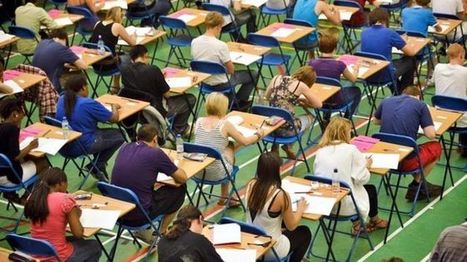
GCSE grades need to rise in England to catch up with high-achieving education systems, researchers say.
UK Data Service's insight:
This article covers research which uses data held by the UK Data Service.
Link to report: English Education: World Class? National Pupil Database
Scoop.it!
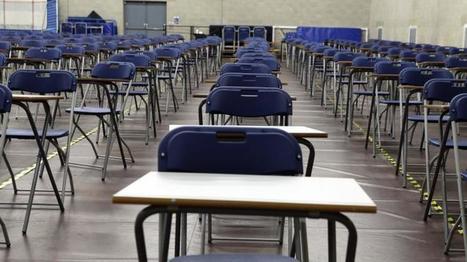
More top performers are needed in English and maths to 'compete with world's best', research finds
UK Data Service's insight:
This article covers research which uses data held by the UK Data Service.
Link to report: English Education: World Class? National Pupil Database
Scoop.it!

"England's schools face an “immense” challenge to improve pupils’ maths performance to catch up with the world’s leading countries, an alarming report warns today."
UK Data Service's insight:
This article covers research which uses data held by the UK Data Service.
Link to report: English Education: World Class? National Pupil Database
Scoop.it!
"Conclusion in Education Policy Institute report based on current trends - It would take 50 years for the attainment gap between disadvantaged secondary school pupils and their peers to close if current trends do not improve, new research has found."
UK Data Service's insight:
This article covers research which uses data held by the UK Data Service.
Link to report: Closing the Gap? National Pupil Database https://discover.ukdataservice.ac.uk/series/?sn=2000108
Scoop.it!
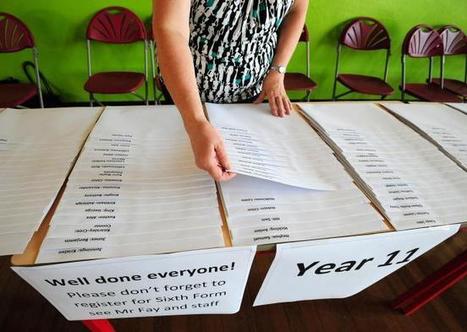
"Teenage girls who study more vocational GCSEs rather than traditional academic courses may be putting themselves at a disadvantage, research…"
UK Data Service's insight:
This article covers research which uses data held by the UK Data Service.
National Pupil Database Next Steps (formerly the Longitudinal Study of Young People in England (LSYPE1))
Scoop.it!

Teenage girls who study more vocational GCSEs rather than traditional academic courses may be putting themselves at a disadvantage, research suggests.
UK Data Service's insight:
This article covers research which uses data held by the UK Data Service. National Pupil Database Next Steps (formerly the Longitudinal Study of Young People in England (LSYPE1))
Scoop.it!

"Girls who take ‘applied’ subjects, such as health and social care or home economics, at GCSE may be facing educational disadvantage as a result, a new study has found." Via ESRC
UK Data Service's insight:
This article covers research which uses data held by the UK Data Service. National Pupil Database https://discover.ukdataservice.ac.uk/series/?sn=2000108 Next Steps (formerly the Longitudinal Study of Young People in England (LSYPE1))

ESRC's curator insight,
August 22, 2017 4:18 AM
Article cites the cohort study Next Steps, which is managed by the Centre for Longitudinal Studies and funded by the Economic and Social Research Council.
Scoop.it!

"Children with special educational needs (SEN) are significantly more likely to be unhappy with their secondary school than those without SEN, according to a new study by researchers at City, University of London. Almost one in five UK secondary-school children with SEN (19 per cent) report being unhappy with their school, compared to just 7 per cent of children without SEN."
UK Data Service's insight:
This article covers research which uses data held by the UK Data Service.
National Pupil Database Understanding Society
Scoop.it!
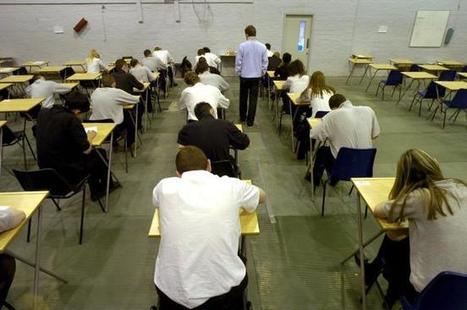
"The education gap between disadvantaged pupils in Darlington and their schoolmates is widening faster than anywhere in the country, figures…"
UK Data Service's insight:
This article covers research which uses data held by the UK Data Service. Link to report: Closing the Gap? https://epi.org.uk/wp-content/uploads/2017/08/Closing-the-Gap_EPI.pdf National Pupil Database https://discover.ukdataservice.ac.uk/series/?sn=2000108
|
Scoop.it!

Thousands of children and young adults in England are missing from official education statistics after being taken out of state schools and failing to sit their GCSEs, according to researchers who say they have uncovered a black hole in the government’s figures.
UK Data Service's insight:
This article references independent research undertaken by FFT Education DataLab using data in the UK Data Service:
Scoop.it!

Children from poorer backgrounds are more likely to have delayed access to funded early years education, new research from the LSE suggests.
UK Data Service's insight:
Scoop.it!

This article, the first in a series of articles on supporting EAL learners that will appear in the coming year, examines the recent research report from the Education Policy Institute (EPI), with the Bell Foundation and Unbound Philanthropy – entitled Educational Outcomes of Children with English as an Additional Language.
The series will provide insights into, and best practice on, how to support individual learners through a whole school approach.
UK Data Service's insight:
This article examines issues raised by a report which used data in the UK Data Service collection:
Original report: Educational Outcomes of Children with English as an Additional Language
Scoop.it!

Researcher calls for pupil premium funding to reflect poverty more accurately
UK Data Service's insight:
This article covers research which uses data held by the UK Data Service.
National Pupil Database
Scoop.it!

England has a 'disproportionate numbers of low-attaining pupils', say the report authors
UK Data Service's insight:
This article covers research which uses data held by the UK Data Service.
Link to report: English Education: World Class? National Pupil Database
Scoop.it!

"In their major new report out today (23 Aug), English Education: World Class?, UCL Institute of Education and Education Policy Institute (EPI) have identified what these new grades mean in terms of a world class education system and how far education in England needs to improve to match the highest performing countries in the world."
UK Data Service's insight:
This article covers research which uses data held by the UK Data Service.
Link to report: English Education: World Class? National Pupil Database
Scoop.it!

It will take 50 years to close the attainment gap between England’s most disadvantaged pupils and their wealthier peers at the current rate of progress, according to a major new study. In an alarming conclusion, the researchers claim that the most disadvantaged schoolchildren – those eligible for free school meals – are two years behind their richer classmates by the time they sit their GCSEs at the end of secondary school.
UK Data Service's insight:
This article covers research which uses data held by the UK Data Service.
Link to report: Closing the Gap? National Pupil Database
Scoop.it!

Education Policy Institute urges DfE to set its sights higher in maths and English scores to catch up with rivals
UK Data Service's insight:
This article covers research which uses data held by the UK Data Service.
Link to report: English Education: World Class?
Scoop.it!

New research from UCL's Institute of Education suggests that teenagers who study an applied subject could be putting themselves at a disadvantage
UK Data Service's insight:
This article covers research which uses data held by the UK Data Service. National Pupil Database https://discover.ukdataservice.ac.uk/series/?sn=2000108 Next Steps (formerly the Longitudinal Study of Young People in England (LSYPE1))
Scoop.it!
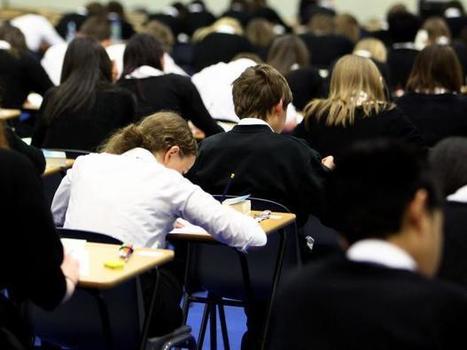
Teenage girls who study vocational GCSE subjects rather than traditional academic courses are "significantly" less likely to go on to do A levels, according to research. A new survey shows that young girls who studied an "applied" subject, such as health and social care, were less likely to stay on at A level and take the "facilitating" subjects, such as the sciences and maths, which are favoured by prestigious universities in the UK.
UK Data Service's insight:
This article covers research which uses data held by the UK Data Service. National Pupil Database https://discover.ukdataservice.ac.uk/series/?sn=2000108 Next Steps (formerly the Longitudinal Study of Young People in England (LSYPE1))
Scoop.it!

As a recently retired special school headteacher I am unsurprised at your recent report on the difficulties of children with special educational needs and disabilities accessing appropriate secondary school placements.
UK Data Service's insight:
This article covers research which uses data held by the UK Data Service.
National Pupil Database Understanding Society
Scoop.it!
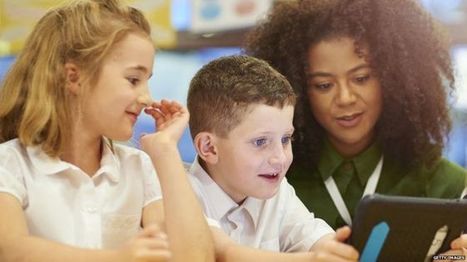
"The very poorest children in England have fallen even further behind their non-disadvantaged classmates since 2007, research says."
UK Data Service's insight:
This article covers research which uses data held by the UK Data Service. Link to report: Closing the Gap? https://epi.org.uk/wp-content/uploads/2017/08/Closing-the-Gap_EPI.pdf National Pupil Database
|





This article refers to research using the dataset Longitudinal Educational Outcomes (LEO) created by the Department for Education linking with data in the UK Data Service collection:
National Pupil Database
Report: The relative labour market returns to different degrees