Your new post is loading...
“I believe the technology was deployed too quickly in too vast amounts, with hundreds of vehicles, when it wasn’t really ready,” one police official told federal regulators last month. Emergency first-responder leaders told federal regulators in a private meeting last month that they were frustrated with the performance of autonomous vehicles on their streets—that city firefighters, police officers, EMTs, and paramedics are forced to spend time during emergencies resolving issues with frozen or stuck cars. One fire official called them “a safety issue for our crews as well as the victims.” WIRED obtained an audio recording of the meeting. Officials from San Francisco and Austin, where Waymo has been ferrying passengers without drivers for more than a year, said the vehicles’ performance is getting worse. “We are actually seeing something interesting: backsliding of some things that had improved upon,” Mary Ellen Carroll, the executive director of San Francisco’s Department of Emergency Management, told officials with the National Highway Traffic Safety Administration (NHTSA), which oversees self-driving vehicle safety in the US. “They are committing more traffic violations.”
Record low winter snows mean insufficient water in the Colorado River. Here's how a city that's first in line to be cut off is handling it. On the outer edges of the Phoenix metro area, the small town of Cave Creek, Arizona sits nestled among the cactus-dotted hills. It's home to about 5,000 people and known mostly for its quiet residential neighborhoods, art galleries and an annual rodeo. It's also on the front lines of the Colorado River crisis. Climate change and a 26-year megadrought have crippled the river, which supplies nearly 40 million people across seven Western states and Mexico. Negotiations about how to share its shrinking supply are at an impasse, and the federal government has proposed steep cutbacks to protect the nation's largest reservoirs.
"The oil companies, they allow them to just come out here and do whatever the hell they want.” Some Texas oil wells gush hundreds of barrels of oil a day. But many are like the wells on Jackie Chesnutt’s ranch in West Texas that only trickle out a couple barrels a month. Chesnutt, a retired engineer, claims the five wells operating on her ranch are out of compliance with state rules and should be shut down. The company, CORE Petro, says that it’s struggling to break even, let alone pay to plug the wells. But it says that all its wells are in compliance. There are thousands of oil and gas wells around Texas like these: low-producing wells leased by companies operating on a shoestring. About two-thirds of the active oil wells in Texas, or 99,000 wells, produce less than 10 barrels of oil a day, according to the state regulator. To remain active, oil wells in Texas must produce at least five barrels for three consecutive months or at least one barrel for 12 consecutive months.
A 100% renewable energy grid isn’t realistic in New England, given increased demand, weather and other factors, writes Frederick Hewett. We need an approach that includes nuclear power.
Elon Musk has long been in an on-again, off-again relationship with the moon. Though just last year he called it “a distraction”—saying his focus was shifting exclusively to Mars—he now seems to be rekindling things with our natural satellite. And regardless of his own feelings about the moon, NASA is paying him to get us there again. The Artemis II mission, which returned just a week ago, set a new record for the farthest humans have ever traveled from Earth. But looping around the moon—as the four astronauts did during their nine days in space—is not the project’s paramount goal. By 2028, NASA plans for astronauts to touch down on the lunar surface, and while they’ve now demonstrated we can still shoot for the moon, landing there is another story.
Musk faces questions as part of a year-long probe in France into suspected abuse of algorithms and fraudulent data extraction by X or its executives. The U.S. Justice Department has told French law enforcement it will not assist with efforts to investigate tech billionaire Elon Musk’s social media platform X, The Wall Street Journal reported on Saturday, citing a letter from the DOJ’s Office of International Affairs, dated Friday. In February, Paris prosecutors raided X’s French offices and ordered Musk to face questions in a widening investigation as part of a year-long probe into suspected abuse of algorithms and fraudulent data extraction by X or its executives.
. About a quarter of Americans suffer from seasonal allergies. And researchers at the nonprofit Climate Central say that if you’re feeling snifflier than normal this spring, you aren’t alone—and climate change and pollution might be behind your personal postnasal drip. In 173 of the 198 cities Climate Central studied, the freeze-free growing season (that is, the time of year when plants are capable of, among other things, producing pollen) lengthened by an average of 21 days since 1970. In some places, like Nashville, the freeze-free growing season is now a full month longer than it used to be, and one 2022 study suggests that by the end of the century, it’ll be two months longer than it is now. And as climate change causes more-frequent extreme weather events, like hurricanes, that also means more mold and more respiratory distress. On top of all that, thanks to changes in temperature and rainfall, some plant species, like ragweed, are moving north, and exposing people to new allergens—which means that some of us who haven’t experienced allergies before might experience symptoms for the first time this year.
China has launched a hydropower project so vast it could surpass the Three Gorges Dam, reshaping energy, water security, and regional power dynamics in one move. China has begun construction of what it says will become the world’s largest hydropower project on the Yarlung Tsangpo River in Tibet, a move that carries both energy and geopolitical consequences. Chinese state media confirmed that work is underway on the massive development, which is designed to exceed the capacity of the Three Gorges Dam. The project, estimated at around 1.2 trillion yuan, is expected to generate roughly 300 billion kilowatt hours of electricity each year. That would make it the highest-output hydropower facility globally once operational. As reported by the BBC, the site sits along a steep stretch of river before the water flows into India, where it becomes the Brahmaputra.
There is an interesting technology that is slowly edging into the telecom industry. There are a handful of places that are using hydrogen fuel cell generators instead of the more standard diesel generators for backup power. Everybody who works with a telecom network is aware of the wide use of diesel backup generators that kick in when commercial power fails. Diesel generators are permanently installed for critical hub sites, and telecom companies use portable generators that can be quickly driven to remote powered sites like huts and cabinets. Hydrogen fuel cells offer an alternative to the shortcomings of diesel generators.
The conservative legal activist thinks “radically woke culture” is the problem with America right now—not the climate-destroying oil and gas industry he lavishly supports.
A proposal to spur intense development in some of the most rural areas of the state died in the final days of the regular legislative session, due largely to strong opposition from Republican senators who declared that their constituents didn’t want any part of it. While its critics cheered the idea’s failure, they remain concerned it it will be revived next year. The bill (SB 354) would have established so-called “Blue Ribbon” projects for landowners who control 15,000 or more contiguous acres. That’s comparable in size to the Broward County City of Weston, and would apply only to a select number of landowners in the state. It would require that 60% of that land be set aside as “reserve areas” and the remainder developed over 50 years into cities and towns regardless of the underlying comprehensive planning and land use allocations.
Global carbon dioxide (CO2) emissions from fossil fuels and industry totaled 38.11 billion metric tons (GtCO₂) in 2025, hitting a record high, versus 25.51 GtCO2 in 2000. Moreover, the rate of global warming more than doubled for the first time in human history, in only one decade. Scientists are stunned: The Rate of Global Warming has Accelerated More in the Past Decade Than Ever Before, LiveScience, d/d March 7, 2026. According to NASA, 97% of publishing scientists in the world agree that excessive CO2 emissions cause excessive global warming as well as aberrant climate change.
|
In this week’s newsletter: Forecasts suggest a stronger version of the climate phenomenon could supercharge extreme weather events, putting the world on track to again breach a 1.5C average temperature rise. Scientists and officials are keeping a close eye on conditions brewing in the Pacific Ocean that could spike temperatures and smash global heat records in the year ahead. It’s still too early to get a definitive picture, but there are signs that a so-called super El Niño could develop this year, supercharging extreme weather events around the world. Some forecasts are suggesting it could become one of the strongest ever recorded. Alongside heating from the human-caused climate crisis, this could put the world on track to once again temporarily breach the 1.5C average temperature rise over preindustrial levels – the critical climate threshold that experts have warned comes with a host of catastrophic consequences. Some models show that temperature anomalies could even push past that point next year and go beyond a 2C increase for the first time in recorded history. What would a super El Niño look like and what would it mean for the global climate? I’ll explain, after this week’s most important reads.
Trump administration pays energy firms $885M to cancel wind projects, favoring fossil fuels. Backlash grows as gas prices surge. President Donald Trump’s administration this week shelled out even more US taxpayer money to get energy firms to cancel planned renewable energy projects. As The New York Times reported, the US Department of the Interior on Monday announced plans to reimburse energy companies a combined $885 million in exchange for forfeiting their leases to build wind farms in federal waters off the coasts of New York, New Jersey, and California.
The powerhouse of American citrus is suffering a brutal decline. Everyone has a theory about why. uiet fell over the room, which was neither full nor very loud to begin with, and the 2026 Florida Citrus Show began. “It should be a great day,” began the event’s first speaker. “Rain should hold off today, even though we definitely need more rain.” No one laughed. There was no need to say that things were bad. Everyone knew it. The mood wasn’t sour—citrus farmers could handle sour. It was something else. Postapocalyptic. Florida is in the midst of its worst drought in 25 years, but the dry spell actually ranked far down on the list of challenges these bedraggled growers were facing. In 2003, the mighty Florida orange industry produced 242 million boxes of fruit, with 90 pounds of oranges per box, most of which went on to become orange juice. Now, not even 25 years later, the United States Department of Agriculture was forecasting a pitiful 12 million boxes of oranges, the least in more than 100 years, the worst year since last. A decline of more than 95 percent.
The European Commission has adopted industry-drafted language shielding data center emissions data from public view, report Nico Schmidt and Ella Joyner.
Environmental groups are joining an effort to block rules from President Donald Trump’s administration exempting energy companies drilling in the Gulf of Mexico from legal protections for endangered species. Last month, Secretary of Defense Pete Hegseth asked for an exemption to the Endangered Species Act, on the basis of national security, to drill for oil and gas in the Gulf. That means species such as Rice’s whale, Kemp’s ridley sea turtle, and other endangered species lose protection. The Endangered Species Committee, an administrative panel sometimes called the “God Squad” because of its sweeping power to overrule environmental protections, comprising top administrators in the Trump administration, approved the exemption.
China is set to complete the core area of Beijing's Satellite Town by the second half of 2026, giving the country's booming commercial space industry a dedicated home. With over 60 per cent of all launches now commercial, China's trillion-yuan space market is rapidly taking shape.
In a gleaming skyscraper in the heart of Ho Chi Minh City, Vietnam, a handful of software engineers huddled over a computer screen, collaborating on a project. They are recent hires of a Silicon Valley-based startup called TinyFish AI, one of thousands competing for highly skilled tech workers as the AI economy expands. “I really believe that there are smart people everywhere,” said TinyFish co-founder and CEO, Sudheesh Nair. “We just need to bring them in.” TinyFish’s first hire in Vietnam was a guy named Huy Vo. He was born and raised in Ho Chi Minh City, but spent 24 years living in the United States, where he got a PhD in computing and worked as a professor in New York City. “I always wanted to come back home,” he said. “But I was also skeptical about the opportunity here in the city.”
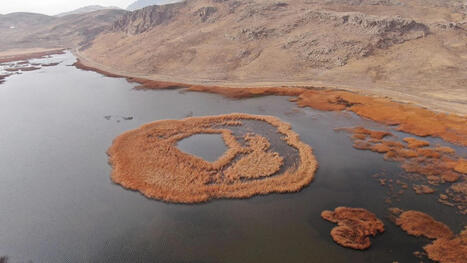
Urartian dams in eastern Anatolia reveal a 3,000-year-old engineering marvel that transformed arid landscapes into fertile agricultural zones. For decades, the story of ancient water engineering has been dominated by Rome—its aqueducts, its urban systems, its monumental scale. But long before Roman engineers reshaped the cities of the Mediterranean, another civilization was already transforming entire landscapes under far harsher conditions. In the rugged highlands of eastern Anatolia, the Urartians built vast networks of dams, reservoirs, and irrigation canals nearly 2,700 years ago—systems so resilient that some continued to function for millennia. Emerging archaeological evidence now suggests that, in certain contexts, these early hydraulic works may have rivaled—or even surpassed—the effectiveness of early Roman water management. This was not simply about moving water. It was about survival, control, and the deliberate reshaping of an unforgiving environment into a sustainable agricultural system.
Barbara Johnson has been fighting coal pollution for decades in her mostly Black neighborhood of North St. Louis as an organizer with Metropolitan Congregations United – one of many activist groups campaigning for cleaner air in a city that has some of the country’s dirtiest. She sees environmental progress reversed by Trump's policies supporting data centers. The rollback of Biden's soot standards could prevent Ameren's plant from reducing emissions, threatening St. Louis's air quality amid AI-driven power demands.
So far NASA’s Artemis 2 has been spectacularly successful and today, the four astronauts – as well as the Artemis 2 Orion spacecraft itself – became the most remote Wi-Fi users of all time as Artemis 2 just a few minutes ago broke Apollo 13’s 55-year old record for longest distance from Earth. If you’ve been following the live streams from aboard Moon-bound Artemis 2 over the past few days, you’ve probably discovered – like me – that the four astronauts look decidedly happy, comfy, and busy in their far-flung home. NASA says the Orion capsule is about the size of two minivans (60% larger than Apollo in terms of volume) and like any other acceptable home away from home, this Orion capsule (named ‘Integrity’ by the astronauts) comes with everyone’s favourite technology – and that’s Wi-Fi.
Climate change costs include higher home insurance bills, disaster recovery costs in the form of higher taxes and health damages from wildfire smoke and extreme weather. "In short, climate inaction isn’t just an environmental failure; it acts like a tax on every American household," write Kimberly Clausing, Christopher Knittel and Catherine Wolfram.
The following is an excerpt from Tori Tsui's fantastic and insightful book, It’s Not Just You: How to Navigate Eco-Anxiety and the Climate Crisis, which will be released by The New Press in the United States this month. Check out our interview with Tori on CounterPunch Radio. – Joshua Frank It’s Not Just You is a simple yet powerful statement that underpins how I have come to explore some of the intricacies between mental health and climate change. It is a statement that traverses many themes, as neither climate change nor mental health exist in siloes, nor are they limited in scope. A fundamental motif of this book is ‘eco-anxiety’, more loosely defined as a chronic fear of environmental doom and a popularised catch-all term for those whose mental health is being impacted by climate change. But it would be remiss of me to say this book is strictly about my relationship with eco-anxiety, or the eco-anxious experience as a whole. Nor is it a prescriptive step-by-step guide on how to deal with feelings of eco-anxiety, so if that is what you’re after, it’s best to look elsewhere (better yet, skip to the recommended reading!). Rather, the titular use of how to is a trojan horse of sorts, inviting us to navigate mental health and climate change through experiences like eco-anxiety by asking big-picture questions and expanding beyond popularised viewpoints. It is a space to explore what we as people fighting for climate justice need in order for our communities and environments to survive, but more importantly, to thrive.
|