Your new post is loading...
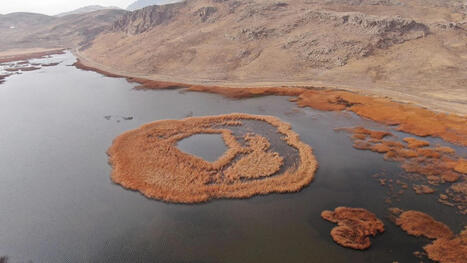
Urartian dams in eastern Anatolia reveal a 3,000-year-old engineering marvel that transformed arid landscapes into fertile agricultural zones. For decades, the story of ancient water engineering has been dominated by Rome—its aqueducts, its urban systems, its monumental scale. But long before Roman engineers reshaped the cities of the Mediterranean, another civilization was already transforming entire landscapes under far harsher conditions. In the rugged highlands of eastern Anatolia, the Urartians built vast networks of dams, reservoirs, and irrigation canals nearly 2,700 years ago—systems so resilient that some continued to function for millennia. Emerging archaeological evidence now suggests that, in certain contexts, these early hydraulic works may have rivaled—or even surpassed—the effectiveness of early Roman water management. This was not simply about moving water. It was about survival, control, and the deliberate reshaping of an unforgiving environment into a sustainable agricultural system.
Barbara Johnson has been fighting coal pollution for decades in her mostly Black neighborhood of North St. Louis as an organizer with Metropolitan Congregations United – one of many activist groups campaigning for cleaner air in a city that has some of the country’s dirtiest. She sees environmental progress reversed by Trump's policies supporting data centers. The rollback of Biden's soot standards could prevent Ameren's plant from reducing emissions, threatening St. Louis's air quality amid AI-driven power demands.
So far NASA’s Artemis 2 has been spectacularly successful and today, the four astronauts – as well as the Artemis 2 Orion spacecraft itself – became the most remote Wi-Fi users of all time as Artemis 2 just a few minutes ago broke Apollo 13’s 55-year old record for longest distance from Earth. If you’ve been following the live streams from aboard Moon-bound Artemis 2 over the past few days, you’ve probably discovered – like me – that the four astronauts look decidedly happy, comfy, and busy in their far-flung home. NASA says the Orion capsule is about the size of two minivans (60% larger than Apollo in terms of volume) and like any other acceptable home away from home, this Orion capsule (named ‘Integrity’ by the astronauts) comes with everyone’s favourite technology – and that’s Wi-Fi.
Climate change costs include higher home insurance bills, disaster recovery costs in the form of higher taxes and health damages from wildfire smoke and extreme weather. "In short, climate inaction isn’t just an environmental failure; it acts like a tax on every American household," write Kimberly Clausing, Christopher Knittel and Catherine Wolfram.
The following is an excerpt from Tori Tsui's fantastic and insightful book, It’s Not Just You: How to Navigate Eco-Anxiety and the Climate Crisis, which will be released by The New Press in the United States this month. Check out our interview with Tori on CounterPunch Radio. – Joshua Frank It’s Not Just You is a simple yet powerful statement that underpins how I have come to explore some of the intricacies between mental health and climate change. It is a statement that traverses many themes, as neither climate change nor mental health exist in siloes, nor are they limited in scope. A fundamental motif of this book is ‘eco-anxiety’, more loosely defined as a chronic fear of environmental doom and a popularised catch-all term for those whose mental health is being impacted by climate change. But it would be remiss of me to say this book is strictly about my relationship with eco-anxiety, or the eco-anxious experience as a whole. Nor is it a prescriptive step-by-step guide on how to deal with feelings of eco-anxiety, so if that is what you’re after, it’s best to look elsewhere (better yet, skip to the recommended reading!). Rather, the titular use of how to is a trojan horse of sorts, inviting us to navigate mental health and climate change through experiences like eco-anxiety by asking big-picture questions and expanding beyond popularised viewpoints. It is a space to explore what we as people fighting for climate justice need in order for our communities and environments to survive, but more importantly, to thrive.
TALLAHASSEE — Drought conditions in Florida have helped spur 1,500 wildfires in the first three months of the year, Agriculture Commissioner Wilton Simpson said. That puts the state on track to surpass the 3,100 fires in all of 2025, and the 2,500 blazes in 2024. The conflagrations have been mostly contained but have also burned down more than a dozen homes, and threatened businesses throughout the state. “The busiest part of the fire season is April, May and June, and guess what’s right in front of us,” Simpson told the News Service of Florida.
What El Niño Will Do to Earth Next… And Why You’re Not Ready 🌎🌊
The U.S. is the world's largest producer of both oil and natural gas, but only one of those commodities is hitting American consumers. The reason comes down to infrastructure. West Texas Intermediate is at $111 a barrel as of Friday afternoon and average U.S. gasoline prices topped $4 a gallon all week. Ongoing war in the Middle East has prevented crude oil from passing through the Strait of Hormuz. But in the U.S. we are catching a break on one price: natural gas, a critical commodity that has been hit hard by the conflict. Prices here are relatively flat despite spiking roughly 70% in Europe and Asia. Why is the U.S. protected from the natural gas supply shock, but not the oil supply shock? The war in the Middle East has disrupted roughly 20% of the world’s liquefied natural gas and crude oil, two vital commodities. Both are abundantly produced here in the U.S., said Ken Medlock, an energy economist at Rice University. “The U.S. is actually the largest producer of crude oil and natural gas on the planet,” he said. But crude oil and natural gas have a really important differentiator.
Regulators said ending the state’s renewable portfolio standard would save customers money, but the official economic analysis undermines that assertion. Sunny Arizona closed out 2025 as the second-biggest state for battery and solar construction. Now, a policy that helped kick-start this success could be going away. The Arizona Corporation Commission, the elected body that regulates utilities, unanimously voted in early March to eliminate the state’s renewable portfolio standard. The policy, which the commission set in 2006, called for 15% renewable electricity by 2025. The state hit that target; thus, in the words of Commissioner Kevin Thompson, it was time to move beyond “mandates that have outlived their useful life.” The commissioners — all of whom are Republicans — critiqued the mandate for costs it imposed: It pushed utilities to sign long-term contracts for renewable energy years ago, when it was more expensive than it is now, and added surcharges on customers’ bills to pay for those contracts and for incentives for households to adopt clean energy.
More than 70% of adults in the United States are very or somewhat concerned about their own or their loved ones’ exposure to harmful chemicals in food and drinking water, and a majority is also concerned about chemicals in food packaging, children’s and baby products, farmland, and other sources. (See Figure 1.) Further, about 5 in 6 want government and business to do more to ensure chemical safety and increase transparency around the use of chemicals. These are the top takeaways from a national survey conducted by The Pew Charitable Trusts and global market research and public opinion firm Ipsos.
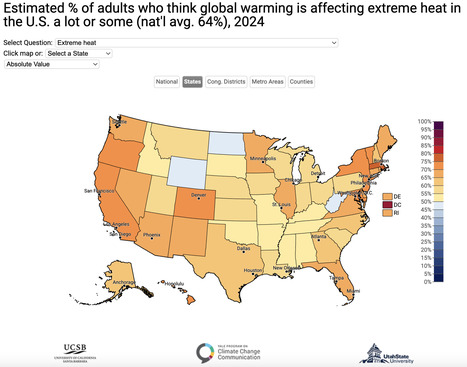
Explore climate change beliefs, risk perceptions, and policy support at every geographic level in the United States.
American farmers have become among the most productive in the world at growing grains. In doing so, to keep afloat, they have been depleting our rich soils, polluting water from Des Moines to the sprawling dead zone in the Gulf of Mexico, driving prices down, increasing farmer debt, and drawing heavily on taxpayer welfare. Something is wrong with this picture. A small-town boy from central Illinois, I think the world of my farmer friends. They are the salt of the earth, hard-working and proud of their capacity to produce bounteous crops. But they are in a box and don’t know how to get out. Big Ag equipment manufacturers, pesticide and herbicide chemical companies, seed enterprises and now drone operators drive productivity. These same global companies are of course also driving increased productivity in Brazil, Argentina, Ukraine. Rain forest trees are felled every day down under in large swaths to expand crop acreage, just as American farmers felled trees two centuries ago – and continue to fell trees along streams. The only revenue tactic available to the farmer is to produce more, which simply drives down prices and ratchets up taxpayer subsidies.
WASHINGTON, March 30, 2026 – Tech trade group INCOMPAS is backing a Maryland ISP’s bid to preempt state permitting rules. FCC preemption extends to networks providing both broadband and telecom services, the trade group argued. The outcome will “affect every INCOMPAS member deploying modern multi-use networks,” wrote the group, which represents broadband providers like WOW and Gonetspeed as well as tech giants like Meta and Amazon.
|
China has launched a hydropower project so vast it could surpass the Three Gorges Dam, reshaping energy, water security, and regional power dynamics in one move. China has begun construction of what it says will become the world’s largest hydropower project on the Yarlung Tsangpo River in Tibet, a move that carries both energy and geopolitical consequences. Chinese state media confirmed that work is underway on the massive development, which is designed to exceed the capacity of the Three Gorges Dam. The project, estimated at around 1.2 trillion yuan, is expected to generate roughly 300 billion kilowatt hours of electricity each year. That would make it the highest-output hydropower facility globally once operational. As reported by the BBC, the site sits along a steep stretch of river before the water flows into India, where it becomes the Brahmaputra.
There is an interesting technology that is slowly edging into the telecom industry. There are a handful of places that are using hydrogen fuel cell generators instead of the more standard diesel generators for backup power. Everybody who works with a telecom network is aware of the wide use of diesel backup generators that kick in when commercial power fails. Diesel generators are permanently installed for critical hub sites, and telecom companies use portable generators that can be quickly driven to remote powered sites like huts and cabinets. Hydrogen fuel cells offer an alternative to the shortcomings of diesel generators.
The conservative legal activist thinks “radically woke culture” is the problem with America right now—not the climate-destroying oil and gas industry he lavishly supports.
A proposal to spur intense development in some of the most rural areas of the state died in the final days of the regular legislative session, due largely to strong opposition from Republican senators who declared that their constituents didn’t want any part of it. While its critics cheered the idea’s failure, they remain concerned it it will be revived next year. The bill (SB 354) would have established so-called “Blue Ribbon” projects for landowners who control 15,000 or more contiguous acres. That’s comparable in size to the Broward County City of Weston, and would apply only to a select number of landowners in the state. It would require that 60% of that land be set aside as “reserve areas” and the remainder developed over 50 years into cities and towns regardless of the underlying comprehensive planning and land use allocations.
Global carbon dioxide (CO2) emissions from fossil fuels and industry totaled 38.11 billion metric tons (GtCO₂) in 2025, hitting a record high, versus 25.51 GtCO2 in 2000. Moreover, the rate of global warming more than doubled for the first time in human history, in only one decade. Scientists are stunned: The Rate of Global Warming has Accelerated More in the Past Decade Than Ever Before, LiveScience, d/d March 7, 2026. According to NASA, 97% of publishing scientists in the world agree that excessive CO2 emissions cause excessive global warming as well as aberrant climate change.
A coalition of environmental groups filed a lawsuit Thursday against the Trump administration over its decision this week to remove Endangered Species Act protections from species threatened by oil and gas drilling in the Gulf of Mexico. On Tuesday, a group of administration officials called the Endangered Species Committee met for only the fourth time in its history. Also known as “the God Squad, it’s made up of six high ranking federal officials, led by the interior secretary. The group voted unanimously to exempt oil and gas drilling in the Gulf of Mexico from environmental safeguards that have been put in place to protect the endangered wildlife in its waters. The decision came after Defense Secretary Pete Hegseth told Interior Secretary Doug Burgum on March 13 that it “was a matter of national security” and a reaction to pending litigation “that threatened to halt oil and gas production” in the Gulf.
Republicans at the state and federal levels are working to shield fossil fuel companies from laws and legal claims that aim to make them pay for some of the damage caused by climate change. Lawmakers and oil industry advocates are running a two-track campaign, in statehouses and in Congress, to pass laws to protect companies from paying some of the costs of intensified wildfires, storms, floods and other effects of global warming. The goal is broad immunity, similar to what Congress granted to gun manufacturers two decades ago. The effort comes as major fossil fuel companies including Exxon, Chevron and ConocoPhillips face a wave of lawsuits from cities, states and individuals who say the companies knew their products would dangerously warm the planet.
Dealerships say they’re getting busier as the Iran war and the shipping crisis at the Strait of Hormuz drag on. Buying inquiries are way up at iDrive1 Motors in Carrollton, Texas, where owner Dink Davis has specialized in used electric vehicles for a decade. Gas prices aren’t nearly as high in the Lone Star State as they are in other parts of the US, after the Iran war and the ensuing crisis in the Strait of Hormuz spiked global oil costs in late February. Compare the average $3.68 per gallon in Texas to California’s $5.89. But AAA says prices are up nationally more than a third since the start of the conflict. Davis and his three employees—in the business of selling cars that run on batteries, not gas—are very, very busy. “The last three weeks, it’s gotten stupid,” Davis says. “We can barely keep up with the stuff that’s coming in.” On Tuesday, he says, a customer traded in a diesel-eating Jeep, which costs more than $100 to fill up, for a used EV.
If the utility had to pay a fraction of rising fuel prices, it might rethink its gas buildout and save North Carolinians tens of millions of dollars, a study finds. If the war in the Middle East has proved anything over the last month, it’s that fossil fuel prices are extraordinarily unstable. But global conflict isn’t the only catalyst that can send the cost of oil and natural gas reeling. Factors such as extreme weather, policy changes, and pipeline outages can also set off a price roller coaster. In North Carolina, all this volatility is prompting calls for change. Advocates want the state to join the handful of others that require electric utilities to absorb a fraction of fossil fuel prices — rather than saddling customers with all of them, as the companies do now.
As the climate crisis intensifies the storms lashing south Florida, it is imperative to design spaces that soak up the water. The 19.4-acre Bayshore Park is an example of how to design spaces that protect from and connect residents to nature. Masterminded by the Savino & Miller Design Studio, a local landscape architecture firm, the 19.4-acre green space replaces a golf course.The designers and community groups sought a variety of experiences in the park, from immersion in nature and a playground for children to tennis courts. ‘We thought, How can we save this land for community benefit and ecological benefit as well?’ said Barry Miller, a landscape architect and principal at the firm.
Hyperscale data centers have policy experts, residents and environmentalists concerned about water usage and extreme energy consumption in the Great Lakes region. Sure, the sheer size of the hyperscale centers draws attention. An individual hyperscale data center often requires over 100 times more power to operate than a traditional data center, churning through as much as a million gallons of water per day. Still, a single data center, even a hyperscale behemoth, isn’t the issue that most concerns water experts focused on the long-term health of the Great Lakes region, home to the largest surface freshwater system on the planet and 90% of the U.S. supply of fresh water.
Aurora, May Mobility, Motional, Nuro, Tesla, Waymo, and Zoox all refused to cough up a number during Senator Ed Markey's recent investigation.
|