

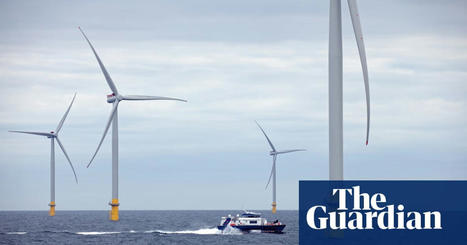
Contract price is nearly 6% lower than previous auction in 2019, which could ease pressure on energy bills

 Scoop.it!
Contract price is nearly 6% lower than previous auction in 2019, which could ease pressure on energy bills

 Your new post is loading...
 Your new post is loading...
Your new post is loading...
Scoop.it!

From
www

Minnesota Gov. Tim Walz has signed the nation's first law banning prediction market sites from operating in the state, and in response, the Trump administration has sued, teeing up a legal battle over the most far-reaching crackdown on popular services like Kalshi and Polymarket.
It comes as states confront a growing standoff with the Trump administration over how to regulate the industry, which allows people to bet on virtually anything.
Scoop.it!

From
www
The expansion of cattle pastures, soybean farms and the exploitation of minerals and timber have long driven deforestation across the Amazon. While governments and markets have debated how to improve supply chains and curb environmental crime, a new and dangerous force has emerged in the region: Latin America’s powerful criminal organizations, fueled by drug trafficking profits.
Last week, Indigenous organizations from across the Amazon and Latin America sent a letter to the United Nations, warning that organized crime is driving violence and accelerating environmental destruction in rainforest communities. The letter, addressed to U.N. member states and agencies including the U.N. Office on Drugs and Crime and the U.N. Permanent Forum on Indigenous Issues, said that expanding criminal networks threaten communities, ecosystems and local governance.
Scoop.it!

NextEra Energy, headquartered in Juno Beach, FL, is seeking to acquire Dominion Energy, headquartered in Richmond, VA, which could bring SC customers under one of the world's largest electric companies.
The combined company would become the world’s largest regulated electric utility with about 10 million customers and 110 gigawatts worth of power on its system, executives said in a joint statement. And they have another 130 gigawatts worth of demand from large energy users in their pipeline.
“Electricity demand is rising faster than it has in decades,” NextEra CEO John Ketchum said in a statement. “Projects are getting larger and more complex. Customers need affordable and reliable power now, not years from now. We are bringing NextEra Energy and Dominion Energy together because scale matters more than ever— not for the sake of size, but because scale translates into capital and operating efficiencies.”
Scoop.it!

From
fortune
Roughly 49,000 Lake Tahoe residents could lose 75% of their power after their energy provider said it's directing energy to neighboring data centers.
Lake Tahoe doesn’t know where its power will come from after next ski season—and it’s a major problem for the 49,000 residents who call the region home. The Sierra Nevada tourist hub—home to ski resorts, lakeside casinos, and roughly 25 to 28 million annual visitors—is facing an energy crisis with a familiar culprit: the data centers powering the AI boom.
NV Energy, the Nevada utility that has supplied the bulk of Lake Tahoe’s electricity for decades, told Liberty Utilities—the small California company that services the region—that it will stop providing power after May 2027. The reason? NV Energy needs the capacity for data centers. As in: the energy supplier for the Lake Tahoe region is telling the utility company that it has less than a year to find another power source.
Scoop.it!

From
www
In conservative Utah, a coalition of cities and towns shows other communities how to bring new renewable energy to the electric grid in a unique way.
Scoop.it!
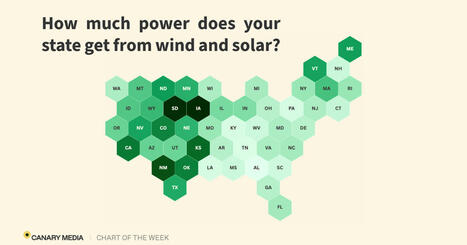
The share of power generated by wind and solar exceeded 30% in over a dozen states in 2025, which was a banner year for renewables even amid Trump’s attacks.
Quick — ignore the map above and take a guess: Which three states get the highest share of their power from wind and solar?
If you said Iowa, South Dakota, and New Mexico, well done. If you had Texas or California in there, fair enough — but neither of those clean-energy behemoths made it onto the podium, per the latest report from trade group American Clean Power Association.
Scoop.it!
From
marygeddry
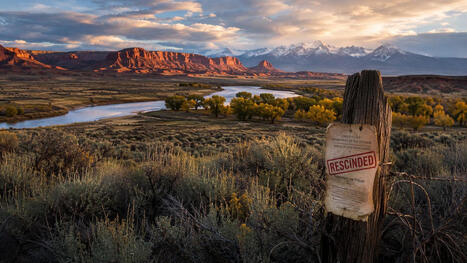
They can erase a rule from the Federal Register, but not the consequences written into soil, water, fire, and memory.
When the Trump administration finalized the rescission of the Bureau of Land Management’s Public Lands Rule, it did not merely erase a regulation from the federal register, it chose, in plain sight, to narrow the meaning of care. The rule it repealed, formally known as the Conservation and Landscape Health Rule, had placed conservation, restoration, land health, and ecosystem resilience more firmly within the BLM’s multiple-use mission, which governs roughly 245 million acres of public land and 700 million acres of federal mineral estate, more land and subsurface mineral estate than any other federal agency manages in the United States.
Scoop.it!

From
capecodnews
14 May 2026 – CHATHAM, MA – When boats on Cape Cod lose their winter shrink wrap coats, a model program provides a way to recycles the material and keep huge mountains of plastic out of landfills.
While the wrapping keeps boats safe and secure during the cold snowy months it also leaves behind about 30 pounds of plastic waste – per boat. With Cape Cod’s population of boats that waste adds up to tons upon tons of plastic.
However, for the past several years a model program in Barnstable county flips what would be those mountains of bulky landfill waste into the recycle market instead.
When boats on Cape Cod lose their winter shrink wrap coats a model program provides a way to recycles the material and keep huge mountains of plastic out of landfills.
Scoop.it!

From
techcrunch
Gas turbines at xAI's Colossus 2 data center have drawn a lawsuit over the company's use of "mobile" gas turbines as power plants.
Elon Musk’s xAI is running nearly 50 natural gas turbines at its Mississippi data center, power plants that the state is currently not regulating thanks to a loophole.
The power plants are considered “mobile” by the state of Mississippi because they are sitting on flatbed trailers, thus allowing them to dodge air pollution regulations for one year. The NAACP, which has filed a lawsuit on behalf of residents in the area, says the unchecked emissions from the turbines is worsening air quality in an already polluted region. This week, it asked the court for an injunction against xAI.
Scoop.it!

Diplomats in Vietnam warned Washington that halting USAID’s efforts to clean up the massive deposit of postwar pesticides would be a catastrophe for public health and relations with a key strategic partner in Asia.
Workers were in the middle of cleaning up the site of an enormous chemical spill, the Bien Hoa air base, when Secretary of State Marco Rubio abruptly halted all foreign aid funding. The shutdown left exposed open pits of soil contaminated with dioxin, the deadly byproduct of Agent Orange, which the American military sprayed across large swaths of the country during the Vietnam War. After Rubio’s orders to stop work, the cleanup crews were forced to abandon the site, and, for weeks, all that was covering the contaminated dirt were tarps, which at one point blew off in the wind.
And even more pressing, the officials warned in a Feb. 14 letter obtained by ProPublica, Vietnam is on the verge of its rainy season, when torrential downpours are common. With enough rain, they said, soil contaminated with dioxin could flood into nearby communities, poisoning their food supplies.
Scoop.it!

The Defense Department has stopped once-routine reviews that even wind projects on private land need to pass, jeopardizing a power source that could help meet skyrocketing demand.
Scoop.it!

From
www
With the launch of the first 16 satellites, Russia begins construction of a network for satellite internet that aims to cover the entire country by 2030. But getting there won’t be easy.
In late March, Russian company Bureau 1440 brought into low orbit the first 16 broadband internet satellites of the new Rassvet constellation, already dubbed by observers and local media the Russian answer to SpaceX's Starlink. It's an ambitious global internet project that experts say could conceal much broader strategic goals, with functions including military and communications control.
The launch took place on March 23 at 8:24 pm Moscow time from the military's Plesetsk Cosmodrome using the Soyuz-2.1B launcher, and marked the first step in building an infrastructure that is expected to have at least 300 satellites by 2030.
Scoop.it!

Even as Ocean Winds abandons two U.S. offshore wind leases, it’s staying the course on projects elsewhere, including a floating French array that flicked on this week.
The developer Ocean Winds cut controversial deals with the Trump administration last week to abandon two U.S. offshore wind developments. But across the Atlantic, it’s making big strides — especially with floating wind.
On Monday, Ocean Winds said its 30-megawatt project in the south of France has started delivering power to the country’s grid.
|
Scoop.it!

AT&T has filed a suit in California seeking to preempt state requirements that it believes are preventing the company from retiring copper-based phone services, arguing that those requirements conflict with new FCC rules.
Alongside that suit, filed with the US District Court for the Southern District of California, AT&T is seeking permission from the FCC to discontinue plain old telephone service (POTS) in portions of California (the initial ask is for permission to discontinue 60% of its wire centers in the state, or about 360 wire centers) where it can offer a like-for-like alternative over fiber or wireless rather than via the operator's power-hungry copper networks. It could take until at least June for the FCC to undertake that process and come to a decision.
Susan Johnson, AT&T's senior EVP, transformation and global supply chain, told Light Reading that the 360 wire centers initially identified are in areas where AT&T has adequate fiber and wireless coverage to support a POTS replacement and address the concerns raised by state authorities. And the vast majority of customers in those areas, she added, also have three or more alternative service providers, she added.
Scoop.it!
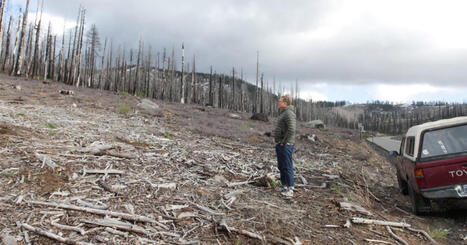
This past Sunday, I found myself walking across the snowless ski runs of Sierra-at-Tahoe in California, which sits on public land in the El Dorado National Forest. I had come to chase down a rumor.
Numerous Tahoe-area residents had told me the Forest Service’s plan to spray the controversial herbicide glyphosate—part of the agency’s forest restoration plan for about 75,000 acres scorched by the devastating 2021 Caldor Fire—had been delayed until 2028. A local news site, along with a major local environmental group—Keep Tahoe Blue—were telling people some version of that.
But I had my suspicions. I dug up maps from the Forest Service’s website, and headed to a spot where one of them indicated spraying might already be happening. It was strange to be standing in the middle of a ski run, with neither snow nor skiers around. But I knew if spraying were happening, it would be obvious.
Scoop.it!

From
www
Is waste heat from data centers affecting the weather? A new study says they are making their local environment hotter.
Data centers continue to spread across the U.S. landscape as demand for artificial intelligence, social media and digital services surges. Their impact on energy and water supply is well documented, but the first in a series of new studies has revealed another potential impact of data centers: They may be creating enough heat to affect temperatures around them and produce data center heat islands, or DCHIs. What Is A Heat Island?
Scoop.it!
Ed Hoffman and his wife, Donna, just pulled up to a neighborhood park 15 minutes west of Cleveland. They checked in with a volunteer sitting at one of those plastic fold-out tables and picked out a redbud sapling from a row of native witch hazel, serviceberry, oak, and buckeye trees that their city, Lakewood, Ohio, is giving away for free.
“We jumped right on it,” Hoffman said. “We missed it last year, so we decided to get it this year.”
This is Lakewood’s third year doing this. It’s giving away 200 saplings this time, and every single one got claimed by residents within 24 hours.
“We really take our tree canopy very seriously, and it's something that we've been trying to increase for the last few years,” said Lakewood’s city planner, Sophia Szeles. “We've been planting, as the city, separate from this event, 350-400 trees every year. And that is a significant part of our budget.”
Every dollar invested in trees generates roughly three dollars in benefits.
Scoop.it!

A new Gallup poll has found that most Americans would really prefer not to live next door to a data center.
For the first time, the polling organization asked people what they think of data centers, the massive computer-warehouses required to operate (among other things) large AI models.
Data centers need significant space, energy and water to operate, and they don’t provide many jobs relative to the investment they require. And they’re often unpleasant neighbors: their cooling systems can be noisy, and many include onsite gas turbines that belch black smoke into the air.
Gallup found seven out of ten Americans would be opposed to a data center in their backyard, with nearly half of those surveyed (48 percent) “strongly opposed” to data centers in their area.
Scoop.it!

We often laud China for its boom in renewable energy projects, but seem to ignore the fact that it’s still building coal-fired power plants at a faster pace than any other country.
Experts are questioning whether China's gains in green energy will be clouded by the black smoke billowing from its robust fleet of coal plants. Air pollution in China kills 2 million a year.
On the topic of China’s “green” energy boom, it’s also important to note that many of the critical mineral operations key to its renewable projects are harming workers and the environment across South America and Africa. This week, as Trump landed for talks in Beijing, the feeble US Congress released a paper on China’s “mineral mafia”. The report wasn’t driven so much by criticism of China’s practices but by imperial jealousy.
Scoop.it!

Exclusive: Commission says alert would trigger coordinated international response that could help avoid millions dying.
The climate crisis should be declared a global public health emergency by the World Health Organization, or millions more people will die unnecessarily, leading international experts have said.
The independent pan-European commission on climate and health, which was convened by the WHO, concluded the climate crisis was such a worldwide threat to health that the WHO should declare it “a public health emergency of international concern” (Pheic). The international spread of vector-borne disease, such as dengue and chikungunya, as well as the health impacts of extreme weather events, global heating, food insecurity and air pollution make a Pheic necessary, said the commission’s report, which will be presented to European ministers on Sunday before the WHO’s world health assembly starts on Monday.
Scoop.it!

From
www
Reporting Highlights
In March 2025, President Donald Trump’s administration made a tantalizing offer to coal-fired power plants, chemical manufacturing facilities and other factories: Their operations could be exempted from key provisions under the Clean Air Act, the bedrock environmental law estimated to have prevented thousands of premature deaths. All they had to do was ask.
No rigorous application was needed. An email, which they had until the end of the month to send, would suffice.
Within two weeks, executives across major industries began flooding an inbox set up to receive and funnel requests from the Environmental Protection Agency to the White House. They asked that their facilities be excused from expensive Clean Air Act requirements, relief that would save their companies money but pollute the air breathed by millions of Americans.
At least 3,000 pages of emails were sent to and from this inbox in the weeks that followed. ProPublica obtained them via public records requests, giving the most complete look to date at a key aspect of what Trump’s EPA calls the “biggest deregulatory action in U.S. history.”
Scoop.it!

From
prospect
In a weird stroke of good fortune, Trump’s misrule provides a perfect context to press the correct argument about climate change.
In the second Trump administration, Democrats have been backing away from climate change messaging. Joe Biden apparently got no credit for the Inflation Reduction Act, his marquee climate policy bill, and Trump has since unceremoniously disposed of it.
The Searchlight Institute, a centrist think tank, presented polling last September indicating that while most Americans think climate change is a problem, they don’t think it’s a major one. Therefore, the first step to solving climate change is “don’t say climate change.” Luckily, as Matt Huber points out at The New York Times, tremendous progress in renewable energy means one can accomplish a lot, emissions-wise, without mentioning climate change at all. The “heart of any affordability agenda—housing, energy, transportation—overlaps with the sectors we must decarbonize,” he writes. “When it comes to climate change, for now, it might be better to say nothing at all.”
Scoop.it!
From
www
The FCC's abrupt move to reconsider the licenses of eight ABC-owned television stations is the agency's first real effort to carry out a frequent threat of President Donald Trump.
Brendan Carr’s embrace of President Donald Trump’s media criticism reached new heights Tuesday — showing a willingness to target broadcasters’ most valuable assets.
The Federal Communications Commission chair’s abrupt move to reconsider the broadcasting licenses of Disney’s eight television stations marks an escalation of conservatives’ many complaints about the mammoth entertainment company’s diversity policies and programming on ABC. It was also the first real move by the FCC toward carrying out Trump’s frequent threats over the years to revoke the licenses of networks whose programs have angered him.
Carr issued an order Tuesday calling in the stations’ licenses for “early renewal” years ahead of their due dates — and suggesting the action was spurred by Disney’s diversity, equity and inclusion practices. The commission has been investigating the company for “unlawful discrimination,” the order said. But the announcement also came a day after Trump and first lady Melania Trump demanded that Disney-owned ABC fire late-night host Jimmy Kimmel over a joke he had made during his show last week.
Scoop.it!

From
www
In what is the 11th Cybertruck recall, certain models of Elon Musk’s embattled pickup could experience a sudden, unexpected wheel separation, thanks to the wrong grease and loose nuts.
Last year, nearly all Cybertrucks had to be recalled because Tesla used the wrong glue on a steel trim panel that the carmaker said could become detached while driving. Now, yet another embarrassing recall exposes that the electric pickup could see wheels come off certain models due to the use of the wrong grease.
In what is the 11th Cybertruck recall so far, alongside concerns that the stainless steel trucks could be rusting, Tesla is recalling its Rear Wheel Drive (RWD) Cybertruck Long Range over faulty brake rotors. In a notice posted by the National Highway Traffic Safety Administration, Tesla states that “brake rotor stud holes may crack and allow the stud to separate from the wheel hub.” Tesla's description of the defect is as follows: “On affected vehicles, higher severity road perturbations and cornering may strain the stud hole in the wheel rotor, causing cracks to form. If cracking propagates with continued use and strain, the wheel stud could eventually separate from the wheel hub.” In which case, some RWD Cybertruck owners merrily driving along could be disconcertingly overtaken by their own wheels. Poor Cybertruckers have enough to contend with without worrying about the wheels on their “apocalypse-proof” pickups falling off, so thankfully, Tesla says it will completely replace the wheel hubs, rotors, and lug nuts free of charge for all 173 trucks affected by the recall.
Scoop.it!

Using existing backup generators as regular sources of electricity would emit lots of pollution into American skies and endanger people’s health.
With U.S. electricity demand starting to rise quickly and expected to continue rising, largely because of the power needed for data centers that process artificial intelligence, people are looking for almost any potential solution.
And people are warning that the full projected demand may not actually develop, which could make massive investments in power plants unnecessary, raising Americans’ electricity rates even more.
U.S. Secretary of Energy Chris Wright is among those who have been promoting what might seem to be an attractive idea: “We have 35 gigawatts of backup generators that are sitting there,” he told an audience of natural gas industry leaders in December 2025. He was referring to diesel-fired engines at hospitals, office complexes, corporate campuses and even data centers to provide electricity if the grid goes down.
That amount of power would be a significant step toward meeting the nation’s expected energy needs, without needing new long-term investments in power plants or transmission lines. But it’s also vital to know, as Wright went on to note, that “emissions rules or whatever” mean those generators can’t just be turned on and left running when there’s not a power outage or other emergency.
|





