 Your new post is loading...
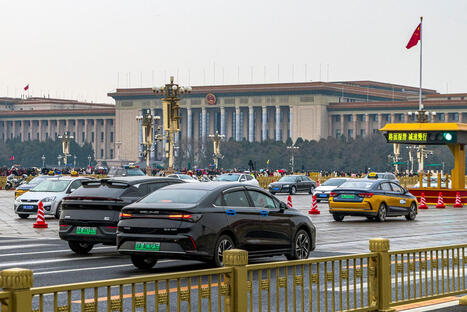
Every time I write about China’s dirty energy consumption, there’s bound to be a reader or two who thinks I’m picking a fight. They say China is making major gains in renewables and that it’s only burning fossil fuels for now because the economy is still growing. If anything, these critics point the finger at the West, which consumes the goods China produces. So it’s the West’s fault, not the fact that China is (by choice) an integral part of the global capitalist economy.
Yes, China is rolling out renewables at an amazing pace. There’s no denying it. And as far as individual consumption is concerned, the average person in the US burns a hell of a lot more fossil fuels, and the West is overwhelmingly responsible for getting us in this mess. The rub, however, is that, on a country-wide scale, China is now by far the largest contributor of fossil fuel emissions (roughly one-third of global fossil fuel and industrial CO2 emissions), and its government (not a typical Chinese citizen) plays an outsized role, directly dictating how its economy operates.
SpaceX and other companies want to put millions of satellites into space. Could orbit run out of room? Seven years ago, when Samantha Lawler moved to rural Saskatchewan to run a farm with her partner, the glorious darkness overhead was one of the biggest perks. Undiminished by light pollution, countless stars filled the night sky. It was a pristine celestial view that city dwellers can only dream of seeing. That matters a lot to Lawler, who studies the universe as an astronomer at the nearby University of Regina when she’s not tending goats and chickens. Yet ever since Lawler’s rural relocation, a new type of artificial star has increasingly encroached on the heavens above her homestead: satellites, constellations of them, most beaming the Internet around the globe. “Now there are many satellites all the time,” Lawler says. “I really could notice the change that was happening.” In 2019, the same year Lawler moved to Saskatchewan, Texas-based SpaceX began launching its Starlink megaconstellation in earnest, lofting an initial 60 satellites into orbit that May. The constellation has since exploded in size. This past March, SpaceX reached a milestone of 10,000 active Starlink satellites. More than 10 million customers worldwide now use its Internet service. Other companies and countries are racing to catch up. There are plans to put nearly two million satellites in orbit. If even a fraction of those launch, it will make the current crop of about 15,000 satellites look paltry by comparison.
The Trump administration sparks fury with a new proposal to strip Clean Water Act protections. President Donald Trump’s administration sparked fresh fury on Friday when it proposed a supplemental rule to further gut Clean Water Act protections for streams and wetlands in the wake of a “catastrophic” US Supreme Court ruling three years ago. The supplemental proposal from the Department of the Army and Environmental Protection Agency builds on their widely criticized proposed rule from November for defining “waters of the United States” (WOTUS)—both of which go further than the high court did with its 2023 decision in Sackett v. EPA.
Where fixed and wireless networks have yet to reach, satellite internet can be a boon for connecting the unconnected. It has changed lives. In the Caribbean, where hurricanes seasonally torment telecommunications (and power) infrastructure, it can save lives. With each storm, more people see the benefit of being connected to a non-terrestrial network (NTN) for internet service. But can there be too much of this good thing? Networks can be overwhelmed by too many users, as everyone has experienced in crowds and peak usage times. Satellites and Starlink are no different. As more users join Starlink’s broadband service, data speed performance can take a hit.
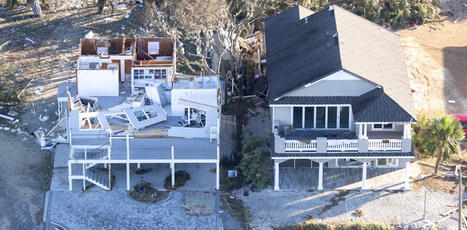
A ‘green’ building has to last for its intentionally small carbon footprint to pay off. That includes surviving flood, storm or wildfire damage. When Hurricane Michael tore through the Florida Panhandle in 2018, a beach house called the Sand Palace was left standing, while more than half the buildings around it were destroyed. Its owners had built it to withstand roughly double the wind speed that Florida’s code required, with reinforced concrete walls on 40-foot (12-meter) pilings. The cost was about 15% to 20% more than standard construction, but the owners wanted a house that could survive storms.
California Gov. Gavin Newsom’s administration has blocked an effort to keep the state’s most successful virtual power plant program funded through next year. But that budget language also excluded a plan from Newsom, a Democrat, to shift control of the program from the California Energy Commission to the California Public Utilities Commission, which DSGS supporters feared could lead to it being dismantled entirely.
How do we translate these horrors (of which there will be far far more as the growing El Niño envelops the world in record temperatures) into political change here in the US?
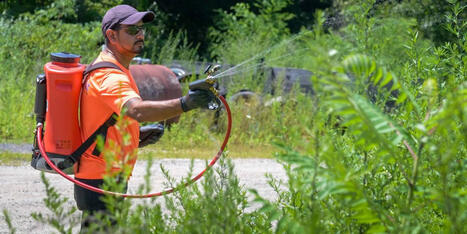
Environmental groups have sued the Trump administration, alleging the Environmental Protection Agency approved a cancer-causing "forever chemical" for use as an herbicide without fully assessing the risk.
Critics are warning that President Donald Trump’s Environmental Protection Agency is pushing through a rule that would let artificial intelligence data center builders off the hook for making public disclosures ahead of construction. The rule, which first came to light during an EPA meeting last month, would delegate power to states over public participation in the permitting process for specific sources of air pollution, such as diesel generators that are frequently used by data centers.
Every year, 27.7 million tons of Saharan dust crosses the Atlantic Ocean and settles on the Amazon rainforest, delivering roughly the exact amount of phosphorus the rainforest loses to runoff, which means the world's most productive forest is fertilised, year after year, by the slow erosion of the planet's largest desert thousands of miles away. The connection is one of those facts about the planet that nobody designed and almost no one outside the relevant atmospheric science literature knows about.
It’s a tough time to build renewable energy in the U.S. In fact, solar and batteries alone made up more than two-thirds of all new capacity added to the grid between January and June. As one analyst told Inside Climate News in a story parsing this same data, solar-plus-storage has become the grid’s “workhorse.”
This year’s El Niño is shaping up to be the strongest on record. Here’s what to expect. El Niño looks to reach an intensity unprecedented in recorded history. Characterized by warmer-than-normal sea surface temperatures in the equatorial Pacific, El Niño occurs every few years. Meteorological agencies and researchers around the world are on high alert because when the heat stored in the ocean is released into the atmosphere, it triggers a chain reaction that affects rainfall, temperatures, and even hurricane activity around the world.
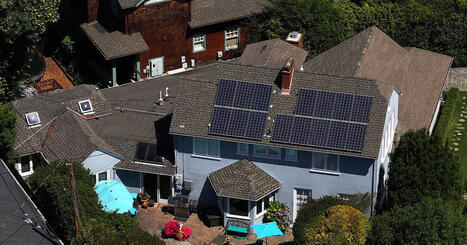
Bruce Schauer is thrilled to show off all 10 of his new solar panels. When the city offered to put them on his house for free, he signed up right away. “I've been wanting it for a long time. I'm the first one in the neighborhood to get it put up,” he says. He lives with his daughter, his granddaughter, and his great-granddaughter, and they’re no strangers to power outages. Michiganders have some of the least reliable electricity in the country. Electric utilities have been facing all kinds of problems recently. Data centers are gobbling up every megawatt-hour they can, rates are up, and extreme weather is causing reliability issues.
|
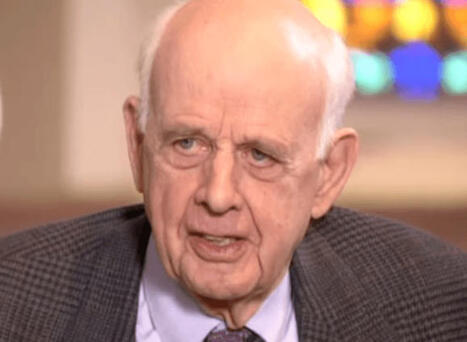
Wendell Berry called out the cruelty of the masters of the modern world, especially the ways they denigrated his neighbors and devalued the land in rural America. But he understood that we all are implicated in the degradation of the ecosystems on which our own lives depend. He connected the real costs of our many labor-saving and pleasure-seeking devices to that degradation. Yes, there are corrupt individuals and corrupting social systems to hold accountable, but part of the problem is our species’ acquisitiveness—what Berry’s mentor Wallace Stegner called “the things that once possessed could not be done without.” In a 1989 essay, Berry didn’t exempt himself from this critique of the destructive habits that draw down the ecological capital of the planet. “I still fly on airplanes, which have nothing to recommend them but speed; they are inconvenient, uncomfortable, undependable, ugly, stinky, and scary,” he wrote. “I still cut my wood with a chainsaw, which has nothing to recommend it but speed, and has all the faults of an airplane, except it does not fly.” We need to live with less, which is surprisingly hard.
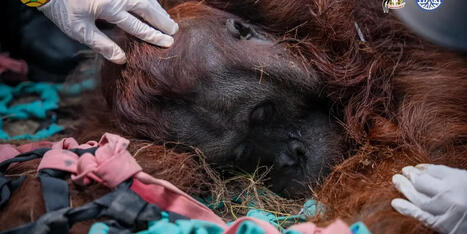
“We deeply regret that Sampurna could not be saved," said officials after the animal was found struggling to breath from smoke inhalation near a palm oil plantation.
China’s carbon dioxide (CO2) emissions fell by 1% in the second quarter of 2026, as oil consumption plummeted amid the strait of Hormuz crisis. The country’s use of oil fell by 9% overall and by 16% for transport, after the disruptions to supply from the Gulf through the strait. China’s total CO2 emissions fell despite a continued rebound in coal-fired power generation. This is the first time that reductions in oil consumption have been responsible for a fall in CO2 emissions overall – in all previous cases, coal consumption has been the main driver. Other key findings for the second quarter of 2026 include:
The world is on the brink of irreversible climate catastrophe, with temperatures set to soar past 1.5°C. Can we still turn the tide and save our planet? Urgent action is needed now to slash emissions and protect our future.
Data centres have requested roughly as much electricity across the middle swath of the United States as it takes to power every home in the country, but much of that demand may be an illusion. In an attempt to find out what is real, Texas recently became the first major data centre hub to freeze new grid connections for the facilities and investigate their plans. Other U.S. states are taking similar steps to fix the intensifying problem that is vexing regulators and politicians nationwide. A Reuters review of utility and grid data found that electricity requests from very large power users, mostly data centres, exceed 700 gigawatts — or more than 10 times industry estimates of current U.S. data centre power use — across portions of the Midwest, Mid-Atlantic and the South.
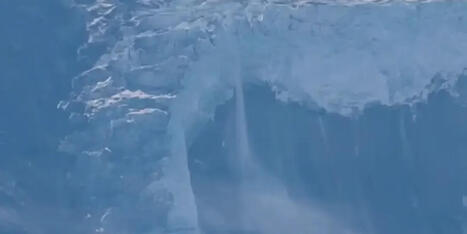
The catastrophic flood that killed hundreds of people in Nepal on Aug. 26, 2026, and left many more missing likely began with falling ice and rock crashing into the river below, but that wasn’t the end of the disaster. Days later, a new lake pooled behind the debris and then burst, sending more water streaming through the valley. The destruction represents two of the ways rising temperatures, thawing permafrost and melting ice are increasing the risk of destructive floods in the Himalayas and other high mountain regions around the world.
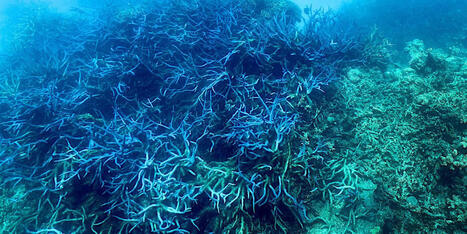
The largest global assessment of coral reefs reveals a distressing decline of nearly 10% between 2020-24. With warming oceans leaving reefs less time to recover, the future looks bleak. Can we afford to lose these vital ecosystems that support marine life and millions of people worldwide?
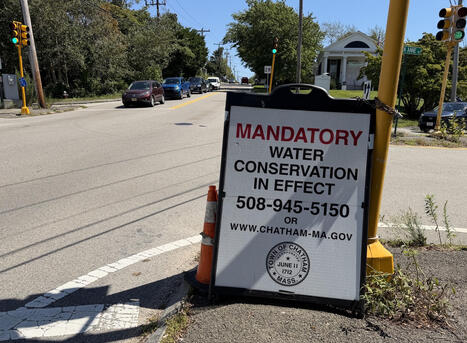
Click on image to watch short story about Cape Cod's drought!
28 August 2026 - CAPE COD, MA - A long-standing Level 2 drought on Cape Cod continues; water experts explain why and what might come next.
Coming next week - where does your town stand on water restrictions?
For more information:
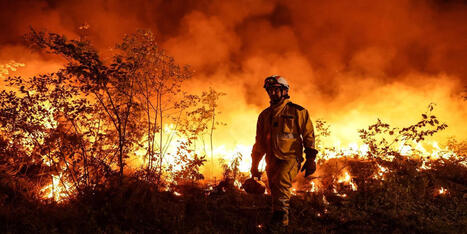
As wildfire smoke plumes travel thousands of miles, sunlight and atmospheric chemistry bleach their color, strip away their campfire aroma and add them to the mix of urban smog. Smoky skies plagued the East Coast and Midwest again in summer 2026, as wildfires hundreds of miles away forced people to cancel sports practices and run air conditioners around the clock. Living in the western U.S., I am no stranger to this scene. Wildfires and the thick smoke they produce have become a fixture of summer life here. I also study wildfire smoke as an atmospheric chemist, in particular how the smoke evolves as it moves downwind from the flames to the communities where people breathe it. To understand what’s in the smoke you might be breathing, you have to look at where it’s been.
Genex Power looked at the vertical gap between those two holes and decided it was a battery. At its deepest, the drop from the upper pit into the lower one is 715 feet. Send water down that distance through a pair of turbines and you get 250 megawatts for eight hours straight. That project, K2-Hydro, is Australia’s first new pumped hydro plant in more than 40 years and, according to the federal agency that lent it the money, the first one anywhere built inside an abandoned gold mine. It was supposed to be dispatching power into the grid this October. It is now not due to finish until July 2027.
Y Combinator alumnus Apollo Atomics is shrinking a key nuclear reactor part, which promises to slash the cost of electricity below natural gas. The nuclear power industry is undergoing something of a renaissance, with startups raking in funding to develop advanced reactors in a quest to lower costs. But based on recent projections, it’s unlikely those reactors will be cost-competitive anytime soon. Assil Halimi and Drew Walker, the founders of Apollo Atomics, think that’s because companies have been chasing the wrong problem. So instead of designing a new reactor, Apollo is rethinking the way thermal energy is converted into electricity.
“Electric vehicle owners create a real problem for transportation finance,” write Christopher Knittel and Gilbert E. Metcalf. “Because they do not buy gasoline, they do not pay gasoline taxes, which have long helped fund the Highway Trust Fund." So, as electric vehicles become more common that revenue base will continue to erode. A recent bipartisan federal proposal would respond by charging EV owners a flat annual fee, reportedly $130 initially, rising over time, with a lower fee for plug-in hybrids. The instinct is understandable. The design is not.
|


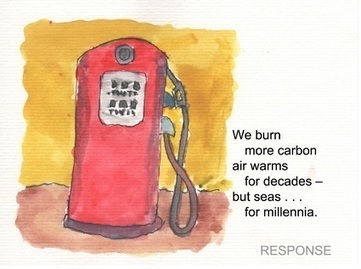


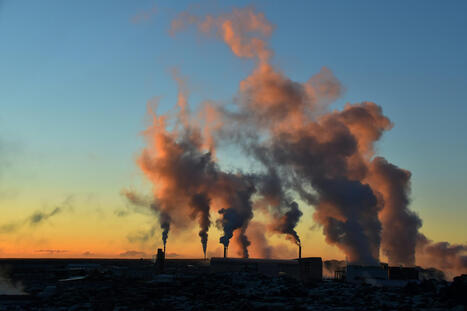

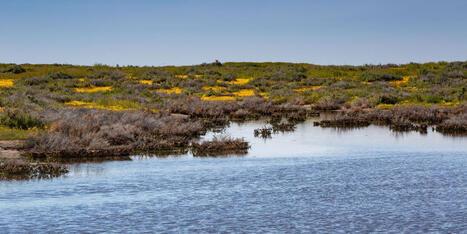
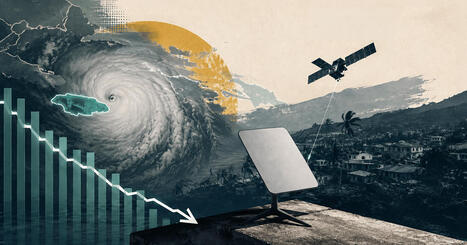












Poetry, song, art, music, whatever means to get the message across and resonate with the people of the world is the critical communicaton challenge.
One Haiku is worth 1,000 words.