Your new post is loading...
Researchers have uncovered evidence showing that several subglacial landmarks are the result of the same geological process. According to a new paper, published in the journal Nature, the massive structure is made up of several previously known glacial landforms, like the Wilkes and Aurora subglacial basin region of East Antarctica, as well as Lake Vostok, the largest known subglacial lake on the planet. These features have been studied separately for years, a press release notes, but have never been recognized as individual pieces to a larger puzzle. Called the East Antarctic Fan-shaped Basin Province, the newly-identified structure likely represents one of the largest Earth features of its kind. While more work will be needed to corroborate the findings, the theorized formation could be crucial for understanding how Antarctica came to be, and how its three major ice sheets may respond to a warming climate.
For 6,000 years, humans have controlled water to serve their needs, but a warming planet is revealing the limits of that approach. By Jeremy Rifkin The defining signature of the past 6,000 years of human civilization is the domestication of the hydrosphere—capturing, damming, canalizing, reorienting, propertizing, privatizing, consuming, profiting from, depleting, and poisoning it. From ancient hydraulic civilizations to the hydro-powered superdams, reservoirs, canals, and ports of the 21st century, water has been repurposed for humanity, often at the expense of millions of other species that depend on it.
Harnessing the hydrosphere has shaped societies and the distinctiveness of cultures across history. The design of hydraulic infrastructure has partially fated societies to the entropic costs that led to their demise—and sometimes collapse. Unlike in the past, the entropic consequences of water use during the fossil-fuel-based Industrial Revolution—the water-energy nexus—have eclipsed localities, regions, and continents, propelling Earth into the sixth extinction of life.
The United Nations has officially confirmed the emergence of El Niño conditions within the next five months. On Tuesday, the UN’s World Meteorological Organization issued a stark warning that there’s now an 80 percent chance that El Niño conditions emerge between June and August, and over a 90 percent change that they appear before November. “This update matters because El Niño is a major driver of global weather and climate patterns,” Celeste Saulo, secretary-general of the WMO said in a statement. “The footprint of an El Niño travels far beyond its origins in the Pacific Ocean, impacting agriculture, energy supplies, trade, water resources, supply chains, and livelihoods across entire regions.”
From DDT and pesticide exposure to collapsing insect populations and habitat disruption, birds are warning us about the growing environmental pressures reshaping ecosystems worldwide. In 1963, Joseph Hickey—a professor of wildlife management at the University of Wisconsin—read Derek Ratcliffe’s recently published paper on the peregrine falcon’s status in Britain. The report highlighted the bird’s desertion of nesting territories and suggested that pesticides might be responsible for the falcon’s precipitous decline. As he absorbed Ratcliffe’s alarming analysis, Hickey recalled a rumor he had heard the previous year that not a single peregrine chick had fledged in the Northeastern United States. Ratcliffe highlighted the bizarre egg breakages and disappearances that he and others had documented in peregrine nests since 1949 and speculated on the causes of this unprecedented ornithological phenomenon.
The men who gathered in the Oval Office on June 4th knew exactly what they were consecrating. The celebrants each stepped forward, each offering benediction. Chris Wright, Secretary of Energy: “No coal, no modern world. Stated another way, without clean, beautiful coal, the modern world is impossible.” He said this as revelation. The doxology was repeated back: the modern world cannot exist without the fuel that is ending the conditions the modern world was built in. He continued: if those 17 coal plants had closed, “hundreds conservatively hundreds of Americans would have lost their lives” during the winter storm. “Hundreds of Americans would have lost their lives.” The prevented deaths count. The real ones, the tens of thousands who die each year from coal’s particulates, its mercury, its heavy metals, never entered the room. Mark Gordon, Governor of Wyoming, offered the ceremony’s most tender moment. Coal is “high tech jobs” now, he said, not digging, not the way we used to. “Very, very technologically proficient. Environmentally sound.” The children’s education, he noted, is “paid for in large part by coal severance taxes.” He said this as a gift.
“We are fighting back to stop this illegal agreement that threatens to erase over a thousand union jobs and cheat millions of New Yorkers out of clean, affordable energy,” said New York AG Letitia James. A group of state attorneys general sued the Trump administration on Tuesday, attempting to block an unprecedented deal it made to pay an energy company to abandon a pair of large East Coast wind energy projects and invest in fossil fuel instead. As part of efforts to unilaterally block private wind power construction across the US while revving up fossil fuel production, the Interior Department agreed to pay $928 million in taxpayer funds to the French energy company TotalEnergies to scrap construction plans for a large wind project off the coast of New York and another off North Carolina, the leases for which had been approved back in 2022.
“Blinding the public to climate change won’t make it go away. It will only accelerate its profound consequences.” The Trump administration's latest move to dismantle a crucial deep-ocean monitoring system is a blatant attempt to deny the reality of the climate emergency. Why are they preventing scientists from tracking vital data on ocean currents and temperatures? This decision puts our planet at risk and hinders our ability to understand and combat climate change. In what a number of scientists suggested was the Trump administration’s latest effort to stop tracking the changing climate in hopes of convincing the public that the climate emergency isn’t happening, the National Science Foundation announced Monday that it was dismantling a crucial deep-ocean monitoring system that for years has helped researchers understand the impacts of the crisis on the world’s oceans. The NSF said it plans to send ships this month to remove more than 900 instruments, part of a project called the Ocean Observatories Initiative. The project collects data on temperatures, currents, and the ocean’s absorption of carbon dioxide off the coasts of Oregon, Alaska, Washington, and North Carolina, as well as in the Irminger Sea between Iceland and Greenland.
What the collapse of the Ogallala reveals about overproduction, extraction, and the future we keep overdrawing. The human species has a tendency to take a finite thing and rename it a resource, a resource is then renamed productivity, productivity is renamed abundance, and by the time anyone asks who is paying the bill, the bill has already been lowered hundreds of feet beneath the prairie. The Ogallala Aquifer is not an underground lake waiting patiently beneath the Great Plains, no matter how often we imagine groundwater as some hidden reservoir with a shoreline and a bottom we could see if only the earth were glass. It is water held in the pore spaces of sand, gravel, silt, and clay, stored inside the High Plains aquifer system beneath parts of eight states, where geology has been doing its slow work for thousands of years while we built an economy that behaves as if ancient water were a yearly crop. That is the first dishonesty we have to confront, because the Ogallala is not disappearing because people drink too much tap water or forget to turn off the faucet while brushing their teeth. It is being depleted because industrial-scale irrigation has been withdrawing groundwater faster than precipitation, soil infiltration, and deep percolation can replace it, especially in the central and southern High Plains where recharge is low and much of the stored water functions as fossil groundwater on human timescales.
When oil has a crazy rise, it makes other sources of energy look more attractive. But the switch from fossil fuels is hard. The price of oil has gone up significantly since late February, when the U.S. attacked Iran. Any time oil prices see a crazy rise, it makes other sources of energy look more attractive. We’ve had these inflection points before in U.S. history. Back in the 1970s, oil prices skyrocketed, and people started to innovate. But, for a few reasons, it didn’t stick. “We had all of this innovation that came off the sidelines,” said Deborah Gordon, who works at the energy think tank RMI. In the late ‘70s, she was in college, studying chemical engineering, at the University of Colorado, and she said alternative forms of energy were the hot thing to work on. “I was working in a hydrogen catalysis lab in undergrad. Now, we're talking about hydrogen again, as if we weren't talking about it 50 years ago, which is kind of crazy,” she said. Gordon was working on ways to store hydrogen. This was one of many ideas people were working on. “People were trying everything they could,” said Cyrus Mody, who studies the history of science, technology, and innovation at Maastricht University in the Netherlands. “They were putting money into wind, solar, regular nuclear fission, biofuels, fuel cells, you name it.”
The launch of the Ojai minivan robotaxi comes after years of development and testing, but arrives amid a challenging time for Waymo. Waymo has started giving select riders in Los Angeles, Phoenix, and San Francisco access to its newest robotaxi: an all-electric, minivan-like vehicle that is designed to lower costs and handle the use and abuse of hundreds of thousands of riders. Waymo said Thursday it will eventually expand access to the vehicle, a modified Zeekr-made minivan called the Ojai (pronounced oh-hi), to more riders and cities. For now, the Alphabet-owned company is offering a limited number of customers free rides in the Ojai to gather feedback and further refine the robotaxi experience.
One of the best things about rural living is sharing the landscape with wildlife. Peering out the window and seeing a moose in the yard. Walking in the woods and catching a fleeting glimpse of a bobcat. Prowling ponds after dark to view the spring salamander migration. Sometimes their presence is taken for granted, but keeping wildlife as visitors, especially for a developing area, can require knowledge and intentionality. Historically, conservation groups have focused on protecting pristine places that have intact ecosystems. But a rising awareness in the last 20 years has prioritized the importance of connecting those different habitats. Many animals need to move for their survival, and maintaining connections between habitat areas is crucial for preserving biodiversity and adapting to climate change. Rather than protecting natural islands in a sea of development, there is a need for islands of development in a sea of wild or semi-wild landscapes.
New Orleans is locked into a watery future which could see it surrounded by ocean as early as this century, according to a new expert analysis, which says the city must start the relocation process now to avoid chaos. The paper's conclusions are stark, but it's no secret that New Orleans is highly vulnerable to rising seas as the planet warms. Coastal Louisiana is one of the lowest-lying regions in the world, and New Orleans, a city of 360,000 people, is particularly exposed. It sits in a bowl-shaped basin, mostly below sea level, in the middle of a rapidly shrinking delta.
Scientists are tracking a 10 million km² marine heatwave in the Pacific that rivals the infamous Blob and could help spark a powerful El Niño. In 2014, marine scientists began noticing an anomaly submerged in the Pacific Ocean – a mass of unusually warm water, which was later dubbed “The Blob.” And it appears the phenomenon has returned, ahead of a (potential) “Super” El Niño, with not one, but two massive abnormally warm water patches in the Pacific Ocean. And one of them has broken records as being the biggest ever recorded. Below, The Washington Post shows an animation of the marine heatwave – which they’re calling a “freight train of record-warm water” – and its possible impacts.
|
Massachusetts is right now engaging in the most robust dialogue in state history around the concept of relocating people, homes, and communities away from places prone to flooding. AROUND 50 PEOPLE in the seaside enclave of Hull ventured out on a freezing January night to hear from town officials and a consulting firm about a plan that’s in the works to deal with a problem that’s become increasingly impossible to ignore: flooding. The community meeting centered on a proposal under development that could mitigate flooding in the Hampton Circle neighborhood, a section of the slim peninsula town that’s ground zero for flooding. Over sliders and other finger foods on the second floor of a restaurant across the street from the ocean, officials presented ideas for new infrastructure like a tidal gate and pedestrian bridge as skeptical residents peppered them with pressing questions and anecdotes. Before consultants from Weston & Sampson got too far along with their design pitch, though, Chris Krahforst, director of climate adaptation and conservation in Hull, stood up and added something into the mix.
While Massachusetts ranks fourth in the country for charging ports per capita after a sharp increase in installments over the past few years, the state is still about 2,000 charging ports short of what it estimates it needs. FOR ALL THE concern about lost federal funding courtesy of the Republican trifecta in Washington, Massachusetts still has not deployed a single electric vehicle charger through a Biden-era program that President Trump has left intact. The Bay State is sitting on the roughly $64 million it was awarded through the National Electric Vehicle Infrastructure (NEVI) program, a $5 billion federal initiative authorized through the 2021 bipartisan infrastructure law meant to strategically dot the nation’s major highways with charging infrastructure that would make it easier for EV drivers to reliably travel greater distances. Two years ago, Massachusetts selected three vendors to identify locations for NEVI charging stations and then build and maintain them. Only contracts with two of those companies, however — Applegreen and Global Partners — are signed, the state’s Department of Transportation confirmed to CommonWealth Beacon, leaving open questions about the viability of the third vendor, Weston & Sampson.
One of the wealthiest corporations in the world is seeking government permission to release 32 million mosquitoes throughout Florida and California. Called “Debug,” the Google-owned company is attempting to flood disease-carrying mosquito populations with “good bugs,” meaning male mosquitoes that have been infected with a bacteria called Wolbachia that causes cytoplasmic incompatibility — meaning their sperm can’t fertilize the eggs of uninfected females. Over time, the theory goes, this will disrupt the reproduction cycle, thereby increasing competition and decreasing the overall population. “The idea is simple,” the Debug website declares: “raise sterile males and release them into wild insect populations. When a wild female mates with a sterile male, her eggs won’t hatch. The population gets smaller with each generation.”
About 5.6 million years ago, the Mediterranean Sea began to evaporate. The Strait of Gibraltar, the narrow connection between the Mediterranean and the Atlantic Ocean, closed for the last time during a slow tectonic shift between Africa and Europe. The basin lost more water to evaporation each year than it gained from rivers and rainfall, and over a period that may have been as short as a thousand years, the entire sea disappeared. What remained was a salt-floored desert basin, in places three to five kilometres below the surrounding sea level — equivalent to roughly two miles deep. The basin stayed in that state for approximately 600,000 years. Then the Atlantic returned. The event known as the Zanclean Flood, around 5.33 million years ago, may have been the largest flood in Earth’s history. It also remains, in 2026, one of the more actively contested events in geology.
The modified Ioniq 5 will be loaded with sensors to capture data for Uber's new AV Labs division. Uber revealed on Wednesday a prototype car that it plans to use to scoop up real-world driving data for its growing roster of autonomous vehicle partners, including Avride, Waymo, and WeRide. The vehicle is not some radical design. Rather, it’s a Hyundai Ioniq 5 fitted with an incredible number of sensors on the top and sides, as the company first told TechCrunch back in January. The sensor-laden vehicle may not look particularly groundbreaking, but it does mark a few milestones for the company.
The World Meteorological Organization warns of an impending El Niño event, increasing the risk of extreme weather. “If and when a hurricane unleashes widespread death and destruction... Democrats should make Trump and his Republican accomplices pay a steep political price for deliberately putting people in harm’s way.” The World Meteorological Organization on Tuesday issued a warning about an El Niño event forming that is expected to “increase the risk of extreme weather over the coming months.” El Niño refers to a climate pattern that features warmer than average temperatures in the Pacific Ocean. WMO said its latest forecast estimates an 80% likelihood of an event occurring this summer, with most of its models suggesting “it will be at least moderate—and possibly strong.”
State attorneys general argue $1bn deal to terminate major offshore wind lease off the coast of New York is unlawful. Six states sued the Trump administration on Tuesday over its decision to cancel a major offshore wind lease off the coast of New York. In March, federal officials announced they would pay nearly $1bn in taxpayer dollars to French energy firm TotalEnergies in exchange for the company killing plans to erect two offshore windfarms off New York and North Carolina. TotalEnergies agreed to terminate the projects and pledged not to develop any new offshore wind projects in the United States, while investing hundreds of millions of dollars in oil and gas projects. The deal was unlawful, says the lawsuit, led by Letitia James, New York’s attorney general. “The Trump administration is once again trying to kill clean energy projects and destroy good-paying jobs for New Yorkers,” she said in a statement to the Guardian.
CAPE COD – From NASA: Eyewitnesses in New England and NOAA’s GOES-19 satellite reported a bright fireball on Saturday, May 30, at 2:06 PM EDT accompanied by a loud noise. The meteor appears to have fragmented at an altitude of 40 miles over northeast MA and southeast NH. The energy released at breakup is estimated to be equivalent to about 300 tons of TNT, which accounts for the loud noise.
Europe’s startup ecosystem has matured significantly; its founders are increasingly willing to scale companies domestically instead of immediately looking to relocate to the U.S. For decades, the geography of the tech industry has felt largely fixed, with Silicon Valley dominating the global startup economy. While cities like London, Beijing, and Tel Aviv have competed for secondary influence, one of the most important conversations in artificial intelligence is happening somewhere else entirely: Paris. France has aggressively invested in artificial intelligence research and infrastructure, with startups like Mistral AI helping Europe become a legitimate force in the global AI race. At the same time, Europe’s startup ecosystem has matured significantly; its founders are increasingly willing to scale companies domestically instead of immediately looking to relocate to the U.S.
A colossal ocean current encircling Antarctica—stronger than all the world’s rivers combined—played a far more complex role in shaping Earth’s climate than scientists once thought. New research shows it didn’t form just because ocean gateways opened, but required shifting continents and powerful winds to align. This shift helped pull carbon dioxide out of the atmosphere, contributing to a major cooling event that transformed Earth into the ice-covered world we know today.
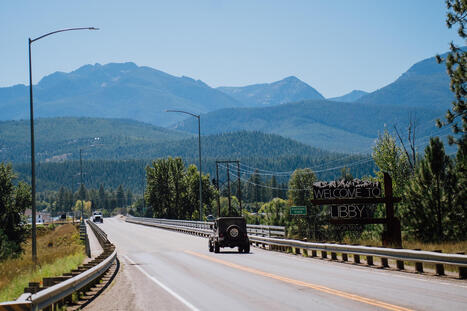
Libby, Montana, sits on the banks of the Kootenay River in the far northwest corner of the state, closer to the Canadian border than any major city. In the summer, the hills are ripe with huckleberries, and every turn might reveal a big horn sheep, one of the region’s native animals. At golden hour, the huge tamaracks and pines glow in the setting sun. Libby wants to move past being known as “the asbestos town” — an identity it’s had since the toxic dust was discovered in a vermiculite mine. Over the years, it’s been a barrier to tourists fearing the asbestos in the air. That’s incredibly damaging for a community that relies on tourism dollars — from hunting and fishing to recreation on Lake Koocanoosa, the reservoir just out of town. It’s something the town wants to build on— but their reputation as asbestos central is not helping.
Global temperature record could be broken as soon as 2027, with El Niño expected later this year. A record-breaking hot year is almost certain by 2030 as the climate crisis intensifies, the UN’s World Meteorological Organization has warned. With an El Niño event expected later this year, the global temperature record could fall as soon as 2027. Carbon dioxide emissions from fossil fuels are continuing to rise, trapping more heat and driving more extreme weather, including the record-breaking heatwave that has hit the UK and Europe this week. Global heating is already estimated to be taking one life every minute, with the toll likely to rise unless emissions fall rapidly.
|