Your new post is loading...
The 300-mile Torcal arrives in September, but considering what’s come before with Ferrari, Porsche, and Mercedes, has the company timed its EV entry right? Bentley has a name for its first fully electric car: Torcal. The British marque confirmed this today, alongside a teaser image of the EV's rear, promising a full reveal on September 23. Far more important than the name, however, is that this is Bentley's first ever full electric car. Specs are thin on the ground until the official reveal, but Bentley is prepared to let slip that this 5-meter-long SUV will have a range of more than 300 miles. The word Torcal was already on Bentley watchers’ radar. Earlier this year, trademark filings showed Bentley had registered both “Torcal” and “Barnato” in Europe and the UK, filed against motor vehicles including electric cars, charging cables, and charging stations. Barnato, a nod to 1920s Bentley obsessive and racing driver Woolf Barnato, was tipped as the front-runner. Bentley has gone the other way.
The summer heat is now in full swing, bringing with it scorching temperatures for some areas of Southern California over the next few days. Starting Tuesday, a heat advisory kicks in for interior mountains and valleys in L.A. County, with temperatures in the mid 80s to 90s. Meanwhile, closer to the coast, temperatures will hover in mid 70s. Valley communities will see highs reach 90 to 100 degree weather. Coachella Valley could see highs up to 115 degrees. Come Wednesday, temperatures will continue to increase, so make sure to stay hydrated and check in on loved ones.
President Trump has made substantial efforts to curb renewable energy development. The Ute Mountain Ute tribe in Colorado managed to bring a big solar project online anyway.
"How we confront the climate crisis will determine a lot about the next 250 years of American history, including if we make it that long," one climate advocate said. "The revolution we need today is the clean energy revolution."
Last year, nearly 40% of all power demand from global data centers came from facilities based in America, per a new report. Data centers use more electricity in the U.S. than in any other country — China included. In 2025, nearly 40% of all power demand from data centers came from facilities based in the U.S., according to this year’s Statistical Review of World Energy from the Energy Institute. It’s the first year the sweeping annual report has tracked data center demand, a sign of how central the question of powering these massive facilities has become. To put that electricity use in perspective: American data centers alone consumed nearly 313 terawatt-hours last year, per the report — more than Australia, Italy, Spain, or the United Kingdom generated to power their entire economies.
Looking at the ingredient labels on foods lining supermarket shelves, it's common to see names such as “potassium sorbate,” “citric acid,” and “L-ascorbic acid (vitamin C).” These substances are food additives used to prevent spoilage and preserve quality, and they are widely incorporated into industrially produced processed foods. According to Open Food Facts, the world's largest open food database, more than 20 percent of the processed foods and beverages in its database contain at least one preservative. A large-scale study demonstrates that preservatives widely used in everyday processed foods may exacerbate common health risks.
Washington, D.C. – In a letter sent to Congress today, more than 520 organizations from 48 states called for the enactment of a full nationwide moratorium on the approval and construction of new hyperscale data centers. The letter was facilitated by the environmental advocacy group Food & Water Watch; other signers include Greenpeace, Friends of the Earth, Americans for Financial Reform, Popular Democracy, People’s Action Institute, Good Jobs First and Honor the Earth.
Gov. Ron DeSantis characterized the clean energy goals the law bans as “radical climate policies,” although experts say the law will not necessarily upend the plans. A new state law limits Florida communities’ aims to offset greenhouse gas emissions that are warming the global climate and intensifying disasters such as hurricanes. Specifically, HB 1217 prohibits local governments from pursuing net-zero emissions goals. At least 10 cities and counties have implemented such policies, including Fort Lauderdale, Miami, Orlando and Leon County, where Tallahassee, the state capital, is located. But the new law will not necessarily upend these policies, said Bradley Marshall, senior attorney at Earthjustice, an advocacy group.
BOURNE, MA — Gov. Maura Healey’s office announced Wednesday that the Cape Cod Bridges replacement project has reached a major milestone after receiving federal approval of its Final Environmental Impact Statement and a Record of Decision from the Federal Highway Administration. The approval completes the federal environmental review process required under the National Environmental Policy Act (NEPA), allowing the project to move into its next phases of permitting and design while bringing Massachusetts closer to securing more than $1 billion in federal funding for construction.
Three electric school buses will kick-start the state’s groundbreaking vehicle-to-grid pilot program once school's out, with more EVs to be added in the coming months. After the school year ends in the Massachusetts towns of Acton and Boxborough, the district’s electric buses will mostly stay put in a parking lot. But they won’t sit idle all summer. The three vehicles will charge up their nearly 200-kilowatt-hour batteries overnight, when the power supply is at its cleanest and cheapest, then send energy back to the grid from 4 p.m. to 7 p.m. on days when the grid is strained. The district will earn revenue for the power it shares, perhaps even enough to cover the costs of charging up during the school year, said Kate Crosby, energy manager for the Acton-Boxborough school district. Plus, the strategy will help lower the emissions and cost of the region’s electricity supply.
The company may finally be ready to try to deliver on Elon Musk's years-long promise of launching a robotaxi network of its own. Tesla has begun testing a production version of its Cybercab that has two seats, but no steering wheel or pedals, in Austin, Texas. For now, the testing is being done with a safety monitor in the right passenger seat, according to a video posted on X, the social media platform owned by the electric car maker’s CEO Elon Musk. This test is happening nearly two years after Tesla revealed the design of the Cybercab, which is meant to be a fully autonomous robotaxi that can be hailed through Tesla’s app. Roughly a year ago, Tesla began testing a Tesla Robotaxi service in Austin with Model Y SUVs that have, at times, used safety monitors.
Europe’s mortuaries are overflowing, America’s watchdogs are being leashed, public lands are being opened to more drilling, and the control room is still pretending this is a messaging problem. There are days when the metaphor arrives wearing a little hat, waving politely from the edge of the news, asking if it may please be included somewhere between the congressional dysfunction and the latest judicial renovation of American democracy. Then there are days when the metaphor is a mortuary in Paris with no room left. Europe is in the grip of record heat, the kind that makes the old maps look quaint and the old warnings sound less like warnings than apologies issued too late. In France, funeral homes have reportedly been overwhelmed by the number of dead, especially older people, as temperatures pushed past 104 degrees and the heat settled into cities like a verdict. One mortuary owner told reporters, “We’re facing a really catastrophic situation,” which is the kind of sentence that should stop a government in its tracks, make every serious person in a serious office look up from the latest polling memo, and begin moving with the urgency of people who understand that reality doesn’t negotiate.
Attorney General James Uthmeier says Roku will come into compliance with state law under a settlement of a legal complaint he filed last year. Engineering to bring the company into compliance with Florida’s Digital Bill of Rights will cost it $25 million, Uthmeier’s office said. However, the agreement, Uthmeier said, does not include any finding of wrongdoing or a fine. “Our resolution ensures that meaningful safeguards will be implemented to protect the privacy and personal data for our children. Parents have a right to control the upbringing of their kids,” Uthmeier said in a video posted to social media.
|
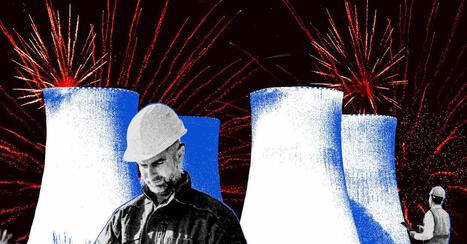
The companies’ Fourth of July plans include celebrating new reactor designs coming online. But there’s still a long way to go before they deliver energy at a meaningful scale. Three startups are providing the fireworks for the Department of Energy's Fourth of July celebrations by meeting a major nuclear milestone. They've turned on new reactors as part of a pilot program aimed at kick-starting what Energy Secretary Chris Wright calls “America’s nuclear renaissance” to develop and deploy the next generation of atomic energy. Other companies in the pilot program have signaled that they may reach criticality—a term used to describe a nuclear reactor sustaining a chain reaction, a key step in providing power—shortly after July 4, following a deadline set by President Donald Trump in an executive order last year. But experts say that while the pilot is good PR for the industry, there’s still a long way to go before new reactor designs become commercial realities.
The Trump administration has approved three new pesticides that may be considered “forever chemicals” under an international definition, though the Environmental Protection Agency (EPA) is disputin…
Blazes mobilized hundreds of firefighters over the weekend and scorched a total of 42,000 acres in Spain, France, and Portugal alone—an area two times the size of Manhattan.
Detailed data is useful for understanding and addressing environmental effects on people’s lives in ways that become difficult or impossible if only the broadest and blurriest picture is developed.
The satellite industry is on the brink of a major transformation. With the rise of 5G Non-Terrestrial Networks (NTN), satellites are no longer limited to the niche role of providing backhaul for mobile networks in underserved areas. Satellites are increasingly providing 5G Radio Access Network (RAN) functionality to 5G enabled satellite terminals and off-the-shelf mobile devices (Direct-to-Device or D2D). This transformation promises to extend secure, high-speed connectivity to virtually every corner of the globe, serving remote villages, manned and unmanned aircraft, maritime users, remote oil and gas and mining facilities to contested battlefields. But to realize this vision, we must build systems that are not only innovative, but also resilient, secure, and ready for real-world demands.
As a punishing heatwave bakes major East Coast cities, US Energy Secretary Chris Wright directed data centers in the mid-Atlantic this week to use their backup power supplies instead of using electricity from the public grid, in part to ensure there was enough electricity to power resident air conditioning. The heat index topped 100 degrees by 10 a.m. Thursday in every major metro from Washington, DC, to New York City. And as the mercury climbed, so did the energy used for air conditioning. “Maintaining affordable, reliable, and secure power in the PJM service territory is non-negotiable,” Wright said in a statement.
Landowners can now turn certain farms and timberland into business parks, suburbs despite local objections. An industry-backed state law that takes effect July 1 will make it easier for developers to turn farmland into suburban subdivisions over the objections of local governments and communities.
The National Park System, which will be flooded with visitors this summer, has a bipartisan pedigree. Woodrow Wilson signed the National Park Service law that established our system, but Teddy Roosevelt’s setting aside millions of acres of public lands gave it substance. Ulysses Grant signed the law creating the first national park, Yellowstone. There have been tensions between the parties over parks. James G. Watt, Ronald Reagan’s first secretary of the Interior, was a zealous religious sagebrush rebellion conservative who tried to ban the Beach Boys from performing on the National Mall on July 4 because he thought they’d bring in a bad crowd. (Ron and Nancy loved the California band, and Watt became a goner.) No wonder Ken Burns named his documentary series on our national parks “America’s Best Idea.” It took the klepto-genius of Donald Trump to see the National Park Service as a pile of cash, as he continues his campaign to redo Washington in fetid neo-autocratic style. A comprehensive report on Trump’s raiding of the National Park Service's funds to pay for his gaudy, gold-leaf D.C. makeover. Michael Scherer unveils part of the scam in The Atlantic.
Autonomous-driving startup Wayve is riding a tide of investor interest. The London-based company has pulled in $2.8 billion from a roster of investors and strategic partners that includes big names across the technology and automotive sectors, from Nvidia to Mercedes-Benz and Nissan. In June, Wayve said it will deploy its system in robotaxis from Jeep maker Stellantis, to go on Uber’s ride-hailing network.
“We can take power from a plasma,” Kieran Furlong, co-founder and CEO of Realta Fusion, told TechCrunch. The milestone shows “what’s possible,” he added. For fusion startups, the hard part is over: Thanks to a groundbreaking experiment in 2022, we know that controlled nuclear fusion reactions can generate more power than they consume. But now companies need to prove their reactors can make enough electricity to be profitable. One option is to simply turn up the temperature, generating more heat to produce more steam to spin a bigger turbine. Another is to harvest electricity directly from the fusion reactions themselves, an approach that promises to be more efficient.
How weird is it that utility companies, who have their own interests in power generation and grid upgrades, control the means by which their competitors get online? For this episode of the Local Energy Rules Podcast, host John Farrell is joined by Dave Golembeski, Senior Program Manager with the Interstate Renewable Energy Council (IREC). Listen to the full episode and explore more resources below — including a transcript and summary of the episode.
State courts cannot find liability for labeling shortcomings in pesticides and similar products because such products are covered by federal law, the U.S. Supreme Court said Thursday in a decision backing agricultural giant Monsanto. The justices, in a 7-2 decision, threw out a $1.25 million verdict a Missouri court awarded to a man who said long-term use of the weedkiller Roundup caused him to develop non-Hodgkin lymphoma, a type of blood cancer. The herbicide, produced by Monsanto, does not include any warning of carcinogenic material. Monsanto and parent company Bayer deny there is any link and the U.S. Environmental Protection Agency has routinely found that glyphosate, the active ingredient in Roundup, does not likely cause cancer.
|