Your new post is loading...
BOSTON – The Massachusetts Division of Marine Fisheries has declared certain areas of Boston Harbor safe for shellfishing for direct human consumption for the first time in a century. In 1925, a national typhoid epidemic caused by the consumption of contaminated oysters led to the closure of almost all of Boston Harbor to shellfishing. Since that time, only specially-licensed harvesters have been permitted into certain areas to access moderately-contaminated softshell clams, which then go to a purification facility.
Trump administration policies and AI needs are fueling a growing mismatch between energy supply and demand. That’s a huge problem, but there may be a way out. Almost a year ago, President Donald Trump declared that the United States was experiencing an “energy emergency.” At the time, the U.S. was beating national and world-historical records for oil and gas production, as well as for wind and solar generation. But since then, the threat of an energy emergency really has emerged, in large part thanks to Trump’s own interventions in the power sector. The Trump administration has blocked construction of renewable power sources, rescinded billions of dollars allocated by Congress to expand the grid and clean energy, and helped pass a law that vaporized federal tax credits for wind and solar projects.
In a rational world, the conversation about the island would be about the melting ice sheet that could easily add a foot or more to the level of the ocean before the century is out.
Ten years after the 2015 Paris Agreement provided a framework to keep average global temperatures from rising 1.5 °C (2.7 °F) above pre-industrial levels, the world continues to advance towards climate breakdown. Time is running out on a human-induced Anthropocene: a decade of record high temperatures, more disastrous climate events per year, 428.2 ppm atmospheric carbon dioxide (up 3 ppm in 2025). Why can’t we improve our lot rather than making things worse? We have the technology. “Net Zero” is a fundamental concept for good clean living.
Last August fellow Daily Yonder reporter Ilana Newman and I visited a 1,500 square-mile lead cleanup site in the Coeur d’Alene mountains of North Idaho, a region nicknamed the Silver Valley because of its international reputation for high-production silver mines. Industrial mining has more than a century-long history in this region, and lead is one of the byproducts of the silver mining and refining process. For almost a century, mining companies dumped tailings, or waste, directly into the Coeur d’Alene River and its tributaries, eventually leading to one of the worst lead poisoning events in United States history. By the early 1970s, the Silver Valley had some of the highest blood lead levels ever recorded in children.
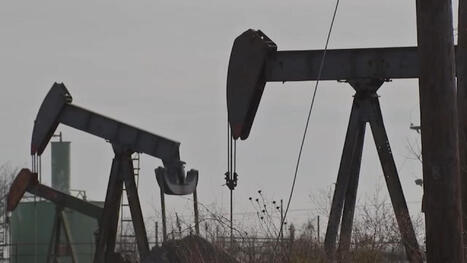
Stealing their oil is lunacy, but that won’t stop him from trying. Donald Trump simply said outright that his military attack on Venezuela, in which commandos kidnapped President Nicolás Maduro and transported him to Manhattan to be put on trial, was about oil. “We’re going to have our very large United States oil companies … start making money for the country,” Trump said. Later, he added, “We’re going to be taking out a tremendous amount of wealth out of the ground, and that wealth is going to the people of Venezuela … it goes also to the United States of America in the form of reimbursement for the damages caused by that country.” Secretary of State Marco Rubio, the administration’s architect of Venezuelan regime change, boasted that American refineries were perfectly ready to process the plunder. There’s just one problem: Stealing Venezuela’s oil makes no sense, even—indeed, especially—from the standpoint of American oil companies.
MSU and IORA Nature Tech have partnered to create a platform that uses satellite imagery and computer vision to map trees, enabling precise carbon accounting, supporting ag, and environmental decision-making.
A regime change in Venezuela could both help that country regain its former prominence as an oil producer and pose a threat to Canada’s industry, which is producing record amounts of oil and is expected to continue to grow for several more years. The Canadian sector has fared better than expected in the past year even amid persistently low commodity prices. Production continues to climb as oilsands facilities expand their operations. But Canadian energy company stocks plunged on Monday morning, following the ouster of Venezuela's Nicolás Maduro by the U.S. With Washington's involvement in Venezuela there’s speculation that that country’s industry could undergo a renaissance — and experts say rising Venezuelan production could bruise the Canadian industry in the long run.
On Saturday morning, John Beard woke up to news that he’d been dreading, but preparing for: A global oil crisis could hit closer to home in Texas. The southeastern part of the state is home to more than a dozen oil refineries, and he’d spent decades working at one of them. But after attending more funerals than he could count for loved ones who died from cancer, he began to feel differently about the job. Beard has spent the past year doing “extensive work” in Europe, warning allies about the dangers of expanding fossil fuels and urging them to prepare to “stand up and push back” against U.S. and industry plans under the Trump administration. He has also been coordinating with local advocates to scrutinize new industrial proposals in Port Arthur, his hometown in southeast Texas, which is home to several oil refineries. Nearly half of the people living in his neighborhood report living with “poor” health, according to federal data. And the risk for developing cancer caused by air pollution is essentially the highest in the country at 1 in every 53 residents. Beard fears it may get worse. For him, the recent U.S. airstrike on Venezuela, which killed at least 40 citizens and has been framed as a push to restore democracy, has landed as something far more familiar: a fight over oil.
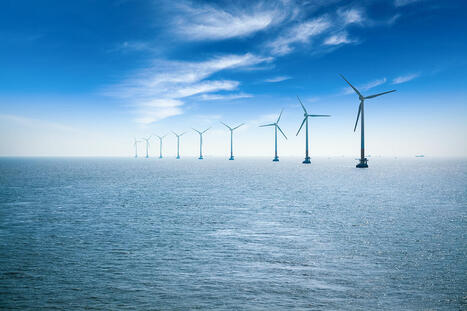
MARTHA’S VINEYARD – Energy company Orsted has sued the Trump administration over its latest pause order affecting five offshore wind farms. Orsted is developing Revolution Wind, which was hal…
Officials are sounding the alarm after confirming the first-ever detection of highly invasive quagga mussels in Northern Ireland, a development experts said could have long-lasting consequences for freshwater ecosystems. What's happening?
On this week’s “More To The Story,” environmentalist Bill McKibben examines how the remarkable rise of solar power could (finally) begin to slow climate change. Bill McKibben isn’t known for his rosy outlook on climate change. Back in 1989, he wrote The End of Nature, which is considered the first mainstream book warning of global warming’s potential effects on the planet. Since then, he’s been an ever-present voice on environmental issues, routinely sounding the alarm about how human activity is changing the planet while also organizing protests against the fossil fuel industries that are contributing to climate change.
In 2025, energy “dominance” and “abundance” entered the lexicon, while “climate change” was pushed out. Remember the climate crisis? The relentless, escalating threat to human health and safety that was once the main driver of clean energy policy? You’d be forgiven if it’s all a bit hazy, given how swiftly the term was dropped from the energy-transition lexicon this year.
|
Key indicators, from the cost of fossil gas to the number of heat pumps sold, signal building decarbonization will march onward in the U.S. despite challenges. It might seem like a dicey time for building decarbonization in the U.S., where edifices and the energy they consume account for about a third of the nation’s annual carbon pollution. Republicans in Congress have cancelled tax credits that would have helped households save big on clean energy upgrades. The Trump administration is dismantling federal building-decarbonization policies and trying to block states and cities from setting rules that restrict fossil fuel use in homes and businesses. Even some Democrats who once championed such mandates U-turned last year: Los Angeles’ mayor repealed an ordinance that most new construction go all-electric, and New York’s governor delayed a similar statewide law previously slated to go into effect last week.
Last month, Ofcom, the United Kingdom’s telecom regulator, granted Amazon’s Kuiper Systems a license to provide low-Earth-orbit-based (LEO) broadband Internet in the country. The move places Kuiper systems in a rival position with the industry leader, and SpaceX subsidiary, Starlink Services. And while more specialized LEO broadband Internet interests are also emerging—in the public and private sectors—Ofcom’s decision signifies an important shift in consumer LEO Internet providers. The game is shifting, in other words, from a single-player to a multiplayer one. Which is not to say, however, that the game today is evenly matched. As one analyst from Copenhagen-based Strand Consult recently put it in the industry publication Broadband Breakfast, Kuiper now is just “a burger bar, while [Starlink Services] runs an interstellar McDonald’s.” In fact, “burger bar” is being charitable
Healthy forests help combat climate change, provide humans with drinking water and even improve mental and physical health. But it’s hard to imagine an entire forest in the middle of a big city. That’s where micro-forests come into play — public forests on a smaller scale, filled with native plants. They exist around the world, and producer Rachel Carlson went to visit the largest micro-forest in California. She joins host Emily Kwong to chat about what she saw. Interested in more of the science behind urban nature?
There is one fire hydrant in the entire Four Mile Fire Protection District. This backcountry northwest of Boulder, Colorado, is full of switchback canyons and nearly-dry creeks late into the fall. A 2010 wildfire funneled through the canyon and destroyed 168 homes. At the time, this was the most expensive wildfire in Colorado’s history. Yet, still only the one hydrant. “Water is our Achilles heel,” Bruce Vaughn said as he showed off the department’s 2,000-gallon tender. When used on full blast, the fortified fire truck may only last for two minutes before needing a refill.
Beyond oil profits, the Trump and Rubio are targeting countries whose leaders are not subservient, says Mark Weisbrot, economist and co-director of the Center for Economic and Policy Research (CEPR). Oil or power? These two elements were laid bare in Donald Trump’s remarks as he sought to justify the illegal attack on Venezuela and the kidnapping of Nicolás Maduro during a nearly hour-long speech delivered on Saturday, January 3, in Florida. “We’re going to rebuild the oil infrastructure, which will cost billions of dollars. That will be paid for directly by the oil companies. They will be reimbursed for what they’re doing, but all of this will be paid for, and we’re going to make the oil flow the way it should […] We’re going to sell it,” Trump said, making strikingly explicit the interest of the United States — and of oil companies — in entering Venezuela. In addition to uttering the word “oil” nearly 20 times, Trump also signaled what it means for the United States to remove Maduro and decide how the country should be governed:
The tale of the clean energy transition is long and winding — and unfortunately, we here at Canary Media don’t have a crystal ball to tell you exactly what’s coming next. But we can let you in on the big storylines our reporters and editors are keeping a close eye on as we head into 2026. Here’s the list, covering everything from companies on the cusp of tech breakthroughs to policy debates that are hitting a boiling point.
The Trump administration says it wants U.S. oil companies to return to Venezuela, but some don't desire to re-invest. Why would oil companies be against returning to a country with large oil reserves? AILSA CHANG, HOST: President Trump recently announced a blockade on sanctioned oil tankers going in and out of Venezuela, ramping up pressure on President Nicolas Maduro to step down. Trump says the blockade will remain until the country returns the oil he claims was, quote, "stolen" from U.S. oil companies. Now, the U.S. has already seized two oil tankers with ties to Venezuela, and it is pursuing a third. Chevron is the only U.S. oil company in Venezuela at the moment. And according to Politico, some American oil companies have already told Trump that they are not interested in returning to the country, even if there is a regime change. Venezuela has the world's largest oil reserves, so why wouldn't America's oil giants want to do business there? Well, to help us answer that question, we're joined now by Scott Modell, CEO of the energy consulting firm Rapidan. Welcome.
HOUSTON, Texas (KTRK) --President Trump said that U.S. energy companies are eager to invest in Venezuela, the nation with the largest oil reserves, and U.S. energy stocks rose Monday at the prospect. Still, it's not a simple proposition given the cost and the political uncertainty. In the hours after the United States removed Venezuelan President Nicolas Maduro from power, the idea of the nation's vast oil reserves and its potential for new production sparked a conversation about new foreign investment. And while President Donald Trump indicated U.S. energy companies were eager to rebuild the infrastructure, it won't happen overnight. Ramanan Krishnamoorti is the Vice President for Energy and Innovation at the University of Houston. He says short-term, the new market might produce some local jobs and down the road it could be a boon for Gulf Coast refineries, but uncertainty might slow actual investment in oil production by Houston-based energy companies. "It's very much contingent on what happens next," he told ABC13. "This is at a time when these companies are pretty strapped for cash because you've got falling oil prices. In the last year or so, it's dropped twenty dollars per barrel, and that's really starting to eat up on their profits. "
The Center for Biological Diversity estimates that Trump's plan to expand offshore drilling over the next five years will result in more than 4,000 additional oil spills, dumping 12 million more gallons of oil into ocean waters around the US.
By every measure, shifting from fossil fuels to electrification, renewables, and energy efficiency and conservation is far more beneficial to most people than following the same fossil-fueled road.
For four decades, the Pacific coast of Panama has counted on a reliable seasonal pulse of cold, nutrient-rich water that powers local fisheries and cools coral reefs. In early 2025 that pulse all but vanished. Scientists report that the Gulf of Panama’s usual upwelling failed for the first time in the instrumental record, a breakdown they see as a warning about how quickly climate disruption can unsettle tropical seas.
Finnish authorities have arrested two people as they continue to investigate damage to an undersea telecommunications cable in the Gulf of Finland. The two were part of the crew aboard the cargo vessel, Fitburg, which is suspected of damaging a cable linking Helsinki, Finland, and Tallinn, Estonia. Authorities placed two other crew members under travel bans as part of the ongoing investigation and had begun questioning all crew members.
|