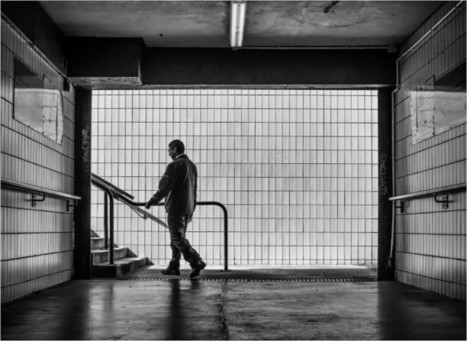
I attended a live concert with the famous Greek reggae band Locomondo at the Technopolis complex in the heart of Athens on the 5th September 2014. Locomondo combine folklore and traditional Greek...
Earlier this year Fuji called me to put their 56mm f/1.2R through it's paces (link), and they've now created a new version of that lens, the 56mm f/1.2R APD, and once again called me up to give it a whirl . As per usual, I'll hit you guys with the photos first, gear talk to follow at the…
Mathieu of MirrorLessons discusses the Fujifilm cameras and lenses that will appear at Photokina 2014, including the X100t, silver X-T1, 50-140mm F2.8, and 56mm
I have had a pre-production copy of the new Fuji X100T for a week and I have been putting it through the paces to find out how much this camera has evolved since the first X100 was introduced at Photokina in 2010. It was the original X100 that started my love affair with Fuji cameras, and…
A visual comparison between RAW converters for Fuji’s X-Trans sensor including Aperture, Capture One, Iridient Developer, Lightroom, LightZone, NikSharpener, OnOne, and PhotoNinja
Have you ever set yourself a specific project or challenge to improve your photography? If not, let me tell you that not only is it an excellent way of
We left Singapore and boarded the relatively short flight to Bali. We have both wanted to visit Bali for a long time after hearing so many great things about it from friends. We were certainly not disappointed!
We started our 10 days there with a 7 night stay on the south east coast in an area called Nusa Dua. This small bay is lined with luxury hotels and white sandy beaches. It was the perfect place to relax and unwind after the madness of the wedding planning. Whilst staying in Nusa Dua we took a couple of trips up to the west coast of the island visiting Kuta and Seminyak. Kuta was very lively and is a big hit with backpackers. There was plenty of bars and the big waves offer great surfing conditions. We saw an incredible sunset whilst there, which we enjoyed with many others from the beautiful sandy beach..
After a very relaxing week in Nusa Dua we drove north up to Ubud. Ubud is the cultural and artistic centre of Bali. The streets are lined with laid back cafes and art galleries displaying the work of local artists. It is surrounded by jungle and rice paddies. Which made it a fascinating place to walk and explore.
Bali really is an amazing place and hopefully one day we will get to go back and explore more.
All photos taken with Fuji X-Pro1 - XF 35mm & 18mm lenses and process with Rebecca Lily Pro pack III.
Summer hiking season is almost over, or so the weather outside says, so I might as well start sharing some of the best hikes of season! This starts after Tarvisio, in Italy, on the higher of the Fusine lakes. It develops rather steeply towards a small …
In February 2014, during my first ever trip to Japan to attend the CP+ Show in Yokohama, I was also lucky enough to be present at one of the early planning meetings for the X100T, along with a few ...
So yes, the rumours were true: Fujifilm has announced a new, different version of their stellar XF 56mm f/1.2 R lens — the XF 56mm f/1.2 R APD. I’m stressing the word different as opposed to better and I’ll explain why in a bit.
APD stands for apodized. This is a process by which an optical filter is introduced inside the lens assembly to modify the way it renders out of focus areas — specifically, to make them smoother. And because this filter gets gradually darker at the edges, it also adds a slight vignetting effect. And I do mean slight: light falloff more than any real darkening.
I was fortunate to again be hired by Fuji to shoot samples for this version as I had done for the previous model last winter, along with my Canadian colleague Nathan Elson from Calgary (his stunning images are here; very cool shoot). But the deadline and turnaround were a lot tighter this time and I barely had a few days with it.
The lens Tokyo sent in was a prototype with nothing but a yellow sticker to distinguish it from my own “normal” 56mm. Since it wasn’t anywhere near a production model, this isn’t a review at all — just a look at the photo shoot and a few personal notes. And btw, these images aren’t the same versions you’ll find on the official product page: we send in unprocessed raw files for sample use. No retouching, no sharpening. Nada. It’s a humbling experience if there ever was one. The photos here were processed in LR5 with my usual methods (although Capture One was used as well for some of these; more on that eventually).
In studio
I didn’t reinvent the wheel on this shoot; part of it was due to time constraints but I also meant to retain a certain visual filiation with the original 56mm sessions. Everything was shot with my own X-T1 — no special firmware needed this time around.
Soft light SB-900 in Elinchrom Deep Octa (+ silver reflector on #3). All shot at f/1.2 except image #1 (f/1.8).
A serious tangle... 100% view of image #1.
Hard light Single Elinchrom BX500ri strobe fitted with barn doors and shot through a gobo. All shot at f8 except #1 (f11).
Change of scenery
Shooting in August as opposed to January made it a teeeeensy bit easier to go outdoors… Like 40+ degrees easier. So we did a few. All natural light with a large silver reflector positioned in front and slightly to the left of Frédérique. Last image was done indoors using straight up window light. All shot wide open at f/1.2.
Soft & Softer
It's hard to tell what exactly is going on and how much of an effect the APD process has on the actual results without a direct comparison. Below are two shots taken about 30 seconds apart — the first with the standard 56, the second with the new APD version. Keep your eyes on the bricks in the background (top left) as you switch from one image to the next: you'll notice a bit more blurring breaking up the pattern. There's also a very mild darkening at the edges.
Standard version
APD version
conclusion
So given the slightly more pleasing bokeh (it's no use, I'll never like that word), common wisdom would dictate that the APD is the better of the two right? Well, I’m sticking with different. Because there actually are trade-offs with the apodization process:
1. Less light gathering capabilities at the same aperture (I’d say around 1 stop but I didn’t measure it). Note: I compensated for this in post in the comparison images. 2. No phase detection AF, resulting in slower focusing. Because of the internal filter and how it interacts with the light, the camera can only use contrast detection.
These are not faults, they’re predictable and unavoidable byproducts of this type of lens construction. So it really comes down to what you value most and what you need in terms of performance/aesthetics. The APD is indeed the new King of XF Bokeh, but it does its thing at a price — monetary yes, but technical as well.
------
Some lenses have something… This hard to define quality that isn’t necessarily about sharpness or chart performance; something which coats images in a few stray drops of magic. The XF 35mm f/1.4 has it. The 23mm consistently flirts with greatness. I’ve loved everything I’ve shot with the original XF 56mm f/1.2 lens since the moment I unboxed the prototype in December of last year. It simply floors me day after day after day and has never once let me down. From what I've seen, this version carries on the legacy.
Does this mean you should immediately sell your 6 months-old standard 56mm? Well, I won’t — and I certainly won’t feel cheated. What this amounts to is choice, not replacement, upgrade or deprecation. As far as I’m concerned, neither can disappoint.
These are siblings... Blood brothers — in lightning, thunder and magic.
P.S More images in a less controlled setting: Sept 11: La Ferme Sept 12: Always Crashing in the Same Car
Heather and Mathieu of MirrorLessons interview pet and animal photographer Lindsay Dobson about her line of work and Olympus Micro Four Thirds cameras.
In this episode we'll talk about the announcement of the new Olympus PEN E-PL7, the Kelby Photowalk in Lansing Michigan and why it will rock, and some other ...
Disclaimer: This hands-on preview was done with a pre-release sample of the X30 running pre-release firmware. Things may change before it is officially released.
Well the cat's out of the bag... Fujifilm finally introduced the first of its third generation X Series cameras. And boy is it ever an exciting glimpse at what's ahead.
The Fujifilm X30 is an upgrade to its predecessor, the X20. I say upgrade because thats just what it is. An incremental release to the X20 but with all that Fuji has learned in its other X Series cameras.
A departure?
Lots of people complained that, when Fuji launched the X-T1, they had departed too far from the original design language and ethos. The Retro-styled rangefinder was no more, and the SLR-chic look is what was now "in". Don't take me wrong, the X-T1 is a beautiful piece of kit, and if anything, this design change was a brilliant marketing move by Fuji. The DSLR toting market was intrigued and more than ever, Pros began considering the Fujifilm lineup.
Of course it had as much to do with design and ergonomics as it did with feature set. The X-T1 introduced some great features to the X Series cameras such as intervalometer shooting, Wi-Fi remote, but it also allowed Fuji to show the world that EVFs were now so good that people couldn't use that as an excuse to stick to their DSLRs anymore.
The X30 is the latest camera by Fujifilm and the first one to release in the post X-T1 era. To say that the X-T1 changed things for Fuji would be the understatement of the year. And it's very clear the second you hold the X30.
Just like the X-T1 before it, the X30 stirs away from the original retro styling for a little bit of modern.
The X30 body is sleeker, sharper, and despite being a bit bigger and slightly heavier, it feels a lot more comfortable to hold. According to Fuji, this was meant to accommodate the much larger battery (it now uses the same one as the X100 series). It also feels a lot more rugged thanks to its magnesium alloy build. Hold it next to an X-Pro 1 (which, to me, is the gold standard for Fujifilm X Series) and you would be hard pressed to see a (big) difference. The camera is solid, and everything feels the way it should be.
Speaking of everything, the X30 has a lot of buttons, not too many though, just enough to get the job done without having to deep dive into menus. The other thing I appreciated is that, finally, it seems we now have somewhat of a standard between the X-T1 and X30 (let's keep that going Fuji yeah?).
Buttons on the top and the right side, large tilty-flippy (thanks Kai) on the left side. Yes, you read that right, the X30 also inherited its bigger cousin's flip screen. And it's a beautiful one that will be a joy to use for long exposure photography, low to the ground shots, or stealthy street photography.
But the star of the show here isn't the screen... Gone is the not-so-great Optical Viewfinder that lived on the X10 and X20; which felt like a viewfinder for the sake of one IMHO. The X30 now sports a beautiful Electronic Viewfinder (2.36 million dot resolution, 0.65x magnification, and display time lag of 0.005 seconds), which — while not quite as great as the one found on the X-T1 is still very pleasing to look through and a HUGE improvement over the X20.
Another key improvement is the inclusion of what Fuji calls the new control ring.
Located just behind the zoom ring, this second ring allows you to control things like your aperture while in Manual mode while the shutter speed is controlled by the dial on the back of the camera.
Speaking of that dial, because of the size of the X30 — and maybe the size of my thumbs — I found myself switching settings by accidentally hitting it while holding the camera. Minor quirk, and one that could be limited to a very small set of users. It is, however, very comfortable to hold and use one-handed.
Another thing I didn't like about the X30, and this could very well be due to the pre-release nature of both the hardware and firmware, was how long it took to wake from sleep. I ended up having to make sure to keep it awake while walking around so as to not miss a shot. This is something that I'm sure Fuji is aware of, and will probably fix before it's even released to the public.
A look at the future...
At the beginning of this preview, I mentioned that I thought the X30 was "an exciting glimpse at what's ahead". I could explain what I meant but it has been mentioned on the web already, and so I will simply quote an eloquent and wonderful X Photographer and good friend:
“But what’s most interesting about this release is how it sheds light on the road ahead: there are a lot of super nice improvements; important improvements that could eventually (fingers crossed) trickle up/down to other bodies: spot metering is no longer confined to centre (it now meters from any selected AF point), exposure compensation in manual mode in conjunction with Auto ISO, a dedicated raw mode for the EVF that bypasses the JPEG engine, stratospheric improvements to movie mode (that list alone goes on and on), a customizable Q Menu (YAY!!) etc…”
— Patrick Laroque. Samples and Conclusion...
During actual use, the X30 felt small (though not pocketable), fast to focus, and the newly added control ring was extremely useful in manual mode.
The tracking continuous focus also worked great, although with a smaller sensor than its bigger cousins, I expected things to stay in focus which they did. Check out this pup running full speed:
This is a great camera for people that are looking for a small, Swiss Army knife of a camera with good image quality and a very versatile set of features. In today's world, it is the most feature complete X Series camera available and also one of the more affordable ones (thanks to its smaller sensor
For me personally, the X30's size was too close to an X100 and I will always take a prime lens over a zoom lens. Although I will say, that this particular lens was extremely versatile and definitely fun to use, and that's what it's about.
The X30 did, however, make me all the more excited about the prospect of a cup of T... X100 T...
As always you can pre-order the Fujifilm X30 from my good friends over at Aden Camera. Canadian pre-orders even get a free extra battery and wall charger (the X30 comes with a usb cable to charge in-body...).
Get the best from your Fuji X-T1 with these top Hints and Tips for day to day use, and find out about some of the more unusual and those not so obvious settings. #advice #flash #fuji
To get content containing either thought or leadership enter:
To get content containing both thought and leadership enter:
To get content containing the expression thought leadership enter:
You can enter several keywords and you can refine them whenever you want. Our suggestion engine uses more signals but entering a few keywords here will rapidly give you great content to curate.


 Your new post is loading...
 Scoop.it!