Seth Llyod is a Professor in the Department of Mechanical Engineering at the Massachusetts Institute of Technology (MIT). His talk, "Programming the Universe", is about the computational power of atoms, electrons, and elementary particles.
Igor Nikolic graduated in 2009 on his dissertation: co-evolutionary process for modelling large scale socio-technical systems evolution. He received his MSc as a chemical-- and bioprocess engineer at the Delft University of Technology. He spent several years as an environmental researcher and consultant at University of Leiden where he worked on life cycle analysis and industrial ecology. In his research he specializes in applying complex adaptive systems theory and agent based modeling.
On TEDxRotterdam Igor Nikolic left the audience in awe with his stunning presentation and visualizations, mapping complex systems
Carlos Gershenson is the head of the Computer Science department at the Mathematical Institute in the Universidad Nacional Autonoma of Mexico. He researches solutions for urban mobility, healthcare, governance and engineering.
Rebecca Onie asks audacious questions: What if waiting rooms were a place to improve daily health care? What if doctors could prescribe food, housing and heat in the winter? At TEDMED she describes Health Leads, an organization that does just that -- and does it by building a volunteer base as elite and dedicated as a college sports team.
“The world needs you, badly,” begins celebrated biologist E.O. Wilson in his letter to a young scientist. Previewing his upcoming book, he gives advice collected from a lifetime of experience -- reminding us that wonder and creativity are the center of the scientific life.
How do human social, cultural, and economic systems interact with natural ecosystems? In a brief "Big Questions" video profile, SFI Professor Jennifer Dunne explores how these obvious but often neglected interdependencies can be studied through the mathematics of networks.
Networks guru and author Albert-László Barabási says diseases are the results of system breakdowns within the body, and mapping intracellular protein networks will help us discover cures.
Bestselling journalist and author Jonah Lehrer shows how new research is deepening our understanding of the human imagination and considers how this new science can make us happier.
A fascinating series of talks on Economic Complexity which took place at the Institute of New Economic Thinking Conference in Berlin earlier this year. Featuring talks from Doyne Farmer, J-P Bouchaud, Ricardo Hausmann and Mauro Gallegati.
Google Tech Talk March 2, 2012 Presented by Professor Carsten Sørensen.
My talk will report on research conducted within the mobility@lse research unit at the London School of Economics since 2000. It will present some of the main findings regarding the social and business impact of the mobile revolution, for example, the re-negotiation and daily endeavour to manage a boundary-less world by cultivating boundaries. The mobile revolution has significantly contributed to the erosion of long-established boundaries for inter-personal interaction, and as a result individuals will through their everyday life with the technology seek to resolve the resulting paradoxes. The technology that sets them free and allows for "anytime-anywhere" communication also enslaves them as they are always available.
Empathy, cooperation, fairness and reciprocity -- caring about the well-being of others seems like a very human trait. But Frans de Waal shares some surprising videos of behavioral tests, on primates and other mammals, that show how many of these moral traits all of us share.
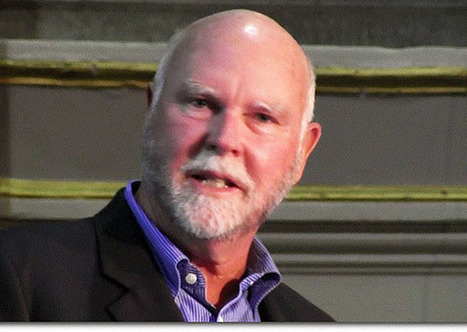
J. CRAIG VENTER: I was asked earlier whether the goal is to dissect what Schrödinger had spoken and written, or to present the new summary, and I always like to be forward-looking, so I won't give you a history lesson except for very briefly. I will present our findings on first on reading the genetic code, and then learning to synthesize and write the genetic code, and as many of you know, we synthesized an entire genome, booted it up to create an entirely new synthetic cell where every protein in the cell was based on the synthetic DNA code.
Takashi Ikegami has his own science lab where his work deals with complex systems and artificial life. He is a professor of physics in the Department of General Systems Sciences at the University of Tokyo.
Farida Vis is a Lecturer in Media and Communication at the University of Leicester and has written for the Guardian. She specializes in social media and its role in crisis situations.
The recent generations have been bathed in connecting technology from birth, says futurist Don Tapscott, and as a result the world is transforming into one that is far more open and transparent. In this inspiring talk, he lists the four core principles that show how this open world can be a far better place.
In the fall of 2011 Peter Norvig taught a class with Sebastian Thrun on artificial intelligence at Stanford attended by 175 students in situ -- and over 100,000 via an interactive webcast. He shares what he learned about teaching to a global classroom.
Strogatz mathematically describes how natural and sociocultural complexity resolves into vast webs of order. Ratti uses technology as a tool to create interactive urban environments. In this video Salon, Strogatz and Ratti discuss whether building and analyzing human networks can help us overcome our poor mathematical understanding of complexity.
The story of information began in a time profoundly unlike our own, when every thought and utterance vanishes as soon as it is born. From the invention of scripts and alphabets to the long-misunderstood talking drums of Africa, Gleick tells the story of information technologies that changed the very nature of human consciousness. He provides portraits of the key figures contributing to the inexorable development of our modern understanding of information: Charles Babbage, Ada Byron, Samuel Morse, Alan Turing and Claude Shannon, the creator of information theory itself.
What can mathematics say about history? According to TED Fellow Jean-Baptiste Michel, quite a lot. From changes to language to the deadliness of wars, he shows how digitized history is just starting to reveal deep underlying patterns.
How do we consume data? At TED@SXSWi, technologist JP Rangaswami muses on our relationship to information, and offers a surprising and sharp insight: we treat it like food.
Eduardo Paes is the mayor of Rio de Janeiro, a sprawling, complicated, beautiful city of 6.5 million. He shares four big ideas about leading Rio -- and all cities -- into the future, including bold (and do-able) infrastructure upgrades and how to make a city "smarter."
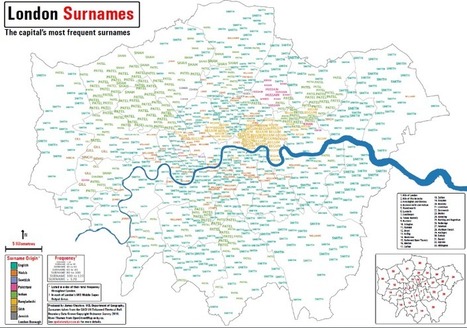
I recently had the pleasure of presenting at the first Data Visualisation London Meetup event where I spoke about some of work we do at UCL CASA. A fair chunk of the slides were movies so I thought it best to stick them in a blog post.
To get content containing either thought or leadership enter:
To get content containing both thought and leadership enter:
To get content containing the expression thought leadership enter:
You can enter several keywords and you can refine them whenever you want. Our suggestion engine uses more signals but entering a few keywords here will rapidly give you great content to curate.


 Your new post is loading...