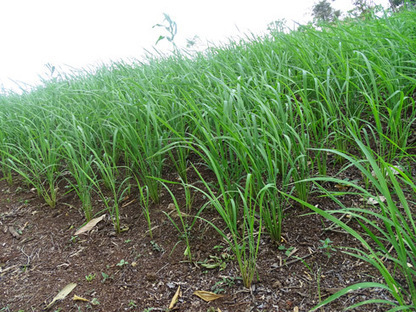
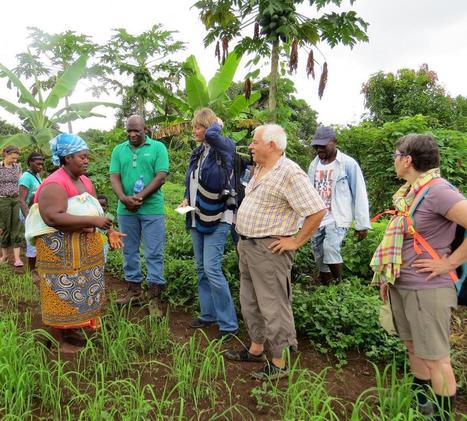
La Representación del IICA en Nicaragua en coordinación con la Asociación para la Diversificación y el Desarrollo Agrícola Comunal (ADDAC), desarrolló visitas de seguimiento a parcelas demostrativas bajo la tecnología del Sistema Integrado del Cultivo de Arroz (SRI, por sus siglas en inglés) con el propósito de verificar el avance y el estado en que estas se encuentran. La tecnología del Sistema Integrado del Cultivo de Arroz - SRI, es una metodología que ofrece beneficios al pequeño productor.
SRI-Rice's insight:
The IICA Representation in Nicaragua in coordination with the Association for Community Agricultural Diversification and Development (ADDAC), carried out follow-up visits to System of Rice Intensification (SRI) demonstration plots and trainings carried out several month ago. This article reports on the progress and opinions of several of the farmers that were trained.
The SRI methodology, which reduces the economic cost and environmental impact of rice farming, is contributing to renewing production on farms in Costa Rica and other Latin American countries.
AgroEnlace - Transmisión en vivo. May 29, 2019. En Chile, donde se produce el arroz más austral del mundo, se está validando el Sistema Intensivo de Cultivo de Arroz, SRI, una metodología ampliamente probada en climas tropicales. Los resultados obtenidos despiertan el interés de productores, investigadores y la institucionalidad agrícola.
SRI-Rice's insight:
This is a 15 minute radio show about the System of Rice Intensification in Chile. It was sponsored by the Instituto Interamericano de Cooperación para la Agricultura (IICA)
Conclusiones: El sistema SRI favorece la expresi6n del potencial de macollamiento de la planta y su crecimiento radical con respecto al trasplante convencional. El rendimiento potencial del sistema SRI es mayor, de manera que es fundamental lograr un adecuado establecimiento del cultivo. Es posible reducir el consumo de agua en el sistema SRI.
SRI-Rice's insight:
Gabriel Garces Varon. 2018. Resultados Promisorios del Sistema Intensivo del Cultivo del Arroz (SRI) en el Tolima. Arroz 66(536): 24-31. (to see this article, go to page 24 of the attached magazine):
Conclusions: The SRI system favors the expression of the tillering potential of the plant and its radical growth with respect to conventional transplantation. The potential yield of the SRI system is greater, so it is essential to achieve an adequate establishment of the crop.It is possible to reduce the water consumption in the SRI system.
A presentation on the Latin America SRI Network (SRI en las Americas) by Diddier Moreira and Kelly Witkowski was delivered by Diddier at the Workshop to Enhance Cooperation and Sharing among SRI National Networks in Asia, held October 18-19, 2018 in Skudai, Malaysia.
Paramaribo, Suriname, August 28, 2018 (IICA). The Delegation of the Inter-American Institute for Cooperation on Agriculture (IICA) in Suriname and Cornell University in New York are working together to conduct of field activities through Systems of Rice Intensification (SRI) for upland rice production in Maroon communities located along the upper Suriname River.
In this Spanish language video, José Israel Lopez from INTA Nicaragua tells us about Nicaragua's work to implement SRI methodology. He shares that producers, at first, were hesitant because the new methods were far from what they were used to. However, when they began to see results, they were impressed. The average yields on their SRI trial period averaged 6.8 tons per hectare and their conventional trial had an average yield of 4 tons per hectare. José is confident in the future of SRI in Nicaragua and is excited to see producers learn more about it.
This poster on SRI by Rena Pérez and Julian Herrera Puebla was presented at: Segundo Intercambio Regional: Avances cons SRI en las Américas, Ibagué, Colombia, October 10-12, 2017
Jorge Vincente Gil Chang presented a poster about SRI in Ecuador at the Segundo Intercambio Regional: Avances cons SRI en las Américas Location: Ibagué, Colombia Date: October 10-12, 2017
Informe Segundo Intercambio Regional: Avances con SRI en las Américas (Report on a workshop -- the Second Regional Workshop on SRI in the Americas, October 10-12, 2017. Representatives from 10 countries joined the workshop.
SRI-Rice's insight:
[A hi-res copy of the report is also available on the SRI-Rice website.] The powerpoints in Spanish) from the Second Regional SRI Workshop in the Americas are located here:
Rena Pérez reported on progress with the Sustainable Sugarcane Initiative (SSI, or SiCAS in Spanish), a methodology adapted from SRI principles. Two years after her 2012 presentation (see article) on SiCAS to Cuba's sugarcane industry, Perez learned of a sugarcane cooperative in Las Tunas that had adapted the SiCAS methods in a dry part of the island to use three-bud setts, which both reduced the required planting material and increased the yields...
“I would have never imagined that it was possible for me to harvest 5 to 6 tons of rice on one single hectare of land—it’s such an extraordinary feat for me.” - Leo Andres Pablo Julson.
SRI-Rice's insight:
This USAID-sponsored project, Feed the Future (FTF) West, has been successful in doubling yields for some of the farmers in Haiti. Hopefully SRI will continue to spread there on its own as the project is apparently ending in May.
Spanish language video produced by Inter-American Institute for Cooperation on Agriculture (IICA) about the experiences of some of the rice producers who are using SRI methods in Latin America.
On June 3-5 of this year, Earth Links completed an SRI training for smallholder rice farmers in Matagalpa, Nicaragua. The project is a collaboration with 4 of our partners; Three Americas, ADDAC (Association for the Diversification and Development of Agricultural Community), SRI-Global and IICA (Inter-American Institute for Cooperation in Agriculture). The training took place on a site selected by ADDAC. In attendance were 30 men and women farmers and 3 Agricultural Technicians (who may become trainers) that were introduced to SRI by a lead trainer from IICA, Didier Moreira.
Upcoming Radio show on SRI in Venezuela: En Venezuela, una sequía de casi tres años afectó una de sus principales zonas arroceras: Calabozo, en el estado Guárico. Esto, aunado a la escasez de semilla y otros insumos, condujo a una fuerte caída de la producción.
Para enfrentar la situación los sectores público y privado, con el liderazgo técnico del IICA, retoman ensayos y validaciones en campo del SRI, un sistema de cultivo altamente productivo y rentable, agroecológico y climáticamente inteligente. Una experiencia que nos cuentan sus protagonistas.
SRI-Rice's insight:
(To be presented April 17 on the biweekly AgroEnlace radio show that encourages the participation of small and medium agribusiness in national and international markets.) In Venezuela, a 3-year drought affected a main rice area: Calabozo, in the Guárico state. This, coupled with the shortage of seeds and other inputs, led to a sharp drop in production.To deal with this, the public and private sectors, with the technical leadership of IICA, tested the System of Rice Intensification (SRI) as a highly productive and profitable, agroecological and climate-smart farming system.
“Lo que queremos es que la producción de arroz en Chile sea más sustentable, que mire hacia una menor carga química” señaló la coordinadora del Programa de Mejoramiento Genético de Arroz de INIA, Karla Cordero, al referirse al énfasis que INIA le está dando a la producción sustentable del arroz.
La profesional indicó que la fusión de un nuevo manejo agronómico sin herbicidas más la implementación en fase experimental de la metodología SRI (System of Rice Intensification) o Sistema de Intensificación del Cultivo de Arroz, se enmarca en una reorientación hacia una producción sustentable.
SRI-Rice's insight:
"What we want is that the production of rice in Chile is more sustainable" said the coordinator of the INIA Rice Genetic Improvement Program, Karla Cordero. Merging herbicide-free management and SRI (System of Rice Intensification) experimentation is part of a reorientation towards a sustainable production.
La investigación tuvo como objetivo evaluar la productividad del cultivo del arroz mediante el estudio del tiempo óptimo de trasplante. Se plantearon 4 tratamientos para la investigación; trasplantar a los 25 días de germinación (dg) como testigo (T), a los 20 dg (T1), a los 15 dg (T2) y a los 10 dg (T3), cada uno con 5 réplicas, con un diseño experimental DBCA. Se utilizó la variedad INIAP-11. Al evaluar los tratamientos se observó que el T3 fue la mejor variante en cuanto al número de macollos/planta (37,02); en lo referente a producción obtuvo el mayor rendimiento con 4,9 Mg.ha-1; también desde el punto de vista económico fue el más rentable, con una utilidad de 2125,99 (USD/ha), por lo que se concluye que el trasplante de arroz a los 10 días de germinado potencializa el desarrollo agro productivo.
Seminario Web “Avances con el Sistema Intensivo de Cultivo de Arroz (SRI) en las Américas: Progresos en Colombia
SRI-Rice's insight:
This IICA-sponsored June 29 webinar featured a presentation by Gabriel Garcés, FEDEARROZ Colombia, who spoke about the results of SRI trials conducted in Colombia.
Guía para el establecimiento y monitoreo del cultivo de arroz bajo la metodología del SRI. [This Dominican Republic version of a Spanish language manual on using and monitoring SRI is available on the FONTAGRO website. It was authored by Díddier Moreira Mendoza with input from Pedro A. Núñez Ramos (IDIAF) and Kelly Witkowski (IICA).]
Guía para el establecimiento y monitoreo del cultivo de arroz bajo la metodología del SRI.
[This Colombian version of a Spanish language manual on using and monitoring SRI is available on the FONTAGRO website. It was authored by Díddier Moreira Mendoza with input from Gabriel Garcés Varón (FEDEARROZ) and Kelly Witkowski (IICA). [9.6MB file!]
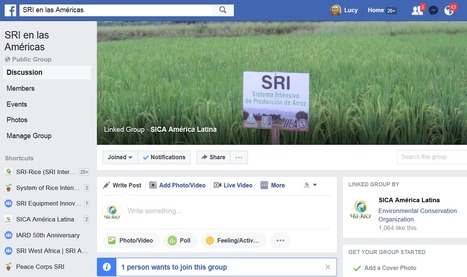
Este grupo está abierto a cualquier persona que esté interesada en el Sistema Intensivo de Cultivo Arrocero (SRI, por sus siglas en inglés). Su propósito es proporcionar un espacio para el intercambio de experiencias, preguntas y conocimiento con otros colegas trabajando con el SRI en las Américas.
SRI-Rice's insight:
Join the Spanish language discussion group about SRI in the Americas!
Proyecto “Cultivar más con menos: Adaptación, Validación y Promoción del Sistema Intensivo del Cultivo Arrocero (SRI) en las Américas como una respuesta al cambio climático”, en República Dominicana. Su ejecución está a cargo del Instituto Dominicano de Investigaciones Agropecuarias y Forestal (IDIAF) y el Consejo Nacional de Investigaciones Agropecuarias y Forestal (CONIAF), en coordinación de la Representación del IICA en República Dominicana. La iniciativa cuenta con el apoyo financiero de FONTAGRO y el Fondo Mundial para el Medio Ambiente (GEF).
A consortium of partners including the Dominican Institute of Agricultural and Forestry Research (IDIAF), the Dominican Council of Agricultural and Forestry Research (CONIAF), the National Federation of Rice Producers (FEDEARROZ-FNA) and the Inter-American Institute for Cooperation on Agriculture (IICA), are executing a two-year project to to validate SRI in Dominican Republic and Colombia to help reduce the vulnerability of small rice farmers to climate change....
To get content containing either thought or leadership enter:
To get content containing both thought and leadership enter:
To get content containing the expression thought leadership enter:
You can enter several keywords and you can refine them whenever you want. Our suggestion engine uses more signals but entering a few keywords here will rapidly give you great content to curate.


 Your new post is loading...















The IICA Representation in Nicaragua in coordination with the Association for Community Agricultural Diversification and Development (ADDAC), carried out follow-up visits to System of Rice Intensification (SRI) demonstration plots and trainings carried out several month ago. This article reports on the progress and opinions of several of the farmers that were trained.