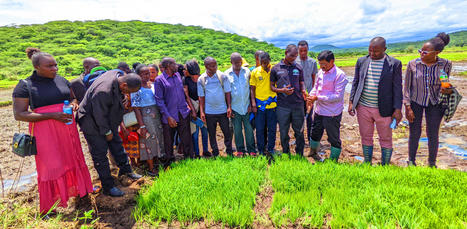
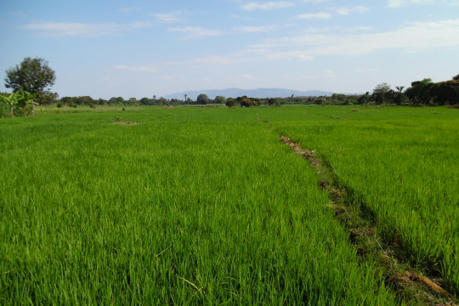
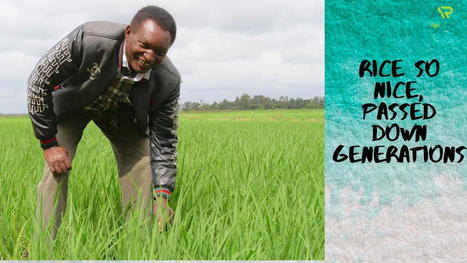
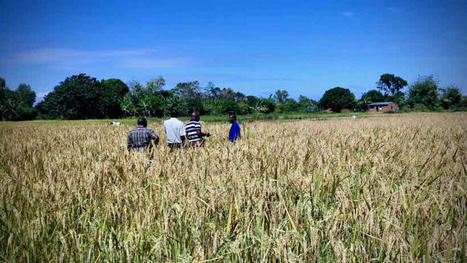
Farmers at the SISU Irrigation Scheme in Ifakara, Tanzania are achieving major improvements in rice production after hands‑on training on the System of Rice Intensification (SRI), locally known as kitalu mkeka, delivered through FtMA.
Previously, farmers used 20 to 30 kg of paddy seeds to plant an acre, driving up production costs and resulting in weak seedling establishment. With SRI, they now require only 3 to 6 kg of paddy seeds per acre. This has significantly reduced seed costs by 70 to 85% while producing healthier, uniform seedlings that boost field performance. SRI has also improved crop spacing, survival rates, and overall yield potential, allowing farmers to reinvest savings into fertilizers and labor. Video from: Farm to Market Alliance - LinkedIn https://www.linkedin.com/company/farmtomarketalliance/
Discover how Tanzanian farmers are boosting rice production despite climate change using System of Rice Intensification (SRI)! Learn key practices like young seedlings, reduced water use, less fertilizers, and smart spacing to grow more rice with fewer resources.
Two years in, the SRI Tanzania project has made a significant impact on the lives of 2,880 farmers, with a 30-40% increase in yield and an approximately 90% reduction in seed usage.
The emphasis of the Norad-funded project SRI Tanzania is on the promotion of the climate-smart agriculture System of Rice Intensification (SRI) methods. The project is currently being implemented in five districts in Tanzania by the Norwegian Institute of Bioeconomy Research (NIBIO) and the Tanzania Agricultural Research Institute (TARI).
NIBIO’s CEO Ivar Horneland Kristensen reflected on the project’s wider potential: “On a larger scale, if all two million rice farmers in Tanzania adopted this approach, the impact would be transformative. Tanzania could not only secure its own food supply but also help feed six neighbouring countries, improving lives and bolstering regional and global food security,” he says.
Rice farmers have expressed their satisfaction with the project of System of Rice Intensification (SRI) in Tanzania that helps them withstand the effects of climate change and reduce production costs; at the same time, productivity is double that of conventional agriculture. This was stated during the SRI Stakeholders Annual workshop held in Mbeya Region on January 24 through 27, 2024, at the centre of Tanzania Agricultural Research Institute - TARI Uyole. While sharing his testimony, Mr. Filbert Kadebe a farmer from Mkula scheme found in Kilombero District, Morogoro Region, said that with SRI he managed to reduce cost by using 2 to 3 kilograms of seeds per hectare from the 30 kilograms he used to plant. Kadebe continued say that in SRI, with mat nursery technology it’s much easier for farmers to simplify the transplanting exercise as well as managing to transplant a single seedling.
The SRI project is implemented by the Tanzania Agricultural Research Institute (TARI) in collaboration with the Norwegian Institute of Bio economy research (NIBIO) and the Swamination Research Institute (MSSRF) based in India.
Discover the inspiring story of Zambian entrepreneur Henry Ngimbu and how he’s making a difference in rural communities in his home country through the System of Rice Intensification (SRI). Learn about the four key areas he believes are paramount to growing SRI in Zambia and the potential for SRI adoption in the country. TO LEARN MORE ABOUT HENRY"S JOURNEY, READ HERE: www.sri-2030.org/blog-post/henry-ngimbu-zambia-sri-story
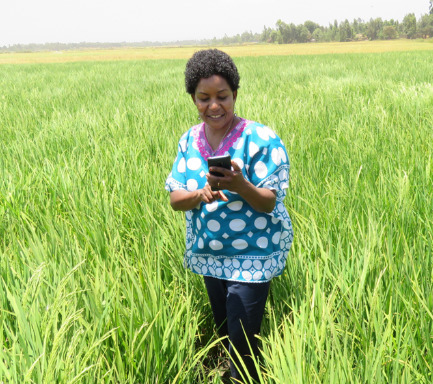
Achieving Food Security while using water and land resources in a sustainable manner is a major challenge to any country. Agriculture’s success is therefore hinged on effectively using innovation to increase productivity and ensure profitability while managing natural resources. With this in mind, ARIFU, an educational technology company in conjunction with JKUAT’s Prof. Bancy Mati came up with a digital System of Rice Intensification (SRI) training app for rice farmers in Kenya. The app is an important source of information for the farmers on practices towards an increase in rice water productivity.
The ARIFU platform is an interactive chatbot that offers agronomic advice and financial skills training to farmers through mobile phones, giving them access to much-needed information. “This app will be accessible to anyone with a mobile phone and will be important in providing up-to-date information to farmers on the new and improved farming practices,” said Prof. Mati who also Chairperson of the Association of Irrigation Acceleration Platform (AIAP).
A longer account of the digital app, with insights on its success, can be found in Prof. Mati's extended post on the SRI-Rice website: tinyurl.com/3t97632c.
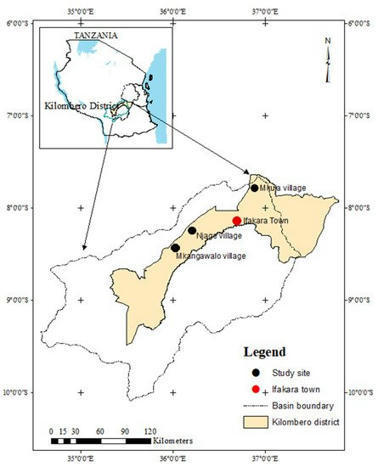
The study assesses agricultural water productivity (AWP) values for paddy farming in terms of both physical (Kg/m3) and economic (US$/m3) in the conventional transplant and flooding system (CTFS), the system of rice intensification (SRI), and the Kilombero Plantation Limited (KPL) mechanized system. Findings showed that rainfed systems have good (AWP), leading the authors to recommend a rollout of rainfed SRI to secure local food security and downstream ecosystem services, although the authors believe that adoption of SRI will require intensive demonstration that needs public financing.
The results showed that SRI systems have better AWP due to high yields and low water uses. In addition, it was found that irrigation does not have a substantial leap in harvests in the wetland areas being studied. Hence, rainfed systems score better values, especially SRI, providing a plural benefit that includes downstream ecosystem integrity. Furthermore, due to early planting in rainfed SRI, farmers secure competitive market prices in early harvests hence better economic water productivity (EWP). The authors suggest that farmers should be trained and encouraged to practice SRI (especially rainfed), which secures better AWP and serves more for downstream uses, reducing water use conflicts and sustaining the ecosystem.
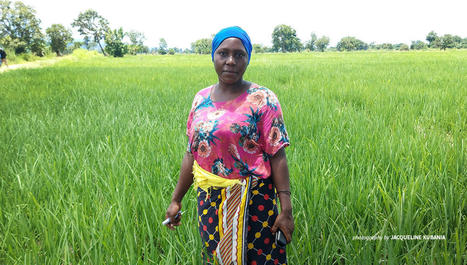
...Fulale Mbinga, an enterprising woman is one of 30 farmers mentored by her spouse, a lead farmer for the area. The lead farmer is happy that eight of the farmers he leads have adopted SRI, which helped him yield almost a tonne from plots that previously produced just about 500kg.
“One-one [SRI] is a game changer because we harvest more even with erratic rains which vanish too early for rice which requires adequate water,” he says. By following the tips from field officers deployed by Kaporo North Farmers Association, Sichali harvests up to 12 bags weighing 90kg each from plots dedicated to SRI.
Les réalisations du Programme National pour la Sécurité Alimentaire et le Développement Rural des régions de l’Imbo et du Moso (PNSADR-IM) sont estimées à 90% dans la plaine de l’Imbo. Cela 10 mois avant sa clôture. Le Programme du Gouvernement financé par le FIDA, le GAFSP et les bénéficiaires, intervient depuis 2015 dans le renforcement de la sécurité alimentaire des populations des 9 communes de la région de l’Imbo et du Moso. « Que soit béni celui qui nous a enseigné le SRI », applaudit Jean Pierre Ndayishimiye, multiplicateur des semences de riz de la commune Mutimbuzi, province Bujumbura. Dans cette commune, le PNSADR-IM a réhabilité un marais de 808 hectares et a fait une extension de 202 hectares.
The achievements of Burundi's 6-year National Program for Food Security and Rural Development of the Imbo and Moso regions (PNSADR-IM), are estimated at 90% in the Imbo. "Blessed be he who taught us SRI," says Jean Pierre Ndayishimiye, a rice seed multiplier in Mutimbuzi commune, Bujumbura province where PNSADR-IM rehabilitated an 808 hectare marsh and extended it by 202 hectares. Before the PNSADR-IM intervention, Ndayishimiye harvested only 30-40 kg of paddy rice/ha. Since beginning to use SRI in 2019, the yield was 8 tonnes/ha. PNSADR-IM also made improvements in water distribution and regulation; provided storage structures, rice hullers, and credit access; and assistance with other crops.
African Wildlife Foundation (AWF)-supported farmers in Kilombero are adopting conservation-friendly practices that boost agricultural yield and prevent deforestation. One of the biggest drivers of forest degradation in Africa is agriculture. As the population sand the demand for food increases, we are clearing more trees to make way for farmland. ...But the trade-off between forests and food is false. A community in Southern Tanzania is leading the way in embracing a new way of farming that not only protects the precious remaining forest resources, it also improves their incomes.
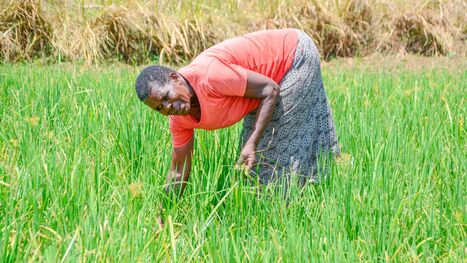
Dorotea Simo Magina, a 30-year-old mother of three lives in Kilombero District where she farms two acres of rice. For two years, she has been practicing a different kind of farming-- System of Rice Intensification. Using fewer seeds and less water, Dorotea has more than triple her harvest.
EfD researchers have studied the effects of System of Rice Intensification (SRI) in Kilombero, a major rice-growing region in Tanzania. SRI can increase yields while reducing inputs (seeds, water, and inorganic fertilizers) [and can] produce crops that are more resilient to extreme weather events, pests, and disease. Why then are so many Tanzanian farmers reluctant to adopt this method? Mare Sarr says “For one thing, this is a method that requires a lot of man-hours for activities such as field preparation, setting up and taking care of the nursery, sorting seeds, planting, and weeding. However, there is also evidence that, as farmers learn the new techniques, it becomes labor-saving after some 4-5 years”. So, what could policymakers do to encourage farmers to adopt SRI? “Success relies a lot on training and extension services. Government agencies should provide help and training and also encourage networking and cooperation between farmers. To be truly motivated to switch to this method, you also need to be fully aware of the impacts of climate change. So, investing in easily available technologies for weather reporting would be very valuable”
...technologies that raise farmers’ crop productivity while mitigating risk exposure are particularly valuable. This study assesses the impact of a variant of the system of rice intensification (SRI) on expected yields, yield variance (variability) and yield skewness (exposure to downside risk) in Tanzania. The appeal of the technology lies in its yield-enhancing potential, its low demand for complementary external inputs as well as its drought resistance features. Our empirical strategy relies on the estimation of marginal treatment effect (MTE) models. We find that, while the average effects on adopters suggest that SRI enhances yield and reduces the downside risk of crop failure, the marginal treatment effects indicate that only farmers with low resistance to adoption, benefit. Our analysis also highlights the importance of farmers’ climate perception for the adoption of SRI and the need for policies that increase climate awareness to ensure food security.
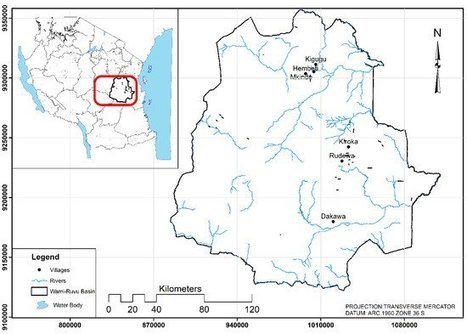
This study applied a Monte Carlo simulation approach to assess the economic feasibility of alternative rice farming systems in Tanzania while considering risk analysis for decision-makers with different risk preferences to make better management decisions. The rice farming systems in this study comprise rice farms using traditional practices and those using some or all of the recommended system of rice intensification (SRI) practices. Despite climate variability, in Tanzania, it is still possible for rice farmers to increase food production by using improved technologies, particularly SRI management practices. The findings of this study have vital policy implications for Tanzania′s government as it aims to end hunger and reduce poverty by 50% in 2025 through doubling agricultural production. Considering that rice is one of the crops targeted to drive Tanzania out of hunger and poverty, the results of this study suggest the benefits of investing in improved rice farming technologies, particularly SRI principles. The application of SRI practices has demonstrated the potential to increase rice yields and income of farmers. Rivers and nine basins suitable for rice production in Tanzania could produce more rice.
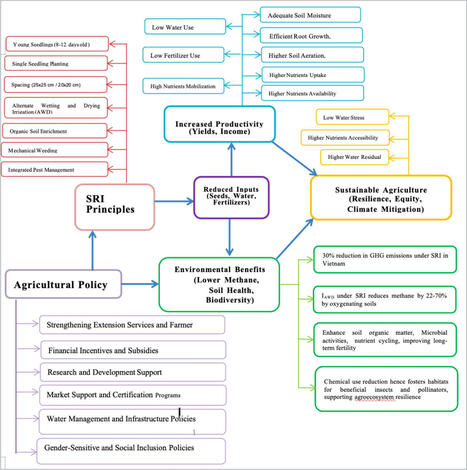
The System of Rice Intensification (SRI) addresses global food security and environmental challenges by improving yield, reducing water use, and mitigating greenhouse gas emissions, particularly in resource-constrained agricultural systems. SRI has achieved yield increases of 10–114% compared to conventional methods, with water savings of 40–74% due to AWD irrigation. Methane emissions are reduced by up to 70%, while enhanced soil microbial activity and improved root development increase plant vigor and resilience to drought and pests. However, adoption is hindered by labor-intensive practices, knowledge gaps, and access to training and irrigation infrastructure.
Mechanization, such as drum seeders and mechanical weeders, can reduce labor by up to 97% and 28.3%, respectively, but access remains limited. SRI can offer sustainable rice production by improving yield, resource efficiency, and environmental outcomes. However, scalability is constrained by labor demands and knowledge barriers. Mechanization and extension services are critical to overcoming these challenges.
The theme of this January 21, 2025, webinar is “System of Rice Intensification (SRI) Research in Africa” (This is the third in the SRI Research Webinar Series, which is hosted by the SRI Global Research Network.) Speakers were: 1. Aisha Abdulkadir (Ahmadu Bello University, Nigeria) presented “Enhancing Food Security in Africa through SRI: Challenges and Opportunities” 2. Primitiva Andrea Mboyerwa (Sokoine University of Agriculture, Tanzania) presented “Eco Rice: The SRI’s Pathway to Multiple Sustainable Development Goals”
Lonah Anyango Okumu, a 63-year-old Kenyan farmer from Kisumu in the Western region, transformed from a housewife to a successful rice farmer over four decades.Today, Lonah has grown into one of the biggest commercial farmers, not only in Kisumu, but the entire Western Region. Through education and adoption of SRI and other innovative farming techniques, she increased her yields significantly, improving her family's livelihood and educating her seven children to university level. Her success has inspired other women in her community to become landowners and farmers, revolutionising gender roles in agriculture.
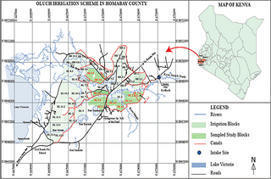
... Over a period of four years (2016–2019), we quantify the benefits accrued to the uptake of SRI among smallholder farmers in Oluch irrigation scheme western Kenya. Our comparisons are in reference to a baseline study conducted prior to the full-scale promotion of SRI in the study area. Our study findings reveal that the uptake of specific SRI practices increased by at least 30–80%, and acreage under rice farming increased by 50%. Although SRI required more production costs per acre (as much as 63% increase), SRI had at least 28.6% higher return per shilling invested. Our findings underscore previous results in the literature that SRI is associated with not only productivity but also economic benefits justifying the need for scaling especially among smallholder farmers.
FAO video from Tanzania: System of Rice Intensification (SRI) is a rice farming technique that uses less, water, fewer seeds and produces higher yields. SRI benefits environmental conservation and increases farmers income. [The FAO-assisted activities described in the video are connected to the EU-funded Multilateral Environmental Agreements in African, Caribbean and Pacific countries (ACP MEAs 3)].
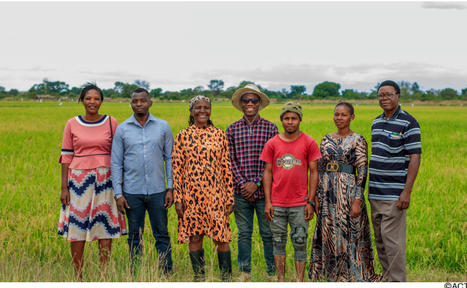
In Tanzania, social capital was a key contributor to the success of the implementation of System of Rice Intensification (SRI), as part of the activities the Agricultural Council of Tanzania (ACT) implemented in the framework of the Farmers’ Organizations for Africa, Caribbean, and the Pacific Programme. Recently the adoption of this method has achieved exponential gains. As this experience illustrates, forging positive relations between farmers was a critical component.
The Agricultural Council of Tanzania (ACT) took great care in creating the conditions that would ensure as many people as possible could benefit from adopting SRI. One important aspect was the farmer-to-farmer approach. ACT implemented a participatory and inclusive approach. Participation was open to anyone interested and the farmer-to-farmer approach was adopted.
Water scarcity and nutrient availability for rice farming have become great matters of concern in the contexts of climate change and land use change globally. The objective of this study was to understand the on-farm potential response of soil organic carbon (SOC), total nitrogen (TN), and total phosphorous (TP) to water management practices in rice farming within the Kilombero Valley, Tanzania. Soil samples were collected from three villages at four depths. Four water management regimes: A = traditional flooding (rainfed) without intensification of rice farming; B = traditional flooding (rainfed) involving a system of rice intensification (SRI); C = alternative wetting and drying (AWD) involving SRI for one cropping season; D = abandoned fields (fallow); and E = AWD involving SRI for two cropping seasons, were investigated as regards their impact on SOC, TN, and TP. There were significant (p < 0.05) effects of water management regimes on SOC, TN, and TP. AWD involving SRI for one cropping season indicated a positive effect on SOC and TN across all depths as compared to other practices. We conclude that water management practice that involves AWD with SRI for one cropping season is a plausible approach to maintaining high SOC and TN, with the potential for increasing crop production while minimizing water consumption.
https://www.youtube.com/watch?v=Ra7-7eAtQEM Here's the story of Mathew, one of the first System of Rice Intensification (SRI) farmers in Kenya. He has been successfully farming rice for 20 years in Mwea.
SRI, as a green methodology, holds promise for food security, water savings, health and environmental benefits and improved productivity of rice in Africa. Over the past decade there has been a steady rise in adoption of SRI in five irrigation schemes in Kenya: Mwea, Ahero, Budalangi, West Kano and South West Kano. By December 2017, over 10,000 rice farmers had adopted SRI in the five schemes. The high adoption was driven by positive results. In Kenya, research has shown SRI increases rice yields by between 20% -100% depending on variety, with water savings of 25%-33%. The effects of SRI on mosquito breeding showed that all mosquito larvae died in paddies under SRI, while they remained alive and multiplied in conventional flooded paddies, indicating the methodology holds promise for reducing malaria prevalence. Furthermore, SRI produces a harder, better grain which has superior qualities on milling and marketing.
Silicon (Si), the second most abundant element available in the earth's crust, is a beneficial element for rice crop growth. A study was conducted in Mkindo irrigation scheme, Mvomero District, Morogoro, Tanzania, to assess the Silicon status in rice grown under the System of Rice Intensification and continuous flooding at various growth stages. The experiment was laid out in a randomized complete block design (RCBD): T1 was alternate wetting and drying using SRI and T2 was continuous flooding; treatments were replicated three times with variety SARO 5 (TXD 306). ... Si content in rice seeds observed prior to the experiment was 6.76%. Si content in rice grains gradually increased during reproductive stage and later dropped during harvest. Si content in rice plant leaves increased significantly from vegetative to ripening stage whereby the highest Si content was recorded in T1 (12.37%) while T2 recorded the lowest value (10.15%). The authors concluded that the alternate wetting and drying field conditions enhances adequate uptake of Si compared to continuous flooding practices.
The National Smallholder Farmers Association of Malawi (NASFAM) supports more than 100,000 members across 60 associations. NASFAM, the GIZ programme KULIMA More Income and Employment in Rural Areas of Malawi (KULIMA MIERA) and the UK-funded PROSPER Markets project set up an incentive-based contract farming scheme with over 4,500 farmers in Karonga in Malawi’s Northern Region. The contract farming scheme incentivises farmers to produce the desired quality and quantities of rice. To qualify for participation in the contract farming scheme, farmers must be an active NASFAM member, have a minimum of one acre of land, and use System of Rice Intensification planting methods.
RESEARCHERS from the Sokoine University of Agriculture (SUA) have challenged the ministry of agriculture to introduce the system of rice intensification (SRI) across the country to improve yields as well as farmers’ welfare.
To get content containing either thought or leadership enter:
To get content containing both thought and leadership enter:
To get content containing the expression thought leadership enter:
You can enter several keywords and you can refine them whenever you want. Our suggestion engine uses more signals but entering a few keywords here will rapidly give you great content to curate.


 Your new post is loading...