

As the Internet continues to evolve as a medium for social and economic exchange, four experts suggest ways for the United States to improve its cyber competitiveness in the global marketplace.


|
Scooped by
Chuck Sherwood, Former Senior Associate, TeleDimensions, Inc
onto Surfing the Broadband Bit Stream October 17, 2011 1:08 PM
|
 Scoop.it!
As the Internet continues to evolve as a medium for social and economic exchange, four experts suggest ways for the United States to improve its cyber competitiveness in the global marketplace.

 Your new post is loading...
Scoop.it!

From
www

Sources tell WIRED that an Accenture employee’s personal Claude agent ran on a DOD network for two months before it was identified and the vulnerability could be patched.
Scoop.it!
From
www
The Senate permitting plan would cut emissions from power plants in the near term and help keep electricity prices down, a new analysis finds.
Why it matters: The study from scholars at Resources for the Future, a nonpartisan think tank, offers some of the most detailed independent modeling yet of the bill's effects.
Driving the news: The analysis models how the bill would affect the power sector compared with current law and policies. Among the findings from its central scenario:
Scoop.it!

From
www
The other day, I spoke with Melissa Bettis, Guam’s broadband director, who was already living in my tomorrow. Naturally, I asked whether the future was looking any better. She explained, that is not how time zones work.
Guam is home to the Indigenous CHamoru people and a diverse community of ~155K that includes residents of Filipino and other Asian backgrounds, fellow Pacific Islanders, and military families. For this American island in the western Pacific, staying connected means bridging both service gaps and considerable distance.
Scoop.it!
From
ilsr
How can digital equity programs escape the boom-and-bust funding cycle? Chris and Samantha Schartman of Connect Humanity explore co-investment through the Alt Funding Field Guide.
In this episode of Unbuffered, Chris is joined by Samantha Schartman, Director of Philanthropic Programs at Connect Humanity, to discuss the Alt Funding Field Guide: Building Sustainable Funding for Digital Adoption.
The guide is a new resource that maps how digital skills and connectivity programs create value across six sectors: education, healthcare, telecom, workforce development, housing, and local government.
Scoop.it!
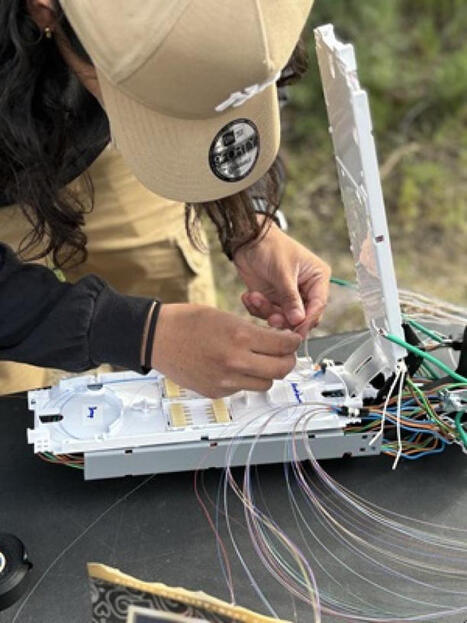
Tribal Broadband Bootcamp has released a new video on YouTube looking back on what the immersive learning experience has built. The timing is fitting, as more Tribes celebrate the building of their own networks in parts of the U.S. that have historically been left behind by the nation’s major telecom companies.
Scoop.it!

From
bbcmag
Internet speeds of up to 5 Gbps, upgradeable to 10 Gbps, will be available for residents of the first signature multifamily community at the Wyld Oaks development in NW Orlando.
The new project, being developed by the Atlanta-based Hathaway Development affiliate Dewfall Hathaway, will be known as Exchange at Wyld Oaks. When it’s finished, the project will result in a 325-resident multifamily community and serve as Wyld Oaks’ first signature multifamily community, Wyld Oaks said.
Scoop.it!

From
bbcmag
Colorado Springs City Council has approved a lease agreement with gFiber, allowing the company to use a fiber optic network in the community to sell connectivity.
An approved lease agreement struck between gFiber and Colorado Springs Utilities further accelerates gFiber’s growth in Colorado and the Denver area, gFiber announced last week.
The agreement will allow gFiber sell to customers within the footprint of the new Colorado Springs Utilities fiber network, gFiber announced October 21.
“As a tenant on Colorado Springs Utilities’s network, we’ll be able to connect local homes and businesses even more quickly and with less neighborhood disruption,” gFiber’s announcement stated.
Scoop.it!

From
www
Explore Ookla Research on the rapid growth of Direct-to-Device (D2D) satellite connectivity across Latin America, highlighting key adoption trends in Chile and Peru.
Scoop.it!

The frontier lab is lifting the curtain on how users spend money on its models ahead of a planned IPO.
The financials Anthropic shared with investors this week suggest that its AI coding tool, Claude Code, is every bit the business success the frontier lab wanted. The company recorded an operating profit in the second quarter, and 900% net revenue retention — that is, spending from the same customers in Q3 2025 grew nine times in Q3 2026.
Anthropic has focused on getting enterprise users to stick around and Wednesday announced a new suite of reporting tools designed to give those customers a more granular understanding of the value they get from their token spend.
Scoop.it!

From
thedesk
Nexstar Media Group is urging the Federal Communications Commission (FCC) to reject another request to suspend its decision eliminating the national television ownership cap, arguing that opponents have failed to demonstrate sufficient harm to justify delaying the policy while federal courts review its legality.
In a filing submitted to the FCC, Nexstar opposed a petition filed October 9 by a coalition of public interest organizations, labor unions and media advocacy groups seeking to halt implementation of the agency’s decision to replace the 39 percent national television ownership limit with a case-by-case review of broadcast station transactions.
Scoop.it!
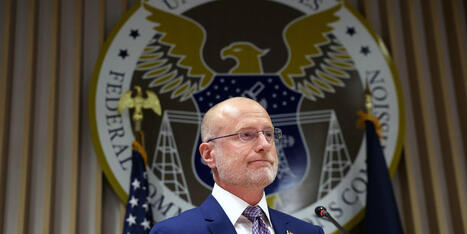
“The FCC simply cannot ignore the laws Congress makes just because the current agency head wants to,” said Matt Wood, vice president of policy at Free Press, one of the groups that joined the new motion. “Chairman Carr serves only [President] Donald Trump, not the people of this country. Carr threatens broadcasters when their coverage angers the administration, but tosses them bones like this repeal when the biggest broadcast conglomerates toe the line.”
A coalition of nonprofit groups and labor unions filed an emergency petition on Friday aimed at blocking the Federal Communications Commission’s recent repeal of a decades-old rule that limited consolidation among television broadcasters, a move that would allow media conglomerates to seize even more control over local news stations.
The petition states that the Republican-controlled FCC’s decision—pushed by Chair Brendan Carr and approved in August in a 2-1 vote along party lines—was “plainly contrary to law and violates core administrative law principles.” The filing notes that Congress enacted the rule barring any single TV broadcaster from reaching more than 39% of US households—and only Congress can roll it back.
Scoop.it!

Pew Research recently published an interesting Issue Brief on their website that explores the ideas of states continuing the work to ensure that there is widely available, lasting broadband in their state. It’s easy to forget that most of the giant federal broadband programs were generated as a result of the pandemic and the ensuing poor economy. If you listen to federal broadband policymakers, you’d think that broadband issues have been solved, but every state knows there are still a lot of people in their state who either don’t have access to good broadband or who can’t afford to buy it. Pew is asking states to continue the broadband effort and to not put broadband access on the back burner as an issue that has been solved.
Pew suggests what an ongoing state effort might look like if states want to develop long-term policies that ensure that citizens have access to good broadband today and into the future. Pew offers a framework of four policies for states to consider.
Scoop.it!
From
www
Anthropic's much-anticipated S-1 landed this morning. Axios gave the IPO filing to Anthropic's own Claude and asked five fundamental questions — starting with whether to buy the stock.
Why it matters: Many people's read of this 335-page filing will be an AI-generated summary. It's worth knowing how good that summary is — and how much it changes depending on which model you ask. How it works: Axios uploaded the filing into Anthropic's current flagship model, Opus 5.5, turned off its ability to search the web, set the reasoning level to Max to get its best read, and asked each of the following with a two-sentence limit.
|
Scoop.it!
On October 11, a confidential memo went out to military officers across Ukraine, urging them to brace for a catastrophe. Donald Trump had decided earlier that week to ease U.S. sanctions on Russia and to begin buying its diesel fuel. Based on that shift in White House policy, the memo foresaw another act of American betrayal: the loss of access to the Starlink satellite network, which Ukraine uses to operate its drone fleet.
The document warned that Elon Musk, the creator of Starlink, might soon restrict service in Ukraine, and it urged users of the technology to “keep all communication alternatives to Starlink on standby—ready for immediate use—and develop contingency plans.” Two days later, the warnings began to come true. Starlink faltered across the war zone, grounding drones and halting military operations. In one case, it led to the loss of Ukrainian naval drones in the Black Sea, according to two people familiar with that mission.
The memo predicted worse to come. It came from a nongovernmental organization called Narodnyi Starlink, or “People’s Starlink,” which helps the armed forces of Ukraine acquire and operate this technology. In the memo, the group’s founder, Volodymyr Stepanets, envisioned several ways Musk could restrict service. The worst-case scenario—a total shutoff—would result in a cascade of disasters, potentially leading to Russia’s victory in the war. One senior U.S. military officer told us that “without Starlink, the war would grind to a halt.”
Musk himself has suggested that might be his goal.
Scoop.it!
I’ve recently been talking to several first responders about communications needs. One of the issues that keeps being raised is that first responders are dismayed that ISPs don’t recognize that public safety sites are mission-critical. This blog will talk about what that means for providing voice and data service.
A critical mission location is one that can not be allowed to lose communications service. The public is instantly at peril if 911 centers, firehouses, police stations, and other similar mission-critical sites lose the ability to communicate with the public. Where this gets complicated is that mission-critical sites should not only survive during routine network outages from problems like fiber cuts, but should also be able to survive big events like hurricanes, fires, and other catastrophes.
Scoop.it!

Tower companies now own Dish's deserted 5G gear, says American Tower CEO Steven Vondran. This could feed into SpaceX's mobile ambitions, analysts say.
Scoop.it!

‘If your work does not benefit from current AI tooling, that is a finding, not a failing,’ Amazon tells engineers in a memo on tokenmaxxing.
Amazon says token usage, AI tool adoption and counts of code changes are “deeply flawed” ways to measure its engineers’ work with AI. The company published the warning on Tuesday in a memo against tokenmaxxing. It came with an updated role guideline for its software development engineers.
Terk Terkowitz, vice president and distinguished engineer for Worldwide Amazon Stores, signed the memo. Amazon first shared it with staff in September, CNBC reported.
Scoop.it!
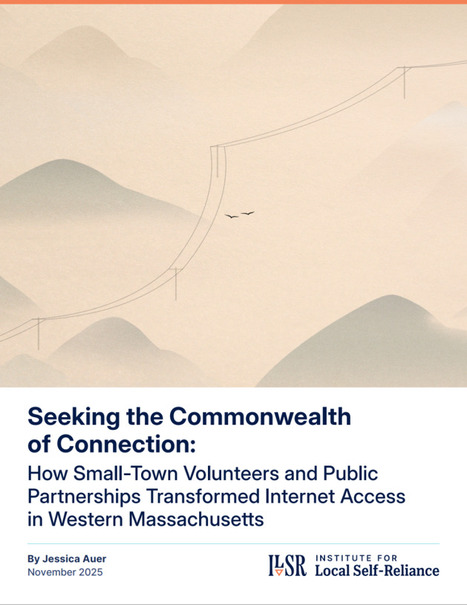
Fifteen years ago, Western Massachusetts residents in the small hill towns were stuck on aging broadband infrastructure. While their neighbors in the eastern part of the state were seeing new investment and expanding coverage, they were not.
But instead of giving a handout to the regional monopoly, they rolled up their sleeves and got to work. The result? Between 2018 and 2022, 19 very small towns in Western Massachusetts built fiber-to-the-home (ftth) networks and transformed their telecommunications future forever.
Seeking the Commonwealth of Connection: How Small-Town Volunteers and Public Partnerships Transformed Internet Access in Western Massachusetts [pdf] tells the story of how this came to be, and the impact it is had for residents, businesses, and community anchor institutions in the region.
Scoop.it!
Wecom Fiber celebrates ribbon cutting for Parker, AZ broadband project | by Bad Randall | BBCMag.com
From
bbcmag
Wecom Fiber was joined by the Arizona Commerce Authority, officials from Town of Parker, and the Parker Regional Chamber of Commerce & Tourism this month to mark what the ISP calls “a new milestone in connecting residents” of Arizona.
A multi-year fiber build spanning Mohave and La Paz counties, with the Town of Parker as its final segment, has been completed in Arizona.
According to Wecom Fiber, the completed network now serves 124 community anchor institutions and connects 15,000 homes and businesses.
Scoop.it!

Public Knowledge’s Lisa Macpherson and Creative Commons’ Anna Tumadóttir say AI broke the open web’s bargain and propose principles to protect the commons.
Scoop.it!

AT&T's status report on its ongoing copper network retirement initiative showed that just 1% of the operator's eligible customers are still using the company's legacy copper-based voice technology.
That's a significant drop from the 5% of residential customers that were still on AT&T's legacy copper technology when Susan Johnson, AT&T's senior EVP, transformation and global supply chain, provided an update on the initiative during AT&T's analyst and investor day in December 2024.
In its latest copper shutdown update, AT&T says it has shut down more than 100 wire centers and discontinued copper-based services in 500-plus communities.
That drop comes as AT&T starts to actively migrate customers off of copper to either wireless or fiber-based services, and as customers migrate on their own.
Scoop.it!
Amazon Leo has received Federal Communications Commission (FCC) approval as part of its $11.57 billion acquisition of Globalstar, which includes about 25 megahertz of internationally harmonized mobile-satellite spectrum.
Amazon announced in April that it was purchasing Globalstar in a deal that enables Amazon Leo to add direct-to-device (D2D) services to its low Earth orbit (LEO) satellite network and extend cellular coverage to customers beyond the reach of terrestrial networks. In addition, Amazon and Apple reached an agreement for Amazon Leo to power satellite services for iPhone and Apple Watch, including Emergency SOS via satellite.
Scoop.it!

In 2004, Congress directed the FCC to make sure no single television station owner reaches more than 39% of the national audience, to prevent monopolies in broadcast media and protect the diversity of voices Americans hear on the news. On October 1, the FCC released the final text of an order repealing that rule, disregarding the law Congress wrote.
On October 9, UCC Media Justice joined a coalition of unions and nonprofit organizations in filing a petition asking the FCC to stay the order while a legal challenge moves forward. We filed alongside Public Knowledge, The NewsGuild-CWA, NABET-CWA Local 51, Future Film Coalition, Free Press, Reporters Without Borders, and the Writers Guilds of America East and West. Democracy Forward and public interest lawyer Gigi Sohn represent the coalition.
We are part of this fight because our members’ witness for justice begins in their own communities. Locally accountable news helps them learn what their leaders are doing at home and across the country, and how they act on their care for their neighbors, all children, and the earth.
“The FCC’s unlawful repeal of the bright-line national ownership cap not only hands more power to fewer conglomerates, but also to an agency that has shown a willingness to trade merger approvals for partisan political gain, in violation of the First Amendment,” said Cheryl A. Leanza, policy advisor for UCC Media Justice.
Scoop.it!

From
prospect
Since the dawn of the artificial intelligence disruption, its leading privately held firms have not been required to release financial details in any rigorous way. There was a growing sense that the revenues of the leading AI firms in no way matched the prodigious sums they were spending on infrastructure build-out. But this could be massaged or explained away through a lack of specificity.
But on Monday, Anthropic released a prospectus for its proposed initial public offering, scheduled for sometime next month. And the truth in the numbers could no longer be hidden, even if they could be spun.
A new resolution demands that Congress withhold support for AI companies that bankrupt themselves and instead respond to any future recession by supporting ordinary people.
Scoop.it!
From
www
Anthropic is warning investors that it may continue to be a target of the Trump administration as it seeks one of the biggest IPOs in history — and that it has no plans to change its behavior.
Why it matters: The filing doesn't name the president or his administration specifically, but the subtext is clear. Anthropic outlines the risk of being "disproportionately or selectively targeted" due to its positions on AI safety.
What's inside: The company's S-1 filing on Monday included warnings to investors about a myriad of high-profile battles with the Trump administration and continued political scrutiny.
|





