Your new post is loading...
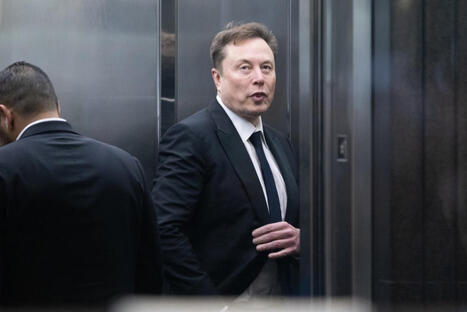
Reading between the lines of SpaceX’s earnings call One of the things I particularly like about SpaceX, especially now that it is a public company, is that its executives sometimes move beyond carefully crafted corporate statements and provide surprisingly candid answers that offer genuine insight into where the company may be heading next. In this case, the earnings call was broadcast live on X, allowing viewers to assess not only what was said but also the body language of its leaders, particularly President Gwynne Shotwell and Elon Musk. I found their responses to an excellent question from Kutgun Maral, CFA of Evercore particularly interesting (minute 56:45 in the X webcast linked below). Maral asked how SpaceX’s spectrum portfolio could compete with incumbent US mobile operators and what the traffic mix between satellite and terrestrial networks might look like.
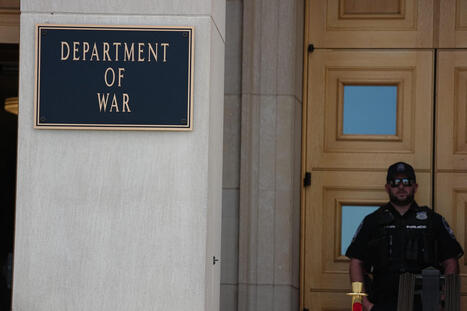
The Trump administration’s campaign to compel hundreds of billions of dollars of new military appropriations out of Congress has been stalled in the Senate for months. The Trump administration’s campaign to compel hundreds of billions of dollars of new military appropriations out of Congress, citing new materiel needs downstream of its unsanctioned Iran War, has been stalled in the Senate for months. But one unexpected winner has emerged from the congressional stalemate over defense spending: an obscure investment office in the Pentagon known as the Economic Defense Unit (EDU). Earlier this year, Deputy Secretary of Defense Stephen Feinberg stood up the EDU and appointed George Kollitides, a one-time executive at Feinberg’s former private equity firm, Cerberus Capital Management, who recently was the subject of a ProPublica investigation for his role in steering a $350 million Department of Defense contract to a consulting firm where he was a partner until just weeks ago. The office was created by way of a memo from the deputy secretary, and has been operating without congressional authorization for months, taking center stage in the administration’s multi-billion-dollar effort to prop up domestic military and energy supply chains. Those deals have been heavily scrutinized for the ways they’ve favored well-connected Wall Street firms and have been set up to benefit the president and his inner circle.
Elon Musk has invested approximately $1 billion in the newly formed media company Skydance, according to a new report from Semafor. News of the investment comes a few weeks after Paramount completed its $110 billion acquisition of Warner Bros. Discovery to create the combined company. Co-CEOs David Ellison and Ynon Kreiz are tasked with bringing together two major streaming platforms, Paramount+ and HBO Max, along with a portfolio of networks, including CBS, CNN, MTV, TBS, Comedy Central, and Food Network, under a single corporate umbrella. Semafor reports that Musk’s investment was made around the same time as equity contributions from other Skydance investors, including board member Laurene Powell Jobs. The investment will provide a much needed financial boost as the company seeks to cut costs and lift its stock price, the report notes. Skydance has already committed to reducing costs by $6 billion over the next three years.
AT&T recently announced a joint venture with Global Infrastructure Partners (“GIP”), a part of BlackRock, and the Canada Pension Plan Investment Board to build new fiber passings. AT&T will own 50% of the joint venture, with the equity investors owning the other 50%. It gets a little convoluted, but one of the assets that AT&T is bringing to the table is the fiber assets it recently purchased from Lumen. Those assets were placed into a new company, Forged Fiber 37, which will be rolled into the new joint venture with GIP. AT&T also currently operates the Gigapower joint venture with GIP. The new joint venture brings big advantages to AT&T.
A decision by Elon Musk led to restrictions on Ukraine's use of SpaceX's satellite communications network, people familiar with the matter told CBS News. The satellite service, which is used for drone operations, hitting certain targets and protecting sites in Ukraine, was slowed significantly last week. Musk held multiple conversations with administration officials leading up to the order, the sources said. He wanted clarity on the president's thinking on the matter. Musk has expressed distaste with his company being seen as profiting from the continued war between Russia and Ukraine.
Meta has been ordered by a judge in New Mexico to pay $25 billion to the state after a jury found that the social media company deceived consumers for years about its data privacy policies. Judge Francis Mathew handed down the amount, which New Mexico Attorney General Raúl Torrez described as "one of the largest, if not the single largest state verdict against a company in American history." "This judgment should be a signal, an unambiguous message, to Silicon Valley," Torrez said in a news conference. A jury found that the social media company had deceived consumers for years about its data privacy policies.
Should California have to give up its consumer protections to receive federal broadband dollars? Chris and Chao Jun Liu unpack Condition 50, the BEAD contract term that could stop states from enforcing their own Internet laws. In this episode of Unbuffered, Chris is joined by Chao Jun Liu (Electronic Frontier Foundation) to discuss Condition 50. NTIA added this term to the BEAD program last November. It would bar states that accept BEAD funds from enforcing laws that regulate the rates, terms, or conditions of broadband service, including net neutrality, open access, and affordability rules. Together, they break down what California stands to lose. That includes its landmark 2018 net neutrality law and the $20 low-income plans required as conditions of the Charter-Cox and Verizon-Frontier mergers.
According to reports, Elon Musk ordered the slowdown of Ukraine's Starshield defense systems. Nick Schifrin reports, and Amna Nawaz discusses how the world's richest man gained such power over U.S. security interests with Charles Galbreath, a retired Air Force colonel who focused on space operations during his 30-year military career and is now at the Air Force Association’s Mitchell Institute. Nick Schifrin: And yet the war grinds on in Russia's battlefield of choice, Ukrainian cities. Today, a drone carved through Kiev apartments, killing two people. And Ukrainian officials tell me their ability to intercept Russia's jet-powered drones, including those that hit Kyiv today, is still hampered because of limits on the speed their interceptors can fly, limits recently imposed, Geoff, by SpaceX. Geoff Bennett: And, Nick, what more have you learned about the curtailing of the Starlink and Starshield services in Ukraine? Nick Schifrin: The bottom line is, limitations, as I just said, are still there.
U.S. Ambassador to the EU Andrew Puzder told the Financial Times that European companies would face “devastating” retaliation from Washington if Brussels moves forward with plans to restrict American competitors’ access to parts of the European market.
An escalating fight between the US and Ukraine over Starlink underlined Europe’s dependence on the Elon Musk-owned technology. Ukraine’s leader said that SpaceX was throttling Starlink speeds in a “planned operation,” which the White House rejected. Washington’s ambassador told the Financial Times that the EU would face “devastating” retaliation if Brussels pursues plans to curtail SpaceX’s market reach. Europe has few options: An EU project won’t launch satellites until 2029, and the bloc’s “next best hope” is Amazon Leo, an American Enterprise Institute expert told Politico.
The artificial intelligence firm Anthropic has pitched itself as a pro-regulation, “safety-first” alternative to its competitors — but sample rules quietly circulating on Capitol Hill reveal the staggering scale of what the firm is willing to sacrifice for AI dominance. The draft legislation, proposed by Anthropic and obtained by Politico, would let the federal government interfere with an AI model’s release only if it risks immediate, predictable damages of more than $1 billion or 50 human deaths… potentially giving AI firms dozens of free kills. Anthropic’s draft bill also requires AI developers to submit a variety of security and safety data to the federal government, while simultaneously creating an exemption blocking these records from Freedom of Information Act requests. These terms closely mirror those in an Anthropic-endorsed California state law signed by Gov. Gavin Newsom (D) — roughly a year after he vetoed a much stronger AI safety bill. The draft legislation is also similar to a public policy brief published by Anthropic this June. “How can you watch Hugging Face, Coxon, & rogue AI swarms and conclude that the bill you cooked up in June is sufficient?” asked Alex Bores, a data scientist and New York state lawmaker. “This comes nowhere close to the speed of developments nor the speed we need to keep people safe.”
AST SpaceMobile, Inc., the company building the first and only space-based cellular broadband network accessible directly by everyday smartphones, designed for both commercial and government applications, today announced it is advancing service readiness in key global markets before the end of 2026, including the United States, Canada, Japan, United Kingdom and Saudi Arabia. This press release features multimedia. View the full release here: https://www.businesswire.com/news/home/20261020527793/en/
What's described as a massive fiber broadband project is set to get underway in New Mexico after state officials signed their first BEAD agreement with Kit Carson Electric Cooperative. The federal government’s $42.45 billion broadband build has been long awaited in New Mexico, which was allocated $675 million for the program by Congress in 2023. “This is huge breakthrough in our years-long quest to use BEAD funding to steer New Mexico toward 100% connectivity,” said Jeff Lopez, director of the state’s broadband office. Nearly 4,000 locations will eventually gain access to fiber broadband thanks to the project, the office announced October 14.
|
Most smartphone traffic already runs over WiFi, and Musk is planning a terrestrial network. Telcos may keep carrying the traffic while losing the customer. During SpaceX’s Q3 2026 earnings call, Elon Musk made a comment that should concern mobile operators. “We will also have direct-to-cell, high-bandwidth direct-to-cell capability, and we will be building out our terrestrial network.” He was not describing Starlink as a satellite-only mobile service. He was describing a future network that combines space and ground infrastructure, with broad connectivity anywhere SpaceX is allowed to operate.
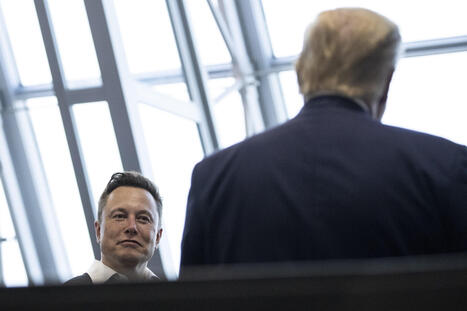
The root cause of Elon Musk’s ascent to de facto defense secretary is the federal government’s practice of contracting out the work it had formerly done itself. This week, The Wall Street Journal reported that the decision to block Ukraine from the high-speed Starlink satellite alerts that enabled it to intercept Russian missiles and drones was made by SpaceX owner Elon Musk, either in conjunction with President Trump or in advance of Trump’s support for the action. Whichever version is more correct, Musk is either making or carrying out a fundamental shift in U.S. foreign and military policy—something that no private citizen has ever done in our 250-year history. Winchester made rifles, but it didn’t order the army to use them against native tribes. Boeing made the B-29s, but it didn’t order them to destroy Hiroshima and Nagasaki. Once the army purchased the Winchesters, and the Air Force, the B-29s, their manufacturers weren’t at the table or in the room where government leaders decided where, when, how—and in the case of Ukraine and Russia, why—they would or wouldn’t be deployed. They weren’t part of the kind of fundamental reorientation of foreign policy that Trump has wrought, in which his narcissistic and thuggish impulses have eclipsed the democratic affinities by which the U.S., at its all too intermittent best, has dealt with other nations. This month, that has meant Musk has played a key role in attempting to turn the tide in Russia’s favor in its war on Ukraine. This reductio ad absurdum of contracting out is also the result, of course, of the mind-meld between Trump and Musk, who, as New York Times columnist Jamelle Bouie pointed out last week, is every bit as racist, xenophobic, and self-interested as our president.
Meta must pay $25 billion to New Mexico after a jury found the tech giant guilty of nearly 44 million violations of state consumer protection laws. The largest fine to ever hit Meta came after New Mexico Attorney General Raúl Torrez declined to join an $18 billion settlement Meta reached earlier this year with attorneys general in nearly all states. In his opinion Wednesday, US district court judge Francis J. Mathew said there was no “bright line rule” for determining the appropriate penalty for Meta’s repeated and willful deception of users since 2010 about their “control of data, third-party data misuse, misinformation, hate speech, and equal enforcement.” New Mexico had asked the court to impose even higher fines, up to $40 billion. The entire state of 2 million people were harmed by Meta’s conduct, Torrez argued, and it seemed dubious that Meta would make meaningful changes unless the penalty impacted Meta’s stock price.
Tesla published its third-quarter 2026 financial results this afternoon. Earlier in October, it reported its sales and deliveries for the three-month period, selling fewer cars than in the same quarter in 2025, yet it still beat analyst projections. Now we can see how those sales translate to the bottom line. Tesla brought in $28 billion in revenue in Q3, almost the same as in 2025. Automotive revenues were $20.6 billion, a 3 percent decrease year over year. Perhaps more troubling is the decline in revenue from solar panels and storage batteries—this line of business had been growing, but for Q3 revenue fell 16 percent year over year to $2.9 billion. Services and other revenues, though, which include parts and Supercharger use, grew by a third to $4.6 billion. But the company—like the rest of us—has seen its expenses go up.
New research from Broadband Genie has revealed that unreliable broadband is hampering productivity among remote workers in the UK, with many facing patchy internet connections, particularly in major cities. The study highlights significant connectivity issues in cities such as London, Belfast, and Manchester, where over a third of remote workers frequently encounter outages. This is despite a high adoption rate of working from home, indicating a pressing need for improved broadband infrastructure to support the modern workforce. Data from the research indicates that while cities like Gloucester (92%), Wolverhampton (86%), and Oxford (84%) experience generally reliable broadband, other urban centres are not as fortunate. In London, only 55% of remote workers report having a stable internet connection, even as 68% of workers in the city work from home at least part-time. Belfast fares worse, with just 49% enjoying uninterrupted service.
Construction on the regional expansion of Sherburne’s municipal open-access fiber network is advancing across neighboring Chenango County borders. The project, branded Sherburne Connect, originated as an early municipal fiber deployment operated in coordination with the village’s century-old public electric utility, Sherburne Electric.
Broadband is no longer a luxury good, it is essential infrastructure. It’s how Americans work, learn, access health care, and participate in economic life, and it demands the same policy durability we expect for our roads, water, and power. And for the past several years, the story of American broadband has been told via federal investment, and that work deserves real credit. These dollars have helped cut unserved and underserved locations from about 12 million in 2022 to roughly 4 million today. That is incredible progress towards universal access. But federal programs are time limited. BEAD, for example, is a one-time investment built for deployment costs, not the ongoing funding, upgrades, and affordability support universal access requires. In fact, research has shown that 1 million to more than 2 million locations will still lack broadband after federal funds are spent. That’s not indicative of programmatic failure, but the realities of infrastructure: new homes get built, networks age, and technology evolves.
California regulators are locked in a fierce battle with AT&T over state residents' access to life-saving emergency communications. Officials have accused the telecom giant of actively misleading the public as the state considers stricter rules to make wireless coverage maps more accurate, and providers more accountable for reliability failures.
A telehealth hub is a location that has been established to provide a place to give the public easy access to healthcare. Today’s blog will focus on telehealth hubs in eastern North Carolina, but there are numerous other efforts being launched across the country. ECU Health is a non-profit academic health care system that serves more than 1.4 million people across 29 counties in eastern North Carolina. Formerly known as Vidant Health, the system partners with East Carolina University’s Brody School of Medicine. ECU Health launched its Health Hub initiative in May 2023 as a way to bring healthcare closer to where people live. The Health Hub effort is concentrated in Pitt, Martin, Edgecombe, and Beaufort Counties, which are the most underserved areas in terms of local health care in the ECU Health footprint. These counties also still have poor broadband and cellular coverage, making it a challenge for residents to use telehealth.
Some AI jobs belong on your own machine and some belong in the cloud, and the wrong call costs you either your privacy or a good answer. This week: a three-question sort, what each side is bad at, and a setup that makes switching take seconds. Most people pick an AI the way they pick a checkout lane: whichever one is open. The cloud assistant is already sitting in a browser tab, so the client contract goes there, and so does the board memo with next quarter's numbers. Or they install a local model, hand it a 40-page report and a hard question, get mush back and decide local AI is a toy. Both mistakes have the same fix, and it happens before you open either one. Ask three questions, in this order
First, would it hurt if this left my machine? Client files, HR matters, health details, contract terms, unreleased financials and anything under NDA stay local. Second, does the job need something a small model doesn't have? Current facts, web research, a document longer than a few pages or a chain of reasoning you'd hand to your sharpest colleague goes to a cloud assistant like ChatGPT, Claude or Gemini. Third, if neither applies, is it small, repetitive and self-contained? Cleaning up meeting notes, rewriting a paragraph in your voice, pulling action items from a page, drafting a routine reply or anything you do on a flight with no connection runs fine locally. The order matters. Privacy comes first because it's the only mistake you can't undo. You can rerun a weak answer. You can't unpaste a contract.
Know what each side is bad at...
U.S. corporate journalism is actively, enthusiastically invested in lying to you.
That's the only conclusion you can draw after the U.S. press spent the last week helping white supremacist huckster Elon Musk sell the public on the idea of a flying car that simply doesn't exist.
Musk Corp recently "demonstrated" what it claimed was a flight-capable Tesla Roadster at a SpaceX stage in McGregor, Texas. The demonstration featured a "car" accelerating vertically up a Hot Wheels-esque ramp before using thrusters to flip over and descend to the ground. To be clear there is no actual flying car. There is absolutely no evidence that Tesla has solved any of the engineering, physics, regulatory, safety, or design hurdles of strapping rockets to the back of extremely heavy electric vehicles. We are simply repeating history (see: The Lady and The Dale documentary).
Freeze frame photos show what appears to be a lightweight hollowed out car shell prop, likely using magnets, suction, and compressed gas to help the country's richest nazi once again lie to the gullible American public and boost the valuation of a car company that stopped being innovative more than a decade ago.
WASHINGTON — On Tuesday, Free Press released Enemies of the State: NSPM-7 and the Trump Plan to Crush Dissent, the first-ever comprehensive analysis of the Trump administration’s scheme to weaponize law enforcement against individuals and organizations that speak out against the president.
The report, co-authored by Shilpa Jindia and Nora Benavidez, tracks the coordinated federal agency crackdown since Trump issued National Security Presidential Memo Seven (NSPM-7). This draconian framework enables agencies such as the Justice Department, FBI and Homeland Security to surveil, investigate and prosecute people for engaging in constitutionally protected activities — including protesting, leafleting about basic rights, protecting free and fair elections and texting the whereabouts of immigration officials.
Enemies of the State also advances a series of remedies that would allow lawmakers and civil society to build a bulwark against this unconstitutional White House crackdown.
“The NSPM-7 framework is the latest escalation of this administration’s censorial campaign to stamp out opposition,” reads the report. “But this blueprint isn’t merely a set of disparate threats or one-off attacks like some of the administration’s often unconstitutional attempts to whittle away at free speech and dissent.”
|


 Scoop.it!