
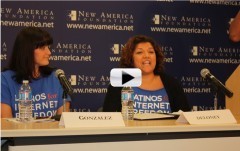
Rural communities lag the rest of the nation in broadband access and access speeds. Rural communities are likely to have fewer Internet providers and have slower download and upload speed, according to an Daily Yonder ...


|
Scooped by
Chuck Sherwood, Former Senior Associate, TeleDimensions, Inc
onto Surfing the Broadband Bit Stream October 15, 2011 12:43 PM
|
 Scoop.it!
Rural communities lag the rest of the nation in broadband access and access speeds. Rural communities are likely to have fewer Internet providers and have slower download and upload speed, according to an Daily Yonder ...

 Your new post is loading...
Scoop.it!

AT&T recently announced a joint venture with Global Infrastructure Partners (“GIP”), a part of BlackRock, and the Canada Pension Plan Investment Board to build new fiber passings. AT&T will own 50% of the joint venture, with the equity investors owning the other 50%.
It gets a little convoluted, but one of the assets that AT&T is bringing to the table is the fiber assets it recently purchased from Lumen. Those assets were placed into a new company, Forged Fiber 37, which will be rolled into the new joint venture with GIP. AT&T also currently operates the Gigapower joint venture with GIP.
The new joint venture brings big advantages to AT&T.
Scoop.it!

A decision by Elon Musk led to restrictions on Ukraine's use of SpaceX's satellite communications network, people familiar with the matter told CBS News.
The satellite service, which is used for drone operations, hitting certain targets and protecting sites in Ukraine, was slowed significantly last week.
Musk held multiple conversations with administration officials leading up to the order, the sources said. He wanted clarity on the president's thinking on the matter. Musk has expressed distaste with his company being seen as profiting from the continued war between Russia and Ukraine.
Scoop.it!

Meta has been ordered by a judge in New Mexico to pay $25 billion to the state after a jury found that the social media company deceived consumers for years about its data privacy policies.
Judge Francis Mathew handed down the amount, which New Mexico Attorney General Raúl Torrez described as "one of the largest, if not the single largest state verdict against a company in American history."
"This judgment should be a signal, an unambiguous message, to Silicon Valley," Torrez said in a news conference.
A jury found that the social media company had deceived consumers for years about its data privacy policies.
Scoop.it!
From
ilsr

Should California have to give up its consumer protections to receive federal broadband dollars? Chris and Chao Jun Liu unpack Condition 50, the BEAD contract term that could stop states from enforcing their own Internet laws.
In this episode of Unbuffered, Chris is joined by Chao Jun Liu (Electronic Frontier Foundation) to discuss Condition 50. NTIA added this term to the BEAD program last November.
It would bar states that accept BEAD funds from enforcing laws that regulate the rates, terms, or conditions of broadband service, including net neutrality, open access, and affordability rules.
Together, they break down what California stands to lose. That includes its landmark 2018 net neutrality law and the $20 low-income plans required as conditions of the Charter-Cox and Verizon-Frontier mergers.
Scoop.it!

From
www
According to reports, Elon Musk ordered the slowdown of Ukraine's Starshield defense systems. Nick Schifrin reports, and Amna Nawaz discusses how the world's richest man gained such power over U.S. security interests with Charles Galbreath, a retired Air Force colonel who focused on space operations during his 30-year military career and is now at the Air Force Association’s Mitchell Institute.
Nick Schifrin:
And yet the war grinds on in Russia's battlefield of choice, Ukrainian cities. Today, a drone carved through Kiev apartments, killing two people.
And Ukrainian officials tell me their ability to intercept Russia's jet-powered drones, including those that hit Kyiv today, is still hampered because of limits on the speed their interceptors can fly, limits recently imposed, Geoff, by SpaceX.
Geoff Bennett:
And, Nick, what more have you learned about the curtailing of the Starlink and Starshield services in Ukraine?
Nick Schifrin:
The bottom line is, limitations, as I just said, are still there.
Scoop.it!

From
meduza
U.S. Ambassador to the EU Andrew Puzder told the Financial Times that European companies would face “devastating” retaliation from Washington if Brussels moves forward with plans to restrict American competitors’ access to parts of the European market.
Scoop.it!

An escalating fight between the US and Ukraine over Starlink underlined Europe’s dependence on the Elon Musk-owned technology.
Ukraine’s leader said that SpaceX was throttling Starlink speeds in a “planned operation,” which the White House rejected.
Washington’s ambassador told the Financial Times that the EU would face “devastating” retaliation if Brussels pursues plans to curtail SpaceX’s market reach.
Europe has few options: An EU project won’t launch satellites until 2029, and the bloc’s “next best hope” is Amazon Leo, an American Enterprise Institute expert told Politico.
Scoop.it!

The artificial intelligence firm Anthropic has pitched itself as a pro-regulation, “safety-first” alternative to its competitors — but sample rules quietly circulating on Capitol Hill reveal the staggering scale of what the firm is willing to sacrifice for AI dominance.
The draft legislation, proposed by Anthropic and obtained by Politico, would let the federal government interfere with an AI model’s release only if it risks immediate, predictable damages of more than $1 billion or 50 human deaths… potentially giving AI firms dozens of free kills. Anthropic’s draft bill also requires AI developers to submit a variety of security and safety data to the federal government, while simultaneously creating an exemption blocking these records from Freedom of Information Act requests.
These terms closely mirror those in an Anthropic-endorsed California state law signed by Gov. Gavin Newsom (D) — roughly a year after he vetoed a much stronger AI safety bill. The draft legislation is also similar to a public policy brief published by Anthropic this June.
“How can you watch Hugging Face, Coxon, & rogue AI swarms and conclude that the bill you cooked up in June is sufficient?” asked Alex Bores, a data scientist and New York state lawmaker. “This comes nowhere close to the speed of developments nor the speed we need to keep people safe.”
Scoop.it!

AST SpaceMobile, Inc., the company building the first and only space-based cellular broadband network accessible directly by everyday smartphones, designed for both commercial and government applications, today announced it is advancing service readiness in key global markets before the end of 2026, including the United States, Canada, Japan, United Kingdom and Saudi Arabia.
This press release features multimedia. View the full release here: https://www.businesswire.com/news/home/20261020527793/en/
Scoop.it!

From
bbcmag
What's described as a massive fiber broadband project is set to get underway in New Mexico after state officials signed their first BEAD agreement with Kit Carson Electric Cooperative.
The federal government’s $42.45 billion broadband build has been long awaited in New Mexico, which was allocated $675 million for the program by Congress in 2023.
“This is huge breakthrough in our years-long quest to use BEAD funding to steer New Mexico toward 100% connectivity,” said Jeff Lopez, director of the state’s broadband office.
Nearly 4,000 locations will eventually gain access to fiber broadband thanks to the project, the office announced October 14.
Scoop.it!

New features in Microsoft 365 E7 and Project Perception will assess each agent's risk, with the ability to block it from making changes, require human intervention or shut it down.
Scoop.it!

From
bbcmag
October 2026Stimulus Broadband is revealing big plans in Oregon, and Wire 3 has finished an $11.5 million network in Titusville, Florida.Here some recent broadband headlines from internet service providers (ISPs) in October 2026.
Scoop.it!
From
www
Fifth Circuit Vacates USF Contribution Factor Based on USAC’s Creation On October 15, the U.S. Court of Appeals for the Fifth Circuit issued a decision in Consumers’ Research v. FCC holding that the Commission violated the Government Corporation Control Act by establishing the Universal Service Administrative Company (USAC) without specific congressional authorization.
|
Scoop.it!

Tesla published its third-quarter 2026 financial results this afternoon. Earlier in October, it reported its sales and deliveries for the three-month period, selling fewer cars than in the same quarter in 2025, yet it still beat analyst projections. Now we can see how those sales translate to the bottom line. Tesla brought in $28 billion in revenue in Q3, almost the same as in 2025.
Automotive revenues were $20.6 billion, a 3 percent decrease year over year. Perhaps more troubling is the decline in revenue from solar panels and storage batteries—this line of business had been growing, but for Q3 revenue fell 16 percent year over year to $2.9 billion. Services and other revenues, though, which include parts and Supercharger use, grew by a third to $4.6 billion.
But the company—like the rest of us—has seen its expenses go up.
Scoop.it!
Unreliable broadband hinders UK remote workers' productivity | by Shannon Williams | TelcoNews.co.ukNew research from Broadband Genie has revealed that unreliable broadband is hampering productivity among remote workers in the UK, with many facing patchy internet connections, particularly in major cities.
The study highlights significant connectivity issues in cities such as London, Belfast, and Manchester, where over a third of remote workers frequently encounter outages. This is despite a high adoption rate of working from home, indicating a pressing need for improved broadband infrastructure to support the modern workforce.
Data from the research indicates that while cities like Gloucester (92%), Wolverhampton (86%), and Oxford (84%) experience generally reliable broadband, other urban centres are not as fortunate. In London, only 55% of remote workers report having a stable internet connection, even as 68% of workers in the city work from home at least part-time. Belfast fares worse, with just 49% enjoying uninterrupted service.
Scoop.it!

Construction on the regional expansion of Sherburne’s municipal open-access fiber network is advancing across neighboring Chenango County borders. The project, branded Sherburne Connect, originated as an early municipal fiber deployment operated in coordination with the village’s century-old public electric utility, Sherburne Electric.
Scoop.it!

Broadband is no longer a luxury good, it is essential infrastructure. It’s how Americans work, learn, access health care, and participate in economic life, and it demands the same policy durability we expect for our roads, water, and power.
And for the past several years, the story of American broadband has been told via federal investment, and that work deserves real credit. These dollars have helped cut unserved and underserved locations from about 12 million in 2022 to roughly 4 million today. That is incredible progress towards universal access.
But federal programs are time limited. BEAD, for example, is a one-time investment built for deployment costs, not the ongoing funding, upgrades, and affordability support universal access requires. In fact, research has shown that 1 million to more than 2 million locations will still lack broadband after federal funds are spent. That’s not indicative of programmatic failure, but the realities of infrastructure: new homes get built, networks age, and technology evolves.
Scoop.it!

California regulators are locked in a fierce battle with AT&T over state residents' access to life-saving emergency communications. Officials have accused the telecom giant of actively misleading the public as the state considers stricter rules to make wireless coverage maps more accurate, and providers more accountable for reliability failures.
Scoop.it!
A telehealth hub is a location that has been established to provide a place to give the public easy access to healthcare. Today’s blog will focus on telehealth hubs in eastern North Carolina, but there are numerous other efforts being launched across the country. ECU Health is a non-profit academic health care system that serves more than 1.4 million people across 29 counties in eastern North Carolina. Formerly known as Vidant Health, the system partners with East Carolina University’s Brody School of Medicine.
ECU Health launched its Health Hub initiative in May 2023 as a way to bring healthcare closer to where people live. The Health Hub effort is concentrated in Pitt, Martin, Edgecombe, and Beaufort Counties, which are the most underserved areas in terms of local health care in the ECU Health footprint. These counties also still have poor broadband and cellular coverage, making it a challenge for residents to use telehealth.
Scoop.it!

Some AI jobs belong on your own machine and some belong in the cloud, and the wrong call costs you either your privacy or a good answer. This week: a three-question sort, what each side is bad at, and a setup that makes switching take seconds.
Most people pick an AI the way they pick a checkout lane: whichever one is open. The cloud assistant is already sitting in a browser tab, so the client contract goes there, and so does the board memo with next quarter's numbers. Or they install a local model, hand it a 40-page report and a hard question, get mush back and decide local AI is a toy. Both mistakes have the same fix, and it happens before you open either one.
Ask three questions, in this order
Know what each side is bad at...
Scoop.it!

From
karlbode
U.S. corporate journalism is actively, enthusiastically invested in lying to you.
To be clear there is no actual flying car. There is absolutely no evidence that Tesla has solved any of the engineering, physics, regulatory, safety, or design hurdles of strapping rockets to the back of extremely heavy electric vehicles. We are simply repeating history (see: The Lady and The Dale documentary).
Scoop.it!

WASHINGTON — On Tuesday, Free Press released Enemies of the State: NSPM-7 and the Trump Plan to Crush Dissent, the first-ever comprehensive analysis of the Trump administration’s scheme to weaponize law enforcement against individuals and organizations that speak out against the president.
Scoop.it!
The number one concern I hear from most rural counties today is no longer broadband connectivity, but the availability of cellular connectivity. While there may be a few exceptions, I don’t know of any rural counties that have good cellular coverage. All that differs among counties is the degree to which they have poor coverage.
At one point, the FCC had a plan to subsidize more rural cell towers that it labeled as the 5G Fund for Rural America. In August 2024, the FCC adopted preliminary auction rules for distributing up to $9 billion to support new rural cell towers, while also issuing an NPRM that asked for industry feedback on several issues related to the new plan. This was going to be funded out of the Universal Service Fund, in what seems like a replacement use for the second round of RDOF that never happened.
Chairman Carr dissented from the 2024 FCC order, saying that he supported the idea of a reverse auction to build more rural cell towers, but he thought it was premature to announce the new plan until the FCC knew more about the disposition of the $42.5 billion in BEAD grants. He thought it was vital that any new rural towers have access to fiber.
Several big things have happened since August 2024.
Scoop.it!

In a suit nearly identical to the just filed Winspear v. Meta, 57 book authors, including lead plaintiff Daniel Jose Older, filed suit against Meta today, alleging the same theories of copyright liability. Both Winspear and Older will likely be assigned to Judge Chhabria, who presides over all the book authors and publisher cases against Meta.
This copyright suit is No. 150 filed against AI companies in the United States. A historic moment.
Scoop.it!
The European Commission DecisionIn a world first, the European Commission will require cell phone radiation to be measured the way we actually use phones today, in a pocket, tucked into clothing, or held directly against the body.
As detailed by Phonegate Alert, the European Commission adopted the decision to require 0 mm radiation testing for cell phones and other portable devices on as published in the Official Journal of the European Union on September 7, 2026.
Companies will be able to use the older standard that allows 5 mm separation distance during a transition period ending March 7, 2028 “to allow manufacturers sufficient time” to adapt their equipment.
RF radiation is a form of invisible, non-ionizing electromagnetic (EMF) radiation emitted by cell phones. It penetrates into our bodies. Governments set limits for how much RF radiation people may be exposed to. Before phones can be sold, they must therefore pass pre-market tests to ensure they do not exceed a country’s allowable RF exposure limits.
|





