
Martin Comissioners to consider readoption of controversial Jobs Creation ...TCPalmCommunity Broadband Network: The commission paid $100000 from the Economic Development Fund for a community broadband network feasibility study.
Get Started for FREE
Sign up with Facebook Sign up with X
I don't have a Facebook or a X account


|
Scooped by
Chuck Sherwood, Former Senior Associate, TeleDimensions, Inc
onto Surfing the Broadband Bit Stream October 12, 2011 4:51 PM
|
 Scoop.it!
Martin Comissioners to consider readoption of controversial Jobs Creation ...TCPalmCommunity Broadband Network: The commission paid $100000 from the Economic Development Fund for a community broadband network feasibility study.

 Your new post is loading...
 Your new post is loading...
Your new post is loading...
Scoop.it!

From
techpolicy

Tech giants used the affordability of their services as a shield against scrutiny. In the AI era, that shield is breaking down, Issie Lapowsky reports.
Scoop.it!

From
techpolicy
Tech Policy Press fellow James Ball asks, how should we interact with a technology designed to ‘speak’ with us on what appear to be human terms?
Scoop.it!

New research suggests tech behind AI platforms such as ChatGPT makes it easier to perform sophisticated privacy attacks.
AI has made it vastly easier for malicious hackers to identify anonymous social media accounts, a new study has warned.
In most test scenarios, large language models (LLMs) – the technology behind platforms such as ChatGPT – successfully matched anonymous online users with their actual identities on other platforms, based on the information they posted. The AI researchers Simon Lermen and Daniel Paleka said LLMs make it cost effective to perform sophisticated privacy attacks, forcing a “fundamental reassessment of what can be considered private online”.
Scoop.it!

An article from the Advanced Communications Law and Policy (ACLP) Institute at the New York Law School claims that over 1 million locations were missed by the BEAD grants. They identified these as locations that are still shown as unserved and underserved on the FCC broadband maps, but which did not make it into the BEAD program.
ACLP also identified two other sources of locations that will likely not get broadband. They predict some BEAD defaults since a number of small and untested ISPs won sizable BEAD grants. They also believe there will continue to be defaults in other grant programs.
ACLP recommends that up to half of the $20 billion+ that will not be spent on BEAD grant be deposited into a BEAD Reserve Fund to be used to cover the shortfalls.
Scoop.it!
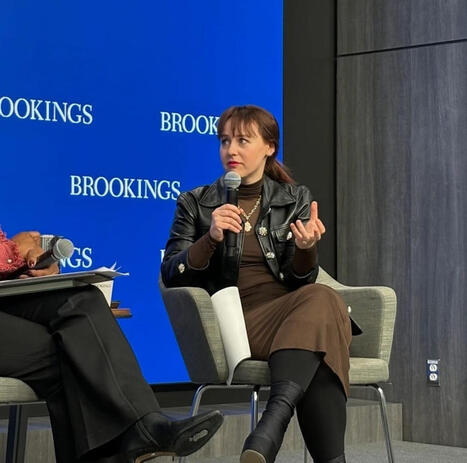
WASHINGTON, March 9, 2026 – The National Telecommunications and Information Administration responded to a report that claimed to spot a major structural flaw in the Broadband Equity, Access, and Deployment program — a flaw that could cost billions.
A report published by the Advanced Communications Law and Policy Institute (ACLP) at New York Law School said under rules set in June by Commerce Secretary Howard Lutnick, 24 small internet service providers were chosen to receive a combined $2.5 billion to provide broadband to consumers.
In response, the NTIA said it has reviewed the ISPs as part of BEAD, reduced permitting obstacles and made it clear that relying on future subsidies for broadband buildout was not allowed.
Scoop.it!

Thousands of authors including Kazuo Ishiguro, Philippa Gregory and Richard Osman have published an “empty” book to protest against AI firms using their work without permission.
About 10,000 writers have contributed to Don’t Steal This Book, in which the only content is a list of their names. Copies of the work are being distributed to attenders at the London book fair on Tuesday, a week before the UK government is due to issue an assessment on the economic cost of proposed changes in copyright law.
By 18 March ministers must deliver an economic impact assessment as well as a progress update on a consultation about the legal overhaul, against a backdrop of anger among creative professionals about how their work is being used by AI firms.
Scoop.it!

Elon Musk’s X said it had suspended 800m accounts over a 12-month period as it fights the “massive” scale of attempts to manipulate the platform.
The social media company told MPs it was continually fighting state-backed attempts to hijack the agenda on its network, with Russia the most prolific state actor, followed by Iran and China. As part of the battle against such content, X suspended 800m accounts in 2024 for breaching its rules on platform manipulation and spam, although it did not reveal which of those suspensions related to foreign interference. X has approximately 300 million monthly users worldwide.
Scoop.it!

From
www
Just over a third of the government’s most-viewed websites met legal requirements that they be accessible for people with disabilities.
Nearly 30 years after Congress put accessibility requirements for government technology into law, much of the federal government’s technology still isn’t fully meeting accessibility standards.
Less than 40% of the government’s most-viewed public webpages are fully accessible, according to a new report by the General Services Administration.
Overall, the federal government’s technology, including internal webpages, hardware, software, videos and electronic documents, scores only a 1.96 average across a 5-point scale, although accessibility varies widely across agencies.
Scoop.it!

From
www
Nvidia is planning to launch an open-source platform for AI agents, people familiar with the company’s plans tell WIRED.
The chipmaker has been pitching the product, referred to as NemoClaw, to enterprise software companies. The platform will allow these companies to dispatch AI agents to perform tasks for their own workforces. Companies will be able to access the platform regardless of whether their products run on Nvidia’s chips, sources say.
Scoop.it!
From
www
Writing an article on technology applications and artificial intelligence at the IRS is difficult – changes are occurring faster than we can type. However, the pace of change at the agency has slowed somewhat after Congress clawed back funding in the Inflation Reduction Act of 2022 from $79.4 billion to $37.6 billion and failed to include any funds for business systems modernization in either the 2023 or 2024 IRS budget. And with the government shutdown, furloughs and layoffs, there’s further slowing that may allow our keyboarding skills to at least provide a status report. Perhaps we should use artificial intelligence to write this article, hoping that maybe it can keep up with itself!
The IRS has used rudimentary data analytics and artificial intelligence for many years, actually forming an artificial intelligence laboratory in 1986 as part of an initiative to explore new technologies for tax return processing. The IRS Discriminant Income Function (DIF) used basic artificial intelligence and data analytics to help select returns for audit, and “flowcharted” responses to taxpayer inquiries were used in telephone service centers to almost turn humans into chatbots.
Scoop.it!

Starlink at this week’s Mobile World Congress (MWC) 2026 event touted sky-high plans to expand the capabilities of its satellite-based “Mobile” service, but U.S.-based telecom executives that might be on the other end of that competitive expansion told audiences at a Morgan Stanley investor conference that such satellite ambitions could be limited.
Michael Nicolls, SVP of SpaceX’s Starlink operations, told MWC attendees that the company’s Mobile service, which launched in 2024, recently surpassed 10 million subscribers. More significantly, the executive said the company was planning a second-generation constellation that would move service beyond simple text messaging and video calls to deliver “broadband capabilities to unmodified cell phones, reaching hundreds of millions, potentially more devices as we scale the constellation.”
Nicolls added that the company plans to begin launching the higher-performing second-generation Starlink satellites beginning next year, aiming to provide “terrestrial-like connectivity,” which he likened to looking and feeling like users are connected to a high-performing 5G terrestrial network.
Scoop.it!

Faster downloads. Lower latency. More bandwidth.
That framing made sense when demand was driven primarily by streaming, video conferencing, and cloud access. But today, speed alone no longer explains why fiber continues to attract capital, command long-term contracts, and outperform other infrastructure classes.
Something more fundamental is happening.
Fiber is quietly transitioning from a bandwidth product into a strategic platform.
Scoop.it!

Chris Winfrey told an investors conference the deal has FCC and Department of Justice clearances. Now Golden State regulators need to sign off on the $34.5 billion acquisition ahead of a key deadline.
|
Scoop.it!
Anthropic Sues Department of Defense Over Supply-Chain-Risk Designation | by Paresh Dave | WIRED.com
From
www
The Claude chatbot developer says the Trump administration overstepped by escalating a contract dispute into a federal ban on the company’s technology.
Scoop.it!

Artificial intelligence is supercharging surveillance, and the law has not caught up with it.
The ongoing public feud between the Department of Defense and the AI company Anthropic has raised a deep and still unanswered question: Does the law actually allow the US government to conduct mass surveillance on Americans?
Surprisingly, the answer is not straightforward. More than a decade after Edward Snowden exposed the NSA’s collection of bulk metadata from the phones of Americans, the US is still navigating a gap between what ordinary people think and what the law allows.
The flashpoint in the standoff between Anthropic and the government was the Pentagon’s desire to use Anthropic’s AI Claude to analyze bulk commercial data on Americans.
Scoop.it!

ACLP said small ISPs set to expand their markets drastically because of BEAD money may not have 'the bona fides' to meet their deployment commitments.
BEAD: Is NTIA Administrator Arielle Roth handing out BEAD program billions to a bunch of 99-pound ISP weaklings? That just might be the case. A new report Thursday could be the first yet to identify a major structural flaw in the $42.45 billion BEAD program, perhaps resulting in defaults that fleece taxpayers and deny thousands of consumers the robust broadband service they have been promised.
The report, prepared by Alex Karras and Michael Santorelli at the Advanced Communications Law and Policy Institute (ACLP) at New York Law School, identified 24 small ISPs that combined are set to receive $2.5 billion from BEAD under new rules established by Commerce Secretary Howard Lutnick last June.
Scoop.it!
From
ilsr
Across the nation, families and individuals are struggling to keep up with skyrocketing electric bills. Electricity prices have soared in recent years, dramatically outpacing both inflation and wage growth. Low‑income households, especially Black and Native American families, bear a disproportionate share of high energy costs. More and more households are falling behind on their utility bills, or having life-sustaining power cut off due to nonpayment.
Excessive utility profit rates are a key driver of these problems. In exchange for a legal monopoly over the public good of electricity, for-profit utilities agree to have their prices set by state regulators. Regulators also set the rates of profit – also known as return on equity – utilities can pay their investors. These approved profit rates are too high, and are costing U.S. customers an extra $300 per household, or $50 billion per year.
Scoop.it!

From
techpolicy
Today's guest has spent thirty years on the front lines of one of the defining battles at the intersection of technology and democracy: privacy and the fight for who controls your digital life.
Cindy Cohn is the executive director of the Electronic Frontier Foundation (EFF), and she has been in the room for some of the most consequential fights over digital rights since the internet became part of everyday life—from fighting for encryption in the 90s, to the NSA mass surveillance revelations, to battling FBI gag orders that kept Americans in the dark about government data requests, and now for the fight against the grave civil rights and privacy abuses of the Trump administration.
Now, as she’s preparing to step down from her role at EFF, she's telling her story, and trying to recruit a new generation to the fight. Her new book, Privacy’s Defender: My Thirty-Year Fight Against Digital Surveillance, out March 10 from MIT Press, weaves her personal journey with the legal battles she's fought on behalf of whistleblowers, researchers, innovators, and everyday people.
Scoop.it!

From
techcrunch
Apple is now manufacturing 25% of its iPhones in India — hitting a milestone JPMorgan predicted back in 2022 — as part of its long-term plan to reduce its reliance on China, Bloomberg reported.
Last year, India accounted for 55 million iPhones of the roughly 220 million to 230 million produced worldwide, Bloomberg’s report said. Apple has also moved quickly to deepen that commitment: it began making the entire iPhone 17 lineup in India ahead of last September’s launch, and Apple CEO Tim Cook said the majority of U.S. demand is now fulfilled by India-made iPhones.
Scoop.it!
From
techpolicy
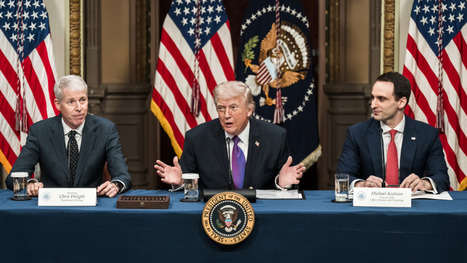
Last Wednesday, leading US tech companies gathered at the White House to sign a nonbinding, unenforceable pledge to offset the costs of their increasingly power-hungry data centers. Executives from Amazon, Google, OpenAI, Meta, Microsoft, Oracle and xAI made the trip to Washington D.C. as their companies’ gargantuan infrastructure projects face bipartisan backlash from coast to coast.
The pledge marks a significant shift in the political headwinds surrounding the tech industry’s AI hype-fueled race to build hyperscale data centers – and the energy infrastructure needed to power them. Last month, President Donald Trump’s Energy Secretary, Chris Wright, denied any connection between data center energy demand and higher utility bills. Just six months ago, the Trump administration was trumpeting its executive order to speed up data center construction and permitting.
Since Trump announced the “ratepayer protection pledge” during his State of the Union address, experts have been quick to point out the technical, logistical, and legal hurdles to the plan – which was already thin on details.
Scoop.it!

From
www
The United States and Israel launched a war in Iran last week that has already killed more than 1,200 Iranians and spilled out across the Middle East. There are many unknowns about US president Donald Trump’s goals as the conflict enters its second week and the situation seems poised to trigger an energy crisis with reverberations around the world.
Iran is in a nationwide internet shutdown with only the country’s regime-built intranet available, plunging Iranians into digital darkness and making it difficult for humanitarian aid workers, journalists, and others to disseminate information both inside and outside the country. As strikes on Tehran began last weekend, an apparently hacked prayer app sent messages saying “surrender” and “help is on the way” to Iranians around the country.
Meanwhile, GPS attacks like jamming—not to mention physical threats—are on the rise in the Strait of Hormuz, threatening shipping vessels. Security camera hacking has emerged as part of the playbook of war. And missile-intercept systems across the Middle East are under strain—and in some cases being destroyed in strikes.
Scoop.it!

In the rush to cash in on the generative artificial intelligence gold rush, one possible outcome of AI’s future rarely gets discussed: what if the technology never works well enough to replace your co-workers, companies fail to use AI well or most AI startups simply fail?
Current estimates suggest big AI firms face a US$800 billion dollar revenue shortfall.
So far, genAI’s productivity gains are minimal and mostly for programmers and copywriters. GenAI does some neat, helpful things, but it’s not yet the engine of a new economy.
It’s not a bad future, but it’s different from the one currently driving news headlines. And it’s a future that doesn’t fit the narrative AI firms want to tell. Hype fuels new rounds of investment promising massive future profits.
Maybe genAI will turn out to be worthless, and maybe that’s fine.
Scoop.it!

The "Great Flattening" is still all the rage, but the rise of AI agents requires their management and oversight.
Some see individual contributors having to take on more managerial responsibilities for AI agents. That blurring of lines is becoming common. McKinsey, for example, is looking for "5Xers," or people who are deep on one topic but can also do a handful of other things well.
Others think it could lead to an era of so-called "megamanagers." Before you start dusting off your old management textbooks, understand this is not your parents' type of manager. When it comes to AI agents, a lot of the management needs are more about hard, technical skills than soft ones. Cyber risk, in particular, remains high on the list of concerns for AI agents.
Scoop.it!
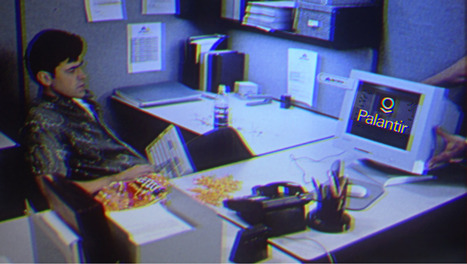
The Trump-linked spy firm could be paid millions to help the Department of Agriculture. Palantir, the Trump-connected spy-tech and AI firm, just scored a no-bid government contract potentially worth millions to help the Agriculture Department implement the White House’s divisive return-to-office directive.
Under the guise of national security, the highly “sensitive” tasks to be handled by the billion-dollar tech behemoth will include “employee seat assignments” and “space utilization.”
Scoop.it!

📺 The Streaming Mirage: Why Cord-Cutters Are Quietly Re-Corded Subtitle: Bundled streaming isn’t saving you money anymore—and the à la carte dream is costing Americans more than cable ever did. Introduction Remember when cutting the cord was supposed to set you free? No more bloated cable bills.
|





