Your new post is loading...
Today, TechFreedom led a coalition letter warning Federal Communications Commission (FCC) Chair Brendan Carr that his threats against broadcasters reporting on election-related polling are baseless, and that the First Amendment prohibits the FCC from acting as a Ministry of Political Truth. More than 75 scholars of First Amendment, communications, and technology law and prominent civil liberties organizations joined our letter. On October 21, following the revelation that Wedgewood Polls fabricated its data, Carr threatened legal action against broadcasters reporting on “[f]ake Polls … designed to … interfere with the regular functioning of the electoral process and alter the normal patterns of voter turnout and enthusiasm.” Today’s coalition letter makes clear that Carr’s weapons of choice—the broadcast hoax rule and news distortion policy—are inapplicable and may not be used to silence political reporting disfavored by the administration.
The U.S. Department of Agriculture has awarded $11.7 million to the Confederated Tribes of Siletz Indians to expand high‑speed internet access in rural Lincoln County, Ore., the agency announced. The funding comes through USDA Rural Development’s ReConnect Program, which supports broadband deployment in areas that lack reliable service. The project will build a fiber network serving households south of Siletz, Fruitvale west of Toledo and homes along Yaquina Bay Road and Hidden Valley Road. USDA officials said the investment is intended to help rural residents access education, health care and economic opportunity. The tribe said it expects the investment to improve access to telehealth, education, employment and business activity while helping build a workforce capable of maintaining the infrastructure.
Musk recently referred to Grok Bot as having "the fastest growth of a product that I've ever seen in my life." And yet now, Elon Musk has throttled Grok Bot limits due to ‘unsustainably high’ costs Over Halloween weekend, some Grok Bot users awoke to something especially spooky: Their weekly usage limits were unexpectedly maxed out, even if they hadn’t been using SpaceX’s agentic AI overnight. Some users reported on X that their usage jumped from as low as 50% to 100%. SpaceX CEO Elon Musk confirmed in an X post on Sunday that this was not a glitch. “The cost of serving Grok Bot was unsustainably high relative to revenue,” he wrote in a reply to a question from a user. He has not addressed the issue on his main feed but has continued boasting that Grok Bot can help you buy gifts for your family.
SpaceX is reportedly discussing a Boost Mobile acquisition. The satellites are the easy part. Musk still needs somebody’s terrestrial network. Elon Musk wants to become a mobile operator. That is becoming increasingly difficult to dispute. SpaceX is buying spectrum, exploring access to tens of thousands of terrestrial cell sites, and now reportedly discussing either acquiring Boost Mobile from EchoStar or gaining access to its network arrangements. These moves aren't random; they are different ways of solving the same basic problem: Starlink can cover enormous geography from space, but it cannot economically replace the capacity, indoor coverage, and uplink performance of a terrestrial mobile network in dense urban areas.
Lehi officially completed its city-owned, open-access fiber optic network in August 2025, marking a major milestone for the community after a year of work. The extensive infrastructure project, built and operated in a public-private partnership with Strata Networks, concluded its main physical rollout over the winter, stringing more than 400 miles of fiber and spanning up to 2.1 million feet of cable. The network successfully brings next-generation connectivity and multi-gigabit speeds up to 10-Gig to approximately 23,000 homes and businesses across the city. While engineering and construction milestones have been celebrated as a technical success, local attention has shifted toward consumer adoption rates and the network’s long-term financial viability.
The Capytistas, a secretive group claiming more than $1.2 million in backing, started with Elon Musk and Tesla’s board. Members argue that those who buy political power deserve the scrutiny they’ll impose. An underground activist group says it plans to start openly doxing billionaires as part of a phased campaign against what it calls the American oligarchy—beginning this month with a release that maps the homes of Elon Musk, his brother Kimbal, and Tesla’s board, alongside investors and suppliers that keep the corporation afloat. Two of its members, interviewed by WIRED on the condition of anonymity, say they spent the past year constructing dossiers on billionaires—and one trillionaire—and the people they consider their top lieutenants, using nearly every method available to a private investigator, and some that are not. The pair say the group is international and includes grassroots activists, researchers, journalists, and artists, including some who received top honors in print, television, and digital media in their former careers.
-
OpenAI wants to rebrand AI data centers using a new, more alliterative name. -
"Compute campuses" is their new-fangled term. -
An OpenAI spokesperson said it better represents the "role" of AI infrastructure. OpenAI doesn't want to call them "data centers" anymore. Instead, the ChatGPT maker plans to propose a new, more chic name for the behemoth factories that power your chatbot queries. That new name is "compute campuses," an OpenAI spokesperson confirmed to Business Insider on Sunday.
The average American household paid a record $217 for electricity this July. That was no anomaly: Residential electricity prices climbed 37% in the last decade. Yet over the same decade, wholesale power prices barely moved in most places across the US. Take Oklahoma, where wholesale electricity cost $25 per megawatt-hour in 2015 and remained $25 in 2025. Compare that to natural gas prices, which rose from around $2.50 to $3.50 over the same period, an increase of 40%. So what’s behind the rising bills? Lee Taylor, co-founder and CEO of Resurety and a recent Energy Empire guest, points to a long list of causes: disruptive weather events, labor costs, resiliency efforts, and capacity costs driven up by AI. Understanding them starts with understanding what makes up your bill.
While more cities are canceling their contracts with Flock Safety, just as many are discovering how difficult that can be in some instances. Plymouth, Minnesota’s city council voted to terminate its contract with Flock in September, but failed to respond to the city’s request. For over a month, the cameras remained up, and the city had received no acknowledgment from the company. So, Police Chief Eric Fadden took matters into his own hands and physically disconnected the cameras. “After hearing nothing for more than a week, I directed our staff to disconnect the power cords from the cameras in order to be sure that they are not functioning or recording plates,” Fadden told The Drive.
After years of staged demos, circular financing, and promises of god-like intelligence, the AI industry is facing a brutal reality check. From consumers to governments, the bill is coming due—and the technology's actual utility is far smaller than the trillion-dollar narrative claimed. he "magic-and-miracles" era of artificial intelligence is over. What remains is a market correction of historic proportions—one that is exposing how a coalition of tech executives, venture capitalists, and compliant politicians convinced the world to pour trillions of dollars into a technology whose strongest use cases are drafting emails, summarizing documents, and generating code. The shift from speculative excitement to rigorous scrutiny has been swift. The conversational narrative around AI is no longer dominated by sweeping promises of imminent Artificial General Intelligence (AGI). Instead, it focuses on mounting corporate debt, dismal returns on investment, and the logistical headaches of real-world integration. The "AI bubble" is deflating, separating overhyped software wrappers from genuinely sustainable business tools. What follows is a reckoning across every constituency the industry courted—consumers, businesses, governments, its own workforce, and the investors who bankrolled the entire enterprise. Each was sold a different story. Each is now discovering the far more modest reality.
Previously, Did AT&T Sucker-punch Reporters, the Public, Investors, Politicians, and Regulators? 1% Copper Lines Left? Statements Made by AT&T and Verizon to Investors, 2012–2016: AT&T: 2013 “In the 25 percent of AT&T’s wireline customer locations… it will utilize its expanding 4G LTE wireless network — as it becomes available — to offer voice and high-speed IP Internet services.” Verizon: 2012 “And in many areas, we’re also taking customers that aren’t performing well on copper and we’re moving them over to the wireless technology. So that improves our cost structure significantly and streamlines all those ongoing maintenance costs.” Verizon: 2016 “Once you go wireless, you don’t have to run co-ax, you don’t have to do any of those high labor-intensive activities and so you light up service overnight.” ================================= That’s Right. By 2012–2013, AT&T and Verizon would start to divert billions of dollars of the state utility construction budgets to pay for wireless buildouts, leaving the rural areas to deteriorate. But, there’s a rub because both of these holding companies had state obligations to maintain and upgrade the entire wireline networks because they were and still are utilities. And in every state there were changes in state laws to charge the local phone and all wireline customers extr a fornetwork upgrades — which they never received. And here. in the 2012–2013 time-frame, they told investors about these plans, and this has now come full circle.
Long before he was building broadband across rural Pennsylvania, Dave Gibbons was disrupting monopolies in a college dorm room. As a freshman at Gettysburg College in the early 2000s, he and a fellow student launched an online marketplace for students to sell their old textbooks directly, bypassing the campus bookstore, which bought low and sold high. When the store tried to block them from advertising, he pushed back and won. “Sticking it to the man is definitely part of the ethos,” he laughs. Two decades later, that same instinct to tackle practical problems and challenge incumbents has delivered a significant broadband win in rural central Pennsylvania. Black Bear Fiber founder Dave Gibbons on how the Appalachia Digital Accelerator helped secure nearly $30M in USDA and BEAD funding for rural fiber.
The trillion dollar Anthropic IPO will enrich Google and Amazon, who are ostensibly competitors. How does that make sense? It doesn’t, unless Anthropic is four flailing monopolies in a trench coat. The past month has seen some signs in the financial markets that the AI bubble is beginning to deflate. First it was the neoclouds, which are off-balance sheet entities for large tech and chip companies, getting crushed. Then on Monday, AI giant Anthropic made public its initial draft S-1 filing, the form it has to submit before it sells shares on the stock market. Then, a few days later, Google and Amazon released their earnings, disappointing investors with misses in revenue targets and higher than expected negative free cash flow. Google stock alone fell by 12% on Thursday, a half a trillion dollar collapse. The next day, the whole tech sector got crushed, and it now down 10% from its high. Wall Street, it seems, is worried.
|
On Oct. 30, Rebuild Local News, Local Independent Online News Publishers, Newsguild-CWA, National Association Of Hispanic Publications, Solutions Journalism Network, AAN Publishers, Institute For Rural Journalism and Community Issues, and the Society of Professional Journalists filed an amicus brief connected to The New York Times vs. Microsoft and OpenAI in the United States District Court Southern District Of New York. They argue that AI companies’ uncompensated scraping of news content threatens the economic foundation of community journalism, with civic, economic and social consequences for the community that depend on it. Summary of the Argument At first glance, it may seem like the outcome of this case impacts only the biggest media companies and the biggest technology companies. But in the view of the amici, the fate of community media – the outlets that cover local schools, county government, and neighborhood parks – hinges upon this case. Community media are a critical, but often overlooked, component of the American news sector.
Character.AI, which lets users create custom chatbots for immersive roleplaying, has filed for Chapter 11 bankruptcy following a string of legal challenges and the loss of top talent. STEVE INSKEEP, HOST: A prominent AI company filed for Chapter 11 bankruptcy. Character.AI makes a role-playing app that lets users create custom chatbots. Now they can play it being broke. Here's NPR's John Ruwitch. JOHN RUWITCH, BYLINE: In an ad on YouTube, Character.AI advertised its platform as a kind of virtual choose-your-own-adventure. (SOUNDBITE OF ARCHIVED RECORDING) UNIDENTIFIED NARRATOR: Character.AI is an AI entertainment app where you don't just watch a story happen. You create it. RUWITCH: And in the ad, a woman creates an animated companion that she can either talk to or text.
Vanity Fair recently published an excerpt from longtime investigative reporter Matthew Cole’s new book, Princes and Thieves: Jared Kushner and Mohamed bin Zayed’s Secret Plot to Remake the Middle East. The excerpt alleged that during President Trump’s first term, Saudi and Emirati leaders secretly put at least $2 billion into bank accounts and gave access to Kushner. At the time, Jared Kushner was serving as senior adviser to President Trump, his father-in-law. He is now Trump’s special envoy. Kushner’s lawyers responded by demanding that Vanity Fair retract the article and threatening legal action against the book publisher, Simon & Schuster. Jared Kushner denied the report, saying, “The allegations made by this author are completely insane, categorically false, and never happened. We denied every one of these claims on the record, yet the author failed to provide a single shred of evidence to substantiate any of them.” His lawyers say no such bank accounts existed and that the allegations are unsupported by the verifiable evidence. In an extended interview with Democracy Now!, author Matthew Cole stood by his reporting.
Gateway Fiber is reporting strong interest from banks and institutional bond investors following the securement of a $578 million financing platform that combines Gateway Fiber’s inaugural $333 million asset-backed securitization with a $245 million development financing facility. According to Gateway’s October 29 press release provided to Broadband Communities, the asset-backed securitization (ABS) is backed by a diversified portfolio of high-quality operating fiber and fixed wireless assets, including associated customer contracts and recurring revenues. Gateway described the financing as a pivotal step forward in their mission of helping communities in Missouri, Minnesota, and Massachusetts thrive through reliable, high-speed internet experiences.
"There are no exceptions that would allow this major source of air pollution to evade the law, and citizens have the right to defend themselves in Court against illegal pollution." GREENVILLE, Miss. — On Friday, the U.S. District Court for the Northern District of Mississippi denied xAI’s motion to dismiss a Clean Air Act lawsuit brought against the company by the NAACP. The lawsuit seeks to hold the tech company accountable for its continued operation of an illegal, unpermitted power plant that supports its Colossus 2 data center. The ruling comes shortly after the Court denied a similar motion from the U.S. Department of Justice.
With the rapid growth in data centers, federal policymakers have been focused on how to make sure that adding large data centers to the electric system does not increase electricity bills for other customers. Recently, a bipartisan group of senators introduced an energy permitting reform bill, the Bipartisan American Affordability and Jobs Act (BAAJA), which would be a major shift in the current paradigm for transmission pricing policies. BAAJA would require electric utilities to charge data centers more for transmission service and use those extra costs to reduce transmission charges to other customers. BAAJA also offers additional policies through its “Ratepayer Protection Floor” that could be implemented by states to ensure further ratepayer protection. Grid Strategies estimates $55 billion in transmission costs could be collected from data centers under BAAJA.
You may have noticed the headline earlier this year in May that said that bot traffic had surpassed human traffic on the Internet. The bigger news since then is that, in a matter of months, bot traffic has grown to be nearly two-thirds of the traffic on our networks. Mitch Wagner wrote an opinion piece in Fierce Network that describes the foreseeable future impact of the growth of machine-to-machine traffic on our networks. It’s not a future that is going to be comfortable for the many small ISPs I work with. Wagner correctly observes that the growth of bot traffic poses a problem for telcos that have built their networks to provide services to people and companies. I remember, early in my career, conducting traffic studies to understand the busy-hour on clients’ voice networks to help them make sure they had sufficient capacity. That’s still standard practice in sizing backbone connections and in designing fiber network electronics. However, the growth of bot traffic changes the equation of sizing and managing networks.
Artificial intelligence chatbots are increasingly becoming a regular part of life for American youth. Two new surveys show that nearly two-thirds of tweens and teens use AI chatbots. Most kids say they use chatbots for help with homework and when they're stressed, lonely, or anxious. And how they use chatbots is tied to their mental health. One survey, done by the online safety advocacy group, Common Sense Media, found that AI use starts early – years before kids hit the minimum age of 13 on most popular chatbots. Nearly half 9-to-12-year-olds have used an AI chatbot or companion. By the time kids are 13 years old, nearly three-quarters of them have used chatbots.
Communities are weighing the costs of new data centers against promises of jobs. An MIT study looks at the employment record behind those claims. As more and more data centers pop up to accommodate increased AI use, there have been a lot of questions regarding who benefits from them. Though the facilities themselves don't employ many people once open, proponents claim that data centers can boost the local economy by creating lots of new jobs. A study from the MIT Center for Real Estate provides some useful insight, revealing that the truth is, unsurprisingly, more complicated. While it does link data centers to "a gradual increase in local employment following data center entry," the research shows that modest success doesn't transfer across the board.
I spoke with Ali Golshan, a senior engineer behind Nvidia's new Open Agent Safety Platform, which promises to revolutionize agentic AI safety. | Edition #340 Making AI Agents Safe
As I have discussed in this newsletter, agentic safety is among the most urgent challenges in AI, especially in light of recent events such as the OpenAI/Hugging Face incident, the leak of PHP vulnerabilities, and the rise of AI-powered hacks.
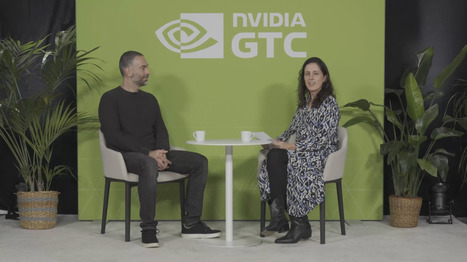
A few days ago, I was invited by Nvidia to attend its GTC conference in Berlin, where I had the chance to chat with some of the senior engineers leading its new AI safety architectures and platforms. One of the most anticipated AI safety releases in recent weeks was Nvidia’s Open Agent Safety Platform, which includes application, runtime, and infrastructure layers to ensure that policy can be verifiable and that AI agents can be continuously contained and monitored. To put this in the context of the broader AI safety debate, a few days ago I spoke about the agentic AI safety crisis and the three avenues we must address simultaneously to solve this crisis. One of the avenues I mentioned was the technological one.
This is the first time a company has come to market warning of ‘catastrophic or existential risks to humanity’. Anthropic, developer of AI chatbot Claude, has filed its prospectus and is expected to go public on Wall Street in November at a valuation of up to US$2 trillion. That would make it the highest-valued initial public offering (IPO) ever, ahead of SpaceX’s US$1.77 trillion listing in June. OpenAI, the maker of ChatGPT, is expected to follow next year. While these AI-powered IPOs are massive, they reflect an ever bigger trend: holding AI risk is becoming unavoidable for most investors. How much of your portfolio depends on how well AI does? If you invest in an S&P 500 index fund, the answer is about 44%. In addition, most of the market’s gains right now come from AI. Just six companies – Apple, Microsoft, Meta and chipmakers Nvidia, Micron and AMD – delivered 57% of the S&P 500’s gains since April. Without them, the index would have risen about 4% rather than 10%. For investors or even future retirees, that AI exposure is already in their portfolios and pension funds.
Musk has the rockets, the satellites and the money. But without massive amount of spectrum, he has little chance of challenging the Big Three on the ground. Elon Musk is spending billions buying American radio spectrum. How much more could he acquire, what would it take to challenge the Big Three, and could the economics of building a fourth mobile network become his biggest problem?
|