Your new post is loading...
Some appreciations and reflections about our inaugural year. As we head into the Labor Day weekend, and near our one-year anniversary of our official launch of Pressing Issues, we thought it would be a good time to check in with our readers and take a moment to thank you for being part of what we hope has become a destination to share ideas and analysis about everything happening at the intersection of media, technology and democracy. Before we take a break and get back to publication next Friday, we wanted to share how much we have accomplished so far:
The Golden State Connect Authority has signed an agreement with FiberTel for the design and construction of multiple county projects within the Golden State Fiber broadband network, which aims to expand last-mile connectivity across rural California. Under the agreement, FiberTel will design and build fiber deployments in Mono County and the Town of Mammoth Lakes, as well as Alpine, Amador, Imperial and Tehama counties. The company will also complete Phase 2 of the network buildout in Glenn County, where GSCA broke ground on Phase 1 in April 2026. Across these initial project areas, the network will span approximately 1,065 miles of fiber infrastructure.
On August 25, the Trump administration Commerce Department finally approved Illinois’s spending plan under the Broadband Equity, Access, and Deployment (BEAD) program. Illinois was the last straggler of the 56 states and territories to receive clearance under the $42.5 billion internet funding program. “With all 56 Final Proposals now approved, we are achieving Congress’s vision of closing the digital divide once and for all,” said Arielle Roth, head of the National Telecommunications and Information Administration (NTIA), which administers the program. Illinois was last because NTIA kept sending its plan back.
Calls for artificial regulation are growing louder following a report Friday that OpenAI hid evidence from the public about another incident in which its AI agents went rogue. The company is already dealing with the fallout from the catastrophic security breach that occurred over the summer, in which a swarm of agents autonomously hacked the tech platform Hugging Face during an internal cybersecurity test. How much more is there that we don't know about?" asked one historian after it was revealed that OpenAI had buried reports that its AI agents had hijacked a German website without their knowledge.
For Headlines readers who got nervous for me this morning, I’m fine, but… After five years, today is my last day working at the Benton Institute for Broadband & Society. When I was in college, one of my professors told me to subscribe to a newsletter, Benton’s Daily Digest (or “Headlines,” to me and to many). I thought it was crazy that such a comprehensive resource was published each morning, five days a week. Less than a year later, it became my job to put Headlines together every day. Those first days doing Headlines—where a day’s work is covering everything from Universal Service Fund programs to spectrum policy, to a labyrinth of digital inclusion research and resources—felt like learning a new language through immersion. And that’s what it was. Headlines has been the best education I could have gotten on the broadband and digital equity world that I have come to know and love. I’ve always been a writer. I love the creative space it fosters and the research required before words ever hit the page. Storytelling is the time-tested way that we record our humanity and our collective progress. When we share our successes, our failures, and our dreams with each other, the entire digital equity community benefits. The past five years of digital equity storytelling have been an incredible gift.
Microsoft was sued Friday by the parent company of its hometown daily newspaper, The Seattle Times Co., which joined with Newsday to accuse the Redmond tech giant and OpenAI of using their journalism to train their artificial intelligence models. The lawsuit alleges that the companies scraped hundreds of thousands of Seattle Times and Newsday articles — bypassing paywalls and ignoring terms of service — to train their AI models. It seeks financial damages and the destruction of any training datasets and models built with their content.
On September 24th, Christopher will help lead a discussion about how the principles of the Communications Act can apply to connectivity policy today. The Benton Institute for Broadband & Society will bring together leaders from industry, government, academia, and the public-interest community for A New Compact for Connectivity: Internet Infrastructure in the Public Interest. You can join us online or in-person in Washington, D.C. If the character Edward Cullen of the ubiquitous Twilight saga taught us anything (aside from the fact that Robert Pattinson’s hair can do no wrong), it is that being a heretic can be cool. In the series, the Volturi—the Vampiric Council—operates as an authoritative government dictating the terms of vampire life: encouraging slaughter of humans, forbidding certain romance, and eventually seeking the destruction of Edward and Bella’s baby. Cullen went against these vampire norms to protect his loved ones, doing so in a way that made many hearts flutter. In the spirit of Edward’s heresy, this article examines three broadband policies considered by many to be heretical yet legitimate policy options that warrant credence and space. Like in Edward’s case, heresy is an important act of rebellion if the system is flawed. Specifically, I write of rate regulation, overbuilding, and technology neutrality.
Ookla recently published an article that looked at speed test and coverage characteristics of FWA cellular broadband provided by AT&T, T-Mobile, and Verizon. FWA is always an interesting topic since the three companies have collectively attracted over 17 million broadband customers to the new business line. There were some interesting findings from Ookla worth discussing. Ookla noted that 70% of FWA speed tests come from urban areas. That doesn’t seem surprising to me since that is where most people live. While FWA was originally touted as a rural technology, the fact that it’s marketed at prices below other broadband technologies makes it very attractive in urban areas.
As investments in AI rise, so do such concerns about a potential bubble. In recent months, technology industry leaders and investors, along with policymakers and pundits, have become increasingly worried about the possibility of an “AI bubble” bursting. As investments in AI rise, so do such concerns about a potential bubble. It’s time to start asking not whether there will be an AI crash, but what we should do today so that we are best prepared to respond to one tomorrow. The AI business bubble At the core of the AI bubble is a basic math problem. There is a fundamental mismatch between the trillions being invested in the infrastructure to develop AI and the billions people and companies are spending to use AI. Specifically, J.P. Morgan Chase analysts anticipate $5 trillion of spending on AI infrastructure between now and 2030. This year alone, four tech companies—Amazon, Alphabet, Meta and Microsoft— have plans to invest $670 billion on AI infrastructure. When measured as a percentage of U.S. GDP, this is more than the Apollo space program, the U.S. interstate highway system, railroads, and every other major capital expenditure in U.S. history except the Louisiana Purchase, according to the Wall Street Journal. Yet OpenAI and Anthropic have annualized revenues of about $25 billion and $19 billion, respectively. Unless AI revenues grow by orders of magnitude soon, there’s a Grand Canyon-sized gap that will be hard to cross.
Where fixed and wireless networks have yet to reach, satellite internet can be a boon for connecting the unconnected. It has changed lives. In the Caribbean, where hurricanes seasonally torment telecommunications (and power) infrastructure, it can save lives. With each storm, more people see the benefit of being connected to a non-terrestrial network (NTN) for internet service. But can there be too much of this good thing? Networks can be overwhelmed by too many users, as everyone has experienced in crowds and peak usage times. Satellites and Starlink are no different. As more users join Starlink’s broadband service, data speed performance can take a hit.
According to public records from dozens of California law enforcement agencies, there are at least 55 federal agencies accessing license plate reader data from Motorola license plate readers. Federal law enforcement agencies with access to this license plate reader data include the Drug Enforcement Administration (DEA), the Department of Justice (DoJ), the U.S. Marshals Service. According to public records from dozens of California law enforcement agencies, there are at least 55 federal agencies accessing license plate reader data from Motorola license plate readers.
President Donald Trump's commerce secretary, Howard Lutnick, told a brazen lie on Wednesday while trying to defend the administration's support for rapid data center expansion amid growing public backlash from voters concerned about their extreme electricity and water use. Asked on CNBC’s “SquawkBox” about how politicians in both parties were responding to voter outrage, Lutnick laughed the concerns off. “One of my favorite things is when people talk about data centers using water,” Lutnick chuckled. “The number one product in America that uses water is cattle.” “I mean, data centers don’t use water,” Lutnick continued. “This is propaganda by our adversaries to try to slow us down.”
The Nordic country says wearable camera headsets need to be regulated given their privacy risks. Norway is considering a ban on smart glasses and other camera-enabled wearable headsets as it seeks to regulate the controversial technology amid privacy concerns. The country’s digital minister Karianne Tung, as quoted by the AFP news agency, said that the government is looking to regulate the use of camera-enabled wearables, such as those made by Meta and Snap. These wearables feature cameras, are internet-connected, and may soon include facial recognition, drawing ire from civil liberties advocates, who say the devices intrude on people’s privacy. Some call the devices “pervert glasses,” prompting considerable consumer backlash.
|
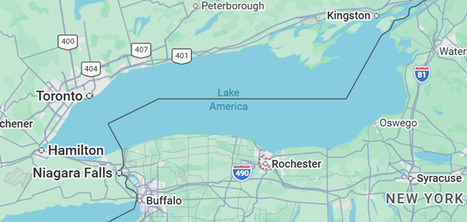
The president’s decree is dumb. Why is anyone going along with it? Apple Computer has had good marketing very nearly from the beginning. During the 1984 Superbowl, the then-upstart computer company ran what has become one of the most legendary ads in the industry’s history, directed by Ridley Scott and invoking the imagery of George Orwell’s 1984. At a time when the public was still skeptical about computers and their growing role in society, Apple managed to make the home PC feel liberatory: the ad ends with a heroic woman hurling a sledgehammer through a giant screen dispensing authoritarian propaganda, as a voiceover told the audience at home that they’d soon be able to buy the Apple Macintosh computer, “and you'll see why 1984 won't be like 1984.” Four decades later, and Apple — following the lead of other tech giants like Google — is literally redrawing the map of the world because of the unhinged say-so of the current occupant of the White House. The president wants Lake Ontario to be called “Lake America,” and our tech overlords are happy to comply. Everyone involved should be deeply ashamed of this behaviour, but Apple’s specific corporate history makes this somehow even sadder. The attempted defense that these companies are simply pulling place names off a government server that Donald Trump happens to control might have been defensible before January 20, 2025, when Trump “renamed” the Gulf of Mexico. (Do I think the Lake Ontario thing is more offensive than the Gulf of Mexico thing? Not really, but I’m paid to cover Ontario and not Mexico, so here we are.) They’ve had 18 months to revise their policies in the face of this president’s corruption of their data, and they’ve chosen not to. That is, in fact, a choice, and one that appears as alignment with a president who has persecuted journalists who insisted on the correct geographical name for the Gulf of Mexico. This is not something so trivial that it should be laughed off: these trillion-dollar corporations have put themselves on the wrong side of the basic right to freedom of speech. As far Apple is concerned, we have always been at war with Eastasia, at least if Donald Trump says so.
Federal News Network reports… When it comes to cybersecurity, Minnesota has been ahead of the curve. It used grant money from the Department of Homeland Security and other funding to create MNet – an enterprise telecommunications network that connects state and local government and education offices throughout the state. Now, Minnesota is taking the “whole of state” cybersecurity effort even further.
SpaceX and other companies want to put millions of satellites into space. Could orbit run out of room? Seven years ago, when Samantha Lawler moved to rural Saskatchewan to run a farm with her partner, the glorious darkness overhead was one of the biggest perks. Undiminished by light pollution, countless stars filled the night sky. It was a pristine celestial view that city dwellers can only dream of seeing. That matters a lot to Lawler, who studies the universe as an astronomer at the nearby University of Regina when she’s not tending goats and chickens. Yet ever since Lawler’s rural relocation, a new type of artificial star has increasingly encroached on the heavens above her homestead: satellites, constellations of them, most beaming the Internet around the globe. “Now there are many satellites all the time,” Lawler says. “I really could notice the change that was happening.” In 2019, the same year Lawler moved to Saskatchewan, Texas-based SpaceX began launching its Starlink megaconstellation in earnest, lofting an initial 60 satellites into orbit that May. The constellation has since exploded in size. This past March, SpaceX reached a milestone of 10,000 active Starlink satellites. More than 10 million customers worldwide now use its Internet service. Other companies and countries are racing to catch up. There are plans to put nearly two million satellites in orbit. If even a fraction of those launch, it will make the current crop of about 15,000 satellites look paltry by comparison.
The US slide into autocracy has been enabled at every step by pathetic tech executives that enthusiastically embraced a complete lack of ethics. Earlier this week I wrote about the tech press' hagiography of outgoing Apple CEO Tim Cook, and the media's uncanny ability to downplay or ignore his legacy of boring products and enthusiastic coddling of violent global autocrats.
Offhandedly I threw out the question of whether Apple's new CEO John Ternus would demonstrate something more concretely resembling a backbone when it comes to authoritarian appeasement.
Yeah, well, about that. Last week you may have seen (good for you if you didn't!) that our mad combover king tried to rename Lake Ontario "Lake America" as part of his pointless and chaotic trade war with Canada. It's pretty typical Trump: thoughtless, chaotic trolling unconcerned with any real world impact to actual human beings.
Americans overwhelmingly (64%) think renaming the lake is stupid. Even many of the Republicans who live on the lake shore and have to deal with the real-world impact think it's stupid, offensive (the lake name has ancient Iroquoian roots), and pointlessly divisive:
The agency clarified that states can now use leftover BEAD funds to fund broadband projects in locations that were missed or became newly eligible. he National Telecommunications and Information Administration (NTIA) said Thursday it will make another round of Broadband Equity, Access, and Deployment (BEAD) funding available to states, allowing them to use some of the program’s leftover money to fund broadband projects in locations that were missed or became newly eligible after the program’s initial allocations. Under the new guidance, states and territories can conduct what NTIA calls a “true-up” round to identify and fund broadband serviceable locations that remain unserved. The process is intended to account for locations affected by defaults from other federal or state broadband programs, providers incorrectly reporting locations as served, changes to the FCC’s broadband maps and newly identified locations that were not previously included in the FCC’s broadband serviceable location data. The agency said it will produce a supplemental list of newly eligible locations for the states and territories to review, and once those reviews are complete and approved, states and territories can then conduct another round of competitive bidding for those locations.
The California Public Utilities Commission (CPUC) announced the approval of almost $32 million in broadband grants to be made through the California Advanced Services Fund (CASF). Announced late last week, the funding will be used in four counties to expand high-speed internet access, provide free broadband to affordable housing residents and offer digital skills. The first of three California announcements was for as much as $24 million for broadband infrastructure.
President Donald Trump’s antitrust enforcers have repeatedly tried to break up tech giants — even after their CEOs have bent the knee to him — but the courts keep saying no. Wednesday’s decision by a federal judge not to break up Google’s online advertising business is just the latest — and perhaps largest — setback for the Trump administration as it attempts to restructure Silicon Valley’s largest tech companies. It also highlights the trouble the administration faces going into 2027 with antitrust trials scheduled for Apple and Amazon. Wednesday’s loss was the DOJ’s best chance to force a breakup that could restructure a Silicon Valley giant, according to legal scholars and former antitrust officials who spoke with DFD, and antitrust enforcers will have an even harder time convincing a judge to break up Apple or Amazon.
Why America's next great infrastructure story has yet to be told Every generation builds something that quietly redraws the map. Railroads did it. The interstate highway system did it. The electric grid did it. Each time, the physical infrastructure came first, and the economic transformation followed. Today, America is in the middle of another one of these moments, and almost nobody is telling the story correctly. The public conversation about artificial intelligence has been captured by software: The models, the chatbots, the breakthroughs. But none of it exists without land, power, water, fiber, and steel. Every large language model runs on a data center. Every data center runs on electricity that has to come from somewhere. Every gigawatt of new power demand touches a grid, a community, and a water table. AI may be written in code, but it is built out of concrete, copper, and turbines. The companies racing to lead in AI are discovering, one project at a time, that they are becoming infrastructure companies whether they intended to or not.
The Department of Justice filing argues that large publishers will disproportionately benefit if AI companies have to pay to use copyrighted content. The filing says the DOJ’s decision to intervene is an attempt to ensure that American AI companies remain “competitive” and are free to “develop a robust AI industry.” “The Administration is siding with a handful of trillion-dollar companies at the expense of the countless American creators whose work they stole,” said Graham James, a spokesperson for the Times, in a statement.
Iowa Attorney General Brenna Bird is arguing to stop states from questioning the federal government or big business, write Max Miller and John Newman. Key Points - Max M. Miller lives in Des Moines and used to enforce the state’s antitrust laws with the Iowa attorney general. He now serves as senior counsel at the American Economic Liberties Project.
- John Newman is a graduate of Iowa State University and the University of Iowa College of Law, an antitrust law professor, and a former antitrust enforcer.
Iowa has always been a land of firsts: the first digital computer, the first modern college basketball game, the first gas-powered tractor. And, although it’s not quite as famous, we also created the nation’s first antitrust law. The Iowa Legislature passed an “Act for the Punishment of Pools, Trusts and Conspiracies” in 1888, two years before Congress got around to passing the Sherman Antitrust Act.
Tennessee state Rep. Justin J. Pearson talks about how national debates over data centers and redistricting are hyperlocal issues in his state.
The once-dominant mapping app has surged to the top of Apple’s U.S. App Store after refusing to adopt Trump’s “Lake America” name, drawing more than half of its 2026 U.S. downloads in just six days. The surge in new downloads was inspired by MapQuest’s refusal to rename Lake Ontario as “Lake America,” after President Trump’s executive order directed the U.S. geographic naming service to adopt the new name amid his ongoing trade push. After the August 27 order, MapQuest announced on X that it would not change the lake’s name, while both Google Maps and, later, Apple Maps, capitulated. As a result, MapQuest’s U.S. App Store ranking steadily climbed, as consumers downloaded the app to show their support for the company’s stance.
|