The new Federal Communications Commission report signals a major retreat from the former administration's goal of connecting every American to gigabit-speed broadband.
It’s just one word, but it changes everything. In its latest broadband deployment report, the FCC quietly backpedaled on its mission to expand high-speed internet to every American and eliminated an ambitious gig-speed goal entirely.
“High-speed broadband is often essential to full participation in modern society,” the opening sentence of the Aug. 14 report reads.
That sounds pretty uncontroversial at first glance, but it stands in stark contrast to the previous report issued under President Joe Biden’s FCC, which called access to affordable, reliable broadband “essential to full participation in modern life.” The United Nations Secretary-General António Guterres went even further, calling the issue “a matter of life and death” in the midst of the COVID-19 pandemic.
Other governments could seek similar concessions, while separate legal action is pending in places ranging from Kenya to the Netherlands.
In October 2021, Abrham Meareg’s father, a professor of chemistry in Ethiopia’s northern town of Bahir Dar, was shot at close range and died outside his family home. This was in the middle of the country’s civil war.
For weeks, Facebook’s algorithm had actively promoted posts calling for the academic to be murdered, according to Meareg and Foxglove, a nonprofit organisation supporting Meareg’s lawsuit against the company in Kenya. These posts included photos of his father and his home address.
Meareg filed the lawsuit in 2022. He said he repeatedly asked Facebook to remove the posts and the company did nothing. Nearly four years later, the case has still not been heard. Foxglove said Meta, Facebook’s parent company, had “fought tooth and nail to avoid responsibility”.
A federal judge in California Thursday found that Pentagon Chief Pete Hegseth broke the law when he designated Anthropic a supply chain risk to national security.
U.S. District Judge Rita Lin, who ruled in March to pause the unprecedented label, wrote that the Trump administration’s actions amounted to “unlawful retaliation” in violation of the First Amendment and that Anthropic was denied due process as required under the Fifth Amendment.
As Congress continues to exercise oversight over the Federal Communications Commission (FCC), an area for consideration is the FCC's ability to influence the operations of broadcast television (TV) networks. The Radio Act of 1927 gave the Federal Radio Commission (FRC) authority to regulate broadcast radio stations and networks. When Congress replaced the FRC with the FCC, it shifted this provision to the Communications Act of 1934. Five of the FCC's six rules currently governing contracts between broadcast radio networks and affiliated radio stations originated in an order the agency adopted in 1941. The FCC extended these rules to TV networks without comment or analysis in 1946. The sixth rule, which prohibits broadcast TV networks from representing affiliated TV stations (affiliates) in the TV advertising marketplace, originated in an order the FCC enacted in 1959. While the FCC repealed most of the rules with respect to radio in 1977, these six rules governing TV network-affiliate relations remain in place as of 2026.
In November 2025, the FCC's Media Bureau staff issued a public notice seeking comments on its oversight of the relationship between broadcast TV networks and their affiliates. The FCC's broadcast TV network-affiliate review is part of "Empowering Local Broadcasters," a broader initiative to "[gather] the information needed to consider whether the national programming [TV] networks are exerting undue influence or control over their affiliate stations." When enacting these rules, the FCC's primary focus was promoting competition within the broadcasting and advertising industries. The FCC's 2025 public notice states that the agency seeks to "identify any barriers that may be preventing local broadcast television stations from meeting their public interest obligations and responding to the needs of their communities."
T-Mobile is providing a limited satellite service for those who are living in the "unreachable" zones with its T-Satellite offering, but when will we be moving to a completely satellite-backed up mobile plan?
Recently, the Evercore Partners TMT Global Conference was held and at it, T-Mobile's CFO (Chief Financial Officer) Peter Osvaldik had something important to say. He talked about the technical limitations of satellite-to-phone connectivity. You've probably heard of the D2D (direct-to-device) term.
Now that the last final proposal is approved, we’re finally able to tally just how much of the BEAD dollars will be deployed for direct connections and how much is non-deployment… or ‘savings’ as the NTIA continues to call them.
Total BSLs designated connectivity through BEAD: 3,739,925
BEAD funding approved by the NTIA using BOB guidance: $18B
Non-deployment dollars: $22.5B
Percentage of originally designated IIJA/BEAD dollars allocated: 44.25%
What was originally designated as a “fiber first” endeavor is left with less than 2/3 of homes allocated fiber.
It may be the most significant legal settlement since major tobacco companies agreed in 1998 to pay out more than $200 billion and change controversial marketing practices seen as targeting kids.
Maybe: There are caveats and fine-print conditions.
On Wednesday, Meta announced it would pay up to $18 billion to dispose of lawsuits from 48 states, the District of Columbia and U.S. territories. The owner of Facebook and Instagram also agreed to make sweeping changes to its products in the face of claims it endangered minors with predatory, even addictive, practices.
The practical changes read like a protective parent’s wish list. They include:
During my entire life I’ve only had two jobs. In the first one, I played a role in developing software to empower people through my work at Microsoft.
In my second one, which I started full time in 2008, I am giving back the wealth I made at Microsoft with the goal of making the world a healthier, better educated, and more equitable place. This is the job I will have for the rest of my life.
Both of these experiences inform my perspective on artificial intelligence. When I first learned about computers at age 13 I was fascinated by the idea of making them more intelligent and able to perform things that, at the time, only humans could do. Although the term “AI” was used from around the time I was born, the technology has only made significant progress in the last decade. It is now incredibly capable and it is continuing to improve at a mind-blowing rate. AI for the first time can replace and even exceed human cognition.
Elon Musk's SpaceX is making moves to acquire more AWS-3 midband spectrum for Starlink's mobile satellite direct-to-device (D2D) service and getting closer to nationwide coverage in the US.
In a recent FCC filing, SpaceX subsidiary Starlink Spectrum Holdings requested permission to transfer control of three unpaired AWS-3 licences in the 1695MHz–1710MHz band that are held by Tristar License Group (TLG).
New Mexico-based Penasco Valley Telephone Cooperative (PVT) is using a $1 million disaster relief grant from the New Mexico Office Of Broadband Access and Expansion (OBAE) to construct and expand reliable Internet access in numerous New Mexico communities that have historically been subjected to wildfires and flooding.
According to cooperative leadership, PVT is building an alternate fiber broadband route to establish more resilient and redundant connectivity to inhabitants of areas like the Capitan Mountains Wilderness, where the Seven Cabins Fire recently burned 31,000 acres after the crash of a medical plane last June.
The investments are also intended to shore up redundant communications connectivity in areas like Lincoln County, where the combined South Fork Fire and Salt Fire burned through over 25,000 acres, destroyed 1,400 homes and commercial buildings, and killed two local residents.
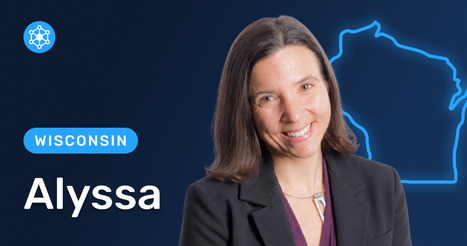
It’s been a few years since I spoke ‘officially’ with Alyssa Kenney, Wisconsin’s State Broadband and Digital Equity Director.
Housed in Wisconsin’s Public Service Commission (PSC), Kenney’s team is not only making the most of what post-BOB BEAD has become but is also allocating money to shore up the program’s shortcomings.
Schlemiel! Schlimazel!
In March of 24, Kenney was excited about a statewide equity program on the drawing board called the digital navigator program. Largely funded by the state’s designated $13.3M in Digital Equity Act (DEA), Kenney described the digital navigator program as hands on support, helping with affordability, equipment, and training. “Somebody to meet them at the library and really walk them through setting up an email,” explained Kenney.
As the recent NDIA court triumph signals the return of DEA, everything ‘old’ is new again and Kenney hopes to get back to work on both this program as well as deepening relationships and coalitions to digital navigators. “Digital equity and adoption have always been really important to the Public Service Commission chair, through multiple seat holders. DEA and the Associated Dollars will hopefully come back and put some teeth behind our statewide equity goals.”
Last Wednesday, David Ellison called a lunch meeting on the Paramount lot with his top lieutenants—the 12-member Executive Leadership Team, or ELT, as it’s dubbed internally—and outlined in stark terms the stakes of the Paramount–Warner Bros. merger litigation for each of them. During the hourlong meeting, Ellison first expressed confidence that the company would defeat the case brought by California and 11 other Democratic states, and ultimately close the controversial $110 billion transaction. He also said that, despite the prolonged and costly antitrust battle with the attorney general of his home state, his goal remains to keep the combined company—and the 30,000 or so jobs, including their own—based in Southern California.
But, according to two people with direct knowledge of the meeting, he wanted his top people to know that the rumors were true: He had decided to move Paramount Skydance to either Tennessee, Texas, Georgia, or another state he didn’t identify if Rob Bonta, the California A.G. leading the charge, did not come to the table to negotiate a settlement. Further, Ellison told the group, he had set an October 1 deadline to resolve the matter. If Paramount gets nowhere by the date that the so-called $7 million-per-day “ticking fee” begins to accrue, he will move either Paramount or the combined WarnerMount out of California regardless of the eventual outcome of the case. The headquarters will relocate first, he said, assisted by incentives provided by one of the suitors (he’s in contact with multiple states), and he’s putting together a five-year plan that would eventually shift most studio jobs to the new home. Paramount’s Ellison-controlled board had already signed off on the move.
Senators Padilla and Warner demanded answers from Kalshi and Polymarket about paying influencers.
They warned paid influencers spread debunked election-fraud claims and undermine public confidence before the 2026 midterms.
The letter seeks details on contracts, misinformation policies, influencer vetting, and potential relationship terminations.
U.S. Senators Alex Padilla (D-CA), Ranking Member of the Senate Rules Committee, and Mark Warner (D-VA), Vice Chairman of the Senate Intelligence Committee, have submitted a letter demanding answers from prediction market companies Kalshi and Polymarket regarding their practice of paying online influencers who have spread false information, including spreading debunked claims that U.S. federal elections are subject to widespread fraud while using a “paid partnership” stamp from the companies.
WASHINGTON, Aug. 25, 2026 – The National Telecommunications and Information Administration has taken its first formal step toward reopening the Digital Equity Act’s competitive grant program.
NTIA published a notice Tuesday opening a 60-day public comment period on the information collection and application requirements it plans to use for a new round of funding. The notice begins the federal paperwork process needed before NTIA can accept applications under the revived program.
The notice says NTIA will use the information from applicants to review their proposed projects and budgets. Affected applicants include nonprofits, community anchor institutions, educational agencies, workforce-development entities, Tribal entities, state and local governmental entities, and other eligible organizations or partnerships.
Meta’s US settlement over allegations that Facebook and Instagram harmed children could reshape how regulators approach online safety, reports Ramsha Jahangir.
Meta’s settlement with 52 attorneys general from US states, territories, and the District of Columbia over allegations that Facebook and Instagram harmed children is likely to shift how regulators approach online safety in Europe too.
The agreement announced Wednesday requires Meta to make sweeping changes to how teenagers use its platforms in the US, including default limits on daily use, overnight restrictions and stronger age assurance. Meta is also calling on TikTok and YouTube to adopt similar measures. The settlement is still subject to court approval.
Some of the measures Meta agreed to in the US are also being pursued by regulators elsewhere. In Europe, the UK, Australia, Brazil and Singapore regulators have spent years on initiatives to make platforms safer for children, often under existing laws that require companies to assess risks and protect young people.
In this case, the promised changes are a result of litigation rather than an elusive federal online safety law.
The chipmaker's reported acquisition of the world's largest open-source model hub would complete its vertical integration from GPU hardware into model distribution — and create a geopolitical choke point for Chinese open-weight AI.
The Compute Landlord Claims the Marketplace
NVIDIA’s reported $12.9 billion acquisition of Hugging Face represents the seventh installment of the compute landlord thesis, marking a definitive shift from merely owning the silicon to controlling the marketplace itself. The Information reported the agreement on August 26, and Reuters confirmed the following day, though neither company has officially confirmed the transaction and NVIDIA has declined to comment. If realized, this move would transform a platform that has functioned as a neutral utility into a proprietary gateway, allowing the hardware giant to dictate the primary distribution channel for the global AI ecosystem. This follows a series of strategic moves—detailed in our prior coverage of OpenAI, SpaceX, and NVIDIA’s own record-breaking quarterly revenue—that solidify the company’s grip on the infrastructure layer.
Alyssa is a professional wordsmith. For one year and two months, Alyssa worked — past tense — for a global company that makes toys for kids.
"Amazon listings, Wayfair listings, press releases, you know, the whole nine yards," she said.
But then came artificial intelligence. First, it was the boss asking her to try using ChatGPT. Alyssa found it took longer to check for mistakes and plagiarism than to just write copy herself. Then, the boss handed some of Alyssa's to-do list to an AI bot.
Soon, she was called into a video meeting where she thought she'd get a raise. "We're restructuring — we no longer need you," Alyssa recalled being told.
She left with the strong impression the toy company would use more AI for its writing instead of her. Alyssa asked Marketplace to use her first name only, so speaking to us doesn't hurt her chances of finding a new job. Three years later, she's still looking for a role that pays like that one.
Meta’s settlement with 29 states allows it to retain certain data from children under 13 to train and test age-detection models, highlighting a privacy trade-off built into the deal.
That permission is being granted for the limited purpose of training and testing Meta’s age-assurance model and includes guardrails, but it’s a curious policy decision to make in a case centered on child safety, and one that could be difficult to properly enforce.
As specified in the settlement agreement, Meta must develop, train, and begin testing a model designed to detect which users on Meta’s platforms are under the age of 13. This must be done within a year of the document’s effective date. (While the agreement doesn’t specify that the model has to be AI-based, Meta’s current age-detection tools are powered by AI technology.)
Georgia audited its own data center tax breaks and found that the state gave up $474 million in sales taxes in one year—and got back just $41 million from the industry. At least 38 states have deals like this. (It's not clear whether all that money the state waived was necessary to attract the construction: in Georgia's case, by the state's own estimate, 70% of the data center construction would have happened anyway.)
And it's not just states paying: Bloomberg analyzed seven regional power grids across the country last year and found that wholesale prices near data centers have risen as much as 267% since 2020. Around Washington DC, near the world's largest cluster of data centers, power bills rose about $20 a month last summer.
The AI boom is lifting the economy, but there's mounting evidence that the people benefiting least are carrying significant costs through tax breaks, power bills, and deals they never voted on.
The new Federal Communications Commission report signals a major retreat from the former administration's goal of connecting every American to gigabit-speed broadband.
It’s just one word, but it changes everything. In its latest broadband deployment report, the FCC quietly backpedaled on its mission to expand high-speed internet to every American and eliminated an ambitious gig-speed goal entirely.
“High-speed broadband is often essential to full participation in modern society,” the opening sentence of the Aug. 14 report reads.
That sounds pretty uncontroversial at first glance, but it stands in stark contrast to the previous report issued under President Joe Biden’s FCC, which called access to affordable, reliable broadband “essential to full participation in modern life.” The United Nations Secretary-General António Guterres went even further, calling the issue “a matter of life and death” in the midst of the COVID-19 pandemic.
I noticed an article that said that Optimum (Altice USA) was in danger of being delisted from the New York Stock Exchange. NYSE automatically issues a warning to any stock when the average share price over thirty days is below $1.00. This warning was given to Optimum on August 13, and the company has until February 13, 2027, to get the 30-day average stock price above $1.00 to remain listed on the exchange.
The company’s stock has plummeted over the last year. A year ago, the stock was trading at $2.33 per share. Five years ago, the stock traded at more than $28 per share. As I wrote this blog, the share price was $0.89. The lowest price this year was $0.60 per share. Optimum stock is considered extremely volatile by analysts because the company had almost 50 days during the last year when the stock rose or fell by more than 5%. The changes aren’t always downward. In early June, the stock price rose more than 9% in one day on news that the company had grown to have 700,000 cellular customers.
Frequency Forward and the Media Action Center, along with viewers of ABC stations across the country, filed a Motion to Intervene as plaintiffs in Disney and ABC’s lawsuit against the Federal Communications Commission (FCC) in the United States District Court for the District of Columbia. The groups seek to ensure viewers' First Amendment rights are represented in American Broadcasting Companies v. FCC (Case No. 1:26-cv-2902) and to guarantee the American public has a seat at the table.
The groups support Disney’s efforts to fight back against the FCC and Chairman Brendan Carr’s unconstitutional assault on the freedom of the press. As Disney argued in its lawsuit, “the ultimate injury here is not to the station or its parent company … it is to the public.” The motion seeks to protect ABC viewers' constitutionally protected right to receive news, information and programming free from government intimidation.
Three months after town meeting voters in Longmeadow, Massachusetts rejected an $8.6 million proposal to kickstart the construction of a municipal fiber network, Town Councilors in the neighboring town of East Longmeadow moved in a different direction, voting to take control of its digital future and provide its residents and businesses with next-generation Internet access.
The move was formalized earlier this month when East Longmeadow Town Councilors unanimously approved issuing $43.5 million in bonds to finance the construction of a municipally-owned fiber network.
The vote paves the way for the western Massachusetts town of about 16,000 to finally get the affordable and reliable town-wide Internet connectivity local leaders see as vital for its economic future and improved quality-of-life.
Are Flock safety cameras keeping communities safe, or just building a private dragnet for mass surveillance? Chris sits down with independent reporter Daniel Boguslaw to unpack the Flock Safety debate and reveal how everyday citizens are fighting back.
In this episode of Unbuffered, Chris sits down with independent reporter Daniel Boguslaw to explore the growing friction between technology, privacy, and local governance.
The conversation centers on Flock Safety—a network of automated license plate readers and surveillance cameras—and how it has sparked a nationwide debate over corporate surveillance, national databases, and civil liberties.
Exclusive: Arturo Béjar, an ex-Facebook employee and whistleblower, said outcome ‘is not an all clear to say the product is safe’
The star witness in the US government’s landmark trial against Meta believes that a multibillion-dollar settlement reached on Wednesday does not go far enough to stop the social media giant’s harms to young users.
“The limitations that are in the agreement are the equivalent of saying: ‘Well you can smoke as many cigarettes as you can in two hours a day,’” said whistleblower and ex-Facebook employee Arturo Béjar. “It doesn’t make the cigarettes any safer.”
Dozens of states had sued Meta, alleging that it designed addictive products that led to mental health problems for young people such as disordered eating, depression and suicide. The states and the company reached a wide-ranging settlement agreement on Wednesday that will force Meta to make major changes to its platform, including putting strict limits on how much time teens are able to spend on apps like Instagram and Facebook.
Béjar’s testimony formed a key part of the government’s case.
The Hoopa Valley Tribe is celebrating the opening of its new fiber network operations center as the Hoopa Valley Public Utilities District (HVPUD) expands fiber-to-the-home Internet service throughout the Hoopa Valley Reservation and into neighboring communities just outside of its Tribal lands.
To mark the occasion earlier this summer, more than 50 community members, Tribal leaders, HVPUD staff, and project partners attended the July 17 opening celebration.
At the celebration, Hoopa Valley Tribal Vice Chairman Jordan Hailey hailed the milestone moment:
To get content containing either thought or leadership enter:
To get content containing both thought and leadership enter:
To get content containing the expression thought leadership enter:
You can enter several keywords and you can refine them whenever you want. Our suggestion engine uses more signals but entering a few keywords here will rapidly give you great content to curate.


 Your new post is loading...