Your new post is loading...
Cheating as a business model exists because Americans can no longer sue big business. A Democratic Congress could fix this problem with one simple law. Plus, a defeat for Paramount-Warner, and more... As usual, there’s a lot of monopoly-related news. There was an important win in the Paramount-Warner merger fight, the world of tech giants is in a civil war over open source AI models, and Lina Khan continues to annoy the superrich by becoming the Chair of one of the most important economic development posts in New York City. Before getting to all of that in the full round-up I want to discuss a political opportunity to improve the lives of Americans very quickly. In a few months, it’s likely that Congress will change hands. If it does, one thing Democrats could do is pass a law making it possible to sue big companies who cheat their customers, suppliers, or employees. Right now, it’s virtually impossible to do that, and the result is a degradation of our economic order so significant that we’ve had to invent a new word to describe it.
Today, our National Board adopted a resolution publicly opposing the Paramount Skydance acquisition of Warner Bros. Discovery, absent enforceable guarantees of continued and expanded production levels. The resolution affirms our strong support for the attorneys general from a dozen states and the Writers Guild of America, who have filed anti-trust lawsuits to block the massive leveraged buyout. At this moment, Paramount Skydance has agreed to delay the effective date until as late as next June. We want you to know that SAG-AFTRA has been monitoring this transaction closely since Netflix made its initial offer to buy the historic studio. Throughout this process, we engaged with the various parties to thoroughly investigate the proposed acquisition and ensure your interests are protected.
More than 7,000 homes and small businesses in Sumter County now have access to Spectrum's high-speed internet, mobile, TV and voice services following the company’s latest broadband expansion. The expansion is part of Spectrum’s more than $7 billion rural construction initiative, a nationwide project to extend fiber-optic infrastructure to underserved communities. The multi-year effort is expected to add more than 100,000 miles of fiber-optic network and bring broadband access to more than 1.7 million locations across the country. Residents in the newly served areas can now subscribe to Spectrum Internet with download speeds up to 1 gigabit per second. The company says its residential service starts at 500 Mbps, with no data caps, modem fees or annual contracts.
The Federal Communications Commission today voted unanimously to overhaul its satellite licensing process, despite a request to postpone the vote by U.S. House space policy leaders. FCC on July 1 published the Space Modernization Order outlining the changes, which include establishing “a licensing assembly line” to process applications for satellite licenses, potentially in batches as opposed to separate approvals for each satellite in a large constellation. The order is among several planned overhauls to U.S. space licensing that were prompted by various 2025 White House executive orders. An FCC license is required for any satellite that will transmit or receive radio signals to communicate with operators on the surface for telemetry, tracking and command. However, the current licensing regulations contain “unnecessary and outdated rules,” the order reads, and the new framework would be easier to understand, especially for new entrants.
WASHINGTON, July 23, 2026 – House Republicans repeatedly questioned Wednesday whether the federal government still needs roughly 130 programs supporting broadband access. GAO tells lawmakers fewer broadband programs may be needed after BEAD. The issue surfaced throughout a hearing of the House Communications and Technology Subcommittee. Among the measures under discussion was the bipartisan PLAN for Broadband Act, which would require the executive branch to develop a national broadband strategy.
Generative AI is pushing computational limits, surpassing a trillion parameters. Optical I/O interconnect is key to scaling beyond traditional GPUs in data centres. Fibre optic interconnect has long proven its superiority over copper for streamlining bandwidth bottlenecks between data centre servers and switches. Advances in silicon photonics (SiP) have further enabled pluggable optical transceivers to streamline data exchange between racks and boards. Using light to move data between chips at the board, rack, or system level is the next logical step in this progression. In-package and chip-to-ship optical interconnect not only promise to support the computational bandwidth that AI data centres demand, but they can also reduce latency, heat generation, power consumption, and signal degradation.
Six network AI use cases that make native calls better than WhatsApp WhatsApp handles more than 2 billion talk minutes a day.[21] Traditional voice services have declined 30 to 40% worldwide over the past decade.
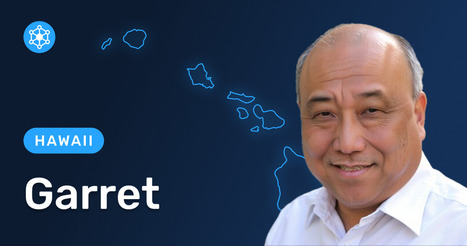
In my quest try and make a friend in an area of the world I would need to find a couch to sleep on, last week I had a conversation with the Aloha state’s Garret Yoshimi, Hawaii’s broadband lead.
The Hawaii Broadband Office has always been mysterious to me… not because of the Hawaii of it all, but because it isn’t technically housed in the state government. It lives in the University of Hawaii System. I didn’t understand until Yoshimi explained it to me. In ARPA days (2020), the governor looked to which agency within the state where the broadband office should be located. Who would be best equipped to provide the function, to provide the state broadband negotiation function establish an office? Who had the technical understanding if not expertise? Where would implementation be run through? Yoshimi tells me that “… the conclusion at that time was that the university could support all SBO activities, including the telecom related functions, not just for the university, but for our statewide access as well as our national and international partnerships with communications infrastructure. It is important for not just the university, but the state as a whole.”
Statement published 20 July 2026 This Statement sets out the decisions we are taking following the January 2026 consultation on enabling Wi-Fi and mobile in the Upper 6 GHz band. We have decided to implement our proposals for a prioritised spectrum sharing framework in the Upper 6 GHz band comprising: - a Wi-Fi priority portion in the lower 160 MHz of the band (6425–6585 MHz); and
- a mobile priority portion in the upper 540 MHz of the band (6585–7125 MHz).
Within this framework: - We are making the Wi-Fi priority portion of the band available on the same licence exempt basis as the Lower 6 GHz band. This includes low power indoor use and very low power use. Outdoor and higher power use is also permitted, but only where devices operate under the control of an Automated Frequency Coordination (AFC) system.
- We are also allowing licence exempt Wi-Fi access to the mobile priority portion – but only for those devices under the control of an AFC system. This will enable Wi-Fi use of the full 6 GHz band while ensuring that such use can be managed as mobile deployment occurs.
WASHINGTON — U.S. Sens. John Thune (R-S.D.) and Ben Ray Luján (D-N.M.), members of the Senate Committee on Commerce, Science, and Transportation, and Sen. John Barrasso (R-Wyo.) today applauded the Commerce Committee for unanimously passing their Accelerating Broadband Permits Act of 2026 (S. 4448), bipartisan legislation that would improve federal agencies’ review and processing of broadband permits and allow service to be more quickly deployed to unserved communities. The legislation, which now heads to the full Senate, would cut unnecessary red tape and increase transparency into the federal permitting process. It would also require all federal agencies to implement controls to ensure broadband applications are being processed within the required 270-day deadline.
Seven in ten Americans oppose AI data centers in their communities—and Big Tech knows it. That’s why tech giants like Amazon, Google, Meta, and xAI are locking public officials behind non-disclosure agreements and concealing project details from communities until developers have secured permits, subsidies, and approvals. By the time many residents learn that a data center deal is on the table, it’s often too late to meaningfully engage. The secrecy playbook Public officials across the country are signing non-disclosure agreements (NDAs) with data center developers, locking the public out of decisions that will directly affect their communities.
- Today, Comcast reported 167,000 broadband losses during the quarter
- It’s wireless MVNO reported 448,000 net line additions
- The company's CFO talked about the competitive threat from SpaceX's Starlink
Comcast today held its Q2 2026 earnings call with investors — its first earnings since it announced it was splitting the company into two, separating its media business from its connectivity business.
OpenAI is preparing one of the largest artificial intelligence infrastructure investments in the United States, committing more than $30 billion to a massive data center campus in coastal Georgia. The project will provide up to 3.2 gigawatts of computing capacity over the next decade, giving the ChatGPT developer another major boost as demand for AI computing continues to climb.
|
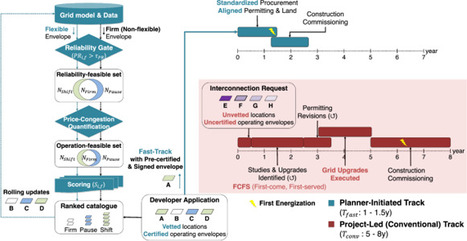
Explosive growth in energy-intensive AI data centers is outstripping the pace of power grid interconnection and transmission expansion. While operational flexibility has been proposed to mitigate this stress, existing processes are often reactive and evaluate projects only after they enter a multi-year interconnection queue. To address this, we introduce a planner-initiated siting framework that integrates (i) reliability-gated screening, (ii) system-wide market-impact assessment under standardized flexibility envelopes (firm, pause, and shift), and (iii) entropy-weighted multi-criteria scoring to produce ranked, pre-certified catalogues of interconnection-ready locations. Applied to a synthetic 2000-bus Texas power system, the framework demonstrates that operational flexibility expands the siting frontier by 9-17% at 1 GW and 19-21% at 2 GW compared to firm operation. Median all-hour average prices remain essentially unchanged ($24.32/MWh for the 2 GW cases), and the shift envelope attenuates peak-hour price dispersion by approximately 3.4% with minimal side effects during off-peak hours. Utilizing pre-certified envelopes to bypass major transmission reinforcements, this workflow enables first energization in 12-18 months-a conservative reduction of 3.5-4 years versus the conventional 5-8 year project-led process. This technology-agnostic framework provides a proactive decision-making tool for system operators and regulators to fast-track large flexible loads while preserving grid reliability and market stability. The study presents a planner-initiated framework for siting data centers, integrating reliability screening and market-impact assessment. It expands feasible locations by 9-21% when accounting for operational flexibility and reduces interconnection time by 3.5-4 years, while maintaining stable prices and reducing peak-hour price dispersion.
Paramount Skydance on Friday officially delayed its attempted acquisition of Warner Bros. Discovery after a federal judge in the Northern District of California temporarily blocked the $111 billion deal at the request of a dozen Democratic attorneys general. US District Judge Araceli Martínez-Olguín granted the temporary restraining order on Monday after finding that the plaintiffs—led by California Attorney General Rob Bonta—provided “compelling evidence that the combined firm resulting from the transaction will possess substantial market share in the wide-release theatrical distribution market.” She extended the order on Thursday.
Kalamazoo city commissioners directed staff to research a possible moratorium on new data centers Monday, following months of similar debate in surrounding townships. The discussion, raised as New Business at the July 20 City Commission business meeting, did not result in a moratorium being adopted. Instead, City Attorney Aaron Leal will give a presentation at a future Committee of the Whole meeting explaining how moratoriums legally function, including limits on their duration, before commissioners decide whether to move forward.
KSTP.com reports… A lawsuit has paused a planned data center in Pine Island. Construction was supposed to start this month on Project Skyway near Highway 52. Earlier this year, the Pine Island City Council approved a conditional use permit to develop at least 100 acres on nearly 500 acres of land. “This is my home,” Janet Hanke said. But Hanke said she has questions about the city’s future and about the proposed project in the city of about 4,000 people.
Earlier I wrote about the upcoming City County meeting in Harmony (Aug 5) to discuss data centers. Post Bulletin offers some perspective on the meeting… For the last several months, Harmony city officials have worked on a draft ordinance that would define the kind of data center to be built in Harmony. A proposed ordinance that would define the kind of data center to be built in Harmony. A proposed ordinance is set to be rolled out at a public meeting on Aug. 5, 2026, in the city hall chambers and could set the stage for receiving bids from tech companies. Harmony Mayor Steve Donney, a data center supporter, emphasizes that the data center exists as a proposal only.
Yahoo News reports... Fiber internet is spreading farther in Whitefield Township through Svea. An expanded infrastructure project has been approved by the Kandiyohi County Board and will pass by 70 additional properties from the originally intended 52, for a total of 122 passings. More on the project... In April of this year, the voted to approve the installation of fiber internet around Svea in partnership with Vibrant Broadband and Whitefield Township. The original project used American Rescue Plan Act funds, according to Kandiyohi County Administrator Kelsey Baker.
A motion filed on Wednesday says TEGNA's Board of Directors is comprised entirely of Nexstar executives, possibly violating a court's preliminary injunction. The plaintiffs in an ongoing lawsuit over Nexstar Media Group’s acquisition of TEGNA have accused the company of potentially violating a federal court order’s requiring the two broadcasters to remain separate entities. In a motion for clarification filed in Sacramento on Wednesday, California Attorney General Rob Bonta and DIRECTV, backed by attorneys general from other states, said the matter involves a Board of Directors at TEGNA that was created shortly after the court issued a preliminary injunction in April that required Nexstar to maintain a hands-off approach to operating TEGNA while their antitrust lawsuit proceeds.
UPDATE: Right after Pressing Issues went to press, Paramount retreated, agreeing to pause the deal for months as it goes to trial. Here's the Free Press statement. The short version: Paramount promised a slam dunk and shot an airball. See you in court! In a major milestone for the growing movement to stop corrupt mega-mergers, on Monday California federal District Judge Araceli Martínez-Olguín halted the $111 billion Paramount Skydance-Warner Bros. Discovery merger following a lawsuit filed by a coalition of 12 state attorneys general. This initial ruling is important and could signal — as the companies’ slipping stock prices suggest — that the merger is in trouble. The states have a strong case, which the judge acknowledged in her ruling. This temporary restraining order sets up an even more important hearing where the court will consider a preliminary injunction. The hearing is currently set for Aug. 3 in Oakland, but the timing could change as the lawyers wrangle and negotiate. A preliminary injunction would block the merger until the judge rules on the merits of the states’ lawsuit. We should be careful not to read too much into any initial hearing, but the prognosticators have reason to be cautiously optimistic. The states have done their homework, and the court seems skeptical of Paramount’s bluster.
We need new ways to fund programs, and the Alt Funding Field Guide makes the case that digital inclusion creates economic value. In the foreword of a new report on funding pathways for digital inclusion programs, broadband policy heavyweight Blair Levin writes: [W]hile the cost of digital exclusion is already large and growing, Artificial Intelligence will magnify the cost…later this decade we will view the implications of AI as similar to how Covid-19 vividly demonstrated the unacceptability of digital exclusion. We can already see Blair’s prediction play out, as early adopters use AI agents to automate complex work, while others still struggle to complete tasks like online job applications. We urgently need to build more digital onramps before the gap compounds. Success in the AI era will hinge on the ability to pivot and keep learning; digital skills are the foundation that makes that possible.
SpaceX will need more than just satellites if it wants to become a major wireless provider, John Stankey says. New competitors would 'have to catch up.' AT&T's CEO is pushing back on the idea that SpaceX's Starlink will become a major wireless and broadband player, saying any new competitor will have to "play catch-up." "There are going to be new competitors, and they’re going to be folks that come in. But the reality is that they’re coming to the game very late after this industry has been established,” John Stankey tells CNBC. "We have the best broadband product that’s out there...built on the foundation of fiber."
Amazon can steer market-wide prices without ever colluding—exposing a gap in antitrust law that the FTC is now fighting to close. In 2023, the Federal Trade Commission, then led by Joe Biden appointee Lina Khan, along with 17 states, filed an antitrust lawsuit against Amazon. The case, finally scheduled to go to trial next year, alleges that the Seattle-based behemoth maintains a monopoly in online retail through an interlocking set of tactics—what the complaint calls “a self-reinforcing cycle of dominance”—that thwart competitors and entrench its grip on the market. Central to Amazon’s monopoly power, the complaint alleges, are sophisticated AI-driven pricing systems that draw on torrents of real-time data and “can detect any price change virtually anywhere on the internet.” Amazon has used these algorithms not only to adjust its own prices in real time, but to monitor how competing retailers’ algorithms react, probe their strategies, and learn how to shape their behavior—including how to induce them to raise their prices.
On Tuesday (July 21), Lt. Gov. Dan Patrick and State House Speaker Dustin Burrows called for the Texas SBO and its BEAD awards be audited. This comes on the heels of a June 24 state senate hearing where many of Texas’ state senators levied accusation at the Texas SBO. More about this later. In response yesterday, broadband.io was given a copy of a letter sent to State Senator Charles Schwertner by Kelly Hancock, the acting Texas comptroller. Besides welcoming the audit, the comptroller’s letter is thorough and does a pretty good job of dismantling Chairman Schwertner’s claims. The key paragraph in Hancock’s letter starts at the bottom of page one:
|