Your new post is loading...
In a first, the state could speed up data centers’ grid connection if they bankroll energy-saving residential tech like heat pumps and batteries. New Jersey is offering data centers an unorthodox way to get the power they need: by bankrolling home energy upgrades. Last week, Gov. Mikie Sherrill (D) signed a bill that will create a first-of-its-kind program to incentivize data centers to secure clean capacity by reducing demand elsewhere on the grid. Data centers will be able to pay for households to replace their energy-hogging electric-resistance space and water heaters with much more efficient electric heat pump appliances — or to install rooftop solar and batteries. The scheme could lower electricity bills for potentially millions of households statewide by hundreds to thousands of dollars annually. In return, the data centers would get priority in the interconnection queue.
A new report by Ranking Digital Rights shines a light on the role of technology companies in building the surveillance stack of the 2026 World Cup. This year’s tournament follows an established trend where surveillance technologies are deployed under the justification of ensuring the safety and security of sports matches—a justification that is even more pervasive in mega-events. Over the last 15 years, civil society organizations in Brazil, South Africa, Qatar, and France, have documented numerous human rights violations and the widespread implementation of surveillance tech when those countries hosted either the Olympic and Paralympic Games or the Men’s World Cup. Part of the legacy of these events is also the normalization of the use of surveillance tech for purposes far beyond the goals that were initially communicated to the public. In 2022, Ranking Digital Rights (RDR) partnered with SMEX, a non-profit that advocates for and advances human rights in digital spaces across West Asia and North Africa, to investigate the state of the internet and digital surveillance in Qatar, the Men’s World Cup host country that year. The three-part series, titled Red Card on Digital Rights, explored how the World Cup mega-event helped facilitate surveillance and perpetuate its use long after fans left the stadium.
Chairman Carr announces plan for a big auction of 160 MHz of prime mid-band spectrum, advancing America's wireless leadership.
Government Technology reports… Governments are developing maps to share information on a variety of topics with the public, but there are necessary considerations to ensure these digital products are accessible for all users. State and local governments are required by federal law to make digital products — including maps —usable for people with disabilities by April 2027 or April 2028 depending on population size. But they face litigation risks today if they are noncompliant.
The Morrison County Record posts an editorial from Keith Anderson, director of news for Adams MultiMedia of East Central Minnesota… Data centers, which have been around for years, are just now forcing their way into our lives thanks to massive proposals being flung at city councils and county boards across the nation, including Minnesota. Data centers of old were certainly impressive, but the computational power to feed AI programs today requires even more energy now that an estimated 1.5 to 2 billion people worldwide have integrated AI into their daily lives. Think back to the days when you entered a question into Google, and it popped out a series of potential resources you could peruse. Now, our prompts into ChatGPT, Gemini or Claude are more comprehensive...
The Democrat Star reports… The City of Elk River announced Tuesday that the data center developer who sought to open one in Elk River recently withdrawn their application. The move comes after the Elk River City Council unanimously rejected a proposed zoning amendment at their July 6 meeting.
President Donald Trump’s threats against broadcast television licenses are suddenly less of a laugh line to the media world and more of a real danger. Trump’s broadsides Thursday night against NBC and ABC were just the latest occasion during the past nine years when he’s called for revoking the licenses of TV outlets that anger him, this time after the two networks declined to air his White House speech on election security. “Fraud like this should mean a revocation of their licenses,” he said Thursday. But unlike Trump’s first term, when Republican leaders at the Federal Communications Commission disavowed any such reprisals, current Chair Brendan Carr has repeatedly opened probes and inquiries into the same TV networks that have drawn the president’s ire. And that has some policy veterans worried that the FCC may act this time, teeing up a constitutional fight.
County News Review reports… With the increase of proposed hyperscale data centers throughout the state, the Isanti City Council has approved a 30-month moratorium on them. Isanti Mayor Luke Merrill said he added the discussion of data centers to the July 7 council agenda so the council has time to create policies to prevent data centers from coming to the city if that’s the direction the city council decides to take. Following discussion, by a vote of 4-1 with Council Member Erika Zdon voting against, a motion was approved to put a 30-month moratorium on hypescale data centers within the city. While Zdon said she doesn’t want a data center coming to the city, she voiced concerns with how quickly the industry changes, and felt the council should wait to enact a moratorium.
Meta hired hundreds of contractors to pose as children and teenagers while asking chatbots like ChatGPT about suicide and even cannibalism.
A controversial new ruling from the Federal Communications Commission leaves no one responsible for regulating light pollution and other ill effects from skyrocketing numbers of satellites. A “space mirror” test satellite meant to beam sunlight and turn night into day on targeted swaths of Earth just received approval to proceed—and astronomers are aghast. The satellite, called Eärendil-1 and built by the California-based startup Reflect Orbital, would be the first of some 50,000 similar spacecraft the company hopes to launch by 2035. Critics say such plans are wholly unacceptable because light pollution from so many large, bright satellites would radically degrade views of the night sky.
The Digital Equity Act (DEA) Competitive Grant Program seems to be back with the US District Court of Washington DC decision published last night. thanks to this morning’s decision reached this morning (decision attached below).
In National Digital Inclusion Alliance (NDIA) v. Trump, decided by the U.S. District Court for the District of Columbia. The court decided that the President does not have the authority to simply cancel a congressionally created grant program because he disagrees with it. If you recall, the word “Equity” was (and remains) a trigger word for the Trump Administration, citing reverse discrimination. But in one instance, the court recognized that one provision of the DEA is, in fact unconstitutional as it expressly allows race to be taken into account when awarding grants. But instead of striking the whole act down, the unconstitutional race-based provision can be severed, allowing the remainder of the Digital Equity Act—including the Competitive Grant Program. The Act appropriated $2.75 billion to improve broadband adoption and digital literacy. The National Digital Inclusion Alliance (NDIA) has championed the charge (and filed the lawsuit) to have DEA reinstated.
Case: National Digital Inclusion Alliance v. Trump, No. 25-3606 (D.D.C.), decided July 15, 2026 (Judge Bates). Read this first: it's not your money, but it's your template. This ruling is about the Competitive Grant Program ($1.25B, awarded directly to nonprofits, cities, and local entities), not the State Capacity/formula program ($1.44B) that flows to your office. Nothing here reinstates capacity dollars or changes state allocations. But the legal reasoning the court used, strike the one race-based provision, keep everything else, reinstate, is almost certainly the template that will decide the capacity money too. So the operational lesson matters to you even though the case doesn't. Three things the government had conceded by decision time: the court has jurisdiction, NDIA has standing, and the executive can't unilaterally cancel a program Congress created and funded over a policy disagreement. That left one government argument: the DEA is unconstitutional because it directs funding based on the race/ethnicity of populations served. The court agreed on a narrow point and rejected the broad one:
Decommissioning TDM and using IP has never been as easy it seemed it should have been. But at least the industry is working on it. Over two days, July 15-16, 2026, the Federal Communications Commission gathered carrier representatives, public-safety and 911 officials, engineers, and advocates to work through the hard remaining problems in retiring the legacy TDM and SS7 infrastructure. At times the proceedings seemed confused, with participants raising issues that did not technically appear to apply. The backdrop: the Commission has proposed to forbear from legacy TDM interconnection obligations at the end of 2028 — meaning that providers formerly required to interconnect with everyone else, and to furnish certain infrastructure and interconnection guarantees, would no longer have to. The goal is to complete a transition that has, in one form or another, been underway since VoIP was invented, but legally since the 2011 USF/intercarrier compensation transformation. Read my article on ALIII, a technical standard for accomplishing Voice Interconnection over the Internet here.
|
The Telecommunications Act of 1996 arrived at a pivotal moment in American communications history. For decades, universal service had meant one thing: ensuring that all Americans could access basic telephone service at affordable rates through a system of implicit cross-subsidies managed largely within the monopoly structure of AT&T and its successors. But by the mid-1990s, this model faced twin pressures. Emerging technologies—from enhanced telephone services to computer networks—created tensions to evolve the definition of “universal service” could mean beyond plain old telephone service. Simultaneously, growing competition in long-distance telecommunications services threatened to undermine the traditional subsidy mechanisms that had made affordable telephone service possible. Three decades later, the Telecommunications Act of 1996 has delivered enormous gains, although universal service remains a promise not yet fully realized. Deployment gaps persist, affordability remains elusive for millions of households, while the system that sustains universal service is eroding, and the legal and institutional foundations of the program face new challenges. And at the same time, the costs of disconnection are higher than ever. The 30th anniversary of the Telecommunications Act of 1996 presents an ideal opportunity to review the universal service objective, its underlying principles, and the progress made toward its achievement. At the time of its passage, public interest advocates were deeply engaged in articulating and advancing a vision for universal connectivity. Today, the Benton Institute for Broadband & Society calls upon policymakers, public-interest advocates, the telecommunications industry, and other stakeholders to join us as we recommit to ensure that all Americans have access to essential telecommunications services now and in the future.
Kyle Schmidt ticked through what makes him irate about the massive Google data center slated for construction about a mile away from his home near Sand Springs, Oklahoma. He didn’t like that residents were kept in the dark about what would be built on a pristine tract of mostly forested land. He’s worried about the data center’s potential impact on the community’s water supply and on the dream home that his family moved into last year. But Schmidt said what really bothers him is the powerlessness he felt as the project advanced and elected officials, Google representatives and bigwig data center backers belittled or misled people who raised concerns. “I hate bullies,” said Schmidt, a 43-year-old flooring salesman and project manager who leads a community group opposing the project. “Data center developers discovered if we can sneak in here without anyone noticing, we can pretty much take what we want.” A rare issue uniting Americans is opposition to data centers, the sprawling computer complexes that are the most visible manifestation of the artificial intelligence boom. In a recent Gallup poll, about 7 of 10 Americans said they would oppose a data center being built near them, and many express concerns about the projects operating in secret and gobbling scarce land, water and electricity.
In one of the world’s biggest technology hubs, a growing group of Seattle residents is trying something counterintuitive: spending a month with fewer digital distractions by trading smartphones for “dumb phones". Seattle helped create the modern smartphone era. Now, nearly 40 people in the heart of one of the world’s biggest technology hubs are voluntarily putting theirs away. The inaugural Month Offline Seattle cohort challenges participants to swap their smartphones for flip phones — or other “dumb phones” — for 35 days, gathering weekly for what organizers describe as part happy hour, part support group.
OpenAI and its revolutionary chatbot ChatGPT have single-handedly accelerated AI’s boom and threatened to upend much of how we work, create, learn, and communicate in the process. But when OpenAI was founded a decade ago, the company’s approach to artificial intelligence wasn’t taken seriously in Silicon Valley. Tech journalist Karen Hao has been covering OpenAI’s astounding rise for years and is the author of Empire of AI: Dreams and Nightmares in Sam Altman’s OpenAI. She says that while many in Silicon Valley warn of AI’s sci-fi-like threats, the real risks are already here.
Sun This Week reports... The city of Apple Valley on July 9 joined a growing list of Minnesota cities that have enacted one-year moratoriums on new data center development. The City Council approved the pause on proposals for data centers, which are large buildings that hold computer servers. The sites can range from several thousand up to 2.5 million square feet as currently under scrutiny in Farmington. The cities of Eagan, Rosemount, Inver Grove Heights, Elk River and Minneapolis are among those enacting data center moratoriums similar to the Apple Valley ordinance.
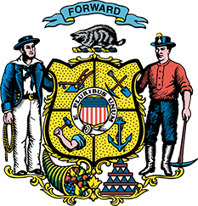
MADISON — Gov. Tony Evers, together with the Public Service Commission of Wisconsin (PSC), today announced the release of the final Governor’s Task Force on Broadband Access annual report. The 2026 report highlights the work accomplished over the last year and describes the significant improvements made under Gov. Evers’ leadership to improve high-speed internet access, adoption, and affordability in Wisconsin.
“The Task Force’s sixth and final report captures the incredible work we have done over the past several years to close the digital divide in our state and ensure every Wisconsinite has the high-quality, affordable internet they need to succeed in the 21st Century, while also laying the groundwork for future leaders to carry on this important work,” said Gov. Evers. “I am so very proud of all we have accomplished to help hundreds of thousands of homes and businesses get connected, and looking ahead, leaders must continue these efforts to fill gaps, identify ways to support digital skills and affordability programs, and support workforce development efforts to ensure successful broadband deployment for Wisconsin’s kids, students, families, and communities both now and into the future.”
Marylanders stand to be harmed by new data centers. Our lawmakers failed to pass a bill that would protect us. We need to call on them to do what’s right. Data centers, massive plants that serve to power technology such as AI, are springing up across the country and state. These data centers promise jobs and technology advancement. Instead, they deliver noise pollution, decreases in property value, health issues and drastic increases in our utility costs. Despite the obvious harms and the pushback to data centers from across the state, we have no statewide regulations on data center development. In February, H.B. 120, a bill to ban construction of new data centers, died in the State House Environment and Transportation committee. This is a pressing issue across the state.
KYMN Radio reports… As traditional cable television subscriptions continue to decline, Northfield, MN, officials are exploring a broadband franchise fee as a way to replace lost revenue that has historically funded the city’s communications efforts and reduced pressure on property taxes. During a recent city council work session, City Administrator Ben Martig said cable franchise fees have long supported public communication infrastructure...
How do mobile networks hold up during a catastrophic natural disaster? And on the flip side, are they actually prepared for the massive data demands of the AI boom? The latest research from the Ookla analyst team dives into these issues. Here is a quick breakdown of our top three insights this week:
President Donald Trump called the Digital Equity Act, a Biden-era law to expand high-speed internet access, "racist" and "illegal." TRANSCRIPT-- WELL, IT TURNS OUT TRUMP MISREPRESENTED WHO THIS IS SUPPOSED TO HELP. HERE'S WHAT THE BILL ACTUALLY SAYS. YOU CAN SEE UNDER THE WORDS COVERED POPULATIONS. IT DOES INCLUDE MEMBERS OF RACIAL OR ETHNIC MINORITY GROUP THAT'S DOWN THERE. BUT IT ALSO INCLUDES AGING INDIVIDUALS, VEGGIE VETERANS. PEOPLE WITH DISABILITIES AND LOOK AT THE VERY BOTTOM OF THIS LIST. PEOPLE WHO PRIMARILY RESIDE IN A RURAL AREA. NOW, WHEN THE ANALYSTS WE SPOKE TO PUT IT THIS WAY, ONLY ONE OF THE CATEGORIES IS RELATED TO RACE. WHEN YOU LOOK AT THE MAJORITY OF COMMUNITIES AFFECTED BY THE DIGITAL DIVIDE, A FAR GREATER NUMBER OF FAMILIES ARE AGING. 4 IN THE WORLD COMMUNITIES. IN OTHER WORDS, THIS BILL WAS MEANT TO HELP A LOT OF DIFFERENT PEOPLE. NOT JUST PEOPLE OF A CERTAIN RACE.
MINNEAPOLIS (July 16, 2026) – Christopher Mitchell, director of the Community Broadband Networks Initiative at the Institute for Local Self-Reliance (ILSR), made the following statement in response to yesterday’s federal court ruling that Digital Equity Act programs should resume without any of the Act’s original race-based factors. “Yesterday’s ruling on the Digital Equity Competitive Grant Program is, on balance, a victory. The National Digital Inclusion Alliance deserves enormous credit for fighting to get to this point. The court affirmed what should have been obvious all along: the Trump administration had no legitimate basis to hold this program hostage. The only real question now is how quickly NTIA moves to actually implement it.” “The removal of racial and ethnic minorities as a designated ‘covered population’ is a loss because the Trump administration continues to find ways to undermine populations that have been historically disadvantaged. But I don’t think it will significantly change who the program actually serves or what work gets done on the ground.
Baseball works because the teams don't negotiate the rules before every game. Tomorrow, July 15-16, 2026, the FCC opens a public workshop discussing the retirement of the TDM and SS7 network in favor of all-IP. We've been at this work for years -- but this time, there's much more momentum. Why can't telecom be a little more like baseball? We're even talking about an actual date to make it all active -- December 31, 2028. AT&T's Martin Dolly says it took his firm over two months to negotiate a single IP interconnect with Verizon. Now imagine there are over 1,500 Voice providers -- far more than a million relationships would be necessary to interconnect the way it's being done now. I am firmly pro-IP. I am not a fan of turning things off before we understand what needs to be turned on. NTCA–The Rural Broadband Association put it well -- we don't need to plan on a "sunset date" without a corresponding "sunrise date." A well-thought-through IP interconnection system needs to be in place before retiring the TDM obligations.
|