Your new post is loading...
12 states sued to block the merger between Paramount and Warner Bros., arguing the combination would mean lower revenues for theater owners and cable distributors, and therefore higher prices for moviegoers and cable subscribers. The case, filed in the Northern District of California by the state’s attorney general Rob Bonta and 11 other state attorneys general across the country, went for the easiest and most explicable theory of harm: The combined studio would have the leverage to force higher splits with theaters for the biggest films, and the highest fees from cable companies for carriage of their networks.
- One-year construction ban will apply to data centers using 50 megawatts or more, official says
- Backlash against data centers among communities has become a heated political issue
- Hochul to pursue legislation to repeal sales tax exemption for hyperscale data centers
July 14 (Reuters) - New York became the first U.S. state on Tuesday to halt construction of large new data centers, imposing a one-year moratorium as concerns grow that the facilities driving the artificial-intelligence boom are raising power costs, straining water supplies and burdening local communities. The moratorium positions New York at the forefront of a growing national debate over how to manage the infrastructure needed to support AI. While technology companies are racing to build new data centers, lawmakers and regulators in dozens of states are weighing measures to limit their effect on electricity grids, utility bills and local communities.
The order will pause state permitting for new large data centers and direct state regulators to create standards that address environmental impacts, energy demand, water usage and other factors, the governor’s office said.
The Iranian government exploited well-known flaws in cellphone networks to locate and then strike U.S. military personnel in the build-up and beginning of the war.
The WGA has opposed the Paramount-Warner Bros. Discovery merger since day one. Read about the latest action to block the merger and our advocacy to date. On July 14, 2026, the WGAW and the WGAE jointly filed suit in the United States District Court for the Northern District of California to block the proposed merger of Paramount Skydance and Warner Bros. Discovery on the grounds that it violates antitrust law and will cause specific harm to writers. Yesterday, a coalition of 12 State Attorneys General also filed suit to block the merger.
Optimism comes from those with the most to gain, in the rising economies and inside the labs; doubts rise from those with the most to lose or the most to fear. Attitudes towards AI differ by country, gender, profession, age, and political affiliation. A few of those gaps are startling. This article is chock-full of stats. Read it for the surprises, or glance at the bar graph below for a quick overview. Let’s start with geography, the widest split of all. Ask people in China whether they trust AI and, Edelman finds, nearly nine in 10 say yes; ask Americans and barely a third do. The same chasm shows up, in the Stanford AI Index, on the larger question of whether AI’s benefits outweigh its drawbacks, where most Chinese say it’s good stuff and most Americans have their doubts.
A look at the science behind Elon Musk's goal of a million-person city on Mars, and why planetary scientists say terraforming the planet to make it habitable would take centuries, if it's possible at all. The revenue Musk says will pay for the Mars effort comes from Starlink, the satellite network SpaceX designs and builds in Redmond. Ever since its founding, SpaceX has fixed upon a single idea: Elon Musk’s vision of colonizing Mars. Everything the company does is geared to that foundational goal. Two years ago, Musk posted on X that there could be a city on Mars within 20 years, “but for sure in 30.” “Civilization secured,” he added, implying that even if our troubled lives here on Earth come to some catastrophic end in the coming decades, don’t worry, humans will endure on Mars.
Minnesota Daily reports… A halt on the construction of data centers in Minneapolis took effect in July after the Minneapolis City Council discussed the need for more time to understand the facilities’ potential environmental impacts. The Council approved the halt through November by an 8-5 vote in May. Members said the halt allows time to
LOS ANGELES — California Attorney General Rob Bonta today led a coalition of 12 attorneys general in filing a lawsuit challenging the $110 billion acquisition of Warner Bros. Discovery, Inc. (Warner Bros.) by Paramount Skydance Corporation (Paramount).
This will be the first Starship test flight for SpaceX as a public company, testing the market's appetite for the company's "fly, fail, fix" approach to rocket development, which often ends in fireballs. The Federal Aviation Administration (FAA) has cleared SpaceX to fly Starship prototypes again, after the company identified the probable cause of the failure of the rocket system’s booster stage during a flight in May. SpaceX said over the weekend that the next flight of Starship could happen as soon as this Thursday, July 16. It would be the second-ever launch of the third version, or V3, of Starship. SpaceX also said that this Starship will carry the first third-generation Starlink satellites to space. Previously, Starship had only carried dummy versions of the larger, more powerful internet satellites.
A wave of new data centers could be given approval to come online before the Texas Legislature passes guardrail rules in 2027. Top Texas leaders, including Republican Gov. Greg Abbott, want to slap more restrictions on data centers. But because the Texas Legislature isn’t expected to meet again until early next year, the state likely can’t do much to set limits on a new surge of data centers that’s expected to come online by late 2032. The issue is one of procedure — and timing.
The Trump administration wants to make sweeping changes to the way federal grants are awarded and managed. Massachusetts researchers, public officials and scientific societies are pushing back, saying the proposal will harm science, people and the economy.
Free Press hails this state-led effort to defend consumer choice and journalism against a billionaire push to censor and control the media. WASHINGTON — On Monday, 12 state attorneys general launched an antitrust suit to block the proposed $111 billion merger between Paramount Skydance and Warner Bros. Discovery. California Attorney General Rob Bonta led the multistate lawsuit, joined by the attorneys general of Arizona, Colorado, Connecticut, Massachusetts, Minnesota, Nevada, New Jersey, New Mexico, New York, Oregon and Washington.
“The unlawful merger of these two entertainment behemoths would lead to higher prices, lower quality, and less content for film and television, harming movie theaters, basic cable distributors, and ultimately, audiences on every sofa and movie theater seat in the U.S.,” Bonta said in a statement announcing the lawsuit.
The combination of these two massive entertainment and news companies would create a media colossus with CBS, CNN, HBO, Nickelodeon and the Warner Bros. and Paramount film studios — among other major media properties — all under one roof. The deal’s announcement in 2025 spurred widespread protests led by a coalition of First Amendment advocates, unions, consumer-rights groups, and Hollywood actors and directors.
|
Following Governor Kathy Hochul’s executive order today creating the nation’s first statewide pause on new hyperscale data center development, the American Economic Liberties Project issued the following statement: “New York is taking an essential step to make sure the rapid growth of data centers does not come at the expense of families and communities,” said Pat Garofalo, Director of State & Local Policy at American Economic Liberties Project. “For years, Big Tech companies have negotiated data center deals behind closed doors, securing enormous public benefits while leaving residents high and dry to absorb the costs, including higher energy demand, pressure on local infrastructure, and increased strain on natural resources. Before more projects move forward, communities deserve a clear picture of what these facilities will cost and who will pay.” “This moratorium creates an opportunity to build rules that put the public interest first,” Garofalo continued.
A number of social media posts claim that GPT-5.6 Sol deleted files and data without warning. OpenAI had basically disclosed the problem in June.
When applying for federal broadband grants, many applicants look to leverage existing infrastructure assets to meet cost-sharing requirements. One of the most common — and most misunderstood — assets used as in-kind match is the indefeasible right of use (IRU) for fiber optic infrastructure. Getting the valuation right is not just a best practice; the valuation methodology must comply with federal regulations. In this post, we’ll break down the key regulatory framework, explain how to properly establish fair market value for a fiber IRU, and outline the documentation that must be in place to withstand BEAD Program scrutiny.
Hugging Face CEO Clem Delangue says enterprises increasingly want open models, due to cost, accessibility, and ownership. Do frontier models still matter if most production AI ends up running on open models? For several weeks this summer, the AI industry was fixated on Anthropic’s latest frontier models and Washington’s fight to control who was granted access to them. But while everyone was watching the frontier, developers kept building — and they weren’t waiting around for permission from the Anthropics and OpenAIs of the world.
The FCC issued a Notice of Proposed Rulemaking titled Build America: Eliminating Barriers to Wireline Deployments. The stated purpose of the proposed new rules is “to cut red tape and excessive fees imposed by some state and local governments in the public rights-of-way for wireline deployments”. There are several important provisions in the new rules. First, the FCC proposes a 120-day shot clock for local governments to approve a request for rights-of-way.
TL;DR - Sam Kirchner, 27, co-founder of Oakland-based Stop AI, has been missing since November 21, 2025 after allegedly threatening OpenAI employees.
- Stop AI expelled Kirchner and alerted police after he allegedly punched a fellow organizer who refused to release group funds for a weapon.
- Kirchner co-founded Stop AI in 2024 with 45-year-old Guido Reichstadter after both split from the more restrained Pause AI over tactics.
The anti-superintelligence movement's radical wing just had its first widely-reported radicalization incident, and frontier-lab security teams now have a named case to justify bigger physical-security budgets around the San Francisco footprint. The anti-AI movement is having a moment nobody in it wanted. In late November 2025, Sam Kirchner, the 27-year-old co-founder of Oakland-based Stop AI, went missing after allegedly threatening to go to OpenAI's San Francisco offices and, according to callers who notified police that day, "murder people." The Wall Street Journal profiles the fallout, and The San Francisco Standard reported that OpenAI and local police locked down offices in response. Kirchner's apartment in West Oakland was found unlocked, with his laptop and phone left behind and his bicycle and camping gear gone.
Hometown Source reports on view of data centers in Lonsdale… Data centers have become one of the most contentious issues across the nation, with lawmakers on both sides of the aisle raising concerns about water use, energy consumption and transparency as more projects are proposed across southern Minnesota. Sen. Bill Lieske (R-Lonsdale) said data centers are “definitely right up there next to the fraud discussion and the affordability discussion” among the issues he hears about from constituents.
Of all the debates raging about the potential downsides of AI, there is one worry causing the most hand-wringing among AI enthusiasts in Silicon Valley — that the giant AI labs that sell proprietary models are somehow acting like Trojan horses. The concern is that, as startups and enterprises use AI models from labs like OpenAI and Anthropic, the labs gain ever-increasing access to those companies’ most sensitive business information. The model makers can then use that knowledge for themselves, potentially becoming competitors to their own customers. Those issuing such warnings range from VCs like Jason Calacanis to Palantir CEO Alex Karp.
Late last week I received a half-dozen calls or so from state broadband offices telling me that each lost approximately half of its LEO BSLs. Curious, I called more offices, and it would seem that every state was notified to remove roughly 50% of its LEO BSLs for one of two reasons, cited below. Apparently the newly released “Fabric v9” did a better job of eliminating BSLs that either weren’t really BSLs or that were already covered.
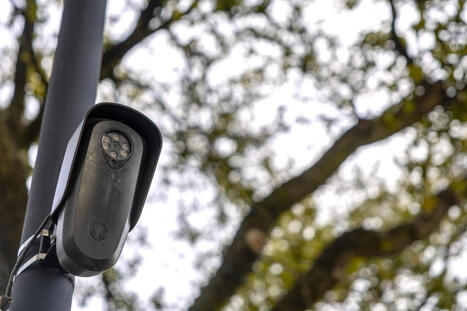
The LAPD, one of Flock's biggest government customers, is ending its contract with the company citing civil liberties concerns. The Los Angeles Police Department (LAPD) is reportedly ending its deal with Flock Safety, a surveillance company that helps law enforcement track vehicles using thousands of its license plate cameras placed across the United States. A senior LAPD official told news outlets, first reported by ABC7 and the Los Angeles Times, that the police department would allow its three-year contract with Flock to expire when it ends on Saturday. The department cited “serious concerns” around civil liberties and privacy. Flock’s cameras are operated by the Atlanta, Georgia-based company and not the LAPD.
The race to build more data centers in Texas is facing growing pushback. While some communities are approving massive projects, others are moving to restrict new developments over concerns about growth, resources, and local impact.
Stopping US data centers means little for the planet if they simply shift to Global Majority countries, write Vignesh Ramachandran and Inayat Sabhikhi. In the United States, inspiring and steadfast local organizing by communities against data centers has created an incredible moment of leverage against all-powerful tech companies. While hugely consequential, stopping data centers in the US means little for the planet if they simply shift to Global Majority countries. Thanks to the courage of local communities and formations such as the No Desert Data Center Coalition and Memphis Communities Against Pollution, the widespread local and global harms of data centers—such as over-extracting water resources, exacerbating air pollution, and intensifying long-standing environmental inequalities—have come to light. None of these consequences change if the data center is moved from Virginia to Visakhapatnam; but faced with domestic opposition, the US government and tech companies are pitching data center development to Global Majority countries, where governments are rolling out red carpets and favorable regulations, like in the United Arab Emirates. Brazil recently launched a proposal to attract data centers, South Africa just changed policy to put data centers on par with ports, and in India, the government announced further land allotments for Google’s flagship AI Hub data center.
|