"EPA is not the party that is negotiating and or mediating or refereeing that deal," the EPA administrator said.
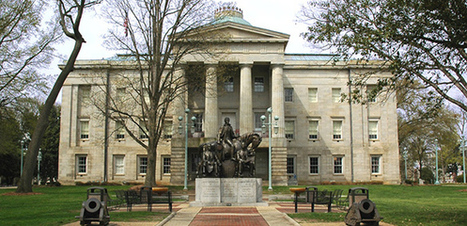
The Trump administration is not going to set nationwide environmental requirements or recommendations for the rapidly growing data center industry, EPA Administrator Lee Zeldin said Wednesday.
While there are technologies and practices that reduce air pollution and water usage, states and communities know what works best for them, Zeldin said at the POLITICO Energy Summit in Washington.
Mitch Wagner of Fierce Network recently published an article that claims that AI is blowing up 30 years of traffic network assumptions. He claims that AI traffic is smoothing the daily peaks and dips in network traffic that all ISPs are familiar with. While every ISP is a little different, any ISP that serves a lot of end-user customers expects traffic peaks in the evening, smaller peaks during the daytime, and very low levels of network traffic at night.
Network engineers have always paid close attention to the peaks, which were the main factor in determining the size of network connections. Nobody wants to have a network that restricts bandwidth when customers want to use it the most. The cable companies learned this lesson the hard way during the pandemic when customers suddenly needed to work and school from home and found the broadband connections unable to meet their needs, particularly in homes where more than one person wanted to use the network at the same time. Every network engineer I know can cite the busy hour, busy day, and busy week on the networks they manage.
A new report from the University of Maryland’s Philip Merrill College of Journalism explains how news organizations can begin to create journalism that is more actionable, useful and indispensable.
One of the most pressing problems weakening the local news ecosystem has little to do with revenue or technology. The problem is the journalism itself.
Much of what made newspapers, radio newscasts and TV news programs indispensable to people in the 20th century was not the journalism but what surrounded it. You couldn’t know what movie to see or TV show to watch without the listings, or how your stock performed without the agate. You couldn’t sell a bike or buy a house or rent an apartment without the classifieds; or be sure it might rain without the TV or radio weather forecast. Today, however, people can find nearly all that elsewhere.
Journalists, meanwhile, thought little about how their stories actually helped people live their lives or improve their communities. We journalists tended to dismiss that kind of work as a lower category of reporting. We called it “service journalism” and some of us even derided anything celebratory as “puff pieces.” Many journalists imagined their only true calling, and their highest, was to act as a watchdog looking for what was wrong — doing “accountability journalism” that monitored the powerful. In truth, however, this was a limited and constrained vision of the media’s role.
As journalism scholar James Carey noted two decades ago, “We developed a journalism that justifies itself in the public’s name but in which the public plays no role, except as an audience, a receptacle to be informed.” The public was a passive bystander in a dialogue between official institutions and reporters.
Investigators recovered two stolen trailers carrying $1.3 million in data center supplies, including copper wire and infrastructure equipment.
Americans don’t seem like they’d be particularly broken up if the data center craze gripping corporate America were stopped dead in its tracks. According to recent polling, data center hate is one of the few things capable of uniting people across the political spectrum. At this point, the only people who’d genuinely miss them—besides the tech CEOs insisting we need them for reasons they can’t explain—might be the thieves making a fortune stealing the mountains of copper and equipment headed to their construction sites.
The FCC has cleared the path for AT&T to end copper landline service for 184,000 Californians. Here's what the ruling means — and why POTS replacement in California can't wait.
Controversy erupted in a Maine Senate race, causing Democrats nationwide to go at each others' throat. Fights over oligarchy are becoming unavoidable.
Lots of news happened on the monopoly front. Bernie Sanders suggested nationalizing big AI firms, states look like they are preparing to try and block the Paramount-Warner merger, and the stock market fell sharply on Friday.
But this week, I want to start with a discussion about a deeply bitter political battle over the Senate candidacy of Maine Democrat Graham Platner, which is roiling the Democratic Party. I try to avoid discussing political races in BIG, but this one has broad implications for finance and market power.
Let’s start with some context. The emergence of monopoly in America is a fundamentally political phenomenon, based on choices made by policymakers over the last fifty years, from the late 1970s onward. The intellectual organizers of that era, on both sides of the aisle, argued the New Deal had been too rough on capital, and proposed deregulation, rolling back antitrust, and releasing the energies of Wall Street.
From Ronald Reagan to Bill Clinton, they constructed a heavily financialized society, and a set of dominant firms, led by high technology. Part of this order was a security model based on an alliance with Israel, American dominance of the Middle East, and increasing foreign elite investment in the U.S. stock market and dollar assets.
This system almost ended multiple times. The 9/11 attacks and the war in Iraq were shocks. But an even bigger moment occurred in 2007-2010, during the great financial crisis fostered by Too Big to Fail banks. At the time, there was an opportunity to reorder our philosophy of governance, to distribute power to ordinary people and away from Wall Street. The system had lost its popular legitimacy, no one believed that markets were free. But the Bush, and then Obama administrations, made a decision to double down, and, as Simon Johnson noted in 2010, build an oligarchy.
Just after that set of choices, the anti-monopoly movement was born. Lina Khan started doing journalism, Zohran Mamdani got into politics. And an angry bartender at a D.C. spot called the Tune Inn served drinks. Graham Platner was a veteran, having served four violent tours abroad, and loathed the banks. His bar was where Congressional reporters gathered, and discussed their views of politics, Congress, and power. He eventually returned to Maine, and began oyster farming.
Nation-states are blowing up satellites. Companies are launching megaconstellations of thousands of satellites. Dead rocket stages whiz around the planet for years. And yet, the International Space Station hasn’t been destroyed, payloads reach deep space unharmed, and we’re not trapped on Earth — at least not by debris. Either calamity is not upon us or we just don’t recognize it. Jon Kelvey takes the measure of Kessler Syndrome.
Irony isn’t just limited to life in 1-g. Last year, a discarded payload adapter from a European Space Agency Vega rocket was orbiting Earth as it had for the past 10 years, when radars showed it had company — a small number of new objects traveling with it. ESA concluded that a “hypervelocity impact” with a piece of debris had broken fragments from the adapter.
Here’s the irony: ESA was preparing to dispatch a spacecraft to the adapter to demonstrate a technique for removing such debris, the goal being to reduce the odds of collisions that would make the trash problem worse.
As Americans stew over the looming risk of job-stealing AI and data centers in their back yards, the feds are raising the alarm about a new category of threat, documents obtained by WIRED show.
More than 1,000 pages of unpublished reports from the Department of Homeland Security, FBI, and fusion centers obtained by WIRED show a national shift taking place to surveil this new and worryingly broad category of people and activities deemed an emerging threat.
This new effort follows President Donald Trump's National Security Presidential Memo 7, which instructs the Department of Justice to target anyone holding “anti-American,” “anti-Christian,” and "anti-capitalism” beliefs. Earlier this month, Trump's counterterrorism czar, Sebastian Gorka, released a public counterterrorism strategy claiming that left-wing extremists are one of the three top counterterrorism priorities facing the United States.
Elon Musk wants Starlink satellites to handle the majority of the world’s internet traffic
100,000 Starlink satellites would serve every place on Earth with multi-gigabit symmetrical throughput
This huge constellation would not only serve broadband but would also support AI
It’s a good thing the Federal Communications Commission (FCC) is planning to approve satellite licenses via an assembly-line process, because SpaceX has filed an application with the FCC, seeking to deploy its new Gen3 broadband constellation of up to 100,000 low-Earth-orbit (LEO) satellites.
The application states, “SpaceX’s Gen1 and Gen2 satellite systems already deliver high-speed, low-latency broadband to all American consumers and the planet’s most remote regions. A robust, resilient, and ubiquitous communications infrastructure with the capacity to handle the majority of the world’s internet traffic will allow all people to enjoy the benefits of our shared abundant future.”
Elon Musk certainly thinks big with language like: handling the majority of the world’s internet traffic.
In a world regulated by devices, humanity has become disconnected from the physical world—from stick-shift cars to postcards.
If gratification is so easy, why don’t you feel more gratified already? Because it’s gotten harder. It’s still easy to experience individual feats of gratification when you find them (or they find you). But the ordinary circumstances that once produced so much gratification have gradually receded. Unseen choices in design, business, and social life have made it harder for you to engage directly with the sensory world.
This problem snuck up on me, and probably on you as well. Slowly, over time, the world started withdrawing from us. Automation took over ordinary tasks. Things that used to have buttons suddenly did not. Basic activities got taken over by computers. I was slow to notice it happening, too. But once I did, I saw it everywhere and every day. I can’t tell you when the realization formed fully in my brain. But a turning point came on an unassuming day as I piloted my car home from work.
As Schrubbe rightfully claims, “the proposed revision is a major overhaul of these rules.”
Its comment period closes July 13, 2026.
Read together, the changes point one direction: they trade rules for discretion. Money that used to move by formula would increasingly move at someone's pleasure. Watch for that thread as you go.
AI is reshaping how mobile networks are used, and the networks that lead on traditional performance aren't always the ones ready for what comes next. Drawing on Speedtest Intelligence® data, this Ookla Research report benchmarks how prepared today's 5G networks are for the AI era, and where the gaps lie.
Meta Platforms said in a court filing on Monday that four states were seeking $1.4 trillion in penalties over accusations that the company designed its Facebook and Instagram platforms to addict young users.
Starlink's pricing model has been in flux, based on promotions and regions
As a private company, Starlink parent company SpaceX hasn't had good corporate communications to explain its pricing logic
But that will change this year after SpaceX becomes a public company
Just minutes ago, after Wall Street markets closed, SpaceX raised $75 billion in its initial public offering (IPO), valuing Elon Musk's company at around $1.77 trillion. It's the largest IPO in U.S. history.
Just days before, SpaceX made (another) change to how it charges for its Starlink broadband service. Instead of requiring customers to buy its hardware up front, it’s charging a $10 per month rental fee for new customers.
Now the network sits in bankruptcy court, and the only question that matters is whether anyone will buy the ashes.
Sprint, regulators needed to pretend the country would still have four wireless carriers, so they picked a successor. Dish Network, a satellite TV company run by Charlie Ergen, a former professional poker player who had spent two decades quietly hoarding spectrum licenses, would inherit Boost Mobile and its 9 million subscribers, buy divested spectrum, and build a brand new nationwide 5G network to challenge Verizon, AT&T, and T-Mobile.
Ergen built it. Between 2020 and 2025, Dish Wireless installed more than 144,000 radios on roughly 24,000 towers, covering over 80% of the US population. Court filings put the total investment at about $46 billion, more than $30 billion on spectrum and more than $16 billion on construction. And it was not a copy of anyone else’s network. Dish built the world’s first nationwide cloud native Open RAN network, with radios from Samsung and Fujitsu, software from Mavenir, and a core running in Amazon’s cloud. Engineers around the world studied it as the future of network construction.
Competitiveness in the global space economy should be a priority for the United States, but ineffective regulations weigh down the American commercial space industry. While last year’s executive order was a good start, additional regulatory reforms are necessary to address key roadblocks to U.S. space capabilities.
KEY TAKEAWAYS
The United States is in a fight for dominance of the global space economy, so any market share gains other countries make are losses for Americans.
Space is a dual-use industry, meaning advancements in space capabilities have both economic and national security benefits.
Congress and federal agencies must significantly reform the regulatory landscape governing the space industry to realize these benefits.
The Federal Aviation Administration needs to streamline the licensing process for launch and reentry vehicles and revise Part 450 rules to make compliance more straightforward for licensees.
The Federal Communications Commission should make rocket launch spectrum more readily available to accommodate the growing number of space operators and increased launch cadences.
Congress should ensure that there is better public-private coordination, additional funding, and more key personnel at the federal launch ranges to upgrade their infrastructure and enhance operational capacity.
Congress must revise environmental laws that leave rocket and spaceport permitting in limbo so space operators can innovate rapidly enough to maintain global competitiveness.
Last week I sat down with Jeff Lopez, the Director of the New Mexico Office of Broadband Access and Expansion. The last time I spoke with New Mexico was pre-BOB with the SBO under different leadership.
While new to the seat, Lopez is far from a newbie when it comes to both New Mexico and the telecom world. He’s been serving New Mexico in some capacity since 2012, most recently in a policy advisor capacity for US Senator Ben Ray Luján and before that with Senator Tom Udall. Since the pandemic, Lopez has advised Senator Lujan on all things broadband. He says that his work was instrumental in formulating both ARPA and BEAD.
So, if you’ve been paying attention and maybe even wondering why New Mexico has been at the forefront of broadband activity and leadership the past year, wonder no more. Lopez took the reins of the New Mexico SBO a year ago, in June.
If You Can’t Reach Saul, Give the OBAE a Shout
Officially called the New Mexico Office of Broadband Access and Expansion or OBAE, New Mexico’s SBO was established in 2021, shortly prior to the IIJA passing Congress.
“At the time, New Mexico had about 74% [100/20 Mbps] connectivity,” explains Lopez. “Since we’ve connected another 70K homes and the state’s connectivity is up to 90%.”
Disney says the FCC’s investigation of “The View” isn’t just about daytime TV — it could redefine political interviews across broadcast radio. ABC is accusing regulators of selectively targeting daytime and late-night television.
In comments filed with the agency, the network says the FCC is ignoring what it describes as the “vast landscape of talk radio, where candidates routinely appear without their opponents.” The company says that disparity raises broader First Amendment concerns that extend well beyond one television program.
Earlier this month rural electric and broadband cooperatives gathered in Washington, DC, for their fifth-annual Broadband Leadership Summit. The topic du jour was broadly unpopular changes made by the NTIA to the Broadband, Equity, Deployment, and Access program (BEAD) created by the 2021 infrastructure bill.
Cooperatives attending the event expressed concerns at a number of cumbersome new bureaucratic hurdles imposed by the NTIA. Most prominently discussed was the NTIA’s decision to impose new pole attachment regulations on cooperatives that have historically been exempt.
As ILSR has repeatedly explored, NTIA BEAD changes reduced oversight of deployment, lowered quality standards, stripped away requirements that the resulting taxpayer Internet access be affordable and equitably deployed, and redirected billions of dollars away from affordable fiber to the low-Earth orbit space ambitions of billionaires Jeff Bezos and Elon Musk.
That’s not sitting well with the cooperatives doing the heavy and costly lifting to bring affordable access into long-neglected rural communities.
Kathryn de Wit and Jake Varn of Pew recently wrote an article that cautioned that States Must Consider Future of Broadband Offices. They note that some states have a sunset date embedded in the enabling legislation that will mean the end of State Broadband Offices if state legislatures don’t act.
I’ve also been thinking about States have been busy in recent years overseeing broadband grants that were funded by the Capital Project Fund. Many legislatures augmented those grants with funding from ARPA for additional grant funding. Both of those programs are finished this year, other than a few waivers to extend funding until July of next year. Before these two programs, the States oversaw the use of CARES Act funding, which was used for a wide variety of purposes. A handful of legislatures also funded broadband grants out of the state coffers.
The conversation about AI infrastructure has been dominated by GPUs, data centers, and power density. Compute constraints get all the attention. However, the network is the quieter bottleneck once an AI system moves from a lab environment into production.
Most enterprise networks were designed for asymmetric, bursty, best-effort traffic. A web browser pulls data down. A spreadsheet rarely pushes much data up. In the past, this was acceptable because most workflows were asymmetric. Today's emerging AI workloads are much more symmetric.
Matt Conserva, New Hampshire Broadband Program Director, has been in telecom for most of his career, spending his most of his time with time with Sprint/Nextel/T-Mobile before landing in the state broadband office.
Conserva was gracious enough to tell me the story of broadband expansion in the granite state as well as present and future plans.
“I was approached in 2021 with helping to establish, as the deputy, the New Hampshire broadband office with ARPA federal funds coming in,” recalls Conserva. “I was the more technical of the two of us, the other didn’t stay long and I was quickly put in the lead post.”
The American Association for Public Broadband (AAPB) and the Institute for Local Self-Reliance (ILSR) Community Broadband Networks Initiative are continunig the year with another one of their increasingly popular and informative webinars.
Slated for July 7th from 12 to 1:00 pm ET, the livestream event – “Control + Shift + ALTernative: Building Community-Owned Fiber” – will be live on YouTube and feature an eye-opening conversation on building community-owned fiber.
The webinar will feature guest appearances by Pivot-Tech CEO Jim Cannon, General Manager of Port of Lewiston Scott Corbitt, Managing Director with Municipal Capital Markets Chris Perlitz, and Kendall County Administrator Christina Burns.
The webinar is open to community leaders, policymakers, broadband practitioners, and advocates nationwide
Picture Courtesy of Rise Above Research, CC BY-SA 3.0, Attribution-ShareAlike 3.0 Unported
Congress should advance policies, including the Broadband and Telecommunications RAIL Act, that help build the infrastructure America needs for the next century of innovation.
To get content containing either thought or leadership enter:
To get content containing both thought and leadership enter:
To get content containing the expression thought leadership enter:
You can enter several keywords and you can refine them whenever you want. Our suggestion engine uses more signals but entering a few keywords here will rapidly give you great content to curate.


 Your new post is loading...