In the marathon to bring universal high-speed Internet service to the most rural state in the nation, Vermont is heading into the last-mile stretch of the race with the finish line in sight.
In February, the Vermont Community Broadband Board (VCBB) announced that the National Telecommunications and Information Administration (NTIA) overseeing the federal Broadband Equity, Access, and Deployment (BEAD) program, had approved Vermont’s Final Proposal, unlocking $93 million of the state's nearly $229 million federal allocation.
Getting people connected – and keeping them connected – requires tackling affordability head-on, as Vermont broadband leaders are doing with the state’s CUDs, demonstrating that community ownership and affordability can go hand in hand.
After years of painstaking planning, public input, and navigating bureaucratic hurdles, it marked a pivotal moment – with the state's selected grant recipients cleared to begin deploying mostly fiber to the communities that have long been waiting for high-speed connectivity after decades of neglect from the Big Cable and Telecom providers.
State officials did not identify the ISPs that walked away as the Nebraska Broadband Office now attempts to find new service providers to connect nearly 1,700 locations.
Nebraska has reopened part of its BEAD bidding process after a few ISPs walked away from the state’s $45 million broadband deployment program. The Nebraska Broadband Office confirmed on May 22 that three ISPs declined to sign their subgrant contracts, citing changes to their business plans. State officials did not identify the providers, according to a report in the Nebraska Examiner. After weeks of questions, the office on Friday released the names of the seven companies that did sign, saying they will cover 88% of the roughly 14,000 BEAD‑eligible locations in the state. That still leaves about 1,700 locations still unserved.
I’m a Washington, D.C. communications policy wonk. I spend my days arguing in the abstract about the Broadband Equity, Access and Deployment Program. Earlier this month, in the far northeastern corner of Louisiana, I saw what those abstractions look like in reality. It isn’t pretty.
In Louisiana's poorest parish, a $6 million BEAD fiber award became a $150,000 Starlink contract under the Trump administration's rewritten program, leaving Lake Providence behind.
The town is Lake Providence, the parish seat of East Carroll Parish. Time Magazine called it “The Poorest Place in America” in the 1990s. Today, East Carroll holds the unhappy distinction of being the parish with the highest poverty rate in the state — an eye-popping 47.3% of residents live below the poverty line, against 18.8% statewide. Two of three working-age adults in the parish are jobless and the population is down 11% since 2010.
It is also deeply segregated. White families live in the larger colonial homes along the lake, and their children go to private school. Black families live in modest, sometimes decrepit houses that are literally on the wrong side of the tracks. Their children attend schools that look like they were built in the 1960s and only got air conditioning in the last 25 years.
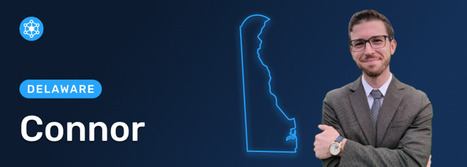
In a state where 60% of Fortune 500 companies are incorporated, Connor Perry (Executive Director of Delaware’s broadband office) is in the business of connecting every home with internet service.
“The internet is much more important today than it was
two decades ago when I would get frustrated with the performance of playing ‘Halo’ online,” says Perry. “Today the internet is everything… your education and employment opportunities, healthcare, and resources to start a business. So much more than it was from when I was just disgruntled that my Xbox didn't work.”
Perry tells me that his team of five is hyper-focused on not leaving ANY holes (unserved/underserved) as he and his team strive to reach universal connectivity. “If we say we want to deliver universal broadband service, let's do it, right.”
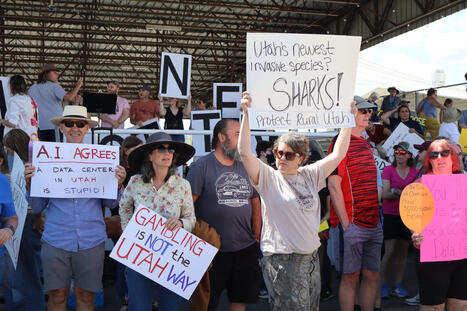
WASHINGTON — Higher electric rates? Massive data centers looming over neighborhoods? Ugly political fights over what to do about them? The future of data centers and their huge appetite for electricity is quickly escalating as a political flashpoint from coast to coast, moving from cities and states now to the nation’s capital. Bills are under debate in Congress. The Trump administration has weighed in. Lobbying is intensifying. The Environmental Protection Agency is proposing changes.
But finding consensus on how to proceed in D.C. is tough, with the industry spreading around millions to make its case, some lawmakers pushing a moratorium, and others looking for ways to ease the burden on Americans without halting development.
The concept of common carrier stretches back to the 14th century in English law, where businesses were granted the exclusive right to be in business as long as they were willing to serve everybody.
The term common carrier came into use to describe the obligation of businesses like coaches, ferries, etc. that were required to serve anybody who asked to be transported. The concept was carried over to businesses that were given a franchise to serve a local area, and businesses like blacksmiths and innkeepers were required to serve anybody who wanted service. This concept still applies to businesses today, like railroads, which are not allowed to selectively refuse to carry freight.
Carrier of last resort (COLR) is a version of common carriage that has been applied to businesses that operate large networks like telephone companies, electric companies, water companies, and gas companies. Federal or State rules have always required such businesses to serve anybody inside of the franchise area who requests service.
In exchange for being granted a franchise area, COLR for telephone companies has always come with specific obligations.
The trend of attorneys getting caught citing AI-hallucinated cases points to a broader problem: instead of checking AI’s work, people keep trusting it.
In April the Alabama Supreme Court sanctioned an attorney who had filed legal briefs laden with inaccurate citations generated by AI, including numerous references to cases that did not exist. After being informed he had cited a made-up precedent in one filing, the lawyer promised it wouldn’t happen again—but then cited “nonexistent cases at the end of the very next sentence,” as a justice noted in a concurring opinion. At least one other lawyer was sanctioned that week for continuing to file AI-hallucinated material after being warned not to do so.
A database maintained by Damien Charlotin, a senior research fellow at the Paris School of Advanced Business Studies (HEC Paris), lists more than 1,400 cases where courts have addressed AI errors in the past three years, including filings by attorneys and self-represented litigants. As recently as last fall, Charlotin says, the list appeared to be growing exponentially. It’s since leveled off to a steady flow of exasperated judicial rulings. “For the past two or three months, we have reached a plateau of around 350, 400 decisions a quarter,” says Charlotin, who has also created an AI-powered reference checker called Pelaikan.
AT&T sued California yesterday over the state’s refusal to let the carrier stop providing phone service to all potential customers in its wireline network territory. AT&T is also asking the Federal Communications Commission to declare that California cannot enforce its rules and to let AT&T stop providing service to about 199,000 phone customers.
“California requires AT&T to spend $1 billion each year to maintain a century-old telephone network that almost no one uses,” AT&T said in a lawsuit filed in US District Court for the Southern District of California. “The copper wires that once served every home now serve just three percent of households in AT&T’s California territory, with consumers fleeing every day to modern broadband services that are more affordable, reliable, and energy-efficient.”
In June 2024, the California Public Utilities Commission (CPUC) rejected AT&T’s request to eliminate the Carrier of Last Resort (COLR) obligation that requires it to provide landline telephone service to any potential customer in its service territory. AT&T has said it’s received relief from COLR obligations in 20 of the 21 states in its wireline service territory, all except California.
Pontiff calls for ‘disarming’ of artificial intelligence and apologises for church’s delay in condemning slavery.
Pope Leo has denounced the “culture of power” driving the rapid rise of artificial intelligence while warning that the technology must be subject to the “most rigorous” ethical constraints as it infiltrates everything from work to war.
In his encyclical – the first major text on safeguarding humankind of his papacy – he also apologised for the Catholic church’s long delay in condemning slavery, describing it as “a wound in Christian memory”, and spoke of the “new forms of slavery” due to the digital economy.
Pope Leo issued a sweeping declaration Monday on the risks of artificial intelligence in the form of a papal encyclical that runs more than 42,000 words. Leo presented it alongside Christopher Olah, a co-founder of the AI company Anthropic.
The encyclical calls for government regulation, retraining for workers, better education for students, protections for children and safeguards to ensure that humans — and not AI models — will make decisions on the use of weapons.
As Americans stew over the looming risk of job-stealing AI and data centers in their back yards, the feds are raising the alarm about a new category of threat, documents obtained by WIRED show.
In the wake of attacks on CEOs, a nationwide protest movement targeting data centers, and increasing concerns about AI job replacement, federal intelligence agencies and domestic law enforcement are circulating reports with a new domestic target in mind: anti-technology extremists.
More than 1,000 pages of unpublished reports from the Department of Homeland Security, FBI, and fusion centers obtained by WIRED show a national shift taking place to surveil this new and worryingly broad category of people and activities deemed an emerging threat.
New data show bipartisan opposition to government leaning on TV networks and universities.
When CBS’s The Late Show with Stephen Colbert broadcasted its last episode, it completed a pattern that has become distressingly familiar: an institution under government regulatory pressure publicly folds, offering financial cover for what most observers call a political decision.
What’s missing from that pattern? Any evidence the public wanted this outcome. In fact, the evidence shows the opposite.
Over the past few years, leaders in the federal and many state governments have called on late night hosts like Colbert and ABC’s Jimmy Kimmel to be fired, namely for their jokes about President Trump. President Trump advised CBS that Colbert should be “put to sleep” and called on ABC to fire Kimmel. CBS’s canceling of The Late Show came days after Colbert joked about Paramount’s $16 million lawsuit settlement with Trump and was reported to be related to the proposed merger of its parent company, Paramount, with Skydance Media.
New data from a national sample of Americans collected by Wisconsin Communication Elections Study, conducted by the Center for Communication and Civic Renewal that I direct, reveals what the public thinks.
Join us for our very first episode of Unbuffered Live! Host Christopher Mitchell will be joined by guests Doug Dawson (CCG Consulting), Heather Mills (ITG) and Draw Garner (Benton Institute for Broadband and Society) to talk about the intersections of tech, Internet access, and policy.
BEAD delays, LEO satellites, permitting, affordability, and why mobile networks may be getting worse.
They begin with a discussion about Amazon’s Leo service, efforts to preempt local government “to encourage more investments in Internet access,” and the realities of mobile wireless performance after Chris spent weeks traveling around the country.
VATICAN CITY (RNS) — Pope Leo XIV took direct aim at the power of Big Tech in his first encyclical on Monday (May 25), warning that artificial intelligence risks widening inequality, weakening democracy and undermining what it means to be human.
The document, titled "Magnifica Humanitas" (Magnificent Humanity), frames AI as the new industrial revolution and makes an appeal to "disarm AI" by removing it from military and economic interests, subjecting AI companies to stricter state and international regulations and inviting the broad participation of individuals and communities in shaping the future of this rapidly developing technology.
"Magnifica Humanitas" tackles the social, economic, ecological and political challenges associated with artificial intelligence.
In the marathon to bring universal high-speed Internet service to the most rural state in the nation, Vermont is heading into the last-mile stretch of the race with the finish line in sight.
In February, the Vermont Community Broadband Board (VCBB) announced that the National Telecommunications and Information Administration (NTIA) overseeing the federal Broadband Equity, Access, and Deployment (BEAD) program, had approved Vermont’s Final Proposal, unlocking $93 million of the state's nearly $229 million federal allocation.
Getting people connected – and keeping them connected – requires tackling affordability head-on, as Vermont broadband leaders are doing with the state’s CUDs, demonstrating that community ownership and affordability can go hand in hand.
After years of painstaking planning, public input, and navigating bureaucratic hurdles, it marked a pivotal moment – with the state's selected grant recipients cleared to begin deploying mostly fiber to the communities that have long been waiting for high-speed connectivity after decades of neglect from the Big Cable and Telecom providers.
The most valuable AI asset in your community may already be buried beneath your streets.
Or is it? Because if it's coaxial your not ready for AI.
That distinction could become one of the most important factors determining which communities, properties, and regions participate in the next wave of digital infrastructure growth.
Many property owners assume they are prepared for the future because telecommunications infrastructure already exists within their communities. They see cable networks, utility corridors, and broadband services and assume the foundation is already in place. But the infrastructure requirements of the AI era are fundamentally different from those of the cable television era.
What happened when I sat down to think clearly about my county’s industrial future — and the AI conversation pattern that produced an answer.
The county I live in is the fiber optic capital of America. It’s also fifth in the nation for percentage of workforce in manufacturing — 30.4%, more than three times the national average. It hosts Apple, Google, Meta, and soon Microsoft data centers. And it’s currently in a severe drought, with a growing local movement to stop more data centers from being built here.
All of that is true at the same time. And the conversation about what to do next isn’t being helped by either the panic version (“data centers are killing us”) or the dismissal version (“technology marches on, get out of the way”). The real questions are sharper than either side is asking. This is an attempt to ask better ones, and to show you a way of using AI that produced answers I couldn’t have gotten any other way.
The carrier continues to count the cost of running its copper network in the state.
AT&T has announced it will invest $19 billion in California to bolster its fiber and wireless networks in the state by the end of 2030.
The investment will support the carrier's ambitions to help phase out legacy copper services in California.
According to AT&T, the telco is investing $3bn more each year in the next five years (2026-2030) than the previous five (2021-2025) – reaching $35bn invested over 10 years (2021-2030) in California’s network.
It comes on the same day that AT&T has asked the Federal Communications Commission (FCC) for permission to discontinue traditional phone service in parts of the state where it has faster, more reliable services, reports Reuters.
The shift continues for the traditional telecommunications companies away from copper based voice and DSL data services to wireless and fiber. One of the road blocks that appears to be loosening are the Carrier of Last Resort (COLR) rules for carriers.
COLR rules are currently set at the state level (not the Federal Communications Commission) and regulate that every American has access to telephones service along with other utilities like electricity and water. A number of states have either passed legislation or are considering legislation that would end traditional landline rules and allow these services to be replaced by wireless (cell) or Voice over Internet Protocol (VoIP) services. Bills have emerged in Mississippi, Kentucky, New Jersey and California. Ohio's Senate Bill 271 is a good example of legislation currently being reviewed by lawmakers to cut traditional landline services.
Opponents to these changes argue landline elimination could increase phone bills, reduce quality of service and impact 911 service. AARP Ohio State Director Bill Sundenmeyer is quoted in a recent post at Community Broadband Networks saying:
The definitive story of how Claude Code and OpenClaw kicked off computing’s biggest transformation possibly ever.
“Hi, my name is Peter, and I’m a Claudeholic.”
It was August 2025 and Peter Steinberger was addressing a meetup in London called Claude Code Anonymous. Steinberger and some fellow addicts had arranged the event to network with people like themselves—techies swept up by coding tools such as Anthropic’s paradigm-busting Claude Code. “I dedicate pretty much all my waking time to this, yet it doesn’t feel enough,” he told the gathering in a cozy, brick-walled room.
A few months later, Anthropic released a new version of Claude Code, and the ranks of Claudeholics exploded. Called Opus 4.5, it could handle more complicated programming tasks, retain much more in its memory, run for many hours on end, and manage a team of AI subagents. Anthropic has what it describes as a “notoriously difficult” take-home exam for prospective engineering hires; in a head-to-head comparison of those people and its models, Anthropic claimed that Opus 4.5 “scored higher than any human candidate ever,” which “raises questions on how AI will change engineering as a profession.”
Countless coders spent the holidays in basements and dens, madly trying out this new toy that let them build software as if they’d unleashed a hundred clones. Or unlocked superpowers. “It feels like becoming Spider-Man,” one told me.
The Federal Communications Commission's Wireline Competition Bureau seeks comment on a petition filed by AT&T Services, requesting full forbearance from the eligible telecommunications carrier requirements within its California service territory.
For further information regarding this Notice, please contact Heidi Lankau Heidi.Lankau@fcc.gov or Michael Alonso Michael.Alonso@fcc.gov of the Telecommunications Access Policy Division, Wireline Competition Bureau.
The Federal Communications Commission's Wireline Competition Bureau seeks comment on a Petition for Preemption and Declaratory Ruling filed by AT&T Services (AT&T).
In its Petition, AT&T requests that the Federal Communications Commission declare that “any California law or regulation that interferes with or otherwise conditions AT&T’s ability to discontinue [Plain Old Telephone Service (POTS)] as authorized by the FCC is preempted,” following the FCC’s March 2026 Network and Services Modernization Order.
BusPatrol plans to scan the license plates of all vehicles the buses drive past, and then let law enforcement search that data. The plan would essentially turn school buses into roaming surveillance vehicles.
(UI) — While there are many issues to consider when it comes to utility construction, the main goal is clear and shared by all stakeholders involved in the process. Safety is paramount and protecting underground facilities prior to and during excavation is fundamental, especially when it comes to installing, maintaining and repairing underground facilities.
Excavation contractors put safety first and preventing damages to underground facilities during excavation activity is fundamental to their work. Contractor organizations have consistently supported policies that reflect shared responsibility among all stakeholders and promote four principal pillars of the damage prevention process:
LAS VEGAS (AP) — Nevada's largest utility says it will need three times the electricity required to power Las Vegas just to handle proposed data centers — and it probably can't do that without fossil fuels.
That means the utility could miss Nevada's clean energy targets requiring 50% renewable power by 2030.
"I can't remember a time in the history of the industry where we've seen as much interest in adding load, which is primarily driven by data centers," said Shawn Elicegui, senior vice president of regulatory and resource planning for NV Energy, which provides electricity to 90% of the state.
The Trump Mobile T1 Phone was touted as a ‘Made in the USA’ telecom disruptor, but those claims started to shift after more than half a million people paid $100 deposit to buy one.
For The National, CBC’s Eli Glasner breaks down the phone saga and how it fits into a larger pattern of Donald Trump profiting off his presidency.
The National is the flagship of CBC News, showcasing award-winning journalism from across Canada and around the world. Led by Chief Correspondent Adrienne Arsenault, our team of trusted reporters helps you make sense of the world, wherever you are.
To get content containing either thought or leadership enter:
To get content containing both thought and leadership enter:
To get content containing the expression thought leadership enter:
You can enter several keywords and you can refine them whenever you want. Our suggestion engine uses more signals but entering a few keywords here will rapidly give you great content to curate.





 Your new post is loading...