Your new post is loading...
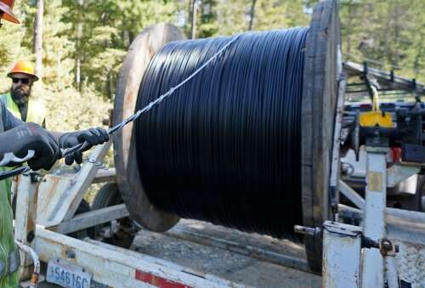
There is a glimmer of hope that ISPs that won state grants that were funded from the Capital Project Fund (CPF) can get an extension of six months to complete grant construction. The Capital Project Fund was created by the 2021 American Rescue Plan Act (ARPA) and provided almost $10 billion to states and territories for making broadband-related grants. The program was administered by the Department of the Treasury, which gave block grants to States. Each State then made awards through State Broadband grant programs to ISPs. I’ve seen estimates that CPF grants have funded projects to bring new broadband infrastructure to roughly 2 million rural passings. The grants could also be used to purchase devices like laptops and computers for qualifying households. The final approved use of the funds was to construct or improve physical community hubs where citizens can remotely access work, education, and telehealth services.
Lake Zurich, IL residents and businesses will be getting another choice for high-speed broadband internet services. The village board Monday approved an agreement allowing Ezee Fiber Texas LLC to use the public rights of way to install a villagewide fiber optic network in town. Ezee Fiber joins i3 Broadband in receiving the board’s backing for installation of a fiber optic network. “We certainly welcome the opportunity of providing the residents with a choice of higher speeds to take advantage of all the things that are on the internet, which consumes a tremendous amount of bandwidth,” said Assistant Village Manager Michael Duebner.
SpaceX’s IPO filing reveals a $1.6 trillion bet that Starlink can bypass terrestrial networks, and defy the laws of telecom economics. The financial press is currently tying itself in knots trying to reverse-engineer the math behind SpaceX’s proposed $1.75 trillion IPO valuation. The short answer? The math does not work. Not on today’s fundamentals, anyway. At a blistering 94x price-to-sales multiple, you are not buying a rocket company; you are buying a religious belief in a $28.5 trillion Total Addressable Market according to SpaceX's filing.
I used to write a lot more about "seniors getting seniors online" and other tools to maximize use of broadband. So when I saw this project happening near my neighborhood in St Paul I had to share. I can see the application in every neighborhood or small town as a way to bring seniors (or in this case, sophomores) and seniors together and maybe create a unique tourism tool. MinnPost reports…
Massive tech companies like SpaceX and OpenAI look to be finally going public. They’re expected to find a lot of pent-up demand from investors. SpaceX lost $4.9 billion last year. Elon Musk holds 85% of the voting power, and he’ll be awarded more shares if the company successfully colonizes Mars. Those are just a few of the revelations from the SpaceX S-1 prospectus, the first financial look under the hood of the rocket company which also owns the social media platform X and xAI, before it goes public next month. Pricing is yet to come, but it’s expected to be the biggest initial public offering in history. At least until the next mega-IPO, OpenAI, which is reportedly aiming to go public in the fall. Anthropic is expected to follow. When the web browser Netscape went public in 1995, it was barely a year old. Wall Street went bonkers. That kicked off the dot-com boom, said Jay Ritter, an economist at the University of Florida. “There were lots of startups that went public … at a very early stage, where it wasn't at all clear who the survivors were going to be,” he said.
The city of Longmeadow, Massachusetts has failed to get a two-thirds voting majority necessary to move forward with its plan to deploy affordable fiber to every city resident. The vote comes after local telecom monopolies were caught funding an out of town dark money nonprofit to sow doubt about the benefits of the project in the minds of the local electorate. Longmeadow officials were exploring whether to take out an $8.6 million loan for the initial phase of the $27 million fiber project, paid for by a property tax increase of $97 per year. The city is just the latest Western Massachusetts municipality to explore the option after decades of dissatisfaction with regional monopolies Comcast and Verizon.
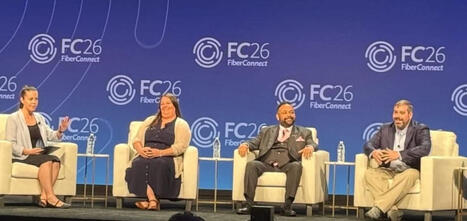
ORLANDO, May 20, 2026 — AI data centers require power at a scale that is straining American infrastructure, and the communities where that power must be deployed are pushing back. A panel Wednesday examined how distributed data center architecture, connected by fiber, could resolve both problems simultaneously. Seventy percent of Americans oppose having an AI data center built near them, more than the 53 percent who oppose a nuclear plant nearby, said Sachin Gupta of Centranet, the Stillwater, Oklahoma-based fiber broadband provider. The figures come from a Gallup poll published this month.
A love letter to 2004 - and a revenue recovery notice. Shrek 2 was in theaters. Usher's "Yeah!" was on every radio. And somewhere in a carrier back office, a finance team was staring at a spreadsheet watching per-minute revenue evaporate in real time. You remember 2004. It was the last year you could charge $0.025 per minute for a phone call and have a customer pay it without blinking. Then came unlimited bundles, VoIP, and two decades of margin compression that turned the thing your entire business was built on - the voice call - into a rounding error. The industry didn't lose the minute. It lost the value attached to the minute. Here's what nobody told you back then: the value was never in the connection. It was in the conversation. And for twenty years, every single one of those conversations has been happening on your network, through your infrastructure, billed on your invoice - and walking out the door as worthless data. That's the part that should sting. What $0.025 Per Minute Looks Like Today Your SMB customers are paying for Tresic at roughly $0.025 per conversation minute. Not for the call. For what was said during it. Same number. Completely different value exchange.
Stimulus Broadband, a leading provider of high-speed internet across Nevada and the Southwest has announced the expansion of its fiber internet network to Indian Springs, Nevada. Thanks to a grant funded by the Nevada State Local and Fiscal Recovery Fund (SLFRF), this project will bring fiber internet service to a community that has never had access to cable or fiber internet. Through approximately 16 miles of fiber infrastructure, the expansion will make service available to more than 400 addresses. The project will bring first-time fiber access to 400 addresses in rural Indian Springs, Nevada, according to Stimulus Broadband.
Great Plains Communications (GPC) announced Tuesday it has reached a definitive agreement to acquire the Nebraska business of Fastwyre Broadband, the regional internet provider operated by American Broadband Holding Company. The deal covers Fastwyre’s operations in more than two dozen Nebraska communities and is presented as a bid to broaden GPC’s fiber network across the Midwest. GPC has agreed to acquire Fastwyre Broadband's Nebraska operations in communities like Blair, Fremont, Wayne, Bellevue, and Winnebago.
Nextlink said it activated its first wireless tower to be funded by BEAD program. Will deliver FWA services to 104 locations in Louisiana. #pressrelease
The Fiber Broadband Association recently published an interesting article talking about broadband’s role in precision agriculture. For those not familiar with the term, precision agriculture is a data-driven, technology-enabled management strategy that uses satellite data and IoT sensors to optimize inputs like water, fertilizer, and pesticides to improve efficiency, profitability, and sustainability. It also includes autonomous machines like tractors, sprayers, combines, and drones to perform tasks like planting, weeding, and spraying. The article argues that the FCC’s definition of bandwidth, at 100/20 Mbps, is not fast enough to support a rigorous precision agriculture application. The FBA’s Agriculture Working Group recommends that a speed of at least 100/100 Mbps is needed for precision agriculture. The faster speed is due to the real-time feedback needed by sensors and self-driving equipment. The article rightfully recognizes that the only two technologies that can support those speeds are fiber and HFC networks that have upgraded upload speeds.
NextEra Energy, headquartered in Juno Beach, FL, is seeking to acquire Dominion Energy, headquartered in Richmond, VA, which could bring SC customers under one of the world's largest electric companies. The combined company would become the world’s largest regulated electric utility with about 10 million customers and 110 gigawatts worth of power on its system, executives said in a joint statement. And they have another 130 gigawatts worth of demand from large energy users in their pipeline. “Electricity demand is rising faster than it has in decades,” NextEra CEO John Ketchum said in a statement. “Projects are getting larger and more complex. Customers need affordable and reliable power now, not years from now. We are bringing NextEra Energy and Dominion Energy together because scale matters more than ever— not for the sake of size, but because scale translates into capital and operating efficiencies.”
|
Researchers at the company found representations inside of Claude that perform functions similar to human feelings. Claude has been through a lot lately—a public fallout with the Pentagon, leaked source code—so it makes sense that it would be feeling a little blue. Except, it’s an AI model, so it can’t feel. Right? Well, sort of. A new study from Anthropic suggests models have digital representations of human emotions like happiness, sadness, joy, and fear, within clusters of artificial neurons—and these representations activate in response to different cues. Researchers at the company probed the inner workings of Claude Sonnet 4.5 and found that so-called “functional emotions” seem to affect Claude’s behavior, altering the model’s outputs and actions.
Commencement AI booing reflects growing class revolt now tightly tethered to AI -- whether the technology's biggest proponents like it or not. You may have noticed that anger at AI is white hot right now. For a bunch of reasons I've already discussed. It's particularly and unsurprisingly hot among young Americans, who can't find jobs, homes, health care, or much of anything else to give them a leg up in a country hollowed out by historic levels of corruption.
They're being told, usually by people who already have theirs, that they should be more excited about the latest evolutions in software automation. "Why aren't you more interested in nuanced conversations about the latest evolutions in software automation," fans of the latest evolutions in software automation will ask.
As if the world isn't on fire.
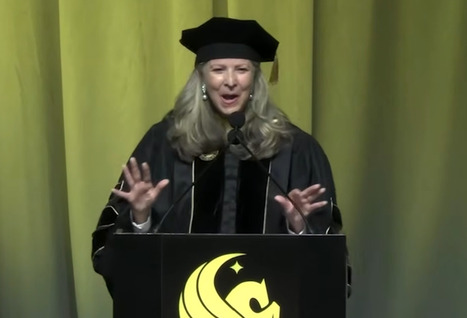
It's all starting to bubble over. A few weeks ago a speaker giving a commencement address at the University of Central Florida was loudly booed after she proclaimed that improvements in software automation should be viewed as the "next industrial revolution." From the video, Orlando-based executive Gloria Caulfield was clearly surprised at the level of anti-AI animosity demonstrated by the class of 2026.
UPDATE 5/20: The FCC today voted 3-0 to consider revamping rules regarding $1.6 billion in subsidies to rural ISPs. The vote was 3-0, though Democratic Commissioner Anna Gomez cautioned against relying too heavily on satellite providers like Starlink to handle rural broadband. Original Story:
SpaceX is telling the Federal Communications Commission to consider ending a $4.5 billion fund that subsidizes voice and broadband in rural areas, arguing that Starlink has solved the connectivity gap by offering fast speeds at competitive rates.
“The Commission’s universal service programs must adapt to a reality where the long-standing problem of high-speed broadband network access has effectively been solved, rendering most legacy High-Cost support mechanisms redundant,” the company wrote in the Wednesday letter. The FCC is moving to modernize the High-Cost program under the Universal Service Fund, which subsidizes access to voice and broadband services. The High-Cost program specifically distributes funding to telecommunications providers in rural and remote areas to not only deploy their services but also keep prices down for local consumers. SpaceX tells the FCC to wind down a program that offers subsidies to ISPs serving rural areas since access 'has effectively been solved' with Starlink. Detractors aren't sure that's true.
On May 1, 2026, Crown Castle announced the close of an $8.5B transaction in which it sold its Fiber Solutions business to Zayo Group Holdings Inc. and its Small Cell business to Arium Networks. (Hereinafter, Zayo and Arium will be referred to collectively as “Transferees.”) Details of the deal, as explained by Crown, can be found here. This paper seeks to offer suggestions on what local governments’ legal, real estate or public works departments ought to consider as this transaction rolls out across the country. We believe the bottom line is that local governments must review the various governing documents they have entered into with Crown to know their rights and what they may demand before approving the proposed transfers. Further, it is our recommendation that local governments resist accepting blanket transfer approvals that have been or will be forwarded by the Transferees.
I’m hearing an increasing number of stories from rural ISPs and telcos about voice calls that are not completing to their customers. People place a call to customers on a rural network and give up when they don’t hear the phone ringing at the receiving end of the call in a reasonable amount of time. The industry term for this phenomenon is an abandoned call, which generally occurs when the caller assumes the call didn’t work. You might assume that this means that something is wrong with the PSTN (public switched telephone network) that is stopping calls from being completed. That would be a huge problem, and one that would also affect calls made to urban areas. From what I’m hearing, this is strictly a rural problem. The telephone environment has changed a lot over the years. Telephone calls today originate from a dizzying array of different sources. While people can still make phone calls from landline telephones and cellphones, they can also place calls from numerous online platforms, applications, and devices.
Consumer and civil rights groups last week told the Trump administration that their proposed “reforms” of the FCC’s Lifeline program would undermine efforts to ensure equitable, affordable access to the internet for all Americans, and are based on lies about immigrant fraud. Joint comments to the FCC filed this month (first spotted by Light Reading) by consumer groups including Public Knowledge and the National Digital Inclusion Alliance (NDIA) added to the chorus of criticism of the proposed changes, pointing out that the biggest abusers of the Lifeline program aren’t immigrants and poor minorities, but private companies.
Trump Mobile is leaking customers’ email and home addresses but has not responded to people alerting the company of the data exposure, according to two YouTubers who said they verified that their leaked data is authentic.
SpaceX has finally made the contents of its IPO filing public, weeks ahead of what is expected to be the largest IPO ever and one that will make Musk the CEO, CTO, and chairman of the board. The hefty filing, posted after markets closed Wednesday, shows a company that has developed far beyond its initial pursuit of reusable rockets — although its long-term mission to create a multiplanetary species remains intact. SpaceX is now a technology conglomerate working on satellites and AI and has become one of the world’s most valuable private companies. When it goes public later this year on the Nasdaq exchange, it will become one of the most valuable publicly traded companies. (Nvidia currently holds the crown with a market cap of $5.4 trillion.) SpaceX has chosen the ticker “SPCX” for the listing.
Pavlov Media is expanding its fiber-optic Internet network in Matteson, Illinois, aiming to bring fast and reliable connectivity to local homes and businesses. Construction is already underway, with the project focused on enhancing the area’s digital infrastructure. The expansion, announced this week, reflects Pavlov Media’s ongoing commitment to investing in Illinois communities through state-of-the-art broadband technology, the company says. The Matteson project is being managed by Campus Communications Group (CCG), Pavlov Media’s broadband infrastructure construction division.
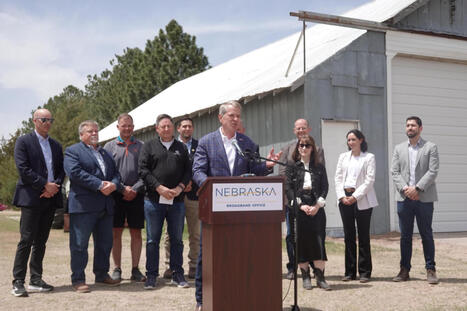
Vistabeam has connected the first household in the nation under the BEAD program, the provider announced last week in Nebraska. A small household near Ogallala, Nebraska became the first in the nation to be connected under the federal Broadband Equity, Access, and Deployment (BEAD) program, Vistabeam announced Thursday, a step company leaders and state officials hailed as a milestone for rural internet access. Vistabeam, a hybrid fiber and fixed-wireless provider based in Gering, said the Ogallala home now receives speeds exceeding 800 megabits per second download and 200 Mbps upload, well above BEAD’s 100/20 Mbps baseline, after deploying next-generation fixed wireless equipment rather than waiting for a fiber build. “BEAD is officially here, and we’re making history today,” Vistabeam CEO Matt Larsen said, adding that the company’s wireless capability allowed the connection to be completed “in a matter of days, not years.”
Modern democracies have long recognized that commercial media are incapable of providing for all of society’s informational, cultural, and educational needs. For most healthy democracies, this systemic market failure has necessitated maintaining robust public media systems.
There are often traffic jams and long wait times for ships to cross the Panama Canal, but a new rail system could help with some of those issues.
|