Your new post is loading...
TAMPA, Fla. — Cowboy Space has filed plans with the Federal Communications Commission for a 20,000-satellite “Stampede” orbital data center constellation, shortly after raising $275 million to develop rockets whose upper stages would serve as the computing platforms.
Lots of monopoly-related news, as usual. Inflation picked up according to the official numbers, kick-ass anti-monopolist Rohit Chopra got a powerful job as a California regulator, and the Supreme Court took a step towards re-regulating trucking. Before getting to that, I want to observe a pick-up in rage from the wealthy, as they begin to hear the public disdain for what they stand for. Let’s start with something that has been happening to a few commencement speakers at college graduations. They bring up artificial intelligence, and get booed by the students getting their diplomas. It’s a spontaneous expression of frustration and disrespect for the powerful, by the next generation. This kind of move stings; public speaking is difficult, and having people reject you en masse stays with you. And it even happened to former Google CEO Eric Schmidt.
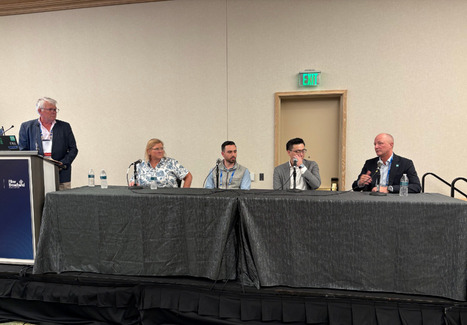
ORLANDO, May 17, 2026 — A new industry standards body launched in February to solve the integration bottleneck blocking open access fiber, a model in which a single network owner leases infrastructure to multiple competing internet service providers, from scaling in North America. A 165-member standards body aims to make it cheaper and faster for internet providers to share fiber networks across North America. AT&T and COS Systems, a Swedish internet access software company, are co-leading the effort.
OpenAI is once again reorganizing its executive ranks as part of its effort to unify ChatGPT and Codex into one core product experience. OpenAI told staff on Friday that it would reorganize the company as part of an ongoing effort to unify its product offerings, WIRED has learned. OpenAI cofounder and president Greg Brockman will now lead the company’s product strategy, in addition to his work on AI infrastructure, OpenAI confirms to WIRED. Brockman was previously assigned to oversee OpenAI products on an interim basis while the CEO of AGI deployment, Fidji Simo, was on medical leave; the change is now official. “We’re consolidating our product efforts to execute with maximum focus toward the agentic future, to win across both consumer and enterprise,” Brockman said in a memo to staff seen by WIRED. Brockman added that OpenAI’s products are naturally converging, and that the company has decided to merge ChatGPT and Codex into one unified experience.
On May 14, 2026, the Federal Communications Commission officially approved Verizon’s $1 billion acquisition of spectrum assets from U.S. Cellular. This transaction enables Verizon to integrate key airwaves into its existing infrastructure to enhance network capacity and performance across the United States. The deal is a strategic move to address increasing data consumption and ensure the immediate utilization of national wireless resources. Strategic Integration of Wireless Assets
The approval marks a significant phase in the consolidation of the American telecommunications sector. By acquiring these licenses, Verizon intends to deploy the spectrum immediately to improve service reliability. Regulatory leaders have emphasized that transferring these assets to major carriers prevents airwaves from sitting idle, ensuring they contribute to the national digital infrastructure.
The FCC reports... Today, FCC Chairman Brendan Carr announced that the Commission has sent three Letters of Inquiry to Minnesota educational institutions to investigate potential misuse of federal funds disbursed through the E-Rate program. This marks the latest effort by the Commission to combat fraud, waste, and abuse in Universal Service Fund (USF) programs.
The West Central Tribune reports... It’s official. The city of Willmar is on its way to becoming a “gig-city” following the groundbreaking for Willmar Connect — a city-owned, citywide broadband network. “Willmar Connect will help ensure that Willmar is connected and in a position of success for generations,” said Willmar Mayor Doug Reese. “Years from now, we will look back on today as the moment Willmar took control of its digital future and invested boldly in the next generation.”
You're invited to join a private podcast (hosted on Transistor.fm). In this exclusive bonus episode of Master Plan, former Attorney General Edwin Meese speaks with David Sirota and Jared Jacang Maher for a rare interview featured in Episode 4 of The Kingmakers. Meese reflects on the origins of the “unitary executive” theory, Iran-Contra, war powers, the Reagan Justice Department’s push to expand presidential authority, and his recent departure from the Heritage Foundation.
[Click here] for a transcript and to view the archival documents mentioned in this interview.
Plus, Wi-Fi is expanding in New York homeless shelters, Vermont nonprofits gain access to low-cost Internet service, a new law aims to support rural broadband, a report examines digital accessibility, and more. This week in “What’s New in Digital Equity” — our weekly look at government digital equity and broadband news — we have a number of interesting items, which you can jump to with the links below:
Between early wired networks and today’s fiber optics sat a system of microwave relay towers transmitting information from coast to coast across the United States. Built in the early 1950s, this line-of-sight network spanned the continent using zig-zag patterns to avoid signal overlap. It conveyed phone conversations and television signals from the era of the Kennedy assassination through the resignation of Nixon. The towers were generally spaced 30 to 40 miles apart and can be hunted using old official charts or this unofficial Google Map. It was the largest network of its kind when it opened, and unique in relying on microwaves rather than transmission wires.
Roger Entner, of Recon Analytics, published an article in Light Reading that challenges the paradigm of the benefits of convergence. Convergence has most recently come to mean bundling broadband and cellular service. There is a widespread industry belief that ISPs need to have a cellular product to thrive, and cable companies have added a cellular product in the name of convergence. Entner says there is only one kind of convergence that makes a real market difference – fiber ISPs with a cellular product do far better than any other kind of convergence.
Further expands American wireless leadership by boosting coverage and connectivity for underserved communities in remote regions, through joint efforts including enhanced satellite capacity. - The Joint Venture (JV) will accelerate American leadership in next-generation direct-to-device (D2D) communications by using satellite-based technologies to address coverage gaps, especially in unserved and underserved communities. This initiative will help America extend its global leadership in wireless communications technology and services by delivering exceptional, resilient connectivity and creating the best and most diverse ecosystem for wireless and satellite products and services
- The JV will extend mobile connectivity for wireless customers through joint investment in using satellite-based, direct-to-device (D2D) technologies to supplement coverage gaps
- Customers will have a more seamless experience, especially in remote areas where traditional cell networks have limited or no service
- Collaborative approach will expand customer choice by bringing together IP and terrestrial spectrum and creating industry specifications to enable a more seamless experience for customers and satellite operators
AT&T, T-Mobile, and Verizon have an agreement in principle to form a new JV which aims to end wireless dead zones in the U.S., including in rural areas, by pooling limited spectrum resources to increase capacity, improve the customer experience, and help satellite providers reach more customers through a unified platform. The JV remains subject to negotiating definitive agreements between the parties and satisfying customary closing conditions. Collectively, satellite services function as supplementary components to the core wireless services customers depend on. By collaborating on this JV, the partners will be able to enhance convenience for their customers, enable competition and foster innovation and growth within the industry.
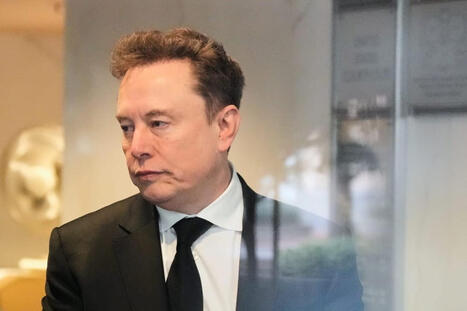
Fixating on questions of whether Altman is untrustworthy, or whether Musk is even less so distracts from a far deeper problem with AI. If it wasn’t already clear, Elon Musk and Sam Altman hate each other. While the two men were once co-founders of OpenAI, they’re now locked in a vicious feud, playing out in all its theatrics in front of a judge and jury in a California courtroom. Musk is suing, alleging that Altman and OpenAI’s president, Greg Brockman, tricked him into forming and funding the organization as a non-profit before they subsequently restructured it to have a for-profit entity. OpenAI says Musk was well aware of those plans and frames the lawsuit as an attempt to derail a competitor. I know this story all too well. I’ve been reporting on OpenAI since 2019, embedding within its office for three days shortly after Musk stepped away and Altman formally took up the CEO position. If there’s anything I’ve learned from my years of following this company and the AI industry, it’s that this world breeds bitter rivalries. It’s not a coincidence that nearly all of OpenAI’s original founders left the company under acrimonious conditions, nor that every tech billionaire has a largely identical AI company. The frenetic AI race is inseparable from the petty, clashing egos of the unfathomably rich, hellbent on dominating one another. Indeed, if Musk were to win his bid, that could be devastating for OpenAI, especially as it prepares this year for a potential initial public offering. Musk seeks $150bn in damages from the company and one of its top investors, Microsoft. He also seeks to return OpenAI to a non-profit, to remove Altman and Brockman as leaders of the for-profit, and to boot Altman off the non-profit board.
|
WASHINGTON, May 16, 2026 (AP) – Social media CEOs once again are being called to testify before the Senate in light of mounting legal and public pressure to protect young users on their platforms. The leaders of Meta, Alphabet, TikTok and Snap were invited to testify next month before the Senate Judiciary Committee, a committee spokesperson confirmed Friday. The hearing is set for June 23, which is recognized as Social Media Victims Remembrance Day.
Residents in different states were curious why their water was being diverted to data centers instead of their homes in water-fraught communities. In the first week of May, two data center developments, one in Arizona and another in Georgia, were caught taking public water without authorization. In both cases, data center developers consumed water they were prohibited from taking, in communities already experiencing water stress, and in both cases it was the residents who discovered it. When residents complained of low water pressure in Georgia or dust control efforts in Arizona, they unknowingly tipped off regulators in areas fraught with depleting water supplies, and added to an escalating conflict over data center water use across the country.
DCN, Range, and WIN Technology, three regional backbone fiber providers, announced a joint investment, known as the Heartland Fiber Project, to expand high‑capacity fiber infrastructure across the America’s heartland. The initiative, known as the Heartland Fiber Project, will create a new long‑haul fiber route designed to increase network capacity, resiliency, and flexibility to support the rapidly growing connectivity requirements across the industry and meet demand from AI hyperscale data center development in the region. The Heartland Fiber Project will span seven states – Colorado, Wyoming, Montana, North Dakota, Minnesota, Wisconsin, and Illinois – establishing a route containing high fiber count and future path conduit to support future growth between Denver and Chicago. The $700 million investment represents a 2,000-mile expansion of regional network infrastructure that is designed to deliver the scale, resiliency, and performance demanded by next‑generation AI workloads and hyperscale computing environments.
CHARLOTTE, N.C. — April 29, 2026 — Brightspeed, the nation’s third-largest fiber broadband builder empowering families and businesses with multi-gig-speed internet service, today announced a major milestone in its Wisconsin expansion: 30 percent of the company’s planned fiber network in the state is now complete. More than 67,000 homes and businesses already have access to Brightspeed Fiber Internet, with an additional 146,000 locations planned statewide as construction continues. As Wisconsin communities prepare for the next era of technology, fiber is becoming essential infrastructure. The growth of AI-powered tools, connected devices, cloud-based applications, remote work, telehealth and online learning is driving demand for faster, more consistent internet connections that can handle more data, in more directions, at the same time. Brightspeed is investing in fiber in Wisconsin because the networks that will power tomorrow’s economy must be built for much more than yesterday’s internet use.
WASHINGTON, May 14, 2026 – Elon Musk’s Starlink is expanding the broadband market by serving rural communities. New Street Research found that Starlink has 10 million subscribers globally, with 2.7 million of them in the U.S. The company has become a Top 10 U.S. Internet Service Provider. The study found that cable has 60% of the U.S. broadband market, and only 20% of Starlink subscribers were former cable subscribers, meaning that very few are switching from cable to Starlink.
Two of the world’s richest people faced an airing of their dirty laundry amid their messy, bitter feud over OpenAI. Anine-person jury is set to decide whether Elon Musk’s allegations of “stealing a charity” against Sam Altman and OpenAI are legitimate, with deliberations to begin in earnest on Monday. Whatever its outcome, the case has been an illuminating, at times exhausting, look behind the scenes at the history of OpenAI and how some of the most powerful figures in the tech industry operate. Attorneys for both sides have introduced reams of private text messages, emails and even diary entries to support their arguments. A who’s who of Silicon Valley testified in the trial, including Microsoft CEO Satya Nadella and the mother of some of Musk’s children, Shivon Zilis. Both Altman and Musk also took the stand for hours, facing combative cross-examinations that painted them each as untrustworthy. Over the course of three weeks in an Oakland, California, federal courthouse, the trial has pit the richest person in the world against the biggest names in artificial intelligence. It has provided moments of embarrassment for both tech moguls and underscored just how bitter the feud between them has become.
Our AI future lives inside miles and miles of windowless data centers spreading across the US. Communities trying to fight back are on their own. Virginia might be for lovers, but more recently, it’s for data centers. The state has more data centers than anywhere in the world, and companies are pushing to build more of them, including around some of the most hallowed ground in the country: the Manassas National Battlefield Park. “The amount of surface land that is being displaced by data centers and everything that goes with that, I don’t think people understand what’s really happening,” says Elena Schlossberg, a leading activist against data center development in Northern Virginia. “There’s NIMBY and there’s NOTE, and NOTE is ‘not over there, either.’” This week on Reveal, we look into our AI future and the local machinations that are pitting neighbor against neighbor. And we listen in as our “tech lords” talk about the future they are planning for us, whether we want it or not.
Journalism in the Garden State is at a crossroads. Choosing the right path could be transformative. For the past 10 years in my role with Free Press and Free Press Action, I have had the honor of listening to and speaking with residents in every corner of New Jersey — people from across the political spectrum, from various racial and ethnic backgrounds, in rural communities and urban centers. They all say the same thing: They need more high-quality local news in their communities so they can navigate their daily lives and feel connected to their neighbors. These firsthand accounts of how communities are hurting energized the grassroots campaign to create the New Jersey Civic Information Consortium (NJCIC) in 2018. A bipartisan, independent nonprofit, the state created the consortium — in response to a multiyear campaign that Free Press Action led alongside local allies — to invest public funds in local news and community information.
This week in broadband builds: News from Nextlink, Vistabeam, Ripple Fiber, GoNetspeed, Charter, Comcast, Fidium Fiber, Kinetic and Brightspeed. Nextlink turns on BEAD-funded tower Down in Louisiana, Nextlink – deploying next-generation fixed wireless access (ngFWA) G2 tech from Tarana – has "activated the first tower in the nation" funded through the $42.5 billion BEAD program. The tower is located in southern Bienville Parish, Louisiana, and now enables 104 locations to sign up for Nextlink's fixed wireless service. Nextlink picked up $18.5 million through the Louisiana BEAD program to deliver FWA to 7,460 unserved and underserved locations. In total, Nextlink won $95.6 million in BEAD funding across 11 states, according to a BEAD funding tracker from Connected Nation. Nextlink is owned by AMG Technology Investment Group and has strategic investments from Cable One.
The latest research from Ookla is out, and the data tells the latest what’s happening in global connectivity around the world. Spain’s Evening Squeeze: According to Luke Kehoe, Spain is currently Europe’s most congested mobile market. During peak hours (19:00–21:00), median speeds plummet by 66%—dropping from 161 Mbps to just 54 Mbps. It’s a stark reminder of the pressure on shared radio and core resources.
From electric vehicles to drones to solar to AI, the Chinese are doing what the U.S. used to - investing and competing. Chinese strategy is also predatory, but we could learn a thing or two from them. Today, Donald Trump is in China negotiating with Xi Jinping, with the possibility of reordering the global economy. As with most of these kinds of summits, the symbolism and pomp is rich. Trump understands imagery, and he brought with him a group of CEOs. In this picture, where Trump is greeted by Chinese Vice President Han Zheng, you can see Elon Musk and Nvidia CEO Jensen Huang in the background. These men are both worth over $100 billion, and they project Trump’s view that dominant American firms represent the strength of the nation. What has happened so far? Rush Doshi, a savvy China analyst, noted there were few promises here and there, but ultimately not very much has yet occurred.
Paper outlines how data-driven farming is reshaping rural connectivity requirements and why fiber is critical to long-term agricultural productivity WASHINGTON--(BUSINESS WIRE)--The Fiber Broadband Association (FBA) today released a new paper, Fiber-Rich Farming: Broadband Requirements for Precision Ag Today and Tomorrow, examining how the rapid rise of precision agriculture is transforming broadband demands across rural America – and why current federal benchmarks risk falling short. Precision agriculture is no longer optional. Farmers increasingly rely on connected equipment, sensors, automaton, and cloud-based analytics to optimize operations, reduce inputs, and improve yields. This shift is driving a fundamental change in network requirements, with farms now demanding higher upstream capacity, lower latency, greater reliability, and scalable connectivity across large geographic areas.
|