Your new post is loading...
- T-Mobile will spend over $2 billion for more fiber joint ventures
- The wireless operator will capture a 50% interest in GoNetspeed, Greenlight and i3 Broadband
- The new fiber JVs will operate under a wholesale (or open-access model) where T-Mobile acts as the anchor tenant
T-Mobile is pressing the gas pedal even more on its quest to cobble together a nationwide fiber broadband network. Today, it announced plans to form two more fiber joint ventures, costing T-Mobile about $2.7 billion. The big wireless operator is forming a 50/50 JV with the private equity firm Oak Hill Capital to acquire and combine GoNetspeed and Greenlight Networks. T-Mobile will invest about $2 billion in this deal, which is expected to close in the first half of 2027. Separately, T-Mobile is creating a 50/50 JV with WrenHouse to acquire i3 Broadband. T-Mobile will invest about $700 million for this transaction, which is expected to close in the second half of 2026.
The line between content covered vs not covered by Section 230's liability shield isn't always clear. The cases KGM v. Meta and New Mexico v. Meta both resulted in verdicts against social media platforms for harming their users — but the details aren't so straight-forward. In March 2026, two social media addiction trials concluded within a day of each other, both resulting in verdicts against social media platforms for harming their users. In New Mexico v. Meta, a jury found the social media company liable for deceiving consumers about the safety of its platforms for children and awarded the plaintiffs $375 million in damages. In KGM v. Meta, a California bellwether trial drawn from over 1,600 consolidated cases, a jury found Meta and Google negligent in designing platforms that contributed to the plaintiff’s depression, body dysmorphia, and suicidal ideation when she used those platforms as a minor, awarding $6 million. Both cases purported to target platform design rather than hosted content, attempting to thread the needle around Section 230’s liability shield through product liability and consumer protection arguments. That strategy worked at trial. Whether it survives appeal is a different question, and there are strong arguments that significant portions of both cases will not. The reaction to the verdicts has split predictably.
The Trump FCC wants to saddle corporate media with so many costly legal headaches that they pre-emptively censor voices critical of our mad, idiot king. It's incredible how easy it is for Jimmy Kimmel to get under Donald Trump's paper thin skin.
Last September you might recall that ABC/Disney crumbled to pressure by the Trump administration and suspended Kimmel over some light jokes he made about deceased racist right wing social media propagandist Charlie Kirk. It didn't go well for them. ABC/Disney was forced to retreat after the company lost millions of streaming customers. Brendan Carr, Trump's loyal earlobe nibbler at the FCC, then spent weeks trying to pretend he didn't try to censor a comedian for the grievous crime of making fun of the President.
Ever since, Carr and Trump have been desperately trying to "investigate" ABC in all manner of empty ways in the hopes of forcing Kimmel's ouster. That's even included the false (and quite insane) claim that Disney is engaged in "unlawful discrimination" against white people because it (sometimes) embraces diversity.
The FTC and a coalition of eight states reached settlements with three advertising agencies to resolve a complaint about whether the agencies had worked with third parties to anticompetitively boycott conservative online publishers. The complaint and the settlements included some of the same accusations, and called for some of the same remedies, as the FTC’s investigation and consent order against ad agencies Omnicom and Interpublic before approving their proposed merger late last year. The settlements are only the latest in a series of bogus FTC inquiries and investigations about “censorship” by advertisers and their agencies, and anti-conservative bias in news. These are part of a broader effort by conservative Republicans in Congress and agencies in the Trump administration to silence views critical of the Trump administration and sustain their ability to use propaganda to promote their own political power. (For more information on the broader conservative playbook behind the FTC’s actions, see our post, “The Conservative Political Playbook Driving the FTC Platform Censorship Inquiry.” For more information on what research shows about the notion of “conservative censorship,” see our post, “What Does Research Tell Us About Technology Platform Censorship?”)
More than 900 complaints that mention SpaceX or its Starlink internet service have been filed with the Federal Communications Commission over the past five years, according to files obtained through a public records request. The complaints provide a view into how the technology has already evolved into a critical lifeline for some rural U.S. residents. They also provide insight into some of the leading issues that frustrate Starlink customers, including variant—and sometimes disappointing—internet speeds, as well as poor customer service. The documents obtained by Fast Company come from the FCC, the federal agency that regulates telecommunications providers. Customers can file complaints with the FCC after experiencing issues with internet services, and these complaints will sometimes form the basis for a deeper agency investigation. Some customers will also encourage others to reach out to the FCC to attract the attention of regulators about particular issues they’re facing.
One of the more interesting conflicts in the telecom industry right now is EchoStar’s fight with tower owners. The fight comes from EchoStar walking away from billions of dollars of long-term leases of cell towers to support its facility-based cellular business. This story requires some background. This started when Dish purchased a significant amount of of cellular spectrum and also the customers of Sprint’s prepaid brands, which included Boost Mobile. The sale to Dish was a requirement of the FCC agreeing to allow T-Mobile to buy the Sprint cellular business. The FCC wanted Dish to become the next facility-based cell carrier as a replacement for Sprint.
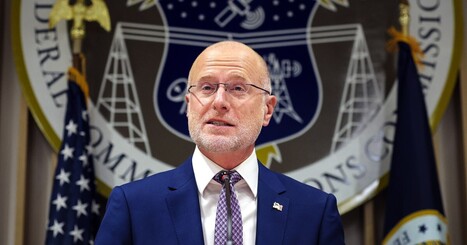
The Federal Communications Commission issued an order Tuesday directing Disney’s eight owned-and-operated television stations to file their broadcast license renewals ahead of schedule. The move is tied to a yearlong investigation into Disney’s DEI practices, a source with knowledge of the matter said, but it got fast-tracked after ABC late-night host Jimmy Kimmel made a joke about first lady Melania Trump.
MEMORANDUM FOR THE SECRETARY OF ENERGY SUBJECT: Presidential Determination Pursuant to Section 303 of the Defense Production Act of 1950, as Amended, on Grid Infrastructure, Equipment, and Supply Chain Capacity On January 20, 2025, I issued Executive Order 14156 (Declaring a National Energy Emergency), under the National Emergencies Act. That order found that America’s inadequate energy production, transportation, and infrastructure constitute an unusual and extraordinary threat to the Nation’s economy, national security, and foreign policy. It further recognized that foreign adversaries have exploited these vulnerabilities, and that an affordable and reliable domestic supply of energy, including the infrastructure needed to generate, transmit, and deliver it, is essential to ensuring United States defense readiness, economic strength, and energy independence.
A sweeping push to close New York’s digital divide is delivering a significant share of new broadband funding to counties across the Finger Lakes and Central New York, targeting rural gaps that have persisted for years. Gov. Kathy Hochul announced more than $540 million in combined public and private investment through the ConnectALL initiative, part… MoreBroadband expansion brings millions in funding to Finger Lakes, Central New York
The measure was removed from the U.S. House Rules Committee agenda after strong opposition from local government groups, including the League and national partners. The U.S. House Rules Committee was scheduled to consider the American Broadband Deployment Act (H.R. 2289) on April 20, a necessary step before the bill could advance to the full House floor for a vote. After significant advocacy efforts by the League of Minnesota Cities and its national partners, the bill was pulled from the agenda when it became clear it lacked the votes to pass. In addition to the League, the coordinated efforts included the National League of Cities, National Association of Counties, U.S. Conference of Mayors, and the National Association of Telecommunications Officers and Advisors.
“Human lives are already being lost and civil liberties put at risk at home and abroad from misuses of the technology we’re playing a key role in building." As Google on Monday became the latest player in the artificial intelligence arms race to sign a classified deal with the US Department of Defense, hundreds of workers at the Silicon Valley giant demanded that its CEO prevent the Pentagon from using the company’s AI models for covert work. Reuters reported that the $200 million agreement includes safety filters and allows the Pentagon to use Google’s AI “for any lawful purpose” but not for the development of lethal autonomous weapons systems—commonly known as “killer robots”—or domestic surveillance without human oversight and control.
What would consciousness “feel like” if it didn’t require a body? This isn’t a rhetorical question, nor a metaphysical one. I’m actually trying to imagine how consciousness might be experienced by a non-biological machine.
Materialists would say the nervous system is a prerequisite for consciousness, but I’m not sure that assumption holds. But if not consciousness, per se, what constitutes a sense of knowingness? With AI, knowingness is really a matter of data-object apprehension—pattern recognition producing coherent output. Whether that process has any experiential quality is not currently accessible. The outputs are visible; the substrate generating them is not. Where recognition becomes something like experience, if it does at all, remains an open question.
The wireless industry is using Congress to wipe out local contrl over the deployment of wireless technology in communities across the country. STOP THE BIG GOVERNMENT TAKEOVER OF LOCAL CONTROL.
|
Congress has the power to stop Trump’s unpopular war in Iran — but lawmakers have never used it before. Their excuse? An obscure immigration case from 1983. In this special bonus episode, David Sirota tells the wild story of how a Kenyan-born immigrant and a Ralph Nader-aligned lawyer unwittingly expanded the powers of the president — and left Congress believing that it’s powerless to stop unauthorized wars.
Note: This bonus episode marks the start of our midseason intermission for Master Plan: The Kingmakers. We’ll be back this summer with the remaining four episodes. Until then, keep an eye out for exclusive bonus interviews with former attorney general Ed Meese, former UN ambassador John Bolton, legendary historian and podcast Dan Carlin, and more. Your support makes this series possible — thank you! Share your benefits with a friend.
Tensions flared on the third day of trial in Musk v. Altman as OpenAI’s lawyers cross-examined Musk. Elon Musk returned to the witness stand on Wednesday to continue telling his side of the story in his legal battle against OpenAI and its CEO Sam Altman. Under cross-examination from OpenAI’s lawyers, Musk was pressed on all the ways he tried to squeeze the organization over a 2017 power struggle that he ultimately lost. Around this time, Musk tried to hire away OpenAI researchers and stopped sending it funding he had previously promised, according to emails presented as evidence in the case. As the cross-examination began, tension rippled through the courtroom. Judge Yvonne Gonzalez Rogers started the day by reprimanding someone in the gallery for taking a picture of Musk. OpenAI president and cofounder Greg Brockman sat behind his lawyers with a yellow legal pad in his lap, giving Musk a cold stare as he testified. Musk grew visibly frustrated on the witness stand, pausing frequently to tell OpenAI’s lawyer, William Savitt, that he saw his questions as misleading. Meanwhile, Savitt’s cross-examination was derailed by objections, technical issues, and Musk continuously claiming he doesn’t recall key details of OpenAI’s history.
"Carr’s dangerous assault on free speech won’t stand up to First Amendment scrutiny," writes Jessica J. González. This is nothing more than a political stunt and it won’t stick so long as ABC actually stands up for itself. Earlier this week, the Trumps called for ABC, and its corporate parent Disney, to fire Jimmy Kimmel after the late-night host made a joke at their expense.
Kimmel’s joke about the first couple’s age difference was delivered on air two days before last Saturday’s White House Correspondents’ Association dinner, which was canceled after a gunman attempted to enter the venue. Trump lackey and FCC Chairman Brendan Carr promptly jumped in to back the Trumps’ demands, issuing an order to initiate early license reviews of ABC’s eight broadcast station licenses. The Carr FCC claimed this had nothing to do with Kimmel, pointing to the three paragraph order where his Media Bureau exercised enough discipline to refrain from mentioning the late-night host. But the timing was no coincidence.
North America has some of the world's most expensive broadband, according to a new study, while Iran has the cheapest. The Global Broadband Price League 2026 compiled by price comparison site Broadband Genie shows that – big surprise – countries with a lower cost of living also tend to have less expensive internet access. Telco broadband contracts in North America have an average monthly cost of $98.40. The US is ranked 167th out of the 214 countries studied, with an average price for net access of $80. But the costliest internet is found in remote areas, where there may be few subscribers for telcos to sign up. Wallis and Futuna, a set of islands in the South Pacific with a population of about 11,000, came bottom of the league table with an average price of $373.88 per month. Broadband Genie looked at 2,631 telco tariffs across the 214 nations included in the study. It found that Iran has the cheapest broadband at $2.61 a month – a bitter irony given that the Middle Eastern nation's government restricted internet access for most citizens as the first US-Israeli strikes began.
A long-standing gap in rural internet access is narrowing in Steuben County, where nearly 2,000 additional homes and businesses now have access to high-speed fiber service following a major infrastructure buildout. Empire Fiber Internet announced this week that its latest expansion project is complete, extending service to residents in Avoca, Birdseye Hollow, Caton, Hornby, Howard, and Savona.
Maine Governor Janet Mills vetoed a bill on Friday, April 24, 2026, to impose an 18-month moratorium on data centers with electricity loads of 20 megawatts or more. If passed, LD 307 would have been the first temporary state-level ban on data centers in the country. Mills’ decision is a departure from her Democratic party colleagues in the state legislature, who overwhelmingly supported the measure in the House and Senate. Yet the version of the bill that arrived on the governor’s desk did not include exemptions she requested for a proposed $550 million data center project in rural Jay, Maine – a mill town in Franklin County in the western part of the state. A previous version of the bill with an amendment to exempt Jay’s data center from the moratorium failed to pass the legislature.
Three ISPs received the highest AAA score. No ISP received a perfect numerical score. The ISP “leaders,” those ISPs scoring AAA or AA, remained the same between the 2025 and 1H2026 editions of the Index, with one exception.
“At least some of these big companies look for communities that are news deserts to build projects,” a local journalist said, “because it’s easier for them when there’s less public scrutiny.” hen he was a “punk-ass skater kid,” Diego Mendoza-Moyers would circle the drainage ditches of El Paso, “a Wild West town upon which a modern city has been built,” as he’d later describe it. He loved the yellow poppies blooming on the side of the mountains, and a song by an El Pasoan who goes by Mr. Crazy Chuco Town: “I love my city, it’s that EPT.” Today, at age thirty, he works as an energy and environment reporter for El Paso Matters. He characterizes the journalism landscape in his area as not “the most robust” compared with, say, a coastal city where reporters compete to be the first to break a piece of news. Here, “if I’m not telling a story,” he told me, “no one else is sometimes.” That is pretty much what happened in 2023. No one, including Mendoza-Moyers, caught wind of a story that would later become major news: a deal that the City of El Paso made with Meta, which was operating under a holding company called Wurldwide LLC. The plan was to build a data center, a facility designed to train and deploy artificial intelligence models, requiring tremendous power and liquid cooling. Meta’s commitment at the time was to spend eight hundred million dollars on construction. They’re going to pay taxes, Mendoza-Moyers remembered the general understanding being. But, in fact, the company received thirty-five years’ worth of tax abatements. “Our economic development department and our elected officials in El Paso showered Meta with all these tax breaks that, I think, if they came now, wouldn’t be negotiated,” he said.
The fiber-optic race is on in Lake County (IL), or so declares at least one internet service provider building in the county, with the region proving a popular market that has seen a growing need for broadband internet. While there was a federal-level push under the Biden administration for high-speed internet access to be “fiber forward,” Lake County Board member Jennifer Clark said the Trump administration has shifted focus to include technologies like Starlink, which is defined as Satellite Broadband. Starlink is owned by Elon Musk, a major financial supporter of Trump during his reelection campaign.
This is the second piece in a Public Knowledge series on the concrete public interest obligations AI companies should meet as their products reshape our economy and daily life. The first argues that AI governance requires a substantive federal framework, not sweeping preemption with nothing in its place. More pieces will follow. The rapid expansion of artificial intelligence is driving an unprecedented wave of data center construction across the United States, with about 3,000 new data centers planned or underway – beyond the 4,000 existing ones. They’ve quickly become a political lightning rod on both sides of the aisle. Many view the value proposition of what data centers enable dubious – 50% of Americans say they’re more concerned than excited about the increased use of AI in daily life. So why would they be thrilled about the physical embodiment of AI being built in their backyard, especially if they’re footing the bill?
Governor Hochul, along with U.S. Senators Schumer and Gillibrand and U.S. Representative Tonko, announced that ConnectALL has begun implementation of a $542 million effort to bring affordable, reliable, high-speed internet service to 58,617 unserved and underserved homes and businesses in largely rural districts statewide as part of the federal Broadband Equity, Access, and Deployment (BEAD) Program. This historic undertaking targets the final one percent of documented locations that remain unserved or underserved across New York State and is the result of a multi-year process.
The following topics discuss some interesting technologies that might someday influence the broadband industry. Chip-level Photonics. Researchers at the CUNY Graduate Center have developed a thin, flat chip that can convert infrared light into precise frequencies of usable light that can be focused into a narrow, precise beam. The surface of the chip is patterned with tiny structures smaller than the wavelength of light. When hit with an infrared laser, tiny patterns convert the incoming light into a higher color as a narrow beam that can be steered by changing how the incoming light is polarized.
|