
Consumers are spending more money on subscription streaming services, paying on average $70 a month in October, compared with $48 monthly just one year ago, according to consulting firm Deloitte.
Get Started for FREE
Sign up with Facebook Sign up with X
I don't have a Facebook or a X account


|
Scooped by
Chuck Sherwood, Former Senior Associate, TeleDimensions, Inc
onto Surfing the Broadband Bit Stream November 24, 10:48 PM
|
 Scoop.it!
Consumers are spending more money on subscription streaming services, paying on average $70 a month in October, compared with $48 monthly just one year ago, according to consulting firm Deloitte.

 Your new post is loading...
 Your new post is loading...
Your new post is loading...
Scoop.it!

A new feature on X revealed that many influential MAGA accounts are not actually based in the US. President Donald Trump has continued sharing their posts anyway.
Scoop.it!
Worried about too many screens in the classroom, a small but growing number of parents are getting so fed up they’re switching to low-tech private schools — or even pulling their kids out and opting to homeschool them, analog style.
“The school didn’t want to provide paper,” said Erica Frans, a mother in Kansas who says she decided to homeschool her fifth-grade daughter back in 2020, after watching her randomly guess the answer to math questions on a computer program.
Scoop.it!

Ranking Member Pallone delivered the following opening remarks at today's Communications and Technology Subcommittee markup of seven bills.
Scoop.it!

Ernst bill would send broadband grant money to Treasury for deficit reduction.
Scoop.it!

BREAKING: White House action could have dramatic impact on the Broadband Equity, Access and Deployment program
Scoop.it!

It was, by any measure, a lot of red ink. When Volkswagen announced its third-quarter profits at the end of October, the German auto giant said it anticipated heavy losses for this year. The reason? It is taking a 5 billion euro hit from tariffs imposed in the American market. Likewise, the German sportswear manufacturer Adidas warned of a 120 million euro hit to its earnings, in part because the levies its trainers now face in the United States, while Toyota warned of a $9 billion hit from tariffs.
For anyone following the corporate earnings season over the last month, a clear theme has emerged from the giants of European and Asian industry: President Trump’s tariff regime is starting to significantly reduce their profits. But hold on. Weren’t we told that tariffs would simply be passed straight on to American consumers in the form of higher prices? That they were a tax on ordinary working people? Instead, it is already becoming clear that at least some of the costs are being paid by foreign conglomerates and even by foreign governments.
Scoop.it!
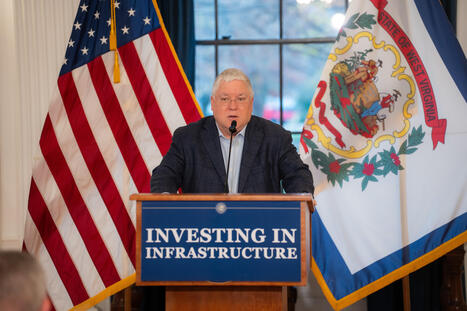
Over 73,000 unserved and underserved locations gain access to finally close digital divide
Scoop.it!
AI can’t do your job, but an AI salesman can convince your boss to fire you and replace you with an AI that can’t do your job. Nowhere is that more true than in customer service:
https://pluralistic.net/2025/08/06/unmerchantable-substitute-goods/#customer-disservice
Customer service is a pure cost center for companies, and the best way to reduce customer service costs is to make customer service so terrible that people simply give up. For decades, companies have outsourced their customer service to overseas call centers with just that outcome in mind. Workers in overseas call centers are given a very narrow slice of authority to solve your problem, and are also punished if they solve too many problems or pass too many callers onto a higher tier of support that can solve the problem. They aren’t there to solve the problem — they’re there to take the blame for the problem. They’re “accountability sinks”:
https://en.wikipedia.org/wiki/The_Unaccountability_Machine
It’s worse than that, though. Call centers cheap out on long distance service, trading off call quality and reliability to save a few pennies. The fact that you can’t hear the person on the other end of the line clearly, and that your call is randomly disconnected, sending you to the back of the hold queue? That’s a feature, not a bug.
Scoop.it!
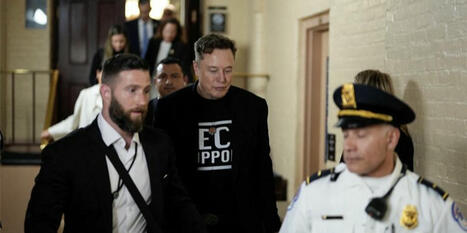
Current and former Department of Government Efficiency (DOGE) staffers are growing increasingly concerned that the work they did slashing government programs and eliminating jobs will come back to haunt them with the possibility of criminal prosecutions.Worse still is their growing belief that th
Scoop.it!
Nokia plans to sharpen its stateside manufacturing and R&D toolkit, announcing today it’s investing $4 billion to expand those operations in the U.S.
Specifically, $3.5 billion will go towards U.S. R&D for “all facets of the network, including mobile, fixed, IP, optical, data center networking technologies, and mission-critical/defense solutions,” per a press release. Nokia also expects to spend roughly $500 million on manufacturing and R&D sites in Texas, New Jersey (where Nokia Bell Labs is headquartered) and Pennsylvania.
Scoop.it!

Albemarle County is one of beneficiaries of the Commonwealth’s Broadband, Equity, Access and Deployment (BEAD) Final Proposal approved this week by the U.S. Department of Commerce’s National Telecommunications and Information Agency (NTIA).
Scoop.it!

Yesterday Texas received NTIA approval for its draft proposal submitted on 10/20, meaning that, for whatever reason, Texas received approval in 30 days.
Only $1,257,675,573 designated, 37.97% of the original allocation. How does a huge state with lots of unserved and underserved (but 242,903 BSLs) save ~$2B? Let’s take a look at the technologies designated that will (theoretically) connect BSLs at $5,178 average per location.
Scoop.it!

Funny story: On Nov. 19, I came upon an unusual article at Breitbart News, the far-right website. According to the article, FCC Chairman Brendan Carr had written a letter to the heads of the BBC, NPR and PBS announcing a probe into their activities related to the BBC documentary Trump: A Second Chance? on President Donald Trump’s involvement in the Jan. 6 insurrection.
The article is unusual because, at the time, no other outlet had it. Breitbart posted the Carr letter as a PDF file, but it wasn’t available on the FCC’s website or even on Carr’s Twitter page.
I checked the file’s metadata, and it listed Brendan Carr as the author. It was on official FCC letterhead and, by all other accounts, seemed legitimate. So I posted the file on Bluesky with a brief description of the letter’s content. (You can find the post here.)
|
Scoop.it!
From
www

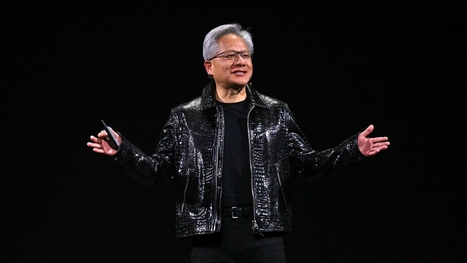
Tech companies are pouring billions into AI chips and data centers. Increasingly, they are relying on debt and risky tactics. Financial analysts are worried there's a bubble that will soon pop.
Scoop.it!
Consumers are spending more money on subscription streaming services, paying on average $70 a month in October, compared with $48 monthly just one year ago, according to consulting firm Deloitte.
Scoop.it!

On November 21, the Consumer Financial Protection Bureau (CFPB or Bureau) notified staff that it will restart supervision and require examiners, beginning
Scoop.it!

By the authority vested in me as President by the Constitution and the laws of the United States of America, it is hereby ordered:
Section 1. Purpose. From the founding of our Republic, scientific discovery and technological innovation have driven American progress and prosperity.
Today, America is in a race for global technology dominance in the development of artificial intelligence (AI), an important frontier of scientific discovery and economic growth. To that end, my Administration has taken a number of actions to win that race, including issuing multiple Executive Orders and implementing America’s AI Action Plan, which recognizes the need to invest in AI-enabled science to accelerate scientific advancement.
In this pivotal moment, the challenges we face require a historic national effort, comparable in urgency and ambition to the Manhattan Project that was instrumental to our victory in World War II and was a critical basis for the foundation of the Department of Energy (DOE) and its national laboratories.
Scoop.it!
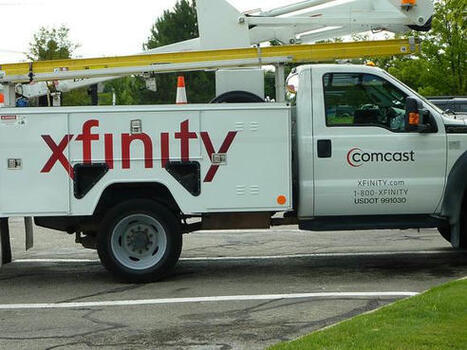
KeyBanc Capital Markets analyst Brandon Nispel recently said in an industry report that “There are reasons to believe that cable is permanently impaired.” By that, he believes that cable companies are going to continue to lose broadband customers as they compete with fiber and FWA cellular wireless. The problem that cable companies are experiencing stems…
Scoop.it!

From
www
SAN JOSE, Calif. – San Jose and its police department routinely violate the California Constitution by conducting warrantless searches of the stored records of millions of drivers’ private habits, movements, and associations, the Electronic Frontier Foundation (EFF) and American Civil Liberties Union of Northern California (ACLU-NC) argue in a lawsuit filed Tuesday.
Scoop.it!

From
www
Over the last year or so I've seen a disturbing tendency in tech/startup/VC worlds to buy into the neoreactionary view that for startups to be successful they need to get on board the Trump train. Yes, there are the big name folks who everyone knows about and who didn't really surprise anyone—Peter Thiel, Marc Andreessen,…
Scoop.it!
Sometimes, you learn a fact that makes everything else make sense — one of those keystone insights that puts a whole phenomenon into perspective. For example, the fact that preppers are engaged in a very specific type of wish-fulfillment.
I learned this during the first part of the pandemic lockdowns, when preppers were very much in our collective consciousness. On the Media featured an interview between Micah Loewinger and Richard Mitchell, author of Dancing at Armageddon: Survivalism and Chaos in Modern Times which features ethnographic studies of preppers:
https://pluralistic.net/2020/03/22/preppers-are-larpers/#preppers-unprepared
Mitchell described how preppers make ready for specific forms of societal collapse, based not on the likelihood of the event itself, but rather, based on how useful they would be in that situation. For example, a water chemist has made extensive preparations for an event in which terrorists poison the water-supply. When pressed, he couldn’t explain why terrorists would choose his town to target with an attack like this, but basically thought it would be really cool if the only person who could save his town was him.
This is the “disaster fantasy” that propels the prepper movement, in which a functional, high-tech world of wicked, systemic problems is replaced with a fallen, low-tech society where the problems are all simple.
Scoop.it!

"Meta holds no monopoly in the relevant market," U.S. District Court Judge James Boasberg wrote in an opinion dismissing the FTC's lawsuit.
Scoop.it!

This new plan could make Starlink a viable option for customers who’ve been limited to slow DSL or 4G LTE fixed wireless.
Scoop.it!
It’s happening. Gigapower inked a contract with Flume, which will be the second ISP – after AT&T – to join Gigapower’s now-officially open access network.
Scoop.it!
Donald Trump's FCC boss Brendan Carr is opening a fake new "investigation" into PBS, NPR, and BBC in the hopes of suppressing journalistic criticism of the country's increasingly unmoored and unpopular President. Carr first leaked word of the fake investigation to right wing propaganda website Breitbart.In a letter to all three outlets (pages 1, 2),…
|





