Sports Injuries
18.5K views | +1 today
Follow
Sports Injuries
Sports injuries occur when participating in sports or physical activities associated with a specific sport, most often as a result of an accident. Sprains and strains, knee injuries, Achilles tendonitis and fractures are several examples of frequent types of sport injuries. According to Dr. Alex Jimenez, excessive training or improper gear, among other factors, are common causes for sport injury. Through a collection of articles, Dr. Jimenez summarizes the various causes and effects of sports injuries on the athlete. For more information, please feel free to contact us at (915) 850-0900 or text to call Dr. Jimenez personally at (915) 540-8444. http://bit.ly/chiropractorSportsInjuries Book Appointment Today: https://bit.ly/Book-Online-Appointment
Your new post is loading...
Scooped by Dr. Alex Jimenez DC, APRN, FNP, IFMCP, CFMP
February 24, 2023 9:10 PM
Scoop.it!

Sports Injury Prevention: EP's Chiropractic Fitness Team | Call: 915-850-0900 or 915-412-6677

Sports Injury Prevention: EP's Chiropractic Fitness Team | Call: 915-850-0900 or 915-412-6677 | Sports Injuries | Scoop.it

Any form of physical sports activity puts the body at risk for injury. Chiropractic care can prevent injury for all athletes, weekend warriors, and fitness enthusiasts. Regular massaging, stretching, adjusting, and decompressing enhances strength and stability, maintaining the body's readiness for physical activity. A chiropractor assists in sports injury prevention through analysis of the body's musculoskeletal system addressing any abnormalities from the natural frame and adjusts the body back into proper alignment. Injury Medical Chiropractic and Functional Medicine Clinic provides various sports injury prevention therapies and treatment plans personalized to the athlete's needs and requirements.

Sports Injury Prevention

Individuals involved in sports activities push themselves through rigorous training and play sessions to new levels. Pushing the body will cause musculoskeletal wear and tear despite meticulous care and training. Chiropractic addresses potential injuries by proactively correcting the problematic areas within the musculoskeletal system to improve body functionality. It ensures that all system structures, spine, joints, muscles, tendons, and nerves are working correctly and at their healthiest, most natural state.

Performance

When muscles are restricted from moving how they are designed to, other areas over-compensate and over-stretch to make the movement possible, increasing the risk of injury as they overwork. This is how the vicious cycle starts. Regular professional chiropractic:


  • Regularly assesses the alignment of the body.
  • Keeps the muscles, tendons, and ligaments loose.
  • Spots any imbalances and weaknesses.
  • Treats and strengthens the imbalances and deficiencies.
  • Advises on maintaining alignment.

Treatment Schedule

Consecutive treatments are recommended to allow the musculoskeletal system to adapt to regular treatments. This allows the therapists to get used to how the body looks, feels, and is aligned. The chiropractic team gets used to the body’s strengths and weaknesses and learns the areas that need attention during each treatment. Initial treatment could be every week or two, allowing the chiropractor to spot any discrepancies in movement patterns and giving the body a chance to acclimate to the therapy. Then regular treatment every four to five weeks depending on the sport, training, games, recovery schedule, etc., helps maintain a relaxed, balanced, and symmetrically aligned body.

Pre-Workouts


General Disclaimer *

The information herein is not intended to replace a one-on-one relationship with a qualified healthcare professional or licensed physician and is not medical advice. We encourage you to make healthcare decisions based on your research and partnership with a qualified healthcare professional. Our information scope is limited to chiropractic, musculoskeletal, physical medicines, wellness, sensitive health issues, functional medicine articles, topics, and discussions. We provide and present clinical collaboration with specialists from various disciplines. Each specialist is governed by their professional scope of practice and their jurisdiction of licensure. We use functional health & wellness protocols to treat and support care for the injuries or disorders of the musculoskeletal system. Our videos, posts, topics, subjects, and insights cover clinical matters, issues, and topics that relate to and directly or indirectly support our clinical scope of practice.* Our office has reasonably attempted to provide supportive citations and identified the relevant research study or studies supporting our posts. We provide copies of supporting research studies available to regulatory boards and the public upon request.


We understand that we cover matters that require an additional explanation of how it may assist in a particular care plan or treatment protocol; therefore, to further discuss the subject matter above, don't hesitate to get in touch with Dr. Alex Jimenez or contact us at 915-850-0900.


Dr. Alex Jimenez DC, MSACPCCSTIFMCP*, CIFM*, ATN*

email: coach@elpasofunctionalmedicine.com

Licensed in: Texas & New Mexico*

References

Hemenway, David, et al. “Injury prevention and control research and training in accredited schools of public health: a CDC/ASPH assessment.” Public health reports (Washington, D.C.: 1974) vol. 121,3 (2006): 349-51. doi:10.1177/003335490612100321


Nguyen, Jie C et al. “Sports and the Growing Musculoskeletal System: Sports Imaging Series.” Radiology vol. 284,1 (2017): 25-42. doi:10.1148/radiol.2017161175


Van Mechelen, W et al. “Incidence, severity, etiology and prevention of sports injuries. A review of concepts.” Sports medicine (Auckland, N.Z.) vol. 14,2 (1992): 82-99. doi:10.2165/00007256-199214020-00002


Weerapong, Pornratshanee et al. “The mechanisms of massage and effects on performance, muscle recovery, and injury prevention.” Sports medicine (Auckland, N.Z.) vol. 35,3 (2005): 235-56. doi:10.2165/00007256-200535030-00004


Wojtys, Edward M. “Sports Injury Prevention.” Sports health vol. 9,2 (2017): 106-107. doi:10.1177/1941738117692555


Woods, Krista et al. “Warm-up and stretching in the prevention of muscular injury.” Sports medicine (Auckland, N.Z.) vol. 37,12 (2007): 1089-99. doi:10.2165/00007256-200737120-00006

Dr. Alex Jimenez DC, APRN, FNP, IFMCP, CFMP's insight:

Injury Medical Chiropractic and Functional Clinic provide various sports injury prevention therapies personalized to the athlete's needs. For answers to any questions you may have, please call Dr. Jimenez at 915-850-0900 or 915-412-6677

No comment yet.
Scooped by Dr. Alex Jimenez DC, APRN, FNP, IFMCP, CFMP
February 18, 2022 9:06 PM
Scoop.it!

Squat Exercises Causing Low Back Pain | Call: 915-850-0900 or 915-412-6677

Squat Exercises Causing Low Back Pain | Call: 915-850-0900 or 915-412-6677 | Sports Injuries | Scoop.it

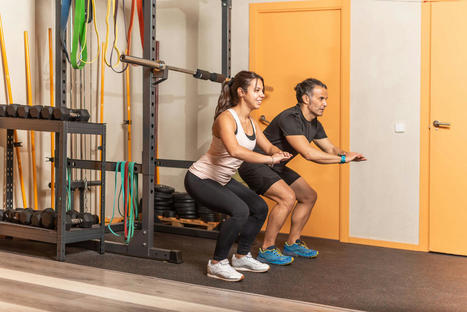
Squat exercises are highly effective, as they strengthen the back and core muscles, helping the prevention of injury. They can be done anywhere with or without equipment like weights and resistance bands and can be part of an aerobic workout. Squatting requires following proper form and posture. Using the improper form, adding too much weight too soon, overdoing it without enough recovery time can cause soreness, back pain, and injury. Having muscle soreness after performing squats is expected; however, if symptoms like chronic soreness, tingling, numbness, or sharp aches that come and go, begin to appear, it is recommended to consult a medical trainer, chiropractor, doctor, or spine specialist to evaluate the symptoms, and if necessary develop a treatment plan, as well as a prevention plan to continue exercising safely.

Squat Exercises

Squatting is a highly beneficial form of exercise. Athletes, trainers, coaches, and individuals just staying healthy use the technique as a part of their training and workouts. This is because squatting increases core muscle strength, increasing body power. Squat exercises benefits include:

Increased Flexibility

  • Improved strength and a range of motion allow the body to move flawlessly in various directions with minimal effort.

Increased Core Strength

  • All major muscles work together during a squat.
  • This increases muscle stabilization, maintains body balance, increasing core strength.

Injury Prevention

  • Squats work all leg muscles simultaneously, synchronizing the body.
  • This increases body stability decreasing the risk of injury.

Back Pain and Potential Injury

The spine is exposed and unprotected during a squat. This is where back pain and injury can happen. Potential causes include:


  • Not warming up/priming muscles properly.
  • Tight muscles and a limited range of motion.
  • Improper form and squatting technique.
  • Adding weight or loading too soon.
  • Weak core muscles.
  • Incorrect or improper footwear with inadequate arch support.
  • Weak ankle muscles are not used to the weight and shift, causing misalignment and awkward positioning.
  • Previous injuries to the lower back can cause a flare-up to the area and potentially worsen.

Prevention

Ways to troubleshoot and prevent back pain during squat exercises.

Warmup

  • Using a proper and effective warmup will ensure that the body is ready for the workout stress.
  • Priming each muscle is recommended. This could be:
  • Starting with glute work.
  • Then planks to activate the core.
  • Finish off with stretching and range of motion exercises.
  • A personal trainer can assist in creating a customized workout routine.

Starting Position

  • The feet should always face forward to protect the hips and knees when beginning a squat.
  • If the feet face at an angle, the form can be impacted, leading to back pain or collapsing arches.

Spinal Alignment

  • Maintaining a straight-ahead or upward gaze, which increases center awareness during squat exercises, can prevent the body from leaning forward and placing stress on the spine.
  • Only squat as far as possible, making sure to feel in control and maintain the form.
  • Squatting too deep can cause muscle strain leading to pain.
  • Focus on form, as it is more important than depth.

Joint mobility

  • Ankle mobility and stability are essential to balance and control.
  • If the ankle is compromised, the feet could lift off the floor, forcing the body to compensate, leading to strain and potential injuries.
  • Only squat as far as ankle stability allows.
  • Ankle flexibility exercises will help improve squat form.

Variations

A chiropractor or physical therapist will be able to evaluate spinal health, exercise form, and advise if there is an issue.

Body Composition

Achieve Health and Fitness Goals By Doing What You Enjoy

Don't engage in workouts or fitness programs that make you miserable. Do workouts/activities that you enjoy and have fun doing. Exercise for the love of the body, keeping it healthy and in shape, not because there is a feeling of obligation.


  • Try and experiment with different workouts/physical activities to see and feel what works for you.
  • Individuals who don't like lifting weights try using resistance bands or bodyweight exercises.
  • The same goes for nutrition. Don't base diet and supplement choices on misperceptions about health.


General Disclaimer *

The information herein is not intended to replace a one-on-one relationship with a qualified health care professional, licensed physician, and is not medical advice. We encourage you to make your own health care decisions based on your research and partnership with a qualified health care professional. Our information scope is limited to chiropractic, musculoskeletal, physical medicines, wellness, sensitive health issues, functional medicine articles, topics, and discussions. We provide and present clinical collaboration with specialists from a wide array of disciplines. Each specialist is governed by their professional scope of practice and their jurisdiction of licensure. We use functional health & wellness protocols to treat and support care for the injuries or disorders of the musculoskeletal system. Our videos, posts, topics, subjects, and insights cover clinical matters, issues, and topics that relate to and support, directly or indirectly, our clinical scope of practice.* Our office has made a reasonable attempt to provide supportive citations and has identified the relevant research study or studies supporting our posts. We provide copies of supporting research studies available to regulatory boards and the public upon request.

We understand that we cover matters that require an additional explanation of how it may assist in a particular care plan or treatment protocol; therefore, to further discuss the subject matter above, please feel free to ask Dr. Alex Jimenez or contact us at 915-850-0900.


Dr. Alex Jimenez DC, MSACPCCSTIFMCP*, CIFM*, ATN*

email: coach@elpasofunctionalmedicine.com

Licensed in: Texas & New Mexico*

References

Calatayud, Joaquín et al. "Tolerability and Muscle Activity of Core Muscle Exercises in Chronic Low-back Pain." International journal of environmental research and public health vol. 16,19 3509. 20 Sep. 2019, doi:10.3390/ijerph16193509


Clark, Dave R et al. "Muscle activation in the loaded free barbell squat: a brief review." Journal of strength and conditioning research vol. 26,4 (2012): 1169-78. doi:10.1519/JSC.0b013e31822d533d


Cortell-Tormo, Juan M et al. "Effects of functional resistance training on fitness and quality of life in females with chronic nonspecific low-back pain." Journal of back and musculoskeletal rehabilitation vol. 31,1 (2018): 95-105. doi:10.3233/BMR-169684


Donnelly, David V et al. "The effect of the direction of gaze on the kinematics of the squat exercise." Journal of strength and conditioning research vol. 20,1 (2006): 145-50. doi:10.1519/R-16434.1


Zawadka, Magdalena et al. "Altered squat movement pattern in patients with chronic low back pain." Annals of agricultural and environmental medicine: AAEM vol. 28,1 (2021): 158-162. doi:10.26444/aaem/117708

Dr. Alex Jimenez DC, APRN, FNP, IFMCP, CFMP's insight:

Squat exercises are highly effective, as they strengthen the back and core muscles, helping the prevention of injury. For answers to any questions, you may have, please call Dr. Jimenez at 915-850-0900 or 915-412-6677

No comment yet.