Sports Injuries
18.5K views | +1 today
Follow
Sports Injuries
Sports injuries occur when participating in sports or physical activities associated with a specific sport, most often as a result of an accident. Sprains and strains, knee injuries, Achilles tendonitis and fractures are several examples of frequent types of sport injuries. According to Dr. Alex Jimenez, excessive training or improper gear, among other factors, are common causes for sport injury. Through a collection of articles, Dr. Jimenez summarizes the various causes and effects of sports injuries on the athlete. For more information, please feel free to contact us at (915) 850-0900 or text to call Dr. Jimenez personally at (915) 540-8444. http://bit.ly/chiropractorSportsInjuries Book Appointment Today: https://bit.ly/Book-Online-Appointment
Your new post is loading...
Scooped by Dr. Alex Jimenez DC, APRN, FNP, IFMCP, CFMP
September 19, 2022 9:11 PM
Scoop.it!

Volleyball Back Pain Chiropractor | Call: 915-850-0900 or 915-412-6677

Volleyball Back Pain Chiropractor | Call: 915-850-0900 or 915-412-6677 | Sports Injuries | Scoop.it

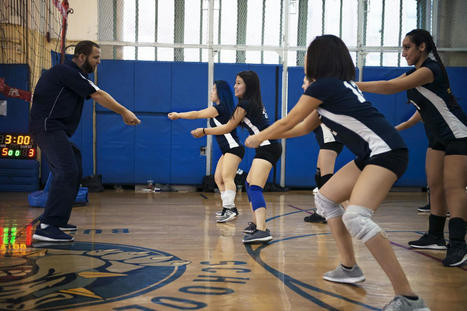
The low back is a common source of discomfort and soreness among volleyball players because of repetitive jumping, bending, and rotating of the trunk. Adolescents have an increased risk of this injury because their vertebral bones are still developing, which increases the risk for stress fractures. Chiropractic care, massage therapy, decompression, rest, and athletic training can help expedite pain relief and heal the injury.

Volley Back Pain

Muscle or ligament strains are the most common injury from repetitive jumping, bending, rotating movements, and hyperextension during serving, hitting and setting. This can lead to excessive compression forces on the discs and joints, causing reduced blood circulation, increasing the risk of overload injuries. One study reported that low back pain is experienced in 63% of players. However, if low-back pain is accompanied by pain that runs down the leg along with numbness or weakness in the foot or ankle, the issue could be a herniated disc.

Causes

One common reason is endurance imbalances in the muscles that stabilize the low back. The core muscles provide stability to the low back and spine for all movements. If imbalances are present, a player may spike or serve the ball with intense turning and arching. The added actions cause increased pressure in the joints and hip, gluteal, and leg muscles, affecting the spine's stability.


  • The gluteals run from the back of the pelvis/hip bones down to the outside of the thigh.
  • The gluteal muscles prevent the trunk and hips from overbending forward when landing.
  • If the gluteal muscles do not have the strength and endurance to perform this motion, the upper body will bend too far forward, causing poor landing posture and decreased spine stability.

Anterior Pelvic Tilt

Studies have shown that players with low back pain tend to stand and land with an anterior pelvic tilt. This is an unhealthy posture when the front of the pelvis tilts forward, and the back of the pelvis raises. Landing hard with an anterior pelvic tilt causes increased arching and increases the pressure in the joints.

Chronic back pain

Warning signs of a more serious back problem include:

  • Pain that has lasted for more than 1 week and is not improving or getting worse.
  • Pain that prevents sleep or causes the individual to constantly wake up.
  • Difficulty sitting.
  • Back soreness when performing basic tasks and chores.
  • Significant pain on the court when jumping, landing, or rotating.
  • Chronic pain ranges from aches to shooting or throbbing pain that can run down the buttocks and legs.

Chiropractic Care

A chiropractor can alleviate volleyball back pain, rule out a more severe injury, such as a stress fracture or herniated disc, and provide a healthier and faster recovery. According to a study, athletes who received chiropractic care showed better speed and mobility. Quick reflexes and hand-eye coordination depend on an optimal functioning nervous system. 90% of the central nervous system travels through the spine. When one or more spinal segments are misaligned, the effect on the nervous system can seriously impact and disrupt nerve circulation, affecting speed, mobility, reflexes, and hand-eye coordination. Chiropractic adjustments will:


  • Relax and reset the back muscles.
  • Realign and decompress the spine. 
  • Remove the pressure around the nerve roots.
  • Strengthen the core.
  • Improve and increase range of motion, strength, and overall endurance.

Anterior Pelvic Tilt


General Disclaimer *

The information herein is not intended to replace a one-on-one relationship with a qualified healthcare professional or licensed physician and is not medical advice. We encourage you to make your own healthcare decisions based on your research and partnership with a qualified healthcare professional. Our information scope is limited to chiropractic, musculoskeletal, physical medicines, wellness, sensitive health issues, functional medicine articles, topics, and discussions. We provide and present clinical collaboration with specialists from a wide array of disciplines. Each specialist is governed by their professional scope of practice and their jurisdiction of licensure. We use functional health & wellness protocols to treat and support care for the injuries or disorders of the musculoskeletal system. Our videos, posts, topics, subjects, and insights cover clinical matters, issues, and topics that relate to and directly or indirectly support our clinical scope of practice.* Our office has reasonably attempted to provide supportive citations and identified the relevant research study or studies supporting our posts. We provide copies of supporting research studies available to regulatory boards and the public upon request.


We understand that we cover matters that require an additional explanation of how it may assist in a particular care plan or treatment protocol; therefore, to further discuss the subject matter above, please feel free to ask Dr. Alex Jimenez or contact us at 915-850-0900.


Dr. Alex Jimenez DC, MSACPCCSTIFMCP*, CIFM*, ATN*

email: coach@elpasofunctionalmedicine.com

Licensed in: Texas & New Mexico*

References

Haddas R, Sawyer SF, Sizer PS, Brooks T, Chyu MC, James CR. "Effects of Volitional Spine Stabilization and Lower-Extremity Fatigue on the Knee and Ankle During Landing Performance in a Population With Recurrent Low Back Pain." J Sport Rehabil. 2017 Sep;26(5):329-338. doi: 10.1123/jsr.2015-0171.


Hangai M. et al., Relationship Between Low Back Pain and Competitive Sports Activities During Youth, Am J Sports Med 2010; 38: 791-796; published online before print January 5, 2010, doi:10.1177/0363546509350297.


Jadhav, K.G., Deshmukh, P.N., Tuppekar, R.P., Sinku, S.K.. A Survey of Injuries Prevalence in Varsity Volleyball Players. Journal of Exercise Science and Physiotherapy, Vol. 6, No. 2: 102-105, 2010 102


Mizoguchi, Yasuaki, et al. "Factors associated with low back pain in elite high school volleyball players." Journal of physical therapy science vol. 31,8 (2019): 675-681. doi:10.1589/jpts.31.675


Movahed,Marziehet al. (2019). "Single leg landing kinematics in volleyball athletes: A comparison between athletes with and without active extension low back pain."


Sheikhhoseiniet al. (2018). "Altered Lower Limb Kinematics during Jumping among Athletes with Persistent Low Back Pain"

Dr. Alex Jimenez DC, APRN, FNP, IFMCP, CFMP's insight:

Chiropractic care, massage therapy, decompression, and rest can help expedite pain relief and heal volleyball back pain injuries. For answers to any questions you may have, please call Dr. Jimenez at 915-850-0900 or 915-412-6677

No comment yet.
Scooped by Dr. Alex Jimenez DC, APRN, FNP, IFMCP, CFMP
July 28, 2017 5:06 PM
Scoop.it!

Syndesmosis (High Ankle Sprain) Injuries: Scientific Rehab | El Paso Back Clinic® • 915-850-0900

Syndesmosis (High Ankle Sprain) Injuries: Scientific Rehab | El Paso Back Clinic® • 915-850-0900 | Sports Injuries | Scoop.it

Injury scientist, Dr. Alexander Jimenez looks at a often misunderstood problem -- the 'high ankle' sprain...


Ankle injuries are prevalent in sport and the type of injury will fluctuate based upon the tissue structure injured in the complex. Ankle and the foot can be subject to impact loads in the performance of sport related activities the ankle can absorb six times body weight from activities. Because of this energy dissipation throughout the ankle, these forces may result in fracture and ligament disruption.


Lateral ligament sprains are undoubtedly the most frequent (85%) type of ankle sprain, accompanied by medial 'deltoid' ligament sprains and more infrequent is injury to the distal tibiofibular syndesmosis. It is thought that syndesmosis injuries comprise 1-20% of ankle injuries (Zalavras and Thordarson 2007; Hopkinson et al 1990); however this is very likely to be considerably greater in collision sports like football and rugby. Where a player was tackled by another, tibiofibular syndesmosis injuries often occur in contact situations.


The equilibrium of the distal tibiofibular syndesmosis is offered by the structure of the portion of the intervening ligaments and fibula and the tibia. Injuries to the syndesmosis, otherwise known as "high ankle sprains", many commonly occur when the foot is hyperdorsiflexed or rotated, or both (orthe foot is forced upward or outward) and are more common in sports like football, rugby, skiing, basketball, softball and wrestling.


Sports medicine professionals love that syndesmosis injuries or "high ankle sprains" are complex and difficult to diagnose and properly handle often with misdiagnosis and poor direction. Rehabilitate and therapists cite the syndesmosis as being one of the injuries that are most difficult to totally comprehend.


The outcome following a syndesmosis injury is the athlete attempts to return to competition only when they can't perform in the level due to pain from the ankle and/or malfunction in running and stepping action to be disappointed.


Therefore, diagnosis and early recognition is critical for a good outcome and to avoiding chronic problems. If needed surgical intervention is recommended.


Both part Rehabilitation Masterclass' objective is to describe in detail the things important in tibiofibular syndesmosis injuries, to highlight the assessment considerations and also to detail the rehabilitation program required after this rather difficult to handle sports injury.

Anatomy & Biomechanics Of The Syndesmosis

The ankle proper is called the joint and it is made up of the articulation between the talus bone in the ankle as well as the lateral malleolus of the tibia and lateral malleolus of the fibula. This joint is where authentic dorsiflexion and plantarflexion occur. The dome-shaped arrangement of the talus fits into the concave tibial undersurface and this arrangement is known as the ankle 'mortise'.


Beneath the talocrural joint is the subtalar joint, formed by the talus. It's a gliding joint (like the hinge joint that's the talocrural joint) and this is the place where the ankle increases inversion and eversion, moves necessary for midfoot pronation and supination.


The joint amongst this complicated is the distal tibiofibular syndesmosis. The syndesmosis is a tough fibrous joint that allows fibula and the tibia to allow functional movement to happen in locomotion and to work collectively providing a congruent and stable joint for function.


The distal fibula articulates with the tibia through the vertically orientated fibula top notch (incisuria fibularis tibiae) found on the lateral tibia between the anterior and posterior tibial tubercles. They form the distal tibiofibular syndesmosis.


It has been shown (Lundberg 1989) which with active dorsiflexion of the ankle the talus glides posteriorly in relation to the tibiofibular joint. During movement and locomotion, against the mortise the talus will 'push' since the ankle approaches dorsiflexion and exert an outward force. This is a result of the distinctive anatomical arrangement of the talus with the anterior area of the talus being 4.2mm narrower than the anterior part. This causes a widening of the mortise as the anterior ankle wedges to the mortise with dorsiflexion (Norkus 2001). The talus in dorsiflexion exerts a force so degrees rotates, moves posteriorly and proximally 2-4mm 1-3mm as well as roughly 1mm is widened by by the mortise. These movements are reversed with plantarflexion.


Clearly the distal tibiofibular articulation needs to be a secure relation- ship to maintain the solid ankle 'mortise' but has to be flexible to allow the motion during stance and dorsiflexion.


To prevent the syndesmosis from widening during this motion, the following soft tissue structures encourage the integrity of the joint (Ogilvie-Harris et al 1994; Xenos et al 1995):


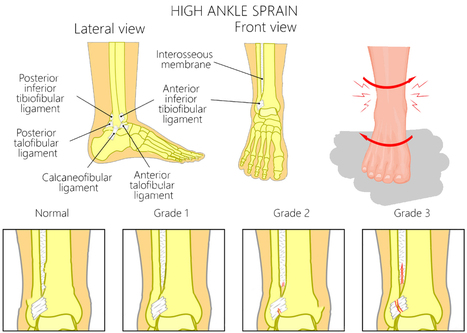
  • Anterior inferior tibiofibular ligament (AITFL) -- supplies about 35% of power of the syndesmosis. This ligament is the most vulnerable to injury; syndesmosis ligament or poor tansverse ligament (ITL) -- 33%;
  • Posterior inferior tibiofibular ligament (PITFL) -- 9%;
  • Syndesmosis or interosseous ligament/ tissue (IOL) -- 22%.


These structures are responsible for holding the leg bones together and they produce a ankle 'mortise'. By strengthening the lateral ankle mortise stability is indirectly provided by the deltoid ligament on the medial side to the syndesmosis.


If the ligaments are compromised, fibula and the tibia are allowed to proceed apart or 'gap' and also a diastasis develops. In this case the joint becomes secure.

Mechanism Of Injury

Any step that widens the ankle mortise can damage the syndesmosis. In how much the injury progresses, the severity of the force and the length of the force are determining factors. The typical and normal mechanism of injury is forced closed kinetic chain external rotation of the foot with abduction and dorsiflexion of the ankle with forced internal rotation of the tibia. This classic mechanism could take place if the leg was caught under the body suddenly and the leg twisted on top of the ankle (because of fall or tackle), or when an athlete quickly changes direction whilst the foot has been fixed on the ground (usually the studs or cleats avoid any shear motion of the shoe-foot interface). A frequent example in skiing is really for the ski to stay in the snow and the ski imparts a solid and sudden external rotation on the foot.


This rotation position of the foot/ankle moves the talus laterally and into rotation and the ankle mortise widens by abutting the fibula and forcing it laterally and posteriorly. Calcaneus eversion further widens the mortise and the lateral fibular is pushed from its articulation with the tibia. The ligaments are sequentially torn in order to posterior from anterior; hence the AITFL is almost always involved in all grades of injury.


The size and duration of the force at the time of injury determine the level of harm. Significant force and duration of force will damage PITFL, ITL, IOL and the AITFL. What's more, additionally damaged with this particular mechanism and it is not unusual for the external rotation force to be transmitted upward towards the superior tibiofibular joint. In this instance, the athlete may whine of co-existing lateral knee pain (Seymortier et al 2008).


It is also feasible as in the end of plantarflexion range that is accessible, the mortise is incapable of rotation of the talus in the mortis, that plantarflexion and inversion movements may injure the syndesmosis. Therefore the rotary forces might cause a diastatic strain on the syndesmosis (Pajaczkowski 2007). With this common mechanism, trauma to the anterior talofibular ligament (ATFL) and the calcaneofibular ligament (CFL) is more possible, and the AITFL might also be called the force of the inversion can make an abutment of the talus against the tibia and 'open' that the mortise. The only real structure involved in the syndesmosis is going to function as AITFL if it occurs and the harm will be steady.

Types Of Injuries

Grade 1 (sprain without diastasis)

A typical low velocity and/or very low force external rotation-type mechanism that's strong enough to 'gap' that the mortise will make an injury to the thoracic ligament as the talus rotates laterally and the distal syndesmosis may marginally separate, hammering the AITFL. This force is generally inadequate to injure the deeper behind structures like the interosseous membrane or the deep deltoid ligament on the medial side.


The AITFL will probably be tender to palpate. AITFL injury's degree may vary from a strain to some significant strain/tear; nonetheless, since the syndesmosis remains intact the injury is considered to be stable.


Therefore grade 1 injuries by definition are stable, but the level of AITFL damage may be classed as grade 1 (minor but steady injury) to more acute AITFL damage (important but stable harm).


Grade 1 injuries can be successfully managed conservatively within an Aircast walking boot for a time period (mentioned later).


Grade 2 (diastasis clear on stress radiographs)

This involves a greater level of dorsiflexion/external rotation force and also entails damage to:


  • anterior deltoid ligament (complete disruption usually);
  • deep deltoid ligament;
  • significant tear in AITFL;
  • interosseous ligament.


The ankle will probably be shaky but may appear fine on non-stress x-rays. After the syndesmosis shows congruency and stability on x-ray but then reveals uncertainty on anxiety x ray, this is known as a 'latent' diastasis.


These type of injuries are often tricky in that the instability may be overlooked originally and treated as a secure syndesmosis with early mobilization and early return to running. Typically, if these are misdiagnosed and thus mismanaged, a poor outcome will result leading to operation at a later stage. A mismanaged syndesmosis may then lead to a chronic and shaky ankle which may predispose the athlete to ongoing pain, further injury, arthritic changes and osteochondral lesions.


Some exact low-level tier 2 injuries can be managed conservatively surgical intervention will be needed by the injuries. This is the type of injury that most commonly gets mismanaged as frequently they are suspected of being adequate for conservative management as the mortise heals in a widened position with talus motion in the mortise, they do to function.


Grade 3 injuries (frank diastasis)

This involves abduction of the foot and external rotation. This will result in severe injury to the syndesmosis (AIFTL, PITFL, interosseous ligament and membrane) as well as complete disturbance of the deltoid ligament. This is often associated with fracture of the distal fibula (Masionneuve fracture). When there is, syndesmosis rupture is supported on x-ray.


Widening of the medial clear space in connection with extending of the tibiofibular interval in the level of the ankle, and these are observed on non-weight bearing x-ray that is regular. These injuries are unstable on standard radiographs and management will demand a surgical intervention.

Examination

Subjective

The athlete will often complain of pain that is intense at the distal tibiofibular joint which makes it tricky to weight bear. They may also complain of knee pain if the proximal tibiofibular joint is involved. The incident may be remembered by them as mimicking the mechanism of injury like the foot being captured under the body and they twisted on top of the foot.


Knowing the exact mechanism of injury is vital in identifying a lateral ankle sprain when compared with a high- tier syndesmosis injury. The prior can be handled whereas the latter will want a stabilization operation for your syndesmosis.


What's more, willingness or the ability to weight bear also can be a indicator that is decent. Often lateral ankle sprains have the ability to weight bear early whereas injuries with or without fracture will be reluctant to burden bear.


A missed shaky syndesmosis injury that is not properly treated can result in outcome and prolonged morbidity. Hence getting the diagnosis is vital.

Objective

No single goal test is legitimate for confirming a syndesmosis injury (Sman 2013).


Confirmation is usually made on the answer as well as history on numerous evaluations. It has to be mentioned that in severe syndesmosis sprains many if not all of these tests may be due to pain, spasm and swelling. Often the initial suspicion is based on mechanism of injury and also palpation pain.


1. Gait. Typically if the individual is able to partially weight bear they will do so about the forefoot (walk on toes) as this normally avoids dorsiflexion that probably will be painful.


2. Palpation. The deltoid ligament will be tender to palpate along with the AITFL are also tender. At a high-grade syndesmosis that the palpation pain will expand a way up the fibula. Often the lateral ankle ligaments (ATFL, CFL) will not be tender, especially in dorsiflexion/external rotation mechanisms.


3. Swelling. Swelling over the joint line between the tibia and fibula is often indicative of syndesmosis injury.


4. Squeeze test. A non-weight posture evaluation where the mid shaft of the fibula and tibia are squeezed and pain is felt at the distal syndesmosis. The compression of the bones will create an opening effect on the distal tibiofibular joint. It has been shown to be a good prognostic indication for length of absence.


5. External rotation. Another non-weight- bearing evaluation. The patient sits on a mattress with knee flexed at 90 degrees and shin vertical. The examiner stabilizes the shin with a single hand and with the other hand rotates the foot. Here is the mechanism that creates the harm, therefore a disruption of the syndesmosis ligaments will probably undoubtedly be perceived as being painful within the anterolateral ankle. In the presence of a completely ruptured syndesmosis ligament this evaluation may actually not be debilitating, so this may be a good test for harm but not instability.


6. Dorsiflexion compression test. A burden- bearing evaluation where the athlete lunges forward and a pain response is noted. The assessor then compresses the tibia and fibula together to increase stability and the test is repeated. If pain is diminished with compression it may be diagnostic for a syndesmosis injury. This evaluation can only be carried out on relatively functional accidents that will tolerate weight bearing.


7. Fibular translation test. Passively translating the fibula in an anterior and posterior direction in relation to the tibia. The joint play will be raised in existence of a syndesmosis injury.


8. Cotton test. By applying alternating lateral and lateral pressure into the talus the talus is rocked from side to side. This can reproduce a sensation along with pain .


9. Weight bearing. If the athlete has difficulty weight- injury imagine a injury.

Investigations

1. X-ray. Routine x-rays (AP, lateral and mortise views) will probably be needed to exclude fractures of the fibula, avulsion injuries and talar dome fractures. To see syndesmosis injuries that are unstable stress x-rays will be necessary to gauge the amount of separation. Due to the pain this repeats, a local anaesthetic block might be required to fully stress the joint. Externally rotating the foot or simply by having the athlete stand on one foot applies stress. On x-ray the medial clear space (should be less than 4mm) and lateral clear distance (should be less than 6mm) can be quantified and also the tibia-fibula overlap which should be greater than 1mm on all views. Stress views will reveal anterior and lateral displacement of the fibula compared to viewpoints.


2. CT. These are somewhat more sensitive than x-rays in discovering a injury and these can detect differences as small as 1mm.


3. MRI will show the anatomical injury. It is used to identify AITFL, interosseous and PITFL injuries, osteochondral lesions and bone bruising.


4. Arthroscopy. This can be used to validate a suspected syndesmosis injury found on imaging. With arthroscopy, the ligaments may be assessed and an arthroscopic stress test could be conducted to evaluate instability. Furthermore talar dome lesions could be assessed under arthroscope.


A positive diagnosis to get a injury usually involves a mix of factors:


1. A typical history with a expected and typical mechanism of injury;


2. The location of pain focused the tibiofibular joint round with degrees of pain along the fibula and possible ligament pain;


3. An inability to weight bear;


4. Favorable signs on a number of the evaluations;


5. Imaging which could show uncertainty on anxiety viewpoints on instability or perspectives;


6. If accessible, MRI and CT can confirm the degree of tissue damage and joint separation.


The potential differential diagnosis that may mimic a syndesmosis injury include:


1. Lateral ankle sprain;


2. Fibula fracture in the absence of syndesmosis soft tissue injury;


3. Osteochondral lesions on the talar dome;


4. Capsular sprains of the anterior ankle;


5. Retinculum strains without underlying tibiofibular joint damage.

Summary

Injuries are ankle injuries seen from the population. The normal mechanism is a forced external rotation of the foot/ankle in regard to the tibia and fibula. It is more common in contact sports and skiing. The athlete can present with a ankle with pain/ swelling present on the inferior tibiofibular joint and potentially along the fibula and involving the superior tibiofibular joint. Timeless syndesmosis clinical evaluations may prove inconclusive because of the lack of specificity and sensitivity with some of these tests. Imaging such as anxiety perspective x ray and more sensitive MRI may be required to confirm the diagnosis.


References
1.Athletic Therapy Journal. Sept 2002.
2.J Bone and J Surgery Am. 1976. 58(3); 356-357.
3. Foot Ankle Clinic. 2009. 14(2); 277-298.
4. Foot Ankle. 1990. 10(6); 325-330.
5.BJSM.2013. 0; 1-7.
6.American Journal of Sports Med. 2012. 40(10); 2348-2356.
7.J Athletic Training. 2012. 47(3); 339-357.

Dr. Alex Jimenez DC, APRN, FNP, IFMCP, CFMP's insight:

Injury scientist, Dr. Alexander Jimenez looks at a often misunderstood problem -- the 'high ankle' sprain. For Answers to any questions you may have please call Dr. Jimenez at 915-850-0900

No comment yet.
Scooped by Dr. Alex Jimenez DC, APRN, FNP, IFMCP, CFMP
April 13, 2017 4:34 PM
Scoop.it!

Syndesmosis: A Lifetime Of Pain? Call 915-850-0900

Syndesmosis: A Lifetime Of Pain? Call 915-850-0900 | Sports Injuries | Scoop.it


I have been travelling through Athens and now Istanbul. My 11 year old is a Percy Jackson nut and has been filling me in with the who’s who of Greek mythology and I am learning Latin words every day. Quite an education!

I looked up the word syndesmosis and the Latin translation is “(New Latin, from Greek sundesmos) bond, ligament, from sundein, meaning to bind together”. As sports injury professionals, we know syndesmosis to be the joint articulation between the tibia and the fibula bones around the ankle. These two bones are ‘bound’ together with very firm and strong ligaments.

Syndesmosis comes to mind after I saw a girl sprain a syndesmosis at the Archaeological Museum in Istanbul today. This poor girl was preoccupied by the hundreds of cats and kittens running all over the place and did not see the uneven cobblestones on which she placed her foot. At the same time, she turned to change direction. This is a common mechanism of injury for a syndesmosis – a forced dorsiflexion and rotation on a fixed foot.

REHAB MASTERCLASS ISSUE 140 OF SPORTS INJURY BULLETIN

Of all the ankle injuries, injury to the syndesmosis is the biggest pest to sports physios and the like. And unlike simple garden variety ankle sprains that heal quickly, the syndesmosis takes a LONG time to heal properly. If you deal with athletes that are susceptible to syndesmosis sprains, I’m sure you will agree that these are harder injuries to manage because of the severe consequences if done badly.

I go into a fair bit of detail in my Sports Injury Bulletin piece about syndesmosis injuries, detailing how they happen, how to identify them and then manage them. What I would like to highlight here are the implications of mismanaging a syndesmosis sprain.

In the current issue of The Journal of Sports and Physical Therapy, a group of Japanese researchers discovered that individuals who had chronic ankle instability (CAI) had a distal fibula that was positioned more lateral compared with healthy individuals with no CAI. In effect, those who had suffered serious syndesmosis injuries in the past and ended up with a wider distance between the fibula and the tibia, suffered more ongoing ankle pain than those without a tibfib separation.

Research shows that even a 1mm displacement of the talus within the mortise (due to a wider placed fibula) can reduce the contact area in the talocrural joint by 42% (Ramsey and Hamilton 1976). Mismanaged syndesmosis injuries, resulting in an excessive amount of opening, can lead to early onset arthritic changes and chronic ankle instability. The talus bone bounces around in the now wider tibfib articulation.

A WIDENING OF THE FIBULA IS DUE TO ONE OF THE FOLLOWING:

Poor initial management, whereby the athlete is allowed to weight bear too early and this weight bearing forces the fibula away from the tibia as the syndesmosis ligaments are trying to heal.

The degree of damage is so severe that proper tightening of these ligaments is not possible without surgical intervention such as a screw or similar being placed between the two bones to ‘force’ them together.

The key for a sports injury practitioner, is to properly identify a regular ankle sprain from a more serious syndesmosis injury. If you get this part wrong and allow the athlete to get back to weight bearing too early, then expect some complaints about a chronically painful ankle some time down the track.


Kobayashi et al (2014). ‘Fibular malalignment in individuals with chronic ankle instability.’ JOPST. 44(11); pp 841-910.

Ramsey and Hamilton (1976). J Bone and J Surgery Am. 58(3); 356-357.

Dr. Alex Jimenez DC, APRN, FNP, IFMCP, CFMP's insight:

Of all the ankle injuries, injury to the syndesmosis is the biggest pest to sports physios and the like. For Answers to any questions you may have please call Dr. Jimenez at 915-850-0900

No comment yet.
Scooped by Dr. Alex Jimenez DC, APRN, FNP, IFMCP, CFMP
July 28, 2017 6:38 PM
Scoop.it!

Syndesmosis Injuries: Science Based Management & Treatment | El Paso Back Clinic® • 915-850-0900

Syndesmosis Injuries: Science Based Management & Treatment | El Paso Back Clinic® • 915-850-0900 | Sports Injuries | Scoop.it

In the second part on the managing of syndesmosis injuries, El Paso, chiropractor Dr. Alexander Jimenez summarizes the management principles and therapy choices.

Management Of Syndesmosis Injuries

The aim of syndesmosis injury management that is successful, whether conservative or operative, would be to revive and maintain the normal relationship between tibia and the fibula and also to allow healing of the soft tissue structures of the syndesmosis.

Conservative

Cryotherapy

Immediate control of a suspected syndesmosis is to ice the arm each hour for 20 minutes. The best method that range of motion is not lost, to do this would be to sit down the athlete and set the foot in an ice bath. At the sitting position attempt to maintain the foot directly beneath a vertical shin (ankle is in neutral dorsiflexion). This allows the ankle to keep range without the damaging dorsiflexion position that is full. This may be hard in more injuries; therefore, instruct the athlete to find a position with as comfy dorsiflexion as you can. The ankle raised and ought to be compacted, when not icing. If the athlete needs to move and cannot ice or elevate an Aircast boot must be applied.

Medications

As due to the secure status of the athlete pain can be prevented, simple analgesics will be sufficient to settle a number of the pain connected with syndesmosis injuries. It is crucial as it has been shown to have effects on healing, to prevent NSAIDS. If needed, NSAIDS are used later in the rehab process if persistent synovitis is current.

Immobilisation

If definite injury to the AITFL has happened Grade 1 injuries are often accidents.


This type of injury is usually immobilised in a walking boot and weight- bearing on crutches for the week period and then reassessed. If the athlete is able to comfortably weight endure at 1 or two weeks with no boot, then they may be placed in an aircast splint (operational splint) and allowed to FWB using splint for seven days.


The ideal case scenario with a 1 syndesmosis would be to eliminate the Aircast boot week and weight- keep in an Aircast splint for a additional week and be free of splints at two weeks.

When dysfunction and pain persists after the initial 1-2 week period, then the boot is employed with gradually and reassessed. Grade 1 accidents and steady Grade 2 injuries ought to have the ability to weight-bear at four weeks post-injury. Then surgical inspection will be essential in the event the athlete struggles to take fat through the ankle in four months post-op. The threat with is that if the AITFL tightened and has not adequately cured then the fibula will be pushed apart by the talus and tibia and uncertainty may grow.

Active Therapy

The boot can be eliminated into ranges as well as small and isometric range strengthening with a theraband for continuing icing of the gentle and ankle selection of movement after day 7. Soft tissue work to the nerves and other calf muscles can begin to keep tissue compliance.


Use caution in the early stages of recovery when recovering range of motion of the ankle. A dorsiflexion position is created by stretching the calf muscles or Achilles tendon in a position posture and this can cause gapping at the joint that is injured. Also, be careful to avoid motions that put the foot into an upward and outward position since this replicates that were probably the position the foot has been forced into once the injury occurred.


After the boot is removed and the athlete is totally weight-bearing, then guide rehabilitation work can begin on proprioception leg power and cross training into jogging. (See below under surgical management for logical rehabilitation progressions post-boot removal.) Be aware that the progression for a non- managed syndesmosis will be listed for the surgically- handled injuries.

Functional Sports-Specific Rehabilitation

Functional sports specific rehab starts usually at first post- injury in level 1 accidents, if dysfunction and pain persist, but this can be delayed. What's apparent and must be hauled lateral ligament sprains that are standard prior to is that the time for healing for stable grade 1 injuries will be more than high level standard ligament injuries. The nature of this syndesmosis has to be appropriate and respected time allocated to permit for recovery. For instance, Silvestri et al (2002) found that within a four-year period, 14 syndesmosis injuries occurred in the NCAA Football Division 1 which required period of immobilization and rehabilitation. Full participation in football resumed 31 +/- 11 days post injury (20-42 days) for stable grade 1 injuries(1).


It's also the view of this author that a lot of the research on syndesmosis injuries was presented in the context of sports like soccer, skiing and hockey. In sports that require significant ankle loading and repetitive twisting and turning movements under additional load, such as NFL and rugby, the return to play time for conservatively controlled grade 1 and minor grade 2 accidents can stretch to 8-10 weeks with less of a probability of re-injury. Some authors indicate that harms can be back to game in as few as 3-4 weeks, however level grade 1 injuries seem to have difficulty in returning to perform at 3-4 weeks post-injury in the contact arena. Therefore expect the staged hints below and also the rehabilitation to be protracted in NFL players and high level rugby.

Other Considerations

1. Fibular fracture. This guarantees that an eight-week rehab period will be required to allow full bone healing. This enables a longer margin for recovery in the syndesmosis injuries that are stable.


2. Flexor Hallucis Longus (FHL) tendon. This tendon and its sheath pass close to the posterior talocrural and subtalar joints. The FHL may be hurt concurrently with the syndesmosis as mechanism for injury usually involves dorsiflexion with rotation. This can act as a long- term pain generator.


3. Subtalar joint. Together with the mechanism of injury to the syndesmosis, the subtalar joint may be sheared and suffer an injury. This will create posterior foot pain on induced plantar- flexion.


4. Injury to the midfoot. The forced mechanism to injure the ankle can injure the midfoot. As the focus might be directed to the ankle the athlete might not notice this pain; however, it might present down the rehabilitation line when the athlete starts to weight-bear.


5. Talocrural arthritis. Ramsey and Hamilton (1976) revealed that even a 1mm displacement of the talus within the mortise can decrease the contact area in the talocrural joint by 42 percent (two). In misman- elderly injuries that result in an excessive quantity of opening, this may lead to premature onset arthritic changes.

Surgical

The key to managing syndesmosis injuries will be to attain reduction and fixation of the distal tibiofibular joint. This allows healing of those ligaments that are involved and restores stability and the congruency of the syndesmosis. If left untreated, latent diastasis (separation), chronic instability, ongoing pain, osteochondral lesions or arthritic changes may grow.


The signs to surgically repair the syndesmosis contain:


1. Frank diastasis


2. Diastasis on anxiety x-ray


3. Fibular fracture 4.5mm above ankle joint.


Trans-syndesmotic fixation may be single device or multiple device and also the amount of cortices used in fixation (tricortical or quadricortical) will vary between surgeons. The selection of number of cortices will ascertain the accessible allowable assortment of external tibial rotation. If three cortices just engage organic outside rotation of the fibula will occur as the dorsiflexes and result in less screw collapse. It has been implied that any fibula movement may be prevented by fixation and thus may not let normal physiological movement such as dorsiflexion to ever happen.


It isn't the objective of this paper to discuss in detail the various philosophies on stabilization besides to point out that fixation apparatus can and have been taken advantage of. These devices used include:


1. Metal screws 3.5mm, 4mm or 4.5mm


2. 4.0mm cannulated screw


3. Bioabsorbable screws


4. Syndesmotic staple


5. Suture and button


6. Endobutton suture procedure (Tightrope).


7. Syndesmosis hook.


8. Trans-syndesmotic bolt.


9. ANK nail


10. Kirschner wire


11. Assembled bolt-tightrope system (ABTS). This is composed of a nut a button a pre-cut bolt and a wire that is fibre.

Single Screw Fixation

Typically in the past a 3.5mm tricortical screw placed approximately 2cm above the tibial plafond has been used; however, more recently suture-button devices (Tightrope) has been gaining popularity as they enjoy the following benefits:


1. Enables greater physiological function of the joint compared with screw fixation


2. Insertion of this tightrope is less invasive


3. Are as powerful as screw fixations


4. Screws have a greater rate of breakage not evident with suture-button


5. Quicker time and return to game


6. Less malreduction in comparison with screws in maintaining the reduction compared with screws, and better


7. No need for surgery to remove screw.


Post-fixation, it is typical for your ankle to be placed in a below-knee back slab for fourteen days and removed to get a below walking boot for 4 months. At 6-8 weeks post op the patient may be readmitted for screw removal when a screw is used (some surgeons prefer to wait until 12 weeks post-op). The stability of the syndesmosis is checked under an image intensifier. If it turns out to be secure the patient is placed in an Aircast walker for 3 months post-screw removal. At this stage a standing mortise x ray is taken to assess of any diastasis of the joint.

Post-Operative Management

(first 6-8 weeks)


1. Normal icing in altitude (allow ankle to rest in neutral position). This is sometimes carried out with a CryoCuff apparatus or a Game Ready apparatus.


2. Gentle tissue massage into calves anterior, peroneals and rectal calves. This won't be possible for the first two weeks post-op due to sutures and dressings.


3. Gentle theraband isometric exercises.


4. High-volume proximal hip (gluteals, adductors knee and knee stabilizers commence within this stage.


5. If a screw has been inserted for this to be removed, and the plan isthis needs to be carried out as soon as the boot is removed by the athlete. Stage 2 below can begin with screw thread in situ and then ceased for a week post-screw elimination and then continued if, however, there's a delay in screw removal.


6. It's common to have repeat to love post- surgical stability.


7. Then the athlete is encouraged to in the boot and on crutches if x-rays prove stability and this may be progressed at three months to complete weight-bearing if pain allows.


8. It's normal for the athlete to capable to fully and at a boot in six weeks post-op.

Post-Operative Management

(6/8-12/14 months)


1. This stage starts at week six for a suture- switch (Tightrope) fixation and after the screw was removed in a screw fixation.


2. Joint mobilisations into talocrural joint and subtalar joint to boost dorsiflexion ROM. Aim for 75% ROM compared to other side as measured on a knee to wall test. The syndesmosis does not ever reach the same dorsiflexion ROM as pre- harm.


3. Subsequently and passive stretch of soleus employing a towel stretch originally progress in standing and to seated dorsiflexion stretch and/or lunge at 10 weeks.


4. Through-range theraband exercises from week 6 and quickly progress to calf raises over the floor to recover calf power quickly.


5. Toe walks -- forwards, backwards, side- ways. These will progress calf strength without producing the dorsiflexion positions that are painful.


6. Continue hip-based strength exercises with therabands in standing and variations of hip bridges etc..


7. If standing proprioception is uneasy this is sometimes done sitting on a BAPS board.


8. Start single-leg proprioception holds on wobble board, Dura-disc, BOSU ball. Two hand support may be necessary initially for comfort; however, this can be progressed to free standing quickly. Attempt a large variety of ‘static’ proprioception exercises in the first three weeks post-screw removal/boot removal. A static proprioception exercise consists of exercises whereby the foot does not leave the surface.


9. From week 9 post-op it's safe to commence 'lively' proprioception exercises like ran and stop drills on a mini tramp, jumps onto a BOSU ball.


10. Check SEBT (see below) in 8/10/12 weeks ).


11. Start simple bicycle, upper body cross training and water flowing. Swimming can commence when the ankle can tolerate kicking.


12. Posterior chain strengthening between no dorsiflexion Nordics, such as thrusters Bulgarians.


13. If Alta G available after walking at 50% bodyweight could commence and progressed each session based on response to the session. Start with BW and progress.


The usual rehabilitation stages for a repair that is syndesmosis are often phases rather than based on criteria. As an alternative, Jelinek and Porter (2012) offer a practical criteria for return to conducting(3). Then move on to the phase, when a stage is completed. Stage 2 can be commenced in by the phases when the athlete gets the boot eliminated or has recovered in the screw removal.


1. Hell raises x 10


2. Walk at face speed -- 50 yards


3. Jumping on the two legs 10 days


4. Jumping 10 times


5. Jog straight 50 yards


6. Jog and curves 2 laps


7. Sprint three quarters half and complete speed


8. Run figure 8s


9. Cariocas (cross overs) 40 yards -- both instructions


10. Backward running -- 40 yards


11. Cutting -- 50 percent, 75%


12. Position drills

Post-Operative Management

(Weeks 12/14+)


1. From week 12 the athlete is able to safely start running. This will be dependent on the functional condition of the lower leg system in the 12 weeks stage (that may have started earlier in an Alta G if available). If atrophy of these calves has happened, then conducting may be delayed for 2 weeks to allow more time for calf specific work to occur. The ankle is very stiff into dorsiflexion then running until ROM is improved may be delayed.


2. After the athlete can comfortably run at high-speed amounts on the treadmill in periods sets (eg 18kph for guys, 15 kph for Girls), attempt running at slower speeds on a five-degree incline.


3. Treadmill running rate to be objectively controlled at the first couple weeks of running and may start at week 12 if a treadmill can be obtained, as this lets the space. When the athlete is comfortable running at high levels on the treadmill and inclines can be tolerated by them at slower speeds they could progress their running exercises.


4. . Begin with speed and mechanisms repeats. If the athlete has progressed from 18-20 kph on the treadmill they could start at high speed with on-field running. Time frames that are usual are that an athlete should be sprinting off, 16 weeks.


5. High level calf lift complex collections, jump- ping and lively calf-type exercises (push press )) can start from week 12.


6. Proceed and advancement proprioception drills that are lively and proprioception. Box with hop drills, higher level jumps ladder exercises could be improved at this stage. The problem with dynamic drills parallels the growth.


7. After the athlete has achieved close to maximum speeds in straight line 21, drill begin and the athlete has improved through high level proprioception drills.


8. It is typical for athletes to return with some form of bracing or robust strapping for a complete season post-recovery.

Proprioception Training

Proprioception training has been covered in previous texts and Sports Injury Bulletin articles. However, it may be summarized that proprioception training retrains the three afferent path- ways


1. Peripheral mechanoreceptors


2. Vestibular (inner ear) receptors


3. Visual receptors.


The data from these three receptor systems responses and integration between these systems enables correction of position and muscle force and retrains the skill acquisition element of proprioception and balance.

When Can The Athlete Return To Play?

It is important that the athlete, coaches and parents understand that the recovery time is more than a "typical" ankle sprain to ensure time frames for return to play are realistic. Hopkinson et al (1990) say that incomplete syndesmosis injuries may take twice as long as grade 3 high level lateral ligament sprains(4). Specifically, Sman et al (2012) found that on average syndesmosis injury took 85 times and lateral ankle sprains only 21 days to recuperate. The present diagnostic procedure makes it difficult to accurately grade the injury; therefore, time frames are not simple to place (5).


The use of regular 'field' tests may provide some advice as to when the athlete is fit to return to play through the use of practical movement displays to the clinician. Sman et al (2012) provide the following as potential screening tests as initial pre- season baselines to compare against future harm, or if baseline testing has not been completed then side-to-side dimensions can be utilized (5);


1. Vertical jump height


2. Star excursion balance evaluation (SEBT) -- see below


3. Jump for distance


4. Heel raise evaluation.


The discovered that vertical jump performance can be good predictors of syndesmosis injury and the jump height correlated with length of recovery.


But research into the efficacy of hop evaluations in knee injuries demonstrates that a requirement is for evaluations when assessing capacity after injury in knee injuries. This rationale can also be used to ankle and lower limb injuries. The Very Best hop tests for evaluating lower limb work are (and also an expected >90% functionality along with other limb is expected):


1. Crossover jump test


2. 6m timed hop test.


Logerstedt et al (2012) found that as a predictor of function in patients who have below normal ranges of knee work are 5 times more likely of having a 6m timed evaluation <88% of the other side and patients with knee function above normal ranges are 4 times more likely to have a crossover hop test that is >95% of another hand (6).

Star Excursion Balance Test

The Star Excursion Balance Test (SEBT) is a dynamic test which needs flexibility, strength, and proprioception. It is a measure of dynamic equilibrium that provides people and athletes that are physically active with a substantial obstacle. The test may be used to assess performance but may also be used to screen deficits in control that was dynamic as a result of musculoskeletal injuries like ankle instability. It may be utilized evaluation to ensure symmetry on the other hand. It has also been demonstrated that the operation of SEBT improves after training (7).


While reaching as far as possible with all the leg, the SEBT'S goal would be to keep stance on one leg. When using another leg to reach as far as you can in eight directions, the person must maintain a foundation of support on one leg. This individual (standing on his left leg, for Instance) must reach in eight different positions:


1. Anterior


2. Anteromedial


3. Medial


4. Posteromedial


5. Posterior


6. Posterolateral


7. Lateral


8. Anterolateral


It has been shown that the anterior, posterolateral and posteromedial directions seem to be important to identify people at higher risk of lower extremity injury with athletes and chronic ankle instability. This evaluation can be modified to assess these three motion directions and this has been known as the Y test.

Conclusion

The majority of ankle sprains can be treated with conservative means. It's important to teach coaches parents and the athlete that the recovery period is longer than the typical ankle sprain to avoid unrealistic expectations. Recognition of syndesmotic injuries by physical therapists, athletic trainers and doctors is needed to properly care to avoid problems.


References
1.Athletic Therapy Journal. Sept 2002.
2.J Bone and J Surgery Am. 1976. 58(3); 356-357.
3. Foot Ankle Clinic. 2009. 14(2); 277-298.
4. Foot Ankle. 1990. 10(6); 325-330.
5.BJSM.2013. 0; 1-7.
6.American Journal of Sports Med. 2012. 40(10); 2348-2356.
7.J Athletic Training. 2012. 47(3); 339-357.

Dr. Alex Jimenez DC, APRN, FNP, IFMCP, CFMP's insight:

In the second part on the management of syndesmosis injuries, Dr. Jimenez outlines the management principles and treatment options. For Answers to any questions you may have please call Dr. Jimenez at 915-850-0900

No comment yet.
Scooped by Dr. Alex Jimenez DC, APRN, FNP, IFMCP, CFMP
July 18, 2017 3:57 PM
Scoop.it!

Blog | El Paso Back Clinic® • 915-850-0900

Blog | El Paso Back Clinic® • 915-850-0900 | Sports Injuries | Scoop.it

Chiropractor, Dr. Alexander Jimenez reviews the possible approaches to deal with these hamstring issues -- and the evidence offered.


Tendon injuries account for 30-50\% of accidents reported to physiotherapy clinics and also 30\% of all running injuries relating to tendon overuse (1). If handled tendinopathies are complicated to control and might cause a from long-term and sport harm. High heeled tendinopathies (HHT) are less commonly recognized than other tendons of the thoracic and might present as either deep buttock pain and or as anterior thigh pain(2).


The Objective of this review is to provide an insight into the direction for HHT and when to explore injection therapy. High hamstring tendinopathies may also be referred to as proximal hamstring tendinopathy (PHT) or hamstring origin tendinopathy (HOT). The research pertaining to conservative therapy for HHT is restricted(two) and therefore some of the research provided in this review is connected to tendinopathies of additional major joints of the lower limb.

Anatomy Hamstring Muscle

The muscle comprises of three separate muscles; s) semitendinosus, ii) semimembranosus and iii) biceps femoris (long head) all originate at the ischial tuberosity of the pelvis. The head of the biceps femoris, in contrast, originates at the posterior aspect of the femur on a ridge called the linear aspera. The hamstring muscles route down the anterior thigh using the biceps femoris (long and short breaths) attaching cartilage into the head of the fibula whereas the semitendinosus and semimembranosus attach medially to the tibia. The hamstring muscles are innervated by the tibial division of the sciatic nerve and facilitate hip extension and knee flexion (3).

Pathophysiology

The expression tendinosis is used to describe the process of degeneration from tendinopathy, although many still use the age old term of tendinitis. The 'itis' suggests an inflammatory reaction is present but intratendinous degeneration is defined as being hypoxic and calcific from factors like reduced blood flow, aging and microtrauma rather than posing as an inflammatory response(4). A hypothesis explaining the pain undergone at a tendinopathy is from the ingrowth of the vessels and nerves termed as 'neovascularisation' which causes a pain response from the swelling of an irrititable limb(5).


The part of a tendon appears as grey and of dull look as it loses its glistening white look as seen in Box 2(6). The illustration of an injured tendon in Box 2 has been a limb removal combined with repair of the superficial digital flexor tendon in rabbits and wasn't a tendinopathy. The authors,(6)) however, drew comparisons to the therapeutic stages in tendinopathies in humans in exactly the same timelines of 28 and 84 days (four and 12 months). The picture illustrated in section C box 2 reveals the biomechanical properties of the immature collagen fibers and significantly lesser to the normal tendon in sections B and D.

Clinical Assessment

The hamstring tendon is placed under load when the knee is extended and the hip is completely flexed. Running, or running-related sports, induce an individual to tendinopathy due to the extended length the thoracic is stored within this eccentrically loaded position(7). Additional factors exposing somebody to HHT might consist of low hamstring to quadriceps muscle ratio, inadequate warm-up protocols, preceding hamstring injury and reduced hamstring flexibility(2). Other factors could include pelvic dysfunction and diminished activity of the core stability muscles and therefore a wide evaluation should be undertaken with the onset of deep buttock pain (3).


Pain may be included by symptoms of HHT during repetitive eccentric loading, acceleration during jogging and in extreme instances sitting on hard surfaces. The taking the shoe off test, resisted by the uninvolved foot, was proven to have a High sensitivity and specificity of 100% for hamstring-related injuries and ought to be considered to be used with a suspected HHT(8). Normally pain is felt on active and passive stretching of the hamstring muscles at the origin attachment with pain too experienced on palpation of the ischial tuberosity(two). Moreover, there is minimal decrease in power of the hamstring muscles with knee flexion or cool extension in isolation without a neurological deficit is current unless additional lumbosacral spine pathology is included(two). Pain is often detected with the hip completely flexed placing the best load on the muscles like phase of the swing period in gait's terminal when the knee is extended.

Conservative Therapy

An eccentric contraction, which refers to higher tension of a muscle-tendon unit through lengthening, has been widely employed as a treatment tool for tendon pathologies(7). Tendons need seven and half times less oxygen compared to skeletal muscle does and throughout the eccentric phase oxygen consumption rarely rises to more than double its resting value(9). Research compiled through the 1970s indicated that faster concentric contractions demand a greater oxygen supply and consequently an increase in heat generation and cellular metabolism happen(10). Consequently a greater quantity of waste products are transported into the active site possibly causing a chemical reaction of nerve endings and an increase in pain(10). Thus the justification for bizarre exercise in the management of tendinopathies is supplied as opposed to concentric contractions.


Research has suggested that eccentric exercise boosts collagen fibre cross-linkage inside the thoracic that eases remodelling of the injured tissue(7). This was supported by Langaard and colleagues who found that 12 weeks of eccentric loading of the Achilles tendon improved the collagen synthesis rate of type one fibres(5). It's been said that pain and neovascularisation are reduced following a different 12-week bizarre training program for an Achilles tendinopathy(11). A period of 12 months is considered sufficient for tendon regeneration to occur, although positive outcomes might be observed.


A case study was printed in the Journal of Manual and Manipulative Treatment of a 41-year-old feminine Recreational runner who completed five Three-mile runs per week (7). The individual Had a start of buttock pain that is right however had been Able to continue training at a lesser Intensity for 12 months. The patient then developed left buttock pain with worsening Pain on Patient to cease running. The Patient's objective was to make a return that is full to running. Pain ranged from 0-6/10 on VAS scale depending on activities. Pain Was walking In and out of automobiles and sitting on hard Surfaces and when taking off shoes ('taking off a shoe evaluation').


An assessment of the individual in the case analysis (7) suggested straight leg testing with ankle dorsiflexion and slump tests were negative bilaterally and pain-free thoracic spine motions with over- stress in all directions were unfavorable. Pain in buttock with lumbar flexion with her knees fully extended was, nevertheless, noted. No pain on palpation of the lumbosacral spine was detected but the individual has been tender on the ischial tuberosity and the proximal two inches of the hamstring tendon. Pain was not discovered on the hip quadrant test of either hip and no hassle has been noted on sacroiliac joint testing. Hip flexors, abductors and external rotators were all pain-free and recorded as 5/5 on the Oxford scale. Hip extension was slightly painful on both sides with a reduction in strength 4/5. Knee flexion reproduced greater pain amounts on both sides with 4-/5. Pain was replicated on both sides by extending the knee with the hip claimed in 90 degrees of flexion.


The therapy program of the runner presenting with HHT is highlighted in Box 4. It should be noted that a HHT won't present in exactly the same fashion but the case study above will admit different areas to be examining as part of your clinical evaluation. This patient has been treated with a progression of exercises within the span of 16 therapy sessions using hamstring eccentric exercises, gluteal equilibrium exercises, stretching, and ASTYM. ASTYM is a soft tissue procedure proposed to regenerate a response in the delicate tissue to promote healing, but published research is yet to be supplied on people. The soft tissue procedure is performed by carrying out gliding techniques in the management of the muscle fibers. The rehabilitation exercises were selected depending on the physical capacities of the individual throughout the rehab and three sets of 10 repetitions were employed on each of the exercises.


The outcome of the case published by McCormack(7) signaled a steady progression during with no hassle on taking shoes off at visit . After the treatment the patient has been able to walk two and half an hour pain-free and after 12 remedies able to jog one mile pain- free. After 16 treatment sessions that the patient reported 95% postoperative improvement and managed to operate for 2 weeks and a half miles pain-free.

Shockwave Therapy

Shockwave therapy has been cited as being an effective tool for handling HHT. A study investigated the effects of hamstring resistance training (not specifically eccentric loading) using anti inflammatory drugs and shockwave treatment on the tendinopathy of the proximal hamstring in 40 professional athletes (12).) The shockwave implemented was 2500 impulses per session without anaesthesia of a single session per week for four weeks. The four-week study, which used a randomized controlled study design, found at three months post-study which 17 of the 20 athletes that received shockwave had a decrease in pain of 50%, whereas in the treatment group only two patients received a decrease in their pain from 50 percent. Even though the contrast between the shockwave versus therapy group should not be contrasted against bizarre training, it's significant evidence for the use of shockwave in curing HHT.

Steroid Injection Therapy

Research of tendinopathies has suggested that 20% of individuals will stay as symptomatic at three to six months after a conservative direction program was applied(13). Further interventions must be researched at this point and one of the options is in the kind of injection therapy. It needs to be noted that once injection therapy has been carried out it's key that the conservative management program be continued to get optimum results.


A fluoroscopy-guided peritendinous corticosteroid injection was provided for 18 athletes using HHT diagnosed by MRI (two). The followup, on average being 21 months, also suggested by questionnaire that pain had considerably decreased from 7.22 pre-injection into 3.94 article injection. The results also indicated that athletic involvement had significantly increased from 28.76\% to 68.82\% with 38.8percent of individuals being completely asymptomatic in a mean follow up of 24.8 months. There was no proof of a conservative programme and this is the limit of the research. Had a structured management program been supplied it would be beneficial to draw on the results obtained and draw comparisons between the classes.


Researchers from the University of Copenhagen studied the effects of corticosteroid injections, bizarre training and significant slow resistance training on patients with patellar tendinopathy(14). With a randomized controlled single blind study design, 39 male participants were assigned to one of the three intervention groups. Factors measured were work, pain, symptoms, tendon swelling and vascularisation and limb mechanical components prior to the study, in 12 weeks and at six months after the analysis.


The outcomes of the research yielded that each intervention significantly improved in pain, symptoms and function during the initial 12-week period. What's more, pain, symptoms and function continued to improve in the eccentric and heavy slow resistance training groups at the follow-up but had considerably diminished in the corticosteroid injection group. Additionally at the six-month follow-up the heavy slow resistance training team suggested they were the very satisfied with the therapy result which coincided with increased collagen turnover. Even though the corticosteroid injection alone provided favorable first results at 12 weeks the results weren't substantive for its long- term clinical effects.

Overview

A rehabilitation program invented for HHT should depend upon the findings in the first examination and also the load in which the hamstring muscle may withstand. What's more, the sophistication and load of the rehab exercises should be particular to the patient's pain tolerance. If the tendon is not responding to conservative treatment then steroid injection is an avenue to explore based on the individual's age and present symptoms following a period of 12 weeks. To draw greater comparisons involving steroid injection therapy and a conservative management plan, research should endeavor to contrast the effects of both forms of treatment using randomized research design. The current review is unable to provide a firm conclusion at this stage as additional research is required.


References
1. The Int J of Sports Phys Thera. 2011 Mar; 6 (1):27-45.
2. The Ortho J of Sports Med. 2014; 2 (3).
3. J of Chiro Med. 2011; 10: 93–99.
4. Br J Sports Med. 2002; 36: 239–249.
5. Scand J Med Sci Sports. 2007; 17: 61–66.
6. Sports Med, Arthro, Rehabili, Thera & Techno. 2012; 4: 14.
7. J Man Manip Thera. 2012 Aug; 20 (3): 142–146.
8. Clin J Sport Med. 2006 Mar; 16 (2):166-9.
9. Sports Med. 1986; 3: 114-135.
10. J Physiol. 1976; 260: 267-277.
11. Knee Surg Sports Traumatol Arthrosc. 2003 Sep; 11 (5): 327-33.
12. Am J Sports Med. 2011 Jan; 39 (1): 146-53.
13. J Bone Joint Surg Am. 1999 Feb; 81 (2): 259-278.
14. Scand J Med Sci Sports. 2009 Dec;19(6):790-802.

Dr. Alex Jimenez DC, APRN, FNP, IFMCP, CFMP's insight:

Chiropractor, Dr. Alexander Jimenez reviews the possible approaches to deal with these hamstring issues -- and the evidence offered. For Answers to any questions you may have please call Dr. Jimenez at 915-850-0900

No comment yet.