


How old and how stable is our solar system? On this question, astronomers have grown more uncertain year by year. The actual history of the planets could be a far cry from anything we learned in school.

Science, Space, and news from 'out there'
29.0K views |
+2 today
Scientific curiosities - developments in space and on planet earth
Curated by
Sepp Hasslberger
 Your new post is loading...
 Scoop.it! A brief introduction to some aspects of Plasma Cosmology, and the role electricity plays here on Earth.
http://www.youtube.com/watch?v=5AUA7XS0TvA
Also check out these websites for more information!
Sepp Hasslberger's insight:
The electric hypothesis of the universe makes much more sense in my opinion than the nuclear furnace/gravity hypothesis promoted by mainstream science. 
Scoop.it!

It is principally electrical energy and not internally stored thermal energy that powers Neptune’s winds. Having the strongest winds in the Solar System, while being farthest from the Sun contradicts any thermal models involving convection currents.
There are still many chapters ahead in the story of Neptune. Conventional theory cannot make sense of the data.
Understanding Neptune might provide information that will eventually help planetary scientists to better understand weather systems on our own planet.
Sepp Hasslberger's insight:
Neptune, the planet furthest from the sun shows signs of planet-internal energy production rather than stored-up geo energies... suggesting that our theories of how planets are formed are badly lacking.
Scoop.it!

In today's world, brimful as it is with opinion and falsehoods masquerading as facts, you'd think the one place you can depend on for verifiable facts is science.
Nothing could be further from the truth.
A few years ago, scientists at Amgen set out to double-check the results of 53 landmark papers in cancer research and blood biology. Only six could be proved valid.
Unfortunately, this wasn't unique.
A group at Bayer HealthCare in Germany similarly found that only 25% of published papers on which it was basing R&D projects could be validated, suggesting that projects in which the firm had sunk huge resources should be abandoned...
Sepp Hasslberger's insight:
Science has lost its way as a means to establish what the facts are. This is true not only in medicine but in many other fields, physics included.
Perhaps the idea of a "continuing public review process" for published scientific papers, such as the PubMed Commons described in the article can bring help...

Irati Aiestaran Zelaia's curator insight,
November 17, 2013 12:01 PM
Artículo que trata sobre el mal uso de la ciencia en los últimos años, como por ejemplo el hecho de no validar los artículos publicados.
Scoop.it!

The UN voted last week to form an 'International Asteroid Warning Group' charged with coordinating a global response to a hypothetical asteroid on course to Earth.
The news comes about a week after NASA reported that asteroid 2013 TV135 had skimmed within 4.2 million miles of Earth back in September and is due to return to Earth’s neighborhood in 2032. Should it hit Earth, the explosion would be equivalent to a 2,500 megaton bomb, NASA said – that’s about 125,000 times the size of the bomb dropped on Nagasaki.
Though NASA has said that odds that the asteroid will impact Earth are just one in 63,000, there’s no getting around the fact that, at the moment, Earth has no control over those odds ... Earth does not have an international defense plan against these threats of impending doom.
Sepp Hasslberger's insight:
Might as well start thinking what to do about the possibility of catastrophic asteroid impacts on the face of the earth.
Although the chances are remote, the destruction that could come with an impact isn't limited. It could even be an extinction event if the space rock is large enough...
Scoop.it!

From
rt

A potentially catastrophic asteroid has been discovered by astronomers, who say there’s a slim chance that the 410-meter-wide minor planet will crash into Earth in 2032, creating a blast 50 times greater than the biggest nuclear bomb.
Sepp Hasslberger's insight:
Don't panic, the chance of this asteroid colliding with the Earth is one in 63.000, and the timing is 20 years in the future.
Yet, it is good to discover such potential hazards and start thinking what to do about them ... just in case.
Scoop.it!

Harvard and MIT scientists are challenging the conventional wisdom about light, and they didn’t need to go to a galaxy far, far away to do it.
Working with colleagues at the Harvard-MIT Center for Ultracold Atoms, a group led by Harvard Professor of Physics Mikhail Lukin and MIT Professor of Physics Vladan Vuletic have managed to coax photons into binding together to form molecules – a state of matter that, until recently, had been purely theoretical. The work is described in a September 25 paper in Nature.
The discovery, Lukin said, runs contrary to decades of accepted wisdom about the nature of light. Photons have long been described as massless particles which don’t interact with each other – shine two laser beams at each other, he said, and they simply pass through one another.
“Photonic molecules,” however, behave less like traditional lasers and more like something you might find in science fiction – the light saber...
Sepp Hasslberger's insight:
Potentially revolutionary.
The original of this article with more details is on phys.org here:
Scoop.it!

British scientists believe they have found evidence alien life after sending a balloon to the edge of space. The team of scientists sent a balloon 27km into the stratosphere and captured small biological organisms they say can only have come from space.
The group, headed up by astrobiologist Professor Chandra Wickramasinghe, claims the ‘seeds of life’ have been transported between planets by passing meteors.
Sepp Hasslberger's insight:
Life is not unique to earth and it didn't develop by mere chance out of a "primordial soup"...

T. Blank's curator insight,
September 19, 2013 10:47 PM
Well of course. The universe is teeming with life. Didn't anyone get the memo? LOL
Scoop.it!

UMD scientists seeking to understand the forces at work beneath the surface of the Earth have used seismic waves to detect previously unknown "fingers" of heat, some of them thousands of miles long, in Earth's upper mantle.
Their discovery, published Sept. 5 in Science Express, helps explain the "hotspot volcanoes" that give birth to island chains such as Hawai'i and Tahiti.
Sepp Hasslberger's insight:
Our present model of volcanoes being simply outlets to the surface of magma deep in the earth, is in danger of being toppled. There may well be another mechanism involved.
Scoop.it!

If you have high cholesterol levels you should take a statin right? That is the mantra promoted by conventional medicine. In fact, statins have become the most profitable class of medications sold by The Big Pharma Cartel.
Sepp Hasslberger's insight:
Don't let your doctor tell you that you need a statin drug to prevent a heart attack...

Amy Rayward's comment,
August 26, 2013 8:26 PM
Cholesterol levels are seasonal and change with summer and winter. Remember that when your Doc gets excited towards the end of winter. Maybe the reduced sunlight exposure and fattier food of winter contribute too?
Scoop.it!

According to agencies like WHO, (World Heath Organizatin) and a long list of other recognized government sources of UV information like NOAA (National Oceanic and Atmospheric Administration), no more than 5% of the total UV reaching the surface of Earth should be UVB. The other 95% should be UVA. These agencies go on to state that UVC should be ZERO.
What has our testing shown?
UVB – the most lethal form of UV radiation – has now escalated to almost 70% of the total UV reaching the surface of our planet. At least this is the case in Northern California.
In addition, our testing has consistently shown significant levels of UVC which used to be filtered out by the ozone layer, some 100,000 feet up in our atmosphere...
It seems the geoengineering site has been blocked for access from the US. If you find trouble when clicking on the headline, here is an alternative link that should work:
Sepp Hasslberger's insight:
If this checks out and we have a completely upside down ultraviolet profile in radiation we get from the sun, we may be in deeper trouble than we think.

Sepp Hasslberger's comment,
July 31, 2013 11:05 AM
It seems that access to the geoengineering site has been blocked for those living in the US. If you have trouble following the link in the headline, here is an alternate link that should work...
http://www.project.nsearch.com/profiles/blogs/urgent-geoengineering-watch-site-taken-down-crucial-uv-article?xg_source=activity
Scoop.it!

We may have lost Pluto, but it looks like we might be getting Tyche.
Scientists may soon be able to prove the existence of the gas giant, which could be four times the size of Jupiter, according to astrophysicists John Matese and Daniel Whitmire from the University of Louisiana at Lafayette. The two first proposed Tyche's existence in order to explain a change in path of comets entering the solar system
Sepp Hasslberger's insight:
If we've missed a planet in our own solar system for this long, what else are we missing?

SSMS Science's curator insight,
October 1, 2013 9:49 PM
This article tells that we may have found another planet in our Solar System. This planet is Tyche. Tyche is a gas giant which could be four times the size of Jupiter. People say Tyche will almost definitely be made up of mostly hydrogen and helium and will probably have an atmosphere a lot like Jupiter's. Tyche is 15,000 times further from the sun than Earth. If Tyche does exist, it lies in the Oort Cloud, which is the outer shell of asteroids in our solar system. The scientists' theory about Tyche has one flaw. Theoretically, a planet the size of Tyche would seriously disturb comets in the Oort Cloud. Even if Tyche does exist, it may not be a planet. Astronomers theorize that Tyche could be a planet in another star system and captured by ours. CB
Scoop.it!

A new review shows the conventional radiation risk model cannot be used to predict health effects of radioactivity inside the body.
On May 22 InTech (http://www.intechopen.com) published a review of evidence that DNA damage caused by inhaling and ingesting man-made radioactivity is having serious health effects.
This is the first time such a wide-ranging review of the genetic mechanisms of harm from nuclear discharges has been published in the scientific literature.
Sepp Hasslberger's insight:
Risk from radioactive contamination (particles of unstable elements that emit radiation) as well as from electromagnetic radiation as widely used in communications technologies are both underestimated.
|
Scoop.it!

According to a recent PolicyMic story, "China is in the 'final stages' of preparation for its Chang'e 3 moon lander, which will lift off via a Long March 3B rocket in early December.
Sepp Hasslberger's insight:
Take this with a grain of salt, but do not be too quick to discard it, either.
Scoop.it!

The one video everyone on this planet needs to see.
"Humans, over thousands of years, had never been able to deal with Nature's complexity. But we biologists and ecologists had never tackled anything as complex as this.
So rather than reinvent the wheel, I began studying other professions to find out if anybody had. And I found that there were planning techniques that I could take and adapt to our biological need and from those I developed what we call holistic management and planned grazing, a planning process. And that does address all of Nature's complexity *and* our social, environmental, economic complexity..."
Sepp Hasslberger's insight:
This is incredibly important. (Video 22min)
Forget about climate change and carbon targets.
Human activity - well meant human ecological activity - is actually responsible for turning large areas of once fertile lands into deserts, emitting orders of magnitude more carbon into the air than our cars, by "managing" the grazing animals that have kept the ecological balance of fertile, life-supporting earth for millennia and more.
See this TED talk by Allan Savory, the man who discovered what we're doing wrong...

John Zulaikha's comment,
January 6, 2014 6:44 AM
savory might like to watch greening the desert <br><br>http://www.youtube.com/results?search_query=greening+the+desert+geoff+lawton&sm=1
Sepp Hasslberger's comment,
January 7, 2014 6:48 AM
Interesting John. I saw the original. Enjoyed the update. We should be doing more of this...
Scoop.it!

Mr Stevens’ Rainmaker works like a long range radio transmitter – it can bounce its “rainmaking frequency” off the ionosphere to virtually any location.
He said the technology was based upon principles of electromagnetics and electrostatics. When focused in one area, the frequency ionises the atmosphere and creates a vortex, which draws in atmospheric moisture and eventually rain clouds.
Mr Stevens said the technology was developed by fellow inventor and ex-Royal Australian Navy technician Jack Toyer in the 1970s, drawing on the controversial ideas of American theorist Walter Russell.
Sepp Hasslberger's insight:
Making it rain ... there were several successful attempts in recent history. This is not the only one.
Scoop.it!
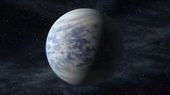
Our Milky Way galaxy is crowded with far more habitable Earth-like planets than previously thought - at least 11 billion of them in orbit around distant stars, a team of planet hunters led by UC Berkeley astronomers said Monday.
Erik Petigura, a Berkeley graduate student, analyzed data from the Kepler spacecraft and calculated that at least 50 billion stars much like Earth's sun are blazing throughout the galaxy.
It's possible that even more Earth-like planets exist than Petigura estimates, for his analysis takes into account only one class of hot stars that are known to be very much like our sun. There are other stars called red dwarfs that are about the size of our sun only cooler, and many so-called "exoplanets" may be circling them too, he said.
Sepp Hasslberger's insight:
Billions of planets out there ... of course there is life and of course there is also intelligent life. All kinds of it. Why aren't we acknowledging those things?
SSMS Science's curator insight,
November 5, 2013 7:47 PM
there are moor earth like planets out there thats incredible I've always dreamed there could be just like you proboble. And the number of them, my goodness, 11 billion habitable planets in our galaxy and they were escoverd (mostly) by one team. Just by analizing data from the Kepler spacecraft, one man Erik Petigura by himself found 50 billion gust by looking at the stars that were like our sun. And there could be moor then how many Petigura esemated. His metheds arrent the most reliable methods, there could be alot moor then he estemates. Even though red dwarfs are cooler they could have earth like planets orbiting them.TP
T. Blank's curator insight,
November 16, 2013 2:41 PM
Because most intelligent life in the Cosmos is far beyond human comprehension. If UAP reality, with the apparent unknown high technology and energy observed were in the public domain, then our global fossil fueled financial infrastructural would collapse, ending our world as we know it!
Scoop.it!

The other nuclear energy Thorium...
Sepp Hasslberger's insight:
Something needs to be done about energy production. Fossil fuels and uranium both have very serious problems. Thorium is one possible solution.
There are a number of other things being worked on, but for converting the nuclear energy industry to a safe method of production, thorium definitely has potential.
I hear the Chinese are pushing ahead to devlop thorium based power generation.
Scoop.it!

In a groundbreaking new study, garlic beat out the blockbuster blood pressure medication atenolol in lowering blood pressure in subjects with hypertension.
Sepp Hasslberger's insight:
Natural substances are often more effective than pharmaceutical drugs... yet here we have pharmaceutical manufacturers and governments restricting that kind of information.
Some of that profitable business might be lost...
Sepp Hasslberger's comment,
September 27, 2013 7:10 PM
Sorry, this post jumped over from another channel ... Health Supreme
Scoop.it!

Antarctic sea ice has grown to a record large extent for a second straight year, baffling scientists seeking to understand why this ice is expanding rather than shrinking in a warming world.
Sepp Hasslberger's insight:
There's something wrong with the models of climate scientists advocating that the world is warming and that we're in for big trouble.
And then there's the 16-year stop on temperature increase, while CO2 is continuing to rise...
John Zulaikha's curator insight,
September 26, 2013 6:14 PM
the Intergovernmental Panel on Climate Change has basically fessed up. It’s admitted that its computer drastically overestimated rising temperatures.
Scoop.it!

It's going to be a busy seven days for the private space industry, with a pair of launches from the companies operating the new delivery trucks to the International Space Station.
First up is SpaceX, which has already made three flights to the ISS: one demo flight and two cargo flights. This weekend Elon Musk’s company is expected to test-fly a new, stretched version of its Falcon 9 rocket. The new rocket will be launching from Vandenberg Air Force Base in California. The upcoming flight does have a payload on board — a Canadian spacecraft — but it is primarily a test flight...
On the East Coast, Orbital Sciences is preparing for its first flight to the ISS. After its successful first demonstration flight in April, Orbital Sciences is slated to launch its Cygnus spacecraft for the first time on September 17. Cygnus will carry some non-essential cargo to the ISS, following a similar mission as SpaceX did with its Dragon spacecraft on its first visit.
Sepp Hasslberger's insight:
It seems NASA is effectively outsourcing the launch capability that needs to come with near-earth space flight, space station activities and administration of the swarm of satellites out there...
Scoop.it!

Astronomers have assembled, from more than 13 years of observations from NASA's Hubble Space Telescope, a series of time-lapse movies showing a jet of superheated gas — 5,000 light-years long — as it is ejected from a supermassive black hole in the...
Sepp Hasslberger's insight:
I know I'm out on a limb with this comment, but I must make it:
More on this in a blog post of mine:
Scoop.it!

To pave the way for rapid interstellar travel, NASA propulsion researcher Harold Sonny White plans to manipulate space-time in the lab
Sepp Hasslberger's insight:
We're learning ... but it's a slow process.
Scoop.it!

This cosmic vista stretches almost 20 degrees across the gentle constellation Taurus. It begins at the Pleiades and ends at the Hyades, two of the best known star clusters in planet Earth's sky. At left, the lovely Pleiades star cluster is about 400 light-years away.
In a familiar celestial scene, the cluster stars shine through dusty clouds that scatter blue starlight. At right, the V-shaped Hyades cluster looks more spread out compared to the compact Pleiades and lies much closer, 150 light-years distant.
Of course, the Hyades cluster stars seem anchored by bright Aldebaran, a red giant star with a yellowish appearance. But Aldebaran actually lies only 65 light-years away, by chance along the line of sight to the Hyades cluster.
Sepp Hasslberger's insight:
Millennium Twain asks the question:

Ricardo Zalazar's curator insight,
July 28, 2013 5:23 PM
Amigos, comprato una imagen de las Pléyades
Scoop.it!

What Major Factor Causing “Climate Change” Are They Not Telling Us About?
More alarming articles and studies are surfacing each day which confirm the rapidly changing state of Earth’s life support systems and climate. Humanity has decimated the planet and the chickens are coming home to roost.
Though there are certainly many parts to this unfolding story, the largest piece of the puzzle by far still goes completely unacknowledged by most of the scientific community and all of the main stream media/corporate/military/industrial complex.
The massive elephant in the room has been, and still is, “stratospheric aerosol geoengineering” or “SAG”, AKA “chemtrails”.
Sepp Hasslberger's insight:
Relevant in this connection: Signs Of Change The Past Week Or June 2013
Sepp Hasslberger's curator insight,
June 23, 2013 6:04 PM
This is one of the big issues of our times ... news on it being suppressed by positioning the reporters as "conspiracy theorists".
Yet there are patents and there is lush funding for those programs... and we can see what's happening by checking the anomalous clouds that come with stratospheric geoengineering. 
McSpocky's comment,
July 5, 2013 6:06 PM
Chemtrails are a myth. The truth: http://mcspocky.com/video/view/18
Sepp Hasslberger's comment,
July 6, 2013 7:06 PM
Yeah, "conspiracists believe..." how's that for name calling?
|






Scientists assume gravity is the only force that governs the development and the interactions of stellar systems. Something's missing but no one seems to know where to look...