Soggy Science
55.2K views | +0 today
Soggy Science
Your new post is loading...
Scooped by Grant W. Graves
March 12, 11:44 PM
Scoop.it!

Global observations reveal rapid reorganization of ocean nutrients

No comment yet.
Scooped by Grant W. Graves
March 12, 11:37 PM
Scoop.it!

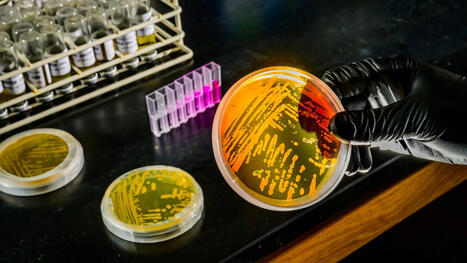
Ocean warming may supercharge a tiny microbe that controls marine nutrients

Ocean warming may supercharge a tiny microbe that controls marine nutrients | Soggy Science | Scoop.it
As deep-sea waters warm, scientists expected trouble for the microbes that help keep ocean chemistry in balance. Instead, researchers found that Nitrosopumilus maritimus can adapt to warmer, iron-limited conditions by using iron more efficiently. Because these microbes control key nitrogen reactions that support marine life, their adaptability could help sustain ocean productivity. In a warming world, they may play an even bigger role in shaping marine nutrient cycles.
No comment yet.
Scooped by Grant W. Graves
March 12, 11:29 PM
Scoop.it!

Planting trees in the sea could act as a huge carbon sink and save millions of dollars in storm damage every year. What is stopping us from doing it?

Planting trees in the sea could act as a huge carbon sink and save millions of dollars in storm damage every year. What is stopping us from doing it? | Soggy Science | Scoop.it
A new study reveals restoring mangroves could save $800 million in storm damage, protect 140,000 people from flooding, and remove almost triple the amount of CO2 produced by cars in the U.S. every year.
No comment yet.
Scooped by Grant W. Graves
March 12, 11:22 PM
Scoop.it!

Early warning indicator hidden within the Gulf Stream could signal AMOC collapse, study finds

Early warning indicator hidden within the Gulf Stream could signal AMOC collapse, study finds | Soggy Science | Scoop.it
Shifts in the Gulf Stream could help researchers predict the human-driven failure of a huge system of ocean currents known as the Atlantic Meridional Overturning Circulation.
No comment yet.
Scooped by Grant W. Graves
February 26, 11:46 PM
Scoop.it!

The crisis on the Colorado River — six things to know

The crisis on the Colorado River — six things to know | Soggy Science | Scoop.it
States are preparing for, while trying to avoid, cutbacks to the water they get from the Colorado River. Here are some key things to know about this moment.
No comment yet.
Scooped by Grant W. Graves
February 26, 11:36 PM
Scoop.it!

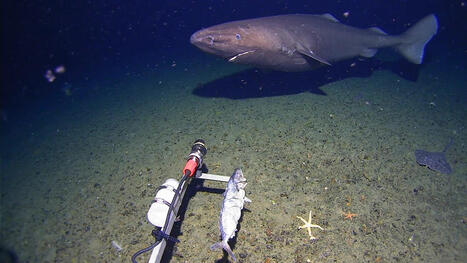
Shark discovered in Antarctic waters has survival superpowers | National Geographic

Shark discovered in Antarctic waters has survival superpowers | National Geographic | Soggy Science | Scoop.it
Sleeper sharks live extraordinarily long lives and can thrive in near-freezing ocean temperatures near Earth's poles.
No comment yet.
Scooped by Grant W. Graves
February 26, 11:17 PM
Scoop.it!

Boat traffic alters marine megafauna behavior, stress and population trends, global analysis finds

No comment yet.
Scooped by Grant W. Graves
February 26, 11:10 PM
Scoop.it!

Skagerrak's invisible diversity may be lost in silence

No comment yet.
Scooped by Grant W. Graves
February 26, 11:05 PM
Scoop.it!

Sea urchin spines inspire self-powered underwater sensors

No comment yet.
Scooped by Grant W. Graves
February 26, 10:59 PM
Scoop.it!

Shark deterrents found to reduce fisheries loss

No comment yet.
Scooped by Grant W. Graves
February 26, 10:54 PM
Scoop.it!

Tracking wildlife trafficking in the age of online marketplaces

No comment yet.
Scooped by Grant W. Graves
February 26, 10:48 PM
Scoop.it!

Study of 40,000 cases links Somalia migration mainly to water scarcity

No comment yet.
Scooped by Grant W. Graves
February 26, 10:39 PM
Scoop.it!

Antarctica just saw the fastest glacier collapse ever recorded

Antarctica just saw the fastest glacier collapse ever recorded | Soggy Science | Scoop.it
Antarctica’s Hektoria Glacier stunned scientists by retreating eight kilometers in just two months, with nearly half of it collapsing in record time. The rapid breakup was driven by a flat, underwater bedrock surface that allowed the glacier to suddenly float and fracture from below. Satellite and seismic data captured the dramatic chain reaction in near real time. The findings raise concerns that much larger glaciers could one day collapse just as quickly.
No comment yet.
Scooped by Grant W. Graves
March 12, 11:41 PM
Scoop.it!

New study of global reef growth over past 12,000 years offers insights into impact of rising ocean temperatures

No comment yet.
Scooped by Grant W. Graves
March 12, 11:33 PM
Scoop.it!

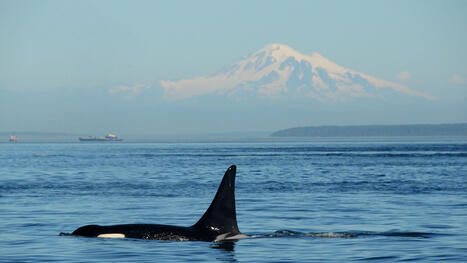
Chewed-up orca fins on Russian beach point to cannibalism, and scientists say it may explain why some pods are so tight-knit

Chewed-up orca fins on Russian beach point to cannibalism, and scientists say it may explain why some pods are so tight-knit | Soggy Science | Scoop.it
Detached orca fins scored with distinctive tooth marks suggest that killer whale cannibalism is happening — and it might explain some complex orca societies.
No comment yet.
Scooped by Grant W. Graves
March 12, 11:25 PM
Scoop.it!

'Blackwater' lakes and rivers in the Congo Basin are now emitting ancient carbon into the atmosphere

'Blackwater' lakes and rivers in the Congo Basin are now emitting ancient carbon into the atmosphere | Soggy Science | Scoop.it
Carbon that has been buried in the Congo Basin's peatlands for millennia is seeping into lakes and rivers. Why this is happening remains unclear, but researchers warn that tropical peatlands could be nearing a tipping point.
No comment yet.
Scooped by Grant W. Graves
March 12, 11:08 PM
Scoop.it!

Stratis Kas, InDEPTH

Technical diver Stratis Kas is the editor-in-chief of InDEPTH and the lead author of “Close Calls.” Inspired by the need for more open conversations about near-misses, “Close Calls” shares hard-earned lessons from prominent dive industry figures, and reminds readers that even the most advanced divers make and learn from mistakes.

In this episode with Frauke Tillmans, VP of research at DAN, Stratis also discusses his experiences as an exploration diver and a storyteller in the diving community — as well as his plans to carry forward InDEPTH’s mission to expand knowledge of what’s possible underwater and to spark dialogue across the diving world.

For more information about Close Calls and Stratis’ work, visit stratiskas.com. Read InDEPTH at indepthmag.com.

0:06-0:30 Introduction
0:30-3:22 Stratis's Journey into Diving and Exploration
3:22-4:52 Genesis of "Close Calls"
4:52-11:24 Mistakes in Diving
11:24-15:50 "Close Calls" and Other Projects
15:50-18:04 Stories in "Close Calls"
18:04-20:43 Gathering Contributions from Industry Leaders
20:43-25:50 InDEPTH Magazine
25:50-27:08 Conclusion
No comment yet.
Scooped by Grant W. Graves
February 26, 11:39 PM
Scoop.it!

Bird Flu Strikes California Elephant Seals for the First Time - The New York Times

No comment yet.
Scooped by Grant W. Graves
February 26, 11:33 PM
Scoop.it!

An endangered natural pharmacy hidden in coral: Hundreds of reef-dwelling microbes reveal untapped potential

No comment yet.
Scooped by Grant W. Graves
February 26, 11:14 PM
Scoop.it!

Will melting glaciers slow climate change? A prevailing theory is on shaky ground

No comment yet.
Scooped by Grant W. Graves
February 26, 11:08 PM
Scoop.it!

Endangered giant clam feeding strategies could determine species' future survival

No comment yet.
Scooped by Grant W. Graves
February 26, 11:02 PM
Scoop.it!

Improved short-term sea level change predictions achieved with better AI training

No comment yet.
Scooped by Grant W. Graves
February 26, 10:57 PM
Scoop.it!

An acoustic telemetry network reveals the connectivity of the gilthead seabream in the Mediterranean

No comment yet.
Scooped by Grant W. Graves
February 26, 10:51 PM
Scoop.it!

Green turtle nests may bury 'plastic rocks' and endanger the species

No comment yet.
Scooped by Grant W. Graves
February 26, 10:44 PM
Scoop.it!

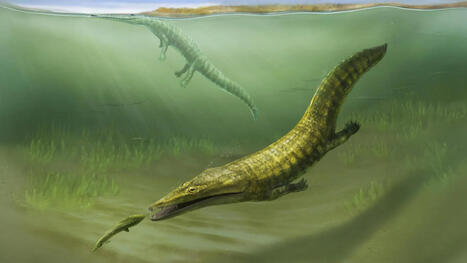
Lost fossils reveal sea monsters that took over after Earth’s greatest extinction

Lost fossils reveal sea monsters that took over after Earth’s greatest extinction | Soggy Science | Scoop.it
A lost cache of 250-million-year-old fossils from Australia has rewritten part of the story of life after Earth’s worst mass extinction. Instead of a single marine amphibian species, researchers uncovered evidence of a surprisingly diverse community of early ocean predators. One of these creatures had relatives stretching from the Arctic to Madagascar, showing that some of the first sea-going tetrapods spread across the globe with remarkable speed.
No comment yet.